Beckerland Fosters Deranged EVIL Upon POWs! “Opposing Force” reviewed! (Scorpion Releasing / Blu-ray)

“Opposing Foce” now in Control of Blu-ray Home Video!  

Air Force Lieutenant Casey has initiative, determination, and something to prove being the first woman to be approved for a special and notorious evasion and escape course on a remote U.S. base Philippine island.  The course simulates downed Air Force pilots behind enemy lines where they either have to evade capture or escape as POWs without divulging U.S. secrets.  The simulating is meant to break down the individual physically and mentally through psychological and physical torture that nearly blurs the regulation guidelines of the United States military, but has been proven to be an effective training to withstand the most brutal of POW conditions despite the course’s infamous reputation.  Casey joins the ranks of participants, a young group of eager male officers and one experienced Major Logan looking to requalifying for action, and are dropped into the simulated enemy combat zone controlled by General Becker, a calculating commanding officer who has succumb to his opposing force role.  Becker’s unconventional and illegal tactics exploit Casey’s gender in the name of training her, but his knowingly criminal activity puts the rest of the trainees in danger and it’s up to the Logan and Casey to stop him and his opposing force in an all hell breaks loose war.
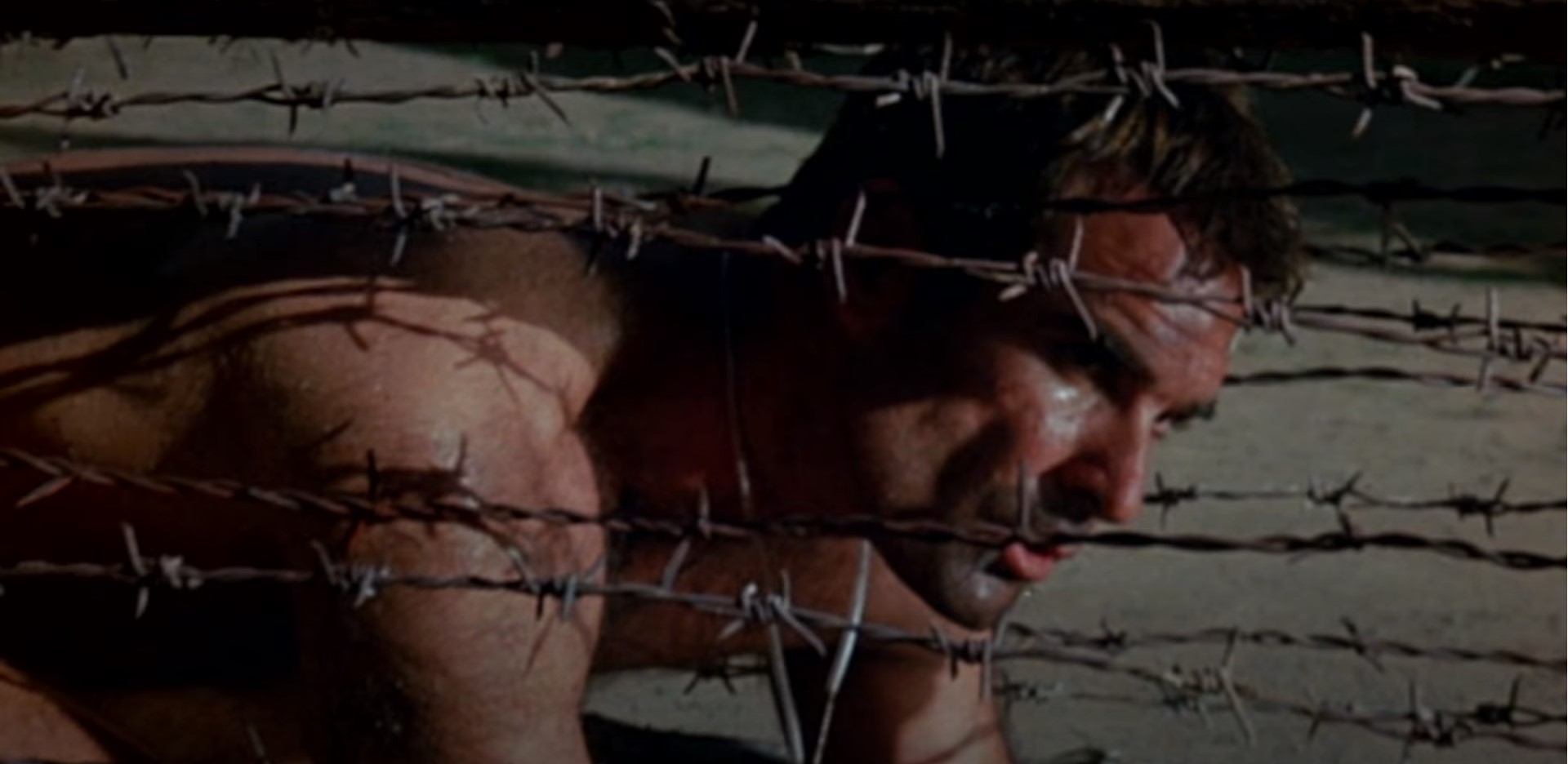
POW exploitation has been missing in modern day cinema.  A subgenre that is a dark, degrading note of unscrupulous and vengeful action has been exclusive to the 1980s for far too long, barely being reprised throughout the proceeding decades.  Not to be restricted to the popularization films of Chuck Norris of the “Missing in Action” franchise or of Sylvester Stallone’s Rambo II and III, these camp from Hell films run the money and production gamut, pulling inspiration on conflict wars before the decade, such as Korea, Cambodia, and even as far as World War II.  For mainstream, the jungle entices with harrowing heroism that glorifies determined, strong-arming patriotism while showcasing America’s enemies as Geneva Convention ignoring villains who deserve every ounce of blow’em up, shoot’em up at the hands of escaped captees or an elite team, or a one-man, rescue mission.  Nazis saw more action in the low-budget Eurotrash market with sexploitative women-in-prison camps ran by the sleazy, inhumane, and experimenting Gestapo mostly.  American filmmaker Eric Karson, director of Jean-Claude Van Damme actioners “Black Eagle” and Lionheart,” moves away from the Muscles from Brussels and into Tom Skerritt’s mustache behind bamboo bars in the 1986, American-versus-America military-thriller “Opposing Force.”  Penned by Linda J. Cowgill, under the pen name of Gil Cowan in what’s likely a name change spurred by sexism in the industry, originally titled the script as “Hell Camp” but took the name “Opposing Force” based off the antagonistic enemy labeled as OPFOR right on their chest.  “Opposing Force” is coproduced by “Skinner” and “Final Mission” producer Tamar E. Glaser and “Sometimes They Come Back… for More” producer Daniel Zelik Bert under the theatrical distributors of Orion Pictures. 
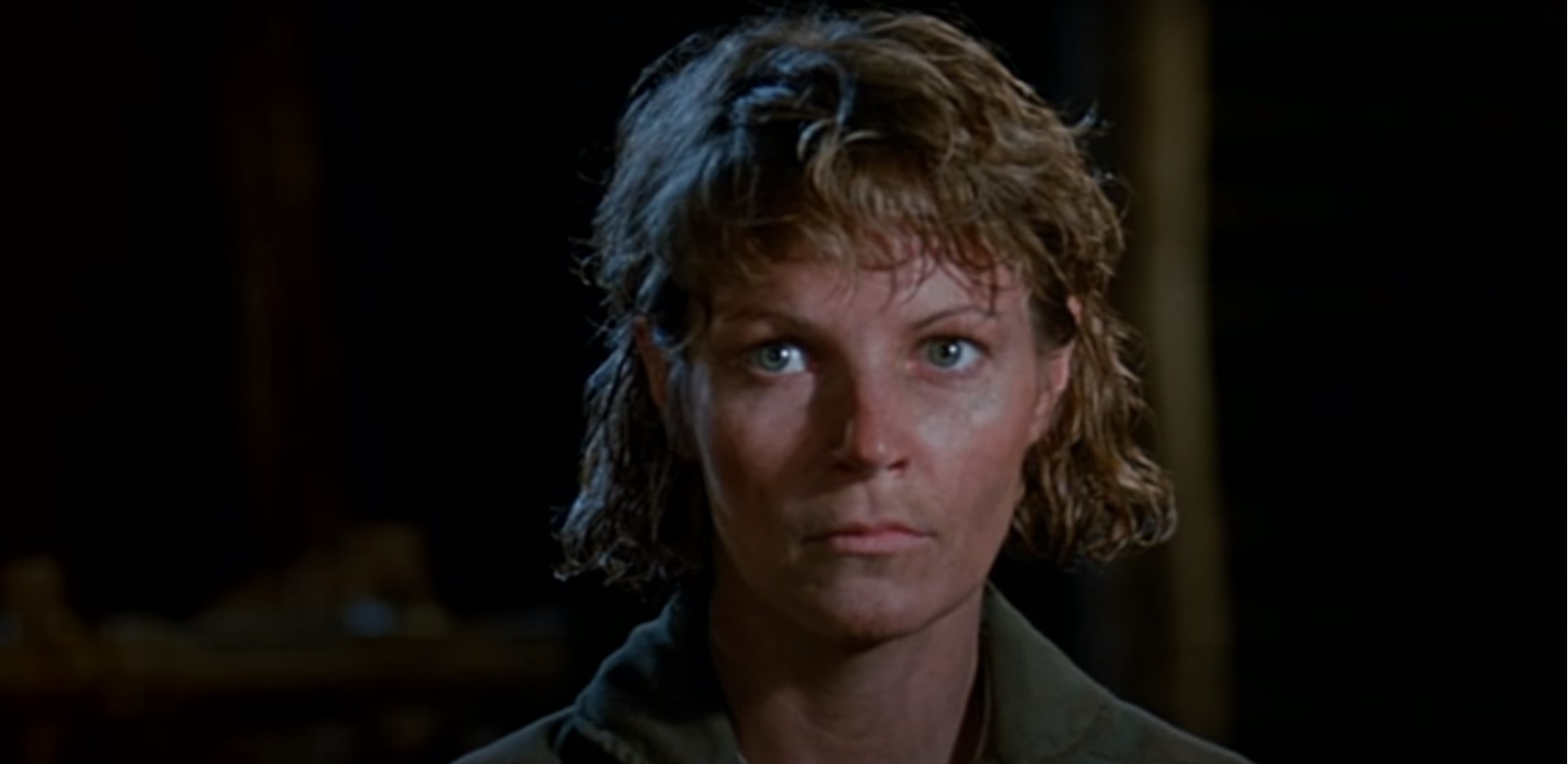
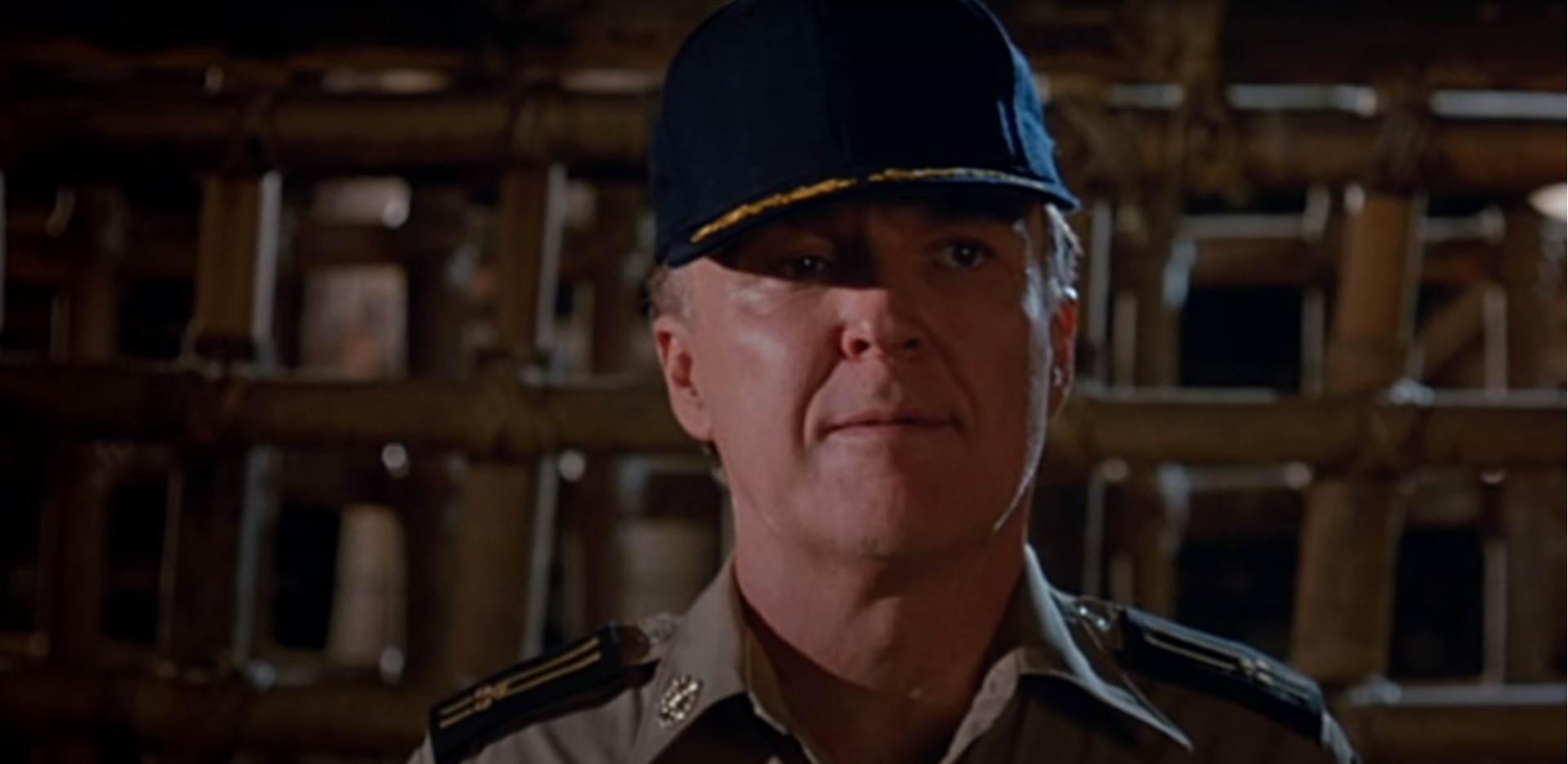
We already know Tom Skerritt’s world-renowned mustache is in the movie and is the star of the show, but Tom Skerritt is in there as well as the man behind the stache as the seasoned boot Major Logan.  The “Alien” and “Contact” actor become the patriarchal figure to a bunch of figurative sons in younger course participants and overprotective of one figurative daughter in Lt. Casey in a wildly uncharacteristic situation brazenly exploited in unconventional mainstream means in the uncomfortable skin of Lisa Eichhorn (“Deus”).  What Lt. Casey goes through is more on familiar ground with the low-budget sleaze of women-in-prison grindhouse and while it’s certainly jarring and unexpected, It’s a welcoming chance for an upper tiered independent film with big names attached.  A couple of the other big names attached are Anthony Zerbe (“The Omega Man”) and Richard Roundtree (“Shaft”) as Commander Becker and his staff sergeant Stafford.  Becker and Logan mirror each other as veterans that have graded into either being corrupted by power or to be righteous in doing what’s right.  Yet, but Zerbe and Skerritt play into what the experienced actors know best, their trademark stoicism.  Tack on Eichhorn’s equally endurable fortitude and a three way standoff erects a monumental solemn stalemate of relatively the same attitudes until the last straw breaks the proverbial camel’s back and war erupts.  Roundtree at least develops Stafford’s internal conflict when the job bites at his conscious, becoming the connection needing convincing of Becker’s crossing over to the darker side of power like a Sithlord in public face disguise.  The narrative physicality aspects piece together a grueling atmosphere that each actor undertakes appropriately by their determined military rank, but as eloquently as Lt. Casey puts it to the aging Major Logan, “You got a limp and I got tits; these aren’t great things ot have in the military,” sets up themselves as misfits-to-heroes that were being crapped on all their careers for their antithetical military image.  “Opposing Force” rounds out the cast with a bunch of moaning male air force participants in the middle of it all with performances from Paul Joynt (“Echos”), Robert Wightman (“Impulse”), George Cheung (“Rambo:  First Blood Part II”), and John Considine (“Circle of Power”).
Influenced by the U.S. Military’s real life training program known as S.E.R.E. (Survival, Evasion, Resistance, and Escape.), Cowgill uses the program to formulate “Opposing Force’s” principle groundwork in setting up the jungle POW scenario on a remote island that goes through the motions of no chance of a rescue and aid of any kind.  Participants are throw into a survivalist gauntlet that turns surprisingly rough aggressive when physical and mental tortures are instilled upon those thinking the training would be a walk in the park.  This particular training simulation is unique to the OPFOR team with an aging officer looking to requalify for combat and the first woman to ever be accepted into the course due to a loophole, throwing new challenges to an embedded far too long commander who can easily break a man’s spirit but tiptoes around the possibilities of what to do with a woman until his insidious power and authority blurs right from wrong and takes the torturous tactics and enhanced interrogation techniques too far, beyond the limits of what’s necessary and beyond the limits of human decency all in the name of reinforce training.  The grueling torture and bush action is palpable enough to contrast the naked, sweaty, and battered bodies with the M1A1 bursts and munition explosions galore.  Only one aspect adds an out of place measure in the narrative and that is of the rest of the POW contingent and their seemingly wishy-washy decision on whether to escape, stay put, or join in the fight against Becker and his live-round shooting island battalion; the group disperses into the jungle only to fade from the climatic third act Major Logan, Lt. Casey, and Botts defending their lives against a treacherous throng and their wicked commanding warden.  Their disappearance doesn’t allow for closure for the acts against them during the entire ordeal and becomes a fizzling distraction.  Another distraction is the severely cut ending that freeze frames on Eichhorn’s final act with her voiceover exposition post-battle in what feels sorely rushed to complete.  The Blu-ray bonus features has an extended ending that’s more completist approach in wrapping up the story sutibly.  For a POW film, “Opposing Force” is an archetype of its originating decade that sates the subgenre’s need to pit an overreaching and ruthless camp head against the resiliency and determinate of the America fighting spirit. 
A re-release from the 2019 Scorpion Releasing Blu-ray comes “Opposing Force” reprising a presence on online retail shelves.  The AVC encoded, high-definition, BD25 is presented in 1080p resolution with a widescreen 1.78:1 aspect ratio.  Identical to the earlier Blu-ray 4 years prior, the image quality is freshened up quite a bit from the likely 35 mm print source into a detail-laden HD transfer that offers a lush jungle-scape to be in juxtaposition against the camp from within its center, a large guerilla compound bathed in browns and greens make for good POW-themed pageantry.  Skin tones and individual features flesh out nicely, adding detailed levels of salubrious status over the course of the day-to-day detainment. The English language DTS-HD master audio 2.0 leans toward a softer dialogue mix that, for the majority, is discernible despite favoring “Opposing Force’s” selling points: large explosions, pepper potshots, and militant vehicles running rampant around and above the island terrain. Dialogue’s clear enough to emerge without much hinderance with enough depth to provide a sense of position and the audio layer is remarkably clean with no hissing, popping, or static. English subtitles are an available option. Special features include an audio commentary with director Eric Karson, the trailer, and that extended ending I mentioned, and noted preferred, earlier in the review. The traditional Blu-ray snapper casing includes a rendition of the alternate titled “Hell Camp” poster with a more titillating illustrative lookalike of Lt. Casey in shredded rags and ride-up shorts with hands tied above her head and looking over her shoulder. The warm yellow with a hint of white stirs in an element of jungle heat ramped up by also providing the cage accommodations in the background to let it be known you’re about to watch an exploitation POW film. Locked on a region A playback, “Opposing Force” has a runtime of 98 minutes and is rated R. Eric Karson manages to find a place amongst a serrating subgenre that takes an ostentatious, yet not entirely fictious look, at prisoners of war with his “Opposing Force” actioner that goes to convey that not every unethical and malintent camp leader is a foreigner; evil can also be domestically grown.

“Opposing Foce” now in Control of Blu-ray Home Video!  

Michelle Yeoh Versus the EVIL Japanese Imperial Army! “Magnificent Warriors” reviewed! (88 Films / Blu-ray)

“Magnificent Warriors” Now on an Amazing Blu-ray from 88 Films!   Click The Poster to Purchase!

Ming-Ming is an adventurous, mercenary pilot unafraid to herself mixed up in the worst of trouble and against the tremendous odds.  When her patriotic grandfather and military uncle present Ming-Ming a mission of resistance against the Japanese Imperial Army during World War II, the odds, again, will be stacked up against her as she must track down China’s top-secret agent to extract the City Lord of Kayi City, a fortified Chinese city on the outskirts under Japanese control with ambitions to build a strategic, poisonous gas plant.  When Ming-Ming’s is shot down by a Japanese fighter pilot and the mission proves to be more difficult than expected, a small band of unlikely heroes become resistance fighters that inspire Kayi City to rise up against an oppressive, super nation threat to take back their home.  The city of spears and arrows must defend its people from an overwhelming army of rifles, mortars, and tanks in a fight to the death.

Michelle Yeoh is so hot right now.  The Malaysian-born, long-time actress has been under the U.S. mainstream radar for decades up until recently.  Before now, she was well enough for her roles in Ang Lee’s four-time Academy Award winner “Crouching Tiger, Hidden Dragon” without Yeoh receiving a nomination.  Twenty-two years later, Yeoh receives her first Academy Award nomination for “Everything Everywhere All at Once,” but we all knew she deserved the coveted U.S. award well before now.  U.S. audience never got to experience Yeoh earlier in her career as an Asian action star that rivals the likes of male counterparts Jackie Chan and Chow Yun-Fat.  In “Magnificent Warriors,” Yeoh’s diligence to the demanding workload foretells a superstar in the making.  The David Chung directed Hong Kong picture is relentless and action-packed with stunning and intense choreographed martial arts and having a large-scale showmanship of numerous grand explosions and a vast production pocket that include countless background actors.  The script is penned by frequent Stephen Chow collaborator Kan-Cheung Tsang who has wrote many of Chow’s directorial films, such as “Kung Fu Hustle,” “Shaolin Soccer,” and “The Mermaid.”  “Munificent Warriors,” also known as “Dynamite Warriors” is produced by Linda Kuk (“Hard Boiled”) and David Chung’s “Royal Warriors” producer John Sham and executive producer Dickson Poon under the D&B Films banner.

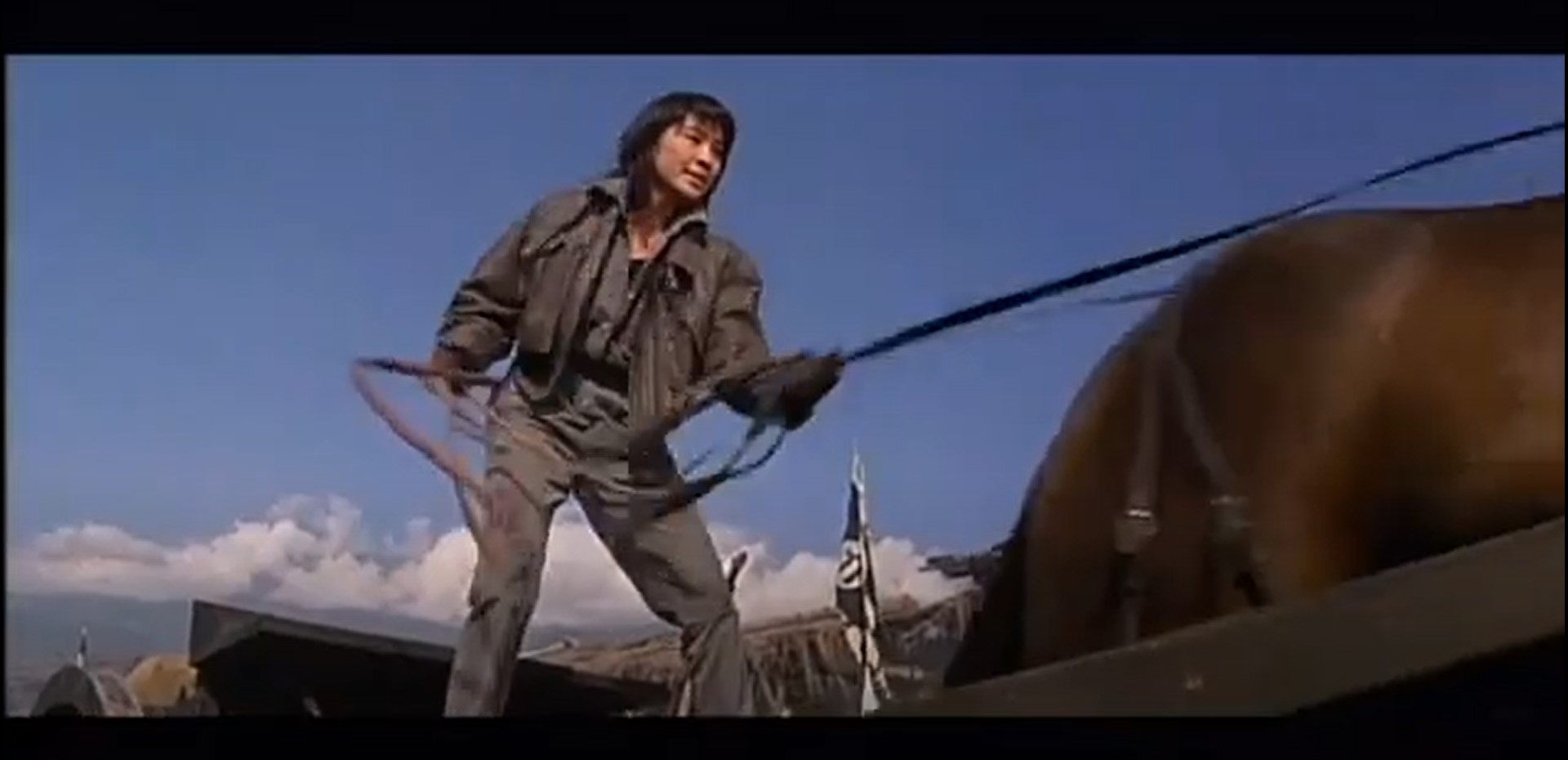
In a career that spans decades plotted by a number of strong female characters, Michelle Yeoh has embodied strength, intelligence, and beauty for this generation.  Under her early credited name of Michelle Kahn, the actress, who in the last five years has entered the Marvel Universe, the Star Trek Universe, and is slated to be in the upcoming James Cameron “Avatar” sequels,” is the driving force behind what makes “Magnificent Warriors” so engrossingly magnetic.  Trained to use a bullwhip and able to accomplish major stunts, unsafely I might add, on her own, Yeoh pulls off the demanding role with sheer confidence radiating from her performance.  So much confidence that the quality beams from her eyes to the point that her gaze nearly appears to be a sadistic grin of her own masochism.  Yeoh seizes Ming-Ming’s adventurous spirit, fully embraces it even, and stands out, but meshes well, amongst the mix of characters, including a hapless and bumbling drifter played by Richard Ng.  The “Mr. Vampire Part 3” star has a recognizable and distinguishable face as a well-known Hong Kong actor from China.  In “Magnificent Warriors,” Ng’s character is clearly the odd man out with zero ambitions and zero fighting skills, providing roughhouse comedic relief with lucky escapes with his life, but as far as character arcs go, the drifter, who cheats and scams gamblers for money and thinks about saving his own skin, succumbs to the resistance call of helping China and becomes one of the leaders of the core Kayi City defenders.  There are three others in this band of five with the City Lord (Lowell Lo, “Spider Woman”) who has a similar character arc as the drifter in being a bit of a scaredy-cat as a traitor against the Japanese Imperial Army but sees the light of his people needing his boiled down bravery and leadership, and his involvement with Shin-Shin (Cindy Lau), a daughter of a Japan loyalist who is obsessed romantically with the City Lord and can kick ass as well that surmises a feminism theme that women are just as strong as men and can have a better moral compass, especially compared to the bumbling man in power, the City Lord, and the drifter con artist.   The weakest fifth character, with an equally weak performance, in the group is Secret Agent No.1, as he’s described in the subtitles, played by Derek Yee (“Black Lizard”).  Though pivotal to the resistance operations to succeed, Secret Agent No. 1 fails to make his impact like the others, character divulging a vague history of his climbing to be China’s best secret agent and also teetering on the supposedly feelings for Ming-Ming that doesn’t ever come despite blatant suggestions to the contrary.    Matsui Tetsuya, Hwang Jan Lee (“The Drunken Master”), Meng Lo, Fung Hak-on, Jing Chen, and Ku Feng round out the “Magnificent Warrior’s” cast.

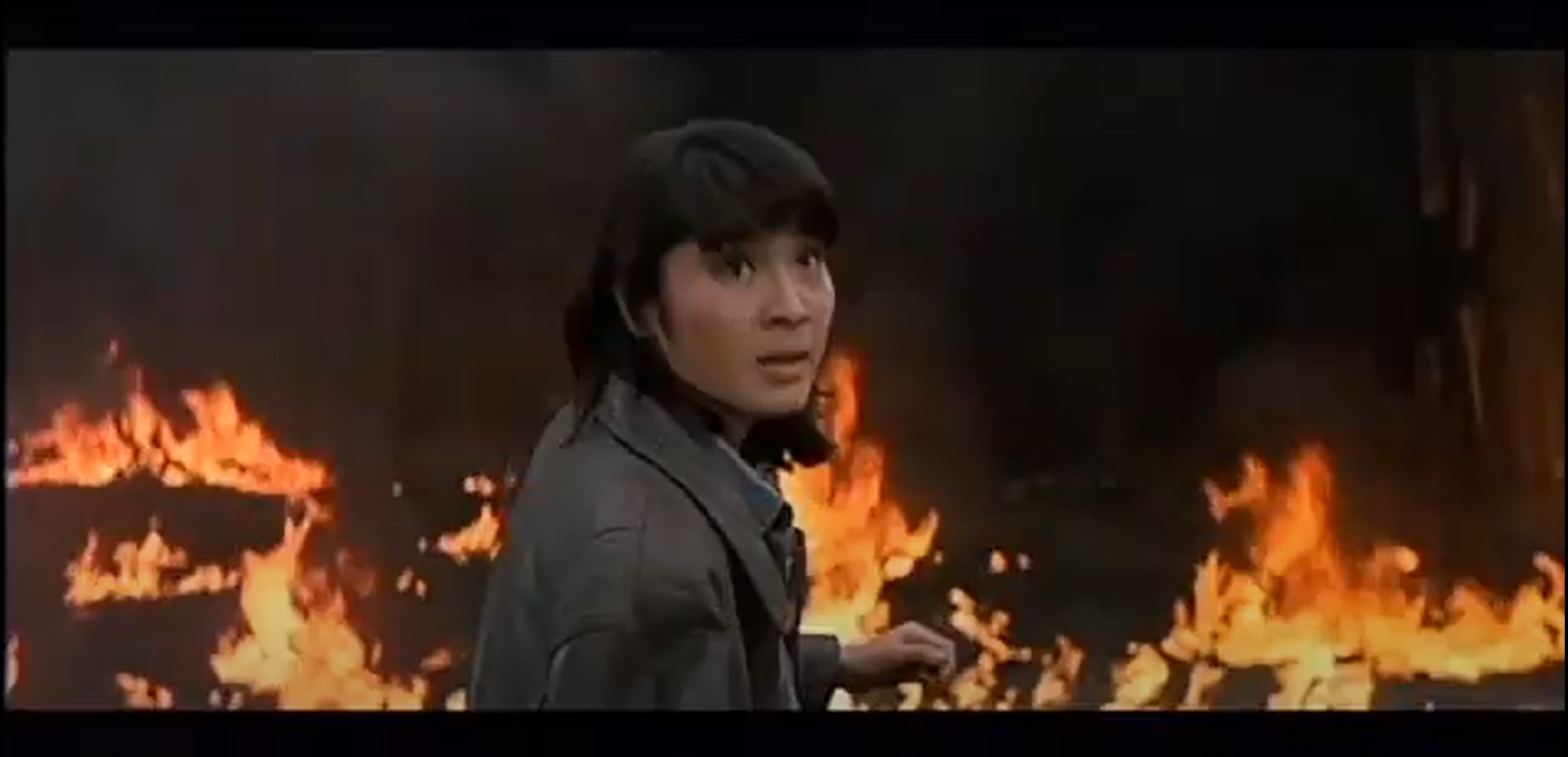
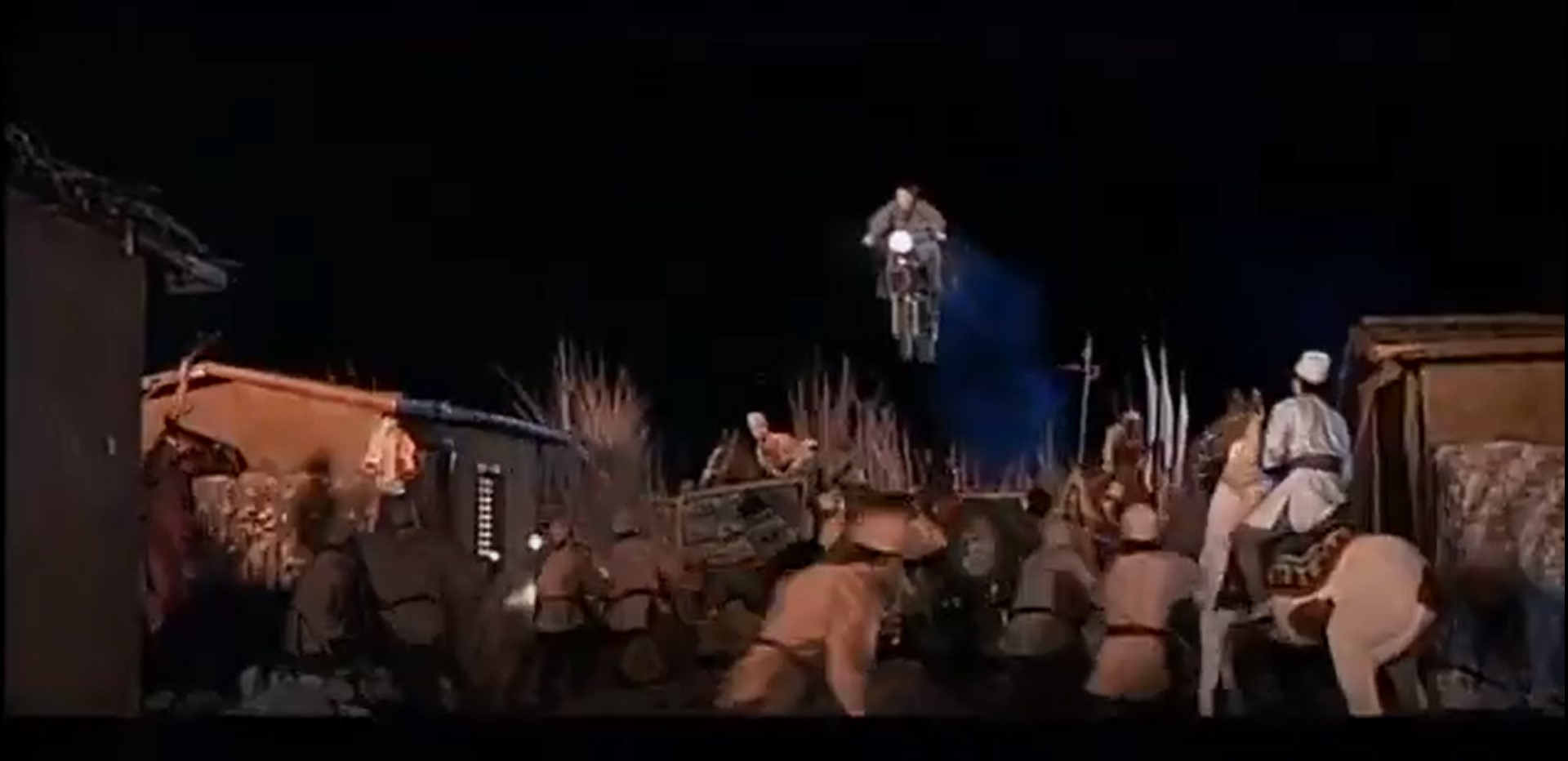
With extraordinary martial arts choreography, the impossible become possible in what can be experienced as an epic ballet of fists, kicks, and dueling weapons.  Every battling moment translates perfectly on screen without the flinch of error, though I’m sure many takes were took.  Back when outside Hollywood film studios relied on their determination and skill, with a pinch of luck, to get them through tough and rigorous stunts without the aid of wire, pads, or any union approved safety measures for that matter in what feels remarkably alien, like being on a whole other world where the rules of physics and safety do not apply.  “Magnificent Warriors” is truly a magnificent stunt-driven, wartime story revolving around revolutionism, a contemplation of the relationship between a home and its people, and a principled life of standing up for what’s right.  Director David Chung manages to massage out the numerous themes under the façade of a great thrust of nonstop action.  The set pieces, locations, and wardrobe are all fitting for the late 1930s-1940s era, especially with the Japanese uniforms that extend into their armored vehicles, such as in the brief, for show, scenes of its war plane and handful of Type 95 Ha-Go tanks. It’s refreshing to see an older film have a different angle on the overplayed World War II narrative; instead of the typical European or Asian Pacific campaigns involving American troops, “Magnificent Warriors” goes granular into The Second Sino-Japanese War during the Second Great War the world has ever experienced. Japanese implemented chemical warfare into their strategy of expanding their dominating military advances and establishing a footprint in China. “Magnificent Warriors” embellishes the poisonous gas narrative with the imperial army seeking to use Kayi City as a chemical producing plant, steering the film’s epic grapple over the city from out of underlying truth of the actual conflict. Every stage of story progresses into a larger scale of the previous skirmish which bottles up the grossing pressure between the imperial army, the resistance fighters, and the collateral damaged city folk caught in the middle. Sprinkled with comedy and charisma, and an ever so delicate dark tone, “Magnificent Warriors” is impeccable Hong Kong cinema and exposes the world to an underrated performance by Michelle Yeoh who kicked ass then in this film and still kicks ass today.

UK distributor 88 Films releases the “Magnificent Warriors” onto an AVE encoded, 1080p, high-definition Blu-ray, presented in a 2K restored transfer of the original theatrical cut on the company’s USA line. Exhibited in the original 2.39:1 aspect ratio, the anamorphic picture can appear globular at times, resulting in a packed image but more on so on pan shots than anything else. The overall picture quality suggests a pristine original print of the theatrical cut with a clean presentation from start-to-finish. Mostly warm with a flaxen degree of a desert background within a Mongolian Mountain valley, when the story does transition to a night shot or to interiors, the grain roughly sustains the change to keep a unified picture consistency that lives in a low contrast field without any deep shadow work or hard lined delineation. Compression issues are non-existent and there’s not obvious, unwanted touchups here to note. The release comes with two audio options: A Cantonese DTS-HD Mono and an English dub DTS-HD Mono. Preferrable choice is always the original intended language; however, this film’s audio options are both dubs but the Cantonese synchs better with grammatically suitable English subtitles albeit their breakneck speed to keep pace. Dialogue is clean, clear, and the action sound design is audibly potent with pinpoint precision on the homogenous strike. There are moments I thought the quick editing, especially during the plane chase, would hinder the ambient effects to keep up but I was pleasantly surprised, and the prop and gunfire intensity presents a nice exchange of open aired depth, range, and dynamisms. Software bonus features an archive interview with Michelle Yeoh (circa early 2000s), an archive interview with stunt coordinator Tung Wai, an English credits opener, the Hong Kong and International trailer, and still gallery. The hardware features are a tad better with a double-sided A3 poster, a 35-page color picture booklet with historical and filmic essay by Matthew Edwards, a limited cardboard slipcase featuring new art by Sean Longmore, and a reversible cover art in which shares its illustration with the booklet. The case isn’t the traditional slim Blu-ray snapper as it’s thicker to handle the booklet and poster. The release comes not rated, region A coded, and has a runtime of 92 minutes. Drawn into a big war shieled and overlooked by a bigger war, “Magnificent Warriors” not only time capsules a piece of Asian history but does it with fantastical fight and character that delivers one Hell of a timeless film with Michelle Yeoh at the helm.

“Magnificent Warriors” Now on an Amazing Blu-ray from 88 Films!   Click The Poster to Purchase!

EVIL Spirits and Japanese Internment Camps in “The Terror: Infamy” reviewed! (Acorn Media International / Blu-ray)

Chester Nakayama floats through life living with his immigrant parents on Terminal Island in San Pedro, California during World War II. A photographer hobbyist who helps on his father’s fishing boat and studies at a university, Chester doesn’t have steady employment and has recently learned his girlfriend, Luz, is pregnant with his baby. But those are not the height of Chester problems, or his family’s, when the country of Japan declares war on the United States by bombing Pearl Harbor and mysterious deaths surrounding the Nakayama family point to ancient Japanese beliefs of a Yūrei, or a ghost, clinging to a grudge. As the years past, Japanese American citizens are move from one internment camp to the next with no end in sight being projected as potential spies for the country of the rising sun and for Chester, Luz, and his family and friends, the Yūrei’s scheme endangers Chester’s life and legacy.

Following the success of the Ridley Scott (“Alien”) produced AMC horror television series, “The Terror,” the second season aims to build a new path of dread with a storyline plucked from the late 1900’s of two stranded artic explorer British ships trying to navigate a Northwest passage and now placed in a whole new and different, massive turbulent story and setting laid out in the early-to-mid 20th century during World War II America with Japanese Internment camps.  The second season comes with a partially new title, “The Terror:  Infamy” along with a new cast and new crew as well.  The subtitle’s double entendre refers to the then era United States 32nd President Franklin D. Roosevelt’s Day of Infamy speech given to the public after the assault on Pearl Harbor and also refers to another American infamous time of the mistreatment of the country’s own citizens, the Japanese Americans, placed into internment camps and constantly scrutinized as potential Japan spies.  “Infamy” showrunners Guymon Casady, David Kajganic, Scott Lambert, Alexandra Michan, Jonathan Sheehan, and David W. Zucker, along with Ridley Scott, return to the AMC, Entertainment 360, EMJAG Productions, and Scott Free Productions series.

At the tip of the ensemble cast spear, most consisting of Japanese heritage actors and actresses, is Derek Mio as the Yūrei plagued Chester Nakayama.  Perhaps the biggest role for the Mio, the role transcends Chester from a stagnant part-time fisherman on the dead-end Terminal Island settlement of San Pedro, California to a responsible man of action that sees Chester fight for his family, his wife, his children, and even fight for his country despite the maltreatment in order to course his loved ways safely through a plethora of evil.  While the character grows in an arc of accepting responsibility as a son, husband, and father, Mio never expresses the range of a story of his magnitude that takes him across various domestic terrains and on the other side of the conflict-engulfed world as he’s afflicted by a malevolent spirit.  Constantly confident and seemingly unafraid, Chester just simply endures the hardships along “The Terror’s” bombardment of grim reality.  Comparatively, the younger Japanese American generation are culturally more expressive next to the immigrated older generations in Chester’s father (Shingo Usami) and eldest family friend Nobuhiro Yamato (“Star Trek’s George Takei”) who we witness keep mostly in line with their stoic composures.  Takei, born in 1937, and his family were actually forced into living in converted horse stables and official internment camps across the country during the War and that gives the series a morsel of 100 times it’s weight in authenticity with firsthand experience. Along with the deep sympathies and an infinite amount of shame for the wrongfully imprisoned citizens of war, there’s also immense compassion for Chester’s wife, Luz, played by Chrstina Rodlo (“No One Gets Out Alive”). Rodlo runs the gambit of emotions that convey happiness with her time with Chester, to despondent loss, and to fear while on the run from the American government as well as an evil spirit who threatens her child. Just like the first season of “The Terror,” character staying power is often short lived as the horror and, well, the terror catches up to them in one way or another, but we see fine performances from Miki Ishikawa (“I Don’t Want To Drink Your Blood Anymore”), Naoko Mori (“Life”), Alex Shimizu, Lee Shorten, Hira Ambrosino, and Kiki Sukezane as the incessantly stubborn Yūrei and C. Thomas Howell (“The Hitcher”) with another flimsy performance as a hardnose major serving as head of an internment camp.

Subtly contrasting two very different kinds of horror between the yore of the fantastical Kaiden ghost stories coming to fruition with the Yūrei and the very non-fictional blight on American history that was falsely imprisoning American citizens with Japanese roots no matter what age. Both unsettling constructs are unequivocally provided equal weight in dread much like with season one that showcased the dog-eat-dog desperation of man isolated and trapped in extreme terrain with the supernatural forces of nature with a monstrous, polar bear like creature hunting them down one-by-one. Though the same dance, but a different song, season two has a very welcoming different take of blending of yore with lore that separates itself into a new entity, a new engagement, and a new facet of terror very befitting to the anthological series. Eventually, “Infamy” starts to lose steam when the Yūrei side of the story insidiously infringes fully into the fold when Chester and Luz have fled the internment camps and are living in nowheresville New Mexico. The camps fade away from the story and also from our consideration with only bits and pieces to chew on just to check in on principal characters and has a resolution that’s about as cheated as the Japanese Americans survivors given $25 by the American government to start a new life. Yet, “The Terror: Infamy” is poignant and informative, a better picture of what really happened on the American home front better any textbook could ever properly depict, and exposes the mainstream into the Kaiden-verse of Japanese culture.

The 2-disc, 10-episode Blu-ray set comes from UK distributor, Acorn Media International, with each episode with a runtime on an average of 40 to 45 minutes long and a total runtime of 419 minutes. The region 2, PAL encoded release is presented in a standardized for television widescreen format of 16X9 and the Acorn release doesn’t present a flawless picture with noticeable issues with severe cases of banding and compression artefacts around the darker portions of the scene and trust me, “Infamy” is plenty dim and leaden between John Conroy and Barry Donlevy’s cinematography unlike the previous season’s artic white landscape that brightens much of the frame. The Dolby Digital soundtrack produces a better product with satisfactory quality in all categories of score, ambient noise, and dialogue and is accompanied by well-synced and timed English subtitles. Bonus features include a look at the series part 1 (for disc 1) and part 2 (for disc 2) and the biographical and inside the head look at the characters through the eyes of their portrayers. “Infamy” is UK certified 15 as it contains the AMC edginess of bloody graphic content as well as some offensive language. “The Terror” series as a whole has remarkable historical insight commingled with soul-stirring, skin-crawling old wives’ tales. “Infamy” may not supersede its predecessor but is still one hell of an engaging and unique story that salivates us into wanting a third season.

Crawling Through the Bavarian Forest is an Eight-Legged, Seething EVIL Spider. “Venom” reviewed! (Twilight Time / Blu-ray)

Own the Limited Edition of “Venom” aka “The Legend of Spider Forest” on Blu-ray!

On holiday in a small sawmill town located in Bavarian countryside, artist and photographer Paul Greville seeks to capture the serenity of nature’s bountiful beauty. When he comes across a strange, wild woman with a spider scar on her shoulder, known as the “Spider Goddess” to the townsfolk as a curse individual, his curiosity sends him poking around the quaint, sleepy village that leads him into discovering also a rare and priceless painting thought lost after World War II. The deeper Greville digs into the mysteriously beautiful, unfettered girl and the valuable lost artifact, the more the town begins to resent his nosiness into their hidden agenda of a former Nazi scientist extracting deadly venom from the lethal forest spiders for noxious nerve gas weaponization.

Screenshot from IMDB.com

Better known as “The Legend of Spider Forest,” or “The Spider’s Venom” in the States, director Peter Sykes pulls from the madcap story cache a sticky, wacky web of lies and deceits with the unwinding-arachnid thriller “Venom” that involved mad scientists, creepy-crawly spiders, a half-naked wildling girl, and a plot planned from a World War sore loser shot in the United Kingdom as the backdrop for a Bavarian woodland. Five years before directing Christopher Lee and Denholm Elliott in “To the Devil….a Daughter,” the Australian-born Sykes was outfitting his sophomore UK feature with real, untrained, bird-eating tarantulas to be the basis of his visual terror in a mind baffling labyrinthine screenplay from the filmic exploitation brothers Derek and Donald Ford who, when not selling sex with their erotica celluloid (“Suburban Wives,” “The Swappers”), they were dappling in low-rung independent horror as such with the psychotronic “Venom” which is a co-business affair between Cupid Productions and Action Plus Productions with Michael Pearsons and Kenneth Rowles producing.

Screenshot from IMDB.com

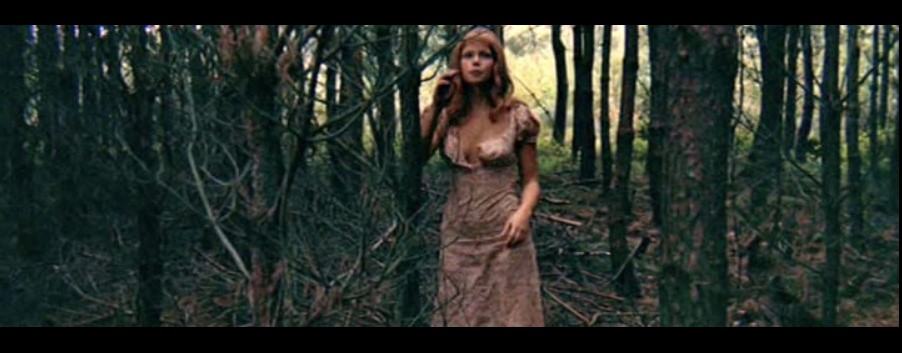
The unlucky sap caught in the village scheming drama is liberal arts enthusiast Paul Greville understood in his thirst for solving the case of the missing medieval art by English actor Simon Brent. The “Love is a Splendid Illusion” Brent, who left acting a few years after “Venom,” finally lands a significant lead man role albeit in a rather stretch of post-war German antics horror that has more twists in the narrative than there are actual spiders. Brent exudes an uncomfortable amount of a curious confidence as he charges through the forest to track down, or rather just happen to run into by chance within the vast area of a mountainous forest, “Erotomania’s” Neda Arneric, a Serbian rugged beauty playing wildling Anna with red-hot hair atop her short frame. We are first introduced to pixie cut Anna during a flashback of a full-frontal skinning dipping frolic in the river with a young, also naked, man and while the unknown man and Anna gaze with an effervescent stars of love in their eyes, the chemistry between Brent and Arneric is about as sparkless as a dud sparkler in a warehouse full of dud fireworks as their characters are too far apart and unalluring to fall for each other at first sight; instead, Brent casts such a demanding go-getter presence with his amateur investigation into the village’s little secret, his murky intentions toward the locally feared Spider Goddess is nothing more than nearly a figment of formulaic structure. We, as the audience, literally attempt to use our own mental will power against them in order to fall in line, or in love. More infatuation buzz surrounds the sawmill boss’s cloak-and-dagger daughter Ellen with “Children of the Damned’s” Sheila Allen as a willing and brazen femme fatale that seduces the hapless artist more than once, especially during one intimate session that restores him back to full health. Although an English production shot in an English forest despite being backdropped in Germany, there is one German actor that gave “Venom” that je ne sais quo toward locale authenticity, beginning with the sawmill boss and self-proclaimed first village resident Huber, played by Gerard Heinz (“Devils in Darkness”) in his last feature length film before his death one year later in 1972. The rest of the cast predominately is English with Derek Newark (“Fragment of Fear”), Terence Soall (“Theatre of Death”), Bette Vivian and one sole Czech actor Gertain Klauber (“Octopussy) giving it all with his very convincing German accent as the village Alps only pub and inn owner Kurt.

Screenshot from IMDB.com

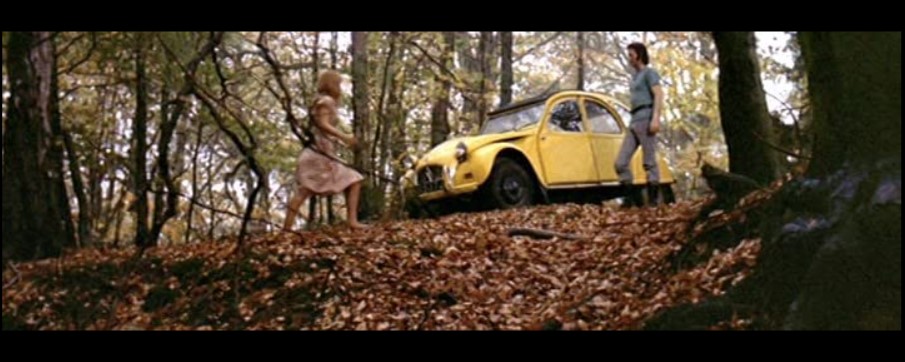
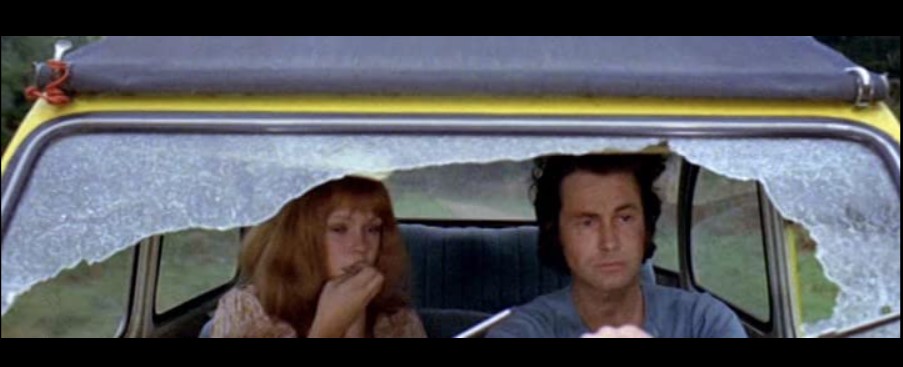
The sting of “Venom’s” unavailing characters is dangerously potent to a near effect of paralyzing the narrative. From Huber’s ireful small talk foreman with his own entourage of blue collar lackies to the mad scientist who doesn’t actually arrive onto the screen until the very last 10 minutes of story, in who is also perhaps the most interesting character garnering deadly spider venom and doing a little crossdressing on the side, “Venom” bears the brunt of unnecessary and disproportionate figures to be an implemented stopgap in managing Simon Brent’s screentime. Sykes teeters away from the majority of Greville’s point of view with little windows outside his perception that drop more diversional obscurity in who Huber and his operatives think Greville really is, why Greville is really there, and how can they handle Greville once he’s become too close to Huber and company’s operations. “Venom” slips unintentionally into the being a low-rent, haphazard Bond film or, better yet, a Scooby-Doo mystery without the Scooby Snacks, but there is ascot fashion. The story implies some exploitation of the mentally instable, using the “Spider Goddess'” strange behavior and her ominous ill-repute to be a warning to outsiders but Sykes conveys the latter allegorically with the destruction of pure, free love by an oppressive governing head, spreading lies about being cursed and deadly, only to find it again in a similar person, a person like Graville seeking to subvert the old wives’ tales and explore his unwaning curiosity no matter the consequences of bodily harm. I just like that Paul Greville drives off-road with a conspicuous bright yellow fiat through the forest shrubby and muck without getting stuck and without blending in.

Screenshot from IMDB.com

The skirmishing climatic finale quickly wraps up loose ends and, at the same time, is an intoxicating delirium of madness and suspense. Twilight Time delivers another Screen restored eldritch mystery onto Blu-ray home video as part of the limited-edition series licensed for a U.S. release from the UK’s Screenbound Pictures and distributed by MVD Visual. Presented in a 1080p, high-definition widescreen 2.35:1 aspect ratio, this is a good-looking transfer with soft, dream-like overtones stemming from a well-preserve original negative with the only drawback being the edge of the 35mm stock occasionally being visible in perhaps a mishandling or misaligning of the film reel that may have also been exposed to light slightly. Other than that, only a few hardly noticeable blemishes are on the image. The English language 2.0 LPCM Dual Mono that separates the dialogue and the ambient/score tracks. You’ll find a robust vocal channel, discerning very nicely from the action, but there’s still quite a bit of hissing and popping on the tail end that denotes more attention needed for better clarity. The film is rated PG but that doesn’t mean much of anything in early 1970’s with Anne Arneric going full-frontal, along with young beau Ray Barron, in emerald green tint as well as other brief flesh scenes from Arneric, arthropod terror, some blood, and the quickest flash edit I’ve ever seen of the lower half of a post-sawed torso. Much like the “Seven Deaths in the Cat’s Eye” release, “Venom” also has zero special features and, as a more tangible replacement, is a 11-page booklet with color and black-and-white stills, various poster art, and an essay by author Mike Finnegan. The Blu-ray cover art is also reversible with a color still on the backside. Don’t expect to contract arachnophobia after watching “Venom” in this high concept, poor execution of cheap boscage thrills.


Own the Limited Edition of “Venom” aka “The Legend of Spider Forest” on Blu-ray!

No Sam Raimi. No Bruce Campbell. Just the EVIL! “Evil Dead Trap” reviewed (Unearthed Films / Blu-ray)


Nami, a Japanese late night show host, is seeing her ratings dipping.  Though not in danger of losing her all-female produced show, Nami decides take her team on an investigation of a mysterious snuff tape that was mailed to her specifically.  Left for her is a bread crumb trail of directions to an abandoned military base, Nami and her crew explore the campus’s rundown structure, searching for evidence, a body, a story that they can televise.  Ignoring the dangerous presence around them, they dig deeper into the dilapidating labyrinth where they horrifying discover something waiting for them laid out in a cruel plan of deadly traps with a maniac pulling at all the strings. 

Bred out of a pedigree of pinkusploitations and a nation’s crisis of identity after the Second Great War, “Evil Dead Trap” is a greatly symbolized Japanese machination tale helmed by pink film director Toshiharu Ikeda (“Sex Hunter,” “Angel Guts:  Red Porno”) and penned by an equally historical pink film screenwriter and “Angel Guts” manga series creator Takashi Ishii (“Girl and the Wooden Horse Torture,” “Angel Guts” series).  Also known under its original Japanese title, “Shiryô no wana,” as well as, and my personal favorite, “Tokyo Snuff,” in Spain, “Evil Dead Trap’s” smorgasbord of rape, torture, and gory death naturally shocked viewers upon release and continues to do so as one of J-Horror’s branched out films that segued out from the brutal and depraved pink film inspired context into the new longstanding ghost genre we’ve seen over the last few decades with “Ringu” (“The Ring”) or “Ju-on” (“The Grudge”).  The production company Joy Pack Films, behind the 1980’s obscure Japan films, such as Genji Nakamura’s “Go For Broke” and Banmel Takahashi’s “Wolf,” houses the “Evil Dead Trap” from executive producer Tadao Masumizu.

If you recognize a couple cast members, or maybe just their naked bodies, then there’s something depraved about you!  With all kidding aside, but no seriously, if Rei (Hitomi Kobayashi) or Kondo (Masahiko Abe) look familiar, then you my friend are pink film aficionados as Kobayashi has starred in “Hard Petting” and “Young Girl Story” and Abe was in these pink film hits the “Pink Curtain” trilogy and “Female College Dorm Vs Nursing School Dormitory.”  If these faces didn’t touch you in any kind of sensual way, no worries, leading lady Miyuki Ono brings the star power.  The “Black Rain’s” Ono plays Nami, a go-getter television host/personality with her sights set on ramping up her late night show’s ratings, but also sucked into the posted snuff film’s darkest allure that’s personally calling her into to a precarious story lead.   Nami could also be a homage to one of screenwriter Takashi Ishii’s manga-inspired pink films entitled “Angel Guts: Nami” and the title might not be the only aspect paid honor to with that particular Nami written with a journalistic vocation drawn into and obsessed with a serial rapist’s attacks, making a striking parallel between the two stories that are nearly a decade apart. Eriko Nakagawa and Aya Katsurgagi fill out Nami’s investigating team as Rei and Mako. As a whole, the characters lack personality; Rei and Kondo tickle with relationship woes that are snuffed out before fruition, Rie’s timid innocence barely peaks through, and Nami and Mako’s thicker bond compared to the rest of the team is squashed to smithereens way before being suckled into note worthy tragedy. This late night show team has been reduced to slasher fodder and, honestly, I’m okay with that as we’re only here for the deadly traps. Noboru Mitani, Shinsuke Shimada, and Yûji Honma, as the mystery man looking for his brother, complete “Evil Dead Traps” casting.

“Evil Dead Trap” boasts a melting pot of inspirations, a mishmash of genres, and spins a nation’s split identity variation crowned in aberration. Diversely colorful neon-hazy lighting complimented by a Goblin-esque synth-rock soundtrack from Tomohiko Kira (“Shadow of the Wraith”), Toshiharu Ikeda shadows early Dario Argento inside and outside the popularity of the Italian giallo genre as the “Evil Dead Trap” murder-mystery horrors resemble more of a westernized slasher with a killer concealed behind a mask stalking a fringed, neglected compound in a conspicuous outfit. While the killer dons no hockey mask or snug in a mechanic’s jumpsuit, an equally domicile, yet more calculated, antagonist taunts more brains than brawns, especially with the severity of traps that seemingly float from out of nowhere. The fun is chiefly in the imagination of how the trap designs operate in the void of physics of a slasher fodder film so wipe clean the Jigsaw and the “Saw” films from your mind completely and relax to enjoy the outlandish kill scenes. Some of the kills are imperialistically inspired by Imperial Japan, that is, to blend the wartime nation’s atrocities with how the proud country wants to distance itself from that old-fashion, war-criminal, stoically perverse superstratum layer, but that’s were “Evil Dead Trap” pulls for most of the juicy parts as well as supplementing with Argento lighting, some, believe it or not, “Evil Dead” elements of that menacing presence bulldozing through the spiritual world, and an divergent climatic finale stuck to the narrative body that’s akin to pulling off the head of a doll and replacing it with T-Rex head’s. The uniformity quells under the pressure of how to end Nami’s and her attacker’s coda with pageantry weirdness that’s typical status quo Japanese cinema. Lots of symbolism, little modest explanation.

Get caught in “Evil Dead Trap” now back in print and on Blu-ray courtesy of Unearthed Films, distributed by MVD Visual, as part of the extreme label’s Unearthed Classics spine #5. The Blu-ray is presented in a matted 1.66:1 aspect ratio, a format rarely used in the States but widely used in other countries. Reverting to the 1.66:1 from Synapse’s 1.85:1 crop, Unearthed Films showcases more of the European feel, heightening that colorful vibrancy of the Argento-like schemes. Image quality has peaked on this transfer with natural grain with the 35mm stock, but details are not granularly sharp in an innate flaw of the time’s equipment and lighting. Shinichi Wakasa’s unobscured practical effects heed to the details and don’t necessary suffer the wrath of miniscule soft picture qualities when you’re impaling someone or birthing a slimy evil twin…you’ll see. Add in Ikeda’s wide range of shooting techniques, you’d think you’re watching Hitchcock or Raimi and the focus really lands there with the differently camera movements and techniques. The Japanese language single channel PCM audio fastens against that robust, vigorous quality to make “Evil Dead Trap’s” diverse range and depth that much more audibly striking, but there’s a good amount of silver lining in there being no damage albeit discernable, but not intrusive static to the audio files, dialogue is unobstructed and prominent, and the stellar synth-rock soundtrack nostalgically takes you back to when you first watched “Suspiria” or “Dawn of the Dead.” English subtitles are available but display with a few second delay which can be cumbersome if trying to keep up. Special features includes three commentaries that include director Toshiharu Ikeda and special effects supervisor Shinichi Wakasa, filmmaker Kurando Mitsutake (“Gun Woman”), and James Mudge of easternKicks. Plus, a Trappings of the Dead: Reflecting on the Japanese Cult Classic retrospect analysis from a Japanese film expert, Storyboards, Behind the scenes stills, promotional artwork, trailers, and a cardboard slipcover with phenomenal artwork. Highly recommend this atypical Japanese slasher, “Evil Dead Trap,” now on Blu-ray home video!

Own “Evil Dead Trap” on Blu-ray!