Who is This EVIL Named “Dariuss” reviewed! (SRS Cinema / DVD – Extreme and Unrated)

Find Out Who “Dariuss” Is With this SRS Release!

An experimental vision quest of loss, grief, and death takes refuge in a small English town, inside an old and quaint English house.  A mother grieves for the loss of her child, sobbing uncontrollably and mindlessly wanders with distant stares as the heart pains for her child.  The grandmother, doing what she can, comforts her daughter’s newfangled distraught nature while the husband, grieving in his own isolated way, stays out late at night to drink himself into a stupor.  When madness lurks about their home and intrudes upon their privacy, a vile and heinous loss of life bathes a depraved lunatic in their fluids.  Neither mother, father, nor grandmother is safe from terrific travesty in corporeal form.  A sickness has arrived to cure the inconsolable, eradicating them slowly of the pain in the most painful of ways imaginable, and doing it all with a bloodstained maniacal grin stretching from ear-to-ear.

A hellish loop of defeating pessimism, “Dariuss” fringes the black void areas around reality and escapism that evoke the uncomfortable nature of people and the unpredictable tides that turn for the worst when already at rock bottom.  “Dariuss’s” brackish, brainsick narrative is the brainchild of Guerrilla Metropolitana, an Italian artist crafting his underground and dark cinemaverse of misanthropic mayhem and esoteric eroticism.  The writer-director Metropolitana lives and creates out of London, UK and “Dariuss” is his 2023, debut feature-length film behind an oeuvre of distressing shorts of human imperfection and immortality encroached by a constant line of madness.  Metropolitana not only self-funds and produces his film, where he achieves total control to push back against not only major studio norms but also conventional independent stratagem, but provides the avant-garde cinematography, unorthodox editing, an experimental score and sound design, and even costars the trench coat covered naked body of the antagonistic killer. 

One element to not forget to mention before going through the cast is that “Dariuss” is completely without dialogue.  Metropolitana’s sound design manipulates and repeats many sound clips, such as the plops of water droplets or the high-pitch lip trilling, to fashion an uncomfortable audio sensation sporadically strung throughout that parallel’s the coupled low tumbling score and baby laughter, the later more so when referring to child loss or the abhorrent reincarnation of the child.  Ila Argento holds the majority screen time, especially since the pregnant woman credited as Sarah Isabèl is also Argento as well in some sort of meta crafting or illusion, and she plays the grieving, depressed wife wailing, screaming, and just distantly starring in vast quantities and in a daze of mirrored or painted inversions about the English home.  “Dariuss” is more than just extreme performance art as it embodies interval wretchedness associated with trauma, or in this case more specifically, loss through a reverse world looking glass.  As the wife is tended to by the grandmother, played with apneic conditions and posturing concern is Marie Antoinette de Robespierre, Archibald Kane’s the husband role is scantily around for a father who just lost a child and when the father is in frame, he’s idling in his car drinking, or rather gulping, from a bottle.  Both the grandmother and father roles are a part of Metropolitana’s message of a shattered family structure of insincerity and disconnect. Feeding on that dysfunction is the childlike maniac, played by Metropolitana himself, with rapacious amusement off the back of the household’s suffering.  Almost as if the maniac is a reincarnation of the lost child, perceived by play like antics in a nearly naked and hairless state and audible by the babylike, post-introduced laughter, returning home to exact horrific horseplay on his family involving rape and murder and cannibalism alongside the frolicking and breast milk chugging.  

Let’s preface with an important fact that “Dariuss” will not be everybody’s cup of tea; in fact, Metropolitana’s film is more like bitter black coffee with a pungent, sour smell as a narrative series of images, like a splayed, taped together string of polaroids, giving godawful glimpses of grief and gore.  Sounds and images repeat that beg for madness to emerge out of the nouvelle vague filming style, experimenting with various inverted images, mirrored and angled shots, different types of aged filters and strange lighting, various camera speeds, and oddly framed shots will subject audiences to pricklier sensory sensations than the depicted violence and gore, which is graphically ghastly and extreme with necrophilia and cannibalism.  Story structure also veers into non-linear territory but the gist of the acts is present, if not loose and equivocal for open interpretation and choice cinema characteristics that stray from normal convention, to mold a beginning, middle, and end in only a way Metropolitana can construct by contrasting melancholic grief with stagnating indifference, with a maniacal pleasure of a sandbox of sinew, and, in way, comical by way of the insanity with disturbing imagery mixed with playful mischievousness. 

Just who is Dariuss?  That’s the obstruse person perhaps at the centermost of this ghastly, grisly story that’s now on DVD from SRS Cinema as a part of their Extreme and Uncut label.  The DVD comes MPEG2 encoded, 480p standard definition, 5-gigabyte DVDR that showcases a wide-range of filters, inversions, lighting designs, grading, and you name it, “Dariuss” likely did it of cinematography techniques that stay in the rough patches of eccentricity rather than being comfortable in the fairways.  Picture quality fluctuates and varies depending on the aesthetic chaos methods being deployed, leaving behind not the sharpest looking picture with noticeable pixelation on anything above a 32″ television but not enough of an eyesore to be an imperceptibly deterrent.  Depth has fair spatial qualities but range and saturation is pretty limited to an anemic neutral palette to only when the monochrome or higher contrasts are not in play. The LPCM 2.0 stereo contains no organic matter, meaning that none of the sound is captured within the scenes, as Metropolitana modulates, manipulates, and modifies singular notes and tones for creepy and ear-splicing effect. This also pertains to the soundtrack being completely devoid of dialogue to give the auteur complete authority of how his film she be heard and every bit of that sound design is front loaded and high-powered but to an intended unrefined audio art. English captioning for the deaf and hard of hearing is available. Special features encoded are a behind-the-scenes still gallery and SRS trailers while the standard Amaray comes with an SRS illustration of the film’s original one-sheet, transposed to the disc pressing. There are no inserts included nor slipcover. SRS Cinema’s release is region free and has a runtime of 62, ideal, or even a tad bit too long, for this type of experimentation.

Last Rites: Not to be confused as a nail-biting, popcorn thriller, “Dariuss” will only speak to a select few able to bend the mind to impressionistic, dark eroticism and savagery, both qualities of which Guerrilla Metropolitana has and depicts in droves.

Find Out Who “Dariuss” Is With this SRS Release!

Master Chen and his EVIL, Alien Clan Try to Take Over the Powers of the Astral Plane! “Furious” (Visual Vengeance / Blu-ray)

Get “Furious” Now on Blu-ray from Amazon.com!

After the murder of his sister who sought pursuit and protection of the astral plane power, the mourning and grief-stricken Karate instructor Simon is summoned to Master Chan’s space-age dojo where’s he’s tasked to track down four connecting pieces of a necklace artifact that will lead him to his sister’s murderer.  As soon as Simon leaves the building, his friends join his quest only to be confronted by Howard, a martial arts henchman with a throng of skilled fighter to descend upon Simon and killing his friends.  Simon finds himself in constant battle against not only Howard but also other highly skilled sub-bosses with ties to Master Chan in a devious and traitorous plot to obtain the power of the astral plane for himself.  Simon uses his Karate discipline to kick and punch his way through hordes of trained fighters to reach Master Chan to stop him and exact revenge for his sister. 

A martial arts movie with aliens, astral plans, a dragon’s head, evil fire-shooting magicians, and more, “Furious” lives up to the moniker as one punch after another action and completely ambitiously and guerrilla style on a miniscule 30K budget.  Entirely helming “Furious’s’” creative control and securing actors and stuntmen willing to take risks on their own accord and dime are USC film students Tim Everitt (visual effects animator and composite artist who would go on to work on “Deep Blue Sea” and “Red Planet”) and Tom Sartori (a career film editor) looking to break into the film industry with their own rapscallion production of a marketable chopsocky genre film at the tail end of its string of success coming out of the 1970s and into the early 1980s when horror began it’s rise.  Everitt and Sartori produced the all-American made martial arts production with funding from a motel entrepreneur.

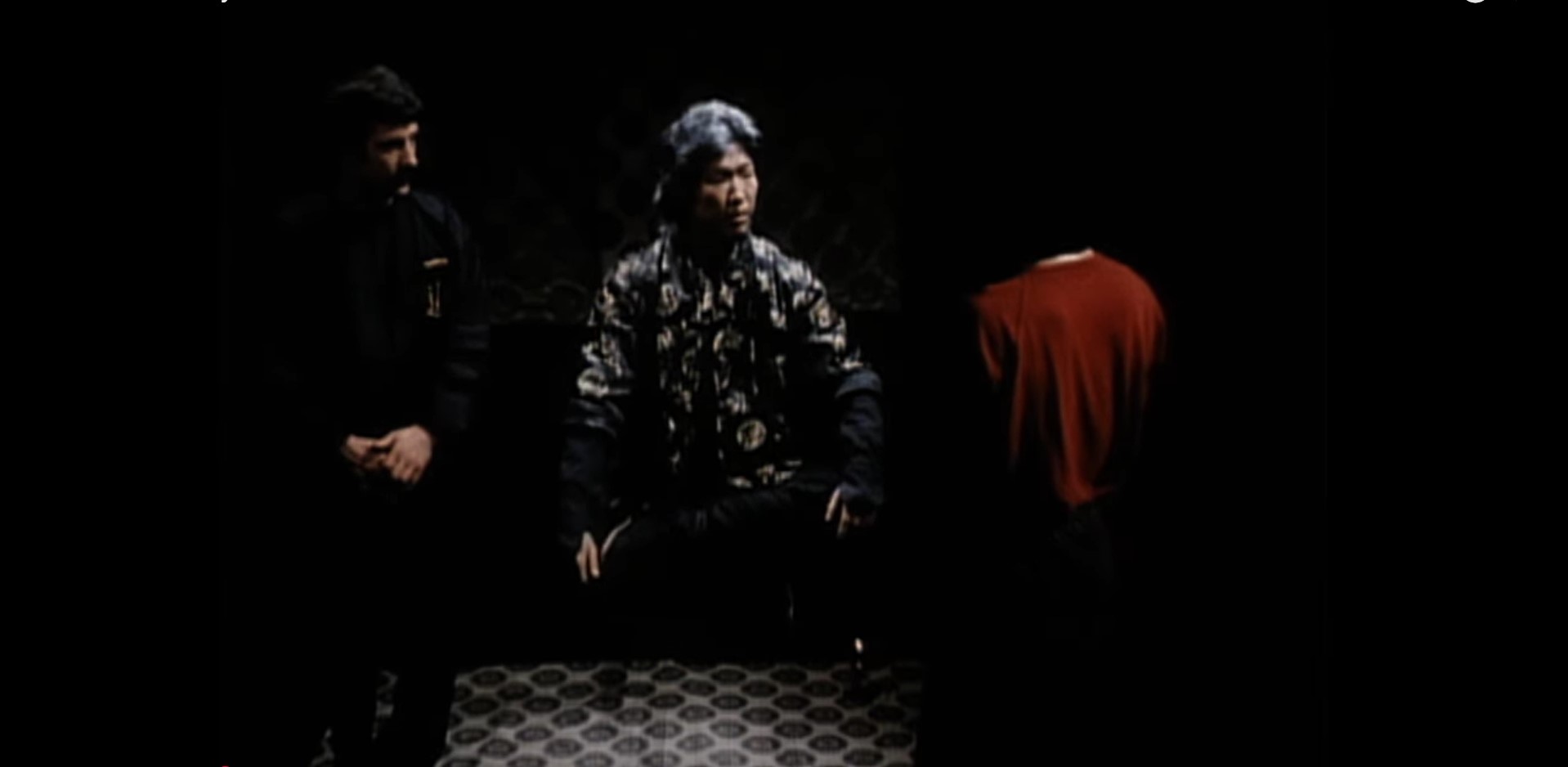
At the center of “Furious” are two Korean-American brothers, Simon and Phillip Rhee, experts in Karate and dojo sensei who, like Everitt and Sartori, were looking break into the business.  The California-born Rhee brothers play the protagonist and antagonist roles with Simon playing the namesake hero thrust into doing evil’s biding while avenging his sister’s death and Phillip donning Master Chen’s white hair and manically, ruthless plot to exploit not only Simon to obtain astral plane summoning necklace pieces but also his henchmen who carry the pieces that must hold the essence of death.  Virtuosos in karate, the Rhee brothers show and pull off incredible difficult moves done practically, especially in the early 1980s without the help of high-flying wires and only a little help with some camera angle movie magic.  The sparring is fast and realistic without being pull-punching obviousness.  All of the sound was done in post, so the Rhee’s real voices are not used to either replicate the martial arts jagged voice synchronicity or sound design was not in the budget.  Likely, a little of both.  The lower-level bosses are a medley bunch and have a range of talents from a staff wielding wilderness man (Bob Folkard), to a tiger style soul fighter (Howard Jackson, “The Delta Force”), to a crazed wizard (Mika Elkan) with flaming projectiles Simon has deal with, one-on-one, in order to reach the pyramidal top, Master Chen.  “Furious” is purely an action film, casting no love interest for Simon resulting in no emotional or romantical arch.  The former is emphasized more intently by Simon’s lack of expressiveness for revenge; there’s a sliver of poignant energy when Simon has visions of his dead friends’ severed heads served to him on a food platter that could warrant retribution attributions.  Jon Dane, John Potter, and Joyce Tilley who are quicky established as character friends to Simon and are equally as quickly dispatched to place Simon in a world of loneliness against an aliens and evil karate master alliance for astral plane domination.

From the depths of Tubi comes a curation for the ages release of “Furious” for the first time ever having a proper package that’s not related to pornography, as was the first and only VHS issuance by VCII, a well-known adult film distributor at the time who released “Debbie Does Dallas.”  “Furious” is an odd, unpredictable, mashup of throwing darts to see what sticks and in that volatility, anticipation of what’s to come next is considerably high, especially when a shoestring budget production surprisingly opens with incredible helicopter shots tracking a foot chase sequence.  From there, “Furious’ keeps astonishment alive with high-level increments of bizarre alien in human skin behavior, punitive human to animal transformations, talking pigs, astral plane battles, Superman flying, and Devo band mania coupled with extensive and coherent editing to flesh out a feature on the front and back ends.  Granted, the plot’s very puzzling and motives are dubious at best to why Master Chen would task a competent fighter like Simon to track down pieces of a unifying necklace when Chen’s own men possess all of them and could easily have killed them himself for the death essence.  There’s also the alien aspect that goes by the wayside in a lack of explanation or exposition by jumping into assumption just by weird behaviors and flashy, ultra-modern buildings to serve as extraterrestrial evidence.  Even with that ambiguity, seeing Simon Rhee perform a triple-hit kick amongst a slew of other highly impressive stunts and special effects relative to the budget has “Furious” become a cult fan favorite. 

Visual Vengeance curates another title from out of the shadows and into our Blu-ray players with “Furious,” encoded with AVC, presented in a high-definition 1080p of the original fullscreen aspect ratio 1.33:1, on a BD50.  Sourced from the original tape elements, which I’m assuming was the original VHS release a few years later as the film was shot on an Arriflex camera that used film stock, the Blu-ray contains a new, director-approved SD master print.  Cleaned up to get some color saturation into the anemic picture, the image doesn’t look as washed as the monochromic qualities of VHS and this is a vast improvement in picture quality as well with some better delineation around objects.  There’s quite a bit of aliasing and ghosting that leaves object trails and rough edging but not enough to warrant visual concern for texture properties, such as the pig stubble or the decapitated heads on a pater that show coarseness where it matters.  Print damage, such as virtual scratches and some rough editing room splices and re-tapings, are present but not profound.  All of this is covered in the technical forewarning, regularly at the beginning of ever Visual Vengeance film so the expectation is set.  The English language LPCM stereo is all postproduction additions with ADR and foley artistry.  The first instances of dialogue don’t come up in the mix until the 13-minute mark, leaving much of the opening left to Foley work to build kinetic and atmospheric sound.  With any early postproduction work, three will always be space in between the synchrony and that can be said here but on slightly jagged edge which says something positive about Everitt and Sartori’s handling of the audio track.  Optional English subtitles are available.  Obscurity doesn’t mean less supplement goodies either and Visual Vengeance has proved that over time again and again with their amazing stockpile of exclusive and archived special features.  New interviews with directors Tom Sartori, High Kicking in Hollywood, and Tim Everitt, The Kung Fu Kid begin the exclusive content with length editing discussions from the directors about their time before, during, and after “Furious.”  Filmmaker and podcaster Justin Decloux provides a slew of material, including a feature length commentary, cohosted with Peter Kuplowsky of Toronto International Film Festival.  Decloux does a pair of video essays – North American No-Budget Martial Arts Cinema Primer and Rhee Brothers career overview. The buck doesn’t stop there with an archive commentary with co-director Tim Everitt, an archive podcast with Everitt circa 2013, Super 8 behind-the-scenes footage of “Furious,” Scorched Earth Policy 1987 EP with full six tracks, Cinema Face live in concert, Tom Sartori’s 80’s music video reel and Super 8 short films, original film trailers, and Visual Vengeance trailers. That’s not all! New slipcover artwork brings together an illustrated compilation of what to expect with the same art on the inside Amaray case. The cover art is reversible, depicting the original VHS cover art that’s not as charismatic, or good. Insert section houses a folded mini-poster reproduction of the original one sheet, a double-sided acknowledgement advert with alternate art, Visual Vengeance’s retro VHS sticker sheet, and a ninja star keychain accessory! The 17th Visual Vengeance title comes region free, has a runtime of 73 minutes, and is unrated.

Last Rites: Anomalously action-packed with a fantasy element, “Furious” is a one-of-a-kind, indie martial arts production that has everything, even the kitchen sink, thrown at with a journeyman tale of alien butt-kicking, astral plane dogfighting, and anthropomorphic black arts.

Get “Furious” Now on Blu-ray from Amazon.com!

EVIL Tossing Back an EVIL Hail Mary! “The Last Match” reviewed! (Cauldron Films / Blu-ray)

“The Last Match” is Now on Blu-ray From Cauldron Films!

A sovereign, Latin American banana republic is a beautiful paradise for those seeking tropical getaways, such as with 18-year-old Susan Gaylor and her boyfriend George indulging in paradisial romance, but paradise turns into hell when Susan is accused of smuggling drugs out while going through the departure gate at airport security.  George flees the scene to evade capture and phones Susan’s father, famous football quarterback Cliff Gaylor, to help administer talks to release Susan.  When negotiations fall on deaf ears, the American consul is handcuffed by little-to-no relations with the incarcerating nation, and the local counsel are nothing more than greedy exploiters, Cliff and George have no one and nowhere else to turn to except for Cliff’s team of broad shoulder teammates and a gameplan-calling coach dedicating their lives to suit up and extract Cliff’s daughter from the cruel grip of Warden Yashin and his miscarriage of the law and order with an all-out offensive assault.

Italian filmmakers directed a football movie.  No, I don’t mean fútbol, aka soccer.  I’m talking about American football with face-masked helmets, shoulder pads, and a prolate spheroid shaped ball with laces you kick through the uprights.  The contradictory idea isn’t so much of a theorotical concept as it is a reality with Fabrizio De Angelis’s directorial attempt at pigskin gridiron in the early 1990s.  The “Killer Crocodile” director helms the jailhouse break picture entitled “The Last Match, or “L’ultima meta,” released in 1991, from a script by fellow Italians Gianfranco Clercic (“Cannibal Holocaust,” “The New York Ripper”) and Vincenzo Mannion (“Murder-Rock,” “The Last Shark”) that blitzes hardnosed foreign opponents with not only high caliber assault rifles and ammo but also done in full team gear, right down to the numbered jerseys and cleats.  Angelis produces the shot in the Dominican Republic film with Mark Young serving as executive producer with Fulvi Films as the production company.

Not only does “The Last Match” have a theme around an American sport, but it also employs a nearly all-American cast, a popular course of casting once the Italian industry started to gain traction and making films in The Boot proved to be more costly at the time, plus American actors were also far more marketable than Italian actors.   Ernest Borgnine (“Escape from New York,” “The Poseidon Adventure”) plays the fair-weather looking coach who knows common football terms, about as generic as coaching on screen comes without dipping into play strategies and being inundated by the game.  Borgnine’s cruise control motivation is equaled by Charles Napier (“Supervixens,” “Rambo:  First Blood Part II”) in the performance of a hands-tied American Consul stationed in the unnamed tropical country.  While Borgnine and Naiper act in natural nationality aspects, there are also another pair of Americans who transition their talents to be native islanders who are subsequently more deviously portrayed in what becomes a pro-American, anti-foreigner perception.  The actors, whom are also both New York City born, are Martin Balsam (“Death Wish 3,” “The Delta Force”), as a greedy local defense attorney who tries to exploit Cliff Gaylor’s desperation, and Henry Silva (“Almost Human,” “Allan Quartermain and the Lost City of Gold”) with his wide face stretching a maniacal grin as the sadist warden Yashin and though Balsam and Silva tout the root of evil archetype, molded to their individualized immorality, they barely fit in the framework of Latin American men with a less than convincing swarthy spray tan.  In the middle of it all is German-born “’Tis Pity She’s A Whore” actor Oliver Tobias as football star father, Cliff Gaylor, determined to try every line of legal offense to acquit his daughter for the firm hand of the country’s tight authoritarian, punitive system.  Gaylor’s arc possess a line of natural progression through anger, confidence, and desperation, and perhaps even a little bit of all hope is lost but does become stymied, or neutralized, but Coach’s unconventional jailbreak playbook that sends Gaylor into the backseat though he still quarterbacks the mission, at least on paperwork.  Melissa Palmisano as the Gaylor’s wrongfully incarcerated daughter Susan and Rob Floyd playing her determined to help but pretty much young and useless boyfriend George fill out the remaining principal cast alongside bit part support from Jim Klick, Jim Jensen, Jim Kelly, Mike Kozlowsky, Mark Rush, Bart Schuchts and Elmer Bailey as Gaylor’s football brethren in arms. 

As for escape from foreign prison/work camp films go, “The Last Match” ranks at mid-range with a plausible conflict involving being a foreign tourist patsy to mule drugs through airport customs only to be caught, charged, and sentenced to be condemned without fair due process and entitled to incorruptible legal representation.  The scenario enacts frightening destabilizations of a pre-CCTV and security vigilance airport situation, evokes hopelessness of relief or assistance within a near lawless republic, and you can feel Gaylor being drained of all avenues where even his fame and fortune can’t even muster any type of traction in releasing his daughter.  Being a father myself, there’s a compelling aspect to see an expat father helpless in strange surroundings, suppled by indifferent and aggressive native blockades in a corrupt system, with his only choice then being to extract his only child with violent force.  This is the point where the compelling subjugation stops and the gaminess of the story begins to unravel when Coach brings the boys to the yard, yard being the tropical island, to acquire an arsenal, helicopter, and suit up in their conspicuous gridiron gear for an all-out prison assault.  Garbed in bumblebee yellow football pants, black helmets, and white jerseys, the elite wildcat formation commando unit isn’t dressed to blend into the background, foliage, or even the night with their reflective color gametime getup.  Coaching from the sky, Borgnine is perched high in the helicopter calling off plays while his offensive team makes quick and dirty work of the island prison defense without nearly a fumblerooskie.  Conceptual neat for the movies, but practically asinine for reality, “The Last Match” favors the fortunate heroes with a near obliteration of the entire prison camp without a single loss to their own, especially when they’re not in any kind of bullet resistance helmets or vests.  Fabrizio De Angelis runs the ball with confidence in his mildly amusing sports themed actioner as he’s able to blend footage of a national police bowl game into his narrative by fashioning matching football uniforms.  About as surprising as a fleaflicking trick play to win the game, “The Last Match” is worth going for the endzone on 4th and long.

A pulled-pin pigskin grenade explosion thrill ride in the tropics is “The Last Match’s” hard-hitting American football done the Italian way. Cauldron Films’ new Blu-ray release is the U.S. home video and worldwide debut from a new 4K restoration from the camera negative.  The AVC encoded, 1080p high-definition, BD50 presents the film in the original aspect ratio, the European widescreen 1.66:1.  There’s hardly anything to fault in this clean, sharp, diffused color saturated picture from a well-stored camera negative that has seemingly suffered no time or external wear and tear.  Grain appears naturally disseminating into a favorable detailed reproduction print with skin tones that are organic and don a nice sheen and rivulets of sweat when things get heated in football and in armed assault.  Tropical landscape remains focused in back and foregrounds, especially in instances of Giuseppe Ruzzolin’s (“Hitch-Hike,” “Firestarter”) mirror reflection shots, but not a ton of wide or long shots to take in the scope of the Caribbean battleground, limiting scenes to medium-to-closeups that crop the milieu quite a bit when you’re trying to sell a large-scale football bowl game or an ambiguous kakistocracy tropic nation.  The English language DTS-HD Master Audio 2.0 provides lossless fidelity with full range diffusing evenly through the dual-channel output, separating decisively the dialogue and the action.  With a majority of the cast native English speakers and having been filmed party in the U.S. and in the western hemisphere, ADR is not the main source of recorded dialogue with boom work providing and capturing the distinct voices and personalities of some of the more recognizable voice talent, such as Ernest Borgnine and, especially, Charles Napier’s Kentuckian twang.  However, there’s quite a bit of hissing feedback sporadically throughout.  Action depth is a bit front loaded, naturally with any dual channel, with the explosions and gunfire that never quite hit the same distance markers but do excel in being robust where needed.  English SDH subtitles are available.  Cauldron conjures new and exclusive special features with an interview with special effects artist Roberto Ricci Blown Away, a minidoc about American actors in Italian cinema narrated and directed by Mike Malloy, Italian film aficionado Eugenio Ercolani provides a video essay Understanding the Cobra, a commentary by Italian exploitation critic Michael A. Martinez, an image gallery, and the film’s trailer.  Cauldron Films has continued to provide eye-catching artwork with reversible cover sheets and “The Last Match” is no exception with dual compositional illustrations of football players wielding AR15 rifles and bazookas, though I’m not so confident the illegal purchase of Island armory would be police issued AR15s and bazookas.  Just sayin’.  There are no other tangible supplements with this release.  The region free Blu-ray is not rated and has a 94-minute runtime.

Last Rites: An Italian film using big named American actors pitting an armed, American football-cladded, rescue team against a hostile and sinister island prison, creating “The Last Match’s” action extraction of hairbreadth escape and pulling it off!

“The Last Match” is Now on Blu-ray From Cauldron Films!

The Jack-O-Lantern of EVIL Curses! “The Pumpkin Man” reviewed! (Scream Team Releasing / DVD)

Don’t Accidently Curse Yourself by Not Owning “The Pumpkin Man” on DVD!

The town of Cromwell lives and breathes off the demonic urban legend known as Pumpkin Man during the town’s full embracement of the Halloween season. College student Catherine, the town’s biggest savant of Pumpkin Man lore, has been given a tidbit of information of where to look for clues in discovering the lost book of spells that can summon the demon. After Catherine incantates the book’s passages, the frenetic young woman receives the intended reaction out of her friends, to scare the living daylights out of them with a legendary prank, but as true legend goes, those who read the words and summon Pumpkin Man back from the depths of Hell will become cursed to die by the demon’s elongated claws. Now, Catherine and her friends are haunted while they sleep, and their reality is twisted while awake as the Pumpkin Man toys with them until those who evoke his name is dead.

Halloween may be over, Thanksgiving too, but the spirit and the fear will always remain, especially when we all embark into the jolliest times of year.  There would be no shame in watching “The Pumpkin Man” while drinking hot cocoa and basking in the warm glow of your red, white, and green tree lights as you sit in the dark.  The glow of the television setup will keep you cozy and warm as a tall, pumpkin-headed demon literally rips the faces off cursed kids in director Ryan Sheets’ first feature-length film based off his short films series of the titular, iconic character.  Sheets’ inconspicuous indie franchise has spawned 5 short film sequels from the original 2016, 4-minute short, including a versus pitted against another Ryan Sheets’ regular character Kreepy the Clown.  Sheets cowrites the feature with Nick Romary, the original Pumpkin Man actor Jeff Rhodes, and his wife Janae Muchmore, pieced together by the central Florida team’s production company South Ridge Films with Sheets’ daytime colleague, fellow attorney Jason P. Herman, footing most of the bill as executive producer. 

Unlike the shorts, the feature features a whole new cast of carefully crafted victims for the demon to shake up and slaughter.  Even the Pumpkin Man himself is not played by Jeff Rhodes, who previous played the titular villain by more slasher-esque means with a butcher’s knife and a slow gait.  Instead, Ryan Sheets reimagines Pumpkin Head’s supernatural aesthetic and bearing by playing the demon gourd himself, in stilts, with less Michael Myers essence, and providing a proper name for the demon of Fall known as Kürbis.  The holiday spirited demon with a Cromwell history of whomever summons him will be cursed to die by him plagues a new set of fool-hearted conjurers nearly three centuries after a supposed Cromwell witch took her own life to stop the demon.  The film introduces the first-time principal role for Barbara Desa, a social media influencer and Orlando-based actress with a ton of a spunk, as Catherine Quinn, a quirky, Kürbis-obsessed Cromwell denizen with no real substantial motivation for finding the lost book of Kürbis other than to play a Halloween trick on her friends and be heedless to the consequential power it holds.  This makes Catherine dangerously unstable, and she feels more like a villain than the Pumpkin Head when irresponsibly meddling with something she truly doesn’t understand, compromising not only her own life but her friends too for fun at their expense.  The development of supporting characters outshines the simpleton needs of the principal Catherine as her friends, and outside the clique but stay in close proximity, find themselves having to make choice, such examples lie with Catherine’s best friend Jenny (“Stephanie Kirves) who chooses the demise of another just to save her own skin while Cather’s cop older brother Tim (Estaban Abanto) can’t ignore the gruesome facts of his little sister’s involvement in a couple of Cromwell murders and disappearances.  There’s also Michael (Matthew Beaton), a potential love-interest for Catherine being pulled from out of the friend zone and into more flirtatious foundations but is quickly blocked by the presence of Pumpkin Man’s uncanny ability to enter dreams and stir their existence into an unbalanced waking nightmare.  “The Pumpkin Man” rounds out with more local Floridian casting with Ariel Taylor, Krysti Reif, and Josh Rutgers.

This isn’t the Great Pumpkin, Charlie Brown. “The Pumpkin Man” doesn’t start off super strong with a tattered accumulation of characters and backstory that barely carve out the shinier surface’s meatier pith that provides traces of sympathy and capability for situations and characters before the turning point turns dour.  Yet, if you stick around through “The Pumpkin Man’s” missteps, what you get is a progressively better reconstruction of a supernatural slasher that sees some decently gore-soaked effects for an independent production.  The added bonus being the cost-saving aspects of Sir Henry’s Haunted Trail, a Florida Halloween walk-through attraction that provides the spooky atmospherics and ghoulishly made-up cast of jump-scare actors as background or pop-in macabre aesthetics.  What starts as a demon resurrecting, potentially unleashing Hell on Earth represented by Halloween synecdoche, the story hits a turning point and switches gears toward slasher properties that work more ideally with a Freddy Krueger inspired killer, embodying the spirit of Halloween in a different and welcoming way than other Samhain-centric killers with a high seasonal watch repeat and an unforgettable antagonist.

Scream Team Releasing shows what happens when the pumpkin smashes back in “The Pumpkin Man” on DVD home video.  Presented in a widescreen 1.78:1 aspect ratio, the MPEG2, upscaled 1080p, single-layered DVD5 has lower image resolution because of the single layer compression that’s encoded with not only the feature but also a fair amount of bonus pumpkin batch content.  Black areas are not as clean and void with some noticeable posterization, details and overall picture crispness are not as sharp with a smoother contour between interior and exterior scenes, and coloring is often muted with missed opportunities for a punchier palette as the cinematography is completely ungraded, appearing as mostly raw, jittery footage underneath a more dynamic audio layer.  The lossless English Dolby Digital 2.0 stereo levels range from an anemic muffled to just at the edge of overextending the audio capacity but keep in line for better precision.  The diverse band soundtrack livens up downtime sequences to evoke a Halloween and rock or rockabilly mood and the sound design digs into the atmospherics with bug chirps, floorboard creaks, clock ticks, and the intertwinement of the brief ominous minor keys.  Dialogue is clean and clear, but Pumpkin Head’s post-added dialogue doesn’t ride parallel to the actor’s which is slightly isolated and boxy but is not terribly sync to make an audible make-or-break difference.  Extras include a director’s feature accompanying audio commentary with Ryan Sheets, a making-of featurette Carving a PumpkinTales from the Book of Kürbis an 8-part short horror anthological series directed by Ryan Sheets, and two trailers.  The DVD comes with a Casey Booth designed cover art that’s yells diabolical autumn harvest with a disc pressed with a more traditional, evil-cut pumpkin head overtop the orange-colored, rough-carved, and spikey “The Pumpkin Man’ font.  The not rated DVD has a runtime of 91 minutes and is region free for all.

Last Rites: Could “The Pumpkin Man” be worth exploring deeper into the mythos? After many successful short films in the last decade, Ryan Sheets has perfected the formula for his own temporal-traversing, gourd-headed demon and with a little more refining and stamina, we wouldn’t mind seeing “The Pumpkin Man” more on screen, or in our nightmares.

Don’t Accidently Curse Yourself by Not Owning “The Pumpkin Man” on DVD!