The Gates Are Opening and The EVIL Wants to Squish Your Brains! “City of the Living Dead” reviewed! (Cauldron Films / 4K UHD – Blu-ray)

Cauldron Films’ “City of the Living Dead” on 4K and Blu-ray 3-disc Release!

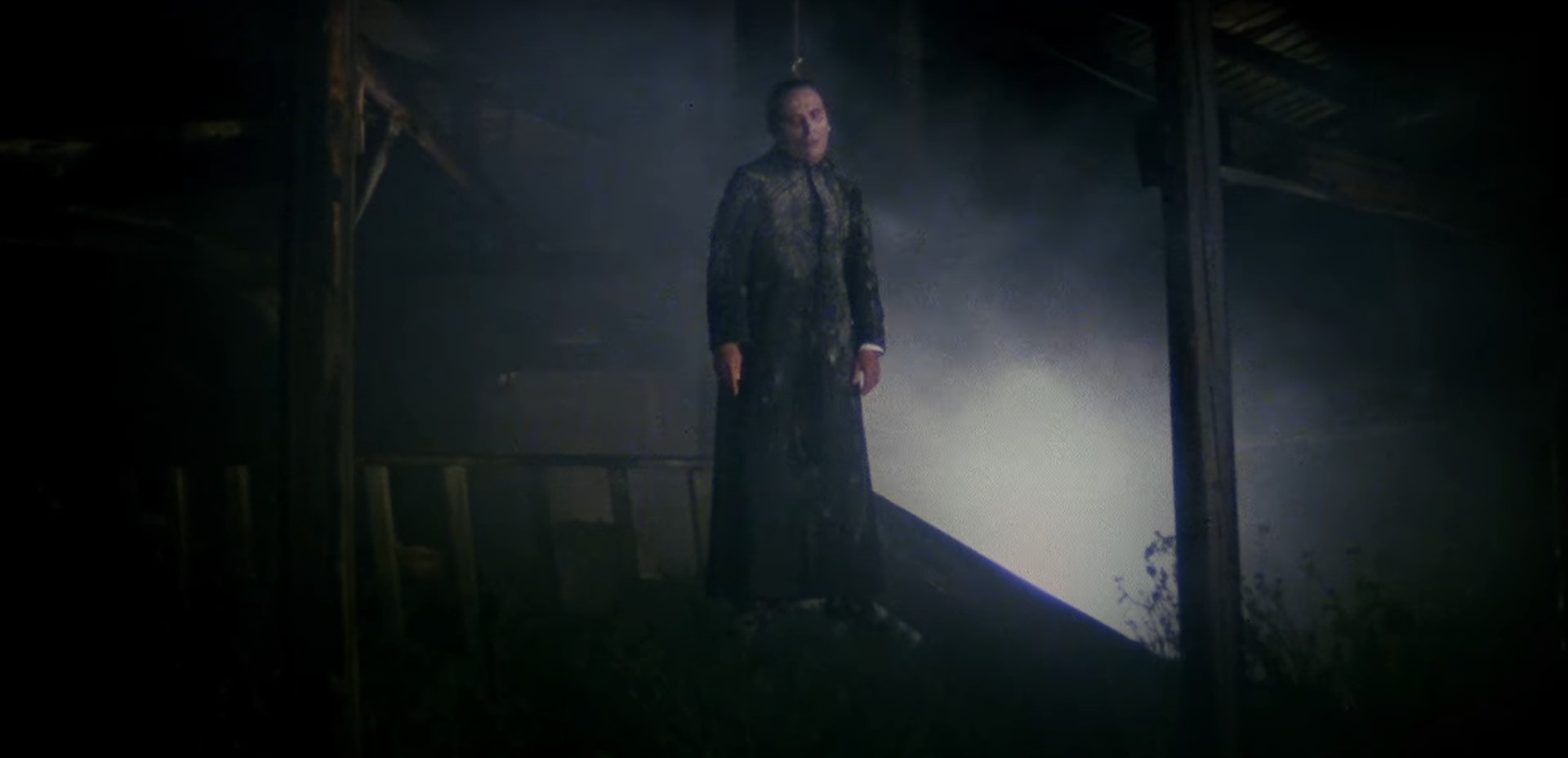
In the Dunwich, a priest commits suicide by hanging himself in the Church’s graveyard.  In the same instance, a psychic based in New York City holds a séance where she witnesses the beginning of the gates of hell opening.  The order sends the psychic into sheer fright that nearly kills her.  A reporter digging deep into the near death of the young woman also buried alive and befriends the psychic, following his nose for a good lead despite its absurd sounding hoodooism of death apocalypse in less than 72 hours.  The psychic and reporter travel to the hard-to-find Dunwich town where the residents have been mysteriously vanishing or discovered dead of curious causes.   Baffled by all the strange occurrences is the town psychiatrist who witnesses first hand the troubles that stir fear into those close to him.  When the psychiatrist teams up with psychic and reporter, they must venture to the very depths of crypt Hell to close the gates and stop the dead for rising before All Saints Day.
The Godfather of Gore Lucio Fulci undoubtedly lives up to his title, establishing himself as one of Italy’s more profound and substantial horror filmmakers before his death in 1996.  “City of the Living Dead” came at the height of Fulci’s success after his breakout into the American market with “Zombie” or “Zombi 2,” an unofficial sequel to George A. Romero’s superb “Dawn of the Dead.”  Yet, Fulci didn’t follow suit with “Dawn’s” social commentary and pale-faced flesh eaters; instead, the writer-director stemmed his undead creatures from black magic hoodooism set in the sunny and sandy Caribbean islands with just as much visceral violence as his inspiring mostly Pittsburgh-based counterpart.  Alternatively known as “The Gates of Hell,” the Italian production of “City of the Living Dead” remains set in the U.S., filmed in New York and the surrounding metropolitan northeast, as the first part of the Gates of Hell trilogy that coincided with “The Beyond” and “The House by the Cemetery,” both of which were released approx. a year later.  “City of the Living Dead” is a Dania Film, Medusa Distribuzione, and National Cinematografica production with Fulci producing as well as the American Robert E. Warner (“Return of the Swamp Thing”) as executive producer.
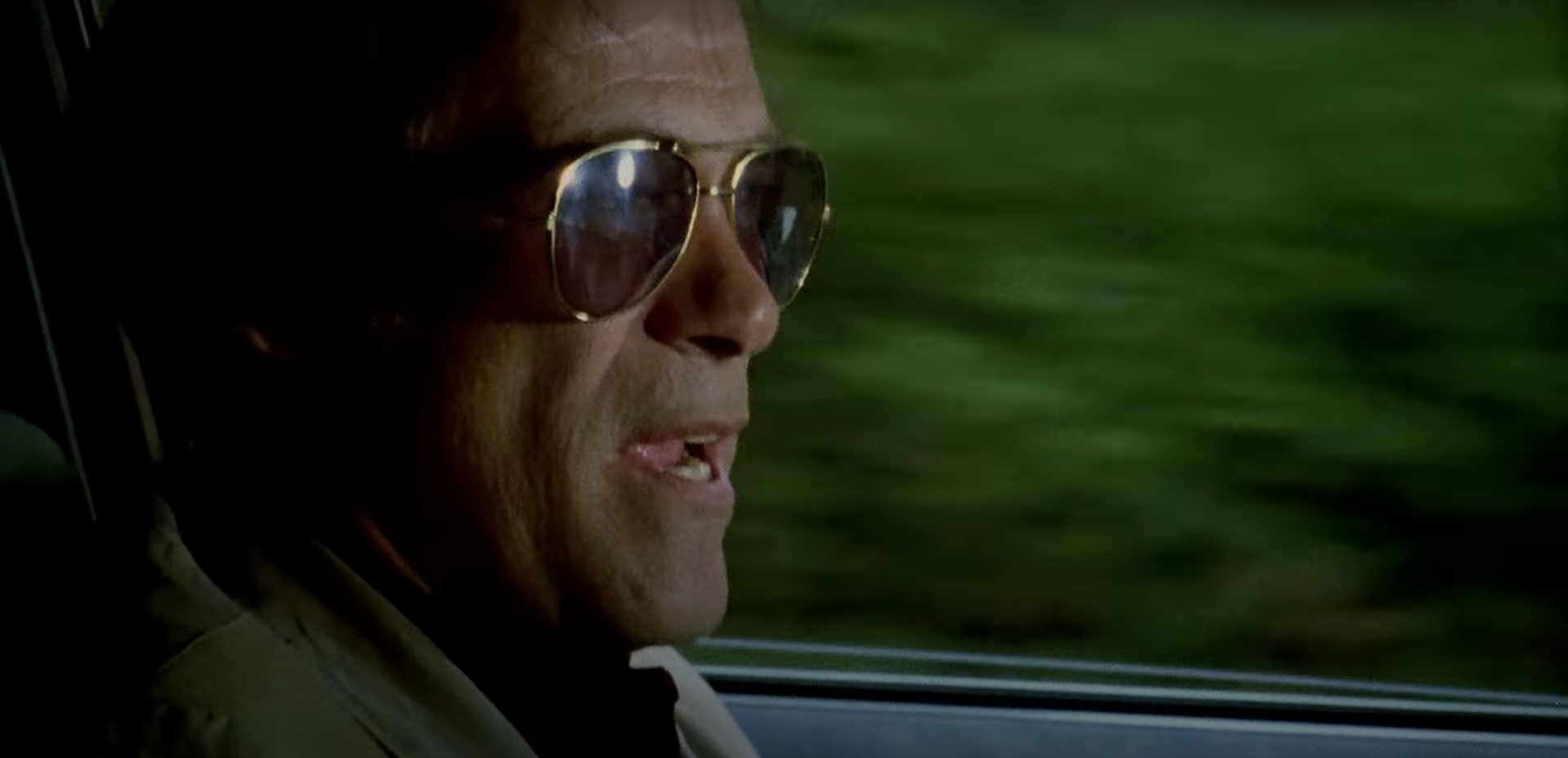
A medley of nationalities make up “City of the Living Dead’s” who either are or are playing American characters.  Comprised mostly of Italian actors Antonella Interlenghi (“Yeti: Giant of the 20th Century”) as one of the first doomed Dunwich victims, Michele Soavi (director of “The Church”) as a canoodler with his brains being squished, Daniela Doria (“New York Riper”) as the other canoodler having her innards become outers, Fabrizio Jovine (“The Psychic”) as the hung priest who started all this mess and as the harbinger of the living dead, and Carlo de Mejo (“Women’s Prison Massacre”) in the psychiatric lead.  There’s an abundancy of diverse Italian flavor that definitely grounds “City of the Living Dead” as an Italian production, but a minor chunk of the cast are Americans with co-principal Christopher George (“Graduation Day,” “Pieces”) as a rakish NYC reporter forcing his way into a minor lead turned major forthcoming day of reckoning and Robert Sampson (“Re-Animator”) in a minor law enforcement role that bears little significance.  Sprinkled in the cast is also the Swedish-born-turned-Italian actress Janet Argen (“Eaten Alive”) as the psychiatrist patient and UK actress Catriona MacColl rounding out the principal cohort as the psychic.  MacColl is the only actress to have a role in all three of Fulci’s Beyond the Gates films, playing different characters in each.  Between Christopher George’s skeptic playfulness, Janet Argen’s uncontrollable hysterics, and in the unmalleable wrought shock of fear, the sundry cast doesn’t hinder the performances that mesh well under the greater air of portent and the hours leading up to end of days.  Giovanni Lombardo Radice (“Cannibal Ferox”), Luca Venantini (“The Exterminators of the Year 3000”), Adelaide Aste, Venantino Venantini (“Cannibal Ferox”), Robert Spafford, James Edward Sampson (“StageFright”), Perry Pirkanen (“Cannibal Holocaust”), Michael Gaunt (“Forced Entry 2”), and filmmakers Robert E. Warner and Lucio Fulci costar.
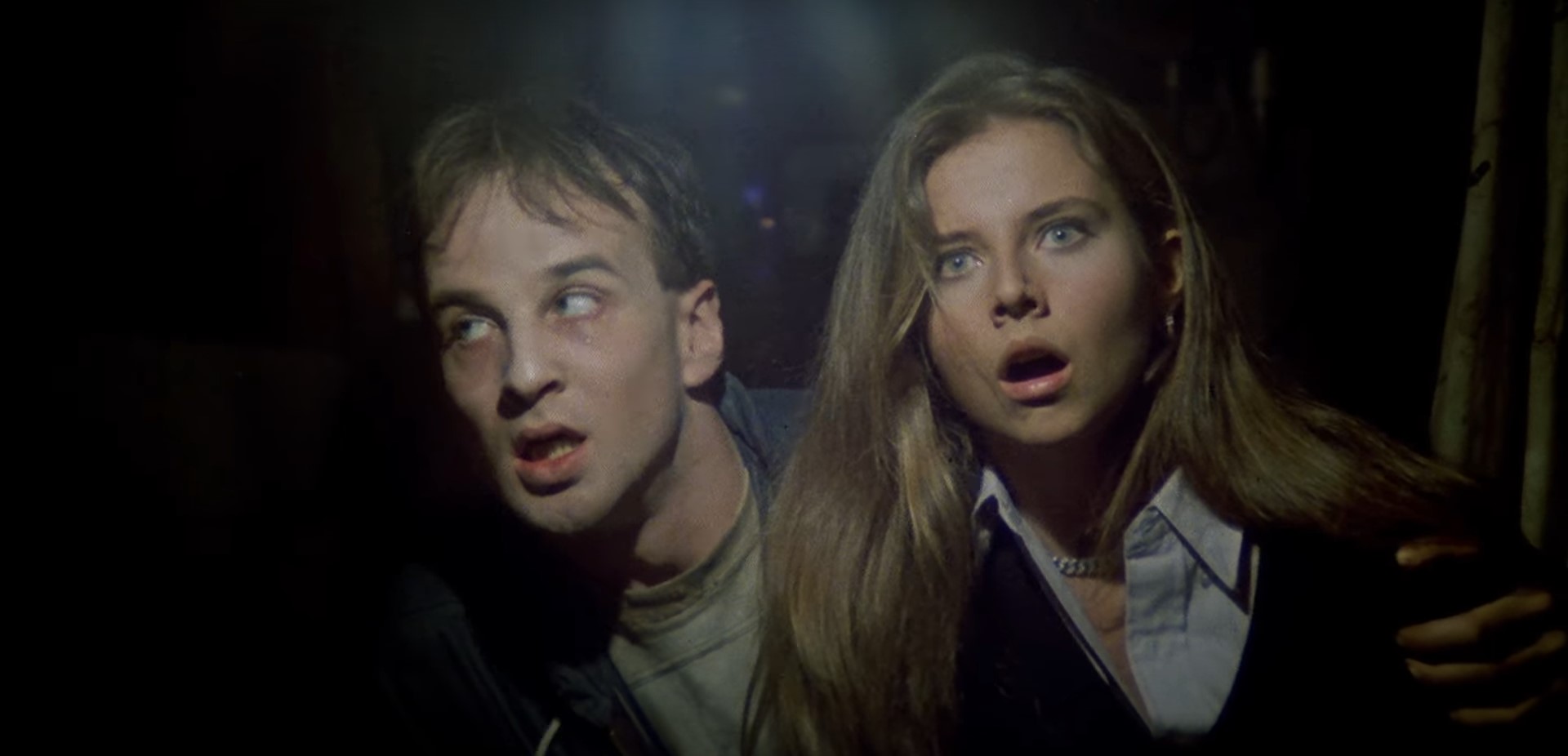
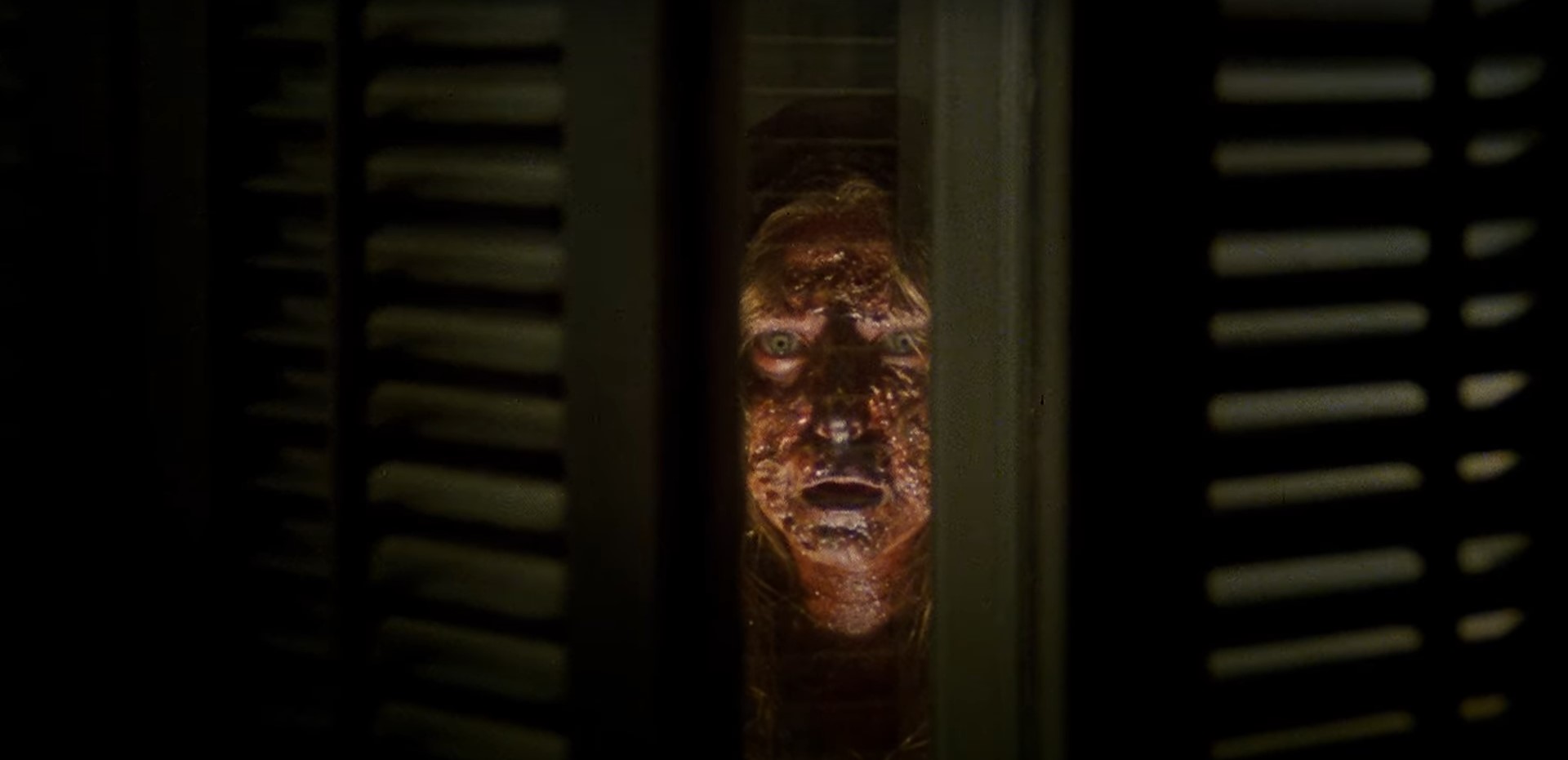
Through an unexplained mysticism and preformed stipulations on why the priest was the be all end all gatekeeper to the dead’s awakening on Earth other than Dunwich was original built upon the ruins of a witch-burning Salem, Massachusetts or why the day after the unmentioned Halloween season (likely because Italians do not celebrate Halloween with an abundance of candy and custome), All Saints Day, becomes the zero hour date when clearly the dead are already fatally impacting lives in the corporeal realm, Lucio Fulci masterful magician qualities diverts attention away from seemingly crucial elements of the plot toward a complete and total elemental atmosphere of fear, using eerie fog, whipping wind, and phantasmagoria imagery of the macabre to implant chthonic horror slowly rising above ground.  Makeup artist Franco Rufini recesses the sight sockets with deep, infraorbital darkening under the eyes in stark contrast with the pale shade skin, creating that classic yet effective zombified corpse casing in conjunction with special effects artists Gino de Rossi (“Burial Ground:  The Nights of Terror,” “Cannibal Ferox”) use of ground raw meat or whatever the gushy material used to construct the cerebrum contents that just squishes to a pulp between the fingers of the undead when they grab a fist full of hair, skin, and brains from behind an unlucky left living.  There’s quite nothing like a Lucio Fulci film where the ghouls knock on the door from the other side, threatening the land of the living, the world even, with a sound and steady ghoulish malevolence and death in a well-lit and framed Fulci-scope to hammer down defined purpose that drives a penetrating stake through the chest bone and into a chilled soul.
“City of the Living Dead” goes beyond the format gates and arrives onto a 3-disc 4K/Blu-ray release from Cauldron Films.  2160p Dolby Vision 4K and a 1080p AVC encoded high-definition options really put this Fulci classic back on the map, unlike the small, forsaken city of Dunwich. The 4K UHD is an HEVC encoded, 2160p Dolby Vision ultra high-definition resolution while the AVC encoded Blu-ray sports 1080p high-definition, presented in a widescreen 1.85:1 aspect ratio. Through the translucent mist of natural, good-looking grain, Cauldron Films have hyper-accentuated the atmospherics with a clean rendering of the innate cooler-to-warner photography grades of blue-to-yellow with creating a harsh contrast transition. The encoding never shows an ounce of detail distress to keep textured and palpable image of the darkened crypt or the thick fog exteriors that often would degrade decoding with omitted data. The Cauldron Films release retains and sustains bitrate that fastens the dark levels to a robust and effective pitch black. What’s neat about this release is the ability to toggle between the English DTS-HD 2.0 Mono and the Italian DTS-HD 2.0 mono, both post-recorded in standard with Italian productions. Both tracks are comprehensibly sound with a clear and clean dubbing with the only detailed differences being one in English language and the other in Italian and the title card switched out for the each. Between the two, range is exact on both with not a lot of superfluous ambient sound and both tracks offer a near blemish free experience in a robust context of atmosphere. Disc 1 and 2, 4K UHD and Blu-ray respectively, come with new audio commentaries, including with cult film critic Samm Deighan, author of Italian horror cinema Troy Howarth and film critic Nathaniel Thompson, as well as individual archival commentaries with actors Catriona MacColl and Giovanni Lombardo Radice. Disc 3 includes an interview with production Massimo Antonello Geleng, actor Giovanni Lombardo Radice, and on-stage Q&A with Venantino Venantini and Ruggero Deodata (“Cannibal Holocaust”), a Q&A with Catriona MacColl, a Q&A with composer Fabio Frizzi, interviews with special effects artist Gino de Rossi and principal actor Carlo de Mejo, A Trip Through Bonaventure Cemetary – an explorational and historical account on the main cemetery where the priest in the film hangs himself, trailers, an image gallery, and other archival interviews in a near feature-length collection of conversations with cast and crew reminiscing about Lucio Fulci during filming. The 4K UHD and third disc packed with special features are region free while the Blu-ray remains region A locked in licensed playback on the format. Both features have a runtime of 93 minutes and the release is unrated. Emerging from the gates of standard definition hell, Cauldron Films tempers Lucio Fulci’s “City of the Living Dead” to a foreboding crust, burgeoning with ominous clout the undead’s underscoring resurrection.

Cauldron Films’ “City of the Living Dead” on 4K and Blu-ray 3-disc Release!

EVIL Inspires a New Concert. “Nightmare Symphony” reviewed! (Reel Gore Releasing / Blu-ray)

“Nightmare Symphony” is a Falsetto of Praise for Lucio Fulci.  Purchase the Blu-ray Below!

Unable to cope with another large box-office failure, the American indie horror director, Frank LaLoggia, is in the travails of a make-or-break psychological thriller overseas in Kosovo.  With an executive producer forcibly pulling LaLoggia’s creative marionette strings and the film’s screenwriter displeased and disapproving LaLoggia’s arm-twisted version of the story, the struggling director finds himself frantic and in the middle of a breakdown caught between a rock and a hard place with a postproduction from Hell.  Those around him, the conceited producer, the upset screenwriter, the pushy wannabe actor, and more, are being hunted down and brutally murdered by a masked killer and the imaginary line between Frank’s reality and paranoia grows in intensity coming down the wire of completing his career-saving, or rather lifesaving, film.

Long time since I’ve heard the name Frank LaLoggia enter the dark corners of my brain as it relates to the horror genre.  The director of 1981’s “Fear No Evil” and 1995’s “Mother” had seemingly vanished from the director’s chair spotlight and more-or-less, or rather more so than less so, vanished from the broader film industry altogether.  Then, Domiziano Cristopharo’s “Nightmare Symphony” suddenly drops on the doorstep and there’s Frank LaLoggia, starring in the lead role of an Italian horror production.  Domiziano, known from his entries of extreme horror, such as with “Red Krokodil,” “Doll Syndrome,” and “Xpiation,” engages LaLoggia to act in an unusual role, as himself, and turns away from the acuteness depths of uber-violence and acrid allegories to a toned down, more conventionally structured, narrative inspired by the Lucio Fulci psychological slasher “Nightmare Concert,” aka “A Cat in the Brain.” Co-directed with first time feature director Daniele Trani, who also edited and provided the cinematography, and penned by the original screenwriter of “A Cat in the Brain,” Antonio Tentori, “Nightmare Sympathy” plays into questioning reality, the external pressures that drive sanities, and weaves it with a meta thread and needle. The 2020 release is produced by Coulson Rutter (“Your Flesh, Your Curse”) and is an Italian film from Cristopharo’s The Enchanted Architect production company as well as companies Ulkûrzu (“Cold Ground”) and HH Kosova (“The Mad MacBeth”).

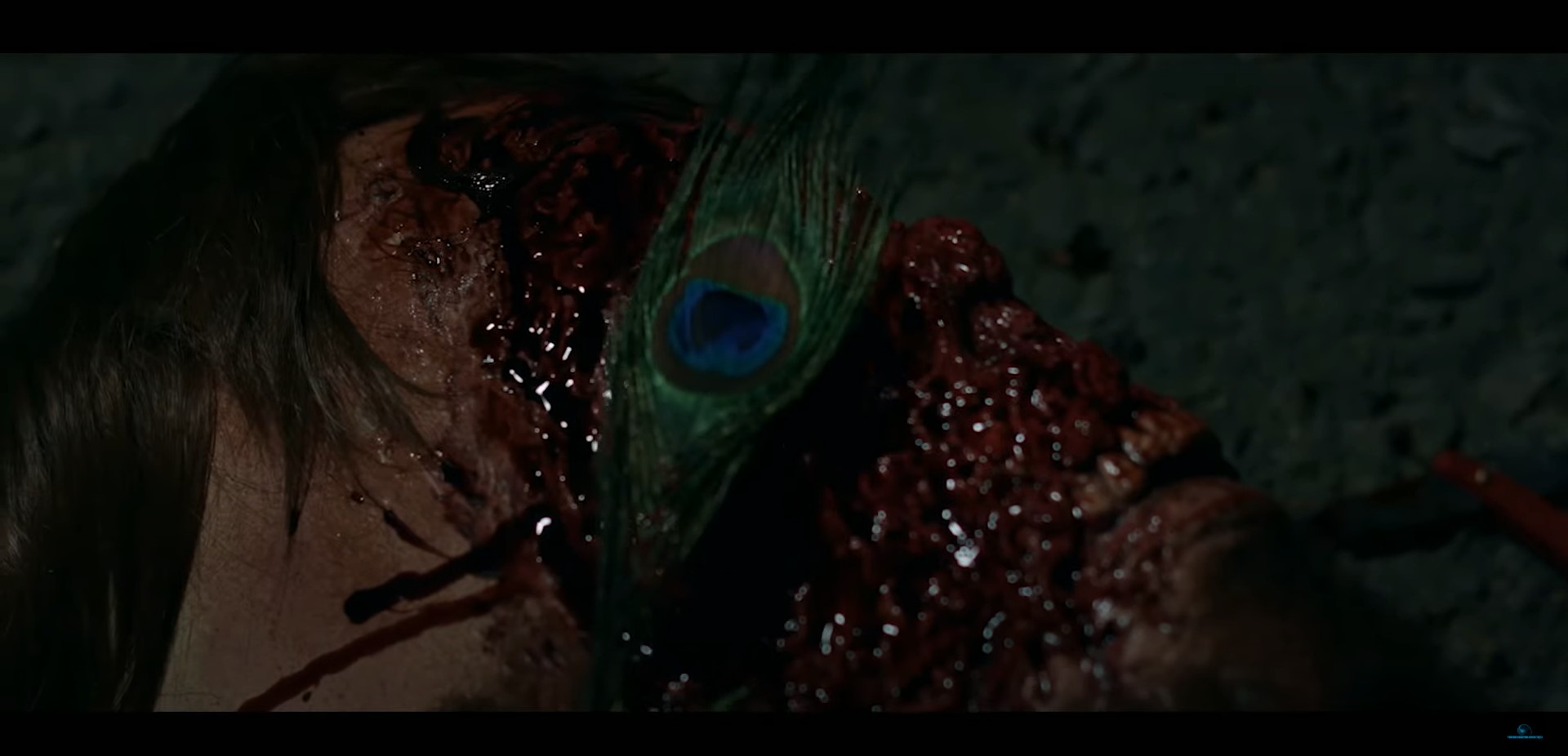
Much like “A Cat in the Brain,” Frank LaLoggia depicts his best Lucio Fulci representation as a horror filmmaker whose storyline production mirrors the individual slayings surrounding him. As a character, LaLoggia is not entirely aware of the murders as the peacock headed slasher’s string of sadism runs parallel to LaLoggia’s post-productional workload. Cristopharo pays a simultaneous tribute to not only Fulci but also LaLoggia with a built-in brief, off-plot moment of the editor, Isabella, a good friend and longtime partner of LaLoggia, running a reel of “Fear No Evil” to reminisce over his debut picture. Antonella Salvucci (“Dark Waves,” “The Torturer”) plays Isabella but also LaLoggia’s pseudo film lead actress Catherine in a dual role performance with the latter marking Salvucci’s topless kill scene that hits and sets up the giallo notes. Isabella denotes the director’s only real friend with everyone else, from the screenwriter to the executive producer, push their own self-gratifying wants onto the American filmmaker from all angles. A vulgar herd of personalities descend upon LaLoggia to exact their strong-willed ideas on how the film should appear and be marketed. From the screenwriter Antonio (Antonio Tentori, ‘Symphony in Blood Red”), the imposing desperate actor David (Halil Budakova, “Virus: Extreme Contamination”), to the uncultured and pushy executive producer Fernando Lola (Lumi Budakova) and his aspiring actress Debbie (Poison Rouge, “House of the Flesh Mannequins”), they all look to exploit LaLoggia’s modest career for their own benefit. Performances vary with a range of experience, and we receive more noticeably rigid recites and acts from the Kosovo cast in a clashing pattern with the Italy cast that has worked with Cristopharo previously. Ilmi Hajzeri (“Reaction Killers”), Pietro Cinieri, and Merita Budakova as a chain-smoking lady stalker that has glaring eyes for Frank LaLoggia.

While not necessarily thought of as a remake, “Nightmare Symphony” is certainly a re-envision of the Fulci’s “Cat in the Brain.” What Cristapharo and Trani don’t quite well connect on is connecting all the pieces of the psychotronic puzzle together into what is meant to be expressed. The giallo imagery is quite good, a praise of the golden era period in itself, with a mask and glove killer, the closeup of gratuitous violence, most of the score, and the stylistic visuals imparted with ominous shadow work, foggy and violent dream sequences, and with congruous cinematography and editing of earlier giallo. Plus, audiences are treated to not only the aforementioned Antonio Tentori, screenwriter of “Cat in the Brain,” but also have composer Fabio Frizzi score the opening title. Frizzi, who has orchestrated a score of Lucio Fulci films, such as “Zombie,” “The Beyond,” “Manhattan Baby,” and even “Cat in the Brain” just to select a few notable titles, adds that proverbial cherry on top to evoke Fulci directing “Nightmare Symphony” vicariously through Cristapharo and Trani. There are some questionable portions to reimagining’s take on the original work that are more the brand of the contemporary filmmakers. The presence of death metal prior to one of the kill moments puts the overall giallo at odds with itself in a fish out of water aspectual scene composition. Another out of place component are the external characters that are not directly involved with LaLoggia’s peacock-head themed slasher; the ironical venatic of an animal hunting down people is the reversal of a Darwinism theory that instead of sexual selection, the beautiful and elegant peacock forgoes using grace to attract and aims to survive by natural selection and thus the killer kills to remain alive. However, the story and the directors never reach that summit of summation and with the oddball characters adrift from the core story – such as the stalking woman and the eager actor – “Nightmare Symphony” flounders at the revealing end with its severe case of blinding mental delirium.

With a cover art of an upside skull overfilled with film reels and unfurling celluloid through the soft tissue cavities, “Cat in the Brain” continues to be reflected in “Nightmare Symphony” up to the release’s physical attributes on the Reel Gore Releasing’s Blu-ray. Presented in on a AVC encoded BD25, with a high definition 1080p resolution, and in a widescreen 2.35:1 aspect ratio, the Reel Gore Releasing espouses the Germany 8-Films’ Blu-ray transfer for a North American emanation, which might explain some of the complications with the bonus features that’ll I’ll cover in a bit. Situated in a low contrast and often set in a softer detail light, “Nightmare Symphony” doesn’t pop in any sense of term with a hazy air appearance and a muted color grading that goes against the giallo characteristics, especially when the clothing and set designs have the same desaturation or are colors inherent of low light intensity. Despite appearing like a slightly degraded transfer on a lower BD storage format, compression issues are slim-to-none with artefacts, banding, or blocking and this results in no tampering edge enhancements or digital noise reduction. The release comes with three audio options: A German DTS-HD 5.1, German DTS-HD 2.0 Master Audio and an English and Italian DTS-HD Stereo 2.0 all of which are Master Audio. The German audio tracks are a dub from the 8-Film Blu-ray and the 5.1 offers an amplified dynamics of the eclectic soundtrack and limited environment ambience. Dialogue remains outside the dynamics on a monotone course but is clean and clear with good mic placement and a neat, fidelity fine, digital recording. The German dub has a distinct detachment from the video because of its own layer environment, sounding a little sterile than the natural English or Italian, but works well enough as expected with the supplement multi-channel surround sound. English SDH and German subtitles are optional. Bonus contents feature a behind-the-scenes which is entirely just a blooper reel, an English language interview with co-director Domiziano Cristopharo whose secondary language is English, the original soundtrack playlist, and the teaser and theatrical trailer. I mentioned an 8-Films’ transfer complication with the bonus content because there’s is also an interview with Italian screenwriter Antonio Tentori that’s only in German dubbed and subtitled with no option for English subtitles or dub. When you insert “Nightmare Symphony” into your player, an introductory option displays to either pick German or English and I considered this to be the issue for the German only interview with Tentori; however, that is not the case as both country options are encoded in German for the interview, so at the beginning option display, I would recommend the German selection because the setup will have contain all audio options for the feature whereas the English selection will only contain the English 2.0. Reel Gore Releasing’s Blu-ray comes housed in a red snapper case, the same as the company’s release of “Maniac Driver,” and has a less tributing reversible cover art with more revealing and illustrated aspects of the narrative. The release is region free, unrated, and has a runtime of 78 minutes. Another little fun fact about the release is the incorrect spelling of the director’s name on the back cover that credits his surname as Christopharo instead of Cristopharo. Influenced by Lucio Fulci beyond a shadow of a doubt, “Nightmare Symphony” proffers the Horror Maestro’s less notable credit with a companion piece that punctuates both films love for the giallo genre, love for the violence, and love for the morbidly unhinged human condition.

“Nightmare Symphony” is a Falsetto of Praise for Lucio Fulci.  Purchase the Blu-ray Below!

Surrounded by Aquatic EVIL, No One Can Escape “The Island of the Fishmen!” reviewed! (Full Moon / Blu-ray)

Check out the scantily-cladded woman encroached upon on “The Island of the Fishmen” Blu-ray!

A French prisoner ship sinks to the bottom of the Caribbean leaving only a handful of prisoners and the Left Lieutenant Claude de Ross, the ship’s doctor, stranded on a lifeboat for weeks until they a mysterious force drives them through the fog and crash them on the rocks of a seemingly deserted volcanic island. Only a few prisoners and the doctor manage to survive the wreckage, stumbling upon a ritualistic area of empty graves and abandoned artifacts of an island society. This is where the haggard and hungry men meet the beautiful Amanda Marvin on horseback and follow her through the island jungle to a clearing where the edifice of Edmond Rackham sits imposing on them. Having left his home country, Rackham settled upon this uncharted island, garnering local Caribbean inhabitants as servants, and being a greedy treasure hunter who might have just discovered the lost city of Atlantis. There’s only one problem, the city is surrounded by aggressive fishmen kept at bay by Amanda’s famed disgraced biologist father who has fallen severely ill, charting a course for the good doctor, Lt. Claude de Ross, to be unharmed in order to care for perhaps the only person who knows how to manage the wrath of the fishmen.

A swimmingly aquatic creature feature with an all-around gratifying men in costume pastiche, familiar to the style of “The Creature from the Black Lagoon,” in Sergio Martino action-adventure horror “The Island of the Fishman.” Also know under the revamped shots of “Screamers” aka “Something Waits in the Dark,” here we have the original film in all it’s natural glory from the director of “Your Vice Is a Locked Room and Only I Have the Key” and “Torso” director Martino from a script by Martino, Sergio Donati (“Orca”), “Slave of the Cannibal God’s” Cesare Frugoni who workshopped with Sergio Martino’s older brother, Luciano Martino, (“So Sweet… So Perverse”) on the original story. Some would also say that “The Island of the Fishmen” is also a crossbreed between H.G. Wells’ “The Island of Dr. Moreau,” H.P. Lovecraft’s “The Shadow Over Innsmouth,” and, aforementioned, “The Creature from the Black Lagoon.” The 1979 Italian production stars an international cast shooting along various locations in Italy and is produced by Luciano Martino under Dania Films and Medusa Distribution.

American, United Kingdom, and, of course, Italian come together to form “The Island of the Fishmen” cast that doesn’t stray too far away from their individual innate dialects. The most pompous is he Essex-born Richard Johnson’s sadistic and fortune hungry Edmond Rackham with a caricature of a voice that isn’t like anything in his performance in Lucio Fulci’s “Zombie.” As Rackham, the inflections reminisce of a British Humphrey Bogart mixed with a one Dick Dasterdly and so Johnson comes off a bit cartoony and overly dramatic compared to the film’s panache malnourished yet earnest hero in Italian actor Claudio Cassinelli (“Murder Rock,” “The Scorpion With Two Tails”) as Left Lieutenant Claude de Ross, a ship’s doctor who suddenly becomes the medical caretaker and leading guard over a lifeboat full of hardened prisoners, some who have blood on their hands. Franco Javarone and Roberto Posse play a pair of surviving convicts, especially two at odds on how they should treat their next in rank penal officer. Though being thrust into the oversight position, the Lieutenant doesn’t have to worry about his prisoners for too long as the island’s baleful environment with jungle death traps, poisonous water, voodoo priestess, a sadistic lord of estate, and mutant fish people swimming in circles around the island’s parameter and through the cut through waterways sees to their wellbeing. “Island of the Fishmen” does have a few predominant male figures of different caliber but there are also a pair of women inhabiting the island who, too, have counteracting roles. Bond girl Barabara Bach (“The Spy Who Loved Me”) became plagued by the ocean’s frightening fishmen only two years later as the captive dame of Edmond Rackham who holds her hostage as he pushes her father (Joseph Cotton, “The Survivor”) to continue with his mind control potion over the fishmen. Then, there’s Shakira. No, not the Brazilian singer-song writer with the hypnotizing booty shaker. This Shakira is a voodoo priestess, played by Jamaican actress Beryl Cunningham (“Dorian Gray”), who works for Rackham but ultimately envisions foreboding doom on the volcanic island. Giuseppe Castellano and Franco Mazzieri round out the cast.

A whole lot is going on in this film that from the surface seems, surfacing meaning the home video covers and posters, to focus chiefly on the hostile half-fish half-man creatures that bubble to surface, check out top side for any unwanted visitors, and quickly dispatch them before disappearing under the glassy waters of the Caribbean. I adore the design of the rather stiff but crudely convincing creature suits with buggy fisheyes, razor piranha like teeth, and cladded entirely green and scaley in a design by Massimo Antonello Geleng who by vocation was more a production designer with credits including this film along with “Cannibal Holocaust,” “City of the Living Dead,” “The Church,” and “Dellamorte Dellamore” to name a few. Yet, the fishmen were not a sole source of danger on an island that had a deadly schemer in Edmond Rackham, the motif of voodoo and jungle trap throughout, a volcano ready to erupt and engulf the island with lava, and the lost city of Atlantis as the grand epic finale that pivots this story on an acute elbow left that shows a mighty ambitious story on an Italian slim budget. To put it frank, Sergio Martino was able to put all the elements together into a cohesive, coherent plot with action, horror, exploitation, and mad science fiction albeit the story’s wild and diverging concepts.

Though many U.S. audiences know this film as Roger Corman’s highly altered, New World Pictures presented cut retitled as “Screamers,” Full Moon features releases the original oeuvre of Sergio Martino with a remastered Blu-ray release from the original 35mm negative. The 99-minute film is presented in a widescreen 2.35:1 aspect ratio that captures in perfect matte composition and frame the locational miniatures, such as the manor house or the underwater Atlantis temples, in a compression that doesn’t make the structures obvious fakes. Slightly tinged yellow, the overall color palette is renders out well enough to suit the release with a pristine transfer seeing no signs of real significant damage. The English language tracks come in two formats – a PCM 2.0 and a Dolby Digital 5.1 surround sound. The English-speaking actors have their original tracks intact while the Italian cast have their original dialogue re-dubbed in English for posterity on new releases such as this one. Dialogue, nor any of the corresponding audio tracks, show any signs of fidelity issues or damage, but do feel muffled, even on the 5.1 as if the sound was boost stifled and left with some of the channels lacking vigor. Aside from Full Moon trailers, the R-rated film rides solo on this hi-def release. “Island of the Fishmen” is a small film fighting hard to swim upstream and really does a number on many different levels regarding where the audiences should focus their attention on, but I can see why Roger Corman wanted to give Martino’s film a second run after a commercial flop with a new, gory scenes edited right into the heart of “Island of the Fishmen’s” flexible, cartilaginous bones. Despite Corman’s efforts, Sergio Martino’s unmolested, original reeling reel is the one and only catch of the day for this purist.

Check out the scantily-cladded woman encroached upon on “The Island of the Fishmen” Blu-ray!

A Birthday Bash Festers with an Evil Infestation! “What’s Eating Todd?” reviewed!


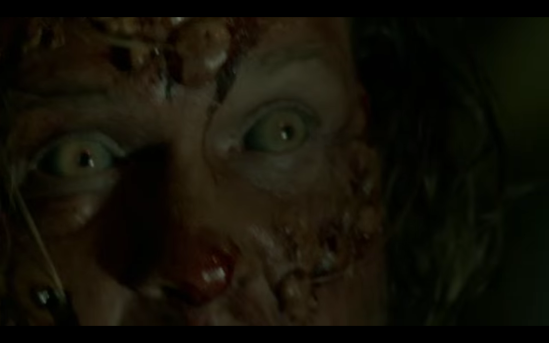
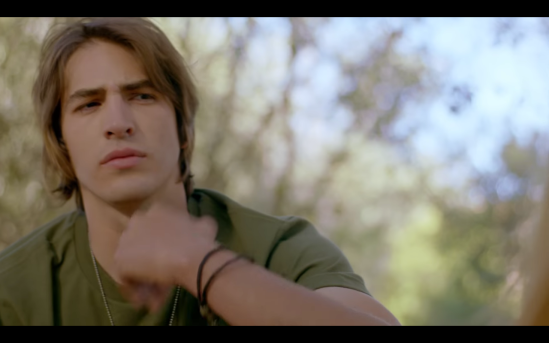
Todd’s birthday starts out fun with a birthday cookout that includes family, friends, and his girlfriend Valerie. Afterwards, his easy going uncle Carl drives Todd, his friends, and cases of beer to an abandoned factory in the woods where Todd has planned a one-night, underaged boozing, camping trip. The infamous factory has a manifold of ghost stories that circle around a single common piece – a cannibalistic maniac. When night falls, Todd suddenly disappears and his friends, including Valerie, believe Todd and his uncle Carl are revving up a good scare after Carl’s creepy campfire story earlier in the day, but when a dead, mutilated body is discovered, something sinister is hunting them and those stories about a cannibal killer no longer seem farfetched in an all-nighter fight for survival.

“What’s Eating Todd?” is a Here and Now production from a duo of women filmmakers with director Renata Green-Gabor making her directorial feature film debut from a story penned by first time screenwriter Brandi Centeno. The 2016 horror-thriller is a spun take on the weary zombie genre without necessarily going the full-fledged slow shuffle and moan zombie route from a story involving an antagonistic infected metamorphosing from an infestation strain of flies. The parasitoid concept is a closely related to a sensationalized man versus nature horror tale seen with a fair amount of anonymity attached and, the film, perhaps, could be an indie homage version of the George Langelaan’s short story, “The Fly.” Almost for certain that Green-Gabor received some sort of influence for “What’s Eating Todd?,” which she shot through the summer of 2013, from her thespian mentor Jeff Goldblum, the face of David Cronenberg’s remake of “The Fly” released 1986, and thus answered the call to chance her first steps into feature films that had this connect to her mentor while providing and retaining her own originality into incubational horror or even a small minute into body horror, releasing the film three years later.

The marketing and selling points for “What’s Eating Todd?” is not the humble acting talent. It’s not a criticism. It’s the truth, as the cast is constructed of unknown names and unrecognizable faces. However, what is also true for a film written by female writer and quarterbacked by a female director is a leading role arising for an aspiring or established female actress. In this case, the role of Valerie goes to a modestly versed Madison Lawlor (“The Axe Murders of Villisca”) who not only becomes the strong and adaptive survivalist protagonist painted against a backdrop of coarse and flawed men who are either exposed of their short comings, involved in illegalities, or anguished to reveal their true nature. Lawlor maintains Valerie’s unwavering love and faithfulness to Todd, being the voice of reason amongst a naïve and obnoxious crowd that are mostly consisted of her cousin Alex (“Mega Shark vs. Mecha Shark’s Phil Biedron) and his friend Duane (“The Zombinator’s” Scott Alin). Alex and Duane are a couple of super frivolous “bros” primarily integrated into the story to raise the body count. Cousins Valerie and Alex do attempt some kind of meaningful connection regarding identity and status in the hierarchy of high school, but was meagerly written and comes to be more a bickering battle of perspectives. Biedron and Alin sufficiently exact the right amount of goofball, oversexed, and dumb-wit to pull off a surface level duo. Todd (“The Z’s” Adam Michael Gold) is certainly the biggest failure out of the group of friends. The birthday boy’s upheaval from being the luckiest guy in the world to the world’s biggest problem goes into squandered territory that floods more questions than answers into Todd’s from baseline growth relationship with Valerie to his revamped mentality and accomplishments from ambiguous, circumstantial backstory of flesh eating and conspiracies. The weight of Todd and Valerie’s connection is only expositional rather than shown and the groundless Todd absorbs the downfall during an anti-climactic finale of internal struggle with Valerie as the source material. The film rounds out with Danny Rio and Carlos Antonio.

Though the cast won’t draw in an audience, the snappy “What’s Eating Todd?” title might turn some heads in it’s direction. However, “What’s Eating Todd?” inherently sounds like a farce and if you’re expecting humor, disappointment will rear its ugly, funny-less head as Green-Gabor had no intentions for a comedy element. Another misleading of marketing is the Indican Pictures’ DVD cover, which I’m assuming is also the film’s actual poster, of a woman in a cutoff sleeve jersey t-shirt with “Zombie Killer” in the name field and holding a sword (katana, maybe?) while blurry silhouettes of lumbering undead move at an unknown pace toward her in the background. Let’s analyze the comparison between cover art and actuality. As mentioned, the story’s female heroine is appropriate to the cover, but isn’t contextually accurate to the film. Valerie, the supposed character on the cover, isn’t holding a sword nor is she dressed in a “Zombie Killer” jersey t-shirt. As for the zombies, the term zombie is only made in jest by one of the bros and there is some undead moments of gore including gnawing and ripping out the jugular, but no tearing out of intestines, no munching on fingers, nor are there any instances where eating people like finger-licking fried chicken is happening here. Plus, there is only one adversarial fiend and not more as the cover suggests.

Indican Pictures distributes a Here and Now Production of “What’s Eating Todd?” onto a not rated DVD home video. The region 1 release has a runtime of 89 minutes and is presented in an anamorphic widescreen, 1.85:1 flat aspect ratio, on a 35mm, hand held camera. The digitally shot image renders brightly and clean with hardly any flaws worth disclosing. The night scenes are slightly tinted blue with a higher contrast to lighten up the image without being overly dark in the middle of the woods without much natural lighting and the digital noise has little intrusiveness despite the budget constraints of an indie production. The English language Dolby Digital surround sound has adequate range and depth and, for the most part, a dominating dialogue presence. Brief moments of Revenge of the Bimbot Zombie Killers’ Andy George’s original score would drown out dialogue during imperative, but happened too far and few in between. Other than a typical static menu and preview trailers from Indican Pictures, no other bonus materials reside on the release. “What’s Eating Todd?” is not a zombie movie despite the hoodwinking cover. What Renata Green-Gabor did direct can be categorized as a branch of the undead, an infestation altering DNA that mounts to destruction on and around of the affected that, technically, no longer makes them a part of the living human race. In short, expect a sheep in wolf’s clothing in this roughly run-of-the-mill horror that aims high, but misses low by offering too little to sanction a good story.

Rent. Own. What’s Eating Todd? Do you know?

A Kingdom Engulfed by Evil! “Rampant” review!


The kingdom of Joseon is in a state of great turmoil as the absolute monarchy is being influentially divided. The King has treacherous whispers being fed to him by head of the nobles, Minister Kim, and the eldest royal son, the Crown Prince, witnesses his father’s dominion being redirected against the common people despite his best efforts to persuade his father. When the Crown Prince’s insurrection plan for kingdom stabilizing is foiled, the Crown Prince commits public suicide as act of sacrifice to spare his cohorts and their family from capital punishment, but before his death, the Crown Prince sends word to his younger brother, Lee Chung, to return home from the Qing Dynasty and escort his sister and unborn child out of a country soon to be in the throes of chaos. In the midst of the struggle, a foreign ship cargoes new age weapons and the Captain has secret dealings with Minister Kim, but is raided by the Crown Prince’s rebellion The ship also holds another human eradicating payload, a plagued foreigner in the brig is transforming into a blood hungry monster with grayed out eyes and razor sharp teeth With one of the raiding members being bitten, the carnivorous outbreak spreads throughout the kingdom days before the pleasure seeking and arrogant Lee Chung returns home. Chung not only finds his people suffering from bloodthirsty monsters, but also from a turbulent hierarchy sought for destruction by a devilish and traitorous orchestrator who will do anything, like leave a plague go unchecked, to see the lineage die out.

From the same studio that delivered the critically successful, zombie apocalyptic nail biter, “Train to Buscan” comes Kim Sung-hoon’s martial arts horror-fantasy, “Rampant,” that’s a perfect accompaniment double feature film involving a familiar fast-spreading zombie-like outbreak with gripping, non-stop action based on the webcomic Kingdom of the Gods. “Rampant” is the filmmaker’s junior film from 2018, a film blended with truly epic magnitude and an ancient Korean civilization that’s penned by “Scary Hair” writer-director Shin-yeon Won and Hwang Jo Yoon to weave battling aortic stories that inherently funnel toward the dismantling of an established empire. While not serving as a straight genre film with savage moments of on the edge of your seat horror, the theme hones in on the separation of classes, peasants and blue-blooded or high ranking officials, and the reuniting them by compassion and strength. Inklings of fear, greed, and ignorance are stitched in the very hanbok and gat-laden fabrics of the story and serving as a precursor to the Netflix produced television series, Kingdom, scripted by Kim Eun-hee and directed by Seong-hun Kim, involving virtually an identical premise of a troubled monarchy being plagued by a horde of diabolical creatures.

Prince Lee Chung is a stimulating character to say the least; the prince’s introduction isn’t favorable to royal morals as a pleasure seeking, womanizer who gets his kicks by doing what he wants, when he wants. Yet, Chung arches so prominently that the transformation goes seamless, and covertly, to persuades audiences to rally behind Chung in the least-to-most extreme circumstances. Hyun Bin’s confidence in the prince ceases to amaze. From his impeccable arrogance to selfless protection, Bin sustains high level performance no matter the situation while bearing a giant blade, holstered on his lower back. Chung has the skill of a warrior, but the tact of a barfly at first and comes to be a complete better version of himself at the dire end that also completes Bin’s full range of the role. Chung is pitted against Minister Kim, the head of all the court’s ministers, and Kim plots to dethrone the Joseon kingdom in chaos by any means. Jang Dong-Gun is Korean’s version of Mads Mikkelsen. Jang envelops a deepening mystery that’s hard to deescalate and emits a presence on screen just by the way he positions himself in an ominous, if not anime swordsman, manner. Minister Kim is a staggering and formidable nemesis, more overall suited to be the main villain amongst an ever-growing sea of plague-spewing creatures. The remaining lot of characters feel auxiliary around the protagonist Chung and antagonist Kim and these roles are supported by Kim Eui-sung (“Train to Buscan”), Jo Woo-jin, Jo Dal-hwan, Jung Yoo-An, Lee Sun-Bin, and Seo Ji-hye.

You might have noticed that the term creatures were used to describe the menace that plagues Joseon. Characters often reference the plague transformed attackers as demons and, to be honest, these grayed eyed, pointy teeth demons could pass as extras in Lamberto Bava’s “Demons” or Kevin Tenney’s “Night of the Demons,” but the U.S. marketing of the Well Go USA Entertainment release promises zombies and zombie action, even going as far as splaying on the front and back cover that the same studio produced “Train to Buscan.” To be fair, a plague did start the mayhem, transmission of the disease was by bite, and the course ran the kingdom very, well, rampant like a traditional, George A. Romero style, outbreak. Either way, to kill a demon and/or zombie, an assortment of kill method was acceptable such as: beheadings, severing the heart, and, to thoroughly ensure death, kill with fire. Demons. Zombies. Audiences won’t be too hard up on how to label the hungry hordes as “Rampant” slices, dices, and crucifies the the living hell out of the living dead.

Well Go USA Entertainment presents the VAST Entertainment and Leeyang Film, “Rampant,” onto a dual format, DVD and Blu-ray combo, release. The 129 minute runtime Blu-ray is exhibited in a widescreen, 16:9 aspect ratio. There’s money behind this release as visual effects are one of the superior cases over the lot of 2018 releases with pinpoint detail from the mass of infected, the textures and coloring of fire, and the Joseon Kingdom structures and detail attire. The attention is really in the details with not only historical authenticity, but also realism. Human coloring looks rather natural and the no issues with compression either. The Korean DTS-HD Master Audio track suits the action heavy film with LFE combustions and explosions, unlimited range and depth amongst a vast Kingdom battleground, and dialogue that right up front. The DVD has a Dolby Digital audio track. Well constructed and syned English subtitles are available on both formats. Inyoung Park’s ho-hum score is the Achilles’ heal of brittleness that downplays the feverish action and reducing the entire sequence as mediocre that doesn’t aspire greatness to come or to be beheld. The same can be said about the bonus material too with a making of featurette that’s more of “Rampant’s” Stateside promo reel, Behind the Scenes featurette that also feels like a marketing campaign ad focusing on character introductions, and Well GO USA Entertainment trailers. In short, no substance in the bonus features. With sound swordplay choreography, a swarm of multiplying reanimated corpses, and an engrossing narrative with a lore foundation, “Rampant” is the next Korean mega hit in the fantasy-horror catalogue.