EVIL’s Ready to Rock! “Hard Rock Zombies” reviewed! (MVD Visual / DVD)

“Hard Rock Zombies” Rocks out on DVD! Check it Out Here!

A hair metal rock band will a killer ballad Holy Moses is on the verge of making it big time.  With a scouted gig at a venue in the small-town of Grand Guignol, Jesse, Tommy, Robby and Chuck are ready to rock the house with the help from band manager Ron but Grand Guignol’s narrowminded men and women, including the sheriff and government officials, will stop at nothing to cancel the show that has their children and teenage daughters enthralled with what the parents call scandalous rock’n’roll.  In favor of canceling and to sate their unquenchable bloodlust, a strange but wealthy eccentric family of perverse killers invite the band to play at their mansion only to kill them one by-one in a horrible death.  The town is not all full of bigots and murderers as Jesse’s rockin’ romance with Cassie, a daughter of Grand Guignol, plays an incantation cassette tape that rises them from the grave to seek hang-banging revenge! 

Femme fatales.  Dwarf-sized ghouls.  Werewolves in wheelchairs.  Voyeuristic snuff photographers.  Gas-crazy Nazis!  “Hard Rock Zombies” may thematically state rock’n’roll lives forever by way of tuneful necromantic resurrection, but the 1984 comedy-horror is a complete smorgasbord of absurdity.  Helmed by the India-born and Ivy League educated Krishna Shah  “Hard Rock Zombies” is a multifaceted vaudeville act set to the rock is the devil music trope.  Also alternatively known as “Rock Zombies” or “Heavy Metal Zombies,” Shah cowrites the metal music metastasizing script alongside David Allen Ball, both of whom would collaborate once and final more with the follow year’s teen comedy “American Drive-In.”   The in and around Los Angeles shoot is a production of the Patel/Shah Film Company with Shah producing and Shashi Patel serving as executive producer along with the debut of “Candyman” and “Lord of Illusion’s”  Sigurjon Sighvatsson and Steve Golin as associate producers. 

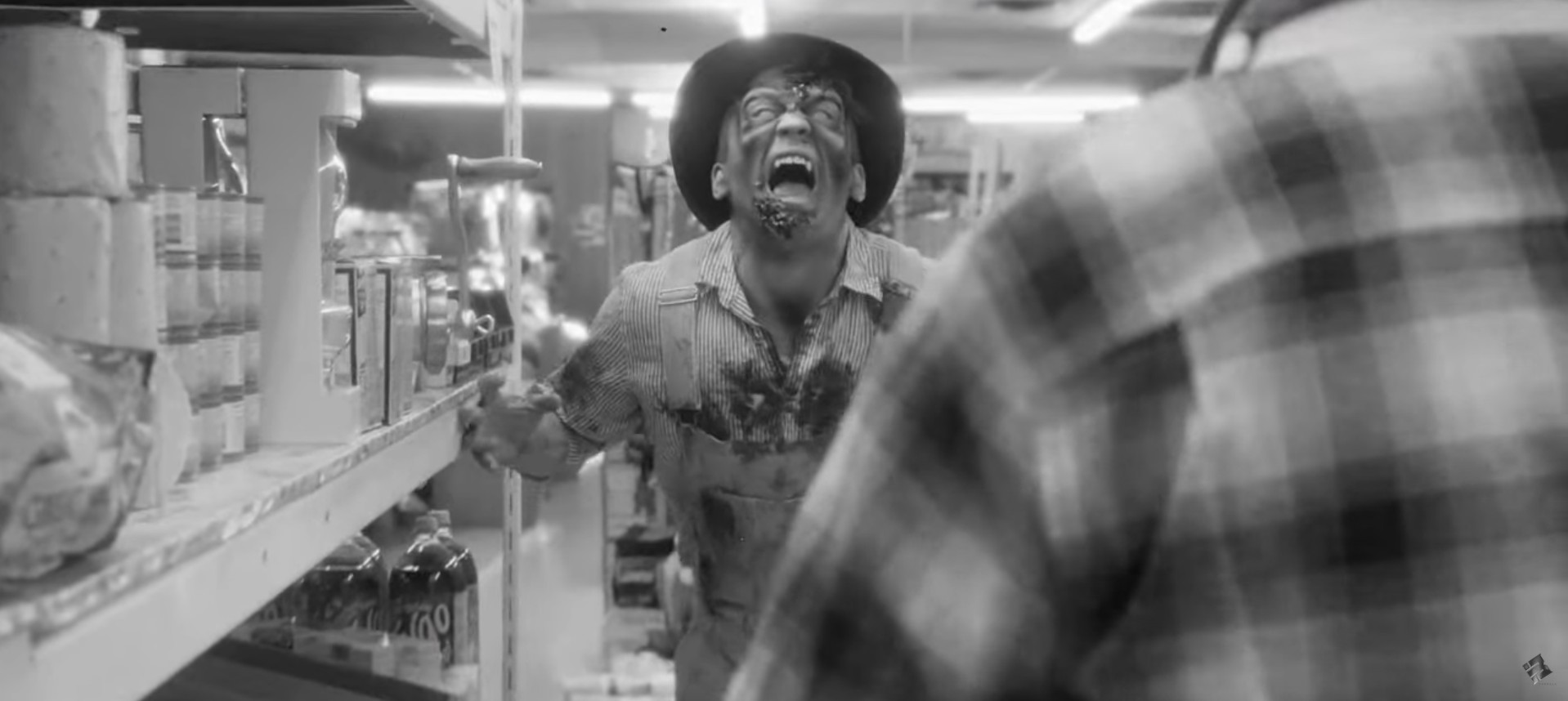
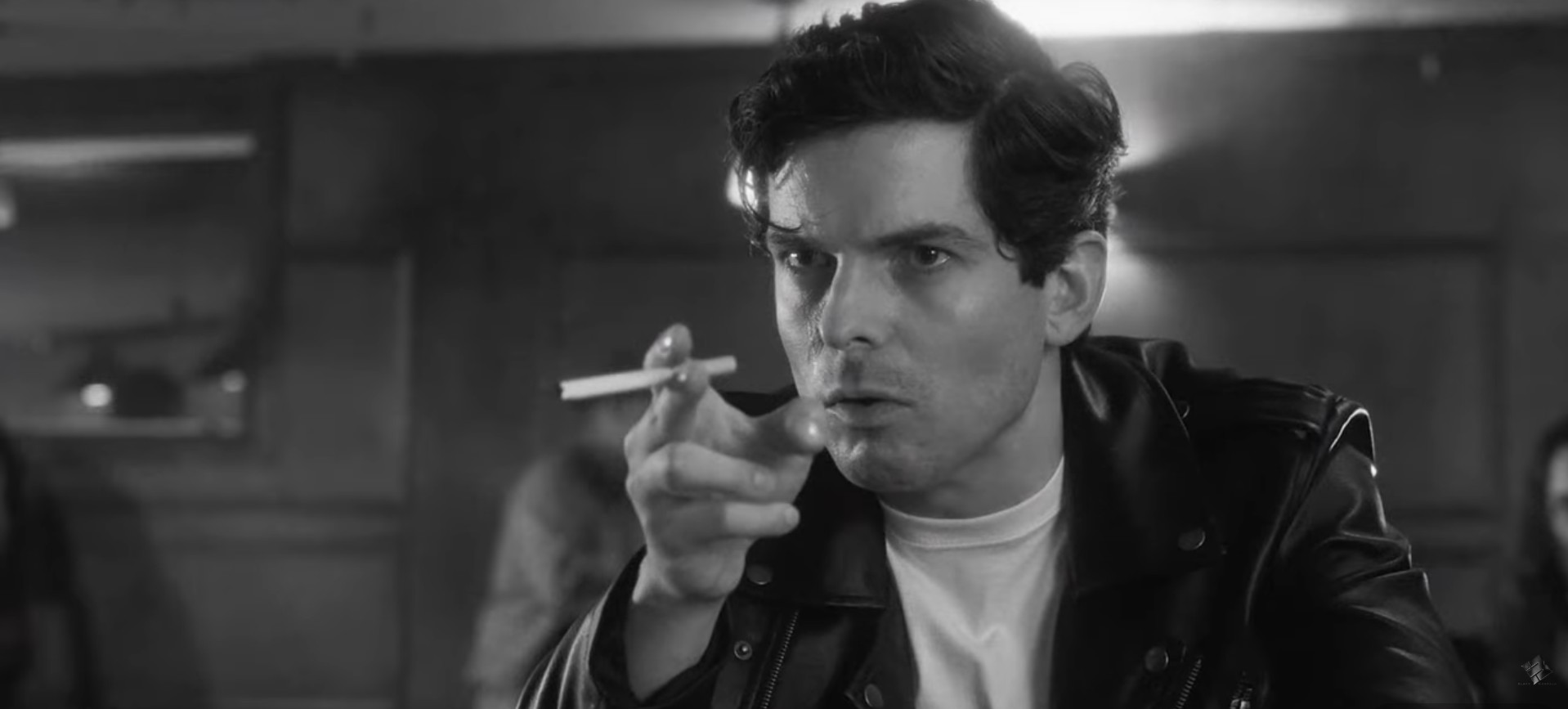
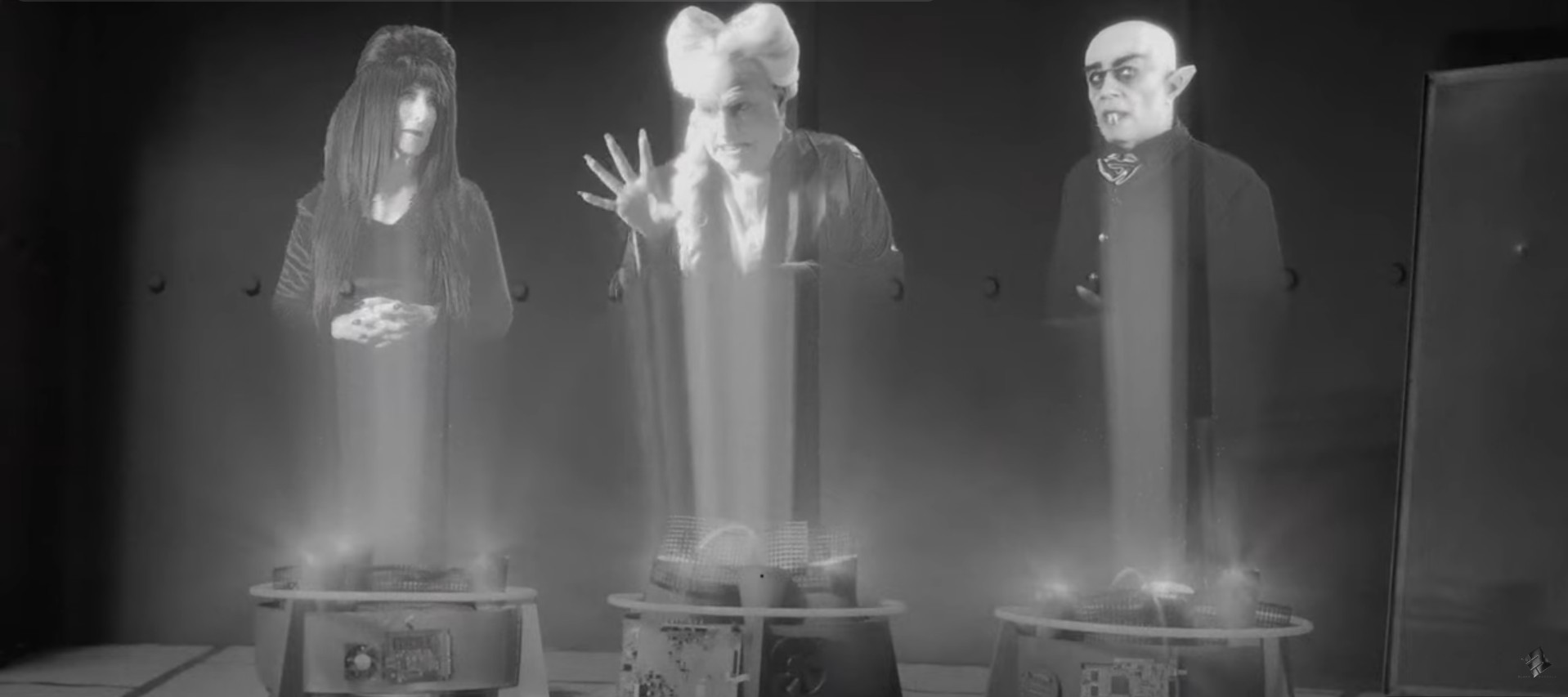
E.J. Curse, Geno Andrews (“Dr. Alien”), Sam Mann (“Roller Blade”), and Mick McMains make up the hair metal band Holy Moses and none of them had real acting experience.  The novice lot do their best to express themselves as an 80’s metal with large and heavily teased hair to produce maximum body and volume, tight and outlandish leather and revealing clothing, and apart from the competent and skilled skateboarding, move in antiquated dance moves familiar to the era.  They may not have a single convincing acting bone in their performance but credit to their overall appearance that speaks to the film’s title.  Though the band is intended central focus, they share a copious amount of screentime and development with the family of frightening agendas and secret identities.  The story even begins with attractive blonde Elsa (Lisa Toothman, “Witchcraft III:  The Kiss of Death”) seducing two young men to their demise while a slicked dress man takes pictures from the nearby bushes alongside two playful, dressed-in-black dwarfs, one human Mickey (Phil Fondacaro, “Willow”) and one monster Buckey (Gary Friedkin, “Cool World”).  It’s like a scene straight out of a David Lynch movie.  We learn this group belongs to an eccentric grandfather patriarch (Emanuel Shipow, “Biohazard”) and his wheelchair bound wife Eva (Nadia, “Dark Romances Vol. 1”) eager to strike down their next victims with clandestinely goosestepping and small mustache fervor.  Frazzled but loyal band manager Ron (Ted Wells) and Jesse’s Grand Guignol lover girl Cassie (Jennifer Coe) are seemingly the only two sane and rational characters who favor the sweet ballads of Holy Moses rather than the sinister genocide of an experiment happy dysfunctional family.  “Hard Rock Zombies” has an abundance of supporting characters and extras to give weight toward a Shah and company’s first-time production with a select secondary cast list of Jack Bliesener (“Crime Killer”), Richard Vidan (“Scarecrows”), Vincent Albert DiStefano, Christopher Perkins, David Schroeder, Michael David Simms (“Scarecrows”), David O’Hara (“Star Worms:  Attack of the Pleasure Pods”), and Donald Moran.

“Hard Rock Zombies” was probably more fun writing and performing in than it was piecing together a coherent narrative that spins like an unruly top going in unpredictable and varied wandering ways.  The amount of subplots against the core resurrection of a metal band erode the very essence of their supernaturally charged revenge because the primary focus on their rise from dead and how that resurrection incantation came into the rockers’ possession can quickly be forgotten as the exposition and the defining titular moment can be easily missed if you blinked for 0.0002 of a second.  There’s also the aforementioned circumstantial subordinate themes of adults and/or parents unwavering, harsh rebelliousness against the adolescent swooning hard rock and of the concealed true malevolent nature of the town’s murderous hodgepodge of a family that turn out to be bloodlust Nazis with an assumed case of monstrous, experimentational evil coursing through their veins, as seen with the unexpected shape-shifting wheelchair bound grandmother who can transform into a werewolf, complete with dual switchblades, and the ghoulie-like dwarf who eventually feasts upon himself into nonexistence.  “Hard Rock Zombies” transcends viewers into a bizarro world where, initially, seemingly plausible issues around an older generation’s labeling of infernal rock’n’roll music, stirring up townhall meetings and protests they see has harmful influence of the younger generation but then the topsy-turvy and screwball antics of heinous villainy goaled with and having already done committing atrocities is a complete farce on the actual, factual, historical events of ethnic cleansing.  Shah definitely makes light with the tone-deaf analogy with great zest and jest but without a more honed in effort and concentration on just the rockers back from the dead, this absurd 80’s comedy-horror fails to address its intentions.   

If not looking to spend a ton of money on the Vinegar Syndrome’s Blu-ray “Hard Rock Zombies,” the MVD Visual DVD is an economic alternative that won’t downsize your wallet.  The MPEG2 encoded, standard definition 720p, DVD5 suits this eccentric horror-comedy just fine, retaining its campy nature in the ballpark of an unrestored scan into 2K territory but still have the working print Vinegar Syndrome used for their high-def transfer, still presented in a widescreen 1.85:1 aspect ratio.  What’s encoded has not been sheened into an apt color correction and buffed with a higher pixel count for better, digital vivid saturation and better, digital defined textures, but “Hard Rock Zombies” is innocuous as the scenes require less eye squinting for finer details and a perverse need for range of color in what’s more of a surface-level squall of rock-infused, nonsensical horror.  Again, a technical spec that won’t knock your socks off and does muddle the fidelity quite a bit, the English Dolby Digital 2.0 Stereo has less amp, and this is where any kind of impact “Hard Rock Zombies” would have had hurts the most.  Extended Holy Moses montages and concerts, alive and dead, should be an unharnessed power of ballad rock and supernatural discords for a story driven by monsters and music, especially one that uses an Iggy Pop-like mumbling incantation to rise Jesse and his band mates from the grave.  English subtitles are available for selection.  MVD’s release is a purely a feature only substitute with no special feature and the standard DVD case has the same artwork as the Blu-ray counterparts, nicely tinged on its rad rock’n’roll and death illustrated cover art.  Another difference is the rating with MVD’s release coming in at a R-rating versus the NR Blu-ray from Vinegar Syndrome, yet this is most likely either incorrect rating or a re-cut of the film as both format features have a runtime of 97 minutes.  MVD’s DVD has region free playback. 

Last Rites: Rock’n’roll never dies! For “Hard Rock Zombies,” the phrase rings true with undead rockers seeking revenge from beyond the grave. For the DVD, there’s not enough overall elan behind the release to bang your head to in this barebones and untouched alternative that’s a good budget friendly option for the features only enthusiasts.

“Hard Rock Zombies” Rocks out on DVD! Check it Out Here!

Who Would Have Thought Something So Tiny Could Create So Much EVIL! “Cannibal Tick” reviewed! (SRS Cinema / Blu-ray)

Get Bit by the “Cannibal Tick” Blu-ray! Now Available!

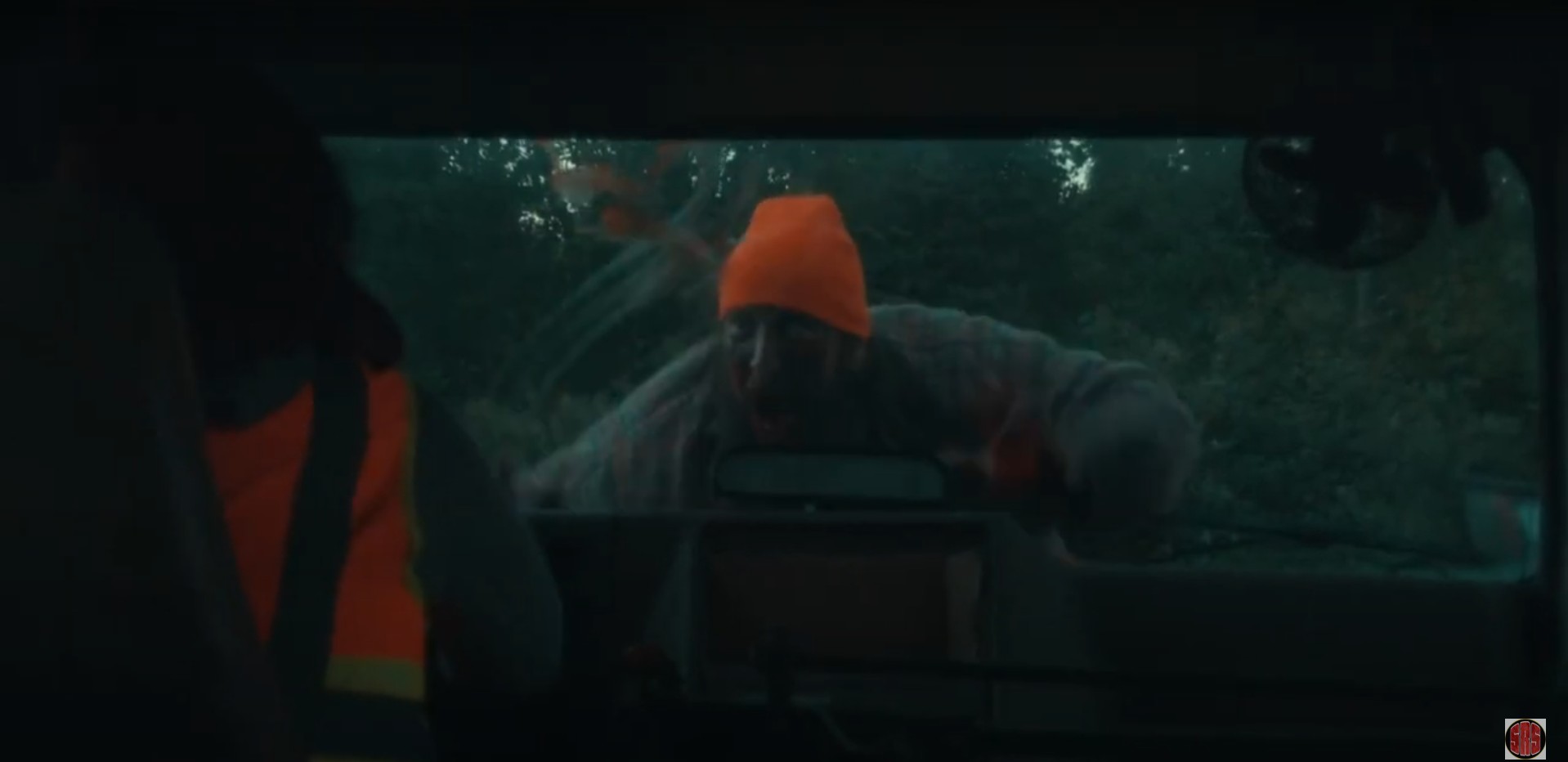
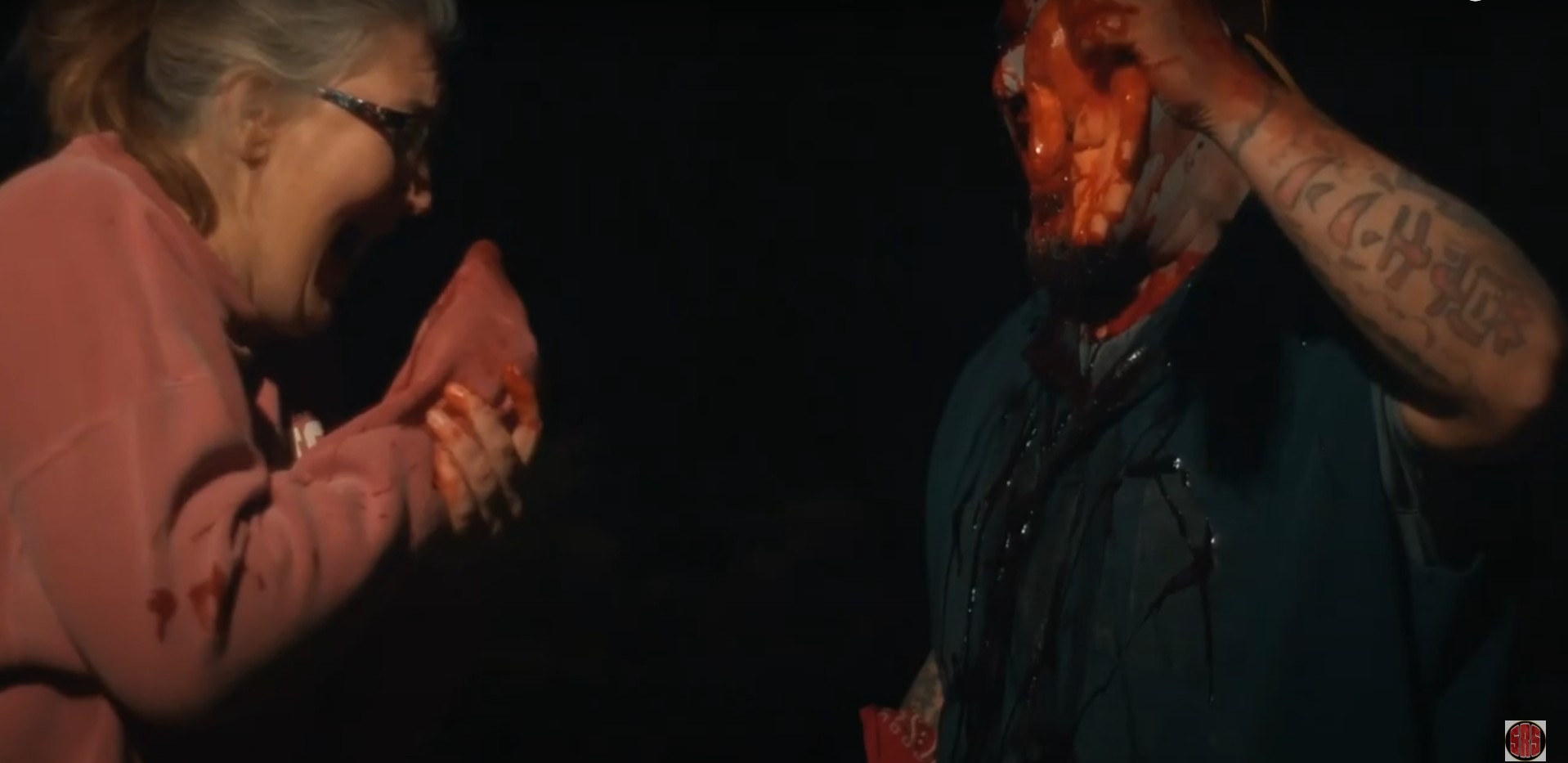
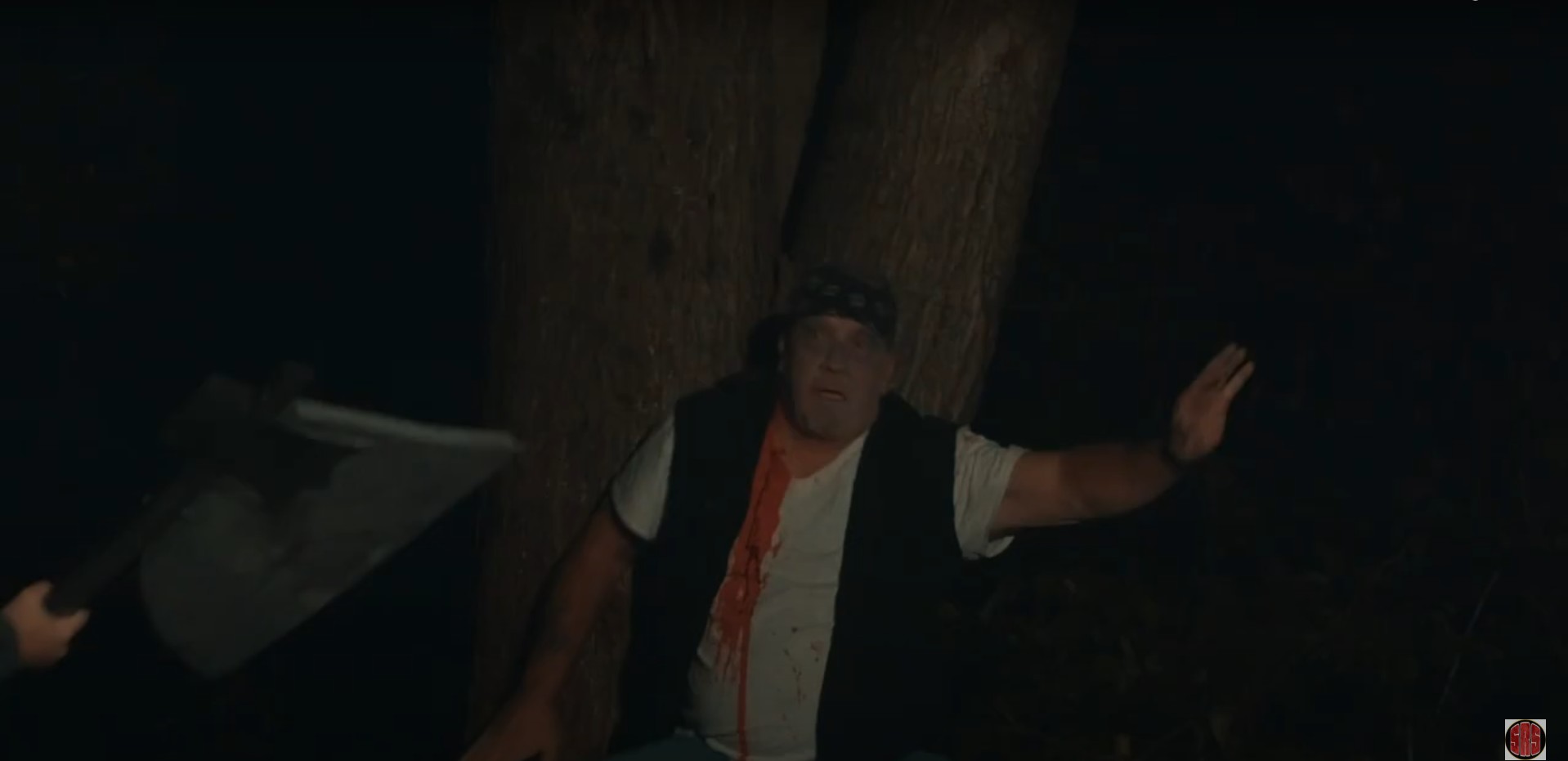
Jeb believes his late father’s purloined gold is stashed underground in his densely wooded backyard.  What’ Jeb unearths is not gold, but barrels of chemicals Jeb believes to be just as valuable.  What Jeb doesn’t know about the pinched drums is the ooze inside leaking from them turns the local tick population into diseased carriers, transmitting a sickness upon biting their hosts and transforming the hosts into ravaging flesh eaters that continue to spread the disease with one single bite.  All hell quickly breaks loose amongst a sleepy backwoods around Big J’s outdoor food truck until a retired vampire hunter, Alec, turns his skillset onto the zombified undead when twin brother Roscoe becomes patient zero.  Big J’s famous menu items pig dicks and beer won’t save the rustic hillbillies from a fast-spreading contagion but one kilt wearing son of a bitch aims to take on all of them with a help of local and his vampire slaying colleague.  

If Lyme disease wasn’t already bad enough, chemically diseased ticks being the parasitic harbingers of the zombie apocalypse might just be the worst.  Like a premise straight out of Valve Corp.’s Half-Life series, co-directors Ross Carlo and William Long’s low budget, running zombie-comedy film, “Cannibal Tick” will leave more than just a bull’s eye symptom in its bloody, outrageous wake.  Mostly derivative from other running undead features, the 2020 feature length film is the debut and first collaboration efforts of the Eastern Ohio-Western Pennsylvania filmmaking duo with Long running solo in penning the screenplay of rednecks running rampantly through a serious case of tick-induced rabies.  “Cannibal Tick” is a production of indie companies Poo House Productions located in Youngstown, Ohio and of William Long’s Dark Long Productions of Northern Cambria, Pennsylvania.  William Long and Ross Carlo retain the producing credits as well as taking on principal characters as per standard in the microbudget, everybody-pitches-in productions.

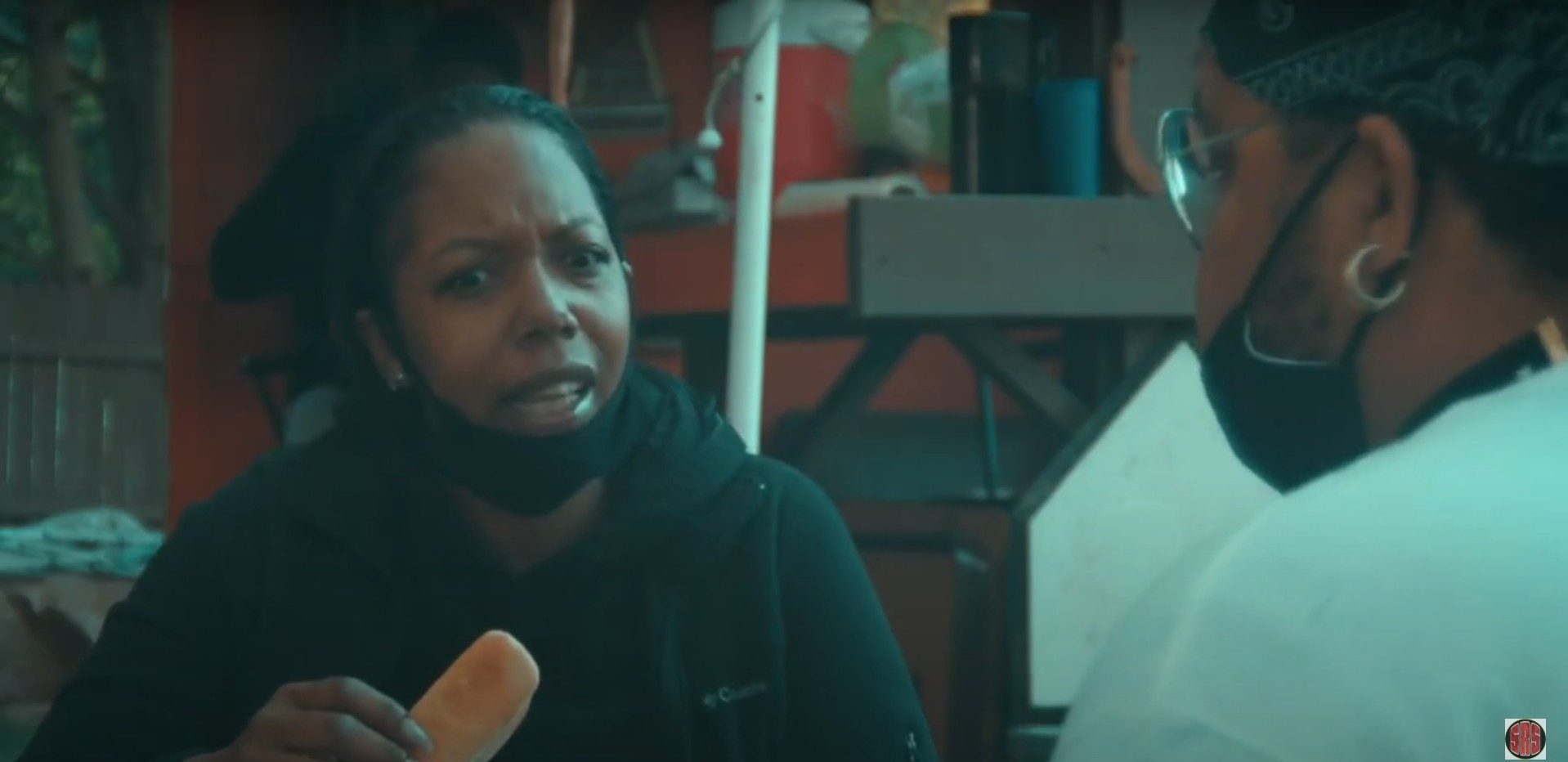
In the spirit of low-budget creativity, Ross Carlo (“Rotten, Welcome to the Freak Show”) accepts his dual role fate playing twin Scottish brothers Roscoe and Alec.  Carlo invests himself into the accent while getting physical when the ticking timebomb explodes and all zombie hell unfolds in the armpit of Nowheresville, Pennsylvania.  His presenting of Alec and Rosco couldn’t be more different but still oddly the same as Alec’s has more of an interesting background as a retired vampire hunter visiting his brother, or rather just dozing off on Roscoe’s couch.  Roscoe, on the other hand, is purely just a boondock alcoholic without much of anything else going on other than the next pint and a handful of used tissues from his personal pleasuring.  William Long (“The Devil’s Wasteland”) also has a role in the film but just one as the gold feverish Jeb looking for his late pop’s buried treasure.  Jeb’s quiet nature is not imposing and he’s terribly forgetful or just doesn’t listen to his wife but neither scenario is really relevant to the story, much like most of the carrier scenarios and backgrounds other than Alec’s vampire killing skills translating over to zombie dispatching.  So many characters are quickly tossed into the mix of a 73-minute story that they’re unfortunately not well fleshed out nor provided enough substance to even instill an impression upon and what they reduce to is simply just fodder for the carnage for the sake of a high body count.  John Catheline (“Deadly Numbers”) is and plays a forlorn former wrestler Curtis lost in beer and solitude for his prime fight days and has become a local mechanic, Maurandis Berger (“Chronicles of a Serial Killer”) and Sheneefah Johnson (“3 A.M”) are a black married couple who find themselves broken down in a white hick town, and Lena Devinney and the late Jimmy Barber Sr. (“Deadly Numbers”) are the couple who arrive at the wrong place, wrong time as they drive up to Big J’s for some pig dick and beer.  The aforesaid descripts don’t go any further with no progressive dynamism that usually establishes either a love or hate development with audiences.  “Cannibal Tick” also feeds upon Greg Bailey, Allison Devinney, Donnie Lawrence, Tene Gossard, RahZhee Emmaunel, Lisa Dapprich, Iesha Guzzo, Jana Ferris, and Michelle Dominique Buxton to be bigger in the slaughter and in the slaughtering. 

“Cannibal Tick’s” concept is sound – a tick becomes affected by a barrel of leaking toxic chemicals that causes their bite to inject the zombie creating substance directly into the bloodstream.  Yet, the problem is there is only one scene with a tick bite and the Rosco-Long production goes from interesting to run-of-the-mill zombie chaos with zero principal protagonist power.  Another knock down is the substandard traits of an extreme indie production that relies heavily on the character captivation and special effects caliber to be successful in a demanding market driven by those factors.  The former has been touched upon in great detail, but the special effects pull ahead as Michelle Dominique Buxton, who not only has a character role but is also the special effects makeup artist, is able to pull off a few interesting prosthetic monster looks as well as a decapitation death that in all honesty is really well done in framing and effect.  While the solid zombie carnage infects survivors left and right with a ferocious appetite, the narrative then evolves with Jeb’s direct ooze contact, transforming him into some similar to a zombie king that sets up “Cannibal Tick” to a potential sequel in the future.  However, that sequel hasn’t crawled its way to fruition just quite yet.

The blood thirsty arachnid with a zombifying bite buries itself onto a new Blu-ray release from SRS Cinema.  The AVC encoded, mastered 720p resolution, 25 gigabyte BD-R with the purple underbelly.  While typically unusual for a Blu-ray to be in standard definition, SRS Cinema’s certainly no stranger to their films being filmed in 720p, thus the format, but video, as well as audio, suffer quality buckling, especially when encoded onto a one-time writable disc that has its own technical limitations.  “Cannibal Tick” sees quite a bit of those technical woes in its compression codec from banding, splotchy macroblocking, and loss of overall finer details.  Many of the action scenes are done at night with little lighting and decoding struggles with delineation and details, especially when the use of commercial filming equipment was used.  The film is at least presented in a widescreen 1.85:1 aspect ratio.  The English audio isn’t written or displayed on back cover, but this does render through the receiver output as an uncompressed 2.0 mix that channels a dialogue and ambience stream through to another channel of a stock score.  Obvious lack of refinement housed in a lower bitrate captures less isolation efforts on the dialogue, leaving disruption to run interference that spike and subdues pitches and tones, but the dialogue strength has solid recorded quality from a well-placed boom.  Other than that, there’s not a good dynamic range other than zombie growl and gurgle to give “Cannibal Tick” a semblance of audio body.  Special features include raw footage of behind-the-scenes of stunt sequences and makeup effects without narrative context, the original trailer, the official SRS trailer, and trailers of other SRS Cinema catalogued films.  The standard Blu-ray contains original artwork of a large, translucent, yellow tick overtop a blood smeared, presumably, zombie woman that speaks greatly to and has intrigue appeal of an ultra-indie film.  With a runtime of a little over an hour, marking at 73-minutes, SRS Cinema’s release comes region free.

Last Rites: Ultra low-budget, rough-and-ready, and imitative in a rustic sense, “Cannibal Tick” drains interest and captivation with the film’s throwaway moonshine characters caught and released in the throes of a backwoods zombie outbreak.

Get Bit by the “Cannibal Tick” Blu-ray! Now Available!

Blind, EVIL, Undead Templar Knights Hunt for a Bite to Eat! “Tombs of the Blind Dead” reviewed! (Synapse / Special Edition 2-DiscBlu-ray)

“Tombs of the Blind Dead” 2-Disc Blu-ray Available for Purchase Here!

Maria, Betty and Roger take a train across the Spanish countryside to see the landscape sights.  When Maria feels like a third wheel stuck in between Betty and Roger’s flirtations, she jumps off the moving train, leaving her friends aboard, and camping out under the ruins of an old countryside Church.  There’s only one problem, the Church was home to the ancient order of the Knights of Templar who took a blood oath for Satan by sacrificing young virgins by drinking their blood and lynched by the Church for their crimes against man and God.  The Cursed Knights, reduced to rags, bones, and without eyes, rise from underneath their graves every night and roam the countryside on the hunt for anybody in proximity they can feast upon.  Betty and Roger learn of Maria’s strange demise without knowing the details and form a four-person search party only to step into the same dangerous den of the Knights of Templar. 

“Tombs of the Blind Dead,” or as known as the U.S. as just “The Blind Dead,” is the first in a series of four undead Templar Knights films that would come to be known as The Blind Dead collection by Spanish filmmaker Amando de Ossorio.  Natively titled “La noche del terror ciego” was released in 1971 and penned by Ossorio who laid a new path of Spanish horror that didn’t involve Paul Naschy or Jess Franco with undoubtedly slow dread of the undead that resembled more of the Italian-bred beyond the grave films where ghouls and ghosts return to life and wreak bloody havoc on the living, a guise for social context and for political dictatorship.  Themes of rebellions, rape, and bisexuality course through the feature’s necrotic veins as the film receives Spanish and Portugal co-production support from Plata Films and Interfilme with executive producer Salvadore Romero (“The Werewolf Versus the Vampire Woman”) spearheading pre-production and behind the scenes.   

Following of a newly formed trio of friends traveling the countryside to take in the sights, an underlying green-eyed trouble brews right from the moment when an enchanted Roger, the debut film and character of 1973’s “Green Inferno’s” César Burner, meets gorgeous red head Betty, “It Happened at Nightmare Inn’s” Lone Fleming,” and Roger’s travel companion and Betty’s Catholic boarding school roommate/best friend, Virginia, “The House that Screamed’s Maria Elena Arpón, feels the twinges of jealousy as her amorous covets for Roger never materializes and she sees her future with relationship with roger forever in the friend zone.  Virginia becomes so intolerant of Roger and Betty’s innocent flirtations that she’s willing to hop off a not-so-speeding train and camp inside the creepy, ruined structures at centerstage of a burial ground.  Arpón’s passive aggressive behavior is quite convincing, even the part where she tucks and rolls off a moving train in what stupid things do when people are frustrated, especially in the gray territory of love.  The love triangle is so simplistically arranged, each behavioral component goes without being farfetched.  From Virginia’s first sexual experience at the caressive, soft hands of her roommate/best friend Betty while at boarding school to Roger and Betty’s blameless attraction to one another that spurs Virginia’s irrational, self-serving behavior, Ossorio’s characters are written very well when homogeneously compared to other outside of cinema love triangles.  José Thelman (“Night of the Sorcerers”) indulges as the smuggler swine Pedro who’s roped into the reconning of the Templar tomb to clear his name with authorities by proving someone else had murdered Roger and Betty’s friend.  Joined by his floosy sidepiece María, played by another María in the iconic Spanish B-horror actress.  María Silva (“The Awful Dr. Orlof”), Pedro brutishly flaunts arrogance and confidence, taking what he wants, especially with the women uncharmed by the male sex, and that’s curious, fluid attribute when he attacks Betty but in the wake of the moment, the two of them are silently surfeited as they share the scene and that’s severely different from what anyone other filmmaker was doing at that time.  Andrés Isbert (“The Kovak Box”), Antonio Orengo (“Love Letters of a Nun”), Francisco Sanz (“Django Kill… If You Live, Shoot!”), Rufino Inglés, and Verónica Llimerá (“Hatchet for the Honeymoon”) round out the cast.

Performances give “Tombs of the Blind Dead” credibility in anxiety-riddled survival and turbulent human interactions but where those performances start to give way coincides with Ossorio’s building of dread.  No doubt the use of slow-motion sets the ghoulish, harrowing tone of the depraved, unabating, skeletally-cursed Templar Knights giving chase on horseback as they track down their flailing fresh meat, but in the process of that spinetingling, in between the Knights self-unearthing and the eventual snare and snack of their human victims, Ossorio doesn’t quite know how to flesh out formidable trepidation.  Pursued, screaming characters stand in the face of danger as if their feet are hardened in cement, stopping at every brief moment when out of sight of the hooded decaying bones and rags with dusty swords, and absentmindedly run right into the exposed radius and ulnas of the slow-moving and blind medieval damned maniacs in sequences that run out too long to be wholly gratifying.  Ossorio better pedestals the ingrained Spanish themes of never escaping your gruesome, haunting past, as seen with the circular narrative of always return back to the Knight’s ruins, and the sexual taboos of bisexuality and rape that lead to destruction.  These course through a more classically presented gothic horror. Perhaps explaining the fervent melodramatics of flamboyant fear, under the dictatorship regime of Francisco Franco and his cult-like ritualization in fascism oversight of Spain.

The sightless, flesh-feasting Templar Knights have found a new home in the Synapse Films’ tomb of terror with a new restoration transfer on a 2-Disc Blu-ray. Refurbished from the uncut original camera negative, the AVC encoded, 1080p high-definition, BD50 capacity suppresses any compression issues to display polychromatic decadence in front of a backdrop of steely graded blues. Plenty of a darker scenes to be affected by artefact corruption but the blacks are greatly dyed-in-the-wood saturated and not delineated or in spectrum of lesser decoding. Scenes never approach being flat, in color tone and in field depth, as beads of glistening sweat can be visually elaborated on and the distinction between color, shadow, and scale discern wonderfully. Two audio option tracks are available: a lossless Spanish PCM 2.0 mono track and a lossless hybrid of Spanish-English (Spanglish?) PCM 2.0 mono track. Both tracks are of a post-production dub with the Spanish option having greater synchrony with the articulating native Spanish actors of this Spanish coproduction. Audibly clean with little-to-no hissing, popping, or crackling, Synapse’s singular restoration is in good company with a high impact, high clarity, and low distortion dialogue track that meets eye-to-eye with the visual components as well as the film’s ambience cluster and Antón García Abril’s breathy and discordant, Gothically canticle score. Option subtitles are available in English on both tracks. Special features on the first disc contains individual audio commentaries by horror film historian Troy Howarth, Betty actress Lone Fleming, and the NaschyCast podcasters Troy Guinn and Rod Barnett. A feature-length documentary Marauders from the Mediterranean go from head-to-toe on not just detail Ossorio’s “Tombs of the Blind Dead” as the Spanish stamp in the juggernauting zombie genre of the times but also going in depth with the Spanish laid in horror from the 1960s to 1980s, featuring interviews with Lone Fleming, John Russo (“Night of the Living Dead”), director Jorge Grau (“The Living Dead at Manchester Morgue”), Sitges Film Festival director Mike Hostench, critics Kim Newman and John Martin, film academics Steve Jones and Calum Waddell, actors Helge Line, Manuel de Blas, Antonio Mayans, and Jack Taylor, and even Paul Naschy’s son, Sergio Molina. An alternate U.S. opening sequence Revenge of Planet Ape gives expositional insight on how the success of “The Plant of the Apes” films influenced the American distribution market to rebrand “Tombs of the Blind Dead” as an ape rebellion piece to ride the coattails of the series’ success on a lower, foreign budget. Rounding out the special features is a featurette Awakening of Spanish Horror Cinema, Salem Pop’s “Templar Tears” music video, the original theatrical trailer, and a still gallery. While Synapse has 3-Disc limited-edition set of only 4000 copies made with all the bells-and-whistles of the visual elements of new artwork, a slipcover, and a 3rd disc audio CD, the 2-Disc standard edition comes with all the same special features and all three versions of the film inside the black Amaray Blu-ray case and classic “Tombs of the Blind Dead” poster for cover art. Inside, you’ll get Synapse’s physical media catalogue and a disc on each side of the Amaray’s interior with disc 1 “Tombs of the Blind Dead” and disc 2 “The Blind Dead,” housing the shortened 83-minute U.S. re-edit on a BD25, that sport their own pressed artworks. The uncut disc 1 has a runtime of 101-minutes and has region free playback.

Last Rites: “Tombs of the Blind Dead” is Spain’s answer to “Night of the Living Dead” with discerning individualities ingrained by director Amando de Ossorio to include his country’s own social and political subtext and while Blue Underground’s The Blind Dead DVD collection is an impressive physical media crown jewel of upscaled 720p, the Blu-ray gods favor Synapse with an impressive hi-def A/V release with stellar bonus features.

“Tombs of the Blind Dead” 2-Disc Blu-ray Available for Purchase Here!

The 90’s Played Videotapes by a Different Set of EVIL Rules. “V/H/S/94” reviewed! (Acorn Media International / Blu-ray)

V/H/S/94 Blu-ray Can be Purchased Here!

A police S.W.A.T. team raid a large warehouse where suspected drug storage and trafficking is being conducted.  Tagging along a camera man for code of conduct review, what the team discovers inside is more alarming than a stash of street narcotics.  The nearly empty warehouse is filled with gruesomely recorded VHS tapes, snowy television sets in every room, and recently deceased bodies with their eyes plucked from their heads.  As the investigation frantically continues through the labyrinth corridors that turns the capture and arrest mission into a mission of escape, the pre-recorded tapes they come across show vivid, nightmare-fueling horrors, including footage of a sewer-dwelling rat man, a near empty funeral home on a dark-and-story night, inhuman surgeries joining man and machine, and a militia preparing themselves to unleash true evil onto the government establishment.  What the officers see can’t be unseen as analog madness ensues them spurred by the motivations of a deadly cult.

The fourth installment of the David Bruckner and Brad Miska created analog-influenced V/H/S horror anthology.  Known as V/H/S/94, as in 1994 to mark the period of social and cultural influence, six new directors take the short movie helm in a new line of videotape terror.  “Night’s End” director Jennifer Reeder tackles the wraparound story “Holy Hell” that fills in between and shepherds in four frightening tales with “Watcher’s” Chloe Okunols “Storm Drain,” “V/H/S/2’s Simon Barrett’s “The Empty Wake,” “May the Devil Take You’s” Timo Tjahjanto’s “The Subject,” and “Lowlife’s” Ryan Prows’ “Terror.”  “Psycho Gorman” and “Manborg” filmmaker Steven Kostanski also directs a mini-pseudo infomercial entitled “The Veggie Masher.”  Together, the filmmakers for a new lot of under-the-radar talent to showcase an eclectic blend of 90’s set scary stories with Josh Goldboom, Kurtis David harder, and Brad Miska producing, Studio 71, Cinepocalypse Productions, and Hangar 18 Media as the production credits, and Bloody Disgusting and Raven Banner Entertainment presenting the production.

With any type of anthology, a variety of roles are laid out for different scenarios.  From newscasters (Anna Hopkins, “Tin Can”) and cameramen (Anthony Christian Potenza, “Bad Dreams”) to body-transfiguring mad scientists (Budi Ross), to greenhorn funeral home attendants (Kyal Legend), “V/H/S/94 reaches into the far corners of world while also breeding home grown terror right into suburban America.  Each episode develops and nurtures layered characters with fast-setting concrete, quickly building who and what they are in a matter of minutes to which some full-length features have to build in a whole act or in all three acts.  The writing of and the colorful depiction of each character sets the tone for the rest of short and whether the short will be a success hit or not.  An example of this would be in Timo Tjahjanto’s “The Subject” with The Creator, played renationalized and crazy by Budi Ross.  An eccentric acute accent in Ross’s Creator apexes the overall expectation of a mad scientist and in that there is an understanding of what’s coming while there’s still a simultaneous shroud of mystery of how batshit crazy things can really become. The episode that didn’t quite flesh out enough, in character and in story, was the wraparound “Hell Hole” segment that sees a S.W.A.T. team (Kimmy Choi, Nicholette Pearse, Dru Viergever, Thomas Mitchell) and ride-a-long cameraman (Kevin P. Gabel) storm a suspected drug warehouse and find nothing but death and VHS.  Tremendous pandemonium as the team charging into the multi-layered complex is roughly cleaved to not smoothly segue in-and-out with the intercut VHS episodes that also hinder the characters from really being built upon to relate any interest in them.  “Holy Hell’s” climatic reveal has little weight to then stand on without that much needed seething of every detailed bubble that pops in between the short films.  However, the wraparound story doesn’t snuff out the rest of eye-gluing terror you’re witnessing with solid, edge-of-your-seat performances from Donny Alamsyah, Tim Campbell, Brian Paul, Conor Sweeney, Devin Chin-Cheong, Juan Blone Subiantoro, Christian Lloyd, Cameron Kneteman, Steven McCarthy, Brenand McMurtry-Howlett, Slavic Rogozine, and Daniel Willston.

Zombies, cults, body horror, vampires, subterranean creatures, and much more are the selected subgenres that invade insidiously into our visual receptors and straight down to shake and scare stiff our stable core, each one idiosyncratically crafted and tailored by the filmmakers tastes to deliver a unique tale under the guise of those beautiful VHS artefacts.  Whether ran through a VHS recorder or filters are applied, each era-idolized short has a distinct visual approach and feel how the 1990s tape decks presented the goods that can be saturated in horizontal noise strips, tracking lines, and image ghosting.  Granted, and likely subjectively by yours truly, some shorts are better than others with a narrative outline and in special effects.  “Holy Hell” doesn’t let time to breath and let the dust setting to effectively lay in fear and frights because of the constant cacophony of the S.W.A.T. team’s frantic ambling through the complex, seeing each disturbing scene as if breezing through a museum and glimpsing at the exhibits.  I’m fully aware of the short film time crunch Reeder was under but breakneck pacing didn’t have time to elicit any type of reaction or setup a story.  “The Empty Wake,” “The Subject,” and “Terror,” reel in and piece together all the components of their tales and find room to make them thriller and terrifying.  Barrett’s is one of the simplest yet most anxiety-riddled shorts to come out of the V/H/S anthology run, creating a couped up Funeral home atmosphere, the background threat of a tornado out of the story night, and a coffin that goes bump-bump with a sole wake service attendant on the edge of fright for fear of what’s inside trying to get out.  Ryan Prows puts a spin on the whole vampire trope by never mentioning the creature as the living dead bloodsucker held captive by a radical, ring-wing militia under the influence of its power to destroy.  Instead, the creature is just plain and pure evil that, as the militia men find out by the flaws in themselves, can’t be contained.

Acorn Media, the United Kingdom subsidiary label of RLJ Entertainment, releases the Shudder exclusive anthology on Blu-ray home video.  THE AVC encoded, 1080p high-definition, BD50 of “V/H/S/64” goes by the oxymoronic details in the videotape artefacts.  Through various VHS filters and VHS recording deck converter, the widescreen 1.78:1 aspect ratio image is purposefully distorted, worn, and in standard definition to meet the standards of the V/H/S series, providing an anomalous analog outer shell so if you’re expect fine delineation, natural skin tones, or any clear details of any sorts, then the V/H/S franchise is not for you.  For the rest of us, “’94” parades the paltry resolution like gold in a true celebratory style, embracing the chroma spectrum for a maximum retro throwback.  However, the color bands on a couple shorts appear too vibrant, creeping more into digital age with flusher hues rather than tape degraded coloring.  The English and Indian language tracks are ran through a lossless DTS-HD 5.1 surround sound mix that offers punchy kbps decoding filtering through the appropriate side and back channels and right into your ears. The sonic palette has great depth and range in the midst of the crackling and warp-pops of damaged tape. Dialogue is clean, clear, and concise and there’s synched-well, error-free English subtitles for “The Subject.” Bonus features include a behind-the-scenes featurette with the directors speaking about how they were approached and crafted each of their respective shorts, a panel interview at the San Diego Comic Con, deleted and extended scenes, the special effects discussed by Patrick Magee, a quick glimpse at “The Wake’s” visual effects piece to the pie, the full-length Steven Kostanski “Veggie Masher” commercial, behind-the-scenes images, and Hail Raatma!, a special look at the sewer-dwelling creature. There are also two commentaries: a feature-length commentary track with the filmmakers and producers hosted by The Boo Crew and a second commentary track on “The Empty Wake” with writer-director Simon Barrett. There is no mid-credit or after-credit stingers. Sheathed inside a thicker UK Blu-ray casing is the “V/H/S/94” blocky cover art of a face screaming while tape emerges from their mouth and eyes. Inside lies bare with no insert but the disc art is different with a snow-static tube televisions outlining a techno-skull. With PAL encoded playback, the Acorn Media Blu-ray comes region free (tested) despite not proclaiming so on the back cover. The UK certified 18 releases has a runtime of approx. 104 minutes.

Last Rites: If anthologies get your horror rocks off, the “V/H/S” franchise continues to disturb, disgust, and dread with new filmmakers, new stories, and new horrors, but with the same amount of thirst-quenching blood shot on video!

V/H/S/94 Blu-ray Can be Purchased Here!

100-Year Return Brings a Plague of Flesh-Eating EVIL to a Small Town! “Messiah of Evil” reviewed! (Radiance Films / Blu-ray)

The “Messiah of Evil” has Come to Blu-ray Home Video!

Arletty travels up the California coast to a small beach town known as Point Dune.  The reason for her visit is to find her artisan father after a series of bizarre letters came to an abrupt stop.  She arrives at his mural-graffitied home to discover it empty and decides to stay a few days to ask around town about his whereabouts and to be present for his return home.  Her inquiries at art gallery shopkeepers lead to a motel where Thom, a wealthy collector of urban legends and spooky stories, and his two travelling female companions, Laura and Toni, have also sought out Artletty’s father for his bizarre experiences.  As the days pass, Point Dune slowly becomes a literal ghost town that forces Thom and his companions to stay with Arletty and, together, they experience the horrible truth of what’s really happening to the  residents of the west coast community who eagerly await the arrival of the dark stranger. 

Once married filmmakers Willard Huyck and Gloria Katz are the creative minds behind the stories of “Howard the Duck” and “Indiana Jones and the Temple of Doom.”  They also wrote “American Graffiti” in what was to become their link toward working on Steven Spielberg’s Indiana Jones sequel since both “American Graffiti” and “The Temple of Doon” were both produced by the father of “Star Wars,” George Lucas.  Yet, in the midst of “American Graffiti,” the couple also penned and Huyck came into the entrance of directing with the 1974 horror-thriller “Messiah of Evil” that pulled from various themes of mindless consumerism and the rising fears of dangerous and deadly cults in the U.S.  Also known by a variety of titles around the world, including “Dead People,” “Night of the Danmed,” “Messiah of the Evil Dead,” “Revenge of the Screaming Dead,” and “Blood Busters” to name a few, the Californian coast shot film is a production of the International Cine Film Corp and V/M Productions with Gatz producing and Alan Riche (“Deep Blue Sea”) serving as executive producer. 

“Messiah of Evil” slinks into the soul leaving behind dread’s unwashed pull against what we know as conventional horror.  In order to accomplish such a fear-induced feat, a cast must envelope themselves fully in world of weird and irregularities that nestle an uneasiness stemmed not solely from their performances but from how they react to the eccentric environment, to the crumbling small town society, and to ghastly behaviors of normal-looking people.  Like most daughters, Arletty has concerns for her father and seeks to understand the truth behind his unhinged letters.  Marianna Hill (“Schizoid,” “The Baby”) plays the quietly curious at a cat daughter dabbing residents with barely an effort in interrogational questioning of her father’s whereabouts.  Hill floats Arletty through stages of a slow descent into madness that simmers slowly to a boiling point understanding of what’s taking shape around her.  The same happens to Thom, played by Richard Greer (“The Curious Female”), who initially is a fraction of the nonconformity surrounding Point Dune with his obsession toward collecting strange stories and his polyamorous collection of women.  Of character, Greer is resoundingly in control without being dominating with Thom who has wealth and magnetisms but isn’t someone to be beholden to forever as we see with Laura (Anita Ford, “The Big Bird Cage”) who deserts him for his open-door intimacy policy in his pursuit of Arletty and with the childish Toni (Joy Bang, “Night of the Cobra Woman”) in her infinitely naïve opinions surrounding the dull Point Dune.  One actor I wish we had more of but is utilized perfectly as Arletty’s father and a harbinger of what’s coming is Royal Dano (“Ghoulies II,” “Spaced Invaders”) in a non-humorous nor drunken idiot role that seemed to typecast him later in his career.  Dano’s short but sweetly terrifying stretch divulges a man torn between his previous life and a new terror that now occupies him as he interacts with Marianna Hill as concerned and contaminated father holding it all within toward his frightened, confused daughter.  “Messiah of Evil’s” cast rounds out with Elisha Cook Jr (“Rosemary’s Baby”), Bennie Robinson, and Charles Dierkop (“Grotesque”). 

Huyck directs with colorful and verismo synergism that takes the positives of what should be life’s routine pleasures and turns them against us as fantastical and harrowin deadly elements of false securities.  The rolling crashes of Point Dune’s waves takes on a constant cacophony of sinister foreshadowing, a bright and welcoming supermarket becomes a vacant trap in every aisle, the entertaining movie theater darkens with blood on the screen, and an artist’s home, full realistic murals and colors, is an oppressive feast of lifeless eyes.  Point Dune becomes a dead town, literally, as the inhabitants succumb to dark forces from beyond their years, turning primeval in their contemporary three-piece suits and evening blouses.  Huyck and Gatz story pulls inspiration from U.S. history and folklore to mark the 100-year return of spreading evil amongst the land, an evil that resorts to cannibalism by either spellbinding archfiend, an internal infection, or the rise of the undead and not just any mindless, shuffling, flesh-eating zombie but a transmogrified plotter able to move fast and think as a single unit with the touched by evil masse with telltale signs of a single rivel of blood seeping from out of their eye and their insatiable need to consume other people. ”Messiah of Evil” is not overtly graphic like George A. Romero zombies or like the unbridled number of zombie films to follow inspired by Romero’s zombie game-changing wake for the last 60 plus years, separating the flesh-eaters from Romero’s gut-gnashing, pale faced, and slow-walking undead and Huyck and Gatz’s transmitted pestilent receiving horde running fast in their best church shoes with vastly different traits. Huyck and Gatz dip into more eldritch means with the return of a paganistic dark stranger in a pared down explanation without explicitly being definitive who or what the dark stranger (a demon?Antichrist?) is that is driving foreboding signs to a doomsday-disseminating end. ”Messiah of Evil” thrives as the mysterious and strange fulcrum of the beginning of the end told through the point of view of young woman left to tell the world of what’s to come only to be about as believed as much as a man wearing a polka-dotted tutu who has delusions of unicorns dancing the waltz with garden gnomes in his front yard. 

United Kingdom distributor Radiance Films releases a new restoration transfer of “Messiah of Evil” also on their U.S. line. The AVC encoded, 1080p high-definition, BD50 presents a 4K scan of the best-known surviving 35mm print from the Academy Film Archive in a widescreen 2.35:1 aspect ratio. As noted in the release’s inserted booklet, the restoration processes used was the Digital Vision’s Phoenix Finish and DaVinci Resolve was used for color correction, under the supervision of Sebastian del Castillo at the Heavenly Movie Corporation. Audio was also restored with the Izotope RXB. For a surviving print, the original elements look pretty darn good with barely any celluloid hiccup. No vinegar syndrome, not significant tearing, or exposure to name a few issues of possibility. There are a few minor blemishes and missing or damaged frames that seem to provide an unwanted cut but most of “Messiah of Evil’s” film problems stem mostly behind the camera with a rework of the story during the stop-and-go production and conflicts in marketing the film, hence the various title aliases of the film from around the globe. Other detail low points are when the film is bathed in blue and purple gels and tint for to set an apprehensive wander and wonder while retaining more natural grading in its majority throughout. The resorted audio is a lossless English LPCM mono mix. Really focusing on the electronic score of Phillan Bishop (“The Severed Arm”), the low-frequency score sets a perpetual and durable tone of dread out of place in a prosaic small town, much like the Arletty’s father’s work-of-art home that sticks out amongst the mediocrity. In design, dialogue remains robust yet delicate when the scene calls for it, such as Elisha Cook Jr. story of how he was born in what is essentially him, as a vagrant paid for his story, making the only noise in the room. Dialogue in these moments is greatly discernible with negligible electronic interference. Depth layers the permeating isolation of a town gone mad in unison with the range stretching from the distressing design of rolling, crashing, oppressive waves to the scuffles of zombies’ consuls and heels scuffing against asphalt, pavement, and shattering through panes of glass. Radiance provides English subtitles with their release. Bonus features include a new audio commentary by film historian and horror archetype authors Kim Newman and Stephen Thrower, an archived interview with director Willard Huyck, and a new, feature-length documentary showcasing “Messiah of Evil’s” background, themes, production, and influences by various horror scholars, including Kat Ellinger who also voiceovers a visual essay on American Gothic and Female Hysteria, which if I’m being honest, parallelly treads on similarities with Ellinger’s Motherhood & Madness: Mia Farrow and the Female Gothic on Imprint’s “The Haunting of Julia.” Radiance has in the short time poured their heart and soul into their releases and “Messiah of Evil” is no different with a sleek cladded and clear Amara Blu-ray case that’s subtle in showing less but feeling more on the cover art, opposite of the reverse side that houses a classical black and white compositional illustration of characters. Inside the 28th release for the label is a 23-page color booklet insert with the appraisal writings of Bill Ackerman, transfer notes, release credits, and acknowledgements. The disc is pressed red, much like the red moon in the film, with a stark black title. The Radiance release is unrated, region free, and has a runtime of 90 minutes. ”Messiah of Evil” uses cult fears, satanic panic, and the loss of ordinary life to penetrate the spirit by way of slowly eating at it. The crawling, creeping dread meanders, much like Artletty who is seemingly held in place at Point Dune, and we’re glued to the engrossing rate of the terror to come orchestrated by the captivations of a once married couple on a fast track toward success.

The “Messiah of Evil” has Come to Blu-ray Home Video!