
Kung Fu Rascals Kicking Butt on Blu-ray!
Chen Chow Mein expertly steals an ancient tablet from the evil overlord Bamboo Man from Ka Pow whose plan is to seek complete and total dominion with the tablet stone. Chen regroups with this acolyte pupils, Reepo and Lao Ze, to visit an old wise man for translation of the tablet’s mysteries and follow it’s mapped out quest that’ll lead them to glory over the land’s malevolent beings, but the Bamboo Man from Ka Pow will not let their journey be so easy by dispatching head minion Raspmutant the Mad Monk to hire the corrupt Sherriff of Ching Wa County and his two apprentices, Dar Ling and Ba Foon, as well as summoning the monolithic Neo Titan to stop them at all costs. Always training their Kung-Fu etiquette, the trio embark on a journey through a land filled with evil ninja henchmen and must fight together to finish the journey.

Sculptor and creature effects guru Seve Wang might be best known for his work on some of the genre’s most memorable and favorite characters, such as designing the final extraterrestrial jungle hunter of John McTiernan’s “Predator,” created the Mohawk Spider Gremlin in Joe Dante’s “Gremlins 2: The New Batch,” and sculpted the failed Ripley clones in “Alien Resurrection” amongst other notable cult and blockbuster films. What you might not know is that Steve Wang had also directed, incorporating too his special effects and sculpting talents behind the camera in a debut feature, a homage to the Kung-Fu and Kaiju genres, titled “Kung Fun Rascals.” Wang also cowrote the 1992 film with another special effects artist and actor Johnnie S. Espiritu (aka Johnnie Saiko) of “Hell Comes to Frogtown” and “Aliens vs. Predator: Requiem.” Wang self-produced the film after a series of short films to gain financial backing for a feature-length production.
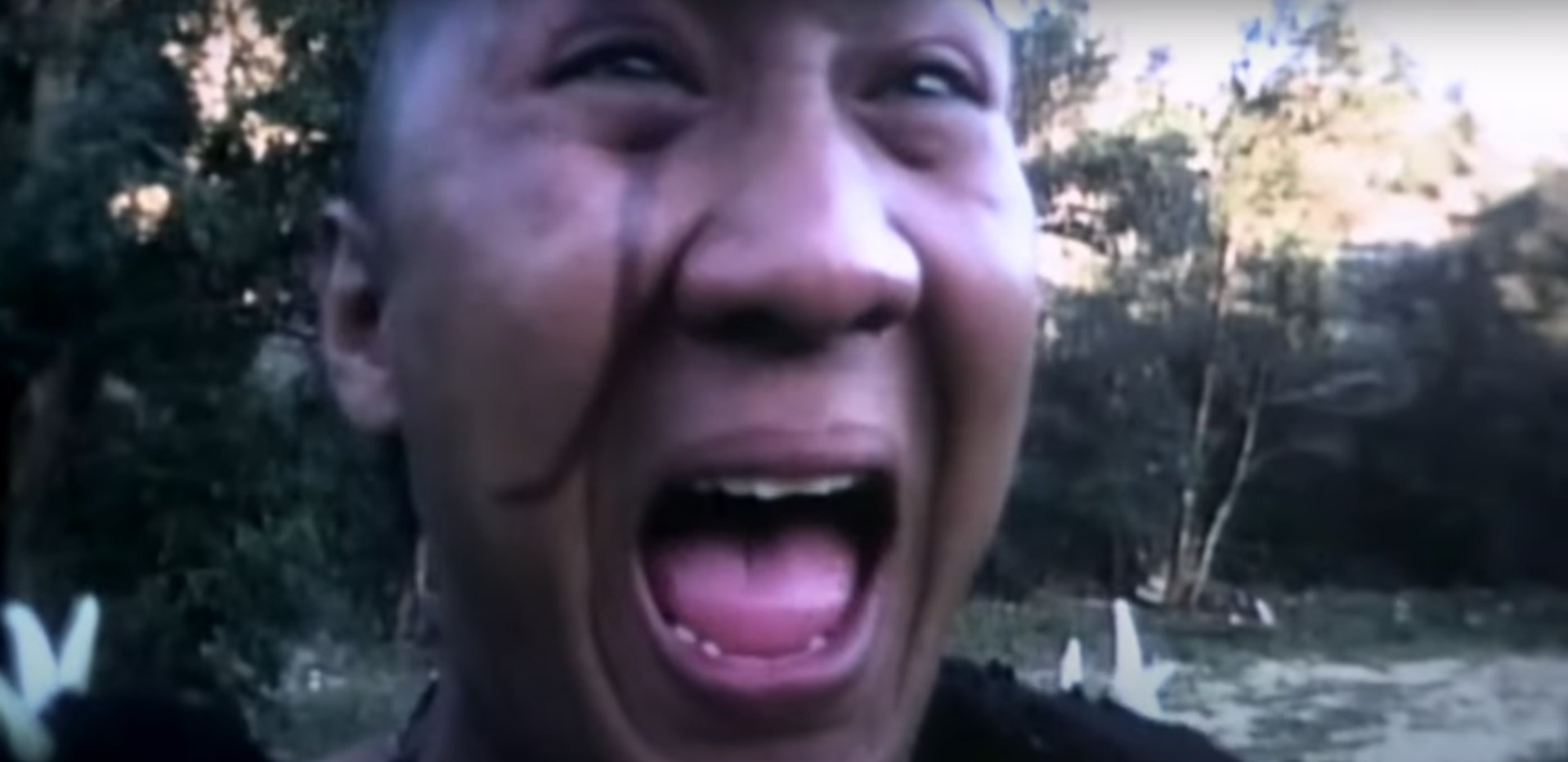
On any self-produced, independent film, the cast usually wears multiple hats. “Kung Fu Rascals” was no different as writer-director-producer-caterer-sculptor-and etc., Steve Wang also starred as Chen Chow Mien, an expert Kung-Fu fighter who steals a pivotal stone tablet from the Bamboo Man of Ka Pow, one of the many roles played by Ted Smith. Wang and Smith are friends, and that age-old motif of a friend casted film holds very true for “Kung Fu Rascals,” comprised of mostly the director’s friends, who are also special effects and makeup artists, to accomplish his dream of branching out into a different field in filmmaking. Johnnie Saiko is also one of those friends and is one of the two actors in this Kung-Fu romp playing Reepo, the trio’s good-natured goofball stylized like a character out of a “Mad Max” movie garbed in black and with a standing mohawk. The third that rounds out the team is Lao Ze from one of the few actors initially not a part of Wang’s friend pool in Troy Fromin (“Shrunken Heads”). Quaintly and quietly inspired by the antics and approaches of “The Three Stooges,” the “Kung Fu Rascals” march to a different dynamic drum as quasi-foolish, good-hearted good guys acted with slapstick, sure-fisted parody against a hapless army of animal-flavored mutants and their master with a flair for villainy. Along with that master villain role, Smith continues his trend of being the guy in the suit throughout the film by being a giant Kaiju Meta Spartan and hilariously plays out of the suit with Dar Ling, a queer flamboyant henchman alongside fellow henchmen and Chicken-style Kung-Fu fighter Ba Foon (Aaron Simms) as they add a sense of diversity and daffy under the leadership Les Claypool’s Sherriff of Ching Wa County. Yes, the same Les Claypool from the band Primus. The cast rounds out with Cleve Hall (“The Halfway House”) as an old wise, creepy, and slightly uncouth clairvoyant, Matt Rose as the wild-eyed torturer, Michelle McCrary as The Spider Witch, Ed Yang as the other Kaiju Neo Titan, Tom Martinek as the hoppy Frog guard, and Wyatt Weed (“Predator 2”) doing the devil in the details with every step as the fully anthropomorphic Pig fitted Raspmutant the Mad Monk.
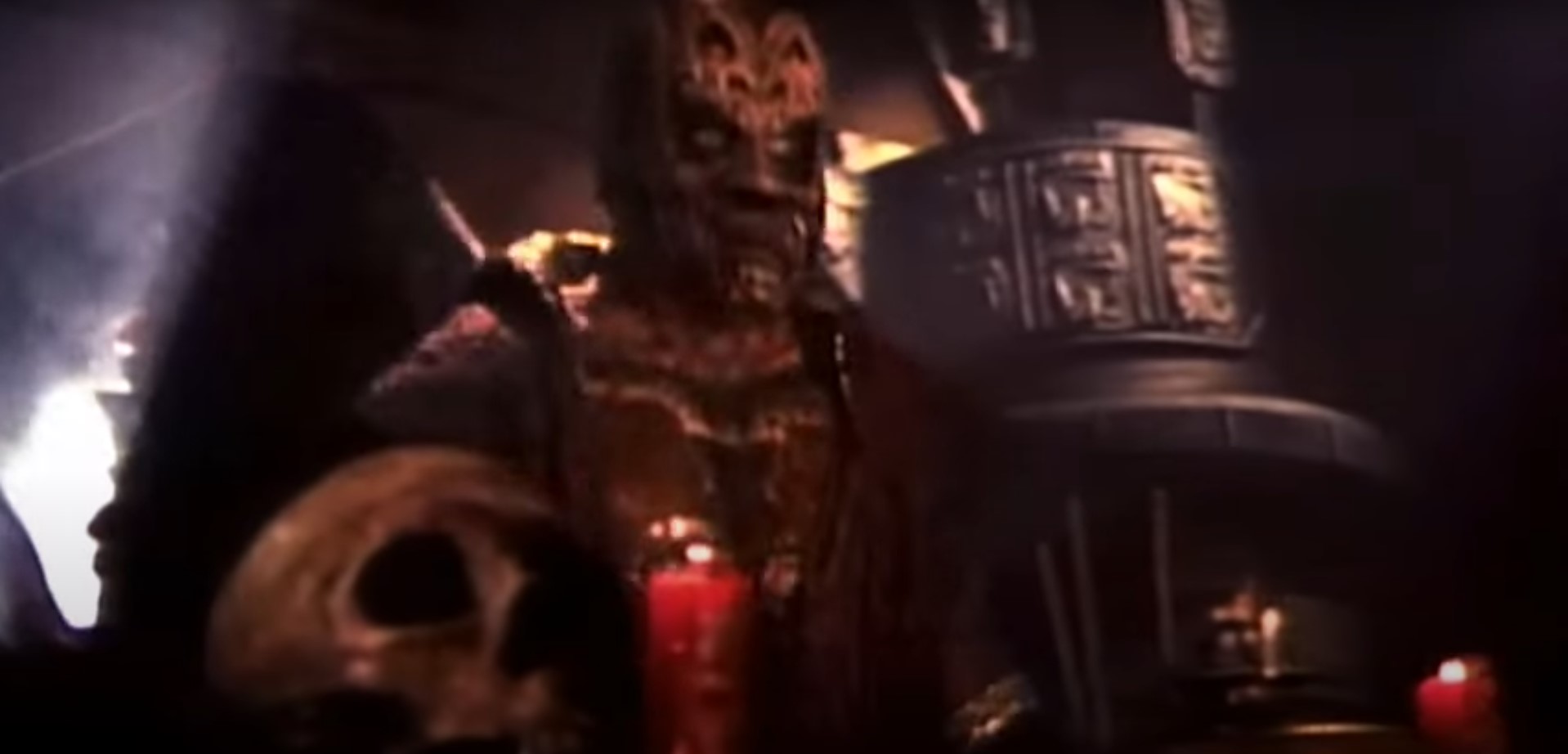
“Kung Fu Rascals” is the tastier, punchier, made with more heart version of “Kung Pow,” and I don’t mean the Chinese spicy stir-fry chicken dish with hints of peanut and accompanied with vegetables and peppers. For an independent, first-time feature on a budget, Steve Wang and friends sculps and fashions meticulous creatures from head-to-toe. Not one latex ear, not one molded snout, and not one full-body outfit appears shoddy or cheap overtop encased actors who know what to do underneath all that masking makeup and rubber. On top of that, the fight choreography, editing, and dimensional effects are high level pointing in all the right directions with interesting camera visuals and angles to turn a little production like “Kung Fu Rascals” into a fully-fledged feature that audiences of 1992 weren’t ready yet until Power Rangers explosively came onto the scene a year later. Of course, there was “The Guyver” a year earlier, also from Steve Wang, but “The Guyver” was geared for a limited audience that blended science-fiction with gory elements. “Kung Fu Rascals” settles at the other end of the spectrum with a more family-friendly façade with an homage to Asian cinema and medieval monsters. “Kung Fu Rascals” might not have been made today being quite politically incorrect with its play-on-names, stereotypes, and white-washing Asians but in the end, it’s Kung-Fu etiquette is entertaining chop-socky.
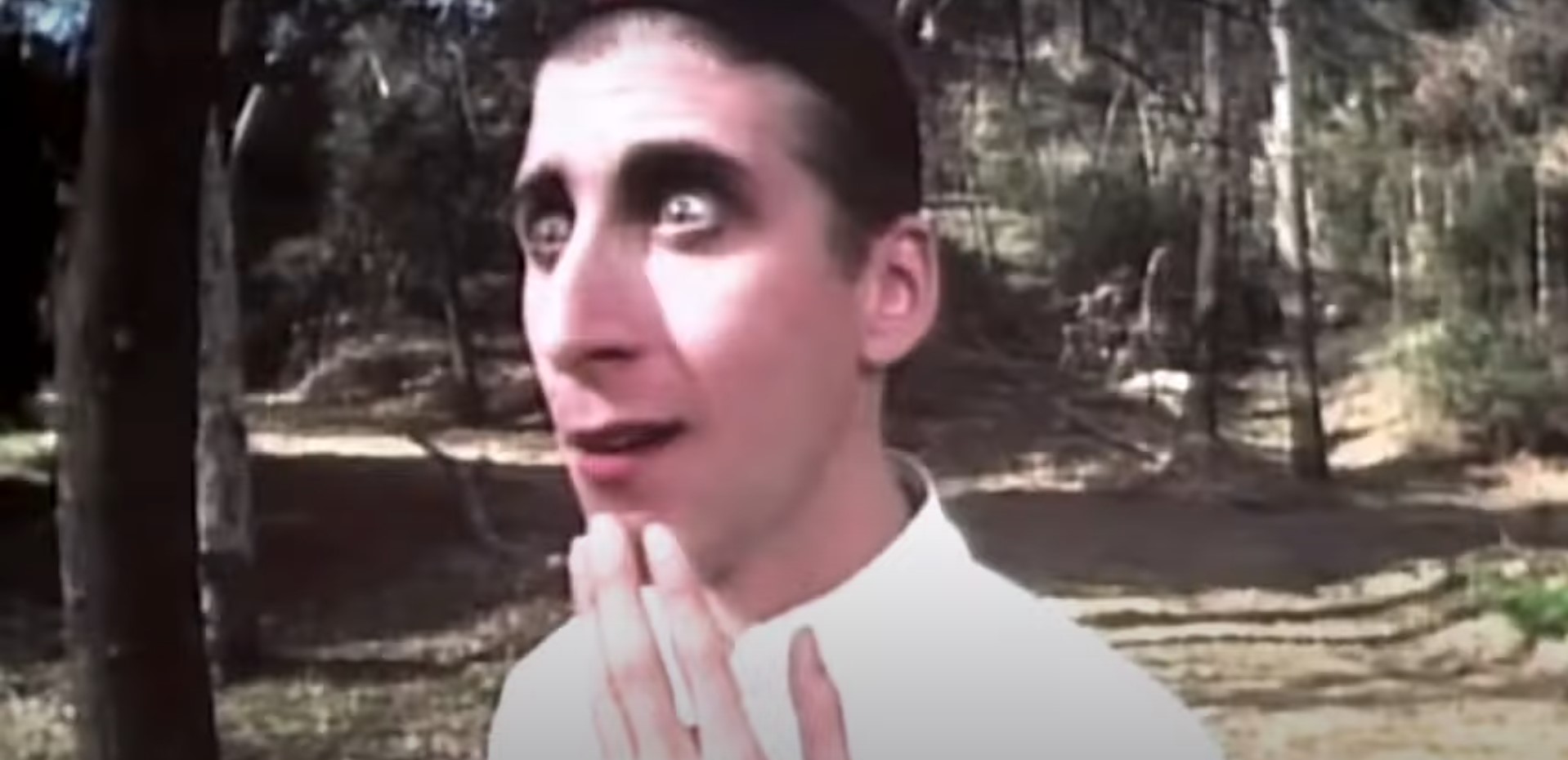
Visual Vengeance once again delivers. A high-end presentation and package of Steve Wang’s “Kung Fu Rascals” finds Blu-ray gold with a high-definition release despite the film being shot in Super 8 film. The AVC encoded, 1080p resolution, BD50 is presented in a 1:33:1 aspect ratio. Super 8 is not peak definition or color saturation as the image is captured straight onto the celluloid, color and contrast in all, in a direct positive process that left hardly any room for cleaner reprocessing. Scenes often look darker at a higher contrast on a lower, blockier resolution, decoding at a broad range of 8 to 25Mbps, and the editing, though keeping continuous fighting scenes seamless, fluctuates with surface finish inconsistency in shots that make some scenes appear dark in the daylight; this could also be result in the filming time-of-day. Yet, the cinematography is excellent in capturing interesting visual angles and the lighting setup is stunning despite the unpolished Super 8. Visual Vengeance continues to supply the technical disclaimer with the caveat of using the best possible source materials for their releases, including this director-supervised version of the standard definition master tape and original film elements, which had a few, very minor, linear scratches and dust/dirt speckles. The English language Dolby Digital Stereo mix is quite sharp and clean that emulates the boxiness of Asian dubbing/ADR. Thrown punches and kicks hit their audio marks with timed whack and thud Foley and the dialogue, through the cheesy and cheeky antics, suffers from no fidelity loss or reel damage. I’m surprised how clean the track is with little-to-no static, crackling, or hissing. English subtitles are available though no listed on the back. If looking for special features, Visual Vengeance has the definitive special features for the Steve Wang’s obscurity with a brand new feature length documentary The Making of Kung Fu Rascals containing interviews with cast and crew, two new feature-parallel commentary tracks with the first being the “Kung Fu Rascals” themselves, Steve Wang, Troy Fromin, and Johnnie Saiko, as well with composter-actor Les Claypool and actor Ted Smith and the second with film superfans Justin Decloux and Dylan Cheung, an exclusive reunion of the Rascals with a sit down conversation between Wang, Fromin, and Saiko, a Steve Wang and Les Claypool reunion, Film Threat editor Chris Gore interview on distributing the VHS, a behind-the-scenes video diary, the 30-minute “Kung Fun Rascals” Super 8 short film, the 9-minute “Code 9” Steve Wang short film, Film Threat video #6 behind-the-scenes article, film and behind-the-scene stills, and Visual Vengeance cut version of the “Kung Fu Rascals” trailer. Visual Vengeance also has your physical needs covered, and no I don’t mean sexually, with a cardboard O-Slipcover illustrated with a new art design by Thomas “The Dude Designs” Hodge overtop the clear Blu-ray Amaray case. The reversible sleeve contains two compositional, Asian cinema-homage illustrations that an eye-appealing. Inside contains a 13-page, Marc Gras illustrated, official comic book adaptation, a 2-sided single sheet insert with a fourth artwork design and Blu-ray acknowledgements, a folded mini-poster of the primary Blu-ray art, and a Visual Vengeance rental stick sheet containing 12-rental theme descriptor stickers. The unrated release comes region free and has a runtime of 102 minutes.
Last Rites: Phenomenal creature suits and makeup, a lost sense of irreverent, spot-on comedy, and butt-kicking Kung Fu, Steve Wang’s little-known picture is the poster child for satirical, independent comedy-action and a good time overall.



 It's Bloggin Evil!