The Bishop and Castle seek to Checkmate EVIL! “Sabotage” reviewed! (MVD Visual: Rewind Collection / Blu-ray)

“Sabotage” on MVD Visual’s Rewind Collection Blu-ray!

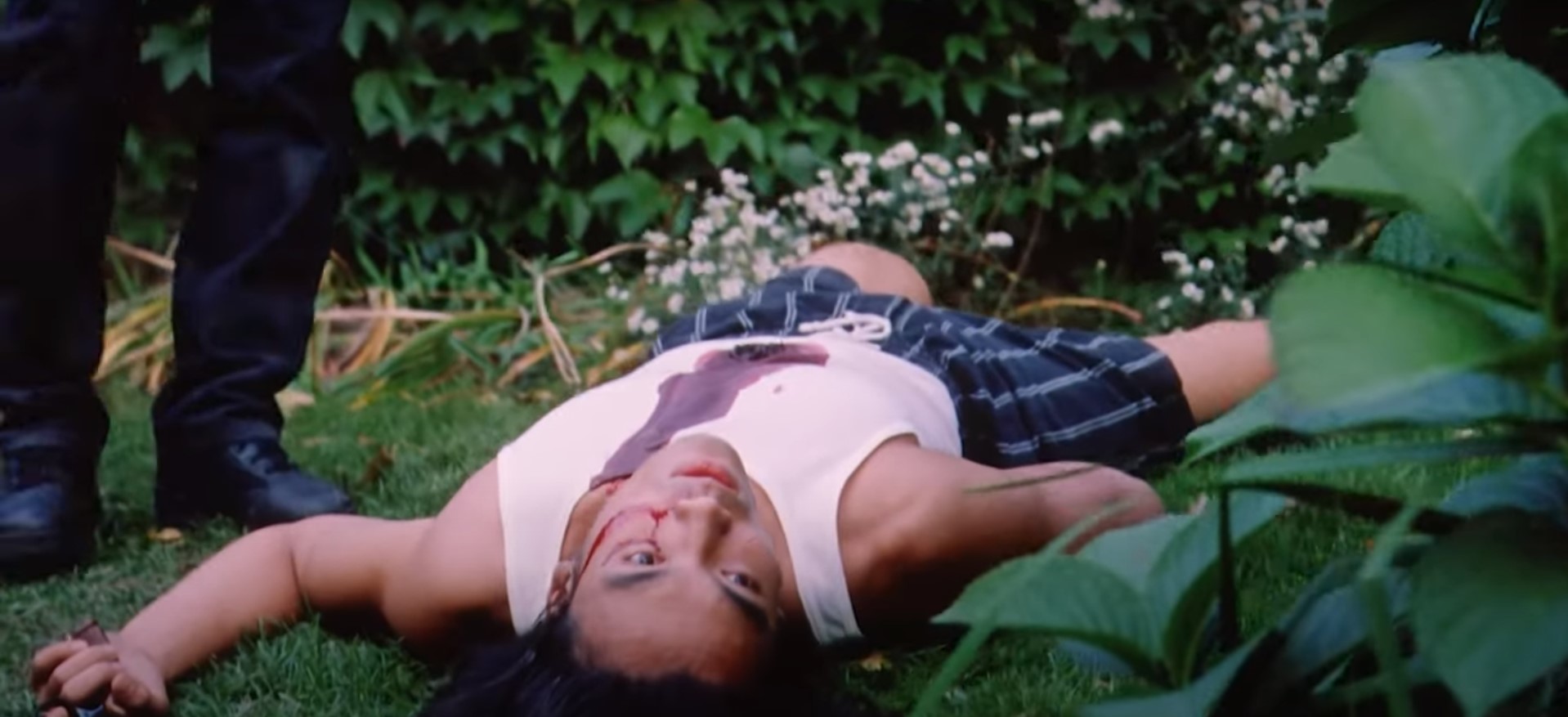
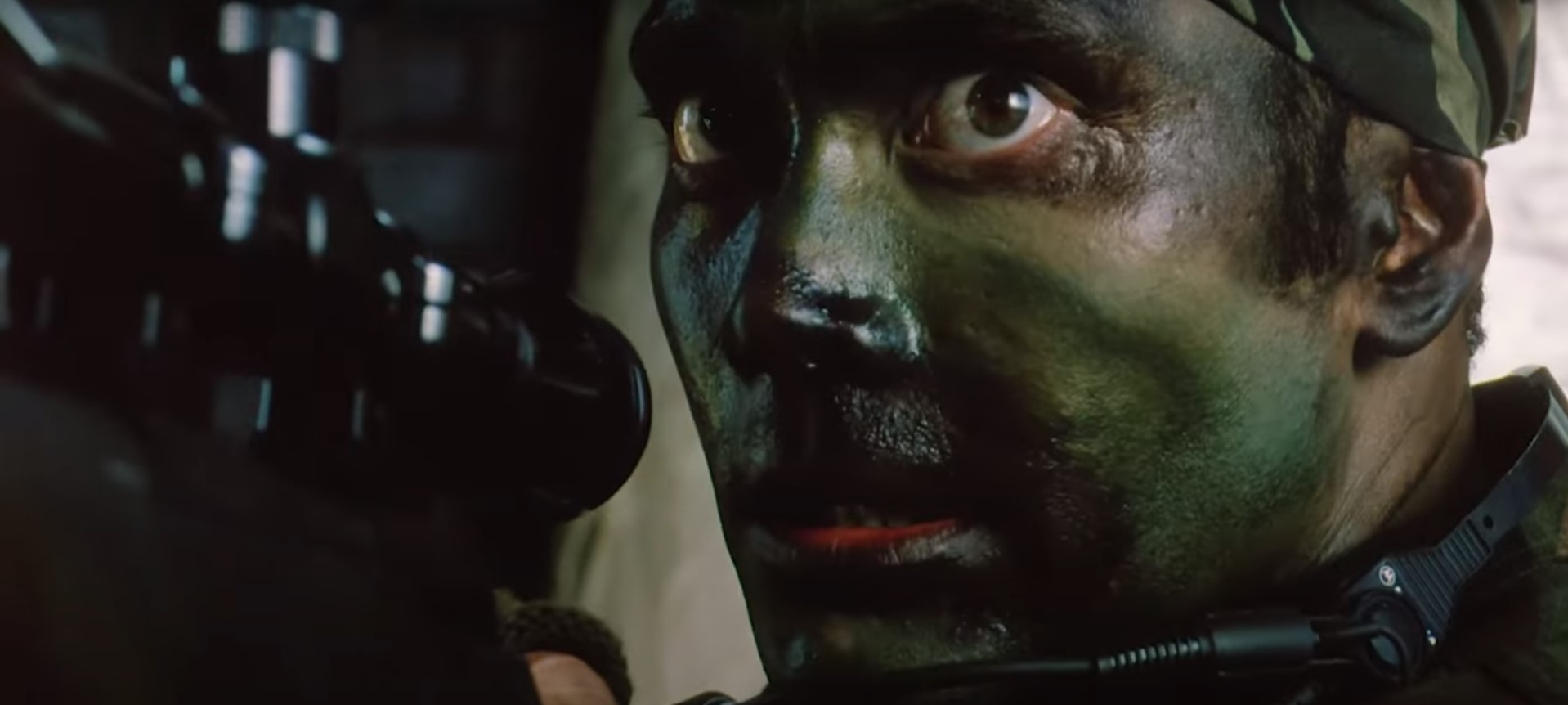
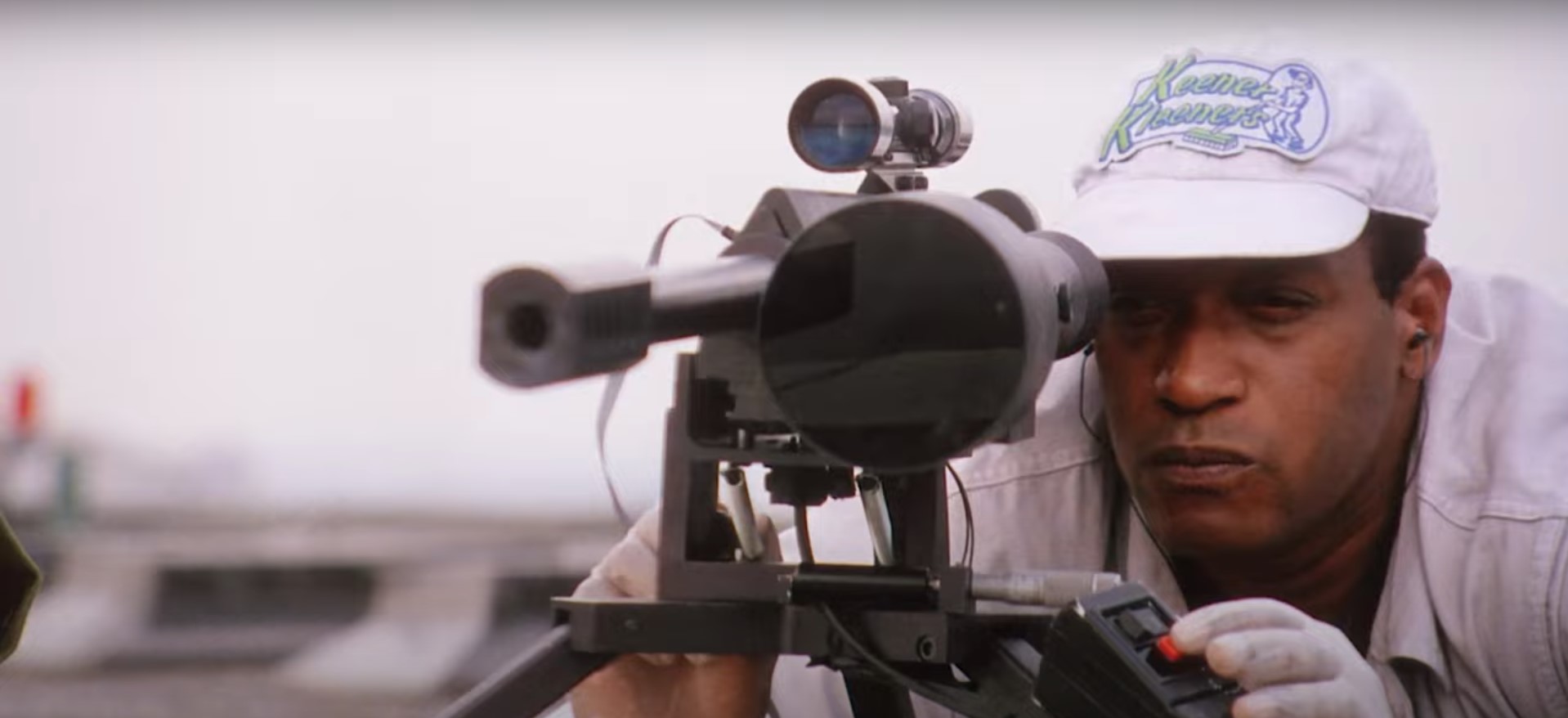
Former Navy Seal Michael Bishop was nearly killed on a gone awry Bosnia mission at the hands of former special forces soldier turned mercenary Jason Sherwood.  Three years and one court martial later, Bishop’s recently hired as a bodyguard for a wealthy businessman and his wife until a successful assassination on the businessman leaves Bishop as the prime suspect in the eyes of Special FBI Agent Louise Castle and his former Bosnia commander Nicholas Tollander now a spook with the CIA.  As Bishop strives to prove his innocence with the help of single mother Castle, looking to impress and rise in the agency to support her daughter, he’s determined to uncover an elaborate conspiracy that involves the FBI, CIA, and the man that put seven holes into him in Bosnia, Jason Sherwood, who enjoys the playful art of mercenary work.  The deep-rooted plot that exploited Bishop as a scapegoat to eliminate gunrunners plays out like a game of chess and each move is deadlier than the next. 

“Sabotage” is the 1996 independent, Canadian cloak-and-dagger thriller from “The Gate” and “I, Madman” director Tibor Takács and cowritten between Rick Filon (“The Redemption: Kickboxer 5”) and Michael Stokes (“Jungleground”).  “Sabotage’s” inspiration pulls from the simple, strategic game of chess where all the pieces, moves, and players are witnessed in plain sight in what is a tactical tornado of interagency spydom and the innocent are only the pawns in the middle, sacrificed to be a part of the puzzle to strike the monarchy behind the shadows on behalf of the across adversaries.  The Andy Emilio (“Shadow Builder”) produced and Ash R. Shan (“Lion Heart”) and Paul Wynn (“Tiger Claws III”) executively produced feature, shot in Toronto Canada (which also doubles for Bosnia in certain brushy areas), is a production of Applecreek Productions and presented by Imperial Entertainment. 

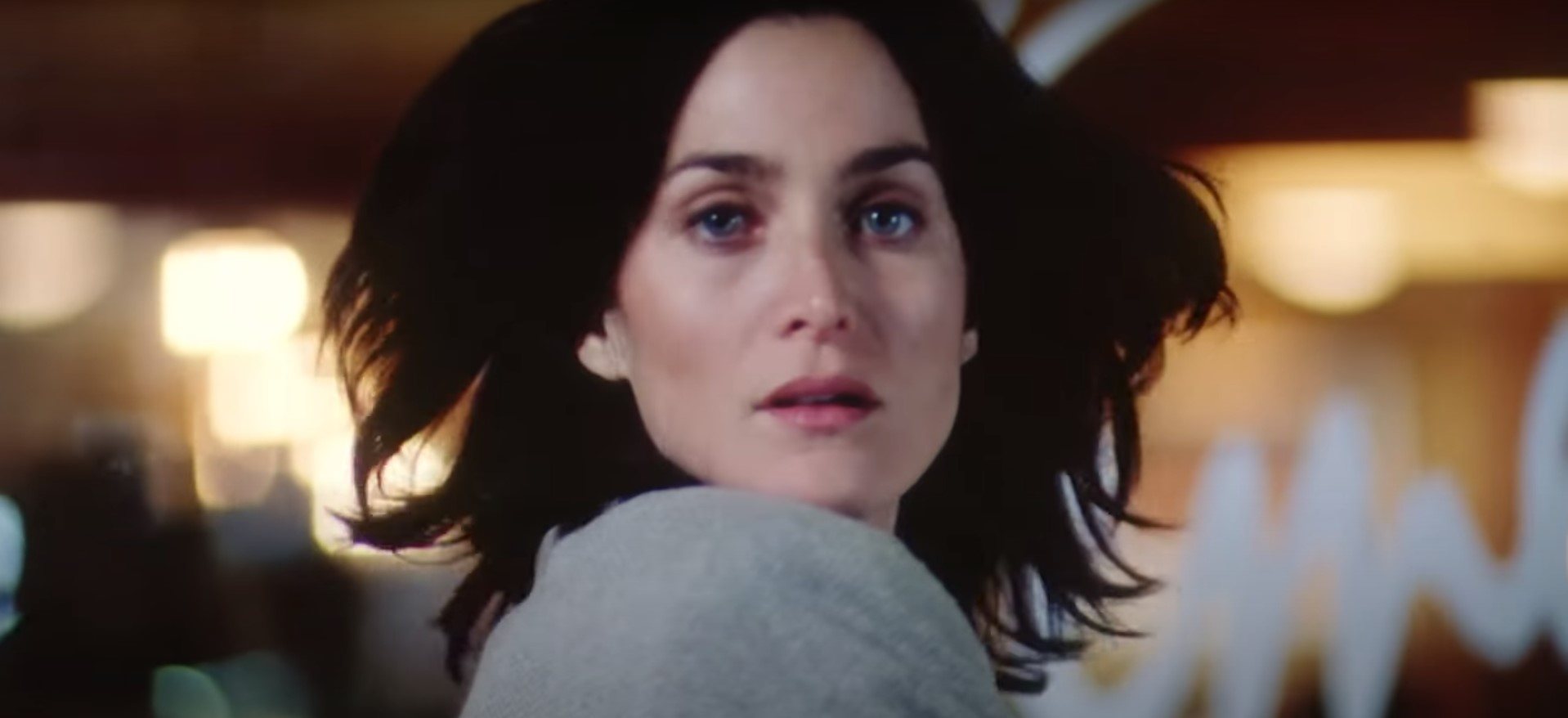
Working off another script from Rick Filon, the previous being “The Redemption : Kickboxer 5,” and hot off his humanoid cheetah role in John Frankenheimer’s “The Island of Dr. Moreau” remake, opposite Marlon Brando and Val Kilmer, the mixed martial artist Mark Dacascos plays the setup and scorned Michael Bishop, disgraced by his own military organizations, and reduced to being a bodyguard for an unscrupulous businessman.  Despite being soft spoken, Dacascos has great charisma on screen that mixes greatly with his eclectic array of martial art fighting styles, such as Muay Thai and Kung Fu.  Dacascos is a shoe in for leading man material, which also includes his swarthy good looks, and does fill the shoes of being a blacklisted former Navy Seal now on the hunt for who burned him in a botched Bosnia mission years earlier.  However, Bishop’s early motivation speaks more toward his character than his need for revenge as Bishop is not aware that it was his former attempted murderer James Sherwood, played by the towering and formidable Tony Todd (“Candyman”), who whacked his client.  Bishop becomes obsessed with the case which speaks to his loyalty and his completist mentality to see something through.  Overshadowing the leading man is Sherwood as Tony Todd instincts with this character is to be a merciless and cutting with his smooth handiwork and jibe remarks, all the while doing the horrible things with a sociopathic smile on his face.  Opposite Dacascos, in a semi-love interest role, is the pre-“Matrix” Carrie Anne Moss as Special Agent Castle who has more complexity of character than Dacascos and Todd combined.  Castle is a struggling single-mother trying to make headway in her governmental career but hits a snag when her morality is checked as she must either stay the course and go along with corruption to obtain security for her daughter or do the righteous thing and unsnarl dishonestly at the highest level with extreme prejudice for her sake of her daughter’s life.  Between the three principal leads, Castle’s arc is the steepest and more stirring with internal conflict, a testament to Moss’s performance.  Graham Greene (“Antlers”), James Purcell (“Bloodwork”), John Neville (“Urban Legend”), Heidi von Palleske (“Dead Ringers”), and Richard Coulter make up the rest of the cast.

“Sabotage” is a down-the-rabbit hole spooktacular 90s thriller, and I don’t mean spooky as in scary.  What I’m referring to is the characters’ covert agencies, such as the spooks of the Counter-Intelligent Agencies, and far-reaching operations that meddle and deconstruct a what should be a tidy organizational design with pot-stirring double-crossing, even triple-crossing, narrative paths that can be a strain to keep straight.  The film’s prelude and core story span 3 years apart and connect while there’s a simultaneous backdrop narrative that’s also connects but only exclusively in exposition.  Audiences will have to hamster wheel their mental gears to connect the dots and keep up with the pacing in this ever-evolving plotline that keeps the action caffeinated with a winding, hard-target center.  Takács also stylizes “Sabotage” with bullet-tracking special effects, high impact shelling, and an indulgence of explosive blood squibs that elevates the independent picture to an upper-class of B movie and gives the feature an edge of fun and entertainment that dichotomizes it from the more slapdash action films of the mid-90s where sex-appeal played more of a role than any other kind of actual action. 

Number 60 on the spine of MVD Visual’s Rewind Collection Blu-ray, Tibor Takács’s “Sabotage” breathes new life into the crisscrossing, projectile-pursuing, scacchic espionage extraordinaire. The AVC encoded BD50 provides a 1080p high-def resolution presented in an anamorphic widescreen 1.78:1 aspect ratio. A well-suffused and maintained print results in an excellent detailing of pixels and a punchy-noir grading. Details on the 2K scan print are historically omitted here, like with many in the Rewind Collection catalogue, but “Sabotage” doesn’t feign to be a product of enhanced visual replication with an organically pleasing form with minimal grain and only one noted frame containing age or damage wear. The uncompressed English language LPCM 2.0 stereo has abundance of vitality, discerning the layers through the dual channel funnel. Range of melee fire power has individualized zenith occurrences rendered at the right synchronization and depth makes the distinction of foreground and background dialogue, ambience, and the sort. Speaking of dialogue (pun intended), the uncompressed encoding keeps faithful fidelity, an ample and adequate of clearly expressed conversations without ever sounding muddled or lost in the skirmish. Optional English subtitles are included. Special features are little light for a Rewind Collection bannered release but what’s available packs a wallop with two new interviews with stars Tony Todd and Mark Dacascos on Zoom, or whichever face time platform is being used, going through their recollection and thoughts of “Sabotage” from nearly three decades ago. A Mark Dacascos trailer reel rounds out the special feature content. The rigid slipcover contains the reprint of the original “Sabotage” poster in a mockup of a VHS case; however, this particular Rewind Collection cover composition has less flair to sell the VHS facsimile. Inside cover art of the clear Blu-ray Amaray case contains the same poster sheet but is reversible with a less-is-more one sheet. In the insert section is a folded mini-poster of the primary cover art and, opposite, the BD50 is pressed with a plastic-patterned, VHS-tape motif. The region free Blu-ray comes unrated and has a 99-minute runtime.

Last Rites: Overall, a gratifying A/V and physical presentation of a mid-90’s, mid-level action-thriller encompassing a showcase of Mark Dacascos’s leading man chops as well as a different side to Tony Todd that isn’t encapsulated in the supernatural during the height of his career.

“Sabotage” on MVD Visual’s Rewind Collection Blu-ray!

An EVIL Assassin Battle Royale! “Mean Guns” reviewed! (MVD Visual / Blu-ray)

“Mean Guns” on MVD Rewind Collection Blu-ray! Purchase Here!

A Crime syndicate mid-level enforcer named Vincent Moon invites professional hired killers and syndicate affiliates to a new, urban-centric prison constructed by the organization the day before grand opening.  The reason for this elaborate invitation is simple:  all those invited have betrayed the syndicate in one way or another and are brought into the locked down prison to battle royale to the death.  The rules of the competition clarify no one will leave the premises, unless being gunned down by a rooftop sniper is acceptable to them, and three contestants must survive the game to claim the prize, the prize being a three-way split of ten million in cash.  As guns, ammunition, and melee weapons are dumped onto the battle grounds, a scramble ensues, and factions are made with 6-hour clock to kill nearly everyone in sight to live and be rich or to be slaughtered by Vincent Moon.  However, there’s no honor amongst thieves and thugs and the rules bend in a rigged high-stakes game of kill-or-be-killed.

The late director Albert Pyun was an ambitious, fast-paced, and prolific director who dominated the late 1980s through much of the 1990s with eclectic, science-fiction action.  The “Cyborg” and “Nemesis” writer-director severed the line between reality and the alternate that brought science fiction to a more grounded realism, such as we see in the aforementioned films, mostly because Pyun was always short on funds and short on time to deliver a final, finished feature.  With his 1997 actioner “Mean Guns,” Pyun severed into another layer on the existential plane and took hold of different kind of alternative reality, one that is plagued by an all-powerful crime syndicate that has its insidious hands in everything, even in the personal and professional lives and secrets of its own employees and hired contracts.  Andrew Witham wrote the script that was produced by longtime Pyun collaborating producers Tom Karnowski (“The Sword and the Sorcerer,” “Cyborg”) and Gary Schmoeller (“Hong Kong 97,” “Omega Doom”), together the trio founded Filmwerks which became the production company under “Mean Guns.” 

Pre-“Law & Order: SVU,” which would define his career in the film and television industry, rapper Ice-T worked himself in from behind a mic to in front of a camera mostly beginning in the 1990s with “New Jack City,” an urban gangster film that matched his on stage musical presence and starred opposite Wesley Snipes (“Blade”), Chris Rock (“Jigsaw”), and Mario Van Peebles (“Jaws:  The Revenge”).  Ice-T found cult status in more pulpy thrillers with exploitation “Surviving the Game” as a homeless man hunted down by a group of rich sport hunters and playing a post-apocalypse beast in the graphic novel adapted “Tank Girl,” but his gangster persona had stuck with him, leaving him the legendary rapper seemingly encircled in the same kind of urban gangster films. This is the case with “Mean Guns” as he portrays a philosophical, upper-level syndicate criminal Vincent Moon spearheading a game of wetwork for the unscrupulous wetworkers associated with his organization.  Not the most prolifically dialogued or screen timed role, Ice-T does what he can to bring Vincent Moon into the fold of much more colorful characters.  “Highlander’s” Christopher Lambert receives co-top of the bill as a psychotic assassin looking to atone for a careless sin.  Lambert is wonderfully unhinged while calculating as he integrates his “Highlander” sword skills and maniacal grin into his character of Lou, who through flashbacks had accidently killed a child on one of his hits and retrieves his biological daughter for an abusive stepfather to start life anew.  More pragmatic is Lou’s rival Marcus, stoically portrayed by Albert Pyun regular Michael Hasley (“Dollman,” “Nemesis 2”).  Together, Lou and Marcus must team up, along with the coldhearted D. (Kimberly Warren, “Blast”) and syndicate accountant turned informant Cam (Deborah Van Valkenbugh, “The Warriors’), to survive against the fray of likeminded killers.  “Mean Guns” cast fills out with Tina Cote (“Nemesis 2”), Thom Mathews (“Return of the Living Dead”), Yuji Okumoto (“Robot Wars’), Jerry Rector (“Vampire’s Kiss”), James Wellington (“The Evil Inside Me”), and introducing Hunter Doughty.

Like many of Albert Pyun’s caffeinated action films, “Mean Guns” is the epitome of vehemently slick dipped in a 90’s glaze of an alternative, unchecked free-for-all of bad hairdos, trench coats, and guns.  Lots of guns in a pre-computer-generated muzzle flash with real recoil and really bad, but good, one-liners.  What’s more surprising about this Pyun is that, unlike his previously mentioned films, “Mean Guns” is virtually bloodless albeit the shoot’em up melee violently lays waste to nearly 100 bad guys.  Pyun integrated a liberal use of blood squibs in his other guns-blazing and contentious conflicts, but “Mean Guns” takes a step back to a less severe tile like “Unkind Guns” with a comically coated film pulled straight out of a cheesy graphic novel.   For example, a combatant, thinking they just scored the briefcase full of millions, finds their head aflame and their face covered in black powder loony toon style after the opened briefcase explodes offscreen.  These moments provide a reality check to the already outlandish, yet highly entertaining, every man for himself game of death made willingly subjectable by its limited principals and Pyun style action. 

Getting ready to kill for this new Blu-ray of Albert Pyun’s “Mean Guns.”  The MVDVisual release, a part of their MVD Rewind Collection, is presented in a 2.35:1 aspect ratio, AVC encoded onto a 1080p, high-definition BD50.  Pyun and director of photography George Mooradian, who collaborated on many of Pyun’s films, such as “Cyborg” and “Nemesis” as well as standalone projects with “Bats” and “K-911,” utilized a spherical lens with steep drop-offs around the edges of the frame, almost looks like everything around the left and right sides should be falling.  IMDB states anamorphic lens but judging from the complete focus of the background and the severe oval-like nature of the frame, I’m leaning toward a spherical lens. For vast landscapes where length is nearly limitless, a spherical lens would be ideal to unify depth and main focus but since confined to a prison interior, compact hallways are squeezed in beyond a reasonable limit and often side-stance characters are warped in frame.  Details are generally fine with the hi-def pixel count that translates skin tones naturally pleasing with a few moments of corrective coloring aside from the occasional red hot temperature flashbacks that bath everything in color-varied reversal exposure.  The transfer isn’t perfect either with a couple of noticeable damage blips on the 35mm print.  The uncompressed English LPCM 2.0 stereo is a mambo-ladened, bullet-whizzing, melee-skirmishing, and depth-exacting design that’s well balanced and layered.  Dialogue remains free of audible blights and courses prominent throughout.  Optional English and French subtitles are available.  Special features, including an Albert Pyun introduction that’s encoded into the Play Film as well as the bonus content and to which had to be shot well before his death judging by the appearance of his rather healthy person in the video, includes an audio commentary by the director, a new interview with producer Gary Schmoeller, a new interview with executive producer Paul Rosenblum, and a new interview with composter Anthony Riparetti..  The original theatrical trailer is also included. I’m always elated to see the MVD’s throwback package design and the 59th Rewind Collection release continues the theme with a cardboard slipcover in mock disrepair with a corner edged torn and exposing the corner of a VHS tape cassette. Not to forget to mention the designed rental stickers to heighten the effect. Underneath the slipcase is a clear Blu-ray Amaray case with reversible cover art, each side promoted with a scaled down poster art bordered and backgrounded with a similar coloring shade. Inside, the disc is smartly pressed with a VHS-façade while the insert side has a mini-folded poster of the primary cover art. The region free release comes rated R and has a runtime of 104 minutes, which when watching the feature one can see perhaps some cuts were made for timing. Perhaps, Pyun had a longer version and had to edit and cut down for time.

Last Rites: A romping mayhem, “Mean Guns” is ballistically ceaseless and entertaining, if not also the touchstone of 90’s cheesy action, and is presented well here with in the latest, and greatest, MVD Visual Rewind Collection Blu-ray.

“Mean Guns” on MVD Rewind Collection Blu-ray! Purchase Here!

The 90’s Played Videotapes by a Different Set of EVIL Rules. “V/H/S/94” reviewed! (Acorn Media International / Blu-ray)

V/H/S/94 Blu-ray Can be Purchased Here!

A police S.W.A.T. team raid a large warehouse where suspected drug storage and trafficking is being conducted.  Tagging along a camera man for code of conduct review, what the team discovers inside is more alarming than a stash of street narcotics.  The nearly empty warehouse is filled with gruesomely recorded VHS tapes, snowy television sets in every room, and recently deceased bodies with their eyes plucked from their heads.  As the investigation frantically continues through the labyrinth corridors that turns the capture and arrest mission into a mission of escape, the pre-recorded tapes they come across show vivid, nightmare-fueling horrors, including footage of a sewer-dwelling rat man, a near empty funeral home on a dark-and-story night, inhuman surgeries joining man and machine, and a militia preparing themselves to unleash true evil onto the government establishment.  What the officers see can’t be unseen as analog madness ensues them spurred by the motivations of a deadly cult.

The fourth installment of the David Bruckner and Brad Miska created analog-influenced V/H/S horror anthology.  Known as V/H/S/94, as in 1994 to mark the period of social and cultural influence, six new directors take the short movie helm in a new line of videotape terror.  “Night’s End” director Jennifer Reeder tackles the wraparound story “Holy Hell” that fills in between and shepherds in four frightening tales with “Watcher’s” Chloe Okunols “Storm Drain,” “V/H/S/2’s Simon Barrett’s “The Empty Wake,” “May the Devil Take You’s” Timo Tjahjanto’s “The Subject,” and “Lowlife’s” Ryan Prows’ “Terror.”  “Psycho Gorman” and “Manborg” filmmaker Steven Kostanski also directs a mini-pseudo infomercial entitled “The Veggie Masher.”  Together, the filmmakers for a new lot of under-the-radar talent to showcase an eclectic blend of 90’s set scary stories with Josh Goldboom, Kurtis David harder, and Brad Miska producing, Studio 71, Cinepocalypse Productions, and Hangar 18 Media as the production credits, and Bloody Disgusting and Raven Banner Entertainment presenting the production.

With any type of anthology, a variety of roles are laid out for different scenarios.  From newscasters (Anna Hopkins, “Tin Can”) and cameramen (Anthony Christian Potenza, “Bad Dreams”) to body-transfiguring mad scientists (Budi Ross), to greenhorn funeral home attendants (Kyal Legend), “V/H/S/94 reaches into the far corners of world while also breeding home grown terror right into suburban America.  Each episode develops and nurtures layered characters with fast-setting concrete, quickly building who and what they are in a matter of minutes to which some full-length features have to build in a whole act or in all three acts.  The writing of and the colorful depiction of each character sets the tone for the rest of short and whether the short will be a success hit or not.  An example of this would be in Timo Tjahjanto’s “The Subject” with The Creator, played renationalized and crazy by Budi Ross.  An eccentric acute accent in Ross’s Creator apexes the overall expectation of a mad scientist and in that there is an understanding of what’s coming while there’s still a simultaneous shroud of mystery of how batshit crazy things can really become. The episode that didn’t quite flesh out enough, in character and in story, was the wraparound “Hell Hole” segment that sees a S.W.A.T. team (Kimmy Choi, Nicholette Pearse, Dru Viergever, Thomas Mitchell) and ride-a-long cameraman (Kevin P. Gabel) storm a suspected drug warehouse and find nothing but death and VHS.  Tremendous pandemonium as the team charging into the multi-layered complex is roughly cleaved to not smoothly segue in-and-out with the intercut VHS episodes that also hinder the characters from really being built upon to relate any interest in them.  “Holy Hell’s” climatic reveal has little weight to then stand on without that much needed seething of every detailed bubble that pops in between the short films.  However, the wraparound story doesn’t snuff out the rest of eye-gluing terror you’re witnessing with solid, edge-of-your-seat performances from Donny Alamsyah, Tim Campbell, Brian Paul, Conor Sweeney, Devin Chin-Cheong, Juan Blone Subiantoro, Christian Lloyd, Cameron Kneteman, Steven McCarthy, Brenand McMurtry-Howlett, Slavic Rogozine, and Daniel Willston.

Zombies, cults, body horror, vampires, subterranean creatures, and much more are the selected subgenres that invade insidiously into our visual receptors and straight down to shake and scare stiff our stable core, each one idiosyncratically crafted and tailored by the filmmakers tastes to deliver a unique tale under the guise of those beautiful VHS artefacts.  Whether ran through a VHS recorder or filters are applied, each era-idolized short has a distinct visual approach and feel how the 1990s tape decks presented the goods that can be saturated in horizontal noise strips, tracking lines, and image ghosting.  Granted, and likely subjectively by yours truly, some shorts are better than others with a narrative outline and in special effects.  “Holy Hell” doesn’t let time to breath and let the dust setting to effectively lay in fear and frights because of the constant cacophony of the S.W.A.T. team’s frantic ambling through the complex, seeing each disturbing scene as if breezing through a museum and glimpsing at the exhibits.  I’m fully aware of the short film time crunch Reeder was under but breakneck pacing didn’t have time to elicit any type of reaction or setup a story.  “The Empty Wake,” “The Subject,” and “Terror,” reel in and piece together all the components of their tales and find room to make them thriller and terrifying.  Barrett’s is one of the simplest yet most anxiety-riddled shorts to come out of the V/H/S anthology run, creating a couped up Funeral home atmosphere, the background threat of a tornado out of the story night, and a coffin that goes bump-bump with a sole wake service attendant on the edge of fright for fear of what’s inside trying to get out.  Ryan Prows puts a spin on the whole vampire trope by never mentioning the creature as the living dead bloodsucker held captive by a radical, ring-wing militia under the influence of its power to destroy.  Instead, the creature is just plain and pure evil that, as the militia men find out by the flaws in themselves, can’t be contained.

Acorn Media, the United Kingdom subsidiary label of RLJ Entertainment, releases the Shudder exclusive anthology on Blu-ray home video.  THE AVC encoded, 1080p high-definition, BD50 of “V/H/S/64” goes by the oxymoronic details in the videotape artefacts.  Through various VHS filters and VHS recording deck converter, the widescreen 1.78:1 aspect ratio image is purposefully distorted, worn, and in standard definition to meet the standards of the V/H/S series, providing an anomalous analog outer shell so if you’re expect fine delineation, natural skin tones, or any clear details of any sorts, then the V/H/S franchise is not for you.  For the rest of us, “’94” parades the paltry resolution like gold in a true celebratory style, embracing the chroma spectrum for a maximum retro throwback.  However, the color bands on a couple shorts appear too vibrant, creeping more into digital age with flusher hues rather than tape degraded coloring.  The English and Indian language tracks are ran through a lossless DTS-HD 5.1 surround sound mix that offers punchy kbps decoding filtering through the appropriate side and back channels and right into your ears. The sonic palette has great depth and range in the midst of the crackling and warp-pops of damaged tape. Dialogue is clean, clear, and concise and there’s synched-well, error-free English subtitles for “The Subject.” Bonus features include a behind-the-scenes featurette with the directors speaking about how they were approached and crafted each of their respective shorts, a panel interview at the San Diego Comic Con, deleted and extended scenes, the special effects discussed by Patrick Magee, a quick glimpse at “The Wake’s” visual effects piece to the pie, the full-length Steven Kostanski “Veggie Masher” commercial, behind-the-scenes images, and Hail Raatma!, a special look at the sewer-dwelling creature. There are also two commentaries: a feature-length commentary track with the filmmakers and producers hosted by The Boo Crew and a second commentary track on “The Empty Wake” with writer-director Simon Barrett. There is no mid-credit or after-credit stingers. Sheathed inside a thicker UK Blu-ray casing is the “V/H/S/94” blocky cover art of a face screaming while tape emerges from their mouth and eyes. Inside lies bare with no insert but the disc art is different with a snow-static tube televisions outlining a techno-skull. With PAL encoded playback, the Acorn Media Blu-ray comes region free (tested) despite not proclaiming so on the back cover. The UK certified 18 releases has a runtime of approx. 104 minutes.

Last Rites: If anthologies get your horror rocks off, the “V/H/S” franchise continues to disturb, disgust, and dread with new filmmakers, new stories, and new horrors, but with the same amount of thirst-quenching blood shot on video!

V/H/S/94 Blu-ray Can be Purchased Here!

Might Be Dressed as a Fool, but EVIL Can’t Outwit This Jester! “The Wrong Door” reviewed! (Visual Vengeance / Blu-ray)

“The Wrong Door” Collector’s Set Available at Amazon!

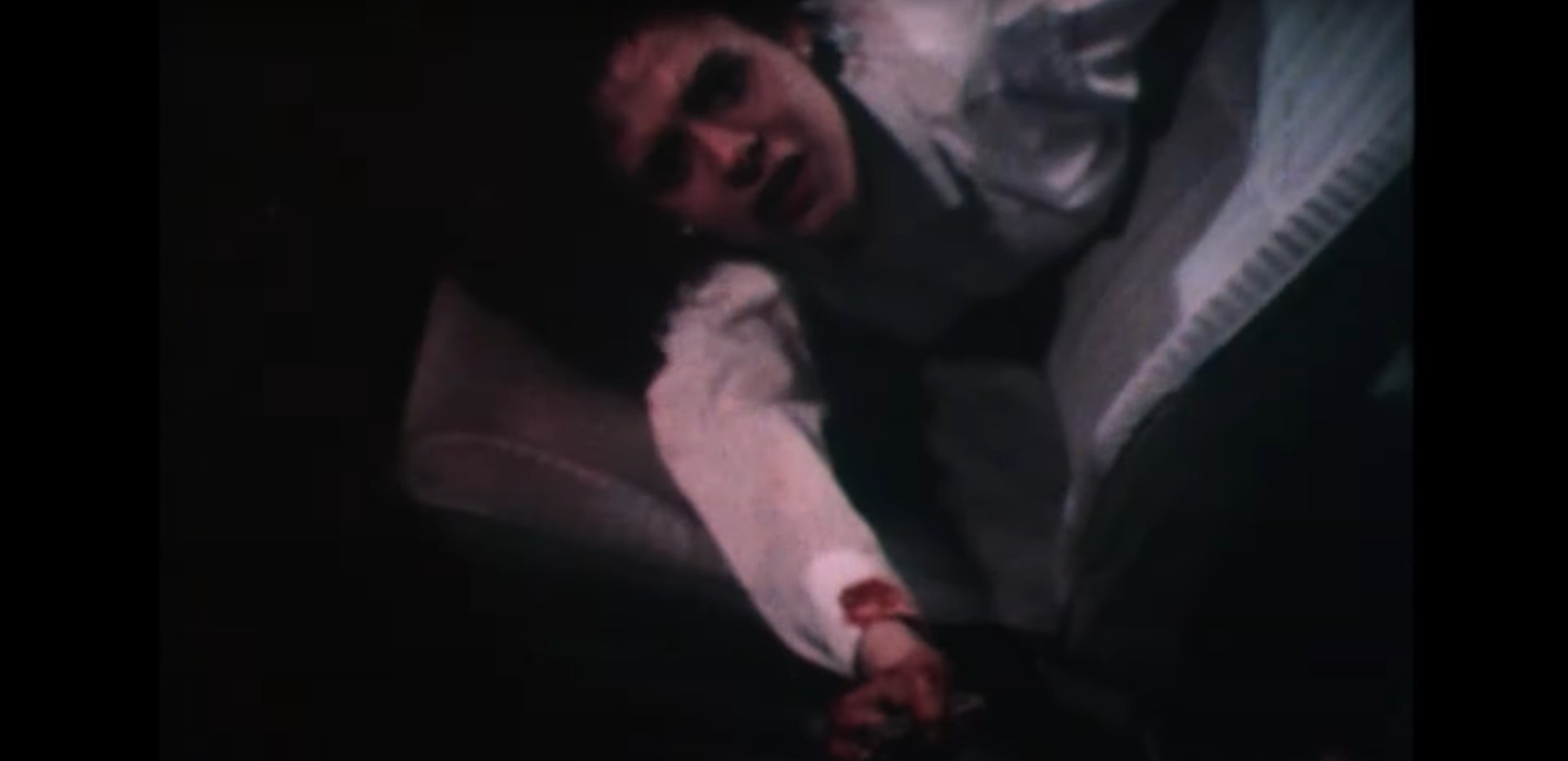
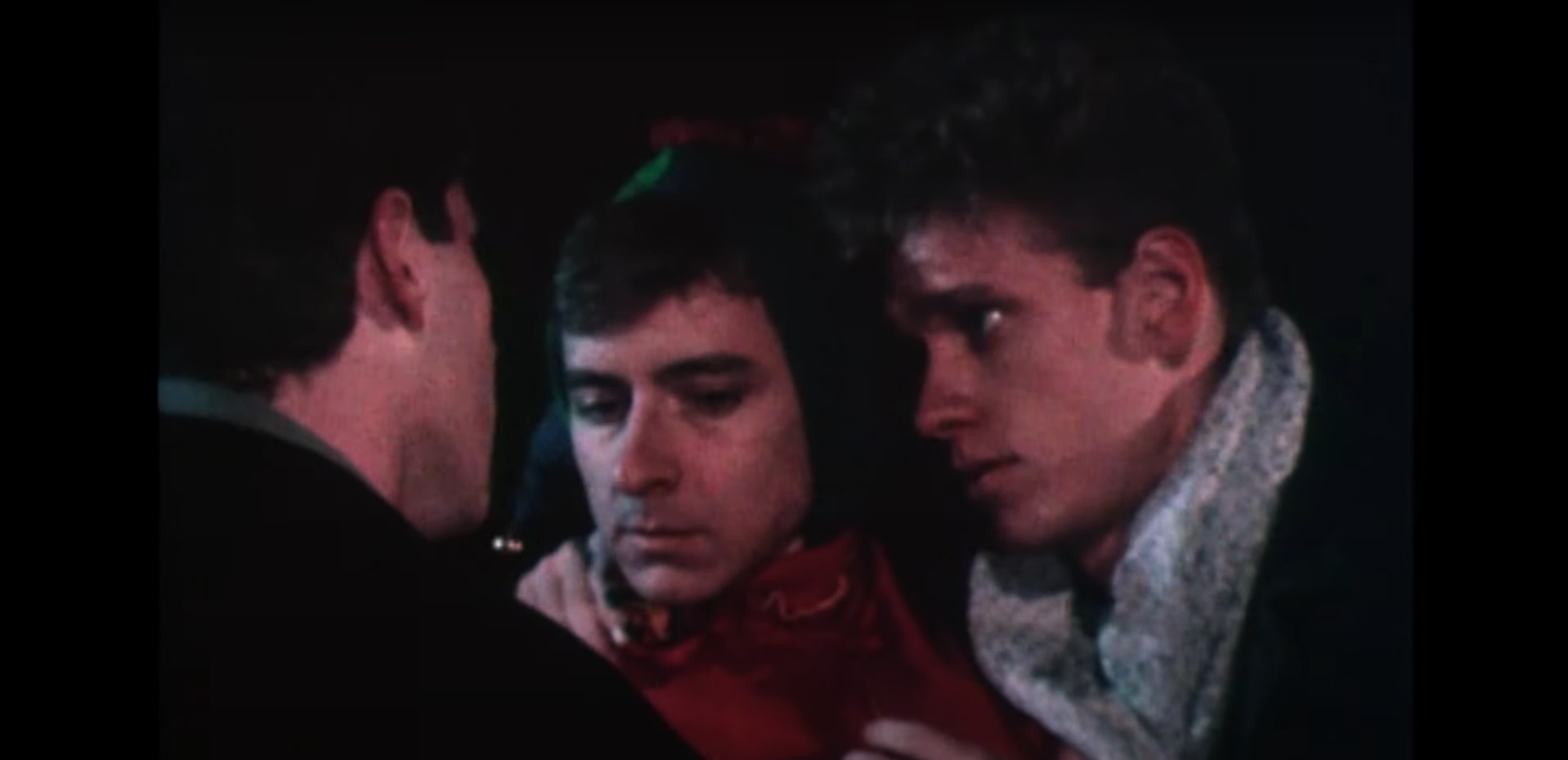
Ted, a radio sound design student, has to perform a singing telegram dressed in a jester costume on the very evening of having to pull an all-nighter to finish his final college class project.  After his melodic duties are fulfilled and the guests are entertained, he discovers a girl’s unconscious, bleeding body in an adjacent, dark apartment, a girl that he recognizes from campus.  Frightened by the sight and the shadowy figure in the apartment with him, Ted goes for help only to discover the girl vanished with no one else inside the apartment.  His drive back home is full of contemplation on the shocking memory when he notices the girl lying lifeless in the backseat of his car.  From then on out, Ted becomes embroiled into a murder mystery and pursued by the killers who are hellbent on tracking down the Jester-cladded man to cover up incrimination evidence and tie up loose ends.

Even though our unlucky protagonist wears a court jester outfit, there’s nothing funny about the 1990 thriller, an intense bird-dogging murder-mystery, known as “The Wrong Door.”  Helmed by the creative ensemble of friends, the film is written and directed by James Groetsch, Shawn Korby, and Bill Weiss who eagerly sought to make a feature film on a strapped for cash budget after success of their Super 8 short films.  Contemplating using tape for their inaugural throes into feature film land, the auteurs revert their thinking back to film, settling on a faithful celluloid format to which they have experience with in, the ever gritty Super 8.  What results is a tenebrous yet effectively taut confrontation of frenetic hunting and a shocking homicide driven more with ambient sound than character dialogue.  The three creative minds behind “The Wrong Door” formed Sandman Films and coproduced alongside John Schonebaum for the Minneapolis Twin Cities’ production.

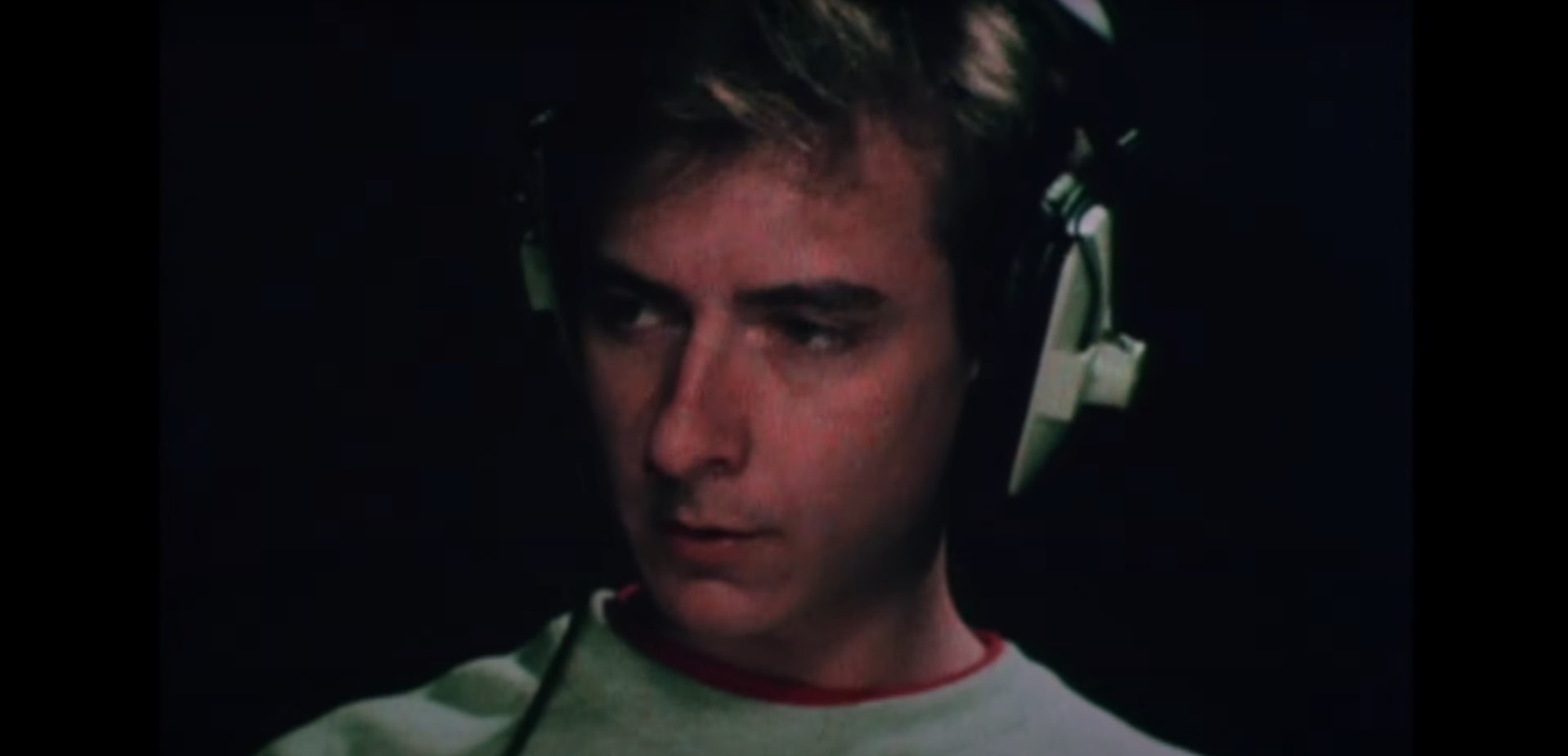
Cast locally around Minneapolis area, “The Wrong Door” is chock full of directors’ acquaintances who turned out to be really quite good at the parts they play.  Matt Felmlee stars in his debut performance as Ted, the class assignment under the gun student looking to knock out one last paying singing telegram gig before cutting and splicing audio for a final exam.  Felmlee isn’t given much dialogue to work with and his credibility relies burdensomely on nearly a vocally silent rundown from Jeff Tatum and Chris Hall respectively as deranged stalker and ransacking lunatic Jeff and his accomplice Vic.  Jeff Tatum makes for a good hardnosed psycho in a subtle yet menacing take of a trench coat robed coup de grâce kind of thug but the thug’s partner Vic is left as an nearly obscured sidekick and we don’t get to see Chris Hall ever come out and shine independently from Tatum’s enormous shadow.  Concluding on the three talking roles, unless you consider Loreal Steiner’s mostly dead body popping up performance where she speaks only in Ted’s nightmares, “The Wrong Door” instruments of interaction circulate around the three male principals peppered with Steiner’s maybe lifeless, maybe lively body stringing Ted along in order to slip him damning evidence on who and why she is being brutally murdered, in a nod of Hitchcockian hamboning.  A cast of supplementary, locally sourced pop-ins, including Jeanine Bourdaghs as Ted’s Radio classmate bestie, Stephanie.

Obscured to the depths of regional relevance, “The Wrong Door” is opened only to adventurous cinephiles who are willing to spend hours upon hours scouring through the vastly lower-to-no budget, independent films lost behind the borders of zonal solitude  A Hitchcockian thriller venerated on a humble scale in regard to the storytelling’s use of focused sound design to narrate a chased protagonist under the gun, literally and figuratively, that turns a studious radio sound design student with a final exam project to complete into a marked man hunted down in a foolish jester suit.  Bookend by dialogue setup and a tense, skirmishing climax, the near omission of dialogue in order for sound to reign supreme as atmospheric tensions force viewers, and force them appealingly I might add, into Ted’s chest-tightening, alone-in-fear experience with not only being incognizant of the particulars of the murder surrounding the young woman he was once smitten with but also to his being pursued by goons that hangs us on tenterhooks.  There’s also pulsing paranoia of where the dead set antagonists are hot on his trail and will suddenly appear unforeseen out of the blanketing darkness of an exterior cat-and-mouse game.  This leads into ambiguity near the end that asks the question, did Ted experience all of this strife or was it a clever cut and splice of imaginative audio files to create a whodunit thriller?  A brief sense of hesitation brings a sigh of relief from the nightmare and also onsets a different kind of anxiety of not knowing what truly went down until the very last shot that explains it all. 

Wrong place at the wrong time is the theme for “The Wrong Door” which is the right door to open if looking to walk-through to an understudied tensioner. Well versed in greatly misunderstood, profound stepped over, and overall underdog pictures is the smaller picture championing Visual Vengeance, the distributor behind the collector’s edition Blu-ray release of “The Wrong Door” with an AVC encoded, 1080p high-definition, BD50 product presented in a full screen 1.33:1 aspect ratio. For the first time on disc anywhere, the Super 8mm film receives a brand new, director approved 2K HD transfer from the original elements. The perception of Super 8mm does not hold water here with a relatively pristine image quality for the sized celluloid with a mighty clean image. Other than the white speckles of dust, other signs of minute debris, and the natural amount of grain of Super 8mm, no cigarette burns, light emitting on the frame edges due to perforation alignment, and hardly any scratches hinder quality. Poor lighting conditions in the exterior, and even some interiors, plays to the strengths of negative voids but, in my opinion, adds to the gloomy puzzler filled with action, suspense, and acrimony. While 8mm’s grasp on a grittier saturation, the tonal shading refuses to pop inside the faded film stock. The English Dolby Digital 2.0 stereo doesn’t do the new transfer justice. The lossy format likely not the best choice on a sound gimmicky, indie film that uses more innate ambient sound and Foley to tell the story rather than through dialogue. Though manageably capable to pull through to the end, the already lo-fi standard now compressed audio file has anemic energy through the dual channels but while the distinctions are dainty, some distinct distancing between more than two effects does convey. Switching between ADR and boom, there’s never a sense of uniformity with the dialogue that can sounds lively and volumes with post-production recordings yet also be frail within natural earshot of a recording device. Optional English subtitles are available. What’s most impressive about this 14th release from Visual Vengeance amongst 13 titles before it is the seemingly incalculable number of special features within the submenu of the flat, rodded colorful cutouts on the fluid main screen. New grouped audio commentaries with directors Bill Weiss and Shawn Korby in one and the third director James Groestsch and John Schonebaum on the second kick off the content followed by a new documentary with interviews from all three directors in Men Make Movie, If Not Million$, individual interviews with James Groetsch, Shawn Korby, Bill Weise, and actor Bill Felmlee, an interview with Film Threat founder Chris Gore who was one of the few in the field to put the film in his magazine, an alternate, director’s cut of “The Wrong Door” coming in as a second feature, Super 8 shorts: Raiders of the Lost Bark and The Pizza Man, a 20-minute television episode from The Gale Whitman Show, the original unedited Muther Video VHS intro, image gallery, original storyboard gallery, the original ran print from Film Threat, a Visual Vengeance 2023 cut trailer of “The Wrong Door,” and other Visual Vengeance trailers. Tangibly, the release comes with a rigid O-slipcover hypnotically graded in Jester colors of subtle pink and purple. Inside is a clear Amary Blu-ray case with the illustrated cover art that also does double duty for the motion menu and the folded mini-poster insert. Also inserted is a double-sided Blu-ray acknowledgment one sheet, a Visual Vengeance exclusive “Do Not Disturb …The Disturbed!” doorknob hanger, and a retro sticker sheet that’s come standard with every release to date. Reversible cover art displays the original VHS cover, and the disc is pressed as a mock play of a cassette tape’s supply reel teeth – neat! The region free Blu-ray comes unrated and has a runtime of 73 minutes.

Last Rites: Do you hear what I hear? No longer lingering in the vacuous space of radio static, “The Wrong Door” was once another shamefully sidestepped film that has been resurrected by Visual Vengeance for the first time anywhere on disc and, all I can say is, it’s about damn time.

“The Wrong Door” Collector’s Set Available at Amazon!

Re-Electrifying a Dead Cop to Stop EVIL! “The Blue Jean Monster” reviewed! (88 Films / Blu-ray)

Click Here to Purchase “The Blue Jean Monster” available on Blu-ray!

Soon-to-be first-time dad Tsu Hsiang can’t wait to meet his son.  Often times, his cop vocation intrudes on being there for his wife during her pregnancy as his torn between work and family, trying to be a good man in both regards, but when a tip comes through of a suspected bank robbery, Hsiang can’t neglect his duty and pursues the thieves in a high speed and gun-blazing chase that ends in his death as a construction site pile of steel rebar crushes him during the arrest.  His corpse left under the rebar overnight, a storm causes a transformer to fall on top of him and a cat providing a mystical lifeforce.  The electrical currents course through his dead body, reanimating him with the superhuman strength and invulnerable to pain, but with a cost as Tsiang is slowly rotting away, unable to heal or enjoy any of his senses.  Tsiang also has to recharge his body with electrical volts direct to body in order to continue being reanimated.  With time running out, the cop’s two goals are to meet his unborn child and to capture the gang responsible for him becoming an undead monster. 

While “The Blue Jean Monster” is not the eminent representation of comedy-action with elements of science fictional horror to come out of the Hong Kong movie industry, the early 90’s Category III film does rank high marshalling an entertaining “Dead Heat” (1988) interpretation for Eastern audiences.  The sophomore film of director Ivan Lai, aka Kai-Ming Lai, (“Daughter of Darkness,” “The Peeping Tom”) and the last script credit for Kam-Hung Ng emerges as a bucket list imbroglio of the inexplicable mysticisms at play as well as the good die young but win in the end.  The Jonathan Chow (“Haunted Jail House”) produced film is a coproduction of Golden Harvest Films, Diagonal Pictures, and Paragon Films. 

Not just a mindless killing machine resurrected like an electrified phoenix for revenge and murderous rout, Tsu Hsiang’s rebirth out of death arouses complications around fleeting special moments.  Playing exactly his profile of a mid-30-year-old is the late “Her Vengeance” and “The Killer” actor Fui-on Shing as a cop torn between life and death, literally.  Struggling to comprehend what’s happened to him, Tsu Hsiang has no time to explore the root cause; instead, Hsiang instantly moves forward, learning on the fly, his newfound postmortem powers of invulnerability, immense strength, and to be exasperated right into a pale-eyed version of the angry Hulk.  Shing’s duality on levity and fierce cleaves “The Blue Jean Monster” into its well-intended multifaceted of genres with soft buttery ease.  Shing’s square jaw and large frame doesn’t quell the lighter touch he brings an even softer side to Tsu Hsiang with his intake of Power Steering (Wai-Kit Tse, “Mr. Vampire 1992”), a street nickname for a former hooligan took under Hsiang’s wing after killing his father, in a supposed criminal altercation gone awry.  Power Steering best friend Gucci (“Gloria Yip, “Riki-Oh: The Story of Ricky”) becomes the primary target for the gang as she inadvertently becomes a hostage and winds up with the thieves’ hard stolen loot.  The circular, trifold connection between Hsiang, the troublesome young acquaintances, and the gang, helmed by Japanese actor Jun Kunimura (“Audition”) creates double edged complications Hsiang has to juggle and manage while being undead and a soon-to-be father.  Mei-yee Wu, Bei-Dak Lai, and “Mr. Vampire’s” Siu-Fung Wong playing Fui-on Shing’s wife Chu along with “Sex and Zen” star Amy Yip as the lustfully bosomed Death Ray, a gay man conversion therapy seductress, fill out the cast. 

The 1991 film has fast-paced action, politically incorrect humor, and spectacular physical and hand-drawn visual effects.   “The Blue Jean Monster” relied heavily on the skill of the cast and crew to elevate a staggering, fast-and-loose story that barely bridges gaps of its presaged plot holes.  There’s also some fast-and-loose editing slips that expose oversights, such as reused unmasking scene of Jun Kunimura’s head robber and showing five members of a five-member gang huddled behind a flipped van in a scene that was supposed to be sans Kunimura as his character was chasing after Gucci and the money through a construction zone.  Yet, “The Blue Jean Monster” is too enjoyable, too funny, and too drop-dead neat that any and all flaws can be written off as negligible.  Heedless humor encapsulates an antiquated way of thinking that shapes “The Blue Jean Monster” into a time bygone novelty.  When Tsu and Power Steering are suspected gay lovers, as they’re physically intertwined in electrocution to recharge Tsu undeadness, and AIDs becomes the center of the joke, casually tossed in a handful of times even by the brief portrayal of two colorfully sweater-wearing, feminine-displayed men wanting nothing to do with Tsu and Power Steering’s misperceived actions for fear of the deadly virus.  That just epitomizes the slapstick wackiness this not typical but warranted Cat III feature that transfixes with a lot of borderline insensitive satire kneaded into the modish action and special effects of every other Hong Kong film in a saturated market. 

“The Blue Jean Monster” takes over United States and North America courtesy of the UK distributor 88 Films, through MVD Visual from the Fortune Star Media Limited catalogue, with a new AVC encoded, 1080p high definition, Blu-ray.  The BD50 comes top of the line within the limits of the format with a bitrate decoding the original aspect ratioed widescreen 1.85:1 presented and newly restored 2K scanned film an average of at or just under 35Mbps.  Nearly being a non-issue coinciding with a pristine original print, the dual layer disc offers plenty of breathing room to display “The Blue Jean Monster’s’ range of motion, sufferable color palette, painted composite effects, and masterstrokes in lighting a fast-paced pressing without the blight of artefacts.  A few darker scenes are not as rich because of compositional effects but still render significantly with detail under a slightly more penetrating grain.  The overall grain naturally infuses with the 35mm print and translates nicely to a transferred digital scan.   The original, uncompressed Cantonese LPCM 2.0 mono track is the sole offering that, in truth, is all this comical, cosmic caper needs with agreeable action Foley and ambience and some looney absurdity tacked on for good measure.  None of the assortment ever sounds pressed and squished through the single channel suggesting a pretty clean, well-kempt sound design from over the years.  ADR dialogue favors less spatial position but that’s expected with 90’s Hong Kong cinema and is also well-preserved in its fidelity with a clear and damage free recording.  English subtitles are optionally available.  This special edition includes a new interview with assistant director Sam Leong Man Made Monster, the original Hong Kong trailer, and image gallery.  The limited-edition set comes with reflective and glistening slipcase sheathing the same but lusterless composite illustration, artwork created by James Neal.  Inside the green Amaray Blu-ray case, the reverse side of the cover art sports the original Hong Kong one sheet illustration stretching both ends, inferring nearly all the action and characters in the story, along with a doubled-sided cardboard poster of the reversible cover art.  The not rated release comes region locked on A and B and has a runtime of 96 minutes.

Last Rites: If a fan of “Dead Heat,” “The Blue Jean Monster” can prolong the action-caffeinated, narcotized high with supercharged unrest, necropsy humor, and the walking, talking, inexplicable undead in another stellar package and quality release from 88 Films!

Click Here to Purchase “The Blue Jean Monster” available on Blu-ray!