EVIL’s Path to being a Psychopath. “The Beast to Die” reviewed! (Radiance Films / Limited Edition Blu-ray)

“The Beast to Die” on Limited Edition Blu-ray from Radiance Films!

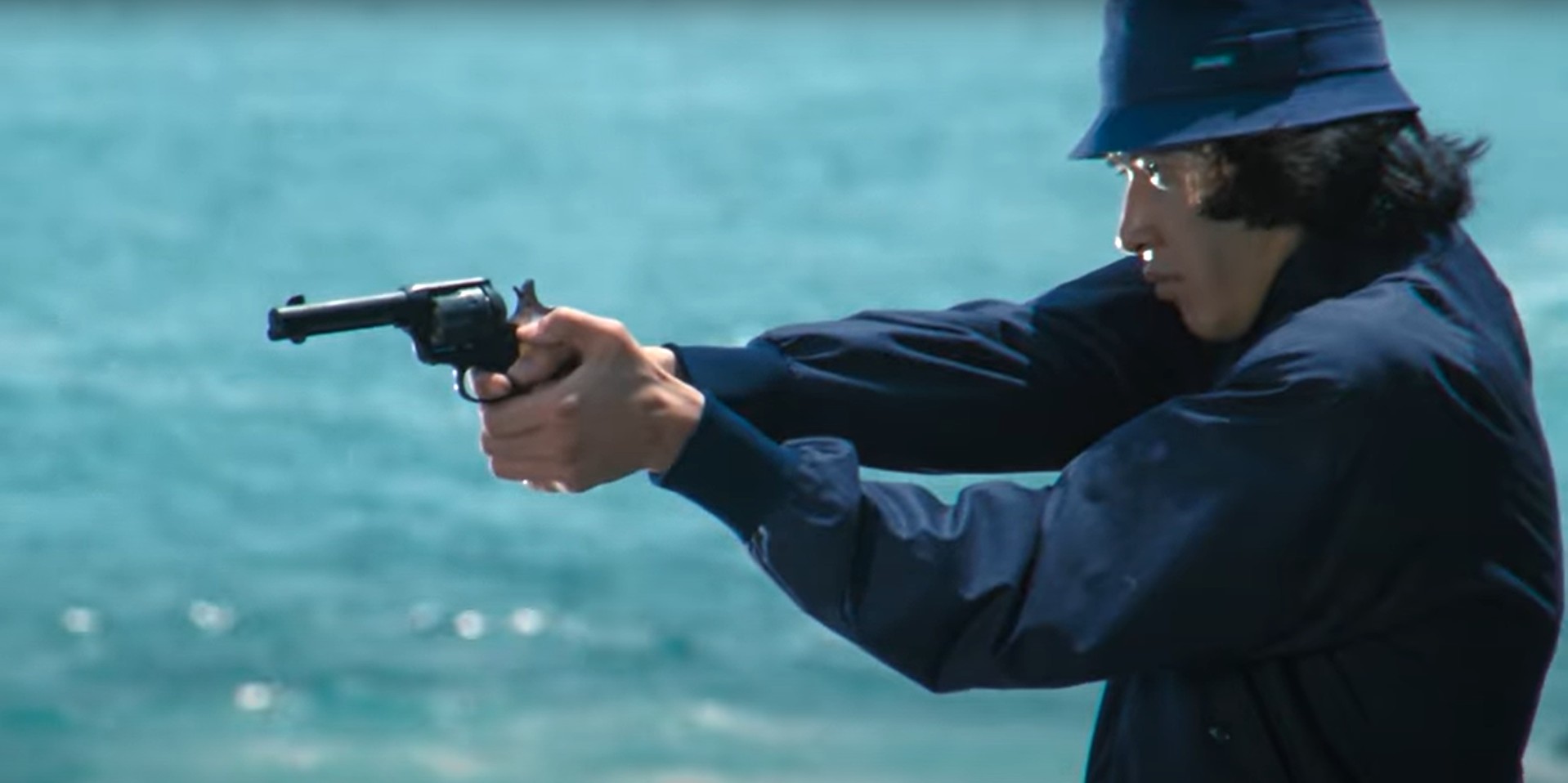
Former war journalist, Kunihiko Date, stabs a veteran police investigator to death.  He then uses the detective’s revolver and guns down three, after hours casino employees in cold blood and steals the day’s earnings.  Date’s seemingly random acts of violence and theft from a respected war journalist and photographer are not just random acts but part of a methodical plan for an upcoming heist of a bank in Tokyo’s Nihonbashi district.  Casing the bank’s security, personnel, and layout, Date’s perfect plan has one hitch; Because of the bank’s size and bustling busines, he’ll need a little help.  By chance, he comes across Tetsuo Sanada at an annual school alumni dinner with his closest friends who have a violent run-in with Sanada as their antagonistic waiter.  Seeing the same potential disregard for life and disdain for existence conventions, Date approaches Sanada and mentors him under a nihilistic wing.  Now with a plan and an accomplice, Date’s violent holdup can move forward but to what end is the length of his sociopathic carnage. 

“The Beast to Die,” aka “野獣死すべし, Yajū shisubeshi,” is the intense and violent noir-thriller from Japan, directed by “Dead Angle’s” Tôru Murakawa and a script by Shoichi Maruyama (“The Triple Cross”).  The 1980 released feature would be Murakawa and Maruyama’s second feature length production together behind 1979’s “The Execution Game,” the second film of a trilogy known as “the Japanese Game Trilogy is a visceral yakuza tale of a kidnapped hitman unable to escape the criminal underworld. “The Beast to Die” is a step away from the Japanese gangster film; instead, focuses on the interpretation of war trauma, the cynical views of precious life, and has subtle presences of U.S. big brothering, asexual themes, and coarse, unforgiving violence at the highest level of sophisticated society.  Adapted from the Haruhiko Ôyabu novel of the same name, the written origin mirrors the vehemency of visual art with the film produced by Haruki Kadokawa (“Virus”) and “The Resurrection of the Golden Wolf’s” Mitsuru Kurosawa and Tatsurô Shigaki under the Toei Company and Kadokawa Haruki Jimusho.

Undoubtedly one of the best sociopathic performances of our lifetime, “Horror of the Wolf” and the Japanese Game trilogy’s Yûsaku Matsuda is a cool, awkward, and, if not, plotting cucumber amongst the masses of jovial and hustling Tokyo denizens.  There’s a serenity about Matsuda’s Kunihiko Date that’s unparalleled, represented by blank stares, a patient demeanor, and precise movements that come in stark contrast in the film opener where Date takes down four people in one night in a show of murderous inexperienced bravado.  Even in the thick of combative survivalism, there’s only objective goal in his sweat infused brow and focused eyes while others gesture and make an invitational show of his attack or of their pleas for mercy.  Date becoming lost in classical music is a formidable way of grounding himself, not only from the high of excitement and thrills of killing, but also a way to retain sanity in the notes, an aspect he quickly unravels from when not exposed to classic music for an extended period.   Oppositely, Tetsu Sanada is full of pent-up anger as if he’s constantly hitting his head on the wall aiming to break free of the surroundings that confine his wild tiger attitude, yet Takashi Kaga (“Isle of the Evil Spirits”) maintains a personal struggle lock on the full emergence of Sanada as Kunihiko’s equal.  This dichotomy between the anger and tranquility of two sociopaths is immensely palpable that leads to a purposeful instability in a number of areas – hesitation and certainly, the sweat-inducing fear and the cooled fearless, and, eventually, the relationship’s ultimate internal destruction.  Thrown into the Kunihiko and Sanada tango is a potential love interest in the puppy-eyed Asami Kobayashi (“Sixteen Years Old:  Nymphets’ Room”) and her shared classical music and tenderness connection with Kunihiko and a happenstance Detective, played with casual approach by Toshie Negishi (“The Rapacious Jailbreaker”), being in Kunihiko’s consciously aloof presence as a pressuring force that suspects something between something off with Kunihiko and the murder of his detective colleague. 

“The Beast to Die” explores various themes around the indirect damage of post-war trauma and living and feeling like an outsider of the what’s consider the normal societal collective, but there’s another avenue to look down when consider Murakawa’s villainous protagonists.  Kunikhiko Date may have been scarred by war, but his mind always had an inkling for bloodthirst, sated through the images of a photographic lens that captured the horrors of global conflict from military losses to the collateral damage.  Upon his return to Japan, Date had lost the exciting sensation of death that has exceled his rationality beyond being Godlike, able to take life without conscious due reproach.   Sanada, in a way, is similar in his radical viewpoints but Date finds him more talk than action, held behind the line he has yet to cross unlike Date’s journalistic meatgrinder and his self-drive to kill the detective and casino workers.  As far as vices go, neither men have an appetite for sex:  Kunikhiko  watches a sex worker masturbate with little interest and his connect with Reiko doesn’t go beyond the gazes into each other’s eyes and Sanada’s fortunate relationship with his girlfriend provides him with well-off opportunity in money, business, and romance but because she dapples in rendezvous with a U.S. sailor, Sanada finds himself engrossed with spite.  Both men become essentially sexually impotent with seeing red, in anger and in blood, replacing that primal need or ravenous appetite.  The last scene between the two men becomes a crucial turning point in their cruel comradery as the forceful sex act with an unconscious woman sends the other unravelling their partnership for good.  “The Beast to Die” is a cynically cold narrative without regard for human life in the traumatizing belief one can surpass the omnipotent Gods by ending the existence of others.

A compelling dark thriller relatable to contemporary trauma feeding mentally warped violence, “The Beast to Die” arrives onto a limited-edition Blu-ray from Radiance Films.  The UK label produces a Kadakawa Coprporation-created digital 4K restoration transfer from the original and pristine 35mm print.  AVC encoded onto a BD50 and presented with 1080p high-definition resolution in a 1.85:1 widescreen aspect ratio, this Stateside edition is the picture of health with a rich palate that’s stark with contrast.  Skin tones and textures, as well as fabrics, emerge into perspicuousness without missing or dropping a beat.  Negative spaces and shadows enshroud appropriate with the keyed lit dim levels.  The grain is pleasant, stable, and natural and there are no real issues with the print itself, withstanding the test of time.  The uncompressed Japanese PCM 2.0 Stere track offers a reasonably ample sound design and fidelity with post-production dialogue, foley, and ambience recordings that creates some mismatch and distancing space between the action and atmosphere audio and the character diegetic dialogue.  There are no rough patches to mention within the audio recordings, producing more than fine discernible quality to the technical threshold.  Japanese to English translator Hayley Scanlon provides newly translated English subtitles that are spotless in the Blu-ray’s world premiere with English subtitles.  Limited to 3000 units, Radiance offers exclusive special features, including new interviews with director Toru Murakawa, screenwriter Shoichi Maruyama, and a film critique and analysis from novelist and screenwriter Jordan Harper.  The newly commissioned artwork by TimeTomorrow revamps with a new look and layout on the classic, original poster art as the primary Amaray front cover with a reversible side housing an alternate rendition.  There are new and archival essays and archival in the limited edition booklet with 27-pages of color stills, a Tom Mes Yusaku Matsude:  Lost Rebel essay from 2004 showcasing the art and films of the lead actor, a new Tatsuo Masuto essay Shadow of the Beast, cast and crew acknowledgements, and transfer notes and Blu-ray release acknowledgements.  Encoded with a region A/B lock, Radiance Films release has a runtime of 119 minutes and is not rated.

Last Rites: Radiance Films’s limited edition run of “The Beast to Die” is immaculate in every aspect – filmically, technically, packaging – and is an important piece of Japanese culture and cinematic criterion.

“The Beast to Die” on Limited Edition Blu-ray from Radiance Films!

Dark Force Rides into the Sunset with EVIL Flannel, Stirrups, and a Brothel Full of Stolen Women! “Ride a Wild Stud” reviewed! (Dark Force Entertainment / Blu-ray)

About as Obscure as They Come! “Ride a Wild Stud” on Blu-ray!

During the Civil War, the Wild West lives up to the name between advantaging exploiting gangs of bandidos running rampant alongside the Southwest terrain and the hard-pressed law outmanned and outgunned to never be able to gain apprehending ground.  One determined law man, Lieutenant Mike McDermott, has a plan to infiltrate William Quantrill’s plundering murders, thieves, and sex traffickers and take them down from the inside-out by portraying to be a likeminded criminal escaping the law.  Successfully penetrating Quantrill’s ranks, McDermott takes young Marsha under his watch; Marsha has become enslaved in Quantrill’s house of pleasure brothel, supervised by his right-hand man Bill Doolin after Doolin mercilessly guns down her father and rape and murders her older sister in a home invasion of their simple life assets.  When another of McDermott’s steady female informants is shot dead by Doolin, the lawman becomes judge, jury, and executioner on a gang of no-good Western raiders and sexual profiteers. 

A western exploitation epitomizing B-movie babes, brawls, and bad guys, “Ride a Wild Stud” surmounts as sleazy cowpoke overtop classic, 1960s Western vibes of machoism, duty, and exciting gunfights.  Profound Western film filmmaker Oliver Drake during the Golden Age of cinema (“Bordering Buckaroos,” “Deadline”) quietly transitioned from run-of-the-mill westerns to a handful of grindhouse and exploitation B-movies by the 1960s under the pseudonym of Revilo Ekard, Drake’s name spelled backwards, who produced under that credit this 1969 adult-oriented oater as well as the even saucier and scandalous “Angelica:  The Young Vixen” where the titular young woman seeks older man comforts.  “Ride a Wild Stud” is penned by the assumed husband and wife due of Rachel and William Edwards of the sex-schlocker “Dracula (The Dirty Old Man)” released the same year.  The writing pair also served as producers of the film under the production of Vega International. 

Director: Oliver Drake

“Ride a Wild Stud” is an interesting oddity of it’s time.  Usually in exploitation pictures, the lead male actor has his get busy share with the ladies but for Hale Williams, as the gang-infiltrating Lt. McDermott, there’s no hanky-panky with the actress lot.  Williams, whose role is his only listed credit, plays a respectable and honorable law-abiding man without any inkling of perversion of sensuality in his most defining John Wayne respect.  Instead, romping in the haystack is no stranger to the transgressing Quantrill gang in quite a handsy show of rough, unwanted affection with those characters unwilling to go along with the brothel or are being raided invaded elsewhere.  Frenchy Le Boyd does a lot of fondling and groping as second in command Bill Doolin along with an assortment of bandido backdrop actors really getting into the sleazy deviant role.  This sets a clear hardline of contrast between good versus evil, respect versus the disrespectable, to never blend the characters even when McDermott becomes the sheep in wolves clothing.  Josie Kirk plays as one of those unfortunate pilfered women in Marsha and is, in a way, the leading or mainstay characters Doolin’ drools over and McDermott fights for but it’s the blonde C.C. Chase as house of pleasure vet Irene who has is deeper into the dredges and is has complexities as McDermott’s informant rather than just a chest-bearing pretty face being taken advantage of and succumbing to Doolin’s woos when it fits her need.  The rest of the cast rounds out with a bunch of no-names, yet get protracted screen time for coldhearted perversities, with William Fosterwick, Burke Reynolds (“The Mummy and the Curse of the Jackals”), Helga Hanshue, Cliff Alexander, Chuck Alford (“Corpse Grinders 2”), Richard Smedley (“The Suckers”), Bill Johnson, Tex Gates, S.T. Alexander Sr. and Bob Goldfarb. 

“Ride a Wild Stud” has all the hallmarks of a typical exploitation picture with a double entendre title, unprovoked and gratuitous violence, and plenty of feminine skin.  Yet, the story leaves much to be desired.  The lawman infiltrating the criminal organization, becoming one of their own to take down from the inside out, tale is no Martin Scorsese’s “The Departed.”  In fact, the story is rather lazy akin to low-rent porn or softcore titles with a story garnish.  Focally, “Ride a Wild Stud” harnesses the men-take-want-men want mentality with rarely any Western damsel enjoying herself in the arms of musky flannel and gun-belt thrust grizzled by a scruffy 5 o’clock shadow and for the story, there’s too little progression to compel with empathy or be at the edge of your seat with intense anticipation for the in the lions’ den hero and heroines and the gunfights are grotesquely tame after the initial film opener of a multi-horseback chase gunfight.  The whole good versus bad cowboy roundup is stiffer than normal of its era heading into the time of the famed and profound spaghetti western.  The exploitation action has some noteworthy clout with busty, slender women being manhandled like a hogtying a pig at a rodeo and the ample scuffle between Doolin and McDermott might be bordering repetitive but scratches the itch of a good ole fashion fist fight, but by the telltale strum of a rhythmic and recurring guitar riff, that is when the salacious sex ensues and without that change or evolution in the score, that plays every a few minutes with another intertwinement of two bodies, not even the charge of gratuitous nudity can re-spark “Ride a Wild Stud’s” Western-exploitation mojo back on the snakebitten and dysentery-riddled Oregon trail. 

An Adult Adventure awaits in this womanizing Westerner released by Dark Force Entertainment for the first time in high-definition.  The film was originally shot in 16mm, but Dark Force Entertainment unearths the rare blown up 35mm reel for their Hi-Def transfer that produced decent picture quality from the AVC encoded, 1080p resolution, BD25.  Preserved to the extent where the 16mm could be on the fence of being native 35mm if it wasn’t for the degrading emulsion layer and the lower contrast with exterior lighting that creates washed out blacks.  There are the typical speckle blips and faint vertical scratching in the one-off scene that seems low-carb for a stock that’s vulnerable to exposure, storage, and handling elements.  Dark Force Entertainment Blu-ray back cover lists the film being displayed in an anamorphic widescreen but with a 1.33:1 aspect ratio.  This is likely a misprint as the film is definitely presented in a full frame format with no sign of a compressed image.  Color grading falls flat but is touched up enough to see some semblance of the spectrum and that’s always pleasant with an ISO 100-200 stock that doesn’t absorb contrast very well.  The English PCM mono track simply does the job handling the pale dialogue, ambient, and soundtrack layers.  Dialogue receives recognition amongst the limited array, but the post-provided scores is right behind it, breathing down the dialogue’s neck, with the incessantly low toned rhythm guitar that denotes upcoming deviant sexual encounters.  It literally sticks with you even when the credits roll and long after.  Moments in the dialogue do experience some faint crackling and muffled interference but, as well as some intermittent pops, but nothing to warrant overly critical marks.  There are no subtitles available.  Dark Force’s release is a feature only.  Physical artwork includes an illustrated action rendition that’s grindhouse include and sleazy just a smidgen inside the traditional Blu-ray Amaray.  The disc is pressed with three of the actresses in plain-looking clothes looking smug and curious from their line of sight, though we don’t really know what they’re looking at.  The region free release has a sexually coincidental runtime of 69-minutes and is rated R.

Last Rites: “Ride a Wild Stud” is the perverse cowboy caper you’ve never seen, but will watching it enrich your life? No. Will it salivate your taste for sleazy exploitation? Absolutely. Giddy-up!

About as Obscure as They Come! “Ride a Wild Stud” on Blu-ray!

An EVIL Drug That Can Cure Your Crabs and Boil Your Insides! “Private Blue” (SRS Cinema / DVD)

“Private Blue” is on the case! DVD Now Available.

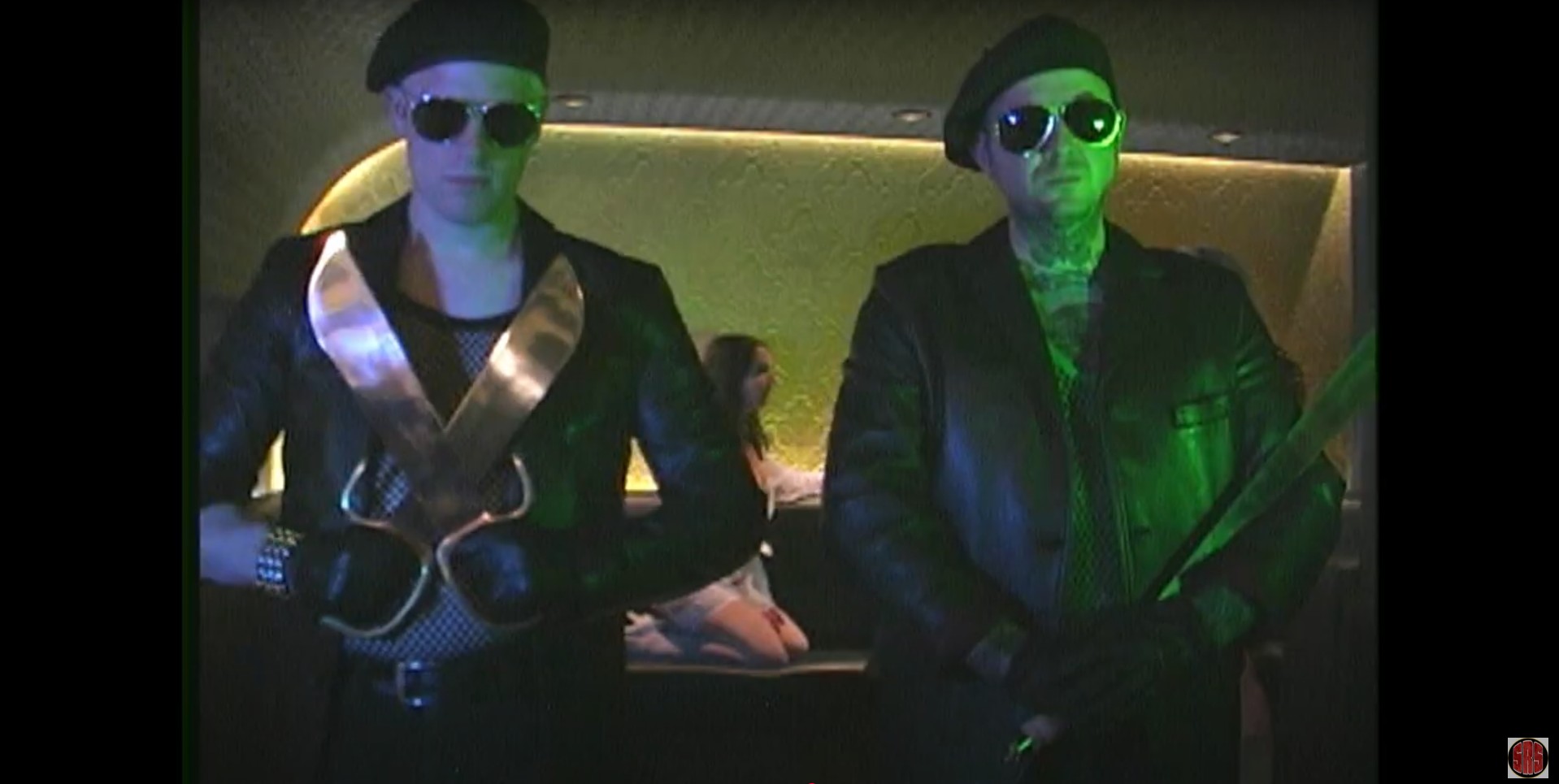
A new drug is on the streets of Edmonton, Alberta.  Call Shrink, the drug can produce a massive high and contains a high level of antivirals that can cure any sexually transmitted disease, but there’s a side effect.  If taken in a single excess amount, the drug can boil your insides, leaving nothing left.  The Edmonton police are stuck on the case with no leads and to make progress on the fast-moving drug epidemic that has now claimed the life of a daughter of a prominent sports booky, the department hires Tony Blue, an ex-cop now private investigator who can use unconventional means outside the scope of police authority to get the needed information, such as where Shrink is being peddled and produced.  Working down the vine, Blue runs through the hierarchy from street pushers to the manufacturing kingpin, a brusque and brutish strip club owner named Wanda who will stop at nothing and will not let anyone get in her way to fill the streets with her deadly, venereal disease-curing drug.

A comedic spin on the 1980’s lone wolf cop-thriller, “Private Blue” immerses itself into every trope manageable inside its indie budget with business in the front, party in the back mullets, bad guy chases and beatdowns, and a smoke-filled and color gel-brightened assortment of atmospheres that propagates the cop film neo noir aspects.  The accountable party behind this crass cop caper are a pair of brothers, Devin and Robert Burkosky, based in Edmonton, Alberta, Canada.  The brothers produce, write, direct, and one-half star in what is their sophomore feature film behind the 2018 comedy-horror “Load Shark Massacre” that’s about a murderous loan shark who bites off more than he can chew.  Continuing the trend of drugs, violence, and psychotronic absurdities, “Private Blue” is an extension of their creative effort into crime action with a horror edge but with this time, they add a science-fiction element straight out of the boondocks of left field.   The feature is produced under the Burkosky company, Beechmont Entertainment. 

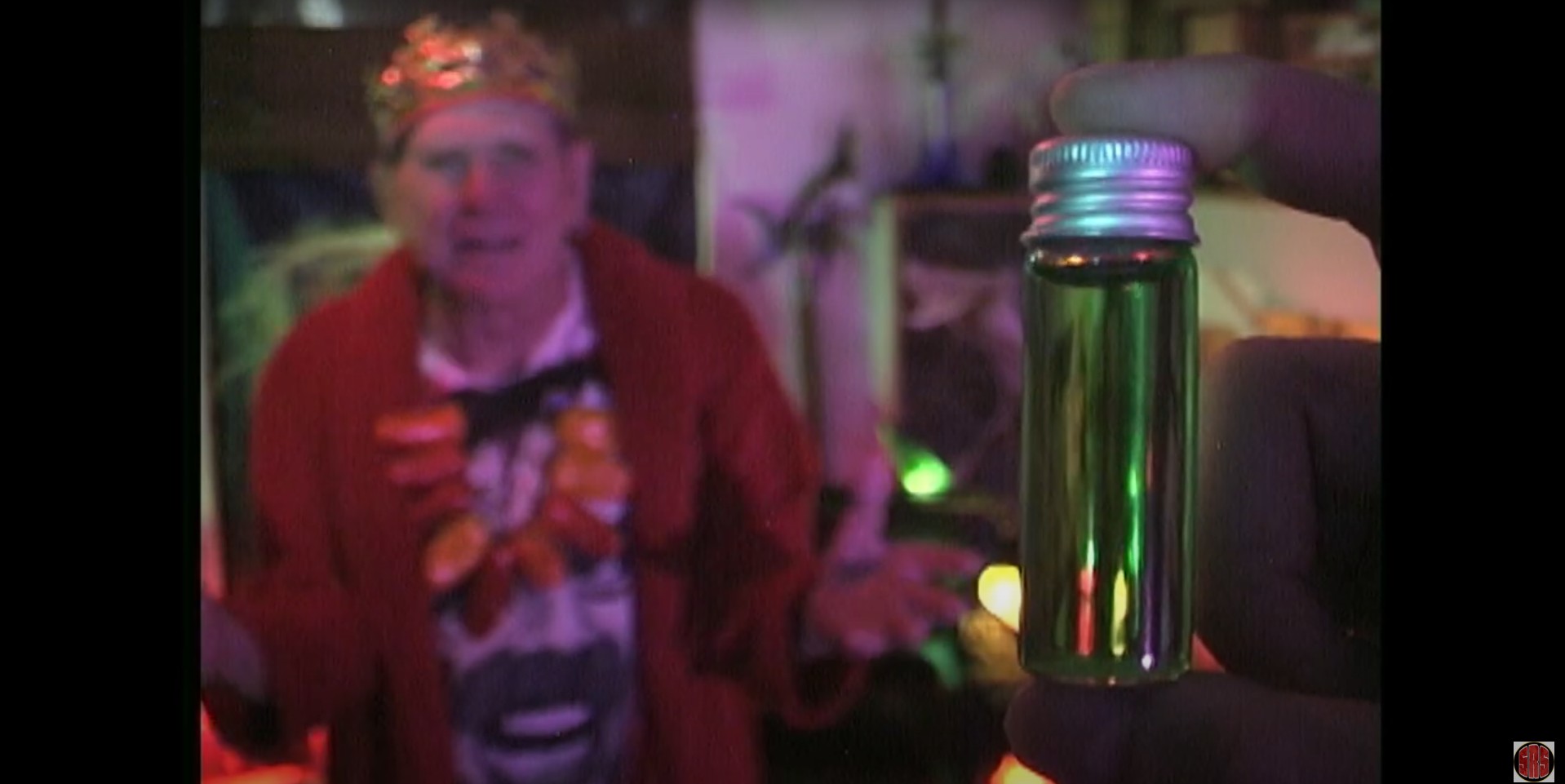
Robert Burkosky jumps into the titular role of “Private Blue” as a wisecracking and arrogant Tony Blue, an expelled detective because of his purloining of the evidence locker for his own needs, but Blue is a great chase-down detective, if not the best with his quick wit and adept situational skillset that makes him valuable.  Burkosky hams up Blue’s cocky attitude and Miami Vice-lite dress with linen blazer overtop a white tank top, sporting aviator glasses, and flaunting a greasy-looking mullet to accentuate the arrogance and confidence.  Opposite Burkosky is Moira MacKinnon as the larger-than-life adult industry head honcho and criminal mastermind Wanda who’s behind the manufacturing and distribution of the Shrink drug.  Having had a role in the Burkosky’s debut feature “Loan Shark Massacre” and was recently in their last film, the 2025 “Heat Score” that’s currently in post-production, MacKinnon’s a Burkosky go-to regular and her performance in “Private Blue” is perhaps my personal favorite with the Rita from “Power Rangers” voice and cackle and a maniacally expressed face as she bulldozes people into what she wants, no matter friend or foe.  “Private Blue’s” colorful cast doesn’t end there as there’s plenty of outrageous personalizes that are typical of a Burkosky brothers production, such as Tommy Grimes in drag playing the role of a female assigned stripper named Candy, Wolfgang Johnson as a low-level, guitar-playing, drug pusher, and Rod Wolfe as an older, mid-level dealer who wears various peppers around his neck like a necklace.  Dean Lonsdale, Ian Rowley, Dave Qurik, Kaley Leblanc, Jesse Hicks, Arielle McCuaig, Christian Stahl, and Brandi Strauss fill out the cast.

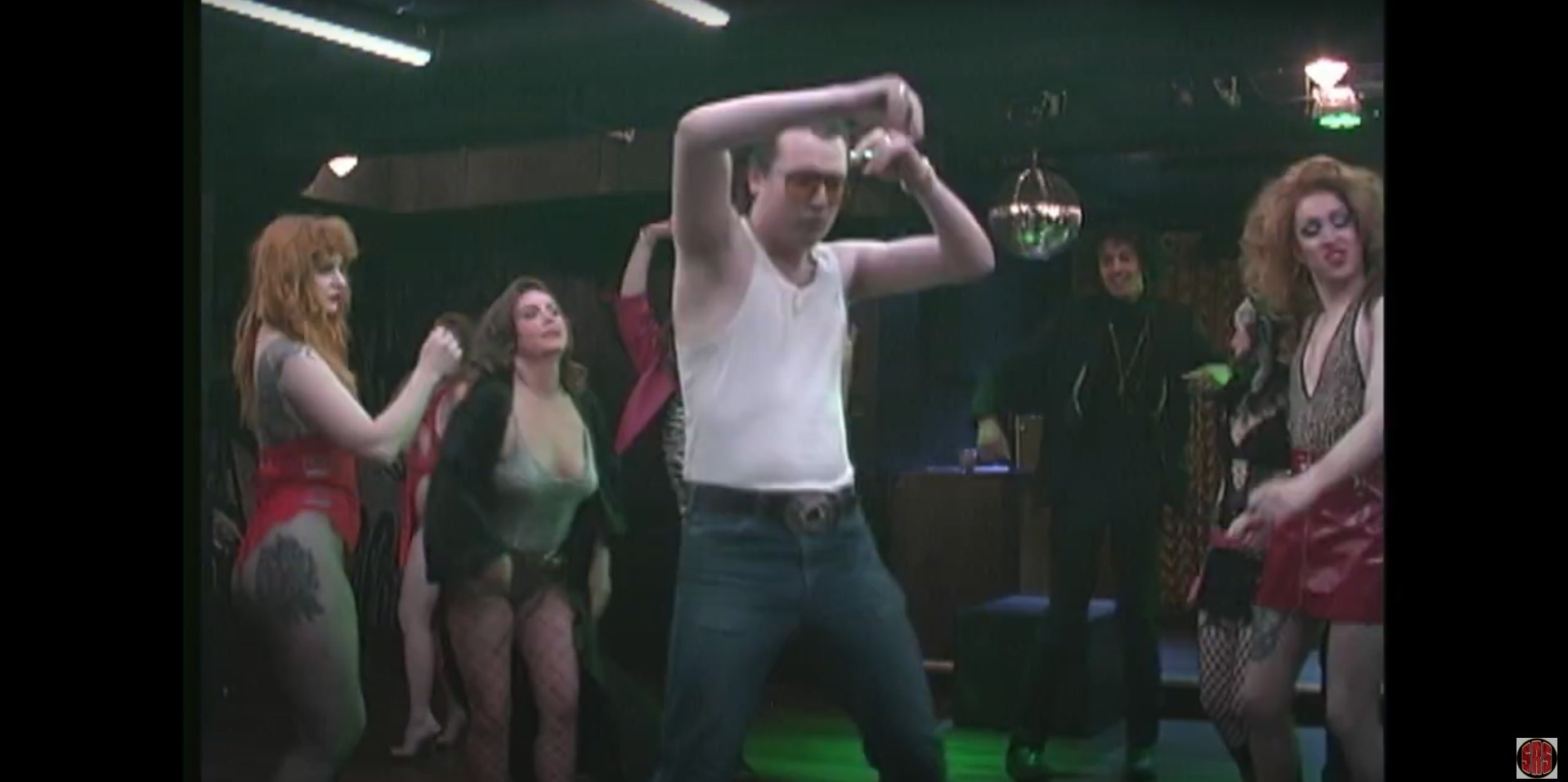
For what the Burkosky’s try to achieve in churning out “Private Blue” as a throwback of hard-boiled sleuth work, there’s success is select areas.  One of those successful portions is the phenomenally pastiche 80’s soundtrack by Robert Burkosky and the general aesthetic of the said decade with smoke-filled room illuminated by the gel lighting.  Wardrobing occasionally lands in the same era but there’s really no set point in time the story takes place but rather a mishmash of decades.  Devin and Robert, the latter quickly establishing himself as nearly a one-man show for the entire production, are competent editors that make “Private Blue” an easily digestible narrative.  What’s not easily digestible are the jokes that, for the most part, land flat.  The colorful characters do indeed entertain in their ineloquence and idiosyncrasies, but the script lacks that gut punch humor.  Instead, the script is riddled with fart gags, which personally I’m not a terrible fan of its audiological stink, and the jokes continue periodically throughout in every, or every other, scene of just randomized farting when a character sits, squats, or actually flatulates purposefully as a way of gag-inducing defense.  While most jokes don’t jive in jest, there are a handful that do, such as Tommy Grimes convincing our sexuality as dolled up sex worker Candy or Robert Burkosky’s lengthy slow-motion dance scene with a bunch of strippers at Wanda’s club.  Hilarity, as well as spurts of graphic violence, continue through whenever the story perversely changes course and mostly for the better. 

“Private Blue” is on the case.  Or, rather, is inside the case of an DVD Amaray with the release from ultra-indie underground label SRS Cinema.  The MPEG-2 encoded, standard definition 420p, DVD-R with the purple underbelly has a less-than-desired picture quality that’s par for the course with SRS Cinema.  Yet, all the sub-def eyesores are not terribly off-putting thanks to some decent camera equipment and know-how by the Burkoskys.  The palatable image has a flat grading only targeting contrast during it gel-lit scenes and the film is presented in 1.33:1 full screen that’s shot-on-videotape with uniform moments of interlacing.  Imaging produced is a result of a macro lens, encompassing even less within the standard framing and providing a flatter field that loses a bit of the depth.  The LPCM stereo mix that offers an ample dialogue track and range of audio layers that create a fair separation.  Robert Burkosky’s soundtrack epitomizes the balance between the layers when amplifying to make it the star of the scene.  Gun shots, thrown punches, and, even to an extent, the fart gags find the relative right level within a campy mix.  English captioning is available on this DVD.  Special features include a paralleling director’s commentary track, a blooper and outtake reel, the film’s trailer, and other SRS Cinema trailers.  SRS Cinema’s physical copy is standard fair but does showcase a blue-hued illustrative artwork that’s appealing and accurate with the same, but cropped, design pressed on the disc.  The 96-minute film comes not rated and is region free.

Last Rites: A debased tribute to the hard-boiled 80’s cop actioner, The Burkosky Brothers “Private Blue” has potential to be a great accolade of the subgenre as well as be funny but falls short with an overuse of pass gas gags and its inability to surpass that tenor.

“Private Blue” is on the case! DVD Now Available.

White Space Men are the EVIL Captains of the Zombie-inducing Slave Trade and Intergalactic Fast-Food Industry! “Race War: The Remake” reviewed! (Wild Eye Releasing: Raw & Extreme / DVD)

Get Caught Up in the Middle of a “Race War: The Rmeake” on DVD

Drug dealer Baking Soda is feeling the peddling pangs of dropped traffic for his crystal pure PCP.  With no one buying his smack, he and his friend G.E.D. reside back home to drink with their close fish-headed friend Kreech and sleep off the day’s failure to try again tomorrow.  Their persistence to sell puts them on the radar of a white supremacy group vending a new drug on the street, the cause for Baking Soda’s drop in sales, but their product isn’t just going to get users high, it will turn them into flesh-eating zombie slaves.  When G.E.D. is kidnapped by the group, Baking Soda and Krrech have to run through the list of suspects – Jews, Hispanics, Chinese, and others – for the source of his sale woes and to rescue his friend, guns blazing if necessary or if unnecessary, but there may be more extraterrestrial motives that haven’t yet been unearthed. 

“Race War: The Remake” is a 2012 politically incorrect, ultra-offensive spoof comedy and blaxploitation horror from writer-director Tom Martino.  A Tom Savini school graduate, te special effects artist Martino (“Dead of Knight,” “Return to Nuke ‘Em High Volume 1,” “Doll Factory”) takes helm in the director’s chair for his debut in indie feature productions with one of the wildest, crudest, and tactlessly funny comedy-horrors I’ve seen since Troma’s “The Taint.”  Set in and around Houston, Texas and the greater surrounding area with guerrilla filming in locations such as the Houston Space Center and shooting with permission at the Darke Institute’s Phobia Haunted House, “Race War:  The Remake” doesn’t have an originating film despite the title in what is considered a spoof sequel – think of examples “Dude Bro Massacre III” and it’s standalone release or the non-existent second sequel between  “Thankskilling” and “Thankskilling III.”  Martino produces his own work under his outside of Houston-based company DWN Productions that doubles in making horror theme masks, busts, and props.

Thick-skinned actors comfortable with the narrative’s uncomfortable themes begin with Howard Calvert and Jamelle Kent as Baking Soda and G.E.D.  Calbert and Kent have become regulars in the Tom Martino catalogue of cast members for his more recent films and their humble beginnings in “Race War:  The Remake” proved their longevity to stay with the director, who is white, who wrote extensive race, gender, sexuality, and fart jokes in the context of a comedy-horror with cringy stereotypes and genuine tributes.  Calvert and Kent have great comedic timing to pull off all the zany editing, sound bites, and practical effects distaste Martino has flaming axe tosses at them to achieve his vision.  The two are joined by Danny McCarty, who would become another regular and be the visual effects supervisor for the film, dressed head-to-toe in loose-fitting urban attire to match the theme of Calvert and Kent’s black A-shirt and do-rags but his hands and face are masked to become the Creature from the Black Lagoon, aka Kreech.  Martino’s “Race War:  The Remake” isn’t just about the terrestrial races but intergalactic ones as well and we soon see that later on with the intentions of neo-Nazi white drug suppliers, led by Matt Rogers’ vulgarity in the horseshoe mustached Tex.  There are various other encountered gross stereotypes in the trio’s urban quest, such as a large nosed, greedy Jewish lawyer, Mexican luchador bodyguards, and a Pai Mei-esque Shifu speaking gibberish har har sounds and listing off popular Americanized Chinese dishes in attempt to be derogatorily funny.  With a film titled as “Race Wars:  The Remake,” the cast is mostly white and black actors poking uncouth fun with a big unconcerned and insensitive stick with Corey Fuller, Kerryn Ledet, Sam Rivas, and Coady Allen listed in the cast.

“Race Wars:  The Remake” isn’t funny, it’s stupid funny!  Having grown up in the 1980-2000s, consciously I might add, Martino’s politically incorrect and his brand of juvenile humor resonates with me, reminding me how cinema has become numb to the spoof humor.  Granted, Martino’s humor is over the top cutting, gross, and full of jest bigotry, traits that would trigger many in today’s sensitive awareness, and while cringy after a tasteless joke may result, there’ll likely be some a side of the mouth chuckle to go along with it.  On the opposite side of the spectrum, Martino tributes to references of certain popular culture icons, though slightly bastardizing some for laughs.  From Peter Jackson’s “Bad Taste,” to “Creature from the Black Lagoon,” to even “Mortal Kombat,” “Race Wars: The Remake” integrates the best parts of each these staples of pop culture and that gives his film a leg up on other offensive spoofs of the same crass caliber.  Th one negative story structure item to  highlight is the act one narrative takes a while to work the gears and get going as it attempts to setup the 40oz-drinking chumminess of Baking Soda, G.E.D., and Kreech but lags to a stagnant stall for hot second while still surround with the here-and-there gags, themed with G.E.D. homosexual tendencies and Baking Soda’s drug peddling woes on and off the streets, but once the antics pickup, there’s no stopping Martino and his filmic entourage from raining down an assault of insults. 

If you’re easily offended or put off by off-color race comedy, then Wild Eye Releasing’s “Race War:  The Remake” DVD is not for you!  For me, and those like me, unaffected by the type of uncouth spoof, Tom Martino’s debut is for you!  The Raw & Extreme sublabel’s DVD is MPEG2 encoded, 720p resolution, on a DVD5.  Presented in widescreen 1.78:1 aspect ratio, there is a breadth of visual presentation not confined within’ pillar and letterboxing but is stretched vertically that affects the already par level resolution.  Guerilla filmmaking also involves no production lighting and natural lighting is more than used here in Martino’s run around the Houston area, but one thing good about Martino’s naturally lit cinematography is its neutral set, avoiding under and overexposure.  The lesser used interiors have some tint lighting and key lighting to avoid total flat, dark outcomes but give the image a haze of hue, especially inside Baking Soda’s living room scene in the first act that sees a thin layer of red and green.  The English PCM Stereo has inconsistencies in volume.  Some scenes discern quieter than others because of the guerilla filmmaking constraints as well as just using commercial recording equipment.  However, the dialogue does land well enough for the jokes to hit and overlayed sound effects greatly lift the sound design where needed, such as with the Mortal Kombat video game sequence or with the array-spray of gunshots throughout and soundboard gag effects.  There are no subtitles with this release.  Included in the special features is Tom Martino director’s commentary, a gag/blooper reel, a behind-the-scenes reel of the gory moments, and Wild Eye Releasing trailers that include “Race War:  The Remake.”    The clear, ECO-Light Amaray DVD case houses stellar covert art illustration work by Belgium graphic artist, Stemo, with the inlaid narrative intensity and characters in collage.  The reverse side includes a gory still from one of the scenes.  The disc is pressed with the same front cover image but there are no other physical materials.  The unrated DVD runs for 95 minutes and is region free.

Last Rites:  Wild Eye Releasing re-unleashes another outrageous title on their Raw & Extreme label and the Tom Martino film is every ounce of the sentiment in it’s indie underground hokum of gore, racism, homosexuality, and aliens! 

Get Caught Up in the Middle of a “Race War: The Rmeake” on DVD

20-Years or More Incarcerated is No Match for Tenacious EVIL! “The Rapacious Jailbreaker” reviewed! (Radiance / Limited Edition Blu-ray)

Break From Your Cage With This New LE Blu-ray of “The Rapacious Jailbreaker”

Masayuki Ueda is nabbed after murdering a drug dealer’s girlfriend during a botched meeting.  Ueda faces a 20-year prison sentence for his crime but after being processed, nothing can change his mind nor his determination to escape.  Willing to sacrifice blood for freedom, Ueda escapes and visits his lover in Kobe for a quick conjugal stop and money only to be caught again when he returns, tacking on additional years to his sentence.  His next escape plan joins forces with two other inmates and, again, his route to freedom is cut short when a brothel visit, while laying low in his sister’s village, turns into a violent brawl with another patron and the authorities round him up in the aftermath, adding more years to his sentence.  While incarcerated, Ueda must kill rival gang bosses who threaten him.  By now, Ueda’s sentence is up to 40-years, and not to be defeated by the prospect of a long term sentence, Ueda has one more desperate attempt for freedom, putting his life on the line.

“The Rapacious Jailbreaker,” aka “Escaped Murderer from Hiroshima Prison” or “脱獄広島殺人囚,”is the crime black comedy from one of the Toei Company’s aggressively eclectic and paced directors Sadao Nakajima (“The Kyoto Connection,” “Female Ninja Magic”).  The prolific yakuza and exploitation filmmaker takes the Tatsuo Nogami (“Father of the Kamikaze”) script, centered on an incessant career criminal hellbent on not spending his days in prison, and runs with it, fashioning the smidgen stitchwork of a nonfictional individual into the post-War World II, American occupation of Japan and adds inner teetering and play-by-play thought narration and the always welcoming gallows humor amongst the exploits of a stubborn felon.  Gorô Kusakabe (“Hell,” “The Red Silk Gambler”) produces the production, which is part of an unofficial Sadao Nakajima trilogy along with “Shimane Prison Riot” and “The Man Who Shot the Don.

Hiroki Matsukata, a prolific yakuza actor from the 1960s to the 1980s with such credits as “Survivor of the Massacre,” “Dangerous Trade in Kobe,” and “Battles Without Honor and Chivalry,” breaks intermittently through the gang wars and boss-laden wall of tattooed violence and varying levels of respect that’s inked the individualized stories’ skin with “The Rapacious Jailbreaker” as the titular lead character under the character’s God-given name of Masayuki Ueda, a tenacious criminal personality type with yakuza-like transgressions of drug peddling and black market trade.  However, Ueda is not a criminal without honor, even if he’s a little rough around the edges, as his loyalties lie with those who are loyal to him: a fellow partner in crime he didn’t rat out, his suffering wife (Yōko Koizumi ), his sister Kazuko (Naoko Ohtani, “Apartment 1303”), and also those who help him escape, such as  Tatsuo Umemiya’s (“Spoils of the Night”) brazen law challenger Yuji.  Yuji and Ueda match well in traits, both eager to test and take risks going against a rather lax authority grain.  Aside from the opening montage of prison routines depicting minor torture from the guards, you don’t get the sense the prison guards have much domination or enough aggressiveness to match the kind of zeal the inmates have to either run a sneaky scheme or take them on toe-to-toe to get what they want, as we see with Yuji’s disgracing efforts against the warden in order to obtain rights that are quickly dismantled by the warden’s reneging, but at the cost of his humiliation.  Matsukata never wavers or deviates from Ueda’s singular drive, layering intensity overtop his thin film of civility with every additional time added to his sentence that eventually goes beyond four decades, but you can see it not only in Ueda’s resolute eyes but in Matsukata’s as well that nothing will stop him from escaping.  The film fills out with Hiroshi Nawa, Gorô Ibuki, Tatsuo Endô, Shigeru Kôyama, Hideo Murota, Harumi Sone, and Akira Shioji in various rolls of yakuza, fellow inmates, and those crossing Ueda’s path in the outside world.

Staying on the theme of Ueda’s loyalty, which is incredibly beyond reproach given his heinous crimes, there’s something to be said for his commitment to be free as a bird but also to the people who do right by him, no matter the circumstances. His wife pledges endless loyalty despite his flaws and felonies, his estranged sister welcomes him with food and shelter, and his opening criminal accomplice provides him a weapon before thanking him for not ratting when Ueda was apprehended by police. There’s an underlining code of respect and duty intertwining the utter most wicked and those blood relations in the field of collateral damage. Ueda’s responsibility for his actions never wanes, never deflects, and never becomes a weight of guilt as the only object, or maybe even obsession perhaps, on his mind is to escape prison and make quick, easy money. His loyalty does come at a fault when his trust reaches into the weeds, especially amongst those he’s already collided head-vs-head against, such as the former head of the black market beef butchers who turns on Ueda for false promises, but it’s in that one and only instance that everything becomes clear, much more to the audience than perhaps Ueda himself, is that in order to remain just out of arms’ length of the law, he must walk his path alone as depicted at the finale moments. The post-World War II American occupation time period has an interest facade to “The Rapacious Jailbreaker’s” context. In fact, the American presence is rarely present at all with Ueda feeling the squeeze mostly in-house within the Japanese penal system with the Americans only rearing their heads in obstacle of his escape attempts in a negative light: Ueda’s standoff against Japanese officers, who won’t shoot him surrounded by a crowd in fear and respect of bystanders, comes to a quick surrender when the Americans, who are perceived to shoot on sight no matter the circumstances arrive on the scene or when his fellow escapee tries attempts to befriend American forces in a military truck only to be runover and killed without remorse or even a slow down. These seemingly insignificant instances spoke volumes against the American occupation as a non-character in Ueda’s tale of total resistance that, one that either represents the American cold passive care of the Japanese under their rule or switch the ironfisted from Japan to America to favor a more lenient system of control.

Radiance Films’ transatlantic “The Rapacious Jailbreaker” lands in the U.S. for the first time on any format, and first on this particular format globally, with a new limited-edition, AVC encoded, 1080p high definition, 50-gigabyte Blu-ray. The dual layer allows for steady color timing and pristine picture quality image that’s leans into its attractively grained 35mm stock and presented in its original widescreen aspect ratio 2.35:1. The original print, transferred into HD from the Toei Company, is nearly faultless with only minor instances of vertical scratching around the theater scene in an otherwise near clean and clear element print. Nakajima’s lower contrast allows for softer coloring and the touch points on Radiance’s treatment showcase a more relaxed but harsh grayish blue with surrounding aspects from the prison’s hoary cement floors and walls to the prison’s steely cell bars and the prisoner’s blue attire. The uncompressed Japanese language PCM mono track offers clearcut dialogue and ambient markers with a clarity on both fronts that render an intelligible layered track without any compromising issue. Kenjirô Hirose (“The Last Dinosaur”) brings a 70’s cop-and-crime swanky score with undertones of traditional Japanese Hyōshigi, the striking of sticks to create that brief and stark crack sound. New translated English subtitles are available, pacing well and are error-free. Encoded special features include a visual essay by film critic Tom Mes and an audio commentary by yakuza film expert and Sadao Nakajima historian, Nathan Stuart. Radiance’s limited-edition set comes in a clear Amaray case with a reversible cover with original and new artwork, the latter commissioned by layout designer Filippo Di Battista (primary). Also included is an obi stirp with the release’s contents, technical specs, and film plot. Limited to 3000 copies, the release comes with a 23-page black and white booklet with stills, an essay Escape as Vocation by Earl Jackson, and a 1974 review by Masaharu. The 97 minute feature comes region A-B locked and unrated from the UK label.

Last Rites: “The Rapacious Jailbreaker” is hardboiled tough as nails while being a series of comedic follies that make this tenaciously titled story of one man’s pursuit of freedom a breakout hit.

Break From Your Cage With This New LE Blu-ray of “The Rapacious Jailbreaker”