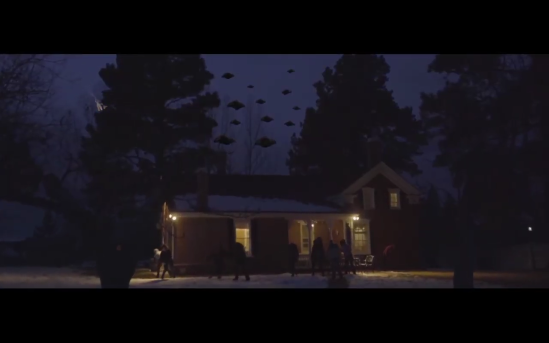
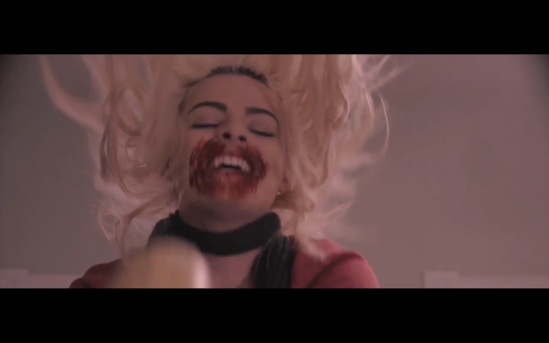
On God-fearing land, two young women drifters are shown compassion and hospitality by a religiously devout mother and son offering hot food, a shower, and a bed for the night. Their seemingly infallible generosity turns to violent deviancy as concealed motives of their cannibalism catches the women off guard that inevitably places the unsuspecting women literally on the chopping block, but the drifters are no ordinary, helpless prey but rather ancient vampires, wandering from one small town to the next, struggling to exist. Just when the bloodsuckers think the ordeal is over, a worldwide invasion of soul-sucking aliens aim to cleanse Earth of all inhabitants, turning those attacked by the beings into flesh-hungry crazies. Trapped inside the cannibals’ house, the vampires must save their human food source from completely being eradicated by an aggressive alien race with a conduit to possibly the Holy Father himself.

Talk about a full monty horror movie that has nearly everything but the kitchen sink! “Savage Creatures” is the 2020 released ambitious action-horror written and directed by Richard Lowry (“President Evil”) that serves up a platter of creativity ingenuity on a micro-budget while still outputting savagery, creatures, and an entertaining good time from start to finish. Lowry embodies inspired resourcefulness that reminisces the economically efficient horror credits of long time indie filmmaking entrepreneur Brett Piper (“Queen Crab”) and though serving as the filmmaker with many hats, composer, editor, director of photography, and visual effects, he also incorporates his own pleasurable schlocky devices as he shoots in the rocky rural regions of Pine Valley, Utah complete with isolated roads and mountainous views. The epically scaled “Savage Creatures” is a creature feature accomplished feat, try saying that ten times fast!

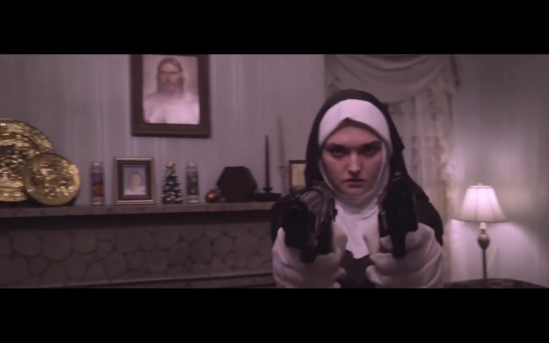
The two vampiric drifters, Rose and Ursula, serve as the story’s centralized characters played by Kelly Brook and Victoria Steadman respectively. Both actresses have worked with Lowry previously on his 2018 Armageddon-esque action-comedy, “Apocalypse Rising,” and familiar with his budgetary style, able to alleviate the pangs of severe funding limitations with some fundamentally respectable performances. Rose and Ursula are not only lovers, but lovers with a cavalier premise on life stemmed from the centuries of human evolving groundwork, shedding a light on questions that should be asked and pondered on in every day modern vampire story. The dynamic between Brook and Steadman strike the nerve sincerely with causal conversation, pressing upon their inevitable doom in between blowing off zombies heads and fragging flying aliens with crossbows as if they’re exacting some self-decompression through violence. Though Brook and Steadman are good and stable throughout, vet actor Greg Travis lands a the lauded performance of Father Cooper, a fanatical Irish priest on the run from the zombie horde. The “Humanoids from the Deep” and “Mortuary” actor goes full blown dogmatic with his theory of God being fed up with humanity and pulls off the extremely righteous and holy neurotic priest as an overboard affable character whose has to trust a couple of godless feminist vampires during apocalyptic mayhem. Rounding out the cast is Ryan Quinn Adams (“Before the Dark”), Cean Okada (“Bubba Ho-Tep”), and Kannon Smith as Sister Gigi, a mute nun with guns.

From the very beginning, “Savage Creatures” maintains a fiendish tempo of anti-heros and butchery. Even the soundtrack, though a relentless boor of stock action selection, plainly works to “Savage Creatures'” advantage one scene after another inside the scope of the sharp, periphery sublet moments to keep up with the breakneck pace. Lowdry’s sees little-to-no expositional sagging in the middle or on the bookends and diverts away from any hankering for a character story or background to fluff up worth-wild characters. With the exception of Rose and Ursula, who complain like boomers conversing upon reminiscing about the past on how easy times once were centuries ago to get away with murder before technology became an inconvenience, much of the cannibals, the priests and nun, and even the flying devil ay like aliens backstories don’t bubble to the surface. While typically these off the cuff details usually roll my eyes back into my skull to scour my brain for the minor moments in which I might have mistakenly missed something about a character backstory or just produce a hefty sigh of longing for more personal information on why this character does what they do, I found “Savage Creatures” uniquely isn’t symptomizing a distress of forgoing persona tell-all; instead, plays uncharacteristically to the obverse tune of an entertaining racket of head splitting, limb chopping, and with a hint of rampant gun akimbo.

Buyer beware! Don’t trust the cretinous DVD cover from ITN Distribution of appears to be Julian Sands from “Warlock” raging angrily with milky white eyes and standing over Cthulhu tentacles surrounding him in the foreground and silhouettes of bats are hovering over in front of a savior-esque crown moon in the background. Instead, trust your gut (or this review!) and see “Savage Creatures” on DVD home video presented in an anamorphic widescreen, 2.35:1 aspect ratio. Pine Valley, Utah never looked so picturesque in a clean transfer. The natural colors feel a bit faded and not as sharp that perhaps assists in blended Lowdry’s composited effects and practical creature design. The cabin night sequence has some noticeable banding, but isn’t a game changer. The English language Dolby Digital audio track is par for the course, running clean and clear dialogue, and satisfying a range of sounds. Depth’s tricky with Lowdry’s compositions that don’t hem neatly, especially when Rose and Ursula crossbow down aliens from a distance, the same cry of pain is utilized for each darted creatures, and the running stock soundtrack flutters in front and behind the gun play at times. DVD bonus material include a director commentary, behind-the-scenes with the actresses and crew, and a VFX breakdown, which I thought was neat to see how Lowdry layered his effects on a budget. Not listed as a bonus feature is the gag reel during the end credits. “Savage Creatures” enters 2020 as an all out brawl designed as a battle royal but with little bankroll; yet, director Richard Lowdry beats the odds, pinning out a win as the scathed champion of his latest apocalyptic caper!
Category Archives: action
A Double Dose of Revenge Against EVIL in “Psycho Kickboxer” and “Canvas of Blood” reviewed!

Alex Hunter had all he could ever want. A blooming career as an up-and-coming kick boxer, a successful police chief father on the verge of finally nailing a crime lord, and becoming recently engaged to marry to his long time girlfriend. Yes, Alex’s life fortune was very valuable indeed until it suddenly came crashing down to a fateful end when the ruthless crime lord his father was pursuing, known as Hawthorne, kidnaps and brutally murders his father and finance right in front of him and leaves him to die. Found and rescued by a well-bound special forces veteran, a recovering Alex lives to fight another day, a day for retribution against the a city of evil and crime. The one time kick boxer turns to a life of vigilantism under the guise of the public designated The Dark Angel who cleans up thugs, thieves, and low-lifes with martial art combinations that put Hawthorne in a supply chain bind when drug deals fall through at the result of The Dark Angel’s meddling. Nobody knows the identity of the masked hero, but one Cassie Wells, a journalist, aims to unmask the citizenry protector with the help of a bumbling private detective, but when they become too close to Alex, Hawthorne sets his target on them as bait.

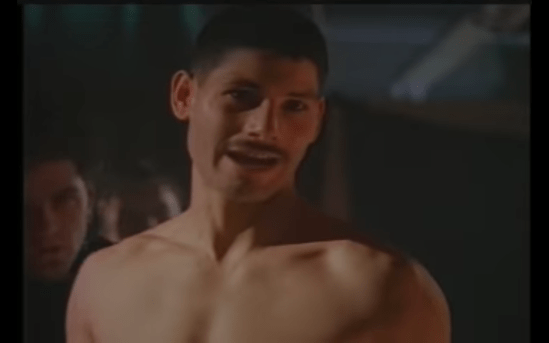
The American 5-time world kickboxing champion, Curtis “The Explosive Thin Man” Bush, stars in his debut leading role performance in the martial arts, action-melee, “Psycho Kickboxer.” Also known as “Psycho Kickboxer: The Dark Angel,” the film had exclusive rights to being born and bred in Southeast Virginia, more specifically in the Hampton Roads area, with a local cast and crew and the opportunity to utilize region locales and business, such as his own, the Curtis Bush Karate Club, and those he was acquainted with at free of charge. Bush, born in Virginia Beach, puts up the cash, along with a slew of family and friends as investors as well, to finally produce his own work without having to be another masked Foot Solider in a “Teenage Mutant Ninja Turtle” sequel or just be another bad guy who can kick real good for the camera. Bush hires TV series and documentary director David Haycox and freshman filmmaker Mardy South to work from a Kathy Varner script. Bush’s career didn’t quite take off to be the next Chuck Norris or Jean-Claude Van Damme of Virginia Beach despite having athletic talent and good lucks, but he lives comfortably now in Hawaii with his family. Instead, the legendary fighter, who retired at the age of 37 in 1999, can look back at 1997’s “Psycho Kickboxer,” a five year project that began filming in 1992, as a crowning cinema achievement outside the square ring and without the confinement of 20.1 x 20.1 ft ropes alongside a heap of localized co-stars Kim Reynolds, Rick Clark, Tom Story (“Metamorphosis”), Rodney Suitor (“Traxx”), Jeffrey Kotvas, and George James.

Personally, “Psycho Kickboxing” round kicks close to my heart, targeting the marshmallow center, and landing a Curtis Bush southpaw punch right (or should I say left) into one of my favorite home town films of all time. You see, this reviewer is a native of the Hampton Roads area and raised in the area for 28 years until becoming a Northerner. Honestly, I’ve never heard of “Psycho Kickboxer” or even Curtis Bush for that matter, not even the mayor honored Curtis Bush Day that’s April 27th, and once I looked past the slew of mullets and mustaches and saw the name of a local bar, Hot Tuna Bar and Grill, briefly observable in a scene, the regional newspaper, The Virginian-Pilot, and a resident country station, 97.3 The Eagle, with a pair of DJs as themselves. Championing “Psycho Kickboxer” as a good film is an enormously uphill one and even being a cult classic wobbles on the bunny hill as filler scenes, specifically the film’s ninja-cladded Curtis Bush tearing through bad guys is more than half the movie as montage segments, run rampant over what should be character exploration of redefining and rediscovering character arc qualities. However, the Haycox and South directorial has some blood red and amorous highlights with a pair of exceptional head rupturing scenes I’ve ever bared witnessed from the special effects of the Creations Unlimited team, Steve Stephens and Clay Sayre, and some tasteful T and A from Kim Reynolds in her bathtub that’s shouldn’t dare be missed.

The accompanying feature on this pyscho-revenger set tells the story of Julia, a young violin prodigy, who feels the extreme pressure weighing her down with an abrasive and abusive boyfriend and the intense passion she has for music that’s literally destroying her gifted hands from within. Her father, an art professor who has a disabled hand himself, quickly rushes her to a doctor for examination and concludes surgery is the only course of action to right the damage, but the coked up, alcoholic of a surgeon botches the job, leaving poor Julia unable to use her hand and diminishing any hope of playing her violin again. A long line of deep engrained corruption integrated inside the justice system is uncovered by her father after a sabotaged lawsuit exonerates the doctor from any wrongdoing. Pissed off with rage, the art professor decides to take justice in his own hands or, rather, his own hand as he fabricates instruments of death to paint his own retribution for physically and mentally injuring his daughter who is now in a semi-catatonic state. Police are baffled by each death that leaves little clues to the man who perpetrated them as one detective continues the investigation of grisly murders.

“Canvas of Blood” is the rightful backseat second feature being inferior of the two films on the double bill release. Set on location in and around the Baltimore, Maryland region, the anomalously rare 1997 revenge flick, that was only released on VHS, was at one time the debut disaster-piece from writer-director Joel Denning, produced by the Post Productions Film Company in association with Bad Credit OK and presented by Michael Mann – no, not the same Michael Mann who helmed Al Pacino and Robert De Niro in “Heat.” Instead of intense gun-blazing battles and gritty dialogue exchanges, Denning’s carnivalized approach to vindictive measures is met with an unscrupulous amount of aberrant sound effects such with a fart track, overweight male strippers with mullets in thongs doing abhorrent dance moves, and exaggerated character travesties in a mishmash plot involving a decorated war vet now art professor painting a trail of blood with his interchangeable cyborg mitt arsenal that includes a flame thrower, bone saw, and a T-800 “Terminator” style hand for massive nutsack squeezing. The most difficult to comprehend about a tale that warrants no deep thought is whether Denning’s intentions are sincere or to make a mockery of the revenge genre with a blatant boorish attempt. As far as actors go, the now radio personality, Jennifer Hutt, does what she can with cheap cinematic artwork and the same thing can be said about Jack Mclernan, who portrays no Paul Kersey, a role tailored by Charles Bronson in “Death Wish”, and while McLernan might strike a resemblance to the “Once Upon A Time in the West” actor, McClernan can only muster about half the set of stoic acting chops to save any kind of face. Lance Irwin, Andy Colvin, Marian Koubek, Mark Frear, Jamie Bell, Michael Mann Reennie McManus, Irena Beytler, and Svetlana Milikouris co-star.

POP Cinema’s Shock-O-Rama banner presents a Psycho Horror Double Feature with “Psycho Kickboxer” and “Canvas of Blood” on a single disc DVD and both films are presented from in a VHS-rip, 4:3 aspect ratio, format that gives no indication of an enhanced or upscale treatment to the transfers. “Psycho Kickboxer,” which was actually shot in 16mm and transferred to Betacam VHS, fairs better with a unscathed negative obtained cleanly without the annoyance of compression artifacts, due to the lower bitrate from the more than likely clean 16mm source. However, don’t expect colors to pop and details to be fine from a VHS transfer that’s has a slightly fuzzy and gray washed tone. Canvas sports much of the same with a more warmer tone and some over-saturation of blue tint, but tracking distortions and analog graded noise are more evident flaws in this presentation. The English Language mono tracks on both features are a composited nightmare of little range and depth. Fight ambience could have been pulled right from the Double Dragon Nintendo game and the subjective overlay of obscurely crude ambient tracks, even an overly synthesized enhanced screaming I would consider as well, dilutes “Canvas of Blood’s” objective plotline. The DVD extras include Shock-O-Rama vault trailers and a 3-page booklet insert containing a 1998 Alternative Cinema Magazine article written by Curtis Bush who provides a humbling anecdote about film’s origin story and the process of making his independent movie dream come reality. There’s no contest. “Psycho Kickboxer” TKO’s “Canvas of Blood” in every round of the Psycho Horror Double Feature, despite the horde of mustaches and mullets and despite both films not really being a horror. Shame that world class kickboxer Curtis Bush’s career didn’t skyrocket afterwards, but thats what makes “Psycho Kickboxer” inherently special and exceptional to behold, just like the fighter himself.
EVIL Must Be Broken In Before Being Used. “The Wheel” reviewed!

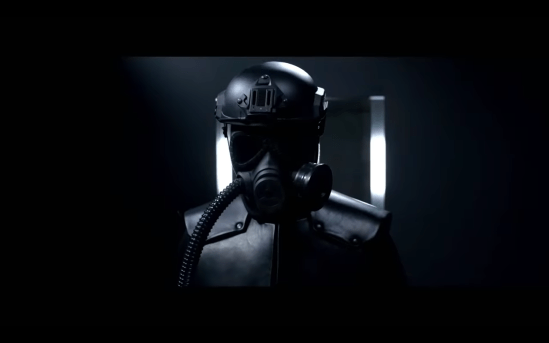
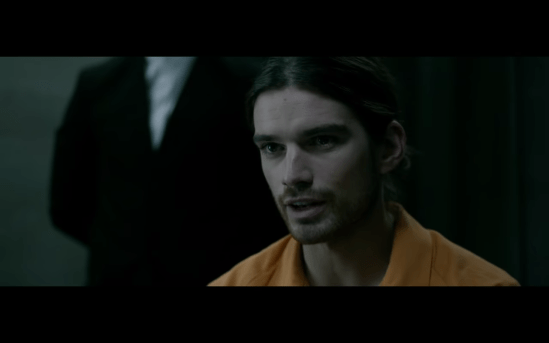
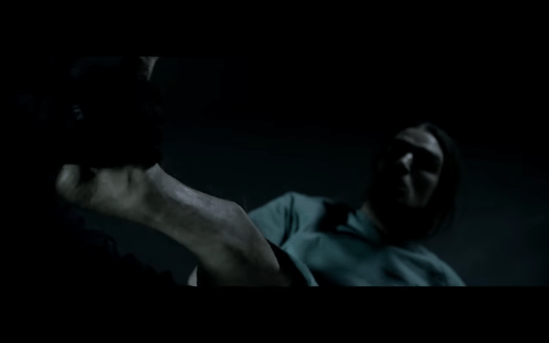
In the near future, paraplegic inmate Matthew Mills volunteers under pressure to join a Satoshi-Telefair Industries experimental treatment program that not only promises to reduce his sentence, but to also to regain mobility in his legs. With nothing more than the hope to return to his daughter, Mills is enticed by the agreement and gives himself to a shadow company who regularly contracts with the military, facilitating deep underground at an isolated site. Shortly after signing the release form, he awakes in a dark, steel cell known as The Wheel and is able to move his legs again, but the jubilation quickly subsides as armored men with batons visit his cell to beat and break his body in order for the nano technology, injected amongst his anatomy, to rebuild damaged tissue and make him stronger. The ordeal torments him, but to the researchers observing every detail of his recovery and behavior, Mills is just subject 2-1, another potential subject destined for the Future Soldier Initiative where the unethical testing must continue.

Shady shadow corporations, experimental nano-material rehabilitation and enhancement, and high level science fiction noir from writer James S. Abrams and director Dee McLachlan with 2019’s “The Wheel.” As if not already obvious from filmmaker’s nationalities, “The Wheel” is produced by and shot by Australian production companies SunJive Studios and Film Victoria, a state government agency that advocates funding and other filming assistances for shooting films in sectors of Victoria, Australia. “The Wheel’s” steely posture mirrors the frigid winter snow of Melbourne, Victoria’s covered forests that’s beautiful, yet deadly in the conventional beauty of nature. Yet, “The Wheel” delves into the meddling of what makes man and what also drives man as the story persists on the subject of redesigning the human body, but what that notion doesn’t take into account is what if the human body’s reactions doesn’t go as planed and a clapback ensues with all the synthetic re-wiring behind it? This is what Abrams and McLachlan intended to explore.

Australian actor Jackson Gallagher stars as Matthew Mills, a cripple with a purpose. The “Patrick” actor has been adrift from the darker roles since 2013 until up now with his main role in “The Wheel” that demanded a certain physicality that involved fight sequences with one, or two, or even three opponents and some ariel ropes work. The physically fit Gallagher not only survives the daunting workload, but hastily pulls Mills through his character’s tough transition from hopeful paraplegic to overly confident ultimate fighting weapon without an earnest core of struggle. The same can be said with Dr. Allison Turner played by Kendal Rae (“Out of the Shadows”). Turner’s a rogue researcher who had her practicing credentials revoked after the mistreatment of lab monkeys and was sought after by the Satoshi-Telefair for her detachment qualities, but her Turner’s character also didn’t quite arc properly and resembled a midway plateau from the moment Mills became her research subject. The only character that stayed the course was Dr. Emmett Snyder, a loyal Sataoshi-Telefair researcher to the bone. When he’s not suplexing or drop kicking in a championship wrestling match, David Arquette does dabble in acting. The “Scream” veteran actor fills in a rather unlikely antagonistic role, but the wild eye Arquette remains taut in his performance. “The Wheel” also costars Belinda McClory (“Matrix”). Christopher Kirby (“Daybreakers”), Victoria Liu, and Ben Still.

The spoke of the “The Wheel” rotates on a monotonic and frosty shoulder axle colored in gun metal and iced with dystopian immoralities. Every breathing element and inanimate objects is in a state of distant identity being bestowed labels in a combination of letters and numbers. The utilitarian wheel, an underground experiment facility that shifts rooms up and down and can be rotated to the other side, has no windows or any kind of necessary function other than to test subjects. Where “The Wheel” goes full “Equilibrium” by lacking emotional depth and substance without a coup d’état of the bleak authority, “The Wheel” also lacks vigor to break the blank uniformity and tries to speed through Mills patriarchal fluff to provide reason for his endurance and to provide reason for audiences to care. The epicenter theme to Mills motivation and escape is the thought of getting back to his daughter by any means necessary and was deemed fit to lay by the waist side to rely more on the hand-to-hand fighting like an overly glorified 70’s martial arts film.

Umbrella Entertainment distributes the sci-fi, action film, “The Wheel,” produced by SunJive Studios and Film Victoria onto a region free DVD home video. The clean digital picture in a widescreen, 2.35:1 aspect ratio, has a crisp demeanor that exact a bunch of natural lighting outside with a bit of a lower contrast inside dark “The Wheel” itself. What I found more appealing the anti-aliasing of the drone footage over the snowy covered Victoria forest, suggesting a higher bitrate compression that offers a seamless and smooth recording. The 5.1 English language Dolby audio is offered up with no whiff of an Australian accent in a lossless track that sounds good on the surround channels during action scenes. Dialogue is clear amongst the ample range and depth of ambient layers of researches watching and speaking through comms from inside a box watching another guy inside a box. Like other Umbrella releases, “The Wheel” has no special features nor a static menu. “The Wheel” has ice in the veins, but no warmth in it’s heart that seems vertically challenged on a horizontal slope of dystopian disorder.
There is no EVIL like the Firefly Family! “3 From Hell” reviewed!

A bullet-riddled shootout with police left Baby Firefly, Otis Driftwood, and Captain Spaulding full lead, but not dead! The trio barely survives despite getting shelled by 20 gunshot wounds a piece and are tried and incarcerated for over a decade in maximum security prisons. After Captain Spaulding’s wears out his welcome on death row and becomes the first one executed, a merciless escape carried out by Otis’ half-brother, Winslow Foxworth Coltrane aka The Midnight Wolf, leaves a trail of blood and violence in their wake up to freeing Baby Firefly who can’t wait to play and unleash her uncontrollable crazy cyanide upon the world. However, there’s only one itsy-bitsy problem – they’re faces are about as dangerous to themselves as they are dangerous to others. The three from hell vamoose to a dumpy Mexico town to start afresh, but little do they know, no place is safe for long.

Over the span of 16 years and 14 years since “The Devil’s Rejects,” shock rock and rockabilly, metal rocker Rob Zombie returns to write and direct the third and highly anticipated sequel film in the Firefly trilogy with “3 From Hell.” The 2019 continuation of the Baby, Otis, and Captain Spaulding rejuvenates interesting in returning hellions that’ll undoubtedly wreak havoc across the midwest plains, splatter some brains, remove some flesh, and, well, you get the gist of their unholy hobbies. “3 From Hell” had to literally dig out these characters from the grave since being shot to shreds at the end of,***spoiler alert***, “The Devil’s Rejects” and Zombie was able to sell Lionsgate and Saban Films on the story divergent from the last film, much like “House of a 1000 Corpses” horror show went straight into exploitation extravaganza with “The Devil’s Rejects.” “3 From Hell” is a whole new animal, an anti-hero’s indulgent fantasy of crime, action, and still barely kickin’ to kick ass through the rampaging blood.

The three in “3 from Hell,” Baby Firefly, Otis Driftwood, and Captain Spaulding, return for one more three amigo misadventure through hell and brimstone and the original cast, respectively include Sheri Moon Zombie, Bill Moseley, and Sid Haig, suit up to be a depraved family once again. Sadly, Sid Haig’s health rapidly deteriorates in the midst of filming, leaving Zombie no other choice other than to write him quickly from the script and introduce a new character, a transgression tyrant to pass the torch to, with Winslow Coltrane played fittingly by “31’s” Richard Brake. As though like never missing a backwoods bumpkin beat, Richard Brake embraces the Midnight Wolf and breaks in the character with such ease and fortitude that the question never arises if the Midnight Wolf should be a part of the sacred Firefly pack. Sheri Moon Zombie steps out of a time machine and right into Baby Firefly, despite being a little aged around the eyes. The quirky and unpredictable Baby doesn’t reinvent the wheel, which should please the fandom, and is a wonderful sadistic mecha with Sheri Moon at the helm. The same can be said about Bill Moseley who, goes without saying, has a unique voice that’s been rebranded as Otis Driftwood. Every other movie, old or new, with Bill Moseley starring, or not starring, will forever be tainted by Otis Driftwood for when Moseley monologues or even just speaking one or two words of dialogue, the spine starts to twinge and tingle, the hairs shoots straight up, and that stepping on your grave feeling of cold desolation swallows you in an instant. The “3 From Hell,” plus Coltrane, face the world with a big knife and lots of guns and those who stand in their way are played by co-stars Danny Trejo (“Machete”), Jeff Daniel Phillips (“31”), Emilio Rivera (“Sons of Anarchy”), Richard Edson (“Super Mario Bros.”), Pancho Molar (“Candy Corn”), Dee Wallace (“Cujo”), Sean Whale (“The People Under the Stairs”), Clint Howard (“Evilspeak”) and Bill Oberst Jr. (“Dis”).

Rob Zombie has mentioned in a behind the scenes featurette that he didn’t want to recapture the magic of the previous Firefly cruelty and the rocker-filmmaker has done that just, straying away from the horror of “House of the 1000 Corpses” and the exploitation vehemence of “The Devil’s Rejects,” which the fans groveled for, and going bravely, or blindly, into crime action with the “3 From Hell” that still’s beholden to Rob Zombie’s hillbilly swank. Rob Zombie risks a new path and also gambling on more of Lionsgate’s capital with showing off more visual effects than in the former films. Bullets tearing through flesh and flying straight toward the camera lend to example of the computer imagery effects that, from a fan’s perspective, dilute Rob Zombie’s adoration for horror who takes less and less chances with this film that not only feels rather ordinary and just another piece of maize in the field, but “3 For Hell” also doesn’t feel to have substance to all the madness. Baby, Otis, and Coltrane go from point-to-point, aimlessly pondering what’s next, and just happen to fall into a barrage of bullets and blood, rather than being the epitome of evil bring vile upon mankind. Just being a Rob Zombie film that resurrects his beloved and beguiling modern iconic characters, “3 From Hell” coopers the longing with a fierce show of violence that opens the door for one more installment.

Lionsgate and Saban Films, along with Spookshow International, proudly presents Rob Zombie’s “3 From Hell” onto a R rated DVD and an unrated, 1080p Blu-ray sheathed inside a slipcover. The two disc, dual format release are both presented in a widescreen, 1.85:1 aspect ratio, and the image is about as sleek as they come with an ARRIRAW formatted 2.8k ARRI camera that shoots 48fps. Zombie reins back on the color palette and hones onto more natural coloring. The details are delineating, as aforesaid with Sheri Moon Zombie’s crows feet. The English language 7.1 Dolby TrueHD audio track is lossless with a crisp dialogue and ambient mix. The range and depth are robust with explosions and gunfire. The release comes with Spanish subtitles and English SDH subtitles. In accompaniment with the 115 runtime, bonus features include To Hell and Back: the Making of 3 From Hell which is a 4-part documentary on the Blu-ray only and both formats include an audio commentary from writer-director Rob Zombie. Also included is a digital copy to instantly stream and download onto personal devices. The horror element might be gone, but the inexplicable chaos surges through death row to desperado Mexico in Rob Zombie’s “# From Hell!”
God Hatin’ MMA Fighter Still Has The Power in Him to Fight EVIL! “The Divine Fury” reviewed!

After the sudden and violent death of his police officer father, mixed martial arts champion, Yong-hoo, has a complete disdain for God from a young age now that both his parents have perished. Growing up angry and swarmed with negative thoughts, Yong-hoo goes through life without much of a purpose until he awakes from vivid dream with the wound of stigmata on his hand. Unable to stop the bleeding by means of conventional medicine, he resorts to a shaman who convinces him to seek out Father Ahn, an elder priest experienced at practicing the rite of exorcism, and learns that the wound and Father’s once unwavering benevolence provide a divine weapon against a growing covenant of demons under the black magic of a Dark Bishop. Together, Yong-hoo and Father Ahn combat the forces of evil before the possession runs rampant in the city.

South Korea packs a punch with an action-packed take on possession and exorcism with Kim Joo-hwan’s “The Divine Fury.” The 2019 released film that blends horror with the cinematic formulas of the comic book universe films is written and directed by Joo-hwan and produced by Studio 706, KeyEast, and Lotte Entertainment, the latter being a subsidiary of one of the largest Asia conglomerates and a leader in the Asian film industry. “The Divine Fury” isn’t low-rent horror, providing fans with salt of the earth martial arts, a range of diverse set locations, and a decent grade of special effects that range from stunt men quality to visual monstrosities, including a giant hell worm bristled with millions of arms and hands, and also gives a chance for Joo-hwan to showcase his junior horror-action that succeeds a 2017 buddy-comedy in “Midnight Runners” and a coming to terms drama in his 2013 film, Koala. One motif, and perhaps trademark, that runs through all of Joo-hwan’s written and directed films is the coupling of protagonists element and “The Divine Fury” is not an exception and follows the same coupling, if not slightly altered, mechanism.

A pair of actors from Bong Joon-ho’s award nomination buzzing “Parasite” also have a role “The Divine Fury,” one of them, Seo-joon Park, being the lead star of the Joo-hwan film as the MMA Godsend, Yong-hoo, with hate in his heart for the Lord Almighty. Yong-hoo’s a joy to watch on the screen as a character with an arch’s beginning as a young man, a mindless fighter, being verbally influenced over his shoulders by demon puppeteers to finding his lost father figure in a man who has an unflinching amount of faith. Seo-joon captures the defined struggle Yong-hoo has with God even in the face of pure demonic evil before him. An evil battled by Father Ahn, dolefully portrayed by “Sector 7’s” Sung-Ki Ahn. Sung-Ki fatherly performance places Yong-hoo into a role of humility, not only as a mentor, but with experience and patiences that resigns to trust rather than action. However, the dynamic goes both ways. Seo-joon shows lot of physical strength becoming unwittingly the “divine” warrior to thwart an insidious malevolency when Father Ahn is taken out of action due to Yong-hoo’s haste. Seo-joon had to quickly and naturally grow up his character to be the leading, brute force of experience and physicality and did just that as character faces off with the Dark Bishop, Ji-sin. Ji-sin invokes demons to inhabit those in a weak state of mind. This devilishness wouldn’t have been made possible without Do-Hwan Woo’s stoically sly and slimy confidence behind the character. The remaining cast rounds out with another “Parasite” actor, Woo-sik Choi, and Seung-Joon Lee.

“The Divine Fury” is fundamentally an essential oil extracted from the widely popular comic book universe money-making machines, that are sometimes also called movies from time-to-time, but “The Divine Fury” doesn’t have that monstrous platform of a narrative pulled directly from the illustrated pages of comic book franchise. Yet, the story builds a downtrodden, seeking-answers Seo-Joon with a tragic past and an ability to pulverize people – a winningly similar combination to any pre-defined hero in the Marvel character evolution. There’s also this theme of fatherhood and mentorship, like seen in “X-Men” with Professor X or “Blade” with Abraham Whistler. The latter of those two examples perhaps more closely resembles Father Ahn as the relation to the horror-action genre is similar in nature, but instead of abstaining from blood thirst, Seo-Joon is abstaining from letting God into his heart. Of course, “Blade” was ultra-violent and bloody and “The Divine Fury” is grossly more toned down with the exception of a few key moments of blood regurgitation. Speaking of effects, the visual effects waned from expectation and teetered more toward a rushed and unpolished look. They weren’t terrible, but not the best looking visual effects demons in the industry.

Well Go USA Entertainment brings the action of exorcism to Blu-ray and DVD home video with a dual format, two-disc release of “The Divine Fury.” Presented in a 1080p widescreen, 16:9 aspect ratio and sheathed in a slipcover, “The Divine Fury” feels necessarily gritty in comparison to the subject material with a clean, almost sterile image that defines the blacks and colors, despite a short range of vivid hues the hues that are dominant are profoundly thick and dark. The limited color palette won’t be a problem as demons hide in the shadows and that’s where the story takes domain in scaffolding-laden churches, orphanage basements, and even a swanky neon-glowing club with a well of damnation beneath in the dungeon. The skin tones have a natural feel about them, but going against the grain of naturalism is the visual effects as aforementioned as they don’t render properly to exude the right viewer reaction. The Korean language 5.1 DTS-HD Master Audio has ample weight. Whispering shadows of slithering speak and the bubbling of the, again, well of damnation emit the right kind of range and depth needed to descent into doom and gloom atmospherics. Dialogue is crystal clear and in prominent. An English dub is available, as well as English subtitles that errorless and well synced to the Korean dialogue track. There is some English during a MMA fight on the Korean track. Bonus material includes a rather generally spiced together making of featurette that includes mini segments such as prop commentary, special effects, behind-the-scenes look, and the construction of the antagonist world in “The Divine Fury. There are also a couple of trailer variants and a U.S. trailer for the film. Ultimately, “The Divine Fury” intrigues on the fray, desiring more into the backstory of Father Ahn and delving further into Seo-Joon’s weaponized stigmata and director Joo-hwan Kim teases just that with a taste of things to come with a short pre-credit scene that sets up “The Divine Fury” for more themes, perhaps, on a love-hate relationship with God, more, perhaps, finding suitable father figures, but, of course, there will be for sure more exorcizing ass-kicking of demons.