Nothing Says EVIL Like a Woman Scorned! “Revenge” reviewed! (Second Sight / BR Screener)


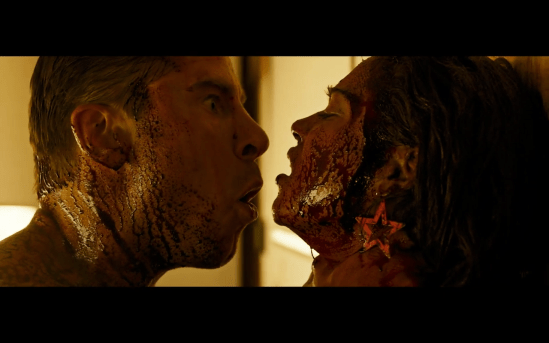
Richard, a wealthy businessman, and Jen, his young, candy arm mistress, helicopter in onto Richard’s desert retreat house. While his wife and children are at home, Richard plans to spend his time away relishing a pleasurable weekend that involves relaxing by the outdoor firepit, swimming in the infinity pool, being sultry with Jen, and do a bit of hunting along the mountains, canyons, and riverbeds. When Richard’s associates, Stan and Dimitri, arrive a day early, a party filled night rapidly ensues, but events turn sour when Jen is brutally attacked the next day and Richard plans to snuff out the scandal before it unravels to ruin him. Unwilling to cooperate with a coverup, Jen is nearly murdered by her three attackers only to arise like the rebirth of the Phoenix, igniting a vengeful fire inside her as she uses everything she has at her disposal to finish what they started.

In a day and age when the slightest bit of a woman’s attention can explode into a vile reaction of testosterone warped misguidance and it’s the woman who is shamed as the accosted criminal being barked at aggressively by the unequivocal fearful and condemning voices of the male species, it’s movies like Coralie Fargeat’s action-packed “Revenge” that symbolizes woman’s resiliencies against men’s efforts in a show of violent force that’s “First Blood” without John Rambo, but rather with a scorned princess for retributive capital justice. “Revenge” is the French filmmaker’s first full-length penned and directed feature film that’s one gritty and bloody grindhouse vindictive sonovabitch, a pure punch to the throat, and a direct message to misogyny everywhere. Filmed in the Morocco desert during Winter, the small cast is swallowed by the vastly arid landscape of transfixing cruelty, a synonymous parallel to the feat the heroine Jen is drawn to task. It’s also a feat that Fargeat managed to salvage to finally release a rape-revenge thriller backed by a conglomerate of production firms and financiers to stand with a film from a first time director whose treatment offers up maltreatment of women, such as the rape, along with the savagery, the concept of revenge, and ridiculous amounts of blood. M.E.S. Productions, Monkey Pack Films, Charades, Logical Pictures, Nextas Factory and Umedia are just to name a few of the production companies to be supporting capital.

With a role embodying the symbolic brutalization of physical and mental rape, a role of complete loneliness in a fatal skirmish against their attackers, and in a role forsaken in the face of death only to be reborn from the ashes of their former self, Matilda Lutz’s fully charged capacity to tackle such a demanding performance is beyond praiseworthy, scrapping the timid traits from Jen’s ravaged glossy persona and replacing with a rigid exterior ready and willing to combat to the death. The Italian born Lutz has to go through a metamorphosis and refashion Jen to be able to differentiate from her more bubbly first half self as the easy kill or the disposable male plaything. In a twisted turn of events, Jen’s mortal adversaries have every advantage to douse out Jen’s existence: gear, guns, vehicles, clothes, water, fuel, numbers, etc. Yet, despite all the advantages, the desert, much like Jen, is unforgiving as it is bare. Richard (Kevin Janssens), Stan (Vincent Colombe), and Guillaume Bouchede (Dimitri) exude the utmost confidence their grip around Jen’s throat. Janssens’ fortifies as the rigorous cutthroat, a misogynistic philanderer, determined to save his own skin no matter the cost while Colombe’s Stan is a retracting coward with regretful impulses. Colombe’s brings the comedy to a grimly tale and positions Stan to be the teetering villain tarnished by his guilt of nearly killing Jen, but never apologizes to being the catalytic rapist that initiates the whole debacle. Bouchede supplements with his divestment to charm as the overweight, do-nothing witness to save Jen from Stan’s seizing urges. As Dimitri, Bouchede stalls his typical niceties to be the silent violator who can open up the flood gates of aggression when transgression warrants it.

“Revenge” has an ultra-violent and super-synth finish chapping with multiple motifs of a rebirth theme and supplies a hefty bloodletting of incorporeal measures. Knocking it out of the park in her first feature film, Fargeat’s cauterizes the unnerving serious tone with alleviated black comedy of the bloodiest kind. The roundabout endgame chase comes to mind, involving a frazzled Jen and a wounded, but indomitable Richard in a merry-go-round of a shotgun standoff is some of the best editing work of fast and ferocious content I’ve seen in some time while still able to vitalize a transparent sense of what’s occurring. However, not all the slick editing is flawless. Some minor inconsistencies in the editing are noticeable and while these moments of lapse are not detrimental or pivotal to the story, they reflect Fargeat’s challenges of making a hyper-stylized action-thriller in her freshman full-length feature. In a sense, everything Fargeat’s deploys positions “Revenge” into a surreal tonality, glamorized for those thirsty for blood gushing in a canyon-vast desert bristled with rape and payback where a mere four players in this ebb and flow game of killer combat chess can effortlessly locate each other, but one can always find their prey by following their blood trail, another motif that continues to pop up that speaks metaphors of their life blood is the very object gives them away in the end.

Giving the limited edition treatment that it deserves, Second Sight Films’s Blu-ray release of “Revenge” is a mouthwatering narcotic of raging cathexis and while the Blu-ray BD-R can’t be technically critiqued, the LE release offers HD 1080p transfer of the original, 2.39:1 aspect ratio and sports an English language DTS-HD Master Audio 5.1 mix. While Fargeat might be inspired by Lynchian themes, the cinematography work by Robrecht Heyvaert also resembles “Pitch Black” director David Twohy’s films with making something small larger than life and a particular chase scene involving all four characters at the edge of a canyon stroke a familiar chord with Twohy’s “A Perfect Getaway.” There were Second Sight Films’ exclusive bonus features included on the disc, featuring new interviews with director Carolie Fargeat and star Matilda Lutz (entitled “Out for Blood”) an interview with Dimitri actor Guillaume Bouchede (entitled “The Coward”), a interview with Robrecht Heyvaert (entitled “Fairy Tale Violence”), a new interview with composer Robin Coudert and the synth sounds of “Revenge,” and a new audio commentary by Kat Ellinger, author and editor of Diabolique. The release is sheathed inside a rigid slipcase featuring new artwork by Adam Stothard as well as a poster and a new soft cover book with new writings by Mary Beth McAndrews and Elena Lazic Overall, “Revenge” received a monster packaged release ready for the taking on May 11th. “Revenge” destroys toxic masculinity and breathes a vindictive hope from the fiery embers of rebirth and destruction.

Run And Hid When Yuletide EVIL Comes A Calling! “Pagan Warrior” reviewed! (ITN Distribution / DVD)


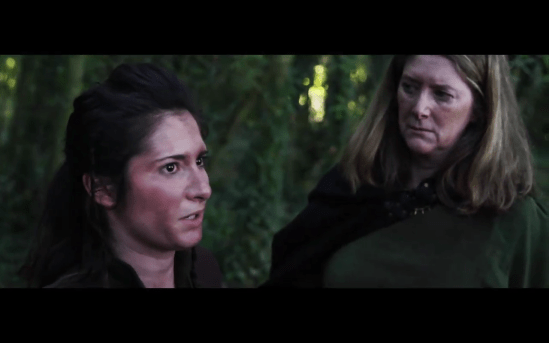
In Medieval times of Sussex, England, a powerful English king, who has kept the seething Viking savages at bay for decades, has died, vacating the throne to his son, Rollo. The Vikings seize the opportunity during this time of transition and storm the Saxon Castle, nearly killing the monarchy and all of throne’s subjects left to oppose them. With their daughter Avery kidnapped and themselves on the brink of death, King Rollo and Queen Silvia are revived by two women of the woods, a pair of witch sisters known as Constance and Millicent, who use their mystical healing powers and offer the king retribution by summoning the Yuletide monster, Krampus. In return for slaughtering the Viking usurpers, the Krampus will collect his debt in exactly 10 years, taking whatever is precious and dear as payment from the vengeful King Rollo.

Krampus has become a major media trend over the last decade, popping up in all forms of popular culture that compounded lore inside the leafy pages of books and magazines to the beast’s frighteningly half-goat, half-man exterior making for great big screen monster entertainment. The inverse icon of jolly Saint Nicholas offers punitive measures for bad little girls and boys and is sometimes referred as a companion to Saint Nicholas who probably turned a decisive blind eye to little brat Johnny’s enjoyably thievery and torture of chickens from a neighboring farm. “Pagan Warrior” is yet another narrative of the Christmas creature spun with different fabric and woven into a bitter feud of two contending enemies told modestly by director Louisa Warren (“Tooth Fairy”), produced by Warren’s London, UK based production company, ChampDog Films, a creative outlet for independent film ventures that are mostly in the horror genre and are sometimes inferior versions of bigger budget films, in the same vein as Asylum Entertainment. The script comes from Shannon Holiday (“Bride of Scarecrow”) that conveys an ageless theme of beware of what you wish for and the price of blind vengeance.

“Pagan Warrior” hones in on numerous character stories, never clearly defining a single perspective. King Rollo, played by “Escape from Cannibal Farm’s Peter Cosgrove, becomes the royal fate sealer as what he deems necessary and right is, in fact, the worst possible scenario a mad king could bestow upon himself by calling upon the supernatural death dealers for revenge. Cosgrove cleans up nicely as an English blue blood whose bequest incorporates a lineage of fighting kings with Cosgrove taking his role with due importance despite a humbling filmmaking production. King Rollo’s counterpart, the merciless Viking Ubbe fitted for Carey Thring (“Scarecrow’s Revenge”), combats a war on two fronts – the contentious bout with King Rollo and an internal family squabble that beleaguer the bond between him and his wife (Kate Milner Evans, “Pet Graveyard”) and child (Adam Sugawara, “Virtual Death Match”) as he tries to court princess Avery with a crude sexual advances. Thring’s vision of Ubbe is a classically depicted villain whose stronger with allies and a whimpering coward when alone in a fight, especially when the Krampus comes calling for his head. Darrell Griggs dons the makeup, prosthetics, and wardrobe of the horned beast, becoming the folklore of a cursed death who not only pursues the 12 month progression of horrible children, but also the appointed damned when conjured for a hit. Krampus’ outward appearance is pleasing and Griggs provides the lumbering and slight preternatural motions that give Krampus that dreaded paranormal mysticism. “Pagan Warrior” rounds out with Sarah T. Cohen (“ClownDoll”), Jessica O’Toole (“Pet Graveyard”), Mike Kelson (“Scarecrow’s Revenge”), Hattie Willow (“The Mermaid’s Curse”), Will Todd (“Mummy Reborn”), and Tara MacGowran (“Mother Krampus”) and director Louisa Warren as the women of the woods.

ChampDog Films uses a tightknit group of actors and filmmakers to sell archaic swordplay action fastened against demonic folklore and despite the underwhelming band of Vikings versus an equally small English contingent squaring off in front of a historic English castle with virtually no ample practical or CGI era enhanced presentations, the production just barely eeks by with Feudal times. Wisely, Warren shoots a number of character closeup shots, avoiding much of the surrounding modern elements and forcing audiences to focus just on the characters who are dolled up for Medieval times roleplay. Where the battle scenes and smart camera work flourish, the Shannon Holiday script becomes the ultimate weak link in the chain with a predictable plot storied with terribly cliched and uninteresting characters that couldn’t grip a sword let alone one’s attention. The story begins with its most shocking ending scene, thwarting any possibility of surprise for even the most dense and cinematically uneducated individual for the ruse play out. There is also this millennium goof in the opening backstory credits indicating events take place in 812 AD and in the same breath, mentioned also is the three days of December 1812 that this episode occurs. Since 1812 England was all about redcoats, guns, and war with America colonies, I would assume 812 AD would be the correct time period against a Viking invasion.

In what is not exactly a Christmas holiday horror movie, the malediction of the “Pagan Warrior” spread little holiday cheer and more yesterday fear onto an ITN Distribution and Mill Creek Entertainment DVD. Presented in a widescreen, 2.35:1 aspect ration, on a single layer DVD, sheathed inside a DVD cover that looks cooler than the actual movie itself, the lower end production avoids stylizing a historical based feature with tinted mattes, computer imagery, or any other miscellaneous camera effects seeking more toward a naturalistic cinematography that utilizes the hues at hand. Pastel blacks jump with noise and posterization from the electronic interference whereas the existing hues exhibit a less than rich approach of a more vapid green, brown, and stonewall beige. The English language Dolby Digital 2.0 stereo audio mix maintains a level of consistency. Sometimes, Krampus’ dialogue is murky because of the extra gnarling effect parroting an LFE emitting voice; however, dialogue is mainly clear and prominent. English SDH is an available option. For a time period action-horror, the lack of rudimentary range and depth troubles with little sense into the effort of adding skirmishing swords and Krampus’ reverberating growls always seem to be right next to the camera. The only bonus feature available is the trailer. With conventional means of dispatching people, “Pagan Warrior” shadows more of the slasher concept conjured by the breath of the desperate who misfires judgment rather than being an omnipotent being summoned like a djinn for total annihilation in exchange for a debt in this good faith effort by Louisa Warren of Krampus diabolism.

Purchase “Pagan Warrior on DVD!

“Pagan Warrior” is also included with Amazon Prime!

Shady Organizations Flush Out EVIL in “The Witch: Subversion” reviewed! (Well Go USA Entertainment / Blu-ray)


High school teenager Ko Ja-yoon lives with her adopted parents on a struggling cow farm. Ja-yoon‘s amnesia struggles with recollecting her past, she’s plagued with severe headaches, and suffers to retain any strength in her body. When her best friend persuades her to enter a popular singing contest, Ja-yoon’s nationally televisions performance triggers a covert agency to seek her out, dispatching Korean-American hitmen with supernatural abilities and local hit squad agents to track her down to either capture her alive or kill her. As the devious factions close in on her, placing her family in great danger, her past begins to unravel, revealing a troubling truth regarding who she really is and what she’s capable of effectuating.

Not to be confused as a sequel to Robert Eggers’ critically acclaimed, Americana gothic folklore tale “The Witch” from 2016, Park Hoon-jung’s “The Witch: Part 1 – The Subversion” diverges itself as the tenebrous action-mystery of a two-part film series from South Korea. Entitled “Manyeo” in the native Korean tongue, “The Witch” refers to a moniker bestowed upon the agency acquired children provided with genetically enhanced brains to open up their full, existential potential of God-like violence shrouded in the murky shadows and cutthroat conspiracies. “I Saw The Devil” writer Park also pens the script for his produced 2018 film that resupplies the darkness of a detective noir into another fantasy thriller furnished with a bloody veneer of a R-rated superhero movie. Gold Moon Film and A Peppermint and Company co-produce the Warner Bros. Pictures distributed picture.

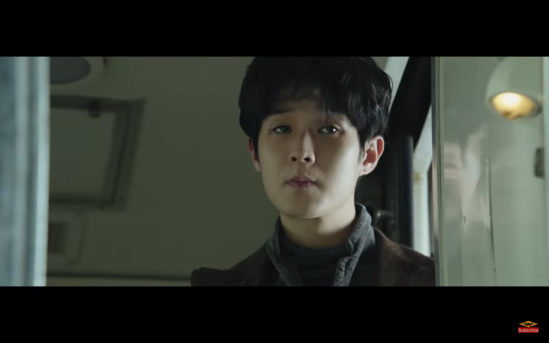
Starring as the titular character, Koo Ja-yoon as The Witch, is South Korean actress Kim Da-mi making her introductory debut that’s considerably demanding for the early 20’s actress to tackle with little-to-none prior experience in “Avengers” level action, but that’s where the subversion sets in when Kim undermines with a body frail tool performance, throwing pity bait to sucker in the bigger fish, and then opening her ranges to play on the opposite side of the spectrum in a slim, but killer, authoritative absolute suit. Ja-yoon’s American counterparts are equally as intriguing with Korean-Canadian actor, Choi Woo-shik (“Train to Busan”) leading the pack of vicious and powerful mercenaries. Choi’s monstrous 2019 lineup of award-winning (“Parasite”) and action-packed (“The Divine Fury“) films set “The Witch” up for inherent success in a now powerful and versatile recognized Korean film market. Upstaging has a strong aurora inside Korean filmmaking as every scene invokes an intense stare, an action of grandeur, and dialogue – every actor has lots and lots of dialogue – and so, bold performances stand out from the remaining cast list who includes Jo Min-soo (“The Cursed“) as the prideful genetics doctor, K-pop’s 2Eyes band member Daeun as the cut from the same cloth American-Korean super villain, Go Min-se as Ja-yoon’s bestie, and Park Hee-soon as the curious Mr. Choi with a vendetta against all who are enhanced.

“The Witch: Part 1 – Subversion” is over two hours of grand chess and superhuman stratagem culminating at a writ large do-or-die finale. Even with a 125 minute runtime, Park Hoon-jung has to inertly cram a whole lot of story into a seemingly abundance and bountiful timeframe. As the staggering conspicuous tension builds and characters evolve into an elucidated light, scenes start stepping into confounding placement that bedevil slightly the storyline. If you’re able to piecemeal together the puzzle and able to follow casually, Park is able to eventually reel captivation back from surmountable follies of structure with flashbacks and, in this case, a generous amount of exposition to get viewers on track once again. The prodigious action rivals the Marvel movies of today with complimenting cannonade and psychokinesis while ushering in a heroine tapped from same vein as “Hannah” or “Lucy” into the Korean moving pictures.

Warner Bros Pictures and Well Go USA Entertainment entertain us with GMO action in “The Witch: Part 1 – Subversion” on a single format Blu-ray home video release presented in a widescreen, 16:9 aspect ratio, on a region A, BD25 disc. What I really like about Well Go USA releases are the consistencies of arrangements. The brightly lit, natural landscapes are vivid, floaty, and serene as if all of life is an idyllic safe haven for visual leisure. The black, almost gun metal black, of the nighttime segments render a more sinister and unfavorable approach to arms and danger likely ahead. Some posterization occurs during these moments, but little-to-no ill effect to the scenes themselves. Some of the chunkiness to the visual effects stem from combative action of the genetically altered, fighting against the slower normals with their high caliber, fully-automatic rifles and, also, against themselves, but these battles are interspersed to not violate audiences corneas to beyond the max extent of the natural law. The Korean language DTS-HD Master Audio mix offers a wide range of varied leveled action, from the mundane ambience of rural and urban life to the precision of activity during the more upbeat commotion of fight sequences and gunplay in tighter quarters. Dialogue placement renders nicely and is prominent while the option English subtitles captures beautifully with well synced and timed captioning. Bonus features three trailers which are two international trailers and one U.S. trailer. If Part 2 is anything like “Subversion,” the game of deceit will continue to unfold surprises one after another and beguile with the mysteries surrounding “The Witch’s” genetically invasive backstory that’s inherently pervading throughout, leaving an agape of wonderment, intrigue, and thrills.

Currently on Sale! Buy “The Witch: Part 1 – Subversion” on Blu-ray!

EVIL’s a Face-Off to the Death! “Guns Akimbo” reviewed! (Saban Films / Screener)


Miles, a thirtysomething video game developer, remains stuck in an unfulfilling and lonely existence where being an internet troll gives him his only taste of dominance over those who normally succeed above him in all other life aspects. When he pokes and prods a popular and sadistic underground death match known as Schism, the virally trending sensation sweeping the internet nation comes knocking at his apartment door to officially install him into the next melee bout. With guns crudely surgically bolted to both hands, Miles, whose used to running from just about everything, now has to nut up against Schism’s most prolific killer, Nix, and save his kidnapped ex-girlfriend from the deviants behind the game.

Social commentary runs amok in this grisly balls to the wall, gunplay stimulating action-comedy, “Guns Akimbo,” from the New Zealander, “Deathgasm” writer-director Jason Lei Howden. Trading in doom metal horror for a crass bullet ruckus, Howden barrels down with an on fleek supercharged story like a runaway freight train or a 6,000 round per minute minigun, shredding through a high body count like in a high occupancy round of a first person shooter. Under the production wing of Occupant Entertainment and distributed by Saban Films, who released films such as “The Girl with All the Gifts” and Rob Zombie’s “31” and “3 From Hell”, “Guns Akimbo’s” edgy dystopian air gangling along nerdy humor scraps “Robocop” utilitarian veneer for a fresh coat of millennial trivialities, fleshing out, in a ream of firepower, relevant societal topics and facing their adversarial shades head on in a barrage of blood soaked bullets.

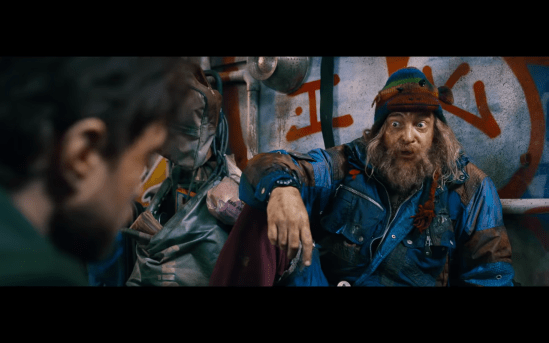
Spearheading “Guns Akimbo” is Daniel Radcliffe, who seemingly continues to distance himself from the world of wizardry of “Harry Potter” and focusing his current career on off-Hollywood and chic films that has gained Radcliffe a cult following alongside his cache of wizards and witches fandom. Feeling content stagnant, Miles lounges comfortably in the power of being a keyboard warrior and Radcliffe leads the non-exuberant charge until pushes comes to guns bolted to my and someone is trying to kill me-shove. Opposite Radcliffe is Samara Weaving as a brashly confident and hard-hitting character of familiar skin that’s similar to her Melanie Cross role in Joe Lynch’s “Mayhem.” Instead of being a mild-mannered woman infected to be a savage, floor-clearing combat artist, Weaving bares no dissuasion embodying another uncaged killer becoming the nitty-gritty, tattooed, and uncouth Nix, hard-nosed with violent tendencies stemmed by the fiery murder of her family. Together, Weaving and Radcliffe make engaging adversaries and friendlies who both end up on working on themselves while working with each other in a do-or-die game. Ned Dennehy plays the creator of Schism and overall bad guy Riktor. The Irish actor, who recently had a role in Nicholas Cage’s “Mandy,” finds himself just as tatted up as Nix, waving a nihilistic-revolutionist banner like its something to be proud of, but despite Dennehy’s best efforts in alleviating his cynical nature with a few sarcastic quips, Riktor comes off as bland and unfulfilled as a story’s aortic villain; instead, I found myself more curious about his fascinating short-lived henchmen played by Mark Rowley as a Zangief Street Fighter doppelganger, Racheal Ofori shelling out with double barrels, and Set Sjöstrand as a gimp mask wearing Fuckface. The international cast rounds out with Natasha Liu Bordizzo (“Hotel Mumbai”), a once in a lifetime hilarious homeless man act by funny man Rhys Darby, Grant Bowler, and Edwin Wright (“Turbo Kid”).

“Guns Akimbo” could have been pulled straight from the crimson flashy illustrated pages of a popular graphic novel and, most definitely, would have worked as one too, soon to come for sure, but as a feature film is concerned, as fun as Howden drapers it with explosions, expletives, and executions, “Guns Akimbo” ultimately shakes at the knees with acute breakneck, 24-hour speed that clocks in at a 95 minute runtime. While that’s the standard runtime of choice for movies, average around 90 to 100 minutes, consequences from flying through backstories (Miles, Schism, Riktor, Nix) in a blink of an eye at the story’s expense to hastily push for gun blazing glory puts all the pressure on the viewer to keep up. The story’s non-linear moments also factor into being an onerous barrier for audiences which are shiplapped together egregiously just for the sake of going against the atypical plot structure design and interspersed with flash backs and wishful thinking near death pipe dreams all jam and crammed packed into the sardine can that is the very eye-candy combat of “Guns Akimbo.” Yet, enough time was mustered for symbolism where Miles finds himself ensnared in the sticky negativity that is the social media sludge, fueled by the sadistic voyeurs enjoying the show in a violence-porn tapestry. From troll to titan, Miles rises as the unlikely gladiator presence in Schism, pushing him toward being a viral sensation from which he can’t escape despite the lack of enthusiasm to anything related to Schism and his skyrocketing social media status. The whole showdown thrusts him into controlling his own life whether he likes it or not, a kick in the ass for a lack of a better phrase, to get him motivated.

Come February 28th, Saban Films’ “Gun Akimbo,” produced by Occupant Films’ Joe Neurauter, Felipe Marino, and New Zealand film producer Tom Hern, will go full blown trigger happy into select theaters, on demand, and on digital. Since this movie is yet to be officially released, is a screener, and doesn’t have a home video release just quite yet, there will be no audio and video critique portion of this review nor were there bonus material. There have been many great dual wielding action heros in our lifetime, including John Weston from “Equilibrium,” Selene from “Underworld,” and even that Counter-Strike terrorist avatar with the option to wield Dual Berettas. Now, we have Miles from “Guns Akimbo,” an immense ball of New Zealand vitality, un-tapered exploitation, and twofold in gun fun.

Pre-Order “Guns Akimbo” on Amazon Prime!

Death Fears No EVIL in Takashi Miike’s “First Love” reviewed! (Well Go USA / Blu-ray)


Orphaned boxer Leo grows up to be an up-and-coming star in the sport. After losing a match by TKO from a soft punch, Leo is diagnosed with an inoperable brain tumor that sends himself into despair. In another part of town, the established yakuza and the imported Chinese mafia boil toward an inevitable war over turf and drugs. When Kase, a junior enforcer, betrays his yakuza family, scheming with a crooked cop to steal drugs for profitable gain, the tide turns blood red as the yakuza naively blames the Chinese. Caught in the middle is a drug addicted prostitute named Monica, a slave to the yakuza for her father’s past mishaps, who is kept locked away in a small apartment overseen by a yakuza lackeys, romantic couple Yasu and Julie, that also use the apartment to control drug flow. When Kase plan to raid the apartment and steal the drugs goes array, Yasu winds up dead and Monica escapes, running into Leo who has nothing left to live for except to protect Monica. A distraught-induced psychotic Julie, the deadly yakuza, the Chinese Mafia, a double-crosser and his crooked cop partner, a delusional girl of the night, and one apathetic boxer clash in a single night’s ultraviolet web.

Extreme Japanese auteur Takashi Miike fastens a lively tongue-and-cheek and supremely savage crime thriller in his latest mad yakuza film, amiably entitled, “First Love,” also known “Hatsukoi.” “First Love” is anything but friendly and pleasant as the street of Tokyo run red with blood or else the 2019 released film wouldn’t be a Takashi Miike trademark special. Penned by Miike’s long time collaborator, Masa Nakamura, the filmmaker’s affection for horror eludes this title that hones more toward the unpleasantries of clan betrayals, snarky criminal shenanigans, and, of course, a flavor for mega violence that become a maelstrom angrily surrounding a demoralized boxer and the victimized forced-into-prostitution young woman he aims to selfishly protect while in his mental clout regarding his mortality. Produced by OLM, Inc production company headquartered in Tokyo takes a step away from manga with “First Love,” a step that has been evolved over the last few years, but may have contributed to some of the illustrated content that seemingly has infiltrated into the third act with an initial explosiveness in the beginning portions of a car chase scene.

Cast as Leo Katsuragi, the boxer, is Masataka Kubota, a familiar face from another Miike film, “13 Assassins,” and most recently from the heavily Japanese cultured specter feature, ‘Tokyo Ghoul.” Leo’s lighter weight physique and fresh face has Masataka look the part of a promising fighter whose positioned for fame early into the story, but that framework comes to a screeching halt when he’s destined for a tumorous death. When Leo is coupled with Monica, a drug addicted forced in prostitution plagued with crippling hallucinations side effects, the repressed Leo finds himself sheltering someone with more burden on her shoulders than upon his own. Monica’s portrayed by Sakurako Konishi in what’s essentially her first major role and being paired as a scared, lonely, and crazy character coupled with a stoic vet in Masataka makes for an easy dynamic. Shôta Sometani’s chin deep in trouble Kase goes without saying that Sometani’s unfathomable range and charisma adds an aloof comic relief along with Kase’s dishonest detective slipped covertly into by “Ichi the Killer” himself, Nao Ohmori and pursued by a retribution spirited girlfriend, Julie, of her slain yakuza boyfriend; a role spearheaded with such energy and gusto from Rebecca Eri Rabone, credited solely as Becky, who has a slight Cynthia Rothrock vibe. “First Love” is no slave to boorish performances from Takahiro Miura (“Shin Godzilla”), Cheng-Kuo Yen, Sansei Shiomi, and Mami Fujioka.

“First Love” emerges as a smart and fun battle royal of decimation in the anarchist criterion. One would think a prolific director such as Takashi Miike would wear out his welcome with tired and stale filmic bread, crumbling with every soggy rinse and repeat. That’s not the case with “First Love.” Why is it entitled “First Love” anyway, you ask? The question’s open for viewer interpretation, much like most of Miike’s suggestive elegant style, and presents an illuminating unexplored journey in itself. A ventured guess would be that Leo and Monica have never experienced the feeling previously in either content or a labored life with Leo being an impassive athlete and Monica an escort since high school. The corollary of bumping into each other by chance results in the unorthodox dismantling of two rival criminal organizations, baring then an age-old theme of love conquers all and renders the mystics of destiny fueled from from within all the way easter egging sexual taboos inside his brazen, sometimes insane, transgression storyline. Either way, Takashi Miike helms a tremendous brutal-comedy that brands him as being the Martin Scorsese of Japanese filmmaking.

Blades, guns, and a fresh score on Rotten Tomatoes, “First Love” has mainstream aptitude with a carnage driven crime syndicate finesse and is now available on a two-disc, dual format Blu-ray and DVD release from Well Go USA Entertainment. Encased in a slipcover, the not rated feature is presented in full HD, 1080p, and in a widescreen, 16:9 aspect ratio. This review will focus it’s review on the Blu-ray quality. Much of Miike’s style is neo-noir basking in very grounded color palette that’s occasionally adorned by the neon brights of Tokyo. Often does Miike composite in his work and “First Love” is no exception with a brief manga nearly a rallying ending; the illustration is super sharp, a visual pop of blue and white, and, obviously, clean. Ultra-fine details add to a prizing fatalism and even the tasteful gore, on a granular level, passes the screen test. Some scenes appear sleeker than others inside a dark scope coded with darker shades of green and yellow, but the overall result smothers any kind of inconsistency. The Japanese and Chinese 5.1 DTS-HD Master Audio tracks savor every last audiophile morsel. The clear dialogue renders nicely, big effects and action sequences offer a wide range, and the depth covers more than enough ground surrounded by hustle and bustle of the urban element. Kôji Endô’s enchantingly lethal score will immerse you right into the mix and provide a slick culture twist upon classical composition. The English subtitles are well paced and mostly accurate as I did catch one grammatical mistake. Incased inside a slight embossed titled cardboard slipcover, the release also offers a teaser and a theatrical run trailer. Cynical on the surface and romantically submersible to the core, “First Love” is a Takashi Miike instant favorite of amusing antagonism and shorn almost completely of genial garments.

Own Takashi Miike’s “First Love” on Blu-ray+DVD combo set!