Let EVIL Free You! “Jakob’s Wife” reviewed! (Acorn Media International / Blu-ray)


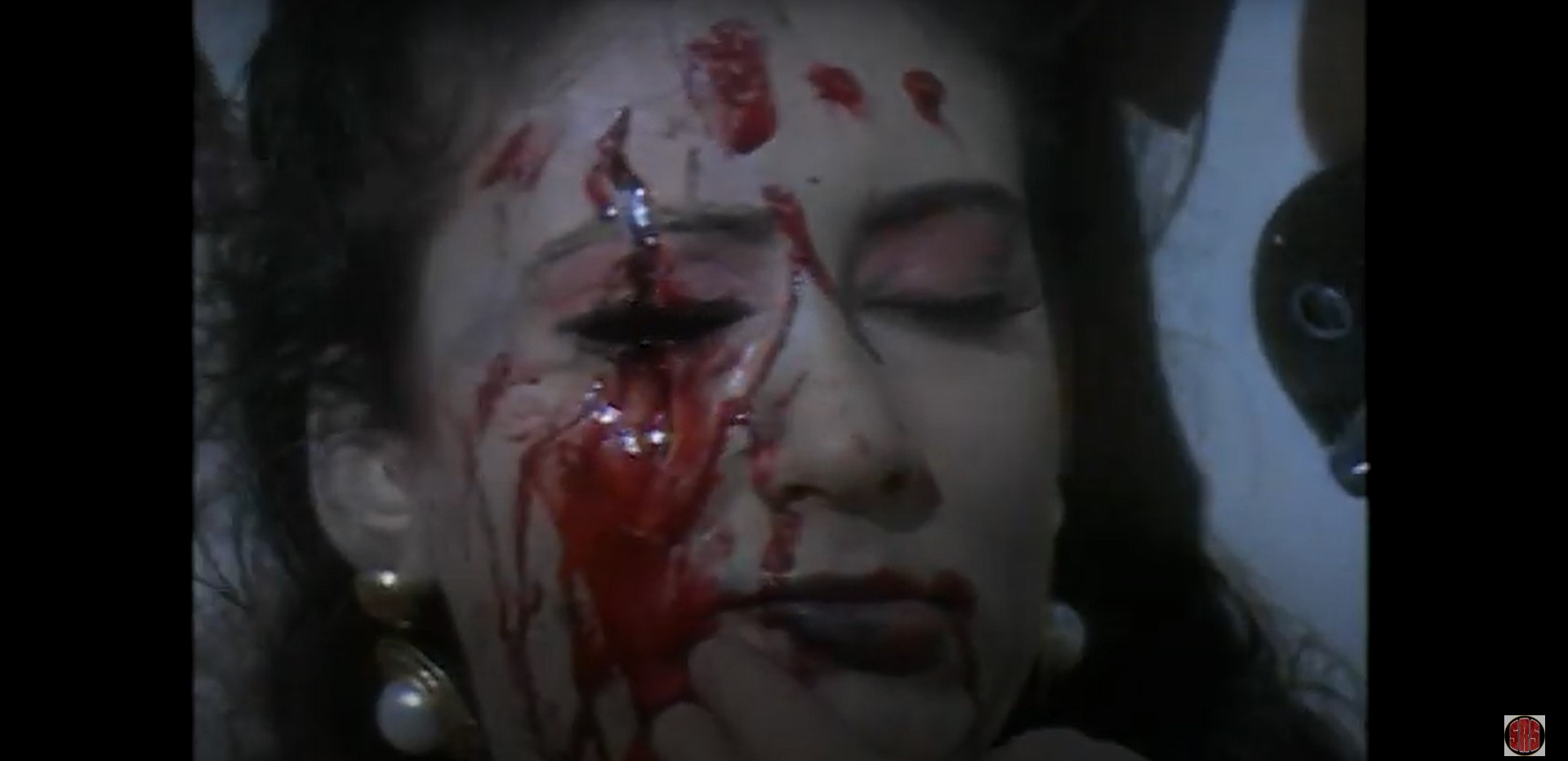
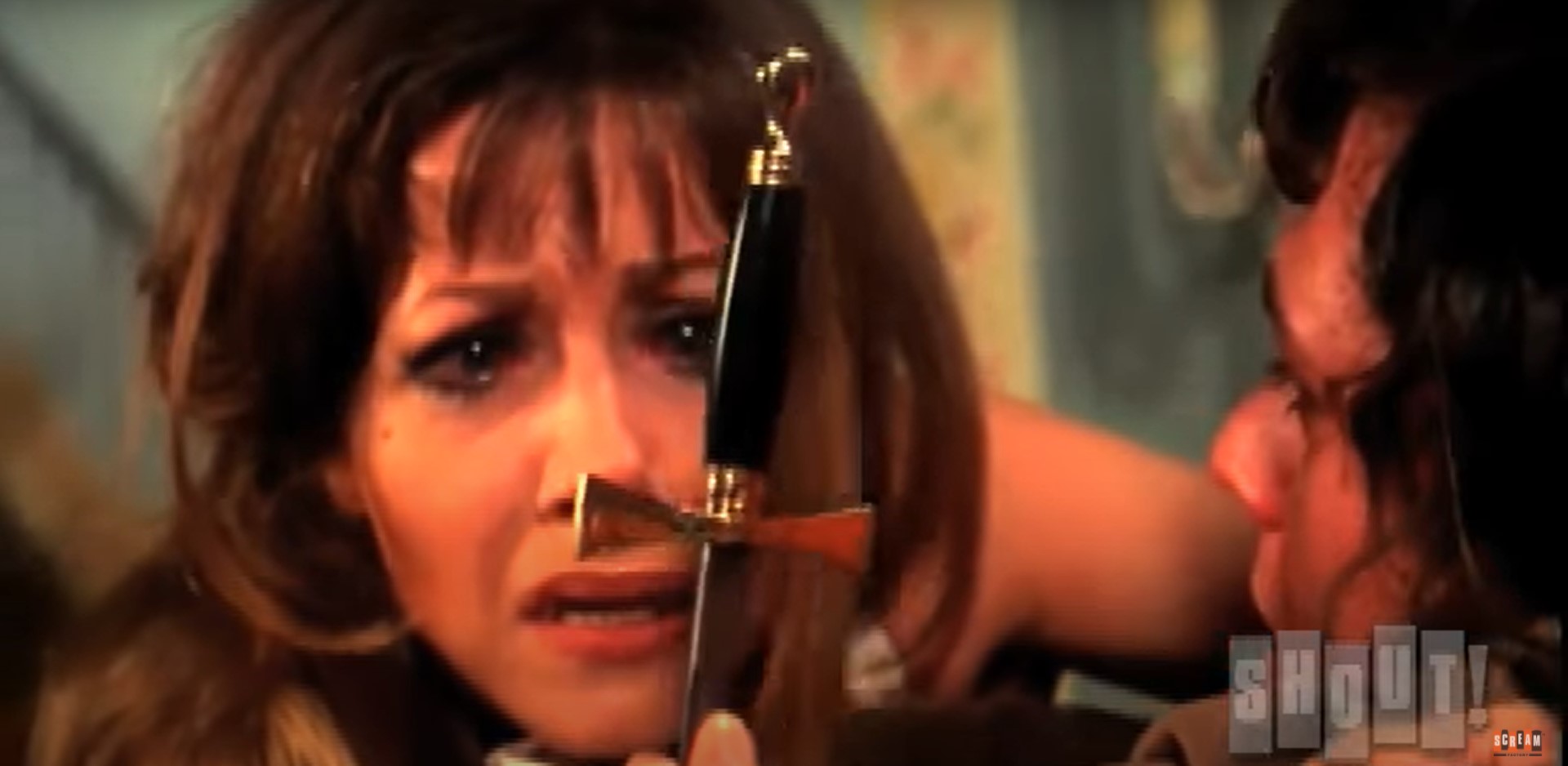
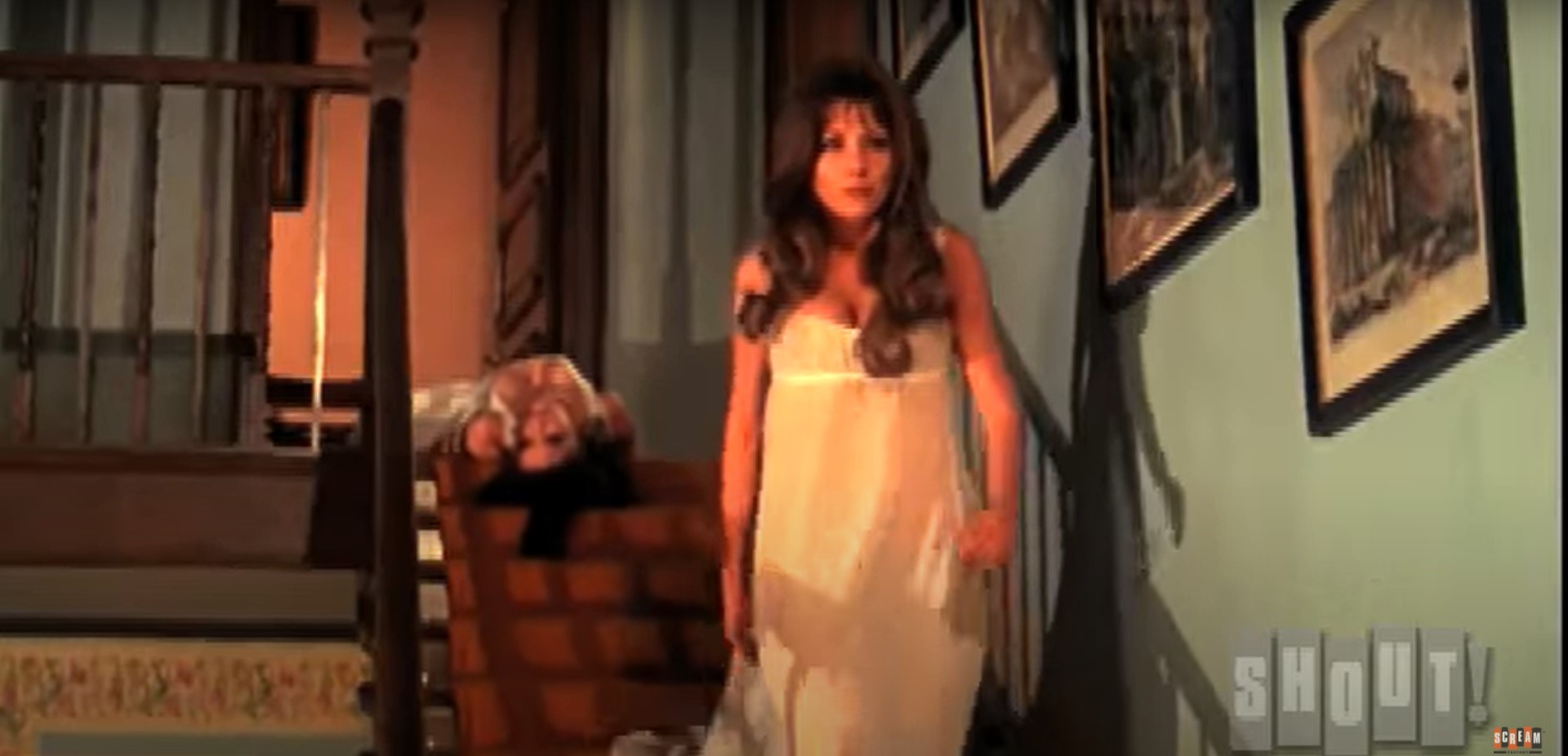
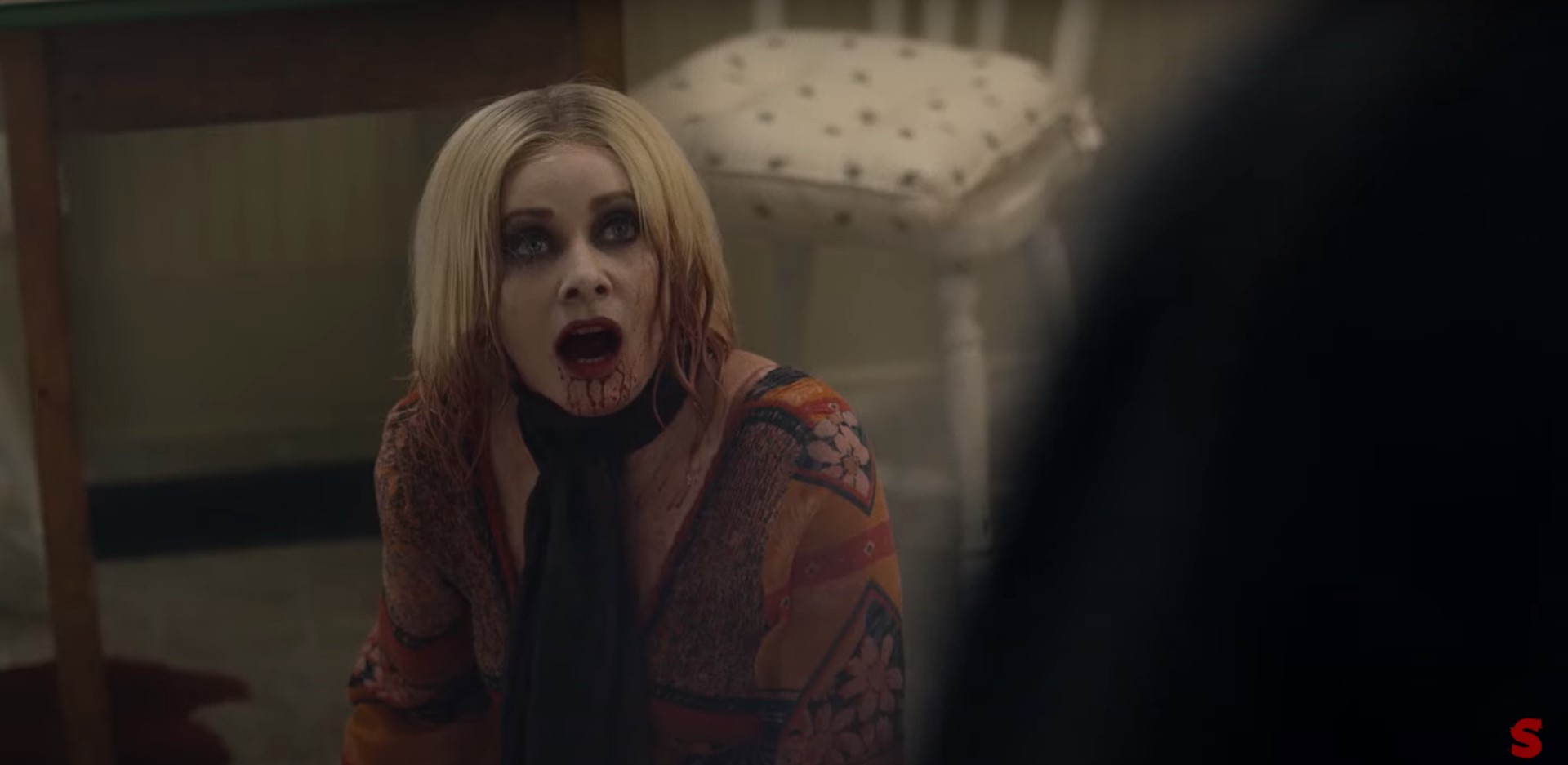
Anne is a minister’s wife living in a dying small town where the only thing left for the residents is their faith.  Once inspired to travel and do something meaningful with her life, Anne has found that the last 30 years of marriage to Jakob has robbed her of her self-empowerment, diminishing her as nothing more as than just Jakob’s wife.  When the opportunity to impress an old fling during a business trip turns into a nightmare with an attack by a shrouded figure in a rundown, vacant mill, the disorienting days after having provided Anne with a sense of expressive freedom, a chance to be bold, and to feel more alive than she has felt in years.  Her new lease on life comes with a ghastly cost, a severe hunger for blood.  With the help of Jakob, they realize the dark forces of a vampire has infected Anne and their road back to normal life, a life where Anne is dull and drab, will the paved in blood. 

Horror is such a versatile and malleable medium to convey allegorical messages, drawing audiences into the writer’s or director’s world of the fantastic and the horrific while laying down a subfloor of real world truth most passionate to them in a social, religious, or political context.  To point out a few examples (most of us already know), George Romero was renowned for his multiple social commentaries throughout his “Living Dead” series and a slew of vampire films construct the bloodsuckers as metaphors for an addict going through the ugly turmoil of addiction.  “Jakob’s Wife” is a different kind of vampiric allegory film that bites into feminism values.  The “Girl on the Third Floor” writer and director Travis Stevens follows up his introductory haunted house film with an inverted Nosferatu-esque dark comedy co-written alongside “The Special” screenwriter, Mark Steensland, and the “Castle Freak” remake’s Kathy Charles.  The Canton, Mississippi location evokes the dried up, small Southern town aimed to build a depression enclosure around the titular character.  Barbara Crampton’s Alliance Media Partners, whose spearheaded creative and imaginative films such as Justin Benson and Aaron Moorhead’s Sci-Fi cult looper, “The Endless,” and the Romola Garai demonizing guilt film, “Amulet,” presents “Jakob’s Wife” in association with executive producer Rick Moore’s Eyevox Entertainment (“Purgatory Road”) at one of the banner’s production studio locations in Canton, Mississippi.

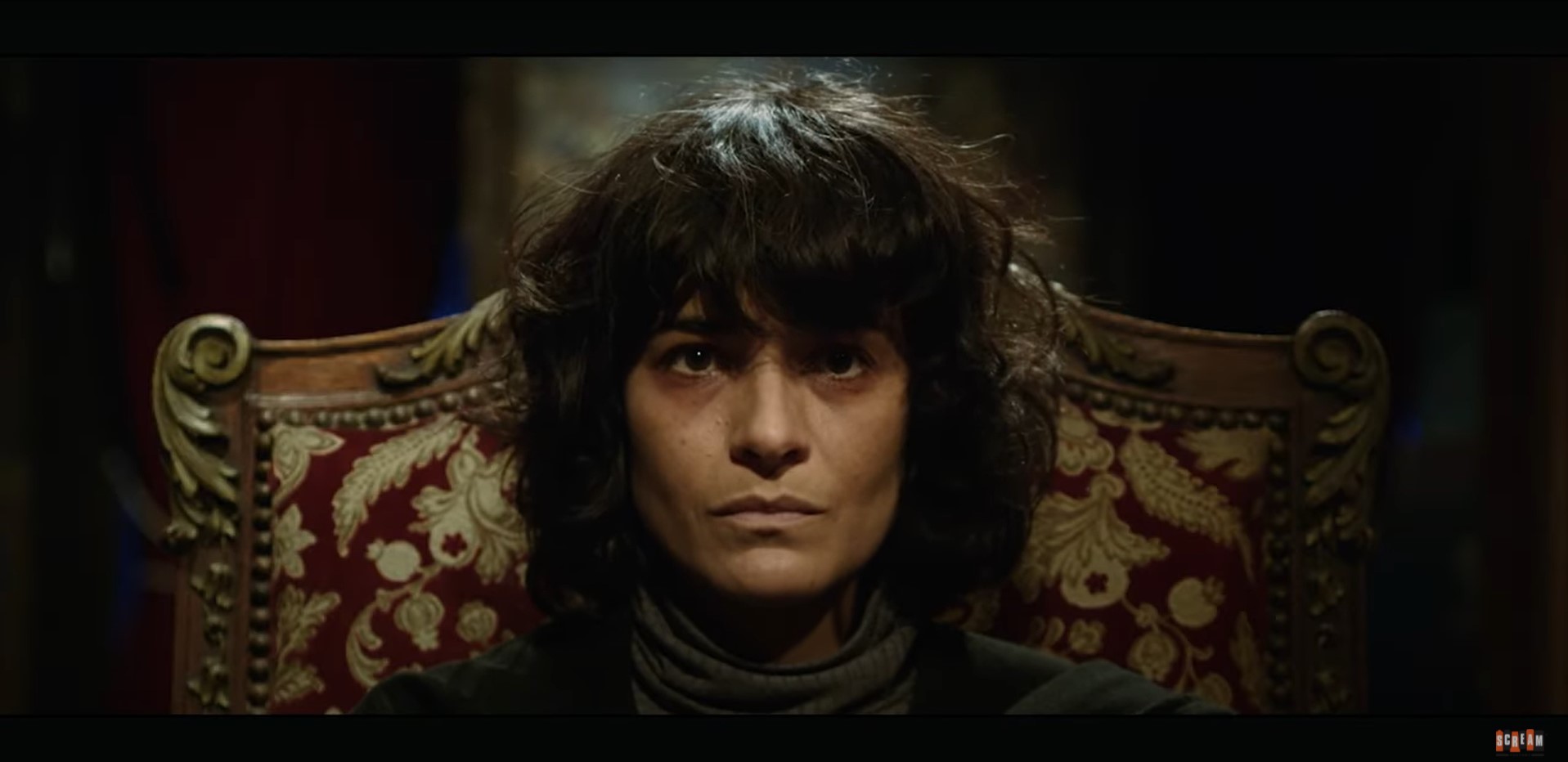
In concurrence as a producer of “Jakob’s Wife,” scream queen of horror legend, Barbara Crampton (“Re-Animator,” “From Beyond,” and most recently, “Sacrifice”), steps into the torn role of the titular character.  In Stevens’ direction, as well as Crampton’s portrayal, Anne is so diminutively overlooked in the first act, you’ll hardly notice her even though Anne is practically in every scene.  Between Jakob’s interruptions, meek output, and overall quiet behavior, Crampton’s able to exact the very essence of the idiomatic phrase the calm before the storm.  Also, I must mention, just like I’m sure others have already pointed out, the early 60s Barbara Crampton looks smokin’.  She must have been bitten by an actual vampire in order to seemingly de-age right before our eyes.   Larry Fessenden, who does age accordingly but also very handsomely in his genre characters, is the God-fearing minister playing opposite Crampton.  The “Habit” and “Jug Face” actor has always been quite the character actor and as husband Jakob, that beneficial streak continues as an old ways man of God with an innately built-in chauvinistic ritual of keeping everything the same day in and day out.  Jakob’s absentminded blinders suppresses Anne into a depressive submissive state until she comes across The Master, the sorely underutilized and shamefully absent from more screen time chieftain vampire played superbly by Bonnie Aarons in an unexpected female version of Nosferatu.  Aarons gives her best Max Schreck performance while commanding a distinctive mentorship that’s unusual for the vampire race; The Master is greatly highlighted in the most subtle of ways as being a repressed liberator and Aarons understood that compulsion to educate, revitalize, and blossom others by offering a new kind of death, the burgeoning power and desires of a vampire, from their previous one, a rather dull life stuck in a no-win circumstance.  “Jakob’s Wife” rounds out the cast with Jay DeVon Johnson, Phillip “CM Punk” Brooks (“Girl on the Third Floor”), Robert Rusler (“A Nightmare on Elm Street 2:  Freddy’s Revenge”), Angelie Simone, Mark Kelly (“Dead & Breakfast”), Sarah Lind (“The Exorcism of Molly Hartley”), Omar Salazar, and Nyisha Bell.

“Jakob’s Wife” is a treasure trove of feminism and lesbianism undertones that stands on higher ground without pulverizing masculism to a pulp.  There’s seemingly little-to-no ill will against the minister Jakob Fredder previous inattentive and subservient expectations of his wife Anne.  Anne even becomes conflicted by her newfound self, a rebirth of life that sheds the shackles of monotony and, as it were, it’s overstepping masculinity, and she questions the power, she questions her choices, and she maintains the unity of marriage despite a little taste of tantalizing freedom from it all.  The Master becomes the allegorical test of faithfulness to another in a bored housewife scenario and I’m not talking about Anne’s old high school fling Tow Low, played by Robert Rusler.  I’m speaking of the lesbian undertones involving The Master, a female vampire who stood in Anne’s shoes and was turned, in more ways than one, toward a new path.   The Master sparks a long-lost fire in what is now only a shell of an unhappy woman and Travis’ scenes of Anne touching herself, mimicking The Master’s moves, plays into theme of fantasizing about that other woman and what secret they share, being perhaps symbolically the intimate nature of the attack that puts Anne into The Master’s craving sites.  The innuendo is rich and robust and coupled with fire hose sprays and gallons upon gallons of an unquantifiable amount of blood and gratuitous violence, “Jakob’s Wife” is the vital vampire film of 2021. 

Darker powers answered the call of Anne’s internalized prayers. I don’t even think Jakob’s God even picked up the receiver. In any case, pick up your copy of the RLJE Films and Shudder exclusive, “Jakob’s Wife,” on a full high-definition Blu-ray releasing next year, January 17th, 2022, courtesy of Acorn Media International. The PAL encoded, region 2 BD25 is presented in a widescreen 1.85:1 aspect ratio. Compression issues have never really been a problem for the Acorn Media releases that detail and texture greatly under “Jakob’s Wife’s” austere color palette that favors more of a nature fixture than a stylish one. Darker color tones, such as the blood, are viscosity rich looking and, perhaps, the most color the film plays to its strength. The English language DTS-HD 5.1 Master Audio track bares no complaints either in the distinctive and effective channels that isolate each output neatly, cleanly, and blemish free. Prominent is the discernible dialogue, that in due course becomes more pivotal to the story, while giving way to an original score from Tara Bush. Special features include the making of the film with clip interviews with the film’s stars – Barbara Crampton, Larry Fessenden, and Bonnie Aarons – and deleted scenes that provide more insight and background on the finished cut’s bit characters. The Blu-ray is rated UK 15 for strong bloody violence, sex, and language (there’s also brief nudity for all you puritans in the U.S.). With the duo of Crampton and Fessenden in the middle of matrimony-macabre, “Jakob’s Wife” is a no-brainer success.

Dinner Parties and the Special Guest is EVIL. “Climate of the Hunter” reviewed! (Dark Star Pictures / Blu-ray)

MIckey Reece’s “Climate of the Hunter” Now Available on Amazon.com

Sisters Alma and Elizabeth meetup at their childhood cabin for a quick getaway.  Their individual neurosis induces the incessant minor league friction between them but never causing any real strain until an old friend, returning from abroad, arrives at his neighboring cabin alone.  With his wife suddenly committed to a mental institute, the well cultured and practically single Wesley finds himself in the company of the desirous Alma and Elizabeth every night for dinner as they vie for his attention and affection.  When Alma crosses paths with Wesley’s strange and curious vibes, they compound upon her baseline suspicion of Wesley possibly being a vampire.  Elizabeth finds herself the victor of Wesley’s adoring warmth, leaving Alma to ramp up her scrutiny into their longtime acquaintance before her sister falls victim to his deadly charm.

Arthouse meets grindhouse in this Mickey Reece written and directed mystery thriller “Climate of the Hunter.”  Co-written alongside frequent collaborating screenwriter John Selvidge, the 2019 take on subtle vampiric ambiguity is punctured, tapped, and drained from the same blood rich veins as Robert Bierman’s “Vampire’s Kiss,” starring Nicholas Cage, and George Romero’s “Martin,” but instead of a protagonist believing in the transference into a bloodsucking creature of the night, “Climate of the Hunter” steps back furthering by approaching with a more elusive and Lynchian-like 3rd party perspective as the story focuses prominently the sisters’ thoughts and actions while Wesley does what Wesley does without self-doubt or obvious distinction.  Shot during the winter months of the diffusely populated woodland area of Welling, Oklahoma, “Climate of the Hunter” is the sole released presentation of Mikey Bill Films and the more seasoned VisionChaos Productions (“The Field Guide to Evil”) under executive producers Uwe R. Feuersenger and Sasha Drews in collaboration with production companies of Adam Hendricks and Greg Gilreath’s Divide/Conquer and Jacob Snovel’s Perm Machine Productions.

Diving into his best performance as an enigmatic rake with unpronounced intentions is “Minari” actor Ben Hall, who recently costarred as a crises of faith priest in Mickey Reece’s latest release, the comedy-horror drama, “Agnes.”   As the sophisticated wordsmith neighbor, Wesley commands every ounce of oxygen all in thanks to Hall’s elegant pacing of Wesley’s uttered mannerisms and inflections.  Hall is joined by fellow “Agnes” costar Mary Buss as the pining Elizabeth.  Elizabeth practically resents Alma’s seemingly historical persistent hold over Wesley’s affections and Buss bitterness, whether because of Wesley or because of Alma’s uncharacteristic behavior as of late, oozes into the stagnant folds of their relationship.  If you haven’t figured it out by now, “Climate of the Hunter” has an Oklahoma-centric and Mickey Reece’s staple go-to cast, which brings us to the other sister Alma played by Ginger Gilmartin who fits into that aforementioned niche category.  Alma is running from something that goes essentially unsaid that leads her to hide out in the family cabin and Gilmartin, as best as she can, shepherd’s that motivation without the better part of context.  Alma’s also dresses like a crazy cat lady, except she owns a dog, and so reading Alma’s state can be taxing to nail down in an arthouse film where nailing down anything in arthouse cinema is inherently taxing in itself.  The small cast rounds out intermittently with smaller roles that build upon Wesley’s vague nature beginning with a local friend to the sisters named BJ Beavers (producer Jacob Ryan Snovel).  Witnessing Wesley’s strange behavior but oblivious from his own strangeness, BJ becomes a confidant and a collaborator with Alma in revealing Wesley as a vampire.  Sheridan McMichael grows resentful toward his father as Wesley’s spiteful son Percy, Danielle Evon Ploeger seeks incompliancy from her mother Alma as her daughter Rose, and, in the more curious role, is Laurie Cummings (“It Lives Inside,” “Army of Frankensteins”) as Wesley mentally incapacitated wife who somehow manages to lose her wheelchair as it drops from the sky.  You’ll know what I’m talking about when you see it!

Having watched “Agnes” before diving into “Climate of the Hunter,” I mentally prepared myself for a breathy, long-winded, talking head film.   That readied mindset 100% gave me more clarity into Mickey Reece’s shadow narrative.  “Climate of the Hunter” is an uncharacteristic slow burn for the idiosyncratic grindhouse veneer.  With a 4:3 aspect ratio and a color reduction into a warm hue palette that glows, Reece insists on a design that usually offers loads of cheap thrills in action, sleaze, and gore, but the director’s story is toned down, subtle, and very much ear candy as opposed to a rush of visual adrenaline.  Instead, lucrative character building fizzes with tension as elements of the past and present unravel who’s who and what’s what before the climatic finale that suggests nothing was what it seemed to be.  Though prepped for profound exposition, the dialogue can still be boggling with a composition of Wesley’s personal anecdotes and philosophical quips and quotes.  As stated, Ben Hall is amazingly poised in this film, the unflinching star, rolling easily with Wesley’s gift of gab, persuasive magnetism, and maintaining an oblivious eye to an undercurrent of potential classical madness in Alma.  Between her recreational use of drugs and an ugly divorce, Alma has retreated into herself as well as her isolating cabin and when the spotlight isn’t on her, is her perception of Wesley really fantastical or is there actually something broken within her.  Reece explores a related theme of loneliness around the table with each principle character and how differently being lonely is digested and secreted through the pores of desperation.  Once aspect of Reece’s film that will puzzle viewers, and did puzzle me, is the narrated introduction of the food whenever there is a tabled conversation.  Since there already Portuguese titled chapters segmenting the story, a bit of a harp back to Wesley’s travels abroad, announcing what the character are dinning on seemed virtually unnecessary other than the idea that food brings people together in which it then fits the narrative of loneliness. 

“Climate of the Hunter” is quintessential Mickey Reece melodrama tinged with droplets of horror and subtle dark comedy.  Dark Star Pictures releases the film onto region free, dual layer Blu-ray home video in full 1080p High Definition.  Reece and director of photography Samuel Calvin aim for a vintage but not superannuated look for “Climate of the Hunter,” in which follows suit with the story set circa 1970s, with a 4:3 image on a pillarbox 16X9 display, relying also heavily on a softer lens to produce a dreamlike and luminescent effect but not overdoing it.    The release comes with two audio options – an English language 5.1 DTS-HD Master Audio and, if one wants to fully immerse themselves in the era, a stereo 2.0.  Dialogue is crisp and clean as it is refined as expected. Levels are balanced, range and depth are acceptable, but with this sort of wordy production, switching between the 5.1 and the 2.0 only discern subtle differences. Optional English SDH subtitles are available. The not rated, 82-minute-long film has special features that include another full-length Mickey Reece entitled “Strike, Dear Mistress, and Cure His Heart” as well as a short film “Belle Ile,” deleted scenes, production designer Kaitlyn Shelby’s preparations of the food presented in the film Recipes from the Kitchen of Alma Summers, and production stills and behind-the-scenes gallery. “Climate of the Hunter” deserves at least a once over and, in my opinion, a second viewing to become fully submersed in Mickey Reece’s dialogue rich and nebulous style.

MIckey Reece’s “Climate of the Hunter” Now Available on Amazon.com

Tune Into EVIL’s Overnight Radio Programming! “Ten Minutes to Midnight” reviewed! (MVD Visual / Blu-ray)


Veteran night shift disc jockey, Amy Marlowe, has hosted her own renowned punk rock show for the last 30 years.  On the night of a major hurricane rolling through town, the broadcast must go on as radio never sleeps, but Amy is bitten on the neck by flying bat prior to arriving into the station.  If things couldn’t get any worse, she’s trapped inside the station with the sleazy station executive who surprisingly introduces the disc jockey’s much younger and beautiful replacement.  As Amy deals with the sudden aftershock of forced retirement, she slowly descends into a topsy-turvy reality full of unannounced secrets, movements through her own past and present, and the unusually strange staff transforming into monsters inside the station walls.  To top it off, Amy craves blood.  Between the possibilities of unexpected grief and anger, rabies, or becoming something far more evil, Amy Marlowe, either way, is losing her grip on the real world.

The amount of thought and expression on blunt force change, numb appreciation, and profound existentialism worked into the allegorical dark vampire comedy, “10 Minutes to Midnight,” never steals from the narrative’s basic element, a breed of classically fed undead horror.  Writer-director, Erik Bloomquist, helms his sophomore feature film directorial that is also the second film written collaboratively with brother, Carson Bloomquist, following their 2019 debut thriller, “Long Lost.”  The Connecticut based siblings shoot “!0 Minutes to Midnight” at the ABC affiliated WILI radio station in Willimantic over the course of seven week nights, self-producing under the Bloomquist Mainframe Pictures banner alongside the third “Long Lost” screenwriter-turned producer, Adam Weppler, who also has a major role in the film. 

A soulful, applause-all-around performance by headlining scream queen Caroline Williams who makes her return to the DJ booth 35-years later after going face-to-face with Leatherface’s chainsaw in “Texas Chainsaw Massacre 2” and, by God, Williams still has the cold-cocking charisma of her 1986 self.  Pinned to be discarded by station exec Robert (William Youmans), Amy Marlow loses control of her on-air persona for the first time in 30-years of broadcast radio.  Williams is on target with Marlow’s salacious-pointing meltdown rant with a viperous, quick-witted tongue spurred by the very news of her canning that started the hamster wheeling rolling, putting the pieces together of how much backstabbing, ungratefulness, and all-for-nothing hard work (and her younger days’ sexual servitude) becomes a deafening cacophony of noise before her Ten Minutes Before Midnight broadcast segment airtime.  Watching Williams work never gets dull from the one moment she’s rightfully screaming and ripping someone a new one to being overwhelmingly fractured by the venom that courses through her veins in a transformative and stunning performance.  Accompanying Marlow on her sudden career nosedive are a trio of dividing personalities that pull a different versions of the radio star.  Marlow’s seemingly only workplace friend and confidant, Aaron (Adam Weppler), has been a fan of hers ever since he was little, even providing a touching anecdote about him listening to her broadcast when he was a little boy, and there’s something between them, but teeters between admiration and desire that doesn’t flesh out because, again, it’s another problematic thematical item being circled around.  The other two characters rile up Marlow’s inner angst with their threatening postures or their maddening babble.  Nicole Kang (“Swallow”) and the late Nicholas Tucci (“You’re Next”), in their roles of hotshot millennial newcomer, Sienna, and the quirky and rambling security guard, Ernie, achieve just those respective levels of kicking someone when they’re already down with a flurry of annoyance.  Kang and Tucci deliver concentrated performances.  The acting is so entrenched into their characters, as well as with Weppler and Youmans’,” that when Marlow enters a status interchangeable, role-reversal, and nightmarish last stage of her existence coming to a conclusion, “Ten Minutes to Midnight” reups another thought-provoking scenario; one that has you frantically rewiring the tightly woven profiles your brain has determined about the characters to keep up with Bloomquist who is clearly three steps ahead.

Martin Scorsese once compared certain films to theme parks, noting their cinematic worth only in their high octane action entertainment and special effects that draw audiences in like moths to a flame and never letting the actors do the meaningful work themselves.  “Ten Minutes to Midnight” is a blue-chip, character driven vampire story rare to these parks.  Bloomquist’s themes on ageism, sexism, regret, change, grief, millennials, and more, snake through Marlow’s multifaceted transitional experience in a stylishly cynical fantasy.  Much of Marlowe’s perception isn’t tenaciously reliant on the consequences of the vampire bat bite to her neck.  Reoccurring as an example of perception throughout the film, whenever the camera hovers over a clock displaying 11:50 P.M., is the fading disc jockey finding herself stuck in a timeless rut, eternally clinging to her show in a disparate attempt to be relevant despite the inevitability of change as often noted by each idiosyncratic character – Aaron changing up her normal broadcast set start to call-ins, Robert axing her for younger talent, Ernie incessantly pointing out her symptomatic changes after the bite, and Sienna embodying the very epitome of change.  Marlow’s mind melds with her physical transformation as she goes through the seven stages of grief to at which one point she talks to who might be her younger self over the phone.  Marlow, initially hesitant, does not guide change, but to rather embrace it in a moment of accepting her own checkered past.  However, the dialogue I found to be most poignant was during the retirement party with sunken-eyed celebrators who just randomly show up for the event and Marlow turns to Aaron and comments on not exactly knowing who these people are.  There’s depth and soul in that comment for someone going through the process of retirement who sees unacquainted, new faces and perceiving them with only a tinge of familiarity and a lot of isolating loneliness.

If looking for wildly crafted and superbly acted vampire celluloid, I highly recommend Erik Bloomquist’s “Ten Minutes to Midnight” to sate your thirst now on Blu-ray home video from MVD Visual in associations with Jinga Films and Danse Macabre. The region free Hi-Def 1080p Blu-ray is presented in a widescreen 1.78:1 on a BD25 and has a runtime of 73 minutes. Shot in a shadows of hard lighting, the picture quality is relatively sharp in the lack of natural light, but that sharpness scatters like roaches when a spectrum wave of neon hues or a bathe of vivid tint casts a psychotomimetic inducing trip through Thomas Nguyen’s tightly quartered medium and close up angles. The overall coloring on the location and characters falls into a matte flatness that works to the lightings advantage when using rich exterior color sources. The atmospherics are Amsterdam sultry under the heat of a carnal fluorescent red and Nguyen’s lofty present steady cam endues a nostalgic flame of eerie dreamscapes similar to early John Carpenter, such as in “The Fog” or “Prince of Darkness.” The English language audio tracks come with two options, a 5.1 surround sound and a stereo 2.0. “Ten Minutes to Midnight” is an audio-visual probe into the mind and senses and so the obvious choice here is the 5.1 surround sound; however, the lossy dialogue track becomes quickly overwhelmed by the behemoth sound design and soundtrack, the latter being original music by Gyom Amphoux. Musically, not my cup of tea, but will find an audience and fits into the narrative perfectly. Bonus materials include a behind the scenes entitled “Take One,” audio commentaries by director Erik and Carson Bloomquist as well as star Caroline Williams, multiple featurettes, a Grimmfest interview with the Bloomquists, Williams, WIlliam Youmans, and Thomas Nguyen, Grimmoire Academy and Popcorn Frights intros, and a festival teaser trailer. “Ten Minutes to Midnight” is a dusk till dawn decimator of sanity, a wickedly fun vampire oddity, and has an unforgettable, batty performance from Caroline Williams.

Recommended!  “Ten Minutes to Midnight” now on Blu-ray!

A Disciple of EVIL! “The Brides of Dracula” reviewed! (Scream Factory / Blu-ray)

Marianne Danielle travels alone on the mucky and fog-riddled roads of Transylvania, traversing from France to be a student-teacher at a prestigious dance school for girls. When her coachmen departs without warning, leaving her stranded at a village inn, the Baroness Meister extends an invitation for Marianne to stay with her an the illustrious manor house, but the sign of compassionate hospitality turns into a near deadly encounter as Marianne discovers the Baroness’ son, the Baron Meister, chained against his will in an isolated room. As Marianne is tricked into removing his shackle, she unwittingly releases a conniving vampire into the surrounding village who prays on young women, but, nearby, Dr. Van Helsing has been summoned the Transylvania countryside by the local priest to hunt down the disciples of Dracula, the most powerful vampire Van Helsing had fought and prevailed. In order for the vampire plague to not spread like a virus, Van Helsing will stop at nothing from slaying the Baron Meister to stop the metastasizing of Dracula’s curse against mankind.

Let’s take a step back into time, 1960 to be exact, when Hammer Horror brought a flair for the dramatic to iconic monsters, lush with not only vibrant color schemes, but also in elaborate production designs that scaled the imagination while evoking fear of Satan’s most prolific profaner, the vampire, in Terence Fisher’s “The Brides of Dracula.” The sequel to “Horror of Dracula,” starring Christopher Lee as the titular character, staked vitality two years after the first film’s success and sought to return Peter Cushing back into the good doctor’s shoes once again to battle evil. Shot on lot at Bray Studios and with the grand house exteriors of the nearby Oak Court, “The Brides of Dracula” had greatly masqueraded the elegance and sophistication of the gothic design, bringing settings to life with monumental attention to detail. Before the shooting draft was ready, the script saw numerous rewrites which caused the narrative to fall into numerous hands and, so, the script is built on an overlapping composition of writers, such as Jimmy Sangster (“Horror of Dracula”), Peter Bryan (“The Plague of the Zombies”), Anthony Hinds (“The Curse of the Werewolf”), and Edward Percy. Hinds financed the film under Hammer Film Productions in association with Universal International.

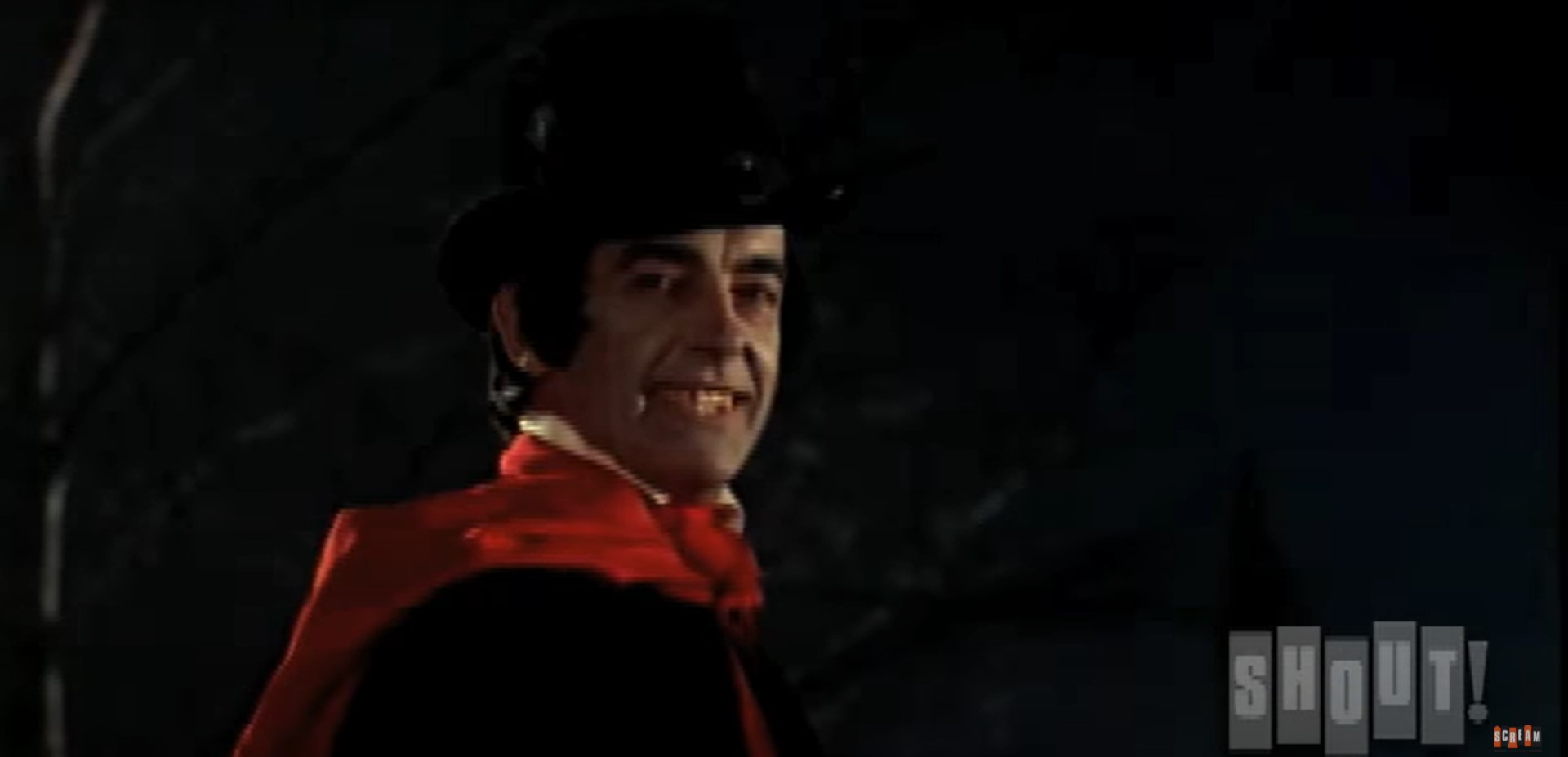
In stark contrast to Christopher Lee’s dark veneer that ennobled Dracula’s arcane and evil presence, David Peel brought a different kind of vampire stemmed off of Lee’s main bole as a disciple of the Prince of Darkness turned because of the Baron Meister’s uninhibited living the life of Riley. With blonde hair and a lighter complexion, Baron Meister became something of a pretty boy vampire that definitely propelled Peel into something of a sex symbol after the film’s initial release. While Peel’s terrific performance goes without wane, Baron Meister sticks out like a sore thumb with the lighter hair color and babyface dermis. The Meister is hunted down by the one and only legendary vampire hunter, Dr. Van Helsing, from Bram Stoker’s novel. Peter Cushing revives his performance from “Horror of Dracula” with a another meticulous and defining act that epitomizes the character’s nature as a knowledgeable and dignified combatant against the dark arts. Cushing versus Lee is the epic King Kong versus Godzilla faceoff that doesn’t leave much room for David Peel in a fight that’s more like King Kong versus King Koopa. The leading role went to French actress Yvonne Monlaur who, at the time, spoke really good English with a thick accent. The “Circus of Horrors'” Monlaur added beauty and innocence being ruthlessly taken advantage of as the hapless Marianne Danielle. With striking red hair and definitely a sex symbol, Monlaur was paraded as one of Hammer Horror’s finest leading ladies to ever grace their terrorizing tenure in genre. “The Brides of Dracula” has a supporting cast like none other with performances from Martita Hunt as the Baroness Meister, Freda Jackson as Baron Meister’s Renfield-like caretaker, Andree Melly as Marianne’s colleague, Gina, Miles Malleson as a greedy blowhard physician, and Mona Washbourne and Fred Johnson as the dance school’s proprietors.

“The Brides of Dracula” has lush, expensive looking production designs from Bernard Robinson that delicately acknowledge a 19th century coach and buggy society and creates a gothic tincture to brood in the bat-flying, eye-catching, blond-haired vampire sinking his canine’s into the untarnished flesh of young women. Yet, Fisher’s follow-up doesn’t add anything to the vampire etymology nor does it tack onto the mythos and, instead, clings barely to a compelling good versus evil narrative closely suited more toward one of the working titles, Disciple of Dracula. “The Brides of Dracula” bewilders as a final title that not once broaches the women stalked by the bloodsucker who seems to attack the random village virginals and, also, barely references Dracula, whom the harem of titular vampires are not at the crook of his pale elbow, but the now 60-year-old film, which I can still remember seeing on television back 30-year-ago, remains as one of the most memorable Hammer productions. Was it because of the enriched looking, old-fashion look? I’d say yes. Was it because of the soap opera designed performances that lavished in melodrama? I’d say yes. Was it because of the undertones of lesbianism, rape, and other taboo-esque themes? I’d say it was all of the above that drove “The Brides of Dracula” in not only being an opening day success but also encapsulating the legacy of Hammer Horror.

“The Brides of Dracula” is the unholy, unceremonious matrimony from hell and has come far from its run on the television with a new high definition Blu-ray collectors edition from Scream Factory, the horror sublabel of Shout Factory! Presented in two formats, a widescreen 1.85:1 and standard 1.66:1, the Blu-ray sustains the deluxe technicolor through the high-res, 1080p, video image that went through a new 2k scan from the interpositive master and absolutely appeals to the visual cortexes with an extensive color palette and very miniscule film imperfections from a super preserved 35mm stock. The English language DTS-HD Master Audio mono track is a resounding success with a grand big band score from debuting composer Malcolm Williams that juxtaposes significantly with the dialogue to only be a support device rather than be a main stage act. With many Scream Factory releases, “The Brides of Dracula” comes with exclusive and previously recorded special features included a new audio commentary with film historian Steve Haberman and Constantine Nasr, a making-of the film that includes a graveyard introduction goes into interviews with the late Yvonne Monlaur, screenwriter Jimmy Sangster, assistant director Hugh Harlow, continuity supervisor Pauline Harlow, art director Don Mingaye, model maker Margaret Robinson, and producer Anthony Hinds, and rounds out with a still gallery and theatrical trailer. The Blu-ray is sheathed in a cardboard slipcover with a cover illustration by Mark Maddox and inside is a reversible front cover. Irrefutably a classic, despite some quirks, “The Brides of Dracula” is vintage vampire stock, a pedigree of it’s time, of hallmarking the classical villain in a different, blonder light.

Own the collector’s edition of “The Brides of Dracula” on Blu-ray!

EVIL is Out For Blood! “Attack of the Unknown” reviewed! (Gravitas Ventures / Digital Screener)

A Los Angeles SWAT team raids a syndicate congregating big narcotics deal that leads to the arrest of the local high profile drug lord named Hades.  In transporting Hades into federal custody, massive alien ships suddenly loom over the city, beginning a merciless extraterrestrial invasion that forces the close knit SWAT team, Hades, and a handful of low on the totem poll federal agents to take shelter at an inmate detention center housing dangerous criminals as everyone outside, fighting for their very lives on the streets of an ablaze metropolis, are swarmed and killed by tentacle spearing, blood sucking aliens.  Running low on ammo, cut off from any kind of rescue, and aware that an attack on them is imminent, the survivors must band together to plan their continuous survival and understand what the aliens want from them before being raided for their blood.

“Independence Day” meets “Assault on Precinct 13” in the blood marauding mayhem of the alien invasion action film “Attack of the Unknown” from writer-director Brandon Slagle (“House on Manson,” “The Dawn”) based off a story by producers Michael and Sonny Mahal of the Mahal Empire production company. The American made, Los Angeles and Las Vegas shot Sci-Fi embattled entanglement labors an intensive visual effects heavy bombardment that bares an unbiblical similarity of the David versus Goliath parable.  Instead of using stones and a slingshot to bring the formidable giant down, gunfire and hand-to-hand combat serve as the nearly useless weaponry of choice against these spacemen, with a slight inspiration of H.R. Giger’s biochemical flare, searching for the junkie’s high of medicinal hemoglobin.  Alongside the Mahal Empire, the company behind the artistry of supernatural-sins, “Art of the Dead,” Spicy Ramen Productions (“Murder Van”), FilmCore (“Clownado”), and Blain-Y-Bootleg Films also stick their producing tentacles into the narrative that entails expropriation of human blood by otherworldly beings.

“Attack of the Unknown” reunites “Art of the Dead’s” Richard Grieco and Tara Reid once again in a non-scene sharing feature, but, this time around, Grieco lands the lead role of Vernon, a long-in-the-tooth cop going through a brutal divorce, going through cancer, and must be the person to save during the invasion…wait, what? Yes, forget the women, children, and possible any other last hope for mankind, Vernon, through the eyes of his SWAT brethren, becomes early on the favorite for survival, but only later into the story does the fact of Vernon’s fatalistic, cancerous blood is the cure for dominion dominance, something that should have been noted when Vernon is labeled as must live. Grieco’s austere soul for Vernon disposes a man without a care or is unpredictable and while the role is overall solid, Grieco is a bit theatrical with the performance. On the short end of the stick is Tara Reid whose barely in a folklore tale told by Hades as a severely brief conclusion on why these malevolent space invaders have landed on planet Earth. Former “Hellraiser: Revelations'” cenobite, Jolene Andersen, and typecast bad guy, “Strangeland’s” Robert LaSardo, without an alternative, had the most intrigue without having a lick of depth with their characters. Andersen is the only female SWAT member, Hannah, with an unexplained connection between her and Vernon other than being colleagues, but Hannah is a bit of a Jane of all trades able to hold her own in a humbling kind of way, making her more likable. On the other hand, the mysterious temperament challenges us to figure out what LaSardo kind of person is Hades; obviously named after the lord of Hell, the drug kingpin isn’t devilish in the least and has the tendency to be more of a stubborn and angst tween. The cast list is huge but the main players involved rounding out the cast list is Douglas Tait, Robert Donovan, Paul Gunn, Mouine Omari, Clay Trimble, Gerardo de Pablos, King Jeff, and, not forgetting to mention as Featured Dancer #1, adult actress Tasha Reign.

Slagle has to reign over and rein in the slew of competing talents and the story’s first act of an indeterminate direction. When the narrative finally settles upon the alien encircled detention center with the survivors’ back against the wall, a harried subplot with two, nearly off the clock San Fernando cops encountering a crashed ship in the desert on the outskirts of town is pushed aside; instead of a smaller, parallel story alongside the SWAT’s predicament, the two cop encounter becomes a bookend story that feels sorely out of place and sheepishly wrapped up. Another out of place aspect, an unfillable character arc within the core story, is with an out of element survivor, a vlogger from Texas, who is the only unqualified defender against an attack and supposed to be on this tangent of earning his “got your back” badge (anyone from Texas, the Alamo state, should know a thing or two about a last stand), but by the time the vlogger musters the courage to shoot back at the bloodsucking tentacles during an elevator escape, the moment is way too late and way too underwhelming to make an impact, leaving his presence wasted amongst a motley crew of rough and tough officers and criminals. Luckily, the Mahal production has plenty of capital to go around to render a bolstering blend of practical and visual effects that tags “Attack of the Unknown” as Slagle’s Michael Bay attempt of a Sci-Fi action film. The visual effect composites are verisimilar in comparison to big budget Hollywood and the practical work, whether be with the fleeting gruesome deaths (ripping off the crown of the head scene was pretty nasty), the alien spacesuits, and the alien’s classic bug eyes and small mouth, harped back on a throwback science fiction alien attack sans the ray gun trope.

For an indie production, “Attack of the Unknown” has a palpable core story with promising visuals that has invaded all major VOD platforms this past August courtesy of Gravitas Ventures. The A/V qualities will not be reviewed due to the digital screener provided, but just to comment on the rigors of budget films, the depth perception issues in the composited effects and the sounds effects not always necessarily syncing properly with the action (i.e. explosions), cold cocks us back down a peg that “Attack of the Unknown” is an indie film. The music score is provided by Scott Glasgow (“Hatchet III”) and the shots are provided by Michael Su, who I thought garnished really neat scenes with smoke and brilliant light. Bottom line, “Attack of the Unknown” just ekes out being entertaining enough but the space vampire’s ground assault traverses a rocky road of dry performances and unfocused bearings that cultivates earnest dramatics progressing into one ginormous space ship-sized cliché.

Available to Rent on Amazon!