Is He an EVIL Vampire or a Just a Disturbed Young Man? “Martin” reviewed! (Second Sight / 4K UHD & Blu-ray)

Note:  Screen Caps do not reflect the Second Sight's A/V on this release.

“Martin” Limited Edition Second Sight Release Available at Amazon.com! 

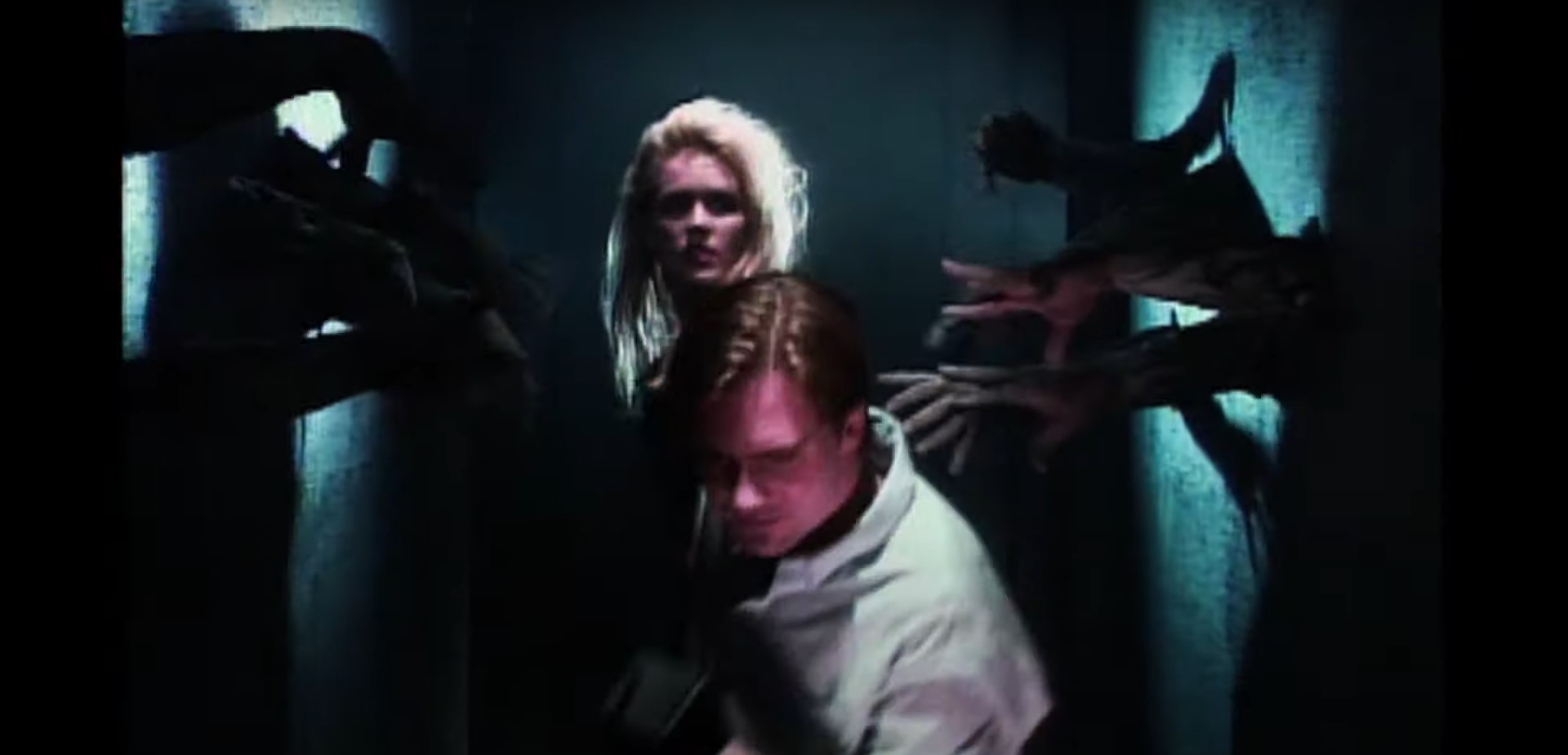
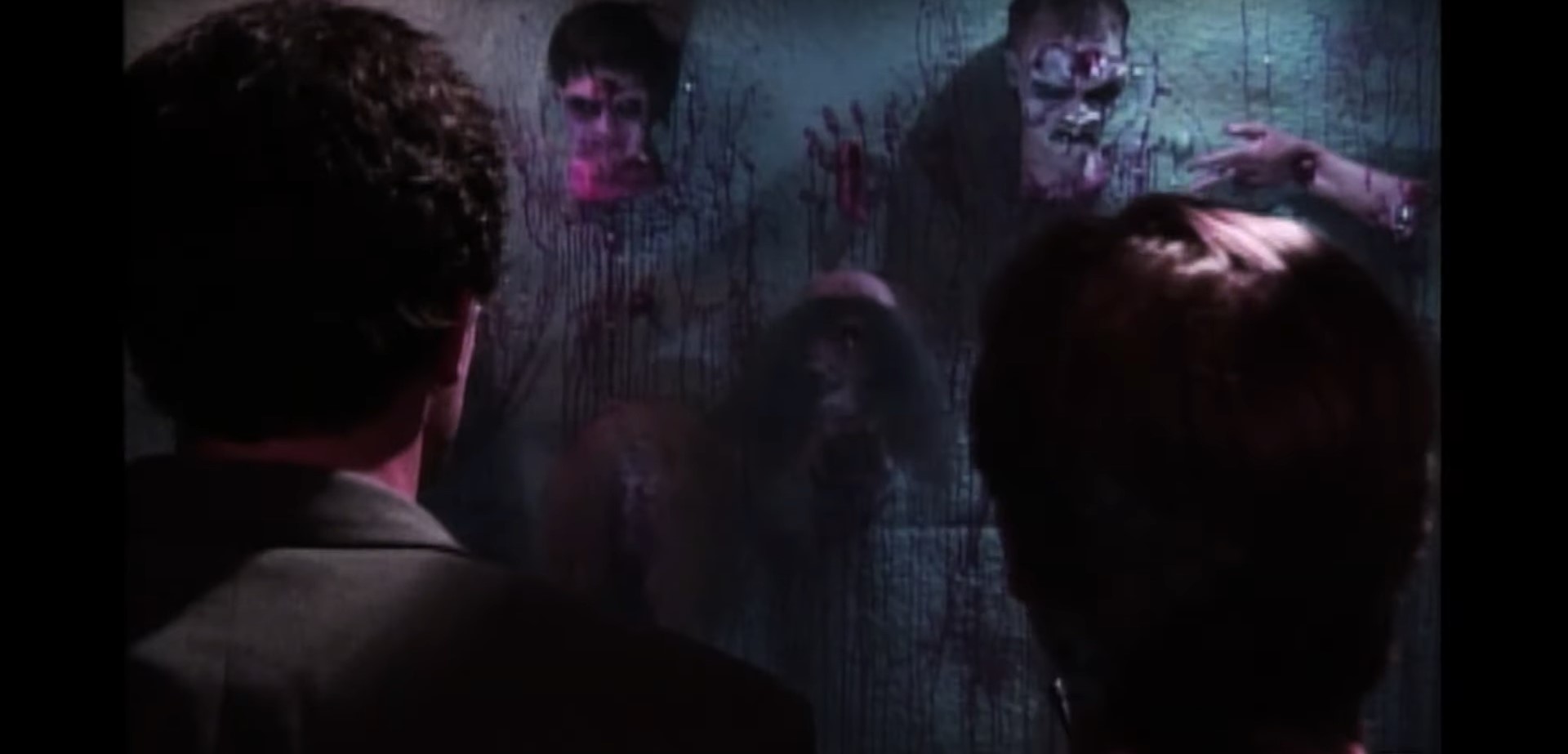
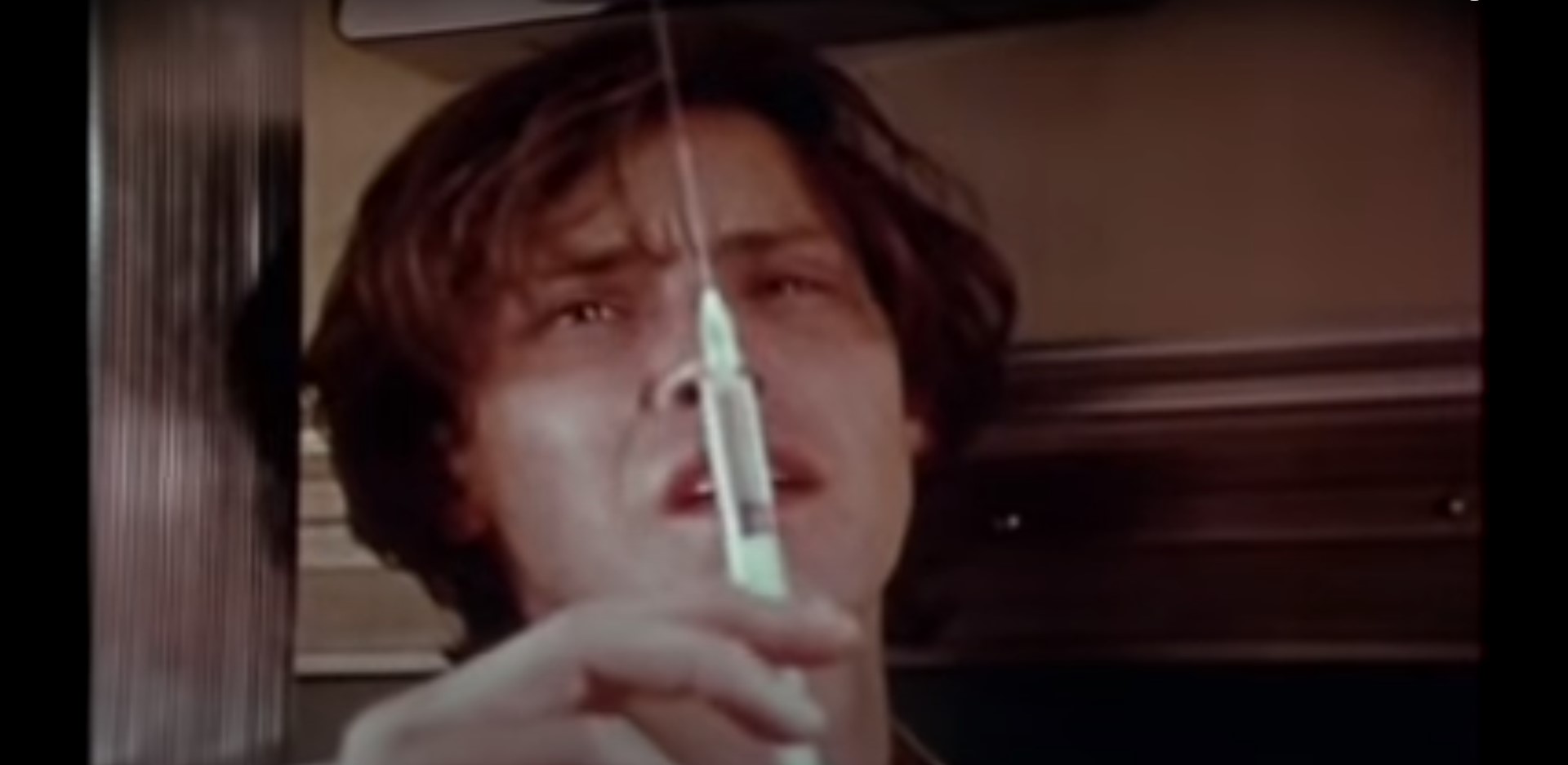
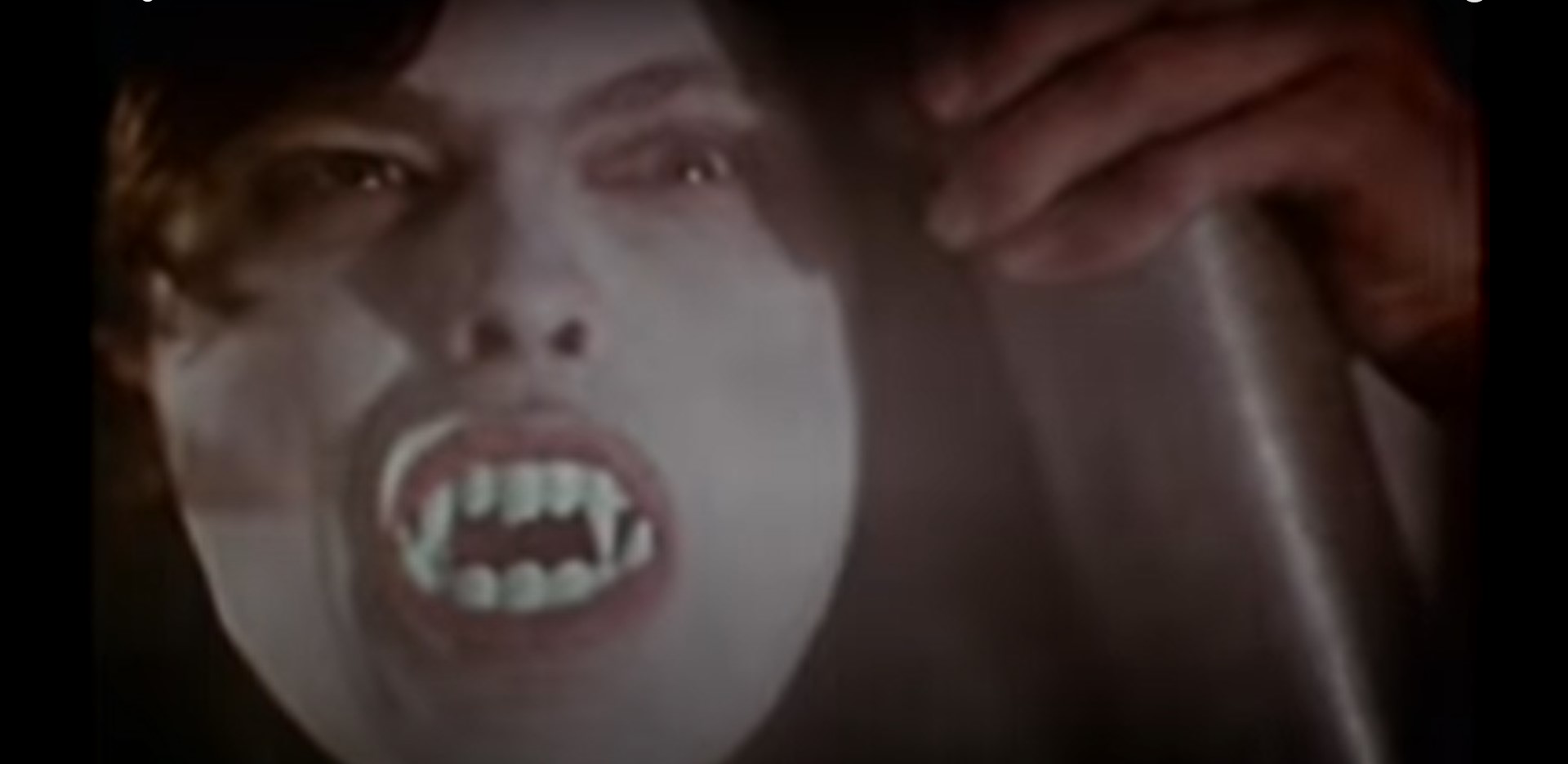
Martin, a young man from Indianapolis and upon recently lost his mother, travels by train to Braddock, Pennsylvania where he’s greeted by his elderly cousin Cuda, an old world believer that Martin has been selectively plagued by the family curse of vampirism and will take Martin in under his roof to cleanse his soul of evil, even if that means destroying him.  Though he doesn’t believe in the vampiric superstitions and the movie depictions, Martin truly believes he’s an 84-year-old vampire and does kill young, beautiful women to intimately drink their blood.  Being reserved and shy gives Martin an advantage to observe his potential victims from afar after gaining employment working as a delivery boy out of his cousin’s shop.  Cuda’s granddaughter, Christina, believes her lonely cousin’s mental illness is being exacerbated by grandfather’s archaic and draconian beliefs, fostered by a family history based off tradition rather than science.  When Martin meets an interested housewife on one of his delivery runs, the need to consume blood trickles when sex enters the picture, but also induces slipups in his well-oiled drug and drink operation whenever the need to feed becomes too much.

By now, “Martin” needs no introduction.  The father of the flesh-eating zombie, George Romero, delivered a neo-realism take on the vampiric mythology nearly 50 years ago in 1977.  “Martin” became the writer-director’s first all around filmic success after being royally screwed by the Walter Reade Organization for having failed to copyright the prints on the trailblazing and timeless classic “Night of the Living Dead,” the reason why you see so many Tom, Dick, and Harry remakes, revisions, sequels, and such of the 1968 black-and-white film that introduced zombies as flesh eaters, and a pair of box office failures that kept Romer in severe debt until slipping into business bed with producer Richard P. Rubinstein, the associate producer for Romero’s “The Amusement Park” and who would collaborate with Romero as a producer for the next subsequent decade years.  Filmed on location in the societal and industrial crumbling Western Pennsylvania town of Braddock, “Martin” remains one of George Romero’s quintessential and provocative pieces of work outside The Living Dead series under Rubinstein and Romero’s The Laurel Group production company.

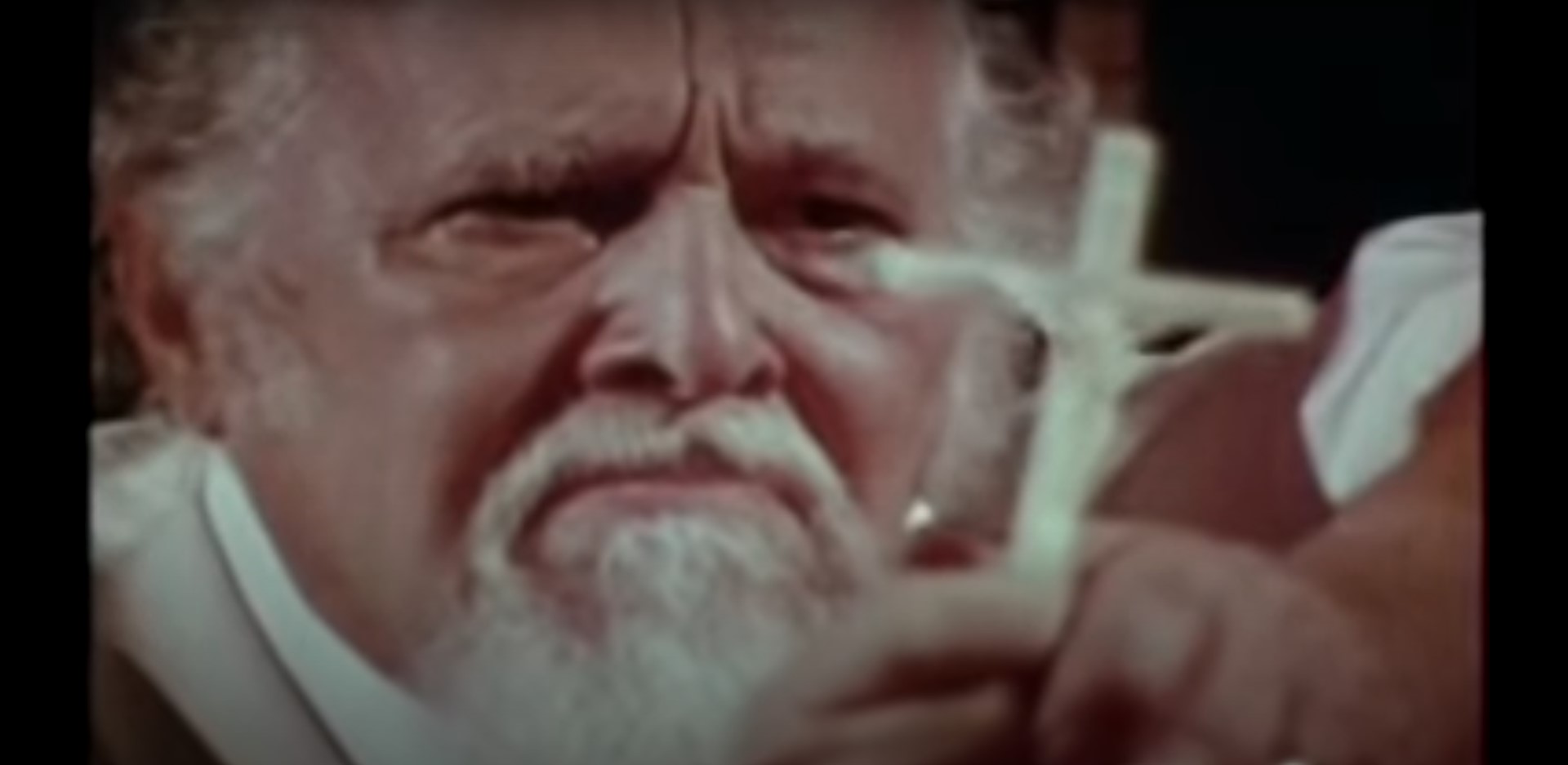
In the titular role is the introduction of John Amplas who was discovered by Romero after watching Amplas in a play and the entire lead principal was reworked to accommodate Amplas boyish youth.  Amplas is instrumental to Martin’s success in a handful of ways:  the Pittsburgh native knew how to properly slink in an unsuspecting manner, he also didn’t overbear scenes and costars with a larger-than-life presence and could dip into this awkwardly retrieved guilt for the premediated murder to fulfill a need that either’s supernatural or unnaturally mental.  Amplas could walk that thin line that keeps the audience wondering how much Martin says and does is actually true or a misconception because of mental illness and this is coupled nicely with Romero’s direction, splicing in black-and-white scenes of gothic-laden, theater-esque vampire flashbacks that could either be a delusional reality or a very real backstory to Marin’s cursed heritage.  Polarizing external family forces in his elderly cousin Cuda (Lincoln Maazel, “The Amusement Park”) and age akin cousin Christina (Christine Forrest) combat on an emotionally taut and verbal levels between their corresponding character qualities of superstition and science that parallel Martin’s eventual damnation or salvation.  The principal trio are tightly compacted to strain the dynamic with a back-and-forth debate over which truth is behind Martin’s troubles.  Romero pens a good case for both by never fleshing out a legitimate truth all the way through to the end; instead, it’s a battle of save Martin from himself who understands the problem, wants to deal with it, but barely takes up arms to combat or even face his issues.  Special F/X legend Tom Savini, pre-trademark inky black mustache and goatee, makes his debut role as Christina’s boyfriend Arthur who serves only as a device to pull reason away from the table in a conflicted measure to pressurize Christina’s capacity beyond the limits of also caring for herself.  Eventually, Christina has to make a decision and, ultimately, choses herself to save, leaving Martin to fend against a sternly superstitious and old world Cuda.  Sara Venable, Roger Caine (“Dracula Exotica”), Donaldo Soviero, Francine Middleton (“The Love-Thrill Murders”), and Elyane Nadeau make up the supporting cast.

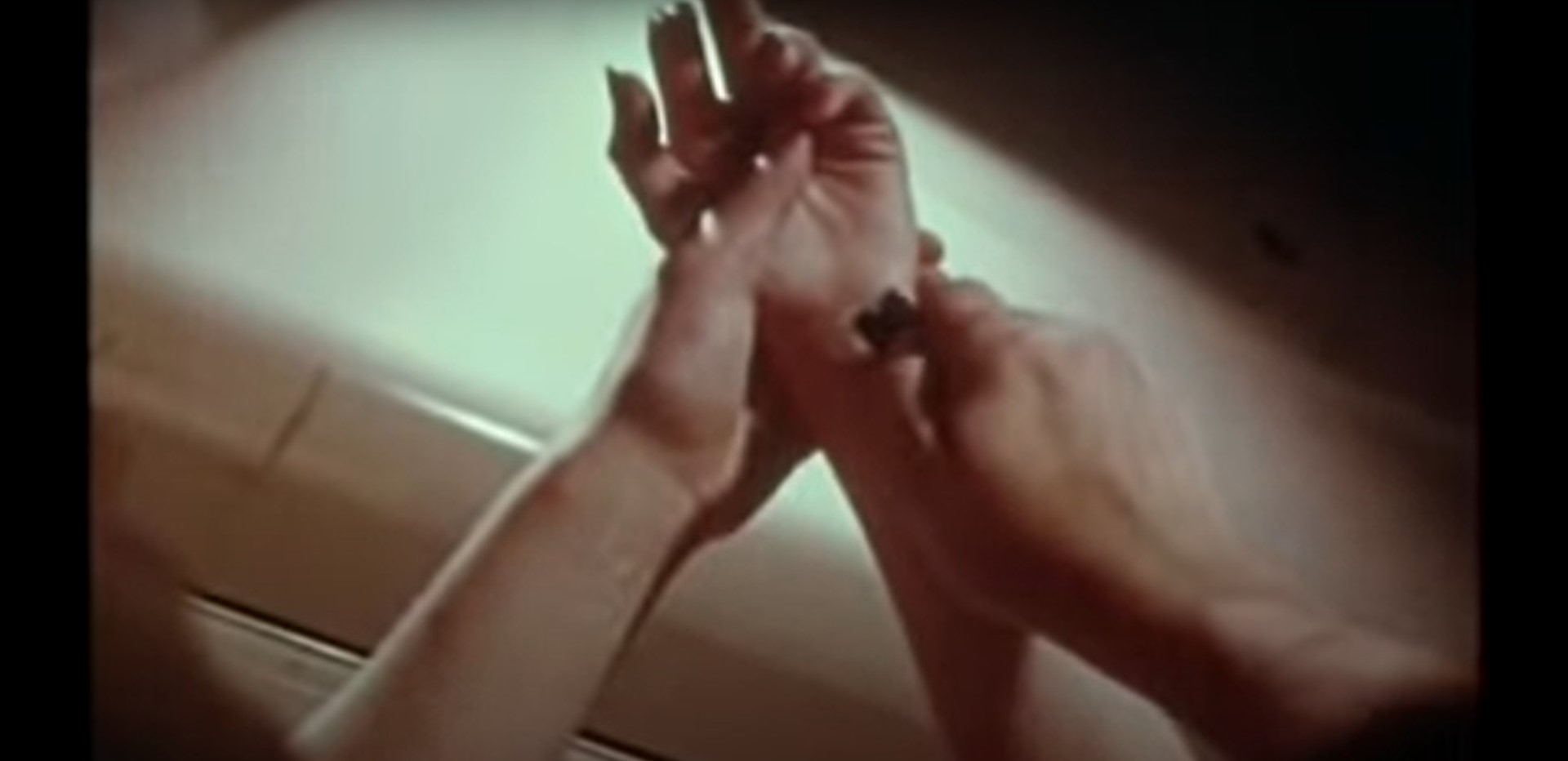
George Romero, again, redefines, or in a more fittingly descriptive – revamps, classic horror villainy that replaces the supernatural element with a realistic approach to weave the very fabric of horror into possibility while still hinting at something beyond the limits of reason.  “There is no real magic.  There’s no real magic, ever!” says Martin about the theatrical stereotypes used to display vampires in attempt by Romero to disenchant us from the ideologized mythos, the habitual characteristics, and the physiognomies of what we consider to be a night bloodsucker.  During that scene between him and Cuda, the words are potently effective in disapproving myths about vampires, but the words are supported with fact as Martin casually debunks garlic, crosses, and sunlight as vampiric weaponry at the expense of humiliating and entertaining Cuda.  “Martin” is at the forefront of being an allegory for loneliness and is a driving reason for presumably the real vampire’s gruesome habit to slice open wrists and drink blood.  Martin only targets young, beautiful women and becomes intimate with them while they are limp under sedation.  When he meets an equally lonely Mrs. Santini, a depressed housewife on the verge of an emotional collapse, and the two embrace each other with comfort against what dispirits them; disinterested in stalking her, Martin’s need to kill dampens and Mrs. Santini unhappy marriage in nullified by the young who listens more than speaks.  Maturity and youth meld together in a moment of peace between them but their bond still shows micro fissures of incompatibility that puts doubts into Martin’s 84-year, carefully planned practice and also doesn’t save Mrs. Santini completely from her too-little-too-late despair.  Braddock, Pennsylvania, a small town sinking into the slumps of becoming forgotten, is a once industrious backdrop integrated as a metaphor for being a forsaken place where things go to die.  Martin is sent to Braddock to paradoxically be cared for by a cousin determined to destroy him because of a family curse that afflicts select generations in what can be perceived as butting of heads between the defiance of angsty youth versus the traditions of an older individual set in the world with their linear ways of thinking.  

As aforementioned, “Martin” is a cult classic from one of the most notable masters of horror and as a film, “Martin” can stand on its own two feet on any format.  However, with that being said, UK home entertainment distributor, Second Sight, celebrates this early George Romero razor-edged thriller with a definitive 3-disc, 4K and Blu-ray release jammed back with software and firmware bonus content that fans can really sink their teeth into for a lifetime.  The limited edition UHD and Blu-ray O-slip box presents a 4K and 2K scan and restoration of a 35mm duplicate negative (note:  not from the original 16mm source) that has been supervised and approved by director of photography Michael Gornick and presented in the Academy aspect ratio of 1.37:1.  Considering the blown duplicated source of a 16mm grade, the 4K UHD scan on the BD66 won’t live up to 4K potential, as some may expect.  There’s quite a bit of varying levels detail discernibility, some shots look better than others, but the overall restoration renders a better than it’s ever looked product with natural grain and damaged reduced to some blue stock flaring around the side and edges, especially during night scenes.  Shadows looked deeper than previous versions, meaning that tenebrism isn’t lost amongst a softer image but rather creates depth with the additional of better sharpened edges to outline objects between the light source  Some speckle debris filters through at times but not enough to cause major concern with the overall experience watching and enjoying the restoration that has HD enhanced grading to make blood that richer technicolor coral color used in my subsequent Romero “Living Dead” films up to “Day of the Dead.”  The Blu-ray’s 2K works just as well due to the scrappy source equipment of what the budget allowed, delivering a fine product of the best transposed transfer known to fan kind and beating out the Lionsgate’s warming grading with a cooler, more hardline detail and delineation picture. The massive release comes with three audio options – an English DTS-HD 5.1 surround sound, an English DTS-HD 2.0 stereo, and an English DTS-HD 1.0. Though Martin audiophiles will likely gravitate toward a multiple channel output, “Martin” is one of those select features that does better in a less-is-more return by not forcing the limited and stronger signals, such as the dialogue and Donald Rubenstein’s experimentally spiritual score, to encoding competition with the milieu ambient and boom recorded sound effects, that for the most part, are background support for the bigger, better one-two punch of clean, clear, and presently full dialogue and a consciously curated soundtrack to walk with Martin every step of his journey. There’s a pinch of popping and a low-emanating droning that very discreet and negligible that won’t affect the experience on bite…I mean bit. English SDH are optional. Bonus materials are what shape the Second Sight releases to be greatly desirable amongst fans as the company continues to produce high-quality encoded bonus features as well as carefully and professionally organized tangible items inside the box. Both 4K UHD and Blu-ray have the same encoded bonus features that include four audio commentaries of old and new. The two archived commentaries include George Romero, John Amplas, and Tom Savini in one set and the other with Romero, Savini, Richard P. Rubenstein, and Michael Gorrick. The new commentaries are with Kat Ellinger, editor-in-chief of Diabolique Magazine, and the second with the recently deceased film curator, Travis Crawford. A vintage 2004 documentary from the Lionsgate release is included in the set with remarks from Romero, Savini, Gorrick, Donald Rubenstein, and Christine Forrest along with a new documentary echoing much of the 2004 doc, in collaboration with Severin Films, with John Amplas, Michel Gorrick, and Tom Dubensky strolling through Braddock, which hasn’t seemingly changed from the depths of poverty, on a raining day recalling nearly every moment of production during principal photography. The new doc includes other insights from Forrest, Savini, Tony Buba, and Sarah Venable in what feels like a complete celebration and overview of their entire journey through Romero’s personal favorite film. Donald Rubenstein also has a new interview discussing his score and meeting and working with Romero on a positive level. The disc features round out with one of Tony Buba’s short films “J. Roy – New and Used Furniture” revolving around the town of Braddock and the trailer, TV and radio spots. The third disc is the CD form of Donald Rubenstein’s soundtrack laid out in 22 distinct musical numbers. The limited-edition exclusive contents include a rigid O-slip case with a simple, yet effective sterile while and red font color contrast with MADE IN U.S.A. augmented razor blood with vampire teeth and blood dripping from the bottom right corner and a blood dripping cross squarely centered on the back. Inside the slipcase, a thick 104-paged color booklet with new in-depth essays and insights from Daniel Bird, Miranda Corcoran, Heather Drain, Kat Ellinger, Andrew Graves, Alexandra Heller-Nicholas, Elena Lazic, Stephen Thrower, Jon Towlson, Simon Ward, Tony Williams and an interview with Tony Buba by Travis Crawford. The booklet also contains colorized, behind-the-scenes photos of production and numerous one-sheets, promotion poster and ads, and a beautifully, expressionistic illustrated front and back cover. Adam Stothard illustrates 5 character lobby cards, including John Amplas’ Martin, Christine Forrest’s Christina, Tom Savini’s Arthur, Lincoln Maazel’s Cuda, and George Romero’s Father Howard. All 3 disc arts are the same as the front cover the release and contained a trifold, punch-lock case in reverse colors of the slipcase. The 4K UHD is region free but the Blu-ray is confirmed region locked B so you’ll need a region free or region B player. The runtime clocks in at 95 minutes and is certified 18 for sexualized violence and sexual threat. Second Sight must be a Disney fan with their monstrous beast of a limited edition that is also a thing of beauty; “Martin” deserves every square inch of this physical and digital display of expressionistic vampirism of underrated performances and from the mind’s eye of a dauntless George Romero, unafraid to take risks, show blood, and understand the human condition.

“Martin” Limited Edition Second Sight Release Available at Amazon.com! 

EVIL Wants You to Be Mindless! “Night Feeder” reviewed! (SRS Cinema / Blu-ray)

“Night Feeder” Is a Brainless Trip Through the New Wave Eighties! 

A woman is found dead on the city streets.  The cause of death is the same as two others before with similar wounds; their brains are sucked out completely through a slit in the eye socket.  As the neighborhood community cowers in fear, Jean Michaelson, a female magazine journalist and who also just moved to the residential city district, takes it upon herself to uncover the truth before her new home becomes an unlivable nightmare.  At the center of suspicion is Bryan Soulfield, a musician a part of the band Disease, previously involved in the death investigation of three women groupies who overdosed on a drug called DZS that shares the same phonetic name Soulfield’s band.  Inspector Alonzo Bernardo spearheads the investigation with an ever-watchful eye on his best suspect, Bryan Soulfield, and an even keener interest in Jean Michaelson as they both feel the grip of public pressure and come intimately closer to each other and to the unsuspecting and shocking truth as the bodies become more frequent around Jean’s apartment.

Obscure, one-and-done horror can often be worth the viewing calories and 1988’s “Night Feeder” is definitely the epitome of those hidden gem genre films from America’s exploration into the video format and stemming into another branch of liberal arts.  “Night Feeder” was the result of an assemblage of a painter and a pair of novelists who, out of the blue, decided they wanted to make a movie.  A gouache and oil painter of portraits, often nude, Jim Whiteaker tries his talented brush stroking hand at directing a full length shot-on-video feature with mystery writers Linnea Due and the late Shelley Singer crafting a murder whodunit in a grisly brain slurping fashion that conveys heavily on the theme of misjudging a book by its disfigured and notorious cover and end with a killer you never see coming – because it’s sucking out your brain through your eye socket!  “Night Feeder” is also emblematic amongst other spoiler-inducing concepts that we’ll dive into later in the review.  Shot in the dark corners of the San Francisco Bay area at the liberal arts focused Dutch Boy Studios, “Night Feeder” is glam horror ripe for attention, produced by James and Jo Ann Gillerman under the production banner of Gillerman-Whiteaker-Gillerman.

For an investigative horror-thriller in the crevices of a phasing new wave and post-punk era, the low-budget production has a remarkably versed cast of unknown, likely hyper regional, actors.  Kate Alexander (“Kamillions”) cut her teeth as principal character, journalist Jean Michaelson, and instills a healthy dose of raw emotion into an unlikely B-flick, tamping her performance firmly into the role caught in a love triangle between punk musician and prime brain-sucking suspect number one, Brian Soulfield  (Caleb Dreneaux) and by-the-book police inspector, Alonzo Bernardo (Jonathan Zeichner) confounded by killer’s strange methods.  Not to forget to mention the ominous presence that possible lurks around every corner that drives shivers up Michaelson’s tattered spine, making her vulnerable and blind to what’s really in front of her, romantically and threateningly.  We’re briefly introduced to support characters, aka soon to be victims, and then eventually snowball into the quickly dispatched before having a chance to steal or swallow the protagonist predicament for their own, but these support characters are engaging enough to be either drug pushing scoundrels, intolerant jerks, or spaced-out mothers so you can tell from the beginning their level of likeableness before their fatal end, but at least they’re not benign, vanilla cogs in the machine. The cast fills out with Lissa Zippardino, Jac Trask, Ginger Seeberg, Roger J. Blair, Robert Duncanson, Robert Hogan, and the Bay-born cultural critic Cintra Wilson and a special soundtrack performance by the new wave rock band, The Nuns as the fictitious band, Disease. On top of that, Dutch Boy artists fill the gaps in minor roles like waiters, party guests, and concerns citizens as a public gathering.

Despite playing out like a police procedural investigation that narrows down suspects until the killer is unearthed and either arrested or gunned down in a harrowing, desperate moment, we all know ahead of time “Night Feeder” is cladded with more than just plainclothes of cops and robbers.  The big tell is the brain being liquified and sucked out from the eye cavity like a Slurpee minus the brain freeze because, well, there’s no brain!  “Night Feeder” sounds like a mindless Z-grade film and while the narrative involves mindlessness in a way, the 80’s creature feature is anything but a ponderous film with an immense underground punk presence, eccentric personalities, and a standoffish and reticent romance brewing in the background sandwiching the strange deaths of unconnected murders piling up around the heroine’s noir-esque, urban jungle neighborhood and perplexing the lone law authority on the case.  Whiteaker and his writing team thoroughly include the residents and residents’ concerns which makes “Night Feeder” bigger than it really is as it is often with lower-budget creature features will neglect to include the angry, scared mobs into the conversation.  The narrative intends to spark public fear and uses it to drive Jean into a rabbit hole of truth that has now become more personal than professional since her space has been affected by an invading killer.  Her best friend ending up dead in the tub of her apartment during a neighborhood party and with her ex-husband found slumped out of the driver’s seat of his car shepherds violently out her old life into a new, scary territory of relationships.  A director having an artistic background and working with creative storytelling minds lends to a more than average physical special effects and becomes a Jonathan Horton (“Enemy Mine”) showcase of skill that removes “Night Feeder” from the average pool of shoddy effects films and into a higher class of eye-catching, detailed creepiness that is unique and can’t be unseen with an autopsy that’s all too realistically educational and with its climatically exposed humanoid creature and it’s protruding cerebral sucking device.

Strong effects, strong story, and a strong female character serve the “Night Feeder” as a secret menu item in the SRS Cinema catalogue!  The Cursed to Crave Forbidden Flesh tag lined film is presented on a single disc, AVC encoded, 1080p high definition Blu-ray with a letterboxed full frame aspect ratio of 1:33:1.  One of the better looking 80’s film on a budget, “Night Feeder” is tremendously insignificant SOV interference, which makes me believe Whiteaker and director of photography, Paul Kalbach, had their hands on non-commercial grade video camcorder and after doing some research, the camera used was a BetaCam SP that increased the horizontal likes to over 340, likely from to Whiteaker and Gillermans’ artistic music videos and seemingly at the advantage of Kalbach’s Artichoke Productions in the Bay area that gained him a reputation as a visual artist and “Night Feeder” very much plays into being a vision of New Wave horror with a glowing aura, vibrant warm, almost neon-like lighting hues, and, of course, the two semi-music videos of The Nuns making their way in front of the camera.  Virtually no technical issues with the image albeit a flat coloring, a blip here and there with a brief blip screech, and softer details with the glow haze outline that provides the movie a prolonged dreamy coating or an inescapable nightmarish ethereal within the context of the scene.  The English language Dolby Digital 2.0 stereo carries a lo-fi but sustainable level that celebrates the dialogue and divvies the other tracks to accommodate the little depth it can muster with the BetaCam recording. English subtitles are not available on this release.  Special bonus features include a commentary by director Jim Whiteaker who provides the genesis of the film and gives background on the characters and actors, a movie still slide show, and SRS trailers that include “Day of the Reaper,” “Garden Tool Massacre,” “The Son of the Devil,” “Hellbox,” “Truth or Dare?” Physical features are housed in a traditional Blu-ray snapper case with new composition artwork with the original embossed title and a still one of the more gory-ladened victims, but the reversed side carries the one of the original key arts that embodies the true essence of “Night Feeder” in illustration of a monstrous hand in the foreground of skyscrapers, reaching up and over a sensuously positioned lifeless woman who resembles the lead actress. The disc art is printed with the same illustrated image. The region free Blu-ray has a runtime of 95 minutes and is region free but is listed as a 2020 film in the same design grouping where usually the date listed is in the production release date, which in this case would be 1988. Tidied up and polished, SRS Cinema Blu-ray of “Night Feeder” is a quarried gem by a group of diverse artists bringing their leathery inlaid and new wave touch of artistic licenses to develop a subgenre standout in the 80’s creature feature category.

“Night Feeder” Is a Brainless Trip Through the New Wave Eighties! 

Out With the Old EVIL. In With the New! “Modern Vampires” reviewed! (Ronin Flix / Blu-ray)

“Modern Vampires” available for purchase on Blu-ray at Amazon.com

Blacklisted for not killing the vampire nemesis Dr. Van Helsing, Dallas is shunned by most of the underground Los Angeles vampire scene now presided over by Count Dracula himself, but as he returns to the city after decades of being gone and gathers with old – very old – dear friends, Dracula threatens him with being burned alive if he overstays his begrudged welcome.  When a newly turned rogue vampire under the pretense of a corner prostitute starts ripping the throats out of unsuspecting Johns, Count Dracula doesn’t want the potential public attention drawn on his species.  Taking a shine to this mysterious woman’s insubordinate nature, Dallas finds her, cleans her up, and introduces her to his inclusive friends, but little do any of the bloodsuckers know is that the Van Helsing is in town and has recruited local Crips to be the holy servants of God in wasting away the vampiric filth that plagues humanity.

Here I thought Casper Van Dien’s only good film was 1997’s galactic war with the extraterrestrial bug species in “Starship Troopers!”  Nope, one year later, Dien follows up his iconic global militant-nationalism and gory-filled sci-fi blockbuster with the little-known American comedy-horror “Modern Vampires.”  Better known around the world as “The Revenant” to not confused American audiences with a highly ingrained British term, “Modern Vampires” is directed by a principal one-half of the 80’s American new wave band Oingo Boingo in Richard Elfman.  The other half of that duo is Richard’s brother, who we all know and love in his unmistakable musical scores of “Batman” ’89 and “Edward Scissorhands,” Danny Elfman who also scores the opening theme to “Modern Vampires” with recognizable and trademark notes from those previously stated Tim Burton pictures.  The script was also penned by a fellow Oingo Boingo original member and the Kiefer Sutherland and Reese Witherspoon “Freeway” film, and its sequel, screenwriter Matthew Bright.  Bright and Richard Elfman had previously collaborated on the comedy-musical “Forbidden Zone” surrounding sixth dimensions and damsels in distress as well as the Charles Band produced “Shrunken Heads.”  “Modern Vampires” is produced by Elfman, Brad Wyman (“Barb Wire”), and Chris Hanley (“American Psycho”) under the Storm Entertainment and Muse/Wyman productions.

Ladies, if you thought you’ve seen the last of Casper Van Dien’s backside in “Starship Troopers,” then worry not! As the hunky, cigar-smoking, former World War II pilot Dallas, Van Dien, once again, shows off his hind parts in a steamy sex scene one top of Dallas’s car with costar Natasha Gregson Wagner (“Vampires: Los Muertos,” “Urban Legend”). As the indifferent vampire Nico under the pretense of a prostitute who seduces men into vulnerability before gashing open their necks, Wagner adds a bloodthirsty ferocity to her uncouth, undead character’s tremendous and tragic depth surrounding a trailer park trash childhood of sexual abuse and a grandstand mother. As a pair, Dallas and Nico are essentially made for each other or, rather, Dallas turned Nico because under all that pretty boy veneer, Dallas still has a beating heart for compassion and friendship as noted with Dr. Frederick Van Helsing’s crippled son, Hans, and the choice made between the two young men before the whole debacle of nixing to the fearless and relentless vampire killer of all time. Rob Stieger plays that character beautifully manically. “The Amityville Horror” and “End of Days” actor graces the production with seasoned vitality while also trying something new himself, a slightly fascist German vampire hunter who hires L.A. gangsters to help him do his dirty work and has to be the butt of the joke at times at the hands of Count Dracula (“Striking Distance”) as well as Dallas. Stieger does his scenes with great earnest yet great fun that puts the legendary actor into a new perspective. “Modern Vampires'” star-studded cast doesn’t end there was Dallas’s friends include performances from Kim Cattrall (“Big Trouble in Little China”), comedian Greg Furgeson, Natasha Lyonne (“Slums of Beverely Hills”), and the legendary Udo Kier (Andy Warhol’s “Dracula”) as well as a cast round out with Natalya Andreychenko, Gabriel Casseus, Peter Lucas, Victor Togunde, Cedric Terrell, Flex Alexander, and Conchata Ferrell.

Gory, sexy, and overflowing with politically incorrect humor, Richard Elfman’s “Modern Vampires” more than likely would not be a film made today, but definitely suits the 90’s scene.  There are stereotypes and jokes radically exaggerated for comical effect and land with such insouciant ease that the entire production felt at peace with the humor, emitting “Modern Vampires” as an enjoyable, blood-soaked, outrageous vampire comedy unearthed from over 20-years ago and landing onto a new Blu-ray release where the Elfman film deserved an upgraded treatment.  Los Angeles in ’98 didn’t look extremely different than what’s depicted in the film – late night clubs with half-naked patrons doing all sorts of weird and bloodletting fetishes, leeching prostitution on the delinquency riddled streets, and unsavory, unwilling gang bangs but, in “Modern Vampires’ case, the one tied to the bed is a female vamp fully-transformed into a human-sized bat and those who have sex with her, turn into a vampire themselves.  See the humor and symbolism in that?  Almost as if having unprotected sex with a creature of night is akin to contracting a sexually transmitted disease.  Despite the waggishness, “Modern Vampires” holds other staid themes as well with an arteria one being reflective in the title.  The genesis of the species emerged from Count Dracula who had moved from his old Germanic country to the hip and upcoming L.A. area. With each generation of vampire, the loyalty gap becomes wider until the turned from the 20th century are fully unmanageable by the Count’s supreme power. Nico, the youngest turned is in her vampiric infancy often noted throughout the film, can’t be contained and won’t be told what to do, much like teenagers butting heads with their parents on every little subject. Traditions are broken, heads are severed, bodies are burned, and the “Modern Vampires” is a wildly funny and gruesomely gnarly.

“Modern Vampires” is now the vintage vampires that hit the silver screen some 24 years ago and is now basking with the great 90’s flair of special effects, clothes, and hair on a new Blu-ray release from Ronin Flix in association with Quiver Distribution (“To Your Last Death”). Newly scanned in 2K of the Richard Elfman’s personal film print, the picture retains an unsullied quality with impeccable detail delineation for a story that’s mainly set/shot at night. There’s quite an overlay of purple flush that I’m fairly positive is not intended that pulls away, at times, from clearcut contrasting and blend the objects in the scene together. The film is presented in full high definition1080p in a widescreen aspect ratio of 1.85:1 with an English language DTS-HD master audio 2.0 stereo that retains the amplitude of every categorical track. Dialogue track provides a clean depth and clarity that doesn’t swerve into boxy territory like many indie productions do. Ambient and foley range is quite limited for a bunch of different locational shots and in a crowded location full of extras but the extent of the quality is good enough. The 91-minute film comes not rated and has an exclusive extra with an introduction by director Richard Elfman plus archival features, such as audio commentary with Richard Elfman and star Casper Van Dien, a behind-the-scenes featurette with on set mini-interviews with the cast and crew. and the theatrical trailer. “Modern Vampires” might now be long in the tooth (get it?) but has the classic campy escapades of an unpretentious good time and, that my friends, is timeless.

“Modern Vampires” available for purchase on Blu-ray at Amazon.com

EVIL Comes Not on the 1st Day, or the 2nd Day, but “On the 3rd Day!” reviewed! (Scream Factory! / Blu-ray)

“On the 3rd Day” arrives onto Blu-ray on March 29th!

A car accident leaves Cecilia dazed and confused as she wakes up in an abandoned warehouse unsure of what crashed into her and how she arrived inside the vacant area.  Her son, Martin, who was also in the car with her, is missing.  Plagued by disturbing visions being reflected through mirrors, an agitated and frightened Cecilia escapes the hospital and with the help of an empathetic, young doctor, they employ a hypnotist to extract her post-accident whereabouts and possibly locate her missing son, but what is unleashed through hypnosis is more terrifying than imagined.  Meanwhile, the other crash victim, a hermit priest, sets forth to reclaim an ancient and deadly Catholic secret lost in the wreckage and will stop at nothing and do anything to get it.  When Cecilia and the priest converge, the truth of what really happened will be profanely revealed with spilled blood.

“On the 3rd Day” is one of those movies that needs tiptoeing around when reviewing it to not divulge spoilers.  The Daniel de la Vega mystifying horror hails from Argentina and is penned by the screenwriting duo of Alberto Fasce and Gonzalo Ventura, the latter of whom authored the 2017 novel “3 Days” (3 días) in which the film is adapted from.  What can be divulged about Vega’s film is that context revolves around a classical monster fans know and revere to be a staple of horror iconography but “The Chronicle of the Raven” director ventures deep into a disoriented mother’s puzzling gap in time, working backwards through her mind’s murky-dirty window to then make the picture wretchedly clear.  “On the 3rd Day” blends abusive relationships and ugly divorce with traditional and appreciable genre tropes to fully convey that those who are to be loved and protected the most out of dissolving unions are those who are ultimately the ones hurt most of all.  Del Toro Films’ Néstor Sánchez Sotelo, who produced Vega’s 2016 supernatural thriller, “White Coffin,” produces alongside the filmmaker in a coproduction with Furia Films.

“On the 3rd Day” pursues the storyline of two principal characters: Cecilia, a mother recouping her memories after a shocking car accident, and Padre Enrique, an off-the-grid priest guarding the Catholic Church’s dark secret. The Buenos Airos-native actress Mariana Anghileri becomes lost in Cecilia’s constant struggle against the forces guiding her down a subconscious alter ego path that’s unveiled at the tale-telling end while at the opposite end of the spectrum, Padre Enrique, played with a feverously somber faith from Gerardo Romano, who also had a role in Daniel de la Vega’s “Necrophobia 3D,” knows exactly what’s at stake after accidently crashing his truck into Cecilia’s car and the displaced crate he was hauling to Santa Cruz at the behest of the church opens and sets loose an unspeakable evil to lurk. Romano is purposeful in Padre Enrique’s mission with a scrap of uncertainty splayed on his face, but never discloses a sense of true concern or panic-stricken hopelessness which makes the character refreshing in his confidence rather than tense in his unwavering assurance. The same can’t be said about Cecilia who suffers a continuous reeling over the missing gap of time. However, locating the sincerity in Anghileri is difficult as the actress doesn’t convey that primo motherly instinct of a sudden and violent detachment from her child properly. Anghileri wonderfully denotes an obfuscate posture but condoning her as a loving parent just doesn’t seem justifiable, even in the finale that is while still impactfully poignant, misses utterly gutting audiences with Anghileri’s lukewarm care. “On the 3rd Day” rounds out the cast with Osvaldo Santoro, Mathias Domizi, Lautaro Delgado, Susana Beltrán, Octavio Belmonte, Sergio Boris, Rodolfo Ranni and Verónica Intile.

“On the 3rd Day’s” first act didn’t fill me with confidence. I was about as lost as Cecilia waking up disoriented in a vacant warehouse. Vega jumbles sequential order and interjects flashbacks into an already copiously edited narrative with a slither of surrealism to the style of early David Lynch or Terry Gilliam. We’re thrust into Cecilia’s post-crash nightmare, witnessing irrational visions through standing oval mirrors and departing characters who don’t come out alive on the other end of meeting her. Vega seldomly gives into definitive trope context as he reshapes with miniscule precision what we already know traditionally about this particular monster into seemingly something new. By the second and third act, Vega begins whittling down obscuring barriers, leaving more dead bodies in Cecilia’s wake although we definitely don’t ever see death by her hand as it’s always just implied between before and after cuts. The script also pieces in more clues with Padre Enrique’s razing of collateral damage stained with the blood that is not their own. I’m enamored by this phrase that embodies a mystery on the tip of the tongue hungry to be solved and as the padre proceeds to liquate an innocent bystander because of clues he only recognizes, his character, however vilified Vega makes him out to be, becomes far more interesting in a role as a priest with a less than a pastoral posture and as a persistent caretaker of an ominous being, cleaning up after whoopsie daisy incident in losing his oversight. What “On the 3rd Day” boils down to, thematically, is when the sight is lost on what is most important, there becomes an indefinite loss that can’t be put back safely into the box. Between Cecilia’s radical escape from an ex-husband and Padre Enrique’s hastiness, they both take their eye of the prize and ultimately suffer loss in the worst possible way, turning “On the 3rd Day” into a distilled gaslight of unquestionable terror.

Hopefully, to this point, I have not spoiled Daniel del la Vega’s “On the 3rd Day’s” elusive revelation. One of the only ways to see what happens, to see the shocking ending, check out “On the 3rd Day’s” on Blu-ray from Scream Factory arriving Tuesday, March 29th! The AVC encoded, region A Blu-ray is presented in 1080p high definition and in a widescreen 2.39:1 aspect ratio. Mariano Suárez carries over the tenebrous “Terrified” low lighting to provide a tonal dreary environment akin to noir, which “On the 3rd Day” fashions itself. Skin tones, practical effect textures, and even the retro-esque compositional special effect flush out nicely. What’s a little disappointing is the forced English dub track on both the audio options: DTS-HD Master Audio 5.1 and 2.0 stereo. With no alternative languages to opt into, even a native Spanish track, the English dub is obvious desynched between the speech and delivery. The ambient range and depth fairs better with adequate detail and an Italianomysterio soundtrack by Luciano Onetti, who worked on the modern giallo films “Francesca” and “Abrakadabra” with brother and co-founder of Black Mandala productions, Nicolás Onetti. English subtitles are available. The 85-minute film releases not rated and without extras other than the snapper case sheathed inside an image redundant cardboard slipcover and a wide still capture on the reverse Blu-ray cover. “On the 3rd Day” starts messy but ends in a gothic aghast that sets the seal on Daniel de la Vega’s slow burn evolution as a genre filmmaker.

“On the 3rd Day” arrives onto Blu-ray on March 29th!

EVIL Infiltrates to Seduce All Your Women! “The Vampire Lovers” reviewed! (Scream Factory / Blu-ray)

“The Vampire Lovers” Now Available at Amazon.com!

The Karnstein family’s notorious legends of evil spread vast throughout 18th century Germany. Once thought their wicked leeching of nearby villages exterminated after the Baron Joachim von Hartog dispatched all the villainous vampires after his sister fell victim to their seductive fangs. However, years later, the aristocratical General von Spielsdorf and his niece Laura find themselves in the unexpected company of a houseguest with Marcilla, the beautiful daughter of a new neighboring countess. Days later, Laura unexplainably dies from continuous nights that drain her of energy and flourish her mind full of nightmares of being strangled by a large wild animal. In the wake of her death, Marcilla also disappears. Sadden by the news of her friend’s death, Emma and her father take in the daughter of a travelling countess named Carmilla to provide Emma with cheery, distracting company in a time of distress, but the mysterious cycle of enervation and nightmares start back up all over again and it’s up to the survivals of Laura’s death to stop death before it’s too late.

Unlike any other Hammer horror film you’ve ever seen before prior to 1970, “The Vampire Lovers” blazed the trail for permissiveness of the era’s newly reformed certification system that moved the bar from 16 years order to 18 and kept in line with society’s leniencies toward the favoring sex and free love.  “The Vampire Lovers” opened up to not only a new line of exploitation and violence at the turn of the decade but also introduced the longtime fans to new faces, especially actresses, who would accumulate labels and prominence inside the genre that last until this day.  Based from the story of “Carmilla” from Irish writer Sheridan Le Fanu, relatively new at the time Hammer director Roy Ward Baker (“Scars of Dracula,” “Dr. Jekyll & Sister Hyde”) took the Harry fine and Michael Style adapted original story and ran the distance with the screenplay from Tudor Gates whose writing forte was not specifically well-known within horror genre nor was horror Gates’ personal interest, yet Gates tweaked the Le Fanu female vampire tale to accentuate more of lesbian themes in a very turmoiled time when lesbianism, or just being gay, was seen as a disease or an unstoppable influencing evil force amongst the young people.  Fine and Style serve as producers in this co-production between Hammer Films and American International Pictures.

“The Vampire Lovers” comes under an atypical rule of the protagonist role or roles.  Previous Hammer films oriented themselves with a male lead from Christopher Lee’s domineering monster Dracula to the fearlessly courageous vampire hunter played by Peter Cushing, but “The Vampire Lovers” has Hammer trade in the masculinity presence for femme fatale with the introduction of Ingrid Pitt (“Wicker Man”) in the role of the hungry Karnstein vampire, Carmilla as well as Marcilla and Mircalla as the sneaky creature of the night infiltrates estates. Pitt’s exotic look and uninhibited attitude discerns obvious sex appeal for the Polish actress who can also act with gripping emotion that develops compassion for her malevolent facade. Add another pretty face and innocently sensuous woman arm-to-arm to Pitt with then 20-year-old Madeline Smith (“Frankenstein and the Monster from Hell”) and you have a two-front protagonist made up of women. Tack on the dark features and piercing blue eyes of Kate O’Mara (“The Horror of Frankenstein”) and “The Vampire Lovers” evolves into the something unlike anything we’ve ever seen from Hammer horror trifecta as once the scene settles into the narrative’s girth, the dynamic turns into a love triangle of unspoken women intimacies and jealousy, under the guise of supernatural persuasion, rears its ugly head. The menfolk really do feel absent from the excitement despite being pivotal pieces to the story and despite being the iconic representation in face and name of Hammer films. Peter Cushing’s longstanding work with the company has branded him forever legendary in the eyes of horror fans young and new. As the benevolent General von Spielsdorf, “The Horror of Dracula” Cushing looks wonderfully regal, gentlemanly dashing, and epitomizes the very essence of a strong male figure who also takes a very noticeable backseat for much of the second and into the third act. Same can be said for that other vampire portrayer who’s not Christopher Lee, Ferdy Mayne (“The Fearless Vampire Killers”) as the village doctor with a scene plopped here and there to inch the story along as a motivational vessel and another player caught in the Karnstein fang-game. “The Vampire Lovers” sees through to move plot significant characters, played by notable actors, to and from the storyline with performances from George Cole (“Fright”), Jon Finch (“Frenzy”), Dawn Addams (“The Two Faces of Dr. Jekyll”), Pippa Steel (“Lust for a Vampire”), Harvey Hall (“Twins of Evil”), and Douglas Wilmer as the Baron Joachim von Hartog who give a great opening expositional prologue that sets the background and tone of the film.

Laced in the traditional gothic style we all know and love from Hammer Films, “The Vampire Lovers” has grandiose late 19th century interiors and costumes with the latter gracing the starlets with strikingly bright tropical colored dresses that are elegant beyond the more stiff, and sometimes more imperialistic, outfits representing the period.  In a way, the outfits contrast against the brooding gothic prominence that speak of subversive liberation much paralleling the very thematic elements of lesbianism, sexual motifs, and a nearly an all-encompassing female lead.  If sex was ever a subtle insinuation in previous Hammer film it was not so subtle in “The Vampire Lovers” that consistently and constantly thickened the sexual tension and produced blunt scenes of eroticism between two or more women.  Even with the powerful commingle of womanhood desires, as much as it was depicted to be devasting to their lifeblood, Tudor Gates’ narrative still pit them up against nearly impossible odds when the male characters, no longer duped by the formalities of chivalrous intentions, figure out what’s really happening under their noses, in their households none the less, and band together to put a to a heart-staking stop to the macabre madness aka metaphorical lesbian evil.  The story has the women’s lusts and desires, whether their choosing or not, be an outlier from normalcy, yet on the other hand, nudity flourishes within the new laxed certification guidelines that see in some way, shape, and form four actresses baring skin in what what would have been considered risqué X-certificated scenes prior to 1970.  “The Vampire Lovers” is by far a perfect film with a lack of character context, such as with the male vampire on horseback indulging his penchant for observing Camilla’s attacks from afar and doesn’t proceed to explain further or with more insight to who he is and what his position may be within the Karnstein family ranks, as well as the narrative format with early on into the story being bit choppy and disorienting when Carmilla assaults nightly the General’s fair niece as a furry beast in the confines of a lurid nightmare.

Deserving of a collector’s edition, Shout Factory subsidiary horror label, Scream Factory, presents a new Blu-ray release of “The Vampire Lovers” scanned in 4K of the original camera negative.  Scream Factory should be extolled for their color grading toward Hammer transfers as the release looks stunning with quality stability and richness that brings the era alive.  Transfer also appears free from any kind of major blemishes and barely of any smaller ones. The English language DTS-HD Master Audio mono has resolute fidelity in the best possible audio offering “The Vampire Lovers” will likely see now and in future releases with a clear dialogue track and a Harry Robertson score that relives the classic studio orchestra in compelling fashion. The release comes with a slew of special features including an exclusive new interview with film historian Kim Newman, who also shows up again in archived interviews in the “Feminine Fantastique: Resurrecting ‘The Vampire Lovers'” (Scream Factory lists it as Femme Fantastique on the back cover) featurette commentary snippets from John-Paul Checkett and David Skal and other historians and collectors of Hammer Films. Audio commentaries with director Roy Ward Baker, star Ingrid Pitt, and Screenwriter Tudor Gates, audio commentary with film historians Marcus Hearn and Jonathan Rigby, two interviews, one of them new, with co-star Madeline Smith that span about 10-15 years apart, Trailers from Hell: Mick Garris on “The Vampire Lovers,” a reading of Carmilla by Ingrid Pitt, a single deleted scene of Baron von Hartog radio spot, still gallery, and the theatrical trailer round out the bonus material. The 89-minute, Region A encoded, R-rated version runs solo as the only main feature and the transfer Scream Factory uses, or licenses, is the edited version of Ingrid Pitt’s bath scene that cuts away to a medium closeup of Madeline Smith holding a towel for Pitt who’s standing up in the tub and then cuts back to Pitt’s bare backside. However, in the “Feminine Fantastique” featurette, you can experience the unedited brief full-frontal of Ingrid Pitt standing up in the tub if that tickles your fancy. The collector’s edition sports reversible cover art with original poster art on the inside and a newly illustrated, and superbly beautiful in its simplicity, front art by Mart Maddox sheathed inside a cardboard slipcover of the same Maddox art. Turning a corner into vast opportunities for more violence, explicit nudity, and unrestrained vampire gore became a new dawn for Hammer Films without entirely prostituting themselves with wayward tactics to the point of unrecognition as “The Vampire Lovers” still emitted gothic characteristics and a partial token cast and now made even more alluring with a feature packed collector’s edition from Scream Factory!

“The Vampire Lovers” Now Available at Amazon.com!