Furry EVIL Bogies Go for the Flag! “Caddy Hack” reviewed! (Wild Eye Releasing / Blu-ray)

Special Edition Hole-in-One “Caddy Hack” On Blu-ray!

At the Old Glory Holes Golf Course, owner Wells Landon runs a tight ship under his garish wig before the weekend’s big money member’s tournament.  Hambone, Landon’s dimwitted and loyal groundskeeper, maintains the greens aesthetic tiptop shape with the help of his home brewed fertilizer, but the enriching fertilizer does more than just keep weeds from sprouting and keep the grass greener than Gumby, it also mutates the terrain terrorizing Gopher population into glowing-eyed, hairbrained killing machines offing the snobbish members, the party-hard caddies, and the course’s pretentious upper management in gruesome detail on all 18 holes.  Book nerd and greenhorn caddy Googie and his newly appointed and strict caddy manager Becky rally the caddy troops against a horde of impish, bloodthirsty rodents hellbent on shanking the golf course with more than just lumpy greens and unsightly mounds.  An all-out war between man and mammal tees off toward a fairway of carnage! 

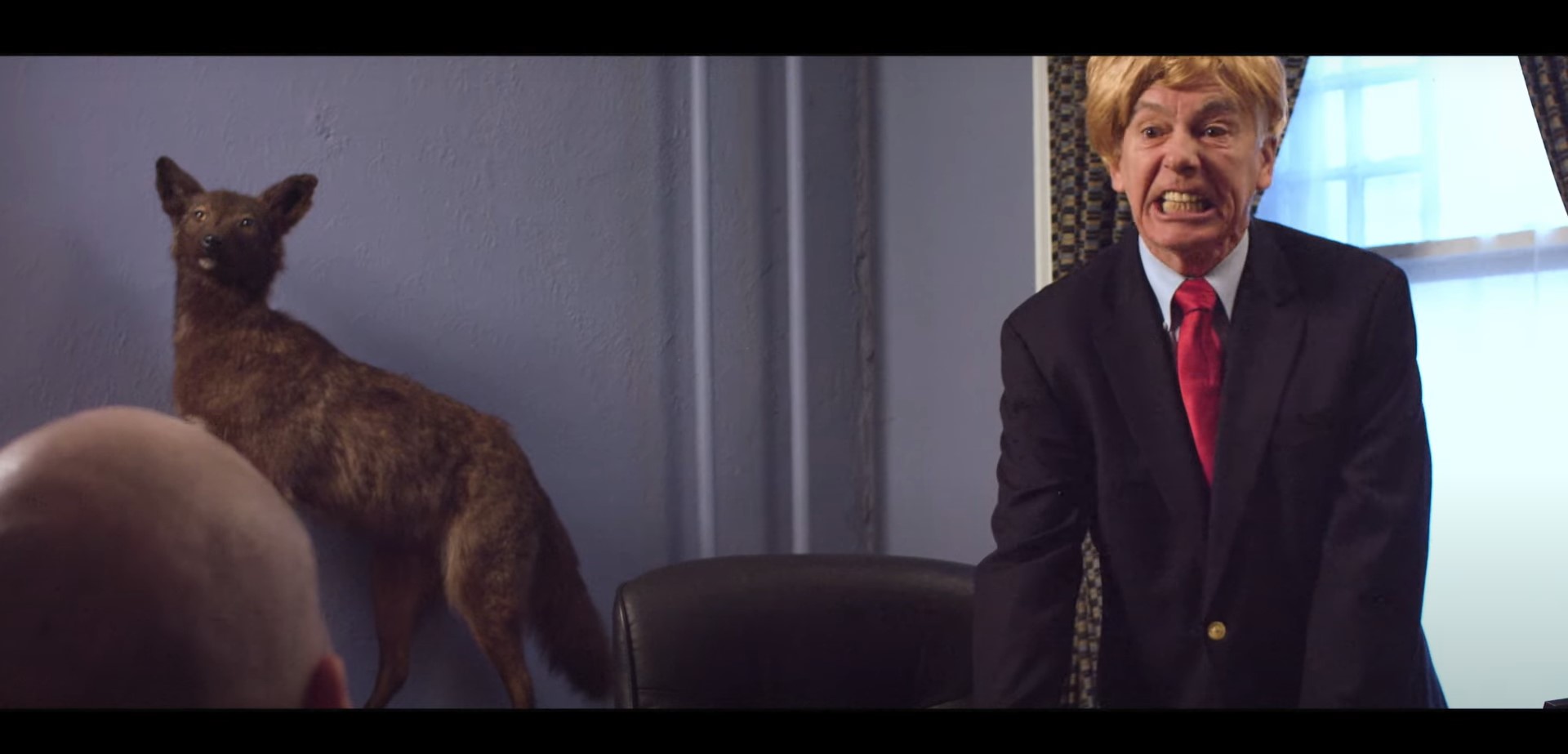
A comedy-horror satire based off the satirical sports-comedy “Caddyshack,” Anthony Catanese’s written-and-directed “Caddy Hack” (see what he did there?) continues the feud that started with Bill Murray’s groundskeeper character, Carl Spackler but instead of one pesky Gopher wreaking havoc, a multitude of furry, landscaping vandalizers rise from their subterranean burrows to take the offense battle against man.  The “Sadomanic,” “Hi-Death,” and music video director, of such bands as Doc Rotten and UgLi, helms the 2023 with great flair for the farcical and satire that not only madcap of mayhem but also rib-jabs an arrogant elitist wearing a bad hairpiece and expresses the building of a wall and having the gophers pay for it, if they could.  We all know that person and he shall not be named here for the sake of this review’s integrity.  “Caddy Hack” is filmed in Morrisville, PA and part of New Jersey (we get some really good Jersian accents here) and is produced by Catanese, Sara Casey, Jim Gordon, Joseph Kuzemka, and Scott Miller under Gordon’s Content Trenton and Catanese’s D.I.Why? Films along with Wild Eye Releasing’s Rob Hauschild as executive producer.

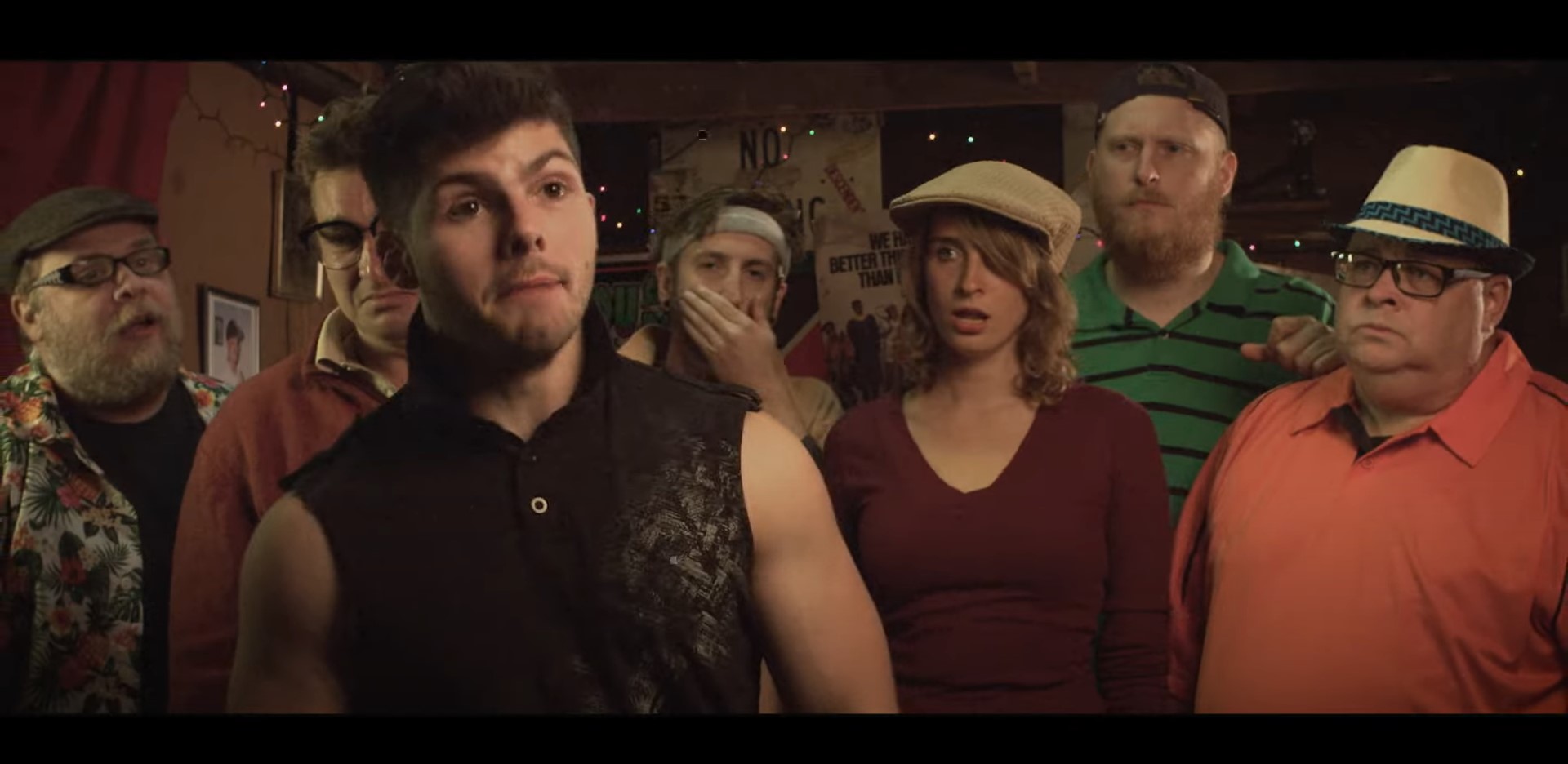
Not only is “Caddy Hack” a ridiculous horror-comedy of binging buffoonery, its also a story about unlikely romance between near middle-aged caddy of golf nerditude and a browbeating, yet ravishing, woman eager to be taken seriously no matter her qualifications.  Jake Foy and Chrissy Cavallo respectively play the likeable oil and water who commingle unexpectedly when Cavallo’s rigidity as the unqualified caddy manage takes a shine to Foy’s caddy-passionate and meek-lined Googie.  Foy and Cavallo, along with Jim Gordon (“Hi-Death”) as the unscrupulous, neon colored toupee-wearing course owner Wells Landon and Nick Twist (“Sadomaniac’) as the dimwitted groundskeeper who huffs his own fertilizer and has anachronistic Vietnam PTSD for his age, keep “Caddy Hack” from going into sandpits and water hazards with their on-point caricature performances of the assorted kind that pair well with this type of comedy-horror.  Ancillary moments with Googie’s boys-club, caddy cohort and an awkwardly horned-up Dolores Umbridge type secretary to Wells Landon pepper the cast with enough perpetual zaniness that the madcap madness never loses momentum but they pale terribly in comparison to the core four personalities to the point that “Caddy Hack” is downgraded a little in its laugh-out-loud lunacy with the dilution of many side-characters who don’t get the time of day and are overshadowed by the schlocky puffballs that are the gophers gone wild.  “Caddy Hack” tees up the remaining cast with John Evans, Joe Bierdron, Travis Frank, Cole Funke, Vincent Lockett, Scott Miller, Matt Reversz, Kirk Ponton, Mike Paquin, David Olsen Jr. and Ilene Sullivan (“Center City 2”) as Wells Landon’s pernicious, brown-nosing, admiring secretary. 

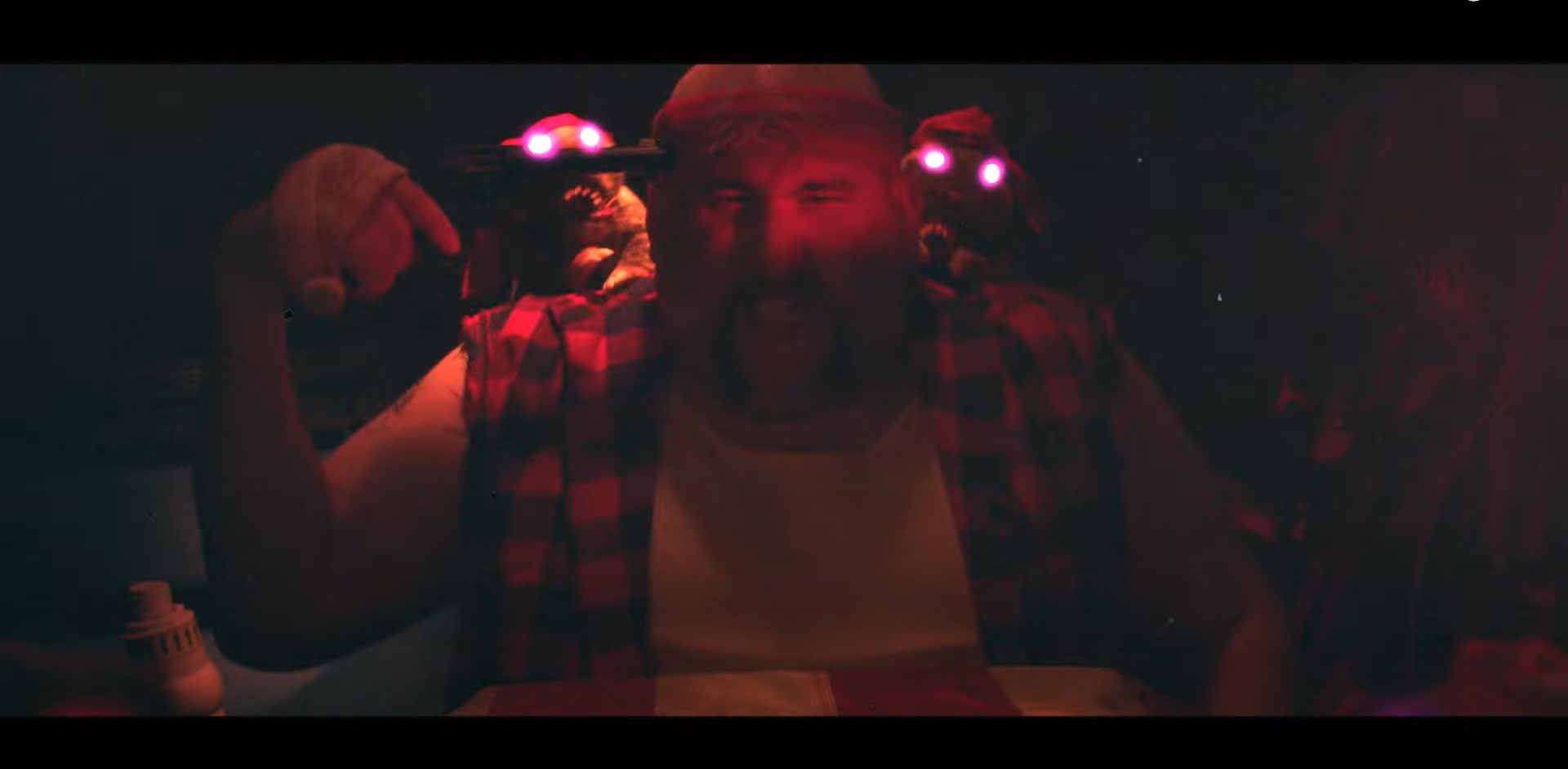
Some semblances of the 1980, Harold Ramis-directed and Chevy Chase, Rodney Dangerfield, and Bill Murray-starring gold-themed side-splitter barely lays up with Catanese’s comedy-horror spoof and homage.  There’s a catchy, 80’s-esque enough, opening credit song overtop areal views of a golf course with spliced in golf concatenations.  There’s also a dopey groundskeeper in warmonger mode against not one but a whole platoon of gophers.  That’s about where “Caddy Hack” draws the line in the sand, likely for legal reasons, in keeping tune with “Caddyshack” and from there on out, Anthony Catanese goes balls to the wall with his unapologetic creature-feature held in party mode that drops jabs of anti-Trump drollery.  The hand puppet, bloodthirsty gophers add to “Caddy Hack’s” shameless charm in a good way by layer compositing only a very little with VFX glowing eyes to give the burrowing rodents an evident behavior aberration.  Because they’re hand puppets, the gophers are very limited in frame and in action but that doesn’t hinder their mischief-maker flow and the angles, and composites, of which they’re filmed and constructed warrants credit in it hark back to the iconic “Caddyshack” dancing gopher and to make the scene somewhat tolerably evil.

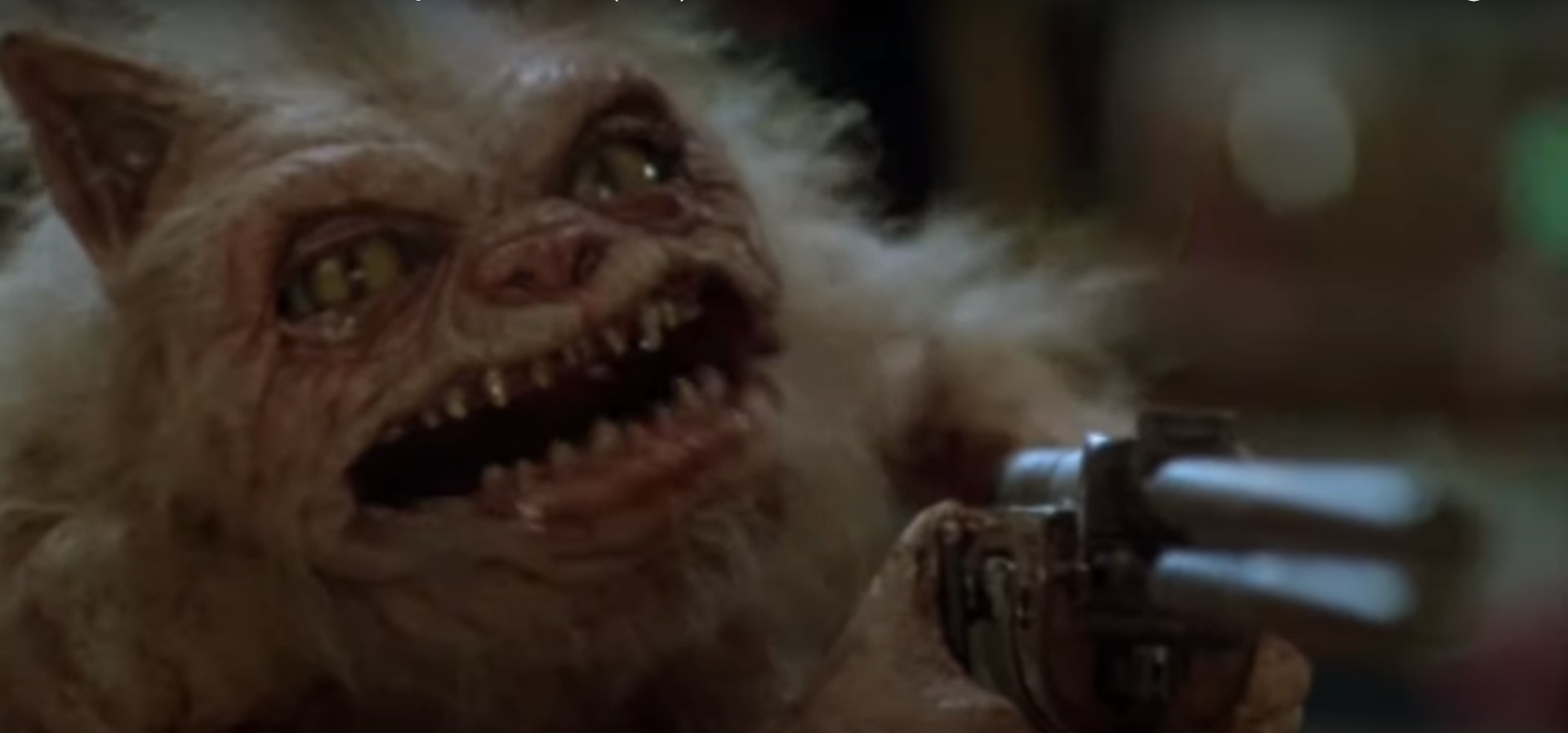
Go for this gobbling and gobsmacking gopher horror “Caddy Hack” now on a special edition Blu-ray from Wild Eye Releasing. Presented on an AVC encoded, 1080p high-definition, BD50, in a widescreen 1.85:1 aspect ratio, “Caddy Hack” caters to the standard, low-budget independent mustering with a severe contrast in details and delineation between daytime and nighttime scenes. Generally, details thrive in well-lit exteriors with some softness due in part to the innate raw footage. The ungraded final product really shows its colors, or lack thereof, at night with a washed overlay and a noticeable of digital artefacts. There are some scenes that look cropped and blown-up for closeup purposes, degrading the image resolution a bit. The English LCPM stereo 2.0 has uncompressed, uninhibited thrust that’s decently shaped and arranged in sound design and layered. Dialogue can be detached at times but still in the forefront of the action with the occasional takeover by the cute or ferocious gopher grunts. Plenty of range diversity with no depth to add space leaving competing audio tracks to fight next in line behind dialogue, including fart gags which is becoming tiresome trope across indie comedy-horror in my opinion. There are no subtitles available with this release. The special edition release comes with an abundance of special features, including an audio commentary track with director Anthony Catanese and producer Sara Casey, Balls Deep karaoke pulled from the film’s main song on the soundtrack, a Brew Break drinking game, an Old Glory Holes commercial with Wells Landon, outtakes and behind-the-scenes footage, and the caddy rap track. The Blu-ray comes with exclusive physical lineaments too with a cardboard slipcase with an unacknowledged illustrated composite art, a clear traditional Blu-ray case with snapper that holds reversible cover art – a front cover that’s mixed composition between evil gophers and a happy foursome and the reverse side has an evil gopher laughing manically in a still frame, an Old Glory Holes VIP Card, and a folded mini poster of the slipcase cover art. The region free has a runtime of 75 minutes and is not rated. “Caddy Hack” chips divot-after-divot of missed fairways only to find a love for the game that is independent horror with a wildly and weaselly whackadoo of film about fur-lined pocket cheek gophers chewing on the golfers’ balls.

Special Edition Hole-in-One “Caddy Hack” On Blu-ray!

Crooked EVIL’s Fixation for Chocolate and a Childlike Girl Will be its Sole Destruction. “The Dead Mother” reviewed! (Radiance Films / Blu-ray)

“The Dead Mother” Lives on a 2-Disc, LE Blu-ray/CD Set from Radiance Films!

A botched burglary of an art restorer’s home leaves the art conservationist dead and her daughter wounded by a shotgun blast at the hands of apathetic criminal Ismael Lopez.  Years later, the daughter, Leire, has grown into being a young and beautiful simpleton at a mentally disabled clinic where the mute girl often recesses to a caretaker’s city home off clinic grounds.  By coincidence, the lifelong crook Ismael catches sight of her on the street and becomes obsessed with her witness of his past transgressions.  Conferring with his love-hate girlfriend and felonious partner Maite, the two decide to kidnap her while she’s off clinic campus and put her up for ransom after Ismael couldn’t bring himself to initially kill her but an increasing preoccupation for the chocolate-fond and childlike Leire within a stoic Ismael places an insidious jealously and enigmatic strain between him and Maite that tests that already turmoiled codependency of affection and survival.

Emotionally recrudescent with multiple intrinsic layers of tough guilt, incontrollable desire, and maybe even a pinch of forbearing responsibility that can be labeled cossetting at times, “The Dead Mother” is a beautiful film with unsettling undertones from Spanish filmmaker Juanma Bajo Ulloa.  The “Baby” director cowrite the “The Dead Mother” alongside younger brother Eduardo Bajo Ulloa, their second collaboration after hit success with the duo’s crime thriller “Butterfly Wings” two years prior in 1991.  The Spanish film is shot primarily in Vitoria, Spain with the backdrop of a near classic medieval architecture of urban city with old wooden interiors, high ceilers, and gothic qualities, providing a relative old world air to a tale of petty ideals and madness that disintegrates by the mere site of pure, ingenuous goodness. Under the private and state run production companies Ministry of Culture and Gasteizko Zinema, “The Dead Mother,” or “La Madre Muerta,” is produced by Fernando Bauluz.

To obtain the intensity, the coldness, the unpredictable, the pitch-black humor, and the soft touch, Juanma Bajo Ulloa doesn’t hire a vocational dramatic.  Instead, the filmmaker chances actor just getting his feet wet the Spanish cinema with Karra Elejalde whose assortment of comedy and drama in his first years seasons him for the role of the reprobate Ismael Lopez, a coldhearted killer with a short fuse for anyone who defies or belittles him and, on the opposite side, can be pensive about his past and next steps in a haphazard way. Opposite Ismael is a devout partner/lover, equal in ruthless potential, yet happy, in her own way, to play house wife in their ramshackle, fly-by-night home.  Played by the Portuguese-born, Belgium-raised singer Lio, her stage name in lieu of Vanda Maria Ribeiro Furtado Tavares de Vasconcelos, the pop star, who still to this day floats between acting and singing, rivals Elejalde’s dark-and-light intensity within her own character’s amorous feelings for the petty crook and murder and would do anything to keep him, even if that means destroying what he adores.  And what does Ismael adore?  Ismael’s new fascination is with Leire, the once little girl who attempted to murder now all grown up, developmentally disabled, and beautiful.  While I can’t fault in any of “The Dead Mother’s” cast performances, I could not imagine Leire being portrayed by anyone other than Ana Álvarez (“Geisha”).  Exuding innocence in her eyes amongst a full-body vacuity, Lio might be the professional singer but it’s Álvarez who hits every note of amentia that constantly has us questioning how much of her facility is there, conscious of the bizarre love-triangle or the homicidal-involving abduction.  In the same breadth, a muted Álvarez talks with her eyes, her expressions, and her body language that subtly fidgets or does other under-the-radar subnormal behaviors to convey an unequivocal virtue starkly in contrast amongst her callous captors who enjoy playing house or even try to make her smile or laugh with jokes and play.  Eventually, the dynamic dissolves, like many love triangles do, between an advantageous perversion and deadly ultimatums that will result unfavorably for most.  “The Dead Mother” rounds out the cast with Silvia Marsó, Elena Irureta, Ramón Barea, and Gregoria Mangas.

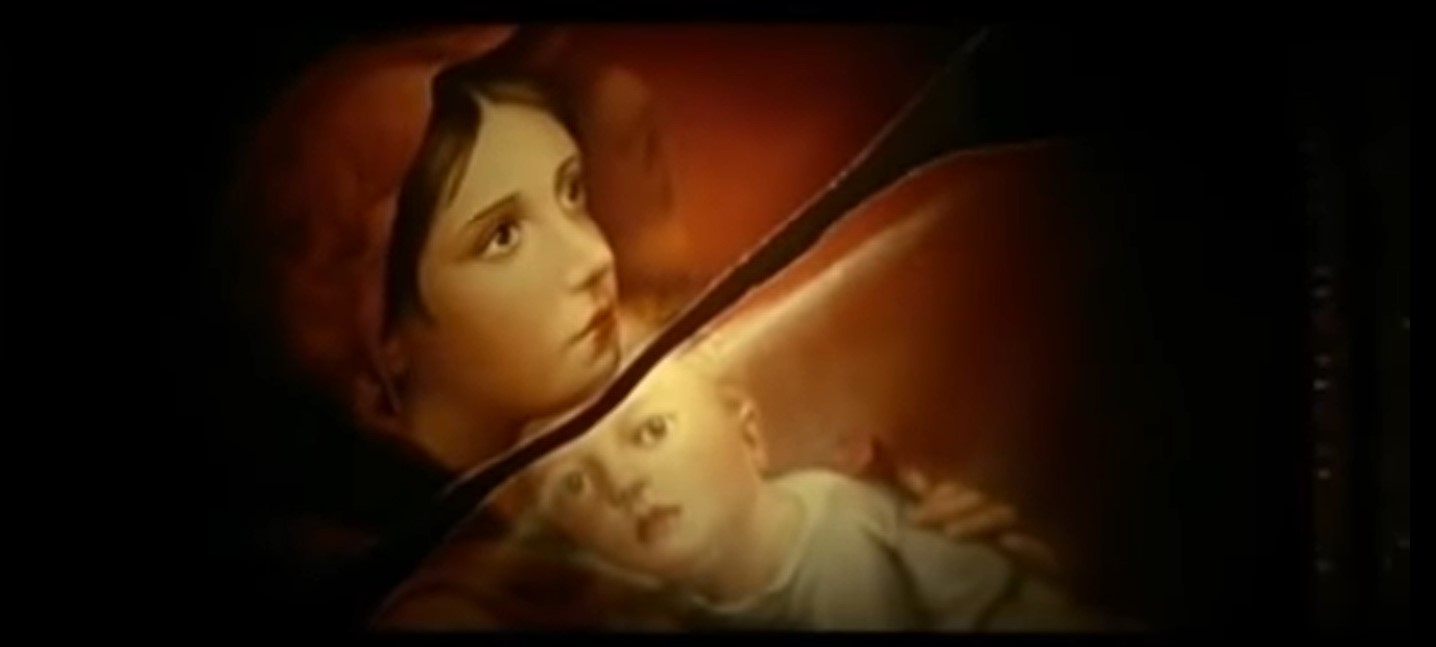
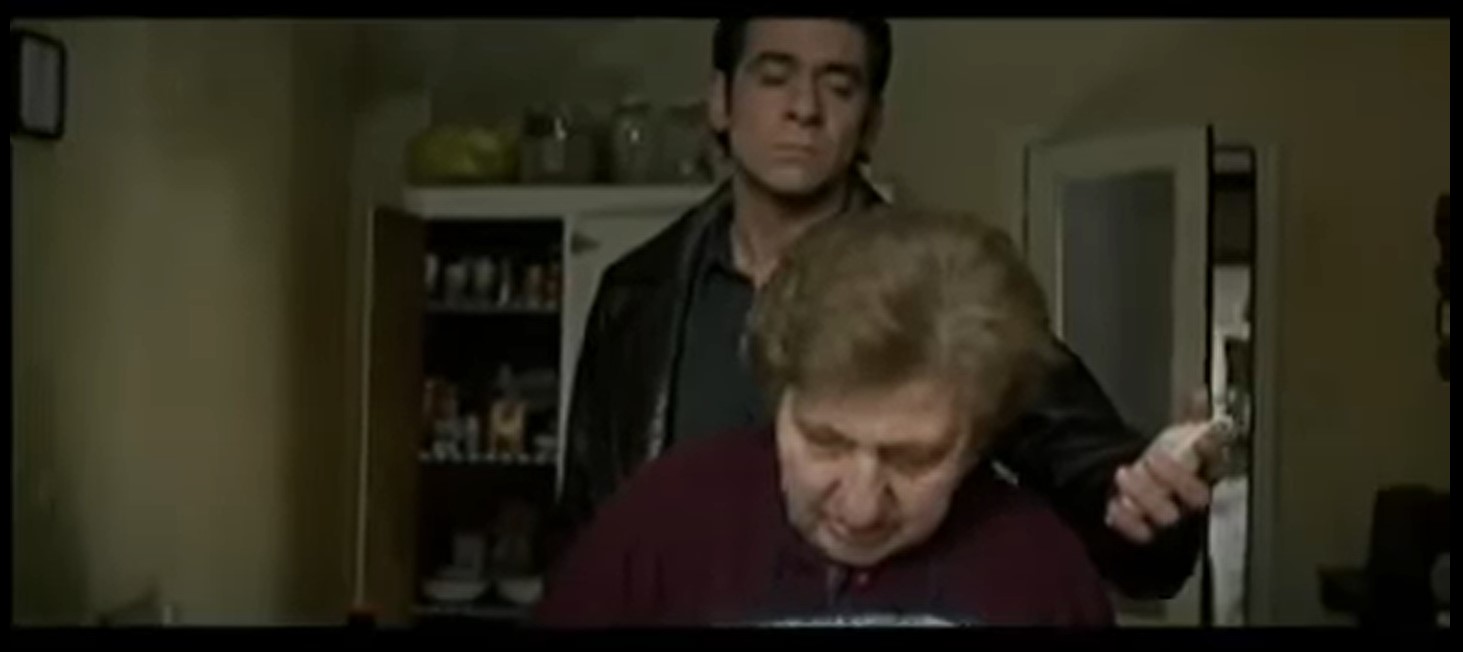
Ismael’s fixation toward Leire is so tremendously opaque without much exertion it’s difficult to understand the criminal’s ultimate motives, leaving audiences with a shrouded aftertaste of open interpretation.  Perhaps guilty from killing his mother all those years ago and nearly killing her, a wash of responsibility for her now placid and childish existence courses through him, driving him to do the bare necessity in taking care of her.  Another facet to Ismael’s curious interest is Leire’s inherent beauty despite her absent situational awareness.  His attempts to make the young woman’s empty expression become joyous with a smile fails, as if that blank-faced barrier keeps him from moving forward with something akin to being romantically involved.  In a couple of brief, uncomfortable viewing stints, Ismael gropes with the second time being passionately fondled by Maite in attempt to win over affection in what Maite believes is a duel between Leire for his attention.  Leire can be interpreted as a burden that has passed from the mother, hence the title, to Ismael, an assuming responsibility pseudo-father figure.  When Ismael kills Leire’s mother during the bungled burglary, a hint of a smile extends upon her face before the blood drips down her eyes in a fantastic POV shot by cinematographer Javier Aguirresarobe.  Supporting this theory is the Renaissance painting of mother and child with a tear in the canvas between them, a painting that Ismael lingers over for a few seconds while rummaging through the art restorer’s home.  The ambiguous nature of “The Dead Mother” only succeeds because of the confident performances and Juanma Bajo Ulloa’s august eye for the impeccable shots he wants and achieves. 

“The Dead Mother” arrives onto a limited-edition Blu-ray, to the tune of 3000 copies, from Radiance Films U.S. line.  The new 4K scanned transfer, restored from the 35mm negative and stored on an AVC encoded, high-definition 1080p, BD50, is presented in a widescreen 2.35:1 Cinemascope aspect ratio.  Juanma Bajo Ulloa oversaw the pristine cleaning of film strip defects and the new, frame-by-frame color grading at the Cherry Towers lab in Madrid, Spain.  The excellent work by the restoration company and Ulloa’s supervision of the process resulted in a naturally clean edged and detailed saturated transfer to rejuvenate the image with a fresh look.  The overcasting shadows and slate aesthetics with brilliantly hued low-key lighting suggest an immense lugubrious tone throughout, accentuated by the antediluvian structures. The Spanish language uncompressed 2.0 stereo audio absorbs what’s absent, which isn’t much, with an uninhibited, original fidelity of the dialogue, surrounding milieu, and the bordering whimsical string soundtrack by Bingen Mendizábal. There are no hints of hissing, cracking, popping, or fragmented damage of the audio track that persists on being punchy with every Ismael scuffle down to the very rustling of the chocolate wrapper in Leire’s chocolate-stained hands. While range is plentiful and natural, depth is not as utilized unless absolutely necessary, such as with the oncoming horns of the diesel trains in the trainyard or Ismael whistling between the pews of a decrepit church shot from the chorus balcony. English subtitles are available and optional. Special features on this limited-edition set include a Spanish audio commentary by the director with burned in English subtitles, The Story of the Dead Mother an archive behind-the-scenes featurette of retrospective interviews from 2008 and some raw footage of takes that’s, again, in the Spanish language with English subtitles, Bajo Ulloa’s short film “Victor’s Kingdom” aka “El Reino de Victor” from 1989 and now restored in a 4K scan, the film’s trailer, and photo gallery. Physical attributes impress within the clear, slightly thicker amary Blu-ray case that’s been conventional distribution use with Radiance Films in its near retro, austere facade. Sheathing a reversible cover of the original media artwork inside, the outside cover continues to remind me of its Arthur Fleck appeal with a doleful Ismael Lopez in his very best clown make up. Both discs, the Blu-ray and the CD soundtrack, are overlapped and locked in place pressed their respective black and creme coloring scheme. On the insert side contains a 35-page color booklet filled to the brim with captured film images, promotional images, and cast-and-crew posed pictures along with the CD track listing, cast and crew breakdown, and expressionism written pieces and essays by Eduardo Bajo Ulloa, Juanma Bajo Ulloa, Nacho Vigalondo, and Xavier Aldana Reyes. The unrated feature has a runtime of 111 minutes and his region free for all you worldly, cultured lovers of cinema out there. The mother might be dead but Juanma Bajo Ulloa’s converging of cynical odd behavior with the breakdown of status quo by a wicked curveball makes for a darkly cherub of Spanish filmmaking worth coddling in Radiance’s exceptional release.

“The Dead Mother” Lives on a 2-Disc, LE Blu-ray/CD Set from Radiance Films!

Sucked Into Hell. Surrounded By EVIL! “Vampires and Other Stereotypes” reviewed! (Visual Vengeance / Blu-ray)

Hell Wants You To Stay for Dinner!  “Vampires and Other Stereotypes” on Blu-ray!

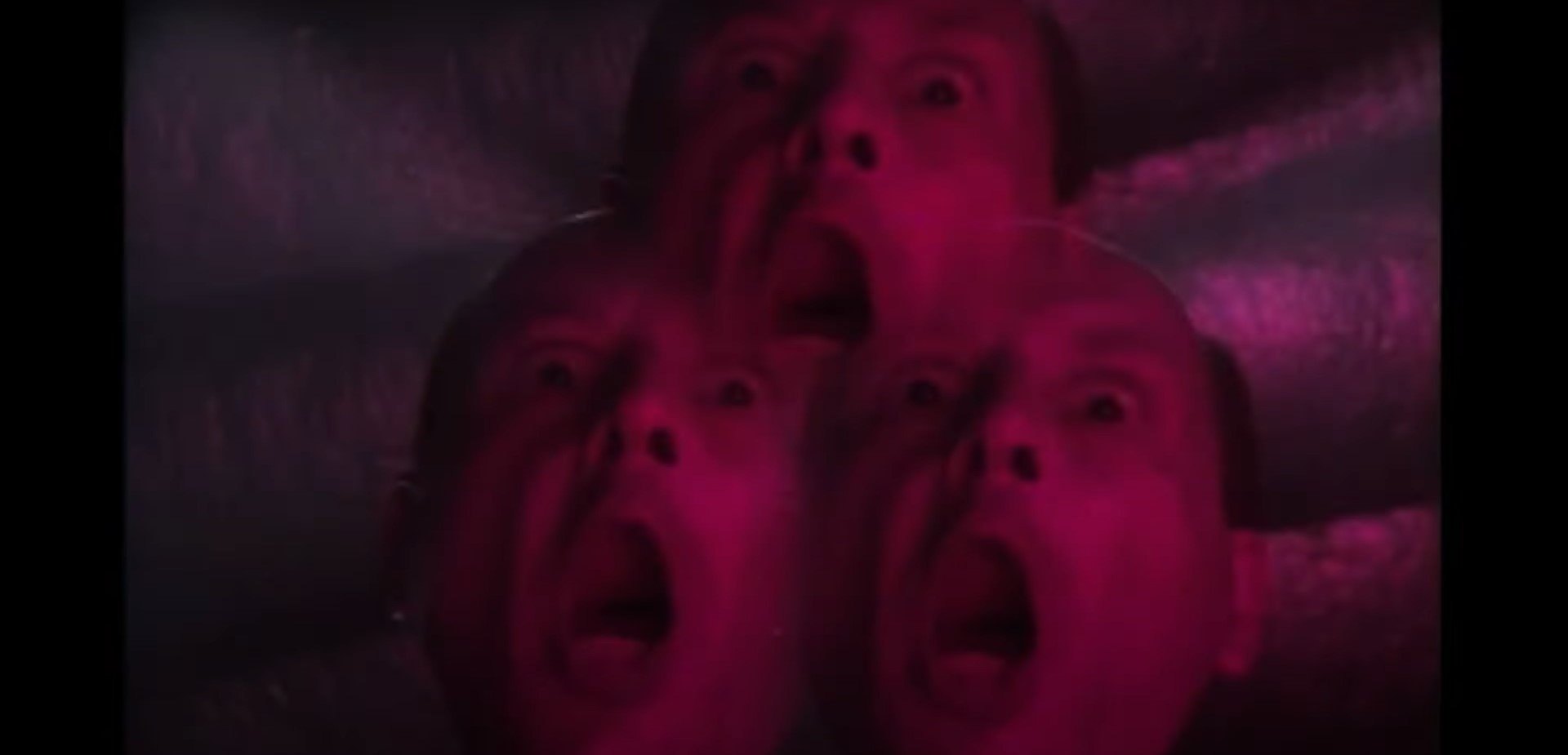
Ivan and his hard-nose partner Harry work between the shadows as protectors of the Earth realm.  The pair of paranormal guardians battle demons attempting to sneak from the Netherworld for more domain and power in the human world.  After thwarting a demon’s reneging plans with a wealthy businessman, they find themselves sucked into a portal to Hell after a group of young partygoers become lost and inadvertently crossover everyone in the abandoned warehouse to the underworld, including the warehouse itself.  Confined to a room with the portal opening, they must band together to survive the night where gnarly demons roam behind every door and are master tricksters with one goal in mind – to breed human women with half-breed demons to procreate more of Hell’s minions.  Its up to Ivan and Harry to see the survivors through until dawn but not everyone is who they seem and when the masks are dropped, real Hell will pounce upon them.  

The northeastern American horror-comedy, “Vampires and Other Stereotypes” is the topsy-turvy and totally-transcendental SOV feature from first-time writer-director Kevin J. Lindenmuth (“Twisted Tales,” “Monsterdocom”).  Shot primarily in Cherry Hill, New Jersey with some exterior city shots of New York City, the film alternatively known as “Hell’s Belles” sought ambitious Hell below Earth undertakings, creating a maze-like dwelling for disfigured dwellers of the demonic kind, and a down-the-rabbit hole story where the head-lopping queen is actually the devil in a leatherjacket playing procreator matchmaker and the Cheshire Cat is a overgrown rat looking to nibble on human flesh rather than cheese.  The rat, as ostentatiously cool as it sound, is simply a slither of one of “Vampires and Other Stereotypes” few themes, which is fear.  Kevin J. Lindenmuth’s production Brimstone Media Productions serves as the studio and Lindenmuth serves as sole producer of his self-funded venture into the vile mouth of the demon world.

“Vampires and Other Stereotypes” follows two difference groups related to the existence of Hell, the demons that inhabit it, and the rogue demons splicing themselves into the human world. One group is the guardians Ivan (Billy White) and Harry (Ed Hubbard) who are very much aware of the esoteric magnitude of the abysmal situation and background while the other group, young Generation X’ers oblivious to the signs of Satan’s underworld seeping into their own. Lead by serial-dater and college girl Kirsten (Wendy Bednarz, “There’s Nothing Out There”) and her two tagalong best friends Linda (Anna Dipace) and Jennifer (Suzanne Scott, “Child of the Sabbat), the ready-to-party trio provide the state of affairs with Kirsten’s nonchalant taste in bad boy boyfriends, believing her courting apathy, treated as an impulse indulgence for the sake of fun, will one day run her out of luck. Enter Erik (Mike McCleery, “Deep Undead”), another misfit miscreant unearthed by Kirsten in her ever unquenching need to be wined, dined, and spoiled by the bottom layers of the dating pool. The two parties clash walking into the epicenter of an open investigation, denoted by an aperture in the middle of the room, where dead, decapitated bodies are strong upside down and Kirsten and her businessman father (Rick Poli, “Blitzkrieg: Escape from Stalag 69) are unexpectedly reunited in an air of something more happening behind the scenes other than Kirsten’s father’s flailing dealings with the demons and Erik’s party-sniffing nose leading them to astray and lost. The rest of the cast comes together with Laura Vale as Rosa the psychic, Monica Batavanis as the wife lost to the dark side, Mike Memphis as the Elvis impersonator, Bean Miller as the Lizard King aka Jim Morrison impersonator, and Sally Narkis as the demon waitress.

Lindenmuth’s dragged to Hell premise is a neat enough concept to peak the interests of the casual and diehard horror fan. However, the executed result is a whole other animal that tends to claw back, trying to maul away your viewership.  The special effects Scotts – Scott Hart and Scott Sliger – pull off practical prosthetics and latex with some side curb appeal that helps lift up “Vampires and Other Stereotypes” as best as possible, but the effects have a difficult time keeping up with the film’s innate ambitious concept to where much of the story relies on character exposition to fill in the gaps and where I note the exposition has a few cracks and leaks in themselves is in the very first word you see in the title that sets the expectation right off the bat before going far into a narrative that constantly and hurriedly builds upon the demonic construct.  That edifice evolves so high and so quick that the air becomes thin when the very first presence of a vampire insert comes late into the third act.  You nearly forget that the word Vampire was ever in the title.  Where Lindenmuth succeeds in this frenzy of fiends and folly is passively providing verbal cues of one of the character’s monotone-delivered pangs of extreme hunger.  Being a New Yorker and a rather large individual, you believe a NYC pizza or a greasy burger would be in mind here to feed the need but then the gag drops with well-timed revelation albeit the severe tardiness inside the narrative framework that suggests maybe the title should have been reworked or better thought through to really add upon that element of surprise and not sit waiting and waiting until bloodsuckers join the jittery jamboree.  While the demons are jovially wicked, their wily ways are playful to a fault compared to an “Evil Dead” Kandarian demon or a twisted and ugly demon from “Night of the Demons,” a class of demons that craft a special kind of deviance that maniacally fun as they rip you to shreds.  Not to say the “Vampires and other Stereotypes” demons are painfully dull or too good to be terrible, quite the opposite in the variety of severed head yappers or an oversized rodent, but they don’t offer that same fear-inducing merriment of playing with their food before they eat it. 

The 12th release on the Visual Vengeance line of dusted off sidelined SOV horror and cult films with a brand-new Blu-ray release with an AVC encoded, 1080p (note: off the original standard definition master 1-inch tape), BD50 presented in the original pillarbox of a 1.33:1 aspect ratio. Visual Vengeance provides the usual prefatory statement about the using the best possible elements out of consumer grade equipment, but I do think “Vampires and Other Stereotypes” has the best details within the Betacam SP camcorder, which was, at the time, the crème de la crème of videotape, and then have the video run through a millimeter gauge emulator to give it a 16, or even stretched to a 35 mm, appearance at times. Tullio Tedeschi cinematography is soft, light, and dreamy that forsakes stark details but does offer a sheen along the surfaces and textures that size up and adds to depth to the objects, even more so with the film’s hard lighting and deep shadows to provide a diversion away from the cheap sets but also a diversion away from what could be lurking from the horror-set tropes. The English language stereo 2.0 has decent dynamism between the dialogue, ambience, and soundtrack. Dialogue has a voice above the other sublayers, separating its prominence in front of the batty surroundings of a demon-riddled rodeo and against a soundtrack, or lack thereof, that’s repetitively uninspiring to takes away from the spirt of the level Lindenmuth attempts to reach with his debut. Optional subtitles are available. Special features include three new audio commentaries with director Kevin Lindenmuth, actor Mike McCleery and Lindenmuth, and Weng’s Chop Magazine’s Tony Strauss. Also included are new, brief interviews with Lindenmuth on the technical tangents of his film, actress Laura McLauchlin surrounding her role as Rosa and various recollection of principal photography, actor Mike McCleery as bad boy Erik fitting into his skintight, nonbreathable demon mask and having a good time on set overall, Suzanne Turner on playing Jennifer, Sally Narkis in her brief role as demon waitress and her sidetracking fashion career, and plus interviews with makeup effects artist Ralis Kahn, special effects artist Scott Sliger, photographer Sung Pak, and publicist Joe Mauceri with behind-the-scenes image gallery, original trailer, Visual Vengeance trailers, and Lindenmuth early Super 8 films along with commentary by the director. As always, the physical presentation is nothing short of a thing of pure beauty with a rigid slipcover graced with new illustration by Tom “The Dude Designs’ Hodge with a traditionally sized clear Blu-ray amaray case with reversible front cover that includes more new looming demon heads art and the original one-sheet on the reverse side that really relates to the dreaminess of the photography. In the insert pocket is stuffed a color trifold essay from Tony Strauss with behind-the-scene stills, a folded mini poster of the Blu-ray case cover art, and retro VHS stickers. Disc art is pressed with the slipcover art. Region free for the world to see, the Blu=ray is unrated and has a 87 minutes. Nominal and ambitious, “Vampires and Other Stereotypes” fights an uphill battle coming off the heels of an extremely gorified video nasties of the 1980s, but Lindenmuth fulfills with an indiscriminate spread of insanity at every turn with some vivid and vibrant vanward effects to drive this one home to the great people at Visual Vengeance, a boutique distributor of lost, but not forgotten, SOV buried treasure ready to be rediscovered.

Hell Wants You To Stay for Dinner!  “Vampires and Other Stereotypes” on Blu-ray!

Hail Down EVIL for a Ride! “Taxi Hunter” reviewed! (88 Films / Blu-ray)

“Taxi Hunter” Now Available on Blu-ray!

A moderately successful and mild-mannered insurance salesman is soon to be a new father.  As he and his wife baby prep with shopping around town for supplies, a few run ins with crabbily rude and scamming cab drivers make it known that the cab drivers flood the market with lawlessness.  When his wife unexpectedly goes into labor and his personal car out of service, he has no choice but to hail a cab but when the cabbie refuses the fare due excess vaginal bleed, the cabbie quickly shuts the passenger door and speeds off during the torrential rain stop, not realizing snagging the woman night gown and dragging her down the street a few yards, killing her and the unborn child, and speeding off in attempt to save his own skin.  Spiraling down into a deep depression and pushed beyond his moral limit, he justifies killing the taxi drivers for their abhorrent behavior that makes him a hero of the common people while also making him be public enemy number one with the taxi union and the police. 

History has proven, at least since the pre-2000s, that taxi drivers have had a long notorious stigma of being rude, uncouth, and greedy, especially in big metropolitan areas where traffic jams on a daily basis and the amount of fares determine your livelihood wage can eventually and insidiously get under a driver’s skin and turn the once service-needed necessity into a crabby-cabbie, a side-effect symptom of the profession one could assume.  Hong Kong’s 1993, Cat III shocker “Taxi Hunter” releases that pent up anger most of us have experienced under the clicking of the fare meter when Joe cab takes the long way around town.  Written by Wing-Kin Lau (“The Untold Story III”) and Kai-Chung Mak (“Twist”), “Taxi Hunter” marks the second collaboration effect of the same year as “The Untold Story” and “The Untold Story’s” co-director Herman Yau.  “Black Blood’s” Hung-Wah “Tony” Leung and “Tiger Cage” franchise’s Stephen Shin produce under Galaxy Films Limited and distributed theatrically by Media Film Asia.

Not only do the writers and director Herman Yau reteam to develop another controversial Category III picture but “The Untold Story’s” star Anthony Wong steps foot into another unraveled monster of a man with Kin, an amicable insurance salesman good at his job and eager to be the best father as possible quickly spins into melancholy and murder after the death of his pregnant wife at the hands of an unprofessionally hasty taxi driver.  Unlike the quietly stewing and maniacally murderous pork bun shop owner, Wong’s villainous runs takes backseat to his anti-hero performance, a punisher of taxi scum.  As Kin, Wong can be the delicately wonderful husband and the brazen barbaric with an easy slippery slope transition in between as he works to perfect Kin’s killing craft.  Unbeknownst to him, tracking him down is Kin’s own police detective brother Yu and his fun-loving goofy partner Goh, but unbeknownst to the detectives is the taxi serial killer is Kin.  “Iron Monkey” star Rongguant Yu offers up tough cop like it’s his job, mixing a humble blend martial arts and entrenched investigator into his character while also being blind to his brother’s moonlighting massacres.  Goh, on the other hand, played Man-Tat Ng (“Shaolin Soccer,” “Tiger Cage”) is supposed to provide the levity, the comic relief, the humor, but the cartoony way Goh is portrayed, in garb and in gab, reduces him to be nothing more than a Western Poser of the East with NBA and other Western branded gear from head to toe.  Goh feels very much like an attempt to jab fun at what Hong Kong might have perceived as American culture:  tasteless, worthless, and clueless.  Goh seemingly only exists to be a link between Kin and his brother when Kin hops into Goh’s undercover operation of pretending to be a taxi driver to which Kin takes his numbskull manner as cantankerous cabbie.  “Taxi Hunter” chauffeurs in the rest of the core supporting cast with Athena Chu (“Super Lady Cop”) and Hoi-Shan Lai (“Dr. Lamb”).

However still managing to provoke potency in parental guidance, to me, “Taxi Hunter” is perhaps the least intense Category III film I’ve experienced to date, but don’t let that keep you from taking a ride in Herman Yau’s rancorous retribution vehicle that has scores of variable car action scenes and a sordid glaze of street-level grime amongst the taxi industry.  “Taxi Hunter” engages us to think about the minor point As to point Bs in our lives that can easily subvert the well-oiled machine that is our existence.  Kin has a promising career, money (a motif we’ll revisit later), and a baby on the way and aside from the money, bizarrely enough, it all comes crashing down in the moment of a car door slamming shut. Those micro-fissions separating our good moments with nastiness slog us into another mindset, a killer’s mindset, when we’re wading at the very bottom of the losing everything depression. Lau and Mak don’t immediately set Kin’s path shortly after the turning point event, which also had a good chunk of setup. Posthumous need to kill cabbies didn’t occur directly after the tragedy as the script allowed time for Kin to try and stomach digesting tremendous loss, even giving away much of his money, as aforementioned, for services gone unrendered such as with the prostitute he didn’t end up sleeping with or being overcharged a child’s trading card just to make a crying child, a future version of his own child now deceased, happy when his parents would not purchase it. “Taxi Hunter” has more than just a singular character-driven story with plenty of suspense from Kin’s evolving practice of killing taxi drivers to the plethora of practical car action. “Taxi Hunter” is metered madness that shies away disgusting you with overt violence or seducing you with graphic sex of other Cat III film in its purer requital black comedy only Herman Yau and Anthony Wong could chauffeur in.

Presented in full high-definition 1080p from the original 35mm stock, “Taxi Hunter” has been flagged down for a new Blu-ray release from 88 Films, shown in anamorphic widescreen 1.85:1 aspect ratio. The transferred print keeps the natural grain of the 35mm film but swells the pixelations to ramp up details and textures tenfold without appearing touched up or improperly enhanced. 88 Films’ coloring grading leans slighting into the metallic blue steel, offering a gritty detective thriller with the overcast effect. The print also shows hardly any age or damage that results in a clean redress of a pristine print. Only one audio option is available for selection, a Cantonese LPCM 2.0 mono. Curious to why there isn’t a Mandarin option leads to speculation that Cantonese sole use was due to the dialect being more widespread in Hong Kong to keep a product of Hong Kong, typically with CAT III products where mainland China censorship would have picked “Taxi Hunter” to pieces. Though in original language, ADR is still used in post and while dialogue is cleaning in the forefront of the rest of the audio tracks, there’s not a ton of depth being too at the forefront, especially with Goh’s goofball gab. However, the action-laden and quarrelsome dynamics provide a plentiful range of sounds from screeching of tires, to the car crashes through windowfronts, to the multiple gunshots that make this sound design rich and energetic. English subtitles are offered and though glibly bland and concise, a lot of repetitive words and phrases, such as a wide use of bro, the subtitles are error-free and paced well. This special edition release includes a new audio commentary with Hong Kong film expert Frank Djeng, a new interview with producer Tony Leung Hunting for Words, a new interview with actor Anthony Wong Falling Down in Hong Kong, a new interview with action director James Ha How to Murder Your Taxi Driver?, still gallery, and trailer. Physical features available, if you’re quick enough, include a limited-edition cardboard slipcover with Sean Longmore’s compositional illustrated art and a folded poster insert of the same art. Also available inside the green Blu-ray case is reversible cover art with the initial same design as the slipcover or, my personal favorite, the original Hong Kong poster art that I proudly display on the shelf. Disc art is pressed with a slight variant of Longmore’s art and the not rated disc’s format comes region A and B playback with the film clocking in at evenly paced 90 minutes. Classic 1990’s fare without charging us an arm and a leg in wasted time, “Taxi Hunter” is solid CAT III with more vindictive and veridical visceral moments that change gears often and punches the gas into accelerating this terminal taxi tormentor.

“Taxi Hunter” Now Available on Blu-ray!

Punk Rock EVIL For All the “Wrong Reasons” reviewed! (MVD Visual / Blu-ray)

“Wrong Reasons” is this Year’s Punk Rock Film!  

Australian punk rocker Kat Oden has fame in her home country and is steadily trending in the U.S. but when a masked man kidnaps while she lays unconsciously high in a drugged-out stupor, she wakes up being chained to a bed far away from where she was abducted.  Her mild-mannered kidnapper’s intentions revolve around getting Kat clean of narcotic impurities while the media circus explores wild theories, interviews her self-centered parents, reveals ugly secrets of her American rocker boyfriend, and follows the browbeaten investigation of an actor-turned-detective handling the Kat Oden case.  When the detective goes rogue, burned out by constant belittlement from his chief and being blamed for the inadequacies of his clownish subordinate officers, he makes a deal with an eager news reporter to give them the exclusive solving of the case for his own news show.  As he inches closer to finding Kat, the kidnapper and Kat dynamic undergoes significant strides to understand one another’s wayward reasons. 

The one major difference between major studio productions and the micro independent features shooting during peak COVID weeks, months, or years was the indies made use of the time whereas the bigger budgeted and the hundreds of cast and crew employed were virtually on furlough, hiatus, or just plain scrapped future movie ideas altogether.  Independent films had structural concept advantages, such as a smaller cast and crew to lessen the changes of infection, locations were typically limited so travel was not necessary, and indies sometimes would shoot guerilla style anyway to capture the scenes required for the story.  Writer-director Josh Roush, who lived and breathed producing Kevin Smith documentaries for the “Clerks” and “Dogma” director’s more contemporary credits, decided to pivot into the fictional route and just as soon as his dark comedy script for “Wrong Reasons” was about to start principal photography fruition, the world shut down in a pandemic lockdown.  However, a global emergency didn’t hinder Roush’s ambition and scaled down his crew and cast on set to get the job done. Executively produced by Landon Thorne, Kim Leadford, and Kevin Smith doing his version of Cameo appearances as well as David Shapiro contributing the other half of the funds, “Wrong Reasons” is a production of Rousch’s AntiCurrent Media, with Liv Roush and Matthew Rowbottom producing, and Shaprio’s Semkhor Studios.

In the role of Kat Oden, a real life Australian making her full-length feature film debut, is none other than director Josh Roush’s wife, Liv Roush.  Co-producing the numerous Kevin Smith making-of featurettes and other independent productions, including her husband’s music videos, Liv Roush has always been a face behind the camera and now she’s stepping Infront of the camera, mainstage as the center of a kidnapping ordeal being a promising up-and-coming punk rocker who has lost her way by sinking into drugs and an objectifying relationship with an egotistical American rocker.  While Roush can obviously handle her own being chained to bed in fishnet stockings and dip into a range of rage, fear, hurt, and acceptance, “Wrong Reasons” splits the story with another centric character in Detective Dobson.  Kevin Smith film regular Ralph Garman has a grip on the competent yet pent up case detective Charles Dobson but the detective goes through a series of case mishaps to scheming his own rogue operation that pulls away from the Kate Oden kidnaping ordeal perpetrated by James Winandi, an ambiguously misunderstood role by James Parks (“Red State,” “The Hateful Eight”), son of the legendary actor Michael Parks (“Nightmare Beach,” “From Dusk Till Dawn 3”).  The connection made between Winandi and Oden faces challenges in fully fleshing out what Winandi is trying to accomplish in by removing the lyrically strong and influential rocker toward a path of permanency for other listeners to experience the epiphany that befell Winandi.  It’s a motivation that couldn’t be grasped fully because we’re more invested in this parallel plot of Dobson’s working of an advantageous angle for himself that the message or the theme becomes lost in the superficiality for one’s own sake.  The cast rounds out with perfectly suitable supporting cast including Teresa Ruiz, Daniel Roebuck (“Final Destination,” “31”), David Koechner (“Cheap Thrills,” “Snakes on a Plane”), Matt Passmore (“Jigsaw,” “Come Back to Me”), John Enick (“Project Eve”), Harley Quinn Smith (“Once Upon A Time in Hollywood”), Kym Wilson (“Deadly Cheer”), true to form punk rocker Donita Sparks of L7, Darren Hayes of duo band Savage Garden, as well as a relatively quiet genre icon Vernon Wells (“Commando”) as Kat Oden’s dad and Kevin Smith as the a news cameraman in cargo shorts.

The divided narrative limps unbalanced between the two parallel storylines soon to collide in eventual finality.  We don’t really receive much wisdom, clarity, or even any kind of progressive dynamic between Oden and Winandi who quickly and quirkily come to a sensible understanding with Winandi’s masked kidnapping and Oden being chained to the bed. There’s also piped in televised news reporters covering the kidnapping case or verbally attacking the president or something enthusiastically bias and gospel from the news channels in what becomes a motif of media circus frenzy, corresponding also with the live news coverage that vultures around the Oden case. What Roush is attempting to convey through the unlikely kidnapper and kidnappee pairing doesn’t strum the right chords and flutters in place to where we’re not exactly sure how Kat Oden’s music affects her kidnapper given little-to-no backstory on him and not foreseeing a future outcome of his act in what is almost an akin to winging the situation.  Instead, we’re more engrossed into Detective Dobson’s downtrodden investigation.  A seemingly capable detective with good instincts, negotiating with suspects, and even has a new woman in his bed every night, the luck he has with his professional counterparts, subordinates, and report-to doesn’t necessarily reflect his personality.  When Dobson starts scheming to finally be the one top, the audiences’ attention shifts from the fluttering wrong reason to kidnap your idol to the wrong reason for turning into a self-serving public servant.

“Wrong Reasons” has all the right A/V and bonus content moves on MVDVisual’s Blu-ray release.  The AVC encoded, high-definition 1080p package is presented in a widescreen 2.85:1 aspect ratio.  Cinematography by Josh Roush and Matthew Rowbottom ensure the look Roush wants to obtain for his first feature length fiction, a clean less-is-more, truth-in-practicality visual that often echoes Kevin Smith’s earlier body of work on the indie scale.  The Blu-ray’s BD50 storage capacity handles compression well to thwart any artefact popups and the limited variety of color range, aka a more natural grading, doesn’t pressure the digitally shot film to crumble under the compression.  Details are sharp and textural in what is a solid visual presentation.  The English DTS-HD 5.1 surround sound is equally comparable with a dialogue first clarity.  There’s slight continuous feedback on the underlay, perhaps equipment interference picked up by the mic as it becomes a constant throughout.  Range is also limited to what is essentially a talk head picture with bits of action here and there with “Wrong Reasons” driven by the performances rather than by action.  “Wrong Reasons” is made for and presented by punk rockers with a film that’s very much dedicated to the music genre.  The soundtrack highlights a faction of the punk rock with bands such as Tim Armstrong, L7, The Wipers, Channel 3, The Unseen, Black Flag, and Bi-Product having tracks on the production.  Optional English subtitles are available.  Special features include an lengthy but informative Kevin Smith introduction in his very animated and enthusiastic Kevin Smith style, an audio commentary with director Josh Roush, producer Kevin Smith as well as another a second audio commentary with the director alongside co-producer Matthew Rowbottom, composer Cam Mosvaian, and wife/star Liv Roush, a Q&A session with the Roushes, Kevin Smith, Ralph Garman, and James Parks, deleted scenes and outtakes, Josh Roush’s short film “Idiot Cops,” and the original theatrical trailer.  The exclusive MVD release comes with a cardboard O-slip of a generically staged, or promo-esque, Liv Roush ankle-chained to a chair with a masked man standing next to her in non-menacing positions.  Inside is a reversible front cover of the same image, but I prefer the reverse side of the black and red illustrated silhouettes of the same character inside the clear Blu-ray snapper as it invokes more intrigue and suspense.  The disc art misleads with a horror composite of Kate Oden screaming, looking afraid, and the kidnappers mask hard lit to look more dramatic.  There are no insert materials.  The not rated film has a runtime of 97 minutes and has region free playback.  Josh Roush’s debut dark comedy has transference troubles, perhaps I’m not too punk enough to fully absorb how the music should move me, but we see acting veterans and greenhorns mix it up fitly for this COVID era picture.  

“Wrong Reasons” is this Year’s Punk Rock Film!