The EVIL is Not Just in the Virus, but Also in the Cure! “Side Effects May Vary” reviewed! (Tempe Digital / Blu-ray)

“Side Effects May Vary” From This Blu-ray Drug!

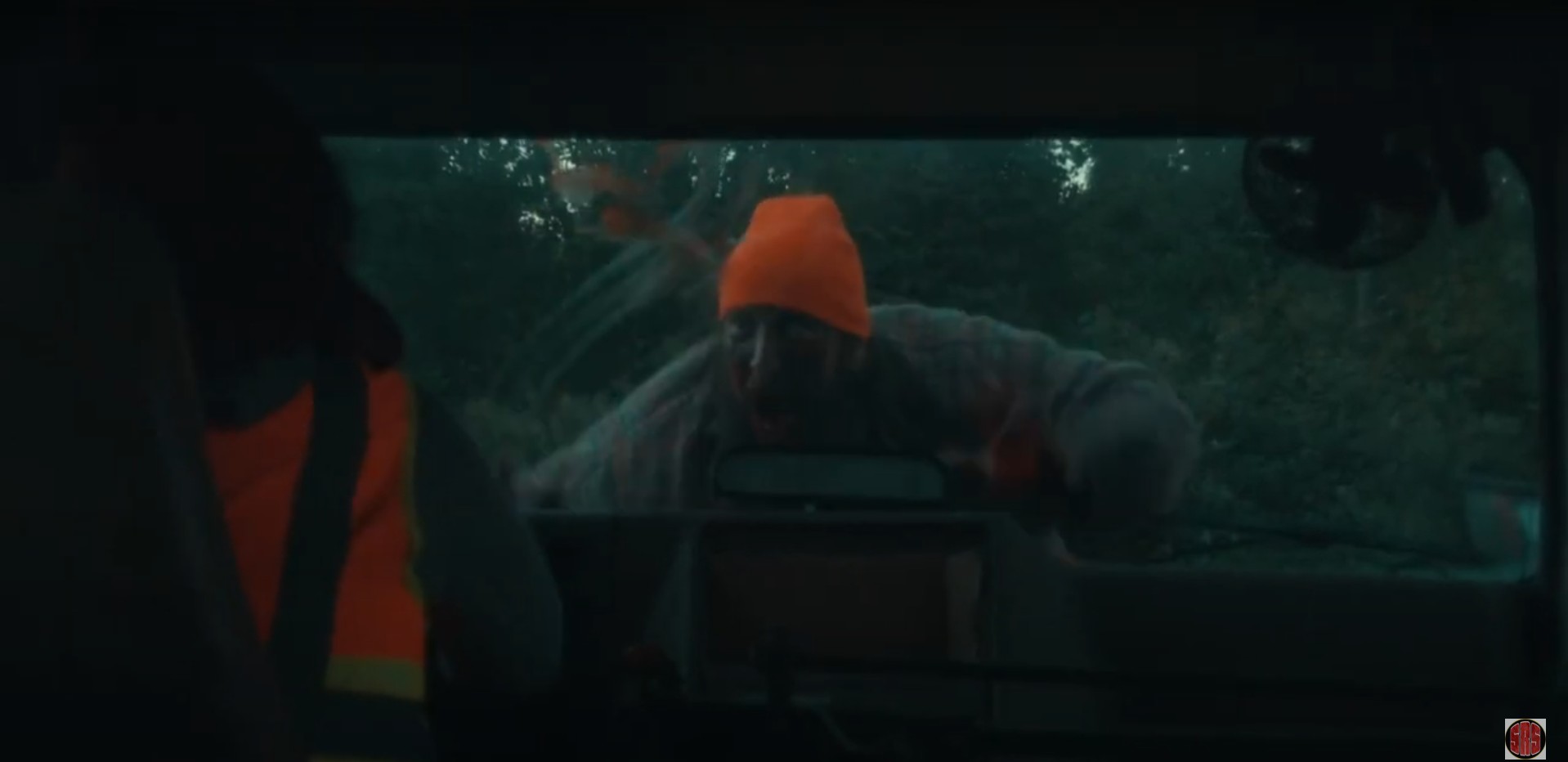
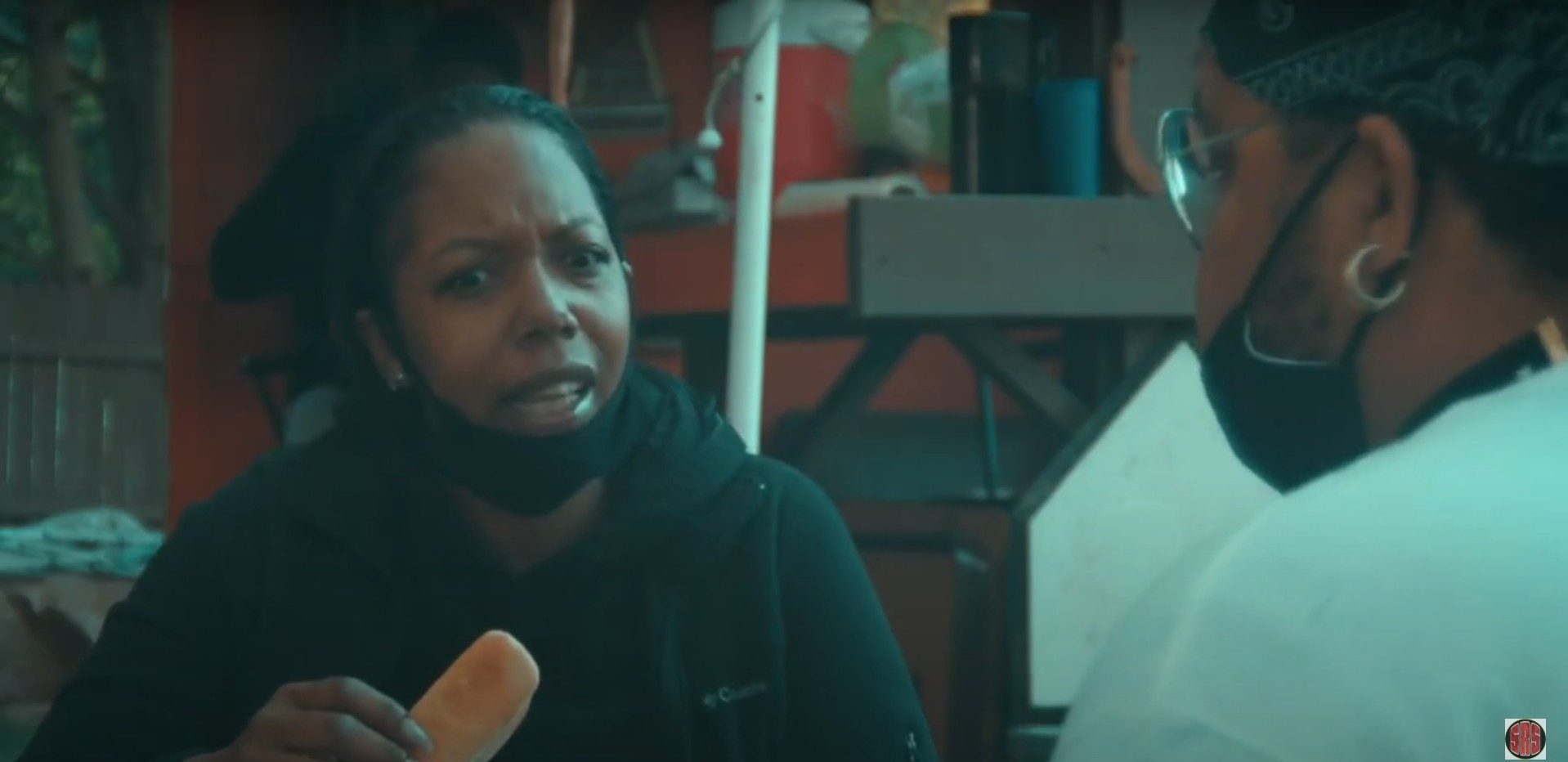
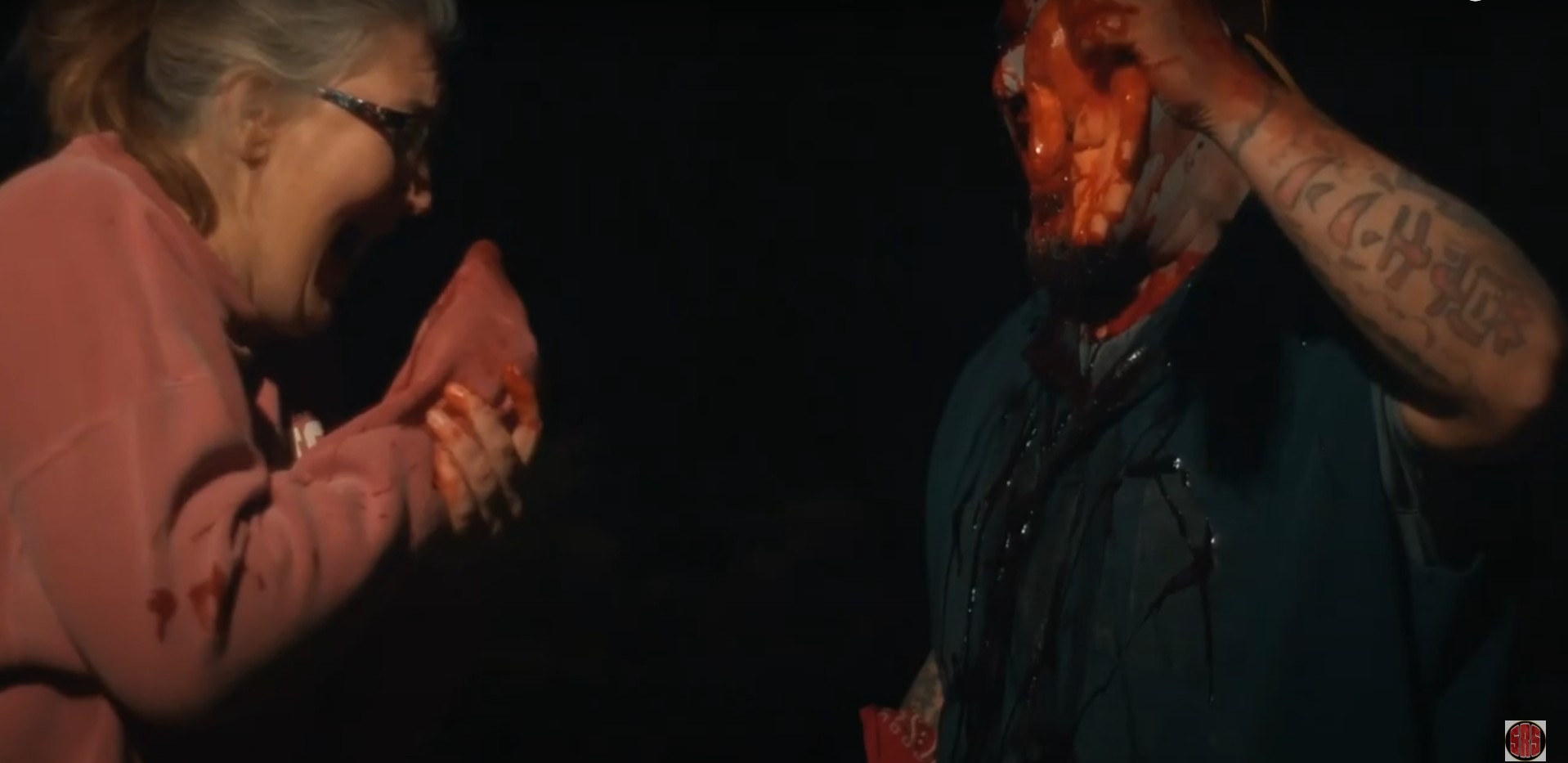
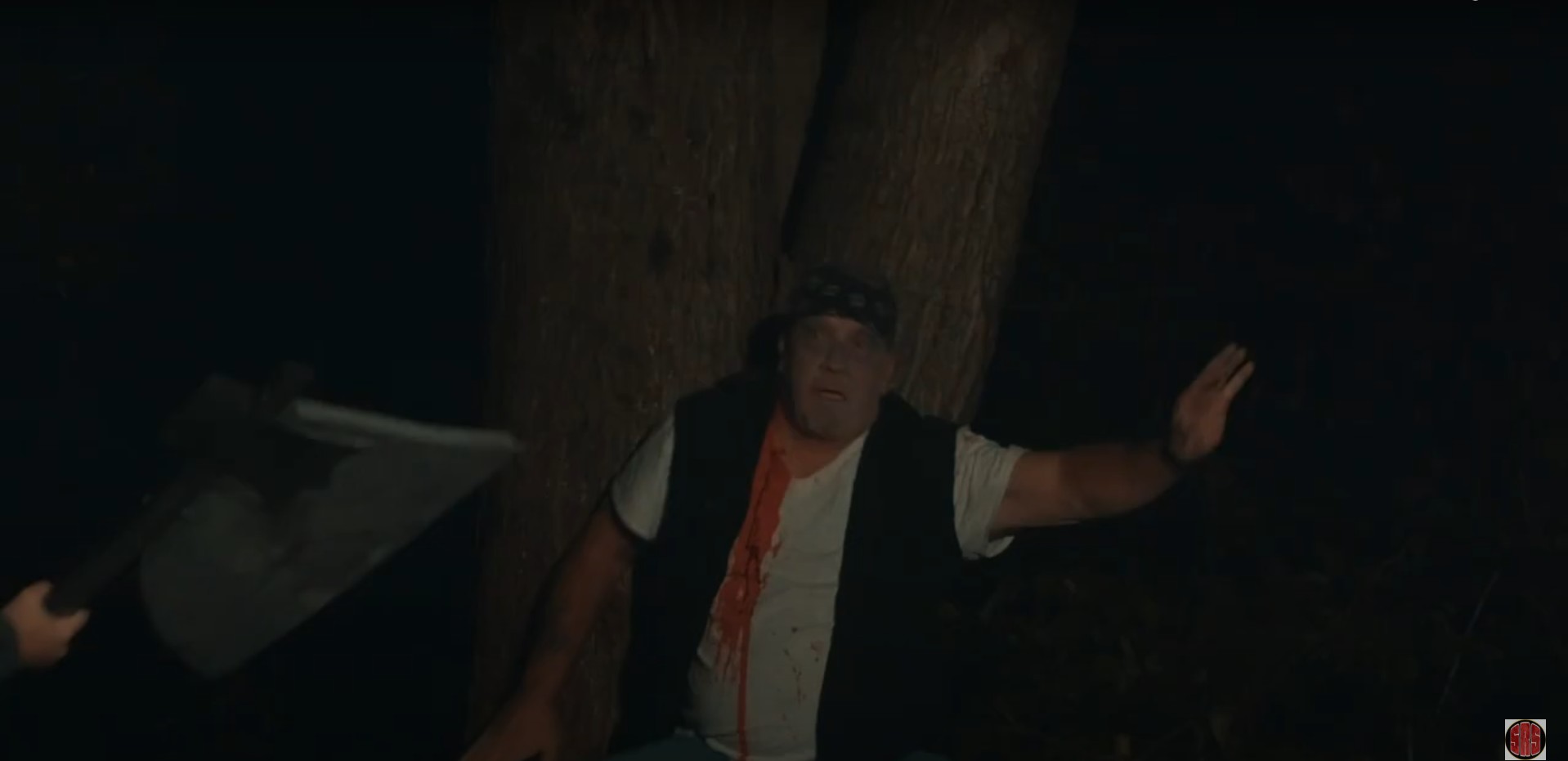
COVID-19 virus has the world masked up and social distancing in full effect with experimental vaccines being rushed toward a rollout.  For Glenn Rollins, being under the weather now for weeks still hasn’t convinced him to inject himself with experimental Government drugs meant to combat coronavirus but when wife Janelle does everything in her persuasive power to convince him to take the vaccine, Glenn reluctantly agrees to receive the shot at his doctor visit the next day.  What Glenn is given is no ordinary coronavirus vaccine, but the new Alpha-21 concoction just released for public intravenous inoculation, an rapidly tested serum that boils subjects from the inside-out.  Instead of completely exploding in a pile of blood and sinew, Glenn’s rare blood type maintains a semi-rigid form and the only way he can maintain from melting into a pile of goo is to feast on the blood and meat of the living in his zombified state.

The cult director behind “The Dead Next Door” and “Robot Ninja,” J.R. Bookwalter, returns to take a hypodermic needle stab at a world-crippling pandemic horror inspired by the COVD-19 virus and how the FDA rushed to approve emergency vaccinations on U.S. citizens in a comically satirical, gore-and-goo-filled comedy-horror.  The movie, “Side Effects May Vary,” is Bookwalter’s first film in over 20-years, the last being “Mega Scorpions” that only saw a streaming release due to a folding in the financing of a distribution deal.  “Psycho Sisters” and “Her Name Was Crista” writer James L. Edwards, who’s collaborated with Bookwalter since the very beginning of the filmmaker’s career, pens the script and also stars in the disturbing desquamation of Glenn role.  “Side Effects May Vary” is the second direct-and-writer production between Bookwalter and Edwards with the first being 1996’s “Polymorph.  As like many of Bookwalter’s films, he produces under his longstanding own indie label Tempe Digital serving as executive producer alongside Edwards producing and wife Lana Bookwalter as associate producer.

I wouldn’t call Glenn Rollins a right-wing conservative antivaxxer but, instead, Glenn’s a doubter of the vaccine’s testing measures with a range of side effects from an experimental injectable could cause from a vaccine so unproven swirling inside his head.  That’s the satirical concept Bookwalter and Edwards put into motion and deliver fully charged as mild-mannered Glenn gorges on the innards of family, friends, neighbors and strangers after unpleasantries arise from an untested product.  The likeable Rollins rears an ugliness brought upon by pressures of vaccination, especially from his wife Janelle, played by indie horror scream queen Tina Krause (“Crimson Nights,” “Bloodletting”).  Another scream queen of legendary acclamation is in on the fun with Brinke Stevens (“The Slumber Party Massacre,” “Sole Survivor”) as the saucy nosy neighbor who knows all the sexual acts by their sporty designations.  We journey from the beginnings of a substance subjugation and are wiggled into a buddy cop scenario between Glenn Rollins’ best friend and former cop turned private eye Jack Murray (Drew Foriter, “Trivial”) and his former boss and one-night-stand Chief Tom Danvers (“Floyd Ewing Jr., “Robot Ninja”) and their sudden thrust into an investigation to find Glen under their distinct impressions of his character, plus that one sexual encounter between them, makes for a good dynamic of sidetracking diversion that interrupts a constant flow, which can get stale, of formality and responsibility of chasing a killer.  The cast Sasha Graham (“Trivial”) as the prescribing primary care physician Dr. Fisher, Wendy Zier (“Trivial”), Tom Hoover (“Ozone”), and David Bachmeier (“Bathtub Shark Attack”) as the first scene test subject of Alpha-21’s explosive results. 

A relief will wash over fans to know J.R. Bookwalter is not dead in the water when it comes to directing.  A long hiatus was exactly what Bookwalter needed to get back to form after a string of mediocre horror that didn’t leave a bad taste in our mouths but wasn’t quite the standard of the Ohioan director’s carnage-laden caliber.  “Side Effects May Vary” spoke to nationwide fears during the global pandemic, in a humorously horrifying way, and even extends beyond that now historical portion of our time into the forefront of our minds that we may have not have yet seen the actual long-term effects of the COVID shots, if any.  The intention of “Side Effects May Vary” is not to instill fear, though does create a fraction of concern, but is more to the tune of exaggerated those once media covered and one-sided fears to the extreme by turning injected patients into boiling potato sacks of putrid cannibalism.  It’s pretty damn funny and gross.  To create a vibrant visual veneer, Bookwalter plays with different lighting angles and color gels of primary neon illumination that takes characters out of the real world and places them into a fantastical neon-noir that surrenders to the sexualized, the scandalous, and the scary story bits and pieces. The buddy-cop, manhunt storyline works as bodies are left as breadcrumbs for the two conflicting investigators that are on the precipice of making a final decision on Glenn Rollin’s fate while Glenn himself battles internally, both physically and emotionally, his wretched state that needs blood to slow down the process of his metaphorizing melting but his mild-manner, nice-guy identity doesn’t want to harm a soul. 

Tempe Digital castrates the COVID cure scare with an incredible liquescent comedy-horror in “Side Effects May Vary” on a director’s cut Blu-ray home video.  The AVC encoded, 1080p high-definition resolution, BD25 comes with a ton of color, contrast lighting, and a decent compression codec that makes the low-budget production appear a step or two up the upscale staircase.  The heavy neon light cuts into the skin and textural details but scenes more naturally lit, such as in the outdoors, fair better with more granular inside a digital presentation in its original aspect ratio of 1.78:1.  There are two English audio mixes available for selection and audiophile setup in a DTS-HD 5.1 Master Audio and a Dolby Digital 2.0 Stereo.  The surround sound selection has a semi-fluid dynamic that works in a contained closed to medium shot arrangement and doesn’t expand to anything beyond to warrant an immersive experience aside from a healthier fidelity of the dialogue, proximity milieu, and the gruesome creature sound effects.  Dialogue can get out of the reigned in alignment that breaks in with sparse unfiltered hissing but otherwise renders cleanly and clearly through the 81-minute runtime.  English subtitles are available.  Special features encoded are an audio commentary with director J.R Bookwalter, a Harris Theater Q&A in Pittsburgh at the Roadshow Opening Night with film guests Bookwalter, writer-star James L. Edwards, and actor Floyd Ewing Jr., a theatrical roadshow cut trailer, a teaser trailer, and the theatrical trailer. Art from the Alex Sarabia and Karl Munster collaboration gives a pulpy artistic rendition of Glenn Rollins oozing deterioration inside a clear Amaray Blu-ray with no supporting supplements other than a cropped version of the art on the disc. The not-rated, region free disc is a perfect cure for what ails you – bad indie comedy-horror done right!

Last Rites: A global pandemic killed millions of people, the silver-lining is now we can look back at that time of isolation and fear and honor those deaths with a coronavirus and rushed-cure blend act worthy of being to the likes of “Bad Taste.”

“Side Effects May Vary” From This Blu-ray Drug!

EVIL Nazis, Mad Lumberjacks, and Insatiable Nymphomaniacs! “Up!” reviewed! (Severin Films / Blu-ray)

It Won’t Be Hard to Get it “Up!” on Blu-ray!

Perverted Nazi, Adolf Schwartz, is murdered in his castle’s hot tub after a masochistic romp with his paid sadists, including male Dom named Paul.  Paul helps run a small restaurant-bar owned by his wife, Alice, and the two have a good thing going about town in working together and making love day-in, day-out.  When busty new neighbor Margo Winchester moves to their quiet, quaint town, she’s immediately raped by the locate hoodlum and kills him defending herself.  Officer Homer Johnson witnesses the entire ordeal and amends his report to reflect the hoodlum was not killed by Margo but rather fell off a cliff in order for him and Margo be constant bedfellows, but when Margo begins to work for Paul and Alice, a quadruple love-triangle ensues and there’s still the matter of who killed Adolf Schwartz in a small wooded community filled up to the brim with massive sexual appetites and ulterior hijinks. 

“Up!” is Russ Meyer’s 1976 released, oversexed gambol bringing with it an explicit nature a polyamorous, sex-for-all, character cast of players riding overtop a threadbare plot of that resembles something along the lines of murder mystery.  Is this Russ Meyer’s attempt the Italian giallo?  Offscreen killer, gloved hands, multiple suspects, most certainly a very vivid fleshy aesthetic, and a big brass jazz orchestra to back it up musically, “Up!” carries most, if not all, of the trademark building blocks that makeup popular thrilling subgenre but tailored in only a pageantry of perversion only Russ Meyer’s knows how to do it from his own imagination and story collaborated with Anthony-James Ryan (“Vixen!”) and the late, esteemed critic Robert Ebert.  Once under the working title of “Over, Under and Up!.” Meyer’s produces his production under his company RM Films International with associate producing credits attributed to long term collaborators Fred Owens and Uschi Digard.

Like most of Meyer’s auteur films, “Up!” is a quirky plotted story with quirky plowing characters converging into idiosyncratic copulating chaos surrounding a singular problem.  The cast of charactes are just as eccentric and eccentrically written as the inside of Meyer’s rapid storytelling and no-nonsense nudist eye.  Multiple principal leads create a confounding multi-string focus with an esemble character contingent that receive their own backstories, their own emphasized subplot tangents, and they crisscross paths with each other through an array of coitus montages that’s it would be no surprise if this small woodland community all had raging case of singularized strain of syphilis.  “Up!” opens with the masochist perversions of a Hitler variant in Adolf Schwartz (Edward Schaaf, “The Flesh Merchant”) in the throes of being self-purposefully exploited by bosomy gimp The Headperson (“Candy Samples, “Beneath the Valley of Ultra-Vixens”), the ball-bustin’ Ethopian Chef (Elaine Collins, “Fantasm Comes Again”), the Asian persuasion Limehouse (Su Ling, “Ilsa, Harem Keeper of the Oil Sheiks”), and whip-master and male dom Paul (Robert McClaine, “A Very Natural Thing”).  Paul’s the only character to continue through the story narrated nakedly through our breaking the third wall maestro, The Greek Chorus, played lively and in a state of fully and forever buff by former Russ Meyer wife and adult film star Kitten Navidad in her first principal acting role.  Paul along with Alice (Janet Wood, “Fangs!”) have a more stable presence in the story and same goes for who would likely be “Up’s!” lead character Margo Winchester (Raven de la Croix, “The Lost Empire”) and one of more prominent male lead characters, officer Homer Johnson (Monty Bane, “Sleepwalkers”) in a fervorous fit of philandering and fuc…I mean sexing…between the four while running the town full of loggers and locals on Alice’s grand opening of her second restaurant jamboree.  There are other side characters too that come and go, have more stage presence than others, but are always circled back to in flashback and in the Greek Chorus’s audience-directed commentating of suspicion and events, such the lesbian truck driver Gwendolyn (“Linda Sue Ragsdale), rapist Leonard Box (Larry Dean), the smoking peace pipe that is the stark naked Pocahontas (Foxy Lae), and Bob Schott (“Gymkata”) as the large grunting logger Rafe.

If what’s been described hasn’t been clear, perhaps to my horrendous descriptive writing no doubt, “Up!” has a political correctness that goes right into the garbage in scene one with a thrust-hard jab right at Adolf Hitler’s sexuality in the most hardcore and kinky perversity and, from there, plenty of other sexual objectifications against men and women, Native Indian American stereotyping, teetering racial commentary, and an overall nonchalant air quality on intimate encounters in Meyer’s inclination for spoof, satire, and sex.  Meyer shows no shame, remorse, or even letting his lead foot off the break toward the highly energetic debauchery between character carnality and his rapid-fire editing style that, as like throughout his career, has been seamlessly well put together to keep continuity integrity and make sense of the whole damn bedlam of frenzied bedding, violence, and fornicating flashbacks, but it must be noted that Meyer’s giallo with gusto storyline is severely stretched thin.  Unlike the “Beneath the Valley of the Ultra-Vixens” that was released a couple of years later, the same harnessed liveliness charged through both films is not as focused in “Up’s!” common core narrative primarily because of the continuously dwelled upon flashbacks of reintroducing characters repeatedly to build suspicion upon those possibly “Clue”-like designed list of suspects.  Campy and a jovial orgy, peppered with some tension and bloodshed excellent junctures, “Up!” is above and beyond a good time sexploitation drivellers will treasure. 

The latest release from Severin’s Russ Meyer’s Bosomania collection is “Up!” now on a 1080p high-definition, AVC encoded, BD50 Blu-ray presented in a widescreen 1.85:1 aspect ratio.  Scanned and restored in 4K from the original 35mm camera negative, “Up!” visually tickles the right spots with a vibrant and naturally granulated presentation, balanced in its color diffusion, and accurately represented and reproduced skin and texture tones to enhance the period’s cinematic appearance.  As far as pristine prints, the 35mm stock has held the test of time in its preservation without any major damage or plight hiccups aside from the more protuberant dust, dirt, and smaller scratches.  Contrast levels are a minor sore point in rendered night scenes that reduce delineation for more the nighttime effect but doesn’t hurt the overall value and restoration efforts.  The English LPCM mono track lacks the vitality as any fidelity true reproduction through a surround mix may offer as “Up!” is a fast-paced, ripping-and-roaring, chorus of sights and sounds meticulously constructed by the auteur himself but the mono honestly enthusiastic and we’re still able to distinct each note and ruckus through Meyer’s rapid-fire A/V design compositions, captured precising and without interference or intrusion through post Foley and dubbing work.  Same goes with ADR that’s always seemingly 2 or 3 layers above the rest of the soundtrack as Meyer’s script is flamboyantly dialogue heavy with Kitten Navidad’s narration of events and plenty of vocal deluge for flirtatious affairs by way of innuendo and blunt channels.  English closed captioning is available on this release.  The special features are not as plenty on “Up!” as they are on other Bosomania releases with an audio commentary by film historian Elizabeth Purchell, who was also on the previous Russ Meyer collection titles, an archived interview No Fair Tale….This! from The Russ Meyer Trust with star Raven De La Croix, and a radio spot for the feature.  Displayed like the rest with a primary red and black board surrounding white padding, “Up!” is down with the deep cleavage of Raven De La Croix on its one-sided cover art.  Inside the black Blu-ray Amaray, the disc is pressed with the same image but with greater resolution detail of Margo Winchester’s best assets in an open cut dress.  The region free release has a runtime of 80 minutes and is unrated.

Last Rites: A romp tour-de-force, “Up!” and the rest of the Russ Meyer’s Bosomania collection is Severin Films’ most bust-filled merry-go-rounds that’s one-part Benny Hill, one-part Fanny Hill, and all parts an sexploitation extravaganza.

It Won’t Be Hard to Get it “Up!” on Blu-ray!

EVIL Chews Through Its Own Loved Ones as “The Vourdalak” reviewed! (Oscilloscope Laboratories / Blu-ray)

“The Vourdalak” Available Now at Amazon.com!

The special emissary of the King of France is ambushed by Turks in an isolated Slovic countryside.  With his carriage and clothes stolen and his driver-servant dead, Monseigneur Marquis Jacques Antoine Saturnin d’Urfé has nothing more than the clothes on his back.  He finds himself in the home of Gorcha, an enemy of the Turks, who resides with his three adult children, a daughter in law, and a grandson, but Gorcha was not presently there to greet his hapless visitor until his returns later that day from fighting the Turkish raiders.  Yet, aside from the oldest son Jegor, the family’s superstitious beliefs lead them to doubt Gorcha returning home human and instead has returned as vourdalak, or a blood hungry vampiric creature who feeds on his own loving family to turn them all into the same unnatural ilk.  From an outsider’s point of view, what Marquis d’Urfé witnesses initially is a strange peasant family’s irritational fear turn into a harrowing horror as one-by-one the family members reach an unfortunate end after the return of Gorcha.

Based off the gothic novella “La Famille du Vourdalak. Fragment inedit des Memoires d’un inconnu” from Russian author Aleksey Konstantinovic Tolstoy, a story that plays on the etymology of the Slavic folklore word Wurdulac, or a vampire-like creature, that exacts a similar transpiring fate as described in the above plotline of Adrien Beau’s “The Vourdalak.”   The writer-director fleshes out the 1839 Tolstoy story, one that’s predates Bram Stoker’s “Dracula” by nearly 60 years, for his own period set rendition created for modern times almost two centuries later in 2023 as his debut feature-length film.  The French film is cowritten alongside Hadrien Bouvier who doesn’t depict the vampiric creature as a nobleman, or even a man of wealth, but rather as a likely lowly serf of the countryside under a noble or lord.  Yet, the script, very much like Tolstoy’s novella, is contained within the family and their home rather than expanding across continents and seas, as in Stoker’s “Dracula.”  “The Vourdalak” is produced by “Alone in Berlin’s” Marco and Lola Pacchnioni and Judith Lou Lévy (“Zombie Child”) under the production banners of Les Films du Ball, Master Movies and, in association with, Cinemage 17 and Amazon. 

A period piece with an intimate cast brings closer together the targeted era of late 18th century to early 19th century costuming, articles, and, to extent, performances that sell the monarchial times of French aristocracy and Slavic provincials living humbly on the fringes of an everlasting Russo-Turkish war that spanned decades.  Leading the charge is the only French aristocrat portrayed character in the story played by Kacey Mottet Klein (“The Suicide Shop”).  Dressed in traditional Empiric style high collar shirt, petty coat, and a white wig and garishly garnished with white pale-looking makeup with mouche, an adhesive mole, to reflect their wealth and status, Klein’s prim-and-proper, yet prudish and prissy, Marquis Jacques Antoine Saturnin d’Urfé is finely out of his element with a satisfiable character arc that has the Monseigneur go from a squeamish snob to finding compassion, sympathy, and courage amongst darkness aimed to swallow a family whole as d’Urfé’s high society and fantastical life clashes with the real world with war, necessity, death, natural beauty, unconventionalities, and consideration through another type of fantasy lens, a troubling, insidious darkness that plagues and feeds on the blood from within a domestic design that’s ruthless as it is unfathomable.  Jegor (Grégoire Colin, “Bastards”) is the loyal eldest son, Piotr (Vassili Schneider, “The Demons”) is the sexual orient ambiguous second son with external emotions unlike his other brother, Sdenka (Ariane Labed, “The Brutalist”) is the free-spirited but melancholic beauty, Anja (Claire Duburcq, “She is Conann”) as Jegor’s more than practical and realistic wife and young Vlad (Gabriel Pavie) is Jegor and Anje’s preadolescent boy.  The aforenoted characters are all embodied by a physical, living person to play the role but Gorcha is a horse of another color.  In fact, Gorcha’s not a living thing at all and is actually a puppet personified by two puppeteers and voiced by director Adrien Beau.  The puppet has an emaciated appearance, resembling closely to those used in “Return of the Living Dead, and with the power of green screen, the animating arms and bodies are overlayed out and Gorcha lives and breathes with an animatism spirit that’s creepy as all Hell with an underscoring tow of vampirism. 

In its essence, “The Vourdalak” embraces the simplicity with a less-is-more atmosphere, a self-assured reliance in the palpable and practical, and a confidence in its cast to extract the drama and horror of a longstanding folklore and deliver its poignant potency with eccentric diversity and steady anxiety.  Beau drenches dread into every crevice that sticks like humidity to its subdued black comedy attire.  Yes, “The Vourdalak,” though grim and dark, has a sliver of comedy course through its bloodlet and lapped up veins from the main character’s perspective who, at first, is quite out of his comfortable, aristocracy element being wiggled into a lower-class family’s unusual dysfunctionality.  There’s also the puppet aspect integrated into living, breathing actors as if one of their own and that certainly as a basic layer of absurd surrealism, the French know a thing or two about liberal arts absurdism.  Beau’s shooting style resembles a blend between the fixed camera and low-key lit silent films, also implementing throwback spyglass shots that were widely used in the early cinematic period, and the Euro-horror movement of the 1960s to early 1980s with an ominous romanticism, a dark and creepy-fog environment, and tinged to cooler shades of soft blues and greens all the while lightly touching upon themes of sexuality, homosexuality, and family structures that often collide with one another to stir the pot and overshadows the imminent danger in front of them. 

“The Vourdalak” is unpredictably grotesque in the most amusingly macabre way and is now on a region free Blu-ray release from our friends at Oscilloscope Laboratories.  AVC encoded onto the BD50, the high definition, 1080p resolution, might throw audiences and purveyors of physical media for a loop when the picture isn’t as fine as expected for a modern released picture.  That’s because Adrien Beau shot “The Dourdalak” in Super 16mm that enlivens a grainy and soft toned picture that can appear slightly blurry, resembling the ilk of European horror from the 1960s-1980s  Presented in an anamorphic widescreen 2.35:1 aspect ratio, Beau is very committed the coldness of bleak grays, blues, reds and the variant fused shades of purple, pink, and teals that sparingly envelope the entire frame with a lens tint in surreal moments, such as fever dreams or emulated night shots.  Though unfocused at times, plenty of distinction can still be rendered, such as the very stooge features and qualities of the Gorcha puppet.  The French DTS-HD Master Audio stereo track is an audio sensory mini-triumph.  In its modest sound design, minor qualitative sounds instill creepy atmospherics, especially the sound prominence of a raw chewing theme associated with the vourdalak creature’s folklore.  Adrien Beau also better animates and personifies his Gorcha puppet with a wheezy and struggling voice over for who is supposed to be a very elderly father-grandfather in an undernourished and skeletal appearance with sunken, bulging eyes and a near fully exposed teeth. The special features include two of Adrien Beau’s short films “Les Condiments Irreguliers” and “La Petite Sirene” as well as a behind-the-scenes featurette that’s more of the raw footage of animating and acting the Gorcha puppet without the visual effects removing the puppeteers. The Oscilloscope Laboratories Blu-ray comes in a clear Amaray case with soft, airbrushed quality composition artwork of a calm Marquis Jacques Antoine Saturnin d’Urfé being feasted upon around his neck by the vourdalak. The reverse side contains a still image of a medium-far shot of one of the more powerful images in the film of a graveyard d’Urfé passes through as if it was a revolving doorway in and out of death. A simple yellow title and label name are splayed across the disc, consistent and normal per the company’s design, and the film is not rated with a runtime of 90 minutes.

Last Rites: Rarely do I give a five-star review for a film but Adrien Beau’s “The Vourdalak” is a fascinating and frightening visualization of Aleksey Konstantinovic Tolstoy story that trades visceral images for palpable ones in a folkloric entrancement of unnatural beings disrupting the natural world, a concept worth chewing on the nape of the neck for.

“The Vourdalak” Available Now at Amazon.com!

Mesozoic Era EVIL and the Cavegirl Beauties! “Dinosaur Valley Girls” reviewed! (Visual Vengeance / Blu-ray)

“Dinosaur Valley Girls” Visual Vengeance Collector’s Set Available Here!

Action movie superstar Tony Markham’s relationships exploit him of his actor status as women will only surround him for even just a bit part in one of his films.  Tony continues to have reoccurring dreams of a prehistoric place where a beautiful cavewoman allures him with mysterious passion.  Unable to get the images out of his head, he visit’s a natural history museum that conjures familiarities within the dinosaur bones and cave drawings that look awfully similar to the cavewoman of his dreams.  When he wishes upon a supposed magically talisman, Tony is transported to prehistoric past where he encounters dangerous dinosaurs, brutish cavemen, and bosomy cavewomen looking for love, even Hea-Thor, the one from his nightly visions.  As Tony tries to figure out a way to return home, he finds Hea-Thor has become infatuated with the man from the future for not his movie stardom and seeks to reestablish relationships between the men and women tribes after years of loveless contention.

A time-travelling, dino-tastic romp with also a whole lot of rumps, “Dinosaur Valley Girls” is the voluptuous, velociraptor sex-comedy of the mid-1990s during the post-Jurassic Park Dinosaur craze.  Filmmaker and paleontology enthusiast Donald F. Glut combined his love for making practical movies and the inscrutable dinosaur biota together into one hairbrained comedy “Dinosaur Valley Girls.”   Glut, who established himself as a short film and television writer, especially in animation, had worked on “Spider-Man and His Amazing Friends,” “The Transformers, and even “Scooby-Doo” and “Captain America,” and then, after his feature length debut on “Dinosaur Valley Girls,” continued on to write and direct more sexploitation features, such as “The Erotic Rites of Countess Dracula” and “The Mummy’s Kiss.”  Film in mostly in the Bronson Canyon and Dinosaur Valley State Park of California and Texas, “Dinosaur Valley Girls” is produced by Kevin M. Glover (“Sisterhood of the Shewolf”) and is a production of the Donald F. Glut, Kevin M. Glover, and Executive Producer Daniel J. Mullen cohort company Glut Mullen Productions in association with Frontline Entertainment for distribution rights.

Jeff Rector, who has a classic look circa 50s or 60s in style and mannerisms, principally leads as Tony Markham, the hot flavor of the month actor within a franchise of martial arts films and is in the weeds of women yearning to be with him only in hope for a small role in one of his hit movies.  The “Hellmaster” and “Legion of the Night” actor hams up the humble, good-lookin’ good guy act with smooth as butter suaveness and silky speech that drives his dream cavegirl Hea-Thor up a Brachiosaurus neck.  Actress turned television and column journalist Denise Ames rocked out with her chest out for nearly all her filmic career before going into the celebrity news reporting profession with securing her only principal lead in Hea-Thor to head Glut’s “Dinosaur Valley Girls,” a gaggle of fed-up cavewomen who have separated from their male counterparts because of their abusive, brutish behavior.  Denise Ames (“Danger Zone III:  Steel Horse War,” “Slash Dance”) was typically typecasted as the sexy girl and as Hea-Thor, the role is no different with a big hair-don’t care, easy-on-the-eyes early woman whose half nude or topless for much of her scnees.  Glut’s comical pen plays as much into the satirist spirit as it does into the gratuitousness of a rather harmless sexploitation.  For instance, all the cavegirls have that play on stereotypical valley names like Hea-Thor with Bran-Dee (Staci B. Flood), Tor-Ree (S.G Ellison), Bar-Bee (Caree), Tam-Mee (Tammy Lee Jackson), Mee-Shell (Donna Spangler), Bam-Bee (Lauryn Vea), and Buf-Fee (Michelle Stanger).  There’s also Ro-Kell, played by the late cult actress Karen Black  (“Trilogy of Terror,” “House of a 1000 Corpses”), trying to keep her girls safe from a longing Ur-So, played by Ed Fury in a name homage role to his days playing the titular hero Ursus.  Black and Fury are fine apart but together they’re like two playful puppies enjoying each other company and making their characters be the catalyst for change Tony strives for amongst the long feuding cave people.  In the casting mix, Harrison Ray plays Beeg-Mak, leader of the semi-food monikered cavemen, the late “Blacula” actor William Marshall as a museum scientist, and softcore actress Griffin Drew (“Sex Files,” “The Blair Wench Project 2:  Scared Topless”) showing off her breast assets as Tony’s hand-and-foot, yet superficial, girlfriend.

“Dinosaur Valley Girls’ is not rocket science but it is science-fiction at its genre core with an ancient magical talisman transporting Tony to a bosomy, featherheaded, primordial time where stop motion and forced perspective dinosaurs roamed and the people population live simply in what is considered a primal culture that’s more creature than comfort.  You can see the fun Glut instills into the writing and the filming with little-to-no serious peril thrusted upon the characters in either facing off in a gender war or going toe-to-toe with an allosaurus.  Instead, Glut focuses more effort into the sexy and lighthearted campiness by theme of running gags and a love story plotline between a man and a woman from different time periods.  Does Glut explain why Tony is haunted by dreams of Hea-Thor and the prehistory.  No.  Do we need to care about that?  Nah.  Suggestive and silly sexploitation is genetically trimmed to be less tensioned and more stimulating with comedic relief and attractive nudity and “Dinosaur Valley Girls” delivers both commodities inside a lost world, fantasy-driven framework bred out of the mid-90s out from the wake of the mega blockbuster and special effects Tyrannosaur that was Steven Spielberg’s “Jurassic Park.” 

Visual Vengeance, masters of the ostentatious obscurity and understated SOV films, transport us to the past with “Dinosaur Valley Girls” on a New American debut Blu-ray collector’s release! The BD50 is AVC encoded, 1080i upconverted from 720p, transferred from the original standard definition tape elements, with the pre-film caveat of potential A/V issues to set the bar. Presented in a 1.33:1 aspect ratio, the image is a mix of 35mm and tape that produces a mixed bag of quality standard with some scenes harnessing the film grain while other scenes get a sense of the interlacing aspects of tape. The grading if often muted yellow or a warm greenish tint inside and outside caves that often indicates the yellowing effect caused by either an aging tape or poor record quality but “Dinosaur Valley Girls” is actually one of Visual Vengeance’s better looking products when considering the image. The English Dolby Digital 2.0 stereo mix offers front channel effects without seemingly too fixed. Instead, there’s plenty of distinct isolation between ambience, Foley (including non-diegetic sound effects), dialogue, and soundtrack. Ripping farts and boob-dropping boings take precedence in the layering scheme for the running gags unless there is dialogue than that’s untouched and unmolested with a clear and clean track that can take an anemic turn at times through the dual channels. Optional English subtitles are available for selection. Visual Vengeance supplies substantial supplementals with a new 2023 commentary with director Don F. Glut and director of “Lurking Fear” C. Courtney Joyner along with an archive commentary with same two. Extras continue with a 2023 interview with Dinosaur Valley Guy Don F. Glut, Don Glut: The Collection a look inside Don’s home that doubles as a dinosaur museum, deleted and alternate scenes, the Making of Dinosaur Valley Girls, a music video reel Dinosaur Tracks, Jurassic Punk film soundtrack with music and lyrics, Dinosaur Valley Girls soundtrack music and lyrics, the original storyboards, production stills, go-go dancer and model Mu Wang in Don F. Glut music videos Mu-Seum and Dance Prehistoric, original promotional trailer along with other Visual Vengeance trailers, and a PG-13 (boo) cut of the film. Visual Vengeance’s encoded animated loop menus are always a joy to just watch as well. If you want to talk about marketable physical media content, the limited o-slipcover on this collector’s set alone will turn head and catch eyes with illustrated, half-naked cavegirls running and following over as a monstrous, man-eating Dinosaur roars in the backdrop, credited to graphic artist Rick Melton. If you missed out on the slipcover, the same artwork is pressed on the Blu-ray disc and is on a mini-folded poster tucked in the insert. The clear Blu-ray Amaray case has additional, uncredited artwork that’s more sensationally adventurous than the actual film and the reverse side has the original cover art of a smiling Denise Ames as Hea-Thor pulled from previous releases. Inside is packed with the aforenoted poster plus a “Dinosaur Valley Girls” sticker, retro VHS sticker sheet, and a plotline, release acknowledgement, and Denise Ames image insert sheet. The unrated release is region free and has a runtime of 94-minutes.

Last Rites: Campy, schlocky, and plenty of T&A, “Dinosaur Valley Girls” beats out the Flintstones any day of the week with another Visual Vengeance awesomesaurus release.

“Dinosaur Valley Girls” Visual Vengeance Collector’s Set Available Here!

EVIL Wants You Tour Your Own Personal Hell! “Trapped Ashes” reviewed! (4K UHD and Blu-ray / Deaf Crocodile)

4K and Blu-ray “Trapped Ashes” from Deaf Crocodile. Available Here!

The VIP package for a historical studio backlot tour gives seven strangers a behind-the-scenes look at how movies were made and the background behind them.   When their cart pulls up to one of the more infamous movie houses for Desmond Hacker’s fright flick Hysteria, the tour group are eager to explore what’s typically off limits for normal, non-VIP tour attractions.  Once inside the backlot house, much of the Hacker’s funhouse tricks and odd designs are although covered in cobwebs are still very functionally practical as the group separates and goes room-by-room to peruse a movie house.  When they all gather in what looks to be the commune dining area, they find themselves unable to locate the way out no matter which unlocked door they choose, which circles them back.  The tour guide mentions Hacker’s movie had similar parallels and that the only way to free themselves would be to tell their own personal horror story.  With nowhere to go and nothing to lose, the stories begin their descent into terror. 

For someone who doesn’t go out of their way to watch horror anthologies, I’ve been on a kick lately with a decent string of short film compilation feature, starting with the latest entry from the popular “V/H/S” franchise, “V/H/S/Beyond.”  Next up takes us back to 2006 with “Trapped Ashes,” a campy horror anthology that not only brought together legendary genre directors, such as “Friday the 13th’s” Sean S. Cunningham, “Gremlins’s” Joe Dante, “The Matrix” visual effects arts John Gaeta, “Silent Night, Deadly Night 3:  Better Watch Out’s” Monte Hellman, and the late director of “Altered States,” Ken Russell, but also brings together aged, yet still legendary, familiar faced actors that have since past that short time between 2006 and 2025   Dennis Bartok wrote the anthology piece and is his brainchild, producing the film.

Those aforesaid actors have a combined nearly centuries (plural!) of experience with careers spanning an average of 50 years each.  Henry Gibson (“The ‘burbs”), John Saxon (“A Nightmare on Elm Street”), and Dick Miller (“Gremlins”) all together in one film.  Granted, Dick Miller’s cameo was so short that all three were only together for a brief scene but the trio alone should bring in genre fans to witness Henry Gibson in a persona he does best, a round faced under stark white hair and with puppy dog eyes that draws one closer to his innocence only to have the rug snatched right from under you when he turns sinisterly dark as the seemingly harmless tour guide.  Saxon also plays true to his conventional character archetype as a wise-cracking tough guy too cool for school; this time, he plays a screenwriter haunted by his own betrayal toward his best friend while being infatuated with a bewitching beautiful woman.  Unlike most horror anthologies, “Trapped Ashes’” individual tales contain mostly the same cast as the wraparound with Saxon, Jayce Bartok (“Founder’s Day”), Lara Harris (“The Dogfighters”), Rachel Veltri (“Pray for Morning”), Michèle-Barbara Pelletier (“Brainscan”), and Scott Lowell as the tour guests with personal hell to tell.  The heterogeneous group convey their supernatural-laced anecdotes that mingle inside the context of their being or life whether body image, marriage, friendships, and childhood, subjective intimacies that shape their excruciating experiences that, if audiences see them on screen for the first time, wouldn’t be clear how deeply burdened or troubled they are at first glance.  Once the story is told, moods and personalities shift, or perhaps seemingly normal habits are made clearer, and this is made possible by the eclectic bunch of actors to carve away their characters’ exterior shells to see who they really portray.  Ryo Ishibashi (“Audition”), Yoshinori Hiruma, Mina E. Mina (“Eastern Promises”), Winston Rekert (“Eternal Evil”), Ken Russell, Tahmoh Penikett (“Trick r’ Treat”), Tygh Runyan (“Disturbing Behavior”), Amelia Cooke (“Species III”), Luke Macfarlane, Deanna Milligan, and Matreya Fedor (“Slither”).

Riffling through the obvious camp “Trapped Ashes” touts very proudly, there are nuggets surrounding the unsavory themes.  Body dysphoria within “The Girl with Golden Breasts” is one of these topics, where an actress feels compelled to enhance her bosom for better, younger roles, and that speaks the relevance ill of the movie industry’s perverse tidings of late as actors and actresses continue to fill, inject, scar, and manipulate themselves into being their unnatural self to satisfy producers, execs, and audience likes and expectations when, in reality, hurts nothing but themselves.  Dissatisfaction marriage, or perhaps better labeled stagnant marriage, leads into invasive third party to sate long neglect passion and in this case, that third party is an ancient Japanese demon named Seishin (Japanese for Spirit) who lures the wife’s sexual appetite down to the pits of the netherworld.  From there, themes love triangles, obsession, cheating, and dysfunctional family structures formulate a pod of personal pate smeared with victimization, the victims being the storytellers stuck in the Desmond Hacker’s Hysteria backlot house.  “Trapped Ashes” isn’t about being victim, it’s more about playing the victim and those playing may not be victims of their own tales at all that adds a morsel of supernaturality to the recipe that changed the course of the idiosyncratic anecdotes that are close to their emotions and mental well-beings as well as proximally physically hazardous. 

Our first time covering the Dennis Bartok and Craig Rogers founded Deaf Crocodile release and it doesn’t disappointment with a sleek new 2-Disc 4K UHD and Blu-ray of “Trapped Ashes,” scanned and restored in 4K for its Blu-ray debut.  Presented in a widescreen 1.85:1 aspect ratio, the Deaf Crocodile UHD is HVEC encoded, 2160p Dolby Vision, BD66 and the Blu-ray is AVC encoded, 1080p high definition, BD50.  For an early 2000 production, “Trapped Ashes” doesn’t have the digital veneer of early 2000s film besides some visual effects work of the image manipulation drooping effect.  The extra pixels of UHD really brighten and elevate the image to today’s standards to surface the most inconspicuous details lost in standard definition.  Color saturation and skin tones appear natural and organic with no signs of compression issues or imbedded problems with the digital equipment.  Depth has really opened up in areas like the funhouse illusions of the Hysteria house in the wraparound segment and or in “Twin” when reality of the situation is made clear to put the explanation in one single medium-to-medium closeup frame.  Blu-ray copy mimics a lot same UHD accolades with a less fine tune edge around the background.  The English DTS-HD 5.1 surround sound is the only audio option available on both formats.  More than ample, the lossless provides a deepening immersion the deeper you go into stories with balanced side and back channels complimented by an even-keeled LFE to register the bass near the front while whispery events hover around a surrounding backside, such as with Cunningham’s “Jibaku’s” drawing-in hallucination moment of a Japanese painting that instills reverberating echoes and Shepherd tones.  English SDH subtitles are available.  Bonus features include threw new interviews – Dennis Bartok moderates a feature-length, online platform interview with director John Gaeta, cast members Jayce Bartok, Scott Lowell, and Lisi Tribble, producers Yuki Yoshikawa and Yushifumi Hosoya, and cinematographer Zoran Popvic, a second feature-length interview with cast members Tahmoh Penikett and Tygh Runyan and production designer Robb Wilson King, and the last approx. 40-minute interview is with producers Mike Frislev of Nomadic Pictures.  Extras do not stop there with a director’s cut of Monte Hellman’s “Stanley’s Girlfriend,” the original full-length cut of Ken Russell’s “The Girl with the Golden Breasts,” and a 5-part making-of with cast and crew archive interviews, a new visual essay Hollywood Parasite:  Hysteria in Trapped Ashes by journalist and physical media expert Ryan Verrill and film professor Dr. Will Dodson.  This is the so-called standard release compared to its Deluxe Limited Edition companion release, but this release is also pretty deluxe physically.  There’s no limited O-slipcover but the unique, almost 70’s-eseque cover design is appealing yet simple with a reverse side depicting an image of the wrapround characters inside the Hysteria house dining room or commune area.  The UHD and Blu-ray overlap each other in their differentiated locking mechanism on the ride of the clear Amaray case while the left insert portion holds a Deaf Crocodile QR code for access of the transcribed bonus content.  This release has the rated R cut with a runtime of 104 minutes and is region encoded A playback only.

Last Rites: Anthologies can be the antithesis of horror – building and dropping tension, an innate broken narrative, different stylistic choices that disunify the entire film, etc., but if campy enough, if not taken too seriously, if cast John Saxon, Henry Gibson, and Dick Miller, “Trapped Ashes” can find a home in the genre and in our collections with a new and extra-loaded Deaf Crocodile 4K UHD and Blu-ray set.

4K and Blu-ray “Trapped Ashes” from Deaf Crocodile. Available Here!