EVIL Lies in Ancestral Ties! “Dogra Magra” reviewed! (Radiance Films / Limited-Edition Blu-ray)

“Dogra Magra” on Limited Edition Blu-ray! Purchase Here!

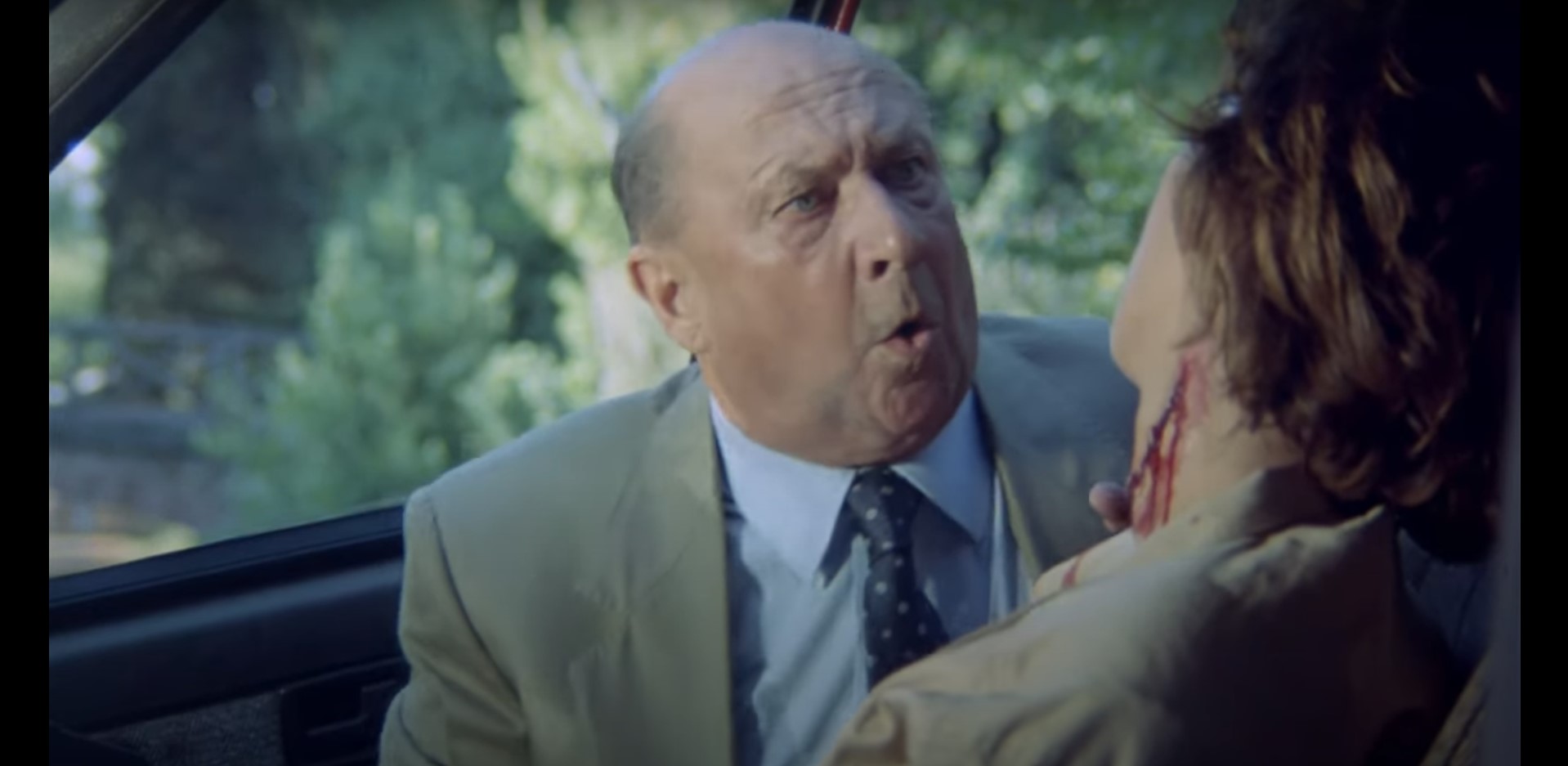
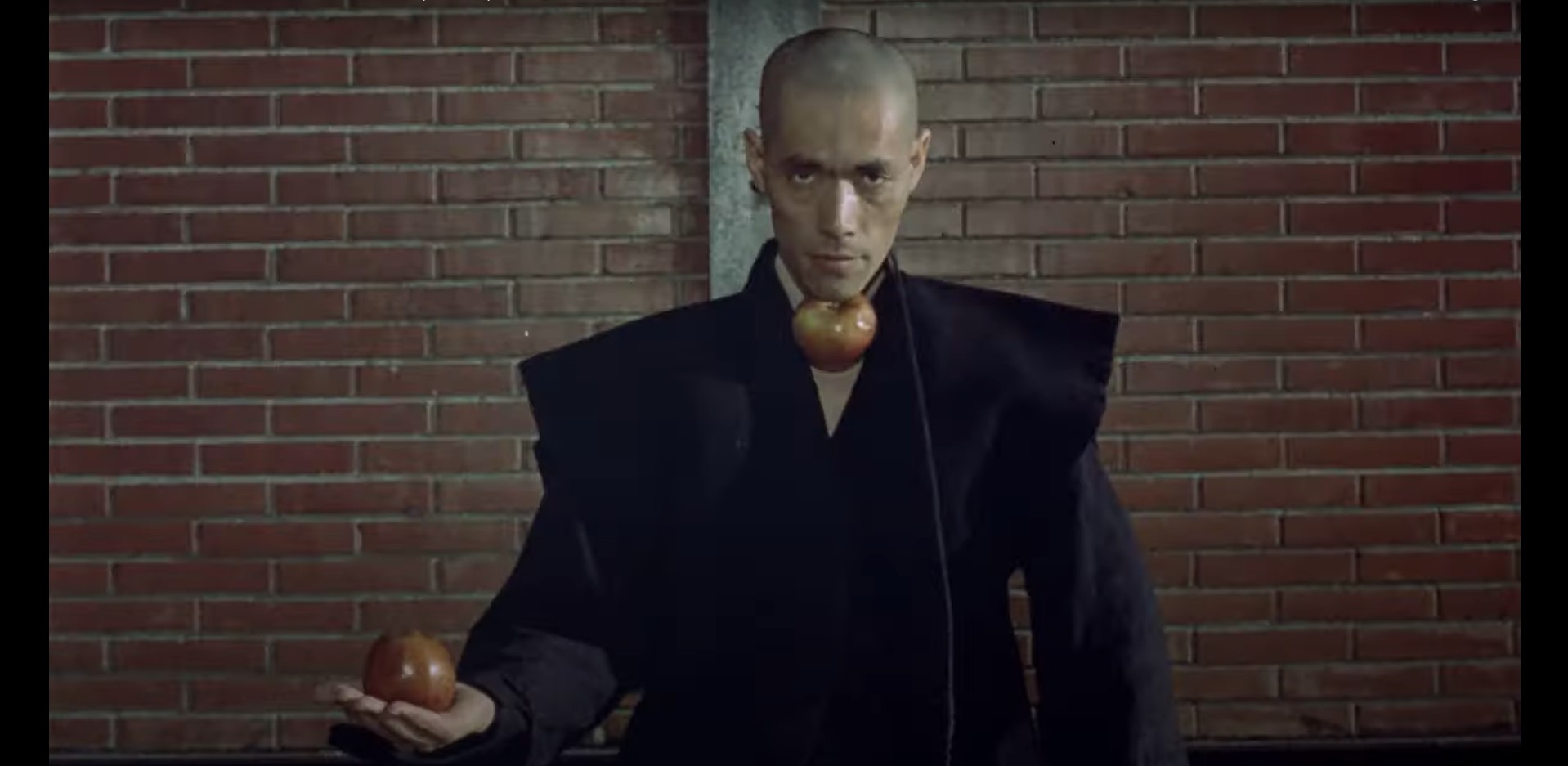
A young man wakes up in an asylum cell, unable to remember how he got there, his name, and doesn’t even recognize his face.  The asylum supervisor, Prof. Wakabayashi, has been overseeing his condition ever since the suicidal passing of former experimenting director, Dr. Masaki, nearly a month ago.  Disoriented, the young man is toured around the hospital grounds where Wakabayashi tells him the tragic tale of a 9th century man who kills his bride the day before their wedding day to capture the stages of her decomposition recorded onto a sacred scroll.  Distancing himself from the possibility of being murderous man, Wakabayashi informs him he is Kure Ichiro, the direct descendent of the groom and he enacted the very same events his ancestor committed long ago.  When the sudden reemergence of Dr. Masaki covertly corners Ichiro in his office, Masaki divulges his and Wakabayashi’s theories about Ichiro’s case but how the events came to fruition just may be plain and simple murder. 
Nature versus Nurture and the psychosis that ensues when discussing Pre-World War II context of Empirical Japan and their either inherent tendencies to repeat a violent past or to be triggered, poked, and prodded toward repeating history is the surmised and experimental plot of writer Yumeno Kyūsaku and his psychoanalytical novel “Dogura Magura.”  The title rearranged to “Dogra Mogra” is used for the film adaptation of Kyūsaku’s novel with the script written-and-directed by the avant-garde filmmaker Toshio Matsumoto (Japan’s “Demons” of 1971).  Matsumoto cowrites the script with Atsushi Yamatoya (“Story of David:  Hunting for Beautiful Girls”) written primarily from the distressed perspective of the protagonist Kure Ichiro only to switch hands when the experimenting Masaki enters the fold.  Shuji Shibata and Kazuo Shimizu inpendently produce the 1988 film under production companies Katsujindo Cinema and Toshykanky Kaihatsu AG.
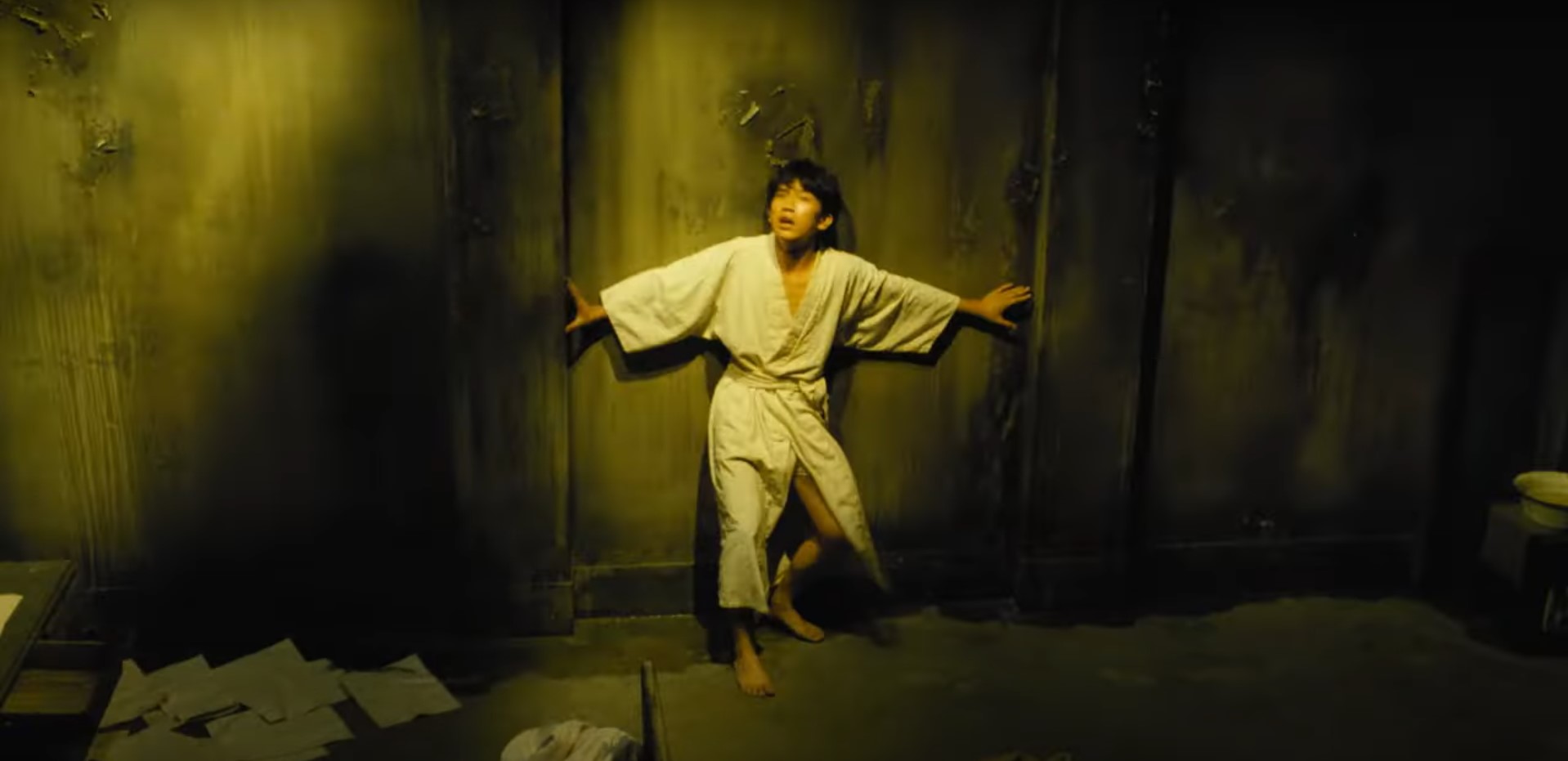
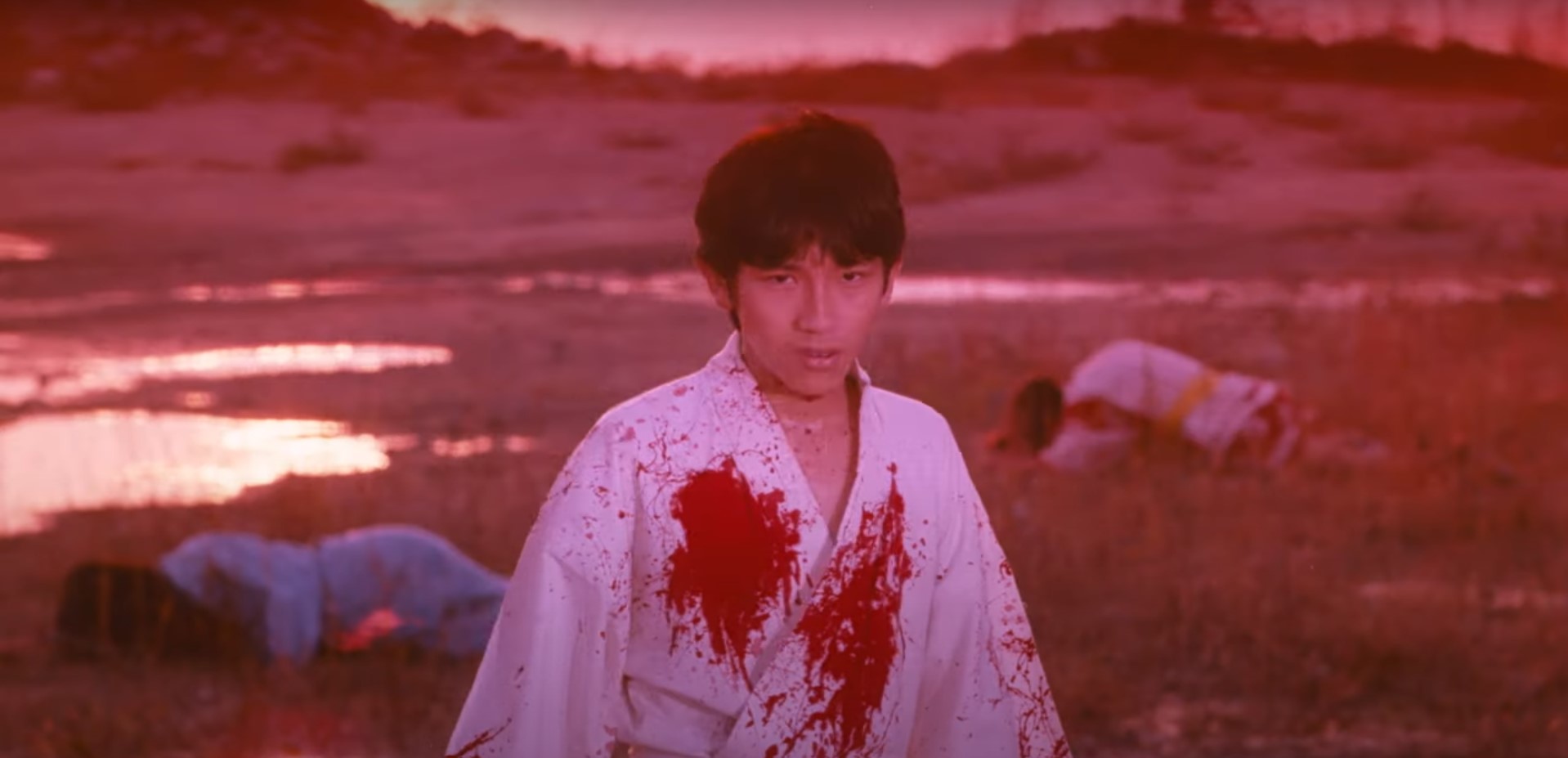
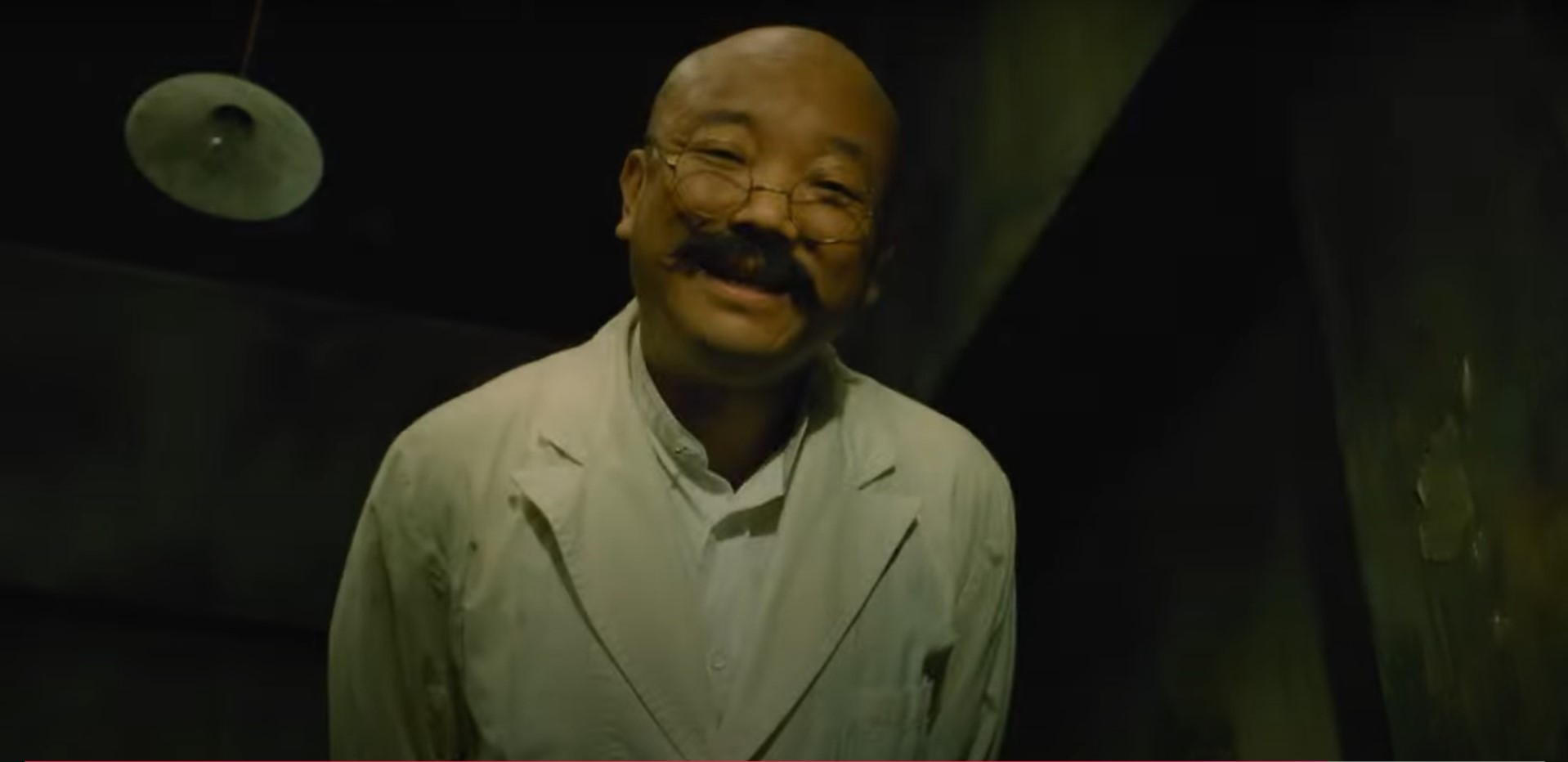
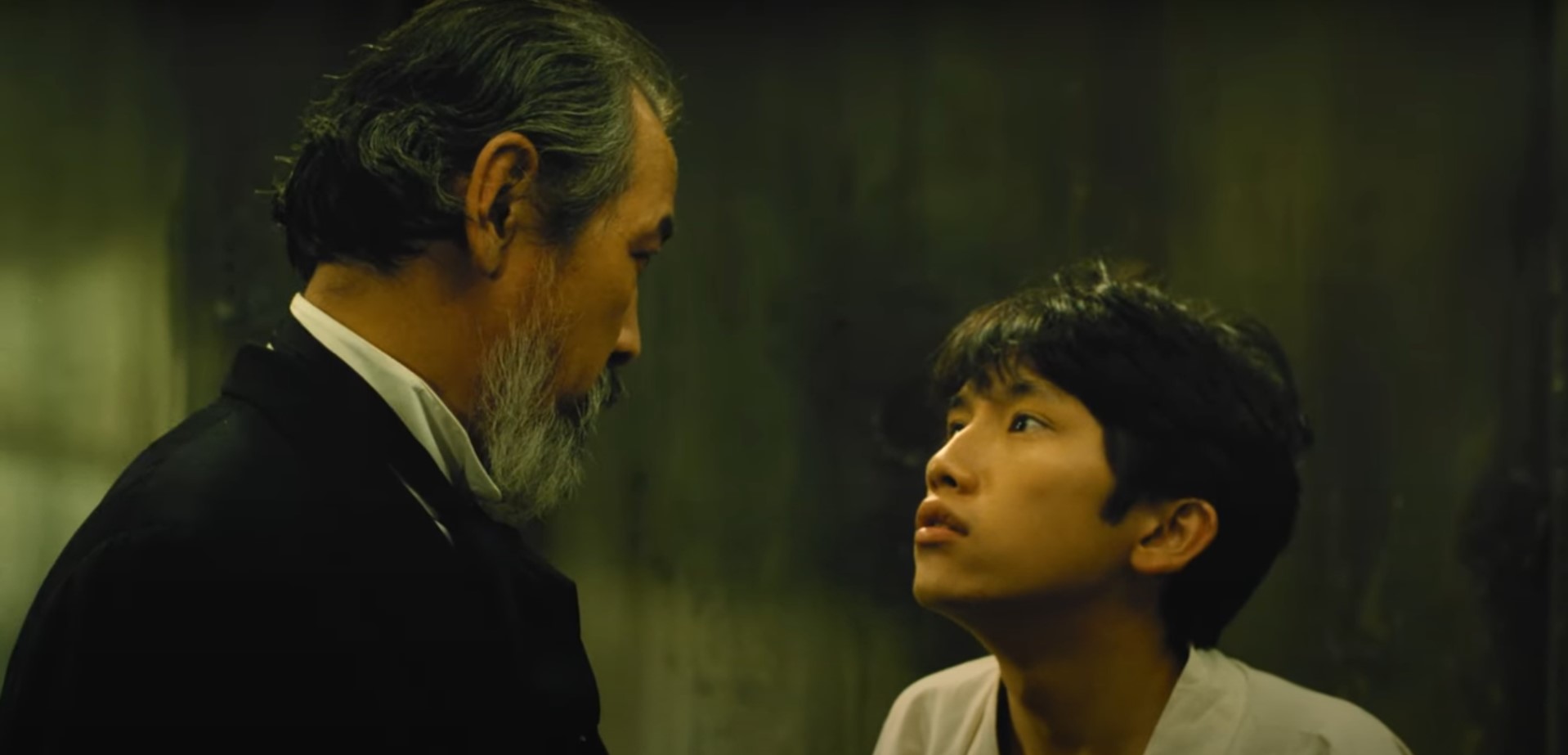
Principal players of “Dogra Magra” boil down to a three-prong outfit centered around Kure Ichiro and his theorized amnesia.  Before being the lead voice actor in “Prince Mononoke,” a decade earlier Yôji Matsuda was waking up with an inexplicable unawareness of who he was or what he had done as Kure Ichiro.  Matsuda feigns forgetfulness with shock and surprise, that will too place audiences in situational darkness, with the young Ichiro arousing in a powerful moment of unfamiliarity.  A shaken, discombobulated Ichiro becomes the object of obsessional mark between two theoretical and experimental-competing psychoanalysts in Prof. Wakabayashi and Dr. Masaki, played respectively by a collectively calm and bearded Hideo Murota (“Rape and Death of a Housewife,” “Original Sin”) that emits a sense of academia and medical security and reason and a hyenic-laughing, bald and glasses-wearing Eri Misawa who is more maniacal and unconventional to the likes of a mad-scientist   Yet both men have motivation that stirs the enigmatic pot of Kure Ichiro’s plight, stemmed from the very same source that drives the brutal murder of his beautiful bride one day before their wedding that eerily follows the footsteps of his macabre ancestral history.  There’s an inarguable difference between Wakabayashi and Masaki’s approach handling the curious case of Kure Ichiro; Wakabayashi’s hides in the clandestine shadows that aims to subvert the thought dead Masaki’s work whereas Masaki, under his blunt-force mania, is straight forward, almost apathetically.  In either case, both psychoanalytical professionals are indifferent to the crux of human life by focusing solely on whether either one of their theories is correct in an odd game of deception and death.  “Dogra Magra” rounds out the cast with Kyôko Enami (“Curse, Death & Spirit”) and Eri Misawa.
An attribute for audiences to become lost in “Dogra Magra’s” ethereal can be contributed by Toshio Matsumoto’s accosting avant-garde disorientation that swallows Kure Ichiro past, present, and future, plays tricks on his mind and eyes, and that also fishes patiently for a conclusion that rarely seems apparent.  The experimental qualities of “Dogra Magra” seep out of the tap of dark comedy and amnestic thriller and into a basin of spreading horror and exploitation.  “Dogra Magra’s” surreal storytelling and interesting, visceral visuals often reminds us of an old-dark house film a decade prior with the Nobuhiko Obayashi film, “Hausu,” and while not based in satirical foreplay like “Hausu,” “Dogra Magra” begins to unravel more questions than answers with a fleeting sense that nothing is real, nothing is as it seems, and maybe perhaps were all stuck in Kure Ichiro’s herded and scrambled mind that may or may not be his inherent, innate doing after all and that changes the narrative entirely.  Themes of historical repetition, ancestral culpability, forgetting the past, and empirical brainwashing are churned intrinsically into “Dogra Magra’s” constitution as well as within Japanese legacy with a formidable and prophetical proposition for no hope on horizon through a chimerical lens of learning and growing into the truth.
Radiance Films continues to starkly highlight underscored and wayward films from around the globe and “Dogra Magra” is no exception with a beautifully curated Blu-ray release.  The AVC encoded, 1080p high-definition, BD50 features the original widescreen aspect ratio of 1.85:1 filmed by cinematographer Tatsuo Suzuki.  The Radiance print for the limited-edition Blu-ray is pulled from the original 35mm elements and transferred in Hi-Def by producer Shuji Shibata and supervised by Tatsuo Suzuki.  The stunning upgrade leaves nothing to the imagination with a starkly harsh color grading that appears rawer than air or bright, leaning into grayscale more with darker tones of a greenish-yellow to accentuate the morbid, maybe even grittier, side of this tale, but often has naturally flourishing landscapes, such as the beach cove and the asylum yard that provides a good stretch of depth when not filtered through a POV celluloid handheld.  What’s a real winner here are the textural details that emerge through a blanket of consistent, healthy stock grain with dust and dirt retained to an extreme minimum.  The Japanese LPCM Mono mix disperse a sure-designed composition between natural audio elements layered upon or spliced with the incongruous tunes of one going through a hallucinogenic and dissociative state.  Dr. Masaki’s maniacal laughter has a sharp authoritarian jest that makes it even more frighteningly surreal.  Dialogue withholds that same sharpness and clarity throughout channeled through a single output, harnessing all the action into a funnel but clearly distinct.  English subtitles are optionally available.  The static menu’s special features store an achieved commentary track from late director Toshio Matsumoto, a 2003 interview with the director, programmer and curator Julian Ross’s visual essay on the cinematography Dogra Magra Through the Eyes of Tatsuo Suzuki, a featurette Instructions on Ahodara Sutra on the subject of the chant used in the story, a still gallery of production sketches, and the trailer.  A 51-page, color book weighs the Blu-ray package with contents that include a director’s statement from 1988, exclusive essays and an interview by Hirofumi Sakamoto Late-Period Toshio Matsumoto and Dogra Magra, Jasper Sharp The Pen is Mightier than the Sword:  The Life of Atsushi Yamatoya, and Alexander Fee and Karin Yamamoto Memory traces:  Interview with Producer Shuji Shibata, and rounding out with transfer credits and release acknowledgements.  The reversible sleeve is housed in a clear Blu-ray Amaray with new illustration compositional art and the original, more traditionally composed, Ukiyo-e artwork on the reverse.  Encoded only for regions A and B, Radiance Films’ limited-edition release to 3000 copies has a runtime of 109 minutes and is not rated. 

Last Rites: “Dogra Magra” psychosomatic surrealism is mind games on methamphetamines and Radiance Films does the 1988 Japanese picture justice rekindling its worth to the world of cinema.

“Dogra Magra” on Limited Edition Blu-ray! Purchase Here!

An EVIL Cult Summons Back “The Hangman” reviewed! (Dread / Blu-ray)

“The Hangman” Now Available on Blu-ray!

Turbulent connecting father and teenage son, Leon and Jesse, retreat to the West Virginia wilderness for a little rekindling before Jesse goes off to college.  Still reeling after his mother’s death five years ago, Jesse blames his father’s inactivity and his rebuff mismanagement of their family’s pain.  The next morning, Jesse has disappeared, the car has been sabotaged, and Leon fears his son might be in the hands of a pair of racist rednecks encountered the day before.  However, what Leon finds himself in the middle of is much worse when a demon summoning cult retrieves The Hangman from the depths of one of Earth’s seven gates of hell and needs a fresh, young, and angst-riddled body to continue his unharnessed hell on Earth.  Jesse becomes the unfortunate soul at stake and it’s up to his father, and a few local God-fearing allies, to try and stop The Hangman’s noose from gripping tighter.

New York City-based director Bruce Wemple has teamed up again with Dread Production to bring another terrifying tale.  The “Monstrous” and “Island Escape” director cowrites the script with frequently collaborator, actor LeJon Woods (“Baby Oopsie:  The Series,” “Island Escape,” to deliver “The Hangman,” a demonic horror thriller that catapults a father and son’s dysfunctionality into the throes of Hell.  Filmed in the rural regions of upstate New York, doubling as the rural Appalachian wilderness of West Virginia, which makes filming having occurred likely around the Adirondack Mountains instead, “The Hangman” carries with it a longstanding racial infamy attached to a father’s supernatural pickle, being the middle of a demon conjuring cult and the lynching-loving demon itself.  Traverse Terror productions, a division of executive producers Cole Payne Traverse Media, in association with Dread Presents sees executive producer Patrick Ewald from the Epic Pictures Group back “The Hangman” feature while Daniel Booker and Vincent Conroy coproduce.

LeJon Woods not only cowrites the script but the actor for Cleveland, Ohio essentially customizes the role of the father, Leon.  What starts as a man looking to just escape into the great outdoors quickly closes in around him as he feels the pressures of latent hostility when son Jesse (Mar Cellus, making his feature film debut) accuses him of running from his past after the death of his mother, Leon’s wife.  What exactly happens to her is not yet apparent other than an offscreen gunshot but the palpable tension between Woods and Cellus is worth noting in a handwringing moment of enmity around the first night’s campfire; a good tall tale sign that this camping trip is going to be doomed from the start.  This tension sets the stage for what’s to come, a missing son, aggressive bigots, murderous cultists, and a Netherworld lyncher, showcased with an awfully underutilized purpose and screentime appeal, especially being the titular villain.  “An Angry Boy’s” Scott Callenberg gets his chance to shine as an inhuman character, prosthetically made-up with burn scars, greasy strands of hair, and cladded darkly in country chic, but doesn’t have the room to spread havoc or really build the character who’s mostly reduced to lurking the background and letting the telekinesis-driven rope to asphyxiate those not in the know of cult activity.  There’s also a slew of throwaway characters that either are too short-lived to really flesh out their role, such as the eye-gouged, bedridden clairvoyant and the tied-up local Leon saves and becomes a flirtatious love interest/gun-toting assassin (see what I mean by not really understanding the character?) in Lindsay Dresbach (“Pitchfork”).  Except for LeJon Woods, the rest of the cast is comprised of mostly short film or background actors and actresses given the opportunity for an expanded principal performance, including Kaitlyn Lunardi, Rob Cardazone, Jefferson Cox, Daniel Martin Berkley, William Shuman, Ameerah Briggs, Jessy Holtermann, and Richard Lounello.

Riding parallel to “The Hangman’s” resurrected demon on Earth, a father and son’s struggle to grow in postmortem of the only woman in their lives, and the fact that there is one of the gates of Hell located in the West Virginia’s Appalachians premise, the story entails a rather barefaced, as well as slightly overtone, racism theme coursing through its veins.  The Confederate flag sporting rednecks and the all-white, Southern accent contingent of white people against a black man and his son shout bigotry as louds as possible through your personal media setup.  Yet, the Hangman himself is the very representation of lynching, a heinously taboo act that has become a stain on America history, typically executed by racially prejudice Southerners on black people when that simmering, seething hate turns red and vigilante justice rears its ugly head.   Though the villain doesn’t don a white hood and gown or perform any gesture of white power, to say Leon, a black man, who must stop the evilly monikered hangman from taking his son’s soul to Hell, is too big a coincidence to not call a spade a spade.  Wemple and Woods make it clear that Leon’s calling is to be a savior, the chosen heroic that can destroy the Hangman, but while the first two acts climb the ladder of an naïve hero, all the indicating signs point to arbitrary means met with arbitrary characters for Leon with no concrete reasoning why his being deceived into the gateway to Hell area is more than just serendipitous destiny, turning the last act of “The Hangman” into just a one man wrecking ball of hillbilly hell spawn that loses that fate-driven connotation.

“The Hangman” nooses a high-definition, 1080p Blu-ray from Epic Picture Group, the at-home distribution label of Dread Presents.  The AVC encoded, single-layered, BD25 has good curb appeal with negligible compression issues in the feature’s 2.00:1 widescreen aspect ratio, so we get a deeper, broader picture with less resolution flaws.  While the certain background or tree-top scenes present a good visual intake of a bird’s eye views, the grading resides to just above a flat overlay, likely within the 10th percentile of grading possibilities, resulting in a more natural tone.  Details are generally fine when in focus or out of the shadows, which is where the Hangman lurks most of his screentime.  The presented audio options are a lossy English Dolby Digital 5.1 and a Dolby Stereo 2.0.  Dialogue has clear and prominent staying power throughout the stock soundtrack that slightly chintzy the ambience audio works of self-acting rope and other mystical milestones whenever the hangman comes calling.  There’s not a ton of spatial volume to diffuse the audio with balance, leaving a lot of the milieu and action resonances as lopsided near the foreground.  English and Spanish subtitles are optionally available.  The Blu-rays special features include a Bruce Wemple commentary track, a making of featurette with interview snippets with LeJon Woods, a lengthier interview with writer-star LeJon Woods, and a deleted scene.  Physically, the deep scar recesses of “The Hangman”s” white-eyed face and long, unkempt hair becomes the front cover face of Dread’s conventional Blu-ray with a disc pressed with more fascination of a coiled hangman’s noose working down the center ring.  There are no tangible bonus materials included. The region free release comes not rated and has a runtime of 90 minutes. 

Last Rites: “The Hangman” won’t snap the neck of novelty and wanders off the path of the tangent, but does instill a strength of cause, a father-son bond that’s being challenged and motivated when threatened, backdropped by systemic racism.

“The Hangman” Now Available on Blu-ray!

If Highschool Didn’t Already Have Enough EVIL In It! “Homework” reviewed! (Unearthed Films / Blu-ray)

Purchase “Homework” Blu-ray Here!

Highschooler Tommy can’t take it anymore.  His friends all talk about their sexual experiences and he’s still a virgin.  Talking to a therapist to help redirect his sexual energy into something else, Tommy becomes inspired with the idea to form a rock band with best friend Ralph.  The eager students secure three classmates from the student body to round out the band, one not being the obsessed competitive swimmer Sheila whom Tommy has strong feelings.  Each band member’s lives revolve around their own sexual activities from sneaking around from their God-fearing, prudent parents, embellishing fantasy from late night tutoring sessions gestured by a hot, young French teacher, or contracting a venereal disease from a rockstar idol.  As Tommy continues to plead with Sheila to attend just playing session, he becomes sorely frustrated by not only her lack of reciprocated affection but also lack of friendship towards the rest of the group, resulting in him finding his sexual prowess in the arms of a classmate’s mother who also recounts fondly her sexualized youth. 

Not just another teen sex comedy from the 1980s, “Homework” is the provocative, controversial, and obscure teenage comedy-drama from James Beshears, his one-and-only director credit behind his day jobs of being a film sound editor on such a range of films from “True Lies,” to “Day of the Dead,” to “Porky’s Revenge.”  The script is the debut feature from cowriters Maurice Peterson and Don Safran that carves out story subdivisions from Tommy’s friend and denotes Tommy as the as the epicenter of sexual hangups.  The late, legendary producer Max Rosenberg, producer of many B-reels such as “Dr. Terror’s House of Horrors,” “And Now the Screaming Starts!,” and “Perdita Durango,” secured funding for the feature alongside Robert Fenton (“The Incredible Melting Man”) with Beshears and Safran producing under the production and distribution label of Jensen Farley Pictures. 

The top bill was denominated to actress Joan Collins of the television series “Dynasty” fame, but the once voluptuous English brunette, who starred in “Fear of the Night” and “Sharon’s Baby,” sizzles in a more mature role in early 80s production with a screen time of about a third of “Homework’s” runtime.  Much of the story focuses on Tommy, played by the late Michael Morgan (“Midnight Offerings”), who succumbs to Collins’ character’s subtly and sudden sultry desires for her daughter’s school friend when helping her hang a picture.  The building up to this moment isn’t as plain on it’s face as it would seem with audiences subjugated to teenage fantasy and mature women’s reminiscence that doesn’t even hint cougar encounters.  Collins, unfortunately for you sleazoids out there, had a body double for the character’s topless scene and romantic entanglements but the then late 40s actress had plenty of curves and sex appeal to make any man, no matter than carbon-date, sweat with arousal anticipation.  “Homework” spreads the love, literally, as each band member goes through a totality of teenage sexcapades, individualized and customized to their own story’s arc, and there’s not a path of sexual conquest to be had but rather a variety situational scenarios where teens either learn the hard way, face the consequences, or leave their hearts at the door to avoid disappointment because at that age, the youth are the most impressionable and angsty with mixed up emotions.  A young cast of Lanny Horn (“Tarantulas:  The Deadly Cargo”), Erin Donovan (“Mack the Knife”), Renee Harris, Shell Kepler (“The Great American Girl Robbery”), Mark Brown, and John Romano (“Dandy”) act toe-to-toe with Lee Purcell (“Necromancy”), Carrie Snodgress (“The Attic”), Ernestine Jackson (“Aaron Loves Angela”), Bill Knight, Rosemary Alexander (“Madhouse”), Howard Storm, and Wings Hauser (“Vice Squad”) in this eclectic casting. 

What’s most memorable about the little-known production is not the sex-driven antics and mischievousness of high school boys but rather the day-in-a-life of touch choices and toucher consequences interlaced with regular adolescent customs, such as missing the cut for the swim team and beating yourself up for it, smoking dope in the school locker room, have the fantastical hots for the new young teacher, starting a garage band, etc.  “Homework” has comparable, lighter traits to the 1995, Larry Clark coming-of-age film “Kids.”  While not as crass or violent, “Homework” has high-impact themes like sexual transmitted diseases accompanied with visits to the women’s health clinic, a misunderstanding of sexual education, and, even to go as far as, the exploitation of minors to an extent and a spiral of obsession as we see with Shelia is won’t leave the pool in order to shave time off her laps, neglecting friendships, and even romantic relationship with Tommy whom ends up in the arms of her equally emotionally irresolute mother reminiscing a past of first time and exciting sexual encounters.  While the story manages to stay afloat with multiple sub-stories, technically, “Homework” falls below the conventional quality standard of the period with visible boom mics, a deficient picture quality, and lack of artistical knowhow from a new director in James Beshears.  Luckily for viewers of obscurity, lovers of the long-forgotten, and retro-adventurers, there are boutique labels salivating for the chance to revive and resuscitate these titles back into our field of vision. 

That boutique label is for those who are in the know wouldn’t expect “Homework” to be released on.  Unearthed Films brings the James Beshears film to Special Edition Blu-ray, the first time on the format, with a new 2K scan a part of their Unearthed Classics banner, numbered at 15.  The AVC encoded, 1080p high definition, BD25 presents to date the best image quality possible from the original 35mm negative shot on an Arriflex camera.  There’s slightly more grain presented on this transfer that stems from Paul Goldsmiths’ cinematography and with that there’s a loss of detail in darker scenes that become victims of black crush where delineation bleeds into the environment and darker clothing no longer renders outstanding with the proper shades.  Better lit scenes have more distinction coherency, but the color diffusion is limited and the original image retains a lower resolution akin to 720p and seldomly increases an upscaled 1080p in the 1.85:1 widescreen aspect ratio.  What’s notable about this release, and despite the visible equipment gaffs, is the uncompressed LPCM 2.0 mono audio mix that doesn’t reflect any kind of hissing, popping, or damage to the track.  There’s not a ton of range or depth representation with mostly interior shots containing dialogue, which is prominent and clear under the lossless compression.  English subtitles are available.  With the obscure nature of “Homework” comes with it not a lot of special features but what’s included is an archived interview producer Max Rosenberg going into detail of the film’s genesis and controversies, a promotional gallery, and the trailer along with other Unearthed Classic prevues.  Unearthed Classics’s illustrated, cardboard O-slipcover of the prefacing sex scene between boy and woman covers the same image on the standard Amaray’s front cover.  There are no inserts or other physical contents.  The rated R release has a runtime of 89 minutes and is listed as region A for playback; however, I did have my player set to region B during play and so the release is tested for A and B regions.

Last Rites:  Plenty of nudity and surrounding controversy keeps “Homework” relevant in today’s every-stimulating, ever-producing retro-release market but it’s the film’s pertinent application of teenage troubles that tips the scales to seeking this unconventional Unearthed Film’s Blu-ray release.

Get an A on this “Homework” Blu-ray Release!

This EVIL Has Brains! “Head of the Family” reviewed! (Full Moon Features / Remastered DVD)

Get Ahead in Life with “Head of the Family” on DVD!

The Stackpooles are a little strange and are usually the talk of the small town of Nob Hollows when the zombified trio of siblings pick up the groceries at Lance’s Stop and Shop general store and diner.  Yet, the Stackpoole’s are not Lance’s problem, not yet anyway, when Howard, a no-good shakedown thug, forces his might into Lance’s business as a silent partner.  Little does Howard know that Lance has an ongoing affair with his wife, Loretta, and they devise a plan to get rid of Howard using the newly discovered dirt on the Stackpoole family’s bizarre kidnappings to take care of Howard once and for all.  Lance figures he’s found his meal ticket after blackmailing Mryon, the fourth, and unseen, sibling who’s the mastermind and head of the family – literally a giant head – using telepathy and mind control to against his brothers and sister to do his bidding, but Myron is no fool to be taken advantage of so easily. 

Who just is this Robert Talbot?  The director of “Head of the Family,” who hides behind a black mask and speaks through a voice modulator, is none other than Full Moon’s secret identity for Charles Band under a pseudonym persona to exact a different kind of picture outside the context he’s expected to continue as well as an empire built on the image of horror.  “Head of the Family” may not be tiny dolls inflicting an affliction based on their evil ways or the resurrection of the formerly dead and abnormal to, once again, inflect damage upon their creators, and possibly, the world we know it.  Instead, “Head of the Family” slips out of Full Moon’s comfort zone and into another, different kind of shadowy namkeen to small plate audiences’ bizarre fascination with the weird and fantastical.   Also, to exhibit T&A more than like the usual in the Full Moon repertoire.  The less horror, more zany cult 1995 feature structures around the titular big headed villain, a band of his freakshow kin, and a constantly copulating couple that’s penned by Neal Marshall Stevens (“Thir13en Ghosts”), also under a pseudonym of Benjamin Carr, based off a “Talbot” story, and produced by, also “Talbot,” and “Hideous!” and “Witchouse” producer, Kirk Edward Hansen.

I couldn’t tell you if J.W. Perra is big-headed or not in real life, but the actor is certainly quite cranial as the family-telepathic, wheelchair bound Myron Stackpoole.  The literal pun of the title plays in tune with Full Moon’s madcap maniacal ties while having Perra’s large head shine, or rather sweat gland glisten, under a miniature lame body.  Myron’s enfeebled corporeal flesh drives his hunger to join the ranks of normal people as he kidnaps and surgically operates on the minds of unsuspected townsfolk to incorporate a portion of his higher intellect into a stronger body.  Myron uses his stupefied siblings’ talents, bestowed upon them through a paternal quadruplet birthing, with Wheeler (James Jones, “Dark Honeymoon”) given superhuman bugeye sight and hearing, Otis (Bob Schott, “Gymkata”) given the twice the strength of a normal man, and Georgina (adult actress Alexandria Quinn, “Taboo VIII”) given, you guessed it, the hot and voluptuous body to attract men like moth to a flame.  Speaking of hot bodies, former adult actress and “Femalien” star Jacqueline Lovell, aka porn handle Sara St. James, is absolutely supple as Loretta, a twangy blonde girlfriend to the scheming Lance, played with Cajun confidence by Blake Adams (“Lurking Fear”), and every chance Lance and Loretta get, they’re steaming the scene with erotically charged expo and exposition.  I’m fairly certain Lovell has more lines topless than she does with her clothes fully on.  In the supporting cast inventory, Vicki Lynn (“Fugitive Rage”) and Gordon Jennison Noice (“Virtuosity’) make up the remaining. 

I’ll admit I fell into that hole of expecting “Head of the Family” to play out just like any conventional Full Moon feature, comprised of pint-sized and mischievous devils to a carnivalesque tune of irregular horror.  To my surprise but not to my dismay, Band’s incognito oddity has the bones of a blackmailing thriller spiced with eccentric and caricature types and gratuitous sex at every turned corner.  “Head of the Family” progresses through interacting conversation to outline exploitation arrangements and to be informed of dangers of crossing a big headed brainiac, interjected with the occasional display of drooling operated rejects, Otis and Wheeler’s utilizing their inborn side effects, and, I keep coming around to this motif and hopefully not in a pervy way, the female toplessness that bares bountiful.  The depth perception effect to enlarge J.W. Perra’s head as Myron is executed pretty well with Adolfo Bartoli’s camera work that reflects the actors facing generally at the correct angle, as if they’re eye-to-eye with the Myron, and the edits do the effect justice as well, spliced precisely to account for dimensional space, the effects are reminiscent of Randy Cook’s illusionary work on “The Gate” films using dimensional animation and scale between live actors in the same frame but some distance apart.  If you excuse the upcoming intended pun, Band’s film is more of a talking head production than one of grotesque action, a realization you won’t be aware of until well stretched into the runtime and because of this that’s the reason there’s likely a ton of Jacqueline Lovell nudity.  Okay, okay, I’ll stop blabbering on about the nudity!   

“Head of the Family” arrives onto newly remastered DVD from Full Moon Features.  The MPEG2, upscaled 720p, DVD5, presented in a widescreen 1.78:1 aspect ratio, doesn’t have any detail regarding the remastering on the latest re-release but I suspect it’s the identical image or a slightly touched up 35mm negative used for the original Full Moon release from 1999 scanned in 2K.  15 years later, a reimagined “Head of the Family” retains the softer, radiant picture quality with a highly extensive color palette through the aura glow and a natural, yet reduced, grain.  The negative does have a flaw in what looks to be cell damage a little halfway through the runtime with a brief, dark cut line making itself known, if you blink, you’ll miss it.  This sort of obvious damage does lean more toward an identical transfer being used for the 2024 release with just a 2k scan without restorative elements.  Remastered restoration likely went hot and heavy into the audio elements.  The English language LPCM is available in two channel formats, a dual-channeled 2.0 and a surround sound 5.1 mix.  Robust with added nuances, “Head of the Family’s” soundtrack breathes new aural acuities that not only clean any distortions, if there was any, but also sharpens the tracks like a knife on a wet stone, cutting and clean.  Dialogue is clear and assertive through what is mostly a talking head span.  English close caption subtitles are available.  Much of the special features are reused from the 2016 Blu-ray release, including an audio commentary track from Actor J.W. Perra (Myron), promo behind-the-scenes video of the long anticipated “Bride of Head,” which has been stagnant for years, the original trailer, and other Full Moon Features’ trailers.  The DVD release is an exact mirror image of the physical Blu-ray release from 8 years prior with a disc press image of Myron’s closeup through a murky filter and no inserts included.  The region free release has an 82-minute runtime and is rated R without specifying the content but there is language, nudity, strong sexuality, and violence. 

Last Rites: “Head of the Family” bucks the lucrative trend of miniature killer imps for the Full Moon empire but keeps moderately in line with eccentric characters, unabashed skin, and a Richard Band jaunty soundtrack, accentuated even more in a brand-new remastered DVD version of the film that was helmed by Charlie Band himself in anonymity.

Get Ahead in Life with “Head of the Family” on DVD!