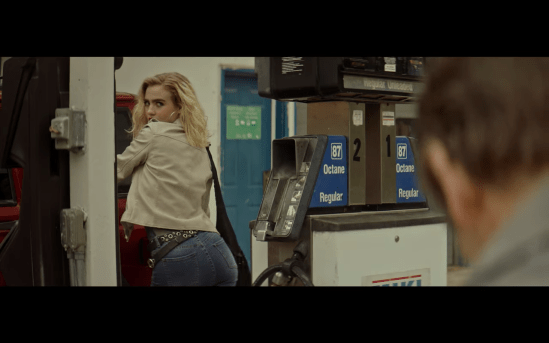
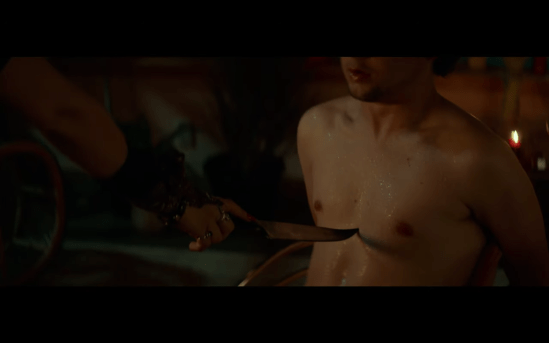
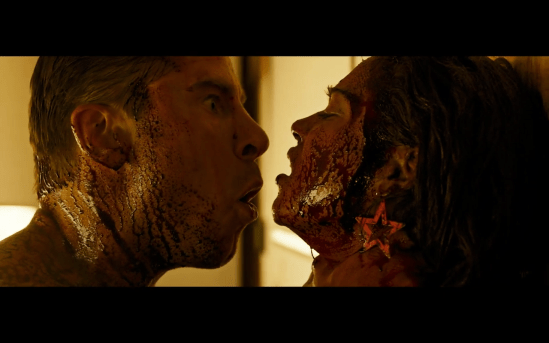
Los Angeles detective Jeff Anderson has his perfect world turned upside down upon discovering his beloved wife dead of suicide in their apartment bathtub. Losing his bid for Captain and having his life be in utter shambles, Anderson becomes obsessed with lurking around incoming suicide calls on the CB radio, trying to make sense of his wife’s sudden reasoning to end it all. When a similar case produces a survivor from a familiar fate as his wife’s, Anderson learns two men are behind similar forged suicides stretched out over the past ten years against prominent women figures in and around the L.A. area. The detective spins a wild theory that has him following every lead to track down and stop the father and son serial killers without any backup from his local precinct, forcing his hand to choose whether to be a cop and uphold the law or seek lethal retribution for the woman he loved.

From French director Julien Seri comes “Darkness Falls,” a crime thriller released in 2020 that is entirely shot in English, a first for the French filmmaker who helms a script from the executive producer on “Starry Eyes” and “The Man Who Killed Hitler and Then the Bigfoot,” the Belgium native, Giles Daoust. Also produced by the Belgium, the film, that was formerly titled “Anderson Falls,” gorges on the detective exemplar of the prodigal crime fighter stripped down to next to nothing before regaining footing against the two experienced serial killers out to reduce the highly professional woman population with one bottle full of sleeping bills and one razorblade at a time. “Darkness Falls” is an exaggerated piece of nurture versus nature on systemic toxic masculinity seething under the guise of one man’s oppressed childhood from the abusive women in his life and then enlightening his son to his ways while the open minded, Renaissance man climbs back up the mountain toward redemption, not only for himself or his wife, but for all women being forced in a dual parental role. “Darkness Falls” is released under the production companies Koji Productions, Lone Suspect, and Giles Daoust’s Title Media.

Despite the international production and filmmakers, the solid cast is compromised of familiar faces from respectable actors, starting with not-the-Elsa-“Frozen’s” Shawn Ashmore. Ashmore, who I considered to a steady part of any project – he’s phenomenal in Fox’s “The Following” with co-star Kevin Bacon, – finds himself in the shoes of a L.A. detective who has fallen by no cause of his own, but as consumed as detective Jeff Anderson is with proving his wife’s murder, Ashmore doesn’t sell Anderson’s convictions and doesn’t properly apply Anderson’s super sleuth talents to wade through the sea of angst and torment. Anderson’s also written poorly as a man who consistently lingers around suicide call-ins and has constantly has numerous visions and memories of his wife that serve little to her importance to him, serving more toward just being story fillers instead of providing a little more value to Anderson’s character. What attracted me more to “Darkness Falls” was Gary Cole as one-half of the father-and-son serial killer team. Cole takes a break from the Mike Judge and Seth McFarland humor to stretch his legs amongst the thriller genre, playing an unnamed dark toned character derived from hate, abuse, and the thrill of seeing women die. Cole’s performance is a step above Ashmore’s lead role, but still flat, flat to the point of almost monotonic pointlessness that doesn’t exalt his need to kill high profile women. “Darkness Falls” rounds out the cast with Danielle Alonso (“The Hills Have Eyes 2”) as a Anderson’s former partner turned police captain, Richard Harmon (“Grave Encounters 2”) as Gary Cole’s accomplice son, and the legendary Lin Shaye (“Insidious”) as Anderson’s mother.

While “Darkness Falls” conveys a strong, if unintentional, message that grossly sheds light on the overstepping male view toward the idea of a successful woman, director Julien Seri missteps multiple times through the dramatics of a cop on the edge of the law and on the brink of despair while also not completely rigging out Gary Cole and Richard Harmon with more conniving wit, especially when their kindred reign of terror is well versed throughout the years. What fleshes out from Ashmore’s rolling on the floor and spitting shade performance at pictures of women on his crime wall trying to get into the head of the killers and Cole’s character who relinquishes freedom in sacrifice, even after a daring great escape from a botched crime scene that involved killing two cops in the process, is this weirdly uncharismatic collapse of a story from within the parameters of a well-established cast and premise. “Darkness Falls” barely pulls out a believable crime thriller that can only be described as vanilla, a term that stakes the heart terribly knowing that Shawn Ashmore and Gary Cole deserve so much better just from their lustrous careers and polar acting styles that don’t counterbalance the dynamics at all in this film. The original title, “Anderson Falls,” is fresher salt than the stale, rehashed title change of “Darkness Falls” to, perhaps, gain traction in a fruitless action of selling more tickets, adding even more vanilla flavor.

Releasing on VOD and Digital this month is “Darkness Falls,” an unrated release, courtesy of Vertical Entertainment. Streaming services such as iTunes, Amazon, Apple TV, Google Play, FandangoNow will carry Shawn Ashmore’s 84 minute sordid themed detective thriller as well as all major cable and satellite companies. Since this is a digital screener, the audio and video aspects will not be reviewed, but if running on digital and VOD, the presentation should be excellent provided that your internet’s not sluggish and a good connection is established. I will say that the score by Sacha Chaban is against the grain with a brawny anti-brooding soundtrack more suitable for intense action than stylish poignancy than ends in uninspired ca’canny. That’s also not to say it wasn’t a good score. There were no bonus material included with the digital screener and no bonus scenes during or after the credits. Sitting through “Darkness Falls” was tough to sit through as the anticipation for the morbidity level to increase with due pressure onto detective’s Anderson’s browbeaten shoulders for a hellish ride solving his wife’s untimely death was never sated, sputtering along as a halfcocked story with performances to match.
Category Archives: Death
EVIL Metal vs EVILER Zealot! “We Summon the Darkness” reviewed! (Lionsgate / Digital Screener)

Set in the Midwest of the late 1980’s when a satanic cult has killed upwards of 18 people, slain in groups of threes, across the United States, three good girlfriends set forth on a road trip to a heavy metal concert. The girls bump into and befriend three aspiring musicians and fellow metal heads at the venue, inviting them to beers and some company while rocking out to killer show. The after show party moves to one of the girl’s father’s pastoral home for some late night boozing around the firepit, reminiscing about their favorite bands, and whatever else the dark night has in store for them, but the night of hedonism turns quickly into a night of terror when that satanic cult comes calling for three more souls. Some of the group isn’t truthful about their intentions and dead bodies pile up as the ritual killings aim to continue to spread.

Harking back to that killer trope oddity, a setup very keen in the 1980s, of a mysterious killer hiding behind a friendly façade, “We Summon the Darkness” is a modern day remembrance of such a subgenre in the slasher-survival field set along the drab bible belt of Indiana landscape, though, in actually, filmed in Winnipeg, Canada. At the helm is “My Friend DahmerMy Friend DahmerMy Friend Dahmer” director Marc Meyers from a script by Alan Trezza, who is the creative mind behind the short and feature film versions of another Alexandra Daddario comedy horror, “Burying the ExBurying the ExBurying the Ex,” that co-starred the late Anton Yelchin. May he rest in peace. Meyers moves his hand from the somber and inquisitive mutilations to murder of the Jeffrey Dahmer biopic origins story to the fanatical whims of pious psychopaths, daggering the crux of the issue into the misperceptions of stigmatic cultures and beliefs while at the same time being an extension of the dark comedy tone that worked charmingly with the tale of zombified ex-girlfriend hellbent on revenge. “We Summon the Darkness” is a product from a conglomerate of production companies, highlighting The Fyzz Facility,= (“47 Meters Down: Uncaged47 Meters Down: Uncaged47 Meters Down: Uncaged”), Grey Hawk Productions, Nightshade Entertainment, MEP Capital, and Common Enemy as well as Daddario, herself, pitching in into the producer pool that isn’t her first rodeo in that role.

If you haven’t guessed already, Alexandra Daddario (“Burying the Ex,” “True Detective”) stars as Alexis Butler, one of the three metalhead girlfriends cruising to the show, and sequestering herself the ringleader of the road tripping trio as a level headed, parental type with an edge to keep her ostentatious blond friend, Val, played to the fine tune of being uninhibited crazy well by Maddie Hasson, and the timidly sharp Beverly, a role docile to the point of uncertainty and shepherd well by “Hell Fest’s” Amy Forsyth. The three very attractive concert goers bump into another trio of friends, more haplessly hazardous, if not hopeless, band mates who try their hardest to be as metal as they can be, even if that meals throwing a chocolate milkshake out of the window of their speeding van onto the gals’ Jeep. Austin Swift, Logan Miller (“Scouts Guide to the Zombie Apocalypse”), and Keenan Johnson (“Alita: Battle Angel”) make up the group caught red handed in a stroke of coincidence that the girls find them at the very same concert. As much as the two groups mirror each other in personalities, matching up almost perfectly in the varying degrees of state, one group holds a darker secret that could cost the other their very lives. That level-headedness Daddario portrays onto Alexis’ mindset becomes ravaged with wild fires in her eyes and her laid back amount of patience becomes threadbare frazzled when the bodies start to drop in a satanic twist of murder and mayhem, frenzied with extreme ideology founded on multiple levels of greed. Daddario wears crazed well in a very different side to her usually starry eyed and elegant approaches, making all the others seem abhorrently normal in comparison. “We Summon the Darkness” rounds out with Allison McAtee, Tanner Beard, Harry Nelken, and that “Jackass” Johnny Knoxville as Pastor John Henry Butler.

Despite Daddario’s rising stardom and luminous performance, “We Summon the Darkness” falls hard into a mosh pit of despair. The concept is sound and promising, but the execution couldn’t rise to the occasion with limited secretion of the murderous evil that has spread like a pandemic across the nation that’s has sorely downgraded and diluting the nature of the news and media’s role in beyond hammering in the deaths. When story turns dark, the effect feels whiffed and not as jarring as hoped as little is then diagramed to help assist the viewer grasp just what these satanic cultist wish to accomplish. Also, Trezza’s script is highly predictable as the twist is unfolded fairly early on even before the catalyst transition to a darker tone, spoiling the unveil with too many gnomic sidebar conversations and a slew of obvious character tells that don’t exactly shield the truth of their true wolf in spiked studded, black jacketed, metal band patched sheep’s attire. Also, the film pulled too many punches, teetering on the balancing beam whether it’s an edgy killer comedy or a killer comedy with that’s soft around the belly area. Plus, I’m still trying to figure out why a walk-in pantry has a lock on the inside…?

Metal posers rule while the victims haplessly mewl in this Marc Meyers’ film, “We Summon the Darkness,” hitting retain and digital shelves this week on DVD, Blu-ray, and Digital courtesy of Lionsgate and Saban Films. Since the screener provided was a digital streamer, the video and audio aspects will not be covered; however, the Blu-ray specs will feature a 1080p High Definition, 16X9 (2.39:1) widescreen presentation with an English 5.1 Dolby True HD mix while the DVD is presented in the same aspect ratio and will sport an English 5.1 Dolby Digital Audio. Both releases with have optional English, Spanish, and English SDH subtitles. Special features will include a featurette entitled “Envisioning Darkness” and an audio commentary with director Marc Meyers and writer Alan Trezza. “We Summon the Darkness’s” cheekiness is fresh for an 80’s maniac homage armored with solid performances by Alexandra Daddario and an uncharacteristically stoic Johnny Knoxville as a devout pastor against metal music, but seizes up, derails off the tracks, and fizzles to a reduced version of the greater version it could have been.
Rock And Roll is the EVIL’s Music! “Dark Roads 79” reviewed! (Terror Films / Digital Screener)

Frontman Bobby Gray and his Southern rock band, Dark Roads, were supposed to be next big hit next to The Rolling Stones, but there fame and fortune started dwindling after some short-lived success. Barely surviving on a here-and-there gig in 1979, Dark Roads manager, Grace King, secures a secluded cabin in the woods for them to find their new sound before being dropped by their record label. Along with their female companions, chatty coach driver, their sensible roadie named Cash, and a handful of some hallucinogenic drugs, the trouble band members continue to squabble amongst themselves, especially more so against the vain and alcoholic Bobby Gray. Gray holds a terrible secret from his bandmates, a secret involving a pact he made with the Devil ten years ago and, now, the debt is due, placing the entire group in mortal danger…the price for fame and fortune.

Based loosely surrounding the tragic circumstances of the infamous 27 Club mythos, a moniker given for a collection of up and coming talented musicians who die unexpectedly and prematurely at the ripe young age of 27, “Dark Roads 79” incorporates into the fold the legendary tale of Blues musician, a 27 club victim named Robert (Bobby) Leroy Johnson, who sold his soul to the devil at a Georgia crossroads during midnight for to be the greatest blues musician, or so the story is told. The 2017 film is the fifth macabre picture from writer-director Chase Smith who co-wrote the film with documentarian filmmaker, Richard Krevolin, who no doubt kept the script on a historical accuracy path, as much as one supernatural storyline can stay on. “Dark Roads 79” is a production from Smith’s Georgia based independent filmmaking company, Spirit World Productions, and brought to viewers by “Old 37” executive producer “Jason Anderson” and co-executive producer Nicholas Frank Auger.

Already donning many hats, Chase Smith slips on one more broad brim and trashy cowboy mesh hat with Ian Cash, the level-headed, good natured roadie with a voice like an angel, but built like a Mack truck. Cash serves as narrator who sets up the story that swerves across the dotted line into spoiler territory just a tad, but Cash becomes the vehicle that brings the viewers up to speed on the legend of Bobby Johnson and the rise and fall of the Dark Roads, like a cowboy quick connect in case you needed help in establishing that Dark Roads’ success hinges on a fatal pact with the Devil himself. While Cash may seem like the focal point of the story, there’s a split with lead singer Bobby Gray (David A. Flannery, co-star from a few of the homoerotic thriller series “1313”) whose vanity flushes Dark Roads’s stardom down the toilet. Cash and Gray go toe-to-toe many times and Smith’s emits formidable tough guy appearance on screen while Flannery impresses with a complete loathsome veneer. Neither Smith or Flannery make top bill however as long as “Devil’s Rejects” Bill Moseley has a show stealing bit role as the wicked tongue Christian, Caretaker Williams. Moseley’s short, catchy tune of “Boys and Girls they’ll make some noise. They’ll all be burning in Hell” is a classic, archetypal Bill Moseley character idiosyncrasy. Though Moseley’s scenes are short, they’re definitely sweet and rememberable. “Dark Roads 79” rounds out with “Creature Feature’s” Austin Freeman, Lance Paul, Libby Blanton, and Chance Kelley alongside April Bogenshutz (“Attack of the Morningside Monster”), Jessica Sonneborn (“Never Open the Door”), Jennifer Masty (“Rabid”), Eddie George, Ramona Mallory (“Piranha Sharks”), and co-writer Richard Krevolin as the bands’ chatty driver, Thomas ‘Motormouth’ Jones.

“Dark Roads 79” is categorically a a mystery slasher with a supernatural edge that tinkers with blending lore and the theme of lost good times and friendships despite how unfriendly and uncouth they might be, but Smith and Krevolin purely tiptoe around the keynote of terrible, yet sense of family, camaraderie, failing to capture the coherency of the melancholic essence due to loss and despair built upon years of cathartic criticism, distrust, loathing, and continuous bickering between best buds. In fact, the band and it’s entourage displayed little love if it wasn’t under the influence of some drug, but we must remember that the narrative is told through the perspective of roadie Ian Cash who believed in the band, and, in so, believed in each band member albeit their merciless fair share of busting his balls. The editing, cuts, and transitions are, perhaps, some of the most interesting with “Star Wars”-like wipe transitions that effectively heightened as a hallmark of the swanky 1970s era and the emotion-extracting lingering shots, such as with the handheld super 8 cam that roams the room of an abiding jovial moment in time, capture more of the tender times between the group of bitter and weary druggies, alcoholics, and vain temperaments. Unfortunately, the positives do not outweigh the negatives with a scatterbrained and predictable story that comes off as another failed spawn of the 27 Club urban legend and shaves off the emotional baggage with cheap kills and too many unfulfilling characters.

Make a pact with the Devil himself by watching Chase Smith’s “Dark Roads 79” that’ll debut on stage with a wide digital release by the end of May from genre distributor, Terror Films. No set date has been announced. The film will be hosted on multiple digital platforms, such as TUBI TV, Google Play, Prime Video, ITunes, and various other streaming options. Since “Dark Roads 79” will be a digital release, the video and audio specifications will not be reviewed as it’ll be different for all personal devices, but I will note that some minor portions of the dialogue elements were echoey at times. The original soundtrack has strength behind it with Southern Rock tracks by Black Mountain Shine, Mark Cook, Benton Blount, and HK Jenkins, who composes the single “The Road You’re Going Down,” written by Chase Smith, for the film’s official music video. There were no bonus features with the digital screener. “Dark Roads 79” has the necessary ingredients of a backwoods-frat party gone awry slasher except with Southern Rock, but this Georgia based production is tuneless and tone deaf as it stutters through the Devil’s network of deadly deals.
Nothing Says EVIL Like a Woman Scorned! “Revenge” reviewed! (Second Sight / BR Screener)

Richard, a wealthy businessman, and Jen, his young, candy arm mistress, helicopter in onto Richard’s desert retreat house. While his wife and children are at home, Richard plans to spend his time away relishing a pleasurable weekend that involves relaxing by the outdoor firepit, swimming in the infinity pool, being sultry with Jen, and do a bit of hunting along the mountains, canyons, and riverbeds. When Richard’s associates, Stan and Dimitri, arrive a day early, a party filled night rapidly ensues, but events turn sour when Jen is brutally attacked the next day and Richard plans to snuff out the scandal before it unravels to ruin him. Unwilling to cooperate with a coverup, Jen is nearly murdered by her three attackers only to arise like the rebirth of the Phoenix, igniting a vengeful fire inside her as she uses everything she has at her disposal to finish what they started.

In a day and age when the slightest bit of a woman’s attention can explode into a vile reaction of testosterone warped misguidance and it’s the woman who is shamed as the accosted criminal being barked at aggressively by the unequivocal fearful and condemning voices of the male species, it’s movies like Coralie Fargeat’s action-packed “Revenge” that symbolizes woman’s resiliencies against men’s efforts in a show of violent force that’s “First Blood” without John Rambo, but rather with a scorned princess for retributive capital justice. “Revenge” is the French filmmaker’s first full-length penned and directed feature film that’s one gritty and bloody grindhouse vindictive sonovabitch, a pure punch to the throat, and a direct message to misogyny everywhere. Filmed in the Morocco desert during Winter, the small cast is swallowed by the vastly arid landscape of transfixing cruelty, a synonymous parallel to the feat the heroine Jen is drawn to task. It’s also a feat that Fargeat managed to salvage to finally release a rape-revenge thriller backed by a conglomerate of production firms and financiers to stand with a film from a first time director whose treatment offers up maltreatment of women, such as the rape, along with the savagery, the concept of revenge, and ridiculous amounts of blood. M.E.S. Productions, Monkey Pack Films, Charades, Logical Pictures, Nextas Factory and Umedia are just to name a few of the production companies to be supporting capital.

With a role embodying the symbolic brutalization of physical and mental rape, a role of complete loneliness in a fatal skirmish against their attackers, and in a role forsaken in the face of death only to be reborn from the ashes of their former self, Matilda Lutz’s fully charged capacity to tackle such a demanding performance is beyond praiseworthy, scrapping the timid traits from Jen’s ravaged glossy persona and replacing with a rigid exterior ready and willing to combat to the death. The Italian born Lutz has to go through a metamorphosis and refashion Jen to be able to differentiate from her more bubbly first half self as the easy kill or the disposable male plaything. In a twisted turn of events, Jen’s mortal adversaries have every advantage to douse out Jen’s existence: gear, guns, vehicles, clothes, water, fuel, numbers, etc. Yet, despite all the advantages, the desert, much like Jen, is unforgiving as it is bare. Richard (Kevin Janssens), Stan (Vincent Colombe), and Guillaume Bouchede (Dimitri) exude the utmost confidence their grip around Jen’s throat. Janssens’ fortifies as the rigorous cutthroat, a misogynistic philanderer, determined to save his own skin no matter the cost while Colombe’s Stan is a retracting coward with regretful impulses. Colombe’s brings the comedy to a grimly tale and positions Stan to be the teetering villain tarnished by his guilt of nearly killing Jen, but never apologizes to being the catalytic rapist that initiates the whole debacle. Bouchede supplements with his divestment to charm as the overweight, do-nothing witness to save Jen from Stan’s seizing urges. As Dimitri, Bouchede stalls his typical niceties to be the silent violator who can open up the flood gates of aggression when transgression warrants it.

“Revenge” has an ultra-violent and super-synth finish chapping with multiple motifs of a rebirth theme and supplies a hefty bloodletting of incorporeal measures. Knocking it out of the park in her first feature film, Fargeat’s cauterizes the unnerving serious tone with alleviated black comedy of the bloodiest kind. The roundabout endgame chase comes to mind, involving a frazzled Jen and a wounded, but indomitable Richard in a merry-go-round of a shotgun standoff is some of the best editing work of fast and ferocious content I’ve seen in some time while still able to vitalize a transparent sense of what’s occurring. However, not all the slick editing is flawless. Some minor inconsistencies in the editing are noticeable and while these moments of lapse are not detrimental or pivotal to the story, they reflect Fargeat’s challenges of making a hyper-stylized action-thriller in her freshman full-length feature. In a sense, everything Fargeat’s deploys positions “Revenge” into a surreal tonality, glamorized for those thirsty for blood gushing in a canyon-vast desert bristled with rape and payback where a mere four players in this ebb and flow game of killer combat chess can effortlessly locate each other, but one can always find their prey by following their blood trail, another motif that continues to pop up that speaks metaphors of their life blood is the very object gives them away in the end.

Giving the limited edition treatment that it deserves, Second Sight Films’s Blu-ray release of “Revenge” is a mouthwatering narcotic of raging cathexis and while the Blu-ray BD-R can’t be technically critiqued, the LE release offers HD 1080p transfer of the original, 2.39:1 aspect ratio and sports an English language DTS-HD Master Audio 5.1 mix. While Fargeat might be inspired by Lynchian themes, the cinematography work by Robrecht Heyvaert also resembles “Pitch Black” director David Twohy’s films with making something small larger than life and a particular chase scene involving all four characters at the edge of a canyon stroke a familiar chord with Twohy’s “A Perfect Getaway.” There were Second Sight Films’ exclusive bonus features included on the disc, featuring new interviews with director Carolie Fargeat and star Matilda Lutz (entitled “Out for Blood”) an interview with Dimitri actor Guillaume Bouchede (entitled “The Coward”), a interview with Robrecht Heyvaert (entitled “Fairy Tale Violence”), a new interview with composer Robin Coudert and the synth sounds of “Revenge,” and a new audio commentary by Kat Ellinger, author and editor of Diabolique. The release is sheathed inside a rigid slipcase featuring new artwork by Adam Stothard as well as a poster and a new soft cover book with new writings by Mary Beth McAndrews and Elena Lazic Overall, “Revenge” received a monster packaged release ready for the taking on May 11th. “Revenge” destroys toxic masculinity and breathes a vindictive hope from the fiery embers of rebirth and destruction.
EVIL is a Slice of Deep Dish Hell in “Creepy Tales of Pizza and Gore” reviewed! (Bayview Entertainment / Screener)

Pizza, that delicious concoction of bread, marinara, cheese, and your topping of choice kneaded and pieced together in a gooey circular of staple culinary awesomeness, has somehow found its way baked into an Italian-sans-meatball horror anthology that promises an equally saucy taste of crusted blood red gore. Five varied, harried tales of horror molded into a gruesome and terrifying VHS-style that will send chills down your spine as you swallow your first piping hot bite of pizza will either have you hungry for more or hurling out your pepperonis. These tales of macabre include the cursed audio tracks of a deadly screaming ghost, the grisly torture and murder in the name of Satan, the tragic and supernatural deaths of two ill-fated lovers, a wooded creature stalking stranded motorists, and a VHS tape that seeks revenge on its former, ungrateful owner.

Let’s take our time traveling machine back to 2014 where Italian filmmaker, Lorenzo Fassina, releases his second feature directorial film behind the horror-comedy, “Anamnesi Mutante,” transmitting by way of a five tale anthology humorously entitled “Creepy Tales of Pizza and Gore;” the titles of the shorts are “Screaming Ghost,” “Devil of the Night,” “Alone in the House,” “Wood,” and “Killer Tape.” Co-directed with producer Marco Giangiarelli, The Milan born Fassina’s background also includes being a director of a collection of short films and music videos for bands that include Italian metal bands Cripple Bastards and Viscera///, similar music scores the anthology. The eclectic tales that greatly homage horror of the 80’s that include rich in color film titles and poignant atmosphere audio mixes, each have a runtime average of approx. 10 minutes long, and offer a mixed macabre of subgenre goodness from technological horror to inanimate object horror besieged with an interlacing host, a faceless, demon-like presenter with much to say, much like the Crypt Keeper. My apologies in advance as the screener that was provided didn’t have subtitles so the host’s soliloquy goes mostly misunderstood, but by the way of editing and how the syntax is structured, one would assume the ghoulish emcee sets up the pizza eaters with the next short video nasty. “Creepy Tales of Pizza and Gore” is produced by Fassina’s indie company, DirtyTape.

Most of us in the States more than likely won’t find any familiar faces inside the confines of these five tales and, know what? That’s okay! Aside from our hell bound host, there’s not a lick of dialogue spoken, but the capability to connect with the characters and the capacity to understand the story without words is as transparent as crystal clear waters of the Venice canals. An assemble of facial and eye expressions and a well edited together script and structure by Fassina for each short provides a sustainable and a sufficient menacing mixed bag of mouthwatering horror. The largely novice cast has either worked on previous projects with Fassina before or are an unknown delight to us viewers and cast list includes Sara Antonicelli, Beatrice Cartoni, Jonathan Farlotta, Jacopo Grandi, Francesco Marra, Tommaso Meledina, Alessandro Melito, Riccardo Tiberi, and Bunny Roberts with a cherry on top topless scene for good measure.

I’m not a terribly big fan of anthologies. Yes, I enjoy “Creepshow 2,” like every other horror fanatic smuck, and I do revel in the grave zest of the low-budget spectrum, especially with compilations from directors of the “HI-8”, aka “Horror Independent 8,” that featured the bloodbath films of some 80s/90’s SOV prodigies in Ron Bonk, Donald Farmer, Tim Ritter, and Marcus Koch, but most anthologies find their unsuccessful way right toward the trash bin, condensed to third-rate releases with little-to-no marketing and hardly any surplus material in the special feature department. “Creepy Tales of Pizza and Gore” may be a foreign anthology barely making an insignificant speck in the cinema market, but certainly shouldn’t be overlooked as the derived golden age of an immensely beloved straight-to-VHS horror courses through the veins of Fassina’s reverencing anthology. The stories garnish b-reel content, but not necessarily effortless or incompetent in substance and range from serious, to tongue-in-cheek, and out right absurdity, with the latter stories being the weaker links. In all, it’s a fun and entertainment horror show from our Italian friends.

“Creepy Tales of Pizza and Gore is delivered fresh and blood warm onto DVD home video courtesy of the New Jersey based distributor, Bayview Entertainment. As aforementioned, Bayview Entertainment publicity provided a streaming screening link so the audio and video aspects will not be critique for this review, but the DVD specs include a single disc, Anamorphic widescreen presentation, with an unrated rating on an Italian language anthology that, supposedly, has English subtitles – my screener did not have subtitles. Bayview Entertainment’s DVD casing resembles entirely like a VHS-cassette with faux movie rental stickers stuck on the outer plastic. The packaging is a nice and warranted touch to a VHS-homaging anthology. There were no special features included with the screener or released in the press release. Chow down on night with “Creepy Tales of Pizza and Gore;” a validating horror anthology worthy of time and effort and reaffirming the faith in anthologies once again with wild, imaginative macabre ambitions without the stiffening efforts of pushy financiers calling behind-the-wheel shots.