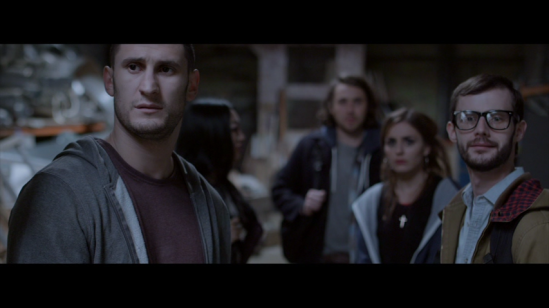
London’s infamous 19th century serial killer, Jack the Ripper, was never caught and the specialty knives he used to fillet his victims were never recovered, but in the darkly lit maze of an abandoned Victorian warehouse located in present day London, the spirit of the mysterious murderer of prostitutes lingers within the bricked up walls or so goes the urban legend. Six aspiring writers are invited to a screenwriters workshop at the Victorian warehouse for inspiration and orchestrating the event is an eccentric arts professor Richard Wise. The goal is write the most horrifying, potentially box-office busting horror story for a chance at penning a major movie deal. One of the six writers, Ruth, had received an enigmatic case full of old knives prior to her invitation, placing inspiration in her to write a terrifying script involving Jack the Ripper. When the knives go missing, the writers become trapped inside the warehouse as their involuntarily actions result in the return of Jack the Ripper to continue his unholy work of slaughter and the only way to stop him from carving his way into their ill-fated story is to solve the mystery of why they were specifically chosen to attend this particular workshop.

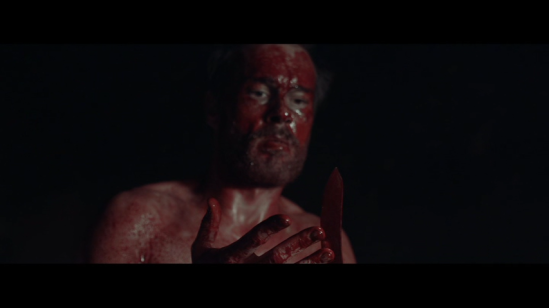
“Razors: The Return of Jack the Ripper” is the interesting first installment of a British horror movie franchise from writer-directors Ian Powell and Karl Ward. The co-filmmakers reach into the 19th century to bring Jack the Ripper into the present day, but Jack’s not the same; He’s a variant of him old self that involves the murderer being a pissed off malicious ghost in a concoctive tale that blends the modern-day remakes of “House on Haunted Hill” and “13 Ghosts” from near the turn of the century. Other than a physically present, if not more of a flickering presence, manifestation with a link to his prey of frightened writers, I won’t delve too much into details of Jack’s return and what he means to accomplish in hopes of not spoiling the story for you, but I have a sneaking suspicion that that won’t be a problem. The independent film attempts very little to bring the Victorian era swag into the fold. Even Jack the Ripper solely dons a dark wide brim hat and cape, that loosely associates him with the time period. Powell and Ward focus more on the group of bewildered writers and their conflicting dynamics on how they deal with their predicament – i.e. one character is very poignant on the dangers while one other brushes off superstitions and unnatural occurrences – but the pair of filmmakers fail to work the character Professor Wise into the mayhem and by not attributing purpose to the character, the professor inarguably becomes one of the many loose ends of a sunk horror franchise before it’s even set afloat.

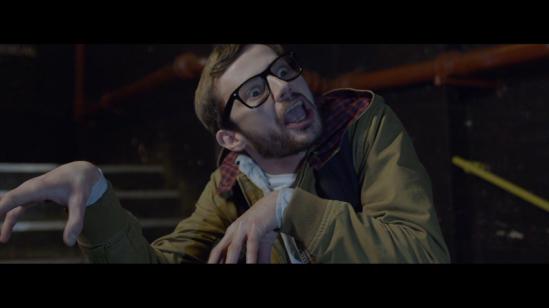
The 2016 film stars Kelby Keenan as Ruth, the only character to have any damn sense, but won’t just leave even though she repeatedly states how much danger their in. Kelby’s the lead actress with Josh Myers (“Zombie Diaries 2”), Georgia Mcguire, Kunjue Li (who oddly enough have a bit part on an unrelated Jack the Ripper television series entitled “Ripper Street”), Jack Brown, and Ian Weichardt (“Freak of Nature”) to round out the group of writers. Together, their plight doesn’t come across potently enough; instead, Thomas Thoroe’s Professor Richard Wise strew them through the warehouse corridors in an unbelievable performance of the professor not having a clue about the turmoil that’s afoot. Jack the Ripper goes virtually silent, much like a ghost should, under the unkempt performance of Andrew Shire. In short, the cast haphazardly walks through the storyboards, overkilling reactions and not reacting enough during called upon scenes to the relative cause of action.

So far, in this review, you might conclude that Powell’s and Ward’s inaugural franchise film may be a dud and not spawn sequels. Honestly, I personally would like to see closer for the open ended characters and story; however, I preferably would not like Powell and Karl in the director chairs. Their style could only be described as spastic with way too many edited in interjections of arbitrary spook house filler. The body of work has the sheer tenacity of being more like a 92-minute music video that’s abundantly chorused with haunted house ambiance. Literally, interlaced cuts made more than half the film, barely leaving any story for the actors, and the back-and-forth edits could crisscross your eyes into a strabismus.

Breaking Glass Pictures and Magic Mask Pictures Limited present “Razors: The Return of Jack the Ripper” on DVD home vide. Usually the pride of indie LGBTQ films, Breaking Glass Pictures has a fair share of horror as well and, typically, do right by the release. In this one particular, the DVD is presented in a widescreen 16:9 aspect ratio that’s very detailed. The color hues are a bit dull, more so grey, than hoped. The English language stereo dual channel stereo track had no part in being saved. Layers upon layers of unfinished audio snippets run rampart throughout to the point where you can pick out the flaws at will. Dialogue is wish-washy with the full power of the voice being reduced to no more than a mumble of hearing every other third word from every character. The DVD does come with some special features, such as clips and interviews in a segment entitled “Lights, Camera, Speed!,” “Behind the Walls” is a short featurette about the film, and you can also play the film with commentary from the directors and cast. The film is dedicated to the late Khan Bonfils, who had a minor part in the introduction, after his untimely death on a separate project. “Razors: The Return of Jack the Ripper” is clunky at best. Poor Jack couldn’t rise from the dead to reclaim his infamy in this ghost show of scatterbrained storytelling.
Category Archives: Death
Jigsaw (aka Saw 8) trailer is here!

The trailer for this year’s Jigsaw (Saw 8) has arrived online! The San Diego Comic Con red band trailer promises to bring back the grisly games, the blood, and the terror. You can’t have Halloween without the Jigsaw Killer as the two of synonymous and expect Jigsaw, who was sorely missed over these passed few years, to ramp up his games this October 27th!
SYNOPSIS
One of the highest grossing Horror franchises of all time is back, taking the Jigsaw killer’s signature brand of twisted scenarios to the next level.
Cast: Matt Passmore, Callum Keith Rennie, Clé Bennett, Hannah Emily Anderson, Laura Vandervoort (“Bitten”), Mandela Van Peebles, Paul Braunstein, Brittany Allen, Josiah Black
Directed by: The Spierig Brothers (“Undead” and “Daybreakers”)
Written by: Josh Stolberg & Peter Goldfinger
Produced by: Oren Koules, Mark Burg, Greg HoffmanA Lionsgate release, Twisted Pictures presents, a Burg/Koules/Hoffman production.
Evil Attracts With the Fluorescent! “Feed the Light” review!

Sara, a desperate young mother, infiltrates a secret facility workplace under the false pretentions of becoming an employee of the critical janitorial department. After losing custody of her adolescent daughter Jenny in court, the child becomes misplaced when her custody awarded father, an employee, loses Jenny in the facility that’s conducting unusual activity involving the building’s light energy source. With everyone on constant edge and under the powerful and dangerous influence of the light, including her very organized and unstable employer, Sara is able to find a sympathizer in the head janitor and by exploiting his mental map and valuable knowledge of the building, Sara goes deeper into the structural bones of a nightmarish reality where evil lurks in the shadows and not everything is what it seems.

“Feed the Light” is a H.P. Lovecraft inspired sci-fi horror directed and co-written by indie filmmaker Henrik Möller with Martin Jirhamn sharing the co-write. The gothic tale stems from the Lovecraft short story “The Colour Out of Space” that tells the tale of a meteor crash landing in the hills near Arkham, Massachusetts, poisoning and deforming all the living creatures nearby that creates chaos amongst the locals. The light, that never dulls, becomes the driving force of everything malevolent and that carries over into Möller’s film, but isolates the setting to a dilapidated building instead of a natural landscape and focusing more on the people inside rather than vegetation or livestock as the Lovecraft short story builds upon. Originally shot in color, Möller thought best to suck the color out from the reel and produce a mostly black and white film, sprinkled with color at strategic moments, that would convey the importance of the ever-present light and interpret a far more dramatic effect to play out; a decision I whole-heartedly agree because if laced with color, much of the abandoned warehouse setting would be a monotonous eye-sore. Instead, black and white enhances the light’s presence, makes it almost seem to stand out amongst the greyscale, and give way to more inspirationally vibrant hues when they are revealed.

For Henrik Möller, this is the director’s first dive into feature films and for the filmmaker whose better known for his shocking shorts, “Feed the Light” doesn’t water down the deranged, creative machine that just steam-plows through a 75-minute runtime and still managing to be mechanically sound to comprehend the Lovecraftian tone. Lina Sundén fills the lead shoes as Sara and Sundén embodies complete innocence and bewilderment when her characters goes forth into this strange facility, but doesn’t show much fear as if a mother’s determination is her driving force to go beyond being what frightens her. Alongside Sundén is Martin Jirhamn, who you might remember me saying he co-wrote the script, as the sympathizing janitor. Jirhamn has collaborated on many of Möller’s shorts, feeling comfortable taking on the challenge of a full length feature by taking on more of a scripted role that has a face with two sides. Rounding out the cast of memorizing characters are “Not Like Others'” Jenny Lampa as an authoritarian boss of the facility who tries to keep Sara from going on Indian Jones and the Raiders of the Lost Ark in the basement and Patrik Karlson otherwise known as the VHS-Man and Jenny’s father in the film.

“Feed the Light” has undertones beyond that of Lovecraft. The story feels nearly anti-establishment, a surreal and extreme look at how doing the same job, in the same office, staring at the same fluorescent lights can make one loose one’s humanity. The boss is a strict enforcer of the rules and doesn’t shrug at the thought of one of her employee’s burning out as long as the job gets done, but it’s not burning out that’s the problem. The light symbolizes obedience and control, turning those with a soul into mindless workers. There’s an unseen power embodying them such as with the dog man, played by Morgan Schagerberg, who, literally, sounds and acts like a canine that just happens to have glittery dust goo ooze out of it’s anus. Yup, weird. “Feed the Light” is jarringly weird, but also laminates into the prospect of hidden doom that’s very similar to the truth is out there concept reveled in the “X-Files.”

The Severin sub-label, Intervision Picture Corp., usually subjects us to older projects, but embraces newer indie films such as Henrik Möller’s “Feed the Light” and with the help of CAV Distributing, Möller and “Feed the Light” can be exposed to every house hold on Earth as a region free Blu-ray in 1080p full Hi-Def. The full frame is a staple of Intervision and doesn’t necessary cause any distress over cropped images. There is a fair amount of interference, but again, only enhances the indie labels reputation. Other than that, the image is fine laid under a Swedish language dual channel audio track that’s well balanced with a brooding industrial soundtrack by Testbild, a Möller familiarity. There are two extras accompanying the feature: one is a making of featurette and the other is an interview with the director, Henrik Möller. “Feed the Light” is a science fiction oddity chocked full with surreal depictions and nightmare creatures with a Lovecraft base and a passionate director’s otherworldly view of how light and color powerfully dictate our everyday lives.
Visions of Evil From a Disturbed Mind. “Lung” review!

An unidentified man, wearing medical scrubs and gloves, wanders through town, encountering hellishly gruesome scenes of death. He wanders barefoot through a ghastly journey that might figuratively expresses his back story of how he came to witness such visions and be relatively undisturbed by the horror they represent. The filthy, gory, and ill-fated moments might also be hallucinations brought upon by a traumatic occurrence that wrenches him out of reality and into grisly purgatory. Either way, the nameless man is a lost soul with no ambition, no emotion, and no direction to guide him through an inner conflict of blood-soaked entombment.

Unearthed Films’ 2-disc collector’s edition of “Lung I” and “Lung II” continues with the distribution company’s legacy of delivering the best underground cinema to the forefront of home entertainment. Phil Stevens, director of positive-reviewed “Flowers,” writes, stars, and directs both feature films about the wandering man in a foggy, distorted haze, but “Lung II” is not a sequel to “Lung I.” Instead, “Lung I” is the softcore version of events whereas “Lung II” is a hardcore redux – think along the lines of “The Evil Dead” and “Evil Dead II” – that’s much more detached from rationality and by collaborating with “American Guinea Pig: Bloodshock’s” Marcus Koch seizing upon the special effects, you can damn well count on “Lung II,” and certainly “Lung I” as well, being bare-faced dark, violent, and twisted. In more a sequential reality, “Lung” is part of the Phil Stevens’ proposed trilogy entitled the Violence of Dawn with “Flowers” leading the horrific charge. This review will focus more on “Lung II.”

Stevens stars as the unnamed lead, waking up lost under a creek bridge, dressed in medical scrubs, and haunted by unspeakable, bloody post-violence mayhem while continuously battling his evil doppelgänger self. Is this just a strange nightmare or a telltale sign of this man’s troubled past? Then, again, Stevens’ impassive take feels more like wandering through one hell of a dream, an endless journey into one’s post-traumatic warped mind rather than spelunking into one of a murderous soul’s, even if one of the moments of trauma could be his wife – or girlfriend – cheating on him and he catches her in the act with ill-fated consequences. Characters also related to the medical profession, such as a psychologist (David Copping) and quick flashes of a nurse (Angela Jane), are a part of this visceral vision quest. Finally, we come to The Exile character. The Exile might sound familiar if you’ve read my review on “Flowers” as he’s the only character, portrayed once again by Bryan W. Lohr Sr., that connects the two films. The Exile continues to mystify us about his presence, an extremely large and intimating brute with a deathly blank stare and a “don’t fuck with me” attitude.

Unlike “Flowers,” Stevens went the devoid of color route, constructing a black and white feature that, like “Flowers, goes without as much as a sentence of dialogue. Actions, expressions, and every sense of the word “art” tell the story. Non-linear editing and brutally realistic scenes of savagery in the confines of special effects exercise and sparks your brain’s neurons to try spitfire pieces together to cement a coherent narrative. Stevens is almost able to re-tap into and revitalize the silent film genre with “Flowers” and “Lung”, and with the help of a vehement brooding score by Mark Kueffner, I believe this type of experimental horror story telling can fascinate just about anyone without a weak stomach.

Unearthed Films and MVDVisual’s 2-disc DVD collector’s set a beautifully monochrome piece of art with roached infested severed heads, a halfway decomposed homeless man, and a pile of refrigerated sexual organs meshed together like something out of Brian Yuzna’s “Society,” but more gnarly. Im interested to see how Paradis, aka Paradis III, comes to conclude the trilogy and see how Unearthed FIlms releases Phil Stevens’ visionary tales. The Borderline Cinema and Extreme Horror Cinema “Lung” is comprised of two discs that entail “Lung I” Feature Film, “Lung II” Feature Film, Directors Commentary, Editors Commentary, Isolated Sound FX Track, Making of Lung 2 (which is very informative and fun to watch underground cinema come to the fold), Mark Kueffner: Lung Composer Featurette, Martin Trafford: Artwork Featurette, “Cats” Short Film, “Descent” Short Film, and Unearthed Trailers. “Lung” will not tickle everybody’s taste; surely sick and part of a niche network of darkly persuaded and humored people will most likely get it, but there’s still very much to appreciate here from director Phil Stevens and his eye for detail and disturbia. This gore and shock is worth a look and worth a chance.
Get Jacked! Get Evil! “Bloody Muscle Body Builder In Hell” review!

Living free from job responsibilities and able to workout whenever he wants, body builder Naoto is living the high life. His daily workout is interrupted by his former photojournalist ex-girlfriend in search of the next haunted house for her latest article and she calls Naoto to inquire his father’s old, creepy home that’s now in Naoto’s possession. Accompanied by a professional psychic, the three conduct a house call to get a presence reading and take pictures of the rundown, abandoned home. They find themselves trapped inside with Naoto’s father’s darkest secret malevolently toying with them and holding them hostage with her cursed power bestowed upon her death, 30 years ago, forsaken to her by the hands of Naoto’s fahter.

In 2014, first time director Shinichi Fukazawa’s endearment for Sam Raimi’s “The Evil Dead” has encouraged the filmmaker to tribute a film that has dubbed “The Japanese Evil Dead.” With all the depictions of Raimi’s film, including from a shotgun, an axe, and even a severed sarcastic-spewing mangled demon head, “Bloody Muscle Body Builder in Hell” views just as good as the sounds. Taking his film to the next level by going back in a time warp, Fukazawa de-amplifies the image quality with a lo-fi flare that adds chaotic charm bathed in retro-VHS vision as every desaturated hue and blanket of coarse grain is a step back in time. Fukazawa implements his own sturdy brand of macabre to branch his version of “The Evil Dead.” For instance, Fukazawa removes the Necronomicon, the book of the dead, all together. Instead, the director doesn’t forth put an outright explanation behind the cause of the cursed’s murderous revenge other than holding a jealous grudge and the lack of motivation is okay because “Bloody Muscle Body Builder in Hell” is a modern day video nasty.

Shinichi Fukazawa, himself, stars as Naoto, suffering every ding, boink, and bop as our hapless hero that’s aims to strike similarities to Ashley “Ash” Williams and his gift of being the king of Three Stooges foolishness. Fukazawa plays a more conservative character in comparison, but does manage spit out memorable one-liners made genre famous by Bruce Campbell, like “groovy.” THe lead actress, Asako Nosaka, holds her own as a lovely damsel in distress who can double on a dime as a Mike Tyson speed bag puncher. The trapped pair make a convincingly distressed protagonists, especially in such a small Japanese home that’s the equivalent to a cabin in the woods. Last on the roster is Masaaki Kai filling in the psychic’s shoes and conjures an performance that’s could fit right in with the Kandarian Cheryl, Scott, Linda, and Shelley demons.

“Bloody Muscle Body Builder in Hell” is a 2014 effects driven, blood hungry roller coaster of pure mayhem entertainment. The ingeniously creative special effects, on a shoe string budget, are made of eye-popping, skull-crushing, and limb-parting goodness that every horror fan can appreciate and love. The lo-fi cinema and melancholy horror fixes to not impress those who have a taste for the CGI eye candy and won’t knock your socks off with the latest and greatest technological, animated advances in effects that attempts to mock real life, but accomplishes the opposite in the fabricated grindhouse reel with overexposures and rough edges that are more fitting for the subject matter. Fukazawa does embody Raimi’s creative editing and angle vision that makes Fukazawa’s film feel very attached to “The Evil Dead” franchise.

The well-meshed video nasty mingles Japanese culture with a loving tribute to Raimi’s “The Evil Dead” franchise and kicks off Shinichi Fukazawa’s most interesting silver screen career. Terracotta Distribution’s “Bloody Muscle Body Builder in Hell” is a tightly packed 62-minute joyride with squirrelly, demented demons with heavy emphasis on the blood and the gore. Image quality is poor and that’s a good thing! The low-tech fullscreen and unrefined quality are a tall-tell sign of a SOV gruesomeness surrounded by a fuzzy Japanese dual channel stereo. Extras includes a Graham Humprey time lapsed video of him creating his DVD artwork, a behind-the-scenes gallery, a dismemberment of scene clips, and Japanese and Terracotta trailers bringing up the tail end. “Bloody Muscle Body Builder in Hell” packs a punch, delivers the death, and gorges itself in the gore in this UK DVD from Terracotta Distribution! and is a lovely blend of comedy, horror, and praise that’s powerfully short and sweet from a freshman director who aims to make a statement while giving appreciation in his own culturally established way.