
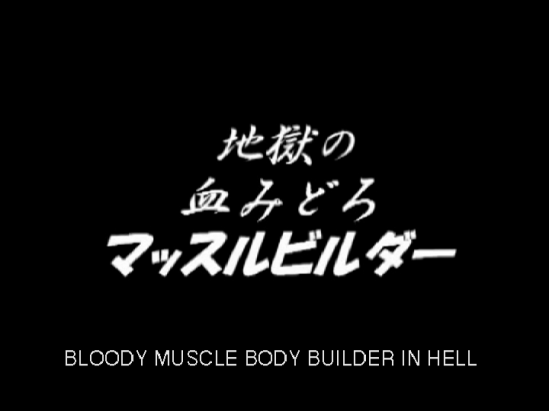
Living free from job responsibilities and able to workout whenever he wants, body builder Naoto is living the high life. His daily workout is interrupted by his former photojournalist ex-girlfriend in search of the next haunted house for her latest article and she calls Naoto to inquire his father’s old, creepy home that’s now in Naoto’s possession. Accompanied by a professional psychic, the three conduct a house call to get a presence reading and take pictures of the rundown, abandoned home. They find themselves trapped inside with Naoto’s father’s darkest secret malevolently toying with them and holding them hostage with her cursed power bestowed upon her death, 30 years ago, forsaken to her by the hands of Naoto’s fahter.

In 2014, first time director Shinichi Fukazawa’s endearment for Sam Raimi’s “The Evil Dead” has encouraged the filmmaker to tribute a film that has dubbed “The Japanese Evil Dead.” With all the depictions of Raimi’s film, including from a shotgun, an axe, and even a severed sarcastic-spewing mangled demon head, “Bloody Muscle Body Builder in Hell” views just as good as the sounds. Taking his film to the next level by going back in a time warp, Fukazawa de-amplifies the image quality with a lo-fi flare that adds chaotic charm bathed in retro-VHS vision as every desaturated hue and blanket of coarse grain is a step back in time. Fukazawa implements his own sturdy brand of macabre to branch his version of “The Evil Dead.” For instance, Fukazawa removes the Necronomicon, the book of the dead, all together. Instead, the director doesn’t forth put an outright explanation behind the cause of the cursed’s murderous revenge other than holding a jealous grudge and the lack of motivation is okay because “Bloody Muscle Body Builder in Hell” is a modern day video nasty.
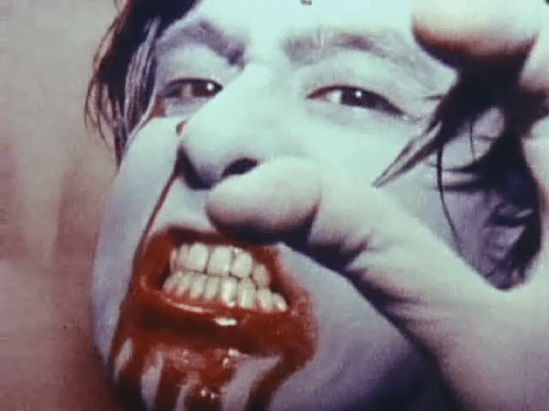
Shinichi Fukazawa, himself, stars as Naoto, suffering every ding, boink, and bop as our hapless hero that’s aims to strike similarities to Ashley “Ash” Williams and his gift of being the king of Three Stooges foolishness. Fukazawa plays a more conservative character in comparison, but does manage spit out memorable one-liners made genre famous by Bruce Campbell, like “groovy.” THe lead actress, Asako Nosaka, holds her own as a lovely damsel in distress who can double on a dime as a Mike Tyson speed bag puncher. The trapped pair make a convincingly distressed protagonists, especially in such a small Japanese home that’s the equivalent to a cabin in the woods. Last on the roster is Masaaki Kai filling in the psychic’s shoes and conjures an performance that’s could fit right in with the Kandarian Cheryl, Scott, Linda, and Shelley demons.
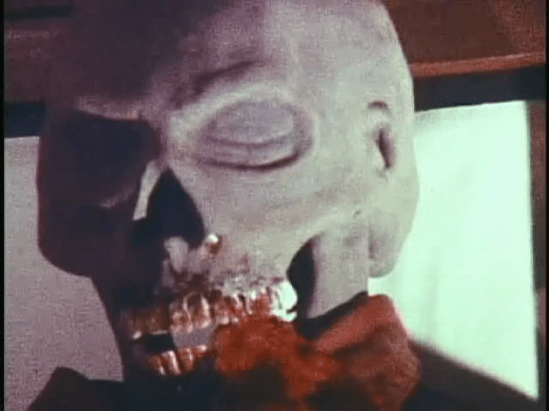
“Bloody Muscle Body Builder in Hell” is a 2014 effects driven, blood hungry roller coaster of pure mayhem entertainment. The ingeniously creative special effects, on a shoe string budget, are made of eye-popping, skull-crushing, and limb-parting goodness that every horror fan can appreciate and love. The lo-fi cinema and melancholy horror fixes to not impress those who have a taste for the CGI eye candy and won’t knock your socks off with the latest and greatest technological, animated advances in effects that attempts to mock real life, but accomplishes the opposite in the fabricated grindhouse reel with overexposures and rough edges that are more fitting for the subject matter. Fukazawa does embody Raimi’s creative editing and angle vision that makes Fukazawa’s film feel very attached to “The Evil Dead” franchise.
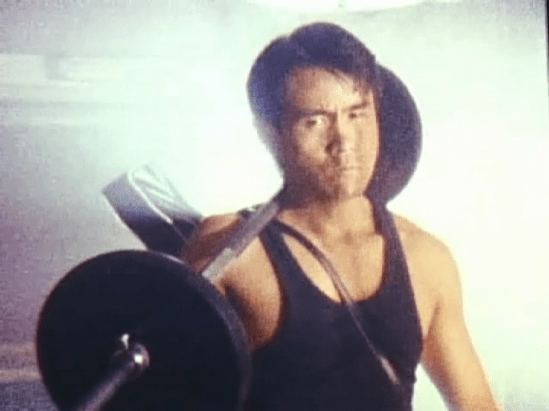
The well-meshed video nasty mingles Japanese culture with a loving tribute to Raimi’s “The Evil Dead” franchise and kicks off Shinichi Fukazawa’s most interesting silver screen career. Terracotta Distribution’s “Bloody Muscle Body Builder in Hell” is a tightly packed 62-minute joyride with squirrelly, demented demons with heavy emphasis on the blood and the gore. Image quality is poor and that’s a good thing! The low-tech fullscreen and unrefined quality are a tall-tell sign of a SOV gruesomeness surrounded by a fuzzy Japanese dual channel stereo. Extras includes a Graham Humprey time lapsed video of him creating his DVD artwork, a behind-the-scenes gallery, a dismemberment of scene clips, and Japanese and Terracotta trailers bringing up the tail end. “Bloody Muscle Body Builder in Hell” packs a punch, delivers the death, and gorges itself in the gore in this UK DVD from Terracotta Distribution! and is a lovely blend of comedy, horror, and praise that’s powerfully short and sweet from a freshman director who aims to make a statement while giving appreciation in his own culturally established way.
Category Archives: Death
Subletting Manager is an Evil Shrew! “The Resident”review!
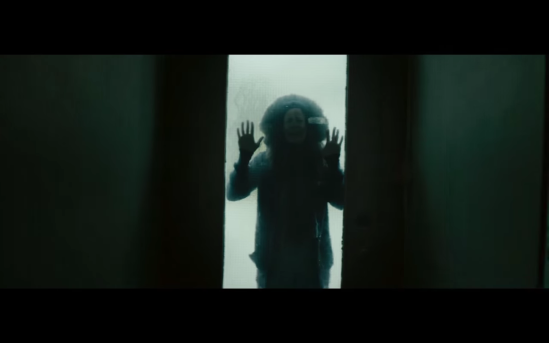
Joanna and her fiance, Geoff, enter a sublet agreement sight unseen. With her fiance being a struggling actor with gigs teetering on the line and domineering most of his time, Joanna struggles to find ways to pass the day alone in her apartment on unpaid maternity leave. The creepy, unwelcoming apartment doesn’t feel like home when Joanna has yet see another living soul in the building, but hears footsteps on the next floor above, violent wall banging thumps next door, and extremely unpleasant dreams that seem to cause her to lose time in reality. When Geoff neglects her pleads to leave the sublet, Joanna becomes enthralled with a newfound journal from an off limits room and as soon as she starts to read from the pages, her life in the apartment strangely follows a parallel path of the journal’s previous owner, a house wife named Margaret, that leads to jeopardizing everything Joanna knows: her sanity, her husband, and her baby.
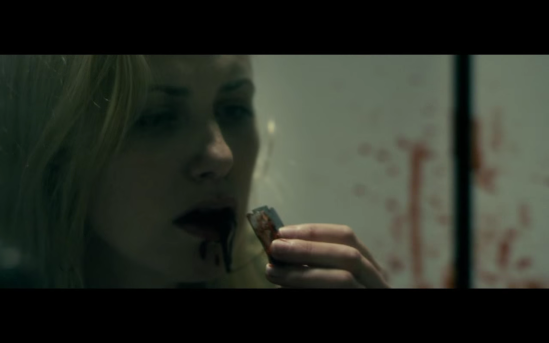
“The Resident,” aka “The Sublet” as known in other parts of the world, is the debut psychological horror directed by the writer of “Jack Brooks: Monster Slayer,” John Ainslie, who also co-wrote the script with Alyson Richards. The 2015 film is also produced by Chad Archibald, whose name might sound familiar if you’re a regular reader of this review website where you can read about interesting horror feature films like “The Resident.” Archibald helmed the body horror delicacy “Bite” the same year. Together, the qualified credential crew steps up to a challenge with “The Resident” that, on the surface, appears to be another run-of-the-mill tired premise of a young couple coping with a malevolent presence and with a common subplot involving a stay-at-home mom being the unfortunate victim. Ainslie and Richards, obviously, go through the stages of that realm, knocking down the expected pillars of conventionalism, but the duo do touch upon a couple of things. For one, they make “The Resident” very interesting and entertaining by seriously messing with Joanna’s state of mind, forcing her to question every little aspect of her mundane existence in that small sublet. The second thing is is that the whole story can be seen a metaphor for postpartum depression that’s driving psychosis right into the thick of Joanna’s unhappiness. More than once, Joanna mentions how ugly she feels and she becomes overly jealous of Geoff’s ex-girlfriend, even if rightfully so.
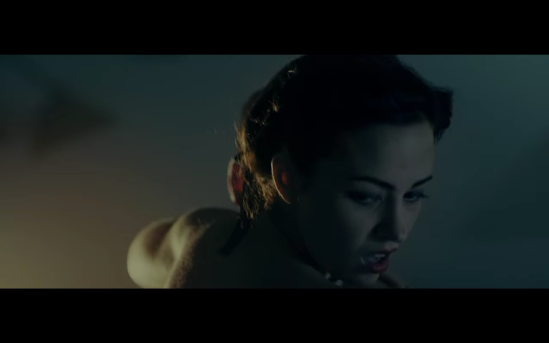
“Bite’s” Tianna Nori gluttonously takes on Joanna’s dwelling punishment. Nori’s par performance sells sufficiently, but doesn’t completely enthrall Joanna into the depths of madness, leaving a rather tame aftertaste. The same can be said for Mark Matechuk, who plays opposite to Nori with Geoff. His struggling actor shoes fit his two-bit stiff and starchy outfit, but Matechuk and Nori do work well together even if some scenes feel forced and scripted. By far, Rachel Sellan was my least favorite of the three main actors with her portrayal of a snobby, yet beautiful, ex-girlfriend of Geoff’s. A world built solely on the inner walls of the apartment, literally 95% of the film is inside this constructed sublet, has more personality and life than the organic material composing an orchestrated dialogue and I personally don’t blame the cast. I believe the sublet, the construed presence, subversively overshadows the intended characters. Krista Madison, James Murray, Mark Ettlinger, and Jeff Sinasac make up the supporting cast.
“The Resident” has modest effects that spur mostly off screen, but on the rate instance when mise-en-scene effects happened, they didn’t go unnoticed. “The Resident” brought and delivered the appropriate psychological nightmares associated with brain-warping spirits, shelling out an introverted dreaminess in Joanna that only she could experience with those unfortunate family and foes surrounding her witnessing only the outer chaos. Sometimes the story gets lost in itself when attempting to further Joanna’s skewed circumstances. Is Joanna dead already? The answer is possibly. Every external scene of the apartment building or even the brief scenes of Joanna with the stroller sets the moments in dreary rain and when going further into the film, Joanna is no longer able to leave the apartment. She even becomes a part of her own missing person’s investigation conducted by two belligerent cops, played venomously by Mark Ettlinger and Jeff Sinasac, who inform Joanna that her family hasn’t heard from her in days. It’s the final scene that sets the whole rest of the film in stone, that solidifies Joanna’s mental state, and yet the simple moment still leaves questions and reflection. That’s a considerable tall tell sign of good story telling from Ainslie and Richards.
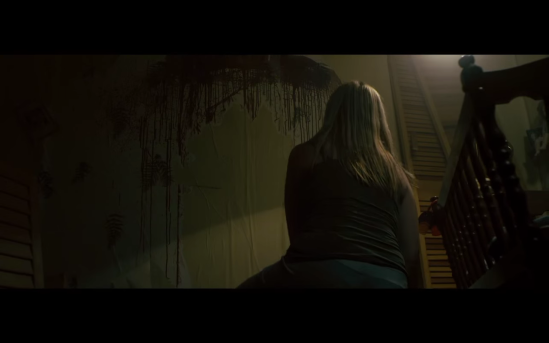
Canadian production company, Black Fawn Films, headed by Chad Archibald have another successful odious anecdote in their arsenal of horror and the company has quickly gained momentum in becoming a juggernaut in sustainable low-budget horror. Second Sight will be heading the home distribution portion of the title with a May 22nd release onto DVD and On Demand. Unfortunately, a press DVD-R was provided and the audio and video qualities can’t be commented on nor can any critique on the bonus material. John Anislie has the tools and the means to labor a chilling trap of supernatural spookiness. With a cast of similar caliber, “The Resident” would have made it higher on the list, but manages to keep a solid bleep on the radar when the next scene always begged the question – what’s going to happen next?
Evil Wants You to Say it’s Name! “The Bye Bye Man” review!

Elliot, Sasha, and John move into an old manor home just off the university’s campus. The tight knit three friends stumble upon a tattered nightstand with scribbled nonsense inside the drawer and underneath the incoherent writing and scratched into the wood is The Bye Bye Man. Once you hear the name, a searing imprint has been made into the mind, opening up a layer within the universe that invites a grim reaper-like figure to come horrifically collect individuals who have been infected with the name. The mysterious malevolence will impose hallucinations, or tricks, upon the mind to induce others to commit evil acts on another and will stop at nothing until those who know his name are either end up dead or spread his vileness. For Elliot, Sasha, and John, their close relationships will be tested, they’re bodies will be challenged, and their minds will be altered in a race against the clock in order to beat death, to defeat The Bye Bye Man.

“The Bye Bye Man” is an Universal Pictures and STX Entertainment distributed boogeyman concept from 1995’s “The Last Supper” director Stacy Title. Title, who hasn’t been active for about ten years since her last directorial, helms the project written by her husband, an appropriately named Jonathan Penner, who also had a co-starring role in “The Last Supper.” The inspiration stems from a collection of horrific tales from Robert Damon Schneck’s “The President’s Vampire: Strange-but-True Tales of the United States of America,” but “The Bye Bye Man” borrows heavily from well-crafted horror brethren too, birthing a mythological personification of death that doesn’t wield a scythe, but rather being a master, underneath a dark hooded cloak, to a hellish beast that munches on the faces of The Bye Bye Man’s victims. “A Nightmare on Elm Street,” “Final Destination,” and a little bit of “Scream” become the selected examples that are the genetic makeup of TItle and Penner’s film, but doesn’t grossly rip from the said works, two of which are the late Wes Cravens masterpieces. Instead, Jonathan Penner reconfigures the nightmare man, a modern day Freddy Krueger type stalking every soul during the day and night hours, whom establishes his own brand of Rube Goldberg deaths through deadly vision inflictions that pray upon a human’s moral subconscious. “Don’t say it. Don’t think it” sets as the 2017 film’s tagline with the notion that perhaps little white lies are, literally, lifesavers or that the truth can be hurtful, and or knowledge can be powerful, but can also lead to your own demise.

“Ouija’s” Douglas Smith succumbs to his lead role of Elliot, an educated and patient young man who seems to have everything despite tragic misfortune that’s whisked through the character development. From friends, to a supportive brother, to a loving girlfriend, Smith transition seamlessly to languishing burden during a spotlight scene with co-star Carrie-Anne Moss (“Matrix”) that’s raw and cuttingly empathetic. The story centers around Elliot, but Sasha and John have pivotable relationships to Elliot, two essential roles given to two British actors, former girl of Prince Harry, Cressida Bonas, and television actor Lucien Laviscount. Both Bonas and Laviscount expensed drab performances, mechanically and, often, monotonically coming and going from scene-to-scene without mingling well into the rest of the film’s grim and dire trimmed overalls that basically left Smith out to pick up the slack. Along with Carrie-Anne Moss, who always seems to be typecast in a women of power role and, in this case, a detective, “The Bye Bye Man” sports other veterans of both horror and general film, but; instead, take a backseat to a younger generation of actors. “HellBoy’s” Doug Jones silently strolls through one of the easiest prosthetically garbed performances of his illustrious career as the titular character, genre stable Leigh Whannell (“Saw”) commits to a haunting performance as a murder-suicide martyr, and the legendary Faye Dunaway portrays a longtime widow of the aforementioned madman. Michael Trucco (“Wishmaster 4: The Prophecy Fulfilled”), Jenna Kanell, Cleo King (“Hood of Horror”), and Erica Tremblay round out the supporting cast.

Universal picking up a horror title resembling an infantile kids feature and releasing it theatrically might with relatively unknown, mostly non-American cast, will scratch some questioning heads, but with a well oiled supporting cast consisting of many years of guild service, a director, despite being inactive for many years, maintaining a sensible and visionary eye, and a story, aside from a few underdevelopments, that captivates with edge of your seat scares and with next moment eagerness, “The Bye Bye Man” has great potential. With smoothing out details of Elliot’s and The Bye Bye Man’s backstories and construing more of a slow burn method when getting the characters involved with the ‘don’t think it, don’t say it’ villain name, Universal would have increased their gross profits by double and the world would be happy once again. Unfortunately, that scenario was not the case as credits bombarded “The Bye Bye Man” as about as borrowed and as hokey as any low-budget horror film can be, but “The Bye Bye Man” surpassed the production budget by triple and to me, someone who generally has the same stance as most credits, that’s a win for Stacy Title and company.

The Intrepid Pictures and Los Angeles Media Fund production “The Bye Bye Man” makes a Universal Pictures Home Entertainment debut on a two-version unrated Blu-ray and DVD combo. The MPEG-4 AVC, 1080p Blu-ray disc contains a razor sharp image in the 1.85:1 presentation. Depth and shadows phenomenally define the space, especially in closer quarters and the ariel shots. A motif of bleak black and grim grey is consistent throughout, creating a tone through the darker shades, with vivid hues to gloriously fend for themselves amongst the achromatic reel landscape. The English DTS-HD Master Audio 5.1 surround sound doesn’t feign in the balance category with dialogue prevalence not short of excellence and, much like other atmospheric horror, the spooky elements are outlined in various levels from a coin dropping to a train horn. Bonus features are surprisingly zilch with no extras on either format; I guess there wasn’t much to say during or post-film. In all, “The Bye Bye Man” is a total hack with plot holes. A completely borrowed and revamped product with a terribly childish title promising nothing to the genre, but that doesn’t necessarily mean “The Bye Bye Man” can’t be entertaining, providing a wicked sense of humor and a morbid final destination outlook with unexpected casting choices and a barely bordering PG-13 horror rendering.

Say Buy to “The Bye Bye Man” at Amazon.com!

Where There is Darkness, There is Evil. “The Dark Tapes” review!

Four dark and terrifying tapes tell tales of a petrifying horror through the camera lens of various found footage assets. Whether between the bleak, grim nature of disturbed mankind or the ominous, otherworldliness of menacing creatures, each story’s ultimate objective is to expose what lies behind the scenes, to shine a light upon what lives shrouded in shadows, and to unearth what lurks in the mind’s subconscious. At first glance, the dark tapes might seem uncorrelated, but at closer examination, the tapes share a deep rooted evil that connects every afflicted recorded event and makes one think twice about their perception on reality.

“The Dark Tapes” are a formidable found footage anthology that resembles a familiar “V/H/S” layout under the meticulously constructed eyes of co-directors Michael McQuown and special effects guru Vincent Guastini (Child’s Play 3). Scripted by the anthology creator, Michael McQuown, “The Dark Tapes'” four interlocking episodes will leave inside you a paralyzing case of nyctophobia as the genre-spliced anthology has no shortage of bone-chilling creepiness; in fact, “The Dark Tapes” epitomizes the very term and with an alternate universe mixture of ghastly ghouls, ghosts, and grisliness, the extremely exhausted found footage genre might have discovered some new, and much needed, life before being on the brink of a near death extinction in this quaint independent production from Michael McQuown.

The three internal tapes, directed by McQuown, are entitled, and in this order, “The Hunters and The Hunted,” “Cam Girls,” and “Amanda’s Revenge” with Vincent Guastini’s external wrap around segment, “How to Catch a Demon,” being broken into four parts between each tape and each tape should be viewed in complete and utter darkness to achieve maximum level of pants-pissing fright. Your overworked heart will skip with long deadly pauses in between, your lungs that keep you breathing will cease to provide breath, and your mind will warp to unfavorably play tricks on your eyes from an unrivaled nightmare witnessed on “The Dark Tapes.” The full body-stopping, comatose-inducing effect can’t be accomplished without the collaborating cast that includes Brittany Underwood, Tess Munro, Stephen Zimpel, Meredith Thomas, David Roundtree, “Sushia Girl’s” Cortney Palm, Anna Rose Moore, Shawn Lockie, Jo Galloway, and Michael Cotter to just name a few.

Much is right about Michael McQuown’s “The Dark Tapes.” Always welcoming practical effects are better than most indie ran features, especially in the anthology category, and the effects can best some lower-end Hollywood productions inside eye-glueing, on the edge of your seat narrative designs that are smart, gripping, and definitely heart-stopping scary, but to be somewhat of a devil’s advocate, the acting was overall a bit stiff across the plane with an awkward uneasiness in the vary of lackluster performances and overzealous deliveries that petered scenes from reaching full potentials. Production wise, “The Dark Tapes” impress inside the sets of bland reoccurring locations, but coincide them with a vast amount of timely, well placed special effects that quickly mutate the stark locations and the uninteresting backdrops turn into vivid portraits of hell.

The Thunder Road Incorporated produced, “The Dark Tapes,” has been slated for a worldwide video on demand distribution release come this mid-April after a theatrical stint this past March courtesy of the Epic Pictures Group. VOD platforms include Google Play, Vudu, iNDemand (Comcast- Xfinity, Time Warner, Cox, Bright House & more), Dish TV, Amazon, Vubiquity (Verizon Fios, Charter, Sudden Link, Media Com &more), Xbox, Playstation, Sling TV & Vimeo. Unfortunately, I was provided with an online screener of the festival favorite and can’t necessarily comment on the video or audio qualities nor any bonus features that might be available on a home entertainment release, but I can firmly state that, visually, “The Dark Tapes” is the Haribo of horror eye-candy with the different flavors of thrilling genres in a pint-sized package and while a little tame with the cherry red graphic content, director Michael McQuown seizes the opportunity to instill an open faucet of fear rather than tease with gore and sleaze with sex. If I had to recommend a horror anthology for 2017, “The Dark Tapes” would be on the very short list.
Never, Ever Climax With Evil! “Female Vampire” review!

A cursed countess has returned home to the Madeira Island. Countess Irina Karlstein has an insatiable thirst, deadly to any man or woman she’s comes in content with on the scarcely populated island. By day and night, the beautiful mute countess, wandering the terrain more than half naked, enjoys the islet’s amenities, including sucking the blood, or the sperm, out from her erotically hypnotized prey and zapping their life essence right at the point of climax. Discredited Dr. Roberts and a mystical blind Dr. Orloff aim to track down the creature practicing vampirism, despite the local authorities unwillingness to aid them and wishing to debunk the outlandish theory. Amid the rising death toll, the countess unexpectedly falls in love with an aspiring writer on holiday and she fears her curse, her hunger, her need to be filled will consequently overtake the love she has bestowed upon the writer.

Classic European schlock from the greatly candid and voyeuristic director Jesús Franco, “Female Vampire” goes by many interesting titles, just like Franco himself who also has a cache of various, widely used monikers. “Erotikill.” “Loves of Irina.” “Lustful Vampires in Sperm Frenzy.” These are just the tip of the enigmatic iceberg that is of the English titles associated with Franco’s film with “The Bare-Breasted Countess” and “Female Vampire” the better suited for the version reviewed by Its Bloggin’ Evil. Oh, did I forget to mention there are multiple cuts and versions of this film? The 1975 sleazy vampire flick has numerous renderings from an XXX version with sexy-time vampire scenes to a 35-minute reduced cut where many of the sexually graphic material has been removed and more of the horror either remains or second, more conservative, takes are introduced. Whether “Female Vampire” is a good film or not ultimately determines to be an unnecessary factor as Franco’s film can be rather an interesting case study in how one story or, in this case, one reel can be reworked and reconstructed to emit a completely different sensational perceptive.

Barcelona born actress Lina Romay exposes herself as the Bare-Breasted Countess Irina Karlstein. Her striking dark features and piercing eyes make her resemble your typical lady bloodsucker and with vampires being naturally attributed with strong sexuality and influential powers, Romay doesn’t need the omitted dialogue as she instills beauty, sex, and power into the body and the expression of her character. The untrained actress leads by being an extrovert, uninhibited by conventional proprieties, and Romay wins at being Countess Irina Karlstein just by naturally being herself. Her longtime collaborator and future husband, Jess Franco, had developed, whether intentionally or not, this role for his free-spirited companion and, as well, stars himself as the inquiring Dr. Roberts. As the countess’ love, cult genre favorite Jack Taylor brings his tall, dark attributes to be a soft spot for the unquenchable cursed and an Amazonian built Anna Walican gets hanky-panky as a islander journalist with Lina Romay in a sensual scene of unchained lust. Alice Arno (“Justine de Sade”), Monica Swinn (“Hitler’s Last Train”), Luis Barboo (“Conan the Barbarian”), and Jean-Pierre Bouyxou round out the cast surrounded by Romay’s eroticism.

On the outside, Jess Franco directs like the utmost perversity, deep-seeded with gratuitous nudity and filled with revamped versions of the same scene. On the inside, “Female Vampire” is tragic love letter with Countess Irina Karlstein’s wretched curse stretching beyond her power. Her curse is more than just yearning from blood (or semen), but also an ache of the inability to be sexually gratified. Even when her victims are dead, she continues the carnal ritual of graphic grinding, tantalizing touching, and manic masturbating. Aside from being mostly nude throughout the entire feature, and if not, semi nude through a see-through blouse, Lina Romay’s perfectly shaped apple bottom is constantly upended, flaunting her pheromones in more way than one, with each conquest more exposed than the other.

Screenbound Pictures has released “Female Vampire,” aka “The Bare-Breasted Countess,” as one of the first United Kingdom DVD titles from the new Euro cult label, Maison Rouge, who specialize in Euro trash and sleaze. I was offered a DVD-R screener and can’t comment on the quality or the bonus features, but with release, with excellent cover art, contains two versions of the film: the highly erotic version with as much body part exposure as one can handle and the “Erotikill” which has alternate scenes and less sleaze. The main feature dons no blood, except the countess in a blood tub, and allows Countess Karlstein to roam in sunlight, non-typical traits of the conventional vampire and as the “Erotikill” version still lets the countess be exposed to ultraviolet rays, there’s more blood that’s more than enough to barely gentrify the horror genre. “Female Vampire” is an usual bird of love and lust, a perfect example of Jess France’s body of work, in an awful take on an iconic horror villain legend.
 It's Bloggin Evil!