EVILs Make Difficulties in Finding God. “Agnes” reviewed! (Magnet Releasing / Digital Screener)

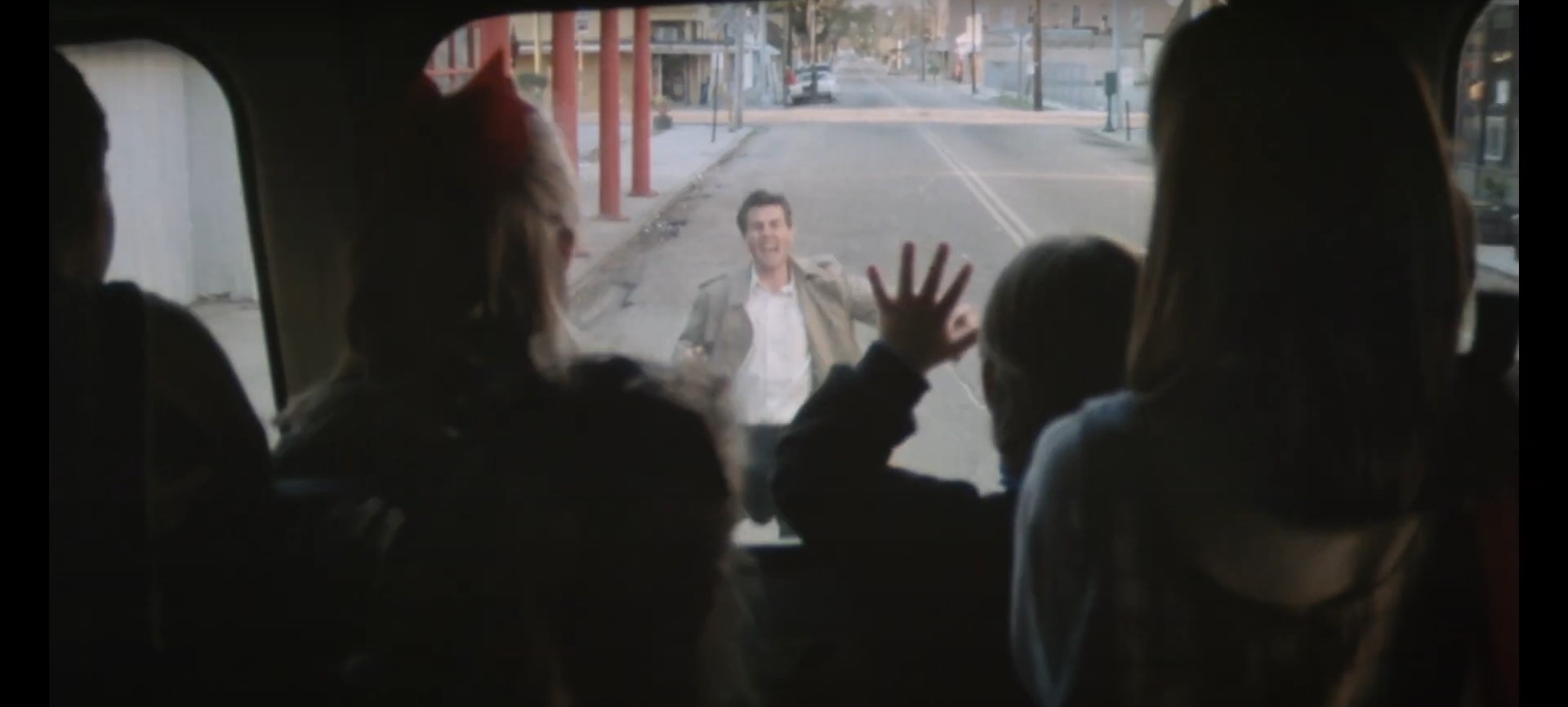
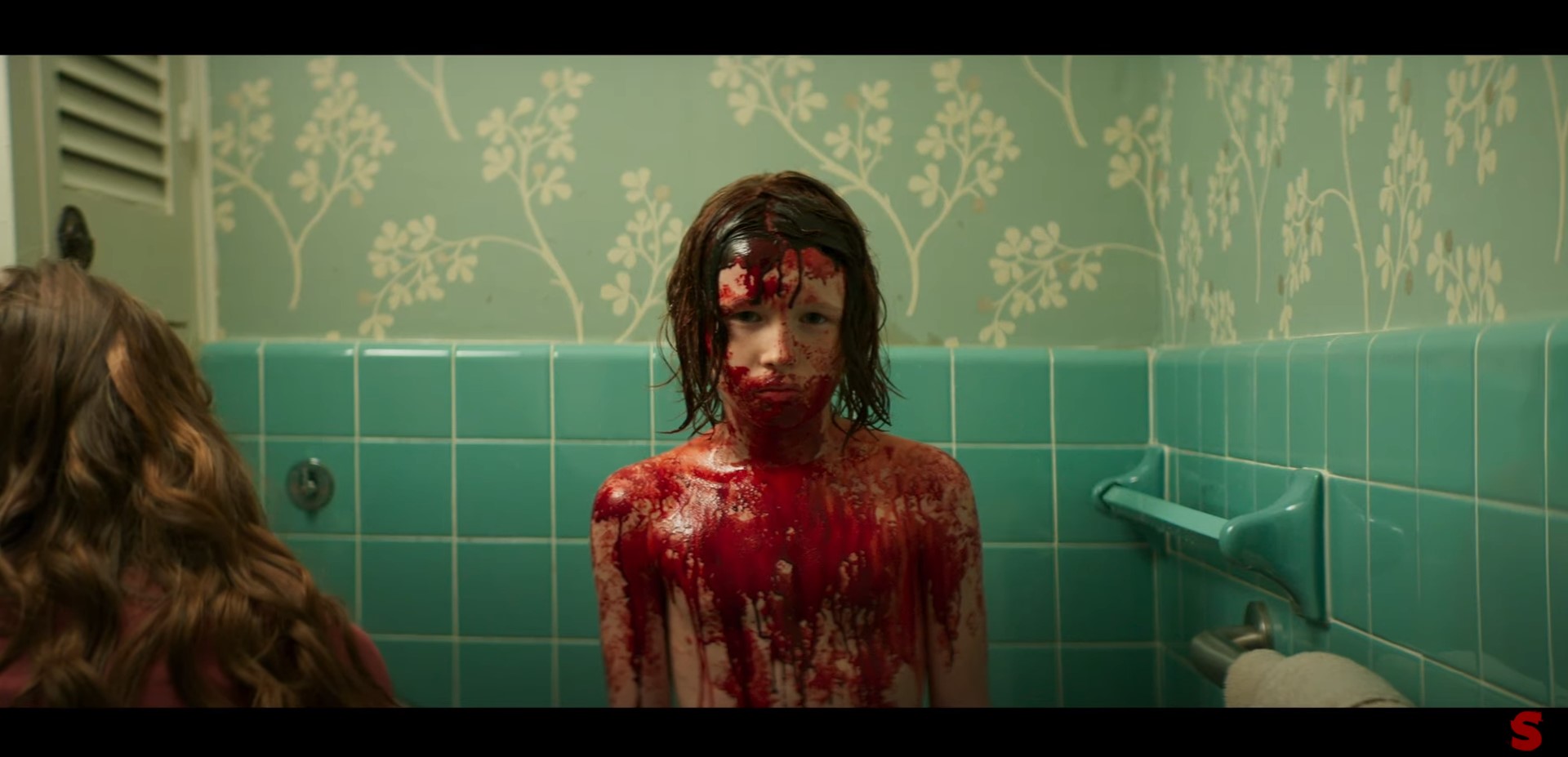
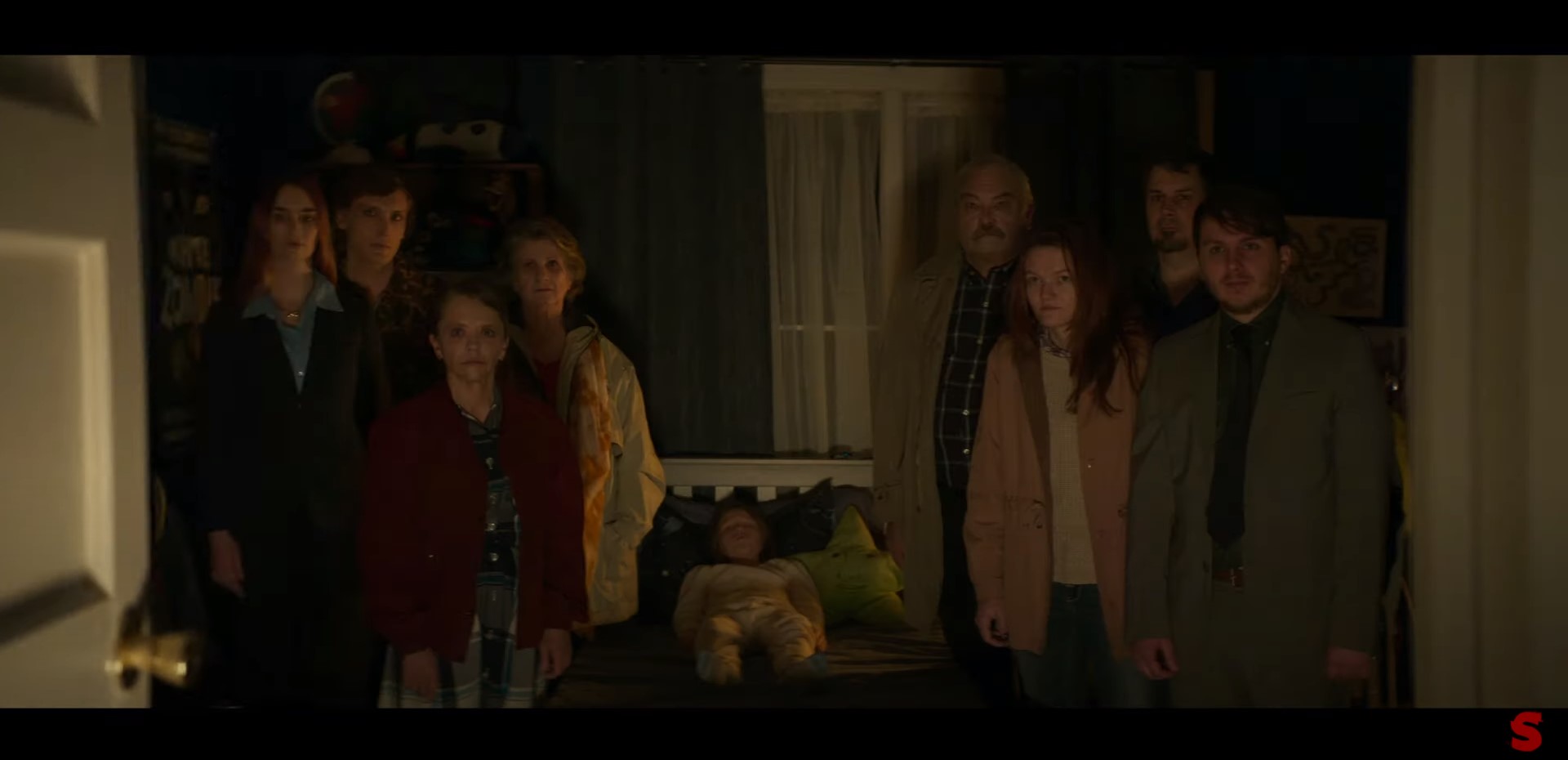
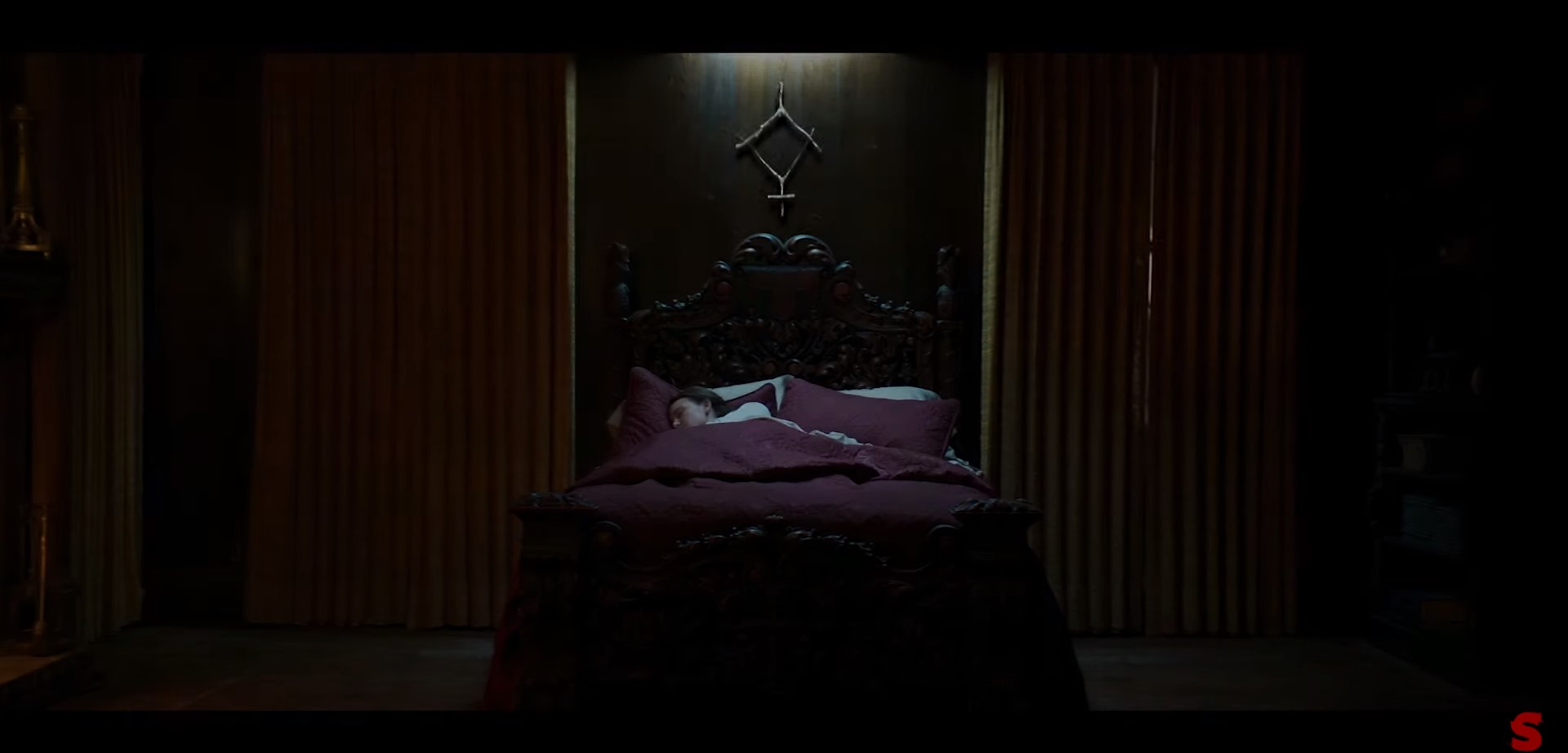
Blemished man of the cloth, Father Donaghue, and a neophyte are summoned to perform the holy rite of exorcism on a possibly possessed nun, Sister Agnes.  Disadvantaged and forced by his own scandal, Father Donaghue is ordered by the local Bishop to oversee the matter before they ship him overseas to avoid further disgrace upon the Church, but the skeptical priest, who has performed many exorcisms in the past, has never once believed he was casting out a demon but, rather, relieving a guilty, tormented soul seeking divine forgiveness.  When the priests confront Sister Agnes, the situation is violent, wily, and unlike any possession Father Donaghue has ever seen before.  The incident casts doubt over Sister Agnes’s friend and fellow nun, Sister Mary, who leaves the convent to try and live on her own and find God in the real world her own way, but a little bit of Sister Agnes has seemingly rubbed off onto her. 
You gotta have faith, sang once by pop-rocker and songwriter George Michael (and Fred Durst, if want to go that route) and though Mickey Reece’s “Agnes” doesn’t necessarily croon a rebuttal, the Oklahoma City born filmmaker surely splits hairs with a formidable blockade that advocates the crisis of faith cinematic model with layered horror.  The “Climate of the Hunter” writer-director’s latest quasi-horror-comedy and full-throttle religious drama questions the validities of finding God on a personal level with a divergently cut screenplay co-written with frequent script partner John Selvidge, whose current post-production penned time-warping horror entitled “Wait!” coming next year.   “Agnes” is filmed in the heartland of America inside Reece’s home state of central Oklahoma and is a reteaming of Mickey Reece and producer Jacob Snovel of Perm Machine with Greg Gilreath and Adam Hendricks’ Divide/Conquer (“Black Christmas” 2019 remake, “Freaky”) as the production companies and is first feature presentation for Molly C. Quinn, Matthew M. Welty, and Elan Gale’s QWGmire Productions.
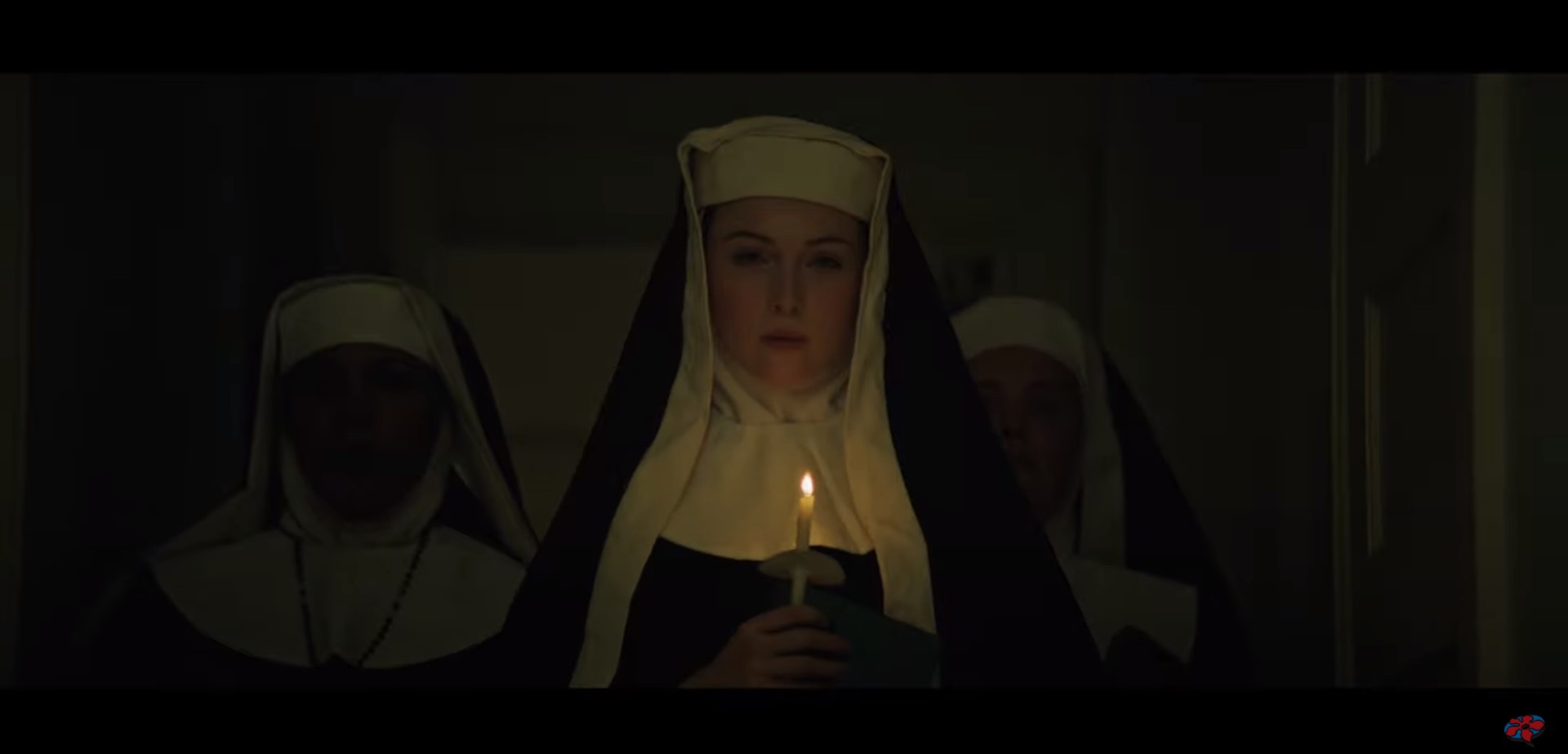
One-third of the head of QWGmire is also the “Agnes” leading lady as Molly C. Quinn, who doesn’t play the titular character, plays Mary, a nun and friend of the possessed plagued Agnes (Hayley McFarland, “The Conjuring”) with a tragic background that ambiguously parallels a similar path to the mother of Jesus, also named Mary for all you non-Christians out there.  Mary is tender, quiet, and self-effacing but determined to pave her own way without the means of charity, especially those of the unsavory-favor nature, and consulting God for answers.  Quinn is perfect to shoulder Mary’s innocent disposition and does carry her naïve meekness throughout up until Mary’s gradual decline toward her faith that turns the sweet and innocent young woman into a pragmatic doubter, spurred by Agnes’ sudden otherworldly turn from devout to impiety that becomes more than what meets the eye.  However, in kicking off Reece’s film, one would have thought the exorcism of Agnes would emphasize more heavily on Father Donaghu (Ben Hall, “Minari”) and soon-to-be priest Benjamin (Jake Hororwitz, “Castle Freak” remake), but despite the involved build up of Father Donahu’s sordid past that conflicts with the Church and his struggles with the exorcism, Reece and Selvidge ultimately do, in what feels like, a pulling of the plug on a storyline that followings in the footsteps of “The Exorcist.”  That is, in my opinion, the downfall of “Agnes’” story in elimination of really interesting character arcs right in their girthy throes, leaving audiences hanging on Father Donaghu, grocer owner/low-end gangster Curly (Chris Sullivan, “This is Us” and “I Trapped the Devil”), ostentatiously swaggering Father Black (Chris Browning, “Let Me In”) and even the titular character Agnes fails to flesh out fully.  Rachel True (“The Craft”), Zandy Hartig, Bruce Davis, Chris Freihofer, Ginger Gilmartin, Mary Buss, and “Guardians of the Galaxy” and “Suicide Squad’s” Sean Gunn as a standup comedian and Mary’s love interest.

“Agnes” loosely follows a couple of Catholic patroness saints in Agnes and Mary derided in a contrary sense.  Agnes, the virgin martyr in Catholic veneration, opposes the Church in the film with flashbacks of her embracing an indulgent life along with her sexual insults that’s uncouth for the patroness saint of pure little girls.  Mary’s a little more recognizable with a previous, ambiguous account of her child’s death (aka Jesus Christ?).  Plus, there’s the religious imagery, amongst others in the film, of Mary with bleeding eyes as an analogous to the weeping statues. Reece blatantly shows most men and women of the cloth to be unorthodox Orthodox Catholics from Father Donaghu’s troubling allegations to the mocking head priests. Mother Superior throws around her superiority amongst the convent nuns and even the Bishop, who doesn’t ever say a word in his brief scene, appears smug and high and mighty with his stature, letting his assistant communicate (and excommunicate) all the ugly business. Only a non-priest, training to be ordained, in Benjamin is the only innocent, infallible Christian who captures the humble essence of God and the only one who can capable in rejuvenating Mary’s faith. “Agnes” is all about doubting faith whether be by demonic possession, the loss of a child, all forms of corruption, and more, but Mary keeps striving, struggling, and searching for that spiritual lifeline amongst seedy and unscrupulous faithless charlatans slowly poisoning her to be the same. However, the “Agnes” story divides too sharply leaving the acute crisis of faith to be nearly lost in translation and is practically a wandering spectrum of identity that’s roughly craft glued together by Reece.
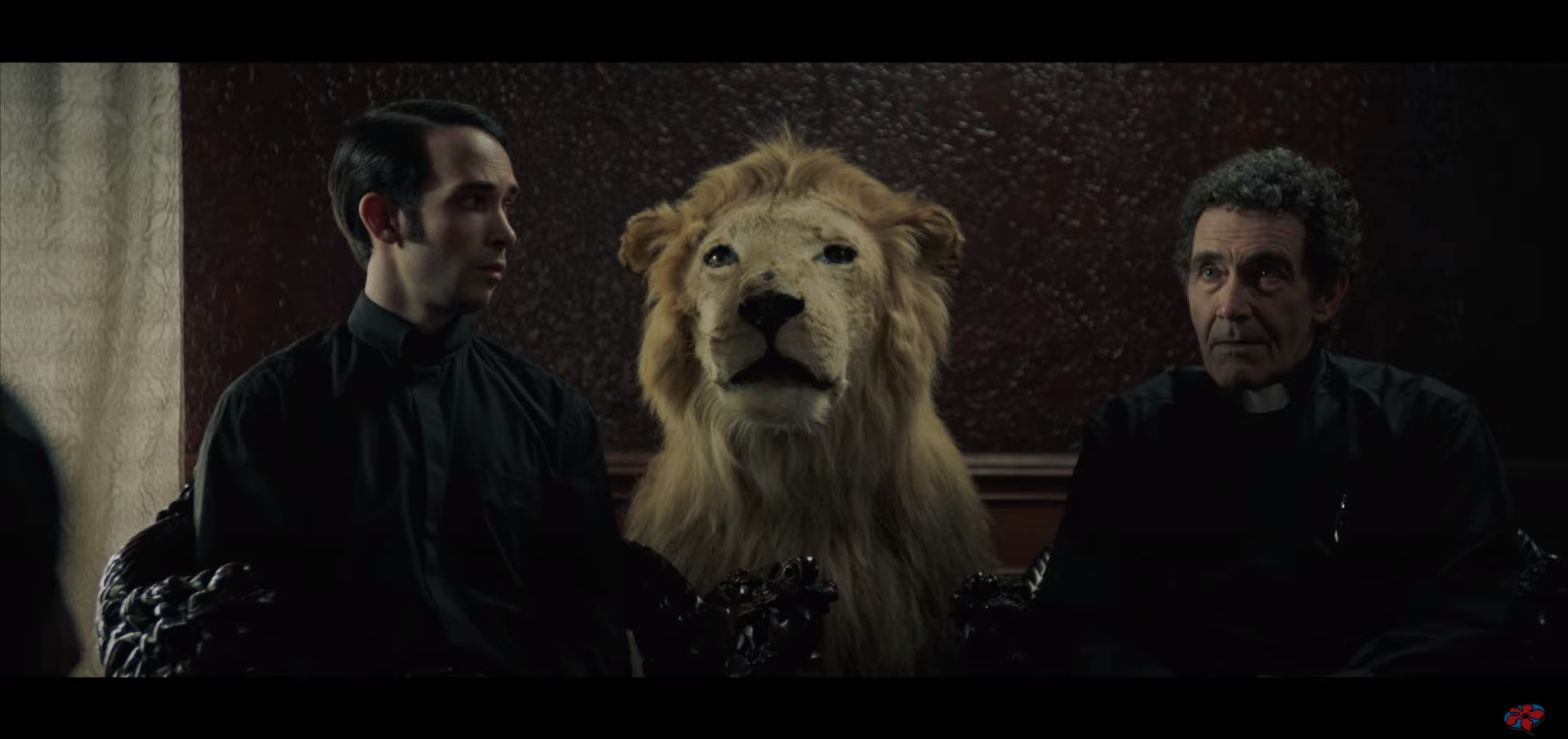
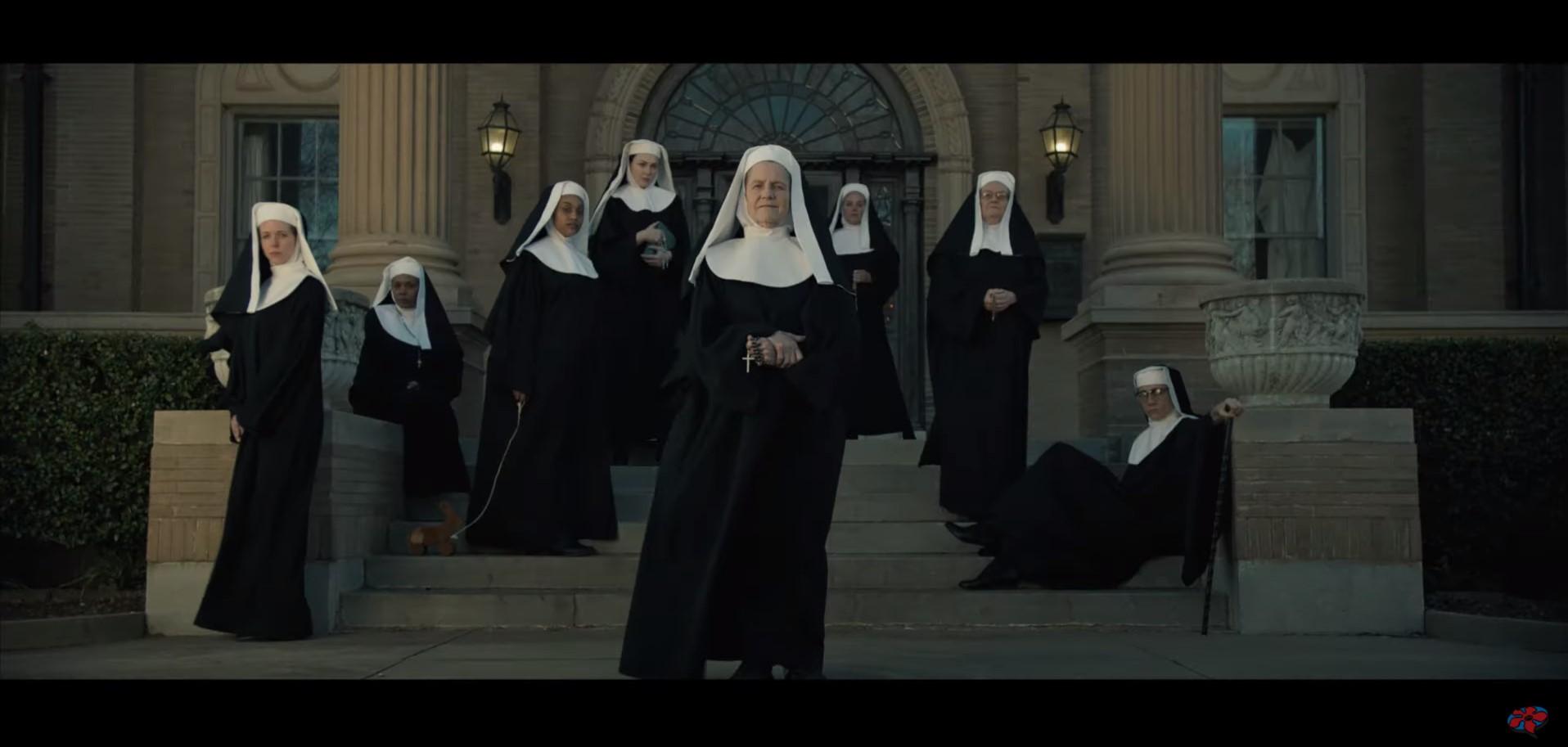
Some may see the film’s poster and excitedly expect Nunsploitation but the reality of “Agnes” digs at the hypocrisy of people and the endless search for faith. What it’s not is the sexual exploitation or sadomasochism of chaste nuns. Give Mickey Reece’s horror-comedy drama “Agnes” a faithful shot come it’s December 10th theatrical release from Magnet Releasing, a subsidiary of Magnolia Pictures. “Agnes” has a runtime of 93 minutes and presented in a 2.55:1 aspect ratio. Typical of any Mickey Reece film, his melodramatic horror-comedy fits into his oeuvre of talking head cinema so leave expectations of brooding and atmospheric milieus at the door for more realistic, down-to-Earth scenes, which is a bit surprising since the cinematographer behind “Hellraiser: Judgement” and “Children of the Corn: Runaway,” Samuel Calvin, has an eye for unhallowed aesthetics. Calvin does produce some perfectly poised shots with the flock of nuns and the ever slightly deviant angle to sharpen a scene. No bonus features were included with the digital screener nor were there any bonus scenes during or after the credits. “Agnes” floats on a haphazard timeline of dark, melodrama comedy for a desperate need of faith against the immense heartache, the crudely selfish, and the absence of morality all of which incessantly imposes upon the good to assimilate.
Don’t Mind the Glowing, Ominous Hole in the Wall. That’s Just a Gateway to Evil. “Beyond Darkness” reviewed! (Severin / Blu-ray)

A witch acolyte of Ameth, an underworld demon, is executed on multiple counts of child murder.  The priest who oversaw the witch’s last rites came in with a doubtful heart and upon researching Ameth through an unholy book, disavowed his own religion only to fall into a near drunken stupor of atheism.  Months later, a new priest and his family move into a home arranged by the archdiocese, but soon after settling into the old house, a series of disturbances point to a closed in wall behind a door that’s uncovered to be a gateway to another plane of existence; an existence where the child killing witch is granted access to seek the souls of the priest’s young children.  Fighting with his own struggles of faith, the ex-Jesuit assists the priest and his family in an attempt to cast out evil once and for all. 

Perhaps common knowledge amongst diehard horror fans, but not so much among the casual curiosities of an oblique coursed moviegoer is the fact that “Beyond Darkness” and Sam Raimi’s “The Evil Dead” share a cinematic series connection.  Well, not one in any official capacity one at least.  Drained from the same bloody vain that unofficially corrals Lucio Fulci’s “Zombi 2” as a sequel to George Romero’s “Day of the Dead,” retitled in Italy as “Zombi,” the American-made, Italian-orchestrated “Beyond Darkness” too fell upon the slew of Italian title changes sword with a rechristening into the “La Casa” series.  With the success of “The Evil Dead” in the U.S., Raimi’s video nasty was renamed to “La Case” and “Beyond Darkness” became the fifth “sequel” in the series as “La Casa 5.”  Since Italy has no copywrite laws, a light breeze can easily change any filmic title.  Even the director, Clyde Anderson, dons a false pretense as the Americanized alter ego of Italian director Claudio Fragasso.  The “Scalps” and “Troll 2” Fragasso pens “Beyond Darkness” with longtime script confederate Rossella Drudi, under the Sarah Asproon pseudonym.  “Beyond Darkness” is shot in the deep American South of Louisiana under the Joe D’Amato (aka Aristide Massaccesi) founded Filmirage (“Anthropophagus: The Grim Reaper,” “Deep Blood”), produced by D’Amato, as the Filmirage Production Group.

While behind the camera is mostly an Italian production team, in front of the camera is a cast of American and English actors with an opening Louisiana penitentiary pre-execution theology debate between Bette the witch, played by Mary Coulson, and Father George, a priest having a crisis of faith, played by one of D’Amato’s regulars in English actor David Brandon (“StageFright,” “The Emperor Caligula:  The Untold Story”).  Coulson’s role may be punitively small as the “Beyond Darkness’” lead witch and predominant face of the core evil, but the actress puts all into the Bette character comprised of a maniacal laugh and a lots of very European skin-tag makeup effects whereas the classically trained David Brandon has an array of lively emotions and facial expressions sized to fit Father George’s clerical shirt and white tab collar when he’s not sloshed with doubt.  Both characters interweave into the life of a new-to-the-area priest, his wife, and two kids who move into an old house, built on unholy ground, to start his new chapter in priesthood.  Days later, as the kids become instantly okay with a giant black swam rocking horse in the middle of their bedroom, the family is terrorized by flying kitchenware, flooded with a bayou mist, and frightened by figures in black, tattered shrouds seeking to steal their children’s souls.  Christopher Reeve’s lookalike Gene LeBrock (“Night of the Beast”) fails at double father duty in his poorly lit excuse of a worried father with his children being lured to the realm of the spirit side and as a grounded in faith Father combating the forces of evil without a solid sense of what to do.  Both parents are equally written off as incompetents who continue to stay in the house despite on the continuous threat of Baba Yaga wannabes knocking at every door in the house.  As the mother, Barbara Bingham felt as if she had a little more skin the game.  Perhaps having just come off the legacy success of a “Friday the 13th” sequel (“Jason Takes Manhatten”) she felt the responsibility of maintaining a more diligent approach toward being a mother coursing through occult’s dire straits.   Michael Paul Stephenson (“Trolls 2) and Theresa Walker excel much better in their roles as the two kids, Martin and Carole, who’ve become the centerpiece of Bette’s maliceful desires. 

“Beyond Darkness” will come across as very familiar amongst both horror fans and fans of movies in general with a story pulling inspiration from films like William Friedkin’s “The Exorcist” and Tobe Hooper’s “Poltergeist.”  Fragasso picks and chooses a blanket of trope elements to rework with great malleably in order to not be a total copy.  However, for those who know anything about low-budget Italian horror, Fragasso’s rousing similarities to major and independent hits should come as no surprise.  Notoriously renowned schlock horror directors Joe D’Amato and Bruno Mattei, amongst a sea of others, use to fabricate out of fame at every opportunity by gobbling up successful films, chewing them up, and spitting out their Italian produced counterparts without a second thought just to cash in on just a fraction of the original narrative’s success.  The way I see it, the method was (and still is) an honorable form of flattery. Yet, flattery doesn’t cure sloppiness and “Beyond Darkness” is about as sloppy as sloppy joes. Plot hole after plot hole stack up on Fragasso’s inability to amalgamate elements in an entirely coherent way. There are underwhelming revelations to anticipating character build ups that fizzle; such as a thick-tension mystery behind the local archdiocese and their involvement to place a good Christian family in a house built on evil land or what precisely convinced Father George of Ameth’s power to sink him into an alcoholic pit of despair? I already mentioned Martin and Carole’s inept parents on not fleeing the house at first sign of poltergeist activity or any activity since then so don’t get me started. The story needs some fine tuning but not after is amiss. The acting is not entirely a humdrum of monotony, Carlo M. Cordio’s eclectic synthesizer riff and haunting keynotes score is on another level akin to a composition pulled right out of a survival horror video game, and Larry J. Fraser, another one of Joe D’Amato’s pseudonyms, has an honesty about his scenes unlike we’ve ever seen before in a D’Amato production as the cinematographer captures the fog luminously and effervescently surrounding and chasing the family from out to in.

“Beyond Darkness” is no “The Evil Dead” but is a solid demon and ghost dog and pony show from 1990. Now, the Claudio Fragasso (or is it, Clyde Anderson?) classic is heading straight to your level room television set with a new 2-disc Blu-ray. The hardcoded Region A is presented in widescreen 1.66:1 aspect ratio in a full high definition and 1080p resolution. With only a possible color touch up here or there, I would venture to say the transfer used is the most pristine copy with hardly any damage or any age deterioration. The grain looks amply checked and no cropping or edge enhancing at work in an attempt to correct any issues, if any ever existed. Severin offers two audio options: an English language DTS-HD master audio 2.0 and an Italian dub of the same spec. With dual channels, there retains an always room for growth inkling and with the film’s broad range in sounds, a difficult to swallow lossy audio pill plays the aftertaste tune of, man, this could have been way better. Yet, the track is solid enough, if not more so, with virtually zilch damage. Dialogue comes across clean and clear, but there tails some minor hissing. Like with many Severin releases, new interviews are the star of the special feature show with one-side, talking head interviews with writer-director Claudio Fragrasso Beyond Possession, co-writer Rossella Drudi The Devil in Mrs. Drudi, and actor David Brandon Sign of the Cross. Though the theatrical trailer rounds out the first disc special features, Severin also includes Carlo M. Cordio’s superb soundtrack as disc number two along with a two-page booklet with an introduction to the ingredients of a horror score and to Cordio himself as well as a listing of all 17 tracks. “Beyond Darkness” is Claudio Fragrasso’s unbridled mutt, a motley of motion picture royalties rolled up into an adulating and piggybacking horror beyond comparison.

“Beyond Darkness” 2-disc Special Edition Blu-ray Available on Amazon

Daughters Don’t Cause This Much EVIL! “Son” reviewed! (Acorn Media International / Blu-ray)


After escaping the imprisonment of an abusive ordeal with her father’s cult, the next eight years have been easy for Laurel living with the joy of her son who was born as a result of her abuse.  When her son contracts a mystery ailment that causes open sore rashes and bloody vomit, the doctors are baffled when the surely fatal, undetermined disease makes a rapid retreat and the boy recovers seemingly miraculously.  Days later, the boy again falls more ill and, this time, Laura suspects her previous life in the cult to be behind his suffering.  With clandestine acolytes making the presence known, Laura flees with her son as the two motel jump across the Midwest with no only two detectives on her tail but also the cult looking to reclaim her son with a terrifying and gruesome new gift. 

Back into the creepy kid subgenre field we go with another multiplex single mother and son relationship American-thriller, simply titled “Son,” from Irish-American writer and director of “The Canal,” Ivan Kavanagh.  Spun from the yarn of familiarities that are stitched together with the overprotective mother trope battling the forces of beleaguering evil reigning down on her child, as seen in such films with Jacob Chase’s “Come Play” and Jennifer Kent’s “The Babadook,” Kavanagh deviates from the abstract lines of the mental illness undercurrent that reshapes and plagues centric characters into horrific, supernatural episodes of isolation, grief, and loneliness personified by often terrorizing entities lurking in the dark.  “Son” is an American production formed by intercontinental production companies with the UK’s Elastic Films (“Cub,” “What We Become”) spearheaded by producer Louis Tisné, Dublin based Park Films co-operated by Kavanagh along with AnneMarie Naughton and Ana Habajec, and René Bastian and Linda Moran’s Belladonna Productions (“Funny Games,” “Stake Land”). “Son” is an exclusive release of Shudder and RLJE International.

Added to the long history of assorted turmoiled single mothers versus the things that go bump in the night is currently a big name in horror at the moment with being principally casted in the latest three recognized sequels of the “Halloween” franchise.  Andi Matichak steps into the wretched past but ever so optimistic shoes of Kindergarten teacher Laura whose introduced in a prologue of heavy rain and the blood pumping cacophony of an intense chase.  Pregnant and haggardly dirty and barefooted, Laura is being followed by menacing, unknown men before she pulls off to safety just in time to give birth to a child she verbally proclaims no desire for but reluctantly accepts as her own after a bloody, front seat natural delivery, a moment that not only conveys Laura’s compassion but also her strength. Fast forward, Laura and son David (Luke David Blumm, “The King of Staten Island”) living daily normal lives with school, neighbors, and the ins and outs of parenting.  Blumm gives a good run on distress and duress as the titular character that has contracted an illness rapidly reconstructing his mortal soul.  “Killer Joe” and “The Autopsy of Jane Doe’s” Emil Hirsch enacts a sympathetic detective taking an interest in Laura’s case, but Hirsch is mostly silent and stiff, almost like he’s part of the background furniture, for the entirety of the character arc, bringing down, as a counteractive device, much of “Son’s” speedball narrative.  Rounding out “Son’s” cast is Blaine Maye, Cranston Johnson, Kristine Nielsen, Erin Bradley Danger, Adam Stephenson, and David Kallaway.

“Son” is surprisingly gory involving intestinal viscera and severed body parts with child actor Luke David Blumm at the center of all the carnage and the story is heartbreakingly sober when a mother, a rape victim, has to make the ultimate sacrifice for the greater good.  Kavanagh subtly massages the thematic quandary of how a rape resulted child can be a perspective schism.  On one hand, the born without sin child stems the mother’s womb, ready to be loved and cared for by instinct to protect our own, whereas the other side, of that coin, more ingrained into the human psyche than we like to admit, is the child is a constant reminder of the past, a figurative reincarnation of a hurtful monster who the victim has to lay eyes on every day for the rest of their life.  Kavanagh instills into Laura that blurred line of trauma while imprisoned by the cult and she couldn’t clearly recollect whether her father or someone, or something, else is David’s biological father.  However, Kavanagh’s script houses too many illogical potholes to warrant foolproof approval, some more egregious than others.  For example, at one point Laura removes her severely ill son from the hospital without authorization because she believes cult members are after him to at which then she arrives back home to gather clothes and supplies to skedaddle out of town.  Yet, there were no police officers or cult members in route or staged at the home which should have been the first place anyone looking for Laura, as Emil Hirsch’s character states over the phone to Laura, would be staked out.  Secondly, the local detectives are able to cross state lines into Mississippi, Kansas, and Alabama without so much as batting an eye lash, presumably stepping over local authority.  Lastly, If evidence of a cult, especially a pedophile cult as one of the detectives suggests, is rearing its ugly head again and coming after a previous victim and her son, the federal government would be much more involved than local PD.  “Son” holds fast in keeping it’s cast close to the chest albeit some severe logical issues.  With that being said, Kavanagh knows how invoke dread and horror with his bleak narrative and stylistic techniques.  Good at horror, poor at story is what Ivan Kavanagh’s “Son” boils down to, leaving behind a lingering middle of the road afterthought in it’s wanton wake.

“Son’s” the past catches up with us all story perpetually never becomes tiresome, hitting every stage precisely with intention and full of scares to garner big, soul-freezing reactions. The iciness of “Son” will leave goosebumps, raise hairs, and shiver spines and you can watch it all now on a UK Blu-ray from Acorn Media International. Presented fully hi-def in a widescreen 2.39:1 aspect ratio, the region 2 Blu-ray is PAL encoded and has a runtime of 98 minutes with UK rating for strong gore, violence, language, sexual threat, and child abuse references. When looking over the picture quality, there’s not much to note other than some scenes appear softer than others in a more a director’s style approach to the content of the scene. Much of the blood is inky black with a nice mirror glaze shine, as Paul Hollywood would say, inside from the solemn color-toned to the natural lighting of daytime scenes. The English language Dolby Digital 5.1 surround mix has a robust and fiery soundtrack in Aza Hand’s quite aggressive sophomore composing score. Dialogue is clean and clear without any break in the chain or obstruction as the audio tracks are balanced appropriately through all five channels. Special features include a spliced together snippets from interviews with the cast and crew along with deleted scenes more directly involved exploring Laura’s cult-captive background. To say you would do anything for your child is a complete understatement in Ivan Kavanagh’s “Son,” a top shelf singer full of venom , but as a whole, better stories are out there.

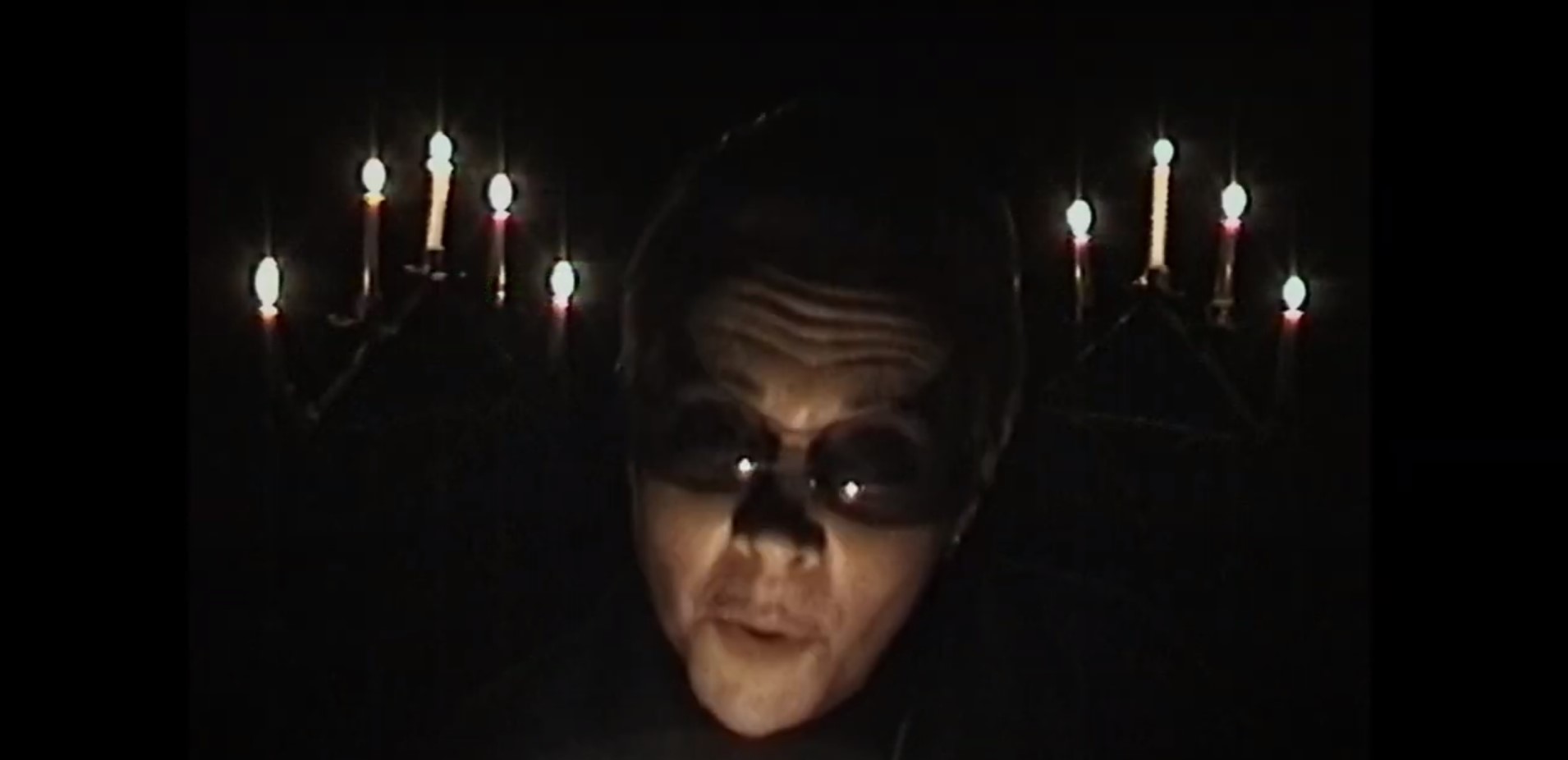
Take a Dekko at this EVIL! “The Collingswood Story” reviewed! (Cauldron Films / Blu-ray)


Rebecca moves from her small town of Bedford, Virginia to Collingswood, New Jersey to attend college.  Her small town boyfriend, Johnny, buys her a webcam to keep in touch with long distant video chatting, or to more so keep tabs on the sanctity of their fraying relationship.  For her birthday, Johnny provides her an entertaining list of audiovisual phone numbers to call, one such number belonging to an enigmatic online psychic Vera Madeline who is compelled to reveal Collingswood’s gruesome, satanic ritualistic history with one of the town’s most horrific mass murders having occurred at the very house Rebecca currently resides.  As Rebecca and Johnny investigate deeper, the webcam keeps rolling as their curiosity leads them into a dark and deadly supernatural mystery that will engulf them both. 

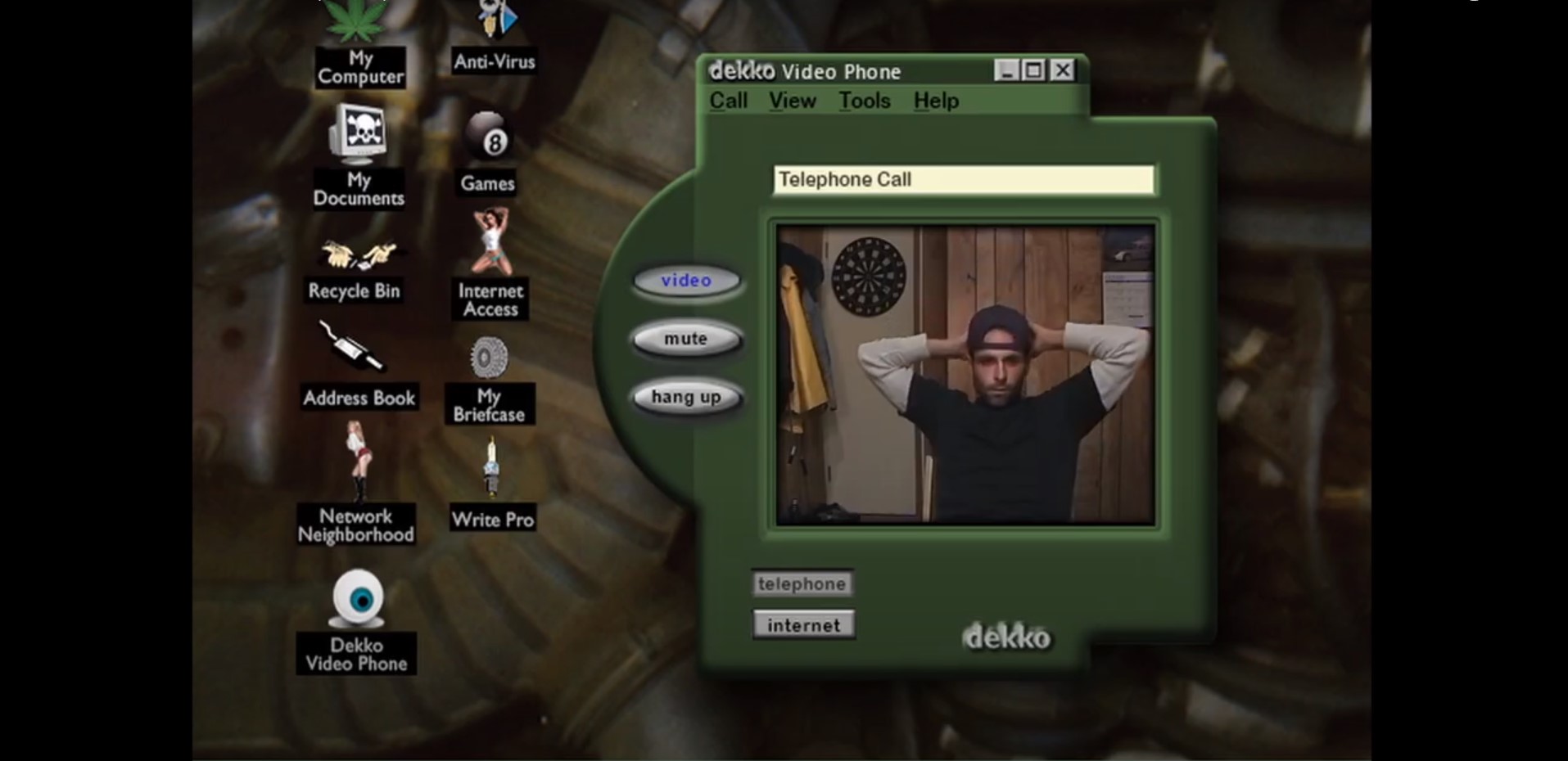
Talk about dated content!  “The Collingswood Story” is the 2002 trailblazer for the paranormal webcam subgenre that has ballooned over the last decade with the success of “Host,” “Followed,” and even the “Paranormal Activity” mega-franchise.  Writer-director Mike Costanza’s early 2000s film starkly contrasts how internet communication technology has changed over the last two decades with the ridiculous long corded phone jack plugins, time consuming uploading of camera footage before the invention of social media live platforms, and the lack of a pre-multiple participant teleconference with a limited single caller-to-caller video application. Once under the working title of “Mischief Night” as the story is set around Halloween night, “The Collingswood Story” is one of Constanza’s first feature films after branching out from the Paramount Pictures’ art department and right into the low-budget horror constraints, but the novel stylistic idea, based off real reports of a mass murder in a New Jersey town and saw little-to-no post-completion success traction back in the early 2000s, was a sell-produced production by Constanza’s Cinerebel Media along with associate producer Beverly Burton.

An interesting tidbit about “The Collingwood Story’s” shooting with the cast is that all the actors were shot individually since everything was done on essentially a webcam. Constaza would be in the room and read opposite the actor in performance. What’s spliced together makes good on delivering reasonable and believable menace, but without talent performances, there would not have been a revisiting home video release of this title. Stephanie Dees got her start in a major horror franchise by playing a minor role in “Halloween 4: The Return of Michael Myers” and 13 years later, Dees finds herself in the lead role of pioneering computer horror as birthday Rebecca. Opposite Rebecca is the lovesick paranoid puppy Johnny, played by Johnny Burton in his only credited role. Rebecca and Johnny go through the song and dance of his skirting around his relationship controlling paranoia as he bounces from Rebecca to his crass friend Bill (Grant Edmonds) while Rebecca is the picture of studious student, ignorant to the self-imposed friction in Johnny’s head. Burton’s a little stiff around the gills in his one-note and uninspired blue collar rendition of a longing, small town boyfriend whose personality matches his small bedroom as a background that never changes with the character unlike Rebecca who seems to grow into her environment with ever frame. In what’s probably her biggest identified role in a feature film, television actress Diane Behrens lurks in the shadows as the enigmatic psychic Vera Madeline wresting the story away from the slow burn of a dissolving relationship of young lovers and diverting into what we all came here for – a thrilling ghost story. Behrens plays the part with showmanship and a subtle inking that anything itching to come off her of mouth will be infomercial and portentous.

What Costanza has accomplished technically with “The Collingswood Story” is nothing short of amazing in his ability to seamlessly film and edit not only the scenes together coherently but also fabricate a meaningful connection between the two actors, shooting separately without a breath of another’s creativity to pull from, over still rather new and evolving technology to which some opposing critics would consider the technology to be disassociating the social standards.  “The Collingswood Story” is not a point and click monotony of talking head syndrome one might expect as Costanza, despite the gratuitous B-roll footage recorded by Rebecca as she drives around Collingwood searching specific locations, adds enough main footage filler of Johnny’s suspicions of a secret boyfriend, Johnny’s lowlife, yet witty, friend Billy giving him bad advice, and of psychic Vera Madeline’s mystifying mysticisms to keep viewers engaged while looking through the garbled eyeglass of lower compression bitrate quality of webcam footage shot on a Hi-8 camcorder that truly gives Costanza’s film that 90’s SOV feel at times.  There’s also the age-old theme of helplessness associated with webcam horror where those characters watching, just like us viewers, can only watch in an eye-widening terror unable to be a lifesaving branch of help when the supernatural stuff goes down.  Costanza also conveys the sense that the paranormal has zero limitations on a medium, in either a soothsayer or an internet conduit facet, to extend evil from the beyond, but the limitations on sensibility can extend only to a certain point in a culminating of Rebecca’s foreboding curiosity as her expedition into her lodging’s attic behooves her to take her laptop, along with its super long extension jack plugin cord, in order for her boyfriend, who lives a good 600 miles South, to accompany her into the darkness.  At this point, technology has yet to catch up with “The Collingswood Story” need and that’s where plausibility of the characters logic fumbles coinciding with an open for interpretation ending that wraps too quickly and asks more questions than provide answers.

For the first time, “The Collingswood Story” receives a proper North American release where technology has finally caught up to Mike Costanza’s vision! Cauldron Films presents the worldwide debut of a high definition, unrated, and region free Blu-ray release, remastered from the original source tapes by Costanza himself. Filmed on a Super Hi-8 camcorder, with Costanza undoubtedly the DP, “The Collingswood Story” remains presented in it’s original 1.33:1 aspect ratio and what also remains is the compression artefacts associated with transferring the source tapes. Certainly nothing devastating beyond a handful of B-roll scenes as much of the webcam shots look neat and tidy, but I’m surprised the reversal, aka webcam perspective of the person talking, scenes still shows a fair amount of blocky noise. The English language 2.0 stereo mix emits noticeable background static from, more than likely the culprit, the digital interference. The faint hum of dialogue track feedback hum is annoyingly choppy and it’s not just the play on the webcam mic of come-and-go vocals and background noise; however, the dialogue is clean and clear. The choice of soundtrack, a sundry of late 90’s-early 2000s placid rock, is audibly limp even for the dual channel output. The release comes with option English SDH subtitles and has a runtime of 82 minutes. Special features includes a behind the story with Mike Costanza looking back at the genesis of the idea as well as noting his inspiration for the idea, an interview with Stephanie Dees, an interview with Johnny Burton and Grant Edmonds, a director commentary, image gallery, and trailer. Despite it’s antiquated flaws, the crossbreeding of tech and terror in “The Collingswood Story” should have lifted the film into the cult status rafters of found footage films with the likes of “The Blair Witch Project,” but in lieu of the world’s massive oversight, Cauldron Film’s release is a big leap forward that looks back to the past.

Own the Limited Edition “The Collingswood Story” on Blu-ray Today!

Believe the Bruja When She Says There’s an EVIL Demon Inside You! “The Old Ways” reviewed! (Blu-ray / Dark Star Pictures)

Drug-addicted and depressed American journalist, Cristina, travels to her ancestral home of Veracruz, Mexico to investigate local folklore and shamanism.  Upon visiting the local feared and shunned caves of La Boca, the next thing Cristina knows she awake locked up in and chained inside a makeshift cell and is told a demon is inside her by an elder Bruja and her assistant who still practice the old ways of exorcism.  Skeptical and scared, Cristina endures the primitive, and sometimes painful, religious rituals to extract the demon out from her soul, hoping they would eventually let her go if she feigns the demons release from her body, but when plagued by strange visions and unexplainable occurrences, Cristina comes to realize the real danger is actually from within.    

Shot on location in Catemaco, Veracruz, Mexico, “The Old Ways” clashes good versus evil in one small corner of the world while also enhancing the already enriched central American state known for its cultural brujo, or sorcery, celebrations and activity.  “The Old Ways,” which aims to symbolize spiritual demons to confront personal ones, is the first feature length venture from director Christopher Alender over 20-years since his first feature that was also, too, a horror, an off brand federal holiday themed slasher from 1999 entitled “Memorial Day.”  The 2020 demonic possession thriller reteams the “Memorial Day” writer and director as Marcos Gabriel pens the script that has become a miniscule reflection of himself being a Puerto Rician expat losing his own sense of heritage and culture of his ancestral land.  Full pin drop scares and profound depth of personal complexities, “The Old Ways” is a production of Soapbox Films (“The Wind,” “Southbound”) from Alender and Gabriel as executive producers along with Christa Boarini (“Spree”), David Grove Churchill Viste (“The Voyeurs”), and T. Justin Ross producing.

The lean characters keeps the story intimate and personal, rarely straying away from the rough-and-ready holding cell single location.  Only in Cristina’s backflashes of her Stateside office or the caves of La Boca do we dip into non-linear fractions of the what, when, why, where and how she became a befuddled prisoner to her Bruja host. No white washing here as the main cast is comprised of Latin-American actors and at the lead is “Fear the Walking Dead’s” Brigitte Kali Canales as the journalist with a death wish. You see, when Cristina embarks on her journey down to the La Boca caves of Veracruz, the troubled druggie searches for relief against an emptiness she can’t shake. Most of this narrative is backlogged backstory eventually worked on and worked out through flashbacks and through the excavation by her national residing cousin Miranda (Andrea Cortés). Canales really leans into her Americanized impediment delivering impatience, ignorance, patronization, and scoffing at Miranda and the Bruja teams’ beliefs and cultural responsibilities. The Bruja team, what I like to call it, is comprised of Julia Vera (“All Souls Day”) and Sal Lopez (“Return of the Living Dead III” ) as the last practitioner of primordial exorcism techniques, aka the old ways, and her assisting son, Javi, and the mother-son dynamic teeters of the customs and exercises of combating evil, a task that has been long withstanding against a beaten down and weary Javi. AJ Bowen (“The House of the Devil”), Julian Lerma, Michelle Jubilee Gonzalez, and Weston Meredith as the demon Postehki.

Now, Postehki is not a real demon from any culture’s cache of fiends. In fact, the whole mythos of “The Old Ways” is entirely fabricated for the sole sake of the story and I find that to be thrilling. Anything is possible with new folklore if done soberly without ostentatiousness and if mixed with some realism of the surrounding area, such as the Bruja element, that grounds the story with that much more of a terrifying blueprint. Plus, the allegories give the story tremendous depth with the demon inside Cristina that mirrors her addiction with drugs that initially obscure the audience from knowing if the evil within is real or is the drug effects the underlining culprit. Cristina’s addiction also plays into her immense sadness after her mother, the last connection to her heritage identity, dies and that melancholy she suffers forms a device that motivates her to return home looking to die herself. Cristina situation resembles being a satellite vessel cut off from the mothership and is lost and alone, leaving it up to Miranda to be that beacon of reconnection with not only her heritage but also her family. The third theme is the carryover of traditions from an older generation to a younger one that becomes very prominent between the Bruja, Luz, and Cristina to come to way of understanding the importance of keeping with the tried and true no matter how beyond crazy it may seem. The first two acts set up perfectly the puzzling nature of Cristina’s imprisonment and unraveling while touching upon subtopics and crowd pulling moments of breath holding terror, but the third act begins to spoil the salivating juiciness of what’s next behind each layer after a couple of false endings, a cheesy transition of character, and an eye-rolling one-liners essentially kill the visceral vibe.

Old habits, old feelings, and old origins pry open the emotional armor to a pervading and harbor-seeking evil in “The Old Ways” now on Blu-ray home video from Dark Star Pictures.  The not rated, dual-layer, region A BD25 is a presented in 1080p High-Definition with an aspect ratio of 2.39:1 anamorphic widescreen.  Cinematographer Adam Lee shoots a terrene-cladded and flat color incubus with strategically placed shots that trigger strong reactions that go toe-to-toe with a thumping tribal score and piercing ambient track from the 5.1 DTS-HD Master Audio track in the English and Spanish language.  Robust and formidable, the score packs a punch with a pulsating drum and pan flute score by “The Wolf of Snow Hollow” composer, Ben Lovett. Dialogue is clean and clear and the errorless subtitles align nicely with the vocals. English SDH subtitles are also optional. Special features include over 2 hours of bonus content with a feature length behind-the-scenes documentary The Old Ways: A Look Beyond that provides cast and crew opinions, history, and everything else in between about “The Old Ways” origins and reactions, a commentary track with director Christopher Alender and writer Nicholas Gabriel, deleted and extended scenes, and storyboards. “The Old Ways” is old world horror for the modern age, poised rightfully so to be a part of the possession genre canon even if coming off the tracks just a tad.