Congratulations! You Won an All-Inclusive EVIL Trip to “Terror at Red Wolf Inn” reviewed! (Cheezy Movies / DVD)

Come for the Dinner, Stay to be Eaten at the Red Wolf Inn on a Cheezy Movies’ DVD!

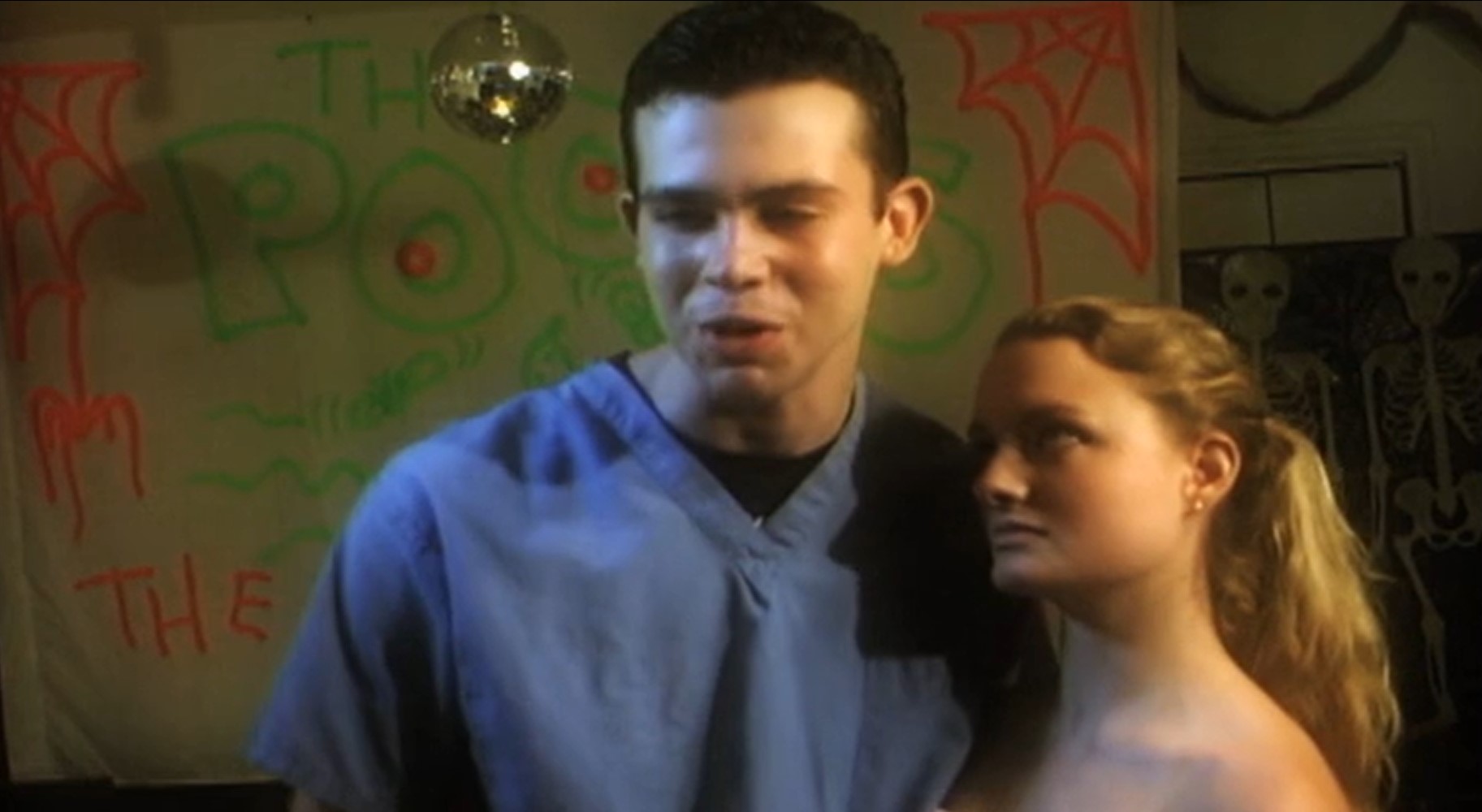
When riffling through her mail, Regina McKee opens a letter informing her she has won a marvelous prize, an all-expenses paid vacation at the quaint resort of Red Wolf Inn.  The young college student is escorted on a charter plane to a quiet town where the historic 1891 resort house resides and to greet her re hosts Evelyn and Henry Smith along with their grandson Baby John Smith.  Occupied with two other guests, Regina finds the old house luxuriously relaxing, her hosts cordially jovial, and the food as about as fantastically delicious as it is seeming endless when the Smiths introduce course-after-course of beautifully cut fillets and delectable desserts.  The Smiths don’t like to skip a meal.  When the other guests’ planned departure feels abrupt without them saying goodbye, Regina begins to suspect something isn’t quite right with The Smiths, something hidden behind the doors of the walk in refrigerator and is being incorporated into all those fatteningly delicious meals. 

Before Papa Jupitar and his children terrorize and cannibalize the Carter family on their way to Los Angeles through the rural, desert roads of Nevada in 1977 and even before a group of young friends stumble upon a demented family abiding by the slaughterhouse rules of people in the backwaters of Texas in 1974, there was the elderly couple and resort owners named The Smiths who entertained young women for dinner to wet their appetites by plumping those same young women into dinner in 1972.  The Late director Bud Townsend, who helmed a limited filmography in his short feature film tenure between 1970 and 1985 with such titles as “Nightmare in Wax” and “Alice in Wonderland:  An X-Rated Musical Fantasy,” took the only credited Allen Actor script and fashioned it into a dissembling macabre for the silverscreen.  Also known as “Secrets Beyond the Door,” “Club Dead,” “Terror on the Menu,” and “Terror House,” which the latter was likely the version experienced for this review due in part to cuts made, “Terror of Red Wolf Inn” is a production of Far West Films and Red Wolf Productions LLC with “Count Yorga, Vampire’s” Michael Macready producing and Allen Actor and Herb Ellis associate producing.

Would you ever answer the letter to a strange solicitation about winning an all-expenses paid vacation in a sleepy little town?  No, neither would I, but that’s what the heroine principal Regina McKee (Linda Gillen, “Black Rain”) did on a whirlwind, excited whim during a time when scammers had only the United States Post Office to importune their tricks upon the gullible.  The 1970s are obviously not as clued in or as technological savvy as the modern times of today with caller Ids, tall tell signs robo-recordings, and all the news stories and documentaries about telemarking boiler rooms; instead, we’re transported back in time where the gift of deceit can be achieved too terribly easy.  Linda Gillen, a freckled face, auburn-haired actress looks like the girl next door with a realness about her modest appearance as a leading lady and when compared to the likes and looks of Mary Jackson (“The Exorcist III,” “Skinned Alive”) and Arthur Space (“Mansion of the Doomed,” “The Swarm”), as innkeepers Evelyn and Henry Smith, the elderly couple reel in that realness even further by being not overly ruthless in their confidence game of cooking with cannibalism and instead bring warmth and hospitality that results in a slow burning dread that can be just as terrifying as an open cookbook cannibal.  The one character I struggle with is Baby John Smith played by John Neilson (“Honky”) and is method toward an unhinged grandson Regina recklessly falls for in record time of knowing him.  Baby John Smith very much plays into his moniker with childlike tantrums and glistening eye wonderment under a tall and chiseled frame of a man, but his infatuation with Regina, that ultimately plays deeper into the story and to foul up his family’s usual dinner plans, feels ingeniously forced as a device just deployed without justification as there is nothing inherently special about Regina compared to the two other lovely guests with more interesting backgrounds and appearances in characters played by Janet Wood (“Ice Cream Man”) and Margaret Avery (“Night Trap”). 

Allen Actor’s script is overall just plain ludicrous.  Who in their right mind would jet off to an unknown small town for a vacation getaway they won out of the blue from a resort that somehow, someway received their name and address?  Was it just a name randomly picked by pointing to that person in the national phonebook?  Who knows because the exact why and how doesn’t see light within the framework that has Regina be the crab who doesn’t know they’re boiling in a pot of hot water until it’s too late.  There are also two good-looking female guests who are also invited for a 2-week staycation until a party and celebration are given by the host for what is ultimately their guest’s last meal to become a meal for the remaining, unsuspecting guests and the devious entertainers.  Aside from a questionable story setup, I found “Terror at Red Wolf Inn” to be well-made and acted.  Townsend obviously knew what he wanted and how to do along with cinematographer John McNichol (“Private Duty Nurses”) to effectively turn around a fly-by-the-seams script into something far more polished on the surface and that adds that layer of suspense when our heroine discovers the truth about her hosts and her newfound love interest.  There’s also an interesting angle of letting Regine free range the house and grounds after the unveiling of anthropophagy because the whole town is essentially in own the caper or the town’s just  one big family, the character pilot who dropped off Regina and the police offer who turns out to be Baby John Smith’s brother or cousin.  Not a lot of detail explores this angle but enough is said and done to know that Regina is trapped without being shackled to her room in a pretty surreal and scary variable of the Inn’s history.

The USA thriller has many titles, been released on many formats, and now Cheezy Movies and Trionic Entertainment presents “Terror at Red Wolf Inn” on a standard definition DVD.  The 480p transfer print is an anemically graded rip from the VHS, digitized to DVD with all the excessive noise, speckled dropouts, mistracking, and blocking included and on top of the original 35 mm print that had typically celluloid grain and, perhaps, its own age and wear issues by the time this print made it to tape.  The print used for VHS appears visibly clean if removing the VHS defects but with the lower resolution, the Cheezy Movies DVD looks pale and dark with very little detail in what is basically slapping together a DVD without any augmentation and restoration to the print.  This is very conventional for this distributor so no I’m not surprised.  The English language mono mix has an enervated strength being ripped from the VHS audio track. Dialogue meets bare standard being out-front and intelligible and can be rambunctious at times with the unpropitious parties for every guest sendoff but doesn’t have space or depth around them under the brittle unbridled bitrate that offers crackling and some hissing throughout. There are no subtitles available with this release. With most of Cheezy Movies’ catalogue, only within the static menu is a chapter selection in its near-nude dressing. The region free release comes with a, supposed cut, R-rated print and has a runtime of 90 minutes. Behind the exemplar 1970’s color graded and arranged poster art for the front cover, one of Evelyn and Henry Smith looking stern over a girl laid out in bikini, inside the standard Amaray DVD case is a disc printed with the same artwork, but title and tagline cropped with just the elderly Smiths and the bikini-bottomed gal. There is not an insert included. “Terror at Red Wolf Inn” is the precursor to a family of cannibal crazies subgenre that has, for the better part of its existence, exploded rather than imploded all due in part to Bud Townsend and his modest directorial.

Come for the Dinner, Stay to be Eaten at the Red Wolf Inn on a Cheezy Movies’ DVD!

Being Lesbian is Not as EVIL as Being a Homophobic Subverter. “Herd” reviewed! (High Fliers / DVD)

Having been banished by her abusive and intolerant father, Jamie Miller struggles inside her once amorous relationship with girlfriend Alex as they make a new life for themselves in the city.  The dwindling connection between them forces their hand into a couple’s canoe trip retreat down a river near Jamie’s hometown to hopefully rekindle what was lost.  When Alex accidently breaks her leg after a nasty couple’s spat, Jamie has no choice but to seek help within town only to find the town is under siege by a mutating virus, turning infected into shambling shells of their former selves.  The Government’s downplaying of the containment of the small town leads to armed militias warring against each other for food and supplies and Jamie and Alex are caught in the middle of a tripartite conflict between her Father’s prejudicially like-minded militia, a ruthless band of rogue soldiers, and the walking infected.

Socio-political outbreak horror “Herd” is the latest project from music video and documentarian filmmaker Steven Pierce trying his hand at a full-length fictional narrative.  Pierce co-pens the film with James Allerdyce, both of whom have worked on the 2020 music documentary “Jose James & Taali Live from Levon Helm Studios” about the creative process of live-streaming performance at Woodstock venue.  The song and dance of the 2023 released “Herd” pulls inspiration from recent popular talking points in America with a couple of conspicuous drifts from one surface level incredible horror, a lesbian couple stumbling into the unbridled mess stirred by virus mutated townsfolk, to a more realistic horror of gun-toting narrowmindedness, extreme self-preservation, and government half-truisms.  Alongside Steven Pierce and James Allerdyce producing are also debuting fictional narrative filmmakers with Michael Szmyga, Matt Walton, Lev Peker, Matt Mundy, Bret Carr, Lori Kay, and Ryan Guess under the banner of Framework Productions.

Initially after the opening scene of something zombie-contagiously brewing, the story dives head first into despondency of Jamie Miller (Ellen Adair, “Trick”) and Alex Kanai (Mitzi Akaha, “Bashira”).  Not at first evident of what kind of relationship sends these two on a canoe trip in the middle of nowhere but becomes evident quickly that the two are a couple with Alex forcing a last ditch effort hand to rescue a ship that’s slowly sinking in the abyss with troubled girlfriend Jamie.  While Jamie has her extraneous displeases with their relationship, very similar to most couples, the knotty crux more so lies Jamie’s abusive, bigot of a father who lives inside her head and, for some reason or another, has flared up recently despite be resolutely at bay for what seems to be years into the relationship. That bit of missing backstory becomes an harbinger of many other unexplained or underdeveloped aspects of “Herd’s” genetic makeup that funnel down to not fleshing out many characters, such as the father character who is plainly found deceased in the second act with yet to no significant progress made with a character who has tormented our heroine protagonists to the point of a near mental breakdown with disturbing visions of a faceless mother amongst the crippling of her disavowed, disapproved relationship with another woman.  “Major League’s” Corbin Bernsen plays the father briefly before succumbing to an offscreen fate and Bernsen’s no stranger to zombie genre having directed one himself (“Dead Air”) and would have greatly added to “Herd’s” undercurrents as a headstrong xenophobe with a radical complex.  Instead, we get Big John Gruber (Jeremy Holm, “Don’t Look Back”), a complete and utter 180 from the volatile buildup of Bernsen’s conditioned and dogmatic militant.  Nothing inherently flawed about Big John’s softness and sympathy toward a difficult situation, even going as far as supporting Jamie’s same-sex relationship, in what could be construed as a parallel of dispositions that ultimately bleed red all in the same as redneck conspiracists will never bleed out, such as seen with militia lackeys Bernie Newson (Brandon James Ellis) and Tater (Jeremy Lawson, “Happy Hunting”) who hold onto their conspiracies as well as their guns.  Amanda Fuller (“Starry Eyes”), Steven Pierce, Matt Walton, Ronan Starness, and “Shallow Ground’s” Timothy V. Murphy and voice actor Dana Snyder of “Squidbillies” fill out the cast.

“Herd,” once titled “It Comes From Within,” very much implies the sheep who blindly follow the influential proximal powers into separating factions of dependency on the very moment national authority downplays the truth and designates into a free-for-all for survival, a doomsday prepper’s wet dream.  “Herd” catapults a very anti-government harpoon message right into the lampooning of Midwest gun nuts and schismatic truthers.  These instances surrounding a not-too-exaggerated truth detrimentally snaps the arc for the initial, more considerable character metamorphosis with heroine lead Jamie Miller.  We’re no longer on her track toward parental recovery that’s laid a substantial foundation in the first two acts with flashbacks of her father verbally tirades and banishment, only able to visualize her mother’s faceless corpse, and the brittle relationship she has with girlfriend Alex when going into the third act careens into a clash of the small-town titans.  The disinvestment of an endeavoring lesbian courtship plagued by mind-traumatizing scar tissue and a frustrated partner is ran over by the warring militias to the point where we’re scuttled from face-off to face-off and Jamie and Alex road-to-unity takes a backseat wholeheartedly.  The unexplained infected are also pulled into the backseat as an unfortunate consequence of said conflict that missed the mark explaining the climatic scene with the infected, shambling, boil-riddled bodies’ near unintelligible and moaning in unison wail that conveys a less antagonized existence and to defend themselves when threatened.  The humanizing moments are lost in the wake of war and conservative hoopla that insidious impale anything meaningful, but perhaps that was the message all along, a sort of blindness or autocratic ways to diverge free thinkers, as exampled with Big John Gruber whose liberal opinions and talk did nothing for him in the end.

Get into the “Herd” mentality with a new DVD from the UK distributor High Fliers Films.  The MPEG-2 encoded PAL DVD has a widescreen display with a 2.35:1 aspect ratio.  Compression decoding bitrate has impressive measure up to an average of 7 Mbps, leaning toward more detail, less artefact intrusion.  Shot in more rural areas of Missouri, though I believe the story takes place in the Midwest, Kansas maybe from the dialogue, an enriching scope of landscape, such as a dusty crossroads or a vast river shot from above, adds palpable details and texture with a natural grading.  Brennan Full doesn’t go fancy with an extravagance appears but exercises control over the contrast and shadows to obscure the infected lurking about and also handles the camera professionally, resulting in a cleaner, precise, and full of various angles and shots that typically would be nonexistent in most indie works.  Full also retains much of the natural and environmental irradiance for lighting without the use of gels to augment tone.  Two English audio options are available to select from, a Dolby Digital 2.0 stereo and a Dolby Digital 5.1, though not listed on the back cover. The surround sound mix shepherds in a better flexier channel distribution with back and side channels offering broader infected gutturals and militia gunfire. Dialogue is clear and clean of hiss and other banes in the leveled whereabouts of the digitally recorded audio layers. No subtitles are available. The High Fliers DVD is void of special features within the static menu framework. The clear amaray case unfortunately displays a shoddy composite image of a boil-repleted infected man with a beard trimmed with bad photoshop scissors giving way to a horde of baldies, which the latter doesn’t closely represent the “Herd.” There is no insert inside the casing. UK certified 15 for a sundry, laundry list of strong language, violence, gore, threat, horror, domestic abuse, and homophobia, the DVD’s playback is region 2, PAL encoded, and has a runtime of 97 minutes. “Herd” variegates down many different possibilities – a tumultuous fraught lesbian couple, tormenting father issues, governmental lies, rural dissidence, inexplicable infected creatures – but never settles to resolute one of them with confidence and that’s hurts the film’s better laid in visual portraiture.

Prancing Forest EVIL Will Seduce You to Death! “Devil Times Two” reviewed! (SRS Cinema / DVD)

“Devil Times Two” on DVD from SRS Cinema

A forest encircled convent hidden away from the Milan population undertakes an occult responsibility to keep bloodthirsty and callous demons from entering the human world.  On the verge of retiring, Father Ernesto Taro, a once formidable force for good who exorcised a powerful demon decades ago that cost the lives of many in his fellow cohort except for Mother Dolores, takes on a younger understudy to be his replacement, the ambitious Father Chuck Bennet.  Father Taro and Bennet were summoned by Mother Dolores when grisly body of a young hiker is discovered.  A pair of former Nazi sadists turned Netherworld demons come to Father Bennet in a vision and are suspected to be the carnage culprits.  Souls are at stake and the world is on the brink of falling into darkness as the Returnees are only the right hand of a more profound evil itching for complete and utter omnipotence. 

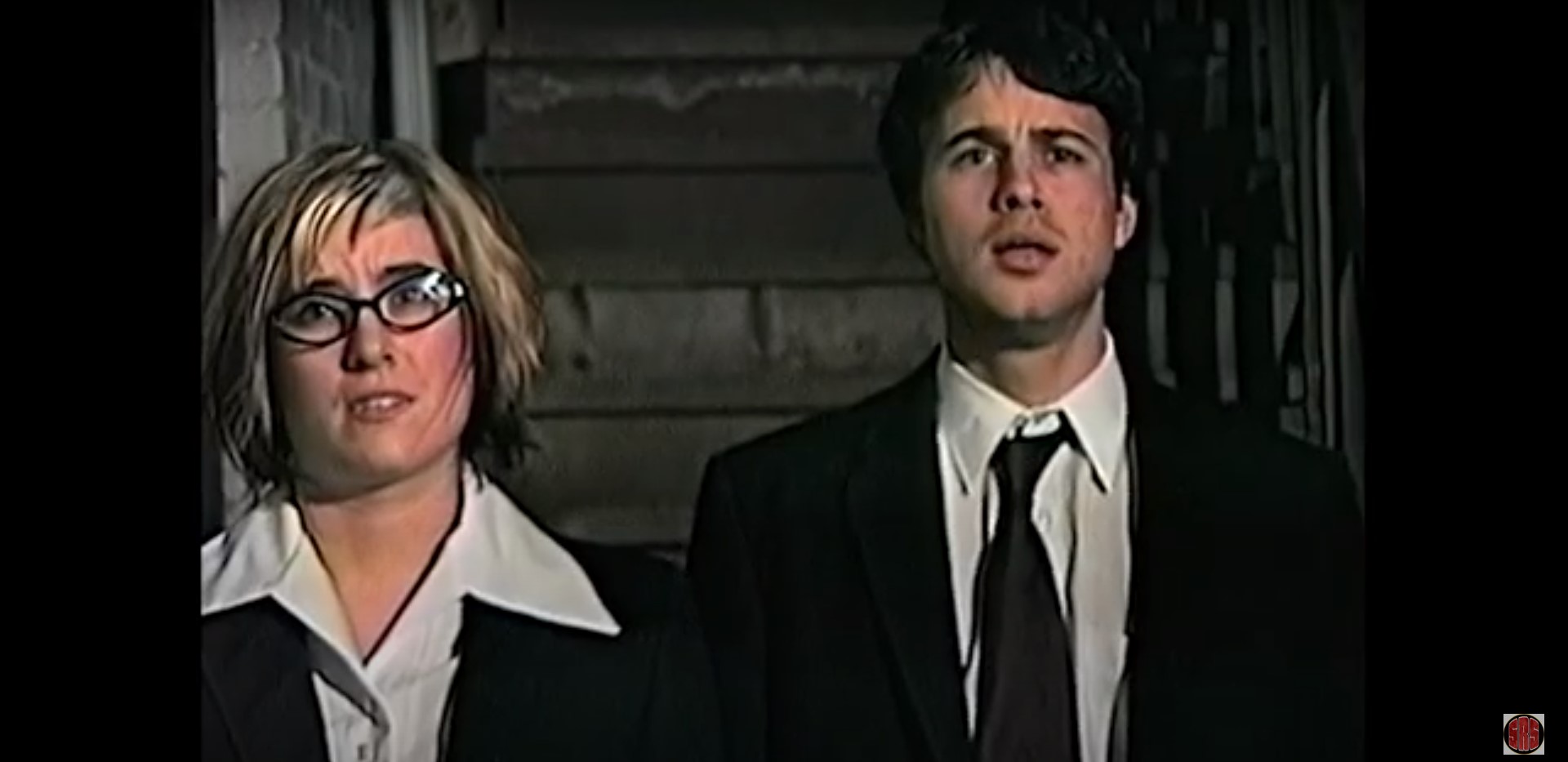
“Devil Times Two” is an Italian-made, demonology-contextualized horror from Italy writer-director Paolo del Fiol.  Having purveyed grindhouse horror in anthological means with previous films “Connections” and “Sangue Misto,,” del Fiol branches out into his solo feature-length narrative set in the 1970s as a faux lost film recovered onto VHS from the only known syndicate televised program on Telelaguna to account the terrible tale full of profane hostilities, sexual stimulating supremacy, and, of course, gore in the interlacing recognition between the popular devil, demon, or hell on Earth inspired movies and the obscenities connected to eurotrash and sleaze movement of the 70s topped a hint of Japanese adulation, a motif heavily sprinkled into the film carried over from the director’s previous work as well.  Underscored by the tagline Quado le Tenebre escono al Bosco, or When Darkness comes out of the Woods, “Devil Time Two” once again pits religious good versus irreligious evil in this Himechan Movie Production self-produced by Paolo del Fiol.

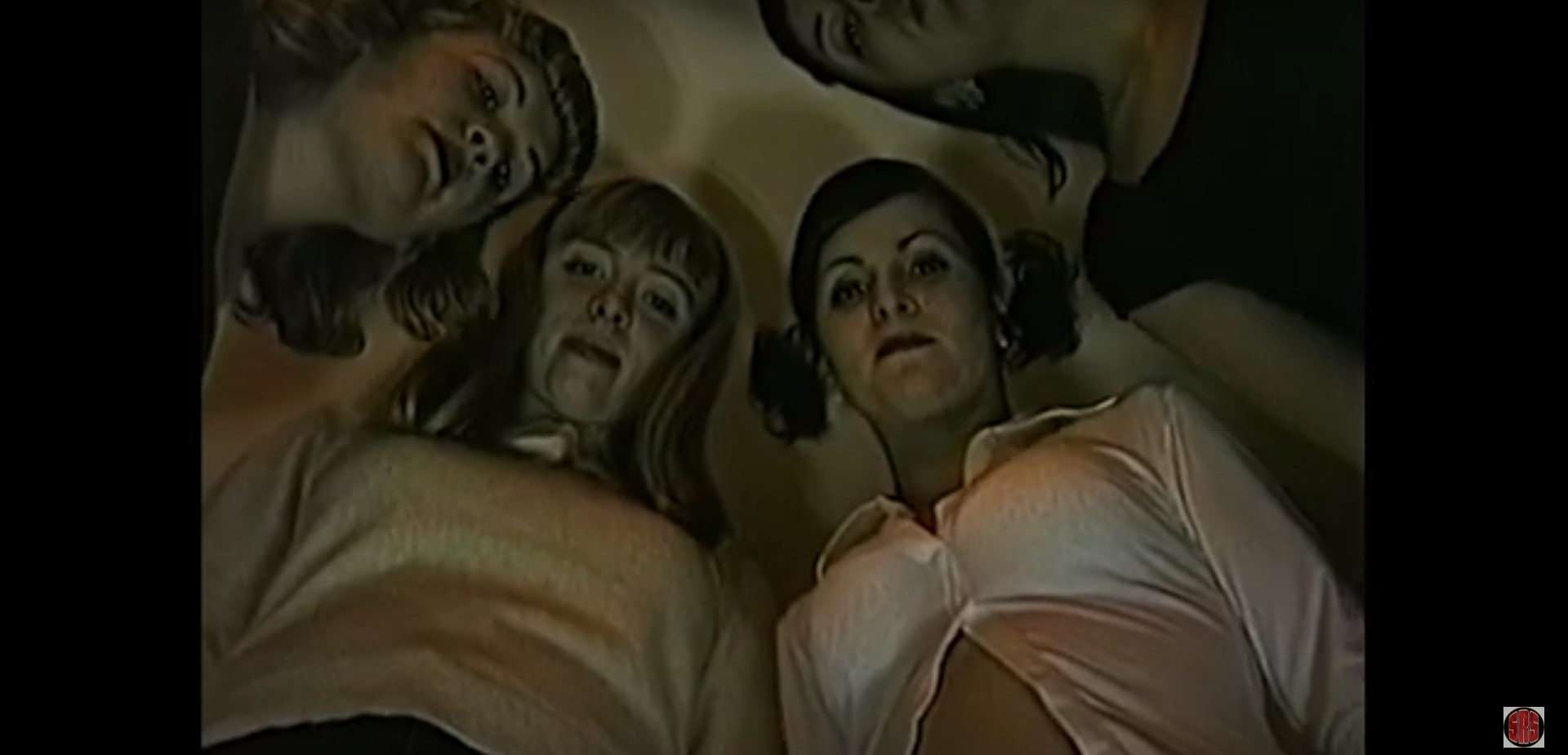
Characterized as the titular pair, Returnees Jasmine and Umeko are the ethereally evil duet of diabolical detriment who seemingly float in and out of the material world as alluring succubi, seducing prey into their web of demonic lust and languish.  Some turn up grotesquely inside out while some others disappear, saved for later for special ritualistic planning.  Erika Saccà, an Italian fitness instructor in her debut role, plays the blonde Returnee Jasmine in a sleeveless, lowcut gown and with nearly ever kill, exposes and massages her augmented bosom with underboob scarring in a change to showoff her toned physique, and Reiko Nagoshi (“Re-Flesh”) wears a kimono without any unveiling of skin but does a bit of thrust-damage on her quarry that initially and inexplicable appears to be a strange phenomena when everyone in the scene is a woman but becomes apparent there’s something unholy and very “War of the World’s” alien under that traditional Japanese garb.  Saccà and Nagoshi wear many hats in this product but also don’t have the dialogue to hoist their demonesses higher.  The dialogue is left with the trio of convent gatekeepers in Father Taro (Enrico Luly), Father Bennet (Paolo Salvadeo, “Occultus”), and Mother Dolores (Amira Lucrezia Lamour, “Re-Flesh”) in what becomes a deeper understanding of their backstories around Father Taro’s deadly bittersweet exorcism decades ago, his on the sly and subtle affection for Mother Dolores, and Father Bennet’s questionable rise to supersede Father Taro, laying a foundation of doubt within the current gatekeeper.  While I like the contrasting dynamics of the two factions within the cast, I found the discourse overly bulk and tedium between the trio of piety that strung on scenes way too long with way too much talk that it ultimately suppresses the pacing when every little detail has been uncovered and explained. All the casted bits in between are slaughter fodder with Denise Brambillasca, Alessandro Carnevale Pellino (“The Wicked Gift”), and Martina Vuotti in non-defying death roles.

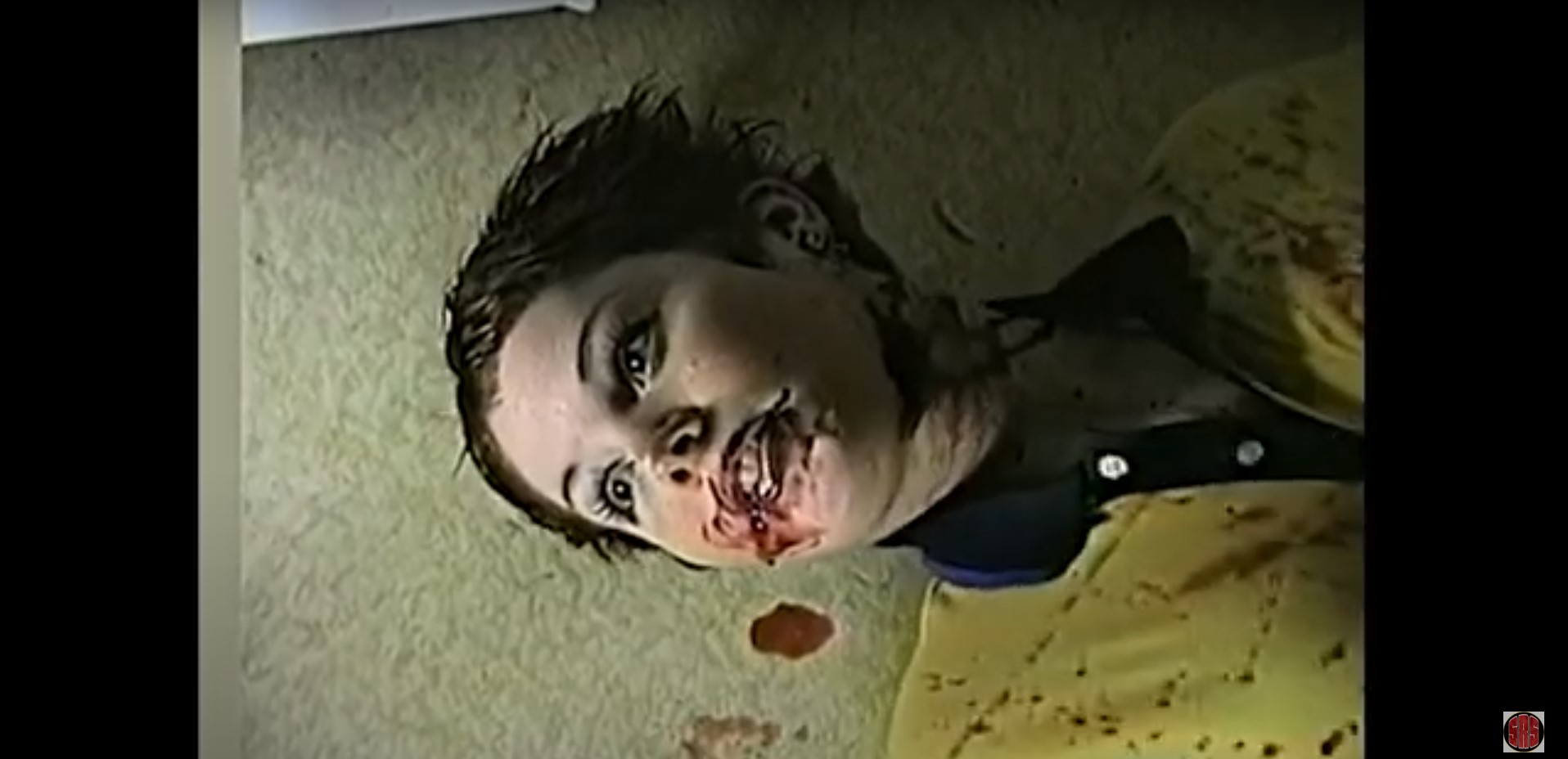
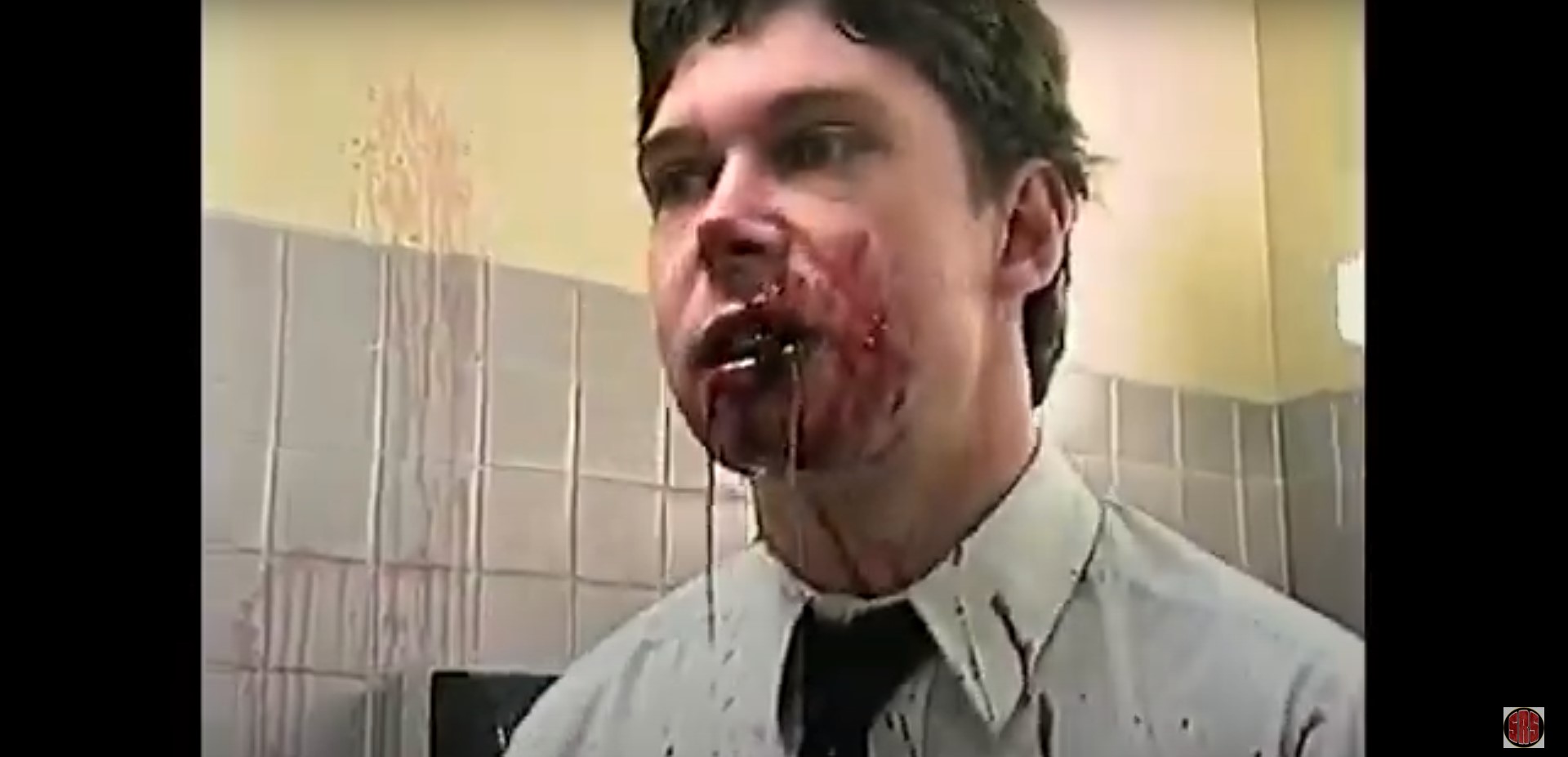
Paolo del Fiol’s unaccompanied and independent deluge of demonian debut has doses of phantasmagorical imagery sublet by its more shocking and odd immolation of incognizant individuals unlucky enough to cross paths with the Returnees. Likely to have never seen, Fiol’s film very similarly compares to James Sizemore’s “The Demon Rook” by creating unique mythos not reliant on a religious bedrock and use independency as an advantage for showcasing practical makeup and effects and while “The Demon Rook” would overwhelm with prosthetic made-up characters, “Demon Times Two” focuses attention more on the guts of the matter, the gore, but though not pernicious enough to the story, the eyeball sucking, throat lacerating, or intestine exposing bloodshed is prosaic panoply that won’t outshine in the sea of subgenre synonyms. Aforementioned dialogue scenes can be a slog to get through with many exchanges overstaying its course between the pious gatekeepers, especially between Father Taro and Dorlores, and that hurts the pacing to pick up the gore more frequently for more potency. Instead, exchanges are more elucidations that go around-and-around to where we’re lost on the mounting reveal of the Returnees’ mission and master which turns out to be visually more stimulating and visceral in the last ten minutes than in the first 100 minutes of runtime. The backlot lore is Fiol’s greatest achievement simulating a 70’s style grainy movie caveated as only broadcasted once on December 8th, 1983 (a few days before this reviewer’s birthday) and never seen again until it’s VHS recording is recovered.

Under a pretense of being a buried lost film, under the tribute of a grainy and scratched psychotronic celluloid, and under the falsity of genuine huge knockers, “Devil Times Two” is twice baked into a classic contemporary dish served by SRS Cinema on DVD. Arriving on the SRS Cinema: Extreme and Unrated Nightmare Fuel label, “Devil Times Two” is nothing short of being a modern-day emulator of once was with suitable grain overlay, a hazy, if not washed, overcast grading, and trope-laden atmospherics with dense fog, unnerving dissonances within earshot, and blood brilliantly cut with pseudo Telelagua commercial programming of brief adverts until returning to regular scheduled programed checked in and out by a gondola and it’s gondolier in dusk silhouette. Presented in a pillar box 1.33:1 aspect ratio, the fuzzy and non-delineated details are not a punch to the salient gut as the intent here is to be obscure, opaque, and ominous in nature and in technique bathed in 480p. The Italian PCM is the exact recreation of a time period post-dubbing with the actors re-dialoguing their performances as it was common practice in most motion picture industries, especially Europe, at the time. ADR is clear but not necessarily clean to recreate that shushing and crackling of an older recording. The subtitles are also forced or burned into the film with the sole Italian audio option. Bonus content includes what is called Backstage, a raw filming look into the production shoots and behind-the-scenes footage with no real direction or cosmetics, a photo gallery, a trailer with English subtitles, and other SRS Cinema released trailers. The SRS Cinema DVD front cover resembles mock-70’s, thick-red font with a bare woman’s back dressed in a painted Satanic symbol within the border of a VHS-esque rental casing with rental stickers. Inside the amaray case is a pressed disc with an extreme close up and crop of the same front cover with no insert in the adjacent slot. Pacing burdens this release, especially in its near 2-hour runtime with a clock-in at 114 minutes which is approx. 24-minutes too long in my opinion and the film comes not rated and has region free playback. No matter how much arcane the content is, or how grotesque the horror show, or how much perversity and skin can be unclothed, “Devil Times Two” has difficulty retaining a flow of fascination in a rather windbag approach to a rather devilishly good salvo construction.

“Devil Times Two” on DVD from SRS Cinema

EVIL Says Talk to the Hand. “Talk to Me” reviewed! (Lionsgate / Blu-ray)

“Talk to Me” on Blu-ray/DVD/Digital!

The two-year anniversary of the death is a solemn time for Mia to mourn the hard loss of her beloved mother who took her own life, or at least that is what her father tells her.  Feeling uneasy by her father’s account that circulates doubt uncontrollably, Mia pries her way into her best friend Jade’s family for comfort and becomes equally amiably with Jade’s younger brother, Riley, as like another sister.  When social acquaintances post viral videos of peers supposedly being possessed by an embalmed hand of a psychic for party games, Mia is eager to participate.  All is fun and games with the dead inhabiting and speaking through the hand holder for a limited time until Riley’s spirt takes a violent turn, leaving the boy severely injured and in a comatose state after exhibiting Mia’s mother possessing him.  Obsessed to speak again with late mother, Mia uses the hand to talk to the dead and learns Riley’s soul is stuck on the other side and being tortured by the countless, malign spirits. 

Grief can be so powerfully self-destructive that holding an embalmed hand, becoming connected with the grotesque spirit, and letting the shadow world possess you can be addictive and even as far as a parlor game to pursue answers or a desperate release from suffering.  The 2022, breakout Australian production “Talk to Me” explores that forced hand of grief, literally, with a socially pressuring aspect that can be contagiously engrossing and collaterally harmful if unchecked.  The Southern Australian-born brothers Danny and Michael Philippou come out swinging on their debut feature-length film penned by Danny alongside Bill Hinzman based on a concept by “Bluey” executive producer of all people, Daley Pearson.  “Talk to Me” is a coproduction between The South Australian Corporation, Screen Australia, Head Gear Films, and Causeway Films with Christopher Seeto (“The Flood”), Samantha Jennings (“Cargo”), and Kristina Ceyton (“The Babadook”) producing.  The film is released theatrically by A24.

“Talk to Me” opening with a young, shoulder length haired man desperately searching for his younger brother through a sea of people at a house party.  The scene sets the film’s take-no-prisoners tone with begins with compassion as the older brother comes to the rescue of his disturbed, shirtless kin, trying to display the flashlight gleaming phone camera sharks who smell viral video blood in the water, when in a surprising turn of events the younger brother stabs his sibling before ramming the chef knife into his own skull.  “Talk to Me” segues into the cast of teenage characters, spanning the age spectrum of 14 to 20, letting us know right off the bat that youths are on the chopping block and no one will be safe.  The mostly untried cast pulls through with a trypanosome performance that gets under your skin, festering in its linger.  Sophie Wilde helms being the principal lead Mia still shell shocked by the sudden death of her twinning mother two years after later.  Suspicious of her father’s role in the death, Mia escapes and integrates herself into best friend Jade’s family, a role resting in between two uncomfortable rocks of being the new girl beside Mia’s onetime ex.  Alexandra Jensen as Jade floats carefully portraying Mia’s friend and a pursuant tiptoe toward the relationship with Daniel (Otis Dhanji) that passively irks Mia in the form of playful jokes, side glares, and inner demons becoming fruition ones expressing desires.  Sophie Wilde, on the other hand, spans the gamut with a flip of a switch soul spectrum polarized by spirit madness, grief over loss, and a fallback friendship.  When Wilde turns on the darkest light of possession, when her character lets the spirit into her body, the disheveled whole of Mia lives up to the actress’s surname becoming an uninhibited periapt for the spirit within that lusts over the youngest in the room, Riley (Joe Bird), for his childlike purity and when the spirits have control of over his soul in what is an orgasmic suffering that neither is parlous fun or exciting.  “Talk to Me’s” cast rounds out with Zoe Terakes, Chris Alosio, Marcus Johnson, Alexandria Steffensen, Ari McCarthy, and “Homeland’s” Miranda Otto. 

“Talk to Me” is an original byproduct stemmed from the cursed fetish genre.  The inexplicable mummified hand with unknown origins, thought to be once the hand of a medium, falls into the hands of a difference kind of representation.  Not to be bestowed conventional tropes like an inanimate object to be feared, the mirror in “Oculus” comes to mind or the cenobite unleashing puzzle box of “Hellraiser,” the persevered curled open hand doesn’t hold that sort of malevolent power, at first.  Despite its powerful connection to the purgatorial other side with frightening results of classic possession cases – levitation, catatonia, dissociative profanity and behavior, etc. –  these more-or-less new generational children treat something they don’t completely understand, such as ancient, mystical artifacts and in this case, human remains to be exact, without respect and humility, using the hand as if an additive drug, parlor game, or write to go viral amongst peers.  Directors Danny and Michael Philippou use the peer-pressuring viral video social commentary of their film as a sensationalized stern warning that has equal cause-and-effect results.  Ostentatiously showcasing more of the adolescent revelry spree rather than the mangled, decaying, and water-bloated entities in front of them or recklessly inhabiting their bodies once let corporeally inside.  For someone like the character Mia who continues to process close loss and has troubling thoughts, or maybe even delusions, regarding her father’s role in her mother’s untimely demise, she yearns for answers and when Mia receives a glimpse into what she believes is her kindred spirit mother through the vessel that is her friend Riely, aching impulses take over already crumbling judgements and she goes down the rabbit hole despite the consequences to herself, to her father, and to her adopted family.

Get a grip and take “Talk to Me’s” hand to experience the possessively powerful Philippou brothers’ debut film on a Lionsgate 2-disc Blu-ray/DVD/Digital release.  The AVC encoded, 1080p high-definition, BD50 and the MPEG-2 encoded, upscaled standard definition, DVD are presented in a 2.39:1 widescreen aspect ratio.  What’s achieved out of the Aaron McLisky’s through-the-looking-glass visual vignette is focus driven, claustrophobic, and engaging to be present of a reality teetering the line between two worlds.  Details inarguably shine, casting a great deal of deep shadows within the hard lighting to set the ominous tone.  Skin textures gleam within the light as well as coarse change with the vapid and pale makeup adjustments of the dead-entered body or even when we do brief see a condemned soul, the greatly applied contusions, decay, or bloating is reflected with great care from the infinite image detail.  The release has an English Dolby Atomos output reaching the difficult crevices of the inaudible dark holes and exposing them to immense carousal and haunting zeal that makes the experience more palpable. Dialogue renders nicely through albeit a heavy-handed score that relentlessly attempts to knock down the channel-leveled door and a strong Australian accent on most of the cast may sway those who don’t have a keen and distinct diverse ear away from the film or may find discerning a challenge to channel from beginning-to-end. While most of the camera’s frame stays in medium closeup to closeup, McLisky’s able to find depth where advantageous to bring a creep building dark cloud after Mia’s one minute over willing but felt forced possession participation. English SDH and Spanish subtitles are optionally available. Special features include an audio commentary with brothers Philippou, a featurette with the cast and crew in their experience and thoughts on the film, entitled In the Grip of Terror, deleted scenes, and theatrical trailer. Behind a rigid O-slipcover imaged with the centerpiece un-ensepulchered, plaster anoint, and sanskrit-esque-ladened hand upright and in the forefront with phone flashlights dully lit in the background. The typical Blu-ray snapper houses the same slipcover image slipped in between the plastic sheeting whilst the two discs are held on snapper locks on each side of the interior accompanied by an insert for the digital download. Both discs are pressed with the same font and coloring on in reverse with a baby blue stark against white. The 95-minute minute feature is region A locked and is rated R for strong bloody violence, some sexual material, and language. “Talk to Me” is utterly and terrifyingly fresh and freakish in more so with the naturality toward the touching and the facetious ways with an embalmed hand that’s a one-way personal radio to the dead as a means to be engaged in popular, peer-pressuring social activity and as something to prove with reckless naivety.

“Talk to Me” on Blu-ray/DVD/Digital!

Entrenched EVIL Sprouts Roots of Hate! “Bunker” reviewed! (Breaking Glass Pictures / DVD)

Go into the “Bunker” and Never Come Out!  Now on DVD!

Trench warfare has already been damning for allied forces held in stalemate against the German’s only yards away in their trench.  When the commanding Lt. Turner discovers the German trench has been abandoned, he moves his ragtag team of British and American forces across a barbed wire and cadaver-laden no man’s land in to salvage victory for obtaining a German bunker without a firefight or loss of life.  What they discover is an externally barricaded bunker and inside the vacated stronghold is a barely-breathing German soldier nailed to a cross.  Incoming artillery causes a bunker cave-in, leaving two of the soldiers dead and the others trapped inside.  Slowly, something insidious and omnipresent inside the bunker builds measured madness inside them, turning one-by-one the seasoned and fresh off the boat soldiers to suspect each other’s loyalty, sanity, and hope for escape,  something that has been dwindling every minute with each stale breathe. 

War and horror are unequivocally synonymous.  The atrocities and death seen on the combat field can break a person’s psyche in a matter of an artillery shell explosion.  Trauma can quickly take over as the totalitarian regime and that carnage-induced shock can never be unseen ever.  The wide-speed obliteration of people and towns done in the second Great War, between the Nazi hate-war crimes and the collateral damage caused by Blitzes and tank fire, has been the foundational base for a number of appended horror films.  “Men Behind the Sun,” “Outpost,” “Shockwaves,” and even “Ilsa, “She Wolf of the SS” are just a select few of the many subset horror films to be inspired by World War II.  While the more contemporary “Overlord” joined the bandwagon of one of the world’s deadliest conflicts, overlooked is the first Great War as the backdrop for horror narratives.  When I jog my categorial knowledge and memory of WWI horror movies, only one comes to mind, the 2002 M.J. Bassett mud and rain-soaked supernatural thriller “Death Watch” with Andy Serkis and Jamie Bell.  Now, I know two with 2022’s “Bunker,” the debut feature length script written by Michael Huntsman and directed by Adrian Langley (“Butchers”).  The U.S. production is spearheaded by Crossroad Productions with Buffalo FilmWorks (“A Quiet Place: Part II”) footing the costs by executive producers Lisa Gutbertlet, Andy Donovan, Jennifer O’Neill, Kevin Callahan, George Pittas and Brett Forbes (“The Collector”) with Matt Corrado (“Half Sisters”), Patrick Rizzotti (“The Collector”), Greg Wichlacz, and Michael Huntsman’s father and Blue Fox Entertainment founder, James Huntsman (“The Night Eats the World”) producing.

“Bunker” follows a group of allied soldiers unwittingly stumbling upon a supernatural dugout left behind by the enemy.  The U.S. production is fitted with nearly an all-American, all-male cast with the majority playing British soldiers and while accents do justice stressing certain syllables and comes off pronouncedly brisk, the ears can detect subtleties that can make you question the actor’s national validity, such as with stage actor Patrick Moltane’s Lt. Turner.  A very proper English suited from his officer rank, but the act does come off over-the-top and colorful in Lt. Turner’s pithy and lively vocabulary.  “Bunker’s” principal focus is on Pvt. Segura, a Latino-American medic who has answered the call of duty and has served long in the conflict, trying to prove his worth as outsider in his own country.  “Eraser:  Reborn’s” Eddie Ramos helms the character’s drive as an upstanding member of his community and as a military soldier by doing his part, playing the overall even-keeled medic whose goal is to keep soldiers healthy and breathing in a time of war.  “Bunker’s” subtle racism isn’t teeming and poignantly powerful, but the small band are mostly and carefully passive aggressive against Segura, except for one other private fresh off the boat, Pvt. Baker (Julian Feder, “Escape the Field”).  Segura then becomes what he’s yearned for, to be a protector, something he can’t do with minds already set in their ways with the rest of the characters who are either indifferent to his presence or forthright in his face as the root of their problematic situation.  Quinn Moran, Adriano Gatto, Mike Mihm (“Unsane”), Sean Cullen (“Killer Rats”), Roger Clark, and Luke Baines as the crucified Kraut make up the remaining all-male cast.

The all-male cast is crucial to the “Bunker’s” undercurrent theme which isn’t a torrent of one-after-another hits on the surface level.  Under the context that soldiers universally believe in comradery, especially during wartime stuck in a trench when relying on the next man to watch your back, Pvt. Segura secretly yearns to belong, be one of the team, and blend into the uniforms of brown and tan, suited mostly for the typical late 1920s white male.  Through the early acts of passive aggressiveness, the commanding officer ordering him to behave when left unattended, scolded for another private’s inability to move quietly across no man’s land, and being a person of mistrust when trapped in the German dugout, Segura ultimately is perceived as the enemy when the ungodly presence causes hallucinations, fear, and self-inflicting injury.  The bunker represents a fermentation of hate and death, deep-rooted distrust through the depictures of white radicles connecting everything around them be shield by the dirt walls that forces ugliness to come to a head by way of messing with the mind.  Being semi-familiar with Adrian Langley’s previous horror “Butchers,” I expected brutality, bloodshed, and groundwork that slowly flourishes as the story progresses and Langley delivers on demand with a chillingly connotative race-horror in an oppressive and melancholy World War I background.  While some period and wartime elements and actualities may frazzle historical war buffs, “Bunker” has otherwise resounding production quality despite its low-fare budget, feeling very much like the horrors of trench warfare and then some.

Philadelphia based, independent film home video distributor Breaking Glass Pictures releases Adrian Langley’s “Bunker” onto DVD.  The MPEG-2 encoded DVD5 is presented in a widescreen 2.35:1 aspect ratio.  Honestly, the compression works well here with the color reduction, a decrease in the hue saturation, leaving behind more neutral tan, browns, and greens, to flourish as an old timey picture that harmonizes with the classic resembling opening credits where the cast and crew are listed as whole.  Details are generally potent, reflecting delineating contours, coarse textures, and all the minor sweat, dirt, and blood strewn about the dugout from the Arri Alexa camera that captures confined spaces with vast depth.  The English language Dolby Digital 5.1 surround sound is the sole audio option and is the really only option needed for a confined, atmospheric film like this that utilizes the back and side channels with crumbling dirt walls and muffled bombardments.  There’s a nice balance between the prominent dialogue and the ambient action with Andrew Morgan Smith’s punchy score that’s like a mix between Joseph LoDuca’s “Army of Darkness” and Alan Silvestri’s “The Predator,” intense, grand, and heart pounding like a classic monster movie soundtrack. There are no subtitles available on this release.  Bonus features only include “Bunker’s” trailer and other Blue Fox Entertainment previews, another World War thriller “Wolves at War,” and Langley’s “Butchers.”  Physical attributes include a tempered chocolate-appearing DVD case with a long ally solder entering a large and foreboding bunker with war and graveyard elements above ground.  Inside, there disc art is pressed with the same image but cropped to just show the soldier entering the bunker.  There is no insert included.  The region 1 locked playback DVD comes not rate and has a runtime of 108 minutes.  “Bunker” is slowly-seeping dread of psychotronic apathy and abiding odium that manifests creaturely out of war’s massive and overwhelming stress and death.

Go into the “Bunker” and Never Come Out!  Now on DVD!