Gaudy, Superfluous EVIL Sits in Your Living Room and Destroys Your Family. “The Coffee Table” reviewed! (Cinephobia Releasing / DVD)

“The Coffee Table” Would Look Good in Your Living Room! Purchase It Here Today!

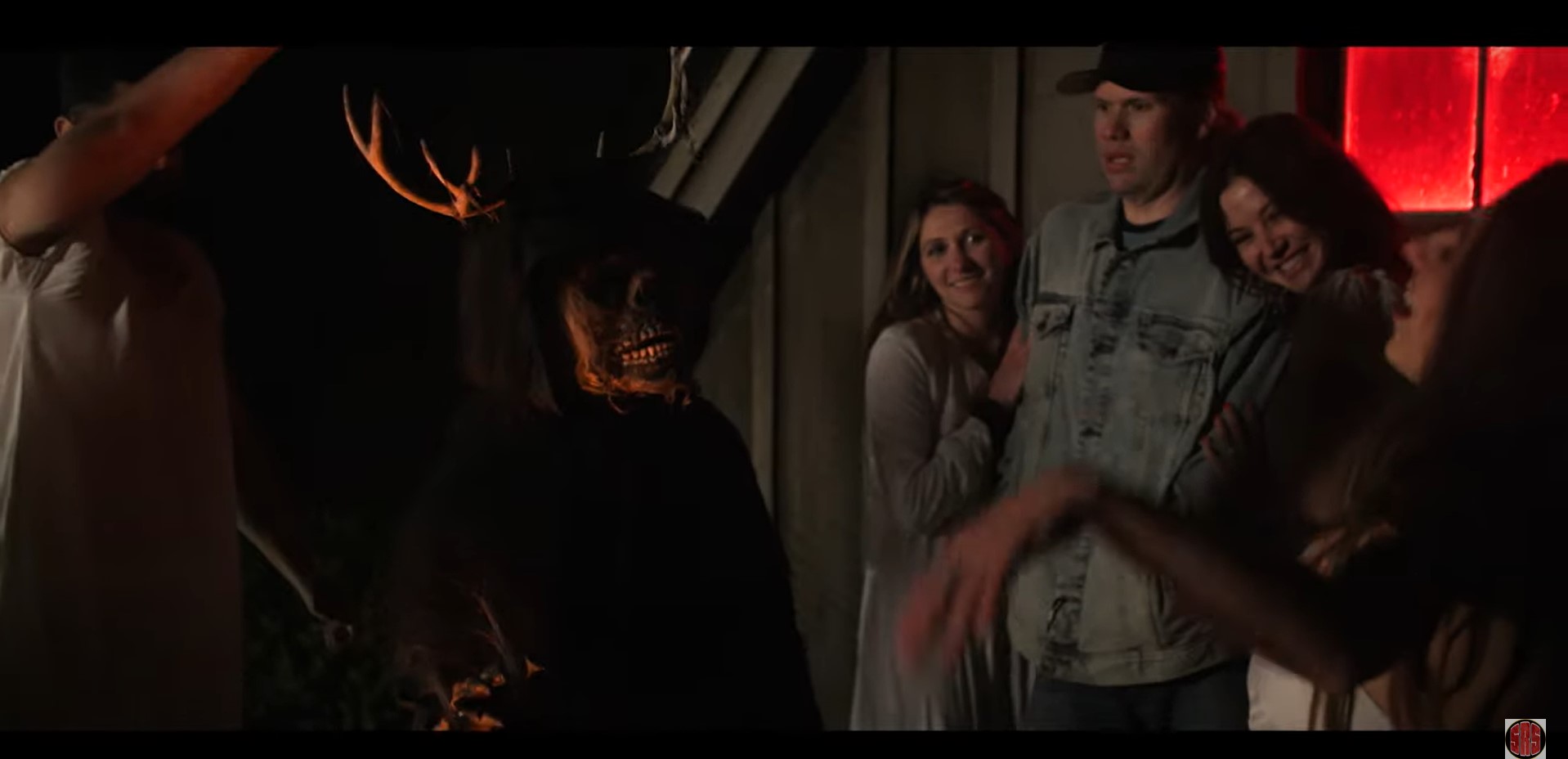
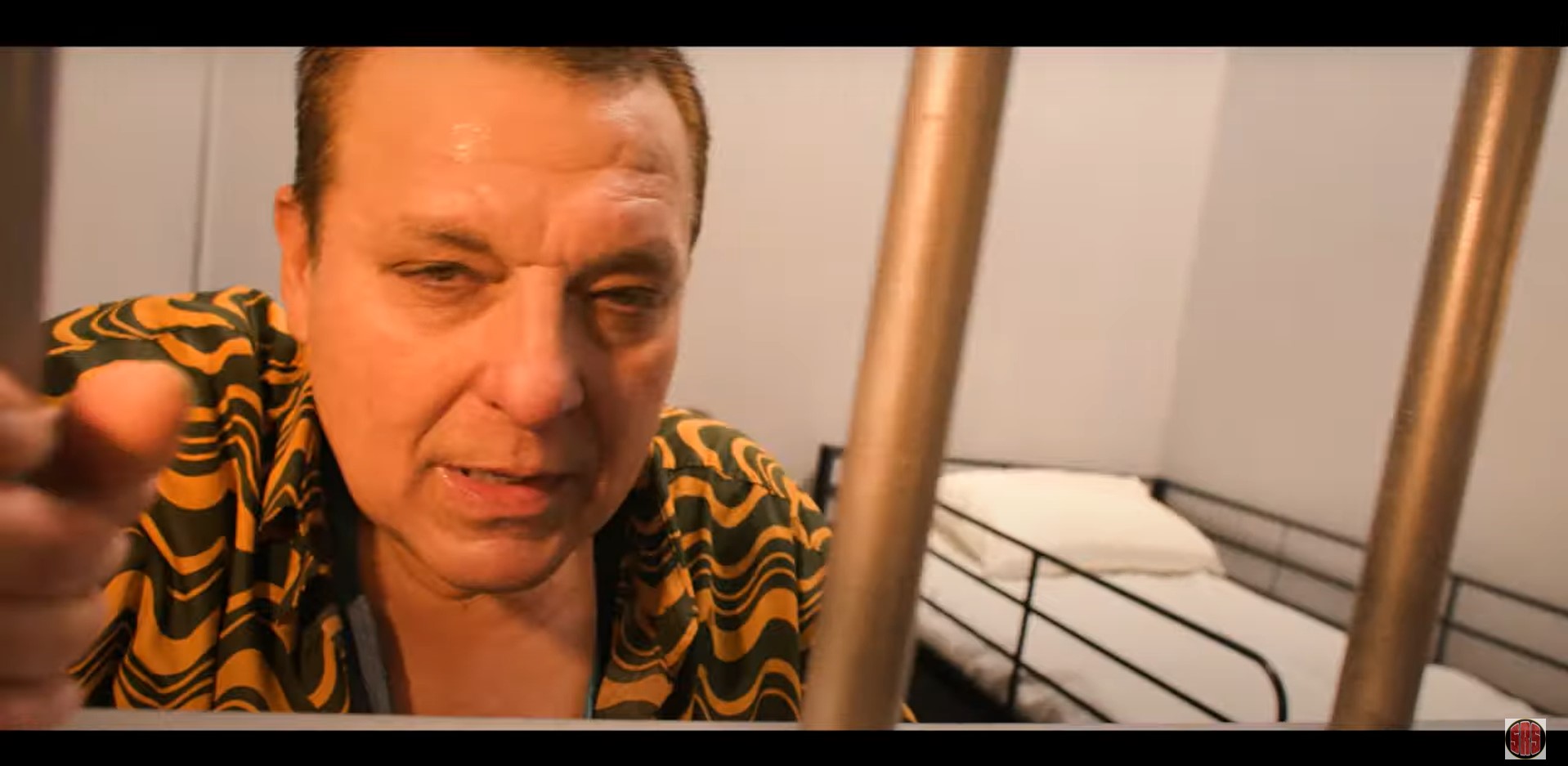
Jesús and Maria are new parents with a beautiful baby boy.  Maria has been eager for a baby and sent through several medical treatment for the bundle of joy while Jesús continuous rides the fence about being a father.  When the baby arrives, the boy becomes a source of usually one-sided bickering and jabbing contention as Maria feels Jesús could be a better father to their newborn son.  When they move into a new apartment, they find themselves in a furniture store looking at a gaudy glass coffee table Maria can’t stand the sight of, but Jesús very much can’t live without.  While Maria steps out to shop for an upcoming luncheon with Jesús’s brother and young girlfriend, Jesús briefly stops assembling the table to take care of the baby until a tragic accident happens that reshapes everything and everyone Jesús cares about, and impels him to bottle in the tragedy, hiding it in extreme guilt from his wife and guests, as he struggles to find the right moment to relieve his soul. 

Marriage is hard.  Parenting is even harder.  Choosing a coffee table should be a delicious piece of decision-making cake but for director Caye Casas choosing living room décor can be deadly.  The “Killing God” director follow up his debut feature with the 2022 released domestic disturbing comedy-horror “La Mesita Del Comedor,” aka “The Coffee Table.”   Casas cowrites the film with Cristina Borobla, her first screenwriting credit but not her first collaborative effort working with the director as the vocational Art Director has been involved in Cases’s other works, such as “Killing God,” his 2017 short “RIP,” and amongst others.  Maria José Serra (“Amigo Invisible”) and Norbert Llaràs (“Killing God,” “The Perfect Witness”) put their producer café mugs onto “The Coffee Table” with the hailing from Spain production companies La Charito Films, Alhena Production, and Apocalipsis Producciones. 

Much of “The Coffee Table” is set inside the tiny, newly moved into apartment of Jesús and Maria who even though rag on each other’s opinions and one of them don’t necessarily favor being a parent, deep down the unlikely pair do have a strong love attraction that swims upstream against the repelling.  In the roles of Jesús and Maria are David Pareja, whose worked with Casas inner circle before with “Killing God,” and Estefanía de los Santos with an unforgettable, characteristic raspy voice that magnifies the role tenfold.  Both Pareja and de los Santos are comedically bred with a long list of hilarious Spanish features to prep them to see the gut-punching, black humor of what’s to come in “The Coffee Table.”  Frankly, there’s nothing negatively to report in Pareja and de los Santo’s flawless, funny, and unfortunate family dysfunctional performances surrounding their love-hate relationship and the knot of culpability and the bliss ignorance contrast that’s delineated between them.  Floating into the mix of repressiveness are side stories that become assimilated by the untold tragedy, such as the neighbor’s daughter (Gala Flores) with an intense belief Jesús loves her, the smarmy coffee table salesman (Eduardo Antuña, “Killing God”) who also have an interest in Jesús, and Jesús’s brother Carlos (Josep Maria Riera, “RIP”) and his barely 18-year-old girlfriend (Claudia Riera, “The Communion Girl”) being ribbed for their own odd couple relationship and giving a surprise announcement of their own. 

Though a comedy and a horror, I didn’t find “The Coffee Table” all that funny but more so quirky, outrageously bold, and shockingly hard-hitting instead.  Horror, definitely without a doubt, comes through but not in a typical to be scared or to exact fear way with any of the conventional themes to support its harrowing weight.  The horror that uncoils is every parent’s worst scenario, the underlying nightmare that grabs the soul and squeezes until every drop of anxiety is wrung out of our wet bag of bones and meat.  The incident itself is gnarly and unspeakable but the post-trauma slithers in a nasty case of guilty conscious, shame, and fear that can freeze someone to the spot to where they clam up, sweat profusely, stomach twisted, and have self-harming thoughts from the conjoined cause and effect of having to tell your partner the most terrible of news and see their composure, their affection flush away in a blink of an eye.  Casas able to string along the aftermath to extract a feature length film without it ever approaching critically forced or farfetched, adding on and expanding upon the luncheon or Jesús’s wiggling through painfully with excuses on why Maria should leave the baby sleeping peacefully in their room.  The passively aggressive sparring atmosphere quickly turns into colossal tension and hopelessness through the mechanism of dark black comedy.  As a parent myself, “The Coffee Table” evokes great sadness and mental strife of the situational possibility, the greatest horror of all time.    

The cruel film by Caye Casas arrives onto a Cinephobia Releasing DVD. The MPEG2 encoded, upscaled 720p, DVD5 comes in at being the eleventh release for the Philadelphia based, eclectic independent film distributor. And, boy, is it a doozy. For “The Coffee Table’s” image, not the two, artificially gilded naked women holding an oval shape, unbreakable pane of glass, the feature’s picture quality renders about as good as any single layer capacity unit can decode in a digital age with modest details, muted hues, hard lit, and a good amount of spectrum banding in the darker areas. Not to fret, however, as there’s plenty to discern with a film that isn’t reliant on details but more reliant on hitting you wear it hurts, heavyheartedly. The Spanish language Dolby Digital 5.1 uses a lossy compression that, again, suitable to the movie’s means of conveying a contortioned, ruthless story defining the very meaning of a no way-out, no-win situation. Dialogue really is key for this type of narrative to work and progress and does come through fine without an ounce of earshot hinderance. Also, not that type of film that provides a breadth of range or depth as much of the layers express in a very near arrangement, as expected in a concentrated setting of Jesús and Maria’s apartment home. English subtitles are optionally available, and they synch up and pace well with only one noticeable grammatical error. Not much in the way of special features as only Cinephobia Releasing trailers fill that spot and there is not mid or end credits scene. The 90-minute film’s DVD release comes not rated and has region 1 playback. Other regions are untested, and the back cover does not state the official region playback capacity.

Last Rites: Caye Casas and Cinephobia Releasing has the cajónes to not table this wonderfully bleak black comedy-horror from reaching audiences far and wide. “The Coffee Table” is a painful reminder of just how fragile life can be, much like a cheapy made piece of tawdry decor from China.

“The Coffee Table” Would Look Good in Your Living Room! Purchase It Here Today!

He’s a Beast. He’s Ferocious. He’s EVIL! “Mad Dog Killer” reviewed! (Cheezy Movies / DVD)

“Mad Dog Killer” Unleashed onto DVD!

A daring hostage-taking breakout of an Italian prison puts four of the most ruthless killers back on the streets.  Sadistic and full of revenge, Nanni Vitali, the leader of the gang, has one thing of his mind before he begins a reign of outlawing terror, to find and exact due mortal punishment on a stool pigeon that cemented his incarcerated fate during the trial.  Hot on his trail is officer Giulio Santini who will stop at nothing to bring Vitali back into custody or even put a bullet between his eyes, that is until a young woman, Giuliana Caroli, girlfriend of the police informant, becomes caught unwillingly in Vitali’s web of sexual obsession and deviant plans as she’s raped and exploited for Vitali’s personal pleasure and robbery schemes.  When the frightened Caroli betrays Vitali’s trust, she becomes a kill target while Santini’s family also falls into the miscreant’s violence coursing crosshairs. 

“Mad Dog Killer,” aka “Beast with a Gun,” aka “Ferocious Beast with a Gun,” aka “La Belva col mitra,” is an Italian action-crime thriller from the late “The Sinful Nuns of Saint Valentine” and “Violence for Kicks” director Sergio Grieco in what would be his last directorial before his death five years later.  The Rome-born filmmaker also writes the 1977 exploitative and violent caper with additional dialogue from fellow Roman screenwriter, and furthermore director, Enzo Milioni who has had a hand in “The Sister of Ursula” and “Escape of Death.”  A part of the larger, multi-faceted Euro Crime subgenre, or better known as Poliziotteschi, “Mad Dog Killer” hits all the trademark elements, squeezing in a packed lot of similar content as well as stretching out for breathing room by elbowing out the era popular Italian subgenre of the phasing-out Spaghetti Western and bracing for impact against the up-and-coming Giallo films which starts get a footing with Dario Argento and Lucio Fulci paving the way.  The Supercine production is produced by Armando Bertuccioli (“The Sister of Ursula”).

In the crazed-eyed, take-no-prisoners, sandy-blonde shoes of a handsome yet hardnosed criminal in Nanni Vitali is the Austrian born Helmut Berger.  The “Salon Kitty” and “The Bloodstained Butterfly” star is another international actor who found modest success in the Italian film industry of the 1960s-1970s as well as the German movie industry afterwards, but as Nanni Vitali, the rugged actor with piercing eyes doesn’t hold back in a defining performance that’s nowhere near a one-time paltry pass over.  Vitali is so animated and over-the-top, the hot-headed character completely overshadows Inspector Giulio Santini as a counterpart, played by American actor Richard Harrison of “Orgasmo Nero” and portraying many Ninja Master Gordon films in Hong Kong in the late 80s.  No Ninja kicks or ostentatious smoke screens with officer Santini in a rather matter of fact, routine chaser of escape convicts.  The personal connection he has with Nanni, where Santini’s Judge father (Claudio Gora, “The Nun and the Devil”) was Nanni’s convicting judge, is greatly underused to extrude the ferocity needed to match Nanni’s, as so he is described in one of the many titles – a ferocious beast.  This beastly criminal takes captive and tries to psychologically manipulate through sex and threat the wrong place, wrong time victim Giuliana Caroli by the chiseled facial features of Marisa Mell (“Violent Blood Bath”), a fellow Austrian actress.  Caroli’s tall and beautiful on screen but lacks that damsel in distress in initially helpless apprehension of a woman who must restructure her bearings to take matters into her own hands.  Mell’s acting is forced throughout her span, and without that frightened bird despondency in her eyes, she looks as if she could handle Nanni Vitali by herself with ease in stature, broad shoulders, and a fierce look, diminishing Richard Harrison’s Santini role almost out of the picture entirely.  “Mad Dog Killer” rounds out the cast with Marina Giordana, Luigi Bonos, Ezio Marano, Albert Squillante, Nello Pazzafini, Antonia Basile, Sergio Smacchi, and Vittorio Duse.

“Mad Dog Killer” lives up to the designation that attentively develops the lengths the titular principal will go to achieve a wrongful debt that must be paid in full with excessive violence to spare.  Sergio Grieco lays Nanni’s nihilistic sleaze and transgressions on thick, coating the character with monolithic and enduring characteristics of a sordid and lawless bandido with Spaghetti Western type intensity, especially inside a compositional scene where he slowly walks back to the car toward a frightened Giuliana Caroli, eyes affixed onto her soul, and the all-pervading, debut score by Umberto Smaila just swallows you into the moment.  Like a true mad dog, the story never lets up on an unpredictable temperament and trajectory; it foams at the mouth with rabid blackguard that is true Euro Crime fashion, but unlike most Euro Crimes, “Mad Dog Killer” ends on an unconventional note, perhaps an unsatisfactory to some, but definitely askew yet fresh compared to the genre’s dominantly preordained doppelgangers. 

A film that goes by many names usually suggests numerous releases from around the world.  “Mad Dog Killer” receives a cheapie DVD release from our friends at Cheezy Movies with a MPEG-2 encoded, standard definition 480i, DVD5.  Not an upscaled presentation, the transfer used retains the lower quality pixel count that bleeds the definition, often better in brighter contrast scenes than in the darker settings. The forced English dub LPCM mono track, though you can clearly lip read that most principals actors are speaking English, has auditory value; the lossless quality removes compression from the table, offering a clean and robust dialogue and Smaila score through just a thin, faint even, layer of interferential static, and pops. The English dub track is the only audio option available with no optional English, or any other language, subtitles. Cheezy Movies primary goal favors a feature only release so there are no special features encoded or tangible supplementary content. Cheezy Movies pulls the stark front cover image, laced intently with suspense, sex, and violence, from one of the marketing one sheets, used by other labels such as foreign companies like 88 Films and Polar. The disc is pressed with the same image. Not rated and region free, “Mad Dog Killer” has a runtime of 91 minutes.

Last Rites: An enjoyable sadist manhunt romp, “Mad Dog Killer” does criminals gone wild Italian style. Without a higher resolution release, quality of life with this Euro Crime actioner is not at peak levels but the film, by itself, lays waste to many counterparts with a fiercer hand and a charismatic leading villain in Helmut Berger that tips the scale in the film’s favor.

“Mad Dog Killer” Unleashed onto DVD!

Necrophiliac EVIL Until the Eyes Open Awake. “The Corpse of Anna Fritz” reviewed! (Invincible / DVD)

Get “The Corpse of Anna Fritz” While Available! Purchase here!

Renowned actress Anna Fritz steals the hearts of millions as fan adorn her beauty and her acting performances that invite her to galas and red-carpet events.  Young and promising, Anna’s career is at its peak until her untimely death upon discovering her lifeless body in the bathroom of a private party.  This is where we begin Anna Fritz’s story, at her death as her body is wheeled and stored into a hospital morgue, naked on a metal gurney and under a white sheet.  In the hands of a late-night shift orderly, Pau, Anna’s beauty and body becomes the ultimate temptation as he sends his party rowdy friends Ivan and Javi pictures.  As soon as Ivan and Javi show up, curious and eager to see the once famous Anna Fritz in all her glory, Pau leads them down to the basement morgue where Ivan and Pau decided to have a once in a lifetime experience of molesting and penetrating her corpse at the disagreement and discouragement of Javi, but in the middle of the necrophiliac act, Anna wakes up in a temporary paralyzed state of shock.  Now that she has seen their faces, the three men have to come together to decide on her fate or theirs. 

By the very title alone, you know “The Corpse of Anna Fritz” is going into the dark territory of sick perversion with unnatural molestation of a human corpse.  The 2015 Spanish film, natively titled “El cadáver de Anna Fritz,” is the debut feature written and directed by Hèctor Hernández Vicens (“Day of the Dead:  Bloodline”) and cowritten with Isaac P. Creus.  An unofficial re-envision or just reminiscent of Marcel Sarmiento and Gadi Harel’s “Deadgirl” where young hormonally aggressive young men find themselves immorally pants down with a presumed dead body of a beautiful young woman without the supernatural element, and sprinkled with similar imagery and energy to that of the following year’s “The Autopsy of Jane Doe,” even with the DVD cover art and film title, “The Corpse of Anna Fritz” is more grounded in reality in comparison but still retains the theme of what aberrant people will do when they believe no one is watching, no one is getting hurt, and believe they’re doing nothing wrong when in fact everything they’ve done is completely deviant and a price has to be paid.  Produced by Bernat Vilaplana, Marc Gomez del Moral, Xavier Granada, and Marta and Albert Carbó, the film is a co-production of Silendum Films, Plató de Cinema, and the Instituto de la Cinematografia y de las Artes Audiovisuales. 

Like most of these autopsy or morgue pictures, they come standard with intimate casting of less than a handful of actors to create a sense of dreadful isolation and loneliness far from public view and safety.  Vicens’s basement of dead body debauchery follows suit with a quad-principal of three men – Cristian Valencia (“Atrocious”), Albert Carbó (“Beach House”), Bernat Saumell (“Eloïse’s Lover”) – and the one lone woman Alba Ribas (“Diary of a Nymphomaniac,” “Faraday”) mainly secluded to the morgue and its cramped backroom.  Valencia, Saumell, and Ribas have worked previously together a couple of years prior on the rom-com “Barcelona Summer Night” and that possible familiarity may have contributed to a feeling of ease when shooting the disturbingly portrayed necrophilism scenes where Ribas’s amazingly still life proneness is physically being rocked back and forth until her head eventually slides off the back of the gurney in a truly sub-rose moment of a cold-fact reality in one point in time, I’m sure.  The three men run the gamut of being trio of separate personalities to which the respective actors deliver the tension into with Ivan (Valencia) as the coked up party boy game for anything except being caught, the orderly Pau (Carbó) has a deep, dark yet timid obsession with molesting the dead of the fairer sex, and Javy (Saumell) exacting some measure of level-headedness and reason despite going along in the first place.  Opinions and concern perspective clash between them with Anna Fritz’s undead consciousness comes around yet the whole back-and-forth does become too long in what is a crap-or-get-off-the-pot stymie of progression in the second act.

Other confounding instance continuous slip banana peels under the feet of “The Corpse of Anna Fritz’s” extreme depravity and violence.  Aside from waltzing right into the hospital morgue without being spotted by personnel or security cameras (there’s CCTV in Spain, right?), Anna Fritz being dead for hours and then suddenly wake up could be considered a medical miracle. With no signs of brain damage other than a temporary nerve paralysis that alleviates segments of her body at a time, Anna appears to be completely recovered and showing no signs of being dead for hours.  She’s even noted as being cold to the touch before the turning point.  If you can stomach the indecent touching of a dead body and then the subsequent risen of said dead body, in what could be considered a parallel to the resurrection of Christ as Anna is this beloved figure killed by self-destruction by her own fame, the Spanish thriller picks up with the ever-growing cascade of bad decisions and no-turning-back moments and with that, those obfuscated moments can be pushed aside with the shocking, disturbing, if not sickening basement-dwelling behavior that’s sought taboo television. For a near stationary storyline, “The Corpse of Anna Fritz” paces particularly well within limited oscillation, especially with the first act and half without Anna Fritz being, lack of a better word, alive.

The 2015 released Spanish film finally sees its day back in the U.S. market with a re-release DVD from Invincible Entertainment. The MPEG-2 encoded, 480p, on a DVD-9 that decodes the data decently at an average of 7Mbps and presenting it in a widescreen 1.78:1 aspect ratio. Yet, therein lies still some evident compression issues such as banding in the darker image regions. Skin tones and details, however, are favorable and delineated nicely. The Spanish uncompressed PCM stereo 2.0 has and shows no trouble of making itself heard with a lively dialogue track overtop an ambient secondary that’s a little on the softer side for an echoey basement, if you ask me. English subtitles are forced with no optional menu. In fact, there is no menu at all as the film starts up from the very moment you hit play on your physical media device. Translation appears accurate and errorfree with my knowledge of the language and the Spanish dialect. Aforementioned, there is no DVD menu, resulting in no special features to peruse. I quite like the simplistic, yet provocative cover image on Invincible Entertainment’s release; it may not be as graphically explicit as the Dutch Blu-ray but does still immediately direct one’s brain to the depravity to come with an eye-opening twist. Inside holds a nearly identical image on the disc press with only a slight facial change. There is also no inserts, booklets, or slipcovers with this release. Invincible’s release comes not rated, has a playback of region 1, and has welcomingly brisk runtime of 76 minutes.

Last Rites: “The Corpse of Anna Fritz” doesn’t sprinkle a coating of sugar over what it set out to do – to gorge viewers with real world ghoulish, post-mortem coprolagnia and necrophilia – and like those very few titles in existence across cinema land, a universal theme of those who mess with the dead get theirs in the end.

Get “The Corpse of Anna Fritz” While Available! Purchase here!

To Be EVIL, It Takes a Little Backbone. “The Fifth Thoracic Vertebra” reviewed! (IndiePix Unlimited / DVD)

Own “The Fifth Thoracic Vertebra” on DVD. Purchase Here!

In the Gyeongbuk region of South Korea, a brand-new mattress is being delivered to a young couple’s new apartment but upon arrival, the fed-up delivery men take off when no one answers the door and leave it for the job endeavoring girlfriend who must lug up the mattress herself as she finds her boyfriend asleep on the floor. After more than year together, the threadbare relationship inevitably ends and the girlfriend vacates the apartment, but during all that time together, a mysterious mold formulates from within the mattress and surfaces on the pillow top. The mold turns sentient and uses an outgrowth protuberance to latch onto and extract the boyfriend’s vertebra for nourishment. From then on, the mattress is discarded into the world, being picked up and used by unsuspecting nourishments for the interior mold. Travelling across Korea land to difference providences, feasting on the vertebrae that becomes the building blocks of a new being, the growing mold digests to integrate itself into a human world. Absorbing the miscellanea range of emotions from its victims, what was once small fry fungi has become self-aware, compassionate, and even more hungry to live.

How do you write-up the depth of a film that’s undeniably indescribable? Syeyoung Park’s “The Fifth Thoracic Vertebra” trembles on the edge of being the epitome of that very sentiment with an abstract creature feature concept bred out of people’s raw emotions. The 2022 South Korean phantasmagoric horror, fattening itself off the dysphoric and euphoric morsels, is written-and-directed by Park as the filmmaker’s debut feature film credit that tackles life birthed out of death, such as the symbolic end of relationships and literal death, and becomes a metaphor stemmed by the natural growth phenomena of fungi, a new lifeform that grows out of rot. The Moonstone Productions indie picture is a festival favorite amongst the Fantasia Film Festival and others and is distributed onto physical media by the s streaming platform IndiePix Unlimited.

“The Fifth Thoracic Vertebra” doesn’t hone into and latch onto one core group of principals characters; instead, the travelling, moldy mattress has episodic events with interactions to various emotionally-turbulent or charged people that the being inside the dingy mattress not only cuts out and extracts a physical piece of who these characters are but also absorbs their emotional weight, in what could be considered as an incident in molding the mold into what it itself can come to be.  One-sided care and love, a tempestuous connection, contempt, amorous spontaneity, loneliness, and death feed the fungus and shape its mildewy putrescence on the mattress like the coating of an incubation chamber to ensure growth, maturity, and nutrition.  The episodic events hit and miss the gravitational pull needed land firmly on what’s being conveyed.  The woman on death’s bed was perhaps the most impactful written with regret left unsaid, unaccounted for, and is shouldered by the thing in the mattress to fulfill with a letter to the woman’s daughter to let her know about the mother’s definitive adoration.  Other instances are fleeting, perhaps lost in translation, of the evocative impression intended as the mattresses does a reach around for a clean vertebrae excision.  In either case, the now-vertebrae-less don’t even notice when a large part of their backbone is literally ripped from them in the moment; only in post-snatch do they double over in pain and unable to stand and straighten from their crippling past.  The film’s cast includes Mun Hye-in, Ham Sukyoung, On Jeong Yeon, Jung Soo-min, Kim Ye-na, and Park Jihyeon as the humanoid creature.

The fifth thoracic vertebrae, the T-5 spine part and not the film’s title, is located near the top-center of the spine in the thoracic grouping and it supports the abdominal muscles and feeds into the chest wall coinciding with the muscles around the rib cage, lungs, and diaphragm, to assist with breathing.  In Sye-young’s abstract, “The Fifth Thoracic Vertebra” does not brace audiences for metaphorical monsters surrounded by dreamlike imagery and esoteric purposes.  With no explanation, visual or verbally articulated, piecing together the strange circumstances is heavily relied upon our own personal experiences in life, our past mistakes, our relationship fails, our giddy fondness, and so forth to interpret Sye-young’s theoretical philosophy on the unfinished leftovers of a kaput relationship.  I believe Sye-young also felt the need to explain his film in a director’s statement on the back of a DVD that questions the whereabout “bits and scraps” of a failed relationship by anthropomorphism means and relating it all to the cycle of fungus.  While a difficult conceptual pill to swallow, “the Fifth Thoracic Vertebrae” can display beauty and disgust in a composite of odd juxtaposition in a peculiar world where a dirty, moldy mattress is an acceptable roadside pickup and debilitating excised bones of the body go without being questioned.   There’s an aloof presence that speaks symbolic volumes to the relationships depicted and with an open mind and broad, thoughtful strokes, one may see through the director’s expressionism.

Indiepix Unlimited, an online streaming service dedicated to independent films, also caters to the physical media market with a DVD release of “The Fifth Thoracic Vertebra.”  Encoded onto a single layered 5GB DVD-R, it’s been a while since I’ve seen an official release on the recordable DVD format and for the visual picture quality that’s already on a standard definition 720p resolution, we receive a middle-of-the-road 1.78:1 widescreen aspect ratio presentation. Posterization, in voids and on the skin, is the main artefact culprit in a stylish context of warm gel yellows and greens and the seldomly naturally lit hues which are not as richly saturated but can hold its own for a DVD-R.  There’s not a ton of detail in the mattress mold and any clear view frames are obscured by distance, the cover of darkness, and the cover of blankets as, much like all else, the contours are nicely delineated but the overall color scheme of the film blend together. The South Korean uncompressed LPC 2.0 mix has a pleasing enough unassuming range and depth field that hits all the notes and presents ambience with basically what is needed to envelope the immediate surroundings around the principal objects, all balanced through the dual channels.  The burned in English subtitles are not flawless but are synched well and seemingly translated okay.  The release comes feature only and the standard DVD Amary casing comes with an eye-catching, or rather eye-starring, front cover with no outer coverings or inserts.  The disc art deliberately yells DVD-R with a plain white, barely unique logoed, ring splay.   The release comes not rated with a runtime of 65 minutes and is confirmed to play on region 1 playback.  Untested for other regions. 

Last Rites: “The Fifth Thoracic Vertebra” impresses with forlorn residue in what is an offbeat creature feature where the creature is inside the mattress rather than under it.  Yet, the story stretches the imagination too far and near a snapping point that allows for no breathing room in what is a tale of lamentable remnants that creepingly germinates spores into a melancholic mycelium overtime. 

Own “The Fifth Thoracic Vertebra” on DVD. Purchase Here!

This Spy’s Sex Serum Will Drive Men EVILLY Mad! “Blue Rita” reviewed! (Full Moon Features / Blu-ray – DVD)

Own “Blue Rita” on Blu-ray and DVD Combo Set Today!

Misandrist Blue Rita owns a high-end gentlemen’s cabaret.  Her renowned nightclub is also a front for espionage activities.  With the help of a Bergen, her handling, and her right-hand club manager Gina, she’s fed male targets that are affluent and powerful to kidnap and torture to extract sensitive intelligence information.  As a side hustle, a perk that comes with exploiting the naked and chained up men in her underground boxed cells, Blue Rita uses her chemical powers of seduction to sexually torture her captives into withdrawing their bank accounts dry.  When new girl Sun is hired in to not only titillate the nightclub client with her erotic Pippi Longstocking performances, the Blue Rita pledger works her first mission to reel in a wealthy, international boxer as the next target but Sun’s own conflictions collide with Rita’s sworn hate for all men, cracking the door open ajar just enough for Interpol and the Russian intelligence agencies to try and undermine Blue Rita’s confrontational spy operations. 

What’s renowned most about eurotrash filmmaker Jesus (Jess) Franco is his diverse contributions to the European and American movie-making markets.  Though most of his work is regarded as schlocky, beneath the sleaze and sordidness is a carefully calculating psychotronic director.  True, Franco may not be famously esteemed as, let’s say Martin Scorsese or Steven Spielberg, but his infamy should not be ignored amongst the present company of similar filmmakers like Tinto Brass or even Roman Polanski.  One of the late Franco’s few spy game theme films, “Blue Rita” is a hot house of sleaze and deceit, written by the director.  Filmed in Germany with German actors and actresses, the film went under the original title “Das Frauenhaus” translated as “The House of Women,” referring to the Blue Rita’s distaste for men and keeping an all-femme fatale, and mostly nude, workforce for her clandestine affairs.  Elite Film is the production company with Erwin C. Deitrich (“Love Letters of a Portuguese Nun,” “Swedish Nympho Slaves”) producing.

Much like Franco’s diverse dips into a variety of subgenres, “Blue Rita’s” cast is also quite an assorted lot in talent from sexploitation, horror, and the XXX industry.  The German production also garnered not just homefield advantage with German actors but also lured into the fold some of the French cast cuisine to spice up the affair.  Martine Fléty is one of those French foreigners, embodying the lead role of Blue Rita.  An adult actress of primarily the 70s, “Blue Rita” became Fléty only titular role but wasn’t her last Jess Franco feature, having continued her X-rated run with the director in “Elles Font Tout,” “I Burn All Over,” and “Claire.”  Either half or entirely naked for the entire narrative, Fléty’s comfortability bare-bottom relays power in her performance as an unwavering femme fatale agent that has men begging for sex and begging for their very lives.  Back then, the lines blurred between porn and sexploitation, often times melding into European coalescence hitting the same marquee theaters until it’s eventual separation.  Esther Moser (“Around the World in 80 Beds,” “Ilsa, The Wicked Warden”), Angela Ritschard (“Jack the Ripper,” “Bangkok Connection”), Vicky Mesmin (“Dancers for Tangier,” “Love Inferno”), Roman Huber (“Girls in the Night Traffic,” “Sex Swedish Girls in a Boarding School”), Olivier Mathot (“Diamonds of Kilimandjaro,” “French Erection”) and Pamela Stanford (“Sexy Sisters,” “Furies sexuelles”) rode, among other things, that fine line between grindhouse gauche and the taboo and certainly do well to incorporate both traits in Franco’s equally indeterminate genre film.  German actor and one of the principal leads Eric Falk (“Caged Women,” Secrets of a French Maid”) too dappled between crowds as a tall, dark, and chiseled chin but the actor chiefly sought limelight in sexploitation and as the haughty boxer Janosch Lassard, who karate chops at lightning speed, Falk adds to “Blue Rita’s” sexy-spy thriller.  Opposite the titular vixen is “Wicked Women’s” Dagmar Bürger who, like the rest of the cast, have crossed paths in a handful of exploitation exciters.  Bürger has perhaps the least built-up character Sun as she’s subtly folded into Blue Rite’s innermost circle without as much as a single ounce of doubt in her character, perhaps due in part to Bergen, Blue Rita’s handler, was once Sun’s direct-to, but Sun becomes the impetus key to everything falling apart at the seams and her role’s framework feels unsatisfactory just as her crumbling infatuation that’s more arbitrary than motivationally centric.

“Blue Rita” doesn’t necessarily broach as a film by Jess Franco whose typical undertakings are coated with sleazy gothic and historical context.  The 1979 feature, set around the extraction of international intelligence data by way of chemical approach, not terribly farfetched considering how the CIA once used LSD as a truth serum, is about as sordid and sexually graphic as any Jess Franco film gets but brings about a futuristic air laced with not just super cool spy gadgets and weaponry, to which there are really none to speak of as an example, there lies a more ultramodern verge upon unseen in much of the earlier, Spanish-born director’s work.  A futuristic holding pen with a capacity no bigger than an industrial-sized washing machine with a descending spiked barred ceiling, a hyper-aphrodisiac goo that makes men so horny it puts them on the edge of insanity and death, and the sleek, contemporary sex room with translucent furniture and stark white walls all in the routine hustle and bustle of Paris, France. “Blue Rita’s” contrarian patinas add to the film’s colorful charisma of avant-garde stripteases and a black operations nightclub, two of which combined play more into the “Austin Powers” funky 1970s ecosphere rather than in the high-powered espionage world of James Bond, the Roger Moore years.

For the first time on Blu-ray in the North American market, Full Moon Features puts out into the world a fully remastered, high-definition, 2-disc Blu-ray and DVD set. The AVC encoded, 1080p, BD25 entails picture perfect image quality that sharpen “Blue Rita” with greater resolution in comparison to previous DVD versions with full-bodied color, in setting tones and in body tones, and a contour-creating delineation that establishes depth and texture better, presented in a widescreen 1.85:1 aspect ratio. Not flawless mind you with soft spots rearing up every so often in the variety of interior and exterior, organically and inorganically lit scenes but there’s distinct contrast that delivers a recognizing lighting scheme that deepens the shadows in the right places without signs of an inadequate compression, especially on a single layer Blu-ray, and the Full Moon release retains natural grain with no DNR or other image enhancements. The release comes with two audio options, a lossy Dolby Digital 5.1 and a French Dolby Digital 2.0 Stereo, both of which have a horrendously acted burned-in English dub of not the original actors’ voices. Banal dub does take the quality of Franco’s dialogue down a good peg or two, which the original dub track was likely spoken in native German and some French judging by the cast list nationalities and where the bigger distribution market was for the planned; yet, though the dialogue is verbose and ploddingly straightforward to make do, losing some of the depth in the process, the quality is voluminous to ensure no mistake is made in underemphasizing the story’s outline when necessary. Ambience and other design markers hit more than well enough to sell the surroundings and the action to make those qualities palpable. English subtitles are option but not available on the setup; they will have to added in per your setup’s options. The Blu-ray extras come with a rare photo gallery, an archived interview with Chris Alexander with Peter Strickland discussing Franco circa 2013, and a vintage Jess Franco Trailer Reel. The DVD houses a different set of special features, separate from the Blu-ray’s, with Slave in the Women’s House interview with Eric’s Falk plus the DVD also offers Eurocine trailers. Those interested in supplementary content will be forced to pop in both discs to fully abreast of all bonus material. What’s eye-catching about the Full Moon Feature’s release is the erotic front cover on the cardboard O-slipcover, sleekly illustrated for your kink and perversive pleasure. The Blu-ray Amary inside has a NSFW story still of Dagmar Bürger walking down a spiral staircase in the buff. The same Dagmar Bürger image graces the DVD cover while a new illustrated luscious lips are pressed on the Blu-ray disc opposite side. There is no insert or booklet included. The region free release has a runtime of 78 minutes and is not rated.

Last Rites: The late Jess Franco may have a cache full of sleaze in his repertoire, but the director had a sense of panache and intensity that’s sorely underrated outside his fanbase. “Blue Rita” shows Franco’s range, stylistically and genre, and Full Moon’s sultry release is now high-definition gold in the color blue.

Own “Blue Rita” on Blu-ray and DVD Combo Set Today!