To Be or Not To Be EVIL? That is the Question! “#Shakespeare Shitstorm” reviewed! (Troma / 3-Disc 4K UHD and Standard Blu-ray)

A Wild and Crazy Shakespearean Parody of “The Tempest!” Own it here!

Inspired by William Shakespeare’s revenge and restoration themed play, “The Tempest,” the ostracized pharmaceutical scientist Prospero plots his revenge with whale laxative as gushes of multiple killer whale defecation shipwreck the excrement slathered global elite to the shores of Tromaville, New Jersey where Prospero owns a nightclub and laboratory for his mad experiments.  Miranda, his beautiful daughter blinded by the Trauma of her mother’s suicide, falls for Ferdinand, son of the rich pharmaceutical king Big Al who, along with Prospero’s twin sister Antoinette, betrayed Prospero to exile and displacement.  Revenge is a dish best served as cocaine tainted with mutant growth hormones concocted in Prospero lab.  With the help of a wheelchair bound crack-whore as his right-hand pusher, Prospero’s vindictive plan melds bodies and bodily fluids together in one flesh heap of disfigured dysfunction against the conglomerating corporate greed in the midst of two lovers formulating a bound beyond partisan lines.

Troma Entertainment president Lloyd Kaufman returns to the director’s chair to helm a classical rendition of William Shakespeare’s “The Tempest” with the NSFW eloquent title “#Shakespeare Shitstorm” and, as any self-respecting Tromaville fan knows, Troma titles can be extreme literally and, in this case, the adaptation is one big splash park of diarrhea.  “The Tempest” isn’t the company’s first re-imagining of a Shakespeare’s work with “Tromeo and Juliette” being the humble career beginnings of now mega-MCU and DCU director James Gunn (“Guardians of the Galaxy,” “Superman”).  For Kaufman, “#Shakespeare Shitstorm” might be one of the last directing efforts for the independent filmmaker and social justice warrior as he reaches into his 80th year of age, but that doesn’t stop the 50-year moviemaking vet from passionately wanting to create art from behind the camera to in front of it with this Brandon Bassham script based off a story between Kaufman, Gabriel Friedman (“Slashing:  The Final Beginning”), and, of course, the Bard of Avon.  While Shakespeare doesn’t foot the bill for the budget, him and Troma do have something wildly in common being masters of the low-cost arts as Kaufman, Troma cofounded Michael Herz, Doug Sakmann, Justin A. Martell, and John Patrick Brennan produce “#Shakespeare Shitstorm” on a shoestring budget put muster together a wild and crazy story and effects movie.

Kaufman’s so passionately about making art and filmmaking, and also watching his bottom line, that he also dons a dual role playing the revenge-seeking and masterclass scientist Prospero and crossdressing, which he’s done frequently and without a morsel of shame, to become the treacherous twin sister and marketing guru Antoinette.  Kaufman’s continues to throw caution to the wind in an unabashed performance that’s outrageously crude and lined with verbose dialogue that’s definitely memorized with monotonic intention but none of that should be surprising as Troma was built on fervor absurdity, and all the actors have a range of tactlessness that runs the gamut.  The eclectic personalities never conflict with overlapping or feel forced as sometimes they often do with Troma or with farce comedies in general.  Each character shines on an idiosyncratic level, such as Abraham Sparrow’s Big Al’s magnified pompous and drug-fueled pharmaceutical big shot, Amanda Flowers (“Werewolf Bitches from Outer Space”) crack-whore cripple Ariel, and Dylan Mars Greenberg (“Psychic Vampire”) as a social media influence and justice warrior.  Kate McGarrigle and Erin Patrick Miller, like Kaufman’s Prospero and Antoinette, play two characters from the Shakespearean play with Miranda and Ferdinand respectively.  Their opposite sides, Romeo & Juliet-esque affair has more an even keel, still absurd without a doubt, but better balances the stranger side of the deep character pool.  Let’s also note that “#Shakespeare Shitstorm” is also a musical that puts more effort in synching action and lyrics into a frame already filled with slapstick surrealism and socio-political satire.  The cast rounds out with Frazer Brown, Monique Dupree, Teresa Hui, Ahkai Franklin, Zoë Geltman, Zac Amico, Elizabeth D’Ambrosio, Nadia White, Dai Green, Vada Callisto, and special guest stars Ming Chen, Tommy Pistol, Bill Weeden, Julie Anne Prescott, Doug Sakmann, and Catherine Corcoran.

If afraid to get down and dirty with drowning in logs of whale feces, be offended by the large, and small, phalluses and other nudist behavior, be enraged by the comedic appropriation of the disabled, transgendered, and race communities, or just become upset at the smallest off-kilter behavior and uncouth conduct, then “#Shakespeare Shitstorm” should be on your top ten list of must watch because that’s Troma’s whole schtick is to challenge the uptight and corporate commercial narrative that has everyone on edge and afraid to walk on the permissible wild side, especially in art that’s supposed to covered by freedom of expression and speech.  Kaufman puts the light on the irony, the preposterousness, and the two-faced hypocrisy that is the dark side of social media, such as cancel culture, which is in itself is an ironical dig at far liberal thinking, a stance bred from the same gene pool that has supported Troma over the last half a century, but that doesn’t mean Troma stops parodying and caricaturing the gentrifying and oligarchical elite with their own brand of downright vulgarity, and being funny and rights advocating while doing it, such as an extreme deluge of whale feces being evacuated right onto a luxury yacht, shipwrecking the survivors onto the seedy shores where a tainted drug nightclub brings revenge to a fleshy, body-horror amalgam finale that is Brian Yuzna’s “Society” on steroids and Viagra.  Characters Miranda and Ferdinand represent the best parts of both worlds, restoring and evolving out from their parental trauma induced wormwood ways into love and hope, two core values Troma preaches from the rooftop.

“#Shakespeare Shitstorm” receives a huge 3-disc UHD Blu-ray and standard Blu-ray release that’s….not a shit storm.  The UHD is HEVC encoded, 2160p ultra-high definition resolution, BD66 with an HDR10 range and the standard Blu-ray is AVC encoded, 1080p resolution, BD50.  Troma pulls out all the stops for what could have been Kaufman’s last feature film directorial, leaving nothing to chance with detail and sound immersion to make sure audiences get into the sticky crevices of every mutated orifice.  Cloudy with haze, bathed in neon lighting, and lots of rough, low-lighting doesn’t provide the utmost specifics surrounding every textural aspect but there’s plenty to field in both formats that warrant squeamish reactions and repulsive states through the mound of transformative flesh that for the most of the time show their fabricated prosthetic qualities.  While both formats produce a vivid image, neither one of them really stand out above the other with only minor, insignificant detailing coming through the UHD.  The film is presented in a widescreen 1.78:1 aspect ratio.  An English DTS-HD 5.1 master audio mix is surprisingly utilized!  Environmental ambience, diegetic and non-diegetic, has isolated channeling, such as the pitter-patter of rain through the back channels, that provide a layered sound design and added depth to the picture.  The dialogue, through regular conversation and musical numbers, retains a clear understanding without any feebleness and often times with Troma productions, the audio can sound one-dimension, but this Kaufmann film is a multi-diagonal product with an abundance of surround sound through all the bodily fluids and it’s acts of secretion sounds.  Rob Gabriele, Filipe Melo, and Louise Aronowitz music and compositions run with the Troma tide in executing highlighted whimsical and comedically inclined numbers for the actors to either be engulfed by or lip-sync.  English subtitles are available.  Two discs packed with extras extend the endless absurdity.  First disc includes a typical introduction from Lloyd Kaufman, also available before running the feature, who teases the road ahead and shows enthusiasm for the film’s UHD properties, there’s also two commenter tracks – one with Lloyd Kaufman and fellow producers Justin Martell, John Brennan, and Mark Finch and the other with actors Zac Amico, Teresa Hui, Amanda Flowers, and Dylan Mars Greenberg, producer John Brennan and production designer Yuki Nakamura, who both also work on the Last Drive-in with Joe Bob Briggs, regaling their tales through production designing, a music video Tromatized featuring Abbie Harper, a Troma Now advert featuring two lone Tromettes bored and looking for something to do/watch when Uncle Lloyd gives them Troma streaming guidance before locking lips, and the teaser plus three theatrical trailers for the feature.  The bonus 2nd disc includes the full-length, behind-the-scenes documentary Brown is the Warmest Color (a riff on “Blue is the Warmest Color”) that follows the pre-principal-and-post production and all its departmental successes, problems, and day-to-day that though even shows how ardent Lloyd Kaufman is about his on-set direction for art, love, and expression, it also does show how tyrannical, at times, he can be on set with an impatient nature and rigorous time productivity.  Also including on the disc is Tromalbania as the production goes to Albania to finish the yacht sequence, Troma in Times Square is another video marketing maneuver for the company’s streaming service by having Toxic Avenger face off against the evil Netpix, isolated musical numbers from the film in #Shakespeare’s Shitstorm:  Musical Numbers, and the auditions for select roles, including but not limited to Dylan Greenberg Mars, Nadia White, and Amanda Flowers.  The encoded features are definitely good insight and tourist attraction beacons that depict movie magic, intent, and can offer comedic and cringeworthy states of independent filmmaking, but packing a punch as well is the packaging that offers embossed tactile elements of the O-slip with some sick (awesome) illustrative, back-and-front artwork by Sadist Art Designs  The black UHD Amaray sports a white trimmed version of the O-slip backside artwork and inside is a hinged flap that tightly secures discs 1 (UHD feature) and 2 (standard Blu-ray feature) with the third disc snapped securely onto the interior back cover.  Each disc displays a different story depiction with either the front O-slip art on the UHD disc with the standard Blu-ray and the bonus disc with memorable movie imagery.  The self-labeled comedy-epic, with gashes of unhinged body-horror, has a runtime of 94 minutes with the not rated 4K UHD disc is encoded as region free while the Blu-rays are region A.

Last Rites: “#Shakespeare Shitstorm” may be a lot of things – crude, offensive, over-the-top – but Lloyd Kaufman’s supposed last magnum opus seizes every opportunity to make a statement, one that’s literally on a crapload of sociopolitical and cultural renaissance level!

A Wild and Crazy Shakespearean Parody of “The Tempest!” Own it here!

There’s No EVIL Treat with This EVIL Trickster! “The Jester 2” reviewed! (Dread Present / Blu-ray)

“The Jester 2” Blu-ray Is a Must-Get Sequel!

15-year-old Max is a girl without friends and with her bordering the edge of maturity that leaves her too old for trick-or-treating.  Dressed as magician with an enthusiasm for card tricks and slight of hand, Max tries unsuccessfully to make the best of her Halloween night as school peers mock and tease her until the animated and sinister Jester comes before her to show her a trick of his own.  When Max foils his trick, the Jester’s undertaking to contractually collect souls for Devil every All Hollows Eve comes into jeopardy as he loses his power to trick others.  The Jester forces Max’s hand to play tricks on others for their souls to be collected by the end of the night before his own soul burns in the internal inferno.  As the night goes on, Max must outplay the supernatural killer whose desperate game to spill as much blood as possible before the end of the night is coming to a full carnage head.

Our review of Colin Krawchuk’s “The Jester” called it “clever, entertaining, and devilish,” concluding out the review with “The Jester” acts the whimsical clown of conscience-stricken torment with an indelible joker different from the rest of the villainy pool. Yeah, we liked it.  Krawchuk and team return for a sequel, simply entitled “The Jester 2,” that opens backstory doors for the mischievous maniac whose mask grins from ear-to-ear and knows all of the tricks of the soul reaping trade.  Only one problem lies in his path, a 15-year-old girl who may be better a deceiving than he is.  The standalone sequel doesn’t segue with the original film, creating a new whole installment that anyone could enjoy without watching the original 2023 film or it’s viral short films both films are based off of.  Krawchuk writes-and-directs to be inherently different not only from the first film but from the large slasher genre that’s seen its fair share of clownish killers as of late.  Traverse Terror and Epic Picture Group collab once again for another Dread Presents release with Epic Picture Group leadership of Patrick Ewald coproducing side-by-side with “Bag of Lies” producing team of Victoria McDevitt, Jake Heineke, and Cole Payne. 

Michael Sheffield returns with his top hat and cane as the manically mute and mischievous Jester but with a slightly different approach to the Jester’s appearance.  Instead of a Venetian mask strapped around his head by an elastic band, the sequel’s Jester has a mask that’s seemingly an extension of his face, delineated by the rivulet of exposed under flesh between where skin ends and where mask begins.  Without Sheffield’s enthusiastic harlequinade and long, drawn out glares and motionless menace through empty, black eyes of the mask, “The Jester” films and shorts would without a doubt not be as entertaining and terrifying.  This time around, the Jester has a new foe in a 15-year-old girl with puerile dreams of magic and trick-or-treating.  It’s safe to say this girl, Max, is a loner with her peers making fun at her expense, but Max, as a final girl against the Jester, is intelligent and crafty in the face of pure evil despite her ounce of fear to live and be free of his threat against those she cares for – mother (Jessica Ambuehl, “Black Mold”) and sister – and strangers, even the ones that bully her.   Making her feature film debut, the then early 20-something Kaitlyn Trentham has a convincible foot in the door of “The Jester’s” awkward teen being the equalizer against supernatural Hell spawn.  Trentham can pivot between dejected loner to confident talent to the improvising fighter in the matter of circumstances, and when one of those circumstantial events involves Max’s family, a game of wits opens the chessboard for the next few moves.  Forced to align before “Halloween” night comes to close, “The Jester 2” is exclusively between Max and The Jester, good versus evil, for most of the narrative with filler, supporting characters weaved into the pattern to support the threat of tension and a high body count a sequel can be proud of.

Sequels tend to do everything bigger with their inlaid bigger budget off the back of a successful first film.  Big name talent, bigger effects, higher body count, etc., but character and story creator Colin Krawchuk doesn’t take the bait for a bigger boat and pushes that need to multiply tenfold “The Jesser’s” presence amongst audiences down to a suppressed level.  While that might seem counterintuitive to the idea of sequels, “The Jester “thrives on story and sf/x simplicity, letting Sheffield and Trentham battle it out and drive the story of certainly a different scenario from the first film.  The original “The Jester” embodies a similar tone but the control was imbalanced to “The Jester” with a supernatural upper hand always on the pulse of his tricked prey.  The sequel kinks the hose, stopping the Jester’s paranormal flow of life and soul snatching to be humbled by his need from a mortal who ultimately has his existence hanging in this teen girl’s sleight of hands.  This creates a perceptional shift from the Jester’s omnipresence, omnipotent immortality to he’s scraping by with desperation and longshot dependency on a young teen magician with a homemade costume.  This is not to say this new installment into the Jester’s ethos and extended qualities is downgraded or is riding the exact same original wave toward a mundane surf as the kills do have incremental whimsical value and there’s certainly more of a visual effects presence than before and it’s done well to push the sequel to be a step up and forward in conjunction with the good versus evil alliance storyline.

Epic Picture Group and Dread Presents returns the Jester for another go-around of illusionary ill intention with a Blu-ray release.  AVC encoded with 1080p, high-definition resolution on a BD25 and presented in a widescreen 1.78:1, the standard for video metrics supplies “The Jester 2” with adequate levels of a color saturation on a graded scale that leans toward ever so slightly a piano black finish.  Details hover between great depth to vague depending on the focus which Krawchuk and “2 Lava 2 Lantula’s” cinematographer Kevin Duggan who play with the perspective focus in the realm of an already detail-vague and hard-lit night shoot that’s contrast heavy, obtaining nice shadows around the contours of the Jester’s mask.  Duggan is not the returning cinematographer from the original 2023 film but really channels Joe Davidson’s (“President’s Day”) style that’s near raw with graded elements and focus precision.  “The Jester 2” offers an English Dolby Digital 5.1 surround sound and a Dolby Digital 2.0.  Much of the 5.1 is frontloaded with a trickle of atmospheric coming through side and back channels in a watery compressed copy of the track, that was likely recorded in Dolby.  Dialogues rendered clearly and cleanly, the Jester doesn’t speak anyway so much of his diegetic sounds are the ruffling swifts of his suit and hat with some walking cane taps, and the supernatural and killing ambient action has a punchy quality of a slight toon quality.  English subtitles are available for selection.  Special features include a director’s commentary, a making of featurette which is of Colin Krawchuk speaking on camera about the genesis and fruition of creating a sequel and sustaining villain with clips intercut into the interview footage, and the trailer as well as other Dread Presents’ previews.  The 87-minute Blu-ray is open to all regions for playback and is the film is not rated.

Last Rites: “The Jester 2” is the same but different and kills as a context sequel for a villain on the right path to being a successful franchise.

“The Jester 2” Blu-ray Is a Must-Get Sequel!

EVIL is the Will of the Gods. “Malpertuis” reviewed! (Radiance Films / Limited Edition Blu-ray)

“Malpertuis” Now Available at Amazon!

Jan, a young sailor returns home from a voyage to find his family home gone.  After getting into a scuffle with pimp at a night club, he’s knocked unconscious by a blackjack and wakes up to his sister Nancy taking care of him and in the bed inside the Malpertuis home of his draconian uncle, Cassavius, a wealthy, stern, and impatient man on the verge of death with terminal illness.  The sailor finds they’re not alone in the large labyrinth estate with peculiar relatives, nearby acquaintances, and longtime servants.  Before his death, Cassavius has his will read with everyone present bedside, announcing the distribution of the immense inheritance amongst the close assembly who’ve either worked and slaved hand and foot for Cassavius or have been on the outside clawing up into his good graces for their greed.  Yet, to receive their portion, they must abide by one stipulation:  they can never leave the Malpertuis.  Jan plunges himself into Cassavius’s unfathomable parting will and design, seeking to unearth Malpertuis’s warren secrets, but all a while, a killer begins to pluck away potential beneficiaries.

The 1943 gothic novel of the title by Belgium author Jean Ray serves as the film adaptation source for Harry Kümel’s 1971 gialli-like and surreal maddening “Malpertuis.”  Released in the U.S. as “The Legend of Doom House,” the Belgium and Dutch co-production creates phantasmic journey down the rabbit hole that unravels a mystery of pantheon proportions.  The “Daughters of Darkness” directing Belgium filmmaker helms the faultlessly fantastical adaptation and script by Jean Ferry, who would also collaborate with Kümel on “Daughters of Darkness” as well as pen original and adaptations of Franco-Italiano melodramas from “The Wayward Wife” to “The Foxiest Girl in Paris.”  Pierre Levie (1969 “The Witness”); and Paul and Ritta Laffargue (“The Mushroom”) produce the gothic and Greek movie under Artemis Film and Les Productions Artistes Associés.

“Malpertius” houses an international cast that ranges from the native English-speaking countries of Britain and America to the European republics of France, Belgium, Germany, and the Netherlands.  The biggest headliner out of the bunch, and perhaps the biggest drunk at the time too, is none other than “Citizen Kane’s” Orson Welles in the boisterous patriarchal role, Cassasvius, on the brink of death.  Welles commands the screen in his short lived but striking hard every note performance that simply overpowers an otherwise Eurocentric cast fashioned with off the wall characters.  The narrative circles around the ingenuous Jan freshly off the boat for a little R&R.  Played by Mathieu Carrière in one of his earliest performances of his copiously filled career that includes horror-based credits like “Born for Hell,” “Nurse Massacre” and “The Murdered Young Girl,” Jan refrains from mostly having a voice but rather actions his will to discover Cassavius’s secrets within Malpertius’s walls as well as extract his fellow beneficiaries aenigmas, such as why the lovely Euryale won’t ever look him in the eye though she’s destined to be his wife per Cassasvius’ will, his sister Nancy’s inexplicable need to leave Malpertuis with her lover, and Alice, one of three intrusive and gossipy sisters, with her cozy up urge to bed Jan while also sating the sexual desires of his greedy cousin and sneaky creep Charles Dideloo (Michael Bouquet, “The Bride Wore Black”).  All three women are played by a single actress.  Hailing from the UK, “The Violent Enemy” actress Susan Hampshire goes into complete incognito mode that disguises her physical attributes and character personalities with mere makeup and temperament tonal shifts too genuine to easily notice Hampshire being all three women.  Hampshire deserves much of the credit and earns a trifecta win by facing down the challenge without compromising character.  Perhaps a little unfair to single out Hampshire as such but the entire “Malpertius” cast deserves recognition for their titan acts, representing humanity-cladded divinity in the most simplistic of human limitation that none of them, apart from one being more recognizable against the others, can be pinpointed definitively who they’re roleplaying.  Charles Janssens, Jean-Pierre Cassel, Walter Rilla, Dora van der Groen, Daniel Piol, Sylvie Vartan, Jenny Van Santvoort, Jet Naessens, Cara Van Wersch, Fanny Winkler, and Bob Storm fill out the cast.

There’s nothing quite like a good film adaptation of a novel.  Author Jean Ray’s four-part narrative isolates characters more exclusively that delineates the individual storylines of the whole gothic affair inside , and outside in parts, of the crumbling Malpertuis estate.  The Harry Kümel and Jean Ferry vision set out to make “Malpertuis” cinematic by collapsing the subset storylines into a single perspective narrative bestowed upon Jan, who is also the main protagonist in Ray’s novel under Jean-Jacques Grandsire, but less involved in comparison to the film version.  This forces audiences to see through Jan’s eyes, a curious, naïve and perhaps good nature fellow, a nationalized sailor of sorts who cares more about his home and sister than the depravity of sailors on shore leave, and what Jan experiences is nothing short of exploitation, sexualization, and torment amongst Cassasvius’s most prized collection of heirs.  Which brings me to uncle Cassavius who is set up, through the remarks of his nephew Jan, as nothing more than a gruff and stern, ill-tempered man living in the gloomy prison-like structure that is Malpertuis, but Cassavius transforms in a postmortal light as no longer a wealthy grouch but as an omnipotent collector that instills a great power upon him albeit his once feeble condition that took his life.  His house is very much like himself, confounding, mysterious, and surreal now pact with peculiar beings that look, sound, and feel human, or at least to Jan, and in appearances to the audiences too.  There’s a theme of limitless power over power itself but with the caveat that everything must come to an end and “Malpertuis” has one Mount Olympus-sized end. 

What’s also definitive is the limited-edition Blu-ray set from Radiance Films.  A beautifully curated boxset encasing a dedication to the undervalued “Malpertuis” with a AVC encoded, 1080p resolution, BD50 set that’s presented in a 1.85:1 widescreen aspect ratio.  In the midst of Malpertuis’s dark corridors and staircases, its classically drab common rooms, and a bleakly deserted grayness to the seaport town that exemplifies the intentionally restored stark and severe grading overseen by director Harry Kümel, the 4K scan, compiled by the shorten Cannes cut and Kümel’s directors cut, depicts quite a bit of localized saturation that pops into play that creates stand out characters in tandem with their eccentric personalities.  There’s a meticulousness in the details that greatly heighten Malpertuis into a prison-like character, one that is personified holding the living, breathing characters into a stasis though they’re freedom to leave is unobstructed, the Lamplighter is a good example of this by appearing to be a near skin and bones, unkempt in appearances, and wailing in disquietude about Cassavius putting out the light, as if Cassavius himself was some sort of jailor and, in a way, he is.  No compression issue within the dim-lit black areas, the ruckus of various action, or any macroblocking during the decoding.  Though there is a language version somewhere in the world, Radiance Films supplies only the original Dutch ADR mono.  The post-production dialogue does have an asynchronous measure between picture and sound, especially between the non-native Dutch speakers, but the track is clear and prominent overtop a mysterious and unobtrusive Georges Delerue (“Platoon”) soundtrack, letting the actors and the action take the helm of the narrative with a low-toned menacing as well as hopeful score pieces that drive their curiosity and individual pecularities.  The diegetic dynamism denotes a defined design to be character driven rather than creating the immense suspense built by an edge of your score and omnipresent nondiegetic sounds.  The faultless and well-paced UK English subtitles are available and can be toggled.  Encoded special features include a 2006 audio commentary from director Harry Kümel and assistant director Françoise Levie, new interviews with Kümel and gothic horror writer Jonathan Rigby, an archival and behind-the scenes documentary on the making of the film with interviews Kümel, lead actor Mathieu Carriere, and director of photography Gerry Fisher, archival interviews with Kümel, Michael Bouquet, and Jean Ray with an archival featurette on Orson Wells and actress Susan Hampshire, Malpertuis Revisted takes audiences on location where the movie was shot with Kümel’s descriptions, the Cannes cut of the film, which is approx. 20 minute short than Kümel’s director’s cut and is viewable in the English and French language for selection, Kümel’s short film “The Warden of the Tomb,” and the trailer. Limited to 3000 copies, “Malpertuis’s” physical presence is palpable with a hard cardboard slipbox with Greek themed compositional artwork with a wraparound Obi strip denoting synopsis, bonus features, and technical aspects. Inside, a clear Blu-ray Amary comes primarily with a front and back still image cover given the artistic liberty treatment. The cover can be flipped from more traditional cover artwork, and all artwork provided is by Time Tomorrow. Heavier than the slipbox and the Amaray is the accompanying 78-page booklet with cast and crew acknowledgements, transfer notes and special thanks credits, and 2025 produced essays by Jonathan Owen, Willow Catelyn Maclay, Lucas Balbo, Maria J. Perez Cuervo, and David Flint. The region free release is region free and houses two runtimes with the main feature being the 125-minute producer cut and the Cannes cut, domiciling in the special features, clocking in at 100-minutes.

Last Rites: No one can top Radiance Films’ “Malpertuis” limited-edition Blu-ray set with its comprehensive insight into one of the more original adaptations surrounding Greek mythology, the harnessing and control of great, immense power, and the how that power is transposed and shaped into the human context where greed, sex, and love are the core contentions.

“Malpertuis” Now Available at Amazon!

Tony Todd’s Last EVIL Released Film! “Cutter’s Club” reviewed! (Full Moon Feature / Blu-ray)

“Cutter’s Club” is Ready for Your Corpse! Buy it Here!

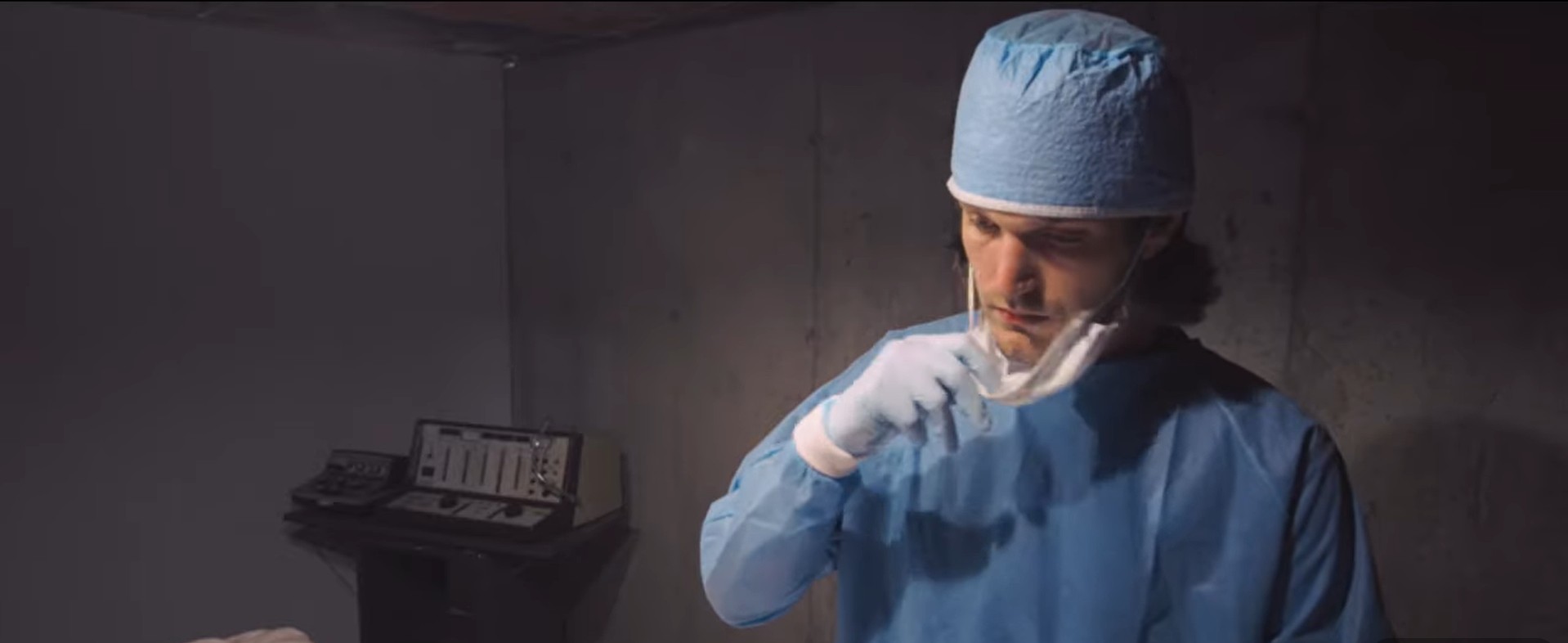
Two promising surgeons Jack and Jill seeking to reach new heights beyond their Hippocratic oath find themselves in presence of Dr. George Roberts, a once renowned surgeon turned obsessed head of a secretly society of surgeons known as the Cutter’s Club who use their skill to be monster makers, craved from slivers of fresh human flesh and harvested internal organs.  Suffering from a severe dissociative order, Dr. Roberts is eager to recruit his former lover and colleague Jill who has the necessary surgical skillset and medical knowledge to bring his two-headed, pint-sized monstrosity to life.  There’s only one problem, Jill’s boyfriend Jack is not in Dr. Roberts’s good graces and is kept out of secret operations to piece together a monster.  As Dr. Roberts’s split personality divides even further and the police become aware of the missing corpses used in their experiments, all of the Cutter’s Clubs efforts, two-headed monster, and even their lives are in jeopardy.

Filmed in 2005, shelved due to lack of funding, and thought lost by the lab storing the negative, the Charles Band directed “Cutter’s Club” went through hell and back to be finally released 20 years later.  The science fiction-horror teeters the same basic premise and principals of David Cronenberg’s “Crimes of the Future” where surgery is the new sex and expressive art, a concept Cronenberg had for decades prior, yet the “Videodrome” director couldn’t fully flesh out the idea into cinematic fruition until recently, starring Viggio Mortensen and Léa Seydoux in 2022.  The script that’s less body horror and more mad science than Cronenberg’s vision is penned by “Thir13en Ghosts” and “AMIEE:  The Visitor” writer, and long time Full Moon narrative collaborator, Neal Marshall Stevens under his pseudonym of Benjamin Carr.  Re-discovered, ironically, the same month Tony Todd died, the “Cutter’s Club” was restored to be the unreleased swan song production from the late and great “Candyman” actor.  Band produces the venture under his founded company Full Moon.

This November is the one-year anniversary of Tony Todd’s death, yet the actor still has new movie releases with “Cutter’s Club” being one of them.  As Dr. George Roberts, Todd plays to his stereotyped tune of being large and in-charge, commanding the screen with his low-frequency voice and intense stares, but Dr. Roberts also has a softer side in his disassociation, a side that’s kinder and gentler against the mad doctor version of himself but that more gentile version barely surfaces and Todd’s ultimately stuck playing an aggressor role he’s all too familiar with and known for.  Not to speak too ill of the dead, but Todd does a bit of overacting with the character by stretching into unnecessary exposition and melodrama, especially when kinder Dr. Roberts briefly sits behind the driver’s seat.  A more down-to-Earth performance comes from Melissa Searing (“Deadly Beloved”) as the anti-heroine Jill.  Grounding an overly articulated Todd to the story, Searing makes for a decent ambitious surgeon trapped inside the confines of the law and ethics and being romantically attached to colleague Jack who’s own self-indulgent inclusion is motivated by the affection he has for Jill.  Played by Davee Youngblood (“Bigfoot County”), Jack looks like the typical Full Moon principal white guy actor that’s more surfer dude with an early 2000’s spikey hair and puka pendant necklace and less defined as a serious surgeon other than wearing the blue scrubs.  Along with Todd’s Dr. Roberts, the Cutter’s Cub society is comprised of lesser disturbed promising medical professionals with David Sean Robinson, Jemal McNeil, and Raelyn Hennessee in various facets of medicine from anesthesiology to retrieving dead bodies from the morgue to being star students when it comes to surgery.  The latter Hennessee is also supposed to playing the jealous other woman to Jill with an at interval relationship with Dr. Roberts that suggests a level perversion or infatuation we’re never privy to.  Jon Simanton, from another Charles Band production “The Creeps,” fills out the cast as the man in a monster suit, stuffing himself into Two-Head, the pieced together monstrous creation.

Without a doubt, horror fans will flock to get their hands on the last and once lost Tony Todd title, but as with many notable genre actors, only a handful of first-class films out of many of the horror legends’ filmographies deserve to be stamped and sealed into their legacy.  “Cutter’s Club” will not be one of those remarkably renowned films.  And like usual, the interesting story of monster making and crafting art out of the flesh of the recently deceased is cut off at the knees by the production’s lack of funding, funding that has rarely been outside the inbreeding of crew talent that retains a certain staleness and the necessary funding to elevate “Cutter’s Cub” from out of the depths of dirt cheap filmmaking and into novel and crisply stylish territory.  Charles Band also nearly always finds a way to integrate his fascination with miniaturized dolls and creatures by having Two-Head be short and stout side villain, adding his directing trademark where he can.  You know it’s a dime-store production not by the rudimentary crafted man-in-a-shoddy-monster suit or the bunch of greenhorn actors that can’t express lines or actions without sullying themselves but rather by the obvious nude nipple pastie on Melissa Searing as she rides an over-sex acting Davee Youngblood nearly convulses out of the bed while lying on his back.  While nude nipples pasties themselves don’t indicate the production’s value, its the from behind-and-over-the-shoulder perspective camera shot that provides a little Searing side boob with the bubbling and loose pastie that really speaks to the fast-and-loose “Cutter’s Club” construction, screaming to the top of it’s lungs that not even a nipple pastie is worth the time and effort to fix for realism.  The story itself has the bone density to stand on it’s own two feet but has hardly any flesh clingy on the Jill love triangle with Jack and George, Jill’s intense motivation to be beyond the grave of a conventional surgeon’s oath to help people, and the secretly society’s wishy-washy goal that doesn’t quite materialize whether their objective is to sculpt art out of flesh or to be monster makers as their deranged core values.

Todd fans will surely want to pick up this lost but not forgotten movie that has been resurrected from the tomb of misplaced films. Full Moon Features handles their own production and distribution with a Blu-ray release on an AVC encoded, 1080p high-definition resolution, BD25, formatted in a widescreen 1.78:1 aspect ratio.  For an early-to-mid 2000s horror, that pleasant film layer of 35mm stock grain is a sight for sore eyes from modern day digital capturing with natural saturation and texturization that provide better practicality to the picture quality. Depth between medium to close up shorts offer plenty of outline and detail around the simultaneous focus points.  There’s not a ton of color range or texture with a most of the mise-en-scene blends a bland swirl of greens, browns, and blacks mostly only a few micro pops of brighter hues, though muted from the desaturated grading, coming through with Jack and Jill’s blue scrubs and we do get some nice sliminess from Two-Head’s stucco flesh.  Full Moon encodes two English audio options:  a Dolby Digital 2.0 and a Dolby Digital 5.1.  Both mixes keep put mostly in front with little atmosphere surround through the back and a front channels, resulting in the stereo mix to be just as adequate as the surround.  Dialogue retains prevalence throughout with the carnivalesque soundtrack of a usually tagged team of Charles Band-directed and Richard Band scored mix replaced with the Jonathan Walters trickling keyboard struck alto keys of menacing science.  English closed captioning is available.  Special features include an interview featurette with director Charles Band and actors Melissa Searing and Davee Youngblood.  The official trailer rounds out the special content laid out alongside a Full Moon promotional trailer for their streaming video magazine, VIdeoZone.  The standard Amaray Blu-ray contains collective character compositional artwork with no other physical trimmings.  The 82 minute, not rated film has region free playback capabilities. 

Last Rites: Jack and Jill might have went to fetch a pail of water, but “Cutter’s Club” is the one that fell and broke its crown. Nice to see Tony Todd in a relatively new project posthumously; yet, having no more financial standing to finish, “Cutter’s Club” feels just that, unfinished, as another slapdash, get-it-out-there-on-the-shelves, product to bank as the unseen film.

“Cutter’s Club” is Ready for Your Corpse! Buy it Here!

From the EVIL Clowns to the EVIL Scarecrow. “Die’ced: Reloaded” reviewed! (Dread / Blu-ray)

Go Beyond the Short Film with “Die’ced: Reloaded” on Blu-ray!

As child, Benjamin ripped his parents to shreds with his bare hands after long stints of abuse, including cutting out his tongue to forever silence him.  Now as a mute man, Benjamin remains incarcerated in a psychiatric prison, quiet behind a homemade mask, and under the care of a psychiatric doctor with good intentions.  After a violent, aided escape, leaving the doctor and a nurse mutilated and dismembered, Benjamin finds himself roaming the streets on Halloween night, coming across and killing a young man for his elaborately exaggerated scarecrow costume.  The imposing killer now has his sights set on a teenage girl, Cassandra, stalking her from inside the crowded venue of a friend’s costume party to invading her family home where her father is home alone.  Benjamin becomes a relentless force obsessed with Cassandra and he will stop at nothing and rack up the bodies in unrestricted violence just to have her.

Back in 2023, the co-director of “The Dark Side,” Jeremy Rudd, created a 50-minute slasher short “Die’ced” that took its villainous maniac, a scarecrow mute with a penchant for maiming and slaughtering, and made him into a viral internet hit, snagging the attention of the creative producing team over at Dread.  Along with some meager crowdfunded capital, roughly $3,500 out of a $75,000 goal, Rudd was able to extend his written-and-directed short film into a feature length release in 2025 and rebranded the film with the slightly tweaked title of “Die’ced:  Reloaded.”  Rudd, who has a 20-year career acting in front of the camera, brings his most eyed feature to his home of Seattle, Washington, set on Halloween as the backdrop for the slasher’s body pool, and utilizes Seattle surrounding specific businesses for some of his scenes, such as The Lott Coffee shop and the A&W Bottling Company in Snohomish county as key sets.  Taylor Jones produces with Louis Gallegos and Jeremy’s identical twin brother, Nathan, serving as executive producers.

Acting as “Die’ced’s” frontman without a single line of dialogue, Jason Brooks stalks without being stealth as the deranged psych-prison escape Benjamin.  As a character actor of many faces, having donned the mask of the iconic Jason Voorhees character in a handful of short tributes, strapped on the gloves and fedora for a quick Fred Krueger, and has played the monster countless times over and over again, Brooks follows the footsteps of the likes of Kane Hodder, a part time stuntman keen on being the on-screen villain and making the role is own.  As Benjamin, there’s no qualms about the character’s imposing height and careful movements, some being gently infantile while most have an aggressive cruelty like a wild dog shaking a mouse in its jaws to literal pieces in a fit of blood spatter.   In the other corner, the final girl, Cassandra is just a seemingly normal teenage girl trying to live her adolescent life by going to parties and being a sister to brother Tommy.  However, there’s no way you could convince me Eden Campbell and Collin Fischer are playing teenagers.  Typically, a slasher high school cast would be near the edge or just over the threshold of adulthood, but Cassandra and Tommy are way too old to be high school students with an age range of mid-to-late 20s having a noticeable, natural filled out physique of maturity.  Campbell career stretch has her as a micro-scream queen of sorts from a few horror-related roles from her haunted theater debut performance in “Ghostlight” to having a significant role in the two-part Netflix series “Fear Street:  1978” based off the R.L. Stine scholastic book and with “Die’ced,” Campbell is no Lauren LaVera or Jamie Lee Curtis with her final girl character that’s pitted against a scarecrow garbed killer who’s able to take down without much to-do.  The cast rounds out with Christine Rose Allen as Benjamin’s nurse and escape benefactor, John Karyus (“Lo,” “The Gruesome Death of Tommy Pistol”) as an unfortunately psychiatric doctor being utterly taken apart piece-by-piece, and Nigal Vonas (“Coyote Cage”) as the Cassandra and Tommy’s father.

If analyzing “Die’ced: Reload” in the grand scheme of the slasher iconography, Benjamin, the scarecrow, boils down to being an unauthorized spinoff of Art the Clown, a completely unmistakable byproduct of the widely popular, ultra-violent “Terrifer” film and subsequent franchise about a devilish smiling clown immensely enjoying eviscerating victims in all different kind of ways.  With the same traditional traits of a brawny butcher running on vocal silence, Benjamin is compared to the fan favorites of Michael Myers and Jason Voorhees by its filmmakers, but as far as costume and behavior style goes, along with the intense desire to craft art out of the entrails of his victims, the “Die’ced: Reload” antagonist has more qualitative measure toward Art the Clown with the Aguste face makeup that accentuates the odd shape of a distinct facial bone structure, the harlequin jester who revels in the pursued dismemberment and savagery of innocent parties, and the fact a girl/woman becomes the singled out and obsessed target that rivals the Art the Clown versus Sienna inextricable link.  To further the film pretentiousness, the narrative is held together by elementary school graded glue and Scotch tape with an inexplicable twist that fails elucidation and logic and a familiar narrative that also relies too heavily on the gratuitous gore elements to carry it from beginning to end, reducing the once 2023 viral short into nothing more than a too soon hackneyed concept for 2025.  The “Reload” subtitle gimmick extends the original 2023 short by 30-minutes’ worth of additional gore footage and slipping in some of Benjamin’s backstory while the narrative trunk remains unchanged, but the overall outcome bares a slapdash impression as the story isn’t as terrifying or is whole enough for the Benjamin scarecrow to scare off even a murder of cowardly crows.

”Reload” scares its way onto Blu-ray from Dread’s home video label, Epic Pictures Group, with an AVC encoded, 1080p high definition, BD25 that’s has definitively no issues with the compression integrity seeing pitch black negative space, delineated outlining, and a stable digital image quality but isn’t quite as sharp.  “Die’ced” and director Jeremy Rudd pride themselves on their retro homage to the slasher genre of yesteryear where “Halloween” and “Friday the13th” reigned supreme and Rudd tries to emulate the effect with hazy fog, low and key lighting, and plenty of corner shadowing that impairs surface details and textual outputs.  Coloring is fine but the dark tone grading hampers the hue explosion that leaves the Scarecrow, or maybe Clownish, makeup moderately subdued under the straw mop and burlap hat. “Die’ced” is presented in a widescreen 1.85:1 aspect ratio and without a grain filter to exact a throwback 80’s slasher.  The English Dolby Digital 5.1 audio mix offers a tampered fidelity through the multi-channel system with a weaker side and back channels to focus more on the front.  Dialogue doesn’t deny clarity and provides enough prominence to be the singled finest element of the audio design that really lacks the range for broader Halloween costumed killer on the loose in Seattle that winds up at a drinking party and a bottling factory without making a bigger splash in the audio pool.  Special features include the original “Die’ced” short film and trailer, plus additional Dread produced film trailers.  Physical packaging is a standard Blu-ray Amaray case with Benjamin’s clown-scarecrow mug menacing smiling through the arch of a bloodstained sickle garnished with one single retro VHS “Horror” sticker which perfectly denotes the extent of “Die’ced’s” throwback slashery.  Epic Picture Group’s Blu-ray is region free and presents the film not rated with an 81-inute runtime.

Last Rites: I’m not seeing the viral sensation the internet saw with a hackneyed antagonist doing much of the same as those who came before, but “Die’ced: Reload” has an extreme slasher violence appeal that can temporarily quench bloodthirst and the open ending leaves more to be explored for character redemption.

Go Beyond the Short Film with “Die’ced: Reloaded” on Blu-ray!