Business and Pleasured are Ruined by EVIL’s Obsession! “Tulpa: Demon of Desire” reviewed! (MVDVisual / DVD)

“Tulpa: Demon of Desire” Now on DVD!

Lisa Boeri is a career-driven businesswoman successful in locking down deals and achieving financial gains in a fast-paced, no-holds barred global market as she slaves away from dawn to dusk at the office, but when the sun goes down, Lisa releases the stresses of occupational hazards and her thirst for carnal desires at an exclusive, hidden-away nightclub where sexual fantasies range from BDSM to orgies while esoteric mystic and club owner Kiran trains her to release her Tulpa, an inner being of sensual self-exploration and freedom, through ecstasy elevating drugs.  When Lisa comes across printed news reports of her club sexual partners being brutally murdered by a serial killer, she must warn Kiran and her last partner before another body makes the press but Kiran isn’t too keen on making public private identifying information that goes against club rules and Lisa must do whatever it takes to investigate who and why would want to murder her intimate encounters. 

“Tulpa:  Demon of Desire” is a contemporary giallo from “Shadow” and “The Well” director Federico Zampaglione attempting his hand at the sordid Italian genre that has come to cult infamy over the past few decades with a regained revival and following on physical media.  Zampaglione co-wrote the script with father, Domenico Zampaglione, and Giacomo Gensini, the writing collective’s second collaboration behind the 2009 thriller “Shadow.”  Also known in Italian as “Tulpa:  perdizioni mortali,” the 2012 erotic giallo is a glow up of the everyday modern giallo that doesn’t try as hard as other productions that lean strictly toward being an homage to notable films and directors, “Nightmare Symphony” comes to mind as a compliment to Lucio Fulci’s “Cat in the Brain,” aka “Nightmare Concern” with a fairly identical storyline, rather than be self-serving toward its own identity within the subgenre context.  The producer behind Tinto Brass’s “Cheeky” and Zampaglione’s “Shadow,” Massimo Ferrero, returns to produce “Tulpa:  Demon of Desure” under his studio company Blu Cinematografica and IDF, Italian Dreams Factory.

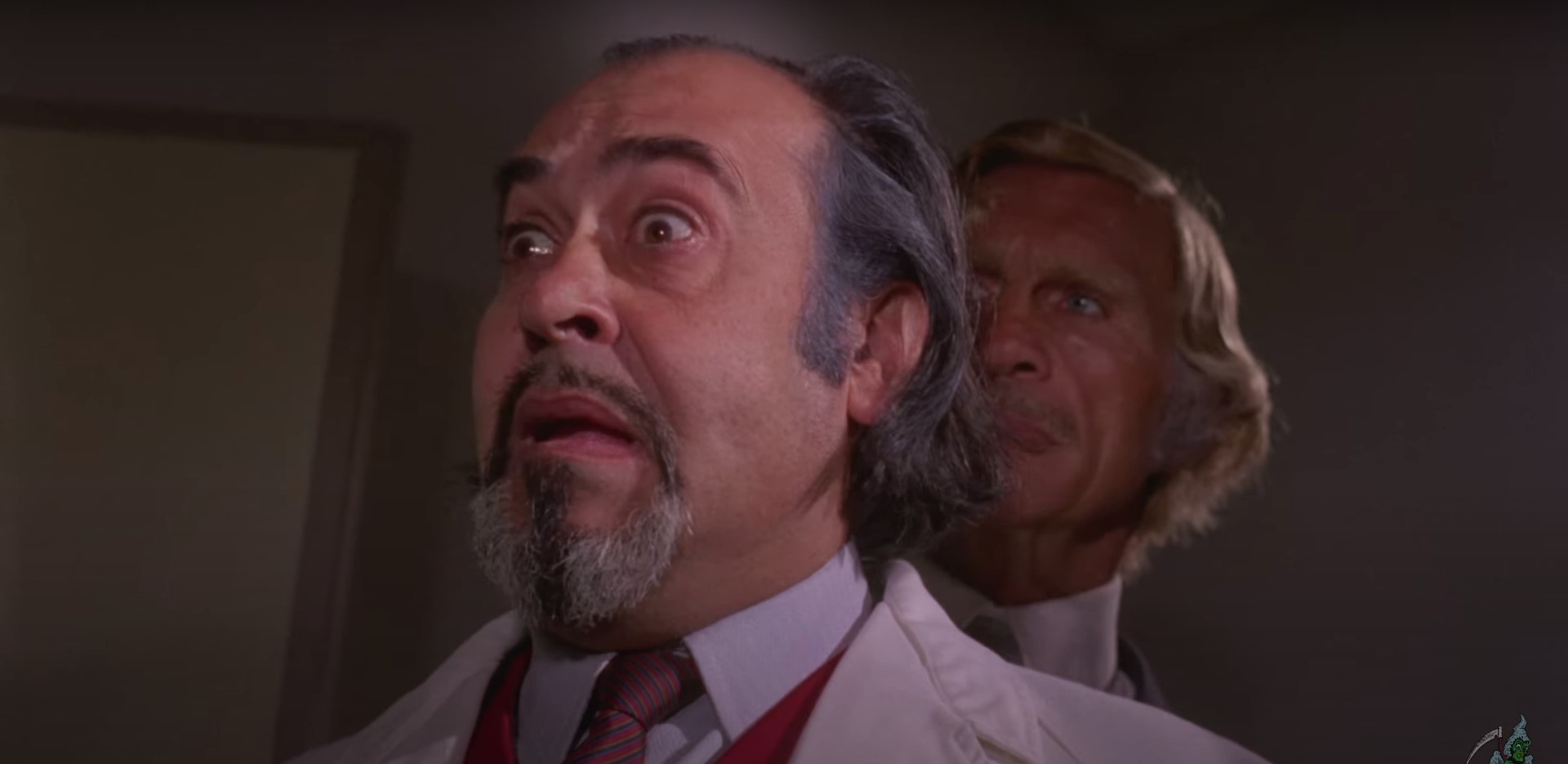
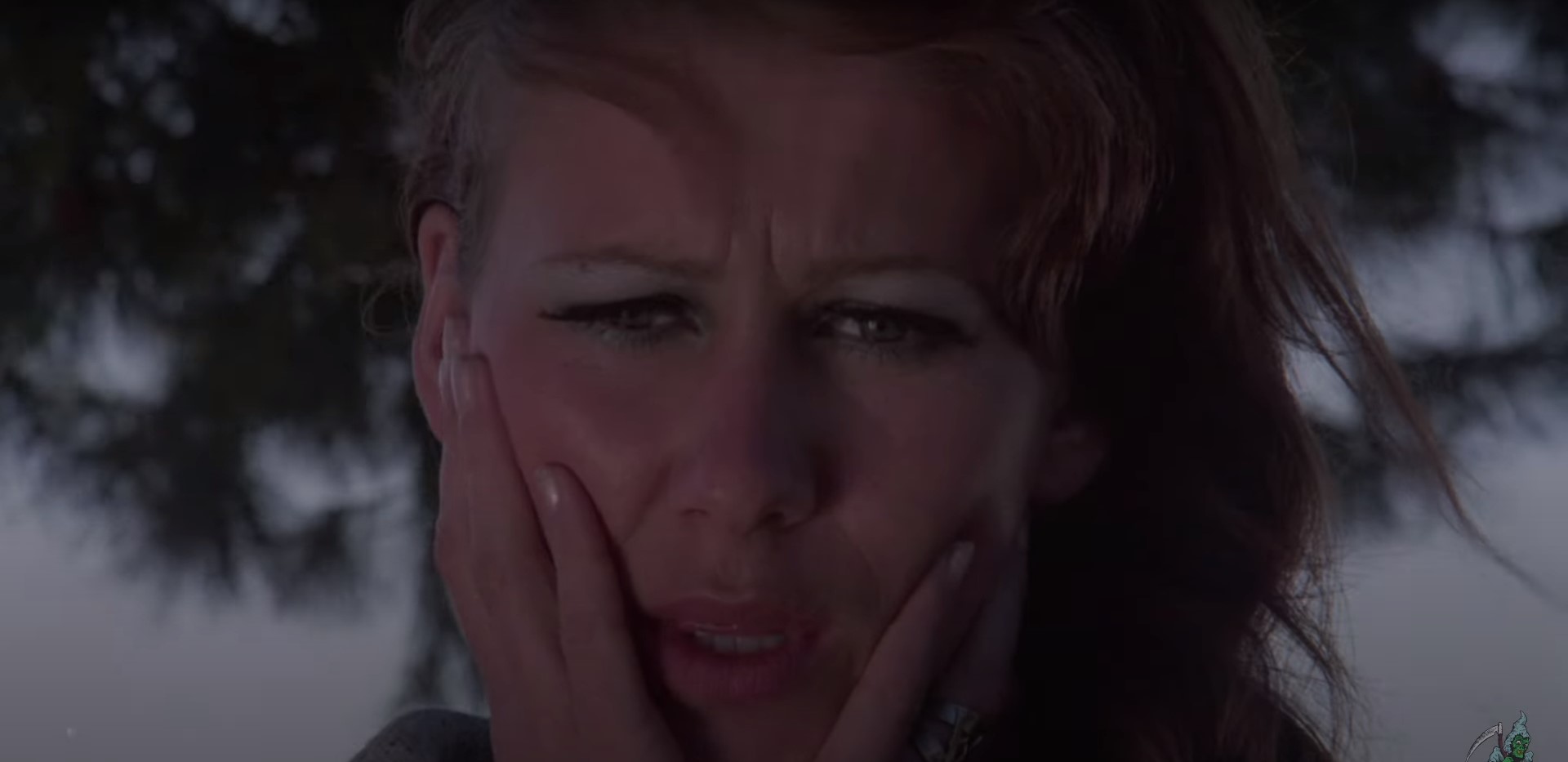
At the center of a murder’s relentless focus is conservative promiscuous lead character, Lisa Boeri, played by Claudia Gerini who has had roles in Mel Gibson’s “Passion of the Christ” and Chad Stanhelski’s “John Wick:  Chapter 2” as well as reteaming with Zampaglione for his last film “The Well.”  Gerini’s versatility proves its worth in “Tulpa” as Boeri’s required to be business professional and quick witted and then is contrasted against her carnal rendezvous that’s no longer has in control of herself.  There’s a freedom from the business shackles that takes place but when her night world comes crashing down in a heap of bodies, Boeri finds herself unable to focus on anything else other than the lives of her anonymous sleeping partners.  Club owner Kiran (Nuot Arquint, “Shadow”) is a bit of an odd bohemian duck with his psychosomatic holistic spirituality and the biochemical, psychedelic drugs he pours into his clients’ drinks.  The rest of the Italian cast are a series of rotating characters that, unfortunately, don’t flesh out enough to warrant when becoming intertwined into a killer’s web with to note Ivan Franek (“T.M.A.”) as the last sex-partner to be a killer’s crosshairs and Boeri has to save, Frederica Vincenti as Beori’s envious coworker out for her colleague’s scandal, and Michela Cescon (“I Am the Abyss”) as Boeri’s best friend outside of work and play as well as Pierpaolo Lovino, Michele Placido (“The Pyjama Girl Case”), Giorgia Sinicorni (“Canepazzo”), and Piero Maggio (“The Vatican Exorcisms”) rounding out the rest of supporting company.

Zampaglione’s giallo attempt is coursed with suspense with a masked, gloved killer targeting a beautifully flawed woman complicated by her own sexual exploration and reach inside a world that’s viewed as taboo as it is tantalizing with sexual delight.  The director fashions Boeri’s alternative and secretive lifestyle as a self-harming vice, much the same way as illegal drugs or excessive alcohol, done in the shadows and hidden from friends and family.  There’s a moment in the midst of Boeri’s desperation search for her last partner’s name where an adversarial colleague learns of her sex club nightlife and aims to expose her, turning her private venture public through means of blackmail.  Eventually, more than one type of obsession over Boeri comes into play and the bodies pile up because of the unhealthy nature of the meddlesome and malevolent.  Though taut when tension bred from a killer whose maniacal plan involves and extends to a torturous and gruesome end against those hovering in Beori personal bubble, a couple of key catalysts are not cleared very well.  One of the individual obsessions over Boeri falters right at the end with a quick cut that doesn’t allow breathing room for comprehension of what went down and, perhaps one of the more complexing and important outliers that strays off the narrative from off the straight and narrow, a supernatural sign of power, perhaps the Tulpa force in practice, that gives the story a taste of Lucio Fulci giallo, such as “The Psychic.”  Yet this revelation of an ability receives lukewarm reception that cases the story’s drive into a wait-a-minute of mystical puzzlement. 

“Tulpa:  Demon of Desire” arrives onto DVD from MVDVisual in association with Danse Macabre and Jinja Films.  The upscaled from 720 to 1080p MPEG-2 encoded DVD9 is presented in a widescreen 1.78:1 aspect ratio.  Bathed in warmer tones of yellow, green, and red that often blend into a confluence of orange, Guiseep Maio’s noir dark veneer engages a sordid world of sophisticated sleaze and maniacal murder, creating a side-by-side dualism of Boeri’s day-and-night lifestyles.  Details are soft for this upscaled DVD as if the format slightly shimmers to keep focus on textures and delineations, the vibrant gel coloring for eliciting illicit behaviors doesn’t help either, but the release manages to produce a discernible image without the strain of compression issues and still convey Zampaglione’s visual aesthetic of a darker, viscus blood, heated shades of fervor, and a higher contrast to intensify shadows.  The English and Italian PCM 5.1 Surround Sound mix caters to the score and dialogue layers rather than creating worlds with ambience audio.  Though the dialogue is not listed as Italian on the DVD backside, there is a sizeable chunk of the dialogue in Italian with English subtitles, but the feature is mostly in a heavily accented English language.  The overall dialogue is clean without interference other than the accents and is prominently positioned, but still integrated in, amongst the other layers with a timed Francesco Zampaglione (last name incorrectly misspelled on the DVD back cover with missing the I in Zampaglione) and Andrea Moscianese exotically haunting score that works to not overpower the dialogue and plays into the sex-club and giallo themes  English subtitles appear to have no flaws and are paced well.  For a side note, I would suggest using the English subtitles to get through the Italian accents that can be challenging at times with certain actors.  Special features include a “Tulpa” behind-the-scenes featurette that interviews cast and crew, the official trailer, and two trailers for two other Federico Zampaglione productions – “Shadow” and “The Wall.”   The MVDVisual DVD release is a perfect example of less is more with a black background with a contrasting silver and intrinsically cracking Venetian mask and white logo with a blood-tipped spear.  The standard, region free, rated R release comes with no other physical or encoded attributes in its 84-minute runtime.

Last Rites: Honestly, a kill-focus blood overtakes the slim waist of sex in what’s supposed to be a blend of both motifs as the title suggests in”Tulpa: Demon of Desire,” but this modern-day giallo from those who did the niche subgenre the best, the Italians, is still worth viewing calories.

“Tulpa: Demon of Desire” Now on DVD!

Trapped Inside His Own Body While EVIL Buries Him Alive! “Short Night of Glass Dolls” reviewed! (Celluloid Dreams / 4-Disc 4K UHD and Blu-ray)

Collector’s Run to Grab Celluloid Dreams’ “Short Night of Glass Dolls” on 4K UHD and Blu-ray!

Gregory Moore’s body is found motionless and wide-eyed in a Prague Plaza and is confirmed deceased by local doctors, but Moore is actually alive, paralyzed and trapped inside with only his inner voice able to cry for help.  As his mind races about how to communicate with those around him, Moore must recall the previous days events to see how he ended up this way.  Days before, the American journalist, currently stationed in Prague and soon to be relocated in another European country once his assignment comes to term, is visited by his beautiful girlfriend Mira and they attend an affluent party hosted by socialite Valinski.  Soon after, Mira disappears from his apartment late a night, leaving all her belongings behind in his apartment and as the police begin to suspect Moore as primary suspect, the journalist uses his trade to discover a powerfully mysterious and sexually depraved organization, known as Klub99, may be behind her disappearance.

Aldo Lado’s written-and-directed murder mystery goes by many Italian and English names:  “Short Night of Glass Dolls,” “La Corta Notte Delle Bambole di Vetro,” “Malastrana,” “La Corta notte delle Farfalle,” “The Short Night of the Butterflies,” and, finally, “Paralyzed.”  Doesn’t matter what you call it, “Short Night of Glass Dolls” needs very little title nomenclature as Lado, a dark sided and rich yarn spinner of Italian cult cinema with credits like “Who Saw Her Die?” and “Last Stop on the Night Train,” debuts his 1971 tale of mystery with precision and style that speaks global themes of affluent power for the sake of retaining that power as well as their youth.  The Italian production is a cross-country affair being filmed in not only Italy but also in Croatia, Slovenia, and Prague and is a production of Doria Cinematografica, Jadran Films, and Dieter Geissler Filmproduktion with Enzo Doria (“Beyond the Door,” “Tentacles”) and Dieter Geissler (“Kill! Kill! Kill! Kill!,” “The NeverEnding Story”) as producers.

“Short Night of Glass Dolls’” American protagonist was actually not played by an American but by French actor Jean Sorel with a handsome stached face, bronze swagger, and whose taste of giallo carried into the Lado film after acting in “The Sweet Body of Deborah” and Lucio Fulci’s “A Lizard in Woman’s Skin.”  It’s not surprising or even uncommon for a 1970s through the 1980s Italian production to cast non-native Italians to star and perform as Italy sought foreign talent to be highly marketable abroad and “Short Night of Glass Dolls” is bursting with international talent from America, Yugoslavia, and Sweden to perform alongside Italians.  The only American in the film is the petite and lovely Barbara Bach whose career was mostly a decade and half of Italian films, including “The Great Alligator,” “The Humanoid,” and “Black Belly of the Tarantula.”  Bach’s short stint as Moore’s girlfriend, Mira, is the epitome of innocence and cherished love, an quality lost by Moore because of his work blindness and his philandering with colleague Jessica, “Salon Kitty’s” Ingrid Thulin entrenched into Jessica’s passion for Moore but also keeping a stark low-profile on her looks against Mira with Thulin’s naturally blond hair contained in a colorful headwrap for most of the film.  The love triangle is downplayed from the early revealing signs that Moore may be playing both sides but from the moment Mira vanishes, Moore and Jessica, along with fellow journalist Jacque (Mario Adorf,  “What Have You Done To Your Daughters?”) become a single unit of vocation to find Mira and they bitterness drains from Jessica to just despair by the shocking finale when all the cards laid upon the table.  Lado neatly keeps a tight lid on Klub99’s patrons with only the assures of Valinski as the organization’s ringleader of undisclosed purpose.  José Quaglio (“The Eroticist”) dons well as the oligarchal head keeping a low profile that emerges out like sordid serpentine of perversion and wickedness.  Daniele Dublino, Fabijan Sovagovic, Relja Basic, Piero Vida, and Semka Sokolovic-Bertok are the Croatian and Italian support actors that fill out the cast. 

Aldo Lado’s debut film pins him as a productional prodigy with a naturally gifted cinematic eye and a phenomenal storyteller.  “Short Night of Glass Dolls” sallies forth in an untraditional, nonlinear narrative through the perceptive procession of a paralyzed man’s thoughts and recollections.  That man being journalist Gregory Moore who audiences are first introduced lying motionless in the bushes of the plaza morning and, from the start, Moore is at the mercy of bystanders, medical professionals, and friends who mostly believe he’s dead but, on the inside, is in his thought’s echo chamber screaming for help.  Every frame captures the act and emotion, amplified even more so when Jean Sorel is absolutely still, eyes open, and withstanding forces upon, such as chest compressions, to which he doesn’t even flinch.  Lado finds beauty in the macabre imagery when dead women are laid out nude, splayed with an arrangement of flowers or juxtaposed wet against a dry paved ground.   Lado also doesn’t cater to a fixed position and, instead, tracks the characters with smooth movements, coalescing at times a back-and-forth or side-to-side to get lengthier, more dialogue and dynamically enriched, scenes with director of photography, Giuseppe Russolini (“Firestarter”), achieving a naturally dissemination of lighting and color.  “Short Night of Glass Dolls” is not a film without flaws as Moore’s investigation takes the easy pickings route as if briefly glancing over the reported missing, naked women list is an automatic ladder to the winner’s circle for unearthing mostly everything of an deprave inner circle of the powerful rich and so Aldo cheats a little to give his story’s theme of flightless butterflies some much needed wings.

Following up on their definitive, carefully curated, stunning release of Giuliano Carnimeo’s 1972 giallo “The Case of the Bloody Iris,” Celluloid Dreams doesn’t pump the breaks delivering their latest “Short Night of Glass Dolls” with an all-encompassing, 4-disc collector’s edition set that includes 4K UHD and Blu-ray. Scanned and restored in 4K from the original camera negative, the UHD is an HVEC encoded BD100 with 2160-pixel resolution and the Blu-ray is AVC encoded BD50 with 1080-pixel resolution. It goes without saying that both transfers are impeccable in their damage and blight free form for those who might have owned or once owned the cropped, VHS-sourced release under one of its many titles, “Paralyzed.” The grading blends a natural, dynamic pop with peppered psychedelic trips down the dark rabbit hole with Klubb99 is open for business and the color is diffused with balanced, natural saturation, adapting to lighting of all varieties. UHD offers a richer depth of focus with the increased pixel Dolby Vision seizing better delimitation around objects, but that doesn’t mean the Blu-ray doesn’t do the same, the UHD just enhances it by a quarter approximate percentage, while still keeping healthy, transpicuous grain. Two fidelity-true 1.0 DTS-HD offers mostly a dialogue entrenched mix that, audibly, has an imbalance against a rather omitted ambience and that’s not the release’s doing but rather a lack of Foley work amongst an ADR English or Italian track. Ambience hits where it counts but there are times when establishing shots or slow pans of Prague go nearly into a coma state, letting the dialogue and the renowned Ennio Morricone’s piano, triangle, and melodic vocal score take flight through the course of the mystery. English subtitles are available for the Italian language track. Disc one and two not only contain the feature but also contain identical extras with writer-director Aldo Lado & and Freak-O-Rama’s Frederico Caddeo feature-running commentary, a second parallel commentary track with Celluloid Dream’s founder Guido Henkel, an assortment of trailers labeled as grindhouse, Italian, English, and the Catalepsis, with an isolated score that pedestals Ennio Morricone’s score. Disc three delves into the Italian-language, English-subtitled feature documentaries and featurettes with a 2015 archived interview The Nights of Malastrana, clocking in over 100 minutes, that have isolated discussions with Aldo Lado and actor Jean Sorel, All About Aldo is another archived interview with the director circa 2018, The Quest for Money is an interview with producer Enzo Doria, To Italy and Back touches base with producer Dieter Geissler’s perspective and historical context, The Most Beautiful Voice in the World interviews Italian singer Edda Dell’Orso’s haunting vocalizations on Morricone’s score, Cuts Like a Knife speaks to editor Mario Morra, the Flying Maciste Brothers’ video essay The Man on the Bridge: Philosophy, Perception and Imprisonment in Aldo Lado’s ‘Short Night of Glass Dolls,’ the alternate title Malastrana’s German export credits, and an image gallery. Finally, disc four brings the encoded special features home with not one, but two alternate cuts of the film, a 35mm Grindhouse version and the cropped Paralyzed VHS version. If you thought the encoded special features weren’t hefty enough, Celluloid Dream’s physical presence is certainly imposing with a rigid slip box with newly designed cover compositional cover art on back and front, a massive 64-page color picture and poster booklet features a retrospective essay from Andy Marshall-Roberts as well as reprinted column and magazine reviews from the film’s initial release, and, of course, the thick Amaray case, which is surprising in the traditional Blu-ray blue rather than the 4K UHD black. The cover art is an original rendition that brings all theme elements of giallo into the illustrated fold in circling chaos of catalepsy with the reverse side displaying the same image but titled in Italian. Inside, an advert for “The Case of the Blood Iris” and their upcoming third title “La Tarantola dal Ventre Nero” is inserted. The 4K is region free while the Blu-ray is hard coded region A. The unrated main feature has a runtime of 97 minutes.

Last Rites: Celluloid Dreams pursues excellence and strikes twice achieving it with a heart-and-soul poured release that by far has blown all other limited-edition copies, collector sets, definitive releases out of the water and “Short Night of Glass Dolls” deserves every bit of the attention.

Collector’s Run to Grab Celluloid Dreams’ “Short Night of Glass Dolls” on 4K UHD and Blu-ray!

If the Tenants Keep on Dying, Better Get Out of that EVIL High-Rise! “The Case of the Bloody Iris” reviewed! (Celluloid Dreams / 2-Disc Blu-ray and 4K UHD Set)

Own Your 4K and Blu-ray copy of “The Case of the Bloody Iris” today!

A pair of beautiful women are heinously murdered in a respectable high-rise apartment building.  As the case remains unsolved, a real estate architect, Andrea Antinon, is looking for models to market his new property, happening upon models Jennifer Langsburgy and Marilyn Ricci during his photographer friend’s photoshoot, and entices them by offering a sublet of the now vacant apartment in the building where one of the girls was murdered.  Jennifer, who finds herself slowly falling for the Andrea, is stalked by her polyamorous sect past and the group’s leader, her ex-husband, Adam who refuses to let her go and while he proves himself dangerous, attempting to kill Andrea after one of his dates with Jennifer, Adam is found dead in her new apartment.  The suspect pool grows as police are continuing to be baffled by an elusive killer remaining at large and set their sights on Andrea with his brief connections in two of the three victims.  Evidence against Andrea swells as those around Jennifer wind up dead and she’s next on the kill list. 

“The Case of the Bloody Iris,” the Iris represented as the delicately beautiful flower that symbolized the bound between Jennifer and her deranged, sex cult ex-husband Adam, is the 1972 giallo thriller from the prolific spaghetti western, Italian director Giuliano Carnimeo (from the previous “Sartana” series and would later helm “The Exterminators of the Year 3000″) and prolific giallo screenwriter Ernesto Gastaldi (“Your Vice is a Locked Room and Only I Have the Key,” “Torso,”) shot in the city of Genoa doubling as Milan.  Full of eccentric suspects, taboo desires, and handsome principals, “The Cast of the Bloody Iris” is a very attractive, violent, and superbly shot whodunit.  Under the original native title of “Perché quelle strane gocce di sangue sul corpo di Jennifer?” aka “What Are Those Strange Drops of Blood on the Body of Jennifer?” Galassia Films serves as the production company with Luciano Martino (“The Strange Vice of Mrs. Wardh”) having produced the giallo. 

The story floats back-and-forth between a pair of co-headlining stars, one of them being the retrospective cult and sex icon actress Edwige Fenech in one of her earlier performances, and who has starred in “Strip Nude for Your Killer” and “The Strange Vice of Mrs. Wardh.  Co-star George Hamilton also stars in that latter giallo, reteaming the handsome-faced “The Case of the Scorpion’s Tail” actor born in Uruguay, and whose birth name is Jorge Hill Acosta y Lara, with Fenech in their respective roles of model Jennifer and architect Andrea intertwined into what is a romantic tale of love at first sight that becomes mangled by a crazed killer on a murder spree and they’re at the heart of the matter.  If revisiting Giuliano Carnimeo, comedies and watching some of his interviews, you can see why he folds in subtle comedic elements that doesn’t allow “The Case of the Bloody Iris,” or a good chunk of his credits, to be a totally engaged, heart-racing murder mystery; those comedic elements come in the form of bumbling police, a too dead-set on commissioner (Giampiero Albertini, “Commandos”) and his more ungainly assistant (Franco Agostini, “The Sex Machine”), who are always one step behind and in the wrong direction.  The juxtaposition may be too evident yet it’s also welcoming, breaking up the forbidding business with a little levity, and creates a backend sense of assurance knowing police, just like today, can be human and clueless on serious natured instances.  The suspect pool and other salient supporting principals include Paola Quattrini as Jennifer’s roommate Marilyn (no doubt based loosely on Marilyn Monroe), Ben Carra as Jennifer’s sex cultist ex-husband, Jorge Rigaud as the professional violinist neighbor, Annabella Incontrera as the professor’s lesbian daughter, Oreste Lionello as a sleazy photographer, Carla Brait as a nightclub’s dominating femme, and Maria Tedeschi as the unfriendly neighbor.

Even though giallos did not appeal to him nor did they really become a staple of his oeuvre, director Giuliano Carmineo had a different perspective than most and that closely aligns with masterclass filmmakers like Dario Argento.  Carmineo and cinematographer, who’ve collaborated previously on a pair of Sartana westerns, had purpose in their odd and first person camera shots and movements, such as laying the camera down and sideways as characters perform routine events before being attacked or looking up and doing a 360-degree turn as if scanning a stairway, that coincided with the usual first person perspective of the conventionally masked and gloved killer wielding a deadly blade.  The technique engages the viewer, as in a sort of tell that something is about to happen or is amiss in a scene to create breath holding, heightened anxiety, but the multi-faceted narrative itself doesn’t need assistant in keeping viewers glued to the edge of their seats with the eclectic mix of sultry and taboo eroticism, lampooning the authority figures, designed seamless red herrings, unique characters, a variety in murder, and an elaborate, mysterious complexity that’s downright deviant. 

If you’re a distributor looking to shoot your shot on your first release, new boutique physical media label, Celluloid Dreams, hit the bullseye with a 2-disc 4K UHD and Standard Blu-ray release of “The Cast of the Bloody Iris” on a HVEC encoded, 2160p resolution, 100 gigabyte 4K UHD and on an AVC encoded, 1080p, 50 gigabyte Blu-ray, scanned and restored brand new in 4K on a pin-registered Arriscan from the film’s original 2-perf Techniscope camera negative, and presented in the original widescreen aspect ratio of 2.35:1.  Coloring grading and restoration is noted on the interior insert being entirely completed by Celluloid Dreams Studios to remove all the celluloid and age imperfections and stimulate a vivid, vibrant picture quality and, by the giallo-Gods, this has to be one of the more flawless image presentations I’ve seen on 4K and Blu-ray in a very long time, or ever!  Meticulous precision techniques reveal a straight from-farm-to-table quality, organic for its era with a balanced, natural grain and color saturation.   Details have delineated trim and higher contrast leveling where appropriate for darker scenes, such as an unilluminated bedroom or a basement boiler room, that retains the rich inkiness of the negative space.  No signs of compression issues in the negative spaces as well and no signs of unnecessary enhancing.  Two, lossless audio options are available for selection:  an Italian 1.0 DTS-HD and an English 1.0 DTS-HD.  Both remastered tracks from the optical sound negative provided full fidelity through the single channel.  Concise and crisp dialogue renders through in full, robust effect with ample detail in the ambience and depth to create a dynamic space.  No hissing, crackling, or popping in the ADR dialogue or ambient tracks and swanky tuned by Bruno Nicolai’s multi-instrumental base, drum, sintir-like guitar, and more score.  English subtitles are available on the Italian track.  With the larger capacity on the UHD, both formats are able to handle the included three featurettes with star George Hilton, principal actress Paola Quattrini, and director and writer, Guliano Carnimeo and Ernesto Gastaldi in Italian language.  Also included is a new commentary track from film critic and Celluloid Dreams co-founder Guido Henkel, an outtake reel that extend out certain scenes, photo gallery, the original Italian Opening Credits that beginning of the feature, and Italian and English theatrical trailers. Inside a dual-sided cardboard slipcover with both the feature’s baptized titles and illustrated cover art representation of Edwige Fenech, the black 4K UHD Amaray case possesses a second and more fleshy-erotic illustration of Fenech. The same art and arrangement are on the reverse side but with the Italian title. Each disc is housed on either side of the interior snapped firmly on a press-lock on with a release acknowledgements and an advert for their next physical feature, “La Tarantola Dal Ventre Nero” aka “Black Belly of the Tarantula.” The region A playback release has a runtime of 94 and is not rated.

Last Rites: Showing such diligence in the restoration efforts, Celluloid Dreams is the new kid on the block, the promising young boutique label with the Midas touch, with a killer first presentation in “The Case of the Bloody Iris.” We can’t wait to see more!

Own Your 4K and Blu-ray copy of “The Case of the Bloody Iris” today!

This EVIL, Straight-Razor Killer Has a Novel Idea! “Tenebrae” reviewed! (Synapse / 4K-Blu-ray Combo Set)

2-Disc 4K UHD and Blu-ray Set Now Available of Dario Argento’s “Tenebrae”

While on a media book tour for his latest popular crime thriller novel, “Tenebrae,” American novelist Peter Neal is swiftly entangled in a killer’s puritanical wrath shortly after landing in Rome.  Using Neal’s story as an inspirational guideline to rid the world of what the fictional book labels as depraved people, the killer brutally murders women closely resembling characters in Neal’s book with a straight razor and sends Neal a deranged poetic message shortly after each death.  Police are on the case but always once step behind, even when the murders have seemingly stop connecting to the pages of Neal’s novel.  When the writer investigates by running through the list of possible suspects, the writer in him goes rogue by setting off to solve the case himself that would sensationalize and authenticate him as a crime writer, but the deeper Neal directly involves himself, the more the grislier the murders become and they’re starting to come closer to home than before. 

Dario Argento is unequivocally one of the best masters of horror for half a century, writing and directing not only some of the best Italian crime-mystery Giallos, splashed with hue vibrancy and caked in gruesome blood splatter, but also writing and directing those same films with major success internationally as his films connect with a global audience.  “The Bird with the Crystal Plumage,” “Deep Red,” and “Suspiria” have skyrocketed the filmmaker within the first decade of movie-crafting and Argento would not have been who is now without the guidance and the financial foundation constructed by father, Salvatore Argento.  Before his death in 1987, Salvatore produced one more of his son’s ventures in 1982 with “Tenebrae,” an emblematic mystery that brings Italian and American actors into the fold of Argento’s violent pulp puzzler.  Argento’s younger brother, Claudio, co-produced the feature under the Sigma Cinematografica Roma production company.

The Italiano-Americano production casts a pair of native New Yorkers in Anthony Franciosa (“Death Wish II,” “Curse of the Black Widow”) and John Saxon (“A Nightmare on Elm Street,” “Black Christmas”) who regularly crossed over the Atlantic for roles in international pictures.  Franciosa plays the novelist Peter Neal with Saxon as Neal’s newly hired agent Bullmer.  Their portrayed amicable relationship succeeds expectations of client and manager professionalism, but a good publicity campaign can be torpedoed by a sadistic killer with a throat cutting fetish and Roma’s best officers on the case intruding into the Neal’s personal promotion with Detective Germani, played by spaghetti western regular Giuiliano Gemma (“Day of Anger”), and his partner, Inspector Altieri, played by Carola Stagnaro (“Phantom of Death”).  The third English speaker is John Steiner (“Caligula”), a proper Englishman setup as an Italian television host on the docket to interview Peter Neal’s latest release success.  Steiner becomes an early favorite as the suspected killer with his odd pre-show questioning that falls in line with the Killer’s motives, but he isn’t the only person of interest as Neal’s estranged lover Jane (Veronica Lario) holds a lover’s quarrel with the writer who has seemingly become intimately close with his personal assistant Anne (Daria Nicolodi, “Deep Red”).  A conglomerate of characters gyrate Argento’s maelstrom mystery, each exhibiting profound performances that make each rich in their own right, and fill out with an assemblage of robust supporting characters diffusing through the story with Ania Pieroni (“The House by the Cemetery”), Lara Wendel (“Ghosthouse”), Eva Robins (“Eva man”), and Mirella Banti (“Scandal in Black”), the model most infamously on the front cover of most home video releases and poster one sheets with the iconic neck-sliced open and dripping blood along with her wavy hair suspended in a pose of vivid void and color.

“Tenebrae,” in Latin translates to darkness, describes Argento’s post-“Suspiria” feature intently.  Giallo lives within this time capsulated enigmatic madness, color-coated and visually complex to become an easy pill to swallow amongst all others in the Italian-reared niche.  Accompanying all the hallmarks of a Giallo construct – the killer’s gloved hands in POV, psychosexual tropes, mental instability exposures, violent and gory – Argento also impresses us with baroque mise-en-scene of lavish houses, detailed interiors, and extremely broad, emotionally phrenic individuals.  We also receive technical style wonders like a long boom shot that cranes up a house exterior to follow the idiosyncratic and opposing activities of two presently quarrelling lesbian lovers on a dark, stormy night in a tensely presage moment mixed with the synth-rock sounds of the “Goblin” theme track.  “Tenebrae” is chic in its ugliness and the patience Argento shows is formidably impenetrable without being flawed with lingering stagnancy.  While wallowing into what we’re led to believe, red herrings and other subterfuges to throw off audiences’ keen-to-solve sniffers, the story stirs a cauldron of coherent progression that is, more often than desired, lost in most gialli trying to weave through an intelligible punchy crime-mystery without becoming disoriented by the twists, turns, and topsy-turvy outcomes.   

“Tenebrae” hits 4K onto a 2-Disc, UHD and Blu-ray combo set from the genre-leading distributor, Synapse Films. The HEVC, mastered in Dolby Vision, encoding 2180p UHD and the AVC encoded 1080p high-definition Blu-ray are presented in a widescreen 1.85:1 aspect ratio in both the English and Italian versions of the feature.  One of the more gorgeously restored versions ever to be presented, with sharp delineation and organic popping colors within the narrow margins of infrequent gel lighting, the near flawless original negative is greatly elevated by Synapse’s ultra high-def facelift that resound the lavish textures of various sets, the expressional details of the characters’ face, and the glistening shine of the spraying blood.  There’s real balance between the colors in this presentation, offering not only a wide variety of hues but a great display of the mix.  Gels are not overly used and are more key lighting spotlights to heighten tension or introduce moods on an almost subconscious level.  Both English and Italian versions score a lossless DTS-HD Master Audio 2.0 mono.  This release caters to the very suspense Argento acoustically and phonically propounds that, in the same regard to the eyes, places viewers’ ears right in the middle of the action.  Every sound is distinct and unassuming during the throes of violence, a cleanly serrating effect that compounds killer consternation of being everything, everywhere, all at once.  Typical of the time and cost-efficient ADR usually retains some dubbing disharmony, but “Tenebra’s” tracks are neatly synchronous with Anthony Franciosa and John Saxon’s recordings timed exact and as if captured in the scene.   Some of the dubbing isn’t as in the bag, such as with Giuliano Gemma’s recording that’s does denote that space in between intensified by likely another voice actor’s reading overtop Gemma’s actual dialogue.  UHD offers English SDH on the English version while the Italian version has just regular English subtitles; the Blu-ray disc has the same.  Hours of bonus content, identical on both formats, begin with an audio commentary by Dario Argento: the Man, the Myths, the Magic author Alan Jones and film critic/historian Kim Newman, a second audio commentary by Dario Argento expert Thomas Rostock, and a third audio commentary by Maitland McDonagh, author of Broken Mirrors/Broken Minds:  The Dark Dreams of Dario Argento.  The fun doesn’t end there with a 2016 feature-length documentary “Yellow Fever:  The Rise and Fall of the Giallo” with interviews from Dario Argento, Umberto Lenzi, Luigi Cozzi, and Ruggero Deodato amongst the biggest names in film critic authoritarians, a newly edited archival interview with actor John Steiner, a newly edited archival interview with Maitland McDonagh, an archival featurette Voices of the Unsane with “”Tenebrae’s” Dario Argento, Daria Nicolodi, Eva Robins, Luciano Tovoli, Claudio Simonetti, and Lamberto Bava interviews, an archival interview with actress Daria Nicolodi, an archival interview with writer-director Dario Argento, an archival interview with composer Claudio Simonetti, an archival introduction from Daria Nicolodi, an international theatrical trailer, the Japanese Shadow trailer, an alternate opening credits sequence, “Unsane” end credits sequence, and an image gallery to wrap things up.  Inside the rigid O-slipcover, graced with a high quality and beautifully macabre illustration rendered by Nick Charge, is a Synapse Films’ black, 4K UHD labeled Amaray case with a double side disc lock and a reversible cover art with the Nick Charge graphic as default underneath the slipcover with the reverse side the Synapse Films’ standard Blu-ray cover art pulped with a famous death scene in pop art color. The insert houses a Synapse Films’ catalogue, and the discs are pressed with two notable kill scene frozen moments pulled in still image form. Feature runs at 101-minutes with an uncut presentation of the feature with a region free playback on both formats. ”Tenebrae” is Dario Argento in a cracked-up nutshell, paradoxically beautiful and horrible and burgeoning with suspense and color. The restored and remastered Synapse Films’ UHD and Blu-ray set is equally as such in its gorgeously grotesque packaging of film, its director, and its legacy that will outlive us all.

2-Disc 4K UHD and Blu-ray Set Now Available of Dario Argento’s “Tenebrae”

The Only Fire This EVIL Monster is Afraid of is the One in His Pants! “Frankenstein ’80” reviewed! (Cauldron Films / Blu-ray)

“Frankenstein ’80” on Blu-ray from Cauldron Films!

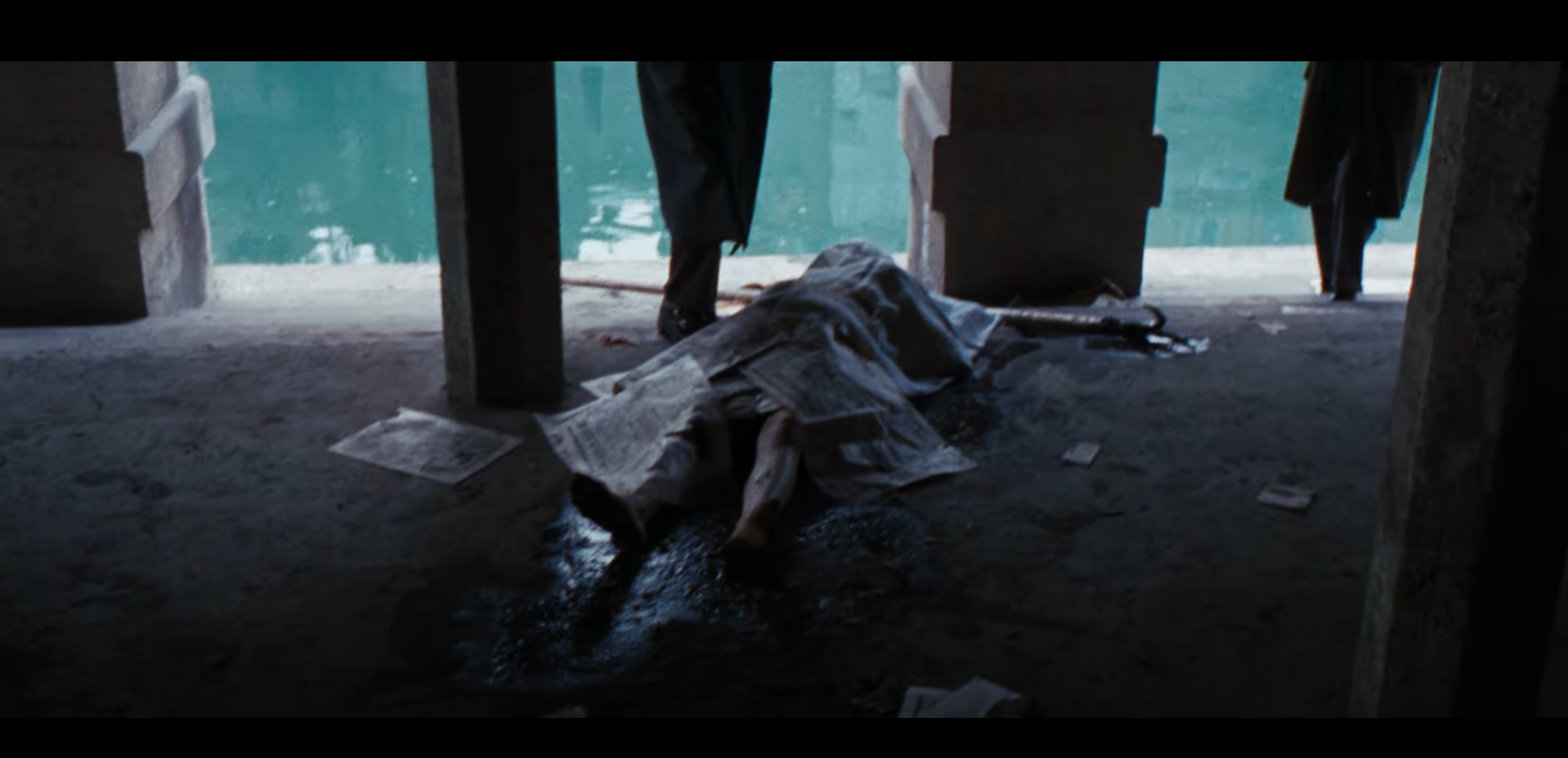
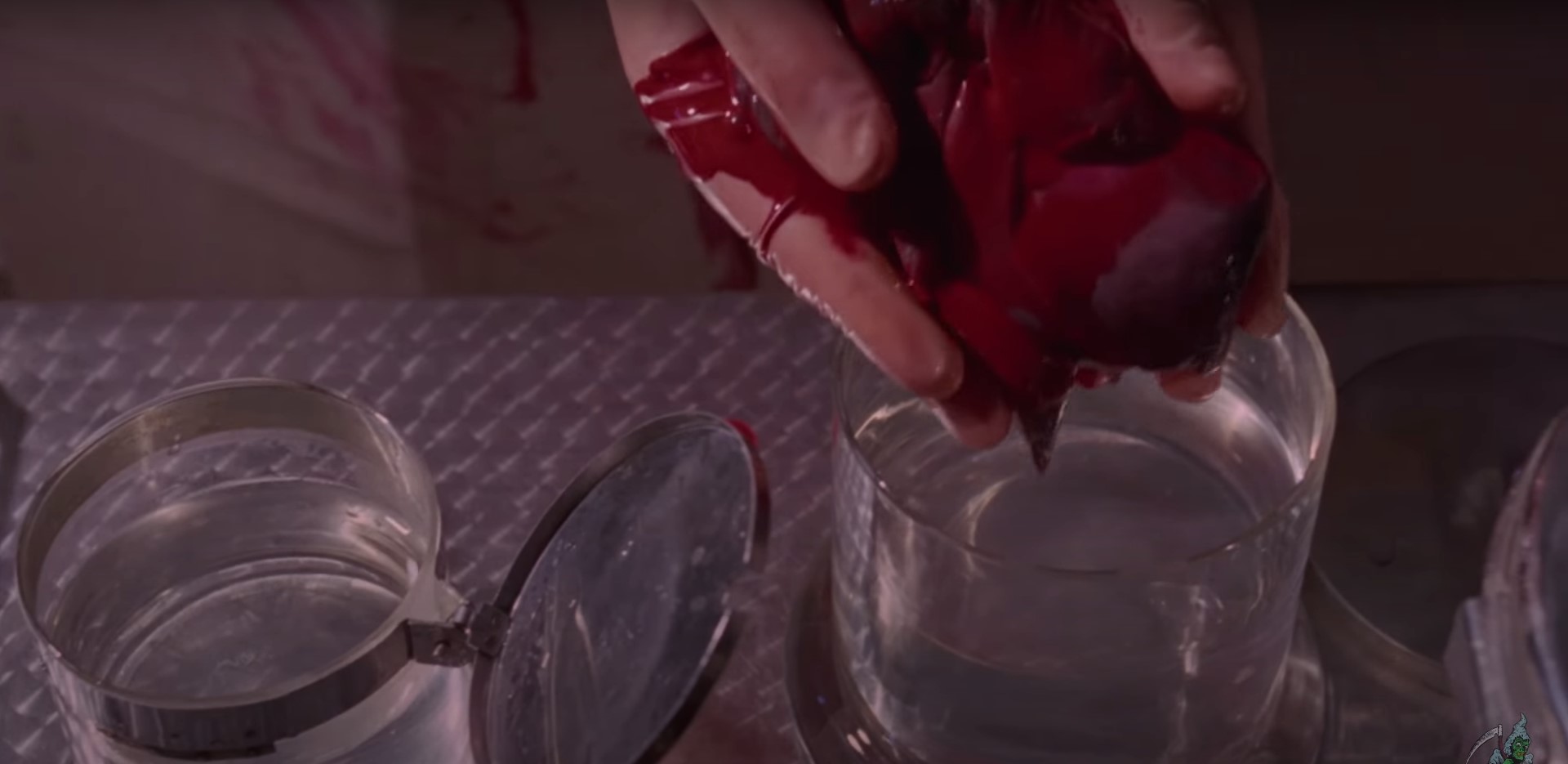
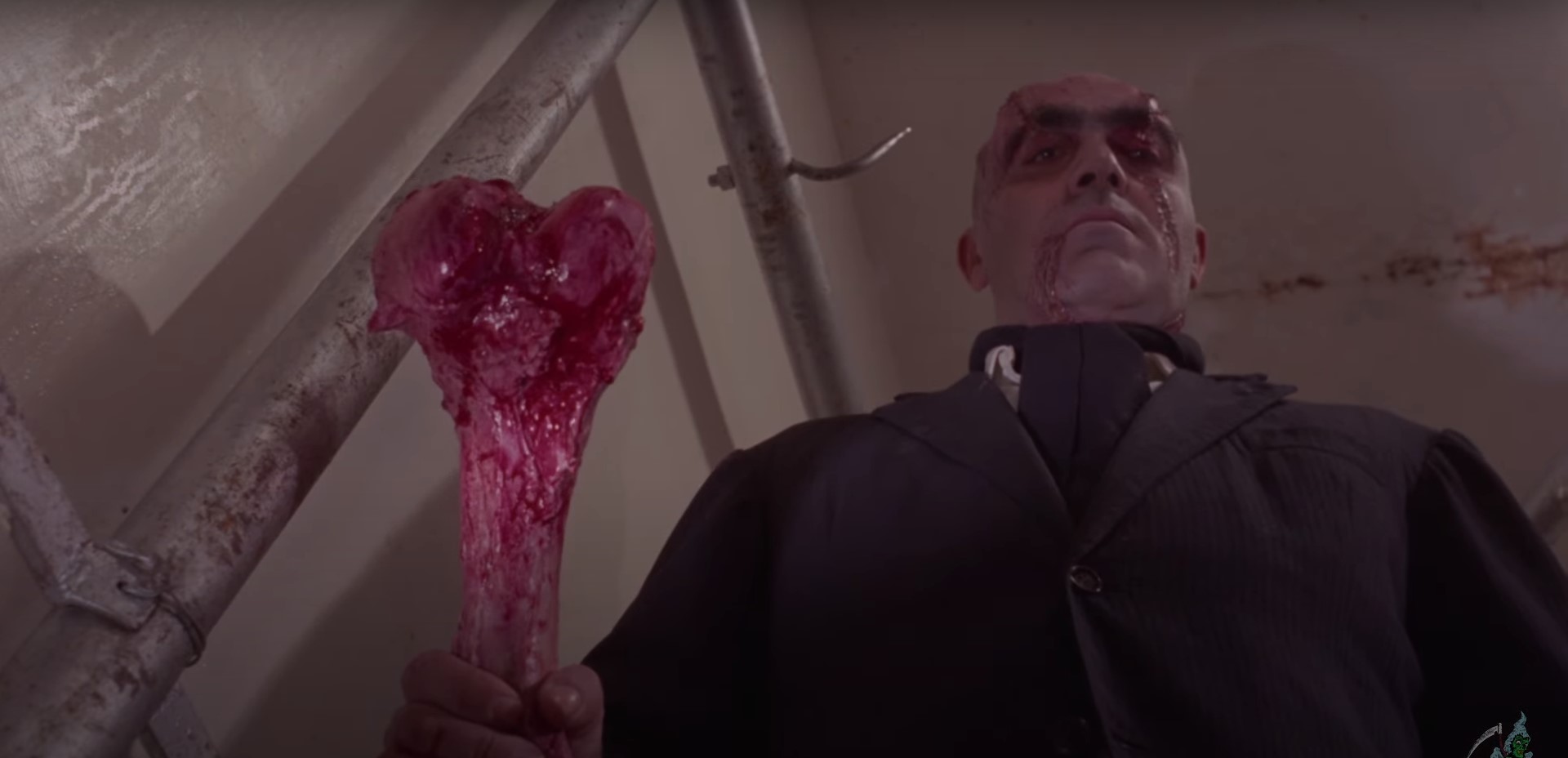
At a renowned German hospital, Professor Schwarz has pioneered a new serum that has proven animal-testing results on stopping or reducing the process of organ transplant rejection.  Also, at the same hospital in another wing, a disgraced surgeon, now a posthumous examiner, named Dr. Otto Frankenstein toils away in the morgue, dismembering bodies and piecing together the limbs and organs into a new being he has named Mosiac.  The scarred and lumbering monster has an increase sexual libido and is always in pain from organ rejection, driving him to sexually assault and kill women in the shadows.  Frankenstein steals his colleague’s only batch of serum that could have saved reporter Karl Schein’s ill sister from organ failure.  Now, Karl is on the hunt for the thief along with hot headed police Inspector Schneider that have pieced together a connection between the stolen serum and the grisly deaths of young women. 

Straight from the pages of Mary Shelley’s timeless book, the Frankenstein monster was born out of mad science, or rather the fear of science gone too far, and the deep shadows of Gothic romanticism and tragedy.  The Italian took the creature and patchworked a new take on the reborn monster giving life from expired flesh and jolts of electricity.  Frankenstein took shape as a caricature, a wildly exaggerated shell of the original exterior with an increase sexual appetite and murderous rage that shifts the story from the conflictions of mad scientist to solely the exploits of his mad creation.  That’s what is Frankenstein and his creature succumb to in the 1972 Mario Mancini film “Frankenstein ’80.”  Also known by other various titles such as “Midnight Horror,” “Frankenstein 2000,” and “Mosaic,” the short stinted cinematographer, whose works include “French Sex Murders” and “Vengeance is My Forgiveness,” tackles his own directorial from a co-written treatment penned with Ferdinando De Leone.  M.G.D. Film banners as production company with Benedetto Graziani and Renato Romano (“Seven Blood-Stained Orchids”) producing the sewn-skin and flesh-exposed feature with a concupiscent creature. 

“Frankenstein ‘80” is full of colorful characters that clash literally and figuratively on screen with grandiose personalities that seek to topple over another.  The only normie of the bunch the truth-seeking reporter Karl Schein, played by British actor John Richardson (“Black Sunday,” “Torso”), in the aftermath of a criminal act and tragedy when miracle serum vanishes and his sister (Gaby Veruksy) dies on the operating room table due to potentially her unnecessary organ failure.  Bearing a lookalike tinge of schlock genre director Jess Franco, Roberto Fizz stiffens up to the be academic and scientific creator of the serum in Prof. Schwarz.  His mad science intending to make the world a better place is balanced by Dr. Otto Frankenstein’s sordid abomination and his own self-interest, a wonderfully portentous and arrogantly calm role filled to the brim by the distinguished faced genre veteran and America-born bodybuilder Gordon Mitchell (“Emanuelle, Queen of Sados,” “Malevolence”).  Mitchel doesn’t display his brawniness here as an extinguished gentleman, disgraced surgeon but his unique face with an 1000-yard stare and his tall height made him for a good imposing puppeteer on the brink of losing control of his erratically around and constantly in pain creation Mosaic by Xiro Papas.  With his behavior performance, Papas blended Golden Age horror with new wave violence by being voiceless face of stoic fear who would eventually ravage his beautiful prey.   With all these characters creating havoc and abnormalities, it’s Inspector Schneider that causes the most distress with a cocaine level high performance Renato Romano on the verge of stroking out with him and his men’s own incompetence sleuthing in solving the murder cases.  The diverse nationality cast rounds out with Dalila Di Lazzaro (“Phenomena”) as Karl’s love interest and adopted niece of Dr. Frankenstein, Inspector’s two leading investigators in Fulvio Mingozzi (“Deep Red”) and Enrico Rossi, Lemmy Carson as the suspicious male nurse, and Dada Gallotti (“The Sinful Nuns of Saint Valentine”) as the Bucher with hardly any clothes underneath the butcher frock.

Frankenstein of the future!  Or, at least, that was the idea for the 1972 released sleazy-schlocker to be conceived as “Frankenstein ’80,” a new generational and bastardized terror with speckles of the original Mary Shelley vision stuffed with horrid-sex aggression and grim depravity.  Blindly held together by it’s key actors, “Frankenstein ‘80” has a pervasive perversity against the unrationalized cowboy science.  We never know just why this particular Dr. Frankenstein is so keen on creating a jerry-rigged juggernaut of mixed-bag blood types and assorted body parts.  Is it because his discredited shame has driven him delusional and mad?  Or is Dr. Frankenstein hellbent on showing the world what abnormal science can accomplish?  Jolting electricity and hunchback henchmen are taken out of the equation altogether in his water version of Frankenstein; we don’t even know where Dr. Frankenstein’s disasterpiece is source from or how the body was brought to be assembled, dismantled, and assembled again over and over as there’s no mention of grave robbery or is just a slabbed soul who fell in the unfortunate hands of a crazed surgical practitioner.  “Frankenstein ‘80’s” has plenty of mania, sleaze, and misshapen aspects that not only include it’s scared and fragmentally pieced together monster that promote Italian ostentation inside the country’s own modern genre elements rather than originating English Gothicism. 

“Frankenstein ‘80” rises alive for the first time North American Blu-ray home video release from Cauldron Films.  The high-definition, 1080p, AVC encoded Blu-ray is pulled from a 35mm print restoration and is presented in a widescreen 1.85:1 aspect ratio.  Stored amply on a BD50, the original print is elevated to a rich color palette that buoys, never dipping below the natural appearing skin tones, compromising the vivid warm grading, or shying away from the inky black voids.  There are spot horizontal scratches that are transparently faint and infrequent.  The release comes with two audio ADR-produced options, an English DTS-HD 2.0 Master Audio and an Italian DTS-HD 2.0 Master Audio.  The ADR razes the spatial depth a bit but the overall general clarity and prominence is excellent albeit insubstantially faint hissing.  “Frankenstein ‘80” has a nationality diverse cast between the Italian majority and peppered with British and American principals and you’ll see the dub synch better with the native English or Italian proficient depending on the audio track selected.  Range concentrates around the immediate surroundings, limiting the environment to virtually around just the character actions. English subtitles and English SDH are optionally available. Special features include Dalila Forever, an Italian audio recorded message from actress Dalila Di Lazzaro over a still gallery of what is essentially her life as she reminisces about her career, Little Frankensteins, a featurette that pays homage through Italian audio host Domenico Monetti on the assortment of Italian-made Frankensteins that stray from the original story and into a culture phenomenon through a time warp of Italian entries surrounding the creature, and last is an English audio commentary by film historian Heather Drain. The Cauldron Films’ clear-cased Blu-ray displays new art on the front cover, or from at least I can tell without digging up only a handful of one sheets and original posters., with the reverse providing the art from previous DVD versions. Beautifully blood red macabre and psychotronic, both colorfully cover contrasted cover illustrations are a testament to the film’s era and living up what’s on the encoded disc inside, pressed in pure black with a dripping blood red title. The region free Blu-ray comes with an 88-mintue, uncensored final product. Forget what you already know of the stitched together flat-top with pale skin and towering stature of resurrection and death after life as “Frankenstein ’80” embarks on savagery pieced together in the natural stink of science’s putrid decay with an unnatural libido leap into the arms of the unwilling, unsuspecting woman.

“Frankenstein ’80” on Blu-ray from Cauldron Films!