To All the EVIL Devil Horns Out There “Death to Metal” reviewed! (Wild Eye Releasing / Blu-ray)

“Death To Metal” available on a Collector’s Edition Bluray!

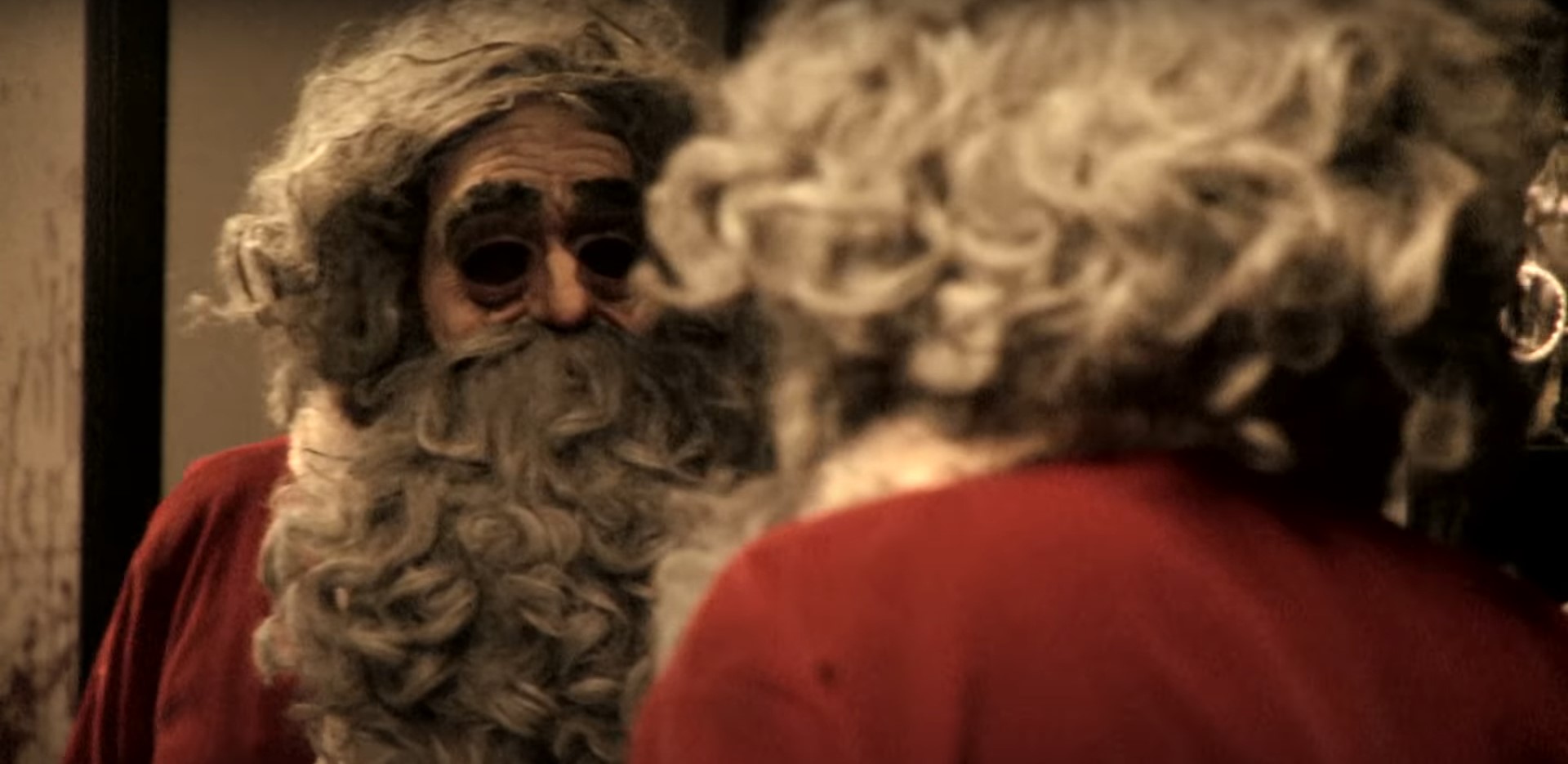
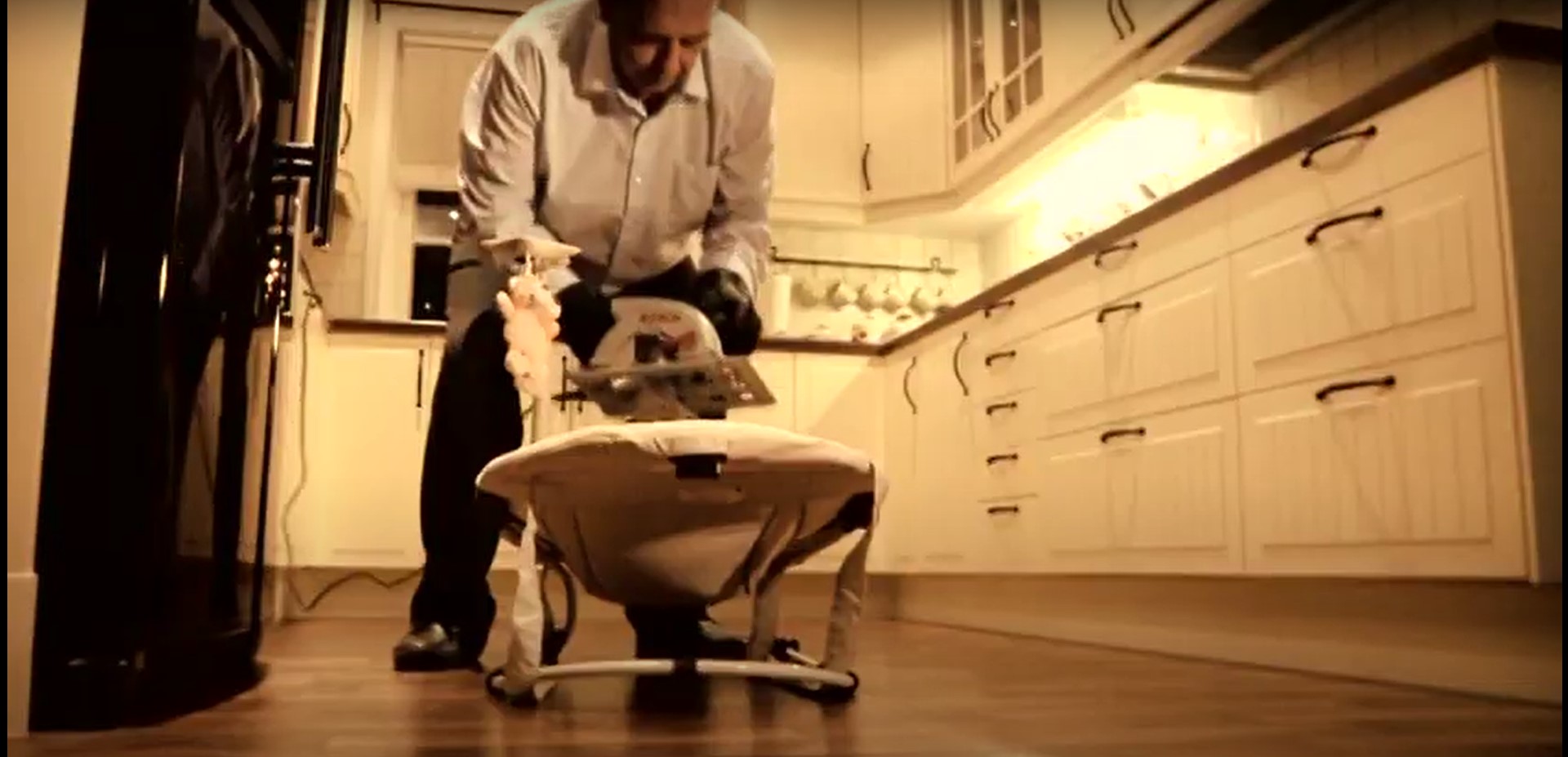
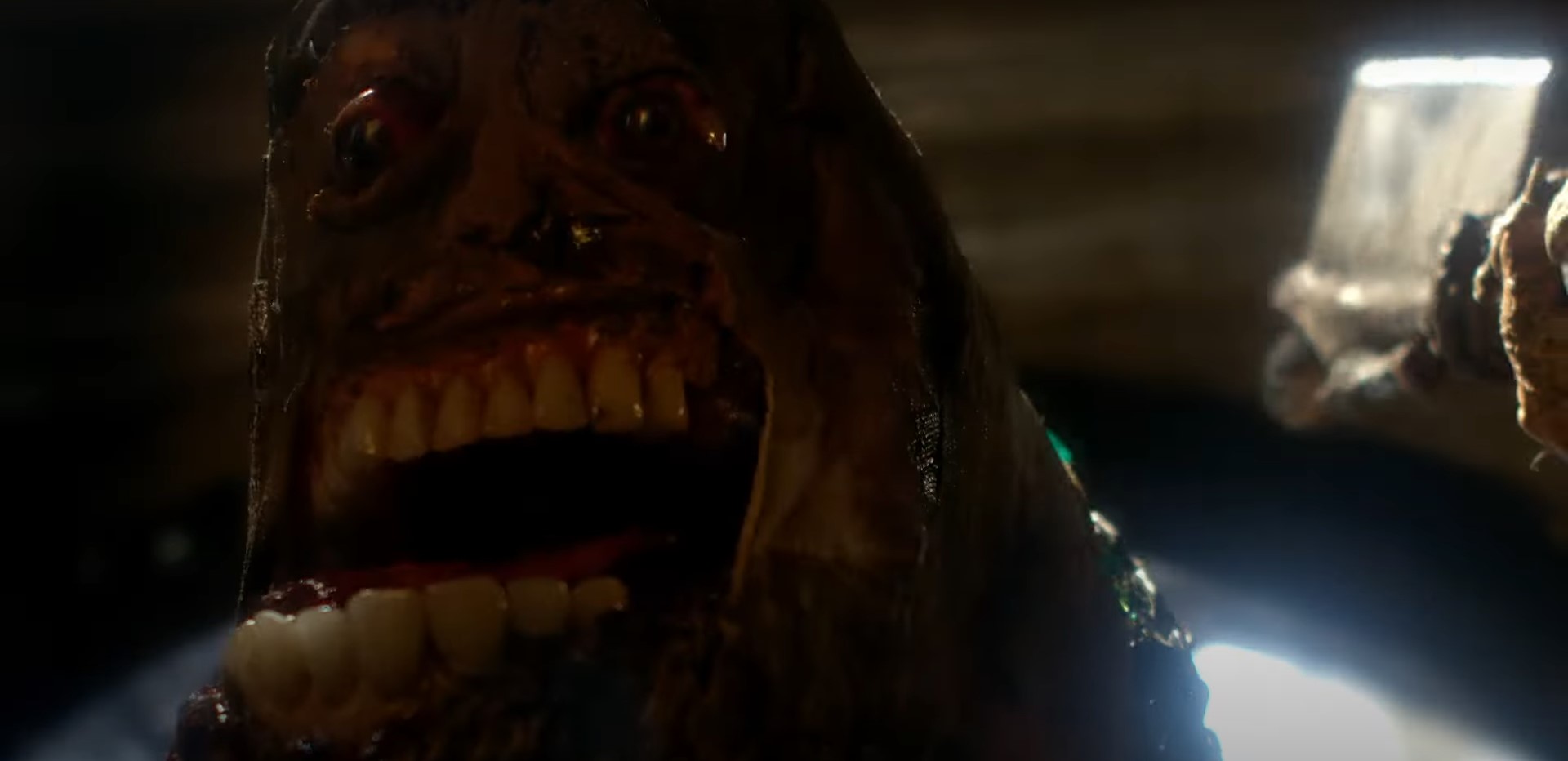
Already with the traumatic distaste for heavy metal music, the fire and brimstone preacher, Father Milton Kilborne, addresses his congregation with a bigotry homily aimed to categorize not only heavy metal music as a sin, but also homosexuality, internet porn, and other indulging vices. When Father Kilborne is suspended by the church’s head priest, the zealous Kilborne drives himself into a stuporous accident that upends his car into a toxic waste dumping ground. The accident mutates the ardent Father, still blinded by God’s Wrath rather than his Mercy, into a superhuman and disfigured killing machine who stumbles into one of the biggest heavy metal concerts of the year – The Holy Saturday Metal Massacre. Metal bands and metalheads unite for a headbanging, guitar-rifting, super loud four-show rockfest and what was supposed to be the best part of metalhead Zane’s abysmal day has now turned into a bloodbath as he and his friend Mariah are caught in the middle of Father Kilborne’s devout judgement and faith cleansing.

The tritonic Devil’s music needs not to fear God but fear his misguided instrument of destruction! “Death to Metal” is the 2019 Metalsploitation mutant slasher from written-and-directed by Tim Connery (“Black Web”) and cowritten by Kevin Koppes. What began in the Summer of 2016 under the working title of “Good Friday,” an Indiegogo fundraising campaign was launched with a goal of $50k and with a modest turnout of supports, “Good Friday” received more than half its goal, plus additional private contributions that provided enough moola pull off the campy thrasher-slasher filmed in mostly in New Vienna and Dubuque, Iowa with latter scenes of the downtown Dubuque area and in the historic, post-industrial converted, cultural arts and music venue building appropriately called the Smokestack because of its monolithic warehouse smoke funneling circle chimney. Double Dubuque Films in association with DreamCatcher Productions presents the Smoking Section Films’ “Death to Metal,” a holier-than-thou slasher produced by Connery and Samantha Cihak and associate producer Gary Greco with executive producers Noel Kapp, Trent Lind, Joe Scherrman, and Charlie and Lara Lind, most of all of whom were involved previously in Connery’s freshman feature “Black Web.”

“Death to Metal’s” parallel story follows two unfortunate souls connected by church and who are having the worst day of their lives. For Father Kilborne, his stubborn, one-sided dogmatism lands him in hot water with the residing church priest. Going through the stages of grief having lost the right to perform a holy sacrament and been punished for what he wholeheartedly believes, Kilborne bends the word of God while going on a bender that sends him hurling into a monstrous “Toxic Avenger” fate that isn’t as anti-heroic and doesn’t come with a melee mop but comes with a sharp edged broken wooden cross. Andrew Jessop’s enthusiastic performance glorifies the evilly enthusiastic Father Kilborne’s human form while Trent Johnson takes the lumbering approach of the mutated, Knights of the Templar version of the fanatical Father. As Kilborne becomes a toxic terror, churchgoing Zane has just been dumped by his band Withered Christ and girlfriend. Played by Alex Stein, Zane ventures to self loathe in the comfort on longtime friend Mariah (Grace Melon). Stein’s the unlikely head banger with a quietly spoken and easygoing demeanor but can be a sleeper metalhead with vehemence for the genre, candidly naming off bands and their technical attributes with excitement in their eyes is a telltale sign of fan no matter what they’re wearing, how they look, or how docile they act. “Death to Metal” fills the mosh pit crowd of characters with supporting bit performances from Charlie Lind, Steve Thompson, Sean Weis, Dean Wellman, Neal Kapp, and Dan Flannery.

Being not a tremendous metal fan, I find that metalsploitation is not terribly hard to love. Horror and metal have gone hand-and-hand for decades since the 1980s with films such as “Hard Rock Zombies” and “Trick or Treat” but has soared under the radar for much of that time and only recently has horror and metal has found some commercial success in the indie market with hits “Deathgasm,” “Lords of Chaos,” and I would say “Psycho Goreman” with its Gwar inspired grotesque costuming. “Death to Metal” is another entry that has had a rough go of breaking the surface with a lack of financial supported marketing, yet the Tim Connery film is a campy crusade to highlight and farce religious sectarianism as well touch upon the hypocrisy of band politics. In a modest showing of practical special effects, first timers Trent Johnson and Brad Vondra bang out simple, yet credible death metal death strokes of broken bottle nipples, a bleach chug, and a metal show circumcision abortion. In contrast, Vondra and Johnson show very little of their bloody work against a slather of offscreen kills that coat “Death to Metal’s” more gritty-grungy veneer and its metacognitive reason for being, to be a sweaty mosh pit of knavish metal and horror. Conner and Jackson Cooper Gango reteam from “Black Web” to not only providing a dingy and smokey atmospherics and stylize with stark blue filter gels but they also make up where special effects lack with impressive camera work with subtle zooms to narrow the center focus, crane shots to make visualize the body-high carnage, and a stationary car-cam next to the wheel well to enrich and stretch “Death to Metal’s” humble budget. One of the best parts of “Death to Metal” is the opening prologue of Romans 1:18, speaking to the wrath of God being revealed against all ungodly and unrighteous men, and then quick cuts to title track “Fuck Your God” in big, bold red lettering.

Compiled of horror and metal, with actual metal bands such as Telekinetic Yeti and Mutilated by Zombies, “Death to Metal” arrives on a collector’s edition Blu-ray from Wild Eye Releasing. The AVC Encoded BD50 presents the film in high definition, 1080p resolution with a widescreen 1.85:1 aspect ratio. Not the most tapered image for an indie scaled, indie market distributor with banding issues at every dark-toned turn. Textures on the skin, liquids, and clothing do have a tactile decking that can’t be ignored, especially on the higher contrast focus to create tension-laden semi-opaque shadows. The release comes with two English audio mixes, a Dolby Digital 5.1 surround sound and a stereo 2.0. Honestly, I had difficulty distinguishing between the two mixes flipping back-and-forth. Both tracks appear to be identical in a quizzical effort to not make the metal music stand out in a more than dual channel output. Dialogue renders over fine, clear and clean with a nice balance between the club patron and club skirmishing chaotic ambience. The soundtrack’s a phenomenal plethora of metal band sampling with music from Mutilated by Zombies, Exmortus, Boar, Driftless Sisters, Inquiring Blood, Netherworld, Monolithe, and The Rising Plague. Optional English subtitles are also available. Special features include raw Snapchat behind-the-scenes footage, music video for the fictitious metal band Grandma Incinerator’s End of the Elderly, Indigogo fundraising videos back when the film was under the working title “Good Friday” with dark humored skits and pleas for funding, a behind-the-scenes photo gallery, the official “Death to Metal” drinking game rules, and Wild Eye Releasing trailers. The physical features include a clear Blu-ray snapper case with an illustrated father Kilborne gracing the dual sided cover art. The reverse side displays an iconic scene from the film enveloping a mini poster in the Blu’s insert. There’s also a more grotesque rendering of Father Kilborne and one unlucky impaled metalhead screaming in agony illustrated on the cardboard slipcover. “Death to Metal” comes unrated, region free, and has a runtime of 80 minutes. A slaying entry into the niche metalsploitation subgenre, “Death to Metal” goes hardcore with deathcore when church and metal clash!

“Death To Metal” available on a Collector’s Edition Bluray!

A Stop-Motion EVILscape of Totalitarian Hell! “Mad God” reviewed! (Acorn Media International / Blu-ray)

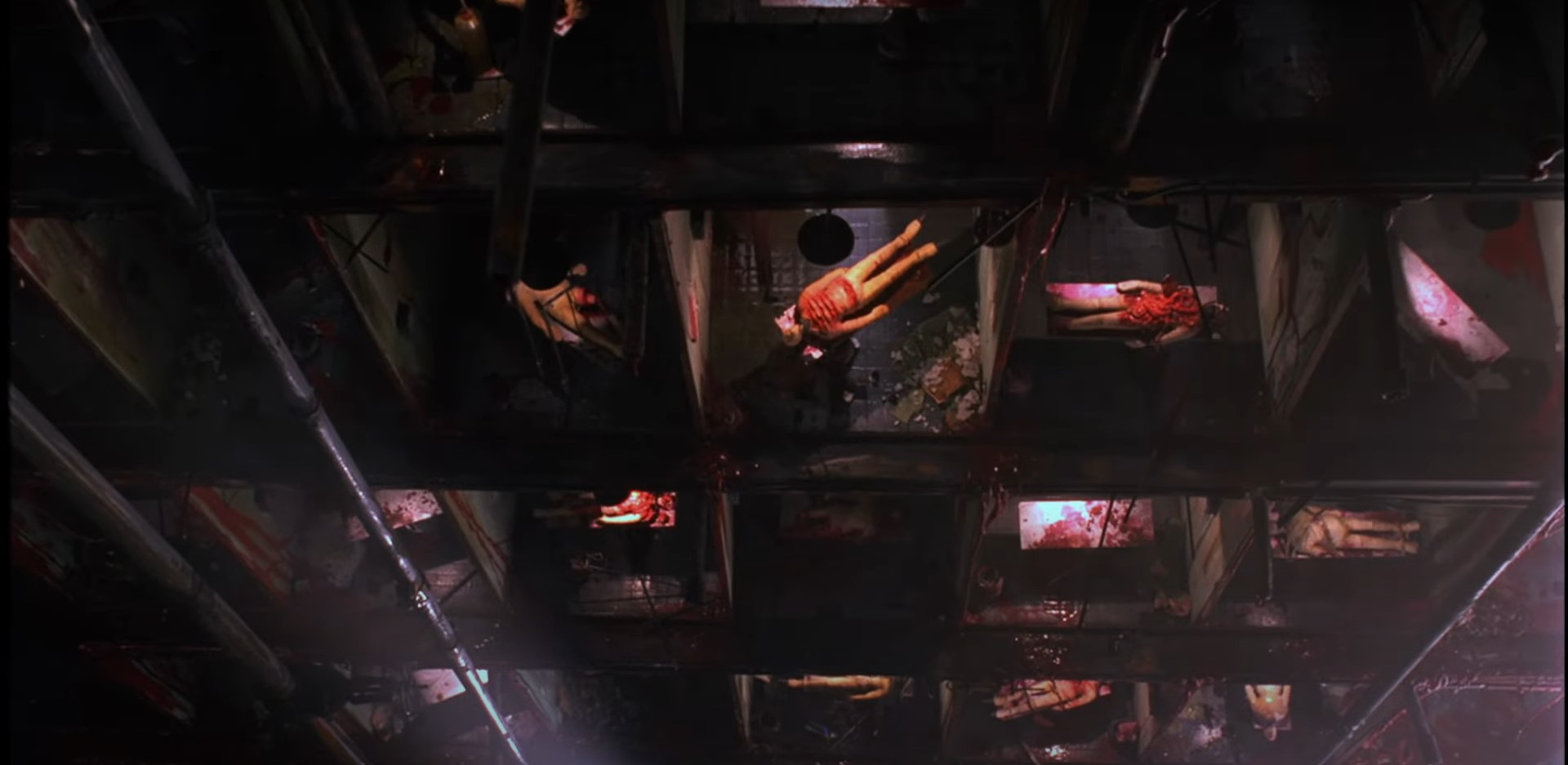
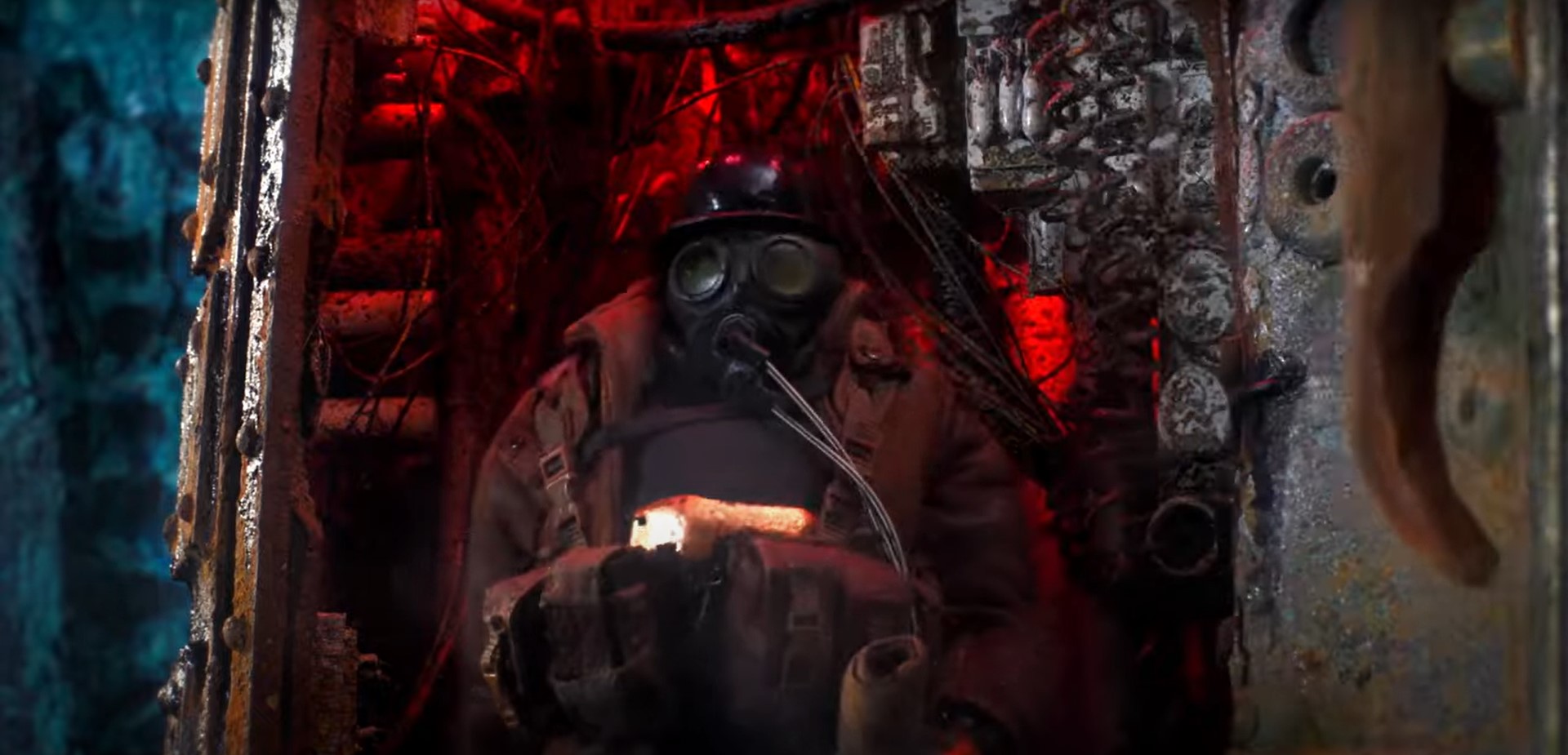
Descending from above into the depths of grotesque terror and suffering, The Assassin steps out of the drop pod with a gas mask, industrial armor, a suitcase, and a crumbling map.  Bearing witness to the surrounding horrors – cruel experimentations, enslaved beasts, tortured manufactured slave laborers, dog-eat-dog atrocities – The Assassin sallies forth, descending deeper into the primordial pit.  The missioned at hand is to set an explosive charge that will eradicate out the ruinous, oppressive filth that aims to corrupt the everything, but there the darkness won’t be so easily wiped away and The Assassin must stay in the shadows and out of sight or else become a tortured fixture in the fray. 

“Mad God?”  More like mad genius!  Phil Tippett’s 34-year, stop-motion, pet-project “Mad God” is the purest Hell I’ve ever seen.  Tippet, famed stop-motion and puppeteer effects artist responsible for the iconic visual effects and stop motion work in fan films such as the original “Star Wars” saga and the “Robocop” franchise as well as cult favorites “Howard the Duck,” “Piranha” and “House II:  The Second Story,” started “Mad God” in 1987 that become more of an ambitious project than originally thought and once the 1993 saw a computer generated effects revolution with a little prehistoric dino-disaster film called “Jurassic Park”, a film Tippett also did work on as dinosaur movement consulting supervisor because of his expertise on the short “Prehistoric Beasts,” the gifted animator had shelved “Mad God” for about 20 years with the though a newer, shiner, computer-driven animation would be the next best thing studios would ardently desire. This two-decade span gave Tippett time to outline objectives and really expand upon ideas of how “Mad God” should look and feel when conveyed. Tippett co-produces the film with Jack Morrissey under Tippett Studios and presented by IFC Midnight and AMC’s Shudder.

Just because “Mad God” is dialogue-less doesn’t make the “Mad God” voiceless. All around, in every scene, is a disturbing commentary or an unhinged metaphor bred mostly out of the animatable inanimate, but there are some live action performances weaved into the mad tapestry of monstrous titans and despot of cruelty. The most clearly discernible face of the lot comes from a director, “Repo Man” and “Sid and Nancy” director Alex Cox to be more exact. Cox plays the long nailed and regime-driven “Last Man,” representing divine leadership of a modest, dieselpunk heaven above a more organic and grotesque hell-type world. Only on screen for perhaps a total of 5-to-10 minutes, Cox grunts and gestures with precision articulation to give off a fair and just ruler impression. Niketa Roman plays the next real person to have some substantial screen time. Less of an actress and more of an animator by trade, with credits including “Blade II,” “Jurassic World,” and “Star Wars: Episode IX – The Rise of Skywalker,” Roman finds an expressive talent in her striking, heavily made-up eyes overtop a surgical mask and gown when whisking away one of the Assassin’s souls to be studied and experimented on by a broodingly ethereal entity. Other micro-performances include minor roles of tortured monkeys, various iron-cladded Assassins, witches, and gnomes from Satish Ratakonda, Harper Gibbons, Arnie Hain, David Laur, Chris Morley, Anthony Ruivivar, Tucker Gibbons, Tom Gibbons, Hans Brekke, and Jake Freytag.

“Mad God’s” possibilities and interpretations are endless. Phil Tippett pulls from a motley of inspiration that includes, but is not limited to the fantastical, sometimes hellish, paintings of Hieronymus Bosch, the wacky, often gonzo animation of Tex Avery, the stop-motion titans of Nathan Juran’s “The 7 Voyages of Sinbad, and Dante’s Inferno. The mind is a deranged and wonderful creator of the macabre and of the aberrant and as a receiving device, the mind can also, if opened up enough, accept such visceral visuals of bowel fluids being jettisoned out by electric shock and into the mouth of an organic machine that manufactures fibrous, lumbering humanoids for slave labor. Like lemmings in a way, these exploited shadows of human beings will succumb under their own demise or at the gnarled and unforgiving hands of their master’s gargoyleish work-whippers. “Mad God’s” eye for detail is greatly disturbing to see cities in monolithic cities and cultures in ruins, the composite depth between foreground and background action in one scene reminds me a lot of older works like “The Neverending Story” or “Clash of the Titans” that create a vast scale with smaller objects, and the playful irony of a nightmare netherworld being commanded over by a baby’s babble doesn’t nearly seem to a stretch from the truth. As the multiple Assassins trek through the chaos and the insanity, an overwhelming sense of life is meaningless scores the landscape as there isn’t an ounce of compassion or empathy to be had or displayed for any of the malformed creatures and wretched humans. A laborer is crushed by a stone – no biggie. A cute and cuddle animal is attacked and whisked away for food storage – all in the day of cruelty. A man is stripped of his armored gear, injected with a mysterious substance, and prepped for exploratory surgery – all for show in front of a live clapping and cheering audience. The only compassion I can make sense is the Assassin’s mission to blow up this God-forsaken world of eternal suffering to restart the heart. Madness grinds bones, fillets spirits, and crushes souls in Phil Tippet’s Godless underworld and can haunt you even while you’re awake.

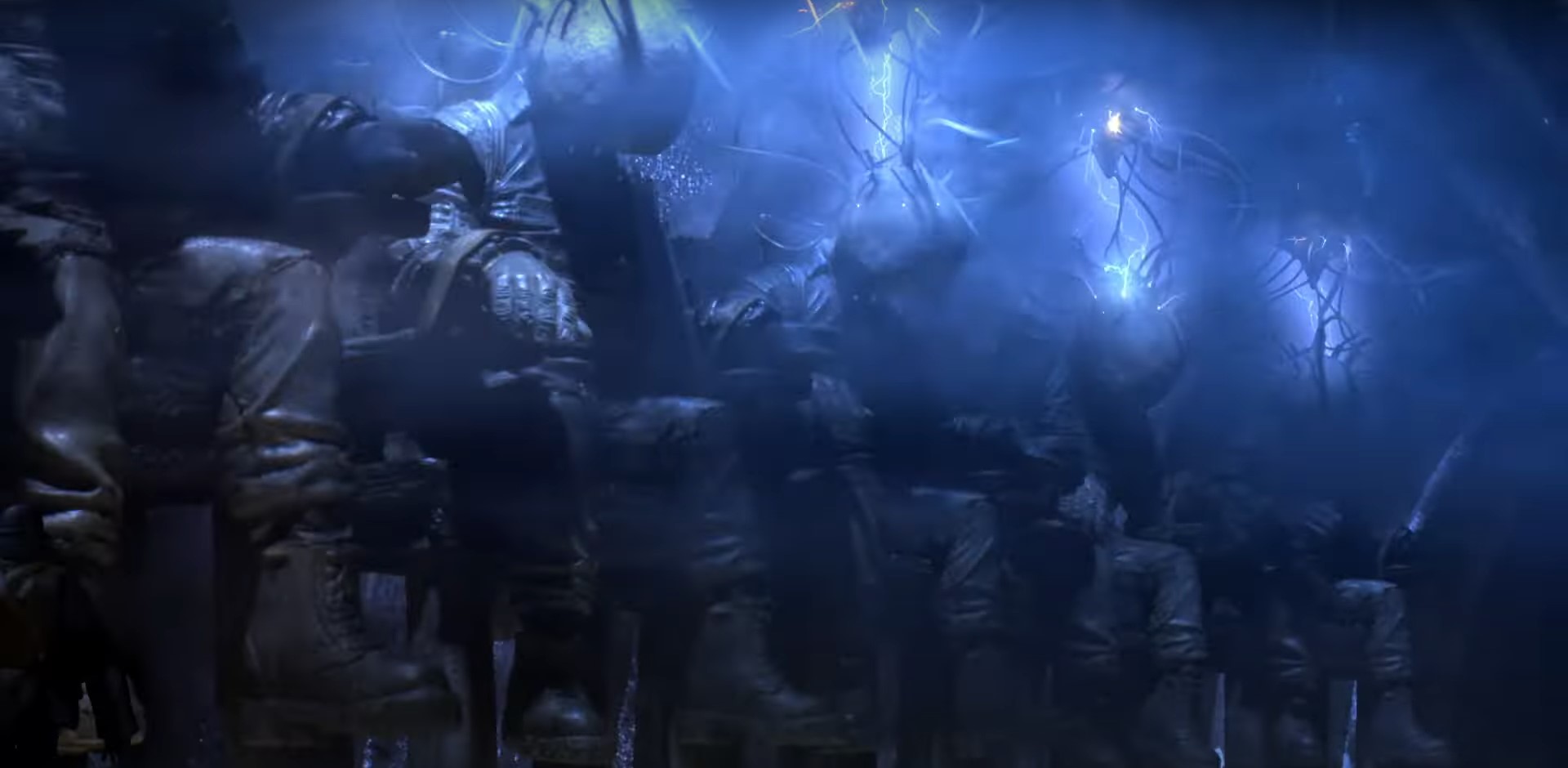
A surreal stop-motion wonder and excruciation, “Mad God” brings all the horrors of the subconscious mind to the surface with a high-definition, 1080p Blu-ray. The region 2, PAL encoded release from UK distributor Acorn Media International presents Tippet’s tour de force in a widescreen 1.78:1 aspect ratio and the image is purposefully varied to exhibit different strokes of craft as students would assist Tippet with contrastive topographies to carve out an apocalypse-riddled world that’s in a state of a violet retrogression. Tippet and Tippet Studio visual effects artist, Chris Morley, pivot to “Mad God’s” cinematography appearance with brooding, darker tones that illuminate and are erratically sparked with warm neon glows or brilliant voltage streaming through highly conductive bodies. Some earlier scenes from the late 80’s have natural grain from the 35mm stock and then later, more recent scenes have a cleaner, sleeker look with the digital recording. The Dolby Digital 5.1 surround sound mix has an all-embracing range, mostly with sudden and alarming blazons of guttural roars, unnerving baby babble, elongated zaps and shocks, and the indistinct yips and yaps of a mad world, that sustains on a line of being lesser than crisp, which might be contributed to the inexact capture of depth as sometimes all sounds casts like from inside the reverberations of a fishbowl. Descriptive SDH subtitles are available. Bonus features include audio commentary with Phil Tippett and “Pan’s Labyrinth’s” Guillermo del Toro, cast & crew commentary, an interview with Phil Tippett, “Mad God’s” various painter, cartoonist, animator, and psychology inspirations, the making-of “Mad God,” Maya Tippett’s Worse than the Demon – Phil Tippet’s daughter’s 12-minute thesis documentary of her father’s 34-year passion project journey, Academy of Art & “Mad God,” a behind-the-scenes montage, and a behind-the-scenes photo gallery. “Mad God” has a runtime of 84 minutes and is UK certified 18 for strong violence and gore. A motion picture diorama of Phil Tippett’s neoteric psyche, “Mad God” is wrath wrapped in heart and soul, two descriptors not topmost on the surface but are meticulously integrated into every frame of pain, suffering, and despair.

Channeling the EVIL from the EVIL DEAD! “Slaughter Day” reviewed! (Visual Vengeance / Blu-ray)

SOV “Slaughter Day” on Bluray for the First Time Ever!

A pair of friends who run a small construction company drive up to an isolated cabin project in the outskirt nooks of Hawaii.  When they arrived, they encounter disgruntled employee John Jones who dabbles in the dark occult.  Having murdered already one of their construction crew members, Jones invokes the evil from the book of the dead, the Necronomicon, to bestow upon himself unnatural powers to seek revenge for years of abuse on the job.  Enslaving two other members of the construction Crew, Jones relentless goes after his former employers who must fight tooth and nail for every minute of their lives.  The fight stretches across the island and spills into the streets, abandoned factories, tropical brush, and even on the side of a mountain. 

“The Evil Dead” meets “Double Dragon!”  A fierce bareknuckle fight against a malevolently possessed construction crew is the not-stop action and gore premise of the Brent Cousins’ “Slaughter Day.”  The heavily influenced Sam Rain and “The Evil Dead” 1991 shot-on-video occult survival horror is co-written by Brent’s twin brother, Blake Cousins.  The twins’ filmic debut concept where a maniacal occult enthusiast goes on the offensive with his vindictive side by conducting dark, Necronomicon evil against the two construction supervisors is pieced together, scene-by-scene, from the various shorts created when they were adolescents.  The four short films from their inspired youth were revisited and remade into a full length feature film financed by a nearly a next-to-nothing zilch budget, but with more than a little can-do attitude, a group of close friends and family, and a willingness to drench the cast in splatter bags fill of fake blood, Brent and Blake’s balls-to-the-wall, commercial grade equipment schlocker never lets up and pays endearment to the legendary video nasties that have stimulated their need for tangible blood-shedding effects.  “Slaughter Day” is a self-funded labor of love under the Cousins Brothers Productions and is made in one of the more tropical places on Earth, the Big Island of Hawai’i, with a few scenes shot in the town of Honokaa.

Aside from being one of the two writers, Blake Cousins jumps in the front seat to become one of the hapless heroes in the suddenly twisted, Hellish ride of that classic story of good versus evil. Blake embodies one of the few aspects that makes the viewing of “Slaughter Day” so infectiously exciting with a high intensity level somewhere around near redline critical. The intensity spreads to each and every actor in front of the camera and with Blake’s breakneck pacing as the film’s post-production editor, there’s a side-scrolling, beat’em-up video game quality about the whole run through. The acting isn’t terribly good with haywire yelling and screaming from start-to finish with a lack of professional training that gives way to under developing a story, but story be damned, the brother Cousins ambitiously puts caution to the wind by balancing out the acidic acting with exceptional camera work that occasionally would involve hazardous to their own health amateur stunt work. The unharnessed and unpadded fight sequence in the back of the pickup truck gets mad props in succeeding instead of squashing someone’s head under the tire. If everyone lives and you get the shot, it’s a win, right? The fight sequences themselves are extensive, as I aforesaid, the breadth of the short feature is like experience a live action “Streets of Rage 2,” and they have the smack of decent choreography with near miss blows and head whips. Some of the bigger fake hits lack sterling results but are nonetheless entertaining and expected. “Slaughter Day’s” cast is made up of essentially a closeknit group of friends with performances from Sam Bluestone, Dave Anderson, John Lambert, Kulaka Branco, Jeremy Couchiardi, Joe Ross, and Lincoln Ross who all have never again seen the gaffer lights of another film production.

“Slaughter Day” has many flaws: bad acting, continuity mistakes, not much of a plot, etc. While honest attempst were made to rectify a handful of those sore points, those very same imperfections are what make “Slaughter Day” ironically perfect in the SOV canon. Some of the gags land relatively smooth, such as being John Jones being bent backwards in half and sucked into a copy of the pop media cultural influencing H.R. Giger’s Necronomicon book, and others kind of flounder in the lukewarm stew of unskilled technical know-hows. Yet, I do firmly believe the brothers achieved a memorable salute to Sam Raimi’s breakthrough 1981 video nasty, “The Evil Dead” in pulling more so the macabre-isms then comedic slapstick elements of the “3 Stooges.” Brent and Blake obviously understood what they wanted to see and how much familiar content they wanted to rework to open the recesses of our memory banks to access and recall “The Evil Dead” playbook, but then the flyby the seat of their pants filmmakers take their committed vision farther by adding certifiably crazy stunts and be big and bloody as all bloody hell! Severed limbs, decapitations, exploding shotgun bursts, and impalings are difficult for even the most seasoned effects artist, taking sometimes years to master a simple effect to perfection. With “Slaughter Day,” the brothers are unafraid to take risks, something the filmmakers proved with audacious stunts, by rendering a practical effect inclined storyboard or script thought to the screen tactic and owned it with a pinch of panache pizzazz!

“Slaughter Day” might be release number five for Visual Vengeance but is clearly the Wild Eye Releasing cult-horror SOV sublabel’s second adulation of “The Evil Dead,” following “Bloody Muscle Body Builder in Hell.” The rough-and-ready S-VHS quality, presented in a full screen 1.33:1 from the original standard definition master tapes, can take on a grueling affect with a below par outcome. Tape lacks the proper color resolutions and that displays here immensely with full of deep and warm purples, reds, and yellows that you’d think the brothers were using gels to tint the picture. Tape wears, static interference, tracking lines… you name it, ‘Slaughter Day” visually had it. Delineation and details are deduced to a softer, overlapping ghost image that barely yokes together resolution pertinent pixels. Like always, Visual Vengeance’s disclaimer warns of the consumer grade equipment issues. These issues extend also into the English Stereo audio mix with a consciously underlay of static shushing, lo-fi dialogue recording, and zero depth and range to add more fuel to the “Slaughter Day’s” chaotic fire. Perhaps that’s why the dialogue is terribly rampant with the hope to invigorate and illicit engrossing captivation. The video game punch throw sound bites are a good touch and a innovative way to keep with the fighting game motif. The special features include a new audio commentary by directors Brent and Blake Cousins, a new audio commentary with Visual Vengeance’s own Matt Desiderio and Rob Hauschild, a quickly paced new interview with the Cousins Brothers regarding the genesis of “Slaughter Day” and they’re excitement about the new Blu-ray release, all four original “Slaughter Day” shorts, an earlier short entitled “Full Metal Platoon,” the “Slaughter Day” theme song, trailers from other Cousins films, such as “Rising Dead,” and the original trailer cut. Physical release features include a mini poster of the Visual Vengeance cover artwork, a three-page colorful essay from long time cinema contributing writer Tony Strauss, retro Visual Vengeance stickers that has graced all the company’s releases so far, a reversible cover art with new artwork as well as the original VHS art, and a cardboard slipcover with a heavily demonic and menacing Thomas “The Dude” Hodge design. The film comes unrated and has a runtime just shy of an hour at 58 minutes. I always get the warm and fuzzies when obscure works of art receive the red-carpet release treatment and “Slaughter Day” is an exemplar of SOV at its best while being innately its technically worst. Lots of ambition, lots of derived creativity, and lots of guts behind and in front of the camera to make a life-long dream of filmmaking come true.

SOV “Slaughter Day” on Bluray for the First Time Ever!

Four Kids to Stop EVIL From Wiping Out The Rest of Mankind. “The Walking Dead: World Beyond” final Season reviewed! (Acorn Media International / Blu-ray)

The last time we saw the four Colony Campus travelers trekking across country, Hope and Huck were helicoptering back to the Civic Republic Military, Iris and Felix find Will to learn their home has been wiped out, Silas sacrifices himself up to the CRM for his friends to get away, and Elton discovers Percy alive but severely injured after uncovering Huck’s deceit.  Separated and deeply rooted into their own difficulties and dilemmas, the long-term goal is to survive and find each other again while unearthing clarity around the CRM’s true top-secret military operations – wiping out neighboring alliance colonies with lethal gas.  Hope reunites with her father to assist in how to quickly eradicate the dead but the advancement in their works comes across CRM immoral hurdles that force the group into radical action against the most powerful and well-organized military faction known to what remains of mankind. 

“The Walking Dead” spinoff series, “World Beyond,” comes to a close on the two-season arc that aims to die up bits and pieces of connective elements into the ever-expanding universe that is “The Walking Dead.” Showrunners Scott Gimple and Matthew Negrete return to season two with a drive to give fans a broader sense of the enigmatic Civic Republic Military (aka CRM), to supplement a main series character’s hand in the fate of the human race, and to take continue to reach across the domestic planes to show that there’s more than just Georgia-Virginia heat and TexMex dead and drama. Gimple and Negrete’s “World Beyond” is the little brother of the series two predecessors but offers same amount of drama under a blanket of undead gore. Friendships will be tested, moralities will be checked, and the dead will still walk in this ancillary limited series that runs from 2020 to 2021, totaling 20 episodes. David Alpert, Brian Bockrath, Maya Goldsmith, Gale Anne Hurd, Ben Sokolowski, and also across the TWD universe and graphic novelist co-creator Robert Kirkman return to season two as executive producers under the presentation of American Movie Classics (AMC) with Idiot Box, Circle of Confusion, Skybound Entertainment, and Valhalla Entertainment serving as production studios.

Season one regulars Aliyah Royale, Alexa Mansour, Hal Crumpston, Nicholas Cantu, Nico Tortorella, and Annet Mahendru return to see their characters through the waves of the flesh-biting undead and the unbridled, unchecked power trips to the bitter end. Performances from season one into season two two retain individual natural orders of progression within the slogging imbroglio surrounding one ultimate thematic goal – to survive without sacrifice. From the regular cast, Aliyah Royale, Alexa Mansour, and Nico Tortortella step up in the rapid-fire series of blistering complexions based on the known and unknown facts of the environments or colonies that influence them. Tortorella actually showcases some of his fighting choreography unlike what we’ve experienced in the first season, making his Felix character that much more bad ass. Hal Crumpston, Nicholas Cantu, and Annet Mahendru don’t necessarily provide inedible takes of their equally thrust in turmoil characters but also don’t take their themselves to the next level. I still find Huck, played by Mahendru, to be average in a key role of double-edged duplicity. Plus, that forced deep Southern accent doesn’t do Huck justice, forged to contend with her military trained and tough cozenage. Crumpton remains flatlined with Silas’ two-toned solo-pot of emotions and Nicholas Cantu, who I consider the philosophical voice of reason for the group, isn’t provided enough screen time substance in season two to make an impact as his personal tribulations, such as learning Hope killed his mother during day one of zombie fallout, are dropped with barely a mention. New series regulars come aboard stemmed from their provisional season one stints. Joe Holt becomes more involved as Iris and Hope’s scientist father, Ted Sutherland reoccurs as Percy being found injured and is nursed back to health to seek revenge on Huck as well as become Iris’s love interest, Jelani Alladin returns with a fulltime status as Felix’s partner and has more of security role pivotal to the rebellious efforts against the CRM, and Julia Ormond returns as Huck’s mother and as Lt. Colonel Kubleck aimed to do what must be done in order to achieve mankind’s longevity. The new regulars, with the addition of new newcomer Maxmillian Osinski, breathe new life and new complexities of a narrative’s David and Goliath’s approach with added poignant distress as well as subdued hope. The cast rounds out with Natalie Gold, Anna Khaja, Will Meyers, Madelyn Kientz, Robert Palmer Watkins, Gissette Valentin, and “The Walking Dead” crossover Pollyanne McIntosh as Jadis filling in as a CRM head honcho with a new and approved queerish haircut.

The second season promises a whole new set of perils through the world of the undead and, to be more specific, “World Beyond” pivots the focus from the dead to the cruelty of man, keeping up with the “TWD” universe’s majority themes of staggering scruples and survival barbarity.  “World Beyond” trades decaying dentures for military might as Hope, Iris, Elton, Silas, Felix and Huck exhaust their trek to a divisive end after season one’s from West to East’s coming-of-age, growing-in-ghouls expedition that leads them to step outside their comfort zones and into the real world from the safety of the Campus Colony.  We learn early in season one that going back home is not an option as the Campus Colony has been wiped off the map by the CRM, but that hidden truth runs deep into the new season’s storyline and becomes this paradox notion that causes division amongst the principal characters.  Much of the belief the CRM committed genocide is founded on gut-feelings and hunches, as Iris continues to arduously state and even going as far as killing one of the CRM soldiers without proof of ice-cold facts of CRM’s hand in murdering the close-knit survivalist friends back at the Campus Colony.  On the subject of killing, one of the initial gripes by “World Beyond” was that the first season was gory-lite and lacked a concerning amount of undead rapaciousness for flesh.  The same can be said for the second season that saw little bite from the zombie contingent and, instead, focused more of the dynamics of conflicting groups trying to get the upper hand on each other, but also mirroring the layout of season one, gore and that inherent blood-n-guts cornerstone that, as we all know, makes audiences return show-after-show, season-after season to the “TWD” behemoth.  The latter episodes feature a crimson blood-splattering display of head shots, throat rips, and eviscerations that can sate fans toward forgiveness on being reserved in grisly gaudiness.

If you can’t get enough “The Walking Dead” or “Fear of the Walking Dead” then “The Walking Dead: World Beyond” can help fill that void with a short-lived arc in other parts of the dead-riddled planet and the final season comes to Blu-ray home video with a 3-disc, 10-episode set from Acorn Media International. The PAL encoded UK set is presented in an unmatted 1.78:1 aspect ratio which comes standard for U.S. television programming. Picture image comes from the HD AMC premiere and the noticeable dull details and banding in the digital compression codec. The quality won’t cause eyestrains or be a breaking eyesore as many viewers will notice little difference between television and the Blu-ray data output. The English Dolby Digital 5.1 surround mix has no flaws in the digital recording that provides a high bit clarity on each isolating channel and funneling them into one well-blended mix. Range and depth are on point and come through in a tumultuous world of gunfire and that recognizable growling dead. Optional English subtitles are available. With a runtime of 439 minutes and certified 15 or over, “World Beyond” has plenty of content and violence to salivate over but just in case you crave more, bonus features include the Comic-Con@Home 2021 Panel hosted by “Talking Dead’s” Chris Hardwick and includes showrunners Scott Gimple and Matthew Negrette as well as cast members Aliyah Royale, Alexa Monsour, Annet Mahendru, Jelani Alladin, Joe Holt, Hal Crumpston, Nico Tortorella, and Nicolas Cantu in the Hollywood Square-like Zoom panel. “World Beyond” scratches “The Walking Dead” itch for more with a Martial Law look and lockdown theme of military oppression over what remains of the civilian population, an aspect we haven’t seen extensively before in the franchise and slips into the timeline as a needed gap-fill, stretching over a new place and new set of people.

The EVIL Anti-Abortion Film You Never Knew You Wanted. “Evil Dead Trap 2” reviewed! (Unearthed Films / Blu-ray)

Aki is a self-solitude movie theater projectionist who avoids talking to men and to pretty much everyone in general.  Her high school friend, Emi, is the complete opposite, a socialite of sorts, with a previous celebrity career as a singer and a high profile television news reporter.  While Emi thrusts her unusual interests upon encouraging her married boyfriend, who is more than game, to sleep with Aki, the projectionist has a secret of her own in being the culprit of a string of grisly murders involving young women with their ovaries ripped from the inside out.  When these murders occur, Aki is in a feverish, yet reserved state of mind that borders being sexually and dangerous uninhibited and totally blackout deranged.  She discovers mementos of the night before in her home and questions her actions, especially as the kill count grows and Aki’s mind wanders between reality and the supernatural as a mysteriously eerie boy keeps popping up everywhere, even at the crime scenes.  Emi’s dangerous game and her smug prodding of Aki sends her friend down a rabbit hole of a disturbing past. 

If you’ve seen “Evil Dead Trap” then essentially forget everything you knew about the first film as the sequel is not a direct follow-up and concerns a different tale of prenatal byproduct revolving around a common moniker that connects both films.  That name of evil that binds would be Hideki with the sequel titled “Evil Dead Trap 2:  Hideki,” bestowed the subtitle to ensure proper acknowledge.  Another aspect that’s different is the person in the director’s chair as “Akira’s” screenwriter Izô Hashimoto helms the 1992 sequel from a script cowritten between Hashimoto and the then early in career Chiaki Konaka who would go on to pen teleplays for a number of Ultraman series and get his hands colorfully deep within various anime project, such as the Digimon series.  With such anime talent behind one of the more brutally savage renditions to sow the seeds early in the J-horror supernatural genre that incited the widely popular “Ringu” and “Ju-on” franchises less than a decade later, “Evil Dead Trap 2” pelts a supernatural and homicidal esoteric storyline riddles with themes of abortion, guilt, and deriding judgement.  Naokatsu Itô and Mitsuo Fujita produce the Japan Home Video production, the company behind metal-horror “Tetsuo” and the Yakuza-zombie film “Junk.” 

“Evil Dead Trap 2” washes the slate clean with a new cast enveloped into a ghastly chaos the abhorrent an the unnatural.  The story takes on a bold female lead in Shoko Nakajima at the beginning of her career and the fresh faced actress doesn’t also have the typical physique of leading lady.  Nakajima is not only a fascinating and curious choice to be the centerpiece principal but her performance is rock solid with an unsettling, mild-manner manic approach of a night stalker of women opposite her appearance.  Now, whether Hashimoto intended juxtaposition is completely unknown to me, but I find the affect potent nonetheless in unification with Nakajima’s near-subdued and muted act.  On the flipside, there’s “Last Frankenstein’s” Rie Kondoh as Aki’s good friend Emi.  Emi’s a hotshot in her mind fabricated from the television reporter’s brief stint with fame and is cavalier in nature when it comes to her friends and flings.  The contrast between the two is often playfully contentious that never settles on firm ground about how these two become to be friends to begin with, but when their friendship comes to a head in a heated and bizarre one-on-one skirmish with a boxcutter and film sheers, all bets are off and all our conclusions about the two friends are thrown to the wind.  What sets them off is a man, Kurahashi to be exact, a role filled in by Shirô Sano (“Infection”) playing a boyish-behaving philanderer between the two women.  The character of Kurashashi, much the same as Aki and Emi, have his own offshoot piece of the narrative pie with an unsound wife who waits for son to return home – the only problem is, Kurashashi’s wife never had a child.  This is where the 3 characters arcs begin to meld together in a disorder of surrealism between reality and nightmare and those entangled in that web are, for lack of a better phrase, entering a consuming darkness from which they can’t escape, and Hideki is in the middle of it all.  Performances are perfectly unhinged and coy, a variety of personas that make “Evil Dead Trap 2” engaging enough until the end, with a cast list that fills out with Sei Hiraizumi (“Orgasm: Mariko”), Kazue Tasunogae (“Ring 0:  Birthday”), and Shôta Enomoto as the ominous, tangible presence of Hideki.

Comparing the original to the sequel is like comparing worn infested apples to bloody rotten oranges.  The melding of the characters in the third act succumbs to an arthouse avalanche of symbolism, upon symbolism, upon symbolism.  The audience is expected to piece together the chunks of sinew and connect the dots of sibylline secrets of a past contrition. There are strong themes of abortion that persist up into every other few scenes and mostly allude to Aki as the one who gave up a child that has somehow manifested into living, breathing, perceptible and tangible man-child. Aki’s haunted under her fragile, if not delusional, state and while making sense of the manifestations, that hasn’t quite come clear, yet the mental noise leads her to murder when provoked and has her staggering out into the middle of the night to be willingly ravaged by strange men. A logical response to Aki’s action is that internally grieved recluse has snapped, coming unhinged outside the guise of regret as she kills exclusively around a maternity ward that has since closed and is under heavy construction. However, you can’t disregard the supernatural element so easily as Aki visits a miko, a Japanese shaman of sorts, who is senses Aki’s connection to the other side. Multivocal like primordial Hell, Hashimoto works in beautifully shot scenes with brilliant urban lighting that collocates looming, in-your-face figure over the head of the antisocial Aki and shepherds the characters’ darkest secrets to summit before the entity rips them a part in a bloody showcase of madness.

Unearthed Films continues to reverse coagulation and let the blood flow once again with another obscure Japanese gory horror, “Evil Dead Trap 2: Hideki,” onto a new Blu-ray home video coming in at number nine on the spine for company’s Unearthed Classics banner. The release’s image is presented in a widescreen 1.85:1 aspect ratio and retains much of the luminescent coloring of heavy neon-lighting and intended gel filters to play down the story moment’s stitch in questioned reality. Skin textures appear really defined and that also translates into much of the other details as well. No bulky discolorations, splotchiness, or banding stand to say that there were no real compressions with this release albeit having virtually no special features to go along with the single layered feature. The release comes with two audio options, a lossy Japanese LPCM mono and a far more robust LPCM stereo. Both tracks outline a clean and clear passage with no real threats to the audio with only minor white noise in the background. Optional English subtitles provide an error-free experience and pace well with the film. Aforementioned, a lack of bonus features is reduced to only a photo gallery of scene stills and Unearthed trailers, “Evil Dead Trap 2: Hideki” included. “Evil Dead Trap 2: Hideki” challenges each and every one of us to think outside its basket case box and dredge up reason from an addled, abortion-deviled, and serial murdering narrative.

“Evil Dead Trap 2:  Hideki” on Blu-ray Home Video from Unearthed Films!