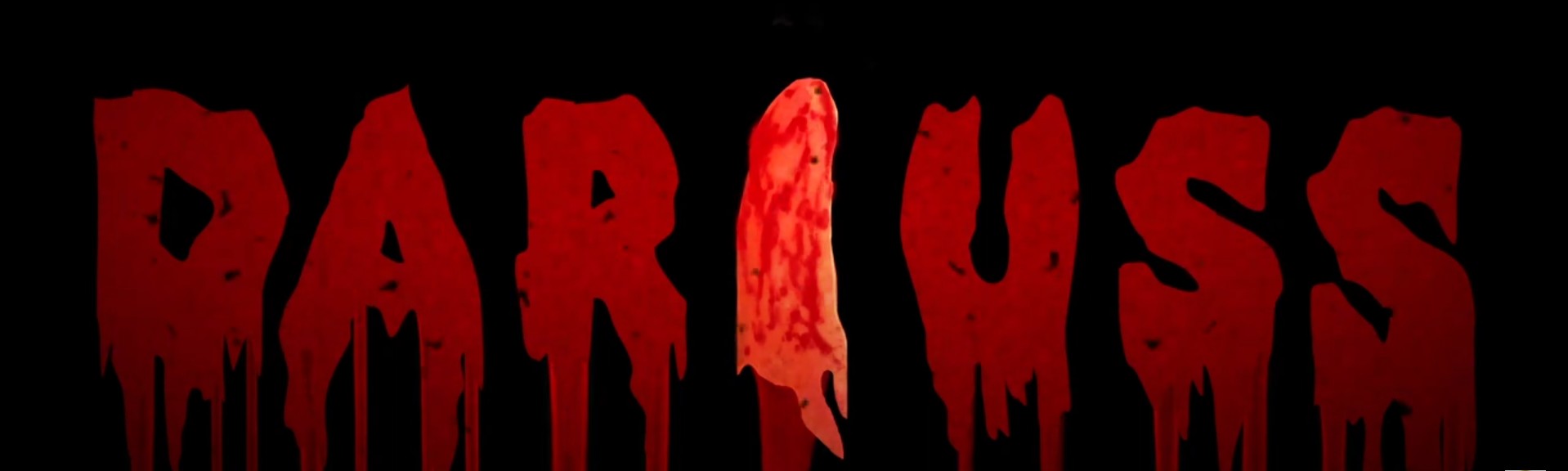
Who is This EVIL Named “Dariuss” reviewed! (SRS Cinema / DVD – Extreme and Unrated)

Find Out Who “Dariuss” Is With this SRS Release!

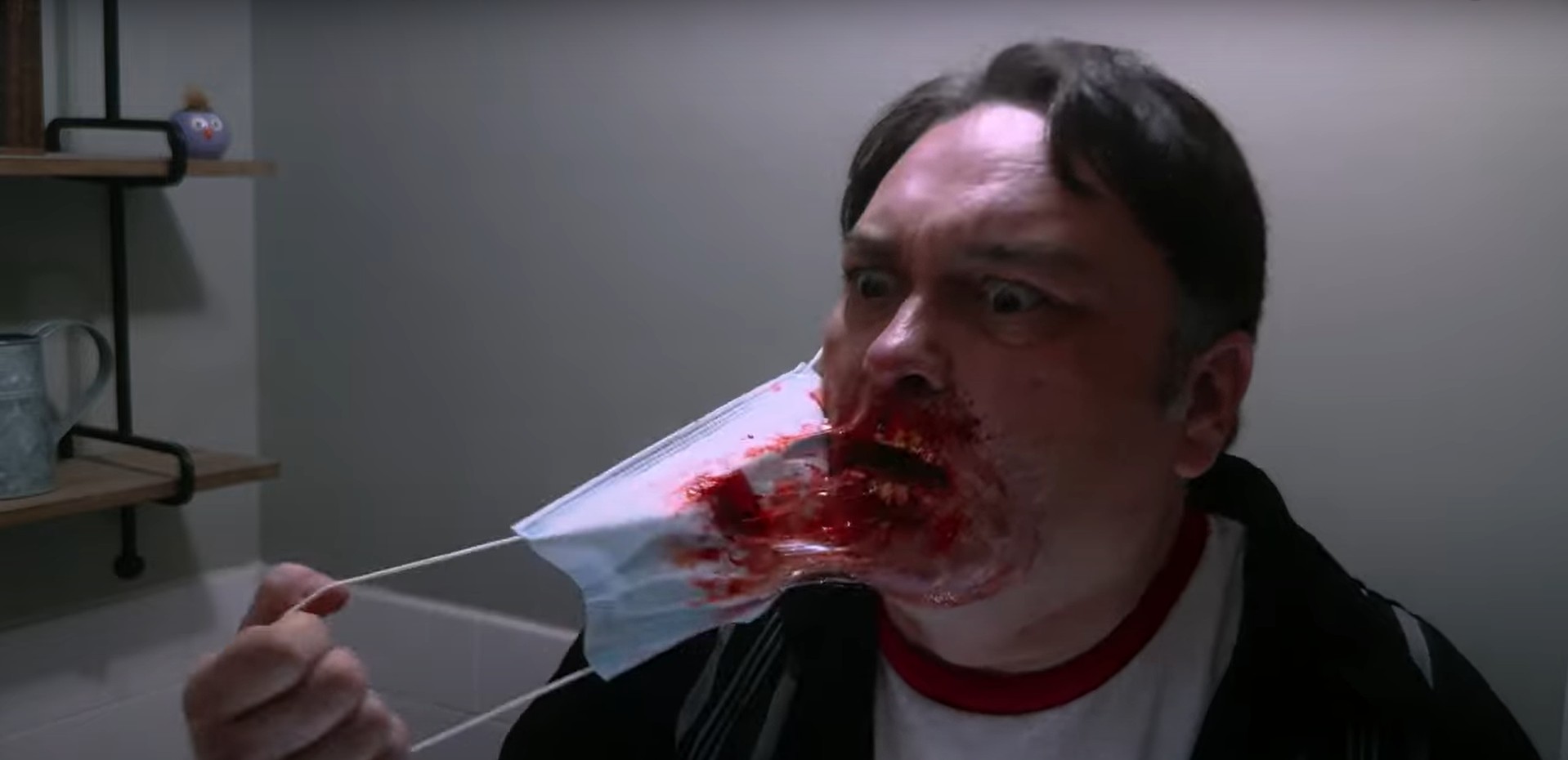
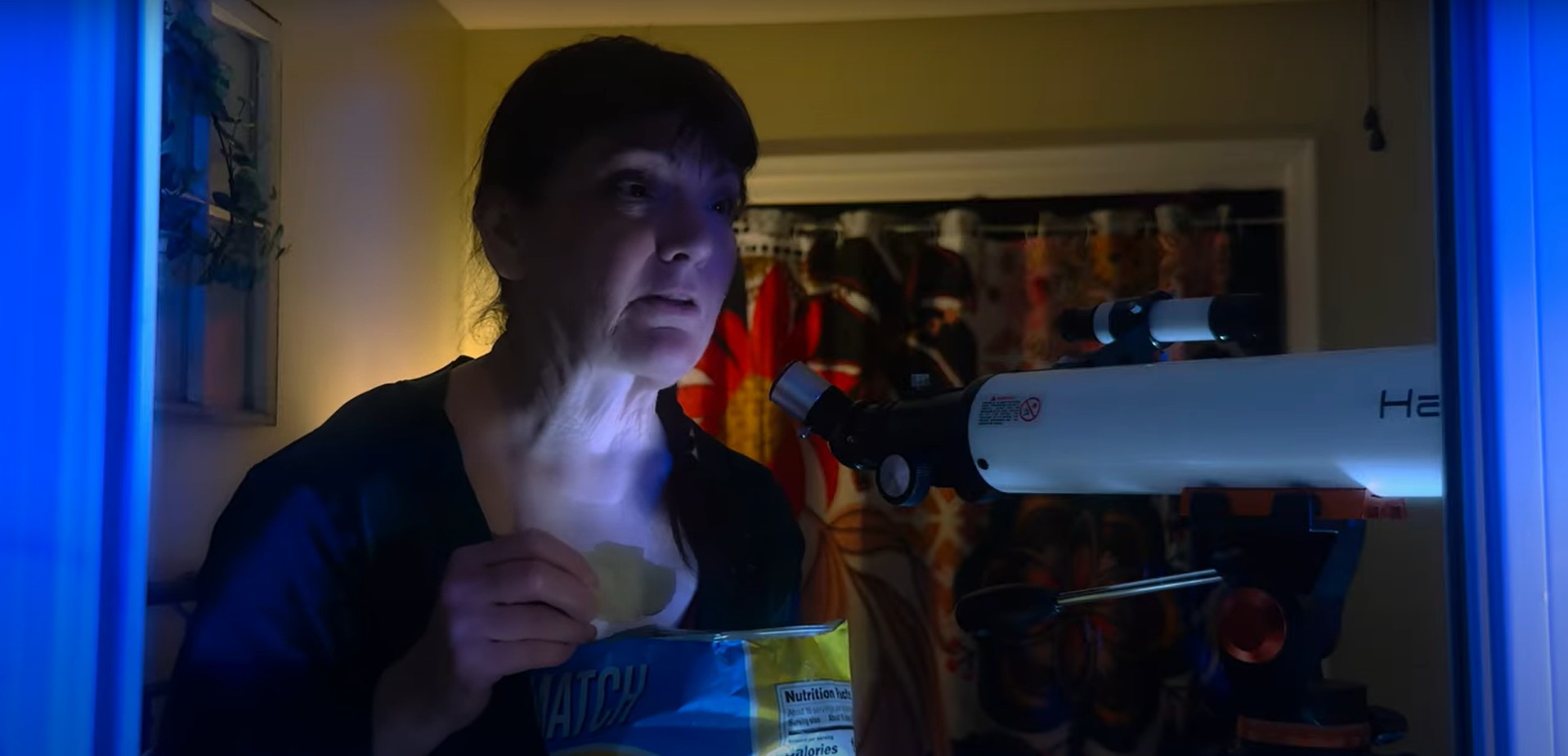
An experimental vision quest of loss, grief, and death takes refuge in a small English town, inside an old and quaint English house.  A mother grieves for the loss of her child, sobbing uncontrollably and mindlessly wanders with distant stares as the heart pains for her child.  The grandmother, doing what she can, comforts her daughter’s newfangled distraught nature while the husband, grieving in his own isolated way, stays out late at night to drink himself into a stupor.  When madness lurks about their home and intrudes upon their privacy, a vile and heinous loss of life bathes a depraved lunatic in their fluids.  Neither mother, father, nor grandmother is safe from terrific travesty in corporeal form.  A sickness has arrived to cure the inconsolable, eradicating them slowly of the pain in the most painful of ways imaginable, and doing it all with a bloodstained maniacal grin stretching from ear-to-ear.

A hellish loop of defeating pessimism, “Dariuss” fringes the black void areas around reality and escapism that evoke the uncomfortable nature of people and the unpredictable tides that turn for the worst when already at rock bottom.  “Dariuss’s” brackish, brainsick narrative is the brainchild of Guerrilla Metropolitana, an Italian artist crafting his underground and dark cinemaverse of misanthropic mayhem and esoteric eroticism.  The writer-director Metropolitana lives and creates out of London, UK and “Dariuss” is his 2023, debut feature-length film behind an oeuvre of distressing shorts of human imperfection and immortality encroached by a constant line of madness.  Metropolitana not only self-funds and produces his film, where he achieves total control to push back against not only major studio norms but also conventional independent stratagem, but provides the avant-garde cinematography, unorthodox editing, an experimental score and sound design, and even costars the trench coat covered naked body of the antagonistic killer. 

One element to not forget to mention before going through the cast is that “Dariuss” is completely without dialogue.  Metropolitana’s sound design manipulates and repeats many sound clips, such as the plops of water droplets or the high-pitch lip trilling, to fashion an uncomfortable audio sensation sporadically strung throughout that parallel’s the coupled low tumbling score and baby laughter, the later more so when referring to child loss or the abhorrent reincarnation of the child.  Ila Argento holds the majority screen time, especially since the pregnant woman credited as Sarah Isabèl is also Argento as well in some sort of meta crafting or illusion, and she plays the grieving, depressed wife wailing, screaming, and just distantly starring in vast quantities and in a daze of mirrored or painted inversions about the English home.  “Dariuss” is more than just extreme performance art as it embodies interval wretchedness associated with trauma, or in this case more specifically, loss through a reverse world looking glass.  As the wife is tended to by the grandmother, played with apneic conditions and posturing concern is Marie Antoinette de Robespierre, Archibald Kane’s the husband role is scantily around for a father who just lost a child and when the father is in frame, he’s idling in his car drinking, or rather gulping, from a bottle.  Both the grandmother and father roles are a part of Metropolitana’s message of a shattered family structure of insincerity and disconnect. Feeding on that dysfunction is the childlike maniac, played by Metropolitana himself, with rapacious amusement off the back of the household’s suffering.  Almost as if the maniac is a reincarnation of the lost child, perceived by play like antics in a nearly naked and hairless state and audible by the babylike, post-introduced laughter, returning home to exact horrific horseplay on his family involving rape and murder and cannibalism alongside the frolicking and breast milk chugging.  

Let’s preface with an important fact that “Dariuss” will not be everybody’s cup of tea; in fact, Metropolitana’s film is more like bitter black coffee with a pungent, sour smell as a narrative series of images, like a splayed, taped together string of polaroids, giving godawful glimpses of grief and gore.  Sounds and images repeat that beg for madness to emerge out of the nouvelle vague filming style, experimenting with various inverted images, mirrored and angled shots, different types of aged filters and strange lighting, various camera speeds, and oddly framed shots will subject audiences to pricklier sensory sensations than the depicted violence and gore, which is graphically ghastly and extreme with necrophilia and cannibalism.  Story structure also veers into non-linear territory but the gist of the acts is present, if not loose and equivocal for open interpretation and choice cinema characteristics that stray from normal convention, to mold a beginning, middle, and end in only a way Metropolitana can construct by contrasting melancholic grief with stagnating indifference, with a maniacal pleasure of a sandbox of sinew, and, in way, comical by way of the insanity with disturbing imagery mixed with playful mischievousness. 

Just who is Dariuss?  That’s the obstruse person perhaps at the centermost of this ghastly, grisly story that’s now on DVD from SRS Cinema as a part of their Extreme and Uncut label.  The DVD comes MPEG2 encoded, 480p standard definition, 5-gigabyte DVDR that showcases a wide-range of filters, inversions, lighting designs, grading, and you name it, “Dariuss” likely did it of cinematography techniques that stay in the rough patches of eccentricity rather than being comfortable in the fairways.  Picture quality fluctuates and varies depending on the aesthetic chaos methods being deployed, leaving behind not the sharpest looking picture with noticeable pixelation on anything above a 32″ television but not enough of an eyesore to be an imperceptibly deterrent.  Depth has fair spatial qualities but range and saturation is pretty limited to an anemic neutral palette to only when the monochrome or higher contrasts are not in play. The LPCM 2.0 stereo contains no organic matter, meaning that none of the sound is captured within the scenes, as Metropolitana modulates, manipulates, and modifies singular notes and tones for creepy and ear-splicing effect. This also pertains to the soundtrack being completely devoid of dialogue to give the auteur complete authority of how his film she be heard and every bit of that sound design is front loaded and high-powered but to an intended unrefined audio art. English captioning for the deaf and hard of hearing is available. Special features encoded are a behind-the-scenes still gallery and SRS trailers while the standard Amaray comes with an SRS illustration of the film’s original one-sheet, transposed to the disc pressing. There are no inserts included nor slipcover. SRS Cinema’s release is region free and has a runtime of 62, ideal, or even a tad bit too long, for this type of experimentation.

Last Rites: Not to be confused as a nail-biting, popcorn thriller, “Dariuss” will only speak to a select few able to bend the mind to impressionistic, dark eroticism and savagery, both qualities of which Guerrilla Metropolitana has and depicts in droves.

Find Out Who “Dariuss” Is With this SRS Release!

EVIL Manga to EVIL Movie! “Liverleaf” reviewed! (SRS Cinema / DVD)

“LIverleaf” Pushes Through the Bleak to Shine. On DVD Now!

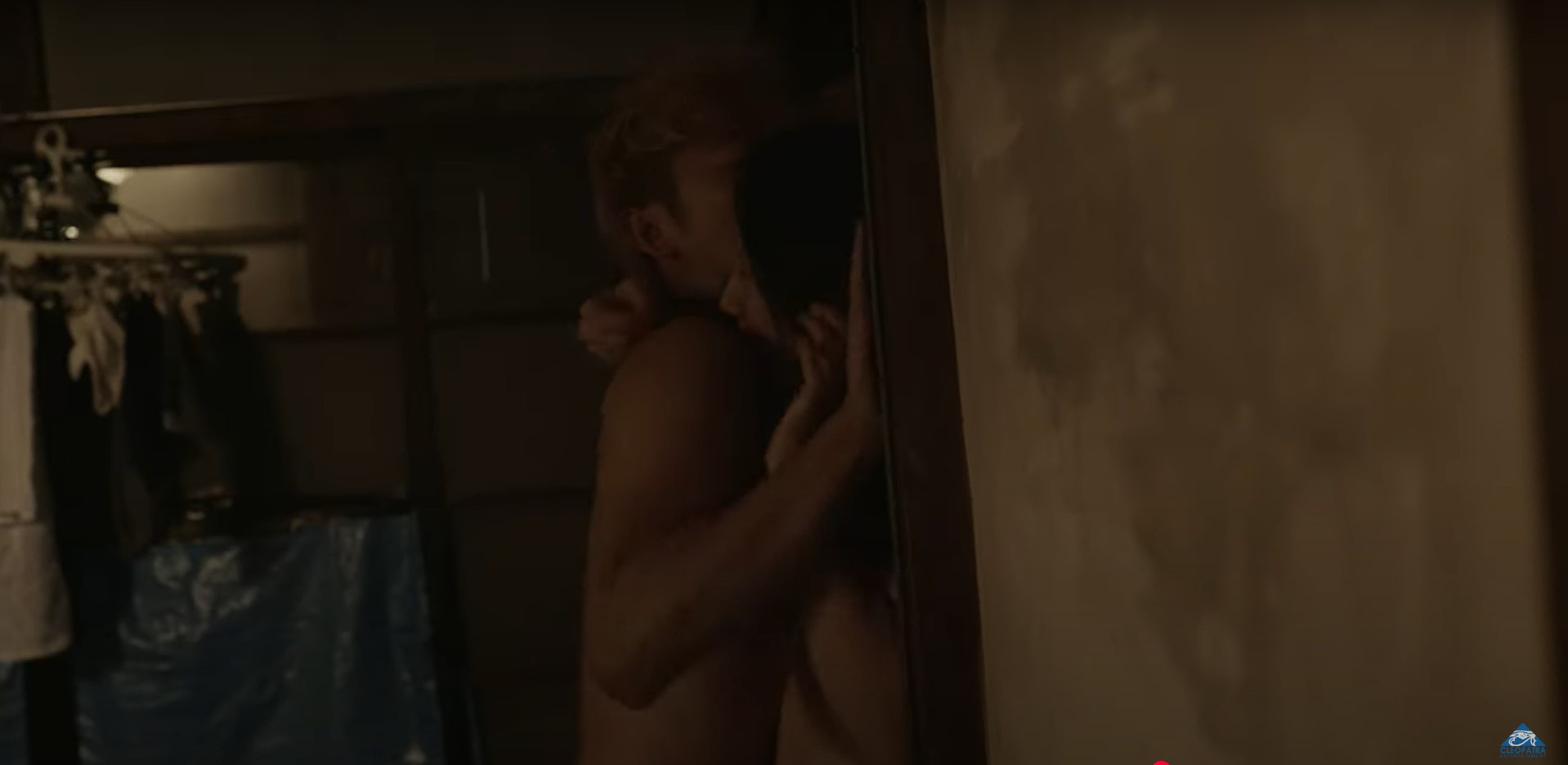
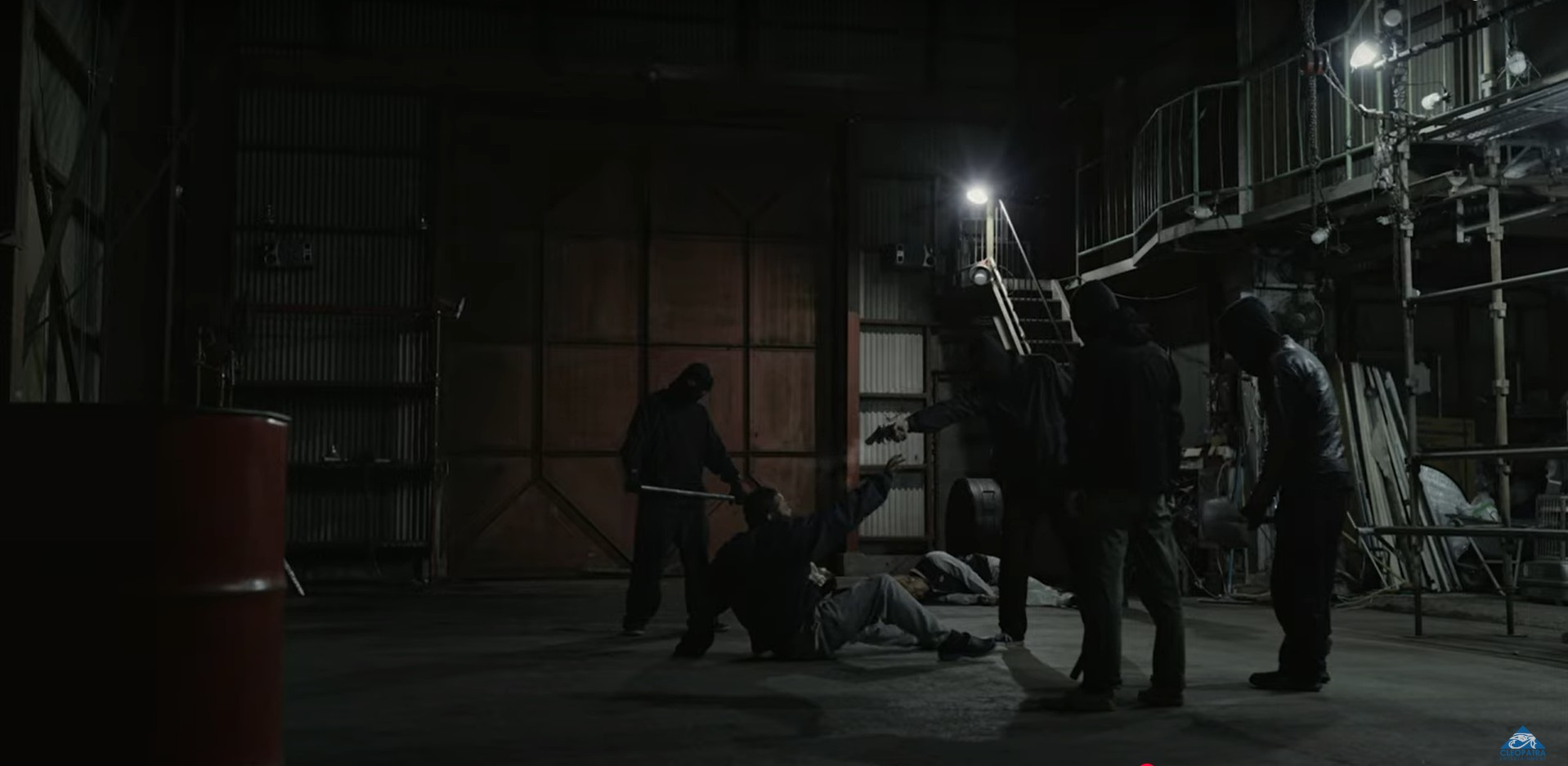
The move from Tokyo to a dwindling rural town hasn’t been easy for middle schooler Haruka.  Most of her classmates have grown up with each other and formed vicious cliques that bully her relentless during and after school.  Mitsuru Abu, a photography enthusiast and Haruka’s classmate is also an outsider but has family ties to the area, is about her only friend and whom she finds attractive.  Upon returning home after spending the day together, Haruka finds her family home engulfed in flames, her mother and father dead, and her little sister severely burned over her entire body.  The loss of her family, her only emotional support, mentally compromises Haruka’s self-control and sends her spiraling into a revenge fueled murdering spree, targeting her bullying classmates who had a hand in the inferno of her family home.  The root of malevolence is not as it appears on the surface, and it will be up to Haruka to kill her way in finding the truth and reveal the secrets.

Adapted from the popular manga series, “Misu Misō,” written by Oshikiri Rensuke, the film version incorporates the indelicate dramas of being a school age teen in while reproducing faithfully the graphic gore, violence, and disturbing nature of character of the series in great detail.  Titled “Liverleaf,” as in the resilient, mountainous found three-lobe leafed flower that resembles the human liver and can withstand harsh winter conditions, is helmed by “Let’s Make the Teacher Have a Miscarriage Club” director Eisuke Naitô and penned by Miako Tadano of “The World of Kanako,” another manga-based film adaptation.  The 2018 film, which can be described as a revenge-drama with particle elements of horror, is shot in one of the snow-covered foothills of Japan’s mountain regions and is produced by Shigeto Arai (“We Are Little Zombies”) under the production banners of the Nikkatsu Corp. and the L’espace Film Co.

Anna Yamada is in the lead role that’s very familiar and culturally significant to Japanese cinema.  A scorn-born femme fatale that’s merciless and personnel, the kind of role that Quentin Tarantino exacted in his tribute to Asian revenge narrative with “Kill Bill,” starring Uma Thurman, hunting down the offending party and dispatching the scum from the Earth in a one-by-one fashion.  The “Suicide Forest Village” actress Yamada headlined “Liverleaf” as mid-to-late teen portraying the manga series’ preteen or early teenage girl Haruka Nozaki.  She isn’t the only nearly adult woman to play a teen in the throes of hormones, peer pressures, and angsty conditions sideswiped by wickedness and a taste for dominance as the whole student body pretends to be a youthful waste in a snowy, mountainside village on the verge of collapse.  Howling Village’s Rinka Ôtani, as Taeko Oguro, stands out with her bright orange hair and a sense of indifferent authority being the supposed head of the gaggle of bullying girls.  “Liverleaf” is Ôtani debut picture and Ôtani would eventually reteam with Yamada on “Suicide Forest Village,” but their first dichotomized performance as protagonist and antagonists brings a palpable tension to the screen.  Throw a boy both girls stoically can’t admit with a lot of expression and that pressure pot grows into an ugly shape of jealousy spurred love triangle.  Mitsuru Aibe is tall, handsome, kind, and a photography buff always looking for the raw and beautiful moment to capture on film.  Played by Hiroya Shimizu, “The World of Kanako” and “Sadako” actor instills that hope for the future and a glance of stability amongst the opposing craziness that has ensued between the rebirthed revenger Nozaki and the horrible highschoolers now fearing for their lives because of their responsible part for the monster they’ve created but does he really provide a safer, greener pasture Nozaki needs to return to once her retribution is complete?  Kenshin Endô, Masato Endô, Reiko Kataoka, Seina Nakata, Arisa Sakura, Aki Moita, Minoir Terada, Kazuki Ôtomo, and ReRena Ôtsuka are cast in one messed up and depressive high school student body that ends in a blizzard of bloodshed.

One thing about “Liverleaf,” if looking at and considering all the components of the feature as a whole, to take away from the adaptation is how Eisuke Naitô facsimiles the plot points of a manga series or, in more general terms, Naitô” has plucked the rudimentary concepts straight from any regular extreme manga series, not just from Oshikiri Rensuke’s Misu Misō.  Yet, “Misu Misō” is very faithfully extracted from the illustrated pages for live action execution down to many of the details with very few changes to the story’s original design. Gore has an extreme graphic nature juxtaposed against the snow, contrasting in homage to those historical revenge genre films set in the same harsh, white blanket, and like all the heroines, or anti-heroines, Haruka Nozaki speaks her soul in her outfit, dressed in a continuously deepening red after each gruesome dispatch of her classmates.  This saturation into crimson extends into this belief that Nozaki is bordering being supernatural, like most condemned women done wrong, who somehow find the superhuman strength, endurance, know-how, and resilience in their own disdain for blood and violence to slay beyond their normal means without batting an eyelash.  “Liverleaf” is not the chippiest of narratives with a coursing core of grim doom and gloom through a quickly dilapidating little town with an austere school, junk pits, and modest structures that inhabit indifferent teachers, brooding teens, and a mental illness that ranges from inherent sociopathy to social sociopathy of peer pressures and bullying. 

SRS Cinema brings manga pen and paper to the big screen with their unrated DVD release of the film adaptation titled “Liverleaf.”  The MPEG2 encoded, upscaled 1080p, DVD9 release is presented in a 1.78:1 aspect ratio.  “Liverleaf” stands out unusual from the other SRS releases, a company that prides itself on standard definition 480 and 720 resolutions and compressing features and their special features onto a packed DVD5 that creates eye artefacts on already low budget, commercial grade, inexperienced film.  Instead, “Liverleaf” has punchier colors and distinction on that segregates the austere from the vibrancy and the extra space helps allow for this decoding to be as smooth as possible on what some may now consider an antiquated format.  Decoding at a higher range of 7-9Mbps, compression imprudence doesn’t show itself here with a clean picture that retians inky voids, charted snow mounds and footprints in a white sheet of snow, and the colors and details on objects that natural enlarge themselves when in contrast, such as Nozaki’s red jacket or the red, orange, and yellow glow of house flames against the night sky.  The Japanese LPCM 2.0 stereo renders a clean mix of dialogue, ambience, and soundtrack.  Dialogue’s clean, crisp, and clearly upfront of a subdued diegetic sound mixed from the boom mic or from post and a Hisashi Arita soundtrack that scores Japanese revenge in non-traditional Japanese notes.  Post mix and action does create some separation that uncouples the visual onomatopoeia of the activity but remains negligible throughout.  The burned-in English subtitles synch well and are error-free.  Extras include a featurette from Manga to Movie that goes into the history of manga and the adaptation concept which most thought the film couldn’t be adapted, Elijah Thomas supplements with his own thoughts and opinions on “Liverleaf” as well as another featurette titled Liverleaf’s Obsession that looks at the character’s dangerous obsessive qualities, the trailer, a Oshikiri Rensuke, biography The Comically Twisted Mind of Oshikiri Rensuke with narrator voiceover going into the writer’s family history and “Misu Misō” genesis, the trailer, and talent files on Anna Yamada, Eisuke Naito, Hiroya Shimizu, Miako Tadano, and Rinka Otani.  These features house behind a static menu, that only has a play option alongside the extras, with a neat art illustration of a murderously ominous Naruka Nozaki.  The cover art hints at the film’s stark contrast aesthetics with a Naruka Nozaki wrapped her red coat and jetblack hair sprawled out on the white snow.  The Amaray does not come with a reversible cover nor any tangible extras inside.  DVD has region A only playback and has a runtime of 114 minutes. 

Last Rites: “Liverleaf” is a surprising, better-than-no budget teen revenge thriller that deals with obsession, depression, and a consternation that Haruka’s tragic journey through the pits of a lowly high school hierarchy will only get worse before it gets better.

“LIverleaf” Pushes Through the Bleak to Shine. On DVD Now!

An Invisible, EVILociraptor is No Walk in Jurassic Park! “The Invisible Raptor” reviewed! (Well Go USA Entertainment / Blu-ray)

“Insivible Raptor” Tearing Onto Bluray! Buy it Here!

 once promising paleontologist is reduced to being a dinosaur theme park sideshow act after being swindled and sued for a discovery of a lifetime aboard.  When a deadly and intelligent lab created raptor escapes from its maximum-security confines, the paleontologist, an attractive ex-girlfriend returning into his life, and an eager townie security guard with no friends must put a stop to the first living, breathing carnivorous dinosaur in 65 million years, but tracking down an invisible creature with razor sharp talons and teeth is no easy task, and they must follow the carnage and bloodshed of its wake in order to stop it.  With little resources, relying mostly on the paleontologist’s expertise and the chummy security guard’s willingness to take life-or-death risks for his new friends, the trio rope in a local, rough-around-the-edges chicken farmer to persuade the foul ancestor into a madcap trap before the whole town becomes raptor food. 

Audiences shouldn’t care about another “Jurassic Park” sequel.  Instead, any cretaceous period anticipation should all be channeled and focused toward Mikey Hermosa’s “The Invisible Raptor.”  The 2023 comedy-horror is not land of the lost as it lands right in our homes on a new physical media release.  Written between first feature film writers Mike Capes and Johnny Wickham, the “Dutch Hollow” director Hermosa is not one bit phased by the prospect that his main villain is every bit nasty and furious as antagonists come but is entirely out of sight!   With the challenge accepted, Hermosa aims to pull of the next big comedy-horror dinosaur film since “Tammy and the T-Rex” while ribbing in fun it’s bigger, more successful, campy-somber, franchised brethren mercilessly.  Hermosa coproduces the Showbiz Baby and Valecroft production with writers Capes and Wickham as well as William Ramsey and Nic Neary with Well Go USA owning the theatrical and at-home presentation rights. 

Capes writes for himself as the hard-up paleontologist Dr. Grant Walker, a play on Sam Neill’s Dr. Allen Grant, who has succumb to being of caricature of his profession and while the Dr. Walker is downcast despite his credentials, educations, and reputation, opposite him is the town goof Deniel “Denny” Denielson (David Shackelford, “Beneath”), a friendless, family-less, theme park security guard who’s repute amongst his peer is lower than fossilized dinosaur crap, but his attitude remains cheerful and positive.  The two characters complement each other with budding growth in their arcs of Dr. Walker not pushing people away like he did with ex-girlfriend Amber (Caitlin McHugh) and Denny, with every ounce of his hillbilly being, trying to a fault to make a friend.  There’s a slew of eccentric side characters but one not more as colorful as chicken farmer Henrietta McClusky.  Played by the early 70-year-old Sandy Martin, the “Scalpel” role debuting actress who had a profound supporting character career having had a role in “Napolean Dynamite” and “Three Billboards Outside Ebbing, Missouri” in recent years continues her dry humor, dark comedy run with the Henrietta role a crude, rude, and with ton of attitude poultry farmer with a no nonsense way about her and while Henrietta is a deeply sexual creature in her own right, the amorous tension lies in between Walker and Amber that have instantly become two magnets in rekindling their lost flame.  The ease of which the two characters are written to be instantly smitten is greatly construction to be an almost an unattainable relationship by introducing a child with no relationship to either one of them, a decade long gap without a ton of hurt feelings for the other’s sudden decision of career over love, and, the obvious, a large, man-eating, invisible predator repelling the two magnets apart.  Sprinkled with familiar faces, “The Invisible Raptor” rounds out with notable cult film actors, such as Richard Riehle (“Office Space,” “Hatchet”), Larry Hankin (“Armed and Dangerous,” “Home Alone”), and Sean Astin (“Encino Man,” “Lord of the Rings”) as well as a cameo appearance from Vanessa Chester who played Dr. Ian Malcolm’s daughter in “The Lost World” in another potshot at the “Jurassic Park” series.

Between the hilariously staged “Jurassic Park” callback moments and an unnerving number of gags around the butt region (raptor feces, fossilized raptor buttholes, butt jokes in general), “The Invisible Raptor” has a lot of humor that’s either smart or misses the mark, but not by much in the cogently confined venture packed full of heart, heroism, and havoc on a prehistoric, science-fiction level.  “The Invisible Raptor” may be a modern-day gory comedy-horror but that gory-horror element combined with a bit of underground covert weaponization of dinosaur has a real throwback sense to the early 90’s to early 2000’s dino-horror, such as the “Carnosaur” films, “Tammy and the T-Rex,” and, of course, “Jurassic Park.”  Dino-horror is a niche subgenre that’s rare explored unless it’s totally satirical (“The Velocipastor,” “The Jurassic Dead”) or rooted more in a lost world aspect, sporadically released throughout the decades with “Raptor Island” or the more perilous journey of “Land of the Lost,” original series and it’s more comedic feature remake.  Hermosa quickly moves out from the testing bunker lab that has been the Raptor’s home and where the scientist treat it like an adored, harmless child, a theme of attachment to harmful things we shouldn’t be attached to and gets right into the mayhem by letting it loose in only a way one could perceive a raptor would – in indiscriminating bloodshed.   Hermosa also doesn’t flinch with an invisible titular foe, one the actors have to mentally conjure up to play against in a combative or cat-and-mouse scene, with neatly composited special and visual effects of floating objects, quickly consumed severed heads, and silhouette work through blood spray, heat vision, and a shower curtain by the talented Steve Johnson (“Lord of Illusions,” “Species II”) and Dorian Cleavenger, both of who bring years of experience and both of whom have worked together for the effects of Robert Englund’s “Fear Clinic.” 

Audiences won’t see this one coming!  “The Invisible Raptor” debuts onto an AVC encoded, high-def 1080p, Blu-ray courtesy of Well Go USA Entertainment.  The single-layer BD initiates some cause for concern on the image presentation prior to viewing but the picture produced is solid and stable with no banding in the darker voids, especially in those areas since there is no Raptor to be seen mostly during the night exteriors, poorly lit underground laboratory, or in the lowly key-lit interiors, there’s more shaded and hallow space exposed in the 1.78:1 widescreen aspect ratio.  Textured details are generally adequate with a softer, smoother touch from capacity compression, coupled with a hazy warm yellow-green lighting scheme.  The more standard, non-stylistic shots have better definition to where the details on Dr. Walker’s paleontologist outfit stand out amongst the eye glazing brown-and-tan colors and in the gooey grooves of the Velociraptor fecal matter complete with yellow kernels of corn.  Visual effects are handled with not too revealed explicitly to limit noticeable computer imagery and keep all that is practical the focus.  Audio options come in two English formats – a DTS-HD 5.1 and Stereo 2.0.  The range on this mix is explosive as it is subtle right down the clicks and grunts of the assumed noises one would be led to believe a prehistorical, carnivorous raptor would make.  Dialogue renders clearly and definitively prominent amongst ensuring bedlam cacophony whenever there’s a dino-crises in a more than one people grouping; the audio compilation has been carefully layered to denote exactly what’s intended to be discerned at that moment. English and French subtitles are available. There are no encoded special features on fluid menu of this feature only release but there is a quick bonus scene at the end credits. The physical copy has only a little bit more in the way of extra content with a cardboard, tactile-titled O-slipcover sporting the current state of arranged character pyramid composite. The snap lock Blu-ray Amaray is standard with the same cover art and no tangible extras inside. Rated R for bloody violence and gore, crude sexual material, drug use, and brief graphic nudity, Well Go USA’s release is region A encoded for playback and has a runtime of nearly 2 hours at 114 minutes.

Last Rites: Though the raptor may be invisible, this release should be seen by all! “The Invisible Raptor” is a hilarious “Jurassic Park” parody with plenty of bite, plenty of fun, and plenty of non-visible computer-generated dinosaurs, especially for those who are feeling the dinosaur fatigue.

“Insivible Raptor” Tearing Onto Bluray! Buy it Here!

The James Brothers’ EVIL May Not Compare in “Killers” reviewed! (Synapse Films / Unrated Director’s Cut Blu-ray)

“Killers” Unrated, Director’s Cut on Blu-ray from Synapse!

Odessa and Kyle James paint half their faces with skull imagery, don their Santa hats, and load their pump action shotguns and on Christmas Eve, walk into their parents’ bedroom and unload multiple shells into them where they lay without mercy.  A trial sentences them to death row for their crimes despite their calm efforts to dismiss the State and prosecutor’s case against them.  Years later, the brothers escape from the maximum-security prison and are the loose in the town of Beatty where the Ryan family happily watch television and play board games on a stormy night.  With U.S. Marshalls hot on their tail, Odessa and Kyle invade the Ryan home where their strangely more than warmly welcomed by the mother and two daughters.  It quickly becomes clear their usurpation of the Ryan household is more of a sheep in a wolf’s clothing and the meager, goody-two shoes Mr. Ryan will reestablish dominance and show the James Boys the real man of the house.  

1996 marks the year of Mike Mendez’s debut feather-length film, titled simply “Killers.”  “The Covenant” and “Satanic Hispanic” segment director writes and direct a philosophical and brutal home invasion thriller cowritten by one of the film’s principal actors, the late Dave Larsen (“Vampire Centerfolds”), full of unusual twists that can second guess everything you know about storytelling.  “Killers” cements under his greenhorn feet novel elements of twisted character studies while finding homes for bad boy cool characters, stylized shootouts, and a smoky noir and dark dwelling cinematography to commingle with his anarchic structure and tale.  The U.S. produced film is independent funded by star-producer Dave Larsen under the LLC of The Lost Boys, a reference from the film’s story that labels the escaped convicted brothers as such, with Joseph E. Jones-Marion as coproducer.  Most of the funds were secured by Dave Larsen’s father, S.E. Larsen, after remortgaging the family home.  Eventually, the home was foreclosed upon after Dave’s premature death.

Dave Larsen and David Gunn entrench themselves into the sordid souls of sociopathic brothers Odessa and Kyle James, inspired almost to the exact murder by real-life killers the Menendez Brothers who committed parricide in nearly the exact shotgun-loaded manner in Beverly Hills 1989.  Portraying mindful. ruthless killers with intellectual monologues and a panache that’s very Mickey Rourke pastiche, the solemn faces and confidence carrying Larsen and Gunn go greatly above and beyond the call for the titular types.  Thinking the summit has been reached and there could be nothing more grave than two brothers snuffing their own mom and dad without hesitation, who kill Beatty locals with intent, who steal daughters (Nanette Biachi, “The Killer Eye,” and Renee Cohen) and a wife (Damian Hoffer) for their own carnal pleasures, and who bully and insult a respected husband, father, and man (Burke Morgan, “Bloodsucking Babes from Burbank”) of the Beatty community, the tables suddenly and jarringly turn and viewers will be knocked unbalanced when the police storm the door, lead by U.S. Marshal Lorna McCoy, played by the quick and sarcastic lip of Wendy Latta, and discover just then who that two killers are actually more in this seemingly quiet and small suburban house, rivaling the James boys, if not surpassing their malevolence even if just a little.  The “Killers’” cast doesn’t stop there as Ellis Moore (“Femme Fontaine:  Killer Babe for the C.I.A.”), Ivan Vertigo, Chad Sommers, and Carol Baker becomes a part of the fray.

“Killers” defined is simply a conceptual paradox.  If two unstoppable forces collide, the logical result would be an unfathomable outcome as nothing can stop an unstoppable force.  Instead, what may occur is a massive particle explosion, a rift in dimension time and space, or a vast nightmare so bizarre nothing can compare to it.  “Killer” embodies every quality of the latter in its maniacal melting pot of phantasmagoric potpourri, especially through the Mendez lens of engulfing shadows and mostly Duke blue and poker hot red gel tints.  Following the progression is a guessing game unto itself with welcoming and shocking pivots that parade forth a Hell on Earth turn of events.  You think the story’s going one way then it acutely shifts, and this happens more than once to the point where none of the previous groundwork or what’s instore for the future can be taken for granted in this fluid, subversive, kill-or-be-killed home invasion and cannibal bipartite.  For a first-time independent production, weapon props are extensive, gory moments are effective, makeup has grotesque appeal, and the dialogue indulges in shades of conversation complexity that equally match the complexity of the characters’ MacGuffin backgrounds.  Mike Mendez’s impressive start to his career has provocative monologue and stylish notes of Quentin Tarantino and William Freidkin bathed in primary color gels and a tale zigzagging with zeal.

Available for the first time in high-definition, the director’s vision, restored by the Multicom Entertainment Group, is in the hands of Synapse Films, delivering “Killers” to the cult physical media table with an AVC encoded, 1080p high-definition, BD50 Blu-ray. Presented in the 1.78:1 aspect ratio, “Killers” has a stylistic choice of being tenebrous, whether in shadow, in night, or just to over exuded a sense of gloom and doom in tone and in what’s visually shown. Delineated blue and red gel lighting beam through and glow the necessary bits for effulgence effect to contrast the darkness. Another popping source of lighting and colors are the individualized, punchy Christmas colors because, for all who don’t know, “Killers” is actually a Christmas movie. Because of the cheerless grading, details are not inherently sharp but Synapse and Multicom’s restoration enlightens quite a bit than previous versions, putting rightfully on display the details where once shrouded by lower resolution or otherwise mishandled. Skin tones appear natural as well as the grain with a scintilla of white speckle. The lossless English DTS-HD Master Audio 2.0 stereo has an organic dual-channel dynamic, catering a central focus on the monologuing, that translate to the dialogue exchanges also, with great enthusiasm and clarity. Not the best in edited sound design that has layer slippage but pulls enough ahead and into the fold to not be an unsynchronous, incongruous mess. “Killers” could have greatly benefited from a surround mix with the varietal exchanges that emits a full-bodied arrangement of resonations, mostly in the interiors and playing to those specific in locations. English subtitles are available. Special features include a feature-paralleling audio commentary with director Mike Mendez and horror journalist Michael Gingold going over backstory, tidbits, and the goals of making “Killers,” an alternate, pared-down ending that’s loses a lot of the original film’s feasting flavor, and the original promotional trailer. The black Amaray case comes with new illustrative cover art without a reversible option. Inside contains a 6-page essay My Brother Death: Mike Mendez’s Killers by cult film enthusiast Heather Drain, a Synapse 2025 product catalogue, and a disc pressed with Odessa’s half-skull covered face. The region free release has a 96-minute runtime and is unrated.

Last Rites: Synapse Films have brought “Killers” from out of the shadows of obscurity. A schismatic, soulless killer of a film, “Killers” has the heart of madmen and madness meshed together in one seriously sideways story.

“Killers” Unrated, Director’s Cut on Blu-ray from Synapse!

No Train Coach is Safe from a Family of EVIL Bandits. “Kill” reviewed! (Lionsgate / 4K UHD and Standard Blu-ray)

Get Your “Kill” on! 4K UHD and Standard Blu-ray Available at Amazon!

Captain Amrit of India’s National Security Guard boards a commuter train to stop the arranged marriage of his true love, Tulika.  As the two lovers reunite and promise each other to one another, a large family of thieves hijack the coach cars to loot the passengers.  Amrit and fellow captain and friend Verish fight to protect Tulika, her family, and the innocent passengers for the sake of their very lives.  When Tulika is taken by the hands of Fani, the ruthless thug son of the thieves’ leader, Amrit’s kill switch engages an unstoppable force of ferocity to get his blood-soaked hands around Fani’s neck.  He’ll first have to brutally bulldoze his way through 40 melee-weapon armed looters, all related to Fani, to get to his target while, at the same time, protect more innocent passengers from the hands of killer, uncompressing thieves and it’s a long train ride to destination New Delhi.

An India film that doesn’t have the typical unrealistic Bollywood action and violence and is labeled India’s most violent and gory film ever, “Kill” comes from writer-director Nikhil Nagesh Bhat (“Long Live Brij Mohan”).  Every ounce of close-quartered, free-for-all action is set entirely inside carefully detailed and constructed railcars that replicate almost down to the paint the very commuter diesel trains coursing the India rail lines. “Kill” accurately describes what Bhat accomplishes with a nonstop drive to protect the ones you love at no matter the cost and when moral planks are broken right underneath your feet.  The Lionsgate and Roadside Attractions presentation is a production of Sikhya Entertainment and Dharma Productions and is produced by Guneet Monga Kapoor (“Darkness Visible”), Apoorva Mehta (“Bhoot:  Part One – The Haunted Ship”), Achin Jain, Hiroo Johar (“Bhoot:  Part One – The Haunted Ship”), and Karan Johar (“Bhoot:  Part One – The Haunted Ship”).

“Kill” introduces actor Lakshya as the one-man army and killing machine Amrit, driven by love’s unflinching rage that’s about as unstoppable as the freight train he’s on.  The train has become a bout ring of carnage when a literal 40-person family of thieves, or dacoits, suddenly disperses to take control of multiple train cars, killing some passengers in the process.  At the head of the snake is a battle in itself between father Beni Bhushan (Ashish Vidyarthi, “AK 47”)) and son Fani (Raghav Juyal) but though they don’t see eye-to-eye on handle a sudden downturn with Amrit being a wrench in their looting scheme, there’s a glue that keeps them aligned.  Much of the loyalty is present throughout without ever a sense of treachery on either side but Vidyarthi and Juyal delineate juxtaposition well, especially with Fani’s loose cannon antics that make him formidable even if he’s not fully in charge. Lakshya and the rest of the cast move with intent when considering their action choreography but Lakshya offers one step further being a romantic and a tragic hero when it comes to his darling Tulika (Tanya Maniktala, “Tooth Pari:  When Love Bites”) as she’s used a pawn when the bandits discover her wealthy and powerful father on the train, Baldeo Singh Thakur (“Harsh Chhaya), to exploit him for more ransom riches.  There are also great dynamic interactions with standout sublevel principals in Amrit’s brother in arms and best friend, Viresh (Abhishek Chauhan) and Fani’s towering large and strong cousin Siddhi (Parth Tiwari) that support the main adversarial opposites.  The Bollywood actors in “Kill” round out with Pratap Verma, Devang Bagga, Adrija Sinha, Meenal Kapoor, and a train load supporting cast to play bandits and passengers.

Bollywood films are known for their grandiose appeal with beautifully crafted costumes, large scale sets, and physics defying action that’s makes the “Matrix” look like child’s play.  “Kill” hits different.  “Kill” offers some of the same characteristics of a “Bollywood” production, such as a lone-wolf hero slathered in a focused and swathed cool aura, but the film heavily contrasts with aspects that are uncommon in India’s moviemaking industry.  “Kill” is uber-violent that’s graphic, gory, and on a more realistic scale than other Bollywood action films which typically go against the laws of physics for pure ego-eccentric entertainment.  “Kill’s” heroic heart goes icy cold, reforming the moral principles of a man who out of duty and respect upheld life as precious to a man hurting with antiheroic qualities that sees every bad guy as just another disposable body in the way of his goal – revenge.  Amrit doesn’t turn into a Frank Castle killing machine until a little after 45 minutes when, at the same moment, the title drops in a surprise move of editing.  You really find yourself unaware that “Kill” did not name itself until almost halfway into the story and it becomes an indicator, a switch if you will, that Amrit, as too with the story’s tone, is different from before.  The kills pre-title and post-title change from barely a whisper with a few shrouded stabbings to a varietal, punchy onslaught of massacre proportions.

Pulling into the physical media station, carrier a story all the way from India, is “Kill” from Lionsgate.  The 2-Disc 4K UltraHD and Standard Blu-ray set comes with an HEVC encoded, 2160p resolution, BD100, per other source outlets on the UHD capacity; however, I only see two layers with code identifiers, which might suggest BD66.  Given that the UHD houses the movie plus special features, I’m inclined to agree with the BD100.  The Standard Blu-ray is AVC encoded, 1080p resolution, on a BD50.  HDR on the UHD provides a deeper saturation with easy transition between hues with the Blu-ray accomplishing much of the same with lesser color reproduction but that doesn’t stop the release from being vibrant and bold as mood density changes from a colorfully rich, jovial scheme of celebration and love to a colder tone with muted yellows, harsh grays, and milky blue as destruction and death continue down the rabbit hole.  The trains confined space doesn’t deter depth in either the parallel or perpendicular view of camera direction.  There’s also a great reproduction of textural details from clothes to skin to finer points, like hair or silks.  The Hindi Dolby Atmos 5.1 is a blaze of glory with full-bodied, immersive sound that puts you right in the middle of Coach A1 for the hand-to-hand melee with the rear and front channels while the back channels isolate the train’s depth of railway locomotion and exterior audibles created by the train’s passing, such as air ambient rearrangement when occupying the same space.  Dialogue is not compromised with a clean and forefront present track that progresses with each state of action.  The English subtitles are burned into the coding.  If native language audio tracks are not your thing, there is an English dub Dolby Digital 2.0 track available.  Spanish subtitles are optionally included on both tracks with English subtitle optionally available only on the English dub.  An approx. 46-minute making-of featurette How to Kill:  Making of a Bloody Train Ride goes into depth with set construction, interviews with cast and crew, action choreography, and the overall cinematography from the blood to standout in the picture to the natural colors of India being tweaked for the camera.  There are also individual behind-the-scenes and interviews that are basically Cliff Note versions of the arterial bonus feature with Making of the Train, Introduction Lakshya, Behind the Blood, and Behind the Action.  The theatrical trailer is also included.  The dual format release centers Amrit (Lakshya) about to take on knives, axes, and pipe-wielding attackers with the title yellow and largely in bold behind him.  The green UHD Amaray comes housed inside a rounded cardboard O-slipcover with a glossier version of the same cover art.  A disc of each format is snapped into each side interior with a blue hued 4K UHD for the hero and a red hued Standard Blu-ray for the villain.  A digital code is included in the insert of the 4K and Blu-ray release but is feature only.  Rated R for strong bloody violence throughout, grizzly images, and language, “Kill” is presented with a hard-encoded region A playback and clocks in at 105 minutes. 

Last Rites: Kill, Kill, Kill! India has stepped up the violence not yet seen in the land of Bollywood and “Kill” introduces a whole lot of new to the country’s movie industry that will revolutionize India’s filmmaking game.

Get Your “Kill” on! 4K UHD and Standard Blu-ray Available at Amazon!