Censorship is the Very Definition of EVIL! “Censor” reviewed! (Magnet Releasing / Digital Screener)


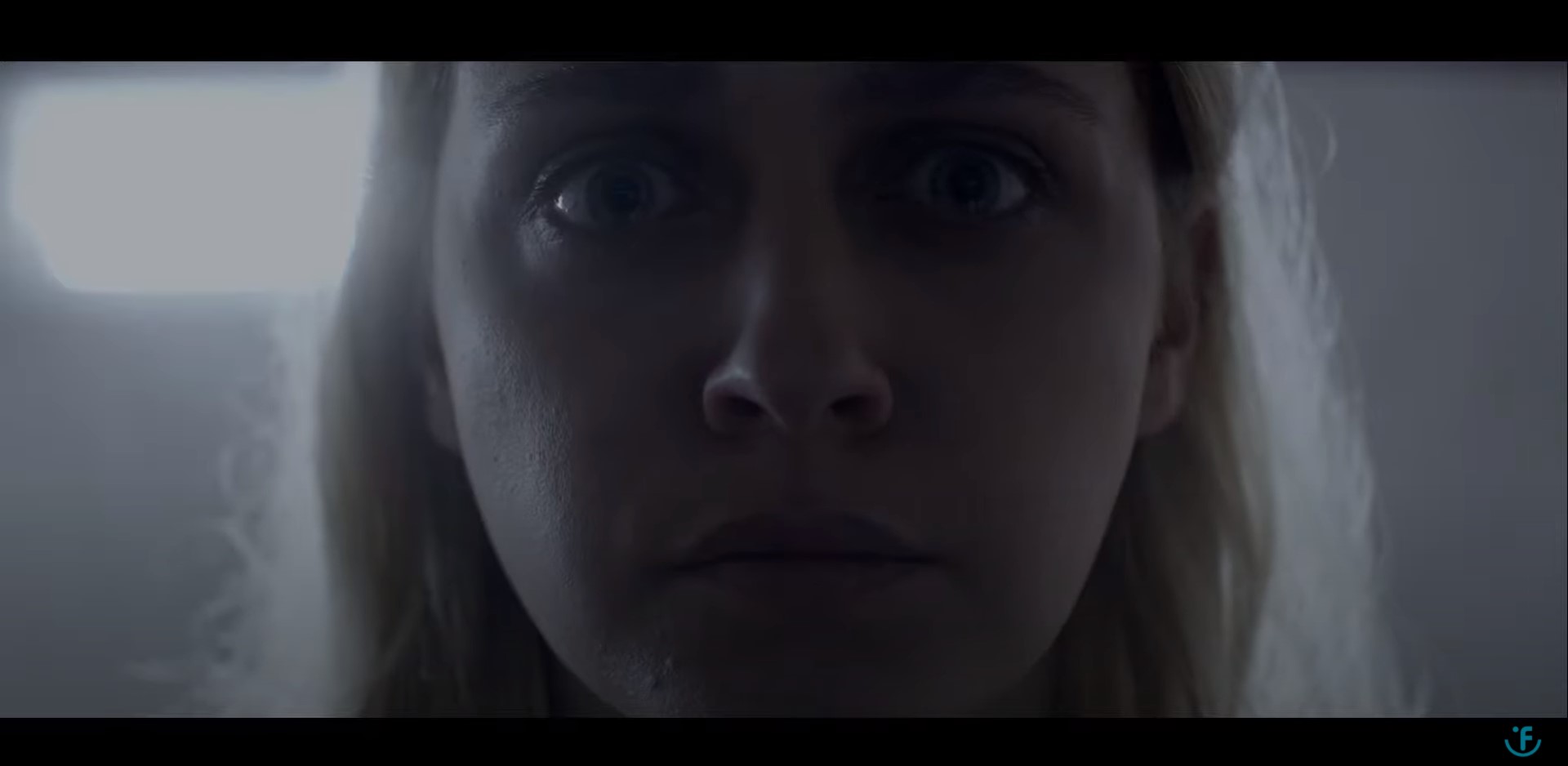
British film censor, Enid, views video nasty after video nasty day in and day out, certifying ratings based on the realism of the violence, and receiving public hellfire when a gruesome murder is vilifies her approval of a film.  After viewing one in particular that strikes a familiar nerve, one involving around the circumstances of her little sister’s disappearance from years ago, she digs deeper into the filmmaker’s background, piecing together a puzzle that her sister may still be alive.  With her parents given up hope declaring their youngest deceased and under mounds of criticism pressure from inside and outside of work, Enid’s lone rove through distasteful filmic horror and probing the crew involved sends the censor into a frantic frenzy between what’s real and what’s not. 

For the record, just so we’re clear between you and I, film censoring is a complete crock that limits artist expression and can negatively alter the tone of work far from the original message or effect.  I can see where censorship is necessary for the greater good when considering public television that aims to evade young eyes from extreme violence, gore, nudity, and harsh language while still appeasing adults with a semi-intelligible cut of the film, but to have the MPAA, or any censor board for that matter, do what they do in order to classify and certify a rating to meet a criteria is a slap in the face of personal responsibility.  Yes, some individuals need a rigorous structure to tell them what to do, but you know comical and asinine when there are three different cuts of a film in the U.S. market, not to forget to mention all the various versions around the globe to sate countries distinct regulations and requirements.  Luckily, Prano Bailey-Bond’s immersive reality checking horror, “Censor,” makes no assumptions on the matter and we can just enjoy the dark side of story based off the UK filmmaker’s 2015 short entitled “Nasty.”  The story, set in the 1980’s at the height of violent and gory VHS movies known as video nasties, is co-written by fellow “Nasty” writer Anthony Fletcher and is produced by the London based, female operated and story-driven Silver Salt Films as the company’s first feature credit and is financially supported by the Film4, Ffilm Cymru Wales, and BFI.

If not for Irish actress Niamh Algar in an virtuous cyclone encompassing lead of Enid, a stern censor agent, the dismal atmospherics whirling around Enid’s processing of possible new evidence in her sister’s vanishing wouldn’t be as timorously potent.  The “From the Dark” and “Raised by Wolves” actress embodies a strong stoic stance of not only a censor with a target on her back every time the public blames her for ill-fated news involving the extreme films she approves, but also as a woman in the workplace who is subjected to subtle objectifying by male coworkers, in which some are more privately outspoken than others, and male film producers with a diminutive eyesight of her professional demeanor by making unwanted advances in lieu offering their support to make their films depicting rape and murder of usually female victims more approachable and marketable to the censor board.  Algar perfectly poises Enid in her ticks, the abrasive fidgeting of her nails against each other or the slight rolling back of her shoulders that makes an awful, unnatural cracking sound, sharpen Enid’s complexion.  Even Enid’s hard gulping is felt in unison of the tension of a woman on a verge of sudden collapse.  Clearly the film’s one and only frontrunner as we dine off Enid’s sole perspective, Algar runs off with “Censor’s” gloomy tone by her performance of unwavering convictions blended with throbbing agitation in her character’s repressed explosion trajectory.  Supporting players do their part living in Enid’s unique vision with Sophia La Porta, Adrian Schiller, Clare Homan (“Afraid of the Dark”), Andrew Havill, Guillaume Delaunay (“Victor Frankenstein”), Richard Glover, Clare Perkins, Danny Lee Wyner, Vince Franklin, Nicholas Burns, and Michael Smiley (“The Nun”) as a topnotch sleazy extreme film producer rounding out the cast.

Performances all around are stellar and the idea is sound as I can see a video nasty censor of the 1980’s fall victim to the job because of an unclear and checkered past, but problems with pacing jet Enid from composed posture to immediate wreck in a blink of an eye without much of a fundamental development for unravelling being greatly depicted other than the jarring movie that sends her spiraling for answers.  This doesn’t hurt “Censor’s” main theme of the inconclusions of what really drives the murderous animalistic qualities in all of us regarding nature versus nurture.  The longstanding idea that video nasties promote influential violence and sordid behaviors has been the talk of controversy for decades and science, at least none of that I’ve read, hasn’t 100% proven that extreme films dictates the mind’s will other than those impressionable in the sponge-like children.  Bailey-Bond decides not take a stance in declaring a clear cut opinion, merging both assumptions together in a mesh of madness still leaving the theorists spinning their notions and evangelical nuts spewing their anti-liberal arts sermons.  What really sells “Censor” for me personally is the tell all climatic finale of Enid’s disturbing outcome in a warped contraview, flipping back and forth through the static of the back button during the times of higher numeral, unsubscribed pay-per-view channels where glimpses of picture pop into the frame for a split second.
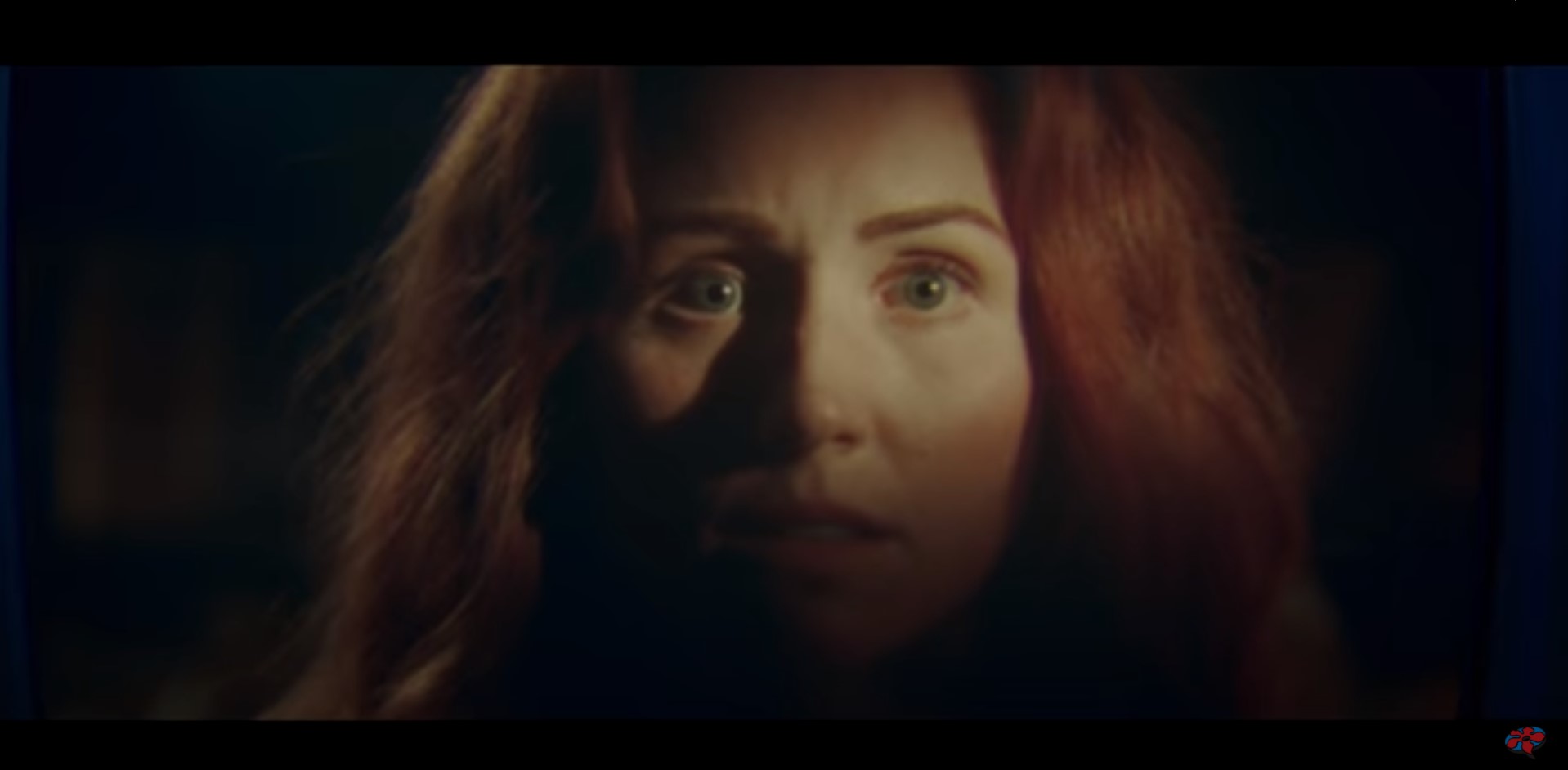
“Censor” is nowhere near what’s consider a video nasty, but the Prano Bailey-Bond psychological thriller still has the grip of an inexorable depth for what’s to come, for violence, far from hitting the cutting room floor as the film heads to theaters June 11th and on demand one week later June 18th from Magnet Releasing. Shot in two aspect ratios, more so in a widescreen 2.39:1 aspect ratio than in the pillarbox 1:33:1 to reflect the video nasty format in the time period, Bailey-Bond and director of photography, Annika Summerson, continue to stay as true as possible to the Golden Age of 80’s horror by shooting in 35mm in a handful of various style to blend Enid’s reality with the fiction of lurid dreams and the daily grind of workplace hazards (which, to me, watching horror movies all day long sounds like a dream job! The censoring part, no so much). Runtime clocks in at 84 minutes with no wiggle room for bonus scenes during or after the credits. The Brits have always had a hell of a go with film censorship, weaponizing and vilifying for political gain, as films become the lamb for the slaughter for public outcry against social-economical woes, even arts bedeviled by the harsh censors of it’s own country, and “Censor” aims to be the carrier wave of that historical downspout of misguided judgement while also shredded the thin moral fabric of one woman’s reality into tiny bits of off the rocker guilt.

You Can’t Run From the EVIL That Seeks Out the Competition. “Homewrecker” reviewed! (101 Films / Digital Screener)


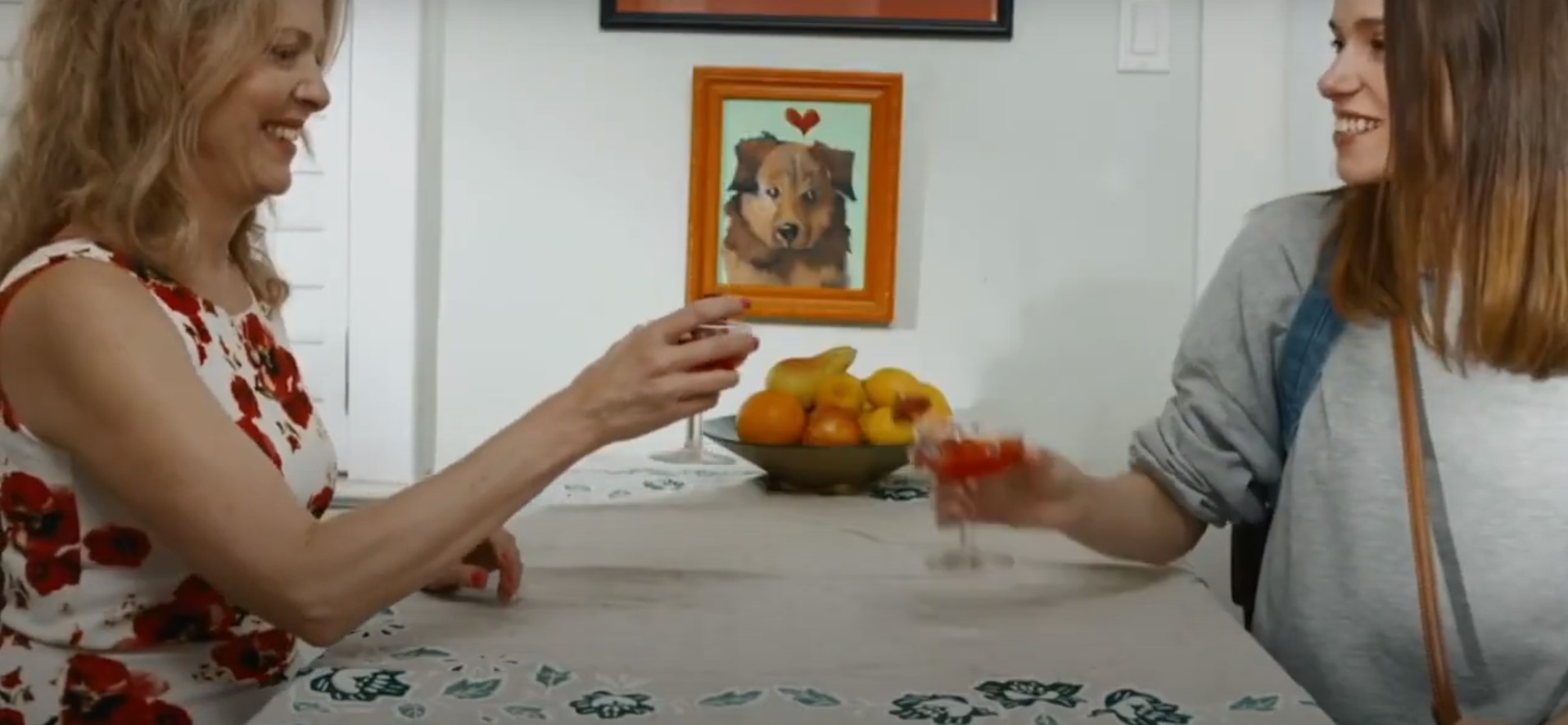
Michelle is at the point in her life, struggling as a 30-something year old interior designer, where the urge to have children is strong.  When trying to conceive with her husband seems to be going downhill, she is befriended by an overly obsessive stranger, Linda, who has took an uncomfortably intense interest in her personal life.  An innocent enough invitation back to Linda’s house proves costly with Linda’s flickering infatuation for Michelle’s private business that turns quickly sour in a cat and mouse game of survival.  Trapped, Michelle must understand Linda’s madness in order to stay alive.

Ca-ra-zyyy!  That’s one of many ways to label Zach Gayne’s woman-on-woman scuffle in the comedy-horror “Homewrecker” that will surely turn many feminist heads at breakneck and contentious speeds with the better woman standing scenario.  Gayne’s freshman film tests the wills of two very different women and their counter mindsets while excavating a common core connection rooted subconsciously deep within them both.  A distinction that gives the 2020 riotous feature an edge is the two sole actresses, Alex Esso (“Starry Eyes,” “Doctor Sleep”) and Precious Chong (“Luba”), daughter of famed stoner comedian Tommy Chong, portraying Michelle and Linda are also “Homewreckers” cowriters alongside Gayne, equipping their characters with an authentic image by filling the roles themselves and getting out of the project exactly what’s desired.  The trio also produce the film in a coproduction with fellow producer Josh Mandel of Industry Standard Films and under the financials of Precious’s mother Shelby Chong, Chris Morsby, and Delaney Siren as executive producers.

Precious Chong, hands down, steals all the glory in “Homewrecker” with her wide-eyed, mentally unstable, zany, and stuck in the 80’s single white female that makes Glenn Close performance seem diminutive and more like an innocent and shy little crush in “Fatal Attraction.”  Linda epitomizes the very definition of crazy as a person unable to progress from an era of her peak youth being the most popular girl in school, judging by the VHS tapes, 80’s soundtrack, and outdated board games, I’d say Linda’s popular party girl inner nature hasn’t disembarked from the late 80’s to early 90’s train, and Chong delivers a singularity tweak of neurosis and delusion that frighteningly teeters from over exaggeration to real representation.  Unfortunately, Chong’s invasive, off-the-rocker performance overshadows Alex Esso’s more level-headed, amiable, and fight or flight Michelle and her unconventional responses and reactions to Linda’s incessant behavior in, perhaps, a more poorly written character.  Michelle is the too nice to the point where opportunities arise for escape or attack and she chooses the total opposite in trying to reason with an unreasonable person.  The motivation behind Michelle for even going to Linda’s house is rather slim so either something deep in her subconscious wills her to go (maybe Linda’s eagerness to lend an ear on a torrent of personal unloading) or she’s a just gullible to a fault.  Rounding out the cast is the man in the middle, Robert, played by Kris Siddiqi and the friendly neighbor Wilson, played by Tony Matthews (“The Craft: Legacy”), in a bit part that’s a clever homage to the Wilson character in Tim Allen sitcom, “Home Improvement,” as he peeps just over the fence to say hello as well as an contradictory play on the “Homewrecker” title.

Aforementioned, there is gray area in the character actions and rationales that thins much of the story’s harrowing affect and even seeps slightly into the more dark comedic moments.  Yelling (in my head) at the screen for Michelle to jump out the window (after lingering half out for clearly a minute) or taking advantage to overpower Linda (during a moment of long poignant embrace) was just a waste of my mental breath as the Michelle is frustratingly too timid, too nice, too afraid to cut the unseen bounds that holds her back from reinstalling balance in her upheaved life held in Linda’s unstable hands.  The pacing a bit of a drag as well by holding onto scenes, with various cuts, longer than necessary.  For a film slightly over an hour long, the conversing segments between the principle characters, Linda and Michelle, could last up to 20 minutes with more than most of the chat awry by Linda’s idiosyncrasies.   What works for “Homewrecker” is single day story set inside Linda’s home that really hones in and develops the snowballing turmoiled relationship between the two women. Being the film’s strong suit in unveiling the crux of the problem that’s not surface level crazy person versus sane person, the plot point revelation truly did blindside me and I was like, whoa.  Everything made sense without having to dig deeper into exposition to understand the minor details of what was happening exactly.  “Homewrecker” also has great brief climatic gore involving an emblematic sledgehammer and a pair of sharp scissors that, again, comes unexpectedly from a cat and mouse game that has been rather tame for most of the film.  Zach Gayne’s film pleasantly puts a blood red cherry on top of a deranged ice scream sundae dripping with fanaticism fudge in a scrumptious little fatal attraction.

Efficiently compact but just as aggressive as an overly jealous and overactive girlfriend plagued by psychosis, “Homewrecker” premiered it’s way digitally into UK homes by 101 Films back on May 24th.  The Toronto, Canada production is presented in a widescreen 2.39:1 aspect ratio with a lean runtime of 76 minutes.  Co-producer Delaney Siren serves as the cinematographer for “Homewrecker’s” regular split screen and multiple angle shots denoting a clear sense of where each character location is without the film feeling like a typical slasher while maintaining the focus on telling both women’s side.  “Homewrecker” marks Siren’s first feature film as a cinematography, but has multiple credits in the genre for macabre inspired music videos under the Toronto based music recording and film production company, “Reel Wolf Productions.”  For a film that has completely and satisfactory bookends, there are no bonus scenes during or after the credits.  Quirky and dark, “Homewrecker” is a read between the lines comedy-thriller about abduction, devotion questioning , delusional obsession, and honesty.

First There Was a Good Guy Doll. Then, There Was a Turkey. Now, EVIL Comes In the Form of a “Killer Piñata” reviewed! (Darkside Releasing / Blu-ray)

A father purchases 3 piñatas for his young child’s birthday party the day before going on a weekend getaway.  His college age eldest child, Lindsay, stays behind to have a night of drinking with her best friends, one of them being her ex-boyfriend who hasn’t figured out that her romantic interests no longer lay with the entire male sex.   With the pink piñata done in at the party and the other Captain American-resembling one bashed to smithereens by Linday’s friend, the surviving donkey piñata, possessed with the bullied and vindictive soul of a piñata factory worker, is fueled by bloodthirsty vengeance and on a campaign of death as one-by-one Lori’s friends fall casualty at the paper macheted hooves of the candy-filled sinister piñata and it’s up to Lindsay and a hook for a hand, old Latina piñata shopkeeper to stop the carnage.

I, personally, never whacked a sweet-treated stuff piñata on a joyous, celebratory occasion in my 37 years of growing up (in retrospect, my childhood didn’t seem very fun) and after watching Stephen Tramontana’s farcical horror-comedy, “Killer Piñata,” the 2015 release, receiving an enhance 2021 Blu-ray director’s cut, has now instilled a crippling fear of the inanimate that secures the fact that I, and probably my kids and my kids’ kids, will never take a baseball to those cute little piñatas ever!  With a penchant for the worst-of-the-worst horror movies and being an acolyte of the Jordan Downey’s brazen killer holiday turkey masterpiece, “ThanksKilling,” Tramontana, along with his entrepreneurial cohorts who started out in the healthcare field and have turned into amateur B-horror filmmakers, helms his crowdfunded sophomore feature, but first donkey piñata bloodbath, and co-wrote alongside fellow screenwriters Nick Weeks and Megan Macmanus who spun a wild fantasy into cinematic reality.  The 8 day shoot around Chicago’s Logan Square employs Tramontana’s investment partners Jennifer Kunkel as producer and Paul Summers as cinematographer, editor, and score artist under their pun of a production banner, Angry Mule.

“Killer Piñata” casts Chicago regional actors who thought starring in a film about a murderous piñata would be a once in a lifetime opportunity as well as a challenge to broaden their craft by working with puppets and, boy, were they right!  Stage actress Eliza-Jane Morris stars as Lindsay, battling not only a party donkey figure but also her sexual preference ignorant ex-boyfriend, Scott (Billy Chengary).  Much as Lindsay in herself is a trope of what is known as the final girl in horror, the script is riddled with trope characters just to make it abundantly clear “Killer Piñata” means funny business. Scott is the clingy, insecure ex who can’t see between his legs why Lindsay is no longer interested. His pal, Chad (Nate Bryan), resides on the opposite side of the spectrum as the confidently shameless, hypersexualized, and vain best friend who is equally matched in being confidently shameless, hypersexualized, and not terribly vain with Lindsay’s bestie, Rosetta (Lindsay Ashcroft). Martin (Daniel Hawkes) rounds out the group of the ill-fated soirée as Rosetta’s much hated bothersome cousin who is perhaps the only character out of the five to feel any morsel of pity for as he’s incessantly bludgeoned by insults, especially by his own Rosetta, and doesn’t have a single clue what’s in store for him. The most seasoned talent on set played a fiesta Latina shopkeeper with a “I Know What You Did Last Summer” hook for a hand; “High on the Hog” and “Asylum of Fear’s” Joette Waters gives an over-the-top Dr. Loomis performance. Cast rounds out with a fair amount of bit roles from Elvis Garcia, Sheila Guerrero-Edmiston, Steven James Price, and Elias Acevedo who all indulge in the nonsense of a superficial inanimate villain horror.

A piñata running rampant in a suburb home with poisonous candy being expelled from it’s paper and cardboard rectum and able to mechanize corpses like in Gundam with a simple transfer of hoof-to-spine energy awards Tramontana and his thinking outside the box team a 9×9 baking dish full of creative brownie points. “Killer Piñata” can also be funny indicative to all by the nonsensical title and if you’re not stiff as a board in the humor department, you’ll find one scene to be unsettling shocking with a lingering piñata blowjob death that’s literally jaw-dropper and a teary eyeful. While the film is by no means an in earnest attempt at a serious plot, continuity mistakes, in scene goofs, minor equipment quality issues, and narrative pacing drag down Tramontana’s quaint pintsize slasher and even drags a little more apathetically with tired jokes, farting gags, and formulaic routines albeit some okay puns and a smirk inducing making weapons montage. Not until around the plot point of the third act is when the death scenes start to hit the fan, briefly hovering up to the “ThanksKilling” gore-and-gags level, splattering the blood splatter here and there while the first two acts barely register on the oh, damn Geiger counter in what’s an interior imbalance of how to set the tone of a killer piñata video diagram.

Only five years after the initial release of “Killer Piñata,” Darkside Releasing proudly releases an enhanced Blu-ray director’s cut of the film that saw an overhaul and rejuvenation on the color grading, a brand new sound mix, and a quicker pacing, which I still think could have been tweaked better.  Presented not rated in a widescreen, 1.85:1 aspect ratio, with a runtime of 84 minutes (originally 87 minutes but trimmed in the new director’s cut for pacing), there is some early on banding in the opening shot’s blue sky over Chicago, but for an indie production on a budget less than 5k, or now maybe more with a facelift in the new release, the coloring has a brighter glow and is not as flat some of the original footage appeared. The anecdotal animation nicely becomes an intermission to the story and a change of pace in the par quality with simple, but well illustrated, sketch animated backstory.  I never knew the original score, but the Paul Summers pulsating electro-club rescore homages the works “Killer Piñata” is inspired by with an upbeat soundtrack mingled with a traditional minor key soundboard.  Special features includes a new audio commentary, a recollection of pre-, post-, and during production in “A Look Back at Killer Piñata,” a reason why we never saw a sequel follow up title “Whatever Happened to Killer Piñata 2?,” the making of featurette with a few key scenes, and bloopers & deleted scenes.  Stay put after the credits for a bonus scene that aims to piece together things for the potential sequel director Stephen Tramontana promises.  The future for “Killer Piñata” is not yet certain and I firmly believe, in what I consider to be the promising next steps for the murderous inorganic party-pooper, is that the genre needs and should receive a crossover of Turkie vs Piñata in a showdown of the possessed puppets or in an egregious alliance to take a good chunk of mankind’s population down a peg!

Take a Whack at the Killer Piñata Director’s Cut on Blu-ray!


When EVIL Runs The Show, That’s When the Reality Sets In. “Funhouse” reviewed! (Magnet Releasing / Digital Screener)

Eight C-grade social media celebrities sign a contract for a new reality show, Furcas’s House of Fun.  The reality show streams worldwide on all electronic devices in an exhibition of different and standoffish personalities locked together in apartment-size living quarters.  Contestants will have to face challenges and weekly viewer voting to be the last one standing for a chance to win a 5 million dollars cash prize  Instead of sexy making out sessions, drunken brawls, and contestant melodrama to boost viewer ratings, Furcas’s House of Fun is in actuality a syndicated snuff reality show where a contestant is voted out is a contestant receiving a brutal death in front of the entire world.  Survivors watch behind paned glass as one-by-one their castmates are dispatched in the most gruesome way possible, directed by a screen animated panda bear helmed by a sadist eager for the show to go on.

Ready to have a little fun?  The “Funhouse” is open for what is a variety show of horrors in this 2019 shot, 2021 released reality show of encroaching aggravation and gore from writer-director Jason William Lee.  “The Evil In Us” filmmaker plays his hand at personifying internalized resentful rage for hack, do-nothing, inconsequential to society celebrities by feeding them gladly and enthusiastically to the bloodthirsty wolves.  “Funhouse” isn’t your typical social media or tech horror film as Lee dishes out a thought-provoking disgust covered in a powdery sugar and popcorn veneer that’s surely to please the broad range of horror fans.  The co-ventured Canadian-Swedish story of shallow fame nihilism is shot in the Providence of British Columbia and in Stockholm, home base of Ti Bonny Productions under executive producer Henrik Santesson, in collaboration with Lee and producer Michael Gyorl’s Sandcastle Pictures.

With the surname Skarsgård, acting is in certainly in the blood.  Valter Skarsgård, the youngest son of “Nymphomaniac” and “Deep Blue Sea’s” Stellan Skarsgård’s first marriage and the brother of terrifyingly frighteningly Pennywise actor, Bill Skarsgård (“It”), branches out following his ancestral destiny by headlining as the lovable and misjudged Swede, Kasper Nordin, who leeched fame by being the ex-husband to a renowned singer.  Nearly the spittin’ image of his older brother Bill, Valter brings his name and family looks to the table while showcasing his own talent amongst a motley crew of nationalities.  That’s one of “Funhouse’s” main messages about social media stardom as a plague that has spread to every corner of the world symbolically infecting each contestant from a different country:  Dayleigh Nelson (“Island of the Dolls”) of Britain, Khamisa Wilsher of America, Gigi Saul Guerrero (“Puppet Killer”) of Mexico, Amanda Howells of the Philippines, Mathias Retamal (“The Source of Shadows”) of Chile/Canada,  Karolina Benefield of Poland, and Christopher Gerard of Ireland.  The roles of wannabe celebrities is an ostentatious representation of click bait influencers who will sell essentially their soul and show their skin to be noticed and this turns the clear antagonist villain, a merciless gamester and contract abider with business dealings more vile than from the Devil himself, to be a subtle antihero of sorts as the cast rounds out with Jerome Velinsky’s wickedly sophisticated performance as Nero Alexander that is urbane nihilism at its best. 

Outrageous, fun, and gory – “Funhouse” has all the hallmarks of a 90’s horror on cruise control.  With a bedazzling rudimentary shell of a panda bear avatar animation and blend of practical and digital blood over the simplicity of a small location and indie production, Lee is able to fly through the narrative at whiplash speed and still drop animosity-awarding and empathetic traits to believe in the cast of characters.  In the middle of the chaos of axe splitting heads and being dunked into a barrel of highly corrosive acid, a topical theme of the detrimental social media and influencer stardom to society really positions “Funhouse” on the frontline for inflammatory and anti-social media messages, harping on the noncontributing and unbeneficial role of these money-generating, like-focusing, click baiters in culture and society other than selling to their audiences sex, gossip, and violence.  Speaking of violence, I was pleasantly surprised by the right amount of gore that didn’t shoot for extravagant levels despite some smoothing around the digitally added sinew and guts, keeping a modest amount of realism to the dystopian gameshow construct.  Initially, there are dubious first act moments that quickly shuttle hapless soon-to-be-casualties into the same location, much like in “Saw II” when characters all wake up in the room together and we have no idea who they are, where they come from, and what their backstory is, but as the film progresses we learn more about them and the roles they play in the maniacal puppeteer’s design.  The twist, almost meta-like, ending leaves “Funhouse” on a low note that doesn’t fulfill any void for its existence, but a good chunk of the story is really meaty with a revolving door of plights and a small, yet efficient, compassion outpouring spicket.

Not your traditional participatory surprise-laden and mirror maze attraction, “Funhouse” will still bring old-style thrills with some new blood spills in it’s grand opening release in theaters and on demand on May 28th courtesy of Magnet Releasing. Shawn Seifert (“Dead of Night”) lays out a smorgasbord of cinematography techniques that includes rich, un-matted color filters, isolating characters in darker, dim rooms in making them seem centerstage for their own grand demise, and cultivates stationary, handheld, tracking, and some drone shots for an extremely vibrant and glossy approach and feel for reality television version 2.0. Lee edits the digital reel himself and, honestly, the pacing wanders quickly to the overly rushed section like a quick-spit-it-out story wanting to be finished before it even begins and is compounded with another intrusive quality in the hyperactive back-and-forth of shots that aims to resemble the irksome flight in and out of reality shows that speed up and slow down like a nervous teenager behind the wheel of their parents and continuously presses down on the brake pedal. Stay tuned after credits for a gag bit scene that ties into the main story but promises nothing more. No more being voted off the island or nixed by expert judges, “Funhouse” cleans house with deadly eliminations and a message of the unyielding power granted to many so easily through a rapidly reshaping medium that has become too influential on a braindead scale.

For One Exhausted Truck Driver, EVIL is on the Move! “Goodbye Honey” reviewed! (Freestyle Digital Media / Digital Screener)

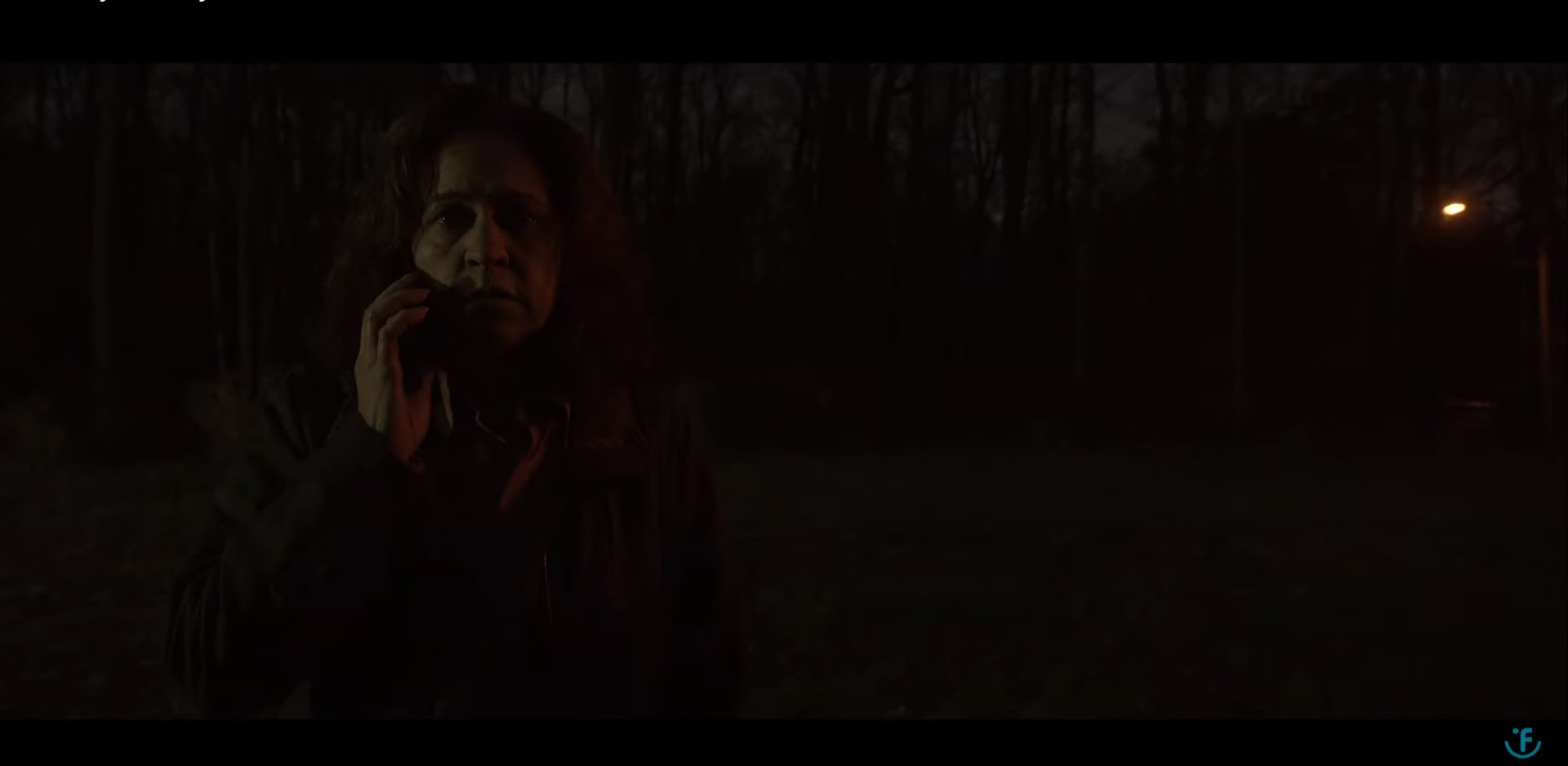
Dawn has been driving for over 30 hours straight schlepping a customer’s belongings from point A to point B. Unable to keep her eyes from closing, she pulls over and parks in an empty lot of a state park. Before Dawn could close her eyes, a mysterious and frightened woman approaches her asking for help, informing Dawn that she has been held captive for months. Treating with suspicious eyes, not fully trusting this young woman’s thinly laid out accusation, the exhausted truck driver is eager to protect her truck from would-be thieves and vandals, but decides to assist though her phone is broken and her truck keys are lost, leaving the two women stranded in the middle of nowhere with a radical abduction story and the captor is not too far behind. What seemed to be a quiet night of deserved rest and relaxation for a truck driver who just drove straight-through without much as taking a break is about to unfold an eye-opening, harrowing ordeal that puts the two women in for the long haul.

Would you trust a harried and jonesing-looking straight knocking on your day cab door of your straight moving truck in the very early AM hours of the night? This iffy scenario plunges audience into that exact pressure point of Max Strand’s feature film directorial debut of “Goodbye Honey.” The 2020 abduction-thriller is also written by Strand and co-written alongside Todd Rawiszer, collaborating for a second time since 2011 for their cannibalistic-comedy, the family kills together, eats people together, “The Labbinacs.” Generally most abduction thrillers takes the viewpoint of the captive, but for “Goodbye Honey,” Strand and Rawiszer take the perspective of an outsider with unlucky happenstance and makes persevere over their own hang-ups in the dealt lousy hand called life. “Goodbye Honey” is produced by Joshua Michaels from the Examined Dots Pictures, a subsidiary of the video media company, Examined Dots Media, and is the first feature length film production from the company.


The point of view from the trucker sparks a clean slate inception of events as Dawn is oblivious to the entire occurrence that has scared and scarred this young woman whose animal instincts have kicked in and is working against her advantage with Dawn as desperate spurs her to act instead of thinking logically about what to do.  Pamela Jayne Morgan (“The Manor”) headlines “Goodbye Honey” in her first breakout role of 2020 stepping into not only an impromptu lifesaving moment but also into the steel toed shoes of a trucker’s life behind the wheel that features sleeping in her cab, eating lunch in her cab, and being driven into the ground by a demanding, world’s most dangerous, profession.  The only uncouth trucker habit Morgan does not do in her cab is urinate into a bottle.  Oh wait, she does bottle potty!  However, the circumstances surrounding that moment is not because of her profession and only adds to the many layers, including her tragic background and lost ambitions, that makes Dawn a complex character working the mental gears to do what she can to survive and save a life in terror’s grip.  And just like Dawn, we’re weary to believe the fantastic accusations coming out of Juliette Alice Gobin’s lip-quivering mouth who sizes up to the very still with fright the shaken and traumatized abductee in Phoebe as she narrowly escapes her captor, played by Paul C. Kelly (“Devils Prey”).  Gobin debuts her talents in horror with flawless strokes that paints Phoebe more of a misunderstood threat than a distressed victim of kidnapping.  Morgan and Gobin’s hot and cold dynamic perfectly rouses doubts as nothing, at first, is entirely clear.  “Goodbye Honey” has an indie size cast, but the performances are robust with layered intensity from the principle roles to the momentary characters played by Peyton Michelle Edwards, Rafe Soule, Jake Laurence, and Keara Benton.

There’s always been this uniquely bizarre fascination of which story angle an abduction thriller should play from and in “Goodbye Honey’s”, the story doesn’t follow a linear narrative of the abductee but backtracks with anecdotal flashbacks as Phoebe divulges the events leading to her snatching and how’s she’s been isolated in a small room for months to her only hope and savior, an emotionally downtrodden and physically fatigued Dawn.  While not entirely new, as we’ve seen a structure similar in John Oak Dalton’s “The Girl in the Crawl Space” that relives the victim’s held captive experience through mental flashbacks and therapy sessions, “Goodbye Honey,” bills far superior dread unlike the 2018 film, which suffers from monotonous exposition and topical offshoots.  Strand plops us in the unravelling thicket of action with gripping what-ifs potentially lurking in the midnight shadows surrounding Dawn’s painted white beacon of hope on wheels.  Character curveballs also hit empathetically hard with twist and turns coming out of the ears of all the narrative pawns and not just confined to the black and white abduction that brings them together. As much as Phoebe needs Dawn’s help to escape the clutches of her captor, Dawn also needed Phoebe’s accidental life purpose healing that fills the void in Dawn’s life left by the passing of her husband and reaffirms her passion for helping people no matter her personal circumstances.  Oddly enough, I found Kelly’s captor lacked substance to the story other than the characteristic ploy of revenge that agitates the action as his endgame for Phoebe isn’t exactly clear other than spouting, “she needs to pay.”  The serendipitous connection between Dawn, Phoebe, and the abductor has designer destiny stitched into the natural fabric of life in an almost comical happenstance of events, but makes for good entertainment nonetheless knowing that there is a circle of connectivity, a sense of purpose, and a reason to fight back in “Goodbye Honey’s” pressure cooking recipe.   

On May 11th, “Goodbye Honey” was released on digital HD and on cable VOD in North America from Freestyle Digital HD after a successful stint of festival wins including Best Thriller Feature, Best Actress (Pamela Jane Morgan), and Best Supporting Actor (Rafe Soule) at the Garden State Film Festival, Best Lead Performance (Juliette Alice Gobin) at the Nightmares Film Festival, and Best Actress (Morgan) at NOLA Horror Film Festival. Todd Rawiszer didn’t just co-write the film he also shot the film, his first feature film credit at a cinematographer. Inside 96 minutes and with a narrative taking place over a single night, Rawiszer casts a variety of hard lit shadows with glimmers of intermittent portable lights and neon reds kept tight with medium to closeup shots and rarely venturing out beyond that range with clarity as much of the wide shots or long shots are obscured, in a haze, or blurry to the eye as Rawiszer never wants you to know what’s exactly out that far. A pair neat editing montages by Jay Yachetta, with the meal plate and door slamming alongside Phoebe going mad with stir crazy is some of the best work I’ve seen a long time that can trigger an epileptic episode and still be insanely cool in the cruelty. Top those montages with an aggressive sound design and you’re head will surely pop off with unsettling jubilation. No bonus scenes during or after the credits are included. Regardless of budget or the stigma of low budget pictures, nothing but good vibes and good things to say generally about Max Strand’s “Goodbye Honey,” a startling trembler of persistence to outlive a night of terror that stars two stellar leading ladies at the heart of the film’s success.

Rent or Own GoodBye Honey on Amazon Prime!