

In a world under sieged from a highly contagious virus, known as the ID-7 virus, that blocks the uninhibited and explosive impulses, workaholic Derek Choe attempts to make a footprint at his ruthless, white collar firm, but lands on the receiving end of a frame job that results in a pink slip and being escorted out of the building. Before being able to walk through the exit by security, an ID-7 invasion as quarantined the office and symptoms are seeping to the surface. All hell breaks loose amongst co-workers, exacerbating the already highly caffeinated, extremely strung out, intensely coked up, and amoral aggressive behaviors of a volatile workplace environment, and an infected Choe aims to reach the top floor to violently express to the firm’s board on why they should reconsider his termination, but a drug-fueled, and also infected, boss strives to make that endeavor challenging with the assistance of his lower tiered, corporate suits.
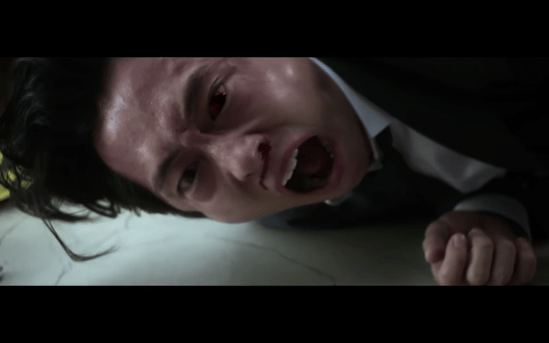
“Mayhem” is a HR nightmare! The Joy Lynch 2017 directed action-horror film is “The Firm” meets “The Raid: Redemption!” Luckily for the viewers, “Mayhem” is a hardcore insight into unlocking all of your deepest, darkest inhibitions to the tun of explicitly telling off your boss with every four letter expletive in the book, giving your rotten colleague a firm piece of your mind, or just knocking everyone’s teeth down their smug throat. Yeah, it’s that kind of movie. Lynch (Wrong Turn 2: Dead End) runs with the first time feature film from screenwriter, Matias Caruso, who designs a virus, called the ID-7, that removes or ceases to function what defines us as human, from compassion to sympathy, in order to frankenstein a demented rendition of Donkey Kong and Caruso’s characters basically all have singular mode – asshole – but that subversive level stems from an infection induced state and the characters, deep down, maintain a slither of their original selves in an extremely dark comedic sense.
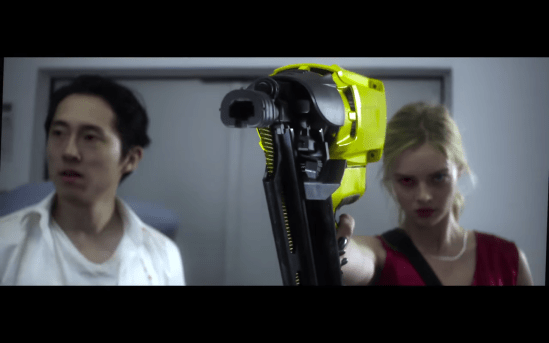
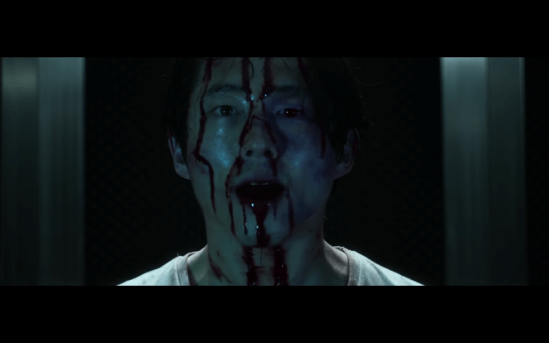
On the coattails of his character’s brutal demise on AMC’s “The Walking Dead,” Steven Yeun remains in an dimension plagued by a different kind of viral infection. Instead of blowing the brains out of walkers, Yeun brilliantly and entertainingly fills the ambitious workaholic shoes of account manager Derek Choe who literally battles his way to the top after being canned by his unscrupulous consulting firm and when the ID-7 overwhelms each and every employee. Choe is a far cry from Glenn on “The Walking Dead,” a pure hearted character with a good moral compass. Yeun’s character’s moral compass is skewed without doubt and double skewed with introduced by the virus. Choe forms an unlikely pact with a desperately disgruntled borrower Melanie Cross fighting against the firm, and the firm’s bank, looming foreclosure and the sassy, blond ass kicker, embraced by “The Babysitter’s” Samara Weaving, can chew gum and kick tail all at the same time. The pair are pitted against the some of the office’s most ruthless suits, such as a sociopathic HR enforcer known as The Reaper (played by “The Walking Dead” vet in Dallas Roberts), a manipulative snake charmer Cara Powell (Caroline Chikezie of “Æon Flux”) and at the top is none of than the big boss played by “Hellraiser: Revelations'” Steven Brand. Not only does “Mayhem” have colorful, well-scribed anchoring characters, but the supporting parts are just as well-quick-e-quipped too with Kerry Fox, Claire Dellamar, André Eriksen, and Mark Frost (“Faust”).

“Mayhem” relishes in the ferocity of that of a Mark Neveldine “Crank” franchise, but lacks a certain coherency untuned to seamlessly sustain the story to the end. Moments of purely poor editing don’t convey the full message intended, leaving much desired when considering the hero and heroine’s plight through the firm’s ruthless hierarchy to the top. These moments don’t make or break the story and are minuscule in portion size but are large enough to thwart going unnoticed. Another annoyance of how the story is told is the off screen violence. With a feature entitled “Mayhem,” by very definition states, “violent or damage disorder, chaos,” one would imagine that any and all violence would be in full display, showcased proudly and exhibited without ambivalence, and the beginning starts off energetic enough with an explosive scene of a conference room brawl involving the attendees in a all out melee, a half naked couple sexing right on the conference table, and ending the scene with a murderous gashing of one’s carotid artery. Narrating why these berserkers are killing and humping each other is Steven Yeun’s Derek Choe, setting up the ID-7 as the uninhibited virus. The violence that pursues goes into a hot or cold state where the latter involves off-screen violence, especially between Chikezie and Clarie Dellamar’s characters in a fight to the death between boss and assistant, but in a heated exchanges that had more girth in the dialogue, their actual bout screens over to Choe and Cross’ blank stare expressions and the determination of who bests who goes into a big question mark status.
RLJ Entertainment releases “Mayhem” onto various formats include a not rated DVD, Blu-ray, and streaming platforms. I am unable to comment or critique on the audio and video qualities of the film as I was provided a streaming link that didn’t include bonus material; instead, I’ll comment on how Lynch and the rest of filmmakers did a remarkable job constructing an ambiguous building structure along with the help of the two Stateside based production companies Royal Viking Entertainment and Circle of Confusion. Though the film was shot in Bulgaria, the location could have been right in downtown of your nearest city and that fairs in “Mayhem’s” success to establish anywhere as a victim to the virus or a workplace go array in the world. The next time you want to take a heavy duty Swingling stapler to you’re supervisor’s noggin for assigning to many TPS reports to you, check out “Mayhem” to instill that visceral courage and audacity to do so all the while being entertained by utter, unadulterated violence and violent thoughts and actions that usually spur underneath the breath of a common office environment.
Category Archives: Just fucking awesome
The Myth. The Legend. The Evil…. “Leatherface” review!

Texas 1955 – the pride of the Sawyer family was not their tattered farm, but a bloodline taste for something else – callous murder and a penchant for human flesh. Verna Sawyer sought to instill that pride into her children, especially her youngest, Jed, but when Hal Hartman, hard nose local Sheriff, learns that his daughter becomes victim of the Sawyer’s suspect nefarious carnage, he executes the law to his advantage, deeming the Sawyer house unfit for children and removes Jed from his labeled degenerate mother Verna. Ten years later, a group of teenage patients escape a mental hospital, kidnap a young nurse, and reek bloody havoc in their voyage to Mexico in an attempt to elude the very same lawman who put them away, but this time, Hartman isn’t adhering to the law, straying off his moral compass to pursue a vengeance mission against unprincipled youth that’s personally driven by Jed and the Sawyer family. Once the embattled Hartman catches up with his prey, a series of gruesome events lead to the creation and the construction of one of the most notorious killers Texas will ever see.

I love a good origin story. There’s something to be said about understanding the commencement of character, to be in the shoes of a long running icon, and to be able to sympathize with their story no matter how atrocious. Directors Alexandre Bustillo and Julien Maury’s 2017 “Leatherface” does just that with the film’s own origin enlightenment on how the chainsaw wielding, human skin mask wearing psychopath came to fruition inside a home of unspeakable brutality and influenced externally by a unforgiving society. From a script penned by Seth M. Sherwood, “Leatherface,” serving as a direct prequel to Tobe Hooper’s “The Texas Chain Saw Massacre,” briefly touches upon the preteen years to setup the catalytic road trip from hell, birthing a monster in a time of adolescence and if part of a legacy spanning over forty decades inspired by Ed Gein, the real life human skin wearing and notorious serial killer, then you damn well know “Leatherface” has to be genetically predisposed to be ultra-violent drenched in blood splatter. The French filmmaking duo, who’ve helmed 2007’s “Inside” and had directed the “Xylophone” segment in “The ABCs of Death 2,” nail the dark and gritty tone that not only breathes a gassy and exhaust fumed life into a massive flesh-ripping chainsaw, but also inflicts heartlessness across the story board into a heartfelt homage to the characters and to the story fathered by Kim Henkel and the late Tobe Hooper, both of whom were attached as executive producers.

Over the years, many actors have held the mammoth power-drive cutting tool in their hand that’s ready to chip away at flesh such as Andrew Bryniarski (“The Texas Chainsaw Massacre” 2003 remake), Bill Johnson (“The Texas Chainsaw Massacre 2”) and, most famously, Gunnar Hansen, the original Leatherface. However, I’m not going to divulge who the pubescent Leatherface is in the story because the film plays out as a who out of the group of degenerate teens is the son of Verna Sawyer, even though you can easily obtain the information in a simple click and search on Google. Instead, Sam Strike, James Bloor, and Sam Coleman portray the three escapees who are accompanied by an equally insane sociopath in Jessica Madsen and an eagerly novice kidnapped nurse by Vanessa Grasse. Amongst a sea of English actors are a pair of vets to shepherd the young cast and be the embattled bookends to the dawn of an icon. Lili Taylor (“The Haunting”) and Stephen Dorff (“Blade”) face off as Leatherface’s mother, Verna Sawyer, who butts horns with a longstanding sheriff, Hal Hartman, with a steadfast vendetta against the Sawyer family. Christopher Adamson (“Razor Blade Smile”), Nathan Cooper (“Day of the Dead: Bloodline”), and Finn Jones (“Wrong Turn 5: Bloodlines”) co-star.

Usually with a pair of directors, two different styles spawn to an end result. With Bustillo and Maury, styles merge into a seamless effort of elegant wonders. Each shot emerges a purpose to the story whether it’s painting an image of the Sawyer’s death house to pulling a one-eighty with characters, the filmmakers ability to combine each element into a single story, that has such a close knit cult following, and still manage to cinematically pull off the atmosphere, the grit, and the gory carnage of a Texas Chain Saw Massacre film is impressive. Cinematographer Antoine Sainer, whose worked previously with the directing duo on the “The ABCs of Death 2’s” segment “X,” has the ever so poised eye that’s able to well-round and solidify Leatherface’s terror tenor, particular exampled in a foot chase scene through a moonlit forest, smoke bellowing out of a growling chainsaw, and a tattered young girl bawling, screaming, and fleeing for her life from a deranged masked killer whose huffing, snarling, and growling during the pursuit.

Lionsgate Home Entertainment presents the Millennium Films produced “Leatherface” onto Blu-ray + Ultra-violet combo disc, a MPEG-4 AVC encoded disc with a 1080p resolution and presented in a widescreen, 2.38:1, aspect ratio that displays the Bulgaria landscape in a yellowish-brown, Texas-like backdrop. Details are noticeably fine that exquisitely reveal the death and destruction of the Sawyers and those who unfortunately surround the family. The English DTS-HD Master Audio 5.1 track evenly distributes and consistently a range of engrossing fidelity, ambient, and dialogue layers. Bonus material includes a play feature with an alternate ending that’s less superior in contrast to the final product, deleted scenes, and a behind-the-scenes making of that includes brief interviews with directors Alexandre Bustillo and Julien Maury, actors Sam Strike, Stephen Dorff, Lili Taylor, and others, and goes behind the scenes in creating the tone and style of “The Texas Chain Saw Massacre” while implementing their own vision. “Leatherface” forces the unsavory and unpleasant down the throats of TCM fans, jamming an attempt to exposition a futile chance to a destined maniac of cannibalistic proportions and manages to mix up the Tobe Hooper’s weathered franchise with a barbaric bruiser of a tale.

“Leatherface” on Blu-ray! Buy it here, today!

Evil Loves to Pursue and Kill for Sport! “Happy Hunting” Review!

After receiving a distressing call warranting a trip to Mexico, alcoholic and drug dealer Warran Novak attempts to sell half cooked crystal meth to junkies that ends in two fatalities and two armed drug pushers in hot pursuit of Warren after he steals their cash for the road trip to the border. Before entering Mexico after a tireless drive and unaware of where to exactly go next once crossed the border, the fallen military soldier rents a motel room in the rundown town of Bedford Flats, a once thriving community lush with value and tourism derived from it’s once popular hunting tradition of bison and other wildlife. Now that the wildlife has dried up, Bedford Flats has landed in a stage of an ugly depression and to keep on the tradition of hunting, the foundation of which Bedford Flats has been built, the towns people gather to conduct a merciless hunting expedition of drifters and unsavory folk. Warren and his two pursuers, plus a homeless Mexican and the town drunk, are forced to participate in the hunt as prey with only their able bodies to carry themselves across the salt flats and seek shelter in the rocky landscape just beyond, but Warren decides to fight back against the towns’ most capable hunters in a twisted game of cat-and-mouse.

Western horror has always been a fascinating subgenre with a bleak and barren landscape denizened with colorful, hellbent characters committing one of three sole acts: taking, surviving, or dying. Selective Collective and Waterstone Entertainment’s “Happy Hunting” steps ever so lightly beyond the border into the realm of modern western horror involving a deranged game of hunting and killing humans for sport backdropped mostly in Bombay Beach, California and written and directed by first time feature film filmmakers Joe Dietsch and Louie Gibson, who is one of the sons of Hollywood superstar, and who knows all about western dystopias, Mel Gibson (“Mad Max”). Louie Gibson might have learned a thing or two from his “Apocalypto” directing old man by delivering the brash ferocity and the stoned-heart, icy personas into the story and into the shot twisting an already vulnerable situation into sheer, bite-the-bullet terror.

Martin Dingle Wall delivers every shaky alcoholic tremor as drifter Warren Novak. Wall’s soft eyes, but rugged appeal justifies the 46-year-old actor as an unlikely, likable hero even though Warren will do just about anything for money and for the drink. Wall is able to tap into Warren’s subtle high intelligence and exploit it for the screen against a variety of aberrant game hunters by actors including “Devil Girls'” C.J. Baker, Michael Tipps, Kenneth Billings, and Liesel Handson of “Planet of the Vampire Women.” Dietsch and Gibson pick out one hunter to be the most versatile bad guy in Ken Lally. Lally, whose voice has captured legendary video game characters such as Mortal Kombat’s Smoke, Goro, and Shinnok, brings that malevolent tone to the silver screen as Bedford Flats all around nice guy, Steve Patterson. Of course, “all around nice guy” is an oxymoron in “Happy Hunting” because there are no such thing as nice guys in Bedford Flats, not even the crooked Sheriff Burnside (“Sasquatch Hunters'” Gary Sturm) who acts as the maestro for Bedford Flat’s great annual hunt.
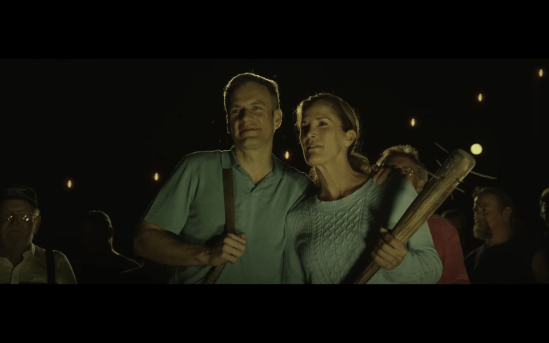
What’s interesting about the film is that there is no love interest which is a rarity; instead, Warren is motivated by a mysterious phone call regarding a possible Mexican love child in the need of help. The mysterious plea over the phone line provides Warren with a purpose in this purposeless life, but that purpose is amplified by the very abrupt detour by a deranged town seeking to rid, what they consider to be, lowlife scum. Another side to Warren’s plight is that the whole sadistic game, the entire inhuman hunt, could be a figment of his withdrawal. Being a drifter and a person who doesn’t amount to much, Warren self worth goes in and out of various stages of withdrawal throughout the duration, before and during life stakes, with dropped dialogue and visible hints about symptoms of going cold turkey. Lets not forget to mention that the directors make an elucidation of Warren’s withdrawals with visions of a dead man, one in which Warren kills prior to his trek to the border, conversing with him, providing him undue advice during the predicament. Then, there’s the very end scene which shoots the likelihood of Warren’s version realism and sanity right out the window and begs the question if everything Warren went through, every struggle, and every death experienced was all inside his head.

“Happy Hunting” has been released on DVD courtesy of Umbrella Entertainment. The region 4 DVD is presented in a widescreen 2.35:1 aspect ratio that’s utterly gorgeous and stupefyingly frightening in the long and wide shots of Bombay Beach’s desert wasteland. Heavy in dusty yellow and rich in lifeless landscape, the color palette is understandably one-sided, but the merit is in the detail of every dry land crack and every minuscule dust bite being disseminated about with every action. The English 5.1 Dolby audio track has balance, range, and fidelity. Dialogue’s clear and prominent, even with Martin Dingle Wall’s slightly raspy and sluggish deliveries. A blight on the DVD is the bonus material and that goes without saying because a single extra doesn’t grace the package, constructing an anemic, film-only DVD presentation of Joe Diestsch and Louie Gibson’s first feature run. However, “Happy Hunting” re-illuminates Western horror stark with a dire need for survival during trying times and Joe Diestch and Louie Gibson have fashioned a subtle analogy of what life would be like in a supposed Trump America where the U.S.-Mexico border wall would be infact 10 feet high, “deplorable” people are axed from today’s American society, and the small rural, once thriving, communities are stuck in the past with outdated viewpoints and assumptions of how maintain existence in a world changing around them. In the end, “Happy Hunting” goes beyond Western horror into being an insightful dystopia of exploitive western survival horror.
Don’t Let Evil Give You The Shaft! “Down” review!

One of New York City’s popular skyscrapers, the Millennial Building, is a modern marvel with 102 floors sought to be visited by national and international tourists, looking to reach the zenith and take a once-in-a-lifetime, awe inspiring gander across the Big Apple’s urban jungle landscape or seeking to be a working stiff inside the immaculate bones of the building’s historical foundation. Every day, thousands of visitors and employees ride the Millennial Building’s 73 elevators, assuming the safest ride possible to the touch the bottom of the sky, but when a deranged scientist implements a controversial biomedical computer into the building’s elevator vascular network, one tragic accident after another compiles fatal consequences within the vertical box that draws negative national attention. Elevator mechanic Mark Newman teams up with a rebellious newspaper reporter Jennifer Evans to investigate and uncover the a larger-than-life conspiracy behind a killer elevator organism.

Over three decades ago, Dutch filmmaker Dick Maas wrote, directed, and released the killer elevator film, simply titled “De Lift,” in the Netherlands. About 18 years later after his commercial success for “De Lift,” Mass spawned an American remake of the film entitled “Down,” also known as “The Shaft,” that transformed into the forgotten bastard when compared to Maas’ 1983 feature. To be frankly, “Down’s” terror-comedy knack with spunky characters and zany deaths put the 2001 remake right smack dab at the top of the repeat value charts and despite the lack of rigorous plausibility, the refreshingly no-holds barred, fun zone horror film doesn’t think twice, charging forward with gun blazing in an elevator ride to cinematic hell that shows no mercy and gives not one single care with each surpassing floor level. Be damned the backstory with meager exposition! Be damned the underdeveloped characters who are pivotal to the plot! Be damned the complexities of how the biomedical elevator system is able to live, breath, and reproduce through murder and mayhem! “Down” has a black and white, up and down glory that’s considered b-horror good that’s very reminiscent of the early films of Peter Jackson.

If you’re going to remake a killer elevator film, go big with the cast and Mass surely pulled through by signing cult genre stars of the time. Naomi Watts was just coming into the mainstream scene as she tackled well-received projects around that same time frame between David Lynch’s “Mulholland Dr.” and “The Ring” a year later, but the “Tank Girl” actress showed more than just her aesthetic assets, more than just shrieking horrific screams, and more than just displaying her big guns. In “Down,” she proved to be a gung-ho, rough-it-with-the-boys portrayer of a feisty reporter whose hot on the trail of a conspiracy helmed by surreptitious characters played Michael Ironside, who did not lose an arm in this film like he does in “Total Recall,” “Starship Troopers,” and “The Machinist,” and Ron Pearlman (“Hellboy,” “Cronos”). However, James Marshall, in the lead as the elevator mechanic, couldn’t ratchet tight a performance that called for concern and durability; instead, Marshall, known for playing James Hurley in “Twin Peaks,” schlepped clumsily on screen compared to the aggressively hungry Watts. Eric Thal (“The Puppet Masters”), Dan Hedaya (“Alien: Resurrection”), Edward Herrmann (“The Lost Boys”), and Kathryn Meisle (“Basket Case 2”) round out the remaining cast.

“Down’s” commercial success was plunging disaster. Reasons ranging from a flimsy premise to being an unconventional horror to the genre were, more than likely, not the major players in “Down’s” inability to elevate an audience. More so, the reasons stem solely between one or two factors, if not both. For one, Maas writes New Yorkers as belligerent morons, cocky, greedy, and deranged. Many of the characters are like this and if there was any that embodied any sliver of rationality or humanitarian attributes, there screen time was quick and fruitless. Secondly, though “Down” released in the spring of 2001, a film set in a New York City high rise with multiple mentions of terrorists and even verbally conveying a foiled plot to take down the twin towers probably hurt the film’s home entertainment value to the point where a DVD release didn’t surface until a good two years after the theatrical premiere.

Aside from all the delays, harsh reviews, and a shoddily cropped Artisan DVD release, Blue Underground delivers a godsend presenting “Down” on Blu-ray/DVD combo. The 1080 HD on a BD 50 dual layer disc has a widescreen 2.35:1 aspect ratio and radiates with clarity; so clear, that I had a hard time placing the year as the image certainly outshines most turn of the century products. An immense amount of detail just exemplifies the extraordinary content without appearing as a discount deal for special effects. Audio options include an English and French 5.1 DTS-HD and an English and French Dolby Digital stereo with both including optional English SDH subtitles and Spanish subtitles. The amount of range is leaps and bounds beyond the Artisan’s par quality with the 5.1 channelling maximized quality and clarity. Dialogue track is clear and free from obstructions with the only stain being the horrendously dubbed diner jerk that punches James Marshall in the face, but that’s not necessary a make or break blemish. Bonus materials include audio commentary with writer-director Dick Maas and stunt coordinator Willem de Beukelaer, the making of “Down,” behind-the-scenes footage that’s exclusive to the Blu-ray, theatrical trailer, poster and still gallery, and teaser trailers of upcoming releases. The casing itself harnesses a collectible booklet with new essays by Michael Gingold. “Down” finally shines through with a stellar release from Blue Underground, a leader in restoring and releasing cult films. If in the mood for a story without much thought while desiring to choke on out of this world terror-comedy then “Down” is a must on the upcoming marquee!

Own “Down” on Blu-ray!

Wes Craven’s Evil After School Special! “Summer of Fear” review!

Julia Trent is left orphaned after the fatal accident of her parents that involved them falling to their fiery deaths when their car careens off a cliff attempting to drive their housekeeper home. The only family Julia has left is the Bryant family whom she hasn’t seen in over 15 years. The Bryants welcome their niece with consolation and open arms, inviting her to room with her cousin, Rachel. Rachel has the perfect life: a loving mother and father, a cute boyfriend, and the ability to ride and compete in horse competitions. However, Rachel’s world is upended when Julia enters her life and something just doesn’t seem right when Julia slowly begins to push Rachel out of her comfy position, bewitching the men in her life to turn against her and being the center of a number of considerable accidents. As Rachel suspicions grow and she becomes further attached from all those that surround her, an investigation ensues with Rachel at helm to retrieve what’s rightfully her’s from an underlying evil.
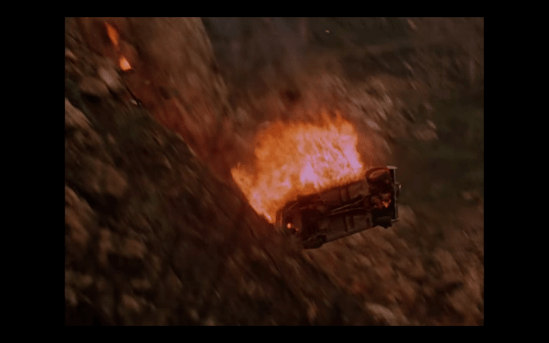
The late Wes Craven made for television movie “Summer of Fear,” also known as “Stranger in the House,” is a living relic; a time capsule type horror this generation will find difficult to grasp, like Nintendo’s Gameboy or music tape cassettes, with thrilling suspense unlike today’s cookie cutter product. After he shocked audiences with the controversial “The Last House on the Left” and crafted a shifty dream killer in “A Nightmare on Elm Street,” director Wes Craven embarked on a venture into the television movie scene that didn’t spur graphic content, but focused putting the supernatural in the forefront of reality with a similarity to that of “Tales of the Darkside” or “The Twilight Zone,” captivating audiences sitting in front of the boobtube with twists and thrills in a Halloween premiered NBC movie. Based on Lois Duncan’s novel of the same title and written for television by Glenn Benest (who also wrote another Craven directed picture “Deadly Blessings”) and Max Keller, Wes Craven greatly accepted the challenge of reaching a broad audience without being subversive and explicit, sharing his vision with another living horror icon in the starring role.
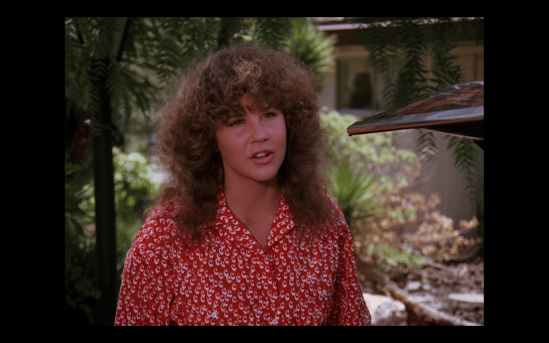
“The Exorcist’s” Linda Blair has a role that’s certainly a far cry from the possessed Reagan, but the 1978 “Summer of Fear” had opened up a sleuth-type role for Blair that made her more of the hunter than the victim. Blair’s raspy voice and spoiled girl attitude completes the privileged daughter of the household compared to her tall and charming rival, Julia Trent, in “Necromancy’s” Lee Purcell. Purcell compliments Blair all too well and, together, the on screen tension is ever present, even if slightly over exaggerated. From that point on, “Summer of Fear” was filled in by other great talent such as Jeremy Slate (“True Grit” ’69), Carol Lawrence, a very young Fran Drescher in the beginning of her career, Jeff McCracken, and Jeff East (“Pumpkinhead”), but the more fascinating role, that was hardly explored, is awarded to MacDonald Carey, the resident occult professor of the neighborhood. Carey’s has a very old school actor with a performance very familiar to Robert Mitchum and the veteran actor’s vast career felt very small here in the catalytic role as the confirming source for Rachel in her suspicions.
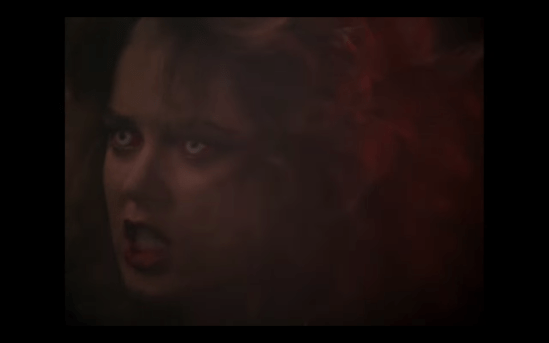
In addition to the withdrawal of the contentious content, “Summer of Fear” entertains on a minimalistic special effects stage that still pops with jaw-dropping suspense and still caters to an, even if slightly dated, story altering moment that rockets toward a maelstrom finish. All the while, Lee Purcell’s character has such glam and beauty that the bewitching sticks overpoweringly raw as a telling moment that beauty isn’t all that’s wrapped up to be and people can be ugly on the inside. Through brief glimpses into Julia Trent’s authentic past, including the mountainous Ozark retreats, one could conclude the story’s ultimate ending, but the fact that the actors embrace their rolls and Wes Craven connects himself enthusiastically to the project makes “Summer of Fear” a solid small box show of terror.
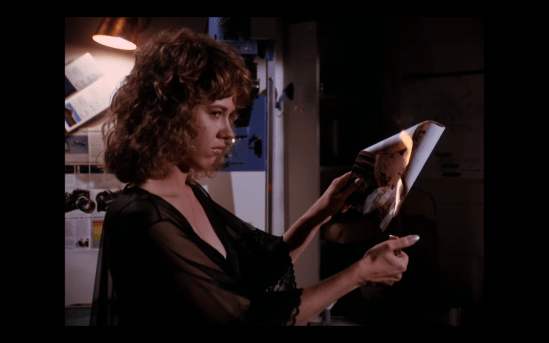
Doppelgänger Releasing releases the Wes Craven classic “Summer of Fear” for the first time onto Blu-ray home video. Transferred to a 1080p resolution, the presentation is certainly made from TV in the Academy, 4:3 or 1.33:1, aspect ratio. Image quality sporadically has moments of definition instability where the image goes fluffy or soft and amongst the duration’s entirety are a slew of white specks and noticeable grain, but the transfer remains solid over the decades that display a grandeur of vivid coloring despite some scenes of with an overburdening washed yellow tint. The English 2.0 DTS-HD Master Audio cleanly presents the feature with not a lot of flashy audio moments and the dialogue is clean and clear suggesting that the audio track aged very well. Bonus material includes an audio commentary track by director Wes Craven, an exclusive interview with Linda Blair, photo and poster gallery, and concluding with the original 1978 trailer. “Summer of Fear” might be obsolete in modern ways of terror filmmaking, but Wes Craven imprints a searing cult classic that brandishes more than just guts and gore. Instead, the father of “Scream” continues to impress beyond the grave, thanks to distributors like Doppelgänger Releasing, with the filmmaker’s expansive range that debunks many popcorn horror goers’ assumptions about the director and his films. “Summer of Fear” simply showcases that Craven was a jack of all trades when coming down to brass tax in creating a terrifying story.

Buy Summer of Fear at Amazon!

 It's Bloggin Evil!