EVIL Infiltrates to Seduce All Your Women! “The Vampire Lovers” reviewed! (Scream Factory / Blu-ray)

“The Vampire Lovers” Now Available at Amazon.com!

The Karnstein family’s notorious legends of evil spread vast throughout 18th century Germany. Once thought their wicked leeching of nearby villages exterminated after the Baron Joachim von Hartog dispatched all the villainous vampires after his sister fell victim to their seductive fangs. However, years later, the aristocratical General von Spielsdorf and his niece Laura find themselves in the unexpected company of a houseguest with Marcilla, the beautiful daughter of a new neighboring countess. Days later, Laura unexplainably dies from continuous nights that drain her of energy and flourish her mind full of nightmares of being strangled by a large wild animal. In the wake of her death, Marcilla also disappears. Sadden by the news of her friend’s death, Emma and her father take in the daughter of a travelling countess named Carmilla to provide Emma with cheery, distracting company in a time of distress, but the mysterious cycle of enervation and nightmares start back up all over again and it’s up to the survivals of Laura’s death to stop death before it’s too late.
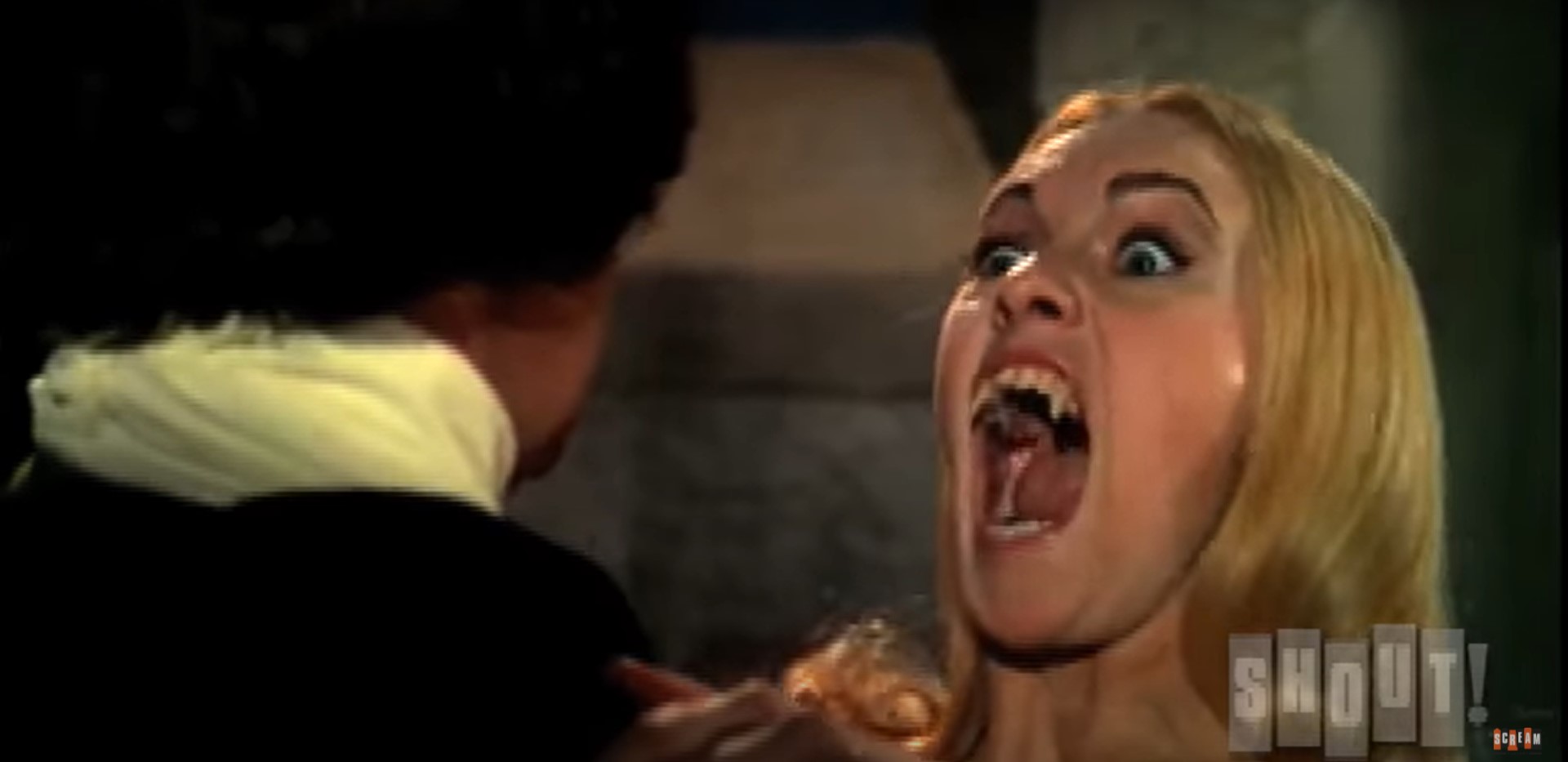
Unlike any other Hammer horror film you’ve ever seen before prior to 1970, “The Vampire Lovers” blazed the trail for permissiveness of the era’s newly reformed certification system that moved the bar from 16 years order to 18 and kept in line with society’s leniencies toward the favoring sex and free love.  “The Vampire Lovers” opened up to not only a new line of exploitation and violence at the turn of the decade but also introduced the longtime fans to new faces, especially actresses, who would accumulate labels and prominence inside the genre that last until this day.  Based from the story of “Carmilla” from Irish writer Sheridan Le Fanu, relatively new at the time Hammer director Roy Ward Baker (“Scars of Dracula,” “Dr. Jekyll & Sister Hyde”) took the Harry fine and Michael Style adapted original story and ran the distance with the screenplay from Tudor Gates whose writing forte was not specifically well-known within horror genre nor was horror Gates’ personal interest, yet Gates tweaked the Le Fanu female vampire tale to accentuate more of lesbian themes in a very turmoiled time when lesbianism, or just being gay, was seen as a disease or an unstoppable influencing evil force amongst the young people.  Fine and Style serve as producers in this co-production between Hammer Films and American International Pictures.
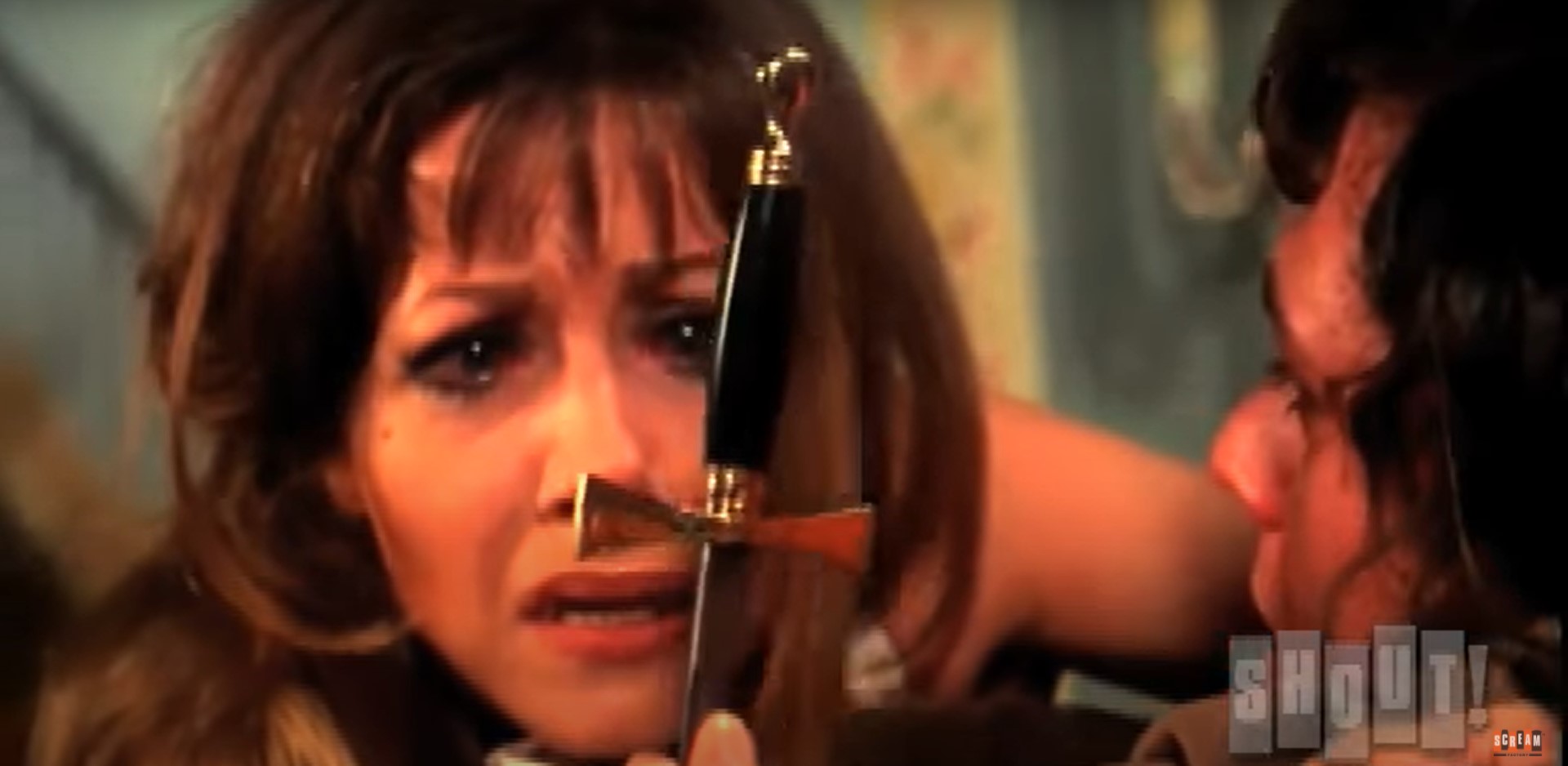
“The Vampire Lovers” comes under an atypical rule of the protagonist role or roles.  Previous Hammer films oriented themselves with a male lead from Christopher Lee’s domineering monster Dracula to the fearlessly courageous vampire hunter played by Peter Cushing, but “The Vampire Lovers” has Hammer trade in the masculinity presence for femme fatale with the introduction of Ingrid Pitt (“Wicker Man”) in the role of the hungry Karnstein vampire, Carmilla as well as Marcilla and Mircalla as the sneaky creature of the night infiltrates estates. Pitt’s exotic look and uninhibited attitude discerns obvious sex appeal for the Polish actress who can also act with gripping emotion that develops compassion for her malevolent facade. Add another pretty face and innocently sensuous woman arm-to-arm to Pitt with then 20-year-old Madeline Smith (“Frankenstein and the Monster from Hell”) and you have a two-front protagonist made up of women. Tack on the dark features and piercing blue eyes of Kate O’Mara (“The Horror of Frankenstein”) and “The Vampire Lovers” evolves into the something unlike anything we’ve ever seen from Hammer horror trifecta as once the scene settles into the narrative’s girth, the dynamic turns into a love triangle of unspoken women intimacies and jealousy, under the guise of supernatural persuasion, rears its ugly head. The menfolk really do feel absent from the excitement despite being pivotal pieces to the story and despite being the iconic representation in face and name of Hammer films. Peter Cushing’s longstanding work with the company has branded him forever legendary in the eyes of horror fans young and new. As the benevolent General von Spielsdorf, “The Horror of Dracula” Cushing looks wonderfully regal, gentlemanly dashing, and epitomizes the very essence of a strong male figure who also takes a very noticeable backseat for much of the second and into the third act. Same can be said for that other vampire portrayer who’s not Christopher Lee, Ferdy Mayne (“The Fearless Vampire Killers”) as the village doctor with a scene plopped here and there to inch the story along as a motivational vessel and another player caught in the Karnstein fang-game. “The Vampire Lovers” sees through to move plot significant characters, played by notable actors, to and from the storyline with performances from George Cole (“Fright”), Jon Finch (“Frenzy”), Dawn Addams (“The Two Faces of Dr. Jekyll”), Pippa Steel (“Lust for a Vampire”), Harvey Hall (“Twins of Evil”), and Douglas Wilmer as the Baron Joachim von Hartog who give a great opening expositional prologue that sets the background and tone of the film.
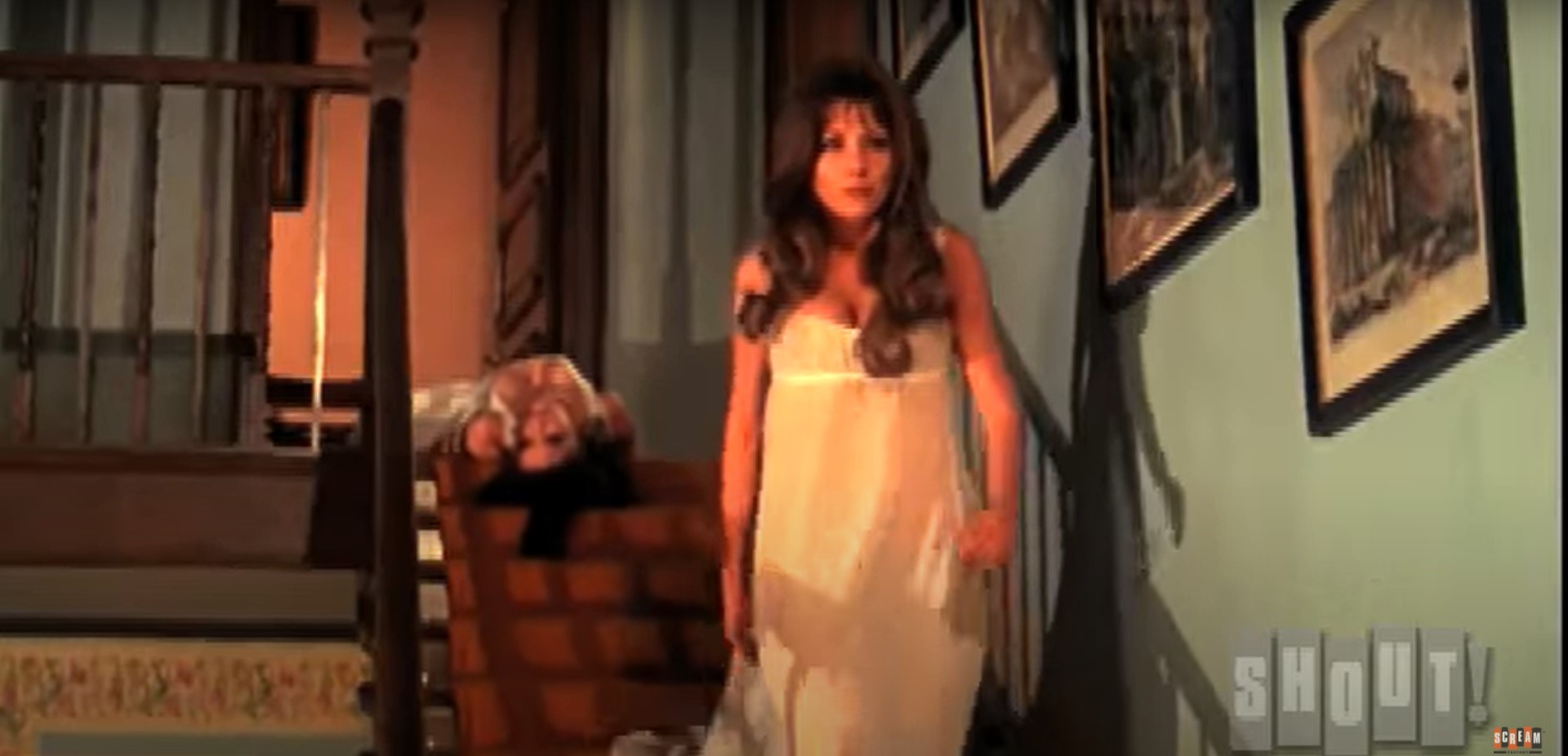
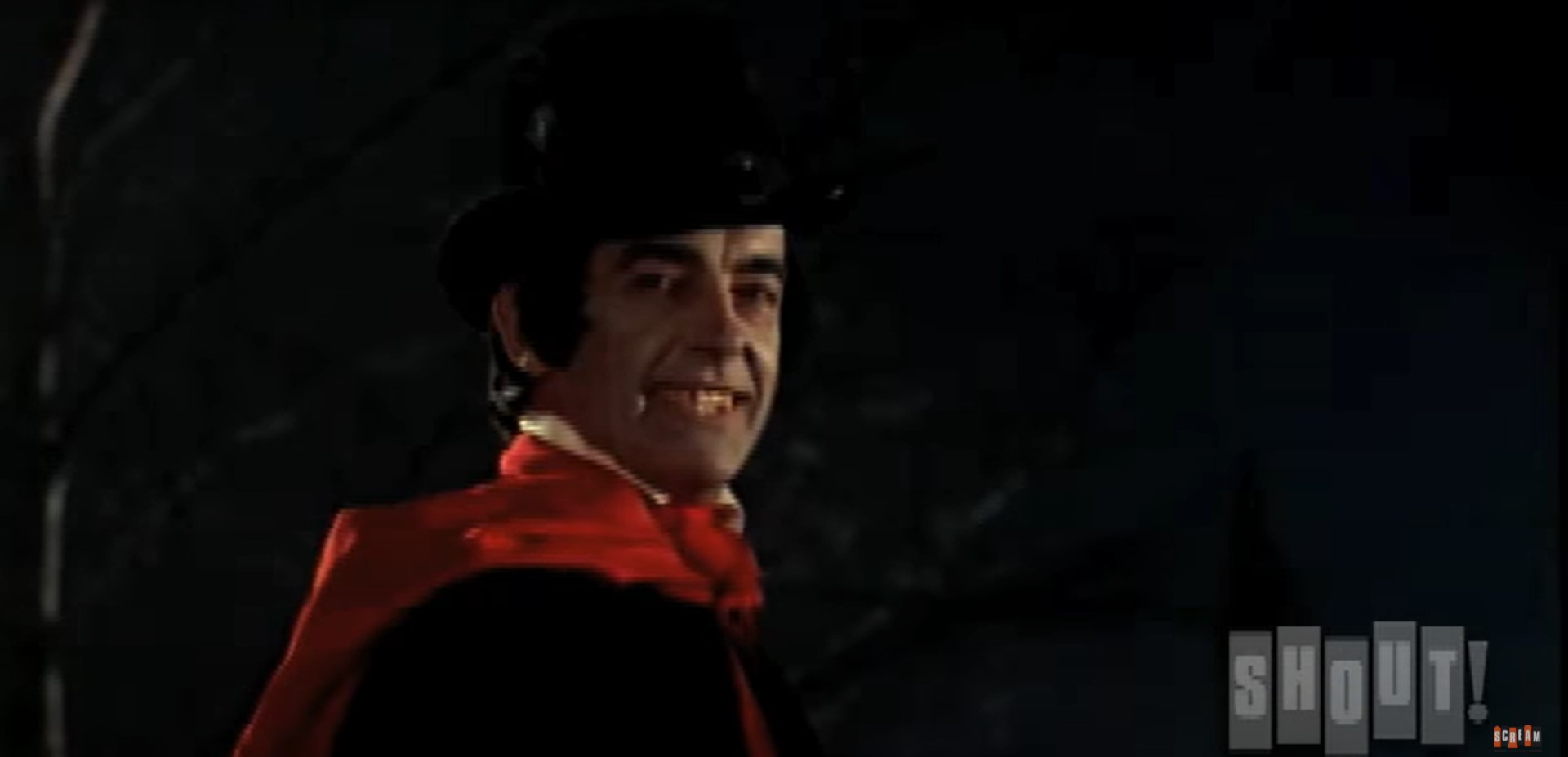
Laced in the traditional gothic style we all know and love from Hammer Films, “The Vampire Lovers” has grandiose late 19th century interiors and costumes with the latter gracing the starlets with strikingly bright tropical colored dresses that are elegant beyond the more stiff, and sometimes more imperialistic, outfits representing the period.  In a way, the outfits contrast against the brooding gothic prominence that speak of subversive liberation much paralleling the very thematic elements of lesbianism, sexual motifs, and a nearly an all-encompassing female lead.  If sex was ever a subtle insinuation in previous Hammer film it was not so subtle in “The Vampire Lovers” that consistently and constantly thickened the sexual tension and produced blunt scenes of eroticism between two or more women.  Even with the powerful commingle of womanhood desires, as much as it was depicted to be devasting to their lifeblood, Tudor Gates’ narrative still pit them up against nearly impossible odds when the male characters, no longer duped by the formalities of chivalrous intentions, figure out what’s really happening under their noses, in their households none the less, and band together to put a to a heart-staking stop to the macabre madness aka metaphorical lesbian evil.  The story has the women’s lusts and desires, whether their choosing or not, be an outlier from normalcy, yet on the other hand, nudity flourishes within the new laxed certification guidelines that see in some way, shape, and form four actresses baring skin in what what would have been considered risqué X-certificated scenes prior to 1970.  “The Vampire Lovers” is by far a perfect film with a lack of character context, such as with the male vampire on horseback indulging his penchant for observing Camilla’s attacks from afar and doesn’t proceed to explain further or with more insight to who he is and what his position may be within the Karnstein family ranks, as well as the narrative format with early on into the story being bit choppy and disorienting when Carmilla assaults nightly the General’s fair niece as a furry beast in the confines of a lurid nightmare.
Deserving of a collector’s edition, Shout Factory subsidiary horror label, Scream Factory, presents a new Blu-ray release of “The Vampire Lovers” scanned in 4K of the original camera negative.  Scream Factory should be extolled for their color grading toward Hammer transfers as the release looks stunning with quality stability and richness that brings the era alive.  Transfer also appears free from any kind of major blemishes and barely of any smaller ones. The English language DTS-HD Master Audio mono has resolute fidelity in the best possible audio offering “The Vampire Lovers” will likely see now and in future releases with a clear dialogue track and a Harry Robertson score that relives the classic studio orchestra in compelling fashion. The release comes with a slew of special features including an exclusive new interview with film historian Kim Newman, who also shows up again in archived interviews in the “Feminine Fantastique: Resurrecting ‘The Vampire Lovers'” (Scream Factory lists it as Femme Fantastique on the back cover) featurette commentary snippets from John-Paul Checkett and David Skal and other historians and collectors of Hammer Films. Audio commentaries with director Roy Ward Baker, star Ingrid Pitt, and Screenwriter Tudor Gates, audio commentary with film historians Marcus Hearn and Jonathan Rigby, two interviews, one of them new, with co-star Madeline Smith that span about 10-15 years apart, Trailers from Hell: Mick Garris on “The Vampire Lovers,” a reading of Carmilla by Ingrid Pitt, a single deleted scene of Baron von Hartog radio spot, still gallery, and the theatrical trailer round out the bonus material. The 89-minute, Region A encoded, R-rated version runs solo as the only main feature and the transfer Scream Factory uses, or licenses, is the edited version of Ingrid Pitt’s bath scene that cuts away to a medium closeup of Madeline Smith holding a towel for Pitt who’s standing up in the tub and then cuts back to Pitt’s bare backside. However, in the “Feminine Fantastique” featurette, you can experience the unedited brief full-frontal of Ingrid Pitt standing up in the tub if that tickles your fancy. The collector’s edition sports reversible cover art with original poster art on the inside and a newly illustrated, and superbly beautiful in its simplicity, front art by Mart Maddox sheathed inside a cardboard slipcover of the same Maddox art. Turning a corner into vast opportunities for more violence, explicit nudity, and unrestrained vampire gore became a new dawn for Hammer Films without entirely prostituting themselves with wayward tactics to the point of unrecognition as “The Vampire Lovers” still emitted gothic characteristics and a partial token cast and now made even more alluring with a feature packed collector’s edition from Scream Factory!

“The Vampire Lovers” Now Available at Amazon.com!

Gather Around. We Must Call Forth EVIL For the Sake of Our Lives! “Seance” reviewed! (Acorn Media International / Blu-ray)

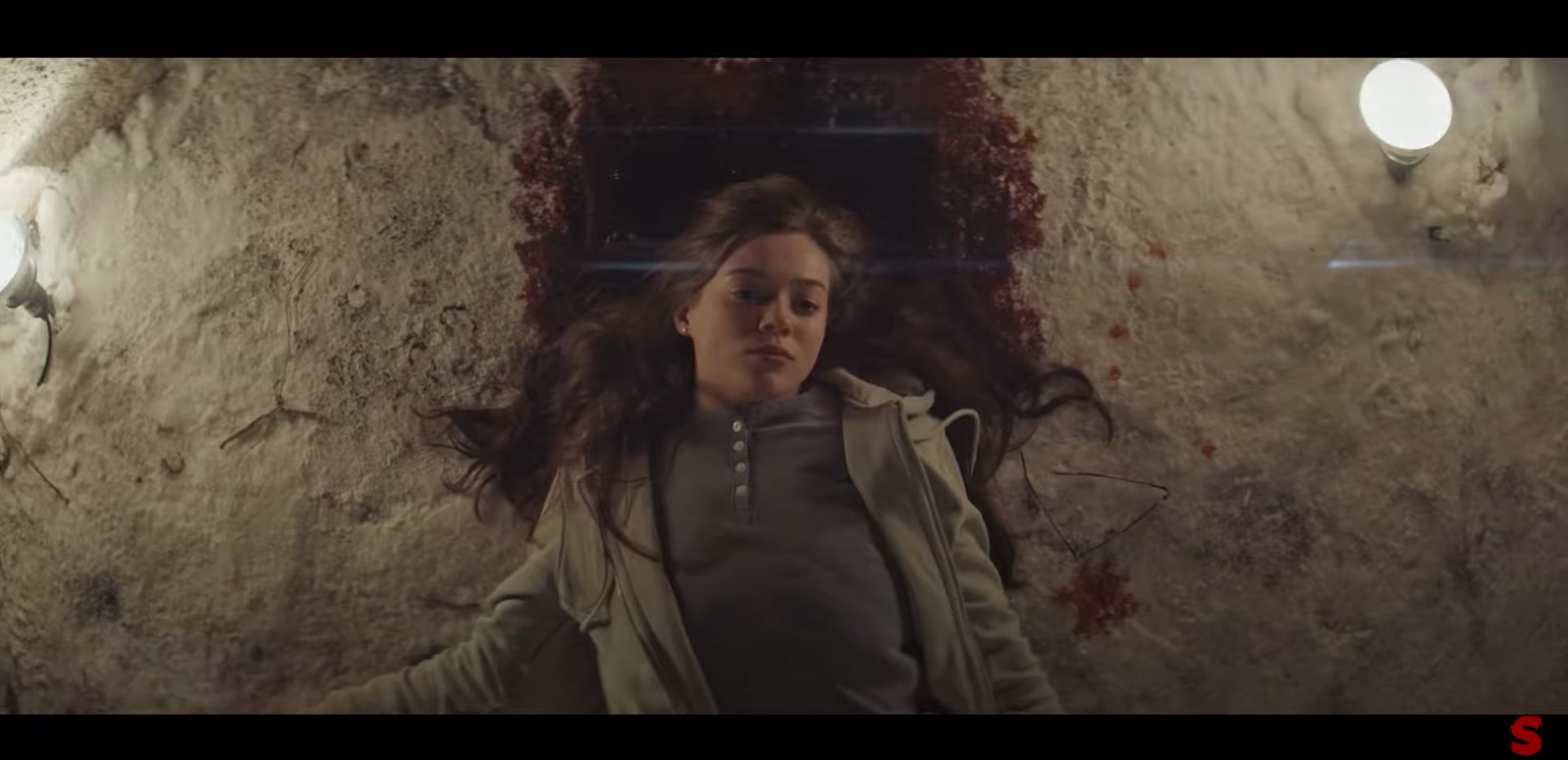
A practical joke in summoning a spirit sends one girl to die of mysterious circumstances at the isolated and elite all-girls boarding school of Edelvine Academy. At the top of the wait list is Camille Meadows who finds herself in mid-semester adversity with not only her studies but also the deceased girl’s group of browbeating friends as Camille replaces their friend’s now vacant opening. When another friend disappears and another dies in a freak accident, differences and quarrels are put aside before one of them becomes the next victim. The group conducts a seance to call their friend from beyond to discern whose taking them out one-by-one and the spirit’s cryptic response determined one thing evident, a killer, whether supernatural or real, will stop at nothing until every last one of them is dead.

In what feels like an extremely unquantifiable amount of time that has passed since the last high school teen slasher has graced our once beholding subgenre, “You’re Next” and “The Guest” screenwriter Simon Barrett ends up sneaking one into the fold before the grand fourth sequel release in the “Scream” series come mid-January 2022. “Seance” is the first feature length film directed by Barret who pens the supernatural slasher encrusted with snarky teenage melodrama agitated by a mysterious, unknown killer wreaking havoc upon the catfighting girls of Edelvine Academy. The adolescent cutthroat temperaments give way to actual throat cutting macabre in this whodunit thriller lessoned with a mix of the power of friendships and an attenuated lesbian aura presence throughout up until the very affirming finale in an allegorical show representing hiding in plain sight. The snowy and serene Manitoba-shot Canadian film is a production of HanWay Films (“The Guest”), Ingenious Media (“Unhinged”), and the Gothically-inclined Dark Castle Films (“Thirteen Ghosts”) with select producers Adam Wingard, who has a long his filmic history collaborating with Barret, Tomas Deckaj (“The Green Knight”), and Devan Towers (“Day of the Dead” television series).

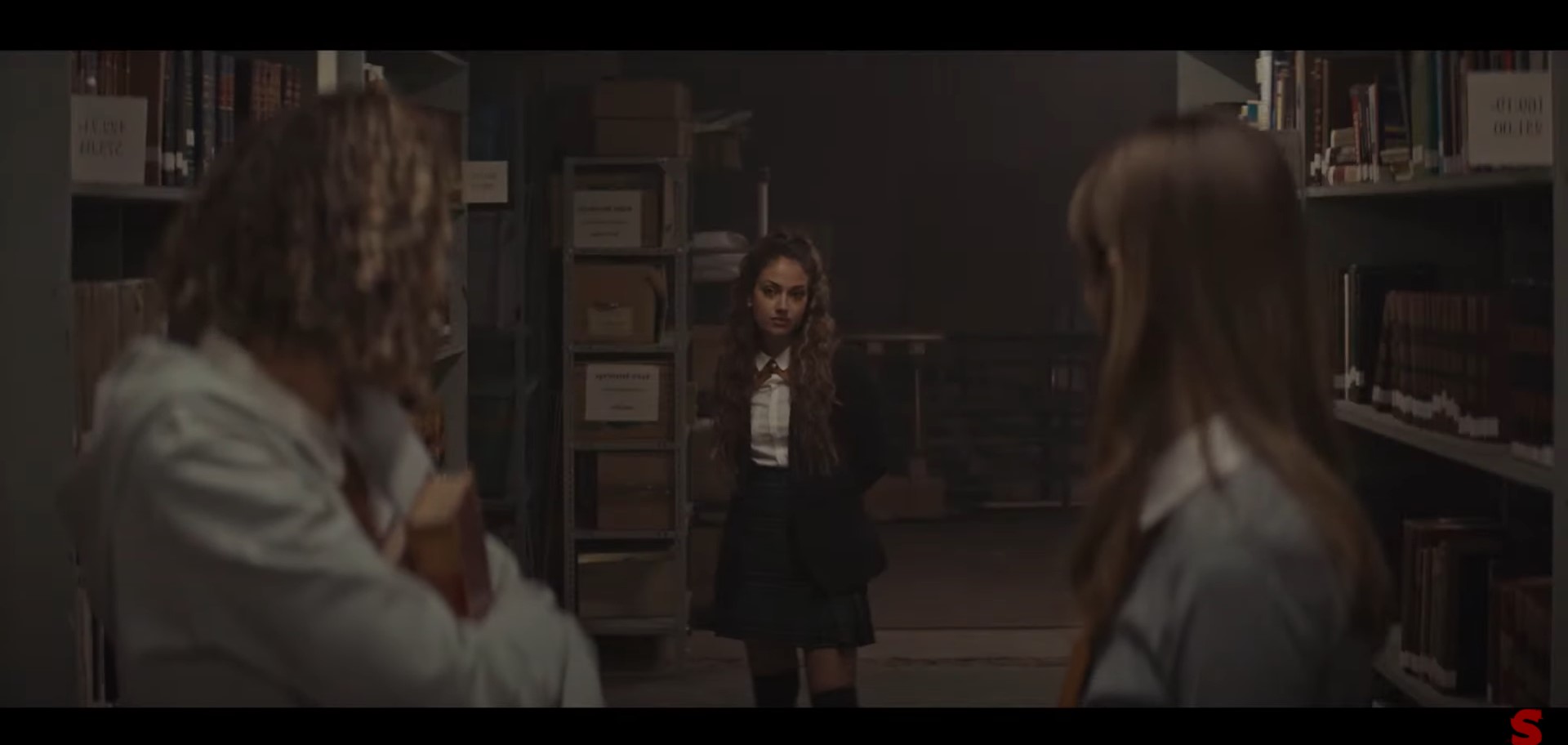
For High School girls, all the actresses with the exception for Ella-Rae Smith are mid-to-late 20’s with lead actress Suki Waterhouse (“The Bad Batch,” “Pride, Prejudice, and Zombies”) tipping the pendulum nipping at her 30s. However, Waterhouse and the others defy their actual corporal ages portraying teenagers in the throes of adolescent social clique.  Waterhouse plays the cool as a cucumber newcomer Camille to Edelvine Academy, befriending right off the bat with her personal Academy introductory host, a solitary Xanax-popper Helena (Smith).   Immediately, new girl Camille becomes public enemy number one with Edelvine’s most smug impractical prankers led by Alice played by Inanna Sarkis. On paper, Alice might have been the group’s ringleader, but the character doesn’t throw around a lot of power or is admired by followers, albeit Sarkis role permanency as the uptight and sarcastic bully or rad bad gal. Following Alice are ancillary player pieces to the group’s effort as a whole to be a thorn in Camille’ side just for being the unfortunate replacement of their dear dead friend. Between the brainy Bethany (Madison Beaty, “The Clovehitch Killer”) and the more elegant Yvonne (Stephanie Sy, “Tales from the Hood 3”) vie the potential right hands of Alice deduced from the dialogue and screen time hierarchy of their roles but they are definitely more interesting than Alice with a punch of flavor in the personalities, especially in Bethany who is built to be a master-whiz in conjuring up devilish pranks to play on her friends and enemies. Furthermore, there’s also the hint of pizzaz that is shamefully cut short and slidden under the radar with the last two in the coterie with the playgirl subtilties of Lenora (Jade Michael, “Fatal Friend Request”) and the unexplored suggestions of Roselind’s (Djouliet Amara, “Tales from the Hood 3”) sexuality, leaving their arcs unfulfilled. “Seance” cast fills out with “Books of Blood’s” Seamus Patterson in the single speaking male role in the entire film, “Cult of Chucky’s” Marina Stephenson Kerr as Edelvine’s firm-handed headmaster, and Megan Best playing the narrative’s lamented backbone of mysterious tragic circumstances.

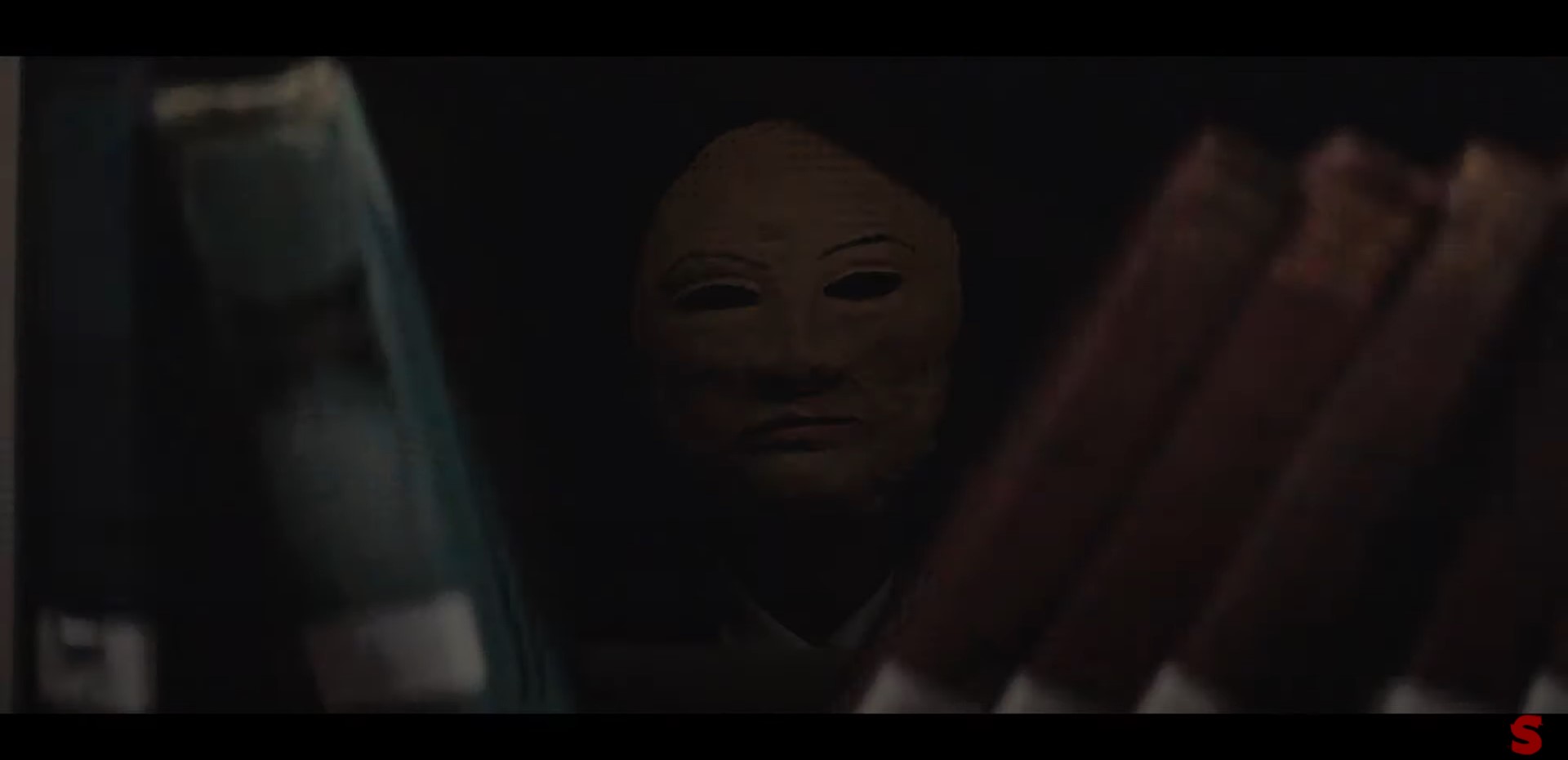
Portions of where “Seance” flourishes are within the parameters of the teen slasher, a subgenre that lingers on into severe tedium much like the zombie films of the early 2010 decade. The late 90’s and well into the 2000s saw a slew (pun intended) of killer adolescent atrocities in film. Moviegoers were intrigued by the allusive masked killer that, for most of the time, had a palpable-to-satisfying twist ending after roughly 90 minutes of frantic chases, dooming nudity clauses, merciless kills, and one stupid decision to go back into that ominous house after another. Then, when 2010 came along – poof – teen slashers were now a thing of the past, literally. Attempts were poor renditions of previous successes, rehashes of the once was, and didn’t quite tickle the right places. Slowly and surely, the wheels are turning on a rejuvenation of a new generation and Simon Barrett’s “Seance” serves a prime candidate for admittance. Isolated in the stillness of a snow-covered all girl school sets the intended mood for a campus killer, the girls have a warring dynamic mended by a need to survival commonality, and the what or the who that is slaying them is well kept out of sight with misdirection cues to make audiences think they have it all figured out. Plus, the climatic finale has not one twist, but two in its full of blood and surprise double twist spectacular. “Seance’s” character development is one annoyingly flawed aspect that bends the elbow at the wrong angle at times is how characters wonder off alone having just filled their youthful, spongy minds with knowledge that something or someone malevolent is after them. “One friend is missing. My other friend has mysteriously died in an accident. The Ouija board spells out certain doom and gloom. Yet, I’m going to practice my recital routine alone on a dimlit stage with my noise cancelling headphones on,” says nobody ever. “Seance:” “hold my beer!

“Seance” is more than a teen slasher, it’s Simon Barrett’s genre-bending good time and this Shudder-streaming 93-minute horror from Edelvine Academy is coming to Blu-ray home video courtesy of Acorn Media International come January 17th. The Region B UK release, PAL encoded, BD25 is certified 18 for strong bloody violence and presents “Seance” in a widescreen 2.39:1 aspect ratio. Many of the scenes circulate through repeatedly – the snow-covered school, the drab hallways, the quaint rooms, and the bleak storage room – that don’t offer a ton of vivid aesthetics within a limited range, but quality-wise, there’s a dour, shadowy coating accompanying the coarsely, unpretentious realism. However, the fishbowl lens on certain scenes poorly captured smaller spaces, leaving already thin actresses looking anorexic, and for some reason, the decision to position the actresses shoulder-to-shoulder does antagonize that realism as those, who were mischievous back in the day and sent to the principal’s office, never sat right up against a fellow classmate. The English Dolby Digital 5.1 surround sound has favorable qualities with a well diverse mix of ambience, a strong dialogue track, and a Sicker Man aka Tobias Vethake laying down a spectrum from brooding synth string pops, piano, and cello bass that stands out with profound poignancy to a lo-fi hip-hop beat and EDM noise of embroiled sounds. Special features include a commentary with Simon Barrett, a behind-the-scenes with select cast, minor outtakes, deleted scenes, a crude pre-production setup for the VFX decapitation scene, and a behind-the-scenes still gallery. “Seance” isn’t all Ouija boards and flickering candles as there’s more obscurity to the slasher than what meets the eye with its mania-driven motives and orientational undertones making this little-known film worth a look.

Let EVIL Free You! “Jakob’s Wife” reviewed! (Acorn Media International / Blu-ray)


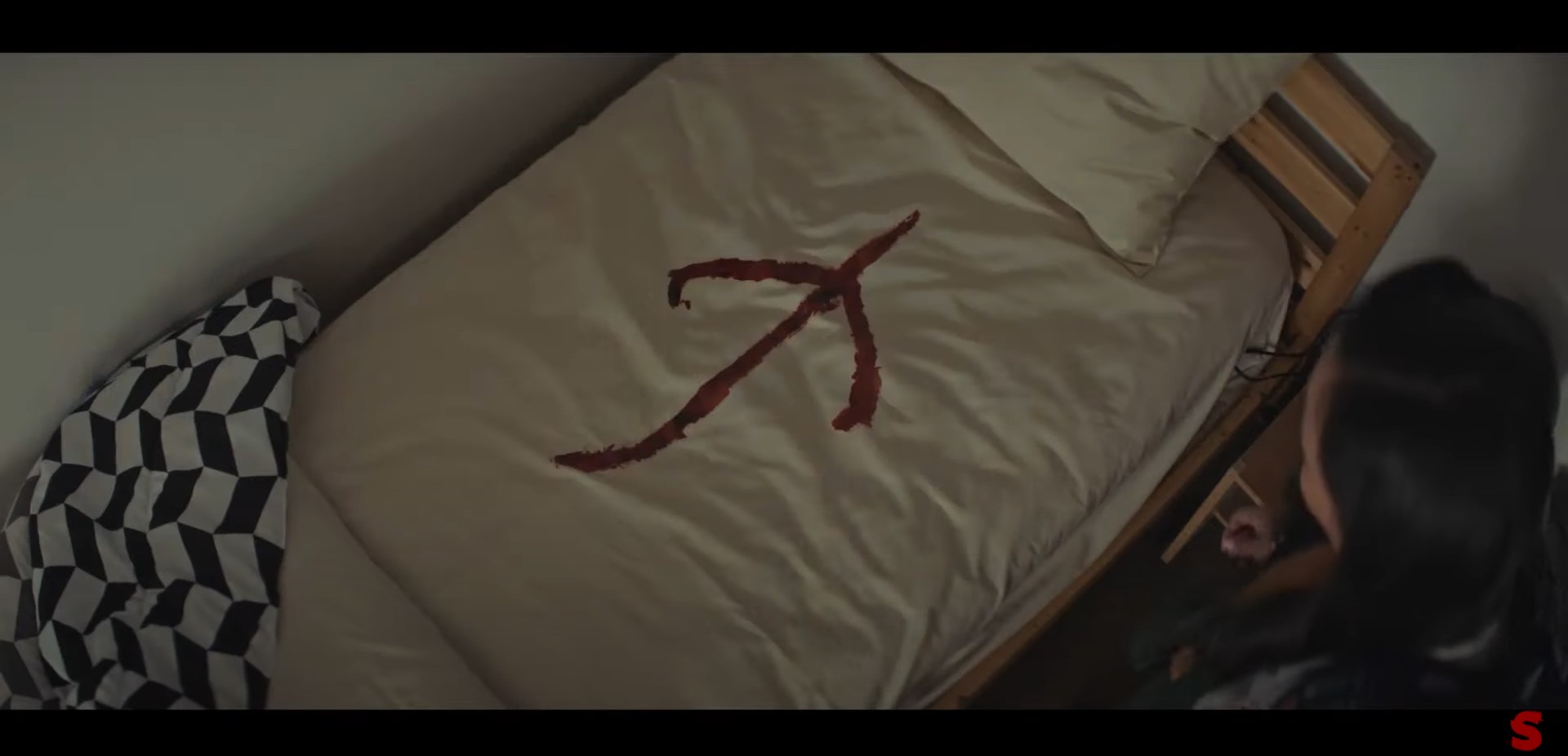
Anne is a minister’s wife living in a dying small town where the only thing left for the residents is their faith.  Once inspired to travel and do something meaningful with her life, Anne has found that the last 30 years of marriage to Jakob has robbed her of her self-empowerment, diminishing her as nothing more as than just Jakob’s wife.  When the opportunity to impress an old fling during a business trip turns into a nightmare with an attack by a shrouded figure in a rundown, vacant mill, the disorienting days after having provided Anne with a sense of expressive freedom, a chance to be bold, and to feel more alive than she has felt in years.  Her new lease on life comes with a ghastly cost, a severe hunger for blood.  With the help of Jakob, they realize the dark forces of a vampire has infected Anne and their road back to normal life, a life where Anne is dull and drab, will the paved in blood. 

Horror is such a versatile and malleable medium to convey allegorical messages, drawing audiences into the writer’s or director’s world of the fantastic and the horrific while laying down a subfloor of real world truth most passionate to them in a social, religious, or political context.  To point out a few examples (most of us already know), George Romero was renowned for his multiple social commentaries throughout his “Living Dead” series and a slew of vampire films construct the bloodsuckers as metaphors for an addict going through the ugly turmoil of addiction.  “Jakob’s Wife” is a different kind of vampiric allegory film that bites into feminism values.  The “Girl on the Third Floor” writer and director Travis Stevens follows up his introductory haunted house film with an inverted Nosferatu-esque dark comedy co-written alongside “The Special” screenwriter, Mark Steensland, and the “Castle Freak” remake’s Kathy Charles.  The Canton, Mississippi location evokes the dried up, small Southern town aimed to build a depression enclosure around the titular character.  Barbara Crampton’s Alliance Media Partners, whose spearheaded creative and imaginative films such as Justin Benson and Aaron Moorhead’s Sci-Fi cult looper, “The Endless,” and the Romola Garai demonizing guilt film, “Amulet,” presents “Jakob’s Wife” in association with executive producer Rick Moore’s Eyevox Entertainment (“Purgatory Road”) at one of the banner’s production studio locations in Canton, Mississippi.

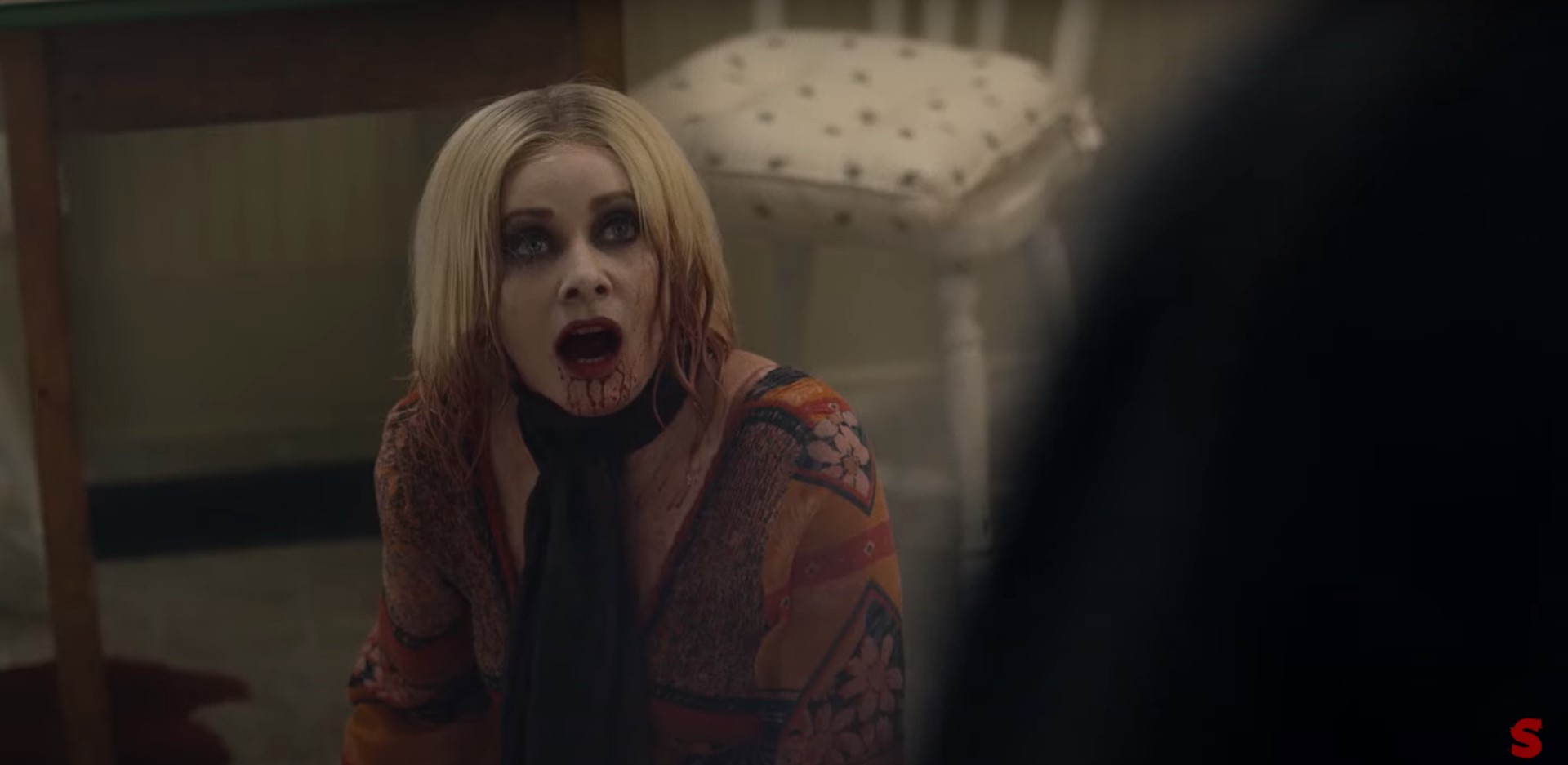
In concurrence as a producer of “Jakob’s Wife,” scream queen of horror legend, Barbara Crampton (“Re-Animator,” “From Beyond,” and most recently, “Sacrifice”), steps into the torn role of the titular character.  In Stevens’ direction, as well as Crampton’s portrayal, Anne is so diminutively overlooked in the first act, you’ll hardly notice her even though Anne is practically in every scene.  Between Jakob’s interruptions, meek output, and overall quiet behavior, Crampton’s able to exact the very essence of the idiomatic phrase the calm before the storm.  Also, I must mention, just like I’m sure others have already pointed out, the early 60s Barbara Crampton looks smokin’.  She must have been bitten by an actual vampire in order to seemingly de-age right before our eyes.   Larry Fessenden, who does age accordingly but also very handsomely in his genre characters, is the God-fearing minister playing opposite Crampton.  The “Habit” and “Jug Face” actor has always been quite the character actor and as husband Jakob, that beneficial streak continues as an old ways man of God with an innately built-in chauvinistic ritual of keeping everything the same day in and day out.  Jakob’s absentminded blinders suppresses Anne into a depressive submissive state until she comes across The Master, the sorely underutilized and shamefully absent from more screen time chieftain vampire played superbly by Bonnie Aarons in an unexpected female version of Nosferatu.  Aarons gives her best Max Schreck performance while commanding a distinctive mentorship that’s unusual for the vampire race; The Master is greatly highlighted in the most subtle of ways as being a repressed liberator and Aarons understood that compulsion to educate, revitalize, and blossom others by offering a new kind of death, the burgeoning power and desires of a vampire, from their previous one, a rather dull life stuck in a no-win circumstance.  “Jakob’s Wife” rounds out the cast with Jay DeVon Johnson, Phillip “CM Punk” Brooks (“Girl on the Third Floor”), Robert Rusler (“A Nightmare on Elm Street 2:  Freddy’s Revenge”), Angelie Simone, Mark Kelly (“Dead & Breakfast”), Sarah Lind (“The Exorcism of Molly Hartley”), Omar Salazar, and Nyisha Bell.

“Jakob’s Wife” is a treasure trove of feminism and lesbianism undertones that stands on higher ground without pulverizing masculism to a pulp.  There’s seemingly little-to-no ill will against the minister Jakob Fredder previous inattentive and subservient expectations of his wife Anne.  Anne even becomes conflicted by her newfound self, a rebirth of life that sheds the shackles of monotony and, as it were, it’s overstepping masculinity, and she questions the power, she questions her choices, and she maintains the unity of marriage despite a little taste of tantalizing freedom from it all.  The Master becomes the allegorical test of faithfulness to another in a bored housewife scenario and I’m not talking about Anne’s old high school fling Tow Low, played by Robert Rusler.  I’m speaking of the lesbian undertones involving The Master, a female vampire who stood in Anne’s shoes and was turned, in more ways than one, toward a new path.   The Master sparks a long-lost fire in what is now only a shell of an unhappy woman and Travis’ scenes of Anne touching herself, mimicking The Master’s moves, plays into theme of fantasizing about that other woman and what secret they share, being perhaps symbolically the intimate nature of the attack that puts Anne into The Master’s craving sites.  The innuendo is rich and robust and coupled with fire hose sprays and gallons upon gallons of an unquantifiable amount of blood and gratuitous violence, “Jakob’s Wife” is the vital vampire film of 2021. 

Darker powers answered the call of Anne’s internalized prayers. I don’t even think Jakob’s God even picked up the receiver. In any case, pick up your copy of the RLJE Films and Shudder exclusive, “Jakob’s Wife,” on a full high-definition Blu-ray releasing next year, January 17th, 2022, courtesy of Acorn Media International. The PAL encoded, region 2 BD25 is presented in a widescreen 1.85:1 aspect ratio. Compression issues have never really been a problem for the Acorn Media releases that detail and texture greatly under “Jakob’s Wife’s” austere color palette that favors more of a nature fixture than a stylish one. Darker color tones, such as the blood, are viscosity rich looking and, perhaps, the most color the film plays to its strength. The English language DTS-HD 5.1 Master Audio track bares no complaints either in the distinctive and effective channels that isolate each output neatly, cleanly, and blemish free. Prominent is the discernible dialogue, that in due course becomes more pivotal to the story, while giving way to an original score from Tara Bush. Special features include the making of the film with clip interviews with the film’s stars – Barbara Crampton, Larry Fessenden, and Bonnie Aarons – and deleted scenes that provide more insight and background on the finished cut’s bit characters. The Blu-ray is rated UK 15 for strong bloody violence, sex, and language (there’s also brief nudity for all you puritans in the U.S.). With the duo of Crampton and Fessenden in the middle of matrimony-macabre, “Jakob’s Wife” is a no-brainer success.

When Greed Induces EVIL at “The Estate” reviewed! (Vertical Entertainment / Digital Screener)


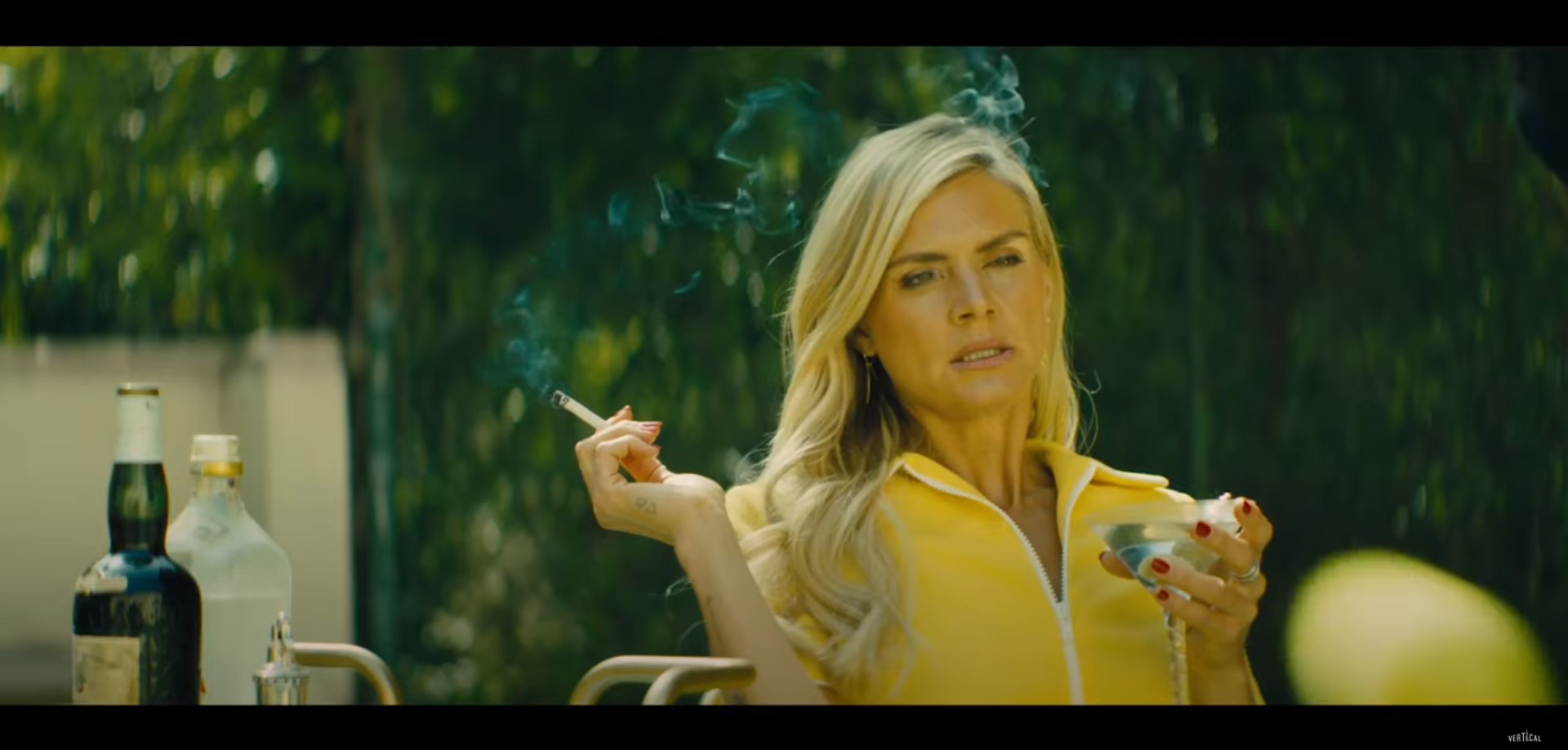
Spoiled rich gay son George despises his cheapskate father.  George’s equal in age, and similarly spoiled, horny step mother Lux also equally despises the loaded philanderer who rarely stays in town, leaving them with little to do and with little money to do it with.  When they meet tall, dark, and handsome Joe at a bar and invite him back to their estate house, a psychosexual love triangle leads to a murder-for-hire plot against the patriarch billionaire to collection the opulent inheritance.   Complications arise when unbeknownst bastard children cause a legal clog in their pipedreams of being insanely well-off.  One murder after another begins to unravel not only their lust for wealth and each other, but also a deeper, darker secret to rue for the wealth they wished (and killed) for.

An over-the-top, narcissistic machination-built dark comedy of greed, self-importance, and lust is how I would personally define the first feature length film, “The Estate,” from director James Kapner.  Diverging from his own comedy web series, “Baker Daily,” to work again with Kapner, from their previous collaboration on the political lampooning “Baker Daily:  Trump Takedown,” is Chris Baker, screenwriter of “The Estate,” who not only pen strokes the worst-of-the-worst of diabolical super-egos but also plays one of the downright flamboyant scoundrels as the lead role.  Majority of “The Estate” takes place inside the grand titular location, compartmentalizing the indie film’s budget solely on the sordid activity of three main characters without much of else as a distraction.  The Los Angeles shot film is independently produced by comedy producer Rod Hamilton, Kapner’s business partner Adam Makowka, and the second producing credit for Alixandra von Renner (“Boogeyman Pop”), with Mark Boujikian, William Bruey, Nicholas Lyons, and Scott R. Long as executive producers and is made under the Stone Lake Production and Runners Films production companies. 

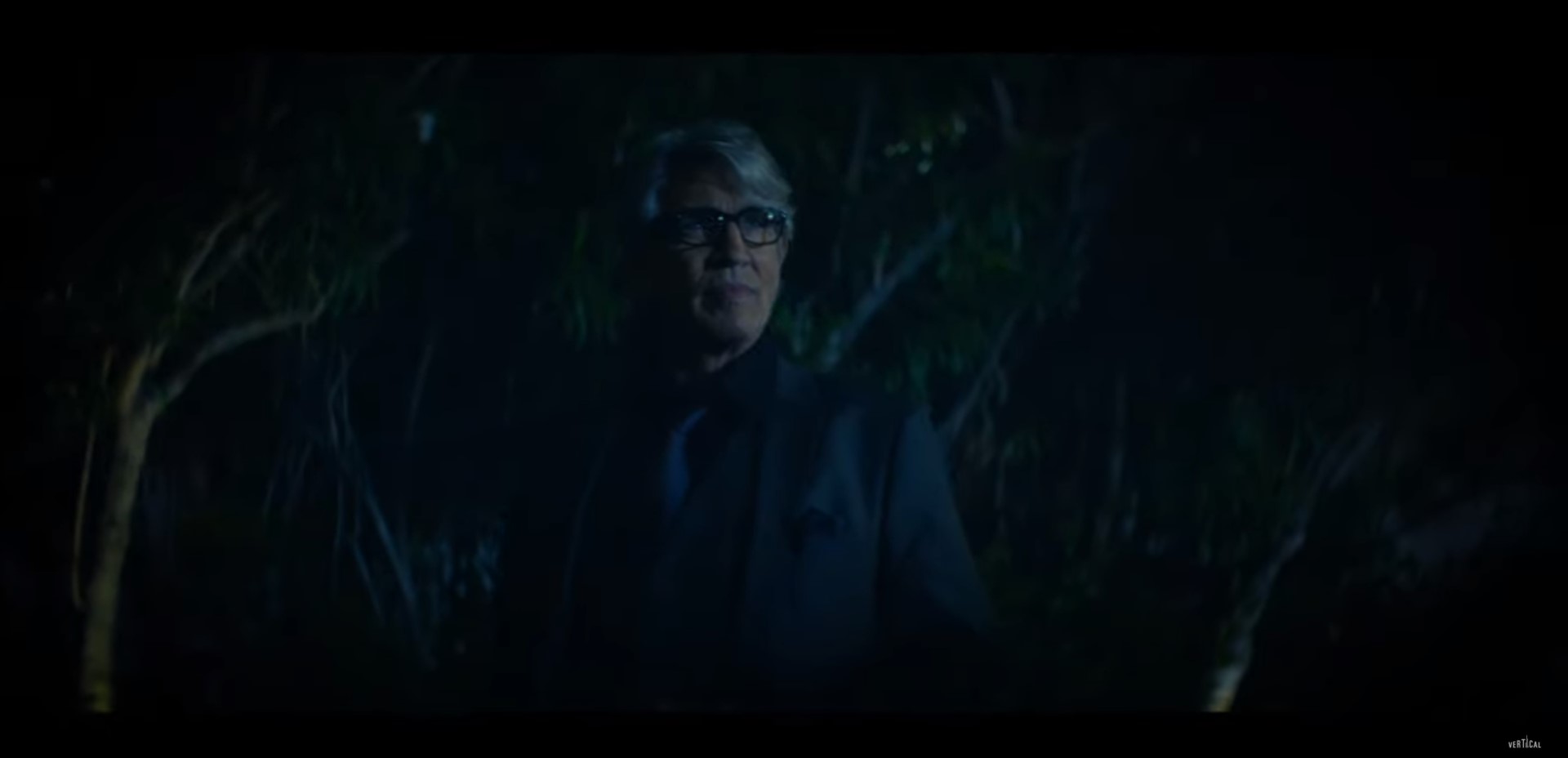
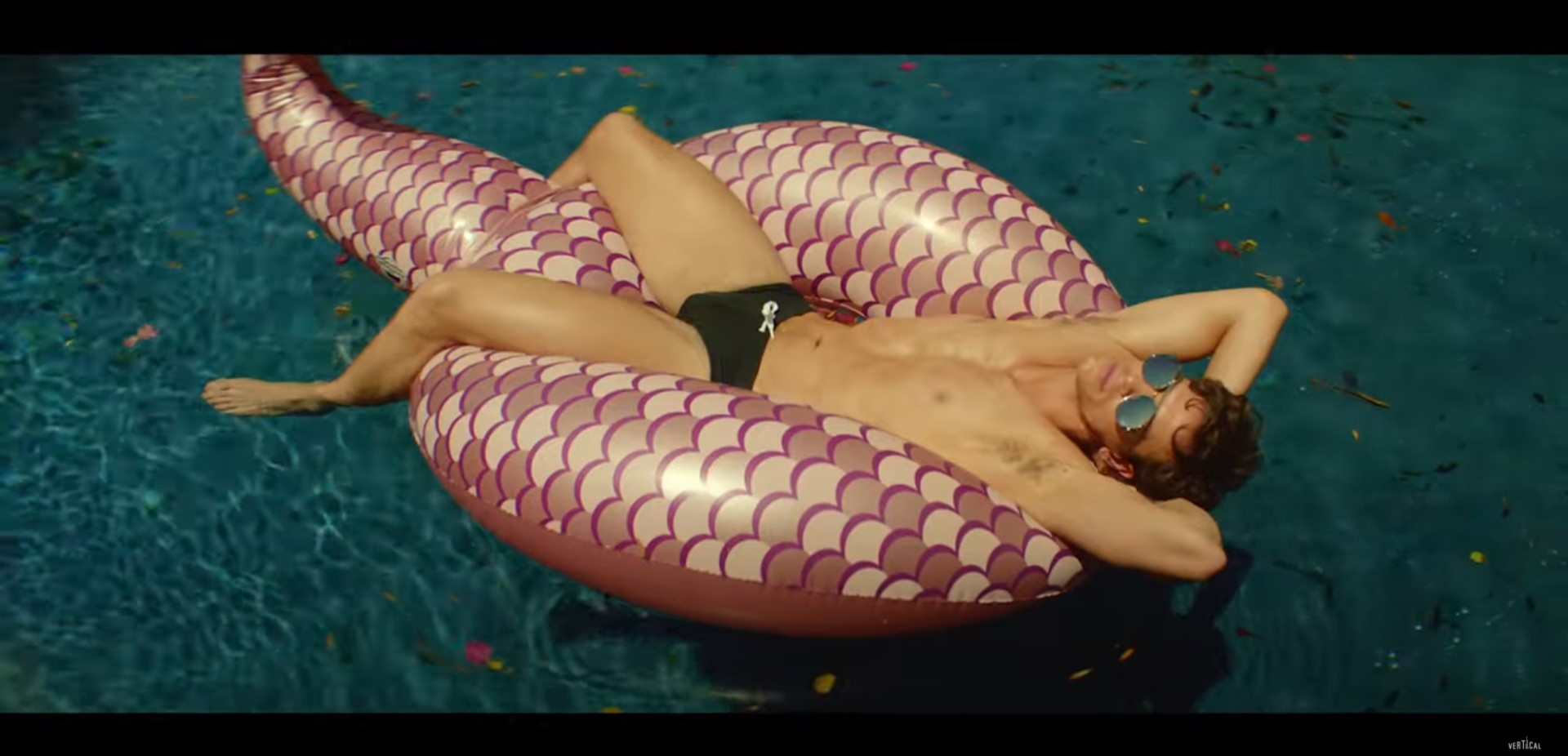
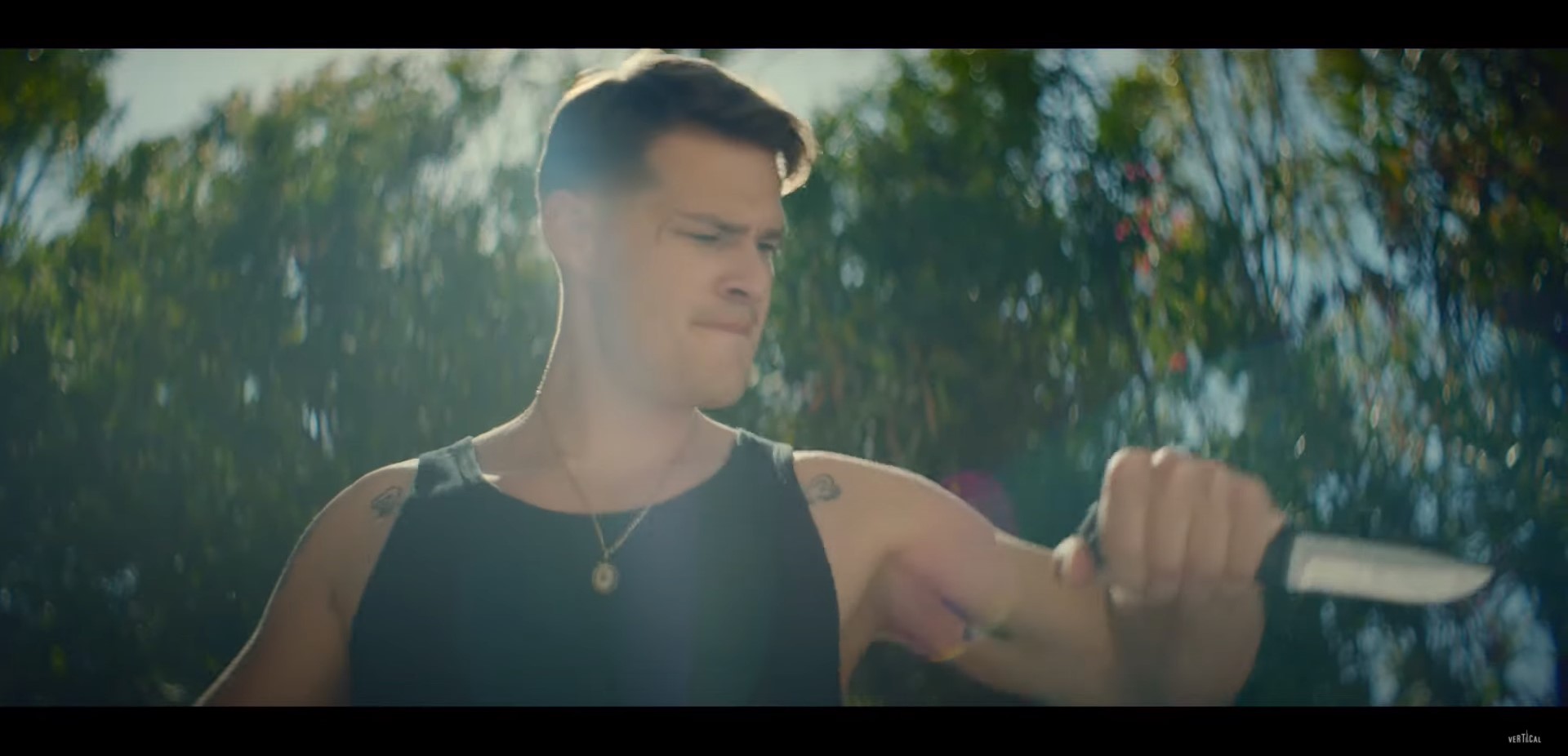
“The Estate” is a haute and brutish trio’s tale of sex, lies, and murder.   At the head of the snake is George, an entitled son seeking elegance and power as he longs in the background to attend the prestigious Black and White Gala, and is played bitingly by the film’s genesis writer, Chris Baker.  Baker, a Harvard graduate and a gay man, certainly utilizes both personal traits for George he’s clearly written for himself.  George is smart under that superficial Versace façade and, also, is a gay man looking for a romantic connection, but like any relationship single person, told by one’s own vantage point such as George’s, a wash of doughy-eyed thick-headedness just completely engulfs his rational senses when a pretty face suddenly shows up.  That rugged handsome face just happens to be of “iZombie’s” Greg Finley as hunky hitman Joe who George unexpectedly bumps into due in part of his oversexualized and, too, vain Stepmother Lux donned wonderfully with a wickedly crass tongue of comedienne, Eliza Coupe.  Together, a charcuterie board of carnality ceases to no end between the three in a back-and-forth, pass-the-man around pansexual affair with plotting and murder speckled in the middle.  Performances are concentrated with tongue and cheek, black matter comedy with ultra-ostentatious gab and garb to deliberately set the satirical tone metaphorically for the super-rich attitude of white, wealthy America.  With all that jazzy, pent-up, entitlement, add Eric Roberts into the mix, then you really get the worst-of-the-worst from the “Best of the Best” actor as the filthy rich patriarch.  Roberts can exude sleazy well with his own mannerisms and deliveries, solidifying his own Eric Robert’s laidback version of a despised billionaire debauchee.  “The Estate” rounds out with Rif Hutton (“The Thirteenth Floor”), Ezra Buzzington (“The Hills Have Eyes” remake), Lala Kent (“The Row”), Kyle Rezzarday, and “Hostel:  Part II’s” Heather Matarazzo as the tech-savvy lawyer office secretary who shamefully peters out after an interesting turn of events with the character’s involvement.

“The Estate” is one of those dark comedy thrillers where one wrongdoing subsequently creates a domino effect for more wrongdoings.  How’s that saying go?  Be careful what you wish for, you just might get it.  Indeed, the characters do get what’s coming to them as one killing turns into two killings and two killings turns into three etc.  As the bodies pile up in between the bedroom sheets sex and the coy flirting during initial stages of affections, the kind where butterflies flutter inside the stomach, what turns from an aloof pair of spoiled rotten solitaries is a false confidence in blindly following boredom’s famished way of saying death and sex is all-around exciting.  There’s also this vying of the sexes to see who can sweep Joe off his feet and while there’s obviously no issue with the polyamorous pansexuality, the story’s a bit lopsided with Baker’s intimate scenes with Finley being more expositional compared to Joe and Lux’s more implied romps and that inherently leads viewers onto one obvious path without the spice of unexpected chance.  Though George is written to be an alter egocentric doppelganger of his creator, Chris Baker, the Frankenstein theory only works well to extent before seeping into obnoxious conceited territory.  This is where “The Estate” begins to show signs of wearing out it’s welcome with living in George’s weighted down perspective of the high life.  Purpose seems vague mostly yet “The Estate” is also one of those nonchalant, throwing caution to the wind dark comedy narratives, sinfully funny, for the sake of touting an exaggerated resemblance of a detached privileged mindset. 

Things are not so nice and cozy at “The Estate” that has arrived this October on VOD and in theaters from Vertical Entertainment. Clocking in a 85 minutes, “The Estate” is paced to fit the conspicuous cinematography from the Texas born Mike Simpson with mood lighting mixed with tinting and as well as using a spherical lens to set the current tone. Simpson keeps shots tights between medium and closeups for more intimacy between the trio as well as to keep within the confines of a smaller production and set location. Since a digital screener was provided, I can’t comment on the quality of the audio and video aspects, but “The Estate” comes with an eclectic soundtrack that includes tracks from Lucky Beaches, Viagra Boys, Ritchie Valens, Joy Downer, and Toots and the Maytals. There were no bonus material or after credit scenes. Witty, dark humor that teeters always on the cups of being too much for one sitting, “The Estate” deadeyes the caricatures of the 1% with fatal attractions and an inheritance stocked with greed culminating to an unbelievable finale

Sometimes, The Choice Itself is EVIL. “A Woman Like Eve” reviewed! (Cult Epics / Blu-ray)


Eve is a stay at home mother of two who ensures the house is in tiptop shape and that dinner is promptly on the table for her working husband, Ad.  When Eve has a break down at the Mother’s Day family dinner table, Ad purchases her a train ticket to enjoy France’s sun and sand with her best friend, Sonja.  There she meets an alluring woman, Liliane, living freely and humbly in a commune.  An attraction flourishes between them after Eve returns to home to the Netherlands and can’t stop thinking of her time with Liliane.  Soon, they become romantically involved with Liliane travelling back and forth from France and that sets the stage for conflict as Ad discovers his wife’s yearning desires for Liliane to horrid and confusing for their young children not to mention also their marriage.  Eve is caught in the middle between the woman she desperately wants to be with who still lives in the commune and her children she can’t deal to part from in a tug-a-war of emotions wrought by a failing marriage, society perceptions on lesbianism, and damaging court room battles for children custody.

When thinking about the history of LGBTQ+ films and the filmmakers behind them, director Nouchka van Brakel’s “A Woman Like Eve” should be at the top of any film aficionado’s list despite flying, unjustifiably, under the radar for decades as the Dutch film makes a profound statement with, at the time, unmapped gender fluidity of the 1970’s timeframe that included the women liberation movement that sought to free domesticated women from the limitations of household responsibilities, it cracked the barriers on what constitutes as healthy union between two people, and dove into the intricate internal struggles of a keystone person being pulled between two very different lives of family dynamics.   Co-written alongside Judith Herzberg, the 1979 romance drama, natively titled “Een vrouw als Eva,” has a very different kind of evil than the werewolves, vampires, zombies, serial killers, and ghosts typically showcased in our reviews and that is those narrow-mindedly frighteningly submerged in antiquated traditions peered through the perspective of a feminist director in Brakel.  Matthijs van Heijningen, who produced Dick Maas’s elevator-horror “The Lift” and also Brakel’s prior work on “The Debut” and later work on “The Cool Lakes of Death,” produces the Dutch tale under his indie banner, Sigma Pictures.”

“A Woman Like Eve” would not have been as provocative with thickly layered nonconformist and spirited topics without the compelling performance of the film’s two leading ladies in Monique van de Ven (Paul Verhoeven’s “Turkish Delight”) as Eve and  Maria Schneider (“Last Tango in Paris” costarring Marlon Brando).  Van de Ven captures a woman tormented by not only what “proper” society, society being her friends and family, tells her to be, but also distresses going against the grain of her innate guilt and nurture for her two small children during a time of emotional transition that impels her to pursue a relationship with not just any other person but another woman.  That other woman being Liliane, an established outlier of what’s considered normal as a lesbian living how she wants in an outskirts commune, and while Schneider’s performance treads lightly through what should be mountains of emotions, especially in a role that has a foundation of someone been out of closet, doesn’t care what anyone thinks, and has tethered a line of security to her soul fulfillment center, Liliane still maintains as the steady constant that never wavers from who she is and what she wants.  Toss in the German born and “A Bridge Too Far” actor, Peter Faber, and you can see the gunpowder burn for miles in tense and uncomfortable discourse when Eve confides into Faber’s character, Eve’s husband Ad, about her proclaimed love for another woman and then we witness Ad patronize her with what he calls an epidemic of woman independence and shrugs her true feelings like scraping foods scraps from a dinner plate and into the trash. Faber can get downright ugly with the homophobic bigotry that begins to carousel Eve’s ebb and flow of having any kind relationship with her separated husband until justice system proceedings for children custody. Marijke Merckens, Renée Soutendijk, Anna Knaup, Truus Dekker, and Mike Bendig round out as the support characters caught is the web of Eve’s love affairs and legal issues.

Feminist filmmaker Nouchka van Brakel depicts tremendous themes of a woman’s status in what could have been a universal position for women all over the globe. Seen as only housekeepers, dinner makers, and children bearers or caretakers, women were placed at a standstill after suffragists fought for the right vote at the turn of the 20th century but that fire inside them stayed lit and you can see that with Eve in the opening scenes as she’s longing and looking for something more than to be a house wife. She eventually obtains something more with love for Liliane, the second theme Brakel implements extends upon unfettering women is with lesbianism. Lesbianism is shown to bring down shame upon family, friends, and even just society in general as Eve was offered no solace from those she had a prior relationship with after coming out, a choice seen as a radical and an integration part of that women’s independence movement. Brakel wanted to explore uncharted passion between woman and woman and, in doing so, lifted the curtain on on various foremost concepts that are still…still being talked about today where inequality in the workplace through sexism and salaries still wage a battle of the sexes and homosexuality is still too taboo for even the modern day system. “A Woman Like Eve” has surely inspired and been of homage in more modern pieces, such as “Blue is the Warmest Color,” and should be exhibited more educationally on it’s abundance of relatable themes and not just be another work of unseen cult fiction but be rather a praised film of realism based on nonfiction.

To watch Eve toil in her new life is like climbing Mount Everest; it’s a long, arduous journey with challenging, sometimes spirit crushing, obstacles to overcome in order to reach the top, but once above the cloud, the tooth and nail fight for what’s finally yours and yours alone can be worth it. Unfortunately for Eve, her cumulus glass ceiling is poignant. “A Woman Like Eve” importance is shamefully overlooked and that’s why I’m grateful Cult Epics has brought Brakel’s film, for the first time, on DVD and Blu-ray in North America. Basing this review off the Blu-ray release, clocking in with a 103 minute runtime, the newly restored high definition transfer from the original 35mm print, shown in 1.66:1 aspect ratio, looks respectable from a moderately preserved transfer. An occasion scratch and some real delineation issues with night scenes factor in only little impact when the story is shot mostly in bright daylight and is well light all around with lots of natural grain. No cropping, compression artefacts, or enhancing was detected and the coloring appears very natural without any overcorrecting or mistakes in the primary or secondary hues. The new Dutch/English/French language DTS-HD master audio 2.0 renders dialogue clearly and positioned as the foremost track with a solid sync with the error-free English captioning. There’s a slight lower key hum throughout and some crackling and popping but none of those are a hinderance to the viewing. As far as bonus material, the region free, unrated release contains a 2020 interview between Brakel and film journalist Floortje Smit at the Eye Filmmuseum, a poster and still gallery, and the theatrical trailer on a dual-layered disc. The limited edition package includes new and original cover art on a reversible case sleeve. Probably seen as antiquated celluloid, I see Nouchka van Brakel’s LGBTQ proud and woman empowering film, “A Woman Like Eve,” as historical treasure dug up by Cult Epics, carefully spit-shine restored, and encapsulated forever on physical media for all to enjoy.

Purchase “A Woman Like Eve” on Blu-ray or DVD