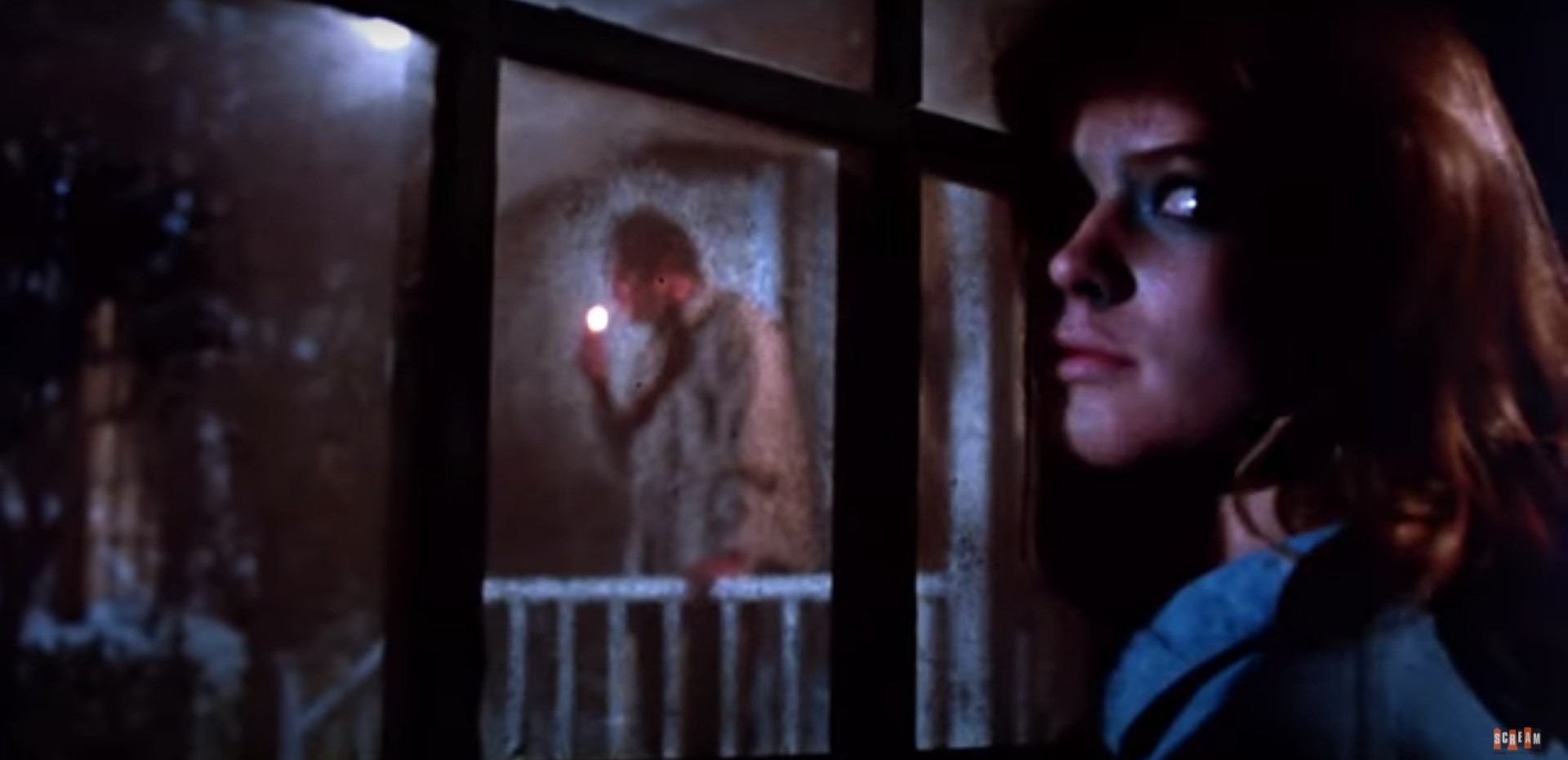
When Marriage Sours, EVIL From Within Manifests. “Possession” reviewed (Umbrella Entertainment / Blu-ray)

After his return from a lengthy time abroad, Mark finds himself in a contentious and spiteful relationship with his skittish wife Anna unveils her infidelity.  Unable to pry any kind of information from her before her sudden disappearance, Mark results to all the stages of grief and heartache:  denial, isolation, anger, bargaining, depression and, finally, acceptance.   Anna comes-and-goes from Mark and their son’s life, but their spats continue, increasing in anger and violence which each encounter.  Mark hires private investigators to track down Anna’s whereabouts.  He evens confronts her flamboyant and Zen-mastering lover.  But when Mark comes face-to-face with Anna’s sinister secret, a sub rosa affair unlike anything Mark has ever seen, he will go to unimaginable lengths to protect the wife he obsessively loves. 

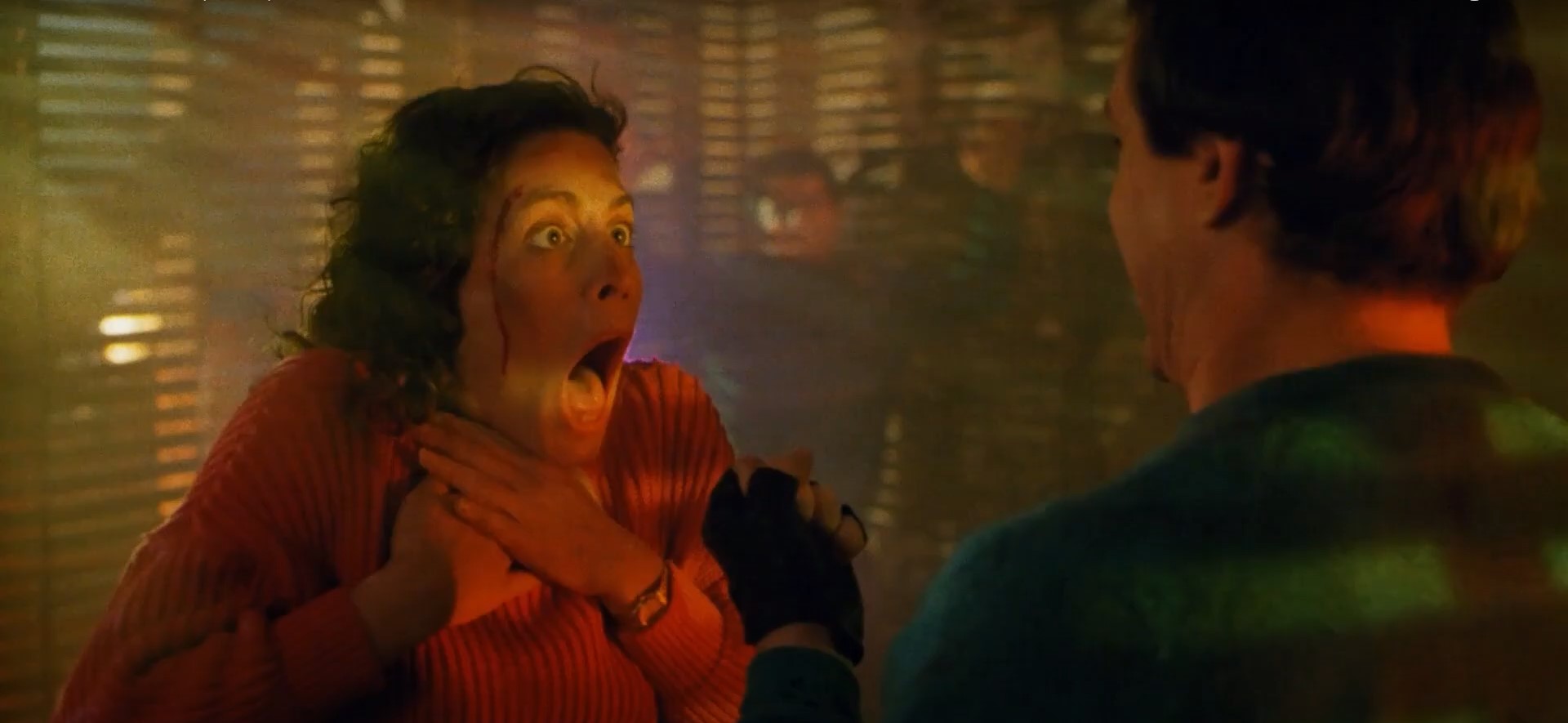
Polish filmmaker Andrzej Zulawski’s “Possession” spans over a number of parallels that, in abstract theory, reflect social political matters of a post-war, Berlin wall divided Germany and the personal matters of Zulawski as a mirror of his ugly and bitter divorce from actress Malgorzata Braunek.  The 1981, Berlin shot, inimitable horror is a speeding melodramatic bullet train racing down a tracklayer of surreal rails and planks, ripping toward destruction with two turbulent people who about to slam, engine first, into an unforeseen mountain façade of towering despondency. That unforeseen mountain takes form from the tug-a-war of within, materializing duplicity, in every sense of the word, unnaturally. Frederic Tuten cowrote the emotionally florid and easily post-grad thesis dissecting film with Zulawski that was French mounted by Gaumont Film Company under producer Marie-Laure Reyre. Two other French companies, Oliane Productions and Soma Films, co-produced.

Watching Mark (“Jurassic Park” and “Event Horizon’s” Sam Neill), and Anna (“The Tenant” and “Diabolique’s” Isabelle Adjani) go at each other’s throat in a vicious cycle of matrimony madness can be in itself, maddening. Neill and Adjani radiate such loathing and desperation that’s seeing the two interact could possibly ignite World War III right there in the heart of Germany. What makes the contentious and hyperventilating scenes more interesting and alluring are the actors’ stage-like, full of hyperbolic melodrama, performances that somehow don’t quite register as the feisty interactions playout in what can only be concluded being pinpoint precision. Even Heinrich (“A Young Emmanuelle’s” Heinz Bennent”) is blatantly over-the-top with erratically wild movements of his body during scenes of emotional and physical struggle. Zulawski and “Possession” embraces the international cast with individual methodology on acting from Britain, France, Germany, and with even Zulawski who’s Polish and though you know the film is set in a divided Berlin between East and West Germany, there’s never this sense that “Possession” is strictly locked down to be anything but German. Aside from the Berlin Wall and some signage, maybe even the architecture, the multinational cast thins out the inklings of thinking, “oh yeah, this is filed in Germany!” “Possession” cast concludes with Margit Carstensen, Shaun Lawton, Johanna Hofner, Michael Hogben and Carl Duering.

Being that this was my second sit down with Andrzej Zulaski’s “Possession,” the first being Second Sight Films’ DVD release over 10 years ago, you begin to fathom the pattern of surrealism Zulaski aims to bombard viewers with through incessant bickering and an unspoken love-and-hate undertone. The doppelganger theory that’s attached itself to “Possession” from over the years warrants merit because those in a relationship on the precipice of implosion always wish the other person to be a better version of themselves, of who they want them to be, or of who they fell in love with in the first place. One can’t go deep into the doppelganger theory without totally exposing all of “Possession’s” secrets, surreal or not, and that infestation of preference takes shape for Zulaski as, ironically enough, a shapeless creature. The desire is tremendously powerful for Anna she can’t avoid being away from it for long stretches of a time, popping in to her and Mark’s old apartment for just enough time to have Mark stir the pot with his own manifested infernal creature, himself. Anna, an extremely passive woman, rarely confronts Mark about her infidelity and is always Mark who has to extract that information with every tooth and nail. “Possession” will forever be hailed a film that can analyzed over and over again without ever finding a concrete interpretation and, you know what, we can live with that.

As I said, last time “Possession” was visited by these aging eyes was over a decade ago on a UK DVD. Now, I had the fortunate opportunity to sit down with a new Blu-ray release from Australia. Umbrella Entertainment, in conjunction with The Film Institute (TFI) Films Production, releases a single disc, full 1080p Blu-ray, registered as their volume #11 on the spine, as part of the banner’s Beyond Genres collection. Presented in European widescreen 1.66:1 aspect ratio, this “Possession” release has a giant leap of negative exposure in comparison to Second Sight’s DVD, retreating away from a more natural and textural palpable transfer, full of detail and good amount of grain, to a blue-tinged headscratcher with a higher contrast that renders details and shadows nearly wiped out. The transfer is also conveyed with slight damage seen in approx. minute 14 with a vertical scratch and some image destabilization that makes discernability dematerialize right before your eyes near minute 44 and 57. The English language DTS-HD 2.0 master audio renders better with cleaner tracks seeing little-to-none hissing or static. The dialogue’s apparent and unobstructed thought slightly isolating without much depth. Despite some limited capacity with the dual channels, “Possession’s” more adrenalized scenes/ranges – i.e., speeding car flip, shoot outs, apartment explosion – sound effective and robust. Special features include an archival audio commentary with director Andrzej Zulawski and co-writer Frederic Tuten, an archival interview with the late Zulawski The Other Side of the Wall: The Making of Possession from 2011, a U.S. Cut of the film with a following featurette Repossessed, a location featurette A Divided City, the musical compositions in an interview with composer Andrej Korzynski The Sounds of Possession, an interview with producer Christian Ferry Our Friend in the West, a poster analysis, and the international and U.S. theatrical trailer. What’s presented by Umbrella is the fully uncut 123-minute version in a region B-code format though, weirdly enough, rated 18. Another weird note about the release is the back cover credits are displayed in French on the cardboard slipcover housing the reversible DVD artwork featuring a new illustrated snapcase cover art by Simon Sherry. I’m a clear fan of “Possession’s” clear ambiguity despite being not sure positive about the new Blu-ray release. Zulawski’s tale of corrosive dissolving of wedlock definitely fits the Beyond Genres banner and is a fine edition to Umbrella’s celebratory bank of classic horror.


Possess Your Own Copy of Umbrella Entertainment’s Blu-ray Release of “Possession” Today!

Being Dismissed is EVIL That’s Hard to Choke Down. “Swallow” reviewed! (Second Sight Films / BD-R Screener)

Newly pregnant housewife, Hunter, putters around the house while her workaholic husband enjoys the fruits of success and friendship with colleagues.  When she’s not cleaning the house or preparing a meal for herself, Hunter stares into the oblivion of her isolating environment.  The country girl who really had nothing to her name has fortunately found an opportunity to never be worried about financial insecurities and with every material thing a person could want in their right at her fingertips.  All Hunter has to sacrifice is her control.  Feeling lonely, powerless, and trapped, Hunter discovers swallowing inedible, dangerous objects gives her great joy and something she can control.  As she goes deeper into this obsession and her perfect world begins to crumble, she’s confronted with reexamining her dark past that stems her unusual eating habit.

Sometimes it’s our strange quirks, our self-destruction behaviors, and our subconscious need to be noticed, or in control, or out of the pockets of others that can deliver horrid outcomes that, ironically enough, can be also our incognito liberator.  As such displayed in Carlo Mirabella-Davis’ written and directed introductory feature film, a blend of family melodrama and interior body horror, with “Swallow.”  The 2019 released psychological thriller is difficult to digest, literally, as the protagonist struggles coping with external control issues in a seemingly perfect life, a life that has never quite felt like her own, while also encouraging an alarming new physiological appetite for what is known in the eating disorder circles as Pica.  Set in upstate New York, shot around the idyllic Hudson Valley area, “Swallow” is produced by the award-winning “Nomadland’s” Mollye Asher and “Black Box’s” Mynette Louie, who have a long history in investing into bold and interesting emotional depth tales, and is a production of the France based companies, Charades and Logical Pictures.

Undertaking the daunting task of Pica emulating is Haley Bennett.  “The Haunting of Molly Hartley” and “Hardcore Henry” actress tethers a line to the core basis of her character Hunter who has to gradually chip away portions of her blank exterior of a person subconsciously suffering from similar symptoms of Stockholm Syndrome.  Hunter very much believes in the social saturation of wifely duties at an attempt to please her bread-winning husband Ritchie (Austin Stowell, “Colossal”), constantly gathering reassurances and happiness from him.  I also like the play on words with the husband name Ritchie that speaks to his haughty behavior.  Bennett, in great detail, captures Hunter’s disfigured, uncertain happiness and wholehearted attempts to join the ranks of a proud housewife, an area mirrored by silent authority from her mother-in-law Katherine (Elizabeth Marvel, “All the Little Things We Kill”).  As soon as Hunter swallows that very first foreign object, Bennett derives true delight from the bizarre action.  From then on, blistering is away is being a slave to Ritchie’s wealthy ties as that little object, that spherical inkling of hope, gets the marble rolling down the gullet of taking back what’s hers, her life.  Bennett and Stowell finesse their characters’ relationship with a teetertotter of genuine sympathy and ingenuine gratification in what’s a blurry line of compassion or a total fake façade for the allusion of appearances.  The weakest character, for me, is Luay, the Syrian expat who fled the turmoil of homeland war and has become something of a caretaker to Hunter.  Played by Laith Nakli, Luay’s sympathy for Hunter runs deeper than her psychological disorder, and Nakli can dish out awkward, slow burn compassion with the best of them, but that connection between Luay and Hunter misses the timely mark with a blank and acute switching of allegiances gone unspoken and with inaction.  Luna Lauren Velez (“Dexter”), David Rasche (“Cobra”), Babak Tafti, Nichole Kang (“Ten Minutes to Midnight”), Zabryna Guevara, and “American Horror Story’s” Denis O’Hare rounds out the cast.

Hunter’s fixation can be compared to the likes of any other vice and soul-swallowing addiction – gambling , drugs, sex – but the very fact that it’s Pica, and on a certain level of the OCD spectrum, makes Mirabella-Davis’ script somewhat of a curious oddity as the filmmaker builds a story around a dysfunctional family and one’s own personal grasp on destiny.  Though set in modern times, “Swallow” very much has a 1950s-1960s vibe with the dynamic of the working husband and the wife stays home to spruce up the house; there’s even a particular scene of Hunter vacuuming in a 50’s-ish tea length swing dress.  Despite the story’s curious and odd nature and the stuck in time antiquated gender inequality veneer, Mirabella-Davis utilizes these aspects to shape and shed light on the more diabolical of inner detriments with Hunter’s lack of confidence and autonomy stemmed from a difficult to swallow past and a financially affluent relationship that actually disallows personal freedom.  “Swallow” is oppressive in ways as Ritchie and his family and friends attempt to squeeze every ounce of value out of Hunter with value being the unborn child amongst other things.   The psychology of “Swallow” melds past and present together to form Hunter’s dangerous method of taking over the reigns of a life she never steered and Mirabella-Davis crafts an exquisite niche thriller to encourage us to gobble up.

Second Sight Films, a label known for it’s substantial and lavish re-releases, snacks on another high profile film with their profound limited edition Blu-ray of Carlo Mirabella-Davis’ “Swallow.” The single disc, PAL encoded, region B BD-25 is presented in the original aspect ratio of a widescreen 2.39:1 aspect ratio. Since a BD-R was provided for review purposes, I am unable to comment on the true characteristics and qualities of the audio and video, but do note Katelin Arizmendi’s stunning cinematography that’s full of palpable texture to every minute piece of inedible edibles Hunter puts down her throat and the gorgeous long shots of Hunter being engulfed by the depth with the isolating forest setting that looks to be lurking in the background. The limited edition release hit shelves this past Tuesday, the 22nd, and has a ton of features to check out, including a new audio commentary by director Mirabella-Davis and producers Moilye Asher and Mynette Louie, A Personal Story exclusive interview with the director that’s seriously in-depth and passionate about his work on “Swallow,” Something Bubbling Underneath exclusive interview with producer Moilye Asher, The Process exclusive interview with editor Joe Murphy, Metal and Glass exclusive interview with composer Nathan Halpern, Alexandra Heller-Nicholas’s take on “Swallow” A Room of One’s Own, Mirabella-Davis’ short film “Knife Party,” and a rigid slipcase with new artwork by Haley Turnbull along with a soft cover booklet with an introduction by the director and containing essays by Anne Billson, Jordan Crucchiola, and Ella Kemp. Lastly, at the tail of the special features are 6 beautiful collectors’ art cards. “Swallow” is rated UK 18 and runs for 94 minutes. Bennett wins the prize for making “Swallow” a throat-clearing success and bravo to Mirabella-Davis for being brave enough with an unusual story set around an uncommon eating disorder and directing the hell out of it.

Limited Edition Blu-ray from Second Sight Films Available at Amazon.com

There’s EVIL in the Saying, No Other Choice. “Violation” reviewed! (Acorn Media International / Blu-ray)


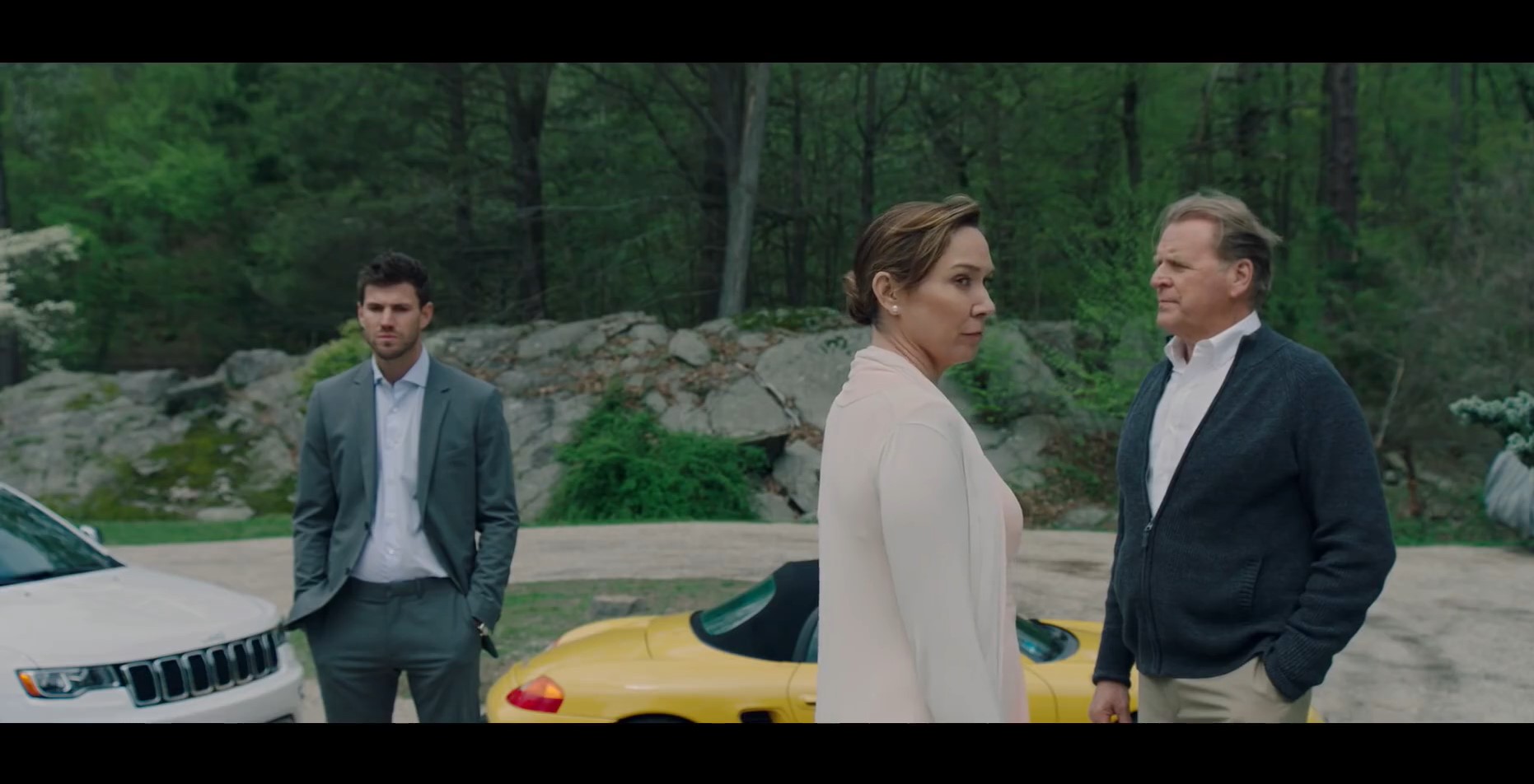
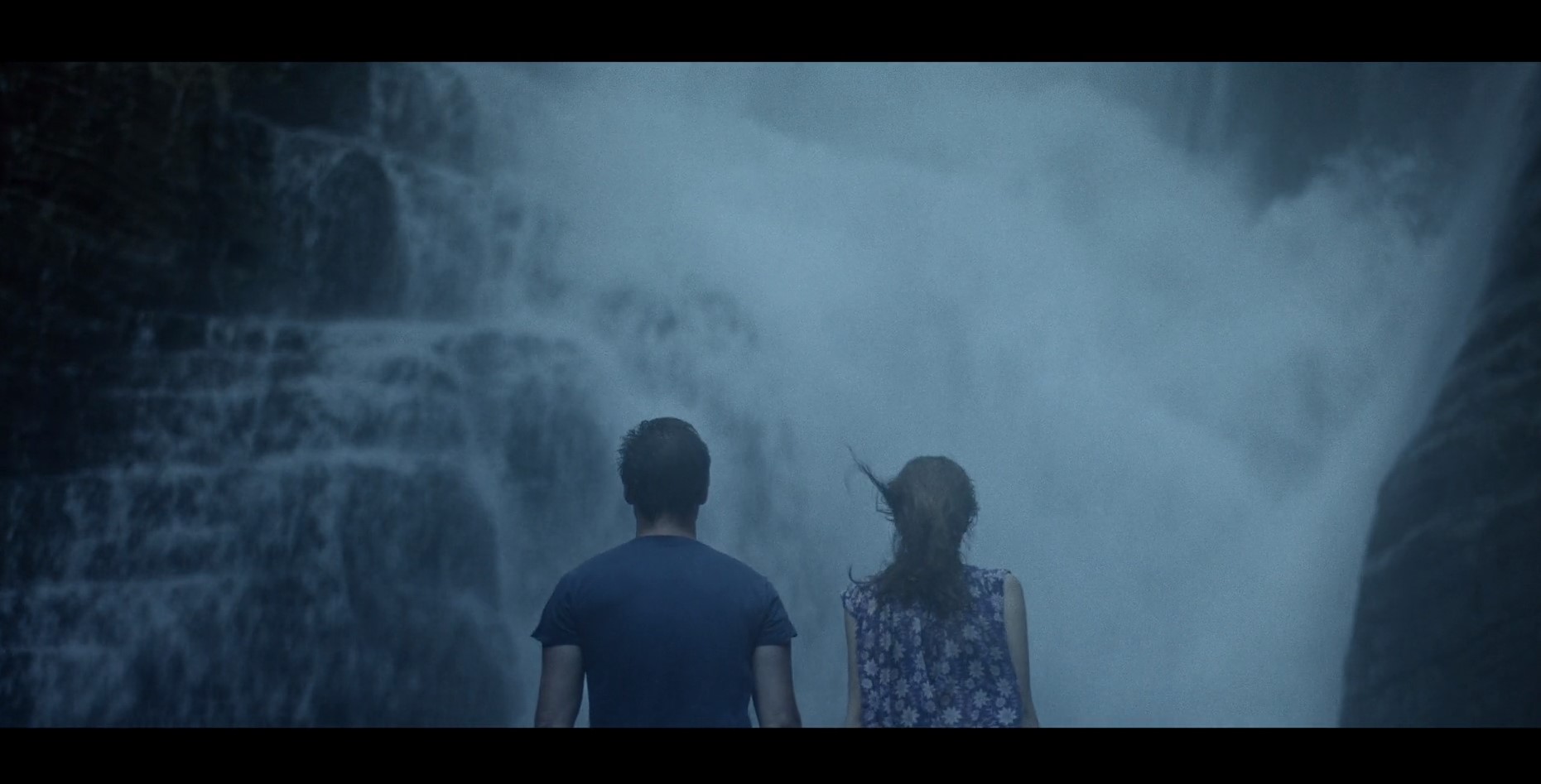
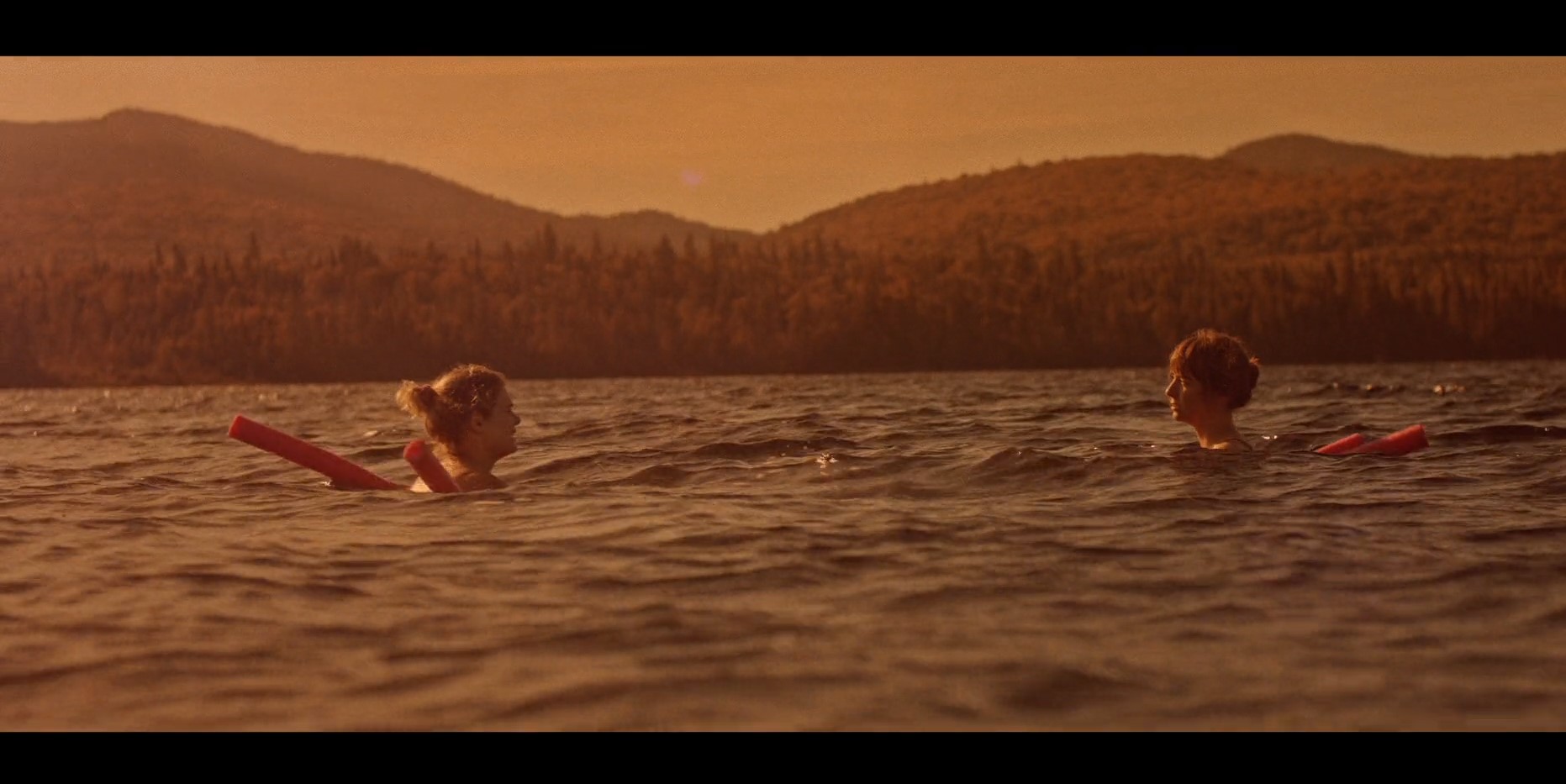
On the precipice of her loveless marriage ending, Miriam and her not-quite-yet estranged husband getaway to visit her sister, Greta, and husband, Dylan, at their quiet woodland and lakeside home, an area where Miriam and Greta fondly grew up together.  Also sharing a past together as high school friends, Miriam and Dylan enjoy each other’s company in a playful and quipping manner after a lifelong friendship, but after a night of drinking and an outpour of internalized emotions, Miriam slowly awakes to Dylan forcing his way inside her and is unable to stop him.  Confronting Dylan and Greta separately further strains the tense situation to the point that Miriam is made out to be the villain in her own sexual assault, sending Miriam to plot a thorough premediated revenge to not only avenge herself but also to save her sister still married to her attacker. 

Real hands-and-knees puked vomit splattering over a black tarp.  A blindfolded, naked man tied to a chair with a real erect penis saluting tall.  If you’ve never seen this Shudder exclusive 2020 released film and you’re reading this review opening fresh eyed, you might automatically presume Dusty Mancinelli and Madeleine Sims-Fewer’s “Violation” a work of pure vomit gore and BDSM pornography.   Let me quickly put your mind at ease by saying “Violation” is nothing of the sort, but these unmistakable aspects in the Canadian revenge drama are real and explicit as a deep-seeded personal choice for the writing and directing duo’s first feature length project.  Mancinelli and Sims-Fewer’s collaborated history goes back to 2017 as they together write, direct, and produce a handful of short films with a core base of dysfunctional sexual themes in “Slap Happy,” “Woman in Stall,” and “Chubby,” to name a few in their credits.  “Violation” continues the trend, providing cathartic discussion for the filmmakers’ tabooed motif at an attempt at bold realism.  “Violation” is self-produced by Sims-Fewer and Mancinelli under their production banner, the Toronto-based DM Films, in association with Telefilm Canada and The Talent Fund with financing from the executive producer line of independents, such as François Dagenais (“Ankle Biters”), and the husband-wife duo of David Hamilton and Deepa Mehta of Hamilton-Mehta Productions.

In the lead of Miriam is the writer, director, and producer herself, Madeleine Sims-Fewer, succumbing to a characterized funneling toward piteous rock bottom within her role who, from the get-go, is already in hot water with a dissatisfied husband about their trip to see Miriam’s sister. There’s rarely any happiness for Miriam throughout, even amongst the contentious heart-to-hearts with her own sister, and the little designated of joy to her is quickly squashed by the narrative’s crux and then that’s when Sims-Fewer has to about face to a deeper austere level than even before when those closest to Miriam push her away and become her worst enemies in a blink of an eye. Those mercurial enemies are played by Anna Maguire as Miriam’s fickle younger sister Greta, reteaming with her “Forgotten Man” costar Obi Abili as Miriam’s distant husband Caleb and rounding out the cast as Miriam’s alleged rapist and Greta’s husband Dylan is Jesse LaVercombe who also previously worked on the directors’ short films “Slap Happy” and “Chubby.”  Sims-Fewer and Lavercombe really deserve praise for their dedication and courage that circles back to the beginning of this review about real puke and real erection.  There’s vulnerability when totally exposed and these two actors, who have tremendous chemistry, shy very little away from the uncomfortable provocations in hard to swallow scenes of realism.  We also know where Greta stands in the whole scheme of things, but a big plot hole obtrudes with Obi Abili’s Caleb who unexplainably vanishes in the latter half of the two part narrative.  There’s an unsaid presumption that Caleb left Miriam as already rocky marriage kept spiraling down the toilet in the first act, but there was no resolution, leaving the character out in the wind and neglected from the what could have been an interesting interplay of Miriam’s obsessive plot.

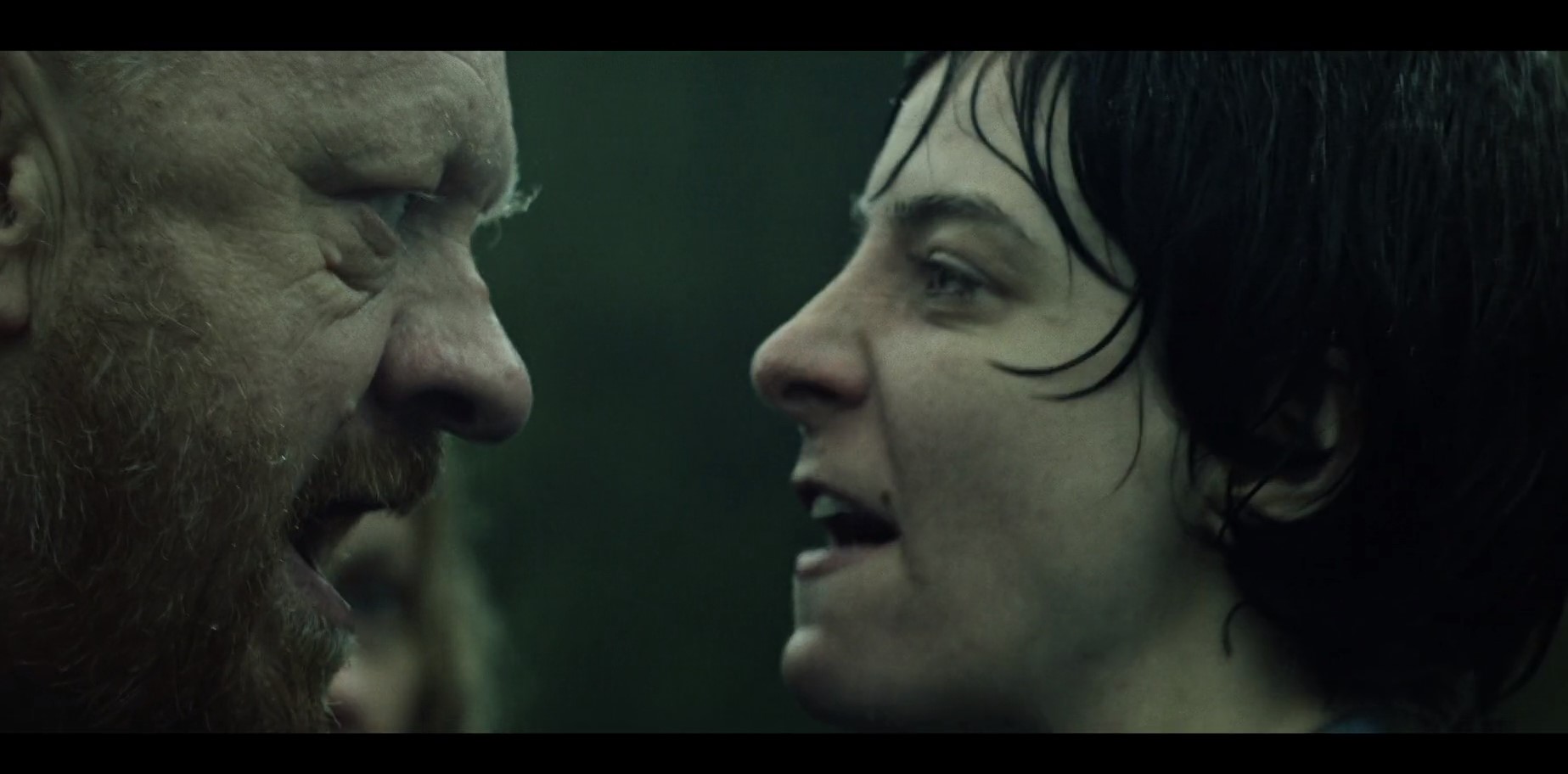
“Violation” is not the typical rape-revenge thriller where the victim rises from the ashes like a phoenix and has an insurmountable, if not endless, amount of hate and determination for street justice to see their rapist or rapists six feet under.  “Violation’s” slow burn method leans toward a character study with Miriam.  Her compassionate human side commingles with her victimized treatment and anger as she’s constantly and consistently second guessing her actions or feeling the utmost, sick-to-her-stomach remorse for her actions that needed to be done in order to avenge herself and also protect her sister as noted in a parallel dream she tells Greta about Miriam sitting in the next room while her sister is unintentionally self-strangulating.  Yet, another side to this tale that could also explain Miriam’s hesitancy and, perhaps, guilt.  Sims-Fewer and Mancinelli are very explicit in Miriam’s unhappiness with her marriage and also her flirtatious wanting of Dylan, pent up by the lack of sex and joy in her marriage, and she also initiates a kiss with Dylan.  Combine those details with a night of drinking, Dylan’s firm stance, and the way the film is shot ambiguously, a pressure cooker moment builds between the characters and viewers whether what stated happened actually happened.  Now, I’m not arguing a case for rape culture or make excuses for rapists, but “Violation” tilts toward Miriam’s mental quality that has been compromised by a contentious marriage, life envy, and the preconceived notion that she’s not a good person.  Either way, what follows the inconspicuous moment is sharply horrible, a real unsettling exhibition of meaningful art. 

“Violation” is certifiably fresh and deservingly so with jarring scenes of gruesomeness, a topical theme of trivializing rape accusations, and compelling character study of one woman’s disharmonious existence in her small inner bubble.  Now, you can own it the Sims-Fewer and Mancinelli film on UK Blu-ray from Acorn Media International. The PAL encoded, region 2 Blu-ray presents the film in 1080p full high definition in a widescreen aspect ratio of 2:39:1. “Violation” embodies an engulfing nature domination of the screen through an Adam Crosby lens. No matter how big and important the moment may be in the story, Crosby’s entrancing us with the tiny embers with a close up of the camp fire or having the actors dwarfed by towering trees until the second act that compartmentalizes two antagonistic characters in the same room. The release shows no signs of deflating Crosby’s and the filmmakers’ semi-surreal, flora and fauna vision with a sleek digital recording teeming with a range of wide landscape shots, stark long shots, and super closeups. The English language Dolby Digital 5.1 surround sound captures as snap, crackle, and pop of the great outdoors; however, the dialogue, though quite clean and clearly audible, sounds a bit boxy at times. Special feature include two extras that are essentially one and the same taking up double the space on BD25 with a meet the filmmakers (Sims-Fewer and Mancinelli) talk very briefly about the genesis of the “Violation.” The second extra, the TIFF Intro, mirrors nearly world-for-world the first special feature. “Violation” has a runtime of 108 minutes and is rated 18 in the UK for strong violence, gore, sexual violence, sex references, and nudity. Viscerally intimate and ghastly, “Violation” is labeled the anti-rape revenge narrative with a close examination of trust and the unfortunate triviality of rape sure to churn stomachs and second guess the intentions of those close to you.

Own “Violation” on Blu-ray Home Video!

EVIL is Only in Your Nightmares. Or is it? “Retribution” reviewed! (Severin / Blu-ray)

Severely depressed artist George Miller attempts suicide by jumping off from his apartment building.  During the exact same time, a low-end gangster is brutally killed by cruel loan sharks.  Being both born on Aril 1st and dying at the same time, the tortured spirit of the gangster possesses the meek artist’s body right before being resuscitated by EMTs.  After a long recovery filled with horrific nightmares, the affable artist returns to his apartment building where he’s welcomed by fellow tenants and an overly warm landlord.  Still plagued by nightmares that have seeped into his awake conscious state, George medicates himself to sleep but the nightmares continue as he sees himself using psychokinetic powers to kill random individuals with extreme malice.  The nightmares are so real he wakes up in a sweaty panic to find out that that exact person was killed the night before the very way it played in his dreams.  When George realizes the gangster has inhabited his body for revenge, he and his friends take measures to put an end to the vindictive carnage. 

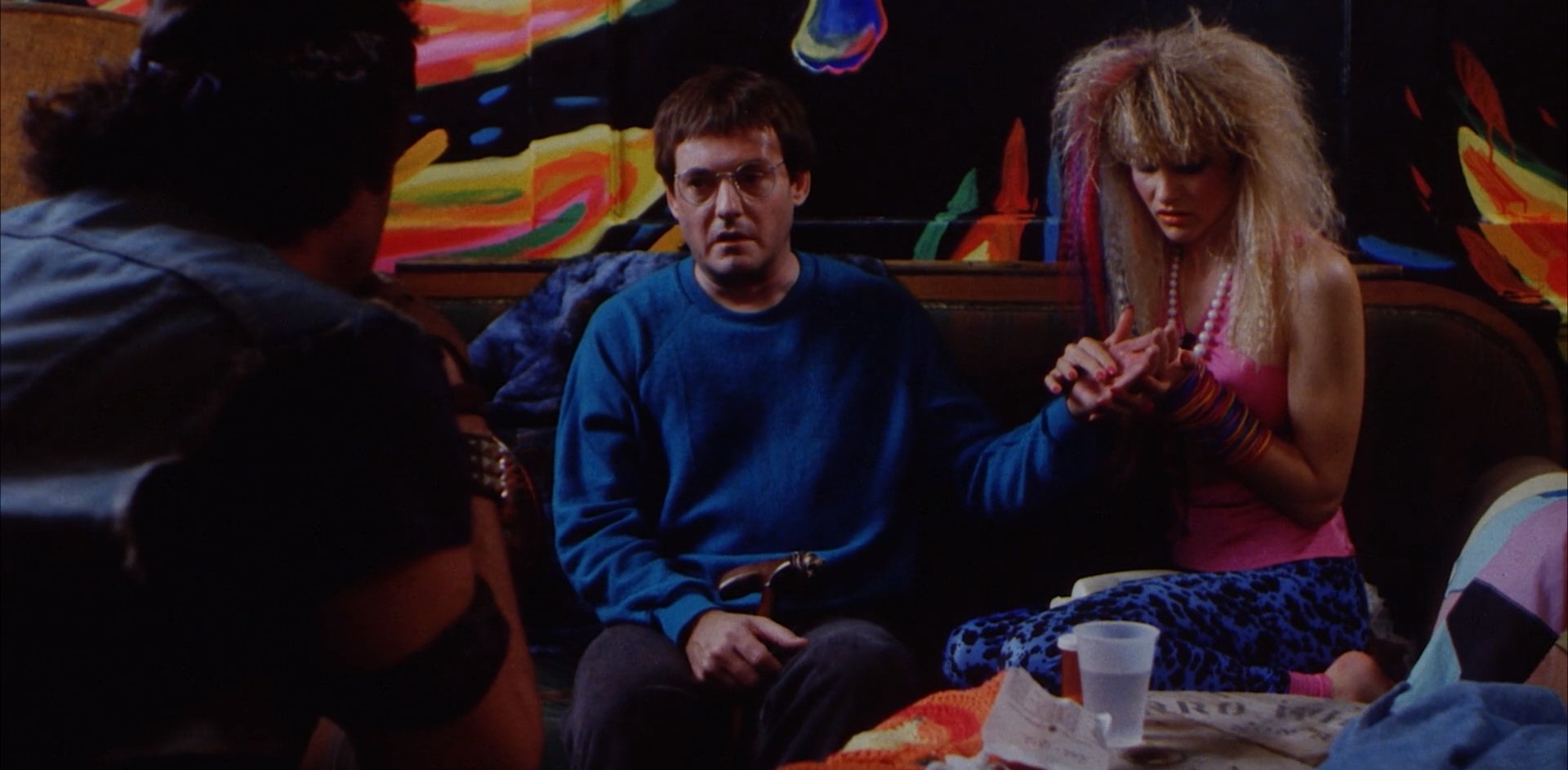
Santa Maria.  Mother of God.  Help me!!!  That phrase, attached to the very last seconds before a gruesome death and announced blankly from fiery, dagger eyes, has forever been seared into the recessed corners of my eardrums as the death cry that echoes throughout Guy Magar’s 1987 gory and visceral possession identity crisis, “Retribution.”  Magar’s ultra-violent and super-chromatic film is the filmmaker’s grand inaugural entrance as a full-length director following up behind a string of director chaired television episodes, including episodes from “The A-Team,” “Blue Thunder,” and “The Powers of Matthew Star” that regularly contained quickly charged, action packed sequences.  The Egyptian-born director translates those intense moments of frenzied disturbance into his mean-spirited and unforgiving vindicator of a script cowritten with then first time screenwriter, Lee Wasserman.  Shot in Los Angeles, “Retribution” is a virtual tour of the city, using the streets of L.A. and real locations, such as the Don Hotel for George’s residence and the nearby House of Neon Art, as a lively, eclectic, and wallet-saving convenient giftwrap for the film’s Dr. Jekyll and Mr. Hyde complexion that feels totally normal compared to L.A.’s divergent glamour.  Magar and Wasserman produce the film with Renegade and Unicorn Motion Pictures serving as the production companies and presented by Taurus Entertainment, formerly connected with United Artists. 

There are probably many actors that could been imagined for the role of George Miller, the suicidal artist plagued with visions of him committing murder, but it’s hard to imagine that venomous stare of complete satisfaction in madness spread across the face of anyone else other than Dennis Lipscomb.  No disrespect to the “Eyes of Fire” and “Wargames” actor but Lipscomb isn’t a chiseled-jawed and muscular leading man; in fact, Lipscomb is quite the opposite, but his range into mild-manner, all around nice guy George Miller into the lust for hatred and murderous revenge George Miller hangs on with complete chasmic permanence.  However, George’s love interest with the street working prostitute and fellow Don Hotel resident, Angel (Suzanne Snyder, “Return of the Living Dead II,” “Killer Klowns from Outer Space”), hardly ever seems natural in not only in the characters’ surreal age-yawning dalliance but also the chemistry looks and feels flat between Lipscomb and Snyder.  Magar and Wesserman neglect diving more into that bond between them but their enamored gleamy eyes for one another is apparent and strong without the context to back it up.  “The Dungeonmaster’s” Leslie Wing also is placed as a George Miller sympathetic advocate in her role as hospital psychologist Dr. Jennifer Curtis, but Dr. Curtis has more background to contend with in comparison to the suddenly conjured fondness from Angel as Curtis is a mental health professional caring for a suicidal patient from at his rock bottom worst to a complete positive turnaround in his mental transformation.  Curtis has more skin in the game with George’s supposed delusions of actually killing people in his nightmares as she defends not only George’s unique supernatural circumstances, but, in a way, herself as a licensed medical profession following HIPAA laws.  “Retribution” holds many dear and unforgettable characters that essentially captures the entire 1980’s spectrum of personalities and, even for a brief scene, the cast gives each role their all, including performances from Susan Peretz (“Dog Day Afternoon”), Clare Peck (“Teen Wolf”), Chris Caputo (“Ghost Warrior”), Danny Daniels (“Voodoo Blood Bath”), Ralph Manza (“Godzilla”), George Murdock (“The Sword and the Sorcerer”), Mike Muscat (“Hunter’s Blood”), and Hoyt Axton who doesn’t stray too far from his good intentions, but naïve, father role in “Gremlins” to being a detective tracking down suspect George Miller. 

I’m in total awe of Guy Magar’s “Retribution.” That opening scene of the suicide attempt with Alan Howarth’s building tension score drops not a single piece of dialogue yet opens with a gripping life and death situation, musically synced to progress toward a harrowing climax, and every frame is dripping with vintage 80’s appeal. Magar definitely knew what strings to pull to get the blood pumping, to get you excited, and to drop an excellent mystery right in the lap, or the middle of the street in this case with George Miller’s body after it flops off the car it just smashed onto. From that point on, “Retribution” peddles forward following the recovery, recouping, and ruination of George Miller’s life at the unseen hands of an exploiting, malevolent spirit that seeks to track down the top-tiered gangsters that shot and burned him alive and exact his own brand of harsh psychokinetic justice. Does it matter how George and this gangster, both born on the same day and both nearly died at the same time, came to fuse transcendently together? Don’t worry. Magar didn’t think it was important either and he’s right! “Retribution” snags all the attention for the sole purpose of the ride and that ride being a beautiful, color-coded daymare. The one aspect that ultimately retracts the buzzing high, stemmed from most 80’s films, is the sluggish love interest subplot between George and Angel stutter stepping into an awkward phase of interactions that hard stops much of core plot and though the plot is neurotically nonsensical to begin with, George and Angel’s desires for each other are about as cringeworthy as they come. Stick with the gore by honing in on Miller’s subconscious alter ego of a gangster serving his killers their just desserts via Kevin Yagher (“Nightmare on Elm Street 2: Freddy’s Revenge”) and his highly effective special effects on a low end budget that, along with a brilliant showing of cinematography by Gary Thieltges, tips into the categorical likes of “The Evil Dead” or “The Exorcist.”

“Retribution” delivers a fervency unlike ever seen in one of the utmost, must-see, shamefully overlooked horrors films of the 80’s.  Now, with a deserved boost and in style, “Retribution” gets the royal restoration treatment with a jammed-packed and sleek 3-disc Blu-ray set from Severin Films and distributed by MVD Visual.  Disc one’s theatrical cut, clocking in at 107 minutes, comes from the recently discovered 35mm pre-print elements, shot on an Arriflex 35 BL3 per IMDB, and has been digitally scanned in 2K, presenting the region free film in 1080p Full High Definition inside the original widescreen 1:85:1 aspect ratio.  “Retribution’s” image pleasingly pops with fine delineating attention to the details that reach out to the point where they’re nearly tactile textures.  Every single setup of Robb Wilson King’s production designs are rich to begin with but are even figuratively injected with a smoother compression growth enhancing hormone, adding more layers of surface level details that personify and personalize the space.  Magar’s chromatically fluorescent vision is a literal tilt-a-whirl palette blast of phantasmagoria.  Disc tow is the extended Dutch video version that adds back in the extended seconds on the longer, gorier kill scenes.  The English language DTS-HD Master Audio 2.0 is the sole mix on the release and, honestly, sates the need with the dual channels.  You obviously don’t get the surround sound, which considering this release would have been ideal, but the stereo mix, as well as the dialogue track, is still full-bodied, identifiable, and spotless of blemishes.  John Carpenter understudy Alan Howarth scores his solo synth-laden story on tenterhooks with a tinge of a Miami Vice theme as well as setting tonal moods that add depth to character layers.  If you want the entire OST, you’re in luck!  The third disc is a compact disc of the entire soundtrack.  Special features includes over two hours of content with Severin exclusive looking back at the experiences with the late director Guy Magar and the ins-and-outs of making “Retribution” interviews with co-writer Les Wasserman Writing Wrongs, actress Leslie Wing Shock Therapy, actress Suzanne Snyder Angel’s Heart, actor Mike Muscat Santa Maria, Mother of God, Help Me!, soundtrack composer Alan Howarth Settling the Score, special effects artist John Eggett Visions of Vengeance, artist Barry Fahr The Art of Getting Even, production designer Robb Wilson King Living in Oblivion.  Other special features include Guy Magar’s student film “Bingo,” stills and poster galley, and the theatrical trailer all packaged under a cardboard slipcover and a reversible snap case cover. Severin Film’s “Retribution” release is a triumph, a proper regenerarcy of revenge cinema, with all the gory details being the star of the show.

Own this Amazing 3-Disc set of “Retribution” from Severin Films!

When the Girl of Your Dreams Thinks Like an EVIL Robot! “Deadly Friend” reviewed! (Blu-ray / Shout Factory)


Whiz kid Paul Conway, along with his mother and artificial intelligence robot creation called BB, move to a new house to be close to Poly Tech where the teenage prodigy begins research study on the human brain.  Paul quickly befriends Tom, the local paperboy, and cute neighbor Samantha, aka Sam, that evolves into more than just friendship, but when Sam’s abusive father kills her and BB is blow to smithereens by a cruel, paranoid neighbor over the holiday season, a distraught Paul begs his friend Tom to assist him in a radical resurrection to save Sam by implanting BB’s A.I. chip into Samantha’s brain.  The long shot surgery pays off and Sam is awake and moving around automatonlike, but the thoughts and feelings of Sam and BB blend and the hatred toward their killers feeds into the need of grisly revenge.

Wes Craven.  Every genre fan upon hearing his name goes through an euphoric reliving in seeing one of his films for the first time.  For most that film is “A Nightmare on Elm Street” with Robert Englund starring as the fedora-sporting, dream killer Freddy Krueger  who wears a glove with finger knives.  Krueger has been and still is one of the most iconic and memorable villains ever in horror since Krueger’s from Craven’s nightmare-to-cinema creation in 1984.  Fast forward two years later, Craven hops at the chance to make a studio film with Warner Bros.  A film that’s polar different from “ANOES” with a touching, PG-rated macabre, science fiction coming of age story based off the Diana Henstell novel entitled “Friend” with an adapted script by Bruce Joel Rubin who went on to pen “Ghost” and “Jacob’s Ladder” a few years later.  After test screenings, the studio began to meddle, urging, if not demanding, Craven add horrific violence to the intensity lighter story thus turning “Friend” into “Deadly Friend” with a blender hacked story that failed at the box office during the Halloween season nonetheless.  Pan Arts/Layton serves as the production companies with Warner Bros presenting “Deadly Friend” under the studio’s banner.

At the center of the story are two star-crossed teens in the midst of adolescent flirtation.  Eyes glued to one another, but separated by the cruel whims of a drunken father, are Paul, “The Little House on the Prairie” star Matthew Labyorteaux and Samantha, “Buffy the Vampire Slayer” feature star Kristy Swanson.  While not overly smoochy between Paul and Sam, the then teenage youngsters sell the affectionate tension between them with depth in their performances.  Yet, the Swanson’s post-surgery mechanical movements are terribly rudimentary and cheesy, turning the studio warranted violent exploration of youth and morbid Sci-Fi cybernetics story into the laughing stock of the already inanely entertaining killer robotic subgenre.  Without the studio intervened violence and gory edits, I could not envision Craven and Rubin’s touching story between Paul and his desperation creation to cure his broken-hearted affection for both his robot and the girl next door.  By far the best principle role is Tom, played by Michael Sharrett (“Savage Dawn”) who really plays into that Craven and Rubin softer vision with a bit of well-timed comedy.  As a character, Tom’s always falling or fainting in some capacity and deliveries some great one-liners that jazz up the lightheartedness of “Deadly Friend’s” more macabre stance.  Big names and distinguish faces fill rather unexpected cameos, such as “The Goonies” Anne Ramsey as a paranoid recluse who blows away BB in a Halloween mischief gone wrong, as well as Roger Rabbit voice actor Charles Fleisher as BB.  “Deadly Friend” routs out with Anne Twomey (“The Imagemaker”), Richard Marcus (“Tremors”), Lee Paul, and Russ Marin (“The Dark”).

I know Warner Bros. swallowed the original intent of “Friend,” chewed it with the purpose to add crowd-pleasing violence and gore, and spat out an game-changing “Deadly Friend” totally going against the wishes of the cast and crew, but losing that more tender creativity of an undead romance narrative wasn’t put out to pasture in vain.  Infamy and a semi-cult status long after release came out of the hellish mixed-bag of critically panning spitfire and the disownment of the film’s creators.  One particular scene, involving a basketball and an explosion of head goo, is definitely one of the more rememberable and well executed kill scenes of the era.  As a whole, “Deadly Friend” rests in ridiculous peace as many viewers will watch, digest, and come to some kind of self-compromising understanding on Craven’s misadventure and will relinquish to the fact that the film has a place in his repertoire of work.  Yet, dicey editing and pacing issues suggests a heavily edited film and trying to surmise how “Friend” would have been perceived in studio unmolested form is nearly impossible given the already bizarre sci-fi narrative subject matter.  What I found more interesting is Craven essentially sticking it to the studio’s request for violence and gore by rehashing much of “A Nightmare on Elm Street” into “Deadly Friend’s” framework with the intense dream sequences, a giant furnace-boiler room, a severely burned man’s face, and even a few shots of a blond Kristy Swanson garbed in white has a familiar Amanda Weise skin.  Overly compressed and subsequently reworked to appease audiences, “Deadly Friend” is no friend at all on a “Re-Animator” or insert man-in-machine horror parallel dipped into a “Short Circuit” coating that plainly suffers from outside interference resulting in a neutralized effect.   

You’ll never have a friend like “Deadly Friend” now on a collector’s edition Blu-ray from Scream Factory, a subsidiary of Shout Factory!  The rated R film has a runtime of 90 minutes and is presented on a 1080p High-Definition, region A Blu-ray in a widescreen 1.85: aspect ratio from a new 2K scan of the interpositive 35mm film.  Without much criticism, the virtually undamaged transfer refreshes previous releases for high-definition aficionados with a palatable amount of grain and the details are clearly discernable.  Colors looks good too between the natural skin tones and the range in contrasts, providing new life into Philip H. Lathrop’s (“Lolly-Madonna XXX”) two-toned atmospheric cinematography.  The English language DTS-HD Master Audio Mono track is equally as pleasant with clear and clean soundtrack unobstructed by damage or static.  No issues with the dialogue as well in another testament to Shout Factory’s attention to the audiophile-appreciated fidelity.  Optional English SDH subtitles are available.  Special features include new interviews with Kristy Swanson and writer Bruce Joel Rubin who go into rigorous details about the Studio’s interception as well as working with their cast and crew mates.  There are also new interviews with composer Charles Bernstein and special make up effects artist Lance Anderson.  The theatrical trailer rounds out the special features.  “Deadly Friend’s” tech-horror with a twist is about as deep as the brain of a toaster oven replacing your girlfriend’s father submissive and overly meek brain, but the new Scream Factory collector’s edition is absolute perfection.

Wes Craven’s “Deadly Friend” now on a Collector’s Edition Blu-ray!