EVIL is Only in Your Nightmares. Or is it? “Retribution” reviewed! (Severin / Blu-ray)

Severely depressed artist George Miller attempts suicide by jumping off from his apartment building.  During the exact same time, a low-end gangster is brutally killed by cruel loan sharks.  Being both born on Aril 1st and dying at the same time, the tortured spirit of the gangster possesses the meek artist’s body right before being resuscitated by EMTs.  After a long recovery filled with horrific nightmares, the affable artist returns to his apartment building where he’s welcomed by fellow tenants and an overly warm landlord.  Still plagued by nightmares that have seeped into his awake conscious state, George medicates himself to sleep but the nightmares continue as he sees himself using psychokinetic powers to kill random individuals with extreme malice.  The nightmares are so real he wakes up in a sweaty panic to find out that that exact person was killed the night before the very way it played in his dreams.  When George realizes the gangster has inhabited his body for revenge, he and his friends take measures to put an end to the vindictive carnage. 

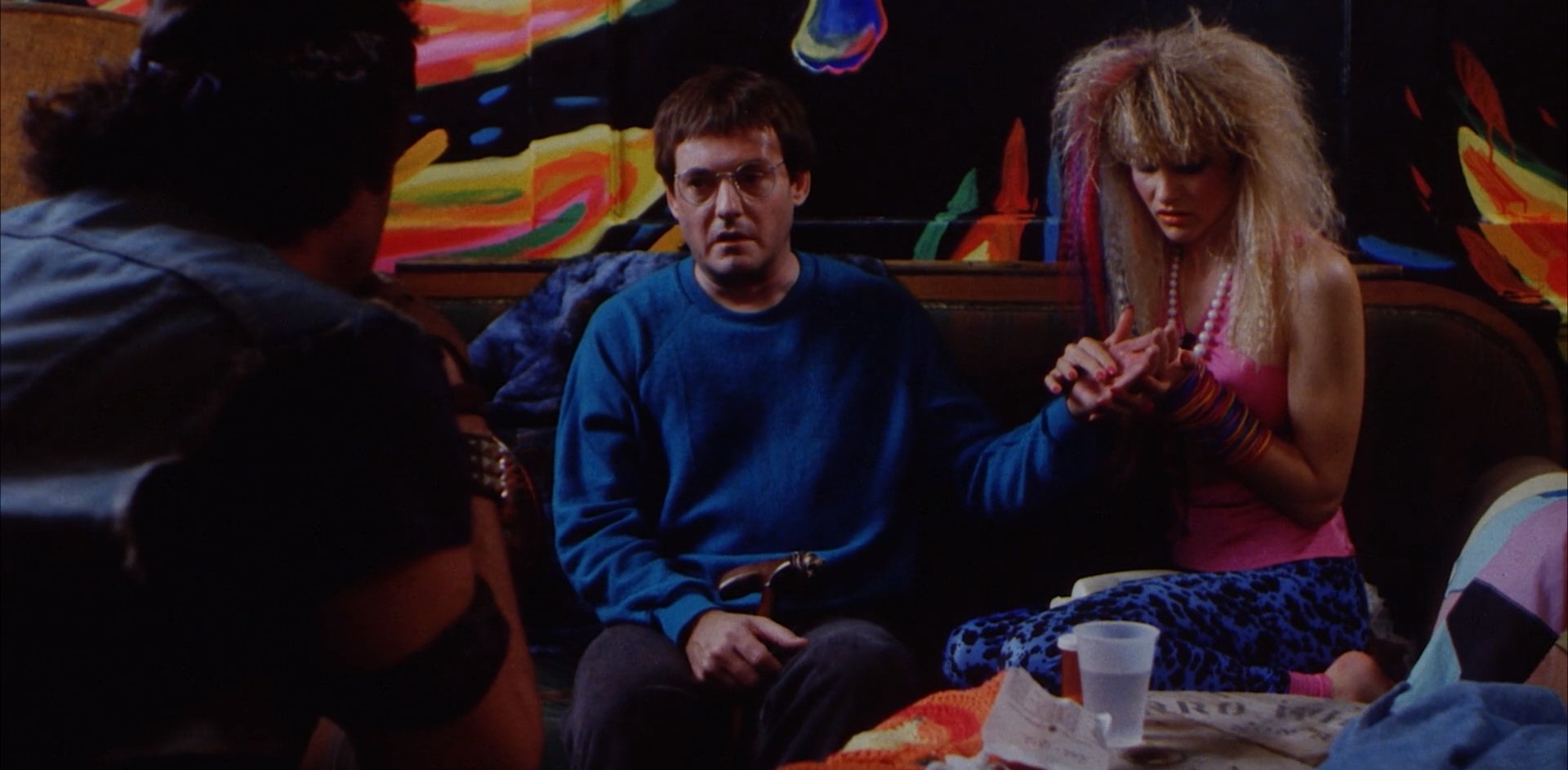
Santa Maria.  Mother of God.  Help me!!!  That phrase, attached to the very last seconds before a gruesome death and announced blankly from fiery, dagger eyes, has forever been seared into the recessed corners of my eardrums as the death cry that echoes throughout Guy Magar’s 1987 gory and visceral possession identity crisis, “Retribution.”  Magar’s ultra-violent and super-chromatic film is the filmmaker’s grand inaugural entrance as a full-length director following up behind a string of director chaired television episodes, including episodes from “The A-Team,” “Blue Thunder,” and “The Powers of Matthew Star” that regularly contained quickly charged, action packed sequences.  The Egyptian-born director translates those intense moments of frenzied disturbance into his mean-spirited and unforgiving vindicator of a script cowritten with then first time screenwriter, Lee Wasserman.  Shot in Los Angeles, “Retribution” is a virtual tour of the city, using the streets of L.A. and real locations, such as the Don Hotel for George’s residence and the nearby House of Neon Art, as a lively, eclectic, and wallet-saving convenient giftwrap for the film’s Dr. Jekyll and Mr. Hyde complexion that feels totally normal compared to L.A.’s divergent glamour.  Magar and Wasserman produce the film with Renegade and Unicorn Motion Pictures serving as the production companies and presented by Taurus Entertainment, formerly connected with United Artists. 

There are probably many actors that could been imagined for the role of George Miller, the suicidal artist plagued with visions of him committing murder, but it’s hard to imagine that venomous stare of complete satisfaction in madness spread across the face of anyone else other than Dennis Lipscomb.  No disrespect to the “Eyes of Fire” and “Wargames” actor but Lipscomb isn’t a chiseled-jawed and muscular leading man; in fact, Lipscomb is quite the opposite, but his range into mild-manner, all around nice guy George Miller into the lust for hatred and murderous revenge George Miller hangs on with complete chasmic permanence.  However, George’s love interest with the street working prostitute and fellow Don Hotel resident, Angel (Suzanne Snyder, “Return of the Living Dead II,” “Killer Klowns from Outer Space”), hardly ever seems natural in not only in the characters’ surreal age-yawning dalliance but also the chemistry looks and feels flat between Lipscomb and Snyder.  Magar and Wesserman neglect diving more into that bond between them but their enamored gleamy eyes for one another is apparent and strong without the context to back it up.  “The Dungeonmaster’s” Leslie Wing also is placed as a George Miller sympathetic advocate in her role as hospital psychologist Dr. Jennifer Curtis, but Dr. Curtis has more background to contend with in comparison to the suddenly conjured fondness from Angel as Curtis is a mental health professional caring for a suicidal patient from at his rock bottom worst to a complete positive turnaround in his mental transformation.  Curtis has more skin in the game with George’s supposed delusions of actually killing people in his nightmares as she defends not only George’s unique supernatural circumstances, but, in a way, herself as a licensed medical profession following HIPAA laws.  “Retribution” holds many dear and unforgettable characters that essentially captures the entire 1980’s spectrum of personalities and, even for a brief scene, the cast gives each role their all, including performances from Susan Peretz (“Dog Day Afternoon”), Clare Peck (“Teen Wolf”), Chris Caputo (“Ghost Warrior”), Danny Daniels (“Voodoo Blood Bath”), Ralph Manza (“Godzilla”), George Murdock (“The Sword and the Sorcerer”), Mike Muscat (“Hunter’s Blood”), and Hoyt Axton who doesn’t stray too far from his good intentions, but naïve, father role in “Gremlins” to being a detective tracking down suspect George Miller. 

I’m in total awe of Guy Magar’s “Retribution.” That opening scene of the suicide attempt with Alan Howarth’s building tension score drops not a single piece of dialogue yet opens with a gripping life and death situation, musically synced to progress toward a harrowing climax, and every frame is dripping with vintage 80’s appeal. Magar definitely knew what strings to pull to get the blood pumping, to get you excited, and to drop an excellent mystery right in the lap, or the middle of the street in this case with George Miller’s body after it flops off the car it just smashed onto. From that point on, “Retribution” peddles forward following the recovery, recouping, and ruination of George Miller’s life at the unseen hands of an exploiting, malevolent spirit that seeks to track down the top-tiered gangsters that shot and burned him alive and exact his own brand of harsh psychokinetic justice. Does it matter how George and this gangster, both born on the same day and both nearly died at the same time, came to fuse transcendently together? Don’t worry. Magar didn’t think it was important either and he’s right! “Retribution” snags all the attention for the sole purpose of the ride and that ride being a beautiful, color-coded daymare. The one aspect that ultimately retracts the buzzing high, stemmed from most 80’s films, is the sluggish love interest subplot between George and Angel stutter stepping into an awkward phase of interactions that hard stops much of core plot and though the plot is neurotically nonsensical to begin with, George and Angel’s desires for each other are about as cringeworthy as they come. Stick with the gore by honing in on Miller’s subconscious alter ego of a gangster serving his killers their just desserts via Kevin Yagher (“Nightmare on Elm Street 2: Freddy’s Revenge”) and his highly effective special effects on a low end budget that, along with a brilliant showing of cinematography by Gary Thieltges, tips into the categorical likes of “The Evil Dead” or “The Exorcist.”

“Retribution” delivers a fervency unlike ever seen in one of the utmost, must-see, shamefully overlooked horrors films of the 80’s.  Now, with a deserved boost and in style, “Retribution” gets the royal restoration treatment with a jammed-packed and sleek 3-disc Blu-ray set from Severin Films and distributed by MVD Visual.  Disc one’s theatrical cut, clocking in at 107 minutes, comes from the recently discovered 35mm pre-print elements, shot on an Arriflex 35 BL3 per IMDB, and has been digitally scanned in 2K, presenting the region free film in 1080p Full High Definition inside the original widescreen 1:85:1 aspect ratio.  “Retribution’s” image pleasingly pops with fine delineating attention to the details that reach out to the point where they’re nearly tactile textures.  Every single setup of Robb Wilson King’s production designs are rich to begin with but are even figuratively injected with a smoother compression growth enhancing hormone, adding more layers of surface level details that personify and personalize the space.  Magar’s chromatically fluorescent vision is a literal tilt-a-whirl palette blast of phantasmagoria.  Disc tow is the extended Dutch video version that adds back in the extended seconds on the longer, gorier kill scenes.  The English language DTS-HD Master Audio 2.0 is the sole mix on the release and, honestly, sates the need with the dual channels.  You obviously don’t get the surround sound, which considering this release would have been ideal, but the stereo mix, as well as the dialogue track, is still full-bodied, identifiable, and spotless of blemishes.  John Carpenter understudy Alan Howarth scores his solo synth-laden story on tenterhooks with a tinge of a Miami Vice theme as well as setting tonal moods that add depth to character layers.  If you want the entire OST, you’re in luck!  The third disc is a compact disc of the entire soundtrack.  Special features includes over two hours of content with Severin exclusive looking back at the experiences with the late director Guy Magar and the ins-and-outs of making “Retribution” interviews with co-writer Les Wasserman Writing Wrongs, actress Leslie Wing Shock Therapy, actress Suzanne Snyder Angel’s Heart, actor Mike Muscat Santa Maria, Mother of God, Help Me!, soundtrack composer Alan Howarth Settling the Score, special effects artist John Eggett Visions of Vengeance, artist Barry Fahr The Art of Getting Even, production designer Robb Wilson King Living in Oblivion.  Other special features include Guy Magar’s student film “Bingo,” stills and poster galley, and the theatrical trailer all packaged under a cardboard slipcover and a reversible snap case cover. Severin Film’s “Retribution” release is a triumph, a proper regenerarcy of revenge cinema, with all the gory details being the star of the show.

Own this Amazing 3-Disc set of “Retribution” from Severin Films!

When the Girl of Your Dreams Thinks Like an EVIL Robot! “Deadly Friend” reviewed! (Blu-ray / Shout Factory)


Whiz kid Paul Conway, along with his mother and artificial intelligence robot creation called BB, move to a new house to be close to Poly Tech where the teenage prodigy begins research study on the human brain.  Paul quickly befriends Tom, the local paperboy, and cute neighbor Samantha, aka Sam, that evolves into more than just friendship, but when Sam’s abusive father kills her and BB is blow to smithereens by a cruel, paranoid neighbor over the holiday season, a distraught Paul begs his friend Tom to assist him in a radical resurrection to save Sam by implanting BB’s A.I. chip into Samantha’s brain.  The long shot surgery pays off and Sam is awake and moving around automatonlike, but the thoughts and feelings of Sam and BB blend and the hatred toward their killers feeds into the need of grisly revenge.

Wes Craven.  Every genre fan upon hearing his name goes through an euphoric reliving in seeing one of his films for the first time.  For most that film is “A Nightmare on Elm Street” with Robert Englund starring as the fedora-sporting, dream killer Freddy Krueger  who wears a glove with finger knives.  Krueger has been and still is one of the most iconic and memorable villains ever in horror since Krueger’s from Craven’s nightmare-to-cinema creation in 1984.  Fast forward two years later, Craven hops at the chance to make a studio film with Warner Bros.  A film that’s polar different from “ANOES” with a touching, PG-rated macabre, science fiction coming of age story based off the Diana Henstell novel entitled “Friend” with an adapted script by Bruce Joel Rubin who went on to pen “Ghost” and “Jacob’s Ladder” a few years later.  After test screenings, the studio began to meddle, urging, if not demanding, Craven add horrific violence to the intensity lighter story thus turning “Friend” into “Deadly Friend” with a blender hacked story that failed at the box office during the Halloween season nonetheless.  Pan Arts/Layton serves as the production companies with Warner Bros presenting “Deadly Friend” under the studio’s banner.

At the center of the story are two star-crossed teens in the midst of adolescent flirtation.  Eyes glued to one another, but separated by the cruel whims of a drunken father, are Paul, “The Little House on the Prairie” star Matthew Labyorteaux and Samantha, “Buffy the Vampire Slayer” feature star Kristy Swanson.  While not overly smoochy between Paul and Sam, the then teenage youngsters sell the affectionate tension between them with depth in their performances.  Yet, the Swanson’s post-surgery mechanical movements are terribly rudimentary and cheesy, turning the studio warranted violent exploration of youth and morbid Sci-Fi cybernetics story into the laughing stock of the already inanely entertaining killer robotic subgenre.  Without the studio intervened violence and gory edits, I could not envision Craven and Rubin’s touching story between Paul and his desperation creation to cure his broken-hearted affection for both his robot and the girl next door.  By far the best principle role is Tom, played by Michael Sharrett (“Savage Dawn”) who really plays into that Craven and Rubin softer vision with a bit of well-timed comedy.  As a character, Tom’s always falling or fainting in some capacity and deliveries some great one-liners that jazz up the lightheartedness of “Deadly Friend’s” more macabre stance.  Big names and distinguish faces fill rather unexpected cameos, such as “The Goonies” Anne Ramsey as a paranoid recluse who blows away BB in a Halloween mischief gone wrong, as well as Roger Rabbit voice actor Charles Fleisher as BB.  “Deadly Friend” routs out with Anne Twomey (“The Imagemaker”), Richard Marcus (“Tremors”), Lee Paul, and Russ Marin (“The Dark”).

I know Warner Bros. swallowed the original intent of “Friend,” chewed it with the purpose to add crowd-pleasing violence and gore, and spat out an game-changing “Deadly Friend” totally going against the wishes of the cast and crew, but losing that more tender creativity of an undead romance narrative wasn’t put out to pasture in vain.  Infamy and a semi-cult status long after release came out of the hellish mixed-bag of critically panning spitfire and the disownment of the film’s creators.  One particular scene, involving a basketball and an explosion of head goo, is definitely one of the more rememberable and well executed kill scenes of the era.  As a whole, “Deadly Friend” rests in ridiculous peace as many viewers will watch, digest, and come to some kind of self-compromising understanding on Craven’s misadventure and will relinquish to the fact that the film has a place in his repertoire of work.  Yet, dicey editing and pacing issues suggests a heavily edited film and trying to surmise how “Friend” would have been perceived in studio unmolested form is nearly impossible given the already bizarre sci-fi narrative subject matter.  What I found more interesting is Craven essentially sticking it to the studio’s request for violence and gore by rehashing much of “A Nightmare on Elm Street” into “Deadly Friend’s” framework with the intense dream sequences, a giant furnace-boiler room, a severely burned man’s face, and even a few shots of a blond Kristy Swanson garbed in white has a familiar Amanda Weise skin.  Overly compressed and subsequently reworked to appease audiences, “Deadly Friend” is no friend at all on a “Re-Animator” or insert man-in-machine horror parallel dipped into a “Short Circuit” coating that plainly suffers from outside interference resulting in a neutralized effect.   

You’ll never have a friend like “Deadly Friend” now on a collector’s edition Blu-ray from Scream Factory, a subsidiary of Shout Factory!  The rated R film has a runtime of 90 minutes and is presented on a 1080p High-Definition, region A Blu-ray in a widescreen 1.85: aspect ratio from a new 2K scan of the interpositive 35mm film.  Without much criticism, the virtually undamaged transfer refreshes previous releases for high-definition aficionados with a palatable amount of grain and the details are clearly discernable.  Colors looks good too between the natural skin tones and the range in contrasts, providing new life into Philip H. Lathrop’s (“Lolly-Madonna XXX”) two-toned atmospheric cinematography.  The English language DTS-HD Master Audio Mono track is equally as pleasant with clear and clean soundtrack unobstructed by damage or static.  No issues with the dialogue as well in another testament to Shout Factory’s attention to the audiophile-appreciated fidelity.  Optional English SDH subtitles are available.  Special features include new interviews with Kristy Swanson and writer Bruce Joel Rubin who go into rigorous details about the Studio’s interception as well as working with their cast and crew mates.  There are also new interviews with composer Charles Bernstein and special make up effects artist Lance Anderson.  The theatrical trailer rounds out the special features.  “Deadly Friend’s” tech-horror with a twist is about as deep as the brain of a toaster oven replacing your girlfriend’s father submissive and overly meek brain, but the new Scream Factory collector’s edition is absolute perfection.

Wes Craven’s “Deadly Friend” now on a Collector’s Edition Blu-ray!

EVIL is All in Your Head! “Implanted” reviewed! (Gravitas Ventures / Digital Screener)

Year 2023.  After a devastated global pandemic, health companies engineered an experimental personal diagnostic nanochip called LEXX that is surgically implanted into the a human’s spine.  For Sarah, a woman down on her luck living homelessly after being let go from her job and struggling to cope with her mother’s early stages of dementia, quick cash is essential for survival and this experimental program, that uses advanced AI technology, tempts a desperate Sarah into participating in human trial runs.  Initial implementation serves Sarah with quick vitals and healthy lifestyle recommendations articulated by an artificial voice in her mind, but when the AI has other plans for Sarah, such ordering the assassinations of the health startup’s top leadership and destroying all evidence of the program, Sarah has to either obey every lethal command or fight against the insidious tech that has complete control over her pain sensors as well as her mother’s life.

COVID-19 has been the baseline culprit for millions of deaths worldwide.  The impact of the pandemic has inspired filmmakers to a creative outlet of churning out stories surrounding a lifechanging and devasting virus.  Some are ridiculous, off-color, cash grabbers – “Corona Zombies” comes to mind – but there are a few out there that challenge the gratuitous advantage-taking by folding in more substance into the story.  Fabien Dufils attempts to go above and beyond the here and now with a post-pandemic, self-containing thriller entitled “Implanted” and is the first written and directed non-made for television feature length independent film for the once music video director set in the urban jungle of New York City.  “Implanted” spins A.I. tech horror with the whooshing fast track of the health care system to eagerly push experimental drugs, in this case a clinical artificial intelligent grafting, upon the desperate, often marginalized, public.  There’s also an allegorical smidgen of mental illness thrown in there as well.  Dufils co-writes the script with fellow Belgium screenwriter David Bourgie under Dufils’ Mad Street Pictures production company.

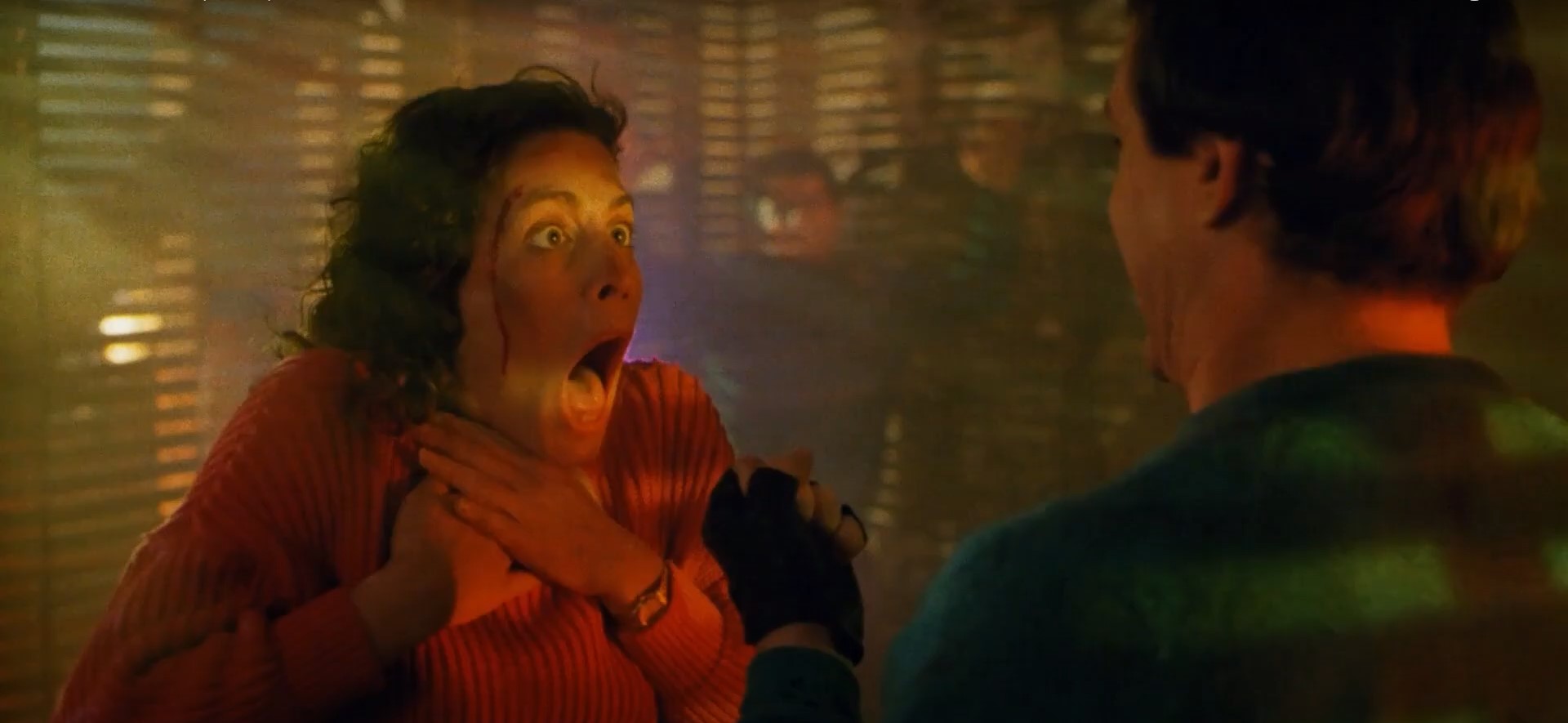
Making her lead performance debut, mentally wrestling an invasive cybernetic nanochip, is Michelle Girolami who also serves as associate producer.  We all have that little voice inside our heads, telling us what do and think to an inevitably end of accordance with that ever so delicate whisper of persuasion and that’s how Girolami has seemingly approached this role with that little suggestive presence cranked up to the level of full-fledged chaos on two-legs.   Girolami ultimately is a reverse mech with all the cold puppeteering directed shots directed by programmed software and so much of the actress’s performance is solo, feigning responses to a bodiless voice and reacting to pain generated from within whenever she doesn’t comply to the relentless LEXX.  Unable to bounce dialogue and reactions off of others can be a tough sell for most actors, but Girolami really slathers it on thick the vein-popping strain of integrated torture.  Opposite Sarah is Carl (Ivo Velon, “Salt”), another hapless experiment participant forced into assassination servitude, but Carl’s purpose isn’t exactly crystal clear.  His LEXX unit shepherds him down a collision path with Sarah, but the two separate LEXX units have no shared intentions and while that’s wonderfully niche to provide individual A.I. with their own personal liberties and schemes, Carl just wanders the city, sometimes murdering the program’s top leadership or doing something polar opposite of Sarah with no substantial collusion about their subversive attacks.  The what could have been interesting cat-and-mouse game tapers off and the story leads into more of characters trying to regain back their autonomy and this is where Dufils’ narrative shines using LEXX as a symbol for mental disorders and how those impoverished or distressed are struggling to cope can lose themselves and give in to the internalized madness slipping outward.  Parallelly, Sarah’s mother (Susan O’Doherty) suffers from dementia that reinforces the theme.  Martin Ewens, Shirley Huang, Sunny Koll, John Long, and David Dotterer wrap up the cast list.

“Implanted’s” sci-fi concept can be described as if Amazon’s Alexa, with all the internet connections and text-to-speech bells and whistles, suddenly became murderously woke inside your cerebral cortex.  “Implanted” relays humanity’s lopsided dependency on advanced technology that continues to make us even more less connected to each other and the possibility of a machine takeover just that more feasible.  However, much like when a software program crashes, a malfunctioning script error ravages the narrative for not being tight enough, leaving unaccompanied loose ends as devices that fail to progress the story along stemmed by sudden drop off character development and unknown, speculation at best, motivations.  There’s also no discernable backstory to the why LEXX’s A.I. has snafued.  At least with “Terminator,” Kyle Reese provides exposition about Skynet’s sudden upheaval and domination over the human race whereas “Implanted” dives into none of that rich framework and tossing it aside for the sake of just tormenting Sarah into being a killer pawn, moving her across the NYC chessboard with the intent of taking down the king, queen, and knights of LEXX’s program.  To what ends?  Explanation on the specified targeting isn’t made entirely clear as programmers to CEOs are solely liquidated for just being involved.  

“Implanted” is a warzone for headspace and there can be only one victor in this psychological, sci-fi thriller released now, digitally, from Gravitas Ventures.   The unrated, 93 minute film also showcases the various hats of director Fabien Dufils with one being cinematographer.  Dufils captures obscure, slightly neglected, areas of New York City that’s becomes refreshing to consume because even though the Big Apple is well known for glass and steel skyscrapers, the undergrowth locations ground “Implanted” as relatable without the monolithic structures and hustle and bustle tropes.  In juxtaposition to the down-to-Earth background, the decision to sprinkle in visual effect blood splatter taints “Implanted’s” realism.  Though not gory by any means, digitally added blood can’t be cleansed from the physical veneer and being an indie feature, I would have though a run to corner store for a bit of red food coloring would have been a cost saving measure.  “Implanted” adds another layer to the man versus machine subgenre with tinges of mental illness and too reliant on tech themes but undoubtedly leaves gaps in the narrative coding, racking strenuous mental effort without the egregious assistance of an A.I. nanochip.

Be Creative, Be EVIL! “Scare Me” reviewed! (Acorn Media / Blu-ray)

The down on luck Fred and a celebrated Fanny are both horror writers. Well, sort of. You see, Fred is an aspiring horror writer with unpretentious stories acted out by his creativity whereas Fanny is the hot, popular artist who just came out with an acclaimed novel everybody is talking about, even Fred. When their paths cross on a remote, snowy getaway during power outage, they consolidate to one cabin to stave off boredom by telling each other off the cuff scary stories, acting out every minor detail to flesh out the macabre tidbits in order for a good scare. As the night carries on and the stories become more involved, Fred’s night has been a rare highlight in recent days and now that day is on the brink of breaking, Fred has one more emotionally-driven scary story to tell the weary Fanny.

You wanna see something really scary? No, not the line from that wraparound story with Dan Aykroyd and Albert Brooks driving late a night in “The Twilight Zone: The Movie,” but rather really see a scary story come to life before your eyes with enthusiastic performances between two horror writers? Josh Ruben’s “Scare Me” does just that with the filmmakers’ 2020 horror-comedy hit. Ruben, whose latest comedy genre film, “Werewolves Within,” has been a critic success, writes and directs a petite cast packing a powerful punch pitched perfectly more so than this mouthful attempt at an awfully awkward alliteration. “Scare Me” is also produced by Ruben along with Alex Bach and Daniel Powell under a conglomerate of productions companies including Artists First (“Hell Baby”), Last Rodeo Studios (“Save Yourselves!), and Bach and Powell’s Irony Point with Shudder distributing.

Ruben not only writes, directs, and produces his film, he also co-stars as Fred. With this Andy Serkis like looks, motions, and vocal talents, Ruben is a master at amplifying impressions and slapstick from the beginning as Fred using his unrestraint, and probably unstable, imagination to try and write a bestselling horror novel to help him get out of a life funk. Then, their is Aya Cash, who I have personally adored since her villainous role on Prime Video’s “The Boys.” Much like that role’s personality of the super-sadist Storm Front, Cash just dons snarky assertive woman to perfection as she continues the trend by embodying bestselling new age novelist Fanny with such. Fanny downright emancipates…I mean, emasculates…Fred at every chance and at every step along the way despite her warming up to Fred’s kooky lackadaisical first impressions with a side dish of caution for those who yearn for story ideas. Ruben and Cash bounce incredibly well off each other to the point of credibility between the dynamic and the dynamic is far from being a romantic love interest but more so an unlikely best friend; a best friend who constantly proclaims white male privilege whenever the opportunity presents itself. The funnies also keep on coming, especially mixed into the dialogue details, that are sharpened by Ruben and Cash’s timing and delivery telling their individual stories and the reactions each have during them, but then blend into that batter of bust-a-gut with comedian and “Vampires vs. the Bronx” actor Chris Redd, consider your every funny bone in your body rigged for explosion with the trio’s insanely charismatic skits and a musical number about a Devil possessed pop star to die for. Bringing up the rear of the comedic cast is “Key and Peele” writer Rebecca Drysdale.

If you had told me that “Scare Me’s” premise was two writers telling each other scary stories during a power outage, the film would have been near the forgotten bottom of my must-watch list with the inane dancing of “Orgy of the Dead” and the prosaic “Paranormal Activity 4.” After watching the film, all I have to say is this, Mr. Ruben, please accept my heartfelt apology for manifesting one single brain cell of doubt as “Scare Me” is the five-star movie everybody needs to see. I am not worthy. The idea behind the movie is simple, yet novel, that never ceases to peak as Ruben’s film perpetuates a steady incline of sharp-witty dialogue, an involved and spot-on sound design to create the stories’ allusions, and a trope-less ending that fits “Scare Me’s” unique, unbridles nature without being a grandiose end-all finale. Without the punctuating special effects, Ruben definitely curved a workaround with smart dialogue, entertaining writing, and with a cast who couldn’t sell the idea any better. The work lies severely on the shoulders of Cash, Redd, and Ruben and without them, “Scare Me” would probably been acerbically be retitled as “Bore Me” under the breath of many frustrated genre fans. Also, just because there isn’t knock-your-socks-off special effects, that doesn’t mean there was zilch as Fred, Fanny, and Carol (Redd) enact each stories, a slither of their dread-addicted imaginations comes to fruition like window glimpses into their minds and, damn, they can really sell their fear-stroking dark fantasies by telling classic tale spinoffs that could parallel cult favorites, many that were namedropped throughout the 104 minute runtime. “Scare Me” is without a doubt pure love of the genre and a tinseling homage to the macabre.

Better late than never, they say, in viewing Josh Ruben’s bewitching “Scare Me” on UK Blu-ray distributed by Acorn Media International. The region 2, PAL encoded BD25 presents the film in 1080p on a streaming platform dictated 2:1 aspect ratio. Aside from the bookend snowy landscapes and exteriors, much of the setting is located inside the compact two story cabin in the woods in which cinematographer Brandon H. Banks breaks into his debut feature with getting the precise angles to reassure and reaffirm Fred and Fanny’s telling of scary stories. As far as visuals go, the digital recording compression seems to hold up on the BD25 while still flaunting a good amount of bonus material and an English language Dolby Digital 5.1 surround sound. No issues here with the audio with phenomenally clarity in the diversity of sound bites and in dialogue even with Ruben and Cash’s modifying their voices for story characters. There isn’t a lot of actions to hone on and rein in the depth, but with this type of story inside, as aforementioned, a compact cabin, depth won’t make or break the audio report card. Special features include a director and cinematographer commentary, short interviews with the Ruben and Cash that run through their favorites things inside the horror genre, a behind the scenes photo gallery, a Make Cool Shit Podcast, outtakes, and “Feel the Music, Feel the Light” music video. I’m always up for a good tale of Fright and “Scare Me” slashes all the boxes with a traditional layout themed by envy and has a cast that illuminates each and every scene with funnies and fear.

That Little Strip of Tape Keeps EVIL From Spying On You! “Eye Without A Face” reviewed! (Gravitas Ventures / U.S. DVD and Miracle Media / UK Digital)


A lonely agoraphobic hacks into the laptop webcams of six beautiful women across the Los Angeles area, tapping into their lives as a compassionate friend from afar.  His voyeurism allows him interaction, even if it’s virtually, and to deal with his severe introverted panic attacks brought upon him by an extremely abusive father and an absent mother as a young boy.  As he continues to stare at the screen, watching the women’s every move, he becomes convinced that one of the women is drugging, killing, and cannibalizing her one night stands.  Trusting his struggling actor and eccentric Youtuber roommate with his secret, too much ambiguity divides their suspicions until the recorded videoclip files of the women’s death show up on the hacker’s computer one-by-one, leaving the hacker vulnerable to possibly someone watching him. 

Every time your laptop monitor is in the upright position, you’re face-to-face with the onboard camera reflecting every movement you take and everything that happens in the background.  Voyeurism is a powerful drug, a contactless addiction where the depraved eyes crave the lifestyles of others to either stimulate the opiate-secreting pleasure endorphins or for more nefarious reasons, such as obtaining sensitive information that can be used for blackmail or theft.  “Eye Without A Face” represents that all-seeing laptop camera lens peering into what should be a private space, quietly invading without making a sound, and possibly turning into the big brother you never wanted.  Ramin Niami’s written and director voyeuristic thriller plays into that unobstructed power over someone by an antisocial hermit and the more that hermit stays reclusive in his shell the more he feeds into his feed of women, becoming more delusional in his attachment for them.   The L.A. shot thriller is a production of the Iranian-born filmmaker’s Sideshow Films with leads Dakota Shapiro and Luke Cook co-executive producing alongside Karen Robsen and Somme Sahab.

Playing the agoraphobic, voyeuristic, hacker Henry is Dakota Shapiro making his feature film debut.  Henry on paper sounds like an oily and unscrupulous lowlife unable to fit as a piece inside society’s puzzle as he watches women from the comforts of his untidied home and unwashed sweatpants.  Niami saw Henry on the contrary as an abused loner seizing at the thought of being out in the world, being around people, and finding comfort incognito with being these women guardian angel.  Henry is empathetic, modest during more private acts, and speaks to them like an equal in a guiding, positive voice without a hint of aggression.  Dakota Shapiro accentuates Henry’s unthreatening existence with dopey eyes and a lethargic posture. Shapiro’s decelerates so slowly that he makes Luke Cook appear like Speedy Gonzales. “The Chilling Adventures of Sabrina” actor is Henry’s house tenant, Eric, an aspiration Aussie actor trying to land a gig, any gig, in Hollywood and his influencer status is an obsession in itself as he garnishes followers for his own path toward Tinseltown stardom. Eric’s intense self-arrogance can be a put off, but he’s oddly chumming with Henry even after Henry lets him in on his little watcher setup, buying his landlord breakfast nearly every morning, providing him drugs, advising him to stop taking prescription drugs, and trying to find a crack in Henry’s impervious shell as if it was a personal challenge extended to him undertake. Their relationship is night and day, hot and cold, and often splashed with awkward friction with Cook laying on the thick, goofy charm with great attention; yet despite Eric’s knack to have money for everything else but Henry’s rent, the struggling actor eagerly wants to befriend Henry in who might be considered Eric’s only friend as sad as that might sound. All of Henry’s other friends are unaware their performing for the all seeing webcam eye as the cast rounds out with Vlada Vereko, Rebecca Berg, Ashley Elyse Rogers, Evangeline Neuhart, Sarah Marie, Danielle Hope Abrom, and Shekaya Sky McCarthy.

There’s more to “Eye Without A Face” than what meets the…uh, well…eye. While the voyeurism isn’t sexually gratifying but the act itself certainly a core aspect, the blatancy of it is more a distraction to what’s really being conveyed by Niami’s script that’s more aligned with “Henry: A Portrait of a Serial Killer” as the film exhibits key homages to the Michael Rooker starring and John McNaughton directed film. Henry falls into the hazards of a blackhole by becoming entangled in a web of women, drugs, and mental illness without almost never leaving his chair.  Eric unintentionally perpetuates Henry’s reasoning for deviating from his straightened arrow path and constant routine.  In all fairness, that arrow was already severely bowed and wavy at best as the 30-something-year-old has more than definitely broken a few federal and local laws by spying on women through their hacked webcams.  Between the nightmares of an abusive father, memories recalled at Eric’s prying, and being fed the disillusion that the medication he’s taken for years is a figment of a society system trying to control him, Henry has to choose to stick with his current reality or try to be something more than a slug in his inherited home, going as far as to calling into one of the girl’s Onlyfans type website and striking up more of a branded I-am-a-stalker conversation than clearly expressing interest in just casual conversation that sends her into a panic defense mode.  From there, “Eye Without A Face” nearly resembles a theme of anti-confidence resulting in Henry blowing up his quaint and satisfying lifestyle when reaching for a little more that ends with disastrous consequences and becomes woke to his triggering of quelled past.  The surprise twist fails to hold water, making no splash when easily discerned, as it’s slathered way too thin and too revealing around Henry’s anxiety-riddled and panicked life.

The invasion of privacy leaves chills with an overwhelming uncomfortable take on the voyeur thriller while the shocking twist kicks around an underwhelming subplot too easy to spot in Ramin Niami’s “Eye Without A Face,” released on U.S. DVD on August 10th from Gravitas Ventures and on UK digital this coming Monday, August 23rd from Miracle Media. The region free Gravitas Ventures DVD is presented in a 16:9 widescreen aspect ratio on a DVD5 and is displayed with a healthy serving of natural digitally recorded coloring that only strays toward a yellow-mustard tint more noticeably whenever Henry dips into a tense or distressed state. The cinematography is the debut feature film work of Sideshow Films’ Tara Violet who has clever POV shots of characters in front of the camera and characters sitting in front of another camera while acting their individual personalities by a high resolution webcam. Among using different types of distortions to render Henry’s mindset, Violet also takes a page out of Terry Gilliam with a wide-angle lens and touch of a Dutch angle to compound the crazy factor. The Dolby Digital English language 5.1 surround on has prominent dialogue unimpeded by shoddy equipment or mic placement that renders good sound design with passable range and depth, especially during webcam dialogue and other miscellaneous sounds. DVD lacks special features aside from a static menu and, obviously, digital releases don’t usually come with any extras well. No bonus scenes during or after the credits. Despite some elements extracted respectfully from inspired classics, “Eye Without A Face” shares a troubling angle on creepy in a digital world and the calamitous ill-effects of ill-advised help that’s no more useful than saying to an uptight person with an anxiety disorder, “you just got to relax.”

“Eye Without A Face” available on DVD / Blu-ray / Prime Video!