EVIL Has the Right to Remain Dead! “Magic Cop” reviewed! (88 Films / Blu-ray)

No Two-Bit Magician In ‘Magic Cop” on Blu-ray!  

Hong Kong cops are confounded by a chaotic drug bust when learning that their female suspect, who had managed to overpower an entire unit of male officers and even take a bullet ambling deadpan into the streets, had died 7 days prior.  An outlying officer, and practicing Taoist, Uncle Feng is called to Hong Kong to not only quickly solve the narcotic crime but also investigate the unnatural properties of the case.  Feng is accompanied by his city eager niece Lin and two Hong Kong cops, a Taoist devotee and skeptic of Ancient Chinese spiritual mythologies.  Together, they track the drug trail to The Sorceress, a Japanese witch with powers that rival Feng and that can resurrect the dead into zombies and vampires to do her bidding, such as trafficking narcotics.  When the investigation closes in her business, The Sorceress and her right arm, skilled fighter plan to remove the only man worthy of stopping her.

Fans of Ricky Lau’s “Mr. Vampire” will once again be amazed and entertained by the fantastical and mystical action of Stephen Tung Wai’s “Magic Cop.”  Tung, a fellow martial artist and stunt man who had roles in “The Fatal Flying Guillotine” and John Woo’s “Hard Boiled,” helms his debut directorial penned by Chi-Leung Shum (“Vampire vs Vampire”) and the longtime Stephen Chow script writer Kan-Cheung Tsang (“Shaolin Soccer,” “Kung-Fu Hustle”).  The screenwriting duo brought lighting quick comedy to the mostly fictionally invented yet sprinkled with slivers of hard-pressed veracity and definitive entertaining occultism and what resulted resurrected “Mr. Vampire” semblance out of the being a period piece and into the modern day, backdropped in the year of 1990 when the film was released.  Long rumored to be the fifth sequel of the “Mr. Vampire” franchise, “Magic Cop” is a coproduction between Movie Impact Limited, Millifame Productions Limited, and Media Asia Film with star Ching-Ying Lam producing.

“Magic Cop,” and even “Mr. Vampire,” wouldn’t have such a cult following if it wasn’t for the Vulcan eyebrows and thin mustache of Ching-Ying Lam in costume.  The short-statured, Shanghai-born Lam delivers the same vigorous choreography and tranquil demeanor to this particularly stoic character of Uncle Feng, a Taoist practitioner to essentially wrangle unruly entities and please the spirits in the in-between our world.  Feng is old world and finds himself in surrounded by modernism when in Hong Kong, goaded by the young lead sergeant attached the case.  Practical as well as disrespectful, Sgt. Lam (Wilson Lam, “Ghost for Sale”) epitomizes today’s, or rather back then the 1990’s, modern man who has forgotten tradition and deference to those who came before.  Though padded with a fair amount of comedy coursing throughout, balanced against the impeccably edited tango fight sequences, Sgt’ Lam’s partner, known only as Sgt. 2237 played by “Centipede Horror’s” Kiu-Wai Miu, risibly wants to understudy Uncle Feng’s powers while Feng’s niece Lin, played by Mei-Wah Wong of “The Chinese Ghostbusters,” provides the subtle and quirky opposite sex that catches of the philandering eyes of Sgt. Lam.  The ragtag quartet of influx mindsets and personalities become challenged by their single common goal, to stop whoever is behind breathing life into the formidable dead and stop the unorthodox method of drug smuggling.  Former Japanese bodybuilder Michiko Nishwaki (“City Cops”) embodied that very dark magic antagonist.  Nishiwaki handles The Sorceress character with ease despite not having a surfeit army under her thumb; instead, this forces Nishiwaki to become the entire villain body with the slight, full-contact support for her right-hand bodyguard (Billy Chow, “Future Cops”) and a couple of undead lackeys, including Frankie Chi-Leung Chan of “Riki-Oh.”  “Magic Cop’s” cast rounds out completely with well-versed and seasoned, late actor Wu Ma (“Mr. Vampire,” “Return of the Demon”) as the chief inspector polarized in a complicated history with Uncle Feng.

What director Stephen Tung Wai boils down in essence is another variation of good executants of spirit humbled caretakers versus the wicked necromancers existing inside the fabric of the highly praised and cult-following “Mr. Vampire” universe.  Frankly, there’s nothing wrong with that derivativity since Ching-Ying Lam, Mr. Vampire himself, produces and stars as the titular hero.  Lam can conjure whatever-the-hell he wants in order to battle Hell itself.   “Magic Cop” is also a well-made, entertaining story, balanced between the contest wizardry, slapstick comedy, and the character dynamics, and stacked with improbable yet gratifying step-intensive fight orchestration that has gawked early martial arts films a wonder to behold and continues to do so to today but now trickles with pizzazz more-after-more due to put in place industry safety measures.  “Magic Cop” contains that lost art of potentially hazardous palatable physicality that beguiles more than the movie’s faux magic exhibited on screen.  To add to the authenticity, very little painted composited visual effects were used with makeup and the actors doing much of the heavy lifting with the editing team of Ting-Hung Kuo and Kee Charm Wu in full cut-and-paste fortifying mode to button up each sequence with comprehendible continuity of each punch, kick, and magical chopsocky.  One overtone made well known in “Magic Cop” is the unfillable chasms between old and new, respect and disrespect, and myth and science from whence solves no problems until some unified common ground can be reached in order to succeed, in this case, to stop a bitch of a witch.    

An age-resistance 35mm print scanned onto a buffed 2K Blu-ray that extracts the best print elements to-date. The AVC encoded, 1080p, Blu-ray presents Stephen Tung Wai’s picture in a widescreen 1.85:1 aspect ratio. A fine-tooth comb through the celluloid couldn’t unveil any major issue with the 88 Films release. Colors are richly grafted within the sabulous surfaces that are exceedingly defined with delimited, shadow-creating depth. Decoding speeds average around 35Mbps on a BD50, securing categorical choiceness amongst other releases and formats (that is until the potential 4K release). The release comes packed with four audio options to explore: The original Cantonese DTS-HD master audio 2.0 mix, a Cantonese DTS-HD 2.0 home video mix, an English DTS-HD 5.1 master audio dub, and an English DTS-HD 2.0 dub. Between the variated audio mixes, we preferred the original Cantonese DTS-HD 2.0 due to its cadence with the image and welcoming exactness through the lossless compression process. You can make do with the other three options, but the fidelity is much better with the original mix and only anti-subtitle sectarians would be pleased with an English dub. English subtitles are optional and synch well the dialogue but be prepared to speed read as the pacing is quick much like the dialect. Software special features include an audio commentary with Hong Kong film experts Frank Djeng and Marc Walkow, an alternate, standard definition Taiwanese cut of the film with alternate score, an interview with director Stephen Tung Wai, image gallery, and trailer. Endowed with a limited-edition, cardboard slipcover, the dark green Blu-ray snapper has newly illustrated, front cover artwork by Manchester graphic designer and 88 Films resident artist Sean Longmore, which is also on the cardboard O-slip. The reversible cover art has a reproduction of the original Hong Kong poster art. Stuffed in the insert is a mini-folded poster of Longmore’s front cover and a disc art, a scene moment captured in spherical rotunda, of the opening sequence. Available with a regional playback limited to A and B, the 88 Films release is not rated and has a runtime of 88 minutes. ‘Magic Cop, perhaps, wasn’t the sole proprietor of influence but certainly had a black talisman plying hand in the substrata of more Western favorites like “Big Trouble in Little China” and is a crucial cornerstone in representing the best of the Hong Kong Golden Age of cinema.

No Two-Bit Magician In ‘Magic Cop” on Blu-ray!  

EVIL’s Blight is Captured off and on Film. “Cursed Films” reviewed! (Acorn Media International / Blu-ray)

“Cursed Films” Now Available on Blu-ray in the UK!  Purchase at Amazon.com By Click the Cover Below.

What do “Poltergeist,” “The Omen,” “The Exorcist,” “Twilight Zone: The Movie,” and “The Crow” all have in common? They’re just not successful horror-thrillers with extraordinary actors and directors, they’re also tagged as some of the worst cursed movies of our time. Severe ailments, planes struck by lightning, bombings at previously booked restaurants, egregious injuries, and even death, lots of death, have surmised belief that the otherworldly powers or the omnipotent universe has waged warnings and, if gone ignored, has blown the kiss of the death. For years, these films held power of people because of a string of unfortunate incidences that link back to rumors that possibly incite mystical retribution for using real corpses, telling stories about the birth of the antichrist, and even family lineage curses by ancient Chinese spirits. There’s no shortage of superstition in the world, a country practically built on the idea of a martyred Jesus rising from the grave, and Hollywood is no exception that the bad things that happen in life will always course people to find a reasonable explanation even if that explanation is an untenable supernatural one.

When we think of curses as a whole, we’re generally point and look to the obvious occult brewing with black magic of vindictive witches, ancient incantations to evoke demonic bidding, Gypsy ill-wills that have lycanthropy teeth, or ominous warnings inscribed by long-ago Egyptian priests keep mummified remains from being marauded by intruders.  These hexes and jinxes are storylines popular in movie culture since the beginning of the first movie pictures, used to entertain, excite, and thrill to the furthest extent of the means.  Who would have known there is a reality bound, darker side to the curse mythos that has been insidiously rooted in the illustrious and dream making film industry?  Cursed films have been the talk of Tinsel town, ambulance chasing tabloids, and the short-lived internet fandom for years, decades now even, surrounding the mysterious misfortunes of certain films.  The Shudder 5-episode docuseries, “Cursed Films,” goes into the weeds with retrospective interviews from cast, crew, religious experts and even mavens of black magic and witchery.  Jay Cheel wrote, directed, and edited the series removes the characters from the story and focuses on building the humanity of the affected, dives into possible reasons for the film or individuals involved to be cursed, and the unfortunate outcomes that have resulted in the loss of life surrounding the project.  Muse Entertainment Enterprise, one of the companies behind CBS hit U.S. comedy “Ghosts,” serves as the production company behind the 2020 released Shudder exclusive series.

With any documentary, the cast are plucked right out of history, fast-forward into the present, to tell their firsthand account of events. Directors, producers, special effects and makeup specialists, and those beyond the realm of the film industry recollect and provide their own interpretation of a beleaguered saga with an interviewer, assumed to be “Cursed Films'” writer-director Jay Cheel, posing the questions to get open access to the inner thoughts of the grieved and impressed to give in full detail their wholehearted accounts. Cheel is able to nab different perspectives that play into the divisive nature of the whole cursed narrative, such as with those, mostly cast and crew, who don’t invest into the transcendental nonsense that has sense become either a minor or major stain on their careers. Others see the unexplainable coincidences to be godsent and beneficial to the production. For example, “The Omen’s” star Gregory Peck’s plane and producer Mace Neufeld’s plane were both struck by lightning in route to the London set only a few days apart. Neither plane sustained life-threatening damage and, thus, strokes of good luck and fortune seemed to be attached to the project along with other instances of death and destruction that averted harm from those involved with the film. Still, many still feel “The Omen” is a cursed film, mostly on the internet horror communities where conspiracies, misinformation, and false narratives run rampant like COVID in the early years. Often when Cheel obtains the perspective a black magician or a witch, Cheel’s attempting to gain not only an understanding of that world from real world practitioners but also to embellish a great melodrama into the episodes. Then, there’s the emotionally poignant Richard Sawyer segment. As the production designer on John Landis’s “Twilight Zone: the Movie,” Sawyer saw firsthand the tragedy that befell one of the film’s segment stories. Lead actor Vic Morrow (“Humanoids of the Deep,” “1990: The Bronx Warriors”) was cut down, along with two children, during a scene with a helicopter that went terribly wrong, and Sawyer’s account is powerfully traumatizing and great representation of how this series should be affect and chill viewers to the heart and to the bone.

“Cursed Films” reveals the terrible mishaps and misfortunes of limelight. If a private person is dies due to illness, accident, or foul play, there’s usually not a major production made out of the occurrence and no grand, “Final Destination” design beyond our understanding is erected to give it all meaning. Under the public eye and recorded by every entertainment medium known to mankind at the time of filming presents public scrutiny, public panic, and public speculation that plots points and charts graphs toward a giant, flashing sign that says, in big bold letters, CURSED! To any given horror fan, much of Jay Cheel’s docuseries is already common knowledge for the most part with the fresh and emphatic take from at the scene interviewees who add compassion and empathy as a shield against those who still think the sweet-faced Heather O’Rourke was doomed by some malison brought to fruition by India-removed skeletons. To the non-horror fan, much of Jay Cheel’s docuseries will have that new car smell and can be engrossed by Cheel’s spin of oppositions that never lay claim to either side as truth but only further what Zelda Rubenstein and Richard Sawyer tried to dispel with reason and tangible accounts is that there is some underlying curse reaching up and grabbing the throats of these films to point of choking the very goodness out of the cast and crew’s souls and only provide morbid curiosity to those seeking out the works stuck in a perpetual cycle of occultism.

Become reeled in by the notorious historical compendiums of “Cursed Films” in the first season that aired in 2020 and is now finally on Blu-ray home video in the UK from Acorn Media International. Though listed as a PAL release, the AVC encoded Blu-ray is presented in a 2.39:1 aspect ratio and is in 1080p, high-definition resolution, so a PAL encoding description would be inaccurate for a HD release. Image quality varies between the clean digital recordings with the interviews in interiors and exterior settings, polished transfers snipped from your favorite classic (and “cursed”) movies, and the raw, unpolished frames or clips that were cut from the film or remained as behind-the-scenes supplemental. All-in-all, picture quality is fine and clear in any regard with no issues of compression on the various mediums. The English language DTS-HD 5.1 surround sound stakes prominences on the dialogue for this is a docuseries reliant on firsthand accounts. Some historical footage can be staticky and flat but fits into the documentary design that pulls clip examples from the archives. “Cursed Films” isn’t going to be actioned packed or atmospheric but the composing duo of “Kicking Blood,” Justin Small and Ohad Benchetrit, offer an engaging soundtrack that could tell the story without the interviewee’s tale of sadness, mysticism, etc. English subtitles are available. For each episode a director’s audio commentary is available as a special feature. The physical feature comes in a slightly thicker Blu-ray snapper with the cover art, which is the same as the U.S. RLJE release, of an unspooling film reel displaying iconic tokens from each movie. The 141-minute and region B playback release houses the film’s certified 15 rating for strong horror, strong language, strong injury detail, sex references, domestic abuse, suicide, and bloody images. Whether you believe in curses or not, “Cursed Films” is a peradventure that’s powerful and uncanny to this very day that’ll have you straddling the fence of labeled condemned films.

“Cursed Films” Now Available on Blu-ray in the UK!  Purchase at Amazon.com By Click the Cover Below.

Copperton Cult Commands You to be EVIL! “Heartland of Darkness” reviewed! (Visual Vengeance / Blu-ray)

Own Your Copy of the Lost Linnea Quigley Film “Heartland of Darkness” by Purchasing at Amazon!  Click Here to Amazon.

Copperton, Ohio – a quaint and quiet, unsuspecting small town if looking to downsize from the big city hazards.  However, beneath the provincial veneer lies a satanic cult spearheaded by the local Reverend Donovan and his flock of townsfolk worshippers.  Donovan’s grip reaches far beyond just the local municipality as the insidious cult schemes to turn the state’s top officials into devoted followers of Satan.  Copperton’s new local newspaper editor, Paul Henson, along with eager reporter, Shannon Cornell, use their journalistic gut instincts to unearth and expose the corruption by Donovan up to the ladder of the town’s sparse governmental hierarchy, but with only a few residents unsubscribed to Donovan’s fanatical sermons, Paul and Shannon have nowhere to turn in order to protect themselves, Paul’s daughter Christine, and the entire state of Ohio from succumbing to Satanic domination. 

Once lost in limbo for three decades, “Heartland of Darkness” finally sees the light of retail shelves day!  Left unfinished for many years, director Eric Swelstad, then an Ohio State film student, supervises the completion of the horror thriller that revolves around satanic cults, grisly sacrifices, and sheep mentality based on the 1980’s satanic panic craze that swept the nation.  Penned by Swelstad, who moved on with this lift and helmed a handful of direct-to-video titles, such as “The Curse of Lizzie Borden 2:  Prom Night” and “Frankenstein Rising” in the early 2000s, and filmed in and around Columbus and the Granville village of Ohio, the 1989 principal photographed production was thought to be ultimately completed by 1992 but due to funding and production constraints, that was not the case.  The film also went through a couple of other titles, beginning with Swelstad’s original script title “Fallen Angels” and then changed to “Blood Church” at the behest of a possible financier that eventually fell through.  In the end, the film settles on “Heartland of Darkness” as a privately ventured production Steven E. Williams (“Draniac!”), Wes Whatley, Michael Ray Reed, Thomas Baumann, Mary Kathryn Plummer, and Scott Spears (“Beyond Dream’s Door”) serving as producers.

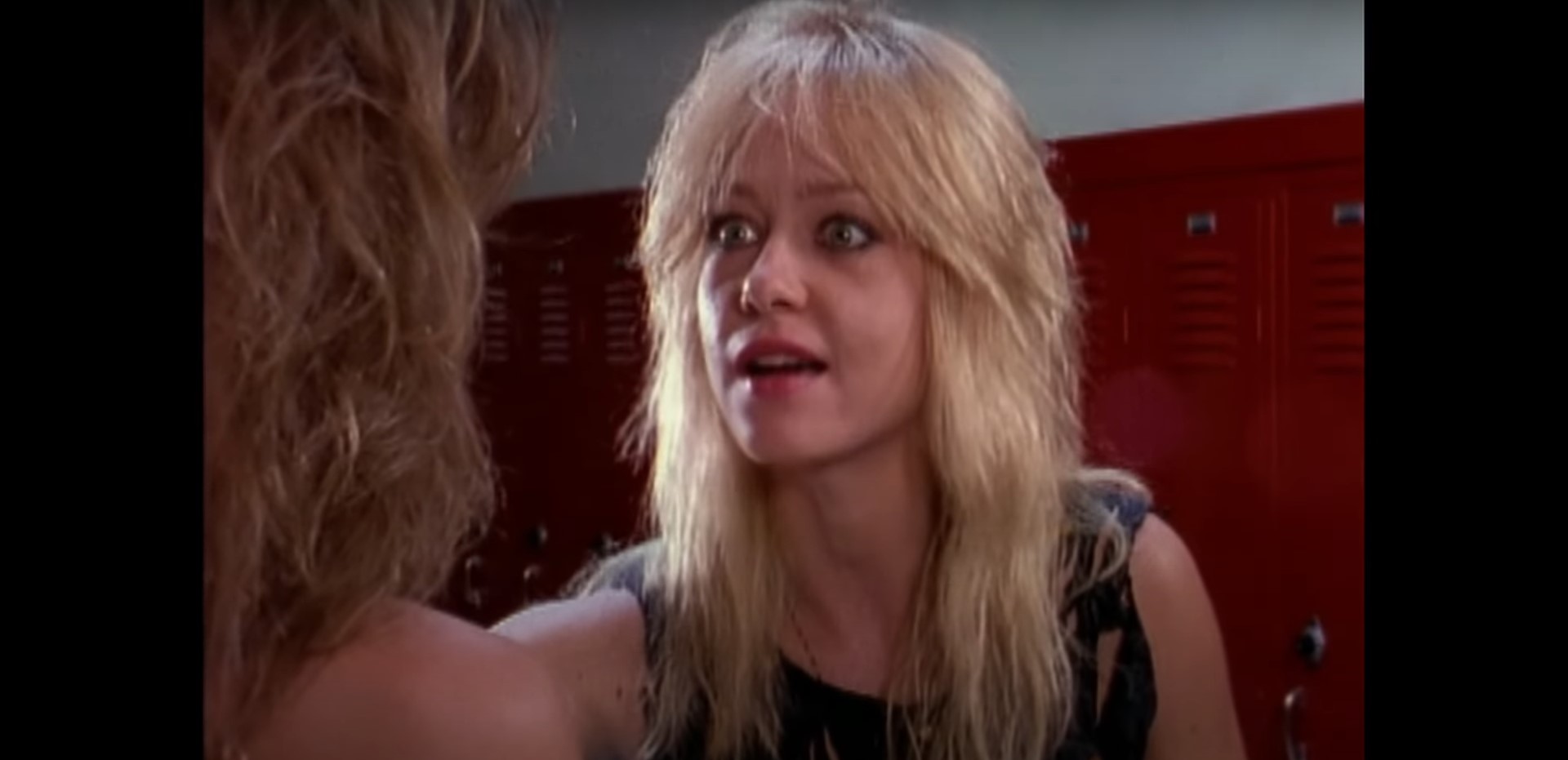
One of the reasons why the obscurity adrift “Heartland was Darkness” was so sought after by horror fans is because the title became one of the lost films of scream queen Linnea Quigley.  Standing at only 5’2’’ tall, the “Return of the Living Dead” and “Night of the Demons” actress was a hot commodity during the late 80’s and a genre film giantess who ended up having a fairly prominent, written-in role just for her hire in what is, essentially, a student film.  Quigley’s role as the town’s high school teacher, Jessica Francine, makes the hormonal boy in me wish my teachers actually looked than beautiful and provocative in high school, but in the same perspective, Quigley doesn’t appear or is barely older than Sharon Klopfenstein as Paul Henson’s daughter, Christine.  The two share a high school hallway moment while sporting crop tops, tight bottom wear, and discussing paganistic occultist Aleister Crowley and Nazi mass murderer Adolf Hitler and while the additional scene gives Quigley screen time, it evokes risibly campy optics.  Dino Tripodis defines the principal lead Paul Henson, a former Chicago Tribunal editor having left the midwestern journalism powerhouse after the death of his wife.  Stepping into a world of cultism, Paul’s eager to save what’s left of his family at all costs by exposing grisly murders as more than just drug-related collateral damage (I didn’t know drug wars were such a big thing in Ohio).  The debut of Tripodis’s performance fairs well enough to solidify himself as the marginalized hero against a Goliathan opposition that’s deep rooted and backed by powerful leaders, but hands down, Tripodis is outdone by Nick Baldasare as the dark featured, maniacally calm Reverend Donovan.  Baldasare has such a tremendous presence as a fire and brimstone agent of the most notable archfiend that his performance swallows the shared screen moments with Tripodis.  A few principals come off as rigid and flat in their efforts.  As the sheriff of Copperton, Lee Page is the biggest offender with an obvious staged act of busting Tripodis’s balls for a better part of the story.  “Heartland of Darkness” is a mixed bag of showings from a remaining hyper-localized cast compromised of new to little experiences actors including Shanna Thomas, Sid Sillivan, Ralph Scott, Dallas Dan Hessler, Ray Beach, Mary Alice Dmas, and with the John Dunleavy in a magnetic role of a cult-crime fighting preacher.

Hard to fathom why but still completely understandable how “Heartland of Darkness” remained in celluloid purgatory for so many years.  Swelstad had tremendous ambitions for a student film that included a visual effects storefront explosion, but the money well dried up to finish shooting, touch ups, effects, and digitizing the filmmaker’s efforts onto a marketable commodity to distribute.   At last, here we are, 33 years later with a finished copy of the “lost Linnea Quigley film” and, boy-oh-boy, does not disappoint, living up to the expectational hype surrounding the film’s once stagnant, hidden from the world existence.  Swelstad creates the illusion of vast world from the small town of Copporton to the big cities where the District Attorney and Governor reside.  Car chases, rock quarries, a church nave, animal intestine smeared ditches, and a slew of constructed sets, an array of offices, and an abundance of diverse exteriors. “Heartland of Darkness” might have a lot going on and is often repetitive in the scenes with Paul and Shannon pleading their case to multiple officials to probe into gruesome deaths and the cult’s leadership but not to the story’s detriment as all the progressive storyline dig Paul and his small band of investigators into a deeper danger hole with Donovan and his Devil devotees under the guise of God’s Church. Scott Simonson’s entrail splayed and blood splattering special effects culminates to a shotgun showdown at a virgin sacrifice and an impressive full-bodied impaling that is, frankly, one of the best edited shots of the film. “Heartland of Darkness” is rayless and scary, callous and cold, formidable and shocking with a pinch of sex and is finally within our grasp!

Visual Vengeance, a pioneer in curating the lost, the forgotten, and the technically shoddy indie cult and horror films, releases for the first time on any format ever “Heartland of Darkness” on Blu-ray. Coming in as VV08 on the spine, the Wild Eye Releasing banner strays their first seven SOV features to bring aboard a 16mm negative transfer, director-supervised from original film elements of the standard definition masters. Visual Vengeance precautions viewers with the usual precursing disclaimer that due to the commercial grade equipment and natural wear of aging, the presentation is the best possible transfer available, but, honestly, the full screen 1.33:1 aspect ratio presentation looks outstanding without much to critique. Obvious softer details were expected but with the celluloid film, there’s not much in way of macroblocking or tracking complications as common with shot-on-video tape features. Compression verges to a near perfect reproduction of the picture quality. Skin coloring and overall grading is congruously natural in grain and stable image. The English stereo mono track doesn’t pack a punch but isn’t also frail with strong mic placement and the dialogue is clean and clear of imperfections as well as major hissing or popping. The faint 16 mm camera whir can be heard but isn’t distracting, adding a comforting churr to the footage. Optional English subtitles are available. Special features include a new 40-minute behind-the-scenes documentary Deeper into the Darkness, an audio commentary by writer-director Eric Swelstad, actor Nick Baldasare, cinematographer Scott Spears, and composer Jay Woelfel, a new interview with cult icon Linnea Quigley, commentary with Tom Strauss of Weng’s Chop magazine, an archival Linnea Quigley TV interview, the complete “Fallen Angels” 1990 workprint, the same workprint with audio commentary with Swelstad, vintage cast and crew Ohioan newscast interviews in the Making of Fallen Angels, the original promotional video for “Blood Church,” a behind-the scenes image gallery and footage, and the original TV spots and trailers, of this feature and other Visual Vengeance films, from the static, composite menu. Ready for more? “Heartland of Darkness” comes with just as much physical bonus swag with a limited-edition prayer cloth, a six-page liner notes from Tony Strauss complete with color beind-the-scene stills, a folded mini-poster of a leather-cladded Linnea Quigley’s high school hallway scene, and retro Visual Vengeance stickers inside a clear Blu-ray latch snapper with new, illustrated cover art that also has reversible art of the original “Blood Church” promo art, sheathed inside a cardboard slip cover with a different and new illustrated cover art. The region free, 101-minute release is unrated. Visual Vengeance continues to pump out gilded, undiscovered treasures and giving them the royal treatment. For “Heartland of Darkness,” this sublime release was 33 years in the making and is one Hell of a bounty!

Own Your Copy of the Lost Linnea Quigley Film “Heartland of Darkness” by Purchasing at Amazon!  Click the Cover Below.

EVIL Masked as a Religion. “Bryan Loves You” reviewed! (MVD / Blu-ray)

All New Blu-ray release of “Bryan Loves You” on Amazon.com

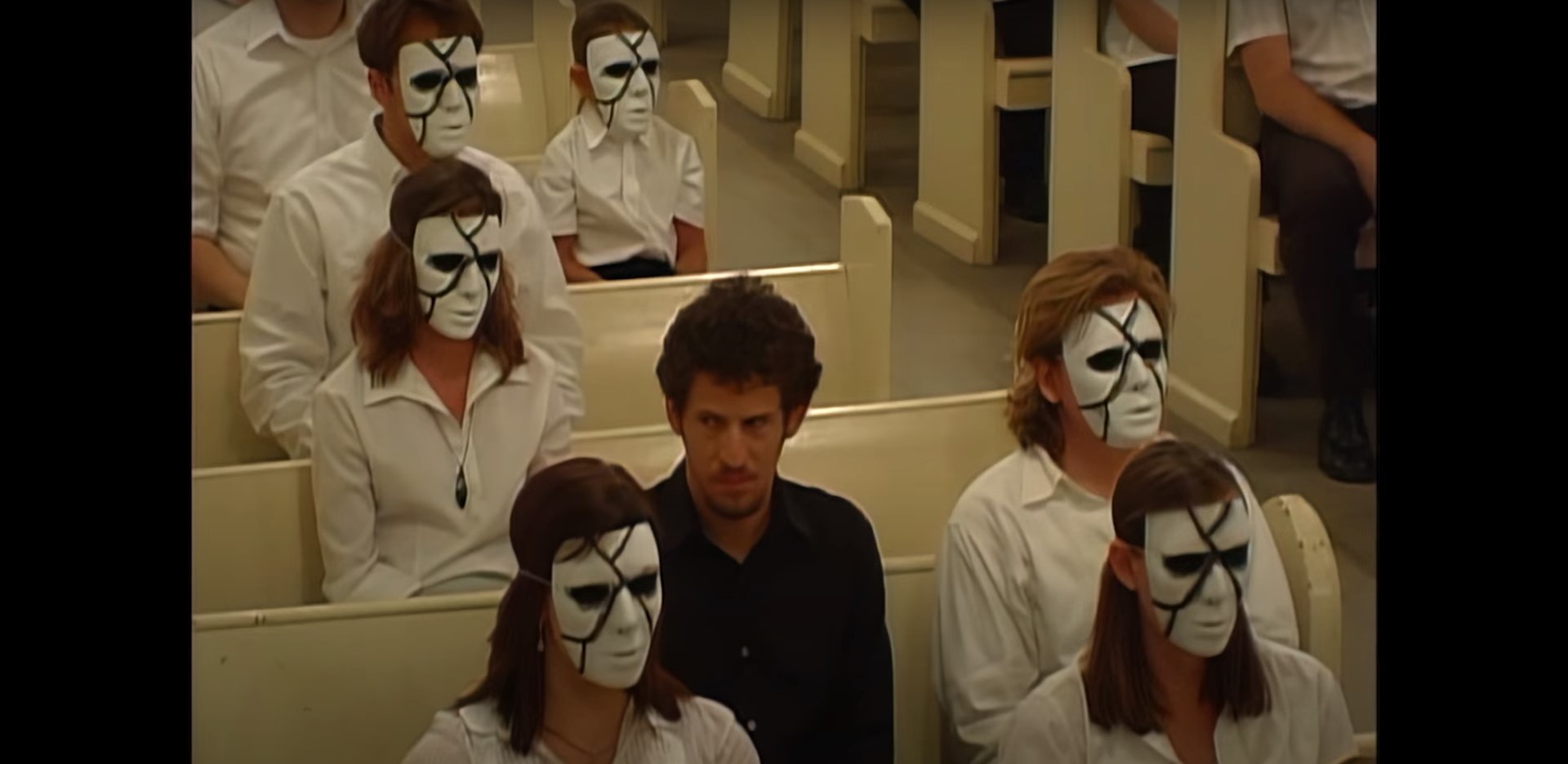
Something weird is spreading across a small Arizona town.  A chapter of a new religion has influenced most of the community into believing in Bryan, a pure and pious young boy from long ago who was brutally slain by the devil.  Jonathan, a local psychotherapist receives a camera from his uncle, also a health professional, with a self-recording that warns Jonathan that Bryan zealots are a dangerous, violent cult.  Deciding to document the situation himself, Jonathan repurposes the camera to clandestinely record the widespread Bryan gatherings and even infiltrate their church where they speak in tongues and wear the scarred mask of Bryan.  As Jonathan goes deeper into the uncomfortable insanities of Bryan’s world, the more Bryan followers takes an interest in reconditioning Jonathan. 

“Bryan Loves You’s” grainy SOV pseudo-documentary lacquer not only captures the icy blank stares, the unabating drone chanting, and the brainwashed coup of an insidious cult assimilating small town America, but the Seth Landau written and directed film also homogenously captures, all too presently well, that sense of ambivalent and conspiracy dread that knots apprehension uncomfortably in the pit of the stomach.  The 2008 released “Bryan Loves You” has the story set in 1993 Arizona made out to be a historical home video and CCTV recorded account of the analyzed and dissected suppressed footage coming to light for the first time incomplete with censored last nights and specific addresses to make the pseudo-doc appear more genuine and shocking.  Filmed in and around the suburbs of Scottsdale and Phoenix, Arizona, “Bryan Loves You” is a found footage subgenre production self-produced by Mike Mahoney and Seth Landau, under the filmmaker’s Landau Motion Pictures, and marks the debut feature film of Landau’s humble career that started roughly around 2003 as a production assistant on “Arrested Development.”

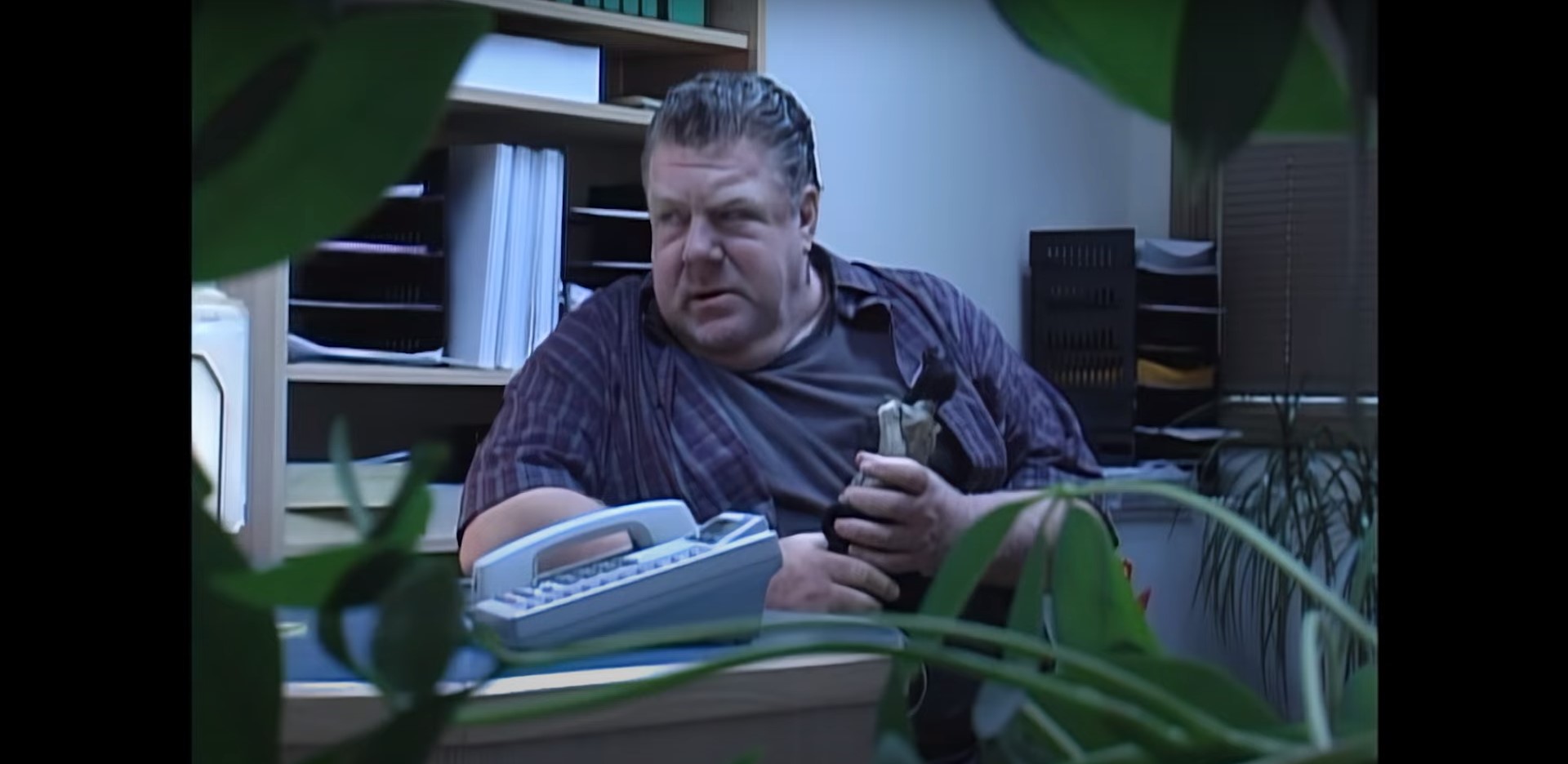
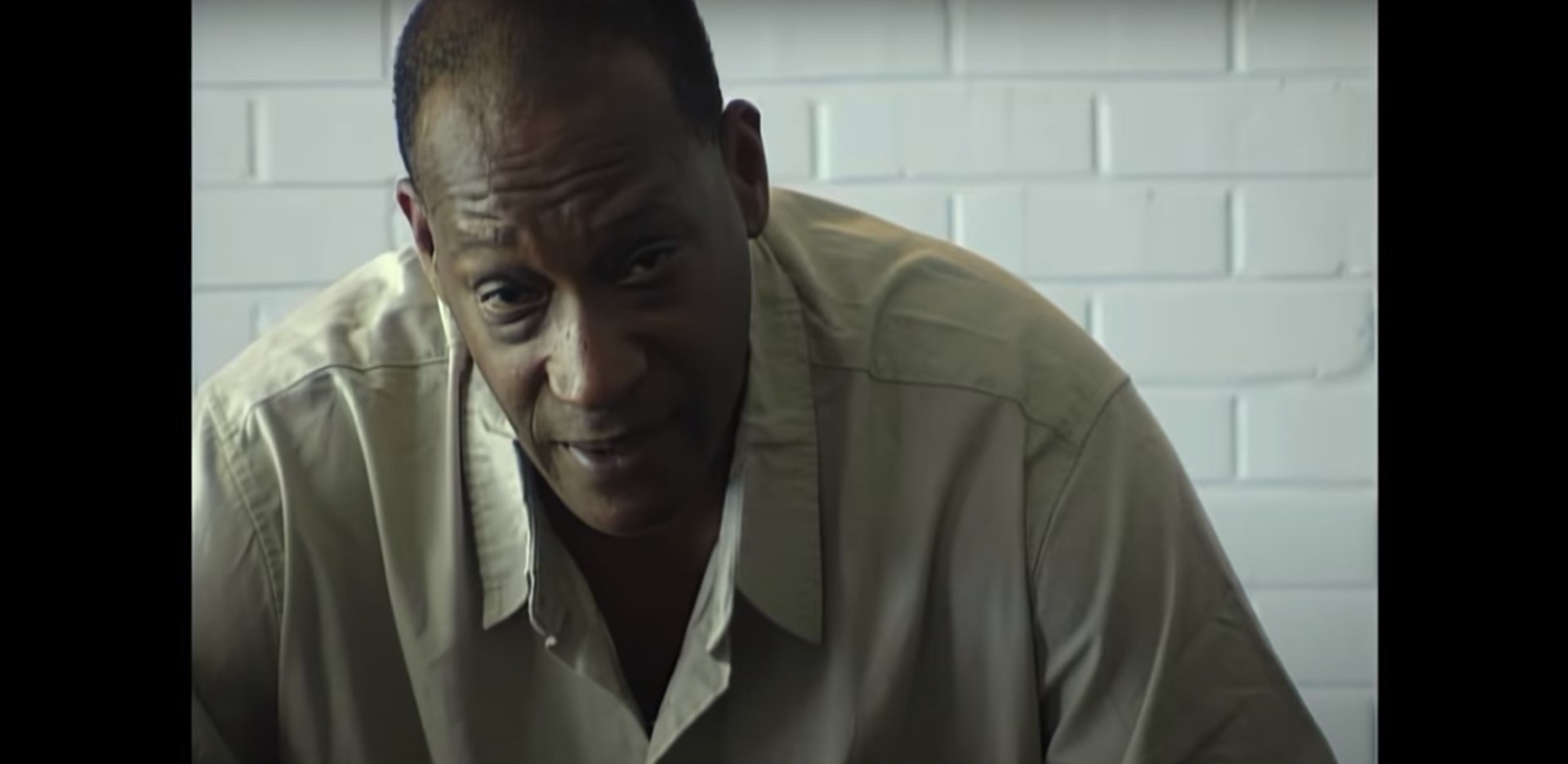
For the average popcorn movie goer, “Bryan Loves You” is about obscure as they come with a no-name director and a cast with relatively no-name actors with the exception of one that might have a chance of recognition by the common Joe Schmo.  Old heads may recognize George Wendt, one of the barflies from the sitcom “Cheers” and the Saturday Night Live sketch of Super Fans, in his brief and strange scene as a patient holding a doll that speaks to him about people who talk about him.  For chin-deep genre fans, Wendt is about the biggest A-lister you can have in an indie film and what’s unusual about “Bryan Loves You” is the stacked list of iconic made-by-horror names that make up the cast list.  It’s impressive.  Landau’s connection to the late great master of horror Stuart Gordon (“Re-Animator”) opened the door to George Wendt, who starred in Gordon’s “King of the Ants,” and, likely, led to the onboarding fan favorites such as Brinke Stevens (“The Slumber Party Massacre”), Tiffany Shepis (“Tromeo and Juliet”), Lloyd Kaufmann (“The Toxic Avenger”), Daniel Roebuck (“The Devil’s Rejects”), Chuck Williams (“Demon Wind”), and Tony Todd (“Candyman”).  Now, with these many names, none of them have starring roles and few have reoccurring scenes, but they are headlined to draw attraction for “Bryan Loves You.”  Honestly, the performances are hardly worth nothing.  Steves and Kaufmann have little dialogue and are shot at weird angles that makes them hardly recognizable.  Best scenes go to Tony Todd as a hesitantly disturbed and full of fear narrator standing in an empty board room and talking directly into the camera about what we, the audience, are about to witness, even directing viewers to turn away or to be ushered out of the theater (did this get a theatrical release?) if the content becomes too shocking to behold.  Seth Landau stars as the principal lead Jonathan who can’t be taken seriously as a psychoanalyst as there is no depth to the character in those regards.  Plus, as someone who’s supposed to uphold ethical standards, Jonathan breaks quite a few HIPPA regulations and breaks into houses with a camera, filming Bryan acolytes without their consent.  “Bryan Loves You” rounds out the cast with Tori King, Candy Stanton (“Exit to Hell”), Shane Stevens (“The Graves”), Jilon VanOver (“Bad Blood”), Tom Noga (“Anonymous Killers”), Jesse Ramiawi, Jacqui Allen (“Blue Lake Butcher”) and Daniel Schweiger (“Die-ner”)

Seth Landau’s found footage cult film is a rough cut of rudimentary psychological suspense restrained by its limiting low-ceiling budget.  The acutely hard cut editing and wonky framing is enormously puzzling within the narrative’s supposed single camera source documentary structure that suddenly diffuses into being a splice between Jonathan’s camera, which he loses halfway through the story, and a bunch of randomly placed CCTV footage across all of Arizona, in which some scenes are randomly placed in the desert where no structures are seemingly present to house a camera.  Who gathered and edited all this multi-video footage together?  Or does that play into the mystery, no matter how illogical, of adding to “Bryan Loves You’” unsettling allure?  What Landau does accomplish compares closely to what directors Eduardo Sánchez and Daniel Myrick were able to profoundly achieve with their unexpected breakout found footage blockbuster, “The Blair Witch Project.”  Now, I’m not saying “Bryan Loves You” had the audience gasping power as the “The Blair Witch Project” but the air in the story still feels very uncomfortably still, like in holding your breath, because something sinister is closing in and that type of disturbing presence, coupled with the erratic demonic behavior boiled to the surface if love for the almighty Bryan is absent, is all too relatable in today’s political climate.

Though “Bryan Loves You,” MVD Visual really loves Bryan right back with a high-definition Blu-ray release, remastered and upscaled from the original master source, a digital recorded standard definition, with an approved up-conversion of 172,800 pixels to over 2 million pixels per frame to achieve full HD.  For SOV, the handheld cam footage turns out more detailed than expected with suitable tinctures that are often less vivid in the found footage genre; however, there are still varying levels of quality from lower quality posterization to better than mid-grade delineation.  Though stated as presented in a widescreen 1:78:1 aspect ratio on the MVD Marquee Collection back cover, the actual ratio is a pillarbox 1:33:1 without straying from that display. The English language dual channel stereo track also has varying fidelity levels using the inconsistency of a built-in handheld mic but the good bones behind the range and depth retain the natural auditory proportionate. A few augmented audio tracks are snuck in for effect, such as the preacher’s demon-speak and the school PA system. English subtitles are optional. With a new Blu-ray release comes all new special features with a few short film-length interviews between filmmaker Seth Landau and George Wendt (44:50 minutes), Tiffany Shepis (50:49 minutes), Daniel Roebuck (59:35 minutes), and Brinke Stevens (31:46 minutes) touching upon more than just “Bryan Loves You” but also various career moments and other media cultural topics. Also featured are two commentaries: a 2008 commentary with Landau, select cast and crew, and JoBlo critic James Oster and a new 2022 commentary with only Landau. Plus, a brand new 2022 theatrical trailer. “Bryan Loves You” draws parallels to the 1993 Waco, Texas cult led by David Koresh of the Davidian sect preaching fire and brimstone, but writer-director-product Seth Landau adds his own supernatural concoction in a trade-in of doom and gloom for mindless devotion and diabolism that turns folks into followers and flesh-hungry fiends at times. Maybe not the prime cut of the cult genre but does stand out even if you don’t really love “Bryan.”

All New Blu-ray release of “Bryan Loves You” on Amazon.com

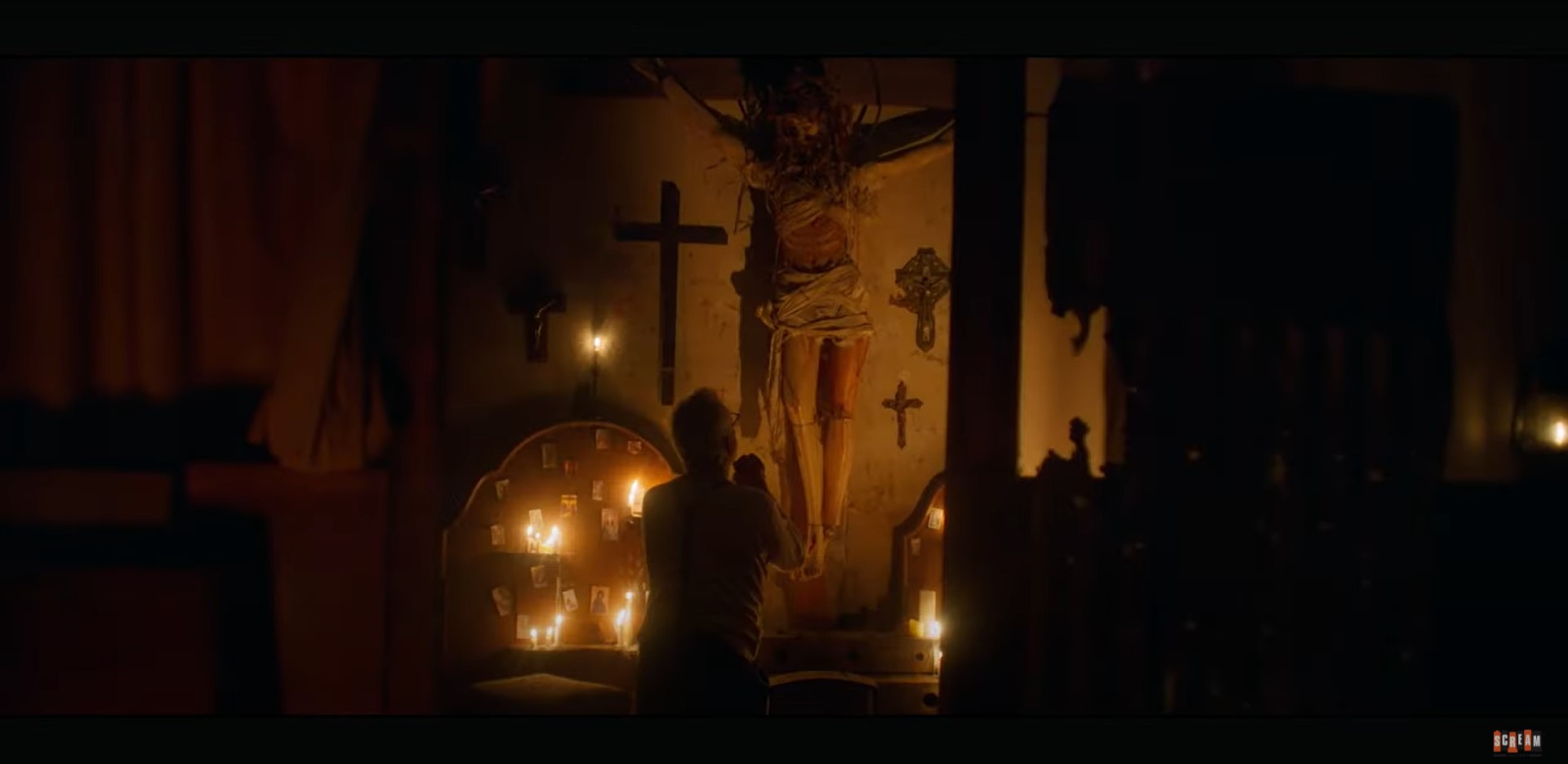
EVIL Comes Not on the 1st Day, or the 2nd Day, but “On the 3rd Day!” reviewed! (Scream Factory! / Blu-ray)

“On the 3rd Day” arrives onto Blu-ray on March 29th!

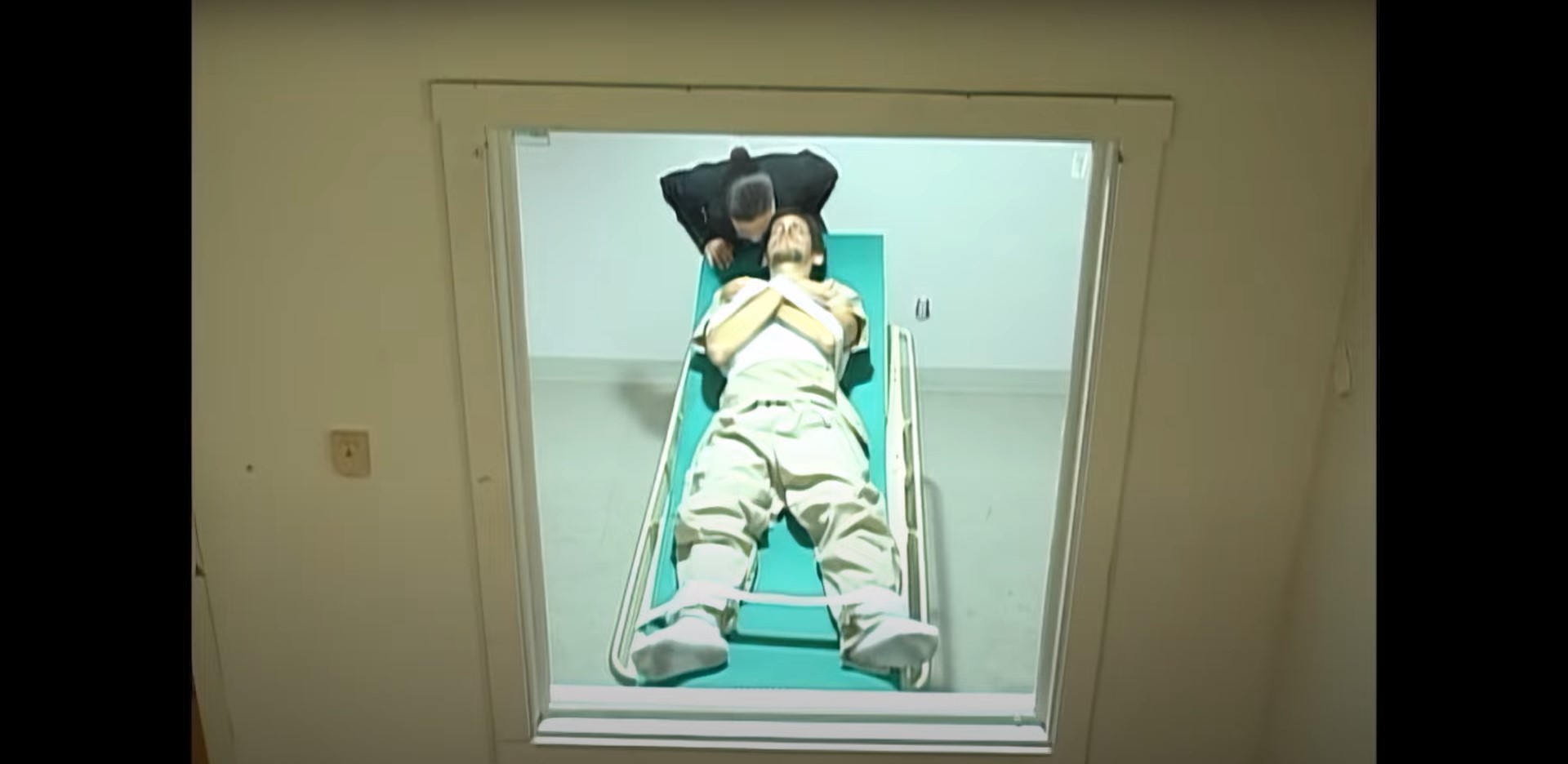
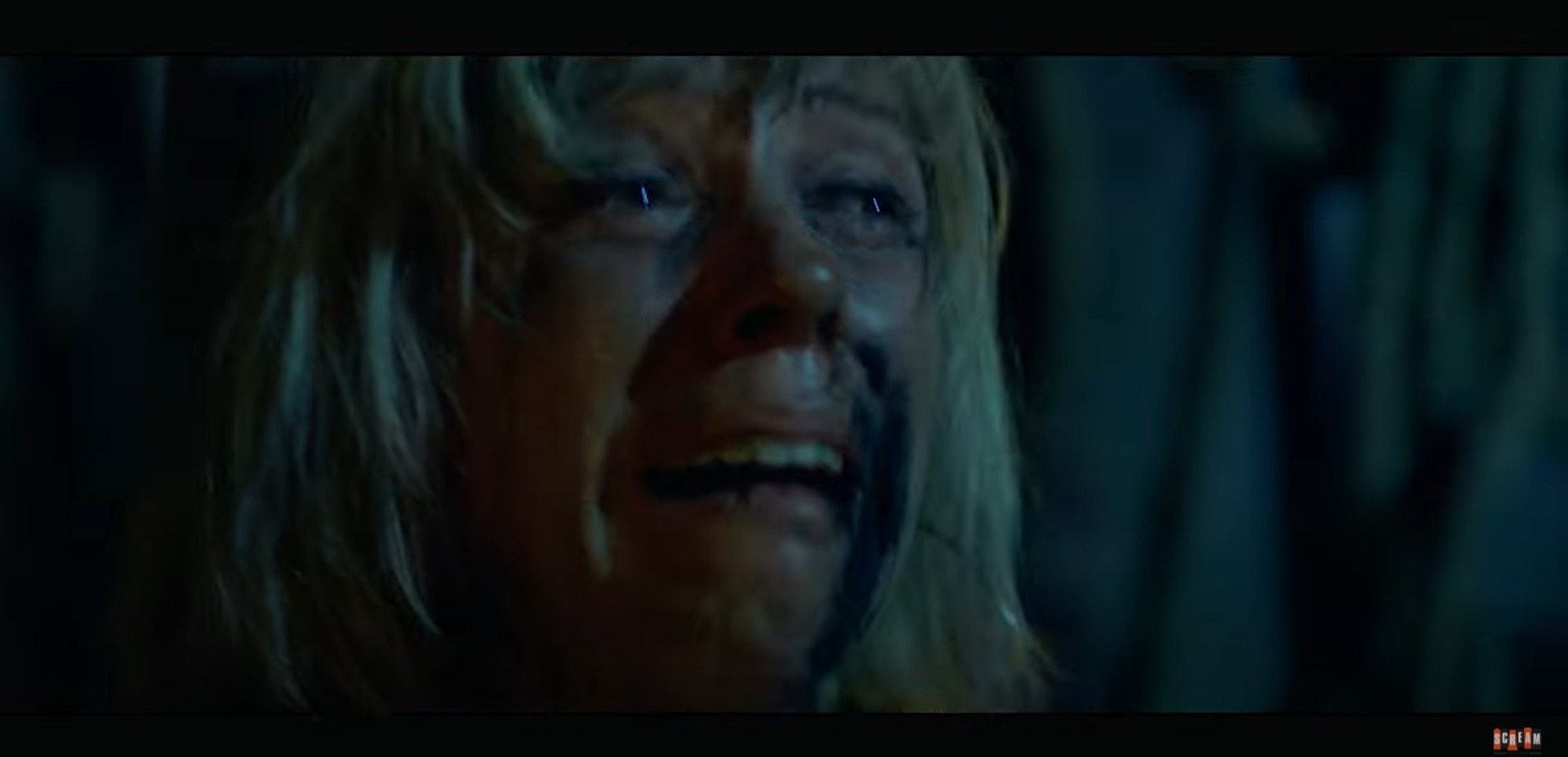
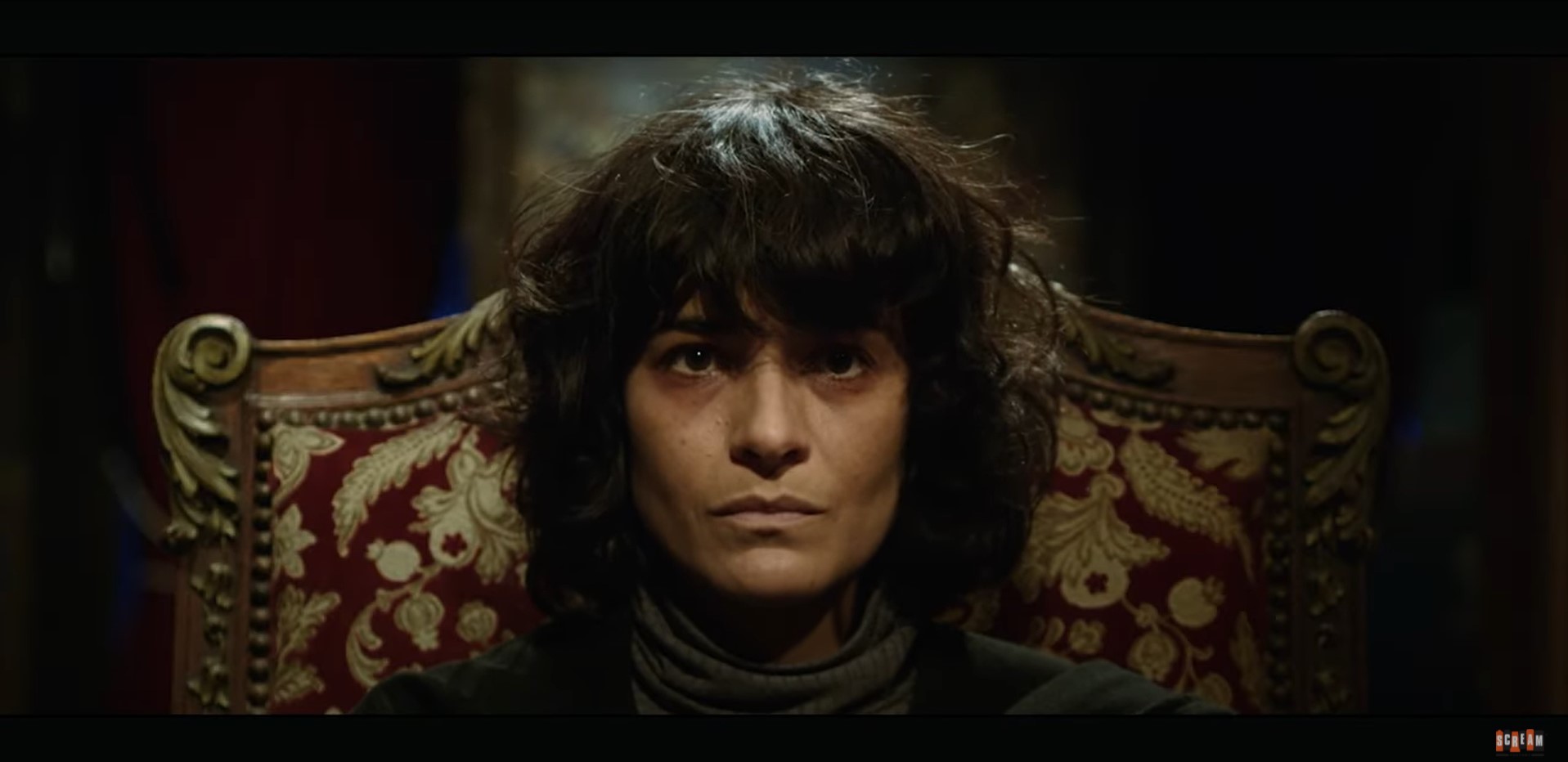
A car accident leaves Cecilia dazed and confused as she wakes up in an abandoned warehouse unsure of what crashed into her and how she arrived inside the vacant area.  Her son, Martin, who was also in the car with her, is missing.  Plagued by disturbing visions being reflected through mirrors, an agitated and frightened Cecilia escapes the hospital and with the help of an empathetic, young doctor, they employ a hypnotist to extract her post-accident whereabouts and possibly locate her missing son, but what is unleashed through hypnosis is more terrifying than imagined.  Meanwhile, the other crash victim, a hermit priest, sets forth to reclaim an ancient and deadly Catholic secret lost in the wreckage and will stop at nothing and do anything to get it.  When Cecilia and the priest converge, the truth of what really happened will be profanely revealed with spilled blood.

“On the 3rd Day” is one of those movies that needs tiptoeing around when reviewing it to not divulge spoilers.  The Daniel de la Vega mystifying horror hails from Argentina and is penned by the screenwriting duo of Alberto Fasce and Gonzalo Ventura, the latter of whom authored the 2017 novel “3 Days” (3 días) in which the film is adapted from.  What can be divulged about Vega’s film is that context revolves around a classical monster fans know and revere to be a staple of horror iconography but “The Chronicle of the Raven” director ventures deep into a disoriented mother’s puzzling gap in time, working backwards through her mind’s murky-dirty window to then make the picture wretchedly clear.  “On the 3rd Day” blends abusive relationships and ugly divorce with traditional and appreciable genre tropes to fully convey that those who are to be loved and protected the most out of dissolving unions are those who are ultimately the ones hurt most of all.  Del Toro Films’ Néstor Sánchez Sotelo, who produced Vega’s 2016 supernatural thriller, “White Coffin,” produces alongside the filmmaker in a coproduction with Furia Films.

“On the 3rd Day” pursues the storyline of two principal characters: Cecilia, a mother recouping her memories after a shocking car accident, and Padre Enrique, an off-the-grid priest guarding the Catholic Church’s dark secret. The Buenos Airos-native actress Mariana Anghileri becomes lost in Cecilia’s constant struggle against the forces guiding her down a subconscious alter ego path that’s unveiled at the tale-telling end while at the opposite end of the spectrum, Padre Enrique, played with a feverously somber faith from Gerardo Romano, who also had a role in Daniel de la Vega’s “Necrophobia 3D,” knows exactly what’s at stake after accidently crashing his truck into Cecilia’s car and the displaced crate he was hauling to Santa Cruz at the behest of the church opens and sets loose an unspeakable evil to lurk. Romano is purposeful in Padre Enrique’s mission with a scrap of uncertainty splayed on his face, but never discloses a sense of true concern or panic-stricken hopelessness which makes the character refreshing in his confidence rather than tense in his unwavering assurance. The same can’t be said about Cecilia who suffers a continuous reeling over the missing gap of time. However, locating the sincerity in Anghileri is difficult as the actress doesn’t convey that primo motherly instinct of a sudden and violent detachment from her child properly. Anghileri wonderfully denotes an obfuscate posture but condoning her as a loving parent just doesn’t seem justifiable, even in the finale that is while still impactfully poignant, misses utterly gutting audiences with Anghileri’s lukewarm care. “On the 3rd Day” rounds out the cast with Osvaldo Santoro, Mathias Domizi, Lautaro Delgado, Susana Beltrán, Octavio Belmonte, Sergio Boris, Rodolfo Ranni and Verónica Intile.

“On the 3rd Day’s” first act didn’t fill me with confidence. I was about as lost as Cecilia waking up disoriented in a vacant warehouse. Vega jumbles sequential order and interjects flashbacks into an already copiously edited narrative with a slither of surrealism to the style of early David Lynch or Terry Gilliam. We’re thrust into Cecilia’s post-crash nightmare, witnessing irrational visions through standing oval mirrors and departing characters who don’t come out alive on the other end of meeting her. Vega seldomly gives into definitive trope context as he reshapes with miniscule precision what we already know traditionally about this particular monster into seemingly something new. By the second and third act, Vega begins whittling down obscuring barriers, leaving more dead bodies in Cecilia’s wake although we definitely don’t ever see death by her hand as it’s always just implied between before and after cuts. The script also pieces in more clues with Padre Enrique’s razing of collateral damage stained with the blood that is not their own. I’m enamored by this phrase that embodies a mystery on the tip of the tongue hungry to be solved and as the padre proceeds to liquate an innocent bystander because of clues he only recognizes, his character, however vilified Vega makes him out to be, becomes far more interesting in a role as a priest with a less than a pastoral posture and as a persistent caretaker of an ominous being, cleaning up after whoopsie daisy incident in losing his oversight. What “On the 3rd Day” boils down to, thematically, is when the sight is lost on what is most important, there becomes an indefinite loss that can’t be put back safely into the box. Between Cecilia’s radical escape from an ex-husband and Padre Enrique’s hastiness, they both take their eye of the prize and ultimately suffer loss in the worst possible way, turning “On the 3rd Day” into a distilled gaslight of unquestionable terror.

Hopefully, to this point, I have not spoiled Daniel del la Vega’s “On the 3rd Day’s” elusive revelation. One of the only ways to see what happens, to see the shocking ending, check out “On the 3rd Day’s” on Blu-ray from Scream Factory arriving Tuesday, March 29th! The AVC encoded, region A Blu-ray is presented in 1080p high definition and in a widescreen 2.39:1 aspect ratio. Mariano Suárez carries over the tenebrous “Terrified” low lighting to provide a tonal dreary environment akin to noir, which “On the 3rd Day” fashions itself. Skin tones, practical effect textures, and even the retro-esque compositional special effect flush out nicely. What’s a little disappointing is the forced English dub track on both the audio options: DTS-HD Master Audio 5.1 and 2.0 stereo. With no alternative languages to opt into, even a native Spanish track, the English dub is obvious desynched between the speech and delivery. The ambient range and depth fairs better with adequate detail and an Italianomysterio soundtrack by Luciano Onetti, who worked on the modern giallo films “Francesca” and “Abrakadabra” with brother and co-founder of Black Mandala productions, Nicolás Onetti. English subtitles are available. The 85-minute film releases not rated and without extras other than the snapper case sheathed inside an image redundant cardboard slipcover and a wide still capture on the reverse Blu-ray cover. “On the 3rd Day” starts messy but ends in a gothic aghast that sets the seal on Daniel de la Vega’s slow burn evolution as a genre filmmaker.

“On the 3rd Day” arrives onto Blu-ray on March 29th!