Sadomasochism and Decapitation Seen by a Child Turns Him into An EVIL Adult! “Nightmare” reviewed! (Severin / 4K UHD – Blu-ray)

Your “Nightmare” Should Be in 4K! Own it Here!

A schizophrenic patient continues to have reoccurring dreams of a young boy chopping the head of a woman in the midst of rough sexual fetishism.  The intense nightmares send him into violent stints, delusional states, and severe seizures.  As a test subject for an experimental behavior drug, the troubled man shows promise of recovery and enough so that he’s released from the mental hospital with continued outpatient therapy sessions.  Not long after his release does he skip his sessions to hightail it from New York City to Daytona Beach, Florida, killing people along the way after decapitating nightmare continues to plague and force him to murder.  In Daytona Beach, single mother of three becomes his obsession as he stalks the youngest boy, a mischievous troublemaker, and even breaks into their house when it’s not occupied , but as the bodies begin to pile up on the hands of his need to kill, the more brazen he becomes to entering while they’re home alone. 

Based loosely on the improprieties of government spy agencies using drugs to bend the minds of home and oversee terrorism to their wills, “Nightmare” sensationalizes the concept for the public sector involving a mental patient, experimental drugs, and exasperating an already instable person’s constitution into a hyperdrive of bloodletting carnage.  The U.S. production is written-and-directed by Italian filmmaker Romano Scavolini who came to America to shop around his scripts having failed to secure financial support in Europe, including, you guessed it, “Nightmare.”  Shot in New York and mostly around the Cocoa Beach Florida, the crime thriller filmmaker flexes his muscle with his first attempt at horror and the outcome is nothing short of unadulterated madness.  Once considered to be titled “Dark Games,” and goes loosely by “Blood Splash” and “Nightmare in the Damaged Brain,” the 1981 film is a feature of Goldmine Productions with John Watkins and Bill Milling (“Silent Madness”) producing.

The man behind the nightmare is George Tatum and the man behind George Tatum is Baird Stafford in one of his only two roles as an actor.  “Nightmare” wouldn’t be as skin-crawlingly shocking if it wasn’t for Stafford’s distressing performance of a man whose psychology is being peeled away and you can see Tatum physically fighting the urge, fighting to stay sane, but losing the battle as the grisly terror replays over and over inside his mind.  Stafford’s asunder of Tatum’s equilibrium has unequivocal transference to the audience.  Parallel Stafford is a child, a young child by the name of C.J. Cooke who essentially played his own version of himself in C.J. Temper, a mischievous prankster that ran babysitters up a wall mad and frightened and frustrated the living daylights out of his mother.  C.J. is part of the family Tatum is hellbent on driving down from New York to Florida to see for a reason that isn’t made clear yet until the shocking reveal.  C.J.’s single parent, a mother desperate for love and affection, is played by Sharon Smith who has become romantically involved with nice guy, and yacht owner, Bob Rosen, with Mik Cribben in the role.  Cribben was actually part of the cast but the original actor for Bob Rosen dropped out and Cribben quickly filled into the role that suited him well enough as a suitable suitor for C.J.’s mother.  “Nightmare” rounds out the cast with Danny Ronan, Scott Praetorius, Christina Keefe, William Kirksey, Tammy Patterson, Kim Patterson, Kathleen Ferguson, Candese Marchese, Tommy Bouvier, and producers John L. Watkins and Bill Milling as drug trial executive and psychologist tracking down Tatum to clean up their mistake. 

“Nightmare” combines excellent U.S. thespianism with an Italian way of suspense and violence glued together by the success of the late Leslie Larraine and team’s special effects albeit the controversial assertion on the film’s posters that Tom Savini (“Dawn of the Dead” ’78, “Friday the 13th, ’80) had been the effects supervisor on the film albeit Savini’s adamant claims of the opposite and denying the credit being false and liable for using his name to draw in audiences.  Savini continues to state his contribution “Nightmare” was limited to best to the action of a decapitating swing of the axe.  Ultimately, the whole ordeal mars Larraine’s due recognition for some of the more up-close and personal gory effects this side of the early 80s.  Scavolini also deserves well-received credit for his narrative vision of Tatum’s psychosexual struggles that drive him to kill.  Robert Megginson’s editing and the re-recording mixing team tackle a form of character plummeting that’s unlike any other from the intercut concatenation of events between Tatum’s horrific, blood-soaked nightmares and his antagonizing, sweat-inducing impulses that propel him without a choice.  The simultaneous parallels between Tatum and young C.J., as Scavolini aims to connect the two against-the-grain personalities as a singular link with back-and-forth subplots, leach the shock out of Sharon Smith’s acme line as mother Susan Temper that uncovers the truth when the chaotic smoke clears.  Why Tatum would drive so far from New York City to Daytona Beach, Florida with reason to stop and make roost on this one particular family fails to form mystery around what’s often crafted to be an arbitrary target with some minute hints that may provide clues to the audience is because even without those inklings, the shooting script defines the rationale right from the beginning thus bringing the viewers out from a shrouded suspenser and into being buckled in just along for the ride. 

Severin Films’ 4K scan of the 35mm internegative compositions the print with various foreign element sources for a comprehensive version of Romano Scavolini’s “Nightmare” on a 4K UHD and Blu-ray 2-dsic set.  The UHD is on a HEVC encoded, ultra high-definition 2160p with a 4K resolution, BD66 and the Blu-ray is housed on an AVC encoded, high-definition 1080p, BD50.  What’s released is a very enriched saturation of the technicolor process that defines and differentiates the innate hues.   Details are more than consistent throughout as we’re able to pinpoint the beads of sweat down Tatum’s face or feel the palpable slick sinew of a decapitated head amongst the examples.  Blood is a deep, glossy red and contrasts strikingly in the more sopping moments despite Savini’s claim that it needed more green dye to better pop for the camera.  A consistent layer of agreeable grain runs throughout from the 35mm film stock, as it should, without any inimical dust, dirt, scratches, flares, or of the like to obstruct viewing or cause lapse in the narrative, as it shouldn’t.  Between the resolution diverse formats, there’s a slightly more grindhouse look to the Blu-ray whereas the HDR10 crisps the image for better vibrancy.  Both formats retain inky blacks without shimmering or banding.  The English language audio tracks are available in two lossless options:  DTS-HD 5.1 and a DTS-HD Stereo 2.0.  The surround mix’s dialogue has resounding infusion, spread through the multi-channels to encompass a multi-directional approach to centralize.  The design is effective as it’s prominent to not understate the vocals but leaves little room for spatial distant to which no matter where characters stand, they are almost audible on the same audio plane.  Jack Eric Williams warping harmonica and twangy guitar, intrinsically integrated with piano notes, a variety of percussion, interjecting funk bass chords, and hints of string instruments, that ebb and swell with great intensity and favorable discordance is a real celebration of Williams’ score on Severin’s latest restorative edition of “Nightmare.”  English subtitles are optionally available.  The Ultra HD release comes the film’s trailers and a pair of audio commentaries as the only accompanying special features; commentary one has features star Baird Stafford and special effects assistant Cleve Hall with Lee Christian and David Decoteau and commentary two features producer William Paul.  The Blu-ray also has the commentaries and trailers plus an extended lot of interviews, such as a feature length (71-minute) Kill Thy Father and Thy Mother interview with director Romano Scavolini (Italian with English subtitles), Dreaming Up A Nightmare interview with cast and crew, a brief interview with Tom Savini discussing his role, or rather his not role, in The Nightmare of Nightmare to which Savini looks a little tired of answer the same question about his inaccurate involvement, an interview with makeup artist Robin Stevens The Stuff that Nightmares Are Made of.  Also included is an open matte peepshow as well as untouched deleted scenes, extending beyond the already newly achieved 99-minute runtime for the film.  “Nightmare” from Severin comes in a standard 4K Amaray case with original poster art used for the front cover.  The discs are separated and tab locked on either side of inner casing and this particular release, the 2-disc set, does not come with any insert or content.  The front cover is reversible with the European title “Nightmares in a Damaged Brain” and a different image composition of the European poster art. The disc has region free playback and is not rated.

Last Rites: “Nightmare” on a new, extended restoration in 4K and Blu-ray is a dream of a release. A nerve-wracking performance in Baird Stafford’s schizo vilifies the very classification of the mentally ill in what is sure to go down in history as one of the most disturbing, and disturbed, characters of the video nasty era.

Your “Nightmare” Should Be in 4K! Own it Here!

EVIL Loves to Clown Around. “The Jester” reviewed! (Dread / Blu-ray)

“The Jester” on Blu-ray Home Video!

Days before Halloween, a man hangs himself from off a bridge.  His funeral not only services the wake for his grieving daughter Jocelyn but also brought out his estranged and aggrieved daughter Emma, Jocelyn’s half-sister from a failed marriage their father had abandoned when Emma was very young.  Jocelyn reaches across the aisle to connect and to bond with the peripheral Emma, but the scorned older half-sibling only expresses anger and confliction over feeling grief for man who no longer wanted to be a part of her life until the very end after reaching out a few times to make amends.  Emma and Jocelyn soon discover that a malevolent, supernatural trickster, known as the Jester, was somehow involved with their father’s untimely demise and now, on Halloween night, the Jester is following and toying with them in a playfully sadistic manner, preying on the one thing that bonds and also disconnects the sisters from being content. 

Based on his 2016 three chaptered shorts of the same name, writer-director Colin Krawchuk pulls from the best parts of those shorts, sprinkles a little more sadism on top, and creates his debut into full-length feature film with this titular antagonist, “The Jester,” at the center.  Co-written with longtime collaborate on various shorts as well as “The Jester” shorts is Michael Sheffield, who also brings to life the Jester’s amusing animated animosity and flamboyant cryptic personality from script to screen.   “The Jester” represents a theme of tormenting guilt for this afflicted and those surrounding the person and is symbolized by the absurdity of a clown masked fool in a gaudily colored top-hat and cheap suit with a deviant chip on his shoulder.  Film in and around the Frederick, Maryland area, “The Jester” is a product of Cinematic Productions, based in local Maryland region, and the Dread Central acquiring entertainment company, Epic Productions, under the Dread genre label with Carlo Glorioso, Patrick Ewald, and Katie Page producing with Mary Beth McAndrews and Eduardo Sánchez (director of “Satanic Hispanics”) executive producing.

Through the years of cinema, a plethora of personalities have emerged all vying for our entertainment seeking eye and while most, especially in the indie market, recycle the very idiosyncratic eccentricities of notable characters or extract some inspiration for blatant misappropriation into their own performance, every once and awhile comes a role that can be undeniably fresh, engaging, and unpredictable.  That’s how Michael Sheffield’s Jester presents to me as a versatile villain with broad expressions and precise stratagem that even by not saying a single word in the entire runtime still manages to have us on edge with just what’s up the Jester’s playful, prestidigitate sleeve.  Sheffield’s tall and lanky stature greatly suits the Machiavellian complimented by the outlandish vestments and wooden cane.  As an unceremonious symbol of guilt, the Jester becomes the obstacle between half-sisters from both sides of their father’s railroad tracks.  Delaney White’s introductory feature film begins her off as Jocelyn, a well-liked, sympathetic, and balanced young woman who can’t help but want to connect with an older half-sister she never knew.  Lelia Symington (“Brut Force”) couldn’t portray older sister Emma anymore opposite as a daughter holding onto a rightful grudge against a father who abandoned here at a young age.   That same bitterness extends to the more affable and kept cherished extension of her father, to Jocelyn, but an innate emotion eats at Emma, an inexplicable pang for his death that drives her to pique when she shouldn’t care less about her deadbeat dad and that manifests into deadlier, dastardlier demons, or at least one dressed-up, duplicitous, and dapper demon.  Matt Servitto, Lena Janes, Mia Rae Roberts, Sam Lukowski (“You’re F@#K’n Dead!”), and Cory Okouchi (“Ninjas vs. Zombies”) fill out “The Jester’s” roles.

Once the end credits started roll, I immediately research “The Jester” like I do with all the films I review to try and go beyond just the film with information, trivia, connections, see other reviews and public opinion, etc.  Why?  Because I’m a hardcore nerd, but what I found in the public comments about the film, especially on Letterboxd, is that many compared “The Jester” as a rip of Art the Clown from “Terrifier.”  Initially, a small voice inside my mind, processing the images from my visual cortex, thought the very same the mass majority did, or does rather.  Quickly, I nipped that fleeting resemblance in the bud because of a couple of reasons: “Terrifier’s” whole gag is gore-drenched for purely shock value as Art the Clown terrorizes and kills those in his path whereas “The Jester” represents more between the lines of guilt, loss, and connecting with what matters between the disfiguration of a dysfunction relations and the other reason is both films nearly sprout at the same time.  Yes, “All Hallows Eve” was released three years prior to Krawchuk’s short films and while it’s unknown whether the director was inspired by Damien Leone’s first pass, “All Hallows Eve” didn’t quite overflow the social media cup like “Terrifier” did a few years later.  Many in the horror community compare “The Jester” to “Terrifier” despite the latter not having been coined until the same year as “The Jester’s” shorts films were released.  Sure, Art the Clown and the Jester share similarities, such as a form of a clown mask and have malevolent supernatural abilities, but the blanket comments are like saying just because Jason Voorhees wears a mask, uses a knife, and doesn’t say a word that he is a clone of Michael Myers.  Overall, “The Jester’s” understated tone with a no holds barred harlequin has decent dark humor due in part to Michael Sheffield’s charade of an act and precision special effect, editing, and camera angles.  Where “The Jester” struggles is where it hurts the film the most and that is with an ending that just drops off the edge of the cliff without a ton of closer that really wraps Jocelyn and Emma’s story neatly nor offers a satisfyingly open-ended dangler for more violent jest.   Perhaps 7-years too late after the release of the shorts, “The Jester” will see push back as a facsimile but I implore you, the readers, to give the Colin Krawchuk feature more than just a bias-gazing once over. 

Epic Pictures’ genre label Dread releases “The Jester” on an AVC encoded, 1080p high-definition, BD25 that’s presented in a widescreen 1.85:1 aspect ratio.  As much of the film takes place at night, details are heavily reliant on the lighting and the compression encoding.  While “The Jester” is not the epitome of sharp edge delineation and detail with a supercharged color palette, the encoded shingles retain a pullulating scheme of adequate grading and detail keeping artifacts to a reduced level within the slightly softer image. The heavier image compression is fastened to the three shorts in the bonus content with horrendous basins of splotchy patches. Two English Dolby Digital audio tracks come with the release: a 5.1 surround sound and a 2.0 stereo. Each render about the same with the 5.1 slimming down and isolating channels for specific back, front, and center audio assignments. No issues with the clean and clear dialogue through the digital, interference-free registering though most of the conversations are one-sided with the Jester’s mime expressions. English closed caption subtitles are available. The three Colin Krawchuk and Michael Sheffield 2016 shorts, as I said multiple times already, are included in the special features along with the official trailer and other Dread previews. The standard Blu-ray Amary has a hard-lit Jester face to exact ever fold of the mask smack on the front cover with a bare insert pocket and the pressed disc art fanned out with the Jester’s antique playing cards imprinted on top. The region free release has a runtime of 80 minutes and comes not rated. Clever, entertaining, and devilish, “The Jester” acts the whimsical clown of conscience-stricken torment with an indelible joker different from the rest of the villainy pool.

“The Jester” on Blu-ray Home Video!

EVIL Doesn’t Joke Around. “Let’s Scare Julie” reviewed! (Shout Studios! / Digital Screener)


After the sudden passing of her father, Emma stays with her cousin, Taylor, along with her aunt and drunkard uncle. Taylor pressures Emma to be part of her prank habitual group of friends, trying to convince Emma how this is how things will be from now on while also trying to be a compassionate shoulder to her reserved cousin. With Taylor’s uncle passed on the sofa downstairs and her mother flying in from out of town, an impromptu sleepover encourages the group of girls to connive a break-and-entering prank to scare a new neighbor, a teenage girl named Julie, across the street. Emma half-heartedly participates by producing a way into the house, allowing her cousin and her heedless new friends onward on their scaring scheme, but when only two of the four girls return, the prank has turned terribly wrong as an urban legend about the house across the street might actually be true.

Breaking out from helming television documentaries and into the genre feature realm is filmmaker Jud Cremata debuting with his written and directed bloodcurdling slumber party, “Let’s Scare Julie,” premiering on in home theaters on digital and VOD come October 2nd, 2020. Starting off Halloween with an innovative filming structure and a good ole fashion horror tale, Cremata never eases on the reins of terror from nearly a single, continuous take of his mischievous teenage girls meet malevolent ghost story that occurs over a single night, condensed further to a time frame that’s almost parallel to the film’s runtime. Formerly known as “Let’s Scare Julie to Death,” the Santa Clara filmed, real time hijinks gone awry spook show is the first horror production from the Los Angeles and Moscow based Blitz Films in association with “Becky’s” Buffalo 8 Productions. Jud Cremata and Marc Wolloff produce the feature alongside Blitz Films’ Eryl Cochran and Nick Sarkisov.

Comprised with a small cast of new talent, “Let’s Scare Julie” focuses around a group of five teenage girls and one elementary grade school girl concentrated more so around a life rebounding Emma played by Troy Leigh-Anne Johnson, making her introduction into feature length films. What makes this a phenomenal role and performance for Johnson is the fact that the young actress has to maintain in-character for the entire length of the film with the camera rarely parting away from her in every moment of the nearly continuous take and she has to adjust her dynamics with a variety volume of characters ranging in temperament from meek, to obnoxious, to terrifying, to drunk, and to the perpetuance of adolescence behavior from her protective, yet peer pressuring cousin Taylor (Isabel May), the obnoxious goof Madison (“Ladyworld’s” Odessa A’zion), the unassertive duddy Paige (Jessica Sarah Flaum), and the confident showoff Jess (“Unearth’s” Brooke Sorenson). Individually, the characters are well developed, hinting more towards unravelling their true selves with each progressive moment their on screen, but not overly enough to have each figured out and that leaves their hopeful futures in ruin, offering more substance to their potential demise. Rounding out “Let’s Scare Julie” cast is Dakota Baccelli, Blake Robbins (“Rubber,” “Martyrs”), and Valorie Hubbard (“Resident Evil: Extinction”) as the evil spirit, Ms. Durer.

Uncomplicated with less fancy footwork adorned, “Let’s Scare Julie” is all about the story and less about the effects hoopla usually associated with vindictive phantasma creepers, especially ones like Ms. Durer who like to seep into her victim’s personal bubble using voodoo black magic dolls while wearing nothing more than her dirty nightgown and scathing glare on her face. The simplicity of the movie is almost refreshing in the inherent campiness of the anecdotal urban legend spieled by the girl living next to the house of ill repute, but one thing about the story that irks me is the marketing of “Let’s Scare Julie” being shot in one continuous take; yet, there are a few edits that not necessarily cut to a different scene, but rather just jump seconds of a frame and continue the moment. Whether the edit’s intent was because of timing, reducing frames in a scene to meet a certain runtime, or to give the actors a slight break, the expectation wasn’t fully met when the handful of edits are slipped in condemning that anticipated single take to just a still impressive compilation of long takes. Chuck Ozea’s maneuvering cinematography seamlessly tells the tale without so much of a hiccup as the veteran music video DP choreographs somewhat of a dance around Troy Leigh-Anne Johnson to capture her slow simmer into terror. “Let’s Scare Julie” does more with less as a round about ghost story, building up suspense above the guise of guilt-riddled themes without placing the perspective in the middle of the supernatural action.

Sometimes, pranks backfire and, in this case, this prank is to die for in the Shout Studios distributed “Let’s Scare Julie,” scaring up into home theaters on Digital and On Demand at the beginning of Halloween season on October 2, 2020. Being a brand new film, there were no psychical media specs to report nor would there would be any A/V if specs were available since this review copy is a digital screener of the film. As a digitally recorded production in this day and age, expect the found footage-like video and sound as faultless as expected, but the quality will be determined by your internet connection and streaming platforms. There were no bonus material with the screener nor were there any additional scenes during or after the credits. Five teens’ prank spree ends on a dark and stormy night of terror where urban legend trounces cruelty over shenanigans in the crafty and solid shiver-inducing “Let’s Scare Julie.”

Pre-order “Let’s Scare Julie” on Prime Video.

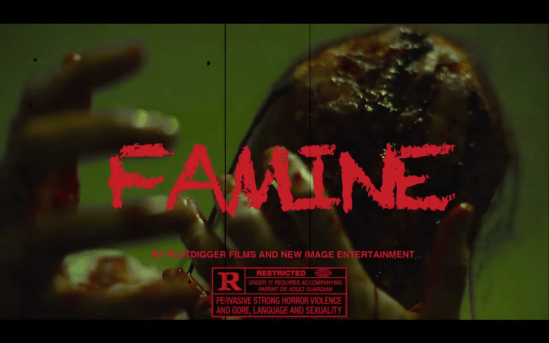
EVIL’s Feast or “Famine” reviewed!


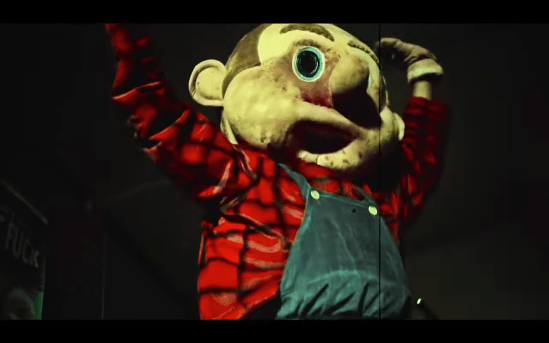
An annual high school famine event goes horribly wrong when a prank backfires, killing popular teacher Mr. Balszack and scarring those directly responsible for his untimely death. Five years later, a new student seeks to revive the famine-for-24-hour old tradition, inviting the same familiar faces involved in the prank, and hoping to rejuvenate vigor into the even again. Clicks form, alliances solidify, and outsiders become the insiders into just what’s really happening to the graduating class. With the night still young, a killer masquerading as the school’s mascot, The Nailer, exacts a terrible death upon those trying to not die of hunger or become dead from being categorized as unpopular. No one is safe from The Nailer who has chained the doors and has hands on every school authorized item weaponized for his eviscerating pleasure.

High School has never looked so dreadful from the late Ryan Nicholson’s written and directed 2011 gory slasher-comedy, “Famine,” co-written by “Girls Guns and Blood’s” Jeff O’Brien from a Taylor Nicholson story. Nicholson, who died this past October due to brain cancer, was for most a special effects guru who worked on well known films such as “Final Destination,” “Blade: Trinity,” and most recently, last year’s “The Predator,” but Nicholson was also a writer and director who specialized in gruesome, off-color horror, including a bowling horror-comedy “Gutterballs,” a bloody revenge thriller starring Debbie Rochon in “Hanger,” and a cannibalism film of the psychosexual style titled “Collar,” all of which have been released by notable cult home video distributors. With the Canadian bred “Famine,” the multitalented Nicholson had already found DVD distribution with his own company, Plotdigger Films, and a limited collector’s edition with Shock Entertainment back in 2013, but the indie extreme horror devotee, Unearthed Films, have reclaimed the New Image Entertainment title rights for a high definition Blu-ray release.

“Famine’s” quick to gut story doesn’t leave much room to build character, leaving much to exposition in the parameter of backstory, and only dances around the prospect of a principal role. Christine Wallace comes close to that role with Jenny, a ditzy school regular with a case of yelling tourettes syndrome and a hard on for another girl’s boyfriend, as a character on the outskirts of what really happened to Mr. Balszack that fateful famine day. Tall, broad shoulder, well-endowed, and with a pixie cut, Wallace is a striking actress acting similar to a baboon with a backpack and books. Also hot in the sultry pen, but in a more cool, calm, and mysterious way is Miss Vickers under the dark and tepid attributes of Michelle Sabiene. Sabiene and Wallace balance out with a warm blend of vapid cold and vivacious hot that split like a log under the stroke of an axe with Beth Cantor’s performance of Cathy, a mentally challenged student who often exchange sallied remarks with her quasi-friend Jenny and is seemingly the epicenter of Mr. Balszack’s demise. Cantor’s hunched over, Jerry Lewis crosse-eyed, and mimics the movements of a stiff corpse to obtain an overplayed performance that sticks out like a sore thumb and doesn’t pleasantly compliment the ruckus hijinks of a trope-ladened volley. The remaining “Famine” cast closes out with Nathan Durec, Sanya Silver, Terry Paugh, Thabi Maphoso, Ady Mejia, Gustavo MacSerna, Christopher Lomas, Karyn Halpin, Des Larson, and Glenn Hoffmann as the Nazi sympathizing Principal Nielsen.

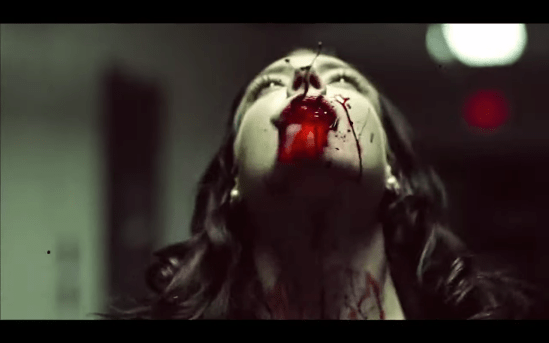
Being familiar with “Gutterballs” and “Collar,” going into “Famine” with an open mind and the expectation that there will be blood spilled and gore galore was an easy sell for me to plop my keester down, pop the disc into the player, and press play with conviction. Yet, certain bars were reluctantly met with “Famine” and, by golly, it is my sincerest hope that I do not defile the recently deceased’s good name and reputation with my honest negativity, but after thoroughly enjoying the tasteful practical gore effects with the disemboweling spillage, the ramming of a nail spike to the head, and the sulfuric acid doused melting man, “Famine” carries a languid story with characterizations held sparely together with lose threads and comedy that’s flushed with odd behavior rather than genuine purpose. “Famine’s” an inflammatory reckoning of pervertible indecencies and blood with a harking slasher, a score well deserving of Nicholson’s legacy, but the point, if there is one, falls flat and hard on it’s face executing a fail in materializing an organized chaos that “Gutterballs” provided.

Unearthed Films have been a good friend to Ryan Nicholson with a home video release of “Collar” and a segment on “The Profane Exhibit.” Now, along with MVDVisual, “Famine” comes to feast onto Blu-ray presented in widescreen, shot in a high defintion 1.85:1 aspect ratio, with a just over an hour runtime of 77 minutes. Image wise, the Matt Leaf cinematography is bright, clean, and on the side of a warm sterile shade of yellow, but offers nothing truly new to the genre or find adulation from the comedy of it all. Still, not a single issue with uninspired imagery. The English language Dolby Digital 2.0 renders a heavy score track that softens the dialogue track. Dialogue does, at times, becomes a strain to discern. Range and depth on the ambient track fairs better with plentiful slasher characteristics. The bonus features are quite anemic with a still gallery and Unearthed Films’ trailers. “Famine” isn’t one to starve on an unpinned story as Nicholson carves up a mediocre massacre with a filet mignon finish.

Click to buy “Famine” on Blu-ray!

Evil Walks Among Us! “The Devil Incarnate” review!


In a time of Kings and nobility, a traveling beggar roams the open landscape. However, this man is no ordinary vagrant, but is the leisurely wary Devil reincarnated into the flesh, walking amongst mankind with one goal in mind: seeking pleasure by any means necessary. From pillaging to cheating and lust to murder, the haughty Devil has embarked on an oppressive journey as Mr. Leonardo, encountering all walks of life and swindling them of their morality and of their wealth. He’s joined by a young and poor servant boy, Tomas, as a traveling companion, schooling the God fearing lad in man’s corruptible virtues and exploiting their naïve or sinful nature. Though being a powerful immortal in true form, as man, the Devil can succumb to sickness, injury, and even death, but still maintains certain metaphysical abilities to provide an edge over those he bamboozles. In his mischievous encounters on Earth, Leonardo comes to realize that man might just be more immoral as the Devil himself when the Devil, in human form, can’t inflict as much havoc as the unscrupulous attributes of a profane mankind.

“The Devil Reincarnate” is worth it’s weight in ducats for all the Paul Naschy fans. Also known as “El Caminante,” not a literal translation with an interpretation as The Walker, the Paul Naschy starred, co-written, and directed film, under his birth namesake of Jacinto Molina, is a staggering approach toward the exhibition of humanity at it’s complete and utter worst in a cloaked slither of an Naschy anecdote that even the Devil couldn’t top man’s relentless and unremitting cruelty. Naschy’s pessimistic views, much which I’ve always agreed with, illuminate all that was, is, and will be wrong with human race and despite how barbaric and nasty his character, Leonardo, might be portrayed, Naschy manages to be essentially one of the only directors to make the Devil an anti-hero of sorts.

Paul Naschy is Spain’s most recognizable horror icon, recreating many of the iconic monsters and macabre films in his native land. Leonardo is a different sort of character for Naschy, one that doesn’t hide behind a mask or makeup, revealing a full-blown Naschy assortment of just him. As himself in Leonardo, he’s plays a terrible, down-right rotten bastardo who even belittles himself as a simpleton to lie and steal from wealthy aristocracy. Leonardo is smooth, skillful, charming, intriguing, and brutish much like I would imagine Paul Naschy would be in real life. Alongside Naschy, David Rocha portrays Leonardo’s servant companion, Tomas, and Rocha provides a youthful exuberance that translate to onscreen, giving Leonardo companionship, aid, and also assists in being the Devil’s experimental subject to see how long and how much the Devil can instill the dastardly advice and actions into the young man. “The Devil Incarnate’s” concupiscence fully enflames with some of Spain’s more provocative actresses such as Eva León (“Bahía blanca”), Adriana Vega (“The Night of the Executioner”), Blanca Estrada (“Horror of the Zombies”), and “Night of the Werewolf’s” Silvia Aguilar, whose bare rear-end is splayed on many of the film’s iconic posters and the limited edition Mondo Macabro Blu-ray cover with an upside down cross etched into her left butt cheek.

Honestly, “The Devil Incarnate” is exemplary of near perfection. Through the journeyman storyline, the performances maintain the highest caliber inside the realm of horror-comedy with Naschy at the helm, steering the multi-façade Leonardo with charisma, magnetism, and callous barbarity. Supporting cast complete Leonardo’s monstrous persona with pinpoint precision by shifting actors and actresses into diverse walks of life who then churn out comical, chilling, and overall controversial performances that spill into horror subgenre territories, like Nunsploitation for example. The powerful theme is an unfortunate, yet timeless blemish on human culture and society. Cheat, steal, and murder are the core elements conveyed by the filmmaker to suggest that the Devil doesn’t need to take form to stir up mayhem, but that there’s a little bit of the Devil inside us all to complete his bidding in a war against God. Story references the renowned biblical tale of Adam and Eve and the Devil’s temptation that ultimately curses the human race, bestowing upon them with original sin. There’s plenty of sin motifs to go around along with phallic notions through the Devil’s own wandering agenda that’s intertwined with leagues of potential disobedient individuals and shamed religious turncoats to paint a gloomy landscape of man’s most horrid shortcomings.

Mondo Macabro and CAV Releasing presents the unrated, non-limited edition of Paul Naschy’s “The Devil Reincarnate” onto a region free, 1080p, BD25 Blu-ray home video with a brand new 4k transfer from the film’s negative and displayed in a widescreen, 1.66:1 aspect ratio. For a negative from 1979, the transfer aims to please with hardly little-to-no damage or other deterioration flaws, no awkward cropping, and no tinkered enhancements detected. Coloring is flattering despite the hint yellowish tint. Some of the darker scenes lose sharp definition do to poor lighting, but there are breathtaking landscapes, especially when Naschy is strung up on the cross, with a vivid, natural aesthetic to the release. The Spanish Dolby Digital LPCM mono, at 24fps, with optional English subtitles packs quite a wallop with robust scuffles, clanking of swords, and a clear rendering of Ángel Arteaga’s zany and harrowing compositions. The extras include an introduction from Paul Naschy, exclusive interviews with costar David Rocha and Naschy’s sons, Sergio and Bruno Molina, a tour of Paul Naschy’s study and home, and exclusive audio commentary by Troy Howarth, author of various horror historical directors and moments in cinema. There’s no contest. “The Devil Incarnate” is, without a single seedling of doubt, the best film of Paul Naschy’s extensive body of work and it’s a film that reinstates an immense amount of melancholy into the soul when regression is setting in that human beings never have been and never will be better than the Devil himself.

Own it today! Click to buy at Amazon!