EVIL Told You Not to the First Time! “Don’t Fuck in the Woods 2” reviewed! (Wild Eye Releasing / Blu-ray)

“Don’t Fuck in the Woods 2” on a Special Edition Blu-ray!  Purchase Your Copy Here!

Beginning where the last film left off, alien attack survivor Jane, bruised and bloody, stumbles into the under-renovation Pine Hills Summer Camp where a group of newly hired and horny camp counselors, a nurse chaperone, and a handy-man ex-con spruce up the place.  Jane is met with hostility when sounding off about monsters and death, but when the Pine Hills staff realize that a few of their friends are missing and haven’t checked in, Jane’s story is beginning to resonate and take traction.  Out in the woods, the rape-impregnated sperm of the monster are parasitic and seek out human hosts to infect with raging hormones and adrenaline, transforming hosts into razor-sharp teethed, superhuman mutants hellbent on procreation of a new monster.  The invading parasites turn the isolated camp into a slaughter yard of bloodshed and chaos and it’s up to the remaining survivors to nut up and put violent stop to an alien’s insidious carnage. 

Well, by God, Shawn Burkett did it!  The director made a sequel to his straight-forward, out-of-nowhere, 2016 indie hit “Don’t Fuck in the Woods,” directly following up from where the first film left us off with a lone survivor having just blown up a sex-crazed, blood-lusting alien creature who clawed, tore, and banged his way through a bunch of naked women and some off-color guys doing the dirty in the woods.  The first film made such a splash of interest with the provocative and often controversial title as well as being one of the most pirated movie in the last decade due to said title, The Ohio-born Burket began to formulate the next step of “Don’t Fuck in the Woods 2” with a story co-written with one of the sequel’s principal stars, Cheyenne Gordon, writer of the Tory Jones directed films “The Wicked One” and “They See You.”  The enticingly crass, but greatly adored and sought after title aims to be gorier and even more nudity-laden as the first film with the story situated at an actual family-owned campground, Hannon’s Camp America, in College Corner, Ohio.  Shot in the Summer of 2019, the pre-pandemic film, “Don’t Fuck in the Woods 2,” is a production of Concept Media, Studio 605, Rising Fire Films, Taintbad Productions, and Head on a Stick Productions with Burkett producing and John Lepper (aka Johnny Macabre, executive producer of “Smoke and Mirrors:  The Story of Tom Savini” and “The VelociPastor”) as executive producer.

Though the sequel does not mark the return of the voluptuously captivating adult actress Nadia White, as her character (spoiler alert) was ripped apart by the creature (end spoiler alert), the sequel casts a whole new lot of ladies willing to let Mr. Skin archive and immortalize all their bare body parts forever…or at least until the servers crash, the internet dies, or the world ends.  It’s not like eternity or anything.  The one returning principal to return is the first film’s sole survivor, Jane, and returning to fill her blood-soaked shoes is Brittany Blanton that has officially solidified the Houston, Texas native as a scream queen, franchise final girl, and an overall badass slayer of otherworldly creatures.  Blanton is just one of several actresses to play into the popular campy motif and titular theme of open sexuality and nudity as a formulaic no-no in horror films.  B-to-Z horror movie regulars, starting with “RIP:  Rest in Pieces’” Kenzie Phillips, “Model Hunger’s” Kaylee Williams, “Slaughterhouse Slumber Party’s” Kayla Elizabeth, “5G Zombies’” Julie Anne Prescott, “Blood Moon River’s” Cara McConnell, and Nessa Moore, who I suspect used a body double for her bare all scene, follow suit (birthday suit that is) playing chopping block babes abreast of their outcome.  Burkett doesn’t completely make void his sequel of complex human emotions, supplying bitter love triangles, an oversexualized third wheel, and two more adult-ish characters running from their unpleasant past,  One of those two is ex-con Gil (co-writer Cheyenne Gordon) forced into a corner as the camp’s handyman while attempting to turn his life around for the better but finding the path to redemption difficult when being harassed and threatened by corrupt law enforcement officer.  Already down in the dumps being judged and juried by fellow campers and law enforcement, Gil is sympathetic role that earns his keep when going toe-to-toe with mutation spawn.  Mark Justice (“Atomic Shark”), Jason Crowe (“Dead Moon Rising”), Tom Komisar (“Slaughterhouse:  House of Whores 2.5), Alex Gottmann, and returning from the first film for a brief but memorable scene is Brandy Mason completes the cast. 

No contextual messages. No metaphors. No symbolizing themes. “Don’t Fuck in the Woods 2” pumps you full of the same obligatory creature feature construct as the first, those who have sex, get murdered….horribly. The only slight difference this time around is director Shawn Burkett gets himself out of the man-in-a-monster suit element and into a state of possession as the cast of characters become heinous hosts to parasitic alien slugs, essentially turning people on themselves in a battle to the death. The concept brings a new angle to the series to build upon the creature’s never say die multi-nefarious abilities that keeps it returning, in one form or another, from the grave. Blood runs rampant with the special effects team implementation of a blood gun into their bag of tricks that soaks the cast in more than one scene, but I would say between the two films, both are equally matched in blood shedding as the sequel, that doesn’t see the return of the first film’s SFX artist Deryk Wehrly but hires the 2016 film’s producer, Rob Collins to fill that void, doesn’t surpass the antecedent’s practical butchery. Looking through a technical critical lens, the indie feature has noticeable issues with crew mistakes, such as shadows of the boom operator in the frame, and scenes that hit the cutting room floor would have shed light on a few second and third act scenes that ended up not keeping the story smooth in a logical sense; one of the bigger scenes in question is one two large arms break through a wall and grab Gib from behind. The arrangement of character positions didn’t quite work out and the feature’s after credits bonus scene cements that misalignment even more. “Don’t Fuck in the Woods 2” might have filmic gaffe (there might be a cream for that) but what started as a straight-shooting, sex and slaughter, potboiler has become Shawn Burkett’s undeniable magnum opus and he’s only just beginning.

Wild Eye Releasing camp on one of the most campiness horror to date with “Don’t Fuck in the Woods 2” on a special edition Blu-ray release. Presented in high definition, 1080p, the transfer is exhibited with widescreen 2.35:1 aspect ratio. First thing I noticed about the independent film and distributor release is there are virtually no issues with compression. The black areas remain deep and inky, hues naturally come across without any fluctuation, and there are no visible banding or artefact issues. In comparison to the first film, the sequel is quite brighter with more lighting available and Burkett isn’t too heavy on gels or tints unless in slug-vision mode with a tinge of low opacity fuchsia. The release comes with a lossy English 2.0 stereo mix that’s every bit languid as it sounds with current releases. Dialogue is clean and clear of damage and interference but is too underweight for full-bodied effect. Sound design offers arm’s length depth but is ample in range with slimy sluggy-ness slithering about and skirmish associated hubbubs to make the action excitable. Optional English subtitles are available. The special features include a behind-the-scenes featurette that gives a walking tour of the Hannon’s family camp shooting location building-by-building, blooper reel which can be seen during the end credits, two deleted scenes, the original producer trailer, Wild Eye Releasing trailers, and a feature length documentary “What Happens in the Woods: The Story of Don’t Fuck in the Woods” that digs deep not only into the genesis of “Don’t Fuck in the Woods,” but also into the personal strifes of Burkett and how the story’s title was turbulent, controversial, and heated from the beginning but became a wildly great success that spurred greenlights for future sequels, such as the after credit scene that may or may not involve space and/or time travel! The clear Blu-ray snapper with latch has physical special features that include a folded-mini poster insert, reversable cover art with a composited image on the front and a bloodied Brittany Blanton screengrab snippet on the opposite, and cardboard slipcover with a mashup character collage on the front. The brisk 81-minute runtime compacts the blood and boobs in this region free, unrated disc. Shawn Burkett teases fans with a third picture that’ll surely bring the wanton woods into the world of tomorrow but, for now, bask in “Don’t Fuck in the Woods 2” unfettered maverick success.

“Don’t Fuck in the Woods 2” on a Special Edition Blu-ray!  Purchase Your Copy Here!

EVIL vs EVIL vs EVIL vs EVIL vs EVIL etc., “Bigfoot vs Krampus” reviewed! (Ruthless Pictures / DVD)

Merry Kirstmas to all!  “Bigfoot vs Krampus” on DVD!

With Christmas time approaching and the Illuminati forces on the retreat, the Allies are in high spirits. Space rough neck Van Helsing considers taking his relationship with Allied Forces leader Princess Kali to the next level. Unfortunately Satan is set to ruin the moment. From the depths of Hell, the wicked Lord Of Darkness summons the demon spirit of Christmas, Krampus to wreak havoc on the living. Upon hearing the news, the clone of magician Aleister Crawley joins forces with the reptilian form of General Stalin and the Illuminati to mount a Christmas Eve attack on the Allies forcing Van Helsing and Kali to take drastic action. With help from the rowdy space rouge Bigfoot, the Allied Forces bait a syndicate of monsters to help take down the fiendish Krampus and restore peace to the galaxy.

Usually, I write my own storyline synopsis for the physical releases I provide review coverage for as there’s something about firsthand accounts that interpret more clearly and is more detailed in story events than the tagline plot that can be misleading at times, whether be a false marketing ploy to sham potential viewers into watching or goes to the other extreme with a less-than-desirable summary of drab when really the movie is much more magical, but with the 2021 released “Bigfoot vs Krampus,” the bizarre synopsis is worth every word count calorie.  Coming off the heels of a decent bigfoot picture from 1976 (“Creature from Blake Lake”) and playing into the festive Christmas holiday theme with the anti-Santa folklore, I was fingers crossed and impossibly hopeful to be two-for-two in the Sasquatch saga that kills two birds with one stone in doing my duty watching holiday-horror.  Boy was I terribly mistaken.  “Bigfoot vs Krampus” is just a full-length computer-generated cog in the machine of writer-and-director BC Fourteen and is a part of his so-bad-they’re bad versus film lot of an unofficial science fiction, comedic and satirical saga of generally evil in nature icons facing off against one another….in space.  “Bigfoot vs the Illuminati,” “Bigfoot vs Megalodon,” and even “Trumpocalypse Now!” and “Trump vs the Illuminati” really speak the filmmaker’s political stance as well really speak volumes on the filmmaker’s wayward clashes of alternative universes that amalgamates characters from horror, sci-fi, folklore, and video games into battle beyond the stars cratered epic. From executive producer Tony Cliftonson and producer Randall Finings, both involved with “Tickles the Clown, another spinoff in BC Fourteen’s gonzo-galaxy epic, “Bigfoot vs Krampus” is a production and a presentation of indie distributor Ruthless Studios.

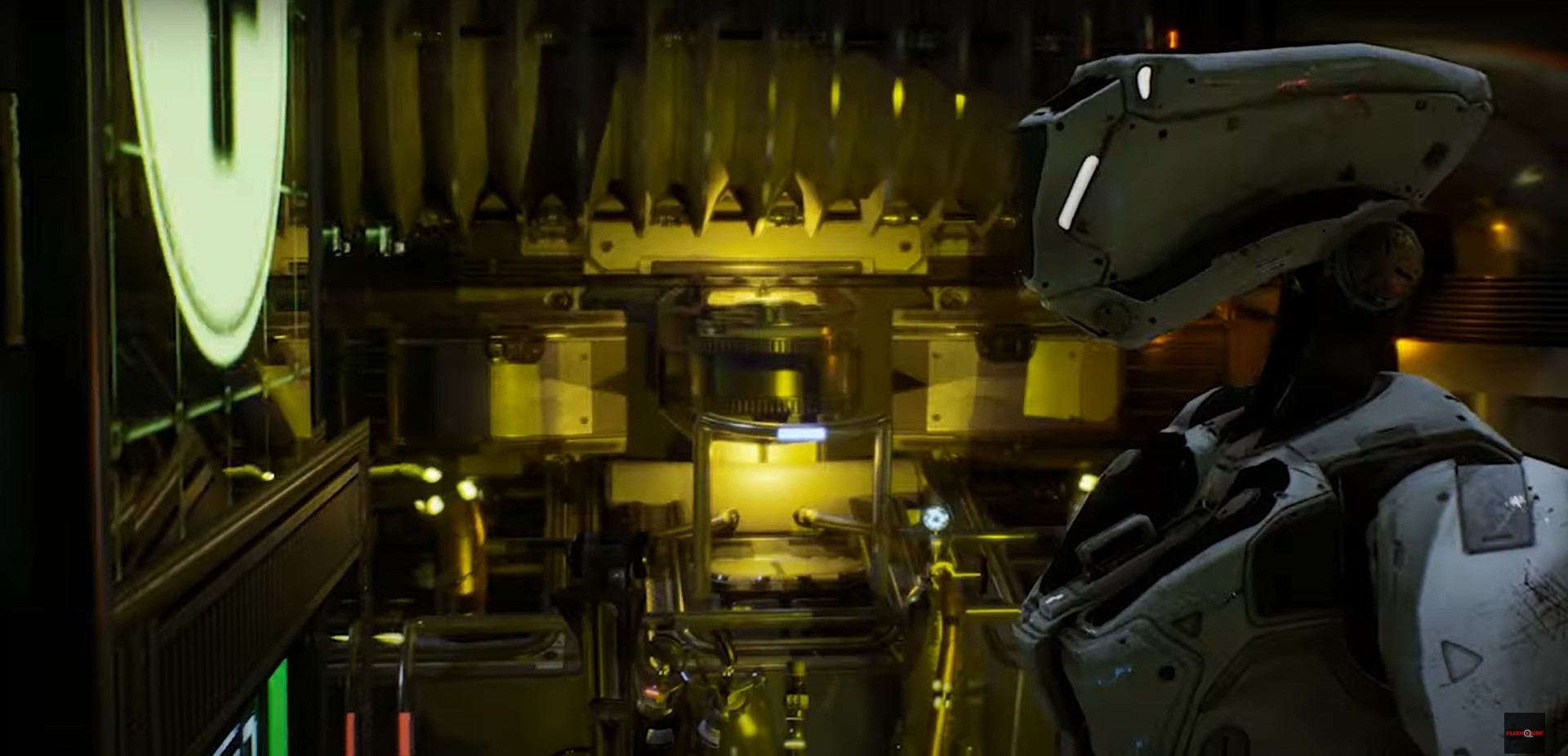
“Bigfoot vs Krampus” is total, 100% computer-generated graphics with only voiceovers to bring the highly kinetic, standing-in-place characters to resemble something that looks like life. BC Fourteen doesn’t stray too far from his regular voice talent as many of the same characters reoccur or popup randomly in this galactic gasbag of all talk and little action. When not voicing family friendly films, Marco Guzmán finds himself fouling the language barrier of space as he lends his vocals to the majority of principal leads and supporting char acters, such as the titular hairy primate Bigfoot who in the film sounds like a bastardized, sonorous, and raspy version of Fat Albert. Guzmán also voices another principal lead in Van Helsing, the 16th clone of the original vampire slayer. Known by his friends as V.H., Van Helsing looks less like a doctor with a stake and more like the Master Chief from Halo, never removing his helmet as he spews surefooted cockiness across the galaxy. Guzmán also voices the reptilian form of a reincarnated Joseph Stalin as well as the Egyptian sun God, Ra, who has ambiguous loyalties but can be useful to the allies as an all-seeing eye of the universe. Carli Radar voices humanities last hope and hero, Kali. The allied forces leader is pregnant with V.H.’s baby, a contentious sore point for Van Helsing who felt tricked into providing Kali a progeny, but has to become mankind and the illuminati, stereotypical green Martians with big black eyes and small mouths, last leader when the Illuminati’s Princess is destroyed by Krampus (who is oddly not listed as being voiced in the film’s credits), Satan’s partner in clinching power over the allies. The voice talent rounds out with Nate Trevors, Edson Camacho, Wes Bruff, Leslie Parsons, Simon Daigle, Carl Folds, Robert Forth, and BC Fourteen.

What do Bigfoot, Krampus, Megalodon, Clowns, The Terminator, Dummy Dolls, The Boogie Man, Werewolves, Satan, Anubis, Ra, and Jack Skeleton all have in common? BC Fourteen CGI’d their likeness into his…I don’t even know how to classify the film. I’ve had a run-in with a BC Fourteen film 8 years ago with 2014’s “Werewolf Rising” when the Pittsburgh, Pennsylvania-born filmmaker went under the name BC Furtney and aside from a stellar performance by the always captivating Bill Oberst Jr. and Irena Murphy baring a full moon going snout-to-nips with a werewolf, “Werewolf Rising received a mixed review but was still comprehensible with a start, middle, and an end. Though I stress the comedic and satire, a precaution must be instilled as the unfunny “Bigfoot vs Krampus” drags through the mud a trove of select horror and sci-fi pop icons in carbon copy tiny spaceships, flying around in a muddlesome mess, and rendered completely unnatural in an advanced resemblant version of the Goldsrc engine – you should see Bigfoot run down the ship’s corridors. If “Bigfoot vs Krampus’ were a series of cinematic story intercuts sewn together with gameplay axed entirely, I would believe it, and I’m sure, having spot check a few of the sequels, prequels, and spinoffs of the same caliber, that some animated scenes are recycled. There’s definitely recycling happening in this feature. If the war between the Illumanti-Humans-Bigfoot allied forces and every evildoer under the sun wasn’t thematic enough, the pseudonymous BC Fourteen throws in Van Helsing’s struggle with conscious as the cloned hired mercenary with legendary blood lineage skips town and on his baby’s mama because he does not feel appreciated in a fight that’s technically not his. The director also adds a subplot of Bigfoot checking in with old friend, and apparently cafe barista, Anubis to make sure the Sun Deity Ra isn’t fibbing about Van Helsing’s unexpected demise at the hands of Krampus. Everything does circle back around to an open-ended showdown for that next exposition heavy installment of intergalactic garbage made with no heart, no respect and very little effort.

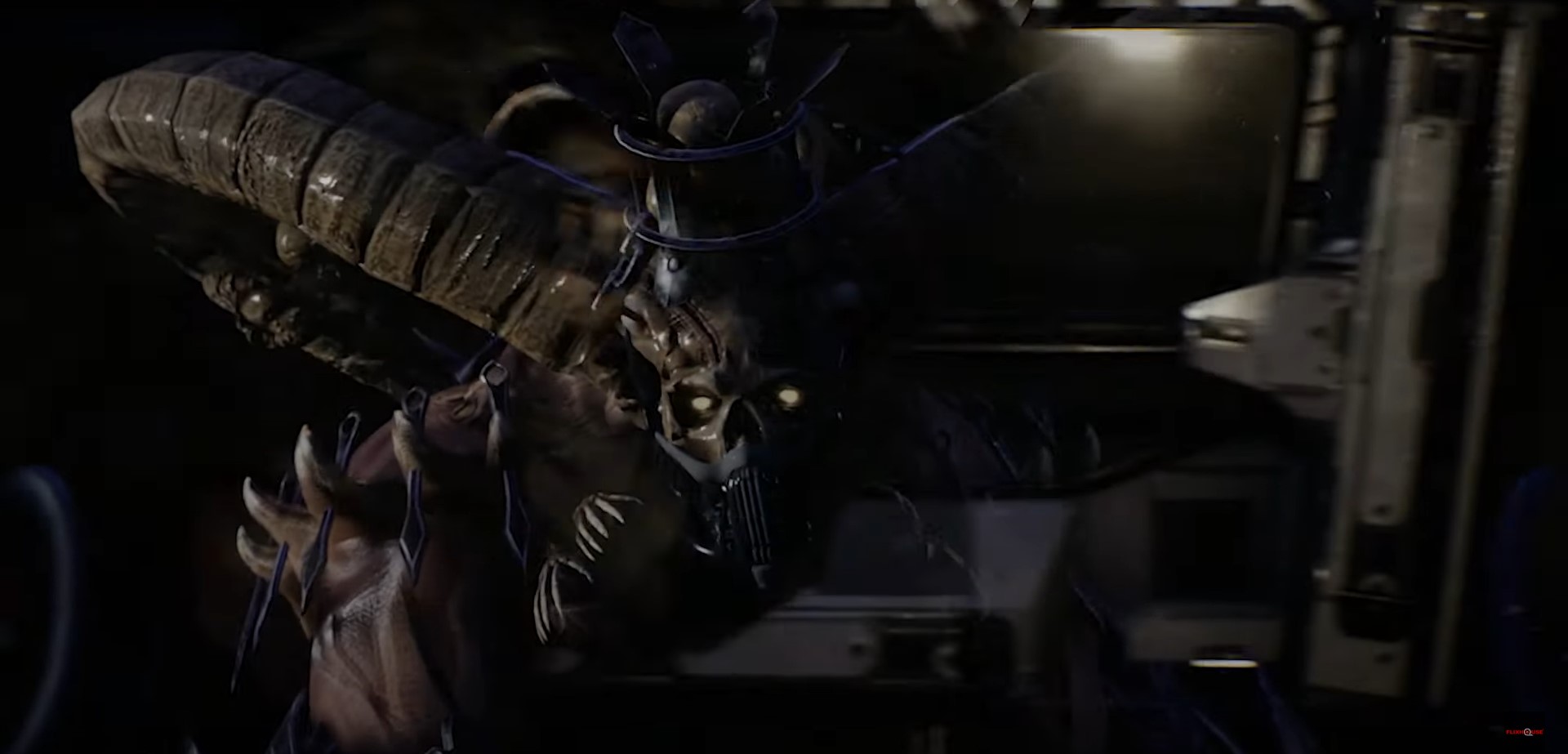
If the synopsis didn’t frighten you off from watching the film, text pulled word-for-word from the Ruthless Pictures’ DVD back cover, I surely hope this review left you with a bit of common sense prior to watching a cool and kitschy what if versus scenario. The Ruthless Pictures DVD presents the glossy computer graphics in a widescreen 1.78:1 aspect ratio. I will admit the animation provides here-and-there tactile moments, such as battle scuffs on robots or the ridges, grooves, and lighting on Krampus’s curled horns. All the animation looks about the same throughout, leaving a one-note taste that’s hard to wash out, but the at times, the CGI provides that nice ragdoll feel for humanoids Van Helsing and Kali and the lighting/shading does make appear more luxurious. Compression issues include background banding and splotches in darker spaces, but for the majority of the feature, those issues are limited. Though no listed on the DVD’s attributes, my players states “Bigfoot vs Krampus” has a single audio option – a Dolby Digital 2.0. For a science-fiction baster war, the lossy format is a lackluster that doesn’t surprisingly match all the other qualities, pushing out a mediocre 5-6Mbps average. Option English subtitles are available under the static menu. The DVD is a bare bones release with zero bonus content. The DVD is encoded region free and has a runtime of a merciful 70 minutes. Bigfoot films are back in the dumps again for this reviewer as “Bigfoot vs Krampus” is a flurry of insipidity and, the worst part of it all, it doesn’t add anything to the Christmas holiday horror subgenre with the Krampus module built-in for the sake of impersonating a something about as old as it’s folklore, a space invader.

Merry Kirstmas to all!  “Bigfoot vs Krampus” on DVD!

Bend a Knee to the EVIL “Alien Goddess” reviewed! (Darkside Releasing / Blu-ray)

“Alien Goddess” available on Blu-ray on Amazon.com!

After school hours is more than just detention, it can be paranormal purgatory when a class reviewing an education course about death, a saucy night photoshoot with a camera man and two models, and two lovers rendezvousing in the hallways are trapped inside the confines of the school building, unable to leave to exit the structure that is seemingly protecting them from an excruciatingly painful force that rings their ears and causes nose bleeds.  Cell phones cease to work and those outside the building inexplicably can’t see or hear their pleas for help.  Without much choice, they roam the hallways in search for answers, but something sinister is behind the walls, a force of evil that manifests out of a formless haze and towers over them.  The alien presence is a wonder to behold and is just as deadly when collecting the hapless souls stuck inside the building with the life-taking lifeform.

Unless you’re a whizz kid and enjoy academia like I enjoy horror movies, most people don’t want to be in school.  If you’re at school during the night and trapped with an amorphous alien with long, sharp talons, then you definitely relish in the terrors of school a lot less!  That’s the surreal sensation of Andreas Marawell’s 2022 cosmic horror “Alien Goddess.”  Marawell, who also penned the film, directs his fourth feature length production, following up from another supernatural hellbound-ish picture, “Black Ghosts,” from 2015.  Marawell trades damned deadly spirits for a more unearthly malaise with many of the interior shoots of inside the Östra Real, one of Sweden’s oldest schools, along with the other shooting locations around the country, such as Matteusskolan and Solna.  The indie sci-fi horror is the filmic production of the audio editing and record studio, Swesound Studios, and is self-produced by Andreas Marawell as well as George Beckman (“Flame Beings,” “Black Ghosts”) and Vassllis Maravelias.

The Swedish produced film comes with a lineup of indie Swedish or other European and Asian-born actors that roam the halls filled with dread and a presence that has selected them for the seizing.  “Alien Goddess” has no real principal lead but an ensemble principal cast to shadow through the dark corridors.  The ensemble is separated into three groups:  Group 1 – an intimate night class with the subject on death taught by instructor Lori (Birgitta Rudklint, “Black Ghosts”) with very knowledge and interested in death students in Alice (Gloria Ormandlaky), “A.Z.A.B”), Phillip (Sebastian From), and the most peculiar, perhaps slightly autistic Max, played by Johan Sjöberg wearing a bad wig.  Group 2 – a suggestive bad schoolgirl shoot with models Julie (played by the real-life fetish model and professional dominatrix by the name of Luna Dvil) and Dorothy (Johanna De Vera) in front of Paul Ray’s (Okan Akdag, “Control the Hunt”) photo lens. Group 3 – a lovers’ tryst between Wendy (Karin Engman) and Miranda (Julija Green) that goes deep into an existentialism and identity conversation that alludes to what’s to come. After a few fall into the Alien Goddess’s daggerish claws, the groups merge together, coming and going, becoming lost in the tenebrous tomb that was once a place for learning (and apparently naked photoshoots). Most of the story progression is pretty straight forward, people become trapped and die off one-by-one for the most part, but there’s a bit of sleight of hand with Miranda, one of the two lovers, who morphs into another person (Chantel Gluic) that is reticently connected to the extraterrestrial presence in a way that’s about as clear as mud. Every other character’s is fairly straight forward under the power of their will until faced against their maker as they try to escape the imprisoning school.

If the abstract of cosmic horror isn’t already opaque enough, “Alien Goddess” is no different with a roundtable approach to introducing cast without actually introducing the cast. Instead, Marawell dives right into their realm of happenings with discussions about the various stages and processes of death decay, an intense and provocative classroom photoshoot that whitewashes men’s sexual misconceptions of women, and nightmarish dreams of depersonalization that Wendy has of girlfriend Miranda changing into someone else and that someone’s dreams are Mirandas. I believe much of “Alien Goddess’s” themes revolve around identity and fear of death that shapes into a Carl Jung smorgasbord of psychotropic maladies that consists of disconnection of self through past dreams that aspire to an unfit future, compounded by the conscious notion of human mortality, and spliced with a sexual awkwardness that all factors into their common predicament that is very much a nightmare where the trapped groups are in an arcane space between reality and subconsciousness. Marawell also creates a colorful, strobing ambience for the groups that differ from outside the school or from those unaffected and view the school from the outside in. The combination of deep lighting gels and tints, mostly in a blue hue, flickered by the white orb light of a dancing flashlight and the flipping on-and-off of the overhead room lighting sends viewers into the portal of purgatory, so if intense strobing negatively effects your senses or triggers your known epilepsy, you’ve been warned as there is no caution before the film itself. “Alien Goddess” pays homage to the select sci-fi horror works of the late English filmmaker Norman J. Warren (“Inseminoid”) and also pulls heavy inspiration from H.P. Lovecraft’s cosmicism and the fear of the unknown as well as delivering the dialogue in prose akin to the Edgar Allen Poe’s Gothicism and macabre, as adverted to with a complete collection book of Poe’s being read and referenced to indirectly by a couple of characters. “Alien Goddess’s” hodgepodge of literary and psychological inspirations often feels jumbled, clunky, and dissonant when clashing with the amorphic idol storyline of a beautiful, awe-inspiring, ethereal evil with eye plucking and chest puncturing bestowments.

“Alien Goddess” is perfectly bizarre and unsettling to fit into the Darkside Collection catalogue of uncanny esoteric obscurities. The distributor’s high definition, 1080p, Blu-ray release is presented in a widescreen 1.85:1 aspect ratio on an AVC encoded BD25 and, unfortunately it shows the inferiority of the low storage capacity against compressing the high-density array of colors and luminance during confined and compacted night shoots. Banding and posterization plague an already heavily digital noise image, leading to no details to be delineated and leaving a contour-less and smoothed over appearance on all focal objects. The result is not terribly unforsaken as far as quality goes and the Marawell effect establishes an eldritch presence despite the lossy definition on a high-definition format at a decoding average of 20Mbps. “Alien Goddess” would have been just fine on DVD. Though a Swedish production, the audio mix is half-English, half-dubbed English 5.1 surround with lossy compression. Consistent electrical interference just beneath a monotonous overlayer of electrical zaps and isolated character actions, lots of shuffling feet no matter the floor surface. Half the actors’ dialogue is in a not-so-terrible dub; the performers are dubbed include Luna Dvil, Sebastian Form, and Julija Green for a semi-seamless, second language experience. Bonus features include Darkside Releasing trailers and interviews with the “Alien Goddess” cast and crew, or so does the back cover states but in reality, it’s all cast with response-portioned interviews from Okan Akdag, Birgitta Rudklint, and Johan Sjöberg. The physical Blu-ray comes in a traditional blue snapper keep case with Lovecraftian inspired, mustard-colored composite art of Octopus tentacles protruding out of a woman’s mouth with the school’s silhouette in the background. “Alien Goddess” has a runtime of 107 minutes and is unrated. Andreas Marawell directs theories and contexts of psychological art and science into an untapped nerve too hard to reach that “Alien Goddess” will simply fall short of being absorbed as full-blown cosmic terror.

“Alien Goddess” available on Blu-ray on Amazon.com!

Back to the Past to Hunt Down EVIL! “Trancers” reviewed! (Full Moon / 4K Ultra HD and Blu-ray)

Become a Slave to “Trancers” on 4K Ultra HD and Blu-ray!

In the post-apocalyptic ravaged 23rd century, Jack Deth, a brusque and hardened trooper, hunts down Trancers, a group of easily influenced and entranced people turned zombified slaves by a power-hungry hypnotizer named Whistler.  With Whistler killed, Deth lives out his raged-filled days vindictively bounty hunting Trancers still beckoning to Whistler’s lingering snake charming after one of Trancers kills his wife, but when Whistler appears to have cheated death and sent his conscious mind to the year 1985 into a Police detective relative to assassinate ancestors of the Trooper council and gain control of what’s left of the future world, Deth gives chase, sending his consciousness into a journalist predecessor with a fast car, a relaxed lifestyle, and in the arms of a beautiful young woman who Deth must recruit and rely on if he wants to survive the past.

Charles Band’s Homeric Sci-fi opus “Trancers” is time-travelling neo-noir at its boldest.  With a limited budget and loads of talent, the 1984 future bounty hunter with a grudge actioner, the first of a franchise that spawned five sequels stretching over two decades, was penned by then Band hired screenwriters Danny Bilson and Paul De Meo, whose careers have run the variety spectrum of treatments from the Empire days of WWII soldiers battling aliens in a UFO in “Zone Troopers” in the mid-80s to finding themselves on the same credits screen as Spike Lee in the filmmaker’s post-war Vietnam drama ‘Da 5 Bloods.”  “Trancers” has nothing to do with war but has everything to do with a crumbling society, a hardnosed cop, and acrid acolytes with purple chapped lips and a yellowish green tinted complexion.  Also known as “Future Cop” in other parts of the world, the Los Angeles-shot “Trancers” is produced by the “Puppet Master” Charles Band and Debra Dion under Band’s Empire Pictures.

One of the aspects I adore most of the early Full Moon productions, before Charles Band even dubbed his Empire Pictures as Full Moon, was the star power behind the pictures.  Tim Thomerson is a versatile actor who can star in just about anything from microbudget indie productions (“Dollman,” “Left in Darkness”) to big Hollywood celluloids (“Air America,” “Iron Eagle”) as one of the most recognizable faces amongst viewers.  In “Trancers,” Thomerson relishes playing the 5 O’clock shadowed, brooding in a long trench coat, Sam Spade-type detective, Jack Deth, with skin in the game and a gruff attitude to take him to the edge.  Thomerson makes for a good grouchy gumshoe as Deth goes plays the cat-and-mouse game with his onscreen nemesis Whistler, played by Michael Stefani in his one and only feature film credit and also marks his last acting appearance.  Stefani has the long-ominous stare of a conventional villain, but I yearned for more toe-to-toe action between Thomerson and Stafani that what appears on screen in what was only a brief less than handful of moments that weren’t edge of your seat encounters, even the finale was underwhelmingly brisk.  More of the penetrating thrills were held in the future when Jack Deth is ambushed by an old Diner lady wielding a clever or when Deth laser blasts Whistler’s unconscious body to explosive smithereens.   What’s nurtured more in the past is the relationship between Deth and the half-his-age Leena, a role donned by a young Helen Hunt (“Twister,” “As Good as It Gets”) as the L.A. 80’s pop-goth girl with a thing for older men.  Thomerson and Hunt have chemistry that would turn heads clouded with ageism but they’re cute enough to work, especially when they ride matching mopeds around the city to either thwart Whistler’s plans or escape the police under Whistler’s control. The rest of cast that rounds out “Trancers” is just as inundated with individualism as the principal leads with Anne Seymour (“Big Top Pee-Wee”), Biff Manard (“Blankman”), Richard Herd (“Get Out”), and legendary supporting actor, Art LeFleur (“The Blob”).

With any story dealing with time traveler, undoubtedly, plot holes will exist and will stick out like a 23rd century cop time-hopping to 1985. “Trancers” is no different. When Whistler eventually assassinates an ancestor of one of the future council members, the memory of the slain still exists to those in the future. Though the council member never existed in the 23rd because his ancestor was wasted by a mind-melding maniac, their energy and presence is remembered and so that would suggest the 23rd century and the 20th century timelines coexist and move at the same time rate and once the future is written, the memory of can’t be undone? This transtemporal travel stymie comes early into the story and leaves me to chew on this paradoxical gobstopper for the rest of the film, but my advice to other views is to manage it just like I did with forcing that problematic plot hole into the backseat recesses of your mind and focus more on enjoying the nonstop clash and laughs high of a “Trancers” sci-fi speedball. Production value and location security is key to “Trancers” success and Band and his filmmaking team score multiple locations around Los Angeles that are often small but are neon lit or are crazed dress to reflect an era that offer relatability and style. Composited laser beams and vaporized dead bodies effects are an effulgence of neon layered with digitized 8-bit audio bytes for that futuristics flair. The matte work landscapes and set interiors of a crumbling Los Angeles with a blend of new styles are a thing of beauty. Iconic buildings engulfed by the ocean’s rising tides that never ebbed, the neo-totalitarian architecture, and the retrofuturism of a classic interior diner with a newfangled facade borders a dystopian metropolis on the brink of collapse and only held together by the glue of the council and the troopers who enforce the law.

“Trancers” receives the 4K Ultra HD treatment with a 2-disc release from Full Moon Features with the second disc a high-definition, 1080p Blu-ray, distributed MVD Visual. The 4K comes from a scan of the original camera negative; however, the Blu-ray and the 4K are fairly even in detail and clarity. Each format, presented in a widescreen 16:9 aspect ratio, decodes at a disconcerting average of 25Mbps and maintain the luminescence, detail repressive glow which tells me a regrading wasn’t completed to counter the intense neon on darker scenes. The glow shouldn’t be emanating half a foot off of characters. Despite a couple of minimally invasive spotty print damage, details are better in the natural lit and gaffer lit scenes though still quite soft around skin textures. Two English audio are available – a DTS-HD 5.1 surround sound and a Stereo 2.0. As soon as the Empire Pictures logo seizes the screen and the soundtrack begins, I knew the 5.1 was going to be worthwhile with a robust multi-channel output that leverages the Phil Davies (“Society”) synth-beat, adrenaline-producing score while still maintaining an even-keeled and appropriately layered ambient and dialogue track. Dialogue remains clear and clean throughout that compliment a range of action track like an exploding body with a short burst LFE explosion, the pew-pew-esque laser shots as discussed earlier, and the scattering of shattered glass when a moped goes through a sugar glass window. Bonus features are identical on each formatted disc with a commentary from Charles Band and Tim Thomerson, a 2013 documentary of the making of “Trancers,” the complete short film “Trancers: City of Lost Angels, Trancers: A Video Essay, the official trailer, archival interviews, and a still gallery. The physical attributes include a blacked-out Blu-ray snapper case with a cardboard slipcover, both the snapper and the slipcover have the same front artwork of Jack Deth pointing a gun out of a floating open door in space. The region free release has a runtime of 76 minutes and is rated PG-13. With a name like Jack Deth, you can’t go wrong with the science fictional film noir that is “Trancers,” a rustling time-travel good versus evil showdown with the future hanging in the balance.

Become a Slave to “Trancers” on 4K Ultra HD and Blu-ray!

A Stop-Motion EVILscape of Totalitarian Hell! “Mad God” reviewed! (Acorn Media International / Blu-ray)

Descending from above into the depths of grotesque terror and suffering, The Assassin steps out of the drop pod with a gas mask, industrial armor, a suitcase, and a crumbling map.  Bearing witness to the surrounding horrors – cruel experimentations, enslaved beasts, tortured manufactured slave laborers, dog-eat-dog atrocities – The Assassin sallies forth, descending deeper into the primordial pit.  The missioned at hand is to set an explosive charge that will eradicate out the ruinous, oppressive filth that aims to corrupt the everything, but there the darkness won’t be so easily wiped away and The Assassin must stay in the shadows and out of sight or else become a tortured fixture in the fray. 

“Mad God?”  More like mad genius!  Phil Tippett’s 34-year, stop-motion, pet-project “Mad God” is the purest Hell I’ve ever seen.  Tippet, famed stop-motion and puppeteer effects artist responsible for the iconic visual effects and stop motion work in fan films such as the original “Star Wars” saga and the “Robocop” franchise as well as cult favorites “Howard the Duck,” “Piranha” and “House II:  The Second Story,” started “Mad God” in 1987 that become more of an ambitious project than originally thought and once the 1993 saw a computer generated effects revolution with a little prehistoric dino-disaster film called “Jurassic Park”, a film Tippett also did work on as dinosaur movement consulting supervisor because of his expertise on the short “Prehistoric Beasts,” the gifted animator had shelved “Mad God” for about 20 years with the though a newer, shiner, computer-driven animation would be the next best thing studios would ardently desire. This two-decade span gave Tippett time to outline objectives and really expand upon ideas of how “Mad God” should look and feel when conveyed. Tippett co-produces the film with Jack Morrissey under Tippett Studios and presented by IFC Midnight and AMC’s Shudder.

Just because “Mad God” is dialogue-less doesn’t make the “Mad God” voiceless. All around, in every scene, is a disturbing commentary or an unhinged metaphor bred mostly out of the animatable inanimate, but there are some live action performances weaved into the mad tapestry of monstrous titans and despot of cruelty. The most clearly discernible face of the lot comes from a director, “Repo Man” and “Sid and Nancy” director Alex Cox to be more exact. Cox plays the long nailed and regime-driven “Last Man,” representing divine leadership of a modest, dieselpunk heaven above a more organic and grotesque hell-type world. Only on screen for perhaps a total of 5-to-10 minutes, Cox grunts and gestures with precision articulation to give off a fair and just ruler impression. Niketa Roman plays the next real person to have some substantial screen time. Less of an actress and more of an animator by trade, with credits including “Blade II,” “Jurassic World,” and “Star Wars: Episode IX – The Rise of Skywalker,” Roman finds an expressive talent in her striking, heavily made-up eyes overtop a surgical mask and gown when whisking away one of the Assassin’s souls to be studied and experimented on by a broodingly ethereal entity. Other micro-performances include minor roles of tortured monkeys, various iron-cladded Assassins, witches, and gnomes from Satish Ratakonda, Harper Gibbons, Arnie Hain, David Laur, Chris Morley, Anthony Ruivivar, Tucker Gibbons, Tom Gibbons, Hans Brekke, and Jake Freytag.

“Mad God’s” possibilities and interpretations are endless. Phil Tippett pulls from a motley of inspiration that includes, but is not limited to the fantastical, sometimes hellish, paintings of Hieronymus Bosch, the wacky, often gonzo animation of Tex Avery, the stop-motion titans of Nathan Juran’s “The 7 Voyages of Sinbad, and Dante’s Inferno. The mind is a deranged and wonderful creator of the macabre and of the aberrant and as a receiving device, the mind can also, if opened up enough, accept such visceral visuals of bowel fluids being jettisoned out by electric shock and into the mouth of an organic machine that manufactures fibrous, lumbering humanoids for slave labor. Like lemmings in a way, these exploited shadows of human beings will succumb under their own demise or at the gnarled and unforgiving hands of their master’s gargoyleish work-whippers. “Mad God’s” eye for detail is greatly disturbing to see cities in monolithic cities and cultures in ruins, the composite depth between foreground and background action in one scene reminds me a lot of older works like “The Neverending Story” or “Clash of the Titans” that create a vast scale with smaller objects, and the playful irony of a nightmare netherworld being commanded over by a baby’s babble doesn’t nearly seem to a stretch from the truth. As the multiple Assassins trek through the chaos and the insanity, an overwhelming sense of life is meaningless scores the landscape as there isn’t an ounce of compassion or empathy to be had or displayed for any of the malformed creatures and wretched humans. A laborer is crushed by a stone – no biggie. A cute and cuddle animal is attacked and whisked away for food storage – all in the day of cruelty. A man is stripped of his armored gear, injected with a mysterious substance, and prepped for exploratory surgery – all for show in front of a live clapping and cheering audience. The only compassion I can make sense is the Assassin’s mission to blow up this God-forsaken world of eternal suffering to restart the heart. Madness grinds bones, fillets spirits, and crushes souls in Phil Tippet’s Godless underworld and can haunt you even while you’re awake.

A surreal stop-motion wonder and excruciation, “Mad God” brings all the horrors of the subconscious mind to the surface with a high-definition, 1080p Blu-ray. The region 2, PAL encoded release from UK distributor Acorn Media International presents Tippet’s tour de force in a widescreen 1.78:1 aspect ratio and the image is purposefully varied to exhibit different strokes of craft as students would assist Tippet with contrastive topographies to carve out an apocalypse-riddled world that’s in a state of a violet retrogression. Tippet and Tippet Studio visual effects artist, Chris Morley, pivot to “Mad God’s” cinematography appearance with brooding, darker tones that illuminate and are erratically sparked with warm neon glows or brilliant voltage streaming through highly conductive bodies. Some earlier scenes from the late 80’s have natural grain from the 35mm stock and then later, more recent scenes have a cleaner, sleeker look with the digital recording. The Dolby Digital 5.1 surround sound mix has an all-embracing range, mostly with sudden and alarming blazons of guttural roars, unnerving baby babble, elongated zaps and shocks, and the indistinct yips and yaps of a mad world, that sustains on a line of being lesser than crisp, which might be contributed to the inexact capture of depth as sometimes all sounds casts like from inside the reverberations of a fishbowl. Descriptive SDH subtitles are available. Bonus features include audio commentary with Phil Tippett and “Pan’s Labyrinth’s” Guillermo del Toro, cast & crew commentary, an interview with Phil Tippett, “Mad God’s” various painter, cartoonist, animator, and psychology inspirations, the making-of “Mad God,” Maya Tippett’s Worse than the Demon – Phil Tippet’s daughter’s 12-minute thesis documentary of her father’s 34-year passion project journey, Academy of Art & “Mad God,” a behind-the-scenes montage, and a behind-the-scenes photo gallery. “Mad God” has a runtime of 84 minutes and is UK certified 18 for strong violence and gore. A motion picture diorama of Phil Tippett’s neoteric psyche, “Mad God” is wrath wrapped in heart and soul, two descriptors not topmost on the surface but are meticulously integrated into every frame of pain, suffering, and despair.