Happy, EVIL Halloween, Halloween, Halloween. Happy, EVIL Halloween, Silver Shamrock! “Halloween III: Season of the Witch” reviewed! (Via Vision / Limited Edition Blu-ray)

“Halloween III: Season of the Witch” Available on Limited Edition Blu-ray from Via Vision!

Just days before Halloween, a man stumbles hurt and delusional rantings into the hospital of Dr. Daniel Challis.  Clutching a Halloween mask to his chest, Challis figures the man to be crazy before stabilizing his vitals for rest but when the man is heinously murdered in his hospital room and the murderer burns himself alive in the hospital parking lot, Dr. Challis doesn’t know now what to make of the man’s rantings about something or someone is going to kill us all.  In walks Ellie Grimbridge, the man’s daughter, who has been investigating her father’s mysterious death.  Intrigued not only by the case, but also by the lovely Ellie, Dr. Challis and Ellie’s investigative work leads them to the Silver Shamrock mask factory in Santa Mira, the same mask factory that created the mask Ellie’s father was clutching before he died.  What they uncover is a plot of sacrifice on Halloween night, spearheaded by an Irish toy maker in Conal Cochran.

With a novel concept in the hands of one of horror’s most promising filmmakers, John Carpenter, a script penned by an uncredited yet famed British science fiction writer in Nigel Kneale and touched up by Carpenter, and a young Carpenter protégé, Tommy Lee Wallace, at the helm, “Halloween III” attempted to be an off-the-beaten path of success new story for what would have an annual Halloween-themed anthology going forward.  Unfortunately, and regrettable, “Halloween III:  Season of the Witch” failed to connect with an audiences and Michael Myer fanboys too stubborn to let go of The Shape.  It wasn’t until years later that the 1982 feature, released on the coattails of 1981’s part II of the original Michael Myers saga, found footing with fans who now appreciate the unique story, its practical effects, and the bold, yet defunct, vision Carpenter and crew once envisioned.  Carpenter and Debra Hill returned to produce, alongside Joseph Wolf, Irwin Yablans, and Barry Bernadi, with Universal Pictures as the backing studio. 

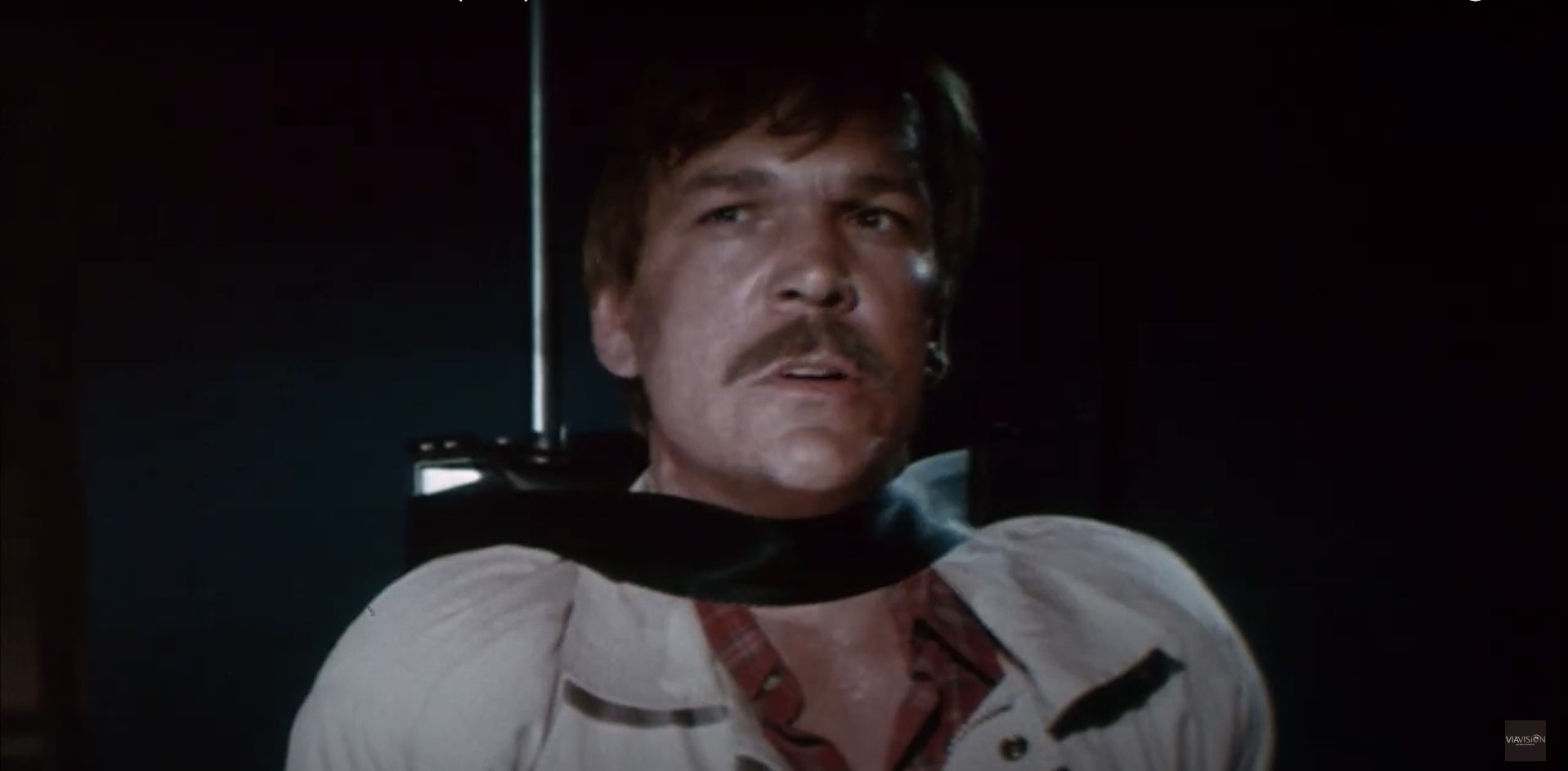
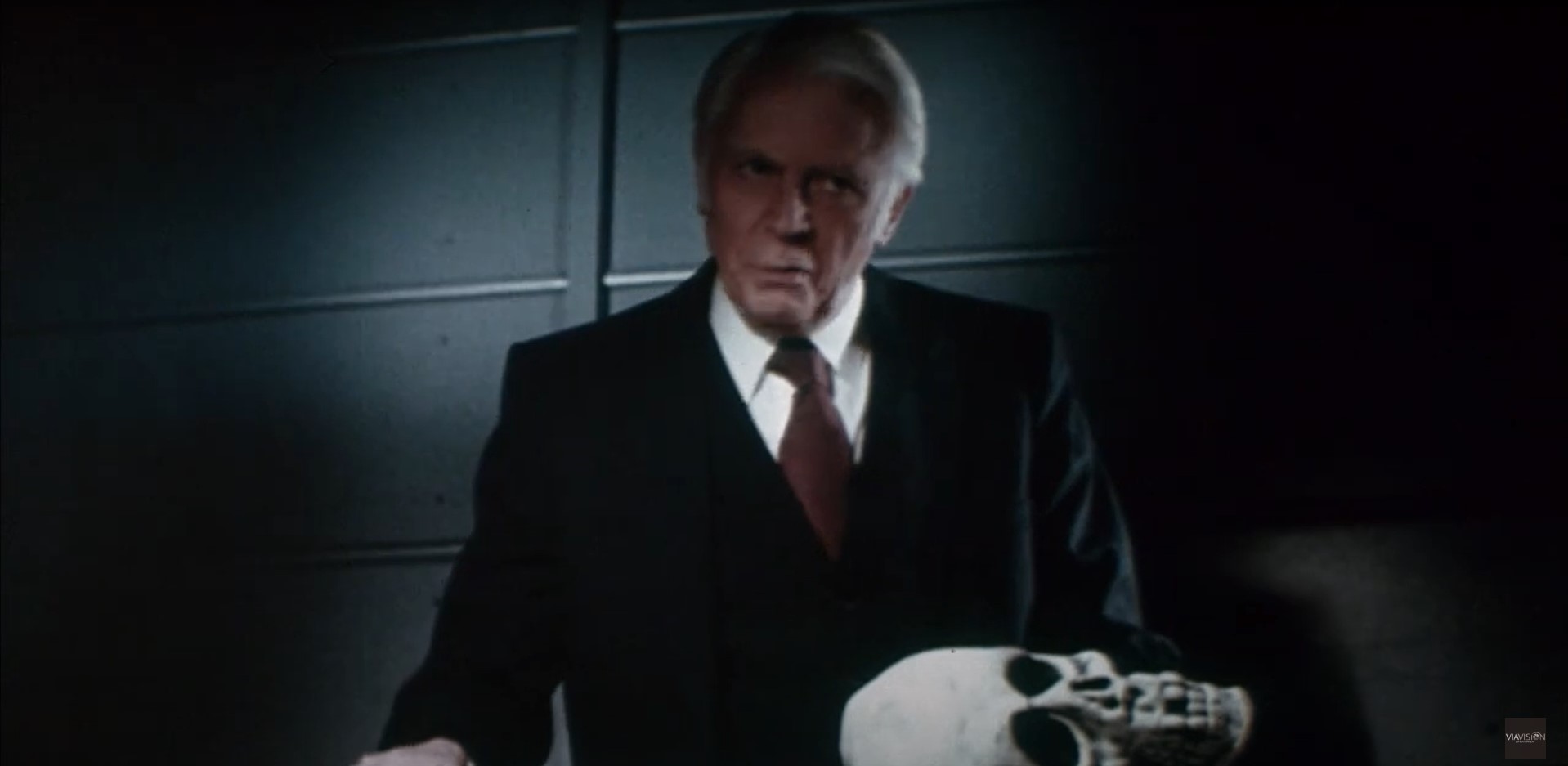
Now, “Season of the Witch” just didn’t star a bunch of nobodies in this offshoot of a newly branded “Halloween” concept.  Before playing the quasi-alcoholic, deadbeat father Dr. Challis, Tom Atkins was already a rising star in the land of John Carpenter films with “The Fog” and “Escape from New York” In 1980 and 1981.  Atkins’s usual confident and charming qualities underneath the rugged good looks and trimmed mustache serve him the better part of man doing his bit part in a not-his-business investigation of a man’s death to please a good-looking woman that happens to be the dead man’s daughter.  That good-looking woman is Ellie Grimbridge, embodied by the Mad Magazine Production’s “Up the Academy’s” Stacey Nelkin, and if you blink, you might miss Atkin’s Dr. Challis being perhaps the worst father ever to his two children and ex-wife.  The subplot is so subtle and overshadowed by the Silver Shamrock Halloween plot that being invested in the crumbling family dynamics doesn’t even hold substantial weight and it truly works to subvert the subconscious and plant a destructive pipe bomb smartly into your moral compass because if you think Dr. Challis is the hero of the story, which in many perspectives he is, he’s also doesn’t keep up with his own children interests or current events, numerously bails on their planned care, runs off and sleeps with a much younger woman he hardly knows, is an active alcoholic, and is quite the handsy philanderer at that when he grabs his much older nurse’s bottom in a playful moment.  No, Dr. Challis is every ounce an antihero hidden in plain sight and in the guise of a potential savior of the children, the world, as he takes on Silver Shamrock and its founder, an Irish toymaker named Conal Cochran with tremendous evil genius and mastermind appeal by Dan O’Herlihy (“The Last Starfighter”).  “Halloween III:  Season of the Witch” rounds out the cast with Ralph Strait, Jadeen Barbor, Al Berry, Michael Currie, Garn Stephens and Essex Smith in key support roles.

Lots of previous opinionated chatter surrounding “Halloween III” collectively concludes to if the filmmakers decided to title the film anything else, maybe just the tagline of “Season of the Witch,” then the film would have won over audiences with a fresh take of science fictional horror and would not have been wrongfully panned by critics and moviegoers.  I call BS on this take.  The original intention was to deliver a new, Halloween-themed horror film year-after-year with John Carpenter attached in some way, shape, or form of bringing novelty terror to our eyeballs and brain.  Instead, public persuasion and studio submissiveness rendered the concept powerless and as a result, and no disrespect to any Michael Myers films that followed, was the departure of John Carpenter and Debra Hill and a string of mediocre and wacky Michael Myer sequels that went deep off the far end.  “Season of Witch” is not a teeny bit at all slasheresque, separating itself far from Michael Myers as much as possible by unconfining itself from location concentration by expanding the threat domestically, if not globally, with a parlor trick plot that involves special, laser-shooting masks that make kids’ heads melt into glop of crickets, snakes, and other creepy-crawly sui generis of the animal kingdom.  While strange in the cause and effect, the practical effects and superimposed visuals work to convey some taught gore and prosthetic knots that can be unraveled, even retrospectively critiquing them by today’s standards.  Wallace masters the film while, at the same time, hitting the ground running on his debut feature that has a look and feel of a graduate from the film of the John Carpenter. 

Halloween season may be months away, but Christmas comes early with Via Vision’s limited-edition Blu-ray set of “Halloween III: Season of the Witch.” The AVC encoded, high-definition 1080p, BD50 presents the film in a widescreen aspect ratio 2.35:1. Much like the Via Vision’s companion release with “Halloween II,” “Season of the Witch” mirrors the same resolution picture quality and stellar package presentation. Dean Cundey’s delivers another smoky noir realism that definably hard-edged and hard-lit that while isn’t the most colorful contrast it does create an abundance of inky shadow to lost in and sink into. A cleaner picture does bring with a reveal of how obsolete some of the composite matte effects but, simultaneously, revives what once was, nostalgia and a more tactile truth in movie magic. Details come through within contour delineation and textural elements. The English language DTS-HD Master Audio 2.0 has dual channel balance and strength with lossless fidelity. Dialogue retains saliency throughout from a rather middle-of-the-road strength ambience albeit a wide range of effects from explosions to laser beam bursts and its constructed, catchy Silver Shamrock jingle, often muted through the television programming, and John Carpenter’s and Alan Howath’s synth collaboration that’s tonally reminiscent of previous “Halloween” films but stands by itself in distinct measure to garner new-sound tension. English subtitles are optionally available. Also, like Via Vision’s “Halloween II” Blu-ray release, a 2024 commentary is recorded and encoded with film critic/historian Lee Gambin and a special appearance by “The Howling” director Joe Dante. Archival commentaries from Tommy Lee Wallace and Tom Atkins are also on the disc with all three commentaries in the setup menu. Special features content includes 2012 Scream Factory-Red Shirt productions with Stand Alone: The Making of Halloween III: Season of the Witch documentary surrounding a Micheal Myers-less picture, it’s critical shockwave, and its ultimate cult following and Horror’s Hallowed Grounds: Revisiting the Original Shooting Locations hosted by Sean Clark visiting a few of the locations used for the film. A still gallery, theatrical trailer, and television spots round out the rest. Of course, my favorite part is the lenticular cover on the limited-edition and numbered cardboard sleeve case of the three, silhouetted little trick-or-treaters with a crone-ish face coming down from above the fire red dusk sky. The slightly thicker Blu-ray Amaray case cover art is stark still image from the movie with another, different image on the reverse side. The black background disc has the skull mask and title across from each other in nice compositional juxtaposition. Next to the Amary case is an envelope with 6 art (picture) cards taken from the film. The Via Vision release is rated M for Mature for moderate violence and moderate coarse language, has a runtime of 109 minutes, and has region B playback only.

Last Rites: Who knew being the outcast looked so damn good. “Halloween III: Season of the Witch” deserved better and received the best on this Australian, limited-edition, lenticular Blu-ray set that’ll leave you whistling the Silver Shamrock jingle and fearing Halloween masks more than ever.

“Halloween III: Season of the Witch” Available on Limited Edition Blu-ray from Via Vision!

Classic Sequel Gets a Lenticularly EVIL! “Halloween II” reviewed! (Via Vision / Limited Edition Blu-ray)

“Halloween II” Limited Edition Blu-ray + 6 Photo Lobby Cards! Order here!

The horrific Halloween night massacre in Haddonfield where a masked escaped mental patient named Michael Myers murdered the close friends of Laurie Strode has not yet ended.  Hurt and in shock after narrowly escape Michael’s relentless pursuit, Laurie is rushed to Haddonfield Memorial Hospital to receive treatment from a skeleton shift while Dr. Loomis, who shot Michael six times, continues his hunt for the hard-to-catch, hard-to-kill killer.  Frantic about the evil inside his former patient, Dr. Loomis will not stop at nothing to track him down with police assistant and try to puzzle together just why Michael had returned to his hometown in the first place.  As Laurie recovers from her injuries and copes with her friends’ deaths, The Shape arrives at the hospital, continuing his emotionless killing spree of hospital staff in order to get to Laurie, and with nowhere to run, Laurie’s only hope is in the hands of a determined Dr. Loomis. 

Picking up where the highly successful independent horror, John Carpenter’s “Halloween,” that changed the slasher genre to what we know it as today, “Halloween II” provides more illumination on The Shape, Laurie, and shuts the door on the significant open-ended and fear-inducing mystery at the finale of Carpenter’s masterpiece.   The 1981 sequel, released three years after the first film, was not helmed by Carpenter whose success skyrocketed post-“Halloween.”  Instead, Carpenter and creative producer Debra Hill agreed to the executive producer title with some creative control in penning the script that would be a what-happens-immediately-next continuation with newcomer Rick Rosenthal sitting in the director’s chair.  The director who would helm later the follow year’s “Bad Boys” with Sean Penn had a goal to retain the same Carpenter stylistic choices to make the sequel seemingly seamless.  Alongside Carpenter and Hill in the melting pot of producers, the more narratively opinionated Moustapha Akkad and Dino De Laurentiis served as executive producers along with Joseph Wolf (“A Nightmare on Elm Street”) and Irwin Yablans (“Tourist Trap”) in what became a coproduction between Universal Studios and Dino De Laurentiis’s production company.

“Halloween” converted the then unknown Jamie Lee Curtis into a couple of things.  She instantly became a household name that at the same time also made Laurie Strode a household icon.  Curtis also became what was a relatively new coined term at the time of a scream queen, propelling her career in the horror genre with “Halloween” subsequent films such as “The Fog,” “Prom Night,” “Terror Train” and, of course, the more recent titular television series “Scream Queens” and the contemporary “Halloween” sequels.  What also emerged post Lee’s performance is the actress was eager for the role and effortless to work with making the 23-year-old daughter of Janet Leigh and Tony Curtis a treat to work with, malleable toward her role, and enthusiastic about returning as Laurie Strode for the sequel.  Curtis falls right back into the role as if filming didn’t stop rolling with Strode in a confounding state of shock and injury from her the relatively short scuffle with Michael Myers until Dr. Loomis intervenes with six gunshots into The Shape at the key and climatic moment, saving Strode from being strangled.  The difference in the sequel is Curtis’s instilled knowledge for her frightened character.  It’s that kind of touch that doesn’t hesitate to react to a force of evil.  Returning as Dr. Loomis, and again as if he never stopped performing as the paranoid and fervent good psychiatric doctor, is the iconic and late Donald Pleasence tracking down his former patient with trench coat sagacity, an understanding that no one else shares except for maybe Myers’ ultimate prey, Laurie Strode.  A new cast of relegated kill fodder magnifies part two’s grislier death count with Lance Guest (“Jaws: The Revenge”), Pamela Susan Shoop (“The One Man Jury”), Leo Rossi (“Maniac Cop 2”), Tawny Moyer (“Looker”), Ana Alicia (“Romero”), Gloria Gifford (“Virgin Paradise’), Hunter Von Leer (“Trancers III”), Cliff Emmich (“Hellhole”), Ford Rainey (“The Cellar”), and Dick Warlock putting on the mask as The Shape with Charles Cyphers and Nancy Stephens returning in their respective roles as Sheriff Brackett and Marion Chambers.

What new can be said about “Halloween II” that hasn’t been already said?  Dichotomously, “Halloween” and its sequel share a single narrative that emanates the same stylistic tone; however, both films couldn’t be more different in their surface level and underlying intentions and that gnaws raggedly on the connective tissue that binds them.  Carpenter’s original embraces the mystery enshrouding Michael Myers motivations with a merciless, yet nearly bloodless, killing spree of horny hopped-up teenagers who wiggle themselves out of responsibility for a little trick-or-treat fun under the sheets or for just being alone in their house.  Myers unneeded and unheeded explanation formed The Shape as evil personified, an incarnate force compelled to return home where the light switch was flipped to an expressionless compassion for human life.  Rosenthal’s part two subverted the unknown by providing Michael reason and that reason being Laurie Strode, anyone else who gets in his way, could foil his plans, or are just in the vicinity of the hunt are eliminated with extreme prejudice, and that leads into the ramped-up gore with large pools of blood and other gratuitous displays of damage to unsuspecting soon-to-be stiffs.  Despite the different strokes, the sequel is not bad by a longshot.  In fact, “Halloween II” is just an extension spiraling in intensity and terror, a product of its time when everyone and their brother had directed gore-ladened slashers during the steep beginnings of the slasher renaissance. 

Though a many number of “Halloween II” video media exists between the current formats, the collaboration of Via Vision and Lionsgate release from Australia is beyond reproach for any kind of transfer print woes, lackluster bonus features, and drab packaging.  The limited edition and numbered 2-Dsic Blu-ray set is a physical media thing of beauty with an AVC encoded, full high-definition 1080p, BD50 on both discs.  Disc one houses the theatrical cut of film, presented in a widescreen 2.35:1 aspect ratio, from pristine print, likely the original negative licensed through Universal Pictures for this very release, with the Via Vision caveat of every effort has been made to produce the highest quality on the back cover.  Not a single reason comes to mind on that statement being false as the Dean Cundey’s cinematography retains an undiluted facsimile of the original “Halloween,” represented here with phenomenally suitable contrast that can presumably hide Micheal Myers in every shadow and create the apprehension in every darkly lit scene with minimal key lighting in various, sometimes neon, shades of red, yellow, and white.  The 35mm film grain has a pleasant consistency of a low-to-medium low visual viscosity that never reaches levels of blotting out picture quality, presenting no issues with zoomed in images or any other touchup enhancements to note for that matter.  Perceptible details sanction The Shape’s tactile and weathered look of a rough night in Haddonfield.  Colorfully warranted scenes, such as the Nurse Alves on a gurney in the middle of a pool of her blood, are robust to display the carnage whereas other, more minimalistic approaches detail just enough for the imagination to take over.  Disc two contains the standard-definition, upscaled to 1080p, television cut of the film, presented in a made-for-TV 1.33:1 aspect ratio, that omits some of the gorier moments, suitable for broadcast viewers.  Audio options include two lossless English language selections with a DTS-HD Master Audio 5.1 and a DTS-HD Master Audio 2.0.  The audio codec distributes punchier ambiences of Myers’s rhythmic breathing through the mask, the jarring alert of a hospital room buzzer, and the impactful moments of Myers slamming his fist-loaded weapon into the skull, back, and….a pillow with the cringe-worthy associated crunch and thud.  No impediments on the dialogue track that’s free of crackling, hissing, and popping and is consistently prominent and mixed well within more chaotic, milieu-mania scenes, such as with the finale with hissing air tanks and scalpel swoops.  Optional English subtitles are available.  Special features are consolidated to the theatrical cut disc only with Shout Factory’s inaugurated 2012 documentaries – The Nightmare Isn’t Over:  The Making of Halloween II and Horror’s Hallowed Grounds:  The Locations of Halloween II – featuring cast and crew interviews with director Dean Cundey, Tommy Lee Wallace, Dick warlock, Leo Rossi, and more as well as visiting locations in a modern time with host Sean Clark, and two commentaries featuring director Rick Rosenthal and Leo Rossi in one and stunt man/The Shape Dick Warlock in the other.  There’s a brand new 2024 commentary with author Dustin McNeill, co-author of Taking Shape:  Developing Halloween from Script to Scream.  The encoded features round out with the alternate ending with more explanation on the fate of a certain left ambiguous character, deleted scenes, a theatrical trailer, TV and radio spots, and a still gallery.  What makes the Via Vision a limited, numbered set is the neat package and physical goodies inside.  The rigid lenticular cardboard sleeve of the skull pumpkin has eyes that follow you at every angle.  Inside is a slightly thicker Blu-ray Amaray casing with reversible cover art displaying notable stills from the feature.  The extra disc, disc 1 likely, is in a clear push-lock, page-turner disc holder.  Six photo lobby cards featuring stills from the movie come alongside the Blu-ray.  Via Vision’s release has a region B playback encoding, a runtime of 93 minutes on both cuts, and rated R.

Last Rites: Michael Myers has been slashing away in the cinema for nearly half a century and “Halloween II” has been a staple entry that, to this day, is a memorable fan-favorite in the grand scheme of most of the franchise’s sequels. Via Vision’s limited edition, lenticular Blu-ray packaging just sweetens the deal with a crystal clear and top-tier quality release worthy in any physical media collection.

“Halloween II” Limited Edition Blu-ray + 6 Photo Lobby Cards! Order here!

EVIL Has Now Been Digitized. “August Underground’s Penance” reviewed! (Unearthed Films / Blu-ray)

“August Underground’s Penance” on Blu-ray/DVD Combo Set. Purchase Here!

Armed with a digital camcorder and a dark desire to kidnap and brutally torture, rape, and murder random people, deranged serial killers Peter Mountain and his girlfriend Crusty are now a gruesome twosome after the demise of Crusty’s brother Maggot.  The couple’s documentarized carnage continues forward near Pittsburgh where fooling around in metal clubs and on the isolated outskirts of city is balanced out with a healthy dose of basement snuff as body after body after body begins to strain their warped relationship.  What unveils is a descent of their paired destruction as Peter’s rage and undying fascination with female flesh, and internal organs, gaslights Crusty’s simmering and unhinged toxicity.  During the stretch of the Christmas holiday season, the gift of gory packages will be unwrapped and sexualized cookies will be enjoyed before the festive filleting of body parts and December dismemberments trail off into a tale of grim totality. 

Fred Vogel’s third and final film to shut the book on the story around the atrocious Peter Mountain and his extreme exploitation and degrading of people is back on limited-edition physical media for snuff salivating audiences as “August Underground’s Penance.”  Nothing short of gratuitous ultraviolence, the final chapter of “August Underground” marks another successful viscerally visual installment in a clearly digitized effort, elevating the graphic nature with ooey-gooey detail in a vividly discernible image resolution.  A reuniting four years later between Fred Vogel and his cowriter/costar Cristie Whiles after their collaboration on “August Underground’s Mordum,” the second sequel provides a level of continuity, a very low level at that, not seen between the 2001 series starter and “Mordum.”  Under Vogel’s Toe Tag Pictures banner, the company behind the trilogy, the shock realism filmmaker co-produces the film with wife, Shelby Lyn, and Cristie “Crusty” Whiles and special effects artist Jerami Cruise servce as associate producers. 

Aforementioned, Peter Vogel and Cristie Whiles lace up yet again for the Peter Mountain and Crusty show of sadism.  Vogel returns as the mania screaming and overall brute Peter Mountain, a juggernauting maverick amongst murderers with no moral principles, a cynical constitution, and a weak-ish stomach that can’t handle his own gutting of bodies as Mountain, like in the first two features, wretches and coughs and nearly loses his lunch in most graphically intense scenes of spilled blood and guts and other appalling perversities.  Whiles’s Crusty is a carbon copy counterpart, a demented love interest under a loveless veneer, but the Crusty character certainly has evolved between “Mordum” and “Penance” as the coquettish amoralities at the beginning devolve shown in an unconventional narrative way with rough-hewn rough cuts that avoid structuring time and guiding in segues.  It also doesn’t help that the two often have screaming matches or are yelling at their lifeless victims to get a better understanding of melting down mutual relationship based on common callousness and, probably, rough sex, just the way they individually like it.  This is how Peter Vogel circumvents a “Mordum” repeat; not that “Mordum” was terrible as it did convey a Mountain, Crusty, and Crusty’s on the suicidal brink brother Maggot breaking down whatever threadbare bond that kept them for killing each other, but “Mordum” departs with uncertainties surrounding the characters in that memorably haunting final sequence.  “Penance” then takes the two remaining nihilists out in the backyard to basically shoots them, figuratively speaking, to put them out of their misery in an artistic way, as if to say, “that’s it.  I’m done.”  Like previous “August Underground” films, killers are centrically focused with not a lot of repeat characters popping in and out (because they’re all being snuffed out by the killers)  but those played victims round with Selby Lyn Vogel, Jeremi Cruise, Anthony Matthews, Rob Steinbruegge, Ed Laughlin, Matt Rizzutto, Autumn Smith, and Trevor Collins.

While Vogel and Whiles psychopathic performances will make your skin crawl, the real star of “Penance” spurts onto the floor, oozes from the entrails, and has a nasty crunch sound when being sawed into.  I’m speaking of none other than Jerami Cruise’s nauseating blood, guts, and all the colorful viscera in between practical effects that extinguish any kind of comfortability you might have had going into the scene.  Animal intestines are once again used to for seamless builds.  The lines between what’s real and what’s not has no definition, is smoothed over well into the folds, or is vaguely blurry at worst that when the cutting, gouging, severing, perforating, slicing, or whatever other harmfully human puncturing wound words come into the scene, your mind is your greatest enemy unable to tell the differences in the gruesomeness acts all of which are accentuated by Vogel’s dry heaves.  While the story itself begins to shutdown “August Underground’s” pseudo snuff run, the third entry is as much as a regurgitation of the previous two installments peppered with noticeable yet minor differences that less often than more separate themselves from each other.  One of the biggest, advantageous differences in “Penance” is the move away from the fuzzy standard definition analog tape and into the digital world with a widescreen ratio camcorder that details more of the ghastly dissections and without any modifications to the camera, a cleaner sense of raw realism is better conveyed. 

I remember a time, not too long ago, when the “August Underground” films were nothing more than rumor, urban legends of the physical media world, lost archetypes of extreme horror seemingly nonexistent to the everyday joe, like me, and only those who are close to Vogel and his Toe Tag family or willing to fork over large amount of money for a long out of print and rate copy were the lucky ones to ever experience the trilogy. Yet, now, we’re living in the golden age of physical media, paradoxically smackdab at the height of new age and ever-growing streaming platforms, and Unearthed Films has released all three films onto a 2-disc Blu-ray and DVD limited collector’s set. The Blu-ray is an AVC encoded, 1080p high-definition, 2K scan on a BD50 while the DVD is a MPEG2 encoded, dual-layered, DVD9. Obviously, switch from tape to digital video makes is a tremendous step for image processing and clarity as “Penance” tops the trilogy with a better pixel resolution, a wider angle (1.78:1 aspect ratio), and much less quality degradation than analog. All the nasty bits and pieces are visual described in great realistic detail in what is an ungraded showing of a full-on display not for the weak of stomach. The raw image, even with all it segued pauses in between scenes, punctuates practicality over the conceptual nihilistic serial killer construct. Unearthed Films preserves that through the looking glass, unfiltered video with more than sufficient capacity. The English language uncompressed PCM 2.0 stereo mirrors the same caliber with a home video disharmony of an onboard camera mic that manages well to create distance where needed also while capturing every innate surrounding sound element, such as the whooshing of passing cars, Mountain’s echoed screams in a confined basement, or the overburdening decibels of daunting death metal. There’s a steady amount of low-level interference too that doesn’t hurt the variable levels of dialogue depending on where the principals are and what they’re doing. Between the Blu-ray and DVD, the hi-def format has more capacity for bonus features with most of the new bonus material on the Blu-ray. What’s on both formats are a new audio commentary by special effects artist Jerami Cruise, producer Shelby Lyn Vogel, director Fred Vogel, and Ultra Violent Magazine editor Art Ettinger, a second commentary with Vogel and editor Logan Tallman, a third commentary with the Toe Tag Team, and a fourth commentary with just Fred Vogel. Also included of both formats are a behind-the-scenes documentary Disemboweled and the feature’s very own commentary track, deleted and extended scenes, music video Poppa Pill – “The Murderer is Back,” music video Rue – “The Locust,” original trailer, and new extended photo gallery and teaser outtakes. Exclusively to the Blu-ray is a conversational interview with editor Logan Tallman, going through the nuts and bolts of the most disturbing scene with Peter Vogel, superfan Rob Steinbruegge’s experience and bit role in “Penance,” a new Zoë Rose Smith, creator of “Zobo with a Shotgun” and editor-in-chief of Ghouls Magazine, interview with Peter Vogel, a second new interview with Peter Vogel Voyage to Perdition with Severed Cinema’s Chris Mayo, a discussion roundtable with Peter Vogel, wife Shelby, Logan Tallman, and Ryan Logsdon moderated by Dave Parker, and Unearthed Films’ Stephen Biro’s new interview with Peter Vogel to wrap it up. The physical presence of the release clearly states its homicidal intentions with the thin cardboard O-slipover of Peter Mountain caressing power of his bound and bloodied victim. The clear Blu-ray Amary case displays new, religious art spoofed cover illustration by San Diego artist Paul Naylor; the religious art also continues on the reverse side of the cover with a marred icon of the Virgin Mary being engulfed by the darkness. With the DVD punch-locked at the right and Blu-ray at the left, there’s really no room for an insert to be crammed in but the silver lining there is the pseudo data-cast captures of notable scenes that are the disc pressed art. Unearthed Films’ release is region A locked (region for the DVD is not listed but assumed to be region 1), is not rated, and has a runtime of 81 minutes.

Last Rites: While ever so slightly different from the previous films, “Penance” is more of the same snuff but in its truest, purest form legally allowed on video. Unearthed Films are match made in a human abattoir, like the tacky peanut butter and bloodred jelly. Their collaborated, limited collector’s set release of “August Underground Penance” is nothing short of phenomenal and, if you’re lucky and quick enough, grab all three before they disappear back into obscurity.

“August Underground’s Penance” on Blu-ray/DVD Combo Set. Purchase Here!

Travel to Mexico, EVIL Said. Cure my Cancer, EVIL Said. Let the Game Begin, I Said. “Saw X” reviewed! (Lionsgate / Blu-ray)

Become A Part of the Game in “Saw X” on 4k/Bluray/DVD

Having a finished a trial by fire game of rebirthing the morally bankrupt that has coined him notoriety as the Jigsaw Killer, a terminal ill John Kramer ceaselessly searches a cure in order to continue his work.  Meeting a fellow cancer therapy group member outside of session provides hope when John learns a radical new and unauthorized surgery and serum cocktail that is seemingly a miracle cure for cancer.  His desperation led inquiry lands him in Mexico where he meets a team of specialists prepping his next day surgery and just when post-surgery John Kramer believes he’s beaten cancer, Kramer realizes he’s been a victim of fraud that’s exploits the most vulnerable and desperate ill-fated people.  Now, a new game begins to test the con artists on how far they will go to live. 

Six years has passed since the last “Saw” sequel was released with the Chris Rock helmed tangent spinoff “Spiral” and 13 years has passed since the last time John Kramer was a part of the game in “Saw 3D.”  2023 marked the return of to the basics with no divergent story from the Book of Saw or fleeting three-dimensional gimmicks to feign tangible blood and body parts in the tenth feature length film of the franchise known as “Saw X.”  The original story-lined sequel also reengages director of “Saw VI” and “Saw 3D” Kevin Greutert to pick up where he left off with a prequel that explores more of Kramer’s more vulnerable side as well as explore the time in between “Saw” and “Saw II” and it’s now unveiled characters who were then shrouded from view, working side-by-side with John Kramer, many years ago.  The writing duo of Peter Goldfinger and Josh Stolberg return from to the franchise after “Jigsaw” and “Spiral” to pen the script for the Twisted Pictures and Liongsgate Production with franchise decision making team of Mark Burg and Oren Koules producing.

So what has Tobin Bell, the face and persona creator behind John Kramer, been up to since 2017’s “Jigsaw?”  Well, let’s just say the now 81-year-old actor has starred in a string of under-the-radar, non-theatrical films that can’t seem to break him out of his bread-and-buttered pigeonhole as a man testing people’s will to overcome by severe measure.  The past year’s dysfunctional family rollercoaster “Sleep No More,” Darren Lynn Bousman’s creepy Saudi Arabian horror “The Cello,” and even a stint of various roles through “The Flash” television series over the years in between have barely moved the needle amongst audiences despite the projects critical and public acclaim.  While it’s a shame Bell receives little recognition for other projects, seeing him return to the role that made him a household name amongst horror fans is a sign of relief knowing Tobin Bell can still draw in a crowd, stepping almost seemingly effortless into John Kramer’s shoes of controversial convictions and never losing a step to bring a cunning and complex antihero back to the big screen with more blood on this hands, literally.  Kramer is not the only familiar to return as Amanda Young comes into the fray prior to her coming out in – ***Spoiler Alert***- “Saw II.”  Shawnee Smith reprises the role donning an unflattering pixie cut that’s even shorter than her “Saw II” hairdo, which keeps true to the timeline, but what plagues both Bell and Smith for a prequel is father time that rears his ugly head on both actors who are not getting any younger to play supposedly younger versions of their characters from which they last portrayed them.  This applies especially to Shawnee Smith who resembles very little of herself from her last appearance in a “Saw” film.  Yet, this doesn’t stop both Bell and Smith to re-embrace their roles and add more layers to their already nuanced identities as John and Amanda ensnares new game players South of the border in Gabriela (Renata Vaca), Valentina (Paulette Hernandez, “My Demons Never Swore Solitude”), Mateo (Octavio Hinojosa, “Come Play With Me”), and Cecilia Pederson (Synnøve Macody Lund, “Haunted”). ”Saw X” co-stars Steven Brand (“Mayhem”), Michael Beach (“Deep Blue Sea 2”), Costas Mandylor, Joshua Okamoto, and Jorge Briseño.

What most will come to realize about “Saw X’s” series placement in time is the foreshadowed knowledge of when and where John Kramer and Amanda Young meet their demise. What can the writers and producers add to a prequel that will enthrall and cause apprehension knowing that the two biggest players in “Saw’s” franchise ultimately live at the end of this intermittent story that mainly surrounds Kramer’s desperation for a cancer cure? To enthrall is simple by adding new bad apples into new escapable blood-drawing, death-dealing traps inside a humanizing John Kramer footnote outside the core city games that intertwine, interweave, and intersect from the very first Saw to the very last Saw in 3D. To surface apprehension for our foretold survivors would take some creative effort. In comes Jorge Briseño playing an adolescent Mexican boy innocent in all of this die-cathlon caught in the wrong place at the wrong time. While the boy, Carlos, adds an X-factor to the dilemma, the fate unknown is relatively short-lived as the boy only becomes a noteworthy shake up of emotional twists between the game’s masterminds near the very tail end, leaving only the wills to struggle painfully as they face themselves in forced contrition. The games Kramer quickly rigs up after the disbelief of being scammed are as industrial medieval and terrifyingly tense as any other “Saw” but unlike the other installments where Jigsaw has planned and engineered meticulously each game, these new set of trap trials are quickly welded and mechanically put together in a blink of an eye, or at least it seems, with no real show for the time put into the turnaround from fraud to fear and that lack of attention can seriously dull “Saw’s” already serrated credibility. 

Saw X” arrives onto a 2-disc and digital combo set from Lionsgate home video.  The Blu-ray is an AVC encoded, high-definition 1080p, BD50 and the DVD is MPEG2 encoded, DVD9 and both formats present the film in a 1.85:1 widescreen.  Through the lens of franchise newcomer Nick Matthews, there’s a sense that the “Spoonful of Sugar” director of photography tries to reproduce some of the style of the first six of David A. Armstrong’s steely industrial color palette but emulating more of his own personal choices to match the out-of-the-city harsh blues and greys for more warmer tones, like mustard yellow, but those progressive hues establish in the second half after really teetering on a natural lens and a harsh saturating tints, such as when John Kramer enters the surgical cube and is bathed in a navy blue hue that eliminates details entirely but only for that tinted moment.  For the rest of the picture, details are grisly good with lots of medium-to-extreme closeups to detail out exposed anatomy of what makes “Saw” rotate so well.  Charlie Clouser returns to score the tenth film on an English Dolby Atmos mix with Dolby Digital TrueHD 7.1 and 5.1 Spanish and French options available.  A really potent and powerful recreation of fidelity scores well for Clouser who recaptures the original crescendo of the final twist while keeping an industrial discordance floating behind the storyline with rising volume during trap countdowns that never interferences with the range of sounds or depth between each of the character sand the traps and the characters.  Dialogue is clean as a whistle and balances perfectly on that serrated slack line of a chaotic countdown to one’s own demise.  English descriptive audio and English SDH are available with regular English, Spanish, and French subtitles also included.  Special features include an audio commentary by director Kevin Greutert, cinematographer Nick Matthews, and production designer Anthony Stabley, a Reawakening documentary that discusses how the prequel was actually “Saw 9” but was shelved for the Chris Rock produced spin-off and how the sequel evolves since it’s rejuvenation years later, there’s a drawing inspiration look into bringing the series to Mexico and all its unique culture and mythos, makeup department trap tests, deleted scenes surrounding more depth between Kramer and Amanda, and the theatrical trailer. On the outside features, a slightly embossed titled and eye-sucking trap victim grace the rigid cardboard O-slipcover, keeping true to most of the “Saw” theme traps in home video posters and home video art, with the traditional Amaray cover art sporting the same design without the embossing. Along with the digital code insert, the two discs are housed separated on each side of the case, both pressed with the same Aztecan-inspired circular saw. The Lionsgate release is locked on region A North American playback with a runtime of 118-minutes and is rated R for sequences of grisly bloody violence and torture, language, and some drug use. ”Saw X” breaks many of its own traits like set not in a city and doesn’t have an incorporated investigation parallel but, in the same breath, feels very much like a back to basics, not only in proximity to the original “Saw” story and with the return of familiar faces and characters, but also in John Kramer’s preadolescence in figuring out and shaping himself to what he would become as the notorious Jigsaw Killer. 

Become A Part of the Game in “Saw X” on 4k/Bluray/DVD

Your Mother Sucks EVIL in Hell! “The Exorcist: Believer” reviewed! (Universal Studios / 4K-Blu-ray)

Let the Power of 4K Compel You!  “The Exorcist Believer” from Universal Home Video!

Thirteen years after having to make the tough life-and-death choice between his wife and unborn child, Victor Fielding strives to protect his daughter now teenage daughter Angela, even if that means being a little overprotective.  When Angela persuades her father for an afterschool study date with a friend, Angela’s seizes his moment of letting down his guard with real intentions to sneak into the woods with a different friend, Katherine.  Eager to connect with the late mother she never knew, Angela evokes a simple rite to call upon her mother’s spirit.  Three days later, Angela and Katherine are found in a barn, with no memory of days passed, and returned to their worried parents only to deteriorate with violent behavior, self-abuse, and an altered appearance that can’t be explained by science.  Desperate, Victor is turned toward Chris MacNeil, author of similar experiences that happened to her daughter Regan 50-years ago, to help exorcise an entity that has taken residence in the girls. 

William Friedkin’s “The Exorcist” has been labeled one of if not the scariest movies of all time, according to sources like Rotten Tomatoes, Rolling Stone Magazine, and countless other outlets who run a top-rated lists.  Usually in pensile at the top seed spot, “The Exorcist” has become a terrifying beloved and timeless horror classic amongst genre crossing fans who hide in horror behind a blanket as priests do battle in good versus evil while others may revel in and gawk at the profane possession of a young girl turned into a head-spinning, vomit spewing demon host.  No matter which category fans find themselves in, there’s one singular, common impression, “The Exorcist” could never be dethroned as the scariest movie of all time, even if direct sequel “The Exorcist:  Believer,” helmed by the latest “Halloween” trilogy director David Gordon Green, and marks the return of Ellen Burstyn as Chris MacNeil, contemporarily challenges the 1973 demonic suspenser.  The sequel would be doomed in an instant of it’s trailer, and know what?  It was for the fans had immediately forsaken it, prejudging it without a second thought and a holy exorcism prayer.  Fortunately, prejudging is not in my lexicon database until the credits role.  “The Exorcist:  Believer” is written and executive produced by David Gordon Green, cowritten by “Camp X-Ray” writer-director Peter Sattler, and executive produced Danny McBride (actor of “Pineapple Express” and producer of the latest “Halloween” trilogy), Atilla Salih Yücer, and “M3GAN” producer Mark David Katchur with James G. Robinson and Blum House’s Jason Blum producing.

Much like Linda Blair stepping into Regan’s white gown before becoming vilely sullied by a demon, “Believer” hosts two up-and-coming actresses fresh for being Hell’s marionettes in Lidya Jewett and Olivia O’Neill.  Jewett, with more acting chops experience having had roles in kid friendly and feel good stories of “Wonder” and “Nightbooks,” plays daughter Angela to “Murder on the Orient Express’s” Leslie Odom Jr.’s widowed father Victor, a photographer who had to make a difficult decision after a massive Earthquake on their babymoon trip to ancestral Haiti cost wife Sorenne (Tracey Graves, “Sebastian”) her life but not their child.  The father-daughter combination becomes center story as a daughter trying to understand and know the woman who bore her despite living in reason to her death and a guilt-ridden father serving his existence by helicopter protection of his miracle child.  Angela and Victor’s story becomes intertwined between the past and the upcoming events, shedding light on circumstance that hinges on the subtle cracks of their relationship.  Meanwhile, the whole second possessed, Katherine, is essentially collateral damage.  Played as her debut role, Olivia O’Neill awfully resembles Linda Blair, recreating a Regan anti-transfiguration that has two purposes into the tale – 1) being a second difficult choice for Victor Fielding and 2) a bridging support to connect to Friedkin’s film in it’s 50-year gap alongside the more prominent connection in Ellen Burstyn returning as Regan’s mother Chris MacNeil.  MacNeil’s return gives “Believer” a boost in legitimacy and the potential to put die hard “The Exorcist” fans’ butts back into theatrical seats for the sequel, but the then now 91-year-old actress, who was likely in her late 80s or 90 at the time of principal photography, seemed relatively uninterested.  Now whether that was age related weariness or not is undeterminable, I’m sure it was a factor, but there is no pop in the actress’s step as a mother who previously fought the devil for her daughter’s soul and won.  “Believer” rounds the cast with some throwaway characters who come into the picture offering slim worth despite being pivotal to the story’s universal belief theme with performances from Danny McCarthy, Sugarland country singer Jennifer Nettles (“The Amityville Horror” ’05), Norbert Leo Butz (“New World Order”), E.J. Bonilla (“The House That Jack Built”), Okwui Okpokwasili (“Master”), Rapheal Sbarge (“There’s No Such Things as Vampires”), and “Handmaid Tale’s” Ann Dowd as the former nun-turned-nurse neighbor of the Fielding’s. 

Much of “Believer’s” message is to separate the Catholicism answer in order to separate the sequel as a duplicate of the 1973 production where Catholic priests dig in deep to expel the demon from within.  Writers nix the Catholics by making them not only unwilling participants, afraid of the damage that might incur from an exorcism, but also immediately removing the only willing Catholic to go against the Church in order to do the right thing.  Damned if you do, damned if you don’t.  Instead, “Believer” marks an era of new faith or, rather, new faiths with a sundry of religious convictions unifying to bring the girls back beyond Hell’s reach and dominion.  Pastor of a Georgia Baptist church, excommunicated nun, Earth-centric religious beliefs, and skeptics formulate a bond to save loved ones, creating the perfect bedrock for taut tension with colliding beliefs and, yet there’s none of that disagreement as much of the dissent is turned toward from within the individual who challenges their own convictions in what they see, hear, and experience.  For the most part, the farrago works against the grain of dichotomies who are usually at each other’s throats to one up their own beliefs, Gods, or what have you.  The incongruous mix of faiths easily falls into rough-and-ready kumbaya in what assumed scared beyond the point of a reality-smacking wakeup call that announces the confirmation of Heaven and Hell.  Netherworld hellion can very much be felt akin to Regan, though I believe Pazuzu’s possession of Regan was more violent and obscene in comparison to the diluted Lamashtu having been split into two bodies.  Lidya Jewett and Olivia O’Neill rocked the Christopher Nelson (“Fear Street” trilogy) makeup artistry to distinguish and differentiate themselves from each other but still stay in line with the Regan model and like the Pozuzu demon, we don’t get to see or experience much of Lamashtu other than phasing briefly into that plane of existence within the soul to see the winged, horned, and deformed body cast of the demon through the distorted, blurry sight of a viewing glass.  While practical effects shine with the makeup, prosthetics, cable work, and so forth, praise for the entire body of work is containment by the use of poor, poxy visual effects in an attempt to be bigger than its much older predecessor.

For double the demon, you can get 4-times the sharper image with the new Collector’s Edition of “The Exorcist: Believer” on a Universal Studios 4K UltraHD, Blu-ray, and Digital Code set. The 2-disc set presents the feature in a widescreen 1.85:1 aspect ratio. The 4K UHD is stored on an HEVC encoded BD100 with a HD10/Dolby Vision resolution while the Blu-ray comes AVC encoded, BD50 stored with a 1080p resolution. There’s nothing really to fault with the presentation that sets crystalized moods and tones without a hint of compression complications on either format. Through the lens of Michael Simmonds, the tenebrous tone of the new Halloween trilogy, variegated briefly only by surround bursts of the environment elements, is transplanted to “Believer’s” as in equal in less light austerity. UHD pixels offers slightly contouring and detail but not much to make a tremendous different between image presentation, which both really do the job pulling every surface attribute from the possessed girls’ abraded faces and a mounting demon taking shape. Both formats contain an English Dolby Atmos and Digital Plus 7.1 surround with the Blu-ray also sporting a DVS 2.0 stereo mix. Again, not much to express negatively here with a multifaceted and versatile output that creates the tension but lacks the palpable finesses of the original film by adding more score to the production with a sample nod of Mike Oldfield’s iconic tubular bell theme integrated into a less iconic composition by Amman Abbasi and David Wingo. Sound design ushers in a nice ambience and spatial rhythm while also inducing a couple of sudden low-frequency jump scares. Dialogue is clean and clear with the appropriate intensities in due part. Other non-English options include Spanish and French on the UHD and Blu-ray. English, Spanish, and French subtitles are included and optional. Bonus features, in 1080 HD, includes Making a Believer a behind-scenes-look with cast and crew interviews and raw principal photography footage, Ellen and Linda:Reunited sits down briefly with director David Gordon Green, Ellen Burstyn, and Linda Blair on reuniting the actresses after many years for the first time in scene, Stages of Possession goes through the makeup process and the Lydia Jewett and Olivia O’Neill’s impressions on the possessed makeup and prosthetics, The Opening shot in the Dominican Republic to recreate Haiti where the story begins, Editing an Exorcism has editor Timothy Alverson (“Sinister 2”) speak toward editing the chaos and creating scares in a new “Exorcist” installment, Matters of Faith explores theologies via consulting experts to recreate accurate depiction of different beliefs, and feature-length parallel commentary with co-writer/director David Gordon Green, executive producer Ryan Turek, co-writer Peter Sattler, and special makeup FX designer Christopher Nelson. Stylistically, I really like this sleek multi-format package design of the two deeply possessed girls, sideways on a black and silver and monochrome kissed cover as you don’t get too lost in the coloring and focus on just what we’re all here to see, the demonic destruction, right on the rigid O-slipcover with embossed title in the middle. The 4K Amary case holds the same image arrangement back and front compared to the slipcover. Inside, each format resides on its own side of case real estate with the Blu-ray pressed with simplistic CD-like art while the UDH goes with the same front cover image. In the insert slip is a digital code for your downloading pleasure. With a near 2-hour runtime at one hour and 51-minutes, the release doesn’t list region playback, but I would suspect region one and is rated R for some violent content, disturbing images, language, and sexual references. With the exception of a few moderately eye-twitching jump scares, “The Exorcist: Believer” has been exorcised of the breath-holding terror that exalted William Friedkin’s film. However, what David Gordon Green produces is a different breed of religious cultivating inclusiveness inclined to be more so about the social commentary than being about the rite of excruciating deliverance. 

Let the Power of 4K Compel You!  “The Exorcist Believer” from Universal Home Video!