

After receiving a distressing call warranting a trip to Mexico, alcoholic and drug dealer Warran Novak attempts to sell half cooked crystal meth to junkies that ends in two fatalities and two armed drug pushers in hot pursuit of Warren after he steals their cash for the road trip to the border. Before entering Mexico after a tireless drive and unaware of where to exactly go next once crossed the border, the fallen military soldier rents a motel room in the rundown town of Bedford Flats, a once thriving community lush with value and tourism derived from it’s once popular hunting tradition of bison and other wildlife. Now that the wildlife has dried up, Bedford Flats has landed in a stage of an ugly depression and to keep on the tradition of hunting, the foundation of which Bedford Flats has been built, the towns people gather to conduct a merciless hunting expedition of drifters and unsavory folk. Warren and his two pursuers, plus a homeless Mexican and the town drunk, are forced to participate in the hunt as prey with only their able bodies to carry themselves across the salt flats and seek shelter in the rocky landscape just beyond, but Warren decides to fight back against the towns’ most capable hunters in a twisted game of cat-and-mouse.

Western horror has always been a fascinating subgenre with a bleak and barren landscape denizened with colorful, hellbent characters committing one of three sole acts: taking, surviving, or dying. Selective Collective and Waterstone Entertainment’s “Happy Hunting” steps ever so lightly beyond the border into the realm of modern western horror involving a deranged game of hunting and killing humans for sport backdropped mostly in Bombay Beach, California and written and directed by first time feature film filmmakers Joe Dietsch and Louie Gibson, who is one of the sons of Hollywood superstar, and who knows all about western dystopias, Mel Gibson (“Mad Max”). Louie Gibson might have learned a thing or two from his “Apocalypto” directing old man by delivering the brash ferocity and the stoned-heart, icy personas into the story and into the shot twisting an already vulnerable situation into sheer, bite-the-bullet terror.

Martin Dingle Wall delivers every shaky alcoholic tremor as drifter Warren Novak. Wall’s soft eyes, but rugged appeal justifies the 46-year-old actor as an unlikely, likable hero even though Warren will do just about anything for money and for the drink. Wall is able to tap into Warren’s subtle high intelligence and exploit it for the screen against a variety of aberrant game hunters by actors including “Devil Girls'” C.J. Baker, Michael Tipps, Kenneth Billings, and Liesel Handson of “Planet of the Vampire Women.” Dietsch and Gibson pick out one hunter to be the most versatile bad guy in Ken Lally. Lally, whose voice has captured legendary video game characters such as Mortal Kombat’s Smoke, Goro, and Shinnok, brings that malevolent tone to the silver screen as Bedford Flats all around nice guy, Steve Patterson. Of course, “all around nice guy” is an oxymoron in “Happy Hunting” because there are no such thing as nice guys in Bedford Flats, not even the crooked Sheriff Burnside (“Sasquatch Hunters'” Gary Sturm) who acts as the maestro for Bedford Flat’s great annual hunt.
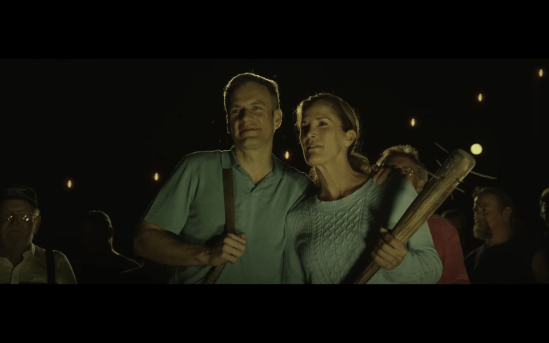
What’s interesting about the film is that there is no love interest which is a rarity; instead, Warren is motivated by a mysterious phone call regarding a possible Mexican love child in the need of help. The mysterious plea over the phone line provides Warren with a purpose in this purposeless life, but that purpose is amplified by the very abrupt detour by a deranged town seeking to rid, what they consider to be, lowlife scum. Another side to Warren’s plight is that the whole sadistic game, the entire inhuman hunt, could be a figment of his withdrawal. Being a drifter and a person who doesn’t amount to much, Warren self worth goes in and out of various stages of withdrawal throughout the duration, before and during life stakes, with dropped dialogue and visible hints about symptoms of going cold turkey. Lets not forget to mention that the directors make an elucidation of Warren’s withdrawals with visions of a dead man, one in which Warren kills prior to his trek to the border, conversing with him, providing him undue advice during the predicament. Then, there’s the very end scene which shoots the likelihood of Warren’s version realism and sanity right out the window and begs the question if everything Warren went through, every struggle, and every death experienced was all inside his head.

“Happy Hunting” has been released on DVD courtesy of Umbrella Entertainment. The region 4 DVD is presented in a widescreen 2.35:1 aspect ratio that’s utterly gorgeous and stupefyingly frightening in the long and wide shots of Bombay Beach’s desert wasteland. Heavy in dusty yellow and rich in lifeless landscape, the color palette is understandably one-sided, but the merit is in the detail of every dry land crack and every minuscule dust bite being disseminated about with every action. The English 5.1 Dolby audio track has balance, range, and fidelity. Dialogue’s clear and prominent, even with Martin Dingle Wall’s slightly raspy and sluggish deliveries. A blight on the DVD is the bonus material and that goes without saying because a single extra doesn’t grace the package, constructing an anemic, film-only DVD presentation of Joe Diestsch and Louie Gibson’s first feature run. However, “Happy Hunting” re-illuminates Western horror stark with a dire need for survival during trying times and Joe Diestch and Louie Gibson have fashioned a subtle analogy of what life would be like in a supposed Trump America where the U.S.-Mexico border wall would be infact 10 feet high, “deplorable” people are axed from today’s American society, and the small rural, once thriving, communities are stuck in the past with outdated viewpoints and assumptions of how maintain existence in a world changing around them. In the end, “Happy Hunting” goes beyond Western horror into being an insightful dystopia of exploitive western survival horror.
Category Archives: Slashers / Survival
Take A Stroll Through Evil’s Scream Park! “Talon Falls” review!
While embarking through Kentucky on a camping road trip, four friends make a pit stop at a Kentuckian scream park called Talon Falls, suggested to them by squirrelly and unusual gas station attendant. As they work their way through a labyrinth of gore and torture, the realization that the local attraction harnesses realistic inflictions of pain hits them squarely in the jaw as they become unwilling participants instilled into the hyper-horrific entertainment that’s recorded onto a snuff tape. In order to not be strapped to a jerry-rigged electrocution chair or be the guinea pig for a sadistic mad doctor with a niche for painful exploratory surgery, they must fight the entire company of Talon Falls’ scream park in order to not be a piece of recorded snuff.
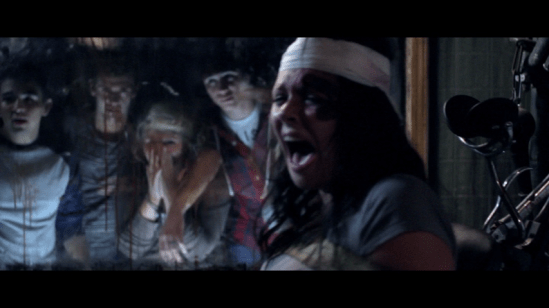
“Talon Falls” is the 2017 torture and survival horror named after and shot on location at the real life scream park located in Melber, Kentucky and written, directed, and co-produced by indie filmmaker Joshua Shreve. Shreve’s story tip-toes around being a familiar narrative that might not seem so different from other works ranging from Nimród Antal “Vacancy” to maybe even Rob Zombie’s murder-world fun-n-games “31,” but if you take a step back and take a long, hard look at “Talon Falls'” gore scenes that don’t just secretly record the assortment of death, but exhibits the ghastly torture for the entire public eye to see. If you’ve been to a Halloween Horror theme park, you know very well the adrenaline pumps, the hearts thump, and the fear tops into a knot in your throat and “Talon Falls” simply adds that what if factor. What if it’s not fake? What if these people being dismembered and vilely tortured are ultimately put to death right before our eyes, like some Captain Spaulding backwoods horror show with a side bucket of his famous fried chicken?

In any case, the four friends, made up of two couples, don’t have one ounce of star power behind their name, but each one of them spearhead the project with enough enthusiasm and gusto that there’s no short fall of trepidation even if the level of fear stalls slightly on overkill at times. Brad Bell, Jordyn Rudolph, Sean Rudolph, and Morgan Wiggins don’t necessary have the on-screen chemistry as friends or couples, even if Sean and Jordyn Rudolph are an offscreen husband and wife, but the palpitating consternation dynamic solidly sells when all hell breaks loose inside the walls of Talon Falls. Between Jordyn Rudolph and Morgan Wiggins, either actress could be a vocal stretching scream queen, especially Wiggins who reaches ranges that could pierce eardrums.

When the spectrum-filled makeup palettes and every single destructive deconstruction prop is laid out at your finger tips, the special effects comes as second nature and to introduce a high level of design detail to the already elaborate set, inside a really monstrous horror park, then “Talon Falls” without a doubt will walk, talk, and look like a top-notch horror film. However, not all aspects are perfect with the Shreve film, produced by Kent Hammond and Todd Ferren, as the story progression with the characters becomes minimized that result in haphazard camaraderie between the friends who are more turnstile acquaintances than lustful lovers or deep-rooted long time friends. Also, characters make hot-headed or stupid-minded questionable decisions when in hot pursuit of an axe-wielding, piggy-masked killer and the scribing of the irresponsible decisions when safely stowed away when being pursued, roots out Shreve’s inexperience in a time of a building block career.

MVDVisual and Lost Empire present “Talon Falls,” the Terror Films and Flashback Pictures production, onto DVD home entertainment in a widescreen 2.35:1 that atheistically gritty in the detail. Even the darker scenes, with well established and positioned shadowing, bring substantial substance to liven up and level up this independent feature from Kentucky. The 5.1 surround sound track has stable range through and through with a caustic toned score to convey terror and a clear and prominent dialogue track that doesn’t muddle through a surplus of ambient tracks. Bonus material include a behind-the-scenes featurette that runs through a randomizer of footage markers and some bloopers. A theatrical trailer is also included. Josh Shreve can only get better from his Sophomore film as a director whose hot off his solid genre entry in “Talon Falls” with the aid of the scream park’s unlimited horror resources and though popping with toe-nail pulling moments, the extremely short runtime of 75 minutes suggests a stiffened premise with undercooked character development that diminish that high production value and bloody effects.


In Search for Evil, Evil is Always Close! “Lycan” review!
Set in Talbot County Georgia of 1986, six university students are assigned a write a 25-page report on a moment in history. The subject for the report was ultimately based off of local lore, a haunting story from a century old newspaper clipping that told legend of Emily Burt who was the prime suspect of being the notorious wild animal that tore through the local sheep herds. Ill-prepared and flippant for the report’s hot Georgia weathered journey into the woods, the students ride horseback through a labyrinth of trails on the Burt property and come under attack by a lurking bloodthirsty presence hellbent on separating them and tearing them to pieces. Desperation sets in when tensions flare, sides are taken, and perceptions are misled in a time of grave crisis, leaving the schooled students being taught a lesson in isolation and confusion in a classroom of ill-fated situations.
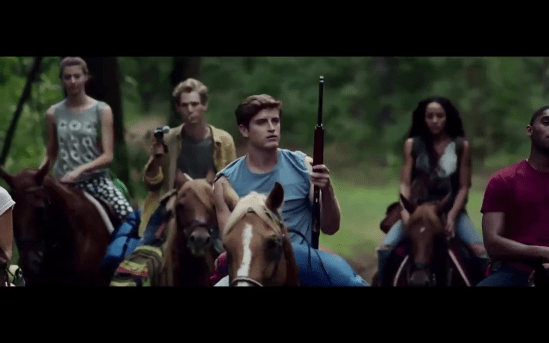
“Lycan” is the 2017 released survival horror thriller from co-writer and director Bev Land, making his inaugural feature film debut. Michael Mordler co-wrote the script that’s been described as “Hitchockian” and resembles a backdoor twist much to the similitude of M. Night Shayamalan films. Like Shaymalan’s earlier work, “Lycan’s” horror is extremely effective without having to bare witness an antagonistic beast and by leaving the girth of the killer’s destructive path to the imagination, our minds begin to formulate diegesis theories and build hypotheticals to the killer’s characteristics. The use of wolf-o-vision is a past time tool that flashes all it’s teeth to bring life to an unseen threat, but Land and Mordler pen a breadcrumb trail of hints that compound to a head in the midst of the chaos, unveiling the true threat in a full frontal way that’s a silver screen rarity, but nearly takes the fun out of the mystery.

Starring in “Lycan” is Bev Land’s wife, Dania Ramirez (“Quarantine”), in the lead role of the mysterious Isabella Cruz. Ramirez’s has to accomplish multiple feats with Isabella Cruz whose a bit of an awkward loner who then has to reintegrate herself into the social realm of a group of variously distinguished characters. Parker Croft portrays as pot smoking, wise-cracking, pervert named Kenny McKenzie who documents the trip with an 8mm camera, Rebekah Graf is the stuck up and prissy Blair Gordon who only accompanies the group on this trip because of Jake Lockett’s baseball jock Blake Simpson. Craig Tate, unfortunately, falls into the stereotypical ‘token black guy’ Irving Robinson while Blair’s sorority pledge, Kalia Prescott’s Chrissy Miller, opts to the gal to get laid. Aside from Ramirez, the rest of the cast of characters fall into formulaic limbo, stuck in their own devices, and never really elevate into more than just surface level characters. Two of the more eyebrow raising actors that never saw the character development light of day were that of Gail O’Grady (“Chromeskull: Laid to Rest 2”) and Vanessa Angel (television’s “Weird Science”). O’Grady’s Ms. Fields warranted more background into how the ranch owner came to have Isabella Cruz enter her life and much more unopened mysteries about their dynamic.

While “Lycan” offers an up-to-snuff survival horror, the story’s bookends fall short of fully completing the story. The opening puts big man Presley Melson’s lonely farm boy stuffing lady of the night Anna, played by Alina Puscau (“Dracuala: The Dark Prince”), full of his pork roll. As the wolf-o-vision circles the lovemaking barn setting, Melson and Puscau trot out with only their skivvies to check out the outside racket and become, uh, victims of the antagonist? Not really sure because the scene starts from afar and the wolf-o-vision glides right up to Melson’s face without much of a peep from either Puscau or Melson. The ending is just as enigmatic with a brief present day scene (the story is set in Georgia 1986) of an unknown little girl picking up a razor sharp object from the leaf strewn ground and then there’s a cut to black to roll credits. Before this useless segment, the pinnacle moment of the third act springs too many leaks to plug. Combined with the stagnant and underdeveloped characters, “Lycan” is an unkempt story left wide open becoming a victim by it’s own scripted structure.
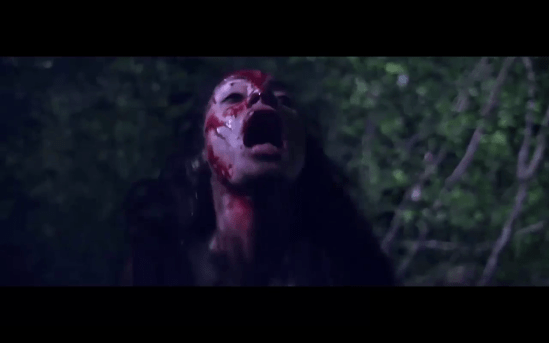
MVD Visual presents onto a region one, unrated DVD, the 1 Bullet in the Gun production, “Lycan.” Presented in anamorphic widescreen 1.85:1, MVD’s DVD image is beyond spectacular with immense details in every scene, even in the production illuminated night scenes. Digital noise is completely absent and the coloring is naturally vibrant. The Dolby Digital 5.1 Surround Sound has an effective ambient track with clarity and range in the wolf howls and the cracks and snaps of outdoor living. The original soundtrack by Devine Adams and score by Jason Pelsey revel in distortion free perceptible measures. An audio downside would be the dialogue track that suffers from unfortunate mic placement, leaving major story affected parts of the dialogue left muddled and indiscernible. Bonus material includes interviews with director and co-writer Bev Land, along with co-writer Michael Mordler, the cast including with Dania Ramirez, Rebekah Graf and Vanessa Angel, and Crystal Hunt (Executive Producer) and Steven C. Pitts (2nd Unit Director). A panel discussion with the Lycan producers and the original theatrical trailer round out of the extras. Land and Mordler’s “Lycan” disperses moments of original horror with snap-witty dialogue, but as a whole, the story trends toward a paint-by-the-numbers route without breaking the mold as a low tier “Hitchockian” thriller.

Buy “Lycan” on DVD at Amazon!

Sion Sono’s Brings the Evil Back to the Japanese School Girls! “Tag” review!
Life is seemingly pleasant and happy-go-lucky when two fully loaded coach buses of high school girls travel down a forestry passageway toward a lakeside hotel until sudden violence and gore turns Mitsuko’s classmates into minced meat. Overcome with shock and fear, Mitsuko escapes the terror only to find herself in another horrifying scenario. The vicious cycle continues as Mitsuko is thrusted into one chaotic, blood-splattering world after another, quickly losing her identity with each threshold crossing, and with no clue of what’s going on and how she got into this limbo of hell, Mitsuko must stay alive and unearth the truth behind the surreality of her being.

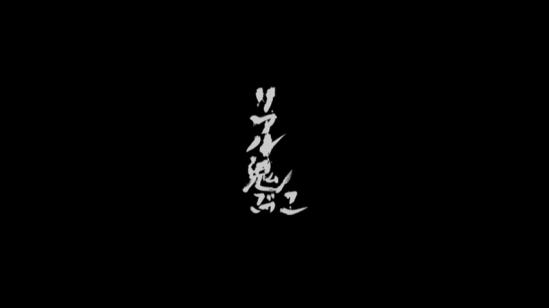
Nothing is more terrifying than being in a heart-pounding situation and not having one single clue why bodies are being sliced in half like corks popping violent out of champagne bottles, why childhood mentors break their professional oath and slaughter students with a ferocity of a mini-gun, or why being chased by a tuxedo-decked out groom with a gnarly pig head is in tow ready to drop kick anything, or anybody, standing in the way. Writer-director Sion Sono manifests that very chaos entrenched world in the 2015 action-horror “Tag” and, once again, the “Suicide Girls” director puts Japanese school girls back into the harrowed ways of gore and death over salted with an existential surrealism based off a novel by Yûsuke Yamada entitled Riaru Onigokko aka Real Game of Tag. Yamada’s story is followed more closely to that of Issei Shibata’s 2008 “The Chasing World” that involves a Government influence and parallel universes, “Tag” serves more as an abstract remake that Sono masters a soft touch of irrational poetry bathed in gore and strung with chaos rectified with a tremendously talented cast of young actresses.

Actresses such as the Vienna born Reina Triendl. Being Japanese doppelgänger to Mary Elizabeth Windstead with soft round eyes and the picturesque of youthfulness, Triendl transcends tranquility and innocence when portraying a content Mitsuko in the midst of many of her classmates boorishly bearing the typical, low-level adolescent anarchy. When Mitsuko’s thrusted into phantasmagorical mayhem, Triendl steps right there with her discombobulated character in an undried eye panicky frenzy whose character then spawns into two other fleshy vessels, a pair of recognizable names of J-Pop fandom in Mariko Shinoda and Erina Mano, when Mitsuko enters another zone in her fictional world. Though different in all aspects of their appearance and in name – Misuko, Kieko, and Izumi, the three women share the same existence and fathom a unbroken entity of character that hacks her way through the brutal truth. The remaining cast, Yuki Sakurai, Aki Hiraoka, and Ami Tomite, sport the high school miniskirt wardrobe and garnish a bubbly-violent J-horror persona very unique to the genre.

“Tag” is a plethora of metaphors and undertones likely to be over-the-head of most audiences, but if paying close enough attention and understanding the subtle rhythmic pattern of Sono’s direction, the gore and the fantastic venues are all part of an intrinsic, underlining message of feminism and sex inequality that’s built inside a “man”-made, video game structure thirty years into the future. Sono points out, in the most graphic and absurd method, how men treat women like objects or playthings. There’s also a message regarding predestination with white pillow feathers being the metaphor for fate and being spontaneous is the key to break that predestined logic and all of this corresponds to how Misuko, the main character, needs to break the mold, to choose her path, and to remember her past in order to free all the women trapped inside a male-driven purgatory of pain, punishment, and pleasure. Supporting Sono’s ability to disclose an epic survival-fantasy horror in such a way comes from multiple production companies, one of them being NBCUniversal Entertainment, providing the cash flow that allows Sono to flesh out the gore, to acquire massive amount of extras, and to scout out and obtain various locations.

Eureka Entertainment presents a dual format, Blu-ray-DVD combo, of “Tag” for the first time in the United Kingdom. However, the disc provided was a feature-only screener and a critique on the video, audio, and bonus material will not be conducted, but in itself, “Tag” is a full throttle encephalon teaser warranting a need for no supplementary content aside from conventional curiosity into what makes Sono’s “Tag” tick. When all pistons are firing, from the visual effects of Satoshi Akabane to “The Walking Dead” familiar score, “Tag” is no child’s game with a heavily symbolic, touch-and-go and bloodied pro-feministic essence that would serve as an abrupt and acute wakeup call to all the Harvey Weinsteins in the world that women are not to be simply playthings and that their gender destiny lies solely with them despite the misconstrued male manipulation.
Evil Walks Among Us in “The Zodiac Killer” review!

Jerry is your average, everyday Californian man. He’s tall, handsome, and can hold down a good government job as a United States postman, but Jerry has another side to him. A dark side that’s hidden beneath a façade of apparent normalcy. His random acts of senseless violence and murder have Jerry a great advantage over the rest of society, especially the police, as he commits homicidal tendencies right under their noses without an inkling of a motive and stretching out his urges to kill days, weeks, and months a part under the guise of the notorious Zodiac Killer.

Based on the factual and claimed murders of Northern California’s infamous serial, director Tom Hanson helmed the thriller “The Zodiac Killer” and released his finished project in spring of 1971 when the serial killer was still very active. In a little history tidbit, Hanson had the idea to premiere “The Zodiac Killer” at the Golden Gate Theater in San Francisco in attempt to lure the Zodiac Killer to the screening by way of having patrons writing “what-ifs” as the real Zodiac Killer and then analyzing the handwriting to the letters the real killer submitted to the police and news outlets. Of course, the stunt didn’t work, but did bring about awareness of the prospect that everyday people – neighbors, gym teacher, mailman – could be a deranged, blood thirsty wolf underneath sheep’s clothing. In their first and only writing credits, Manny Cardoza and Ray Cantrell penned the script.

With a minuscule budget and a performance driven script, “The Zodiac Killer” could only speculate on the person behind the deaths and though in today’s filmmaking standards, some points in the dialogue and the action are awfully outdated in it’s rigidity and over exposition, but when getting down to brass tax and looking deep at the root’s message, the effective troubling performance by lead actor Hal Reed, as Jerry the Zodiac, transfixes viewers as the tall, handsome, and baritone-voiced actor bore an eerie on-off switch between pure good and polluted evil. Before knowing Reed’s true self, not every character was black and white as Hanson attempts to a lineup suspects, especially with a truck driver named Grover (Bob Jones) whom had a knack for pretending to be a wealthy businessman on his nights off in hopes to score naive bar tail. Whether flawed by design or by the obsolete nature of filmmaking, the curve ball attempt to throw the viewer for a loop doesn’t stick and for every second, Hal Reed is the titular maniac even if not proclaimed at first sight. Ray Lynch and “Invasion of the Bee Girls'” Tom Pittman round out the cast as the two police officers not hot on the Zodiac’s trail.

For early 1970’s, “The Zodiac Killer” is graphic, verbally and in imagery with an example being Jerry enthusiastically jumping up and down on a car hood while an elderly woman is pinned between the hood and the engine or Grover calling every single female character a “broad” or a “bitch” in the film; “The Zodiac Killer” certainly strikes a chauvinistic chord from a male’s point of view with not only Grover’s attitude toward women, but also portraying women as shrewd, powerless, and as sex objects. Culturally, this attitude toward women might have been accurate for the time period as well as many of the portrayed Zodiac attacks though numerous of the attacks were only claimed by the Zodiac and not actually confirmed. In any case, Hanson’s rendered theories are well thought out and entertaining in spite of their tragic background.

The American Film Genre Archive, Something Weird Video, and MVDVisual present “The Zodiac Killer” on a 2-disc DVD/Blu-ray set exhibited in the film’s original aspect ratio of 1.33:1, keeping the black bars on the right and left of the screen to preserve the format. The new digital transfer was scanned from the only existing 35mm theatrical print through to 4K resolution on a Lasergraphic film scanner and the image has a real clean look to it despite some minor print damage with horizontal scratches and burn flares. The print also suffers from a color degradation, voiding the coloring and replacing it was a washed look. The DTS-HD Master Audio 2.0 mono track has a mighty bite that’s surprisingly clean and clear despite the obvious low fidelity. Special features include an interview with director Tom Hason and actor Manny Nedwick, a commentary track with Tom Hanson, Manny Nedwick and the AFGA crew, and a tabloid-horror trailers from the AGFA archive. Also, the release has a sleek illustration with reversible cover and an inner booklet complete with the film’s tidbits, transfer information, and distribution company credentials. Plus, a bonus movie “Another Son of Sam” (1977) that’s been scanned in 2k from the original 35mm theatrical print. The Zodiac might have ceased a wrath of carnage and made a brazen exodus from California before being caught before his or her identity became known, but the killer’s notorious legacy lives on with this stellar release of Tom Hanson’s “The Zodiac Killer” and serves as a chilling reminder that vicious killers walk among us.

Buy “The Zodiac Killer” on Amazon Today!

 It's Bloggin Evil!