A Major Book Deal Isn’t Worth This EVIL. “Writer’s Block” reviewed! (Gravitas Ventures / Digital Screener)

Skip Larson has become a one hit wonder in the literary field.  The aftermath of his initial work, a best seller success, has never again been duplicated as Larson’s wretched and dispassionate heart and mind hit an unscalable writer’s block that can’t afford to pay the ever mounting bills.  When a stranger approaches him at one of his dismal book signings, an opportunity presents itself to meet serial best-selling novelist, Chester Everett McGraw, at his private ranch where Larson has to decide whether to sign McGraw’s rigorously partisan and severe contract for wealth, prestige, and a chance to co-author McGraw’s next big novel after being cut off from the outside world for six months or walk away from everything without penalty and return to his mundane life struggle.  Larson agrees to McGraw’s extreme terms and begins working chapter after chapter on McGraw’s next literary masterpiece, but as the days turn to weeks and each draft is ridiculed and critically trashed, an irritated Larson itches to leave but the snake-tongued McGraw, his brutish bodyguard, and even the beautiful maid, who has suddenly taken a liken to him, keep tortuously motivating him back to novel drawing board whether he likes it or not. 

Putting pen to paperwork with a looming deadline on the horizon is already stressfully hair pulling, but when the cold steel of a gun muzzle is pressed against your sweaty temple, the pressure grows tenfold to get the creative juices flowing before the contract is up in Jeff Kerr and Ray Spivey’s co-written and directed 2019 exploitation thriller, “Writer’s Block.”  The independent feature is the second collaborated project between Kerr and Spivey following their 2016 documentary, “The Last of the Moonlight Towers,” about the obsolete street illumination system, the last of its kind, of electric light towers in Austin, Texas.  Continuing the trend of holding their filmmaking shop in their home state but not exploring non-fictional antiquated monolithic engineering marvels, the directing duo concentrate their Texas-based shot film toward being a cinematic turn-pager saturated with perfidious suspicion and crackpot characters that keep the road toward a clandestine endgame alluring and mysterious, unfolding in a similar regard to that of its general context of an exceedingly multifarious murder mystery novel.  Kerr and Spivey’s Sharp Town Productions serve as the attached production company.

Kerr and Spivey shop locally when choosing their downtrodden literary hero, Skip Larson, plagued with a wretched past and the desirable callings of the bottle.  The filmmakers settle on “Fear the Walking Dead’s” Craig Nigh who can sell smartass with the best of them and be as tough as nails when push comes to shove.  On paper, Larson’s a forlorn gambler risking his chance at life by accepting a seemingly glamorous, one-in-a-life, game-changing deal by a fellow writer he admires, but with a number of fishy, tall-tail signs of deception and corruption by McGraw and his goon, Digger, Larson can come off naïve, especially when he sticks around still after his free will fractures under physical violence and threatened to be shot.  The oppressive McGraw obviously has an ace up his sleeve in his proposed partnership with Larson and, never once, feels sincere in building Larson’s library with his dreams.  I found Mike Gassaway’s performance as McGraw to be one-note.  “The Next Kill” Gassaway tussles with sly intentions of a manipulative best-seller author, devolving into an unintentional weaker ranch obstacle that dwindles down McGraw to be more of a façade behind the true game being played against an unwary Larson.  Though McGraw as the brains, the cowboy hat wearing former oil rig worker, Digger, provided much of the muscle whose anxious temperament kept him from seeing the final stages of McGraw’s malevolent game.  Chris Warner finally lands a principle role that isn’t a short lived bit part that’s labeled Flatbed Driver or Prison Guard.  Instead, Digger Haskell seems like a teddy bear good old boy that Warner can inherently step into without having to get lost in a new persona and Warner fleshes out Digger’s hasty disdain in how the slow progression keeps him for enjoying what he loves to do best – being a hired goon – but the character rarely established a definitive connection of servitude toward McGraw other than the notable writer taking the oil rig injured man under his wing, causing some unresolved character development.  Cataline is perhaps the most underwhelming character as the immigrant house cleaner who falls in love with Skip Larson.  Played by Jeannie Carter-Cruz (“Sasquatch!  Curse of the Tree Guardian”), Catalina bashfully wills herself around the house, not really cleaning much in the audiences scope of her profession, and becomes discreetly entangled with the struggle writer for unknown reasons she herself couldn’t explain, leaving her, and Carter-Cruz, exposed in an under-seasoned character course. Katusha Robert, Avery Lewis, and Natasha Buffington rounds out of the cast.

“Writer’s Block” shoves an easily relatable theme of success never comes easy right into audiences’ laps as Skip Larson’s humiliation exhibits as much through literary famed Chester McGraw’s browbeating tactics ranging from verbal assaults to unwanted sexual persuasions. Not by McGraw. That would be gross. Yet, in essence, the actual frustration condition of writer’s block for an author in any facet is akin to the sensation of conquering in what seems the impossible. Once Skip Larson tips the odds into his favor, the woebegone writer’s line graph to success skyrockets off the chart after a bit of tough love motivation stemmed by McGraw and his boot camp, side-hustling ranch. However, “Writer’s Block” suffers from the titular misgiving in the form of pacing irregularities, a loitering third act, and a paper thin Skip Larson backstory that only dabbles into his post-family tragedy alcoholic stupors and his peradventure subversive dealings with his gangster cousin. The gangster cousin tangent is by far the most offshoot subplot underlined only in flashbacks and at the finale that introduces a character that has seemingly never been a functional part of the story but is pivotal in Skip Larson’s corner. The crux of the story’s issues is that it tries to incorporate too much whereas the basic building blocks, the pure premise, would have sufficed and have been modestly more successful if stuck to instead of throwing a curve ball of horror into the macabre construction of McGraw’s collective work of best sellers as trophies that becomes synonymous with his obsession for hunting, if not more so conquering, the wild game he annihilates.

When a wordsmith’s mental typewriter stalls and the hands hang still with fingers dangling above the alphanumeric keys, waiting for inspiration to flow through the very fingertips that provide financial stability and creative vigor, use the Gravitas Ventures released “Writer’s Block” as a tool to unstick the tacky words, pry open the oppressive blockade of the expression dam, and let the flood of literature be unbridled. Released earlier this month on November 3rd, “Writer’s Block” is now available on VOD and streaming platforms, such as Amazon Prime Video, Apple TV, Fandango Now, and Google Play as well as all major cable and satellite platforms. The 98 minute film is shot in the capable hands of Alex Walker who stays put mostly in natural lighting, swerving almost unnoticeably at times into various colored lighting (mostly blue or purple) and utilizes the story’s drone to capture effective aerial shots. There were no bonus features included with the screener nor were any bonus scenes during or after the credits. “Writer’s Block” is a tousle survival-thriller careening toward a grisly surprise that requires a little more spick and span shaping for a grittier exploitation.

Own “Writer’s Block” on Prime Video!

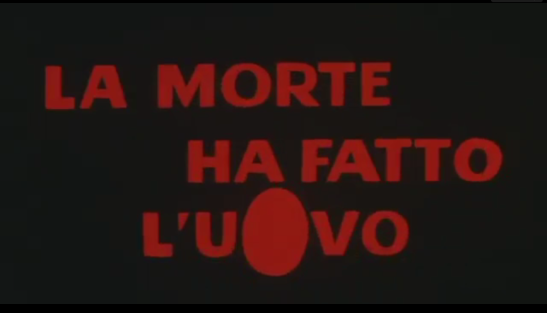
 

EVIL Hatches a Plan Against EVIL! “Death Laid an Egg” reviewed! (Cult Epics / Blu-ray)

The Chicken farm and trading association industry lies on the fringe of near collapse and poultry scientists are hastily working on a solution experimenting with chicken embryos to create more meat for a nosediving commerce, but that doesn’t concern farm owner Marco whose more interested in having an affair with his wife’s young and beautiful cousin, Gabrielle, as well as moonlighting in his perverse side hobby of killing prostitutes at a hotel room.  Marco’s wife, Anna, who runs the farm single handily with the assistance of newly purchased machines, is ignorant of Marco and Gabrielle’s more-than-casual dalliance.  When a genetic modification accident produces the bulbous, meaty parts of live chickens without the heads, necks, and wings, the chicken association sees this changing event as the potential saving grace for chicken farmers everywhere and a financial reconciliation from foreboding ruin, but Marco wants nothing to do with the horrors of livestock manipulations and abominations.  Unable to understand his hesitation, Anna’s frustration is compounded by an anonymous note about Marco’s “affairs” with prostitutes that sends a simmering love triangle into a deadly internal coup.

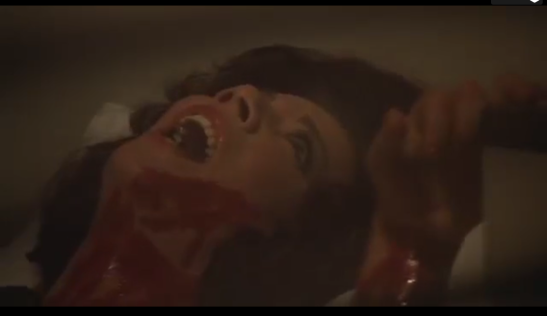
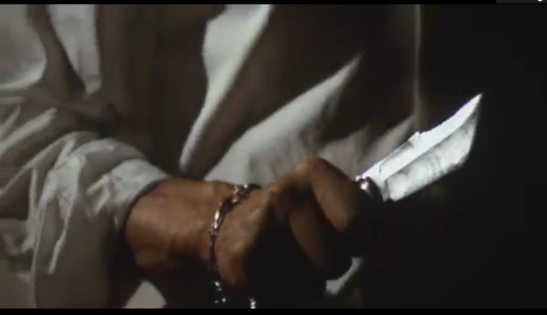
What came first, the Chicken or the Egg?  In Giulio Questi’s inverted giallo thriller, “Death Laid an Egg,” the insoluble question parallels another question, who is deemed more sordid, an unchaste husband with a decadent desire for killing prostitutes or those conniving a plot involving murder to expose his vices and overthrow his wife for total control of their budding chicken farm? The 1968 Italian Giulio Questi and Franco Arcalli (“Tis Pity She’s A Whore”) written collaboration roosts at the edge of being an Italian murder mystery because of the atypical structure not terribly familiar to the genre and it’s fandom. Instead an unknown, gloved hand killer with a switchblade reflected with gleamingly terrified eyes of a barely clothed young woman screaming at the very top of her lungs, “Death Laid an Egg” is an Italian-French coproduction between Summa Cinematografica, Cine Azimut, and Les Films Corona.

At the epicenter of this switcheroo intrigant and strange triangular love affair are Marco, his wife Anna, and Anna’s younger cousin, Gabrielle, and only one of them, one of the three inside and out of the chicken farm, don’t entangle themselves in illicit activity.  French born actor, Jean-Louis Trintignant, stars as the diverging Marco with infatuating love sickness for his wife’s secretarial cousin, Gabrielle.  The “So Sweet… So Perverse” and “Malevil” star emits a pressurizing performance, ready to melt down and volatilely combust, when Marco agitatedly paces between Anna (Gina Lollobrigida of the French versions of “The Hunchback of Notre Dame” of 1956) and Gabrielle, played by a relatively newcomer to the silver screen from Sweden in Ewa Aulin (“I Am What I Am”) to traverse from an old love to a new love despite the possibility of losing his entire livelihood.  The two female principles’ distinct personalities make for a great Trojan horse of shocking betrayal that goes against the grain and against the proverb that blood is thicker than water and Questri exploits with hard unstrung scenes of choppy segues that leave behind granular clues to their intentions in an almost abstract, auteur series of events.  When the love triangle because a quartet and actions become clearer with the clarity in advertisement specialists, Mr. Mondaini’s, underhanding involvement, a role shrouded in apprehensive mystery by Jean Sobieski, the enigma dissipates rapidly into a more tempered narrative of ill-tempered acts.  None of the four actors are cherished with equivalent screen time, orbing around more Marco’s ping-pong, zig-zag unconventional philandering and Gabrielle’s supporting role as Anna’s relative confidant, and this creates a visceral tension in the forefront of a economic crisis in the chicken farm market.

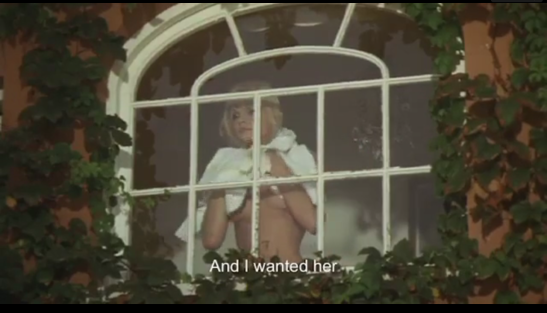
Giulio Questi always seemed to be pulling back the, excuse the pun, yoke to never let “Death Laid an Egg” fully nosedive into a blaze of a gruesome glorified giallo full of sleuth paranoia and scantily-cladded female victims stalked, hunted, and, eventual, murdered, but the Italian film, which saw a fair share of censorship cuts bordering around those aforesaid attributes, had no pretense about being a part of the traditional sense of the genre in the first place.  I wouldn’t even consider Questi’s film a typical example of the giallo’s Poliziotteschi subgenre though may have been more of a byproduct of the time period with the chicken economic crisis being a metaphor for the socio-political unrest, known as Years of Lead, that began in Italy in the 1960s.  The story’s crestfallen poultry association and it’s desperation for a godsend out of the newfangled embryotic manipulation procedures parallel, or perhaps even dominate, the plotline with a subplot coiled around Marco and Anna’s estranged life together in an allegorical fashion; the bastardization of genetically altering embryos is forcing the chickens’ hands to unravel a certain, horrible way and the same can be said for Marco and Anna who succumb to duplicitous external forces manipulating their every move toward an outcome that’ll likely destroy and takeaway not only their nest egg farm but could also cost them their very lives.  “Death Laid an Egg” does present a substantial amount of sexualization where Questi focuses, and sometimes lingers on, the half-naked portions of the actresses bodies.  The established Gina Lollobrigida and the up-and-coming Ewa Aulin, plus a handful of bit role prostitutes, show a fair amount of skin without ever baring the tongue-lapping essentials with Questi, in a stream of elegance, captures their shadowy curvatures and even loiters on the more publicly unpopular parts of women, such as around the abdomen or the shoulders, while obscuring more private areas with on set censoring, perhaps due in part of the Italian censor boards guidelines of the time.  In a feverish attempt to unclog Giulio Questi’s inscrutable character exploits, “Death Laid an Egg” shrouds itself with pygmy themes of obsession between death, lust, and control that tip-toe over a cracking, crackling egg shell in a rouse of debauchery indiscretions.

Releasing on a very special edition Blu-ray release, genre label Cult Epics proudly issues a limited edition, Hi-Def package of “Death Laid an Egg” with two versions of the Giulio Questi avant-garde giallo on a region free BD50, a 105 minute director’s cut and a 91 minute alternate international giallo Plucked version. Both versions of the film went through a 2K HD scan from the original 35mm negative, that’s been preserved quite well, renders a touch of pristine celluloid with hardly a flaw in it’s crisp technicolor perspicuity amongst the natural, stressed grain in a widescreen 1.85:1 aspect ratio presentation. The Italian-English mono 2.0 LPCM casts a lively track across it’s broad audio spectrum with clear, forefront dialogue leading the charge with the purposeful and prosaic ambience and the harshly dissonance of viperous synth-and-string soundtrack from Bruno Maderna in strong supporting roles. Bonus features are aplenty with no only the alternate Plucked version of the film, but also with exclusive content such as a director’s cut commentary with Troy Howart & Nathaniel Tompson, a review by Italian critic Antonio Bruschini, a final interview with Giulio Questi entitled “The Outsider,” the short film by Questi “Doctor Schizo and Mister Phrenic” from 2002, with English and Italian language trailers, a reversible sleeve, and a limited slipcase printed with Fluoro inks! “Death Laid an Egg” dispenses more than just an effectual variation of giallo being also an odious bullet piercing the ramifications of modern technology and played on the blinding perversions of the weak minded that became the seeds that sowed their own ruin.

Own SE of “Death Laid an Egg” on Blu-ray!

This Little EVIL Piggie Went to the Post-Apocalypse Human Meat Market! “Bullets of Justice” (The Horror Collective / Digital Screener)

The years following the third World War, America has been overrun by the Governments very own super soldier weapons project involving splicing the human genome with pig DNA.  The creatures, dubbed Muzzles, have occupied the country 25 years later and have turned the tables on the human species, capturing, breeding, slaughtering, and eating their packaged to serve meat.  When humanity created a toxin to combat the Muzzles, they inadvertently released a gas that sterilized the entire human population and the last of the human survivors have formed a resistance who aim to seek out and destroy The Mother, the continuous Muzzle breeder no man has ever seen, but is supplied large volumes of man meat in order to maintain Muzzle production.  The task to root out the mother’s trough of carnage falls upon Rob, a human bounty hunter working for the resistance, and his mustache sporting Raksha, who never loses a fight.  Together, Rob and Rahska butcher their way through a pigsty to locate and kill The Mother, but not every human shares their hope for mankind. 

“Bullets of Justice” is a hog wild, Bulgarian-made, bulldozing bloodbath of a post-apocalyptic exploitation may-ham from the warped (or genius?) minds of co-writers Timur Turisbekov and Valeri Milev with the latter sitting in the director’s chair.  Milev, who directed the 6th installment, “Last Resort,” of the “Wrong Turn” franchise, collaborates with first time filmmaker Turisbekov and pulled out all the stops in this outrageously funny, insanely gross, and eyebrow raising delicatessen of deprave cold cuts.  Initially considered as a pilot for a television series and later tossed around as a potential short film, “Bullets of Justice” found invigoration and traction as a feature length film from premise’ author Timur Turisbekov that led to a crowdfunding campaign on Indigogo to cover the remaining post-production costs of all the material shot by Turisbekov and his friends.  Zenit TT serves as the production company.

Blasting away sounders of swine, graced with the visual effects washboard abs, and is able to score tail of every single last human woman he comes across in this dog-eat-dog world, even his sister’s, is Timur Turisbekov as humanity’s last hope, Rob Justice – hence, “Bullets of Justice.”  Rob’s a stone-faced and skilled Muzzle gravedigger with a penchant for being one step ahead of everyone else and Turisbekov can act out the part of an untouchable 80’s action hero with relative ease complete with fancy fighting choreography  and a thousand yard stare and though the dubbing track is undesirable, it satirically plays into the black comedic satire of the man versus pig post-war consequence conflict narrative and there’s a score of characters with all sorts of dialect dubbing that doesn’t single out just Turibekov.  Rob’s sister, Raksha, stuns even with a stache on the upper lip of the darker attributes of Doroteya Toleva in what is perhaps her most memorable, if not most bizarre, performance that adds more of an aggressive balance to Rob’s stoic demeanor.  “Bullets of Justice” freely offers up plenty of nudity to go around from male full frontal to female full frontal though neither Turisbekov or Toleva bare them true selves as body doubles and movie making magic fill in the private parts, but there’s plenty of dirty, glistening in sweat, real skin from actresses, such as stuntwoman and actress Yana Marinova (“Lake Placid 2”) and the introduction of Ester Chardaklieva, to fill that authenticity void plus a few heftier and plump extras in the roles of slaughterhouse pig fodder.  What’s most frustrating about these quintessential apocalypse and ostentatious characters is that their development and arcs never, ever come to term of a poorly knitted post-production. I wanted to learn more about the antagonist with “the most beautiful ass,” Rafeal, played by male belly dancer Semir Akadi, I wanted to understand Askar Turisbekov’s General Askar betrayal, and even dive into what drove “Machete’s” Danny Trejo’s Godless dogma as a single parent to young Rob and Raksha in his small bit role. “Bullets of Justice” rounds out with Dumisani Karamanski, Alexander Ralfietta, Neli Andonova, Gregana Arolska, Svetlio Chernev, Dessy Slavova, and Doroteya’s twin sister, Emanuela Toleva, in a small dream role.

Being spurred as a potential television series or a short film, “Bullets of Justice” barely formulates a step-by-step story as the genesis of a surreally articulated full length embattlement with pre-scripted, pre-funded, and pre-shot scenes full of head turning high cost stunts, explosions, and with World War II replica weaponry (50 caliber, MP 40, STEN, etc) of already completed shots for a particular medium in mind, which was unfortunately not a feature. This is where post-production needed to step up to fill in the gaps, to muster visual segues, in order to piece the unsystematic scenes into a single unit of thought, but the second act inevitably goes off the rails as taut tangents snap like over tightened cable cords when Rob and Raksha team up to flush out The Mother and then one of the next scenes has Rob smack dab in the middle of being teleported, his future has developed the mode of travel through time and space, and while the viewer tries to interpret whether this is a dream or a style of the director’s auteur expression, Rob is actually teleporting to, well, we don’t really know where initially. Crucial backstory elements come whirling in to explain Rob trying to go back to the year just after the third world war to unearth where the mother might be hiding, but keeps missing the exact date. How Rob gets back to his own time is not known; Yet, these series of unexplained inconsistencies reap the benefits of such a gory good time that includes midgets firing submachine guns and dropping grenades out of the jetpack of a flying pig-man wielding a minigun on each arm – an entirely insane concept. Is “Bullets of Justice” a well-made, well-rounded film that would make your film professor proud? Probably not. Yet, here’s the kicker, a theory of mine that might explain everything. Rob Justice is actually daydreaming the entire degrading society where he is the lone savior of mankind, never missing a target, bedding all the women, idolizing a villain, and that end shot ties those concepts all together. Again, just a theory but it’s a damn good one.

A highly-recommended blood, sex, and pigs with machine guns exploitative romp and ruckus, “Bullets of Justice” overindulges with vice transfixing visual and imaginative dexterity that can now be experiences on multiple VOD platforms such Amazon Prime, Apple TV/iTunes, Google Play, Xbox, and Vimeo distributed courtesy of The Horror Collective (“Blood Vessel”). Orlin Ruevski’s cinematography is impressively expensive without actually costing an arm and leg with a well stocked cache of wide shots that capture the simulated war-torn world and girth of rural landscapes while simultaneously, through the use of low contrast and darker color tones, harness shots of grime and graveness of the Turisbekov’s pig-utter chaos that ensues. Combine Ruesvki’s expeditiously confident totalitarian style with the campy visual sfx from the Bulgarian based Cinemotion LTD, same visual effects company on “Tremors 5,” a rare and beautiful species of film emerges from the edge of rotoscoping to the go-big-or-go-home ludicrous-speed composites. Since this is a digital release, there were no accompanying bonus materials or scenes. With non-stop melees and a flavor for the tasteless, “Bullets of Justice” rattles along as a pure, uncut dystopian fantasy big on the pig and galore on the gore.


Must Watch “Bullets of Justice” on Amazon Prime!

A Disciple of EVIL! “The Brides of Dracula” reviewed! (Scream Factory / Blu-ray)

Marianne Danielle travels alone on the mucky and fog-riddled roads of Transylvania, traversing from France to be a student-teacher at a prestigious dance school for girls. When her coachmen departs without warning, leaving her stranded at a village inn, the Baroness Meister extends an invitation for Marianne to stay with her an the illustrious manor house, but the sign of compassionate hospitality turns into a near deadly encounter as Marianne discovers the Baroness’ son, the Baron Meister, chained against his will in an isolated room. As Marianne is tricked into removing his shackle, she unwittingly releases a conniving vampire into the surrounding village who prays on young women, but, nearby, Dr. Van Helsing has been summoned the Transylvania countryside by the local priest to hunt down the disciples of Dracula, the most powerful vampire Van Helsing had fought and prevailed. In order for the vampire plague to not spread like a virus, Van Helsing will stop at nothing from slaying the Baron Meister to stop the metastasizing of Dracula’s curse against mankind.

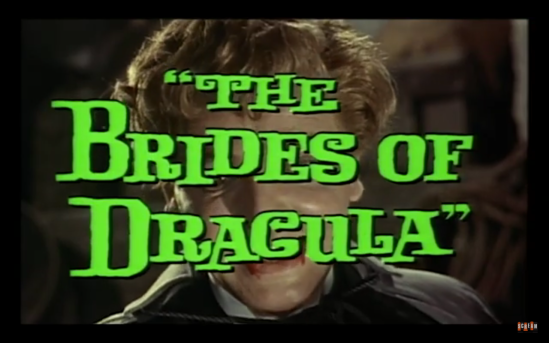
Let’s take a step back into time, 1960 to be exact, when Hammer Horror brought a flair for the dramatic to iconic monsters, lush with not only vibrant color schemes, but also in elaborate production designs that scaled the imagination while evoking fear of Satan’s most prolific profaner, the vampire, in Terence Fisher’s “The Brides of Dracula.” The sequel to “Horror of Dracula,” starring Christopher Lee as the titular character, staked vitality two years after the first film’s success and sought to return Peter Cushing back into the good doctor’s shoes once again to battle evil. Shot on lot at Bray Studios and with the grand house exteriors of the nearby Oak Court, “The Brides of Dracula” had greatly masqueraded the elegance and sophistication of the gothic design, bringing settings to life with monumental attention to detail. Before the shooting draft was ready, the script saw numerous rewrites which caused the narrative to fall into numerous hands and, so, the script is built on an overlapping composition of writers, such as Jimmy Sangster (“Horror of Dracula”), Peter Bryan (“The Plague of the Zombies”), Anthony Hinds (“The Curse of the Werewolf”), and Edward Percy. Hinds financed the film under Hammer Film Productions in association with Universal International.

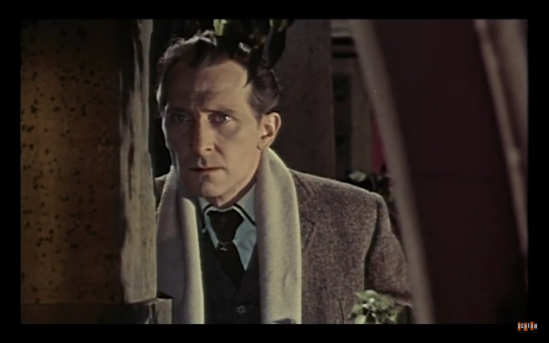
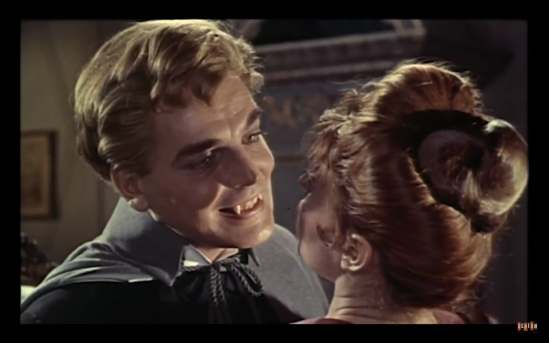
In stark contrast to Christopher Lee’s dark veneer that ennobled Dracula’s arcane and evil presence, David Peel brought a different kind of vampire stemmed off of Lee’s main bole as a disciple of the Prince of Darkness turned because of the Baron Meister’s uninhibited living the life of Riley. With blonde hair and a lighter complexion, Baron Meister became something of a pretty boy vampire that definitely propelled Peel into something of a sex symbol after the film’s initial release. While Peel’s terrific performance goes without wane, Baron Meister sticks out like a sore thumb with the lighter hair color and babyface dermis. The Meister is hunted down by the one and only legendary vampire hunter, Dr. Van Helsing, from Bram Stoker’s novel. Peter Cushing revives his performance from “Horror of Dracula” with a another meticulous and defining act that epitomizes the character’s nature as a knowledgeable and dignified combatant against the dark arts. Cushing versus Lee is the epic King Kong versus Godzilla faceoff that doesn’t leave much room for David Peel in a fight that’s more like King Kong versus King Koopa. The leading role went to French actress Yvonne Monlaur who, at the time, spoke really good English with a thick accent. The “Circus of Horrors'” Monlaur added beauty and innocence being ruthlessly taken advantage of as the hapless Marianne Danielle. With striking red hair and definitely a sex symbol, Monlaur was paraded as one of Hammer Horror’s finest leading ladies to ever grace their terrorizing tenure in genre. “The Brides of Dracula” has a supporting cast like none other with performances from Martita Hunt as the Baroness Meister, Freda Jackson as Baron Meister’s Renfield-like caretaker, Andree Melly as Marianne’s colleague, Gina, Miles Malleson as a greedy blowhard physician, and Mona Washbourne and Fred Johnson as the dance school’s proprietors.

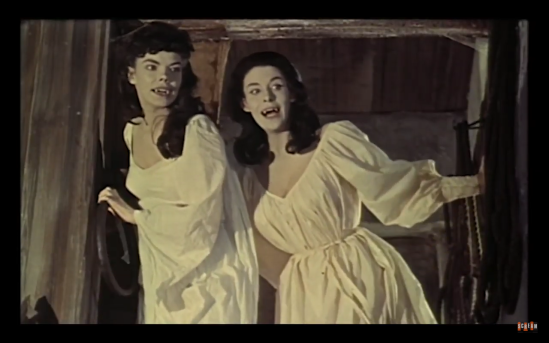
“The Brides of Dracula” has lush, expensive looking production designs from Bernard Robinson that delicately acknowledge a 19th century coach and buggy society and creates a gothic tincture to brood in the bat-flying, eye-catching, blond-haired vampire sinking his canine’s into the untarnished flesh of young women. Yet, Fisher’s follow-up doesn’t add anything to the vampire etymology nor does it tack onto the mythos and, instead, clings barely to a compelling good versus evil narrative closely suited more toward one of the working titles, Disciple of Dracula. “The Brides of Dracula” bewilders as a final title that not once broaches the women stalked by the bloodsucker who seems to attack the random village virginals and, also, barely references Dracula, whom the harem of titular vampires are not at the crook of his pale elbow, but the now 60-year-old film, which I can still remember seeing on television back 30-year-ago, remains as one of the most memorable Hammer productions. Was it because of the enriched looking, old-fashion look? I’d say yes. Was it because of the soap opera designed performances that lavished in melodrama? I’d say yes. Was it because of the undertones of lesbianism, rape, and other taboo-esque themes? I’d say it was all of the above that drove “The Brides of Dracula” in not only being an opening day success but also encapsulating the legacy of Hammer Horror.

“The Brides of Dracula” is the unholy, unceremonious matrimony from hell and has come far from its run on the television with a new high definition Blu-ray collectors edition from Scream Factory, the horror sublabel of Shout Factory! Presented in two formats, a widescreen 1.85:1 and standard 1.66:1, the Blu-ray sustains the deluxe technicolor through the high-res, 1080p, video image that went through a new 2k scan from the interpositive master and absolutely appeals to the visual cortexes with an extensive color palette and very miniscule film imperfections from a super preserved 35mm stock. The English language DTS-HD Master Audio mono track is a resounding success with a grand big band score from debuting composer Malcolm Williams that juxtaposes significantly with the dialogue to only be a support device rather than be a main stage act. With many Scream Factory releases, “The Brides of Dracula” comes with exclusive and previously recorded special features included a new audio commentary with film historian Steve Haberman and Constantine Nasr, a making-of the film that includes a graveyard introduction goes into interviews with the late Yvonne Monlaur, screenwriter Jimmy Sangster, assistant director Hugh Harlow, continuity supervisor Pauline Harlow, art director Don Mingaye, model maker Margaret Robinson, and producer Anthony Hinds, and rounds out with a still gallery and theatrical trailer. The Blu-ray is sheathed in a cardboard slipcover with a cover illustration by Mark Maddox and inside is a reversible front cover. Irrefutably a classic, despite some quirks, “The Brides of Dracula” is vintage vampire stock, a pedigree of it’s time, of hallmarking the classical villain in a different, blonder light.

Own the collector’s edition of “The Brides of Dracula” on Blu-ray!

When EVIL Strikes a Family Hard is When Fission Divides and Conquers. “Nuclear” reviewed! (101 Films / Digital Screener)

Emma witnesses her troubled brother violently beating their mother while dragging her through the woods.  After he leaves, Emma and her injured mother escape to the countryside, driving through the night until coming upon a village house, next to what was once a large power plant that now sits vacant, to squat for a few days.  Emma comes into an encounter with a local boy a little older than herself with a free spirit for illegal extreme sports and taking dangerous risks to new heights.  What was intended to be an isolating refuge has turned into an alluring interest for Emma who admires the boy’s nomadic lifestyle, but while her mother’s physical injuries heal, a lingering trauma begins to emerge and Emma’s violent brother is also hot on their trail seeking them out.

Lately, our reviews have been on a stretch of psychological thrillers by first time feature film directors expressing a compelling narrative in the worst of situations; we’ve tackled the unhealthy family relations while battling acute mental illness with Joe Marcantonio’s “Kindred” and have taken a step back in time into the Cold War era with isolation tension and uncontrollable violent outbursts in the “Darkness in Apartment 45,” directed by Nicole Groton.  Well, we’re going for the hat trick with Catherine Linstrum debuting her written and directed psychological drama, “Nuclear,” that deals with the fallout of an estranged, threadbare family under the looming shadow of a defunct nuclear power plant, upending a whole new meaning for the term nuclear family.  Co-written with longtime collaborator, David-John Newman. “Nuclear” is a radiating co-production funded by the British Film Institute, Fields Park Media, and Ffilm Cymru Wales, and Great Point Media with Stella Nwimo serving as producer and Paul Higgins as executive producer.

Much of the narrative hinges on Emma, “Locke & Key’s” Emilia Jones, as a 14-year daughter at the center of her brother’s terrible misdeed that sparks a flight of escape to the country and then befriends an eccentric boy who pulls her toward a more grounded frame of mind despite his extreme antics.  The boy, charmingly played by “1917’s” George MacKay, is exactly the distraction Emilia needed while sheltering in refuge. MacKay boyish good looks accentuates his character’s overweening attitude that renders a thin layer of mysteriousness about him as the boy,, and when I say boy I mean young man not much older than Emilia, lives out of his van near the power plant and does backflips on a stone bridge. With such a small cast, one would assume the boy would have interactions with Emilia’s mother or brother, but that’s not the case as the film purposefully uses evasive maneuvers intended not to mingle the boy with Emilia’s mother, played by another Resident Evil Jill Valentine actress (see review of “Darkness in Apartment 45”) Sienna Guillory, and brother Oliver Coopersmith (“It’s Alive” remake), who are weaved into different stages of Emilia’s cerebral reactions to events that unfold unexpectedly. Floating through the story, like a supernatural Japanese house wife, is Noriko Sakura who, much like most of the other characters, plays that is unidentified, but Sakura’s wraithlike presence attaches itself to Emilia’s mother as a telltale sign that something isn’t quite right with the mother’s mental state.

“Nuclear,” in regards to the term, can be interpreted and dissected on many levels within the film; two possible, and perhaps the more obvious, espies are a nuclear family (as a pun on the phrase that denotes nuclear fission) that goes through a chain reaction of dependent events after a horrible event and the other would be the blatant power plant sitting idle and empty in the background, a symbol of a ruin that once harnessed power and gave energy to all and an allegory to this young teenager Emilia’s handling of the crime committed against her one and only protector- her mother. “Nuclear” is very much a young girl coming of age film that strikes chords of self-reliance and free choice while also strumming to disconnect from her parents and family, but she must face them first in order to really let go of the past. But does Catherine Lindstrum pull all the elements together? Lindstrum’s brain-teasing drama will ultimately confuse the general masses. Hell, “Nuclear” even confuses me by not sewing the last threads to connect the stitches of hecatomb effects as the principles players somber through an inexplicit tapestry that’s not clear, present, and often feels distant. The end result does evoke a sense of a coming of age story, but how that adolescent scores through tribulation is about opaque as murky water.


“Nuclear” is a twisting cerebral topography tale comprised of seasoned actors and promising young talent from the United Kingdom being distributed courtesy 101 Films, releasing digitally November 9th. Behind the camera is French cinematographer Crystel Fournier with a harsh realism that delivers a natural, but bleak tone full of shadows and gray contrast. Fournier captures and differentiates Emma’s solitude and isolation, especially when she, inadvertently, searches for answers through the motif of faith centric crosses and messages that surround her in and out of the cottage. Stephen McKeon’s score compliments Fournier’s atmo-melancholic with beautiful synth piano and Celtic akin violin compositions. There were no bonus features included with this digital screener and there were no bonus scenes during or after the credits. Don’t expect a mushroom cloud of edge-of-your-seat drama and psychological torment, “Nuclear” is the breadth of anticipation of the Cold War, never knowing what, when, and where to expect the bomb to drop in Catherine Linstrum’s debuting quandary.