

Alex and Jane just graduated college with an uncertain future ahead of them. In financial debt with no aid from their family because of their lesbian relationship, Alex can’t shake the uncomfortable sensation that her life spirals down an unknown path. Jane’s optimism stems from the upcoming reboot woodland retreat with friends. Booze, drugs, and a whole lot of sex is planned to escape reality’s harsh unforgiving grip. There’s only one problem. A creature lurks in the woods, sniffing out the moment of vaginal penetration, and ripping to shreds the naked, sweaty bodies that were entangled in raunchy passion. A jock, a cheerleader, a geek, a stoner, and a pair of lesbians are the familiar horror film tropes fighting for their very lives in a grisly battle against a ghastly man-beast.
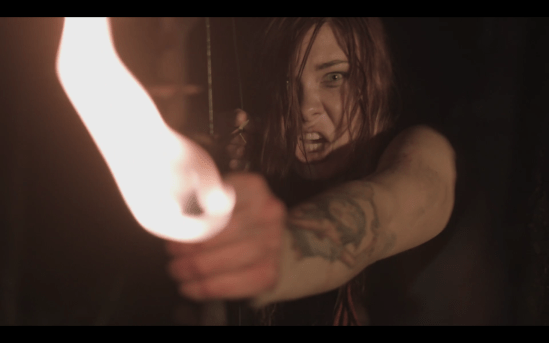
“Don’t Fuck in the Woods,” an alluring cavalier horror film title, is the indie project from writer-director Shawn Burkett. Burkett’s crowdfunded low-budget venture doesn’t piddle around the subject matter with interpretive titles or undertone stories. Burkett, with every intention, aimed his sights on developing the most proverbial scenarios of horny young folk in the woods being stalked by an inhuman monstrosity and achieved great success while also topping his film off with a sexually explicit cherry, defining “DFITW” as every young boy’s wet dream with gratuitous nudity and blood splatter mayhem! In fact, nudity, at least in my belief, outweighs the creature in screen time with the majority of the female cast baring more their breasts than the creature bares it’s teeth.
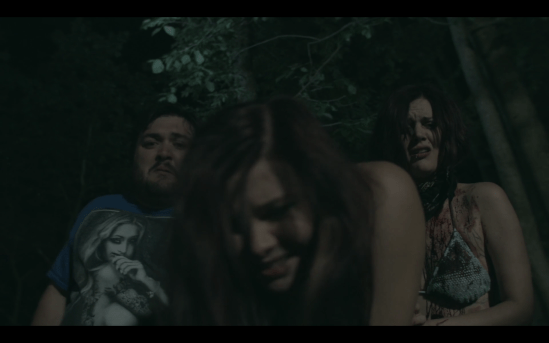
Brittany Blanton and Ayse Howard lead in the lesbian roles of Jane and Alex and are the only two actors to have characters to have some meat on their depth chart. Hence, why they’re in the lead role shoes. Blanton and Howard alternative style spills into the rest of the cast pool. Roman Jossart, the stoner, naturally gushes with wit and delivery that makes the sweaty, large, and overly perverted character very likable. Then there’s the inexplicable Nadia White. The “Give It To Me Grandpa” actress (look it up in Google) wears many shameless hats off screen, from modeling to fetish porn, but the stark blonde who once wrapped herself completely in duck tape except for her massive boobs, dons a hardly uncharacteristic character whose attached to the hip of her tall, dark jock boyfriend Conor, played in a debut performance by Brian Cornell. Hannah Herdt picks up the geek trope with credulous rant about iconic scream queens and their rise to fame without having to bare it all on screen. Kayla Stone, Brandy Mason, Derek Wehrley, and Scott Gillipsie in a dual role as Luke and the creature round out the rest of the “DFITW” cast. What I love about this cast is the fact they’re not these super slender and fit individuals with four, six, eight-pack abs you typically see in horror films. Instead, each one has their own little mid-section cupcake pudginess or pooch and that’s okay!

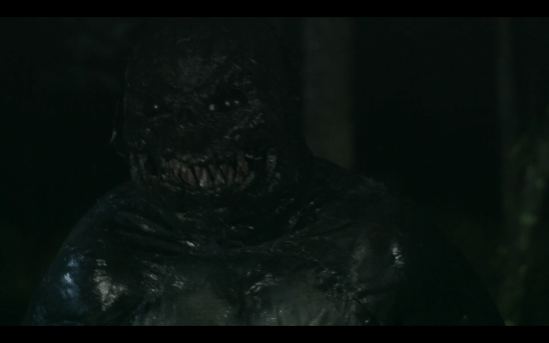
Above paragraphs contain praise for admiration and passion toward everything that’s right about “DFITW,” but there’s also plenty to dislike and many viewers, and reviewers too, have spoken publicly their harsh negativity. In a more constructive criticism, the first point is that Burkett’s film has no real logical story structure. Why should we care about these characters who trek into the woods, bone like rabbits, and then become lunch meat for an anti-fornication fiend? Secondly, the editing and special effects need firming as some kill scenes felt unnecessarily rushed and prolonged terror scenes didn’t really induce the terror, requiring that edit to break apart the monotony of the scene. The cheaply made creature passes, but the imperfections in the latex, or whatever material it was constructive of, can be clearly captured. Which leads me into the Alfred Hitchcock quote at the beginning of the film, “There is no terror in the bang, only in the anticipation of it.” The anticipation of the creature was sorely absence as much of the film focused on the group and their shenanigans and didn’t give the creature much hype, reducing it to a powerless vessel until rearing that jacked up Ninja Turtle head into the campers’ den.
Concept Media and Shawn Burkett’s “Don’t Fuck in the Woods” is a horror homaging and referencing machine, spitting out as much time-honored horror movie no-nos and final-girl conventionalism as one film can, but the story feels hollow inside and doesn’t offer worthwhile character development in neither protagonists or antagonist. Definitely the title, and even the film as a definitive whole, borders that thin line of becoming a ridiculously bad, but very interesting, parody porn, exploiting the rules of the slasher genre and having little-to-no girth of a plot. Roman Jossart’s hilarity, notable “Predator” references and remarks, and the fair amount of fair skin saves this exploitive film from being a total loss and, as well, the overwhelming communal participation and support to have this film see the light of day is absolutely amazing as a title like “Don’t Fuck in the Woods” would financially scare the money bag pants off any potential backer. You can see “Don’t Fuck in the Woods” on Vimeo On Demand by clicking the link below!
Category Archives: Trailers
Evil Invades Musically Inclined Fetish Nightclub! “Splatter Disco” review!

Kent Chubbs manages a popular fetish nightclub called Den O’Iniquity in a small conservative town and the demanding, ever-present pressure to close his proclaimed “smut” club from the angry puritanical protestors and unethical politicians have Kent on the hair pulling fences about what to exactly do with his beloved club and loyal employees. To make the matters worse, Kent’s father and club owner, Shank Chubbs, is knocking on death’s door with a bad ticker. To make the matters even more worse, the club’s been a remarkable safe haven for those who choose to express their closeted intimate desires in spanking, furry sex, or lube wrestling, but, during the holiday season, the club has had a low hanging dark cloud in a form of a deranged killer whose been destructively rampaging through the club’s most precious employees and enthusiastic patrons. In order to save everything he holds dear, Kent must find a way to keep everything afloat despite the challenges and his ill-advised legal advice from his acid tripping hippie attorney while also tracking down a psychopath.

In 2007, Richard Griffin directed a hybrid film that structured an abled bodied comedy and interjected moments of gruesome horror and fashioned it with elaborate musical numbers and the result was a niche slasher-musical simply known as “Splatter Disco.” We like this film. Actually, we love this film. Not because we enjoy watching and reviewing Richard Griffin films (see “Flesh for the Inferno,” “The Sins of Dracula,” “The Disco Exorcist,” “Frankenstein’s Hungry Dead,” “Future Justice”) and enjoy seeing where his toddler career began, but because “Splatter Disco” embodies the unlikely mixture of oil and water genres, doesn’t take itself seriously, and was whole-heartedly invested in by some of the biggest names in cult cinema as well as some talented actors and actresses you’ve may have never heard of before, but should certainly know.

Ken Foree, Lynn Lowry, and Debbie Rochon. Three big, well-known names that add their own delectable charm into the mix and, also, three big names who have developed a dynamic, who know each other’s styles, and who can still churn new material on the fly like it’s no big deal. Tack on Trent Haaga (“The Ghouls”) and the then new and Richard Griffin regular from that point on, Sarah Nicklin, who both have the favorably b-movie glow and “Splatter Disco” goes to a whole new level. One of the best performances goes to Jason McCormick as Echo, a DJ Qualls lookalike, with a timely comedic toss that provides a unique schtick to keep the character rememberable and McCormick nails the character right on the flat head. Overall, there were no slacking performances; every actor was chin deep getting into their respective roles with the various fetishes, cloak and dagger shades, and violent intentions. Rounding out the cast is Carlos Brum (“Beyond the Dunwich Horror”), William DeCoff (“The Haunting of Alice D”), Robin L. Watkins (“Poultrygeist”), and Brian L. Mullen III (“Pretty Dead Things”).

If you never experienced a Richard Griffin feature, you’ll pleasantly find out very quickly the director goes all out and the Providence, Rhode Island born director has a great 1970’s-1980’s homage style side dished with lots of vibrant colors and the abundance of suspending smoke and you’ll see why we cater to much of his work. The script’s dialogue, co-written by Griffin and producer Ted Marr, also excellently defines and solidifies the quick wit and whimsical nature of the comedy-horror and to make no mistake, this comedy-musical-horror has no shame with perversions, has well edited bloody special effects, and is ultimately a blast of lively cult cinema! “Splatter Disco” is a self-proclaimed first slasher musical of it’s kind; honestly, I couldn’t think of a prior film of it’s kind, but “Splatter Disco” has hit and catchy imitative tunes provided by Tony Milano and performed by Daniel Hildreth that go hand-and-hand with the humbling dance choreography.

MVDVisual, POP Cinema, and Shock-O-Rama re-releases “Splatter Disco” onto a not rated DVD home video with a 16:9 widescreen presentation. Regrettably, I’m sorely disappointed in the video quality that fully suffers from the distorting and blotchy compression artifacts that make night scenes fuzzy and flimsy in defintion. The lossy 2.0 stereo track is par for the course, even with musical pieces and soundtrack overlay, but does provide a little restitution for the image loss. Bonus features are aplenty that include a commentary with director Richard Griffin and star Lynn Lowry, a behind-the-scenes documentary, alternate scenes, and a Shock-O-Rama trailer vault. “Splatter Disco” is an entertaining 87 minute Richard Griffin slasher capsule classic full of degenerate song and dance!
Evil’s One Click Away! “Slasher.com” review!

A Missouri city is terrorized by a slippery psychopath who gratifyingly kills women after meeting them on an online dating service and chopping off a lock of their hair for his serial killer souvenir. During this reign of urban terror, Jack and Kristy decide to meet for the first time in the midst of all the chaos of online skepticism. Kristy’s elaborate first date idea involves driving out to an isolated cabin on the outskirts of the big city ran by Momma Myers and her eccentric family. After an eventful day and passionate night of exploring each other inside the dark cabin enclosure, Kristy and Jack find themselves in the malevolent grips of the rural area’s most delinquent and psychopathic residents who know the wooded landscape like the back of their blood soaked hands. Escaping a killer in the city was the easy part, but in the woods, no one can hear you scream, no signal can be transmitted, and there’s nowhere to run, but what comes about of Jack and Kristy takes a twisted turn of events that has transformed this secluded campground into a war zone.

“Slasher.com” assumes to exercise an excessive vat of survival slasher tropes by creating foreboding scenarios that are extremely obvious to keen horror eye. If you know your slashers, you know the drill. Missourian native director Chip Gubera’s has developed a half-serious, half-self-deprecating 2017 thriller co-written by fellow Missourian Chelsea Andes with her first feature script credit. The story starts off hot and steamy enough with the sounds of moan-and-groan lovemaking, but turns sour in a split second with a half naked victim becoming shish kabob. Great start so far. Proceeding goes into a montage about an anonymous online dating service homicidal psychopath who lures women to their ultimate demise and whacking off a piece of their hair for trophy. Here’s where things become little satirical. Main characters Kristy and John, knee deep in online terror dating and who know each other solely from their online conversations, hike up toward a deep-wooded cabin in a small podunk town and with a bit of overzealousness, the ease between them feels whole-heartedly unnatural and very uncomfortable, but makes for superb Cliffnotes version of the whole slasher genre mock up. You got your daft couple, you got your deranged campground establishments, and then you got your gratuitous nudity – what else could you ask for?

And who are these players Chip Gubera was able to sway to be in “Slasher.com?” First up, Ben Kaplan, relatively unknown, steps into the shoes of John, an organized, easy going good looking guy who you wouldn’t expect to be online dating and the same goes for Kristy, portrayed by a very beautiful Morgan Carter, also an unknown in her first and only credit. The two have a weird and robotic dynamic that’s hard to swallow, hard to accept, and hard to comprehend why they’re both seeking what’s behind the other end of the keyboard and computer monitor, but here they are casted into the lead roles. On the opposite end of the spectrum are a duo of veterans in the horror field and, as well, in the erotic genre. “Leatherface: Texas Chainsaw Massacre III” and a few other notable horror sequels’ R.A. Milhailoff, a very large and threatening man, does have the killer presence and dwarfs a out of this world demented performance by the one and only Jewel Shepard as Momma Myers. The same Jewel Shepard from “Return of the Living Dead” and from the recently reviewed sex-tastic action film “Christina” and she’s so sleazy and so unbelievable rank that’s it’s truly scary. Rebecca Crowley, Delious Kennedy, and Adam Boster fill out of the support cast.

“Slasher.com,” from what you read earlier in this review, might seem like stiff drink with the same cobalt, down-the-hatch taste, but there’s a flick of the wrist in the finale that’s leaves Gubera’s film standing just slightly above the mediocre, low-budget melee and taser-charges the nuts of what could be a new breed of horror. Just out of reach and falling flat on it’s face is the quick rise and long hard fall for Chip Gubera’s “Slasher.com” who took a quirky, fly-by-the-seams slasher and contributed to it a brief glimpse of ambition that never reach full potential, but there were moments. Good moments that cleared the ugly scrap show up every so often; for example, the dead body pit, or the captivating needs of Momma Myers by the delectable Jewel Shepard, or even the final showdown between the Myers and John and Kristy.

Cinedigm and ITN Distribution release “Slasher.com,” also known as “S/ash.er,” onto DVD home video presented in widescreen with a poor English Stereo 2.0 track. The digital noise waves through nearly all scenes of the image, especially the ariel shots, and doesn’t sharply display the forest, but keeps the vague Myers dungeon in the shadow’s of it’s own shoddiness. Sleazo, that’s the creative moniker of the scorer, provides a synthesized track that’s horribly exploited because it is a fairly good soundtrack even if it’s only a one track, sorry trick, pony. There’s also no bonus features on the DVD, leaving only the feature to fight for itself, and with that omission of extras, with that poor quality, and with steep drop at the end, “Slasher.com” fails to take advantage of the sui generis story that needed to blossom.

Subletting Manager is an Evil Shrew! “The Resident”review!
Joanna and her fiance, Geoff, enter a sublet agreement sight unseen. With her fiance being a struggling actor with gigs teetering on the line and domineering most of his time, Joanna struggles to find ways to pass the day alone in her apartment on unpaid maternity leave. The creepy, unwelcoming apartment doesn’t feel like home when Joanna has yet see another living soul in the building, but hears footsteps on the next floor above, violent wall banging thumps next door, and extremely unpleasant dreams that seem to cause her to lose time in reality. When Geoff neglects her pleads to leave the sublet, Joanna becomes enthralled with a newfound journal from an off limits room and as soon as she starts to read from the pages, her life in the apartment strangely follows a parallel path of the journal’s previous owner, a house wife named Margaret, that leads to jeopardizing everything Joanna knows: her sanity, her husband, and her baby.
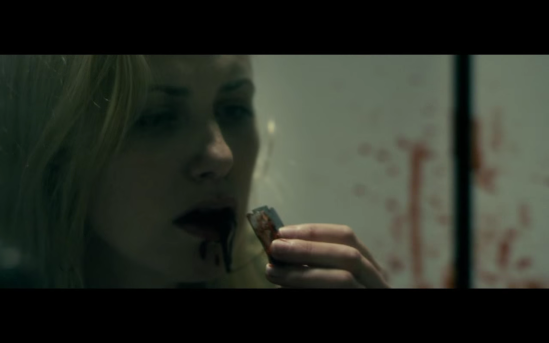
“The Resident,” aka “The Sublet” as known in other parts of the world, is the debut psychological horror directed by the writer of “Jack Brooks: Monster Slayer,” John Ainslie, who also co-wrote the script with Alyson Richards. The 2015 film is also produced by Chad Archibald, whose name might sound familiar if you’re a regular reader of this review website where you can read about interesting horror feature films like “The Resident.” Archibald helmed the body horror delicacy “Bite” the same year. Together, the qualified credential crew steps up to a challenge with “The Resident” that, on the surface, appears to be another run-of-the-mill tired premise of a young couple coping with a malevolent presence and with a common subplot involving a stay-at-home mom being the unfortunate victim. Ainslie and Richards, obviously, go through the stages of that realm, knocking down the expected pillars of conventionalism, but the duo do touch upon a couple of things. For one, they make “The Resident” very interesting and entertaining by seriously messing with Joanna’s state of mind, forcing her to question every little aspect of her mundane existence in that small sublet. The second thing is is that the whole story can be seen a metaphor for postpartum depression that’s driving psychosis right into the thick of Joanna’s unhappiness. More than once, Joanna mentions how ugly she feels and she becomes overly jealous of Geoff’s ex-girlfriend, even if rightfully so.
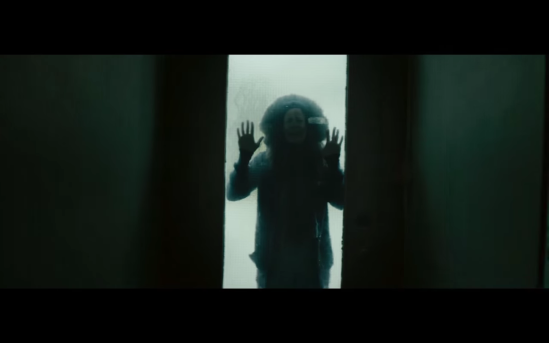
“Bite’s” Tianna Nori gluttonously takes on Joanna’s dwelling punishment. Nori’s par performance sells sufficiently, but doesn’t completely enthrall Joanna into the depths of madness, leaving a rather tame aftertaste. The same can be said for Mark Matechuk, who plays opposite to Nori with Geoff. His struggling actor shoes fit his two-bit stiff and starchy outfit, but Matechuk and Nori do work well together even if some scenes feel forced and scripted. By far, Rachel Sellan was my least favorite of the three main actors with her portrayal of a snobby, yet beautiful, ex-girlfriend of Geoff’s. A world built solely on the inner walls of the apartment, literally 95% of the film is inside this constructed sublet, has more personality and life than the organic material composing an orchestrated dialogue and I personally don’t blame the cast. I believe the sublet, the construed presence, subversively overshadows the intended characters. Krista Madison, James Murray, Mark Ettlinger, and Jeff Sinasac make up the supporting cast.
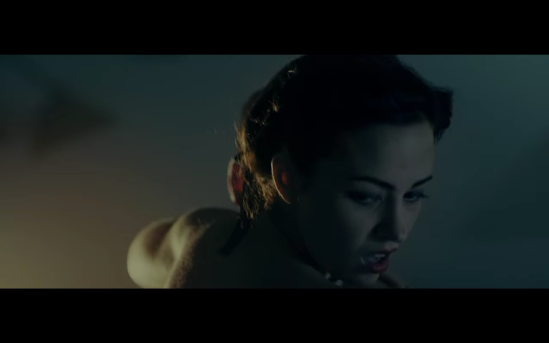
“The Resident” has modest effects that spur mostly off screen, but on the rate instance when mise-en-scene effects happened, they didn’t go unnoticed. “The Resident” brought and delivered the appropriate psychological nightmares associated with brain-warping spirits, shelling out an introverted dreaminess in Joanna that only she could experience with those unfortunate family and foes surrounding her witnessing only the outer chaos. Sometimes the story gets lost in itself when attempting to further Joanna’s skewed circumstances. Is Joanna dead already? The answer is possibly. Every external scene of the apartment building or even the brief scenes of Joanna with the stroller sets the moments in dreary rain and when going further into the film, Joanna is no longer able to leave the apartment. She even becomes a part of her own missing person’s investigation conducted by two belligerent cops, played venomously by Mark Ettlinger and Jeff Sinasac, who inform Joanna that her family hasn’t heard from her in days. It’s the final scene that sets the whole rest of the film in stone, that solidifies Joanna’s mental state, and yet the simple moment still leaves questions and reflection. That’s a considerable tall tell sign of good story telling from Ainslie and Richards.
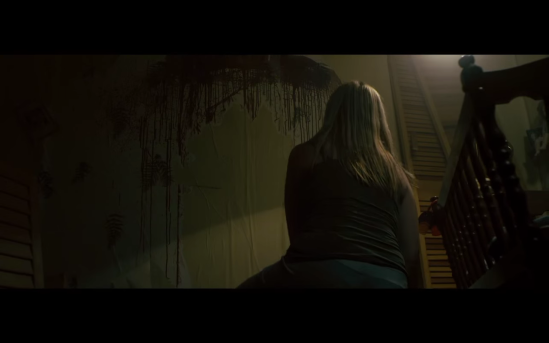
Canadian production company, Black Fawn Films, headed by Chad Archibald have another successful odious anecdote in their arsenal of horror and the company has quickly gained momentum in becoming a juggernaut in sustainable low-budget horror. Second Sight will be heading the home distribution portion of the title with a May 22nd release onto DVD and On Demand. Unfortunately, a press DVD-R was provided and the audio and video qualities can’t be commented on nor can any critique on the bonus material. John Anislie has the tools and the means to labor a chilling trap of supernatural spookiness. With a cast of similar caliber, “The Resident” would have made it higher on the list, but manages to keep a solid bleep on the radar when the next scene always begged the question – what’s going to happen next?
Evil Wants You to Say it’s Name! “The Bye Bye Man” review!

Elliot, Sasha, and John move into an old manor home just off the university’s campus. The tight knit three friends stumble upon a tattered nightstand with scribbled nonsense inside the drawer and underneath the incoherent writing and scratched into the wood is The Bye Bye Man. Once you hear the name, a searing imprint has been made into the mind, opening up a layer within the universe that invites a grim reaper-like figure to come horrifically collect individuals who have been infected with the name. The mysterious malevolence will impose hallucinations, or tricks, upon the mind to induce others to commit evil acts on another and will stop at nothing until those who know his name are either end up dead or spread his vileness. For Elliot, Sasha, and John, their close relationships will be tested, they’re bodies will be challenged, and their minds will be altered in a race against the clock in order to beat death, to defeat The Bye Bye Man.

“The Bye Bye Man” is an Universal Pictures and STX Entertainment distributed boogeyman concept from 1995’s “The Last Supper” director Stacy Title. Title, who hasn’t been active for about ten years since her last directorial, helms the project written by her husband, an appropriately named Jonathan Penner, who also had a co-starring role in “The Last Supper.” The inspiration stems from a collection of horrific tales from Robert Damon Schneck’s “The President’s Vampire: Strange-but-True Tales of the United States of America,” but “The Bye Bye Man” borrows heavily from well-crafted horror brethren too, birthing a mythological personification of death that doesn’t wield a scythe, but rather being a master, underneath a dark hooded cloak, to a hellish beast that munches on the faces of The Bye Bye Man’s victims. “A Nightmare on Elm Street,” “Final Destination,” and a little bit of “Scream” become the selected examples that are the genetic makeup of TItle and Penner’s film, but doesn’t grossly rip from the said works, two of which are the late Wes Cravens masterpieces. Instead, Jonathan Penner reconfigures the nightmare man, a modern day Freddy Krueger type stalking every soul during the day and night hours, whom establishes his own brand of Rube Goldberg deaths through deadly vision inflictions that pray upon a human’s moral subconscious. “Don’t say it. Don’t think it” sets as the 2017 film’s tagline with the notion that perhaps little white lies are, literally, lifesavers or that the truth can be hurtful, and or knowledge can be powerful, but can also lead to your own demise.

“Ouija’s” Douglas Smith succumbs to his lead role of Elliot, an educated and patient young man who seems to have everything despite tragic misfortune that’s whisked through the character development. From friends, to a supportive brother, to a loving girlfriend, Smith transition seamlessly to languishing burden during a spotlight scene with co-star Carrie-Anne Moss (“Matrix”) that’s raw and cuttingly empathetic. The story centers around Elliot, but Sasha and John have pivotable relationships to Elliot, two essential roles given to two British actors, former girl of Prince Harry, Cressida Bonas, and television actor Lucien Laviscount. Both Bonas and Laviscount expensed drab performances, mechanically and, often, monotonically coming and going from scene-to-scene without mingling well into the rest of the film’s grim and dire trimmed overalls that basically left Smith out to pick up the slack. Along with Carrie-Anne Moss, who always seems to be typecast in a women of power role and, in this case, a detective, “The Bye Bye Man” sports other veterans of both horror and general film, but; instead, take a backseat to a younger generation of actors. “HellBoy’s” Doug Jones silently strolls through one of the easiest prosthetically garbed performances of his illustrious career as the titular character, genre stable Leigh Whannell (“Saw”) commits to a haunting performance as a murder-suicide martyr, and the legendary Faye Dunaway portrays a longtime widow of the aforementioned madman. Michael Trucco (“Wishmaster 4: The Prophecy Fulfilled”), Jenna Kanell, Cleo King (“Hood of Horror”), and Erica Tremblay round out the supporting cast.

Universal picking up a horror title resembling an infantile kids feature and releasing it theatrically might with relatively unknown, mostly non-American cast, will scratch some questioning heads, but with a well oiled supporting cast consisting of many years of guild service, a director, despite being inactive for many years, maintaining a sensible and visionary eye, and a story, aside from a few underdevelopments, that captivates with edge of your seat scares and with next moment eagerness, “The Bye Bye Man” has great potential. With smoothing out details of Elliot’s and The Bye Bye Man’s backstories and construing more of a slow burn method when getting the characters involved with the ‘don’t think it, don’t say it’ villain name, Universal would have increased their gross profits by double and the world would be happy once again. Unfortunately, that scenario was not the case as credits bombarded “The Bye Bye Man” as about as borrowed and as hokey as any low-budget horror film can be, but “The Bye Bye Man” surpassed the production budget by triple and to me, someone who generally has the same stance as most credits, that’s a win for Stacy Title and company.

The Intrepid Pictures and Los Angeles Media Fund production “The Bye Bye Man” makes a Universal Pictures Home Entertainment debut on a two-version unrated Blu-ray and DVD combo. The MPEG-4 AVC, 1080p Blu-ray disc contains a razor sharp image in the 1.85:1 presentation. Depth and shadows phenomenally define the space, especially in closer quarters and the ariel shots. A motif of bleak black and grim grey is consistent throughout, creating a tone through the darker shades, with vivid hues to gloriously fend for themselves amongst the achromatic reel landscape. The English DTS-HD Master Audio 5.1 surround sound doesn’t feign in the balance category with dialogue prevalence not short of excellence and, much like other atmospheric horror, the spooky elements are outlined in various levels from a coin dropping to a train horn. Bonus features are surprisingly zilch with no extras on either format; I guess there wasn’t much to say during or post-film. In all, “The Bye Bye Man” is a total hack with plot holes. A completely borrowed and revamped product with a terribly childish title promising nothing to the genre, but that doesn’t necessarily mean “The Bye Bye Man” can’t be entertaining, providing a wicked sense of humor and a morbid final destination outlook with unexpected casting choices and a barely bordering PG-13 horror rendering.

Say Buy to “The Bye Bye Man” at Amazon.com!


