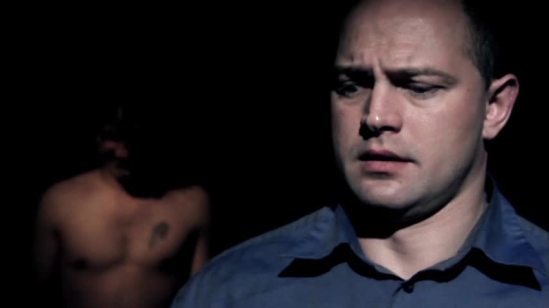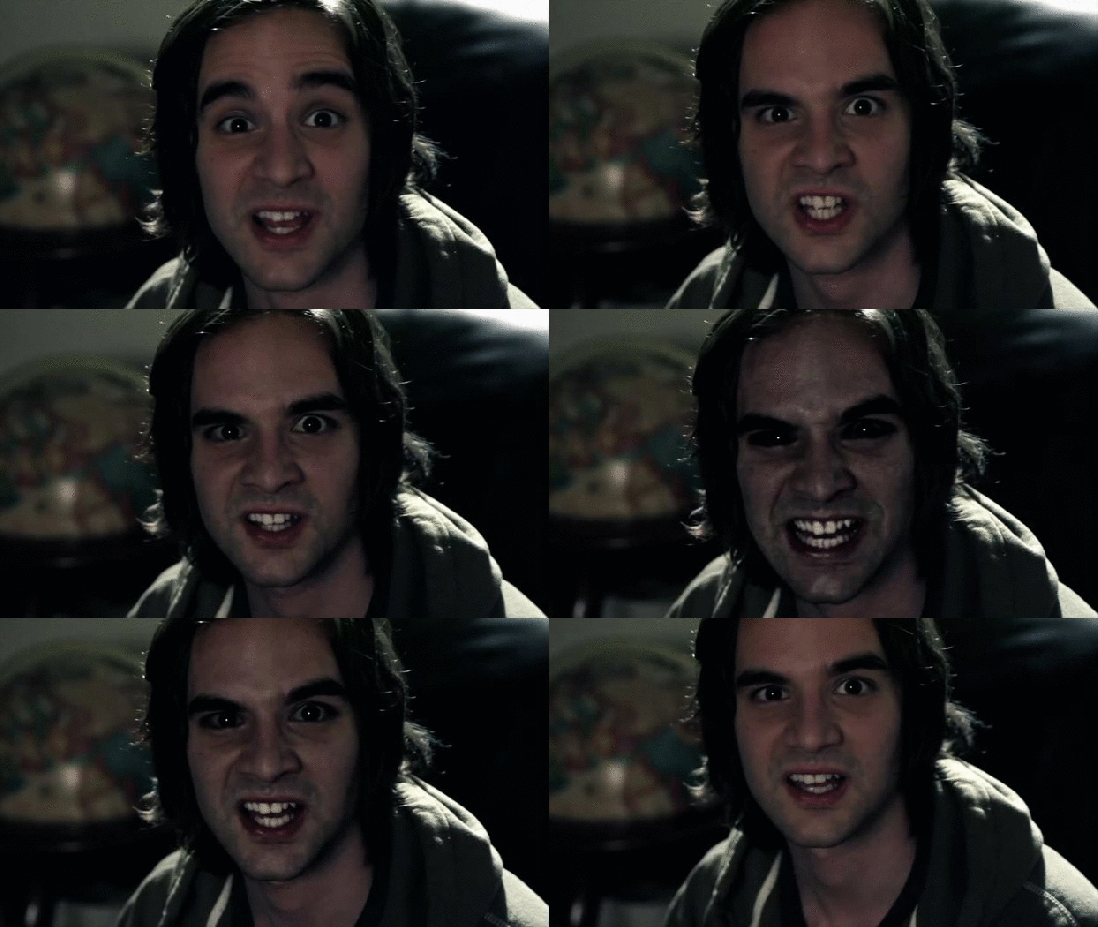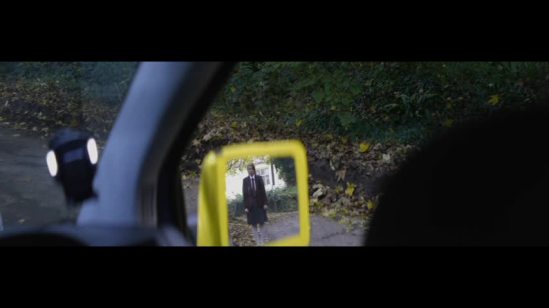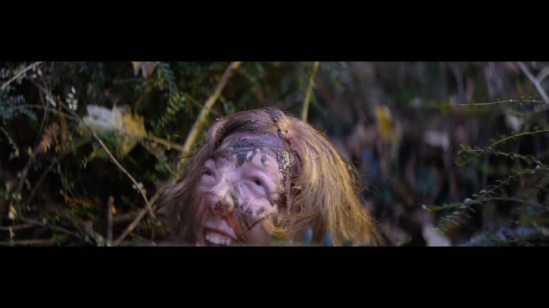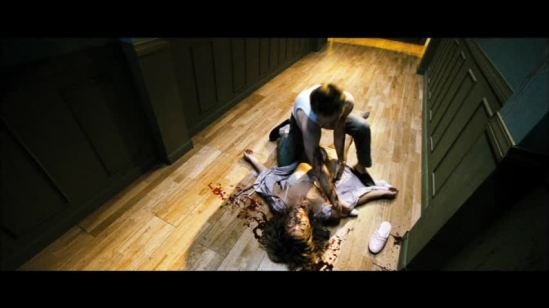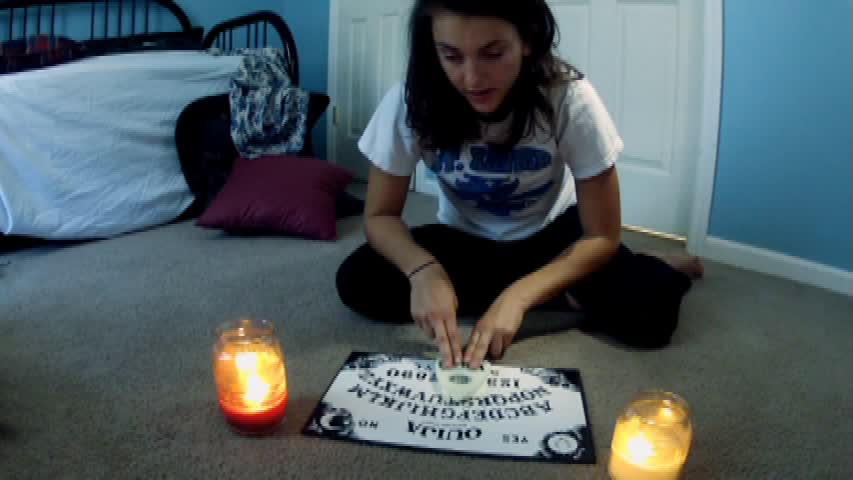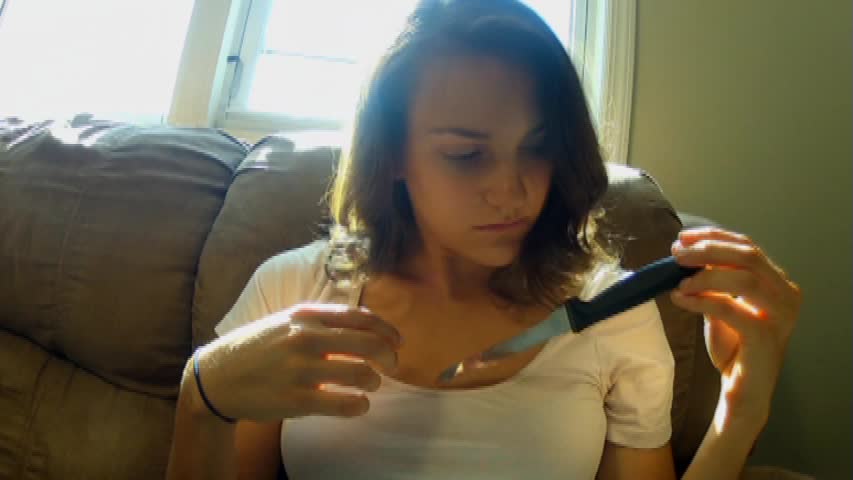
Megan Mullen, freshly out of college life, feels a strong urge to pick up and move from her comfortable California family home to the new surroundings of New Jersey. She can’t explain her why to move, but she quickly finds an apartment in East Rutherford where she settles in easily, creates a video journal for her friends and family back home, begins her new job as a school teacher, and gains a wonderful boyfriend. Everything seems to be going perfect for Megan until unexplainable, seemingly paranormal, acts happen in her apartment: doors open and close mysteriously, objects move on their own, and her soul doesn’t feel like her own. As she continues to her video journal, she further believes her apartment was once rented by April, a young girl similar to Megan who ended up brutally murdered and found on a riverbank, and that she is haunting her. This is Megan’s story told through a documentary revealed by her friends and family to the supernatural speculation of what causes Megan’s torment and downfall.

In the spirit of new releases on or around horror’s big night of Halloween, Director Ruben Rodriquez’s 2012 paranormal mockumenatry “The Death of April” comes to life on for the first time on DVD from MVDVisual. Similar to the “Paranormal Activity” series, the pseudo documentary about a dangerous, abode dwelling spirit or spirits bombarding their supernatural havoc upon helpless inhabitants. While the release time is appropriate and has a modest appreciation for creepy atmospheres, “The Death of April” fails to bring something new to the genre table and I can’t see the easily overlooked “The Death of April” being the catalyst to spark more interest in a ghostly genre that becomes overpopulated, by the major studios, during the month of October.

Backed finically by the Mojo Creative Group that was founded by Ruben Rodriguez, the mockumentary introduces a modest talent of actors and actresses including Katarina Hughes as Megan Mullen. Hughes, in her first feature film, delivers the much needed energy to a slow, stagnant script, but the contrast exaggerates Katarina’s overzealous happy-new-girl-moving-to-a-different-coast attitude. Her co-stars Adam Lowder as her brother Stephen Mullen, The Knick’s Chelsea Clark as her best friend, RayMartell Moore as her boyfriend Tim, and Stephanie Domini as her mother, who by the way looks almost the same age as Megan, sold their story, their take, of Megan’s downward events. That being said, Lowder, Clark, Moore, and Domini couldn’t lift the script out of the deep trenches of the uninteresting and mechanical motions.

The script, which was also written by Ruben Rodriguez, could be considered to contain two interpretations, one literal and the other more concealed. The more literal interpretation is my least favorite of the two. Megan’s family constantly disowns the fact that she might actually be haunted by an apartment spirit; in fact, her family and friends negatively pelt her with denials and accusations, never once considering Megan’s theories of an aggressive April spirit. This is where the script becomes redundant as Megan’s brother Stephen and also her mother Stephanie reiterate over and over about how close their relationship with Megan was and how she had firm family roots in California and also proclaim the excuses of how she’s looking for attention or not coping with a new surrounding very well. Rodriguez’s script suffers by not displaying alternate ways in exploring how her family and friends should handle Megan’s paranoia or paranormal problem. Even when they’re is undeniable video proof with the video starting to distort and capturing uncontrollable movements from inanimate objects, nobody believes Megan and that would drive anybody to the loony bin. The second interpretation with, perhaps, a more underlying metaphor is that Megan is slowly going nuts. Her brother Stephen does mention her previous slightly creepy issues with Megan before her big impulsive move to the east coast. Almost like her impulsiveness and her energy-filled antics seemed manic and her sanity practically dissolved when she moved thousands of miles away from her support group in California. Megan’s mind could have invented April and her family, knowing that she’s had weird issues in the past, chalks this up to just being another mental issue. Of course, the video diary proof, even with her brother and friend witnesses, nearly excludes the second theory and that her “desire” to move far away from her family stems from April pulling her in that direction.

“The Death of April” won’t make waves on the PKE meter. The picture quality of the MVDVisual and ITN distribution DVD release looks clean considering that most scenes had intentional video quality posterization and distortion for the web and home video diary appearance. The front cover art is slightly misleading with a foreboding, rundown gothic style house in the background when actually Megan lives in a sectioned off duplex apartment in a suburban neighbor of a New Jersey home that doesn’t look necessarily evil at all. Also, who I’m guessing is spirit of April on the front cover with a Ouija board in her clutches sports sexy booty denim shorts as if to lure a certain audience to the release. We’re not sold on “The Death of April” as too many before it’s time have come across and planted their seed and sprouted firm in place.
Category Archives: Uncategorized
Evil Lends a Helping Hand! “Bloody Knuckles” review!

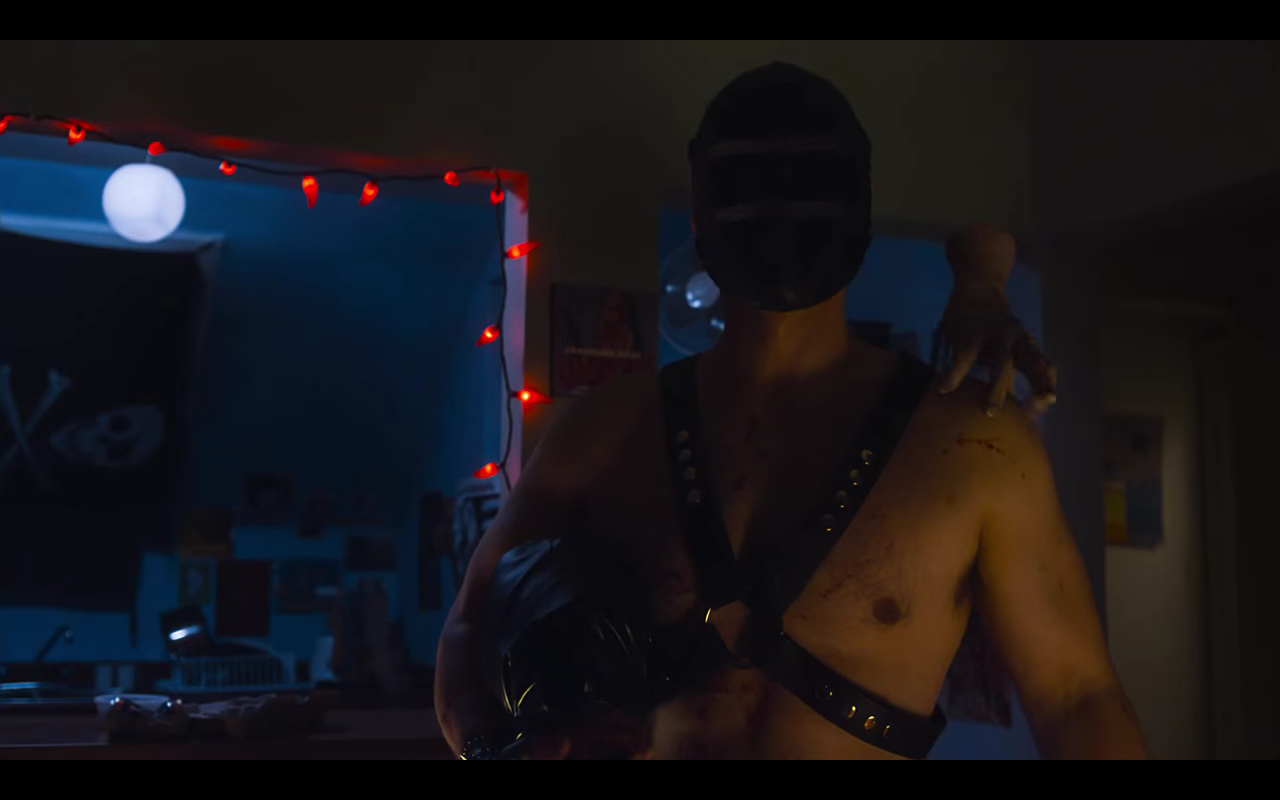
Travis, an underground shock comic artist, stirs up a world of trouble with Chinatown crime lord and illegal pesticide seller Leonard Fong when his latest issue of Vulgarian Invasion makes the criminal kingpin a colorfully filthy farce. In response, Fong and his goons table saw Travis’s writing hand off. With his livelihood separated from the rest of his body, Travis falls into a depressive slumber to where he doesn’t leave his apartment, find new work, or even take a stand for revenge. The same cannot be said for his decomposing hand that suddenly revives and confronts Travis. Looking to settle the score with Fong and his gang, Travis and his appendage join forces with a true to life S&M superhero based of one of Travis’s caricatures and take up arms (get it?) against Fong’s criminal syndicate.

“Bloody Knuckles” is vulgar, distasteful, and offensive – I loved every minute of it! Director Matt O.’s (Matt O’Mahoney) debut feature film from Canada makes “Idle Hands” seem weak and childish in comparison. The “Addams Family” Thing is a cutesy puppy dog whose sporting a knitted winter sweater while the “Bloody Knuckles” Hand is cracking skulls as it’s cracking it’s own bloody knuckles in a spiked leather jacket. This Hand is more like the Ash’s evil hand from “Evil Dead 2!” There hasn’t been this much fun in a film in awhile and I’m considering the Matt O. film to be one of my favorite horror Blu-ray releases of 2015 from Artsploitation Films. “Bloody Knuckles” has it all: limitless violence, scrupulous comedy, glorified gore, a penchant for the politically incorrect, nudity, a living severed hand, and a gay S&M badass looking to spank to death the opposition.

Mainly, the underlying message of “screw censorship” hits, in a good way, the main artery for this reviewer as our lovely site, Its Bloggin’ Evil, is all about pushing the boundaries, divulging the full story, and leaving everything out on the table for all to bare witness. Being crass is nice too and that’s “Bloody Knuckles” schtick; a unique stance that most films and filmmakers won’t risk due to the fear of their work not being picked up and released, shunned and stored deep in the depressing closets of death and disparity. “Bloody Knuckles” splays the notion of artistic freedom throughout the duration and in many different formats from comics, to the press, and to shock art.

The special effects were top notch quality and handled by the Academy Award-nominated company Image Engine of Vancouver, who had their hands mixed into major studio work such as James Gunn’s “Slither,” HBO’s highly praised television series “Game of Thrones,” and the prequel to John Carpenter’s “The Thing.” The Hand, whether as a live hand with makeup or a prosthetic one, never looked underfunded or cheesy. The Hand was given a Frankenstein life and was appropriately made into a sympathetic character. Even though Hand is part of Travis, Hand is actually a woman’s hand, Krista Magnusson’s hand to be exact, and not even for a second will you be able to tell. The rest of the effects don’t disappoint; the exaggerated gruesomeness of certain effects shots brings back memories of watching “The Stuff” and “Riki-Oh: The Story of Ricky!”

Aside from Krista Magnusson, the lineup of actors and actresses were destined to portray these character roles. Kasey Ryne Mazak as the ruthless and merciless Leonard Fong had pegged perfectly the well-dressed with an oversized ego but with a short stature stereotype. Dwayne Bryshun as Homo Dynamous, a Travis’s gay S&M superhero, brings to life such as an extravagant character, turning a simple gay caricature into a living and breathing bondage Bond. Lead actor Adam Boys as Travis could turn on the charm, the sarcasm, and the girly scream on a dime and so naturally that Travis instantly becomes a likable character. The witty and gritty banter between all the characters, even Hand using the type-to-speech function on Travis’s computer, is well written and doesn’t bog down the blitzkrieg story.
I can’t say I’ve yet to come across a poor release from Artsploitation Films. Aside from a controversial and entertaining subject matter of the films, the Blu-ray’s 1.78:1 aspect ratio has great quality that can outshine many competitors. The Blu-ray of “Bloody Knuckles” contains a clean and sharp image that doesn’t become murky in the darkness to which the film is mostly set, whether being night outside or in dark inside quarters. There’s slight posterization during the a few pitch black night sequences, but I found that everything was nicely outlined or visible without little interference from it. The 5.1 DTS-HD Master Audio is the preferable option if you have the equipment; the dialogue is at the forefront which is key for this film and the rest of the tracks are well-balanced. Other audio options include a 5.1 Dolby Digital and a 2.0 Dolby Stereo. There are tons of extras clocking around 130 minutes worth of content and the icing on the cake with the whole release is a portion of Travis’s comic Vulgarian Invasion on the reverse side of the Blu-ray cover art. Hands down, “Bloody Knuckles” is a must own!
Anybody and Everybody Can Be Evil! “The Summer House” review!

Markus lives the perfect life: a lucrative job in construction management, an adoring and faithful wife, and a beautiful and smart daughter about to tend a prominent English school. Yet, Marcus finds solace in a double life by living his true self as a bi-sexual man with a secret, younger male lover from one of his construction projects, leaving his wife frustrated and destructive in their foundering marriage. When Markus’s construction colleague Christopher finds himself being squeezed by the taxing agency, Marcus offers to help out a little. Christopher asks his 12-year-old son Johannes to be nice to and to spend time with Markus’s 11-year-old daughter Elisabeth in a show of good faith towards Markus’s good will. With Johannes around most of the time, Markus tries to keep grounded his uncontrollable desires for Johannes, but invites Johannes to Markus’s family’s summer house. Through the summer, Markus and Johannes form a relationship, but not everything is as it’s seems when hidden agendas and surprising outcomes could potentially destroy everyone involved.

An intense psychosexual, “The Summer House” zips straight out of Berlin from writer-director Curtis Burz who touches upon more taboo subject material than one might be able to withstand without feeling guilty, dirty, or rotten. Burz’s pen weaves through one man’s constant struggle between maintaining a barely afloat marriage to a wife he loves because of their daughter and his secretive bi-sexual life in an affair involving a much younger man. Burz also remarks on Markus’s wife Christine and her battle with near tragic depression; she’s complicit in Markus’s affair by allowing him, with only little resistance, to continue, yet Christine wants Markus to rediscover his love for her on his own. The pen continues to weave through the stories of the children, Johannes and Elisabeth. The very nature of a child feels exploited here in more ways than one, but the film’s end game takes an usual twist, one I can’t spill here without spoiling the finale fun. Burz continues to drop dark material presented and staged in a glowing-like and vividly colorful mise-en-scene throughout that would suggest happiness or perfection for all involved; however, the nagging, gloomy undertone remains behind the scenes and unseen and that’s the kind of sadistically gratifying contribution added by director Curtis Burz.

“The Summer House” is a socially controversial film without being overly in your face with it. Nothing is explicit with the subtleties being just enough to make your stomach feel uneasy and to make your jaw clench with anticipation. The scenes with Markus (the then 40-year-old Sten Jacobs) and Johannes (a certainly under 18-year-old Jasper Fuld) kept building the tension between them and Jacobs portrayed a creepy, over-anxious and over-persistent pedophile uncomfortably well whereas Fuld plays his part just as convincingly as a seemingly tolerable young boy who may or may not be curious about Markus’s intentions toward him. The vexation Christine discharges is all due in part, greatly toward, of the leading lady Anna Altmann’s performance. Altmann captures a wife in marriage limbo, looking to rekindle a broken family stuck in stalemate due to her husband’s mid-life sexual crisis while maintaining her daughter’s precociousness. Nina Splettstößer feeds off Atlmann’s motherly performance by portraying Elisabeth as quiet and intelligent, yet passive and conniving who sees her mother as someone who hates her because of how stringent her mother is toward her.

The story’s complex web becomes stickier and the spider draws even closer when Markus’s secret sleepovers become exposed, creating a twist ending not even M. Night Shyamalan could conjure up. However, the story behind Markus’s colleague Christopher and his wife Anne feels ignored and neglected. Aside from Christopher incidentally being the catalyst between Markus and Johannes, Christopher and Anne’s scenes seem unnecessary. One scene has the both adult couples seemingly in the early wine and dine stages of a swinger party, but once most of the kissing between Anne, Christopher and Christine is out of the way, the scene falls short with a quick cut to just Markus finishing off with his wife Christine with all their clothes still on. Christopher and Anne come and go in barely a handful of other scenes that don’t tie into much of the story and would have either been better if either explored further into their adventurous lifestyle to get a better understanding of Johannes or leave them out all together.

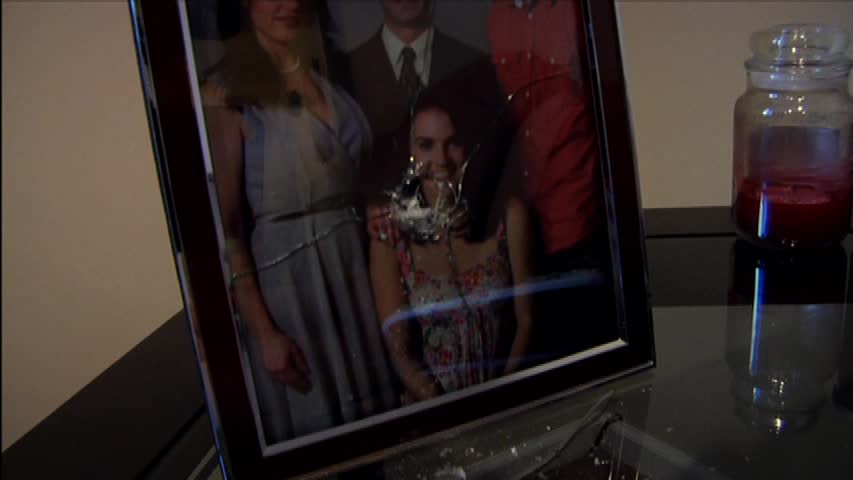
Overall, “The Summer House” is deserving of it’s numerous film festival awards and a solid release for not only Artsploitation Films, but also as a film that has been Berlin born even if the film released nearly 3 years ago. Certainly very relevant to today’s modern multi-societal problems including the dissolving of families, behavioral issues with not only pedophilia, but with depression, and to round out the pleasantries with scrofulous affairs. The Artsploitation Films, in a metaphorical broken and cracked pane glass over a solemn Markus family DVD cover, has a widescreen 1.85:1 ratio release with a German and English 2.0 audio track is accompanied with bonus features that include deleted scenes, cast and crew interviews, and a trailer; all content clocks in at around 195 minutes total – not bad all around for an independent feature.
Living Alongside Evil. “A Plague So Pleasant” review!

In the zombie post-apocalypse, the human discovered that by not firing their weapons allowed the flesh eating hordes to calm their desires, resulting in the protection of the zombie species and institutionalizing laws against the killing zombies for fear of another undead swarm attack. One of the many survivors Clay has lived in a zombie cooperation world for over a year after the initial outbreak along with his sister Mia, whose boyfriend Gerry didn’t survive, but still roams the Earth as the walking dead. With no one truly dying, the whole idea of existence becomes meaningless and where people, like Mia, won’t move on when they’re loved ones still feel very much alive. When Clay discovers his sister’s attachment to undead Gerry, he takes it upon himself to kill Mia’s zombie boyfriend, releasing a zombie swarm post-apocalypse apocalypse on the his town.

Unprecedented and gushing with rage, “A Plague so Pleasant” redefines the way audiences would view the zombie since 1968, constructing still a vicious species of man-eating undead while domesticating them to a lumbering land fixture much like the way pigeons amongst the birds. First time directors Benjamin Roberds and Jordan Reyes triumph amongst the modern zombie competition, spilling their heart and soul onto the script and onto the screen. With a story to match, a Romero-inspired social commentary zombie film held true to form by instilling normality to a post-apocalyptic world. Zombie and man living together. What was that Bill Murray line in “Ghostbusters?” “Cats and dogs living together… mass hysteria.” Clay and Mia were living a mundane life while the dead remained alive and protected, socially poking fun at how society maintain a normal livelihood with zombies: the U.S. Government made killing zombies a national felony, companies were mandated to go through a yearly undead awareness program as a formality, and there’s a guarded visitation area full of the undead much like a graveyard without graves.

Stunning cinematography added much needed life to “A Plague so Pleasant” which settles into an already over saturated zombie genre. Starting in black and white, Clay introduces his life in a offscreen monologue, conveying much of the post-apocalyptic and zombie information. The black and white symbolizes how simple and plain life has become with the living with zombies regulations. When Clay breaks the law by offing Gerry for good, thats when the movie turns to color and creating complications in a black and white life. The once unvarying and shuffling zombie nuisance goes into full berserk mode with “28 Days Later” sprinters thirsty to tear into anything with a heart beat. Only when the zombies turn calm is when life goes back to being black and white, considering the option that normality needs to be simplified to live peacefully.

The special effects by first timer Tyler Carver are a great effort clashing together a classic European Giannetto De Rossi style with Carver’s own settle flair by not being overly gruesome. There’s not an over-the-top, chart-topping special effects moment that defines the “A Plague so Pleasant,’ but there the solid effects subtly throughout satisfies. The zombies overall look are the usual stock type, yet they’re exhilarating to watch with an army of intense actors who are no doubt from the Athens, GA Halloween attraction named Zombie Farm where Tyler Carver has a connection. Not everything about the creation of a frightening zombie was accomplished as much of the audio tracks were out of sync and just too gaudy.

Actor David Chandler as Clay does a fine job portraying a bored survivor and a clueless big brother while also performing the second zombie swarm nearly without speaking during the entire engagement. Mia, played by Eva Boehnke, resembles the gorgeous Lebanese-American porn star actress Mia Khalfia with her giant nerdy glasses. Boehnke creates a free spirited, yet delusional, persona in Mia whose holding onto the past and coping the only way she knows how and that’s by not separating from her undead boyfriend Gerry. We round out the cast with Todd played by Maxwell Moody. Todd becomes the catalyst of the coming events by placing the idea of him and Mia being a couple and putting a bullet into Gerry’s rotting brain. Chandler, Boehnke, and Moody on paper are amateur actors in an estimated $1,500 budget, independent movie, but they own their performances and shine through budgetary constraints.

Another awesome release from Wild Eye releasing that would make a worthy and unique edition to a zombie fanatic’s movie collection. Don’t judge to harsh the production value with the slight aliasing, the out of sync zombie audio tracks, and the muffled off screen Clay character monologue. Instead, focus on the cinematography, the actors performances, and the genuine story telling of a socially awkward scenario. Let “A Plague so Pleasant” infect, let it sink it’s teeth deep, and let it help turn your undying attention unto a lively concept.
Evil Toys: Wonder Goblin!
Are you a big toy collector? Then you might want to check out this limited edition release of the Wonder Goblin! Director and sculptor James Sizemore (director of The Demon’s Rook which you can read the Its Bloggin’ Evil review here) designs a Halloween candy thieving Goblin out of a bubblegum pink resin. Rachel De Urioste molds and casts the 3-inch winged-creature and then painted in detail with a black wash by illustrator Nala Katze.
Currently priced at $30, these candy hoarding, cave dwelling Goblins won’t be around long! Head over to Wondergoblin.com and indulge yourself. Check out all of the great work from independent artists James Sizemore, Rachel De Urioste, and Nala Katze; a group of colorful, grotesque-lovin’, and highly-experienced, artists with a ton of rich talent just ready to be tapped into.
The Wonder Goblin toy is accompanied with cardback artwork and a few candy treasures.