The Shaw Brothers Deliver the EVIL Lovers! “Shaw Brothers Horror Collection Volume 2” reviewed! (Imprint Asia / Blu-ray)

Shaw-Shock Horror Collection Volume 2 is Now Avilable for Purchase!

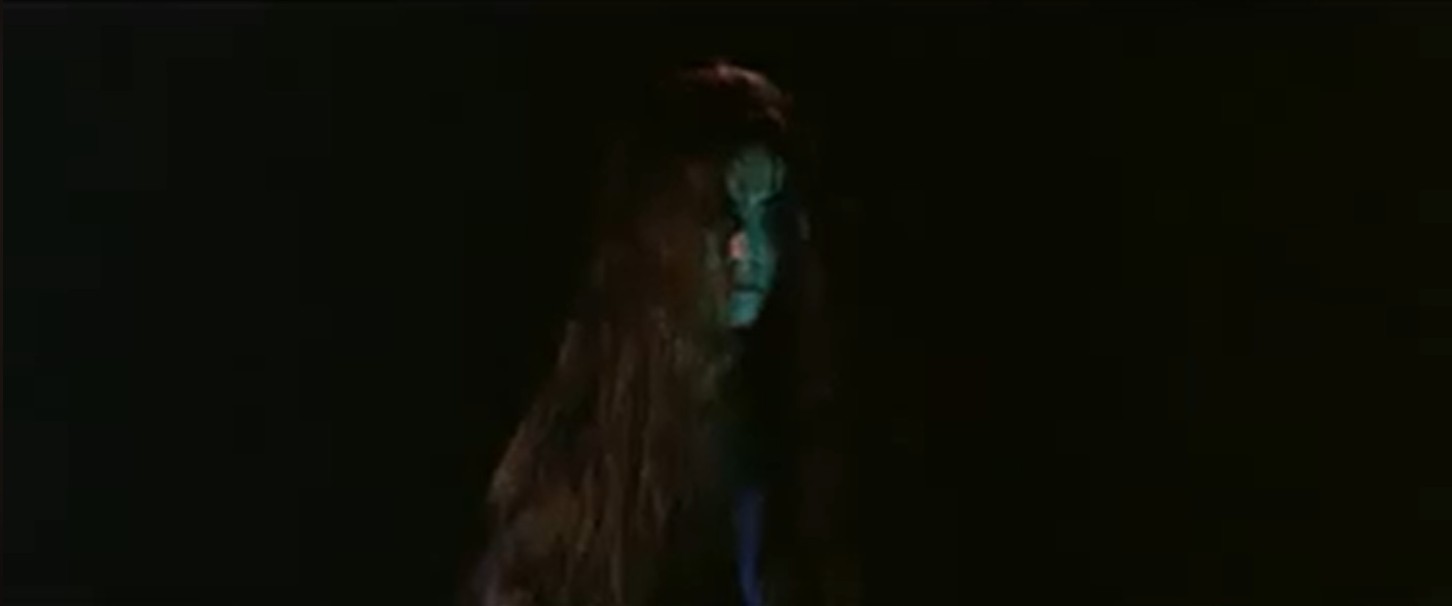
The Qing Dynasty of Imperial China is full of spiritual folklore, mysticisms, and romance.  Three tales of supernatural passion arouse not only enduring amorousness and longing desire but also strikes fear of apparitional ghosts and grudges into naive and honest souls from beyond the grave, crossing existential planes to be with intended suitors no matter the cost.  These stories will send a pining chill down your spine:  a traveling scholar bunks at an abandoned temple to find he’s enchanted by a young woman not of life and protected by a blood thirsty lady-in-waiting, a provincial governor crosses paths with a beautiful virgin while taking shelter at her home.  When he catches her nude, he’s willing to marry her to avoid her shame but little does he know she’s a lonely ghost searching for love and revenge against those who raped and killed her, and, lastly, an arranged marriage is foiled by the sudden death of a young mistress and the late arrival of the master because he was being robbed of a debt he owned the mistress’s family.  Unfulfilled in love and life, the young woman returns to court the young master with the help of her elderly servant who took her own life to make the love between them possible.  Not believing the rumors of her death and discounting the spirit warnings from those close around him, the young master falls in love with his intended bride despite the obstacles put in between them by the master’s servants, Taoist priests, and even a band of bodyguards. 

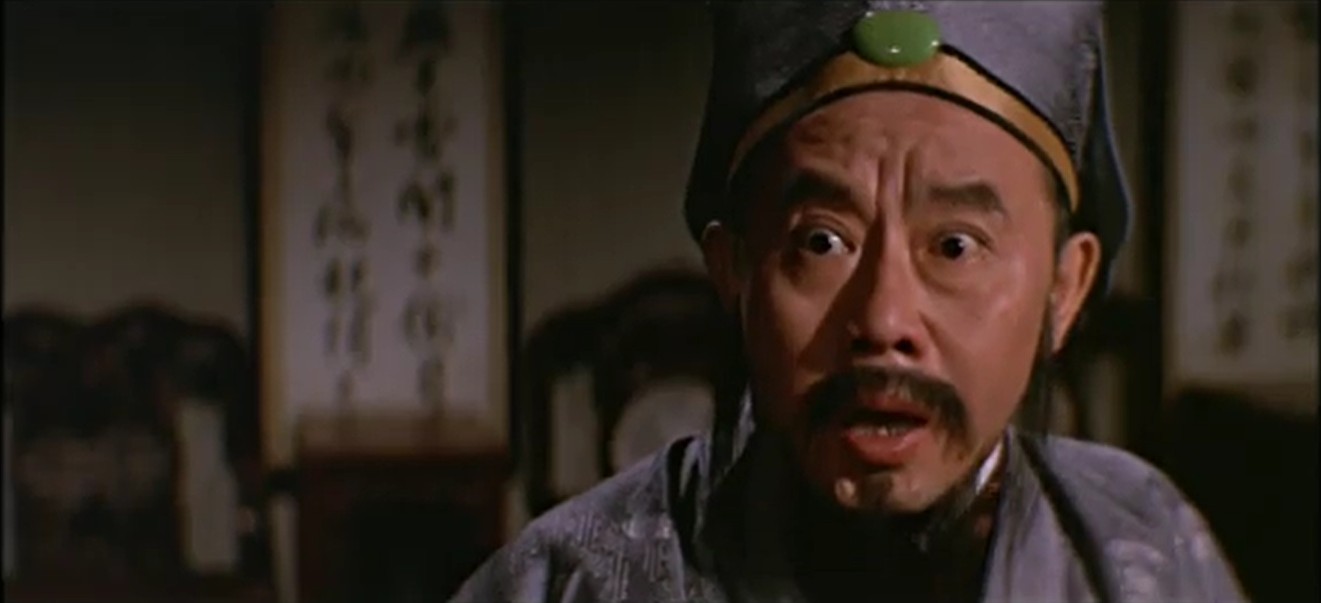
Australian distributor Imprint, under their sublabel Imprint Asia, has released the second volume of the Shaw-Shock:  Show Brothers Horror Collection with three more titles that fall within the release window of 1960 to 1973.  These adapted stories stem from and inspired by Songling Pu’s Liaozhai Zhiyi, aka Strange Tales from a Chinese Studio, which is a collection of classical Chinese ghost narratives, and they include the 1960 “The Enchanting Shadow,” directed by Han Hsiang Li (“The Ghost Story,” “Return of the Dead”) and written by Yue-Ting Wang and Wong Yuet-Ting, the 1972 “The Bride from Hell,” directed Hsu-Chiang Chou (director of “The Enchanting Ghost,” not to be confused “The Enchanting Shadow”) and penned by Tien-Yung Hsu, and 1973’s “The Ghost Lovers,” the only film of the three from Korean-born filmmakers, director Shin Sang-ok (“3 Ninjas Knuckle Up”) and writer Il-ro Kwak (“Ghosts of Chosun”).  Runme Shaw produces all three films in the Shaw Brothers production studio. 

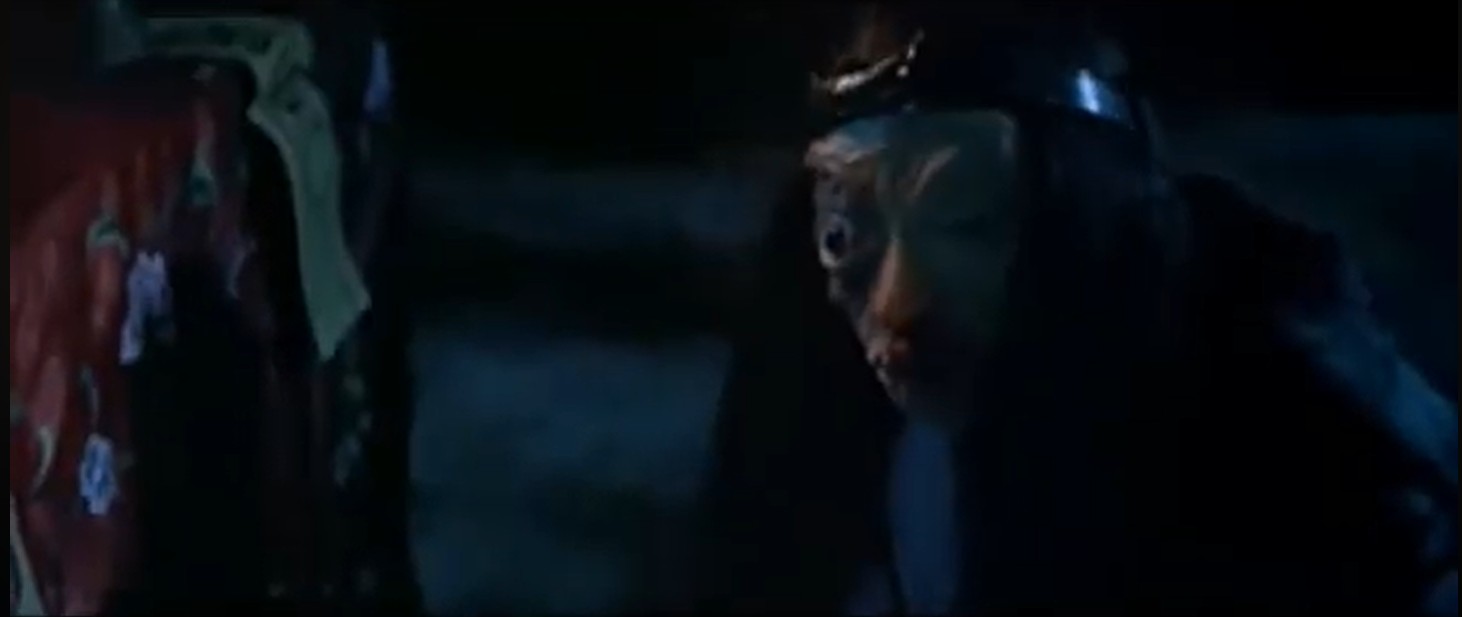
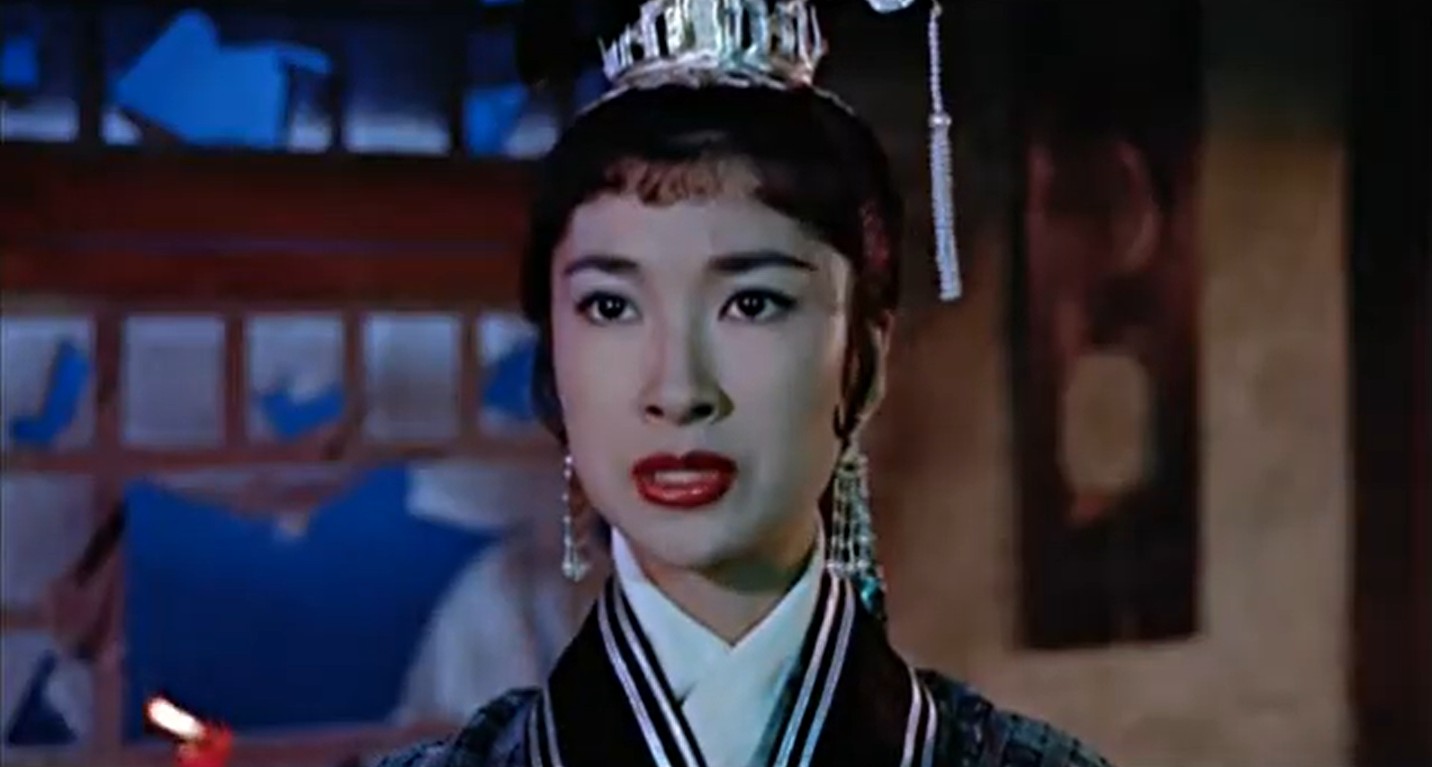
Other than being a Shaw production, each of the three stories are also connected by common elements – travelling male scholars or those high in station, a dead or recently deceased high-born woman in phantomic form, and the two intertwine romantically under false pretenses all the while Taoist priest, servants, or family of the living beg, plead, and even self-interject themselves in between the unnatural love affair to save the man from a wraith’s haunt, whether the affectionate intent by the ghost is malicious or benign, but each also differ in style and substance.  Lei Zhao (“Succubare”) plays a servant-less travelling scholar, Ning Tsai-Chen, unphased by the foreboding warning of ghosts and death of a dilapidated temple where those who stay the night don’t live the next morning.  Ning falls for adjacent neighbor maiden in Nie Xiaoqian (Betty Loh Ti) and between the actors there is a show of palpable and touching natural coquet that’s honorable to their period and to their characters’ hearts but their being from two different worlds puts up a marital blockade unlike in  “The Bride of Hell” that has generally has the same amorous bond between Yang Fang (Nie Yun Peng) and Anu (Margaret Hsing Hui) that eventually leads to marriage, but the Anu guileful portraying of a living is more deceitful to use Yang Fang despite also actually loving him in this more revenge based spookery involving Fang’s unscrupulous family members.  “The Ghost Lovers” also uses ghostly deceit to trick the master into a coitus cemented bond revolving and complicated around Han His-lung’s (Wei-Tu Lin, “Corpse Mania”) honor and shame and the affluent Sung Lien-hua’s (Ching Lee, “Sexy Girls of Denmark”) unfulfilled life and love before an untimely death.  There are of course the conflicts that get in the middle – the blood thirsty Lao Lao (Rhoqing Tang, “Brutal Sorcery”) aims to kill temple trespassers and Nie Xiaoqian suitors no matter how much a gentlemen they are, there’s the rape-revenge aspect in “The Bride of Hell,” and the sundry hindrances that try to keep the undead Sung and the alive Han from being unionized.  There’s quite a bit of hammy performances to digest in what’s relatively near being the same story said over thrice,  The three films fill out the cast with Chih-Ching Yang and Ho Li-Jen in “The Enchanting Shadow,” Carrie Ku Mei, Hsia Chiang, Chi Hu, Feng Chang, and Yi-Fei Chang in “The Bride from Hell,” and Shao-Hung Chan, Feng-Chen Chen, Ki-joo Kim, Ling Han, Han Chiang, and Mei Hua Chen in “The Ghost Lovers” as the belabor the melodramatics of ghostly fervor. 

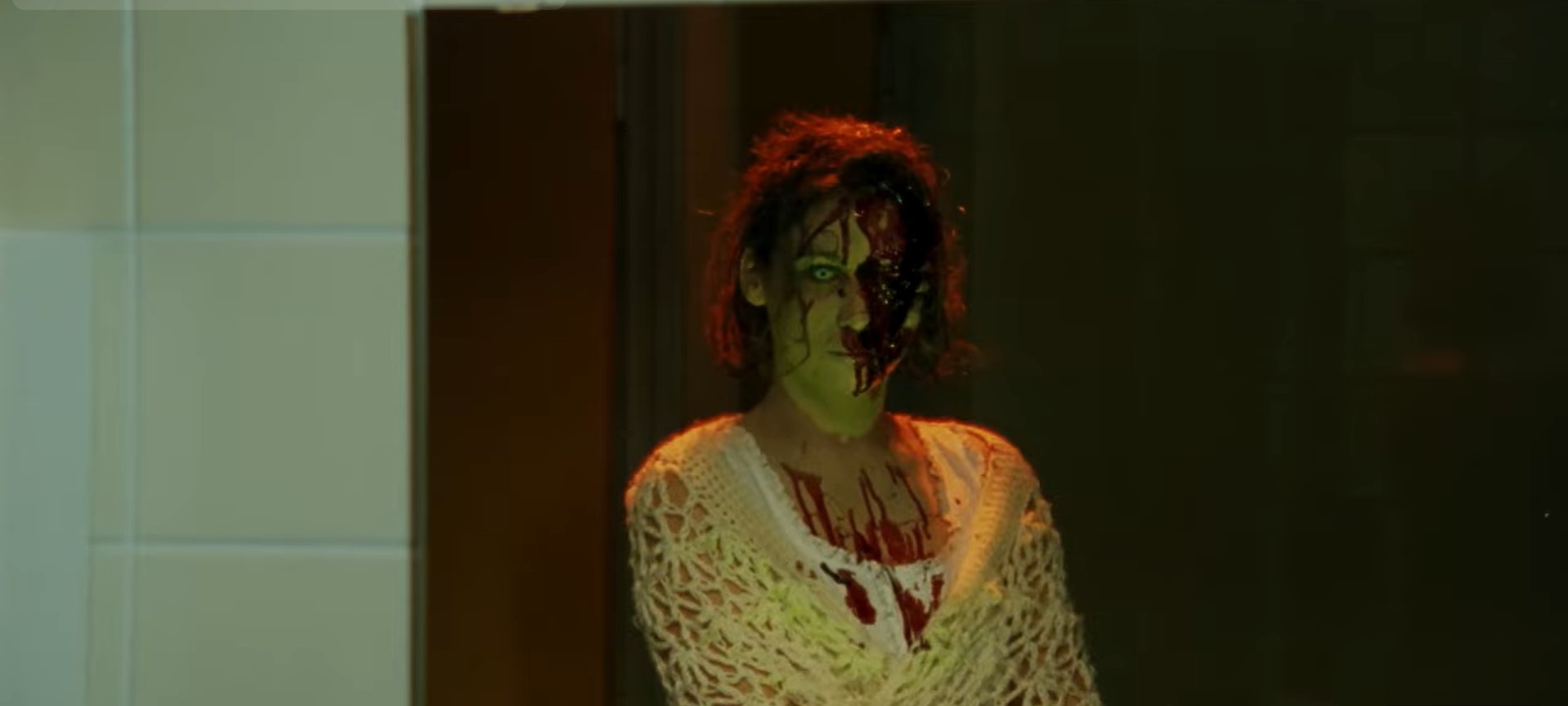
From a bird’s eye view, the Shaw Brothers productions appears virtually unoffensive and harmless period pieces set in the Imperial China with romanticized slices of fantasy in love after death, unstoppable passion, and an adherence to honor, principles, and duty to others, but a closer look reveals a darker sliver coursing through the supernatural palaver with it’s unnatural fascination of hooking up dead beautiful women with eligible scholarly men.  The most outlying and blatant example would be the rape-revenge narrative of “The Bride form Hell,” a coarse title that’s been spun into various renditions over the decades – take Quentin Tarantino’s The Bride from “Kill Bill” for example – by a woman embarking on path of retribution after being wronged in a maliciously despicable way and she uses everything to her advantage, even if that means marrying a relative, while a spirit I might remind you, of the men who raped and murdered her during their plundering of riches.  The film also doesn’t mind it’s hands a little dirtier with some nudity unlike the other two films of the set.  “The Ghost Lovers” isn’t as deeply disturbing with more of an untimely and unfortunate situation robbing mistress Sung of life and love and master Han of time and wealth that would have solidified a bond if the elements were not stolen from them.  There’s also a misunderstanding with fear of the unknown and a twisted sense of intent by humble servants and priests who distress of anything not of this plane of existence.  Much can be said the same about “The Enchanging Shadow” but that also deploys a countermeasure to the good heart nature of spirit Nie Xiaoqian as she’s balanced by her pure evil and bloodthirsty caretaker Lao Lao who between love and represents unholy demise.  Han Hsiang Li, Hsu-Chiang Chou, and Shin Sang-ok don’t stray too far away from each other when it comes to production set and scene compositions by keeping much of the storylines set during the mischief of the night when folkloric ghosts are more awake and present and keep the coloring cold contoured under grays, blues, and only hints of muted vibrancy outside the monochrome.  Special effects are kept close to the chest with fleeting rudimentary prosthetic and makeup, superimpositions to liven the ghost effect, and lay a dense fog in certain moments of atmospherics.  Combine all the elements infused with Chinese culture and superstitions and you get three stories that shutter with phantasmic passion. 

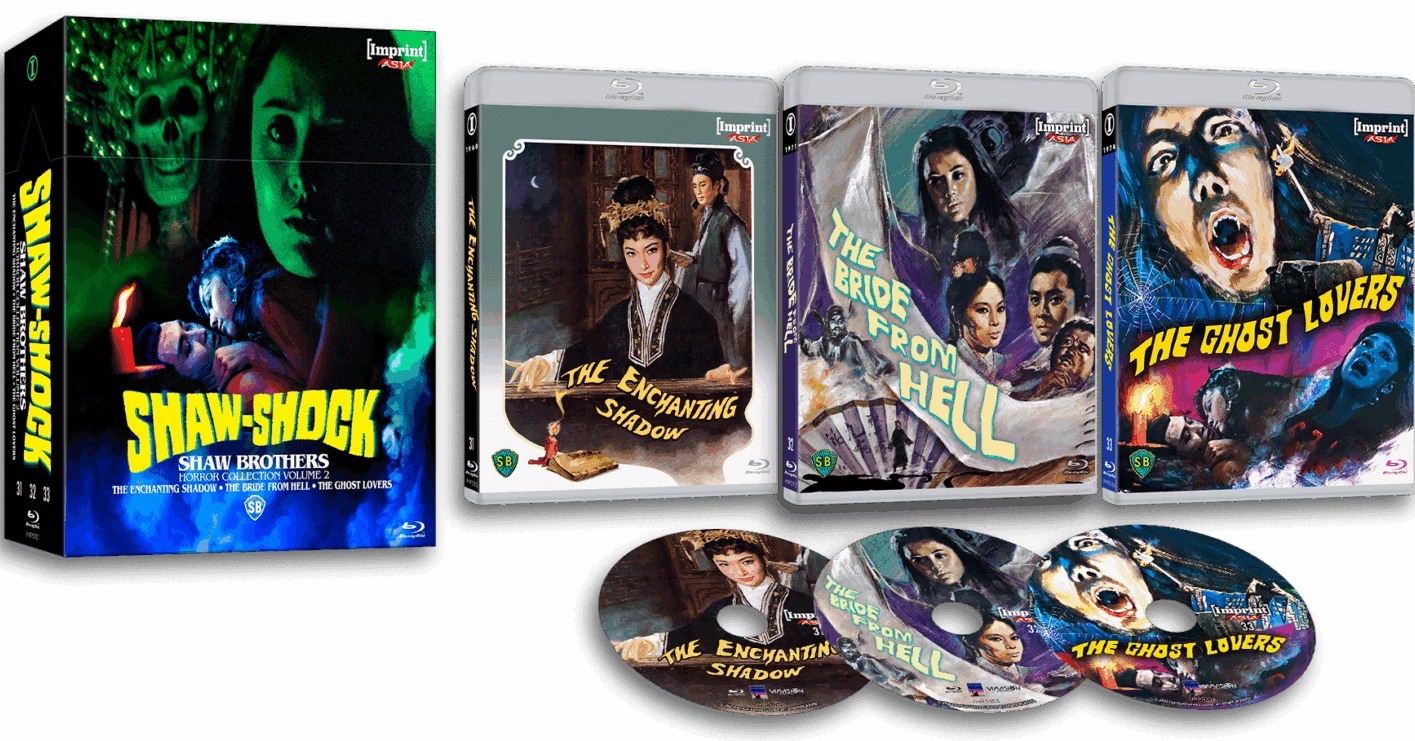
The Shaw-Shock:  Shaw Brothers Horror Collection Vol. 2 from the Imprint Asia line under parent company Via Vision is another awesome Shawtastic boxset that takes obscurity into the light.  The three disc Blu-ray set is AVC encoded, 1080p high-definition resolution, encoded onto BD50 is limited to 1500 copes.  Each included film is catalogue as numbers 31 to 33 in the Imprint Asia sublabel.  “The Enchanting Shadow” is the only one of the three presented in a 1.66:1 aspect ratio, transferred from a rougher print that has patches of cell damage and varied grading as if a couple of prints were spliced together.  There is a prelude title card warning of the quality so there should be no surprise when it does come up.  “The Bride from Hell” and “The Ghost Lovers” are presented a widescreen 2.35:1 aspect ratio and have used a cleaner print for the hi-def transfer with no notice of damage issues.  All carrier a softer, airy image from the film stock and film processing scans and combine with sharp key lighting, there is a glow effect around objects but not enough radiance to affect the diffusion of colors and smooth out details.  Skin tones often fluctuate between an organic and an orange tinge that can sway the perceived quality.   The much older “The Enchanting Shadow” from 1960 definitely shows its age with more muted earthly tones within its darker scaling.  Each film uses a compressed, spherical lens as the curvature is more severe than you notice in more modern productions, hallmarking Hong Kong’s utilized lenses during the decades.  All three films are in Mandarin with no other language option within a LCPM 2.0 audio format that adequate fills the front channels of dialogue, ambience, and soundtrack.  Dialogue and ambience is not immersive with the stereo mix but the ADR track is present and discernible with some noticeable sparse hissing in the dialogue and low level gurgling interference amongst more docile moments.  Along with the image damage, “The Enchanting Shadow” has counterpart audio damage with tears in the audio layer that pop and crackle during the damage breaks. English subtitles are available on all three titles and are paced well but the subtitles on the “The Ghost Lovers” come with a few grammatical and misspelling errors. New special features encoded on the releases include an audio commentary by author Stafan Hammond and Asian film expert Arne Venema, film historian analysis by Paul Fonoroff, an archival interview with director Hun Hsiang Li, and the original and DVD trailer for “The Enchanting Shadow,” the “The Bride from Hell” has a new audio commentary also by Arne Venema with the DVD trailer, and “The Ghost Lovers, too, has a new audio commentary from critic and filmmaker Justin Decloux with film scholar Wayne Wong discussing the film. The new encoded special features compliment the tremendous and substantial Imprint Asia rigid box set with a removable jagged tooth locked top that includes compositional artwork and permeated with the Shaw Brothers insignia. Inside, the three Blu-rays sit snug in individual clear Amaray cases, each with their own original cover art reflecting the original posters with the reverse side pulling a still from the film. The total runtime of all three films is 4 hours and 14 minutes in its region free, unrated capacity.

Last Rites: A triple threat of Shaw Brothers’ classics resurrected from the dead to haunt your collection! Imprint Asia’s boxset continues to recover unearthed Hong Kong and Chinese culture, folklore, and fantasy for new enthusiasts of the far East and avid collectors of physical media!

Shaw-Shock Horror Collection Volume 2 is Now Avilable for Purchase!

To Bring Life into Existence, One Must Go Through the unscrupulous EVIL Trials and Tribulations. “The Last Frankenstein” reviewed! (DiabolikDVD / Blu-ray)

“The Last Frankenstein” on Blu-ray from DiabolikDVD

Jason Frankenstein is the great grandson from a long ancestorial line of corpse reanimators.  Feeling unfulfilled in life and his destined legacy, Jason goes through the motions of being a hospital’s physician assistant and putting up with his less ambitious girlfriend, Penny.  When a disfigured serial killer is brought into his hospital, Jason immediately recognizes the shell of a man as his grandfather’s reanimated corpse brought back to life with the family’s secret elixir, Adrenarol.   Hiring two crooked, drug-dealing EMTs to do his kidnapping bidding in exchange for medical grade drugs and with the assistance of a confidential nurse with a disreputable past, Jason sets to complete what his grandfather started by creating his own living, breathing, thinking monster with the family reanimating formula.  Selective hacked up body parts, double-crossing henchmen, and a troublesome manmade man goes against his birthright grain with the only path forward soaked in the blood created by his own hands. 

Resurrected from the depths of just a concept and electrified by crowdfunded, “The Last Frankenstein” is alive, ALIVE!, from writer-director David Weaver in his debut feature length film.  The U.S. film from 2021 was set and shot in Weaver’s hometown of Amsterdam, New York, just northwest of the state capital of Albany.  Labeled as an existential slasher, extracted from Mary Shelley’s classic gothic novel, Weaver sought to recreate exploitation films of the 1970s-1980s with a raw façade, gruesome practical effects and gore, and an assortment of cynical characters in a story that tells of generational expectations, the pressures of living up to greatness, being the last of one’s family surname.  The Kickstarter production raised $13,500 for mostly the shooting costs with much of the post work being completed by Weaver to maintain low costs and is a production of Gila Films with Jay Leonard producing.

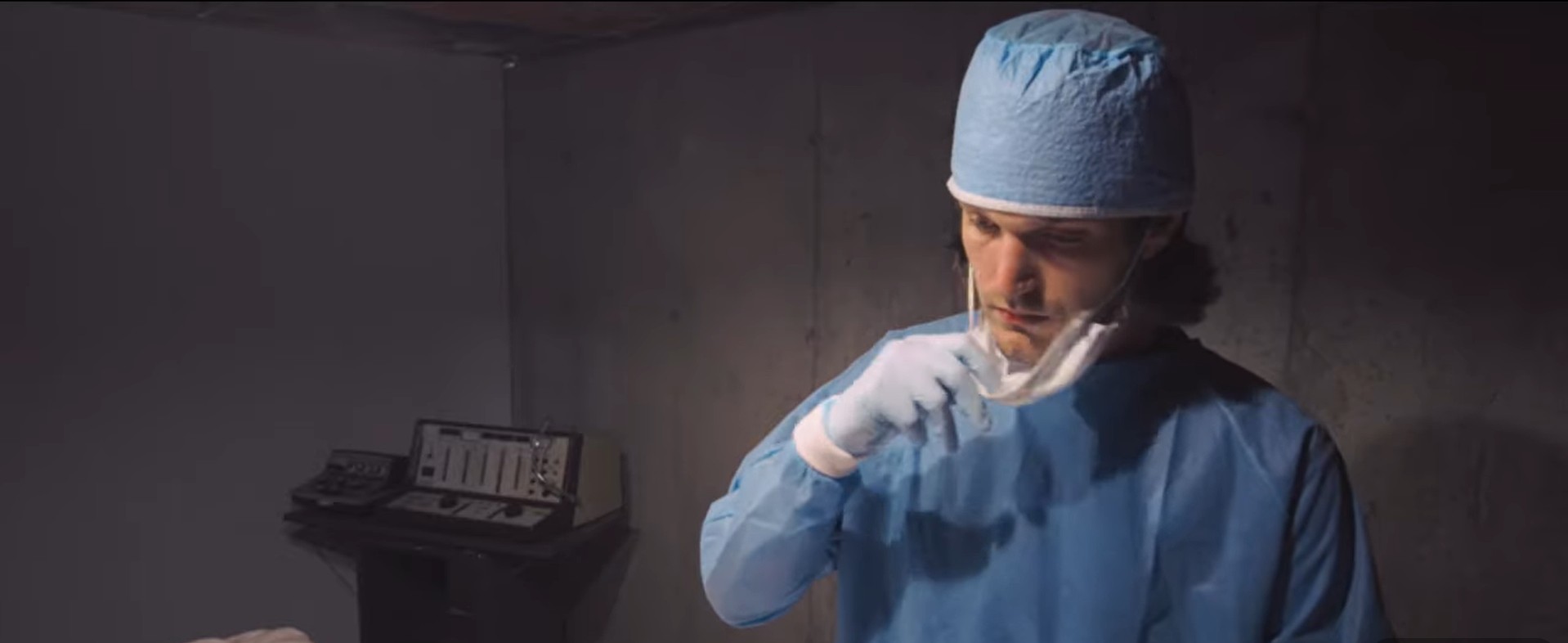
“The Last Frankenstein’s” acting tone is a curious one.  Complex with the desire to conquer death with footnotes of drug peddling and murderous EMTs, longing relationships and carnal stress releases, and death, much death, there’s a severe lack of emotion amongst the character pool, delivering a consistent and constant cadence of flat intonations.  The same expression is pretty much splayed onto each face with attitudes and personalities to match in a widespread of white bread acting.  In a way it works toward the story’s apathetic and cynical nature but while Frankenstein’s monster lives with a new life, “The Last Frankenstein” cast utterly is lifeless, beginning with the lead actor William Barnet in the titular role and though a doctors are conventionally attributes plainspoken, carry an unbiased inflection, and eve have some sense of being on the spectrum, perhaps, Barnet’s lukewarm woodenness extends beyond his reach and to the rest of the lot.  There’s no concern or fear in Nurse Paula’s (Keelie Sheridan) eyes when her acquaintance is killed by Jason Frankenstein or that the doctor is trying to resurrect the dead, no anger, resentment, or guilt from the two stoic ambulance drivers (Jeff Raiano and Ulisses Gonsalves) covertly dealing drugs and doing Frankenstein’s dirty work, and there’s definitely no life behind Frankenstein’s monster’s eyes, neither his grandfather’s nor his, that’s very opposite to the legacy portrayals by Boris Karloff’s sadness, Robert De Niro’s revenge, or Peter Boyle’s joy and fear.  This different take on the canopied story has the creature boiled down to a Jason Voorhees type, especially with eldest creature (Roderick Klimek) that looks very much like hockey mask slasher from the backside and even kills like him too.  Jason Frankenstein’s version, played by Michael Wetherbee, at least shows some reserve, some kind of calculation happening behind the flesh-stitched face, and does abide by his apathetic opportunity to kill but also resists the juggernaut chase to slaughter even if detrimental to his existence.  What that resistance is that holds him back goes without exposition or a vague sense of implicit explanation but it’s a performance that renders the most feeling in a rather frozen stiff guild of actors.  Jana Szabela plays Jason’s girlfriend Penny, Brett Owen plays Jason’s father in flashbacks, and cult actors Jim Boelsen (“Strange Behavior,” “The Curious Case of the Campus Corpse”) and the late Robert Dix (“Forbidden Planet,” “Horror of the Blood Monster”) also costar.

The creature’s Gothically enriched surroundings, darkly and bleakly trimmed with elaborate castles inside sinister castles and grotesque in unordinary shapes, styles, and hauntings, are more than replaced by David Weaver’s backwoods entry into the electrified monster.  Trading castles for cabins and grandiose laboratories for makeshift surgical rooms, “The Last Frankenstein” utilizes what’s immediately around, and in this case it’s Weaver’s hometown of Amsterdam, New York, a quaint, post-industrial smalltown surrounded by brick homes, rundown factories, and woodland that gives the story an unconventional look and approach while keeping true to the basic principles of Frankenstein and his monster.   With the idea that small towns hold secrets, “The Last Frankenstein” leans into the problematic drug problem less populated areas encounter with most turning a blind eye or ignorantly keeping their blinders down to the transgressions that are happening right underneath their noses.  In this instance, the drug dealing EMTs are utilized via blackmail but deal to come out better than before with more peddling product than before without risking exposure through a doctor approved sign out sheet for narcotics, which is how Frankenstein caught onto their scheme.  To dig deeper into that latter statement, Frankenstein is the smartest amongst his living peers but can’t seem to understand and figure out his and his ancestor’s creations that go against his family tree in a visceral and violent protest of what it means to live, promoting once again that anti-God actions spoil the fruits of man.  There’s a show of arrogance and false omnipotence to cheat the natural course of death found in all the Frankenstein subject films and those who create variations of the filmography, such as with “Re-Animator” and “The Lazarus Effect.”  

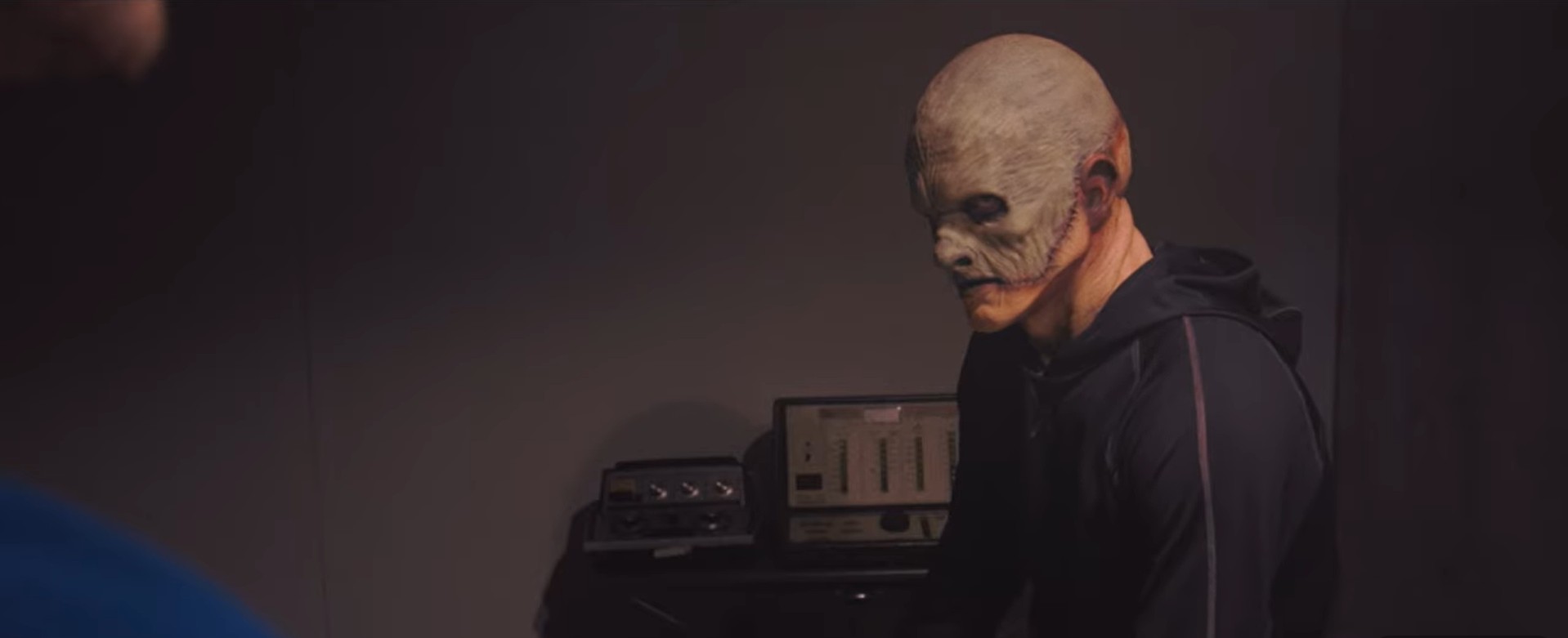
The film may be called “The Last Frankenstein” but it’s the first title with the DiabolikDVD label as a company release.  The AVC encoded, 1080p high-definition, BD50 Blu-ray is presented in the original widescreen aspect ratio of 2.35:1.  “The Last Frankenstein” favors a neutrally saturated raw image, capturing a lot of the natural greenery and aesthetic of nearby woods, creeks, and other characteristics of rural America, including trailer parks, post-industrial buildings, and wood paneling interiors.  The surrounding intricacies of a clearly puttied and latex mask used for the Frankenstein grafted facial skin looks like a true mask instead of skin but that’s the very intention of a created being, pieced together in slapdash stitchwork to add a layer of differentiation much like the original monster’s scars or bolt.  General particulars around exteriors and interiors are clearly defined with the consistent laid out image quality that produces ordinary smalltown charm contained to limited landscapes and mostly the direct environs that are not exactly cinematically picturesque but does depict the visual boredom of the vicinity.  The sole audition option is an English LPCM 2.0 stereo that reproduces faithful fidelity of the dialogue and diegetic action within the front channels.  The foley and Steve Noir’s poignant trance of a synth score are a little more girthier bodied to fill the entire medium that get to being comical in action (in foley) yet powerfully bleak and hypnotic (in score).  Dialogue is clean, clear, and in the forefront mostly, often vying for position with Noir’s repetitive and pulsing soundtrack portions. English SDH are optionally available.  Special features include feature-length commentary with writer-director David Weaver and producer Jay Leonard, a second commentary track with Weaver, a making-of featurette Reanimating the Last Frankenstein that goes through cast and crew interviews, the Kickstarter campaign, and a creation thought process for the concept and its materialized conception, deleted scenes, outtakes, still gallery, and a mentioned bonus easter egg listed on the back cover but unable to locate it on the disc. The reviewed copy isn’t the DiabolikDVD exclusive with limited slipcover, but the standard Blu-ray comes one-side cover art that actually requires the slipcover in its muted and dark composition of characters with no title, only the subtitle Nothing Lasts Forever, which makes me believe the slipcover is the one and only primary cover art. The 102-minute featured release comes not rated and region free.

Last Rites: Not to be a wash, rinse, and repeat of the canonical Frankenstein films, “The Last Frankenstein” is creature feature-lite in toneless, small-town adversities of creating an existence that requires life and limb…many, many limbs.

“The Last Frankenstein” on Blu-ray from DiabolikDVD

EVIL’s Ready to Rock! “Hard Rock Zombies” reviewed! (MVD Visual / DVD)

“Hard Rock Zombies” Rocks out on DVD! Check it Out Here!

A hair metal rock band will a killer ballad Holy Moses is on the verge of making it big time.  With a scouted gig at a venue in the small-town of Grand Guignol, Jesse, Tommy, Robby and Chuck are ready to rock the house with the help from band manager Ron but Grand Guignol’s narrowminded men and women, including the sheriff and government officials, will stop at nothing to cancel the show that has their children and teenage daughters enthralled with what the parents call scandalous rock’n’roll.  In favor of canceling and to sate their unquenchable bloodlust, a strange but wealthy eccentric family of perverse killers invite the band to play at their mansion only to kill them one by-one in a horrible death.  The town is not all full of bigots and murderers as Jesse’s rockin’ romance with Cassie, a daughter of Grand Guignol, plays an incantation cassette tape that rises them from the grave to seek hang-banging revenge! 

Femme fatales.  Dwarf-sized ghouls.  Werewolves in wheelchairs.  Voyeuristic snuff photographers.  Gas-crazy Nazis!  “Hard Rock Zombies” may thematically state rock’n’roll lives forever by way of tuneful necromantic resurrection, but the 1984 comedy-horror is a complete smorgasbord of absurdity.  Helmed by the India-born and Ivy League educated Krishna Shah  “Hard Rock Zombies” is a multifaceted vaudeville act set to the rock is the devil music trope.  Also alternatively known as “Rock Zombies” or “Heavy Metal Zombies,” Shah cowrites the metal music metastasizing script alongside David Allen Ball, both of whom would collaborate once and final more with the follow year’s teen comedy “American Drive-In.”   The in and around Los Angeles shoot is a production of the Patel/Shah Film Company with Shah producing and Shashi Patel serving as executive producer along with the debut of “Candyman” and “Lord of Illusion’s”  Sigurjon Sighvatsson and Steve Golin as associate producers. 

E.J. Curse, Geno Andrews (“Dr. Alien”), Sam Mann (“Roller Blade”), and Mick McMains make up the hair metal band Holy Moses and none of them had real acting experience.  The novice lot do their best to express themselves as an 80’s metal with large and heavily teased hair to produce maximum body and volume, tight and outlandish leather and revealing clothing, and apart from the competent and skilled skateboarding, move in antiquated dance moves familiar to the era.  They may not have a single convincing acting bone in their performance but credit to their overall appearance that speaks to the film’s title.  Though the band is intended central focus, they share a copious amount of screentime and development with the family of frightening agendas and secret identities.  The story even begins with attractive blonde Elsa (Lisa Toothman, “Witchcraft III:  The Kiss of Death”) seducing two young men to their demise while a slicked dress man takes pictures from the nearby bushes alongside two playful, dressed-in-black dwarfs, one human Mickey (Phil Fondacaro, “Willow”) and one monster Buckey (Gary Friedkin, “Cool World”).  It’s like a scene straight out of a David Lynch movie.  We learn this group belongs to an eccentric grandfather patriarch (Emanuel Shipow, “Biohazard”) and his wheelchair bound wife Eva (Nadia, “Dark Romances Vol. 1”) eager to strike down their next victims with clandestinely goosestepping and small mustache fervor.  Frazzled but loyal band manager Ron (Ted Wells) and Jesse’s Grand Guignol lover girl Cassie (Jennifer Coe) are seemingly the only two sane and rational characters who favor the sweet ballads of Holy Moses rather than the sinister genocide of an experiment happy dysfunctional family.  “Hard Rock Zombies” has an abundance of supporting characters and extras to give weight toward a Shah and company’s first-time production with a select secondary cast list of Jack Bliesener (“Crime Killer”), Richard Vidan (“Scarecrows”), Vincent Albert DiStefano, Christopher Perkins, David Schroeder, Michael David Simms (“Scarecrows”), David O’Hara (“Star Worms:  Attack of the Pleasure Pods”), and Donald Moran.

“Hard Rock Zombies” was probably more fun writing and performing in than it was piecing together a coherent narrative that spins like an unruly top going in unpredictable and varied wandering ways.  The amount of subplots against the core resurrection of a metal band erode the very essence of their supernaturally charged revenge because the primary focus on their rise from dead and how that resurrection incantation came into the rockers’ possession can quickly be forgotten as the exposition and the defining titular moment can be easily missed if you blinked for 0.0002 of a second.  There’s also the aforementioned circumstantial subordinate themes of adults and/or parents unwavering, harsh rebelliousness against the adolescent swooning hard rock and of the concealed true malevolent nature of the town’s murderous hodgepodge of a family that turn out to be bloodlust Nazis with an assumed case of monstrous, experimentational evil coursing through their veins, as seen with the unexpected shape-shifting wheelchair bound grandmother who can transform into a werewolf, complete with dual switchblades, and the ghoulie-like dwarf who eventually feasts upon himself into nonexistence.  “Hard Rock Zombies” transcends viewers into a bizarro world where, initially, seemingly plausible issues around an older generation’s labeling of infernal rock’n’roll music, stirring up townhall meetings and protests they see has harmful influence of the younger generation but then the topsy-turvy and screwball antics of heinous villainy goaled with and having already done committing atrocities is a complete farce on the actual, factual, historical events of ethnic cleansing.  Shah definitely makes light with the tone-deaf analogy with great zest and jest but without a more honed in effort and concentration on just the rockers back from the dead, this absurd 80’s comedy-horror fails to address its intentions.   

If not looking to spend a ton of money on the Vinegar Syndrome’s Blu-ray “Hard Rock Zombies,” the MVD Visual DVD is an economic alternative that won’t downsize your wallet.  The MPEG2 encoded, standard definition 720p, DVD5 suits this eccentric horror-comedy just fine, retaining its campy nature in the ballpark of an unrestored scan into 2K territory but still have the working print Vinegar Syndrome used for their high-def transfer, still presented in a widescreen 1.85:1 aspect ratio.  What’s encoded has not been sheened into an apt color correction and buffed with a higher pixel count for better, digital vivid saturation and better, digital defined textures, but “Hard Rock Zombies” is innocuous as the scenes require less eye squinting for finer details and a perverse need for range of color in what’s more of a surface-level squall of rock-infused, nonsensical horror.  Again, a technical spec that won’t knock your socks off and does muddle the fidelity quite a bit, the English Dolby Digital 2.0 Stereo has less amp, and this is where any kind of impact “Hard Rock Zombies” would have had hurts the most.  Extended Holy Moses montages and concerts, alive and dead, should be an unharnessed power of ballad rock and supernatural discords for a story driven by monsters and music, especially one that uses an Iggy Pop-like mumbling incantation to rise Jesse and his band mates from the grave.  English subtitles are available for selection.  MVD’s release is a purely a feature only substitute with no special feature and the standard DVD case has the same artwork as the Blu-ray counterparts, nicely tinged on its rad rock’n’roll and death illustrated cover art.  Another difference is the rating with MVD’s release coming in at a R-rating versus the NR Blu-ray from Vinegar Syndrome, yet this is most likely either incorrect rating or a re-cut of the film as both format features have a runtime of 97 minutes.  MVD’s DVD has region free playback. 

Last Rites: Rock’n’roll never dies! For “Hard Rock Zombies,” the phrase rings true with undead rockers seeking revenge from beyond the grave. For the DVD, there’s not enough overall elan behind the release to bang your head to in this barebones and untouched alternative that’s a good budget friendly option for the features only enthusiasts.

“Hard Rock Zombies” Rocks out on DVD! Check it Out Here!

Who Would Have Thought Something So Tiny Could Create So Much EVIL! “Cannibal Tick” reviewed! (SRS Cinema / Blu-ray)

Get Bit by the “Cannibal Tick” Blu-ray! Now Available!

Jeb believes his late father’s purloined gold is stashed underground in his densely wooded backyard.  What’ Jeb unearths is not gold, but barrels of chemicals Jeb believes to be just as valuable.  What Jeb doesn’t know about the pinched drums is the ooze inside leaking from them turns the local tick population into diseased carriers, transmitting a sickness upon biting their hosts and transforming the hosts into ravaging flesh eaters that continue to spread the disease with one single bite.  All hell quickly breaks loose amongst a sleepy backwoods around Big J’s outdoor food truck until a retired vampire hunter, Alec, turns his skillset onto the zombified undead when twin brother Roscoe becomes patient zero.  Big J’s famous menu items pig dicks and beer won’t save the rustic hillbillies from a fast-spreading contagion but one kilt wearing son of a bitch aims to take on all of them with a help of local and his vampire slaying colleague.  

If Lyme disease wasn’t already bad enough, chemically diseased ticks being the parasitic harbingers of the zombie apocalypse might just be the worst.  Like a premise straight out of Valve Corp.’s Half-Life series, co-directors Ross Carlo and William Long’s low budget, running zombie-comedy film, “Cannibal Tick” will leave more than just a bull’s eye symptom in its bloody, outrageous wake.  Mostly derivative from other running undead features, the 2020 feature length film is the debut and first collaboration efforts of the Eastern Ohio-Western Pennsylvania filmmaking duo with Long running solo in penning the screenplay of rednecks running rampantly through a serious case of tick-induced rabies.  “Cannibal Tick” is a production of indie companies Poo House Productions located in Youngstown, Ohio and of William Long’s Dark Long Productions of Northern Cambria, Pennsylvania.  William Long and Ross Carlo retain the producing credits as well as taking on principal characters as per standard in the microbudget, everybody-pitches-in productions.

In the spirit of low-budget creativity, Ross Carlo (“Rotten, Welcome to the Freak Show”) accepts his dual role fate playing twin Scottish brothers Roscoe and Alec.  Carlo invests himself into the accent while getting physical when the ticking timebomb explodes and all zombie hell unfolds in the armpit of Nowheresville, Pennsylvania.  His presenting of Alec and Rosco couldn’t be more different but still oddly the same as Alec’s has more of an interesting background as a retired vampire hunter visiting his brother, or rather just dozing off on Roscoe’s couch.  Roscoe, on the other hand, is purely just a boondock alcoholic without much of anything else going on other than the next pint and a handful of used tissues from his personal pleasuring.  William Long (“The Devil’s Wasteland”) also has a role in the film but just one as the gold feverish Jeb looking for his late pop’s buried treasure.  Jeb’s quiet nature is not imposing and he’s terribly forgetful or just doesn’t listen to his wife but neither scenario is really relevant to the story, much like most of the carrier scenarios and backgrounds other than Alec’s vampire killing skills translating over to zombie dispatching.  So many characters are quickly tossed into the mix of a 73-minute story that they’re unfortunately not well fleshed out nor provided enough substance to even instill an impression upon and what they reduce to is simply just fodder for the carnage for the sake of a high body count.  John Catheline (“Deadly Numbers”) is and plays a forlorn former wrestler Curtis lost in beer and solitude for his prime fight days and has become a local mechanic, Maurandis Berger (“Chronicles of a Serial Killer”) and Sheneefah Johnson (“3 A.M”) are a black married couple who find themselves broken down in a white hick town, and Lena Devinney and the late Jimmy Barber Sr. (“Deadly Numbers”) are the couple who arrive at the wrong place, wrong time as they drive up to Big J’s for some pig dick and beer.  The aforesaid descripts don’t go any further with no progressive dynamism that usually establishes either a love or hate development with audiences.  “Cannibal Tick” also feeds upon Greg Bailey, Allison Devinney, Donnie Lawrence, Tene Gossard, RahZhee Emmaunel, Lisa Dapprich, Iesha Guzzo, Jana Ferris, and Michelle Dominique Buxton to be bigger in the slaughter and in the slaughtering. 

“Cannibal Tick’s” concept is sound – a tick becomes affected by a barrel of leaking toxic chemicals that causes their bite to inject the zombie creating substance directly into the bloodstream.  Yet, the problem is there is only one scene with a tick bite and the Rosco-Long production goes from interesting to run-of-the-mill zombie chaos with zero principal protagonist power.  Another knock down is the substandard traits of an extreme indie production that relies heavily on the character captivation and special effects caliber to be successful in a demanding market driven by those factors.  The former has been touched upon in great detail, but the special effects pull ahead as Michelle Dominique Buxton, who not only has a character role but is also the special effects makeup artist, is able to pull off a few interesting prosthetic monster looks as well as a decapitation death that in all honesty is really well done in framing and effect.  While the solid zombie carnage infects survivors left and right with a ferocious appetite, the narrative then evolves with Jeb’s direct ooze contact, transforming him into some similar to a zombie king that sets up “Cannibal Tick” to a potential sequel in the future.  However, that sequel hasn’t crawled its way to fruition just quite yet.

The blood thirsty arachnid with a zombifying bite buries itself onto a new Blu-ray release from SRS Cinema.  The AVC encoded, mastered 720p resolution, 25 gigabyte BD-R with the purple underbelly.  While typically unusual for a Blu-ray to be in standard definition, SRS Cinema’s certainly no stranger to their films being filmed in 720p, thus the format, but video, as well as audio, suffer quality buckling, especially when encoded onto a one-time writable disc that has its own technical limitations.  “Cannibal Tick” sees quite a bit of those technical woes in its compression codec from banding, splotchy macroblocking, and loss of overall finer details.  Many of the action scenes are done at night with little lighting and decoding struggles with delineation and details, especially when the use of commercial filming equipment was used.  The film is at least presented in a widescreen 1.85:1 aspect ratio.  The English audio isn’t written or displayed on back cover, but this does render through the receiver output as an uncompressed 2.0 mix that channels a dialogue and ambience stream through to another channel of a stock score.  Obvious lack of refinement housed in a lower bitrate captures less isolation efforts on the dialogue, leaving disruption to run interference that spike and subdues pitches and tones, but the dialogue strength has solid recorded quality from a well-placed boom.  Other than that, there’s not a good dynamic range other than zombie growl and gurgle to give “Cannibal Tick” a semblance of audio body.  Special features include raw footage of behind-the-scenes of stunt sequences and makeup effects without narrative context, the original trailer, the official SRS trailer, and trailers of other SRS Cinema catalogued films.  The standard Blu-ray contains original artwork of a large, translucent, yellow tick overtop a blood smeared, presumably, zombie woman that speaks greatly to and has intrigue appeal of an ultra-indie film.  With a runtime of a little over an hour, marking at 73-minutes, SRS Cinema’s release comes region free.

Last Rites: Ultra low-budget, rough-and-ready, and imitative in a rustic sense, “Cannibal Tick” drains interest and captivation with the film’s throwaway moonshine characters caught and released in the throes of a backwoods zombie outbreak.

Get Bit by the “Cannibal Tick” Blu-ray! Now Available!

Not a Plague of Rats Could Stop EVIL’s Obsession. “Nosferatu” reviewed! (Universal Films / Extended Cut Blu-ray)

Experience “Nosferatu” in 4K UHD or Blu-ray. Purchase Here!

Wisborg, Germany, 1838 – Thomas Hutter is a promising real estate apprentice appointed travel six weeks to the Carpathian Alps to settle on Wisborg real estate for the reclusive and mysterious Count Orlok.  Thomas Hutter is also a newlywed, married to the lovely Ellen Hutter whom together Thomas plans to solidify their proper social status with the wealth of this trip away from his wife despite her pleas for him to stay.  Upon meeting Count Orlok in his dark castle, Thomas is overcome by his host’s undying evil presence that confines him to the grounds while Orlok psychically holds spellbound Ellen’s mind to a fretful state.  When Thomas escapes, he makes it back home at the same time Orlok arrives by ship that brings a plague of rats to the city of Wiseborg as well as a nasty blood-loss disease affecting population.  As Thomas warns of Orlok’s intentions, discredited Prof. Albin Eberhart von Franz knowledge of the occult sees through the rat-plague and into the dark heart that has cast its shadow over the city and into Ellen Hutter’s soul.   

The acclaimed folkloric horror director of “The Witch” and “The Lighthouse” sinks his teeth into one of the most renowned classical villains of our time, a vampire known to most as Dracula and revised, at times, up to the Robert Eggers take on the timeless “Nosferatu” tale.  Eggers’s 2024 adaptation of Bram Stoker’s novel and the 1922 F.W. Murnau silent picture, “Nosferatu:  A Symphony of Horror,” written by Henrik Galeen, is also penned by the director, revamped to tell both classic narratives in a way that is his own and that’s reflective of his slow burn gothic dread style.  “Nosferatu” is a Focus Features presentation from the productions of Birch Hill Road Entertainment and Studio 8 as well as produced by Eggers alongside the industry esteemed Chris Columbus (“Home Alone,” “Harry Potter”) and daughter Eleanor Columbus under their Maiden Voyage Pictures co-founded company.

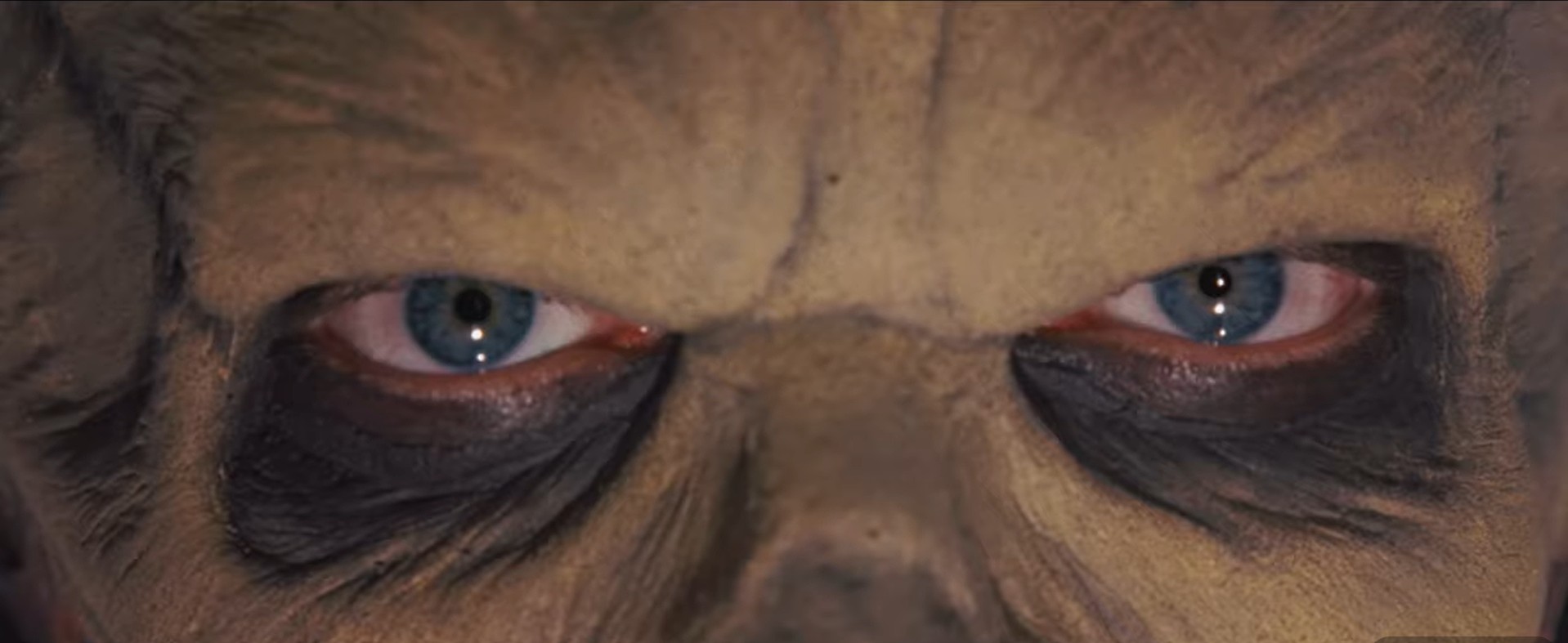
Stepping into the tall, slender, blood slurping role of the titular character, under a full-body prosthetic suit of what is essentially a rotting corpse with a wicked mustache, is Bill Skarsgård, the actor who is quickly rising to the top of heavy makeup and effects characters while making the star-studded Skarsgård name synonymous with horror in his breakout film playing the maniacal demon-clown Pennywise in the film remake adaptation of Stephen King’s “It.”  Skarsgård’s baby face is completely enveloped in the ancient Transylvania nobleman Count Orlok with a high-bridge nose, protruding and high cheekbones, a vertically elongated face, and a sparse hair straggling through presumably a latex mock of decaying skin.  Skarsgård also modulates his vocal chords to reach deep, resonating levels that gives Count Orlok an additional tier of terror.  Undoubtedly, Count Orlok is an omnipotent, powerfully entrenched presence brought to existence by Skarsgård and accentuated and elevated even further by Lily-Rose Depp in Orlok’s obsessive muse of Ellen Hutter.  Through choreographed body manipulation and control, the daughter of Johnny Depp has since put the gum-chewing, wise-cracking, convenient story clerk “Yoga Hosers” role behind to redefine herself as an austere period and physical role actress willing to go the extra mile for the story.  Nicholas Hoult (“Warm Bodies,” “Mad Max:  Fury Road”) updates his Dracula film resume with another after having just come off the heels of playing the titular character in “Renfield” to Nicholas Cage’s grotesquely campy version of the Prince of Darkness, but there’s nothing intentionally campy about this Stoker story nor his role as Thomas Hutter with first-hand experience of Count Orlok’s monstrous dysphoric plague in what would be, too, another physical, yet less so, role for Hoult as a concerned husband fighting for his wife.  Speaking of roles, or films, that come around again for certain actors, Willem Dafoe passes the torch of Count Orlok from his Max Schreck performance in “Shadow of a Vampire” and takes on the elder Professor von Franz, a once esteemed learned man of science and knowledge now a discredited scientific explorer of the occult brought in to see to Ellen Hutter’s feverish nightmares and hallucinations.  Dafoe’s just as spasmodic and expressive as ever to be a part of those knowledgeable opposition of the vampyr realm, giving prominence to the character Dafoe has bordering as a mad genius of sorts with eccentric behavior that never allows to be compassionate or otherwise emotionally driven, like a true scientist.  Principal cast rounds out with Aaron Taylor-Johnson (“Kickass”), Ralph Ineson (“The Witch”), Emma Corrin (“Deadpool & Wolverine”), and Simon McBurney (“The Conjuring 2”).

As much as Eggers wanted to make “Nosferatu” a scary film while staying to the themes of obsession and Stoker and Munrau’s core elements, the film only manages to scare up a couple of true moments of hold-your-breath terror with panning shots and swelling scores that composition a seat jumping jolt.  Like most of Egger’s previous work, a continuous course of dread, which the filmmaker produces well in droves, meanderingly streams through the narrative that slowly builds with each closing in step Count Orlok takes toward obtaining Ellen Hutter’s willing submission to him.  Between the 1922 and 2024, both films play the love-triangle card of a married couple’s happiness being compromised by a tall and dark outsider entrancing, enthralling the wife, diverting her loyalty by any means possible.  In this case, those means are to blackmail her by holding the city hostage to plague of rats and draining her of the loved ones surrounding her.  However, the genesis of Orlok’s obsession is built upon brittle sticks with a prologue that hamstrings a powerful, psychic ability unwittingly used by Ellen Hutter to awaken the ancient evil.  The whole origin of events feels threadlike and happenstance, perhaps to instill more mysterioso of the antediluvian universe on a smaller scale obsession story.   Aesthetically, “Nosferatu” follows the Robert Eggers’ cinematography trend of blacks, grays, and a reduction to dull of primary colors for a gloomy period piece of cold weathered melancholy and bleakness under the continuous collaboration camerawork eye of Jarin Blaschke, marking their fourth feature together that implements inventive, complicated shots to sell practicality as fantasy in an early 19th century European context.  Blaschke’s aesthetic style would not have worked without the makeup and prosthetics for Count Orlok as a decrepit evil nobleman juxtaposed against the period costuming and elevated higher by the massive set designs of creating the Wisborg city as well as all of the other sets built to scale on acres of movie lot land. 

Robert Eggers and “Nosferatu” is the match made in dark heaven to give that classical rebirth the kick in the Dracula cape it desperately needed for Universal.  The at-home, Blu-ray release brings the darkness into living room television sets and other media players with an AVC encoded, 1080p high-definition, BD50.  Eggers is also so fine and particular on detail, such as with all the production value listed above and the retro design company opening credits, “Nosferatu” is also presented in a European widescreen 1.66:1 aspect ratio used in antiquated times of the 60s to early 90s in Europe, to which this story is fictionally set.  The Universal Films release houses both the theatrical version and extended cut at their respective runtimes of 132 minutes and 136 minutes, which is pretty incredible being both versions compressed onto one disc and, in the same breadth, had me concerned for artefacts in what’s surely a beautifully dark and tenebrous veneered Egger feature.  However, low and behold, no signs of posterization or banding to speak of with a saturated void to keep the shadows menacing rather than murky or milky.  The overall grading is quite dark with a deep bluish hue that enriches the time piece as well as the gothic tones.  The unnatural density of color saturation leaves natural skin tones to sake of reality, but the details do emerge here and there when shadow play, mostly around the presence of Count Orlok, is abridged for quotidian life without the encroaching dread of supernatural omnipotence.  Both formats are encoded with lossy audio mixes, a quite of a bit of them actually, with an English Dolby Atmos, Spanish Dolby Digital Plus 7.1, a French Dolby Digital Plus 7.1, and, lastly, an English Dolby Virtual Speaker (DVS) 2.0.  The Dolby Atmos is tuned for a 7.1 configuration, emitting immersive and resonating sound to which “Nosferatu” laps up in luxury.  The most notable aspect of the entire design goes, without question, to Skarsgård voice modulation for Count Orlock, a deep, guttural, European-accented assertion of all-encompassing faculty highlighted in every scene when, even more so when Orlock is not physically in frame.  I like to think Robert Eggers is the Wes Anderson of horror when it comes to dialogue and entourage of ensemble casts and with dialogue range and depth that’s dynamic to flow with the ever-presence of physical change or to swell or diminish a moment.  Dialogue is also stable, clear, and without dodgy interference, the spatial environment diffuses and disperses nicely through side, back, and even upper channels in Atmos and, the illusion provided, in DVS, and LFE finds a proper level without overwhelming cataclysmic plagues, fever dreams, or Orlok’s dreadful lust.  Opted subtitles are available in English SDH, Spanish, and French.  Bonus content includes a feature length parallel commentary with writer-director Robert Eggers, a lengthy behind-the-scenes featurette with interviews from cast and crew, and deleted scenes that can be seen in the extended cut.  The Blu-ray, plus digital code, release comes with white-black and grayscale in between cardboard O-slip with the same Lily-Depp Rose’s face being caressed by Orlok’s sharp-nailed and decrepit hand image also as the cover art on the Amaray case.  Inside, you’ll find the digital code stage right while the disc is pressed like most of all of Universal’s home video Blu’s with a near translucent quality to them.  Theatrical cut is rated R for bloody/violent content, graphic nudity and some sexual content and the extended cut comes not rated.  Though not listed anywhere on the cover or disc, the Blu-ray is encoded with region A playback only.

Last Rites: Robert Eggers shoots his shot working his dream story under a major Hollywood studio providing him with a major Hollywood sized budget. “Nosferatu” is every bit of Eggers, carved out and etched to the gothic and folkloric perfection that has quickly skyrocketed his brief career and the eclectic cast stuns in their own right with otherworldly and creepy performances that revives ole’ Count Orlok back to from the celluloid dead.

Experience “Nosferatu” in 4K UHD or Blu-ray. Purchase Here!