Let EVIL Free You! “Jakob’s Wife” reviewed! (Acorn Media International / Blu-ray)


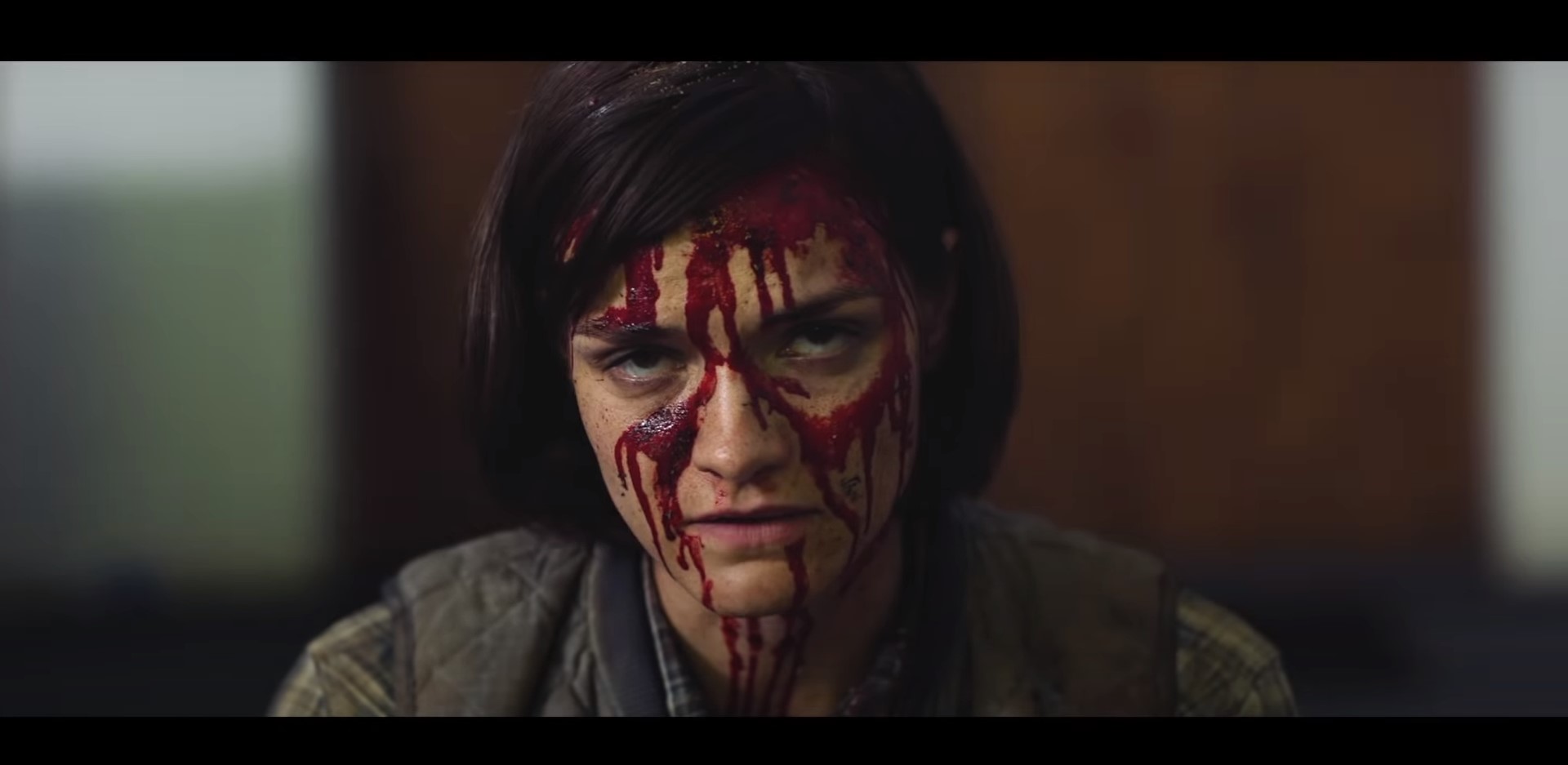
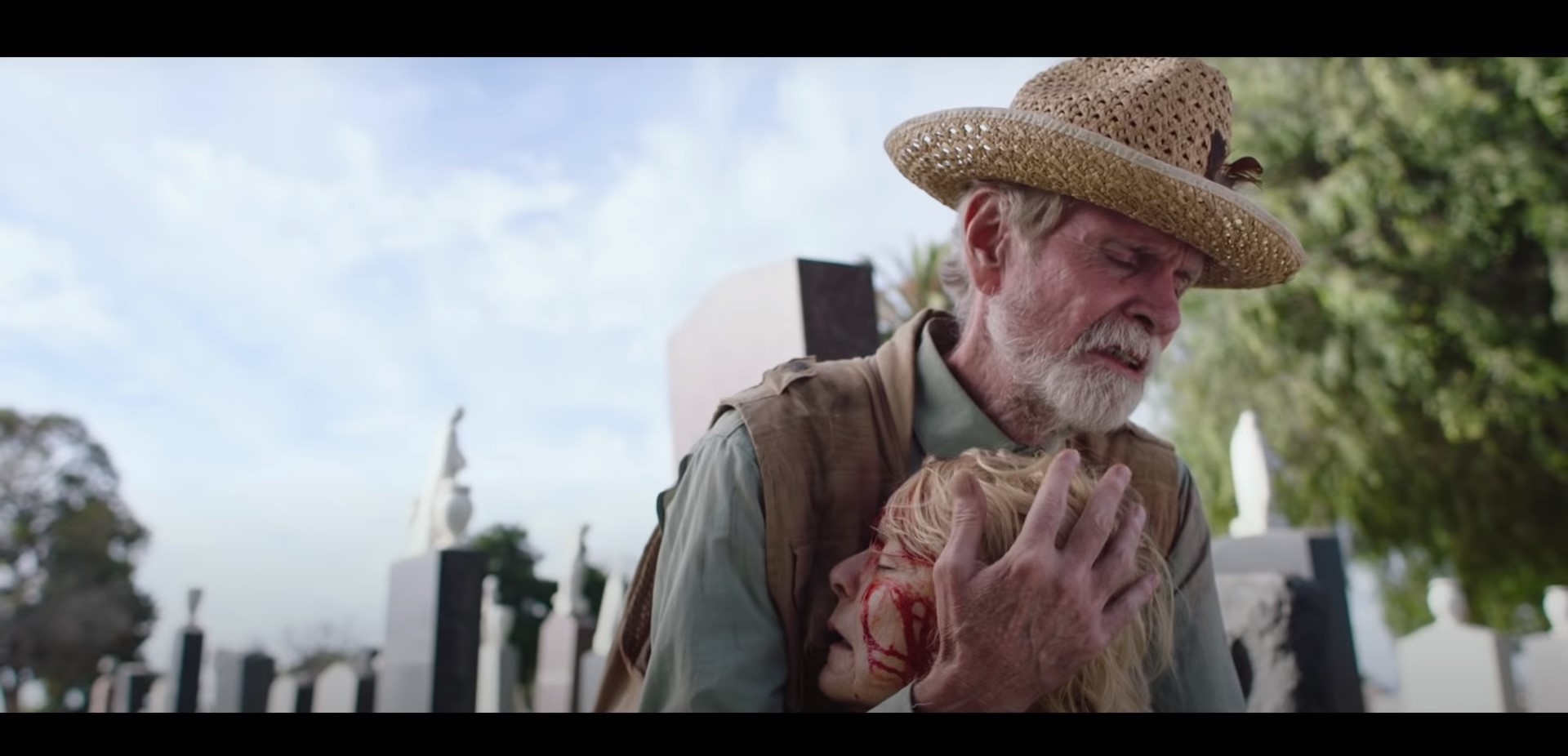
Anne is a minister’s wife living in a dying small town where the only thing left for the residents is their faith.  Once inspired to travel and do something meaningful with her life, Anne has found that the last 30 years of marriage to Jakob has robbed her of her self-empowerment, diminishing her as nothing more as than just Jakob’s wife.  When the opportunity to impress an old fling during a business trip turns into a nightmare with an attack by a shrouded figure in a rundown, vacant mill, the disorienting days after having provided Anne with a sense of expressive freedom, a chance to be bold, and to feel more alive than she has felt in years.  Her new lease on life comes with a ghastly cost, a severe hunger for blood.  With the help of Jakob, they realize the dark forces of a vampire has infected Anne and their road back to normal life, a life where Anne is dull and drab, will the paved in blood. 

Horror is such a versatile and malleable medium to convey allegorical messages, drawing audiences into the writer’s or director’s world of the fantastic and the horrific while laying down a subfloor of real world truth most passionate to them in a social, religious, or political context.  To point out a few examples (most of us already know), George Romero was renowned for his multiple social commentaries throughout his “Living Dead” series and a slew of vampire films construct the bloodsuckers as metaphors for an addict going through the ugly turmoil of addiction.  “Jakob’s Wife” is a different kind of vampiric allegory film that bites into feminism values.  The “Girl on the Third Floor” writer and director Travis Stevens follows up his introductory haunted house film with an inverted Nosferatu-esque dark comedy co-written alongside “The Special” screenwriter, Mark Steensland, and the “Castle Freak” remake’s Kathy Charles.  The Canton, Mississippi location evokes the dried up, small Southern town aimed to build a depression enclosure around the titular character.  Barbara Crampton’s Alliance Media Partners, whose spearheaded creative and imaginative films such as Justin Benson and Aaron Moorhead’s Sci-Fi cult looper, “The Endless,” and the Romola Garai demonizing guilt film, “Amulet,” presents “Jakob’s Wife” in association with executive producer Rick Moore’s Eyevox Entertainment (“Purgatory Road”) at one of the banner’s production studio locations in Canton, Mississippi.
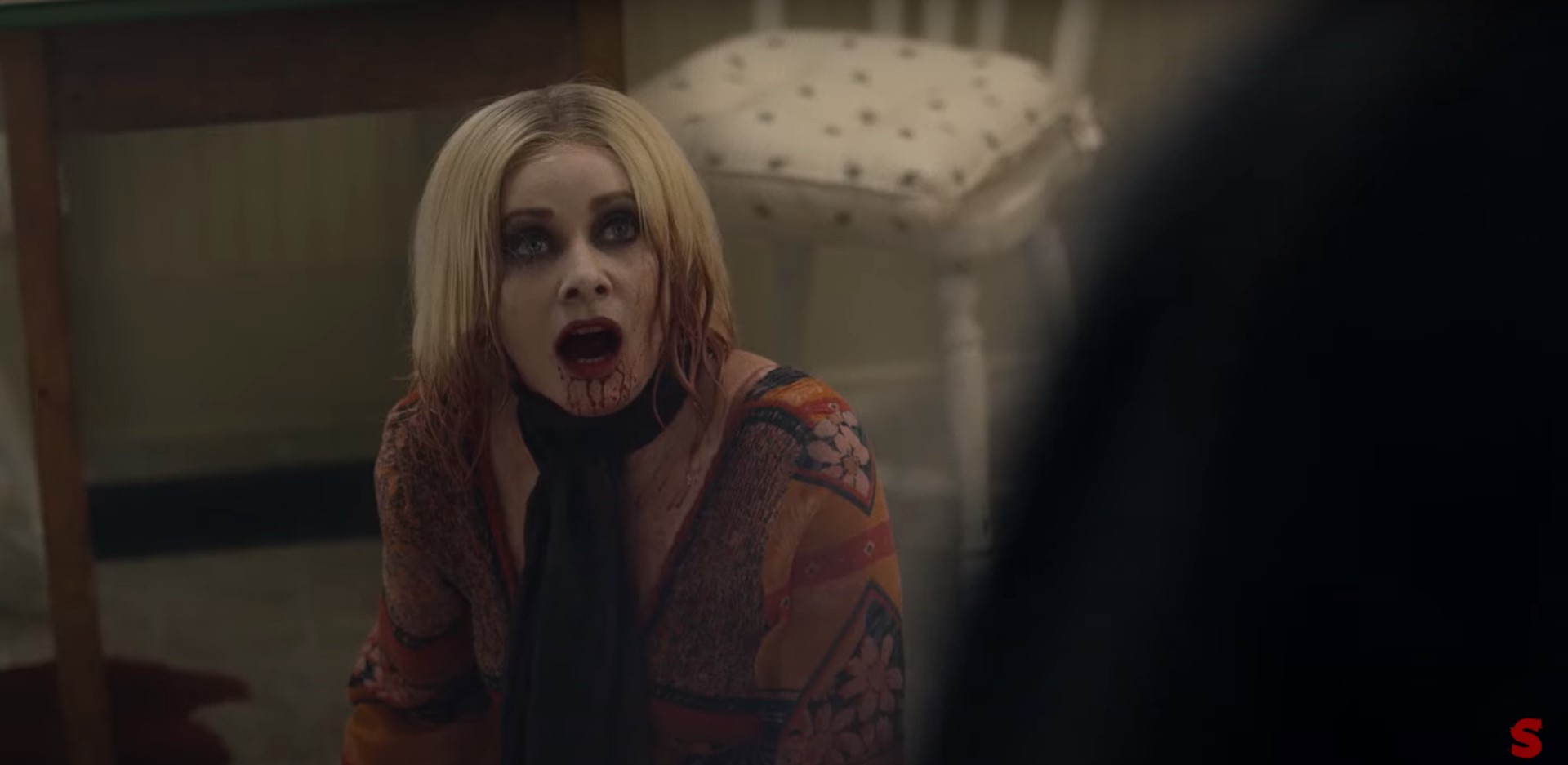
In concurrence as a producer of “Jakob’s Wife,” scream queen of horror legend, Barbara Crampton (“Re-Animator,” “From Beyond,” and most recently, “Sacrifice”), steps into the torn role of the titular character.  In Stevens’ direction, as well as Crampton’s portrayal, Anne is so diminutively overlooked in the first act, you’ll hardly notice her even though Anne is practically in every scene.  Between Jakob’s interruptions, meek output, and overall quiet behavior, Crampton’s able to exact the very essence of the idiomatic phrase the calm before the storm.  Also, I must mention, just like I’m sure others have already pointed out, the early 60s Barbara Crampton looks smokin’.  She must have been bitten by an actual vampire in order to seemingly de-age right before our eyes.   Larry Fessenden, who does age accordingly but also very handsomely in his genre characters, is the God-fearing minister playing opposite Crampton.  The “Habit” and “Jug Face” actor has always been quite the character actor and as husband Jakob, that beneficial streak continues as an old ways man of God with an innately built-in chauvinistic ritual of keeping everything the same day in and day out.  Jakob’s absentminded blinders suppresses Anne into a depressive submissive state until she comes across The Master, the sorely underutilized and shamefully absent from more screen time chieftain vampire played superbly by Bonnie Aarons in an unexpected female version of Nosferatu.  Aarons gives her best Max Schreck performance while commanding a distinctive mentorship that’s unusual for the vampire race; The Master is greatly highlighted in the most subtle of ways as being a repressed liberator and Aarons understood that compulsion to educate, revitalize, and blossom others by offering a new kind of death, the burgeoning power and desires of a vampire, from their previous one, a rather dull life stuck in a no-win circumstance.  “Jakob’s Wife” rounds out the cast with Jay DeVon Johnson, Phillip “CM Punk” Brooks (“Girl on the Third Floor”), Robert Rusler (“A Nightmare on Elm Street 2:  Freddy’s Revenge”), Angelie Simone, Mark Kelly (“Dead & Breakfast”), Sarah Lind (“The Exorcism of Molly Hartley”), Omar Salazar, and Nyisha Bell.

“Jakob’s Wife” is a treasure trove of feminism and lesbianism undertones that stands on higher ground without pulverizing masculism to a pulp.  There’s seemingly little-to-no ill will against the minister Jakob Fredder previous inattentive and subservient expectations of his wife Anne.  Anne even becomes conflicted by her newfound self, a rebirth of life that sheds the shackles of monotony and, as it were, it’s overstepping masculinity, and she questions the power, she questions her choices, and she maintains the unity of marriage despite a little taste of tantalizing freedom from it all.  The Master becomes the allegorical test of faithfulness to another in a bored housewife scenario and I’m not talking about Anne’s old high school fling Tow Low, played by Robert Rusler.  I’m speaking of the lesbian undertones involving The Master, a female vampire who stood in Anne’s shoes and was turned, in more ways than one, toward a new path.   The Master sparks a long-lost fire in what is now only a shell of an unhappy woman and Travis’ scenes of Anne touching herself, mimicking The Master’s moves, plays into theme of fantasizing about that other woman and what secret they share, being perhaps symbolically the intimate nature of the attack that puts Anne into The Master’s craving sites.  The innuendo is rich and robust and coupled with fire hose sprays and gallons upon gallons of an unquantifiable amount of blood and gratuitous violence, “Jakob’s Wife” is the vital vampire film of 2021. 
Darker powers answered the call of Anne’s internalized prayers. I don’t even think Jakob’s God even picked up the receiver. In any case, pick up your copy of the RLJE Films and Shudder exclusive, “Jakob’s Wife,” on a full high-definition Blu-ray releasing next year, January 17th, 2022, courtesy of Acorn Media International. The PAL encoded, region 2 BD25 is presented in a widescreen 1.85:1 aspect ratio. Compression issues have never really been a problem for the Acorn Media releases that detail and texture greatly under “Jakob’s Wife’s” austere color palette that favors more of a nature fixture than a stylish one. Darker color tones, such as the blood, are viscosity rich looking and, perhaps, the most color the film plays to its strength. The English language DTS-HD 5.1 Master Audio track bares no complaints either in the distinctive and effective channels that isolate each output neatly, cleanly, and blemish free. Prominent is the discernible dialogue, that in due course becomes more pivotal to the story, while giving way to an original score from Tara Bush. Special features include the making of the film with clip interviews with the film’s stars – Barbara Crampton, Larry Fessenden, and Bonnie Aarons – and deleted scenes that provide more insight and background on the finished cut’s bit characters. The Blu-ray is rated UK 15 for strong bloody violence, sex, and language (there’s also brief nudity for all you puritans in the U.S.). With the duo of Crampton and Fessenden in the middle of matrimony-macabre, “Jakob’s Wife” is a no-brainer success.

If EVIL Wanted Your Soul, Would You Choose An Eternal Damnation with the Promise of Having Everything You Ever Wanted, or Would You Simply Decline to Live What’s Left of Your Meager Existence? “Val” reviewed! (Epic Pictures / Blu-ray)

“Val” is now available on Blu-ray and Prime Video! Check it out on Amazon.com

When Fin, a criminal on the run after a misfortunate mishap of possibly having killed his boss, breaks into a high-end prostitute’s mansion home in an attempt to escape police pursuit, he finds himself struggling to stay in control when the wound on his head causes him dizziness, vomiting, and a thin thread of consciousness.  His whore hostage helps him evade police capture, conceals her dead client he inadvertently kills, and also dresses up his wounds after he passes out.  Confused by her benevolence, Fin attempts to regain control of his authority over the sexually elegant and smooth talking dressed woman, but as the night progresses and strange, unexplainable occurrences warp his reality, he quickly learns his hostage is more just a simple high class working girl and her house is her domain of deviltry. 

Not to be confused with the extraordinary life of actor Val Kilmer documentary of the same name also released in 2021, “Val” is the that other 2021 released film, an independent horror-comedy from writer-director Aaron Fradkin and co-written with writing partner and fiancé (or maybe wife now at this point), Victoria Fratz.  While one “Val” may be more of a commercial success than the other, Fradkin and Fratz’s “Val” still has equal parts charisma and style with solid performances in a “Bedazzled” like tale where a down on his luck Joe Schmo meets a sultry Netherworld deal maker dangling his very soul delicately in the balance of his existence  Shot in a supposed haunted, Gothically styled mansion located in Ojai, California, “Val” is produced by Jonathan Carkeek, Paul Kim, Jeremy Meyer, Kevin McDevitt, and Caitlin O’Connor with Victoria Fratz serving as executive producer under the couple’s Fradkin and Fratz production banner, Social House Films. 

The titular character Val is short for Valefor, the grand Duke of Hell with a penchant for collecting human souls to adorn as treasure, at least to the trolls scribing world wide web, underworld mythology. A trickster, a showboat, and a psychic-vampire, Valefor is characteristically mirrored to the milli-fiber of wickedness by actress Misha Reeves who’s able to adapt her demonic namesake for a new lease on celluloid life. However, one aspect of Valefor is quite different. Val’s appearance is anything but a monstrosity; instead, Reeves radiates beautiful as a pinup girl complete with stark colored makeup and professionally styled hair in victory rolls and soft curls for a throwback 1940’s impression in a complete about face of Valefor’s traditional animalistic Lion or Donkey head look. There’s also the fact that the cinematic Val bares no wings, no tail, no fur, and no scales as usually illustrated – again, by the dark forces of the internet’s most untanned. Reeves offers up, again, the pinup-esque sex symbol with high thigh stockings, garter, and all the vibrant trimmings that would turn heads and howl catcalls. Reeves is utterly wonderful riding the spectrum of Val’s multi-faceted manipulative personality to the point where feeling bad for Fin (Zachery Mooren, “Darkness Reigns”) becomes awkwardly odd since Fin is the wanted criminal here. Even though Mooren eventually sold the part of a wannabe tough guy, the actor looks more unsure of his performance than his most of the time scantily cladded costar, even with Mooren has dress down into just a kimono as well in a few tension-breaking scenes that didn’t really break the toned stride. Reeves and Mooren start up with ease, picking up where the pair of actors left off in Fradkin and Fratz’s 2018 “Electric Love,” joined by another fellow costar in Erik Griffin as a powerful mob boss with a kink for acting like a dog in one of Val’s masochistic whims. Along the line, other pivotal players associated with Fin and Val come into the mix, including John Kapelos (“The Shape of Water”), Sufe Bradshaw (“Star Trek”), Kyle Howard (“Robo Warriors”), and co-writer Victoria Fratz as Fin’s scheming girlfriend.

The idea of the playful, humanoid demon has always been more of an interesting concept for me personally because speaking frankly between man and demon, the two can be interchangeable.  Demons can con, pervert, steal, and kill under the will of their lordship and master or as a mere rogue still in servitude of doing evil bidding.  Man can accomplish very much the same malevolent behaviors and when you have a demon masquerading among mortals, what’s the difference?  Can one tell the difference? “Val” falls along the fringes of that same category except we’re not talking about any ordinary smooth talker with a devilish smile in human skin.  No.  We’re talking about the immense staying power of Misha Reeves’ slipping into something a little bit more comfortable and still be a force to be reckoned with as the blithefully frisky and seductive Val undercutting her prey’s sanity and soul.  Reeves carries the story up to the end as the titular character, but “Val” does downplay the question of Fin’s choice.  There’s a lack direct peril when the third act came down to brass tax and Fin had to make a decision. Fin was persuaded without a nail-biting ultimatum, a countdown, or a severe threat to him or someone he cares about and the motivation for the hapless lawbreaker to pave his own fate didn’t exact a sense of urgency. In fact, Val offers an unlimited number of perks with little risk and, I believe, we had to assume Fin was smart enough, a common motif throughout the film was Fin is this big, handsome chump, to understand giving up his soul would damn him for eternity. Though visually stimulating with a climax resembling The Last Supper with demons, the damned, and Fin all sitting at a table garnished with severed heads and an inferno hue, the culmination drops hard like a rock squashing that eager element of anticipation.

A bathing beauty of its genre, “Val” contends as a witty Mephistophelian comedy-horror. The demonic good time can now be enjoyed on a region free Blu-ray release from Dread Central’s home video label, Epic Pictures, distributed by MVD Visual. The not rated, 81-minute film is presented a widescreen 1.78:1 aspect ratio with not really much to negatively critique on the image quality that’s quite sharp from the compression of a BD50. Keelan Carothers’ hard lit and red-hot neon glow of warm red-light district-like colors inarguably defines the distinct worlds of Fin and Val while flashbacks denote a slightly softer color reduction as a third environment. There’s good camera work here between in camera foreground and background focusing as well as delectable key lighting on certain medium-closeup shots that pact a punch. The English language 5.1 Dolby Digital audio track has dialogue clarity palpable enough for Misha Reeves’ sharp tongue and quirky humor. Ambient track slips a little in the depth and can blur character spatial relations but there’s plenty of range for a story that’s pretty much sole-centric. Mike Tran, Eric Mitchen and Robot Disco Puma provide the eclectic, synth-rock soundtrack that overwhelms with a booming LFE that leads to a bit crackling distortion during the decimation of decibels of maximum speaker output if not lowered, which then affects the dialogue. Options subtitles include an English SDH and Spanish. Special features include a making of Val featurette narrated by the filmmaking due Aaron Fradkin and Victoria Fratz, two of the pair’s short films – “The Ballerina” and “Happy Birthday,” and a Q&A from Popcorn Frights. Well, here we are at the end of the review and the question still stands of what path would you choose? Personally, I’d go with the sexy, quick-witted, Duke of Hell for a good time, the soul be damned, and you should go with “Val” too for it’s all well-made, well-acted, and well-told story.

“Val” is now available on Blu-ray and Prime Video! Check it out on Amazon.com

Dinner Parties and the Special Guest is EVIL. “Climate of the Hunter” reviewed! (Dark Star Pictures / Blu-ray)

MIckey Reece’s “Climate of the Hunter” Now Available on Amazon.com

Sisters Alma and Elizabeth meetup at their childhood cabin for a quick getaway.  Their individual neurosis induces the incessant minor league friction between them but never causing any real strain until an old friend, returning from abroad, arrives at his neighboring cabin alone.  With his wife suddenly committed to a mental institute, the well cultured and practically single Wesley finds himself in the company of the desirous Alma and Elizabeth every night for dinner as they vie for his attention and affection.  When Alma crosses paths with Wesley’s strange and curious vibes, they compound upon her baseline suspicion of Wesley possibly being a vampire.  Elizabeth finds herself the victor of Wesley’s adoring warmth, leaving Alma to ramp up her scrutiny into their longtime acquaintance before her sister falls victim to his deadly charm.

Arthouse meets grindhouse in this Mickey Reece written and directed mystery thriller “Climate of the Hunter.”  Co-written alongside frequent collaborating screenwriter John Selvidge, the 2019 take on subtle vampiric ambiguity is punctured, tapped, and drained from the same blood rich veins as Robert Bierman’s “Vampire’s Kiss,” starring Nicholas Cage, and George Romero’s “Martin,” but instead of a protagonist believing in the transference into a bloodsucking creature of the night, “Climate of the Hunter” steps back furthering by approaching with a more elusive and Lynchian-like 3rd party perspective as the story focuses prominently the sisters’ thoughts and actions while Wesley does what Wesley does without self-doubt or obvious distinction.  Shot during the winter months of the diffusely populated woodland area of Welling, Oklahoma, “Climate of the Hunter” is the sole released presentation of Mikey Bill Films and the more seasoned VisionChaos Productions (“The Field Guide to Evil”) under executive producers Uwe R. Feuersenger and Sasha Drews in collaboration with production companies of Adam Hendricks and Greg Gilreath’s Divide/Conquer and Jacob Snovel’s Perm Machine Productions.

Diving into his best performance as an enigmatic rake with unpronounced intentions is “Minari” actor Ben Hall, who recently costarred as a crises of faith priest in Mickey Reece’s latest release, the comedy-horror drama, “Agnes.”   As the sophisticated wordsmith neighbor, Wesley commands every ounce of oxygen all in thanks to Hall’s elegant pacing of Wesley’s uttered mannerisms and inflections.  Hall is joined by fellow “Agnes” costar Mary Buss as the pining Elizabeth.  Elizabeth practically resents Alma’s seemingly historical persistent hold over Wesley’s affections and Buss bitterness, whether because of Wesley or because of Alma’s uncharacteristic behavior as of late, oozes into the stagnant folds of their relationship.  If you haven’t figured it out by now, “Climate of the Hunter” has an Oklahoma-centric and Mickey Reece’s staple go-to cast, which brings us to the other sister Alma played by Ginger Gilmartin who fits into that aforementioned niche category.  Alma is running from something that goes essentially unsaid that leads her to hide out in the family cabin and Gilmartin, as best as she can, shepherd’s that motivation without the better part of context.  Alma’s also dresses like a crazy cat lady, except she owns a dog, and so reading Alma’s state can be taxing to nail down in an arthouse film where nailing down anything in arthouse cinema is inherently taxing in itself.  The small cast rounds out intermittently with smaller roles that build upon Wesley’s vague nature beginning with a local friend to the sisters named BJ Beavers (producer Jacob Ryan Snovel).  Witnessing Wesley’s strange behavior but oblivious from his own strangeness, BJ becomes a confidant and a collaborator with Alma in revealing Wesley as a vampire.  Sheridan McMichael grows resentful toward his father as Wesley’s spiteful son Percy, Danielle Evon Ploeger seeks incompliancy from her mother Alma as her daughter Rose, and, in the more curious role, is Laurie Cummings (“It Lives Inside,” “Army of Frankensteins”) as Wesley mentally incapacitated wife who somehow manages to lose her wheelchair as it drops from the sky.  You’ll know what I’m talking about when you see it!

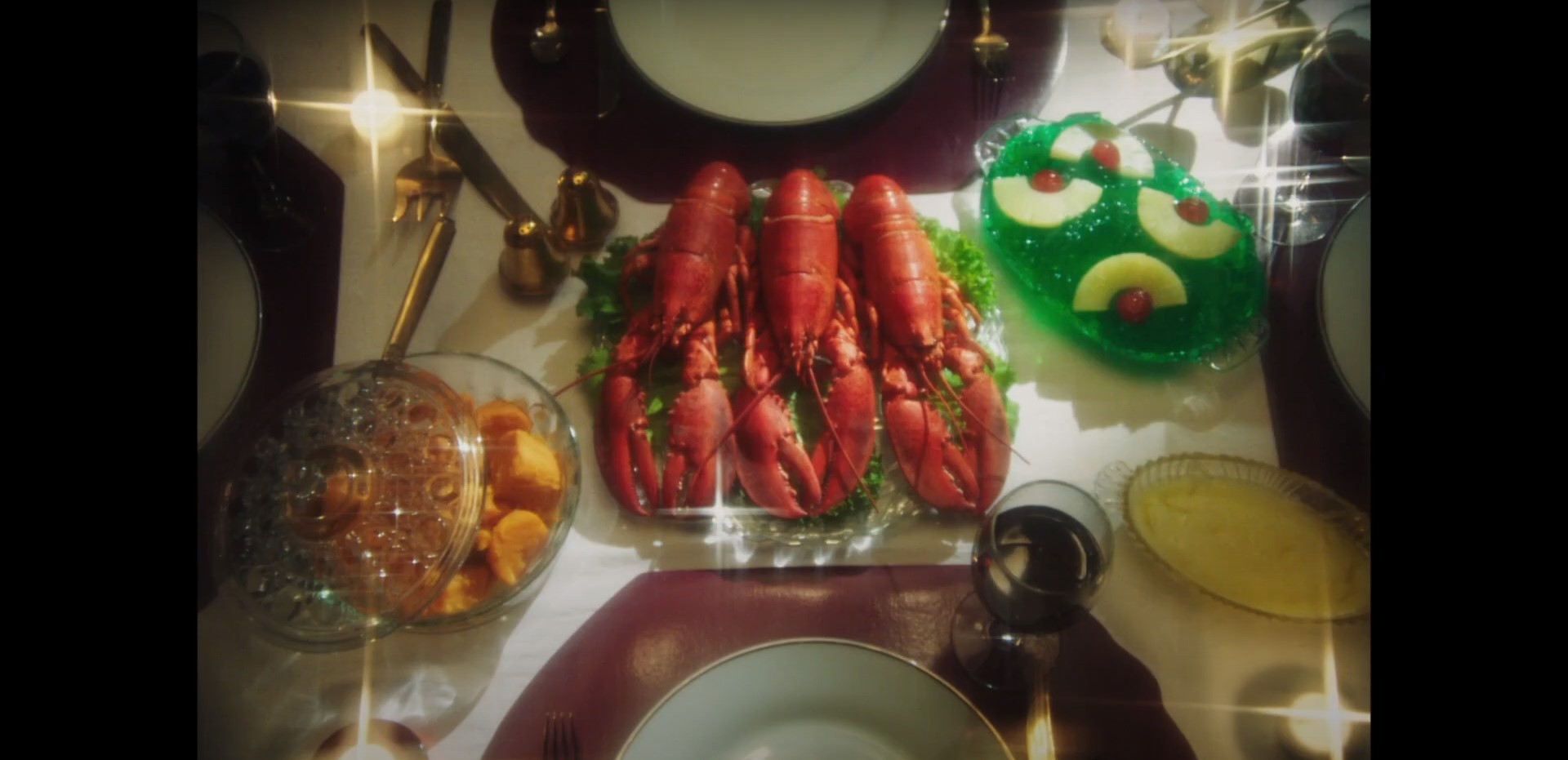
Having watched “Agnes” before diving into “Climate of the Hunter,” I mentally prepared myself for a breathy, long-winded, talking head film.   That readied mindset 100% gave me more clarity into Mickey Reece’s shadow narrative.  “Climate of the Hunter” is an uncharacteristic slow burn for the idiosyncratic grindhouse veneer.  With a 4:3 aspect ratio and a color reduction into a warm hue palette that glows, Reece insists on a design that usually offers loads of cheap thrills in action, sleaze, and gore, but the director’s story is toned down, subtle, and very much ear candy as opposed to a rush of visual adrenaline.  Instead, lucrative character building fizzes with tension as elements of the past and present unravel who’s who and what’s what before the climatic finale that suggests nothing was what it seemed to be.  Though prepped for profound exposition, the dialogue can still be boggling with a composition of Wesley’s personal anecdotes and philosophical quips and quotes.  As stated, Ben Hall is amazingly poised in this film, the unflinching star, rolling easily with Wesley’s gift of gab, persuasive magnetism, and maintaining an oblivious eye to an undercurrent of potential classical madness in Alma.  Between her recreational use of drugs and an ugly divorce, Alma has retreated into herself as well as her isolating cabin and when the spotlight isn’t on her, is her perception of Wesley really fantastical or is there actually something broken within her.  Reece explores a related theme of loneliness around the table with each principle character and how differently being lonely is digested and secreted through the pores of desperation.  Once aspect of Reece’s film that will puzzle viewers, and did puzzle me, is the narrated introduction of the food whenever there is a tabled conversation.  Since there already Portuguese titled chapters segmenting the story, a bit of a harp back to Wesley’s travels abroad, announcing what the character are dinning on seemed virtually unnecessary other than the idea that food brings people together in which it then fits the narrative of loneliness. 

“Climate of the Hunter” is quintessential Mickey Reece melodrama tinged with droplets of horror and subtle dark comedy.  Dark Star Pictures releases the film onto region free, dual layer Blu-ray home video in full 1080p High Definition.  Reece and director of photography Samuel Calvin aim for a vintage but not superannuated look for “Climate of the Hunter,” in which follows suit with the story set circa 1970s, with a 4:3 image on a pillarbox 16X9 display, relying also heavily on a softer lens to produce a dreamlike and luminescent effect but not overdoing it.    The release comes with two audio options – an English language 5.1 DTS-HD Master Audio and, if one wants to fully immerse themselves in the era, a stereo 2.0.  Dialogue is crisp and clean as it is refined as expected. Levels are balanced, range and depth are acceptable, but with this sort of wordy production, switching between the 5.1 and the 2.0 only discern subtle differences. Optional English SDH subtitles are available. The not rated, 82-minute-long film has special features that include another full-length Mickey Reece entitled “Strike, Dear Mistress, and Cure His Heart” as well as a short film “Belle Ile,” deleted scenes, production designer Kaitlyn Shelby’s preparations of the food presented in the film Recipes from the Kitchen of Alma Summers, and production stills and behind-the-scenes gallery. “Climate of the Hunter” deserves at least a once over and, in my opinion, a second viewing to become fully submersed in Mickey Reece’s dialogue rich and nebulous style.

MIckey Reece’s “Climate of the Hunter” Now Available on Amazon.com

Bestiality. Borowczyk Pushes the Boundaries with EVIL Themes. “The Beast” reviewed! (Blu-ray / Umbrella Entertainment)

“The Beast” Available on Umbrella Entertainment’s Beyond Genre label at Amazom.com

Marquis Pierre de l’Esperance, a French lord on the brink of financial ruin, is able to swing a deal before the death of the well-off English tycoon Philip Broadhurst. Under the conditions of Broadhurst’s will, his daughter Lucy must marry I’Esperance’s introverted, and equestrian obsessed son within six months after his death. Lucy, and her aunt Virginia, travel deep into the French forest to the deteriorating chateau to do a first ever meet and greet between the two soon-to-be married. Marred by centuries old local legend of a lustful beast who sexually defiled the Lady of the estate’s family lineage, I’Esperance aims to restore order by marrying into fortune and leave old cockamamie tales behind him. Yet, Lucy can’t shake vivid and stimulatingly graphic dreams of the romping woman and beast, leading to speculation whether the legends are true or not?

Certain types of filmmakers push the limits and exude their provocative talents to blur the lines between arthouse cinema and pornography. Those same filmmakers would argue that arthouse cinema and porn are, in fact, nearly one in the same if complimented with an intriguing story full of subversive subtext sure to outrage the status quo. Walerian Borowcyzk is one of those auteur artists basking in the absurdity and the arousing aspects of his films. The Polish writer and director wrote and helmed “The Beast,” aka “La Bête,” a one-part sex-comedy and one-part fantastical horror that is one-whole bizarre beyond our wildest dreams. “The Beast” was once considered to be a part of Borowcyzk’s short film collection of erotic stories known as “Immoral Tales;” however, the short film shot was scrapped from the project and then reimplemented into a full-length feature with outer rim narrative built around it’s very thematical essences of bestiality and the corruption of man due to woman’s virtue, the latter inspired by the French novella “Lokis” by Prosper Mérimée. The France originated film was produced by Anatole Dauman under the French studio, Argos Films, which produced much of Borowyczk’s work.

“The Beast’s” ensemble cast play intrinsic notes toward the fullest extent of the narrative’s shell machination as well as the saturation of eroticism from the grifting lord l’Esperance to the chateau’s only manservant, who when not answering his Lord’s beck and call, is fooling around secretively and lustfully with I’Esperance’s daughter. Veteran actor Guy Tréjan unearths the very ill-humored presence of a struggling lord seeking to reclaim fortune and glory to his estate and family. Most of the time, we feel sympathy for I’Esperance’s inability to catch a break, but on the deeper, darker scope, I’Esperance hides many truths, keeps many secrets, and even black mails his uncle, Duc Rammendelo de Balo, played by legendary actor Marcel Dalio (“Super Witch of Love Island”), making the lord a villain of his own haphazard design. I’Esperance’s nitwit and reclusive son Mathurin is played by Pierre Benedetti, who has worked with Borowcyzk later his career in “Immoral Woman.” Not much of Benedetti is profoundly showcased, leaving much of Mathurin in the dark despite being a principle figure in the plot as the husband-to-be for the aspiring romantic Lucy Broadhurst from “Le diaboliche’s” Lisbeth Hummel. Hummel, along with 1995 “Castle Freak’s” Elisabeth Kaza as Lucy’s aunt Virginia, are supposed to be affluent English women travelling to France in order to settle future marital affairs with the I’Esperances, but Hummel and Kaza have such thick accents that no matter how proper their English may be, there’s still present the French and Hungarian elocutions in their English dialogue. Hummel does capture Lucy’s free-spirited, free-form sexuality so inclined by Borowcyzk as the director envisions her as the clairvoyant trigger that unsheathes an age-old curse to light, but Hummel is not the only participant in “The Beast’s” amativeness with Hassane Fall, Pascale Rivault, Julien Hanany, and sex-symbol Sirpa Lane (“Nazi Love Camp 27,” “Papaya: Love Goddess of the Cannibals”) paving a more perverse course with illicit affairs, object sexuality, and, of course, bestiality. Though none of these aspects were more than disturbing in comparison to Roland Armontel’s version of a local priest setting an uncomfortably affectionate dynamic with two of his alter boys that Borowyczk focused and lingered on when the chief characters have left the scene.

Trying to understand Walerian Borowyczk’s “The Beast” is akin to trying to understand the wanton complexities of the human psyche. In all its whirlwind of implications, “The Beast” is heavily and artfully abstract in a non-abstaining manner as sultry desires, no matter how forbidden, are the superior playthings utilized for Borowyczk’s totality of storytelling. The uber-sexual graphic tale invests little into the imagination with vivid imagery of genitalia in all shapes and sizes in organic and mythical forms. Yes, there is a lengthy opening scene of horse copulation with emphasis on each of the bulbous male and female’s sexual organs. Yes, there is also a satirical creature chase that transforms into a frolicking romp between a human woman and a dog-bear creature with a miniature representation of an erect horse member ejaculating like a geyser without an end. The excessive vehemence towards sex is Borowyczk’s gift to the audience toward feeling a flurry of mixed emotions from being a little bit peed, to a little bit put off, to even a little bit strangely turned on all in one sitting. Though sex is unusually celebrated in “The Beast,” the beast itself is also the representation of perversion, an animalistic and libidinous savage horndog lusting after the chastity of virgin women that’s allegoric to spoiled bloodlines and cursed households in a path of ruinous destruction, especially in the downfall of a crumbling aristocracy. Borowyczk injects and interjects comedy to lighten the socially disturbing atmospherics of paraphilia and the social consequences that follow.

As part of their Worlds on Film:  Beyond Genres banner, Umbrella Entertainment releases Walerian Borowczk’s “The Beast” as volume #13 on a region free, 2K scanned Blu-ray in full 1080p High Definition.  Presented in the original aspect ratio of what once was the European theatrical standard widescreen 1.66:1 aspect ratio, the 35mm transfer provides a relatively clean viewing free of aging and blemishes albeit the innate agreement of healthy amount of grain that comes standard with celluloid film stock.  While color grading definitely looks non-existent in the release, a once over would have sharpened the image immensely from the slightly flat and natural color scheme.  The tri-lingual French, English, and Italian DTS-HD Master Audio 2.0 mono track is a compressed version from the 2015 Arrow Film’s Blu-ray release with an uncompressed LPCM 2.0 audio.  Virtually no difference in the lossless audio with also no difference in the synchronizing between visual and audio elements.  Dialogue runs smooth and clear with little-to-no hissing or pops and the same can be said about the more than adequate ambient track, the lively French Harpsichord piano soundtrack, and even the outlandish foley of beast sounds through the limited parameters of the two channeled output.  Special features pale in comparison to previous Blu releases, but are none-the-less impressive including 16mm behind-the-scenes, archival documentary footage in the making of “The Beast,” an introduction by film critic Peter Bradshaw, a featurette of Borowczyk’s beast sketches, letter of confidence to the producer, and a treatment to a potential sequel that never materialized The Frenzy of Ecstasy, an philosophical interview with the director Walerian Borowczyk, the director’s biography, a still gallery, and theatrical trailer.  Illustrator Simon Sherry designs new and exquisite cover art for the cardboard slipcover and snapcase cover that perfectly represents the tone of the story.  The cover art is also reversible with Hispanic poster art and praising critic reviews and quotes.  The release is certified R18+ for high level sexual themes and sex scenarios. “The Beast” is an upfront, artful, and confrontational film about bestiality and sexual corruption bred to challenge the formulaic narrative with a call of unbridled seduction and a flamboyant flare for a firm erect furry.

“The Beast” Available on Umbrella Entertainment’s Beyond Genre label at Amazom.com

Meir Zarchi Returns With Another Round of EVIL Exploitation! “I Spit On Your Grave Deja Vu” reviewed! (Ronin Flix / Blu-ray)

Forty long years have passed since the sexual assaulting atrocities of Johnny Stillman and his gang were committed on the young and beautiful Jennifer Hills.  Empowered by her horrific tale of survival with the release of a new tell all book of how she outwitted and took homicidal revenge on her rapists by luring them in with her sexual persuasions, Hills finds herself back in familiar terrorizing territory being kidnapped by Johnny’s devoutly vindictive widow and three living relatives of the gang that once ganged raped and brutally beat her, but she’s not alone.  Captive with her as collateral damage is her famous supermodel daughter, Christy.  Both are caught up in an eye-for-an-eye revenge plot where being lethal is the only means of survival and with a long history of resentment, rooted deep inside Johnny’s kin, fighting back will take every ounce of resilience and strength against a community of hellbent sociopaths. 

Circa 2005-2006 is around the time I first bared witness to Meir Zarchi’s 1978 controversial exploitation shocker, “I Spit on Your Grave.”  Popping in the DVD popped open my eyes to the world of graphic vengeance and the submission to primal, carnal whims inside the human-on-human violence context.  Before Zarchi’s film, which is also known as “Day of the Woman,” and even Wes Craven’s “The Last House on the Left,” this neophyte’s description and knowledge of horror was limited to the stymies of broadcast television that only aired edited and censored slashers like the “Friday the 13th” and “Halloween” series or supernatural presences of “A Nightmare on Elm Street” and “Poltergeist.”  Never has the likes of “I Spit on Your Grave” been a red pill option into the vast horror matrix for this then college kid who glazed over with the façade of sleeping through studies and worrying over trivial matters involving the opposite sex.  In a way, Zarchi was a kind of Morpheus to me when I started purchasing physical media that opened my eyes and my mind to the rape and revenge facet in horror hidden behind the commercial veil.  In 2010, a Zarchi produced reboot saw more light in the commerciality and spawned two sequels in its wake, but not until 2019 did Zarchi get back to writing and sit back in his director’s chair to helm an official, yet less commercial, sequel entitled “I Spit On Your Grave Déjà Vu” or “Day of the Woman Déjà vu” that was produced by his limited company banner, Déjà Vu LLC with son Terry Zarchi and Jan O’Connell producing.

The long-awaited sequel reteamed Zarchi with original lead actress, and also ex-wife, Camille Keaton, distant relative of the famed comedy and stunt actor, Buster Keaton.  Camille Keaton, who looks phenomenal in her 70s during production, steps back into the infamous Jennifer Mills role that made her a household name amongst grindhouse-horror community.  Though completely nude for most of the 1978 film, that part of her performance takes a step back for a new actress to pave a new path in the saga.  Obscure indie scream queen Jamie Bernadette (“Axeman,” “The Bunnyman Massacre”) is ceremoniously passed the torched as the new riches to ragdoll as the Jennifer Mill’s unhappy supermodel daughter, Christy, who becomes haplessly snagged into her mother’s unforgotten past.  Bernadette offers a variable beauty and a diverse poise that doesn’t make Christy a carbon copy of Jennifer Hills, but the actresses deliver the same apathetic venom of a woman scorn.  More of a carbon copy is the four backwoods bumpkins fuming over Jennifer Mills’ vindictive dissecting of their dead relatives.  The gang is spearheaded by Beck, played by Maria Olsen who, like Bernadette, has made a name for herself in low-budget horror having roles in films such as “To Jennifer,” “Starry Eyes,” and “Gore Orphanage.”  Olsen projects Becky as the gas station attendant from Hell, someone you don’t want to interact too long with as you’re pumping gas in the middle of nowhere, but Becky is not a woman of a few words who constantly has to remind us, to the blistering point of annoying, that she must avenge her late husband’s sinful murderess.  The rest of the gang didn’t impress much after that.  Jonathan Peacy has a chance to shine from out of the extra and bit part shadows as the crazed and hyperactive Kevin, brother of Stanley from the original film, and while Peacy channels his best Al Leong look, Kevin is ultimate a big detrimental goof with small dog syndrome than actual menace.    The last two aren’t any better with a lackluster act by Jeremy Ferdman as Andy’s cousin and “Tales of Frankenstein’s” Jim Tavaré’s rather befuddling downplay of Matthew’s mentally disordered father, Herman, who teeters back and forth between morals with a jumbled underlay of piety.  There are not many sane performances in a rather loose and unbridled Zarchi follow up with a cast that rounds out with Alexandra Kenworthy, Roy Allen III, and Holgie Forrester.

Performances aside, “I Spit on Your Grave Déjà vu” is also a cacophony of yelling as the script, from paper to pronunciation, reaches top of the lung levels with every bit of dialogue from every player in this tussle of who’s right and who’s wrong when it comes down to justifications of killing.  Zarchi’s sequel lacks the tact his first film achieves so delicately with Mills post-assault softer approach to lay waste her assailants.  “Déjà vu” satisfies its own revenge kicks with little subtly in trying to be outrageous, outlandish, and off its rocker as the confrontation between Christy and the gang becomes a rancorous grudge match.  What concerns me most about “Déjà vu” is the year in which this sequel takes place.  Between the 1978 original and the 2019 follow up, 40 years have passed, but the characters don’t fit any of Father Time’s natural aging characteristics on the surface.  Becky looks okay as an early to mid-60s woman despite Maria Olsen’s actual age being early 50s at the time of filming and release.  Herman is another one that sneaks into fathomable constructs as a character living a farmer’s life in the latter half of middle age, but I question whether Kevin and Scotty were even born yet.  The two youngsters barely seem to be out of their 30s and the same can be said for Christy where much more of her life is revealed as the story progresses.   If following the script logic, I would assume the story takes place in the 90s, but certain technologic advances, like modern day touchscreen phones, suggests no earlier than late 2000s.  As a whole, time and space don’t appear to exist on any reasonable plane for the film with characters able to bump into each at random intervals despite being a densely wooded and rural location and, for all you cinematographers out there, if your location is supposed to be rural, don’t shoot in at a cemetery with a massive grave footprint with a stream of cars speeding down a busy suburban street.  You instantly lose the illusion.  Zarchi’s intentions were clear to only echo the original while allowing for individuality with a brasher onslaught of right versus wrong, eye for an eye, and misguided righteousness for injustice, but the execution crumbles with excruciating results, never reaching the same poetic justice the first film accomplishes so graphically grafted. 

As far as rape and revenge exploitation is considered, “I Spit on Your Grave Déjà vu” gets about as down and dirty and ugly as they come.  Cult movie curator, Ronin Flix, delivers the Meir Zarchi sequel onto Blu-ray home video, presented in 1080p, full high definition, with a widescreen 2.39:1 aspect ratio.  A+ for natural lighting, skin tones, and overall appeal, Pedja Radenkovic’s cinematography is about as uninspiring as they come artistically, but, as a personal preference, the shots are more organic, raw, and less distracting from the content that’s much more abrasive and interesting.  A more natural framework also more time for Russell FX’s practical effects to be showcased without enhanced imagery.  As long as the details are there (they are), no damage is concerning (there wasn’t), and the framing made sense (for the most part), “Déjà vu” can be considered a win for Radenkovic.  The English language DTS-HD 5.1 Master Audio soundtrack for “Déjà vu” is a blessing and a curse.  Dialogue clarity is excellent and there’s a wide range to exploit, forgive the punned term, each channel with great balance, but remember what I said about all the character yelling?  Also, with the higher bitrate DTS, the quality is too good for some of the applied ambient effects like the exhaust sputtering of an old Ford pickup that sounds way too fake and way too close despite its positioning in the scene. The region A, not rated Blu-ray is stored on a BD50 due in part to the film’s massive 148 runtime and the inclusion of special features that include a new audio commentary with film critic and “The Last Drive-In” host Joe Bob Briggs, select cast interviews, the making of the film, behind the scenes footage from producer Terry Zarchi, and the theatrical trailer. Is “I Spit on Your Grave Deja Vu” the long-awaited sequel to Meir Zarchi’s first film? I’d say they’re two totally different exploitation entities cut from the same cloth with ties only in names and some flashbacks alone, but both films would make for a great double bill that starts with a harrowing, nothing-to-lose, woebegone toned, revenge thriller complimented with a lukewarm and unfocused follow up to help come down off the original’s gripping ultra-violence high.

Ronin Flix’s “I Spit on Your Grave Deja Vu” Blu-ray available at Amazon.com!