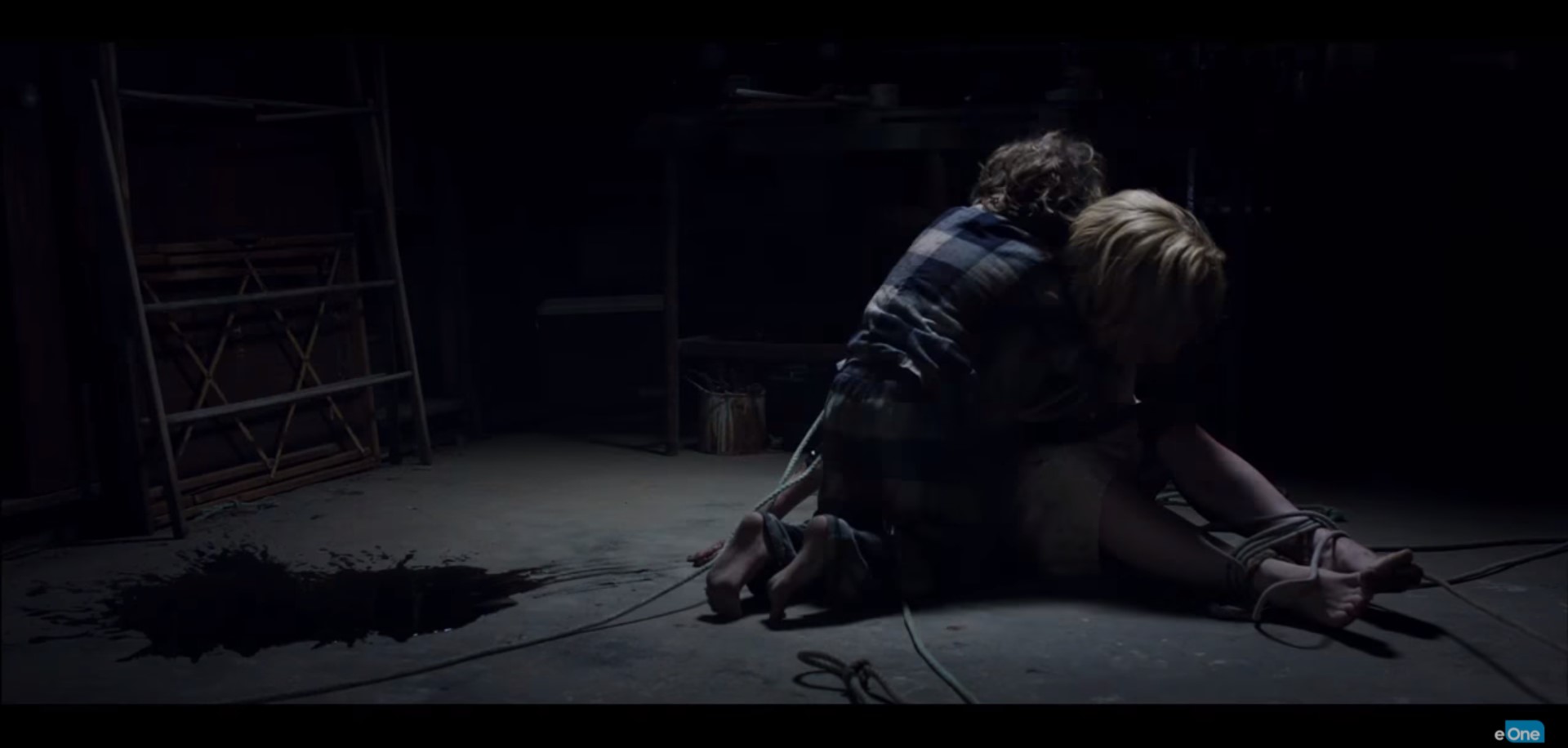
Curse EVIL Curses! “Baphomet” reviewed! (Blu-ray / Cleopatra Entertainment)


Jacob Richardson, a Napa Valley landowner, and his wife are jubilantly excited about becoming grandparents with the eager arrival of their daughter’s child.  Still months before the actual delivery date, their daughter vacations with him while her husband works a few more days in Malibu before joining her but gruesomely dies in an apparent shark attack.  His sudden death isn’t just a stroke of horrible luck, but a devil worshipping cult’s curse bestowed upon the unsuspecting family after the rightfully stubborn Richardson refuses to sell his vast property to a shady businessman the day before.  One-by-one members of his family fall victim to a series of accidental and unexpected tragedies that leave his daughter, having dreamt the cult responsible for the black cloud that has been afflicting her family, desperate to try anything, even if that means making contact with a benevolent white witch to resurrect her shark bait dead husband.  The cult still wants their land and for the Richardson family, only Jacob, his daughter, her resurrected husband, and the white witch stand against an army of Satanists besieging upon the family home to awake a slumbering dark force. 
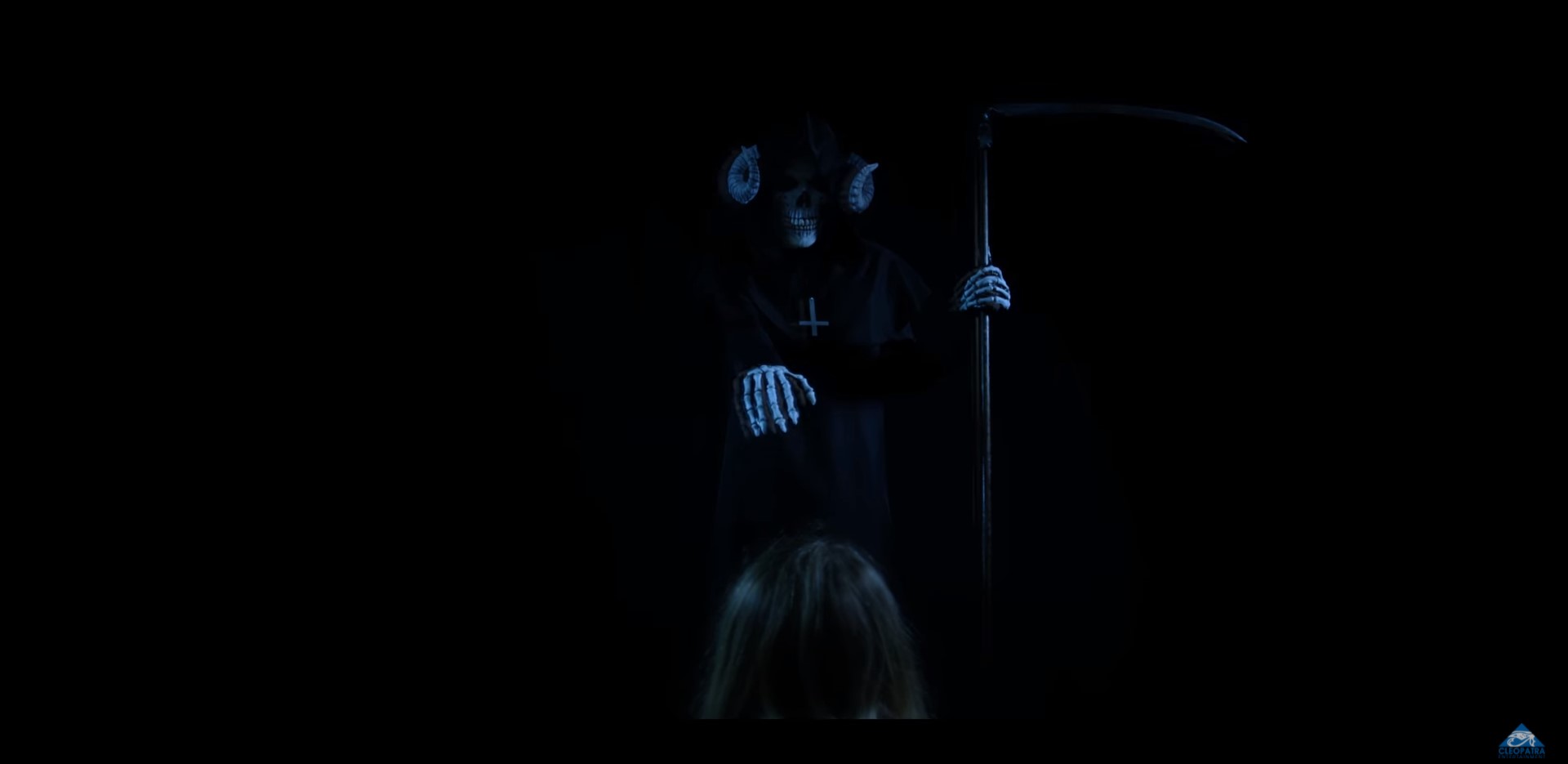
You know you’re watching a Cleopatra Entertainment distributed release when the plot revolves around a Satanic or demonic annihilator, as such with “The 27 Club,” “The Black Room,” “Devil’s Domain,” “Devil’s Revenge,” and maybe even a tiny bit from Glenn Danzig’s strange comic book adapted anthological tapestry, “Verotika.”  Matthan Harris’s 2021 released “Baphomet” walks along the same lines with the titled gnostic and pagan deity made infamous by the worshipped practices of The Knights of Templar acolytes.  “Baphomet” is “The Inflicted” director’s sophomore feature in which he’s written to remain in the horror ranks as an aggressive occult summoning of an evil presence to walk the Earth.  Shot in various California and Texas locations, the moneybag company behind “The Velicpastor” and “Don’t Fuck In the Woods,” Cyfuno Films L.L.C., collaborates supportively Matthan Harris’s formed Incisive Pictures production company to deliver a trackless, unmapped, and unholy “Baphomet” to the home video market with Harris producing alongside executive producers Grant Gilmore, John Lepper, and Cyfuno Films’ Adam and Chase Whitton.

We’re initially introduced to Giovanni Lombardo Radice sermonizing as the paganized pastor and cult leader Henrik Brandr before they slice open a naked woman wrists and drink her blood from a single chalice.  Right from the get-go, “Baphomet” hits us with the 80’s circa Italian star power of the “Cannibal Ferox” and “StageFright” actor.  The blood trickles down from there once we’re introduced to the Richardson family, headed by the patriarchal Jacob Richardson in “Mother’s Boys” Colin Ward.  Ward’s a convincing father figure, rugged and surly in showing off his rough and tough cowboy swagger, yet also sensitively compassionate in a broad range of acting experience.   However, that’s about as far as Jacob Richardson impresses as the character levels out, sulking over the loss of his son-in-law Mark Neville (Matthan Harris), wife Elena (Ivy Opdyke) and daughter’s unborn baby after his force to be reckoned with verbal encounter with one of the cult leaders offering him a lump sum of moolah for his land; instead, Richardson’s daughter, Rebecca Neville (Rebecca Weaver) takes a family first lead by engine searching and watching video tutorials on the nature of black and white witches.  After easily tracking down and skyping with witch expert played by Dani Filth, lead vocalist of metal band Cradle of Filth, a obsessed Rebecca becomes hellbent on resurrecting her Great White shark masticated husband, Mark, with the help of good witch Marybeth (Charlotte Bjornbk, “Cannibal Corpse Killers”) and this is where things go awry for the narrative.  Only a self-absorbed director would kill himself off extravagantly in character, saw fit to be resurrected for the sole purpose of love, and then become the ultimate hero of the story that leaves his wife and father-in-law in glory’s dust trail. “Baphomet” supporting roles from Gerardo Davila (“Ticked Off Trannies With Knives”), Stephen Brodie (“Puppet Master: The Littlest Reich”), and Nick Perry as the cult-sought demon.

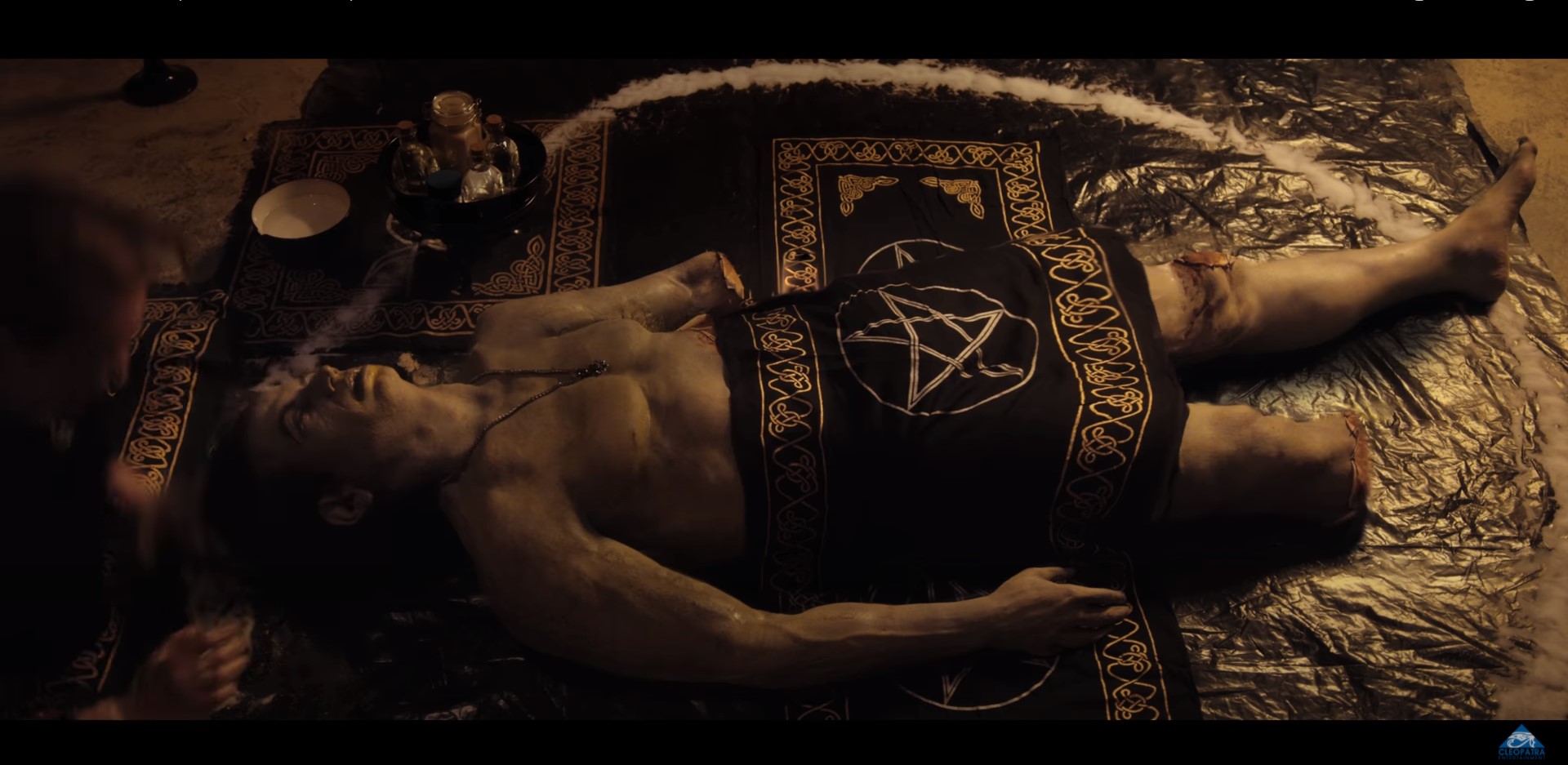
Filled with blood sacrifices, family curses, killer sharks, and a pitiless grey demon, certain viewpoints embody that very black magic archetype of the historical devil dealings engrained into “Baphomet, but what specifically the Harris brings to the obscure budget horror smorgasbord is a platter of tasteless derivativity and bland storytelling, flavored with peppered gore granules and a pinch of pop culture icons. “The film opens engagingly enough with spilling the blood of a fully naked woman so everyone can play pass the cup of virgin blood in order to appease their dark lord and then we’re firmly segued into the happiness of the Richardson family until Jacob Richardson declines a money offer for his land. Spilling blood into the ocean and leaving dead, crucified birds on the porch enacts a deadly curse that sends sharks and snakes into a murderous rage. Up to this point, Harris has control of the story with some decent editing work and effective bitesize prosthetics to actually descend hell’s wrath upon an ingenious family. I could even look past the wild and impetuous decision to resurrect the dead boyfriend after his fatal encounter with a Great White, but when the third act’s last stand against cult comes knocking at the door, the script chokes on a grotesque amount of happenstance and exposition. For example, when the sheriff and deputies arrive at the Richardson house on Jacob Richardson’s whim that the cult might be outside their doorstep, one of his deputies randomly pulls out of a bag of large scale dynamite his cousin uses on at a jobsite, thinking the ACME-sized TNT would come in handy. Mark also decides to blow his undead cover, exposing himself to the officers in a screw-it moment of “yeah, I don’t care.” Soon after, a “Harry Potter and the Deathly Hallows Part II” battle ensues between the deluging cult and the defending Richardsons/Officers and many main characters parish during the skirmish fruitlessly and effortlessly to the point where they might as well have been non-essential to the story supporting parts. Also – the lack of considerable screen time of Baphomet and the demon child lays waste to a perfectly good title, in my humble opinion.
Perhaps one of the few Cleopatra Entertainment, a subsidiary banner of Cleopatra Records, to not be accompanied with a soundtrack compact disc with the Blu-ray, distributed by MVD Visual. The single disc BD-25 release is perhaps one of the few trimmer releases from Cleopatra Entertainment and is presented in HD 1080p in a widescreen 2.37:1 aspect ratio. Generally speaking, the music mogul company has continuously be consistent on their video and audio Blu-ray releases. The details are rather defined looking and sharp with blacks, and there are many black scenes, noticeably inky without that dim lit tinge of gray. Some of the underwater sequences and the video chat calls with Dani Filth are murky and at a lower rate than due to Filth filming his scenes literally from the UK on a video call for most of film. Two English language audio options are available – a Dolby Digital 5.1 surround sound mix and a Stereo 2.0. Flipping back and forth between the two option, the devil is in the file track details but both mixes sound frightfully the same down to the climatic explosions. Bravo on the depth and range that captures rightfully the echoes of high vaulted ceilings and the positioning of characters. Dialogue is clearly present and mostly natural with aside from Gerardo Davila, the Sheriff in the film, in what discerns to be a soundstage track layover of his dialogue. When he speaks, Gerardo doesn’t seem to be sharing the same dialogue space with his costars in an unnatural vocal delivery of his role. While there is no soundtrack disc to rock to, the hefty bonus material is a shocker with deleted and extended scenes, outtakes, a music video ‘Shellshock” from Tank featuring Dani Filth, behind the scenes pictures, Dani Filth backstage interview, Jason Millet’s storyboards, and a teaser trailer. Tickled me unimpressed by Matthan Harris’ “Baphomet” that hinges on uninspired cult creed. For me, special effects wins top prize and a giant handful of bonus material is the only thing that arises out of “Baphomet” from the wells of damnation.

“Baphomet” is on Blu-ray at Amazon.com

EVIL Will Have You Die Laughing! “Too Late” reviewed (Gravitas Ventures / Digital Screener)


Non-stop and around the clock, Violet is the worked obsessed assistant to legendary showman and standup comic Bob Devore at the Too Late comedy club.  Violet books new talent and schedules the lineup day in, day out, but that isn’t all she does for her overly demanding boss.  Bob Devore has been around for a long time and during a very specific moon cycle, Bob needs to eat and we’re not talking pizza or Subway sandwiches.   Bob is a literal monster who feeds on devouring entire people, especially no comedy talent hacks provided by his assistant, Violet.  The longevity of Bob’s Life spans decades, if not centuries, as he sees people come and go right off existence.  When Violet meets a nice guy comic who Bob takes a shining to, the long time lonely assistant decides enough is enough and the time to stand up to the eternal stand up comedian and monster boss is now before what little she has is taken from her. 

I hear the Los Angeles stand-up comedy scene is tough.  Sometimes, even cutthroat.  In D.W. Thomas’ comedy-horror “Too Late,” a blend of mic night funnies with a hunger for full body snacks, dying on stage turns into a whole new meaning!  Thomas’ debut feature film kills it as a low-budget horror that incorporates figurative levels of monstrosities behind the curtain of a stand-up’s spotlight.  The 2021 film is the first screenplay credit for Tom Becker that tackles underappreciated long hours and work ethic of female workers in a typical male dominated profession., touching upon the toxicity of the business.  “Too Late’s” underground comedy-horror sees the light of day under the indie production studio, Firemark Media, and is produced by Thomas and Becker as well as executive producer and long time industry vet, Lonnie Ramati, a production business affairs manager dabbling in producer with the selected credits including “The Expendable” sequels, “Leatherface,” and 2019’s “Hellboy” under his belt. 

“Too Late” marquees mostly tongue-and-cheek talent in a cast list chocked full of comedians, starting with actress, writer, and jack of all trades stand-up comedian Alyssa Limperis in the headline role of Violet.  What’s ironic with Limperis’s “Too Late” role is that Violet is perhaps by design the least funniest amongst the characters as a lonely, borderline depressed, and overworked slave of an assistant to Bob Devore, a renowned variety show presenter and entertainer played by one of my favorite spoof performances by Ron Lynch from last year in Travis Irvine’s “Killer Raccoons! 2! Dark Christmas in the Dark!” as General Negligence.  As Violet begins to blossom after meeting humble comic, Jimmy Rhodes (Will Weldon), after bumping into him renting out one of her friend’s closet since, you know, L.A. is a tough, expensive town, this give Limperis ammunition to turn Violet sour on her abrasive, glass ceiling mentor.  Limpers excellently conceals intentions in each relationship step taken with her new unassuming and amiable beau and this really brings out Devore’ darkness crafted so well by the New York born actor and comedian with a gloomier roaring-twenties vaudeville vibe.  One thing I will say about the chemistry between Limperis and Weldon is I didn’t think there was much spark as their flirting banter catered to good friendzone material.  Perhaps used for their more syndicated appeal, Mary Lynn Rajskub and Fred Armisen add very little to the mix.  “24’s” Rajskub is a no-nonsense hotshot comic who has Devore wrapped around her finger whereas Armisen plays a nearly simpleminded stage hand who adds a bit of levity to the darker tone with his pudding cups and indecisiveness on blue filter gels for the spotlight.  The rest of cast pans out with Jack De Sena (“The Veil), Brooks Wheelan, Jenny Zigrino, Billy Breed, and Paul Danke. 

“Too Late’s” opening drive buildups a focuses around Violet’s passively aggressive position in being an undervalued assistant to her bark-and-you-jump Boss.  Constantly scribble but unenabled to perform her own material be her own self-starting, stand-up comedian, Violent falls into a lonely state that she is unaware of and it takes her best friend/roommate’s lighthearted berating to get Violent to come to a Jesus moment with her total profession and lack of relationship unhappiness. What’s not in the prevalent in the first act is Bob Devore’s permanence, his beastly transmogrification, and his appetite for anthropoids. If you didn’t read the synopsis beforehand, the acute dark turn “Too Late” takes comes at a shock because of how little-to-no prep there is setting up the true Bob Devore. A backfill of creeps a long, like opening the little chocolate stuffed doors on an advent calendar, in a wait and you’ll get more character treats up to a grand finale. About two-thirds of the way through, “Too Late” starts to flounder with what to do about Devore as a character, never expressing a full delineation of character to how Devore ended up at a nightclub, or who, or actually what, the actual hell is he and how Violet, who isn’t as innocent as one might believe, became so fatefully involved. The underlining theme here, noted explicitly in the title, is don’t hold yourself back no matter the circumstances, whether be an actual monster or a monstrous personality, because life is short, time is of the essence, and carpe diem! Violet, a hard working female in a male dominated industry and is undercut by not only her dominating boss but also her advantage taking male peers, need a monkey wrench in the gears of a monotonous, browbeaten life and that happened to be Jimmy Rhodes, a nice, non-threatening, and unimposing comedian who seemed to be just be handed the keys to Violet’s rightful castle just because he’s a man, and though she falls for Jimmy, that’s the career careening straw that breaks Violet’s abuse absorbing spirit.

With a dry wit, “Too Late” black humor is more figurative than funny but first time director D.W. Thomas makes good on her debut horror-comedy that has released this month in select theaters and on digital platforms, such as iTunes, Google Play, Fandango Now and all major cable/satellite platforms from Gravitas Ventures. A digital screener doesn’t allow me to fully dive into the A/V quality but the Scott Toler Collins cinematography grasps the underground comedy scene experience, selling the location of an boutique variety show club, hard mood lit in various colored staged lighting with a smoky irradiance, of tight medium and closeup shots that kind of hover amongst the characters. “Too Late” is not effects heavy though maybe should have been to make Bob Devore a real menacing presence as much of his late night snacking is done off screen, through shadows, or blurred during a shallow focus. We always get the aftermath Bob Devore, bloated and bulging at the seams from a big meal, like a secondhand Eddie Murphy fat suit from “The Nutty Professor.” Still, kudos to Mo Meinhart (“The Walking Dead”) in making Ron Lynch appear farcically 40lbs heavier in what you might typically seen in a Looney Toons episode. Bucking the more modern trend, this indie picture has no bonus scenes during or after the credits. The in-film stand-up is spotty at best but “Too Late” has a lot else to focus on with a deeply disturbing look at machismo arrogance and sexism inequality that are the relevant horrors of today.

“Too Late” on Amazon Prime!

Expectations Lead to EVIL in “The Cool Lakes of Death” reviewed! (Cult Epics / Blu-ray)

Set in the early 1900s, Hedwig’s childhood is filled with love, wealth, and innocence, but when her mother dies suddenly at the hands of typhoid, life turns complicated as death, draconian religious teachings, and an uncompassionate home clouds Hedwig’s mind on what exactly her relationship with men and with God should look like.  Punished for self-pleasure and scolded for her belief in fantasies, Hedwig enters adulthood as a conformist seeking to marry a well off man and have children in what was supposed to be the perfect union that reveals in sexuality the secret to marriage.  Prim and proper on the outside but a child on the inside, Hedwig misjudges her affairs with men and indulges in a pretense relationship with them.   When she finally finds happiness with a renowned pianist and the two have a child together, Hedwig’s hold on reality snaps as the child dies a few days later, sending the once elegant Hedwig into a tailspin of unhinged mental stability, drug addiction, and prostitution. 

“The Cool Lakes of Death” is the adapted film based off the Netherlands novel from the dual profession novelist and psychiatrist, Frederik van Eeden, entitled Van de koele meren des doods, which closely translates to “The Deeps of Deliverance,” a psychological period piece and melodrama with themes on the antiquated God-fearing expectations of a 19th century young woman, the solidity of marital unions, and a woman’s sexual liberation.  “The Cool Lakes of Death” is the follow up directorial from “A Woman Like Eve” director, Nouchka van Brakel,” off a screenplay written also by Brakel and co-written with Ton Vorstenbosch.  The exquisite tragedy of a woman submerged in societal misconceptions of love that can’t be forced and the mutuality of pleasures is yet another Dutch production from producer Matthijs van Heijningen and his company Sigma Film Productions, who have overseen a handful of Brakel films including “The Debut” and “A Woman Like Eve.”

Understanding the mixed emotions of a young girl in the throes of self-discovery, with a pinch for the dramatic flair, Renée Soutendijk gives a prismatic performance, glistened in a stringent social dogma, of hope and pity.  The Netherlands actress, who had the role of Miss Huller in the 2018 “Suspiria” remake, the inundated Hedwig, friends call her Hetty, who has inexhaustible amount of hope in her search for passion, but insurmountable roadblocks and obstacles corrupt Hetty’s mental processor.  Soutendijk’s elegance has a soft innocence to it, a naïve virtue that contrasts bleakly against the subtle and not so subtle influencers of Hetty’s life and Soutendijk really opens our eyes when Hetty’s full blown crazy in a clear and precise moment of snapping her rationality like a dried and brittle twig.  The performance digs at you and Brakel exploits the worst (good cinematically) parts of Hetty’s break that has her be a wild, naked woman thrashing, spitting, and puking in a locked room of a psyche ward, injecting needles into her arm night after night after selling her body to unscrupulous men, or even stuffing her newborn baby into a duffel bag and heads off to sea to search for her husband Gerard, a subdued, appearance concerned gay man that never cared physically for Hetty, played by Adriaan Olree in his debut performance.  Hetty comes across two other lovers; one a flyby and compassionate artist Johan (Erik van ‘t Wout), who would have matched her passion, but not her social status, and, eventually, she finds much of what she seeks in a renowned concert pianist Ritsaart (Derek de Lint, “When A Stranger Calls” remake), who refuses to admit their relationship in fear of scandal and ruin of his career.  Along the way, Hetty listens more to her blinded heart than she does her logical mind when intaking sound advice from advocates of her wellbeing as Ritsaart’s best friend Joop (Peter Faber, “A Woman Like Eve”), her best friend Leonora (Kristine de Both), and a hospital nun (Claire Wauthion) attempt to steer her toward a happier existence. 

I really can’t get enough of Hetty unable to secure her ideal happiness.  That might sound a little inconsiderate but what is a perfect relationship?  Brakel explores how an sought ideal can turn into a damaging expedition for the white whale.  Instead of being the ill-fated, hellbent Captain Ahab, Hetty’s land based monomaniacal drive of fairytale love becomes her ultimate downfall, sinking her deeper into the depths of despair, loneliness, and a cataclysmic separation from reality.  Gerard wasn’t perfect because he secretly longed for men, Johan didn’t have the right social stature for a lady of her status, and Ritsaart kept their love hidden below the public eye.  There’s a quite a bit of feminism loitering around in that last statement with a touch of selfishness to no fault of Hetty’s and all circulate back to some sort of suppression whether it’s sexually or emotionally umbrellaed by patriarchal doctrine, discourse, and discipline.  The culture toxicity is so severe that the older generation of women are beguiled by it’s power to be controlling others themselves under the thumb of a male-dictated society as we see in Hetty’s Governess in tattling on her pupil’s every move to her wimp of a widowed father.  “The Cool Lakes of Death” is a beautiful disaster in almost a sing-songy narrative delivered by director Nouchka van Brakel’s mighty delicate touch. 

For the first time in North America and single in a trilogy of Nouchka van Brakel releases from Cult Epics, as well as in a trilogy boxset, the 1982 downcast drama “The Cook Lakes of Death,” arrives on DVD and Blu-ray home video.  The New 4k High-Def transfer is scanned from the original 35mm negative with an impeccable and nearly blemish-free restoration.  The film is presented in the European matted widescreen, 1.66:1 aspect ratio, with plenty of good looking natural grain and a softer image in the trashy romance first act then to a harsher, grittier quality during the time of her ruin under the eye of Theo van de Sande who ventured from the Netherlands to the U.S. later in his career and worked on Joe Dante’s “The Hole,” “Little Nicky,” and “Blade.”  A couple of whip pans into deep focus shots enrich the production, a technique that has served Sande in his later work.  The Dutch language DTS-HD Master Audio 2.0 lossy audio is as good as this title will ever see without an actiony framework.  Dialogue is completely discernible with well synched English subtitles.  A few pops in the span but no major damage to the audio to speak about in length.  Soundtrack has barrier moments of muffled penetration.  Not too many special features to touch upon with the theatrical trailer, a poster and sill gallery, a 1982 newsreel unearthed from the Polygoon Journal archive, and a reversible Blu-ray cover. “The Cool Lakes of Death” is young and naïve adolescence transitioning into womenhood only to be tripped up every step of the way; Hetty’s eager to blossom turns to withering as the underdog in life’s kennel and Brakel’s purificatory rite of passage beautifully disembowels hope and dreams in a dreamy fashion until finding faith in life come full circle, well almost, in commencing with both feet standing into adulthood.

“The Cool Lakes of Death” on Blu-ray Home Video at Amazon.com

Two Movies, One EVIL. “House of Cruel Dolls” reviewed! (Full Moon / Blu-ray)

A perverse gang of sex traffickers kidnap beautiful women to be prostitutes for a hidden away bordello, known as the House of the Lost Dolls.  Gaston, a bordello regular, falls for sex slave Yvette and together they make a great escape to free Yvette from the gang’s clutches.  Yvette’s harrowing ordeal is given to the police.  What ensues next is the dispatching of secret agent Sigma to track down and eliminate the ruthless gang, but finding their hideout won’t be that easy as espionage tactics and killer assassins lie in wait around every corner, but agent Sigma will do everything in his power to see an end to their depravity. 

What a wild mashup of manipulation to work in a spy thriller around a sordid exploitation!  That’s the only way to describe French filmmaker Pierre Chevalier’s sleazy action-action thriller “House of Cruel Dolls.”  Also known as “The House of the Lost Dolls,” “The Panther Squad” director and A.L. Mariaux, one of “The Sexual Story of O” Jesús Franco’s pseudo names, penned 1974 released screenplay fills in the blanks with archival footage from the 1967 espionage flick “Agente Sigma 3 – Missione Goldwather,” starring “The Vampires Night Orgy’s” Jack Taylor.  Judging by the colorful, multi-national, grindhouse titles and the crew involved, you can bet on the “House of Cruel Dolls” to be a licentious and violence riddled romp, swanky in sexual severity and coarse with an untamed plot.  As a production of Eurociné, one shouldn’t be surprised of “House of Cruel Dolls’” shameless nature with the once legitimate Marius Lesqeur storytelling company that ventured into mass producing cheap, seedy classics, more around the uncomfortable context of Naziploitation or WIP (Women in Prison), with such films as “Angel of Death,” “Jailhouse Wardess,” “Hitler’s Last Train,” and “Helga, She Wolf of Stilberg,” as well as other European exploitations in “Diamonds of Kilimandjaro” and “Female Vampire” to capitalize on the rise of erotic in the 1970s through the 1980s. 

The Eurociné played the popular casting game of hiring American actors to star in their oversees produced films, but for “House of Cruel Dolls,” the hiring of an America actor doesn’t go as typical as you would have thought.  Instead of signing Oregon born Jack Taylor to be the leading man stopping a ring of evil sex traffickers, Chevalier, along with “Nude for Satan” editor, “Luigi Batzella,” spliced together Jack Taylor’s Italian-made spy thriller “Agente Sigma 3 – Missione Goldwather  fit into the extremely graphic and perverse scenes of rape, gang rape, and perversion narrative of the barely sticky adhesive “House of Cruel Dolls.  There’s actually one scene where Taylor’s character and partner run down a flight of stairs on a boat, but topside is definitely Taylor, but down the stairs inside the boat is a different actor with an extremely bad wig.  Co-starring, more or less, with Taylor are a blend of Italian and French actors from both stories that not necessarily share the same screen with their leading man.  The French actress Silvia Solar (“Cannibal Terror”) does share actual screen time with Taylor as the infiltrating villain in the cloak-and-dagger film whereas Sandra Julien (“The Shiver of the Vampires”) mingles deep undercover in the lion’s den of the sex trafficking master of ceremonies, Rasly, played by “Blue Rita’s” Olivier Mathot staged in actual “Cruel Dolls” territory.  Rounding out the patchwork cast is Magda Mundari, Raymond Schettino, Gillian Gill, and “Shining Sex’s” Claude Boisson (credited as Yul Sanders) who can’t seem to scratch his inch for lusting over helpless dames. 

I’ve seen worse cut and paste fuses of different 35mm reels and some not so terrible, yet oblivious a stretch at the seam, “Caligula” comes to mind with the inserted hardcore snippets, but “House of Cruel Dolls” flows and flows pretty well considering the rough segue cuts that blend the 1967 film with the 1974 film without much era style or stock degradation differences.  However, what Chevalier, and also most likely Franco, accomplished with their film had more attributes toward being a hardcore adult movie than being an action packed espionage thriller with prolonged and gratuitous sex scenes.  For example, Gaston rescues Yvette from sex slavery horror after a short-lived shoot out during the opening segment, the pair drive their way to the police station but stop along the way to cool down under the forest trees, lay out a blanket like they’re having a picknick, and have sex before going back to rushing to the authorities.  Plus, also experiencing Claude Boisson uncontrollably salivate over tied up and drugged women and easily make them look feeble as he ravages them is a trope norm of that character in the adult industry.  Plenty of skin makes “House of Cruel Dolls” a surefire sexploitation attraction, but much of the nudity is one-sided with the women baring everything while every man, except for one, keeping his clothes while committing the sleazy act and cinematographer, Gérard Brisseau, remains tight on focusing on two parts:  the clothed humping rear of the misogynistic rapist and the women’s bare nipples being forcibly suckled on. This makes the scenes not pungently powerful but more monotonously dull stuck on loop.  The latter is really laid on thick for the first act, saturating the skin-laden setup with Yvette’s escape and her flashback of how she become a lost doll in the lost doll brothel, but once Jack Taylor makes the scene, the action really starts with solid fight sequences that could rival the Sean Connery era James Bond.  However, you really receive a good chuckle when the big boss dies and story cuts-to Gaston and Yvette, hanging around Gaston’s pool, hugging and smiling that the gang has been wiped out in a drop off, that’s-a-wrap ending that table any coda gratification. 

For the first time released in North America and on Blu-ray home video, Pierre Chevalier’s “House of Cruel Dolls” comes uncut and remastered in Hi-Def, 1080p from the original 35mm transfer by our friends over at Full Moon Features as part of their Eurociné Collection.  Presented in a matted 1.85:1 aspect ratio, the pristine transfer really comes through without really a hint of damage or over the years degradation.  The color palette dices through the natural grain copiously vivid where needed to be character garments, hair, and vehicles.  Contrast has a whispery air about, heavenly almost, throughout without squashing too much of the textures.  The forced Dub English language audio tracks come in two formats – Dolby Digital stereo 2.0 and 5.1 surround sound.  Prepare to have side-splitting, cringe-worthy reactions to the incredible horrendous dubbing of baritone grumbling through the lossy audio tracks.  Even the Jack Taylor impersonator has a different dub than the actual Jack Taylor. Bonus features include trailers of other Euro cult titles. Considering being the only release in North America, “House of Cruel Dolls” is a rubbernecking sight to behold as the Eurotrash epitome of the Eurociné scene of the 1970’s, worth the price of admission just for that.

Own “House of Cruel Dolls” on Blu-ray or DVD!

Once You Let EVIL In, EVIL Will Never Let Go. “The Babadook” reviewed! (Second Sight Films / Blu-ray Screener)


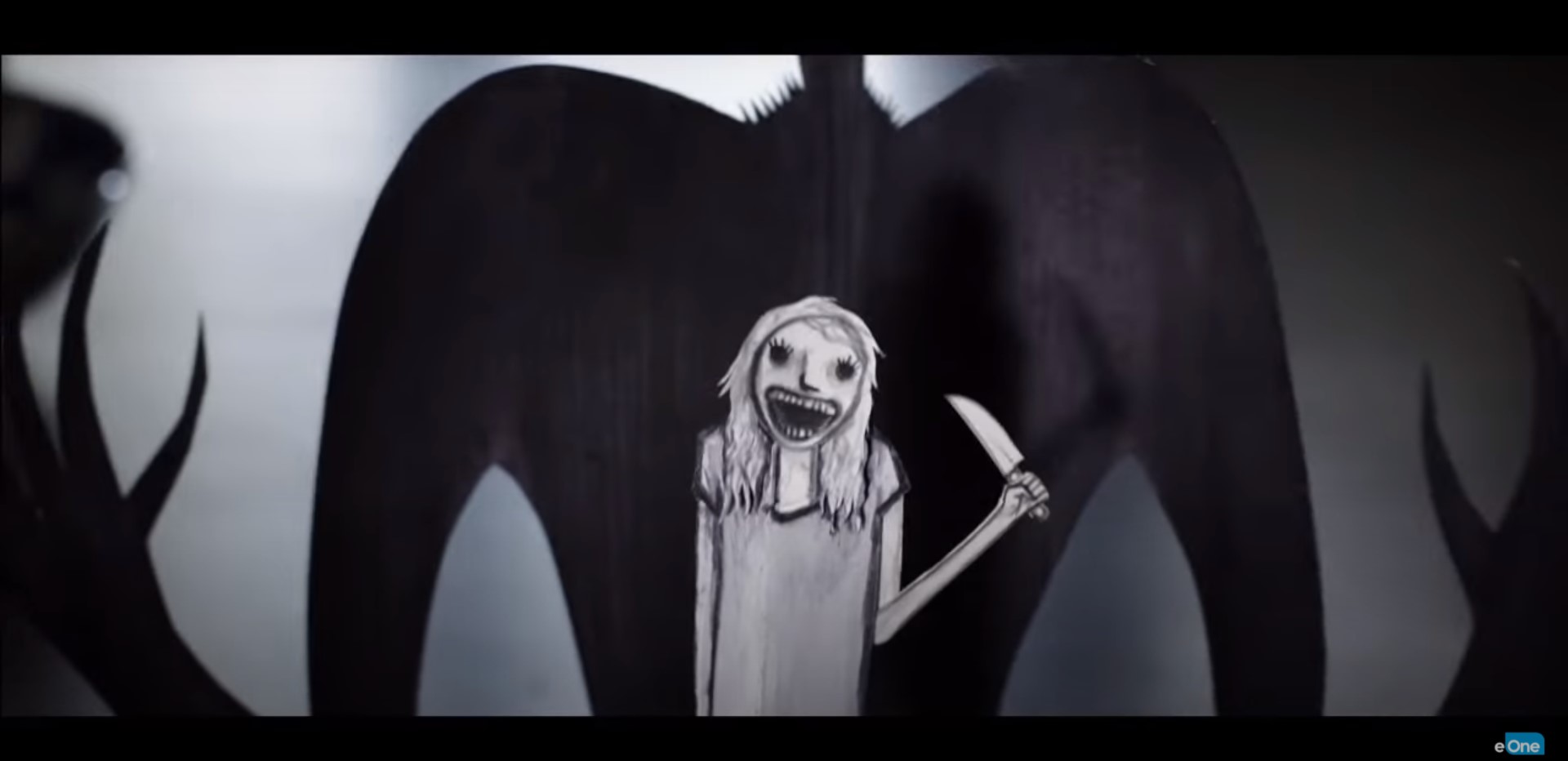
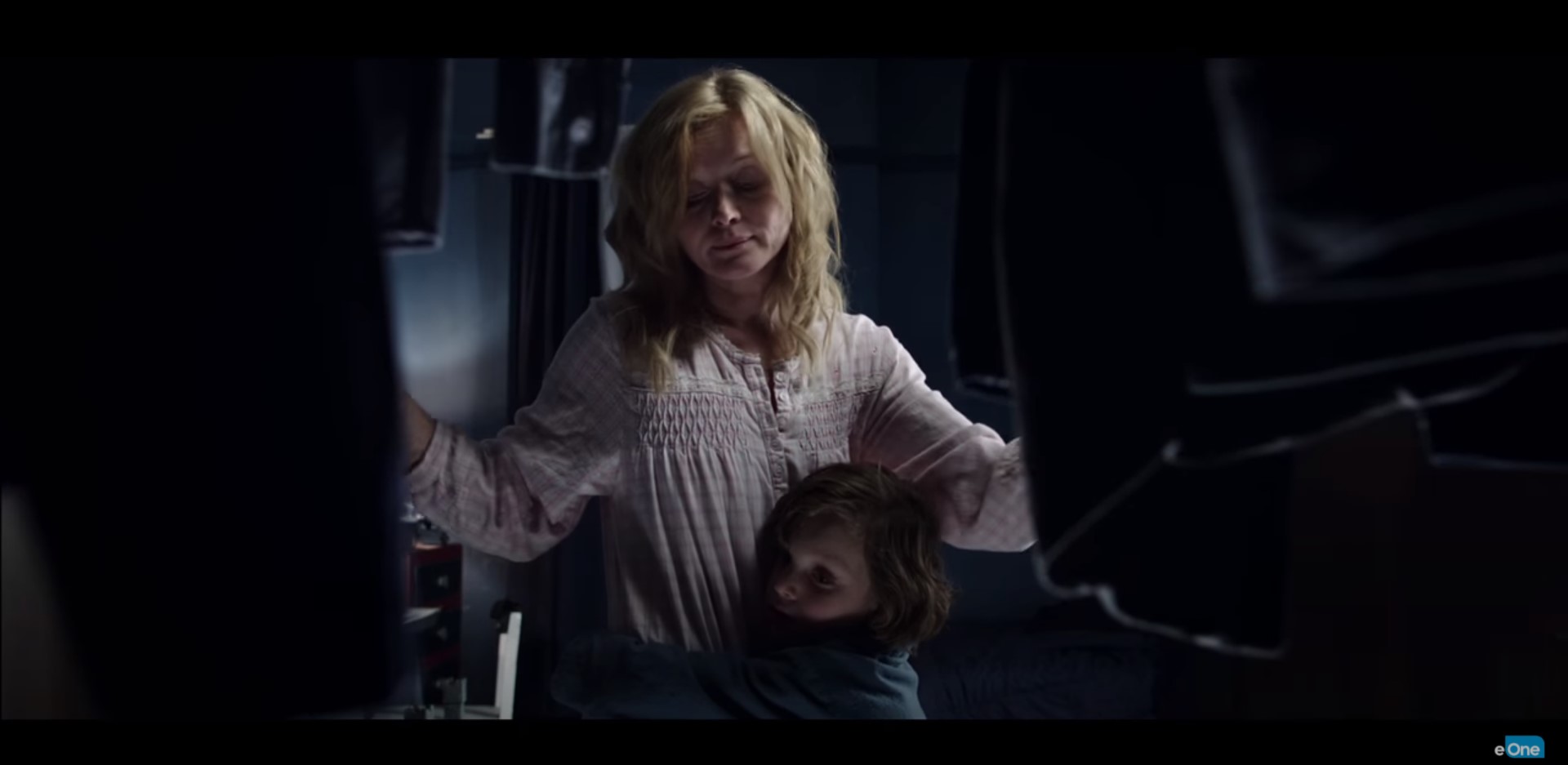
Stage set six years after a car accident involving the death of her husband, single mother Amelia and her difficult six-year-old son, Samuel, struggle to find a harmonious balance in their mother-son relationship.  Samuel’s outbursts and aggressive behaviors deflate the boy’s sometimes sweet nature that has oppressed Amelia into her wits end, alienating her from connecting with other people, even her own sister.  For days Amelia can’t sleep as the stress mounds and Samuel’s erratic temperament continues to worsen, especially when Samuel discovers a mysterious book from the shelf entitled Mister Babadook.  A book he can’t shake from his mind.  The frightening book, filled with graphic imagery and popups, tells of an ominous, dark figure eager to be let into their lives and when the Babadook presence lurks from the pages to reality, hiding in the darkest corners of their home and leeching on the strained anxiety and fear, Amelia and Samuel must rely on each other to wade out the Babadook’s horrible wretchedness only to realize that the way to stop from succumbing to the Babadook’s wrath is to face it head on. 

I can not believe that nearly 7 years has gone by and I have not once sat with a viewing of Jennifer Kent’s “The Babadook.”  Well, luckily for me, genre UK curator and distributor Second Sight Films is releasing the golden egg of limited edition 4K UHD/Bluray sets and was able to snag a screener for review!  The Australian film is an emotionally complex and enormously identifiable thriller that demonizes the post-death states of those dealing with loss and struggling to live on tasked with what’s typically a two person responsibility of mutual support and care.  Kent, who wrote and directed the film, expands upon her original 2005 short entitled “Monster,” by keeping the wrenching core that close in tighter and tighter on the mother and son while upping the visual and audio stylistic elements to make an immersive sympathetic undergo and not just an empathetic one.  “The Babadook” is a production of a conglomerate of companies, including Screen Australia, Causeway Films, Smoking Gun Productions, The South Australian Film Corporation, and Entertainment One and is produced by “Cargo’s” Kristina Ceyton and Jeff Harrison along with “The 13th House’s” Kristian Moliere.

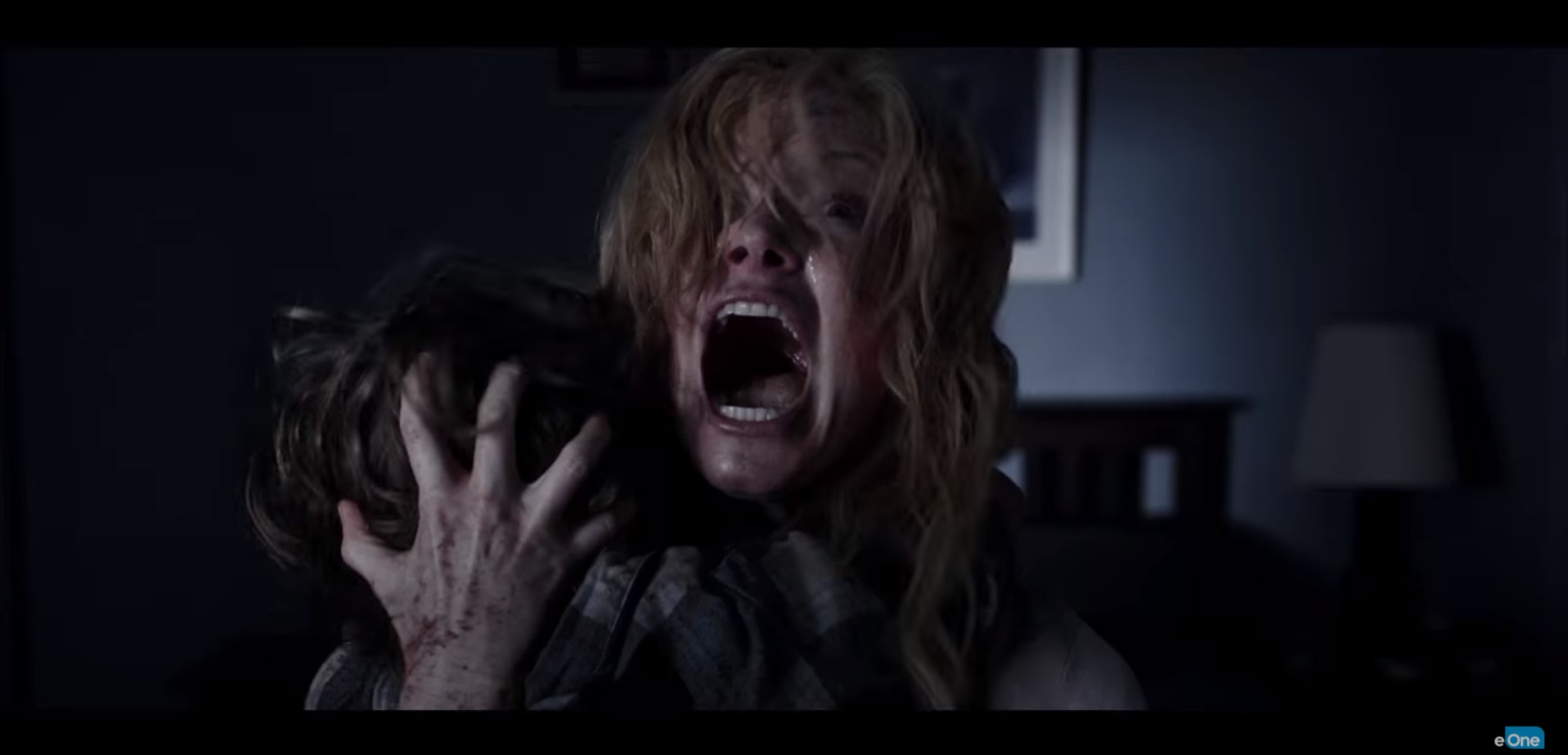
Tackling these performances of a suppressed grief-stricken mother on the edge of snapping and a young boy growing up without a father and innocently oblivious to his own autistic like behavioral issues come with layers upon layers of character depth and, in my firm opinion, Essie Davis and Noah Wiseman crush the roles with a heartbreaking dynamic.   “The Matrix Reloaded” and “Revolutions” star Davis has a tangible wearied performance of a single parent with no one to turn to for help as your unconditional love for her troubled son runs on fumes, dangerously low without an outlet for support, encouragement, or relief.  Samuel has more familiarity in the genre as a relatively new trope, an autistic child that becomes intertwined with a wicked presence that has popped up more recent films, such as Jacob Chase’s “Come Play” and Greg McLean’s “The Darkness,”  as researches learn more about autism and society has been able to authenticate the condition over the years.  The debut feature performance from young Noah Wiseman can get under-your-skin being a restless busy body, a screeching backseat thrasher, and a poke and prod child in constant need of attention, but Noah is able to switch right into a sweet natured young boy with lots of wonderment and love for his mother.  Noah’s inventive, creative, and has a knack for self-preservation when dealing with a looming evil hungry for his fearful submission but because Noah is different from other children, he’s society labeled “disadvantage” is actually advantage, a tool for survival, that keeps him fixated on what’s important.  Focally attuned to just Amelia and Samuel in the story, the film barely registers the supporting cast that rounds out with Hayley McElhinney, Daniel Henshall, Barbara West, and Tim Purcell as the obscured Babadook.

Right from the opening scene, director Jennifer Kent instills a visually stylish premise geared to layer Amelia’s troubled mindset with an etherealized environment nightmare of her husband’s tragic death followed with the reality-grounding energy drain of raising single-handedly a difficult child and the rest of Amelia’s social bubble imploding without a sense of compassion.  From Samuel’s school to her own sister, Amelia is bombarded with delineation of Samuel’s behavior, riddling her psyche with shot after shot of disparaging remarks compounded upon a lingering pain that goes all the way back to her husband’s death nearly seven years ago and to which she subconsciously assigns Samuel blame.  Culminating to a head on Samuel’s birthday, the exact same date of her husband’s death, is a flood of weary and breakdown overtaking Amelia’s last bit of hope for her child and for herself.  This manifests an internalized darkness protruding out into the exterior in the form of Mister Babadook, the embodiment of grief pent up and let loose, feeding off Amelia’s exhaustion and malevolently possessing her being to want to do the worst possible thing overly stressed and repressed parents can do – take out their pain on their children.  Kent masterfully crafts symbolizing grief as an atypical presence of our normal selves.  The sheer amount of dimly lit negative space for the Babadook lying in waiting goes not to waste as when you think something is there, perhaps the Babadook, nothing actually materializes from the ominous shadows, but, in the realm of the story’s reality, that sensation of feeling a presence in the room with you is beyond a tauten tangibility and Kent, playing with that construct, adds stomach knotting audible cues, a guttural discordance, that narrow the eyes, pull the covers over the head, and have you wait with bated breath.

Let the “The Babadook” in with Second Sight Films’ 3-disc limited edition dual formatted, region free 4K UHD and region B Blu-ray, release arriving in the UK on June 21st.  The 4K presentation, an upscaled 2160p, is mastered by the original post production facility and presented in a 10-bit HDR10.  Both 4K and Blu-ray have an aspect ratio of 2.35:1 widescreen.  Audio options include the an English language DTS-HD master audio 5.1 and an English LPCM 2.0, complete with perplexing creature roaring soundbites from the original Resident Evil game on PlayStation.  Since only a screener disc was provided for this review, I am unable to comment on the exact quality of the release’s audio and video outputs; however, the rigid slipcase, with artwork from Peter Diamond, sheaths an abundance of special features, including a new audio commentary by Alexandra Heller-Nicholas and Josh Nelson, “This is My House!” – an interview with lead actress Essie Davis working with the cast and crew as well as her impressions of the story, “The Sister:  Interview with Hayley McElhinney” who talks about her character’s uncompassionate sibling role, and interviews with producers Kristina Ceyton and Kristian Moliere, editor Simon Njoo, production designer Alex Homes, composer Jud Kurzel, and book illustrator of Mister Babadook Alexander Juhasz.  The release also comes with Jennifer Kent’s inspirational short film, “Monster,” the making-off “”They Call Him Mister Babadook,” featurette about production design and set location in “There’s No Place Like Home:  Creating the House,” special effects talk about the sole stabbing scene, segment on stunt work, “Illustrating Evil: Creating the Book” that was illustrated by Alexander Juhasz, and a 150-page hardback book with brand new essays, an achieved interview with the director, concept illustrations, and behind the scenes photos  and collectors’ art cards that were not included with the screener.   Broodingly topical and harrowingly acted with perfection, “The Babadook” is the epithet for silent deadly threats, squirrelled and suppressed away by innate survival instincts only to be a subsonic explosion when the unstable psyche’s flashing point is sparked.