Three Women Murder to Stand Up Against EVIL! “A Question of Silence” reviewed! (Cult Epics / Blu-ray)

“A Question of Silence” Laughs Louder than Words on Blu-ray!

Three different in age and lifestyle women carry on with the routine of their normal lives until police offices arrest them on the charge of murdering a male owner of a clothing boutique.  Having seemingly no motive and have no connection to each other, never having met each other before, the confounded prosecution hire a psychiatrist to determine the women’s mental state for the brutal beating of the shopkeeper.  As the psychiatrist interviews and digs into their personal lives to give rationality to an irrational crime, she finds herself drawn to the women and their heinous act stemmed by a life history that paints a picture of dehumanizing neglect and of providing zero respect.  Subjectively overwhelms objectivity the deeper she looks into their case and her professionalism is put to the test when she has to decide whether being labeled insane fits the accusation or if a more gender bias systemic issue is at play.
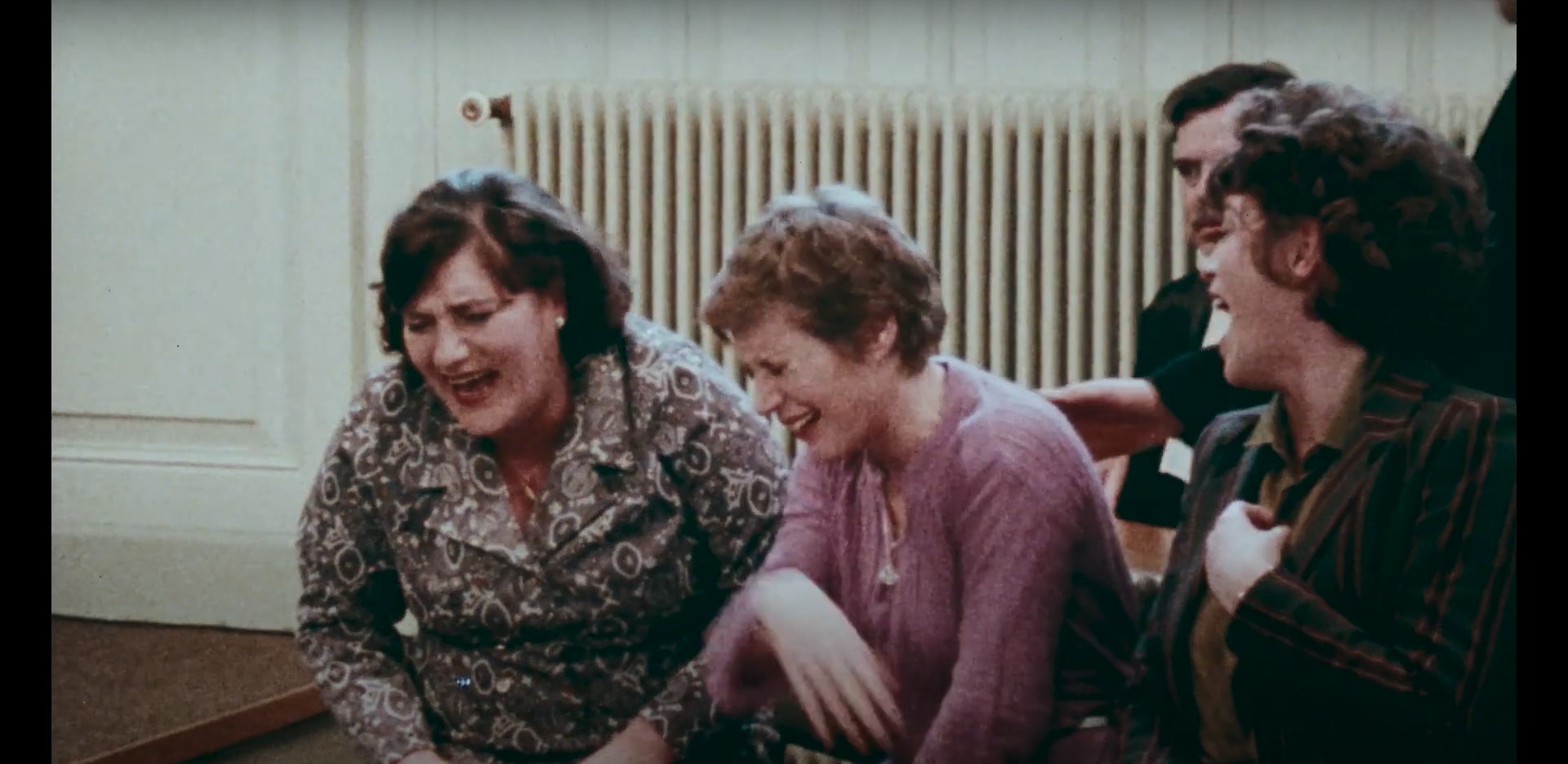
After a rousing first part of feminist revenge with “Red Sun” from 1970, we fast-forward slightly over a decade later in 1982, and moving from out of Germany and into the Netherlands, with Marleen Gorris’s acclaimed crime drama “A Question of Silence.”  With little-to-no film prior film experience, Gorris becomes a provocateuse with her debut picture that stirs controversy amongst one side of the sexes.  “A Question of Silence,” natively titled “De stilte rond Christine M,” or “The Silence around Christine M.,” became the best Dutch film of the year with local accolades, including a Golden Calf for best film at the Netherlands Film Festival the year of release.  Along with the Rudolf Thome’s “Red Sun” and the German social commentary on women integrating into equal social and professional positions, Gorris comes at a time where the status of Dutch women were on the lower end of the gender equality scale, especially in the workforce.  Matthijs van Heijningen, who produced polemic features directed by women filmmakers, such as Nouchka van Brakel’s “A Woman Like Eve” and “The Cool Lakes of Death,” risked yet another credit to his name with the virtually unknown writer-director Marleen Gorris and her sizeable undertone story under his company, Sigma Film Productions.
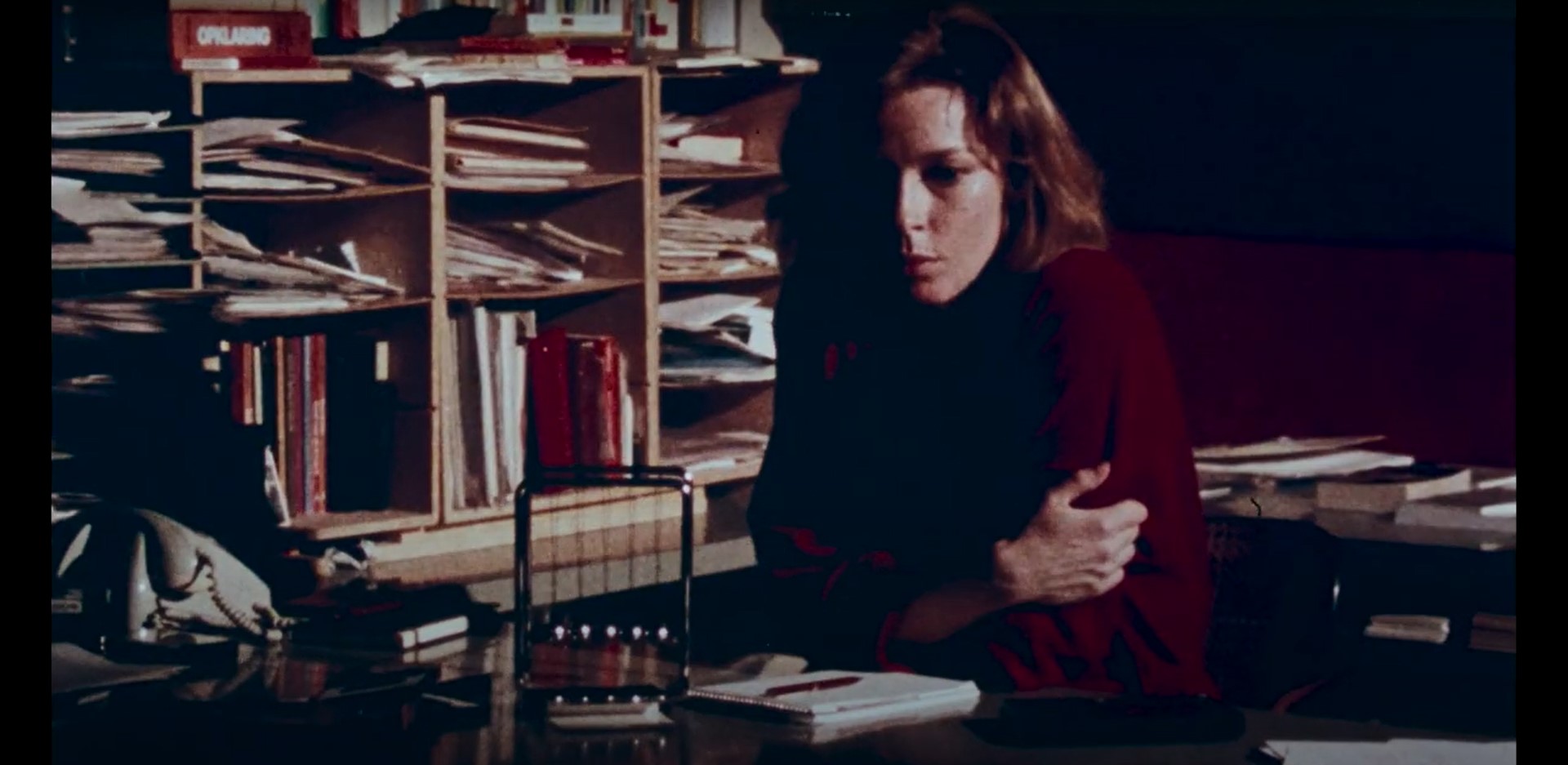
The narrative opens with Janine van den Bos and her husband Ruud having a flirtatious moment on the couch where Janine playfully annoys her book-reading husband with advances sexual foreplay.  Without knowing who these two people are exactly, other than they’re in a version of a relationship, Janine, played by Cox Habbema, and husband Ruud, played by Eddy Brugman setup metaphorically what’s inherently wrong with society with a woman seeking something and the man ignoring her and practically commanding her to stop the foolishness in a dismissive way.  This opening scene then cuts to the three women being arrested, led up to by intercuts of their daily routine before the police confront them.  We’re treated to some of the most idiosyncratic and grounded performances by Edda Barends as the muted housewife Christine, Nelly Frijda as the cackling coffee barista Annie, and Henriëtte Tol as the beautiful and intelligent secretary Andrea.  The three women never met before, never plotted before, and never killed before but a sudden epiphany while shopping became the straw that broke the camel’s back, turning watershed into bloodshed that unveiled something just as sinister as murder.  Cox Habbema engrosses herself into the psychiatric role as an educated woman analyzing and judging other women while also being judged herself by the opposite sex despite a higher-level of learning and professionalism.  Without exposition, characters express themselves through action while being ambiguous through dialogue, working to convey the lopsided gender equality across the screen perfectly without even one ounce of explanatory detail dropped. 
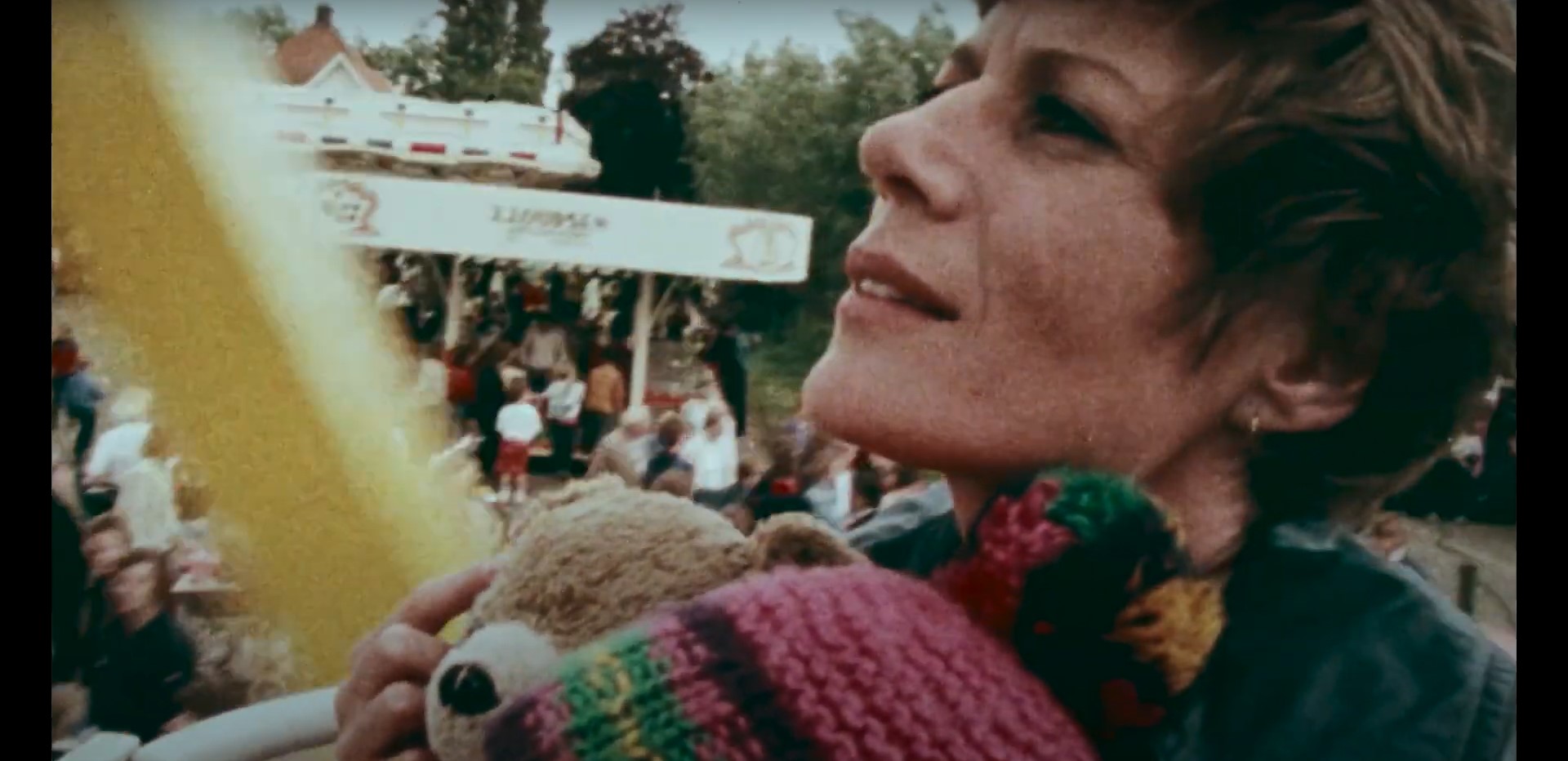
What’s most intriguing about Gorris’s film is it’s mirroring quality to society.  “A Question of Silence” doesn’t fabricate grand futures or alternate universes with eccentric, wily characters to be metaphorical fodder of expression; instead, Gorris remains earthbound, present, and timely by incorporating true-to-form examples that create derogatory silence on women.  The non-linear narrative, cutting back-and-forth from investigative present to the chronicled past visualizes the women’s struggles and frustrations living inside a male-dominated culture.  From being expected to handling all aspects of the household and childcare, to being brushed off and dismissed by colleagues, to forgotten and underappreciated, Gorris forces a frank contemplation on a patternized and patronized patriarchy.  Heightening the tension, Lodewijk de Boer and Martijn Hasebos’s giallo-esque and experimental soundtrack adds a layer of loadstone to see whether these extempore femme fatales executed a crime. 
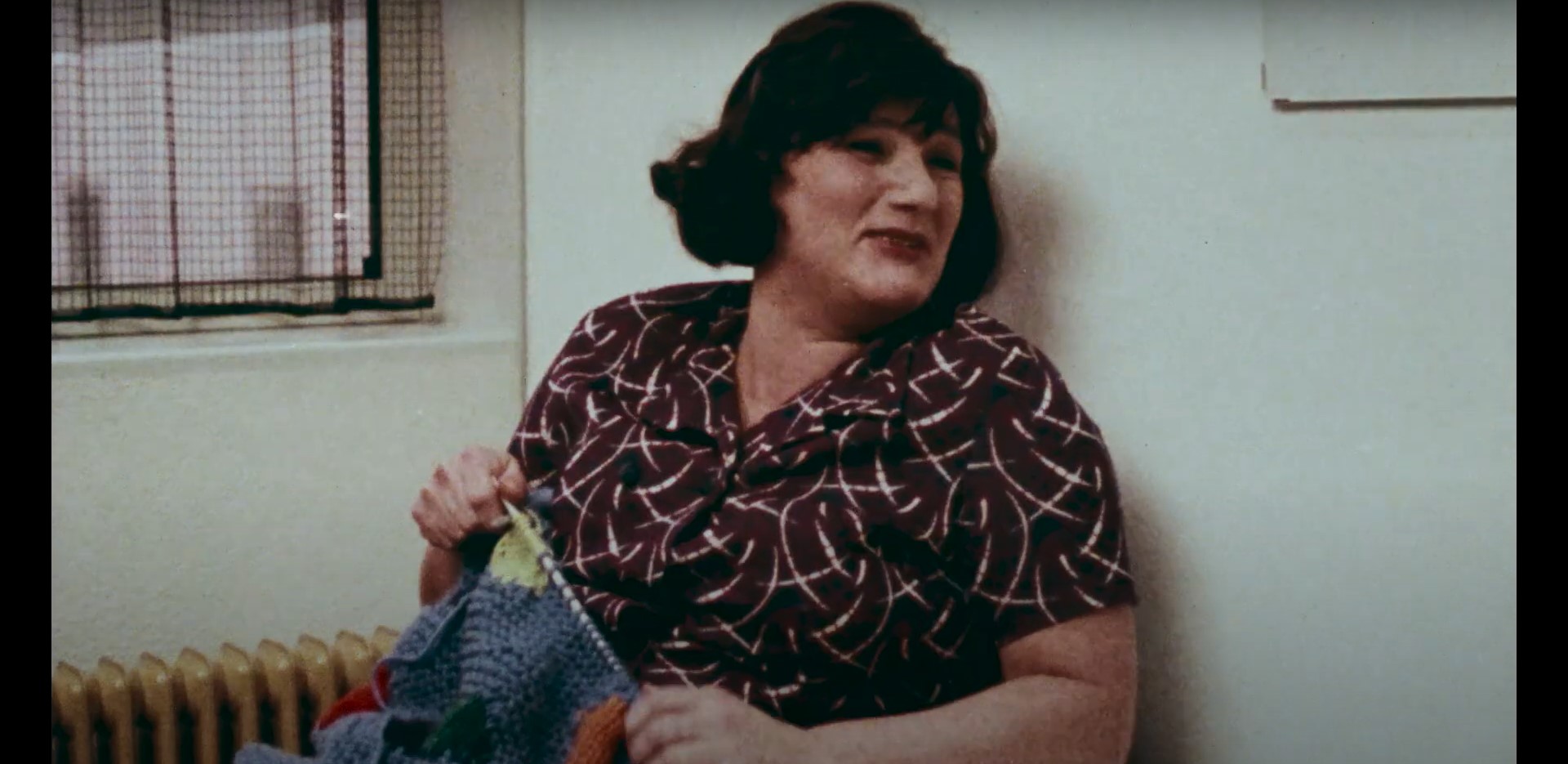
Cult Epics, in association with the Eye Film Institute, continue their campaign on delivering thought-provoking, provocative, and controversial Dutch masterpieces onto the high-definition stage with their latest release, “A Question of Silence.”  The AVC encoded, 1080p, BD50 stored feature is presented in the 1:66:1 European widescreen aspect ratio.  The 2K HD scanned transfer and restoration is based off the 35mm print; however, judging by the grain levels and very little preserved detail, especially in a HD scan, I’d say the original negative was 16mm and then blown up for 35mm project, which was a fairly common process.  The noticeable enlargement of grain dampens picture details less favorable yet not the image quality is not a total wash with a stable graded rendering, with a natural skin tone and pigment of objects, and the presence of imperfections kept in a minimum – such as the occasional cigarette burns and dust/dirt.  What excels here mostly is the lack of compression issues so we’re only treated to the innate quirks of the original celluloid film.  The release offers two Dutch language audio options – a LPCM 2.0 mono and a DTS-HD MA 2.0.  Toggling between both tracks, there’s not much different between them until Nelly Frijda’s crone-cackle distinguishes itself with robust HD prominence projecting full-bodied through the dual channel.  Again worth noting, Lodewijk de Boer and Martijin Hasebos synthesizing score, coupled with Marleen Gorris’s tense and taut flashback storyline, casts a disquieting tone that’s very fitting for a film entitled “A Question of Silence.”  Dialogue, as well as the score and overall soundtracks, suffer very little from the slight hum of the running camera and some minor hissing but the general result has tremendous.  English subtitles are optional and synch well with error-free translation; however, upon watching the special features, the Cult Epics’ feature translations differ from the copious amount of snippet clips of the interview segments.  Roughly the same interpretation but the phrasing maybe clearer and less wordy in the snippets so I’d be interested in the, what I assume would be, the original English translation.  Special features include an audio commentary by film scholar Patricia Pisters, an archival Cinevise interview with Marleen Gorris from feature release year 1982, a sit-down, one-on-one interview with lead actress Cox Habbema and Cinevise host a year later, a Polygoon Journal Newsreel from ’82 that mentions the Golden Calf award from the Netherlands Film Festival, a promotional gallery, and trailers.  The clear Blu-ray cover comes with the tear-drenched and shadow-obscured face of Cox Hebbema with a reversible still image of the three accused women on the inside.  No insert included and the disc is pressed with the same front cover art.  Cult Epics Blu-ray comes with region free playback and the feature is 97-minutes and unrated.  Marleen Gorris first run as a filmmaker denotes her as a masterful storyteller with a timeless tale of close-quartered and subtle masculine tyranny in an attempt to open the unwilling eyes of the narrow focused. 

“A Question of Silence” Laughs Louder than Words on Blu-ray!

EVIL Lights Up When Peeling Skin! “Human Lanterns” reviewed! (88 Films / Blu-ray)


Own this beautiful release from 88 Films of the “Human Lanterns”

Two respected and wealthy Kung-Fu masters have a long rivalry, trying to one-up each other at any cost even if that means stooping into their personal life to gain the most public admiration.  With the annual lantern festive approaches, to have the best and brightest lantern would sustain at least a year of gloating over the other master.  When a lantern maker with a retaliation mindset against one of the more boastful masters is hired to make his festival entry, the lantern maker exacts horrifying revenge by fueling their feud behind the scenes. Kidnapping beautiful women who are dear to each master and exploiting their soft delicacies for his crazed creations, the maniac lantern maker turns the village upside down, forcing the local constable into an impossible investigate into the village’s most popular residents when none of the evidence points to the other.

“Ren pi den long,” aka “Human Skin Lanterns,” aka “Human Lanterns” is a grisly Kung-Fu murder-mystery that’ll make your skin crawl right off from your body. The stylishly colored and ethereally varnished 1982 Hong Kong film is written-and-directed by Taiwanese director Chung Sun (“Lady Exterminator) that blended the likes of a giallo mystery into the well-choreographed martial arts mania with the profound Kung-Fu screenwriter, Kuang Ni (“The One-Armed Swordsman,” “The Flying Guillotine”), co-writing the script alongside Sun. While not as ostentatiously gory or as cinematically profane as the 80’s released Category III certified films that rocked Hong Kong audiences, and the censor board, with shocking, gruesome imaginary and content, “Human Lanterns” does sit teetering on the edge with mostly a tame Kung-Fu feature that quickly turns into the blistering carnage of a basket case, or in this a lantern maker, who uses hiding as a double entendre. “Human Lanterns” is a Shaw Brothers Studio production executively produced by the oldest of two brothers, Rumme Shaw, and, then new to the Shaw Brothers’ board of directors, producer Mona Fong.

“Human Lanterns” starred two the renowned names in martial arts films from the 1970s and well into the 1980s with “Fist of Fury” and “The Swordsman and the Enchantress’s” Tony Liu as the impeccably arrogant Lung Shu-Ai with a self-image to protect more than the women in his life and “Bloody Monkey Master” and “Return of the Bastard Swordsman” Kuan Tai Chen sporting a sweet mustache as Lung’s longtime rival, Tan Fu. Shu-Ai and Chen have really spot on, well-versed, fight sequences together braided into their play off each other’s character’s haughty personas. While behind the curtain of overweening and defiance between the two masters, Chao Chun-Fang unceremoniously sneaks into the fold by happenstance as Lung offers him money for the best lantern this side of the lantern festival. Lung and Chao Chun-Fang, played with a demented, idiosyncratic duality from Leih Lo (“The Five Fingers of Death,” “Black Magic”), another master in the art of fighting in his own style, have an inimical past…well, at least thought so by Chun-Fang. In a sword dual over a woman, Lung defeats Chun-Fang and purposefully scars him above the left eye, causing him the inability to look up, and while the lantern maker has stewed for many years, training all the while to be the best fighter, his tormentor Lung Shu-Ai has nearly all forgotten about the incident and found trivial enough to ask Chung-Fang to make him a lantern and offer him out for drinks for being old buddies of yore. However, this yard pulls the wool over the eyes of self-centered, the upper class, and the unruffled nonchalant as Chung-Fang takes advantage of the Kung-Fu masters naivety and uses the rival as a screen to cover up his kidnapping deeds of the women in their lives, played by Ni Tien (“Corpse Mania”), Linda Chu (“Return of the Dead”), and Hsis-Chun Lin. “Human Lanterns” rounds out the character list with a hired assassin in Meng Lo (“Ebola Syndrome”) and a competent but out of his league village constable in Chien Sun (“The Vampire Raiders”).

The look of “Human Lanterns” is often dreamy. No, I don’t mean dreamy as in gazing into the strong blue eyes of your tall and dark fantasy man. The dreamy I’m speaking of is produced by cinematographer An-Sung Tsao’s luminescence that radiates of background and the characters through the wide range of primary hues. Tsao’s colorful and vibrant eye doesn’t clash with the vintage era piece consisting of impressively detailed sets, a costume design plucked straight from the 19th, and hair, makeup, and props (which I’ve read some of the blades were authentic) to bring up the caboose of selling the completed package of delivering a spot-on period film. When Leih Loh dons the skull mask, an undecorated and unembellished human skull, with wild, untamed hair sprouted from every side of the eyeless mask, Loh transforms into a part-man, part-beast jumping, summersaulting, leaping, and seemingly flying through the air like a manically laughing ghost. The visual cuts petrifyingly more than described and if you add an extensive amount of Kung-Fu to the trait list, “Human Lanterns” has a unique and unforgettable villain brilliantly crafted from the deepest, darkest recesses of our twisted nightmares. “Human Lanterns” has a wicked and dark side that balances the more arrogantly campiness of Lung and Tan’s hectoring rivalry. When Lieh Loh is not skinning in his workshop or Lung and Tan are not bullying each other into submission, there’s plenty of action with the heart stopping, physics-defying martial arts that just works into the story as naturally as the horror and the comedy. With shades of giallo and fists of fury, “Human Lanterns” is Hong Kong’s very own distinctive and downright deranged brand of good storytelling.

88 Films lights the way with a new high-definition Blu-ray of the Shaw Brothers’ “Human Lanterns” from the original 35mm negative presented in Shawscope, an anamorphic lensed 2.35:1 aspect ratio that more than often displays the squeeze of the picture into the frame. One could hardly tell the upscale to 1080p because of the very reason I explained in the previous paragraph of the airy An-Sung Tsao façade that softly glows like bright light behind a fog. Nonetheless, the image quality is still stunning and vivid, a real gem of conservation and handling on this Blu-ray release. The Mandarin dubbed DTS-HD 1.0 master audio is synched well enough to the action for a passing grade. The foley effects, such as the swipes and hits, are often too repeated for comfort, but adds to “Human Lantern’s” campy charm. The newly translated English subtitles are synchronous with the picture and are accurate but, in rare instances, come and go too quickly to keep up with the original language. The release comes not rated with a run time of 99 minutes and is region locked at A and B. Why not go full region free is beyond me? Licensing? Anyway, special features include an audio commentary by Kenneth Brorsson and Phil Gillon of the Podcast On Fire Network, “A Shaw Story” interview with then rising Hong Kong star Susan Shaw who talks about the competitive and easy blacklisting Hong Kong and Tawain cinema market, “The Beauty and the Beasts” interview with in story brothel mistress played by Linda Chu often harping upon not wanting to do nudity despite directors begging her, “Lau Wing – The Ambiguous Hero” interview with Tony Liu that comes with its own precaution title card warning of bad audio (and it is really bad and kind of ear piercing) as the lead man really regales his time on set and in the industry between Golden Harvest Productions and Shaw Brothers Studios, and rounding out the main special features is the original trailer. The package special features is a lantern of a different color with a limited edition cardboard slipcase with new artwork from R.P. “Kung-Fu Bob” O’Brien, a 24-page booklet essay entitled “Splicing Genres with Human Lanterns” by Barry Forshaw accompanied by full colored stills, posters, and artwork by O’Brien, a double-sided fold out poster, and reversible Blu-ray cover art that can be flipped from the same, yet still awesome, O’Brien slipcover art to the original release art. The new 88 Films’ Blu-ray set conjures a renaissance satisfaction like none other for a highly recommended, genre-ambiguous, vindictive affray.

Own this beautiful release from 88 Films of the “Human Lanterns”

EVIL Strikes at the Stroke of “Midnight” reviewed! (Blu-ray / Severin)

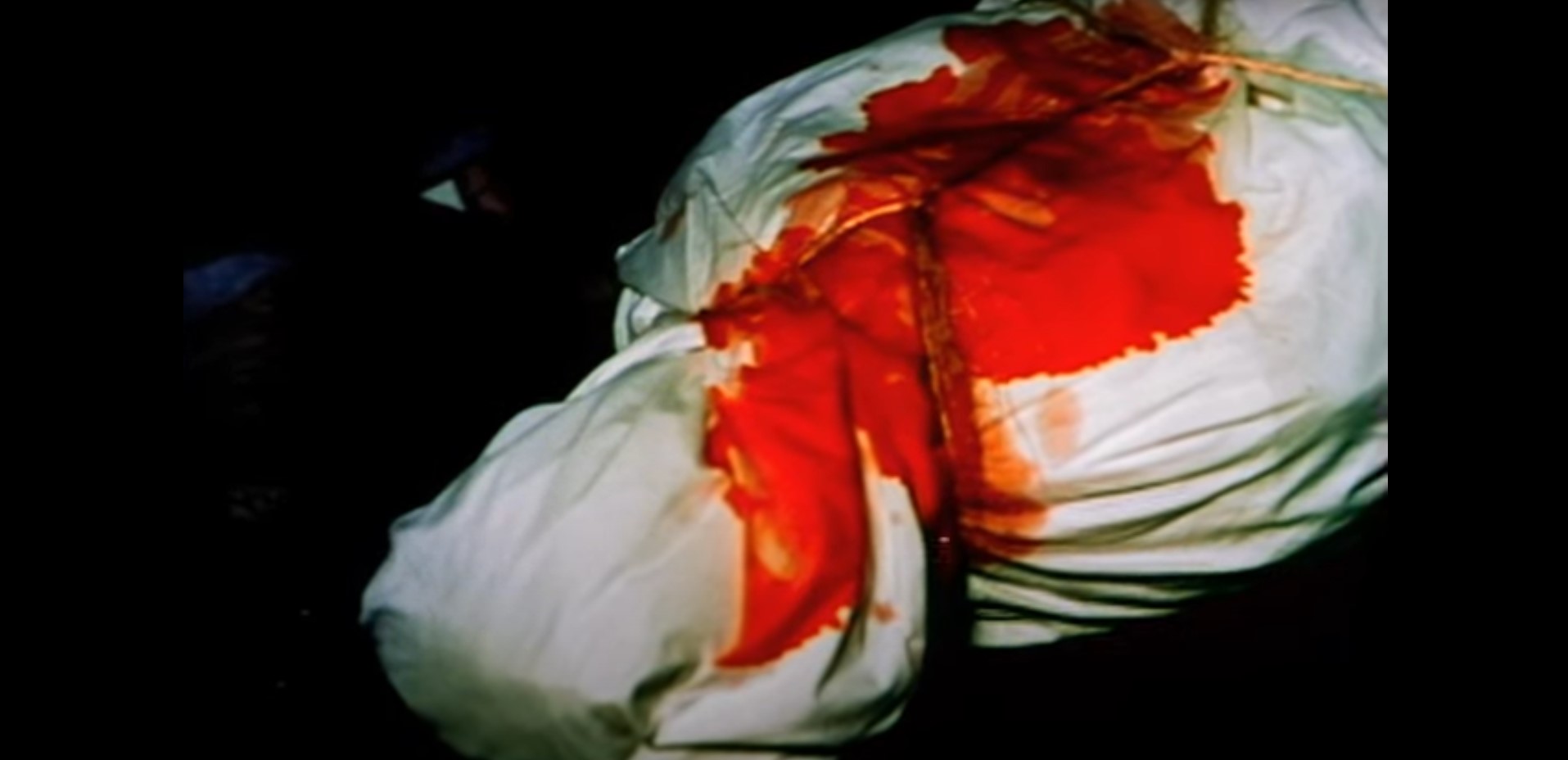
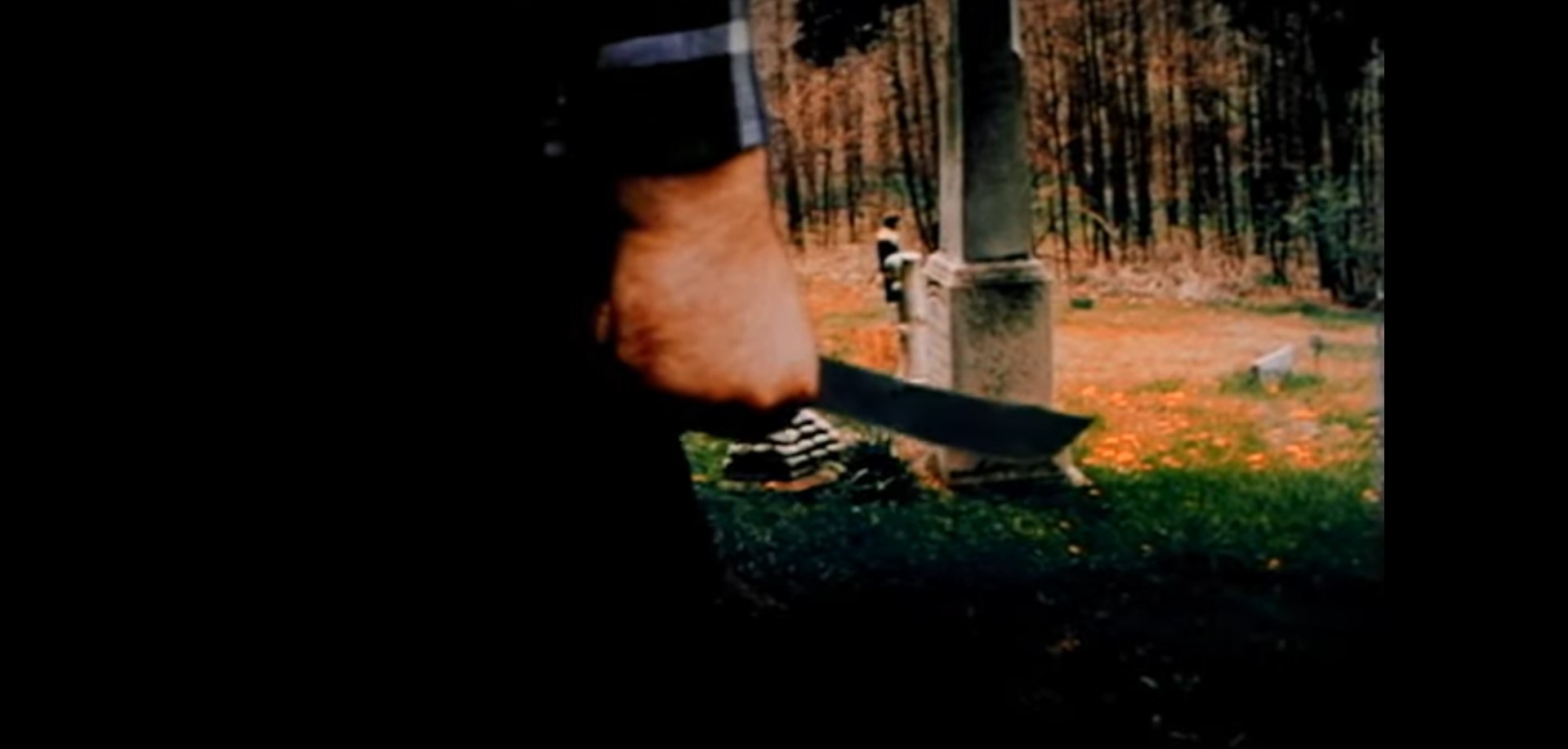
Teenager Nancy searches for forgiveness through reestablishing her faith in God after being dumped by her sexually active boyfriend.  When her alcoholic, police officer stepfather learns of the relationship’s abrupt ending, he moves in quickly to take advantage of Nancy while under the heavy influence of the bottle.  Escaping his grasp, she flles home and hitchhikes a ride with two men travelling South on a getaway from Pennsylvania to sunny Fort Lauderdale, but when facing trouble with small town local law enforcement after attempting to steal groceries, the three find themselves right in the middle of a Satanic cult’s sacrificial ritual that requires the killing of three women for eternal life, one a night at midnight for three days.  Held in a dog cage, Nancy anxiously awaits her turn at the bloodletting alter surrounded by the cloaked-cladded cult and their decomposing mother’s corpse  Praying to God to save her soul, little does Nancy know that her stepfather has tracked down her whereabouts, leading to a bloody showdown of one cop pitted against a family of satanic psychopaths. 

Based of his 1980 novel of the same title, “Midnight” is known to be John Russo’s heart-and-soul project that ended up suffering one mishap after another in the two years of its production and post-production until it’s final release in 1982.  Also known as “Backwoods Massacre,” the “Night of the Living Dead” co-writer Russo helms the low-budget occult slasher out from his usual stomping grounds in and around Pittsburgh, Pennsylvania.  “Midnight” showcases a story themed with a depraved sense of race intolerance for African Americans and all varieties of religious convictions to be innately false in an atheistic Russo viewpoint amongst a glorified surface level of enrapturing inhumane violence seasoned by brainwashing.  This West Pennsylvanian born and bred grindhouse exploitation found producers in  Sam Sherman and Daniel Q. Kennis of “Blazing Stewardesses” and “Blood of Ghastly Horror”) along with Donald Redinger under the now defunct Independent-International Picture Corp.

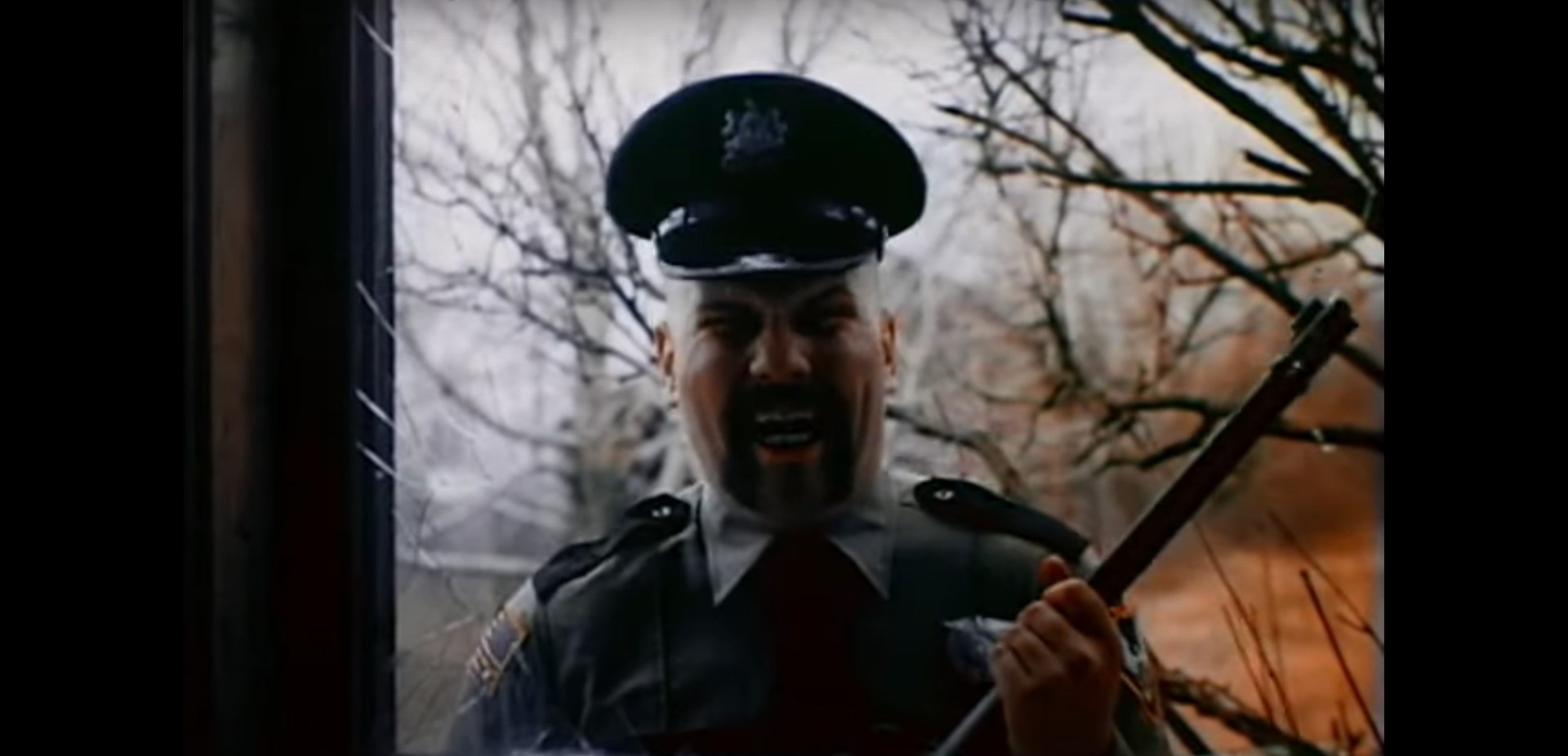
In a sea of smaller fish of Pittsburgh actors in “Midnight’s” casting tow is a larger and rougher around the gills grouper embodied by the singular Lawrence Tierney (“Reservoir Dogs,” “The Prowler”) in the Officer Bert Johnson role. Tierney’s no stranger to the horror genre, flaunting his thick New York tough guy accent that typically typecasts the veteran actor into authoritative roles. In being no exception, “Midnight” has Tierney playing a sleazy, alcoholic, police officer who winds up more-or-less unearthing sense in his old age and utilizing his skills for good to fully satisfy his character’s arc, but Tierney alone is wonderful to behold and easy to be disgusted by as he solicits his underage teenage stepdaughter with a perverted proposition. That stepdaughter, Nancy (Melanie Verlin), is the face of “Midnight’s” protagonist whose attempting to get back on track with God after a sinful bedroom relationship with an ex-boyfriend, but her plans are slighted by a brood of young Satanists keen on keeping their now long deceased mother’s irreligious convictions intact. David Marchick, George Romero regular Ted Amplas (“Day of the Dead” 1978, “Martin”), Robin Walsh, and the face of “Midnight” on many of the posters, Greg Besnack, size up as the Satanic terrible and merciless foursome. The cast fills out with Charles Johnson, John Hall, Bob Johnson, Lachele Carl, Jackie Nicoll, Doris Hackney, and Ellie Wyler.

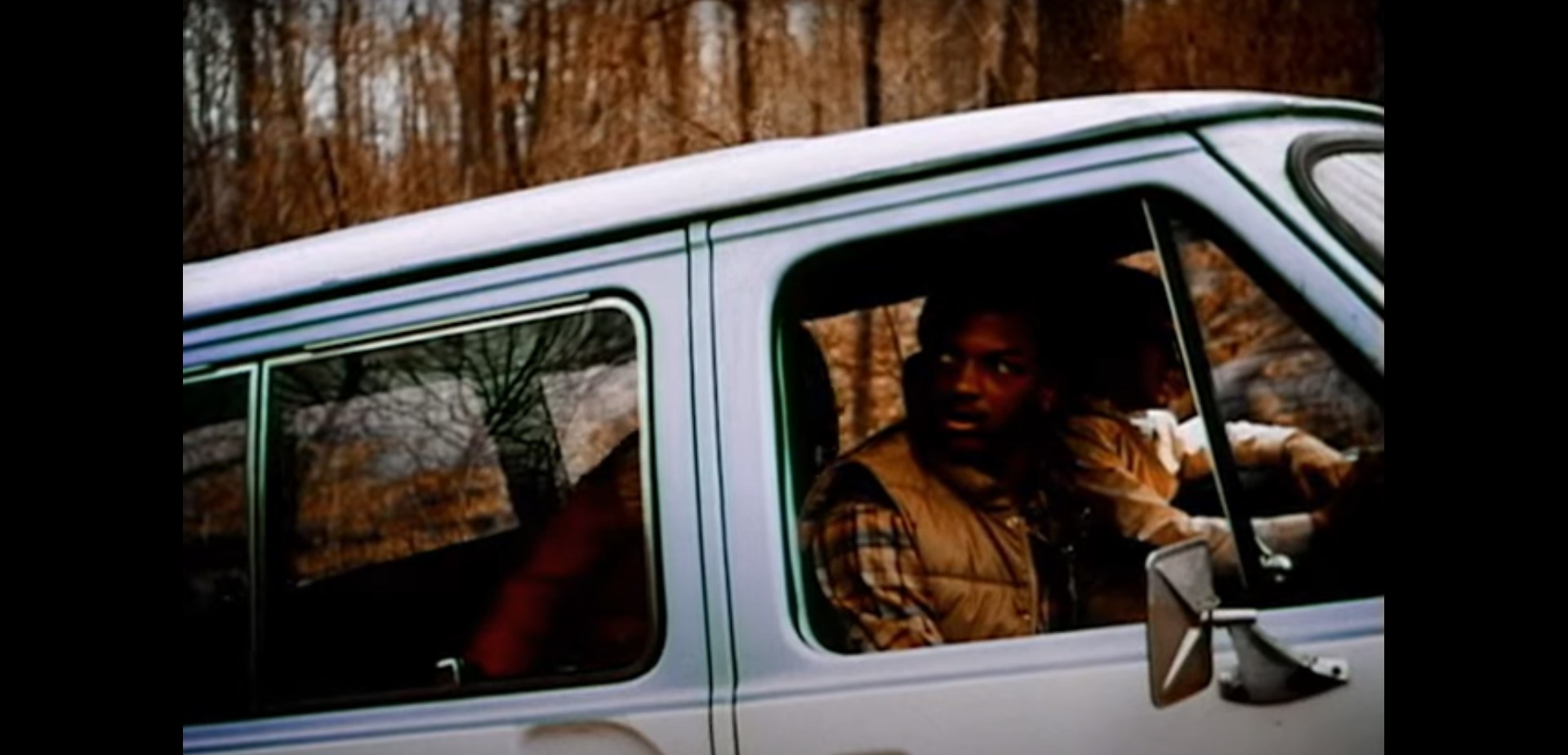
After the success of a collaborated run with George Romero on a handful of projects, John Russo ultimately branches off to do his own creative output after their production company, Latent Image, brought on newcomers’ and the shared ideas on the direction of their company didn’t sit well with Russo – an irk that Russo still harps upon to this day, according to the special features’ new interview from the latest Severin Film’s release.  Yet, I digress into the review of “Midnight” that has feral narrative with an irregular plotted blueprint of teenager exploitation, racial injustice, and backwoods barbarians.  Somehow, Russo’s able to juggle his jotted down on a budget scrambler with a threadbare satanic family baseline that unsettlingly feels snagged in a randomizing generator spitting out scenes to see if they cohesively connect into the next.  Nancy’s traversing into the thicket of terror story cuts into and undermines more of the sibling’s unholy ritual, which the title “Midnight” becomes an important piece to the ceremony, with a subplot of the teen running away from a handsy stepfather and into the Mystery Machine modeled van-driving hands of a pair of cavalier friends on a road trip and then find themselves in an endgame of rotten luck with bad company.  The whole lead up to the two groups running into each other is suddenly dropped like a bad habit, forgoing much of the racial tensions, the youthful subverts, and even the attempt at pedophilia when the main, overarching theme of cult mayhem and religion inadequacies come to the forefront.  “Midnight” inarguably a gargantuan piece of good ole American hicksville victimization with some underappreciated manic performances by John Amplas and Greg Besnak, but there’s difficulty in shaking “Midnight’s” stark story division that leaves much to be desired.

“Midnight” is the particular video nasty that’s surpassing all of it’s other formatted counterparts with a Severin Film’s 4K scanned Blu-ray of the full uncut negative.  The 1080p Full High Definition, region free BD50 is presented in a widescreen 1.85:1 aspect ratio with a respectable color correction, but the correction sees unstable moments regressing near the cuts revealing the lifeless yellow tinge of unmastered quality. A right amount of grain, a great amount of detail, and hardly any damage to the thought-lost uncut negative proves Severin found buried treasure of the John Russo shocker. Two audio options grace the release with an English language DTS-HD 5.1 surround and an English 2.0 Stereo. While the 5.1 offers a more robust audio option of funneling individual tracks through their respective channels, I wouldn’t necessarily say “Midnight” has an overwhelming yield for audiophiles. Soundtrack comes across just enough to know it’s there, the dialogue is clean and unimpeded, but what unfolds out of clarity is the wonky foley ambience that just render solemn scenes silly. Severin offers up a new interviews under “Midnight’s” mediocre cult status with director John Russo – Making Midnight – as top bill in a lengthy discussion about his long career, his acquaintances including George Romero, and, of course, his recollections about “Midnight.” Other interviews include producer Samuel Sherman – Producing Midnight, actor John Amplas – The Midnight Killer, and special makeup effects artist Tom Savini – Small Favors – who barely remembers working very little on this film by providing pre-fabricated headshots and sliced throat prosthetics. An isolated score selection with audio interview with Mike Mazzei, an alternate title card for “Backwoods Massacre,” the trailer, and radio spot round out the bonus content inside the blackout snapcase. Prolific as John Russo may be in horror literature, filmmaking, and in legendary regards with his work alongside Romero, “Midnight” reflects poorly on his cinematic vocation and while many problems plagued production and post-production, Russo somehow managed to root out a passable working cut of crazed satanic panic.

“MIDNIGHT” available on Blu-ray from Severin!

Did Evil Put You On It’s Will? “Next of Kin” review!


After the untimely death of her mother, Linda returns from her university studies to reacquaint herself with the inherited Montclare, a home for the elderly her mother owned and operated through the decades as a family business. As she internally debates about whether to sell the grand, yet antiquated estate, 24-year-old Linda shuffles through her mother’s left behind things that rekindle Linda’s faded memories of her youth and add a sense of melancholy about her mother’s mental condition. A seemingly quiet, if not quirky, home for the elderly quickly becomes shrouded with mystery after the discovery of one of the residents found dead in a bathtub. Soon after, Linda feels as if she’s being watched and toyed with inside the corridors of Montclare: candles found lit, bathroom fixtures overflowing and cascading with water, mysterious figures looming from inside her room’s window, and her mother’s belongings sprawled out about the room. Paranoia sets into Linda as she suspects the resident caretaker and doctor of a lethal plot against her inside an old, foreboding manor that troubled her mother into deathly consequences and she searches for answers inside her mother’s extensive diaries that reveal the ominous dread that overwhelmed her inside an evil house.

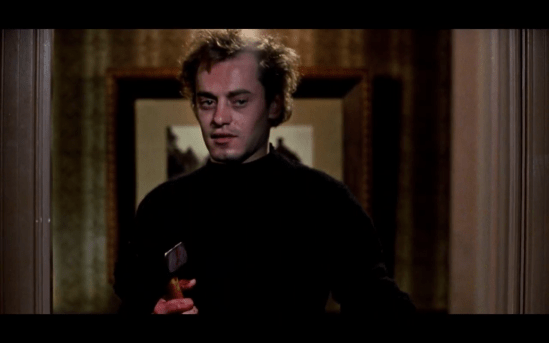
“Next of Kin” is Australian’s answer to Dario Argento’s hauntingly apprehensive and vividly hued classic, “Suspiria.” Directed by Tony Williams and co-written with Michael Heath (“Death Warmed Over”), “Next of Kin” embodies monolithic brooding merits of a gracefully shaped horror and palpitating anxiety unlike any other Australian horror film we’ve ever seen before. In fact, Williams 1982 film doesn’t feel very Australian at all that’s set chiefly in and around Montclar, a lavishly gothic estate with expensive fountains and floral garnishes. Aside from native accent and barely a dusty road to drive down, the country of origin could be anywhere, punching home the aspect that the incident at Montclar is universal. Looking into a couple of their techniques, Williams and cinematographer Gary Hansen (“Image of Death”) utilize slow motion and interlaced scenes to convey a surreal dread that transcends from film to senses, also involving disruptive audio cues and visual jump scares, to culminate every scene, ever moment, into a well thought out result on how to effectively reach out and affect that scared little boy or girl in all of us.

Primarily a television and mini-series actress, Jacki Kerin sets foot into the main actress Linda. Kerin’s able to flip emotions from emitting a passive quality while she seemingly annoyed by her mother’s death while switching gears into a hyper-tensive defender. The small screen actress translate well onto the big screen, accompanying well versed thespians in “Picnic at Hanging Rock’s” John Jarratt, who went onto to more notably the “Wolf Creek” franchise. There’s also Alex Scott (“The Abominable Dr. Phibes”) and Tasmanian-born actress Gerda Nicholson. Scott and Nicholson do a fine job of portraying un-trust worthy snoops with underlining knowledge yet to be exposed and with Kerin, the fear goes unopposed and spreads like wild fire. the remaining cast includes Charles McCallum, Bernadette Gibson, Robert Ratti, Vince Deltito, and Debra Lawrence.

Practical effects are minimal in “Next of Kin,” but are well integrated with a meticulous purpose. Williams maintains the gore to an infancy amount, but the New Zealand born director doesn’t nickel-and-dime the macabre. Much of the death displayed comes in at post-humorous, visually positioning the cold and blue hued, more at times ripped life from, bodies to vessel the story forward toward a shocking, what-the-hell, and oh glorious climax. Then, when all the proverbial cards on the table, Linda finds herself ensnared in a cat-and-mouse game where Chris Murray’s practical effects come to the forefront. Special effects maestro, Chris Murray, had the George Miller experience while working on “Max Max” in 1979, prepping him to be the adequate effects artist to create surreal and, also, brutal Giallo-like murder.

Umbrella Entertainment presents Tony Williams’ “Next of Kin” onto a region free, full HD 1080p Blu-ray home video. An Ozploitation classic in itself, Umbrella Entertainment puts the film on a home media pedestal with a remastered 4k transfer from the original 35mm interpostive and presented in a widescreen, 1.77:1 aspect ratio. Beyond gorgeous with lush grim colors and able to keep the natural grain of the 35mm nitrate, “Next of Kin” sees one hell of an upgrade that shows no wear in the transfer and no compression issues or edging enhancements. Even with the heavy blue tint at time, the amount and the use is appropriate alongside Gary Hansen’s vision. The new English DTS-HD master audio emphasizes the heavy synthesized score by German electronic music composer Klaus Schulze that meshes fine with the creepy house ambiance. Dialogue is properly forefront and crystal clear. Special features run amok with audio commentaries with director Tony Williams, producer Tom White, and with cast members John Jarrett, Jackie Kerin, Robert Rattie. Also on the release is a “Return to Montclar – Next of Kin” shooting locations revisited, extended interviews from “Not Quite Hollywood” director Mark Hartley, deleted scenes, original and VHS trailer, German opening credits and trailer, an image gallery, and a couple of Tony Williams’ short films: “The Day We Landed on the Most Perfect Planet in the Universe” and “Getting Together.” “Next of Kin” has a brawny Italian Giallo flavor with a gritty, distinctive core of Australian horror filmmaking; sheerly beautiful and indisputably morbid, director Tony Williams has garnished a choice horror favorite that’s been sorely passed over through the years.

The Evils After World War III! “The Aftermath” review!


On the space shuttle Nautilus, three astronauts are returning home after one year in deep space. Their outbound transmissions to Earth are not being returned nor are they being received and as their ship draws closer to Earth, the only option for reentry is to take a risky crash landing into the Pacific Ocean, just off the coast of California, hoping someone, anyone, would see their shuttle coursing downward from the sky. Only two survive the crash and swim to shore where no boats, no planes, nor onlookers were around to receive them. They soon find out why. World War III had engulfed much of the Earth during their time in space, reaping the land of the urban jungles and making food and living conditions scare. Germ warfare had mutated much of the population to cannibalistic creatures and when torrentially raining, acid rain pours from the war torn atmosphere from ferociously brilliant and deadly clouds. Only a small band of good people remain and the two astronauts seek to keep them safe from the harsh elements, even against a merciless gang of thugs.

In the early 1980s, an ambitious and visionary filmmaker sought to produce, write, direct, and star in his very own modest budget feature film that would rival Hollywood’s glamourous and expensive effects while still maintaining a down-to-Earth independent production. That filmmaker was none other than Steve Barkett, creating his debut film, the 1982 science fiction post-war catastrophe, “The Aftermath.” “The Aftermath” is like if the “Planet of the Apes” met “The Walking Dead,” a sheer blunt for trauma of returning to your home to discover the world in shambles with different factions of hard nose killers ready to plunder all that you own and all that you will ever have. Barkett, with assistance from the brothers Dennis and Robert Skotak, who’ve went on to work on major studio films such as “Aliens” and did the matte work for John Carpenter’s “Escape from New York,” create a destroyed Los Angeles landscape through the power of some serious movie magic considering the time period and the budget.

Steve Barkett is Newman, one of the three astronauts with no first name, and the tough hombre’s hard disposition comes from his background exposition where he lost his wife and child before going up into space. Newman’s cold, but not heartless, and Barkett taps into that fairly well despite some robotic and formulaic performances. However, Christopher Barkett, Steve’s son, was a complete first generation cyborg, a regular toaster oven with teeth and eyeballs that monotones through all the lines and actions. The most interesting casting here is Lynne Margulies, who at the time of this release, was or was not yet the late Andy Kaufman’s girlfriend. Margulies, who previous worked on an adult film entitled “Young, Hot ‘n Nasty Teenage Cruisers,” continued the racy trend with a shirt-pokey role in Sarah, Newman’s quick-to-sack love interest with a briefly, well-endowed nude scene. Yet, Sig Haig manages to steal the Barkett’s film from right under his nose. The young and ruggedly muscular “The Devil’s Rejects” star sports his trademark shaved head and thick, dark goatee, labeling him the perfect casting choice in gang leader Cutter. Alfie Martin, Forrest J. Ackerman (“Dead Alive”), Larry Latham, Linda Stiegler, and Steve’s young daughter, Laura Anne Barkett costar.

One aspect that’s really appreciated in Barkett’s enterprising venture through post-war commentary and morally righteous themes is the special effects matte work from the Skotak brothers. Detailed paintings, such as exampled in the war-ravaged metropolis that was formerly L.A. embodying the once towering buildings, are now destructively cut short in a mangled heap in a matte effect with live actors. Practical effects work wonders for Barkett’s large scale premise despite the small scale performances, except from Sid Haig. The detail in the violence dawns a newly restored faith in early 1980’s sci-fi films; violence that was more prevalent in the genre later in the decade, in such films as “Aliens” or “Robocop,” making Barkett’s film a trail blazer that paved the way to deliver more sensational savagery and lots of blood of a high body count to a already fantastic genre.

MVDVisual and VCI Entertainment release Steve Barkett’s “The Aftermath” onto a dual format, DVD and Blu-ray, combo pack. Presented in 1080p on a MPEG-4 AVC encoded BD-50, the post apocalypse never looked so good in a widescreen 1.78:1 aspect ratio from a 2K remastered transfer of the original 35mm negative. VCI has bested the rest with colorfully enriched scenes and untouched framing. Slight grain more so over the matte special effects that optically contrasts between the two different layers where a little touchup could have smoothed out the indifferences, but other than that, the details are quite stark. The clean and untarnished English LCPM 2.0 mono track is also vastly well constructed that contains minuscule hissing and the occasion pop, clearly making the dialogue a prevalent force. Composer John Morgan’s traumatically dramatic score is full-bodied and robust that coinciding renders well with the action sequences and tranquil moments. The extras offer the original laserdisc bonus material that provide snippets of interviews from cast and crew, Steve Barkett’s short film “Night Caller,” over an hours’ worth of John Morgan’s soundtrack complete with title information, VCI promo announcement for Barkett’s other director “Empire of the Dark, and the original theatrical trailer. A retrospective journey to the early 1980’s science fiction indie sector is also a visually stunning resurrection of “The Aftermath” courtesy of VCI Entertainment and with impressive effects and a bigger-than-life concept despite an underwhelming performance as an actor, director Steve Barkett’s legacy as a filmmaker remains stronger than ever with this prominent and well-deserved upgrade of the lazer-gun and mutant inhibiting world reckoning.

The Aftermath available at Amazon.com!