

Bathor, the great vampire conqueror and provider of peace, had established a serene vampire village, driving out disorderly vampires from impeding conventions and rules. After two millennia, civil unrest has stricken the village. A plague has struck the male population, leaving nasty sores that disfigure their faces. With a religious and superstitious, power hungry megalomanic named Grando exploiting the plague and the name of Bathor, an uprising cult of desperate men seek to destroy all Bathor’s female vampires thought to be the cause of the mens’ ill misfortune. Lovers Élisabeth and Fantine survive brutal attack after brutal attack with the aid of banished vampires and the hunted vampires attempt a last chance endeavor to quickly preserve their once lost belief system instilled by the great one, Bathor, and rid the lands of Grando once and for all!

“Blood of the Tribades” is the 2016 homage powered, melodramatic social commentary vampire film from co-directors and co-writers Sophia Cacciola and Michael J. Epstein. As much as a micro-budget film as “Blood of the Tribades” is on paper, certain important attributes surface through the money constraints and convey a larger footprint such as elaborately classic locations in Massachusetts, Rhode Island, and New York that bring out the beauty in penny-pinching productions. Another notable quality from “Blood of the Tribades” is the large cast that exemplifies the scale of the story by tenfold and with an abundance of roles, there will follow a plentiful of deaths in a vampire film. Truth be told, Cacciola and Epstein’s film doesn’t have one single human in the bunch. That’s right, “Blood of the Tribades” is 100% vampire casted. Which, come to think of it, do vampires drink their own kind? In this film, the answer is yes and, as well as, staking their own kind.

Associate producer Chloé Cunha stars alongside another associate producer, Mary Widow, as the lesbian vampire couple Élisabeth and Fantine who seek to thwart Grando’s unwitting and cultish coup d’état. The characters represent two different, and well crafted, styles of vampiric women that are the dream-like, wanderer, such examples are pulled from films by Jean Rollin (“Fascination”) or Jesus Franco (“Female Vampire”), as well as the hard-nose, dark seductress from Hammer films that channel some great actresses such as Ingrid Pitt or Barbara Shelley. Cunha and Widow perfectly capture the essence of the distinctive styles more so than I could have ever thought possible. Élisabeth and Fantine are pitted against one of the more over-the-top performances of a villain I’ve seen in a while. Grando’s presence amounts to every inch of the screen from a very talented Seth Chatfield, who not only becomes a clear cut antagonist but does so with infectious enthusiasm. Topping of the main characters comes Bathor, who only receives a handful of screen time minutes. Tymisha Harris meshed well with the outlined characters, being equally extravagant in her own manner, and delivering the power Bathor must bestow upon her children. Kristofer Jenson, Zach Pidgeon, Stabatha La Thrills, Sindy Katrotic, Simone de Boudoir, and Dale Stones, plus many, many more, round out the cast.
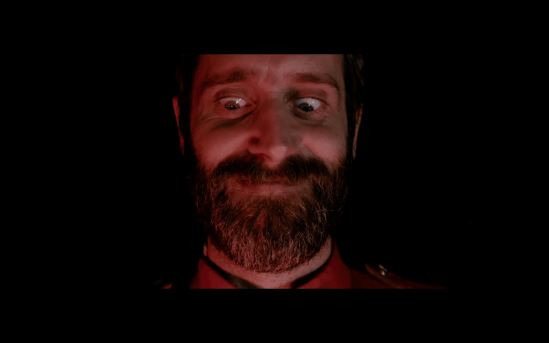
Actually, “Blood of the Tribades” is a feminist movie that just happens to have vampires. Male oppression to keep the women from being themselves, from being outspoken, and from being open with their sexuality is clearly combated through the social commentary symbolism. Plus, touches on the suppression of sexuality and the outward projection of a society forbidden love, but however exposed the feminist versus complacency and closeted angst message might be, the script’s dialogue, despite the film’s 78 minute runtime, is extremely long winded with an unapologetic amount of exposition to explain the messages in various scenes where dialogue is not needed; one of the early scenes, with a man peeping outside the window of a very naked woman bathing before shooting an arrow through her bloodsucking heart, had the right message with that actioned a tone conversing the unspoken subplot of men against women. There’s also no telling which time period, or even universe, the story is set with various era styled garments from conservative nightwear, to bright red band-leader tops, to skin-tight, scantily night club outfits. The latter felt really out of place with Sindy Katrotic’s fighting wear.

Production company and distributor, Launch Over, presents “Blood of the Tribades” on high definition Blu-ray and is available for pre-order before the April 30th release date! Image quality of the 1080p picture, despite the number of filters used, still manages to pull off balanced and vivid hues of the forest and castle rooks, skin tones look too good for the plague makeup’s own well being, and thick black tones highlight the right amount of mise-en-scene without much aliasing or compression issues. Bonus features include a theatrical trailer and an in-depth behind-the-scenes with interviews from the directors, cast, and crew. Chock full of nudity and delivering a high body count, “Blood the Tribades” is an adoring, beautiful, and slightly satirical homage to the multifaceted 1970s female vampire by way of dogma masculinity and righteous fanaticism that isn’t far skewed in reality’s present day!
Tag Archives: 2016


Evil Who Kills Together, Doesn’t Necessarily Stay Together. “Capture Kill Release” review!

Fun-loving couple, Jen and Farhang, seem like your average young twosome. Underneath the common surface, they plot a sinister murder of a random stranger. Toying with hardware store supplies and dissecting the knowledge of the human anatomy, Jen and Farhang are well prepped to tackle the abduction, the murder, and the disposal of a human being, but when Jen’s obsessive nature can’t hold back her desire to kill any longer, the couple’s relationship will be harshly tested when a hesitant Farhang is unexpectedly confronted with Jen’s opportunity to kill a kind-hearted dinner guest and decides to pull out from their ghastly thought out preparations that results turning a potential grim bonding experience to a deadly relationship fallout.

“Capture Kill Release” is the 2016 Canadian film from co-directors Nick McAnulty and Brian Altan Stewart. McAnulty also penned the script. The handheld POV thriller has a story that places Jen and Farhang’s union in a familiar, yet deceiving manner, coupling routine relationship quibbles and desires with an unorthodox principles shared amongst them. While acting upon their romantic affair in the archetypes that include one-sided back rubs, jointly frustrating shopping adventures, and an infinite amount of trivial bickering, the dynamic between them feels no different from ours with their interaction with each other in their isolated internal pact being very relatable for audiences with partners or had the experiences with former partners. Enormous, thick tension sets the foundation for “Capture Kill Release” that continuously mounds an already pressurized and emotionally compromised partnership, strained to the brink of chaos that’s hard to dig out from under.

McAnulty and Stewart cast unknown Jennifer Fraser as Jen, much of the cast keep their namesakes with their respective characters, and Fraser, placing aside her remarkable beauty, inarguably locks in Jen’s sociopathic charm. Jen’s manic personality, jumping from conversation piece to conversation piece without smooth transitions and unable to focus without the determination to kill on the mind, contrasts sharply with the more reserved and constant Farhang, a role awarded to Farhang Ghajar who has worked on the directors’ prior film, “Uncle Brian.” Farhang’s conservativeness bares an ugly unconfident image that Jen wholeheartedly exploits, nearly forcing Farhang to go along, or play along, with Jen’s disturbed fantasy. Farhang Ghajar simply plants his character in a shot without much a change between appearance or delivery whereas Fraser frequents and embraces more everyday changes, including even minor ones like her hairstyles that seem to change every scene. Polar opposites, homeless guy Gary and ‘Rich guy’ jerk, round out the significant characters with actors Jon Gates and upcoming “Exorcism of the Dead” star, Rich Piatkowski.
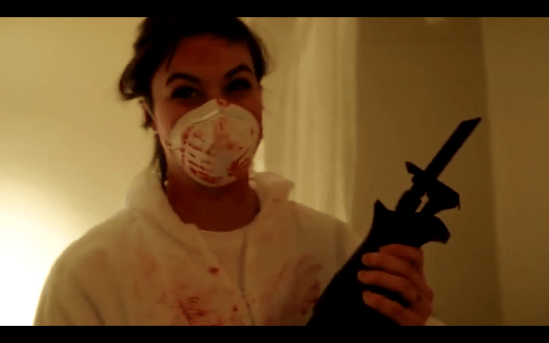
In retrospect, “Capture Kill Release” feels rather depressing. The angst that’s imploding from within the Jen and Farhang bubble touches upon the everyday relationship attributes where couples fight or couples unite in not so extreme measures. Jen shows no empathy or sympathy for anybody with the exception of Farhang, a grappling, fleeting emotion to cling on someone who loves you for you. To further the depression, the recent hike in POV films beats into us the obsession with vanity. The camera, no matter the capacity, is a vain concept and McAnulty and Steward’s thriller spares no expense of arrogance when Jen can’t put down the camera, no matter how much Farhang pleads and persuades her, but If I were an amateur plotter toward killing an absolute stranger, I wouldn’t be a complete novice and record my handy work. This is where McAnulty builds in an unspoken caveat that Jen has a passion for filmmaking, dreaming big of directing, one day, her own feature, a notion that’s explored more during her rooting of her mother’s stored VHS collection from Jen’s childhood. The filmmaking approach to Jen’s obsession loosely bounds the implement of the handheld and feels forced like a last minute decision, especially when genuine home videos of Jennifer Fraser are cut into the story that’s out of place.

Midnight Releasing has released “Capture Release Kill” as a high definition online streaming video feature. I was supplied with a screener and can’t comment on quality or bonus features, but the co-directed film is available on these formats: iTunes, Amazon Instant, Google Play, Vudu, XBox, FlixFling and more. Even with the brief moments in gore, the blood runs extra thick with sickeningly realistic and shocking scenes of butchery. Gory found footage, such as “The House with 100 Eyes” or the more viscerally vigorous “The Butcher,” have been gaining momentum in their popularity with the handheld camera bringing a little authenticity to grisly murders that are on the other side of the spectrum of being a very anti-Hollywood concept that less sensationalized, but devilishly effective, on a budget. Throw in a handful of motivated and talented actors, such as Jennifer Fraser and Farhang Ghajar, in this semi-exploitation gore-thriller and you can strike gold with “Capture Kill Release” that’ll please even the harshest of found footage or handheld camera critics.

Enter Into Your Darkest, Evilest Fantasies. “We Are The Flesh” review!

Struggling to survive the conditions of the outside world, a brother and sister locate shelter inside a desolated complex and stumble upon it’s strange inhabitant, a solitary middle-aged man named Mariano with a penchant for welcoming his insanity. The alcohol distilling and isolating embracing Mariano has a twisted offer for harboring the young siblings as he also puts the two to work, constructing Mariano’s trash-ridden home into a cavernous structure from taped scraps of lumber and cardboard. Mariano desperately needs them to explore unorthodox depravities upon themselves to become one with their unhinged host that forms, in more than one way, one flesh-ravenous happy family.

“We Are the Flesh,” aka “Tenemos la carne” in the original title, is an experimental art house feature from controversial Mexican director Emiliano Rocha Minter. The 2016 film harbors more than just three hermit individuals dipping their toes into a forbidden pool of acts, but also provides numerous metaphors and symbolisms that might be hard to swallow and difficult to sit through during the 79 minute runtime. “Sin Nombre” actor Noé Hernández stars as Mariano and there isn’t enough praise in the art house world from his performance that consumes his mortal being, transforming him into a well oiled psychotic machine with a blazing stare, a certifiable grin, and a defined muscular physique. Hernández steals scenes left and right from his young and novice co-stars María Evoli and Diego Gamaliel, whom are equally as brave as the more experienced Hernández in their respective roles. “We Are the Flesh” emits racy undertones by just hearing the title alone and, absolutely, lives up to the title’s very core by displaying non-simulated sex acts. Think about it. Minter’s film only has three main characters for most of the narrative and two of them are siblings. Yup, Minter went the incest route for the sake of art.

In the opening scene, heavy breathing creeps upon a black screen until the image pops open to a Mariano’s face, laboring over something. Next cut is Mariano hunched over with a high stack of baled cardboard, walking in the color tone of a dark cool blue with a slight haze engulfing him. This opening scene is one instance where Mariano is portrayed the Messiah prophet Jesus. Other religious symbolistic events that connect Mariano, who would be condemned for his actions in the Christian scope, to Jesus that occur throughout, such as being dying and being reborn, the cave aspect, the motifs of faith from the mysterious eye dropper liquid, and being the sacrificial body as if transpiring to be some sort of demented wafer during a crazed cannibal communion orgy. Of course, opening anybody’s eyes or mind to this notion can be immensely difficult and profanely sacrilegious to even spell it out in text because seeing the streaming drug use, the attempted murder, the cannibalism, and the sibling incest rule the majority of the narrative makes a case that affiliates more with an unholy antichrist rather than Christ, but I believe director Emiliano Rocha Minter, being a Mexican national and growing up in a Catholic, like the majority of Hispanics, culture aimed to blur the lines between the heavens above and the fires below and embodying them as a singular whole.

Intrinsically irrational and insatiably grotesque, “We Are the Flesh” has momentum in a colorfully abrasive form, quickly evolving from act to act with characters reemerging anew every second onscreen. What might seem as a visionless quest for the sole purpose of producing shock value can be re-construed as a message more aesthetically beautiful in man’s most detested nature. Yollótl Alvarado’s cinematic vision is absolutely dripping with gripping, mature atmospherics that are well doused in vividness while, at the same time, being despairing in a post-apocalyptic haze. The experience charges at you, pulls you into this cavernous womb, and scratches at your tender barrier lining, trying to sneakily slip into your soul. The sensation is as much unreal as the film’s avant-garde structure.

Produced by production companies Piano, Detalle Films, Sedna Films, Estudios Splendor Omnia, and Simplemente, “We Are the Flesh” is a poetic approach experimental wonder, gratifyingly brought to home entertainment fruition from Arrow Films in the United Kingdom and Arrow Films, in conjunction with MVD Visual, in the United States on Blu-ray and DVD. Between Lex Ortega’s brutal social commentary gore-flick “Atroz” and Emiliano Rocha Minter’s art house metaphor “We Are the Flesh,” Mexican filmmaking stands high and bold, unafraid to tell unapologetic stories in conservative societies; a mere taste of what’s to come, I’m positive. While recommending this type of film isn’t the easiest for status quo movie lovers, “We Are the Flesh” hopefully will expand minds, open eyes, and encourage skin-on-skin contact for the cinematic adventurers.

“We Are the Flesh” available in USA! and in the United Kingdom!

Dead Parents Create Good and Evil Children. “The Orphan Killer” review!

Audrey Miller is your borderline, but overall good, Catholic woman, but the Saint Michael’s Orphanage dance teacher withholds a dark secret from her past. Audrey, herself, is an orphan along with her estranged brother, Marcus. At the age of 6-years old, Marcus took the brutal death of their parents the hardest, transforming a young innocent boy into an emotionless and destructive shell of his former self and while they attended the orphanage where Audrey currently teaches, Marcus suffered at the hands of wrathful Nuns hellbent on forcing Marcus to repent for the sins he’s committed. Years have gone by and Marcus, donning the Nuns’ gifted mask to frighten other children away from him, has been confined to a neglected psych ward, but, now, Marcus has found an escape and seeks to hunt down his beloved sister, trapping her inside Saint Michael’s, to relay a message that blood never abandons blood unless it’s fatally punctured with a blade.

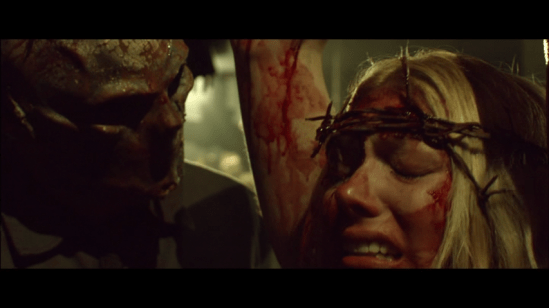
Matt Farnsworth’s 2011 “The Orphan Killer” is a cold-hearted, slaugtherfest, aiming to reap the Catholic church of sinners by committing the ultimate sin. Serial killer, Marcus Miller, becomes this generation’s misunderstood maniac, being the right hand of God and smiting blasphemous individuals in a one-night stint of blood drenched dirty work. Being the sophomore feature from writer-director Farnsworth, there’s plenty to be impressed with here from the setting up victim characters and the killing-ground stage to quickly canonizing Marcus after learning the atrocities his victims; Marcus blurs into the realm of anti-hero in a twisted sense of the slasher genre with religious undertones – such as Audrey wearing a barbed wire crown of thorns. He’s very familiar to that of iconic genre staples such as Jason Voorhees or Michael Myers, yet Marcus Miller’s unique origins background and murderous methodology doesn’t share with the already established grisliness. If Farnsworth is willing, this serial killer could be expanded upon with such a rich backstory.
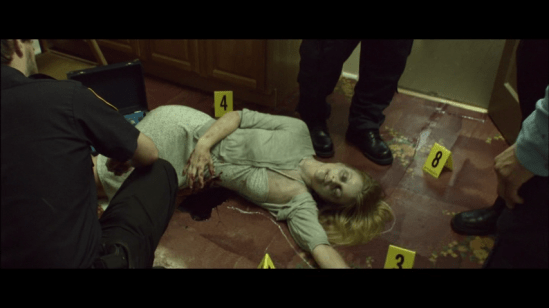
Story wise, there are familiarities toward that of Michael Myers’ background with the bloodlines. Instead of Laurie Strobe being related to her coupled murderer, Audrey, played by stunning beauty Diane Foster, has, unbeknownst to her good fortune, to her still breathing psychopathic brother, Marcus, portrayed by David Backus. Both Foster and Backus have previously worked together on another Matt Farnsworth written-directed feature, his breakout indie film, “Iowa” in 2005 that also starred Rosanna Arquette {David Cronenberg’s “Crash”) and Muse Watson (“From Dusk till Dawn 2: Texas Blood Money”) and have great cat-and-mouse chemistry through love-and-hate sibling rivalry. Farnsworth also co-stars his own flick as Audrey’s cop boyfriend who becomes mixed up in the mess when Audrey doesn’t come home next morning. Unlike Audrey and Marcus, Officer Mike Hunt – yes, Mike Hunt – lacks substance and is portrayed a bit of a wild card when Audrey goes into dire stress. The cast rounds out with Karen Young, James McCaffrey, Charlotte Maier, Spencer List, Dana DeVestern, and John Savage.
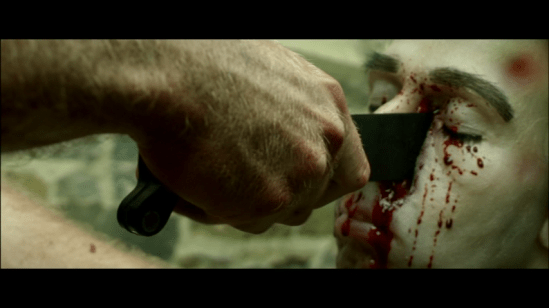
The realistic, sometimes over the top, practical effects make the scene in a welcoming glorified shower of gore splatter. Marcus Miller’s killer tactics vary from victim-to-victim, whereas some slashers maintain one particular kill setting, making “The Orphan Killer” eye-catching and extremely engaging. The unbelievable production value for an offbeat slasher that’s so profane to religion temples and other holy aspect shouldn’t go unnoticed and I’m not just speaking highly solely of the special effects. The structural bones of a cathedral church setting and the amount of extras used in well choreographed dance recital and Miller kids’ flashback scenes show the committed financial backing put to work in Farnsworth’s film. Farnsworth edits his own work that’s slightly erratic at times, but overall successful with the action that’s involved and the displaying the severity of splicing together great practical kill scenes. I’d say his style is certainly earthy and sometimes there are glimpses of channelling iconic directors.
Produced mainly by Farnsworth’s company, entitled simply enough Matt Farnsworth Films, in association with Full Fathom 5, “The Orphan Killer” has rightfully found a friend at the Reel Gore Releasing home distribution label with a Hi-Def 1080p Blu-ray and DVD combo release. The 2.35:1 aspect ratio presentation sharply defines details, especially in the blacks, and does well with desaturating the hues to give it a gritty, dirty appearance that compliments the abandoned sections of Saint Michael’s. Two audio options are available, an English DTS-HD Master Audio 5.1 and Dolby Digital 2 channel; the 5.1 delivers a heart pounding score, but the soundtrack by Bullet Tooth releasing, featuring a slew of hardcore metal bands, oversteps into some dialogue sequences. However, Ventana’s cover of “Cry Little Sister” kicks off right after the opening credits; an early sure sign of good things to ahead. Bonus features include a “behind the Murder:” an exclusive video diary, teaser trailer, theatrical trailer, music clip, and a slideshow. “The Orphan Killer” has religious metaphors under a sacrilege of brutality and unleashes a retroesque Renaissance slasher for modern day terror.

Buy “The Orphan Killer” at Amazon.

Evil Smells, Has Lice, and Wants Your Spare Change! “Parasites” review!

Los Angeles’ skid row is the desolated and forgotten residence to countless displaced people living in tents or sleeping bags on the cold streets, fighting ever which way they can to live just one more day. When three University of Southern California students take a wrong turn onto the streets of skid row, a dangerous world opens to them where being young and privileged doesn’t warrant an easy pass through LA’s notorious “The Nickel.” A homeless gang, ramrodded by a vicious vagrant named Wilco, catches them trespassing under the unused sixth street bridge and detains them until the situation turns deadly wrong. When one of the students, Marshall, escapes naked and on foot, a chase ensues through the empty concrete jungle, and as he attempts to retrieve help, he encounters wretched night owls who are just as dangerous, or if not more so, than Wilco and his gang.

The very first impression from the films of “Parasites’” director Chad Ferrin came in the form of Ferrin’s 2003 underground cannibal dweller film “The Ghouls” and, retrieving past critiques or comments from past yonder, I wasn’t too thrilled with his indie sophomore feature. However, after sitting through “Parasites” and being a fan of the 2009 pleasantly berserk “Someone’s Knocking at the Door,” a second viewing might be warranted. The 2016 film, shot on location, defines Ferrin’s immense penchant for independent filmmaking that basically tells a story of one man’s perilous and herring marathon journey through the meat grinder of Los Angeles while also reminding and resonating viewers that the homeless are just an unfortunate alternate version of ourselves.

“Parasites” will suck every once of hope and happiness one might have for humanity to the point of believing in misanthropic perspectives. Purely oozing with cynicism in a nightmare scenario, the story couldn’t have reached such depths without a few key performances such by Robert Miano (“Giallo”), a bold and enduring role for Sean Samuels, and an always pleasant cameo by “Day of the Dead’s” most villainous captain, Joseph Pilato. Though, some exaggerated moments of peculiar over performances and prolonged montage scenes of Sean Samuels running through the barren Skid Row maze run their course with seizing captivation, but Miano steals many scenes with his spiteful portrayal of an overprotective, mad dog violent bum being the venomous snakehead of a 1980’s style street gang whose keen on hunting down and burying a college quarterback.

What I also found interesting about the Ferrin’s scripted-narrative is the severe lack of tension with race and gender relations between the eclectic group of characters. Much of the action and dialogue flows freely without much opposition as if the racial slang or the running down of a young black man is normalcy. Gang leader Wilco only cares about one thing, his dilapidated corner of L.A., and berates everyone in a fit of racism peppered with nihilism. Ferrin purposefully implemented a Hispanic and an Asian in Wilco’s crew to run rampant with obscenities from their leader, along with a hefty woman to whom Wilco objectifies constantly with chauvinistic nicknames such as “Sugartits” and “Sweet Cheeks,” and an athletic black character being the subject of a bizarro-world reversal characteristic witch-hunt that relates awfully too familiar with recent race crimes. The social commentary leaves an everlasting trail of uncomfortable goosebumps, working their way toward the heart’s core of human morality and packing a powerful punch when not nearly one single character has any redeeming value.

Crappy World Films in association with Girls and Corpses Magazine produces “Parasites,” an exhibition a do-or-die survival horror framed to point out the loathsome portions of past, and most certainly, current events. Ferrin’s low-budget film goes the extra mile with the brief, yet effective, violent special effects. I’m unable to critique on the audio and video quality of the 108 Media distribution release, nor the bonus features, as a screener copy was provided. “Parasites'” raw approach through characters, story, and cinematography, breathes life into a desolate place like “The Nickel” and gives power to the powerless, remarking upon the monsters we create by ignoring their existence and shunning their potential worth. The fear from this film is all too real.
 It's Bloggin Evil!