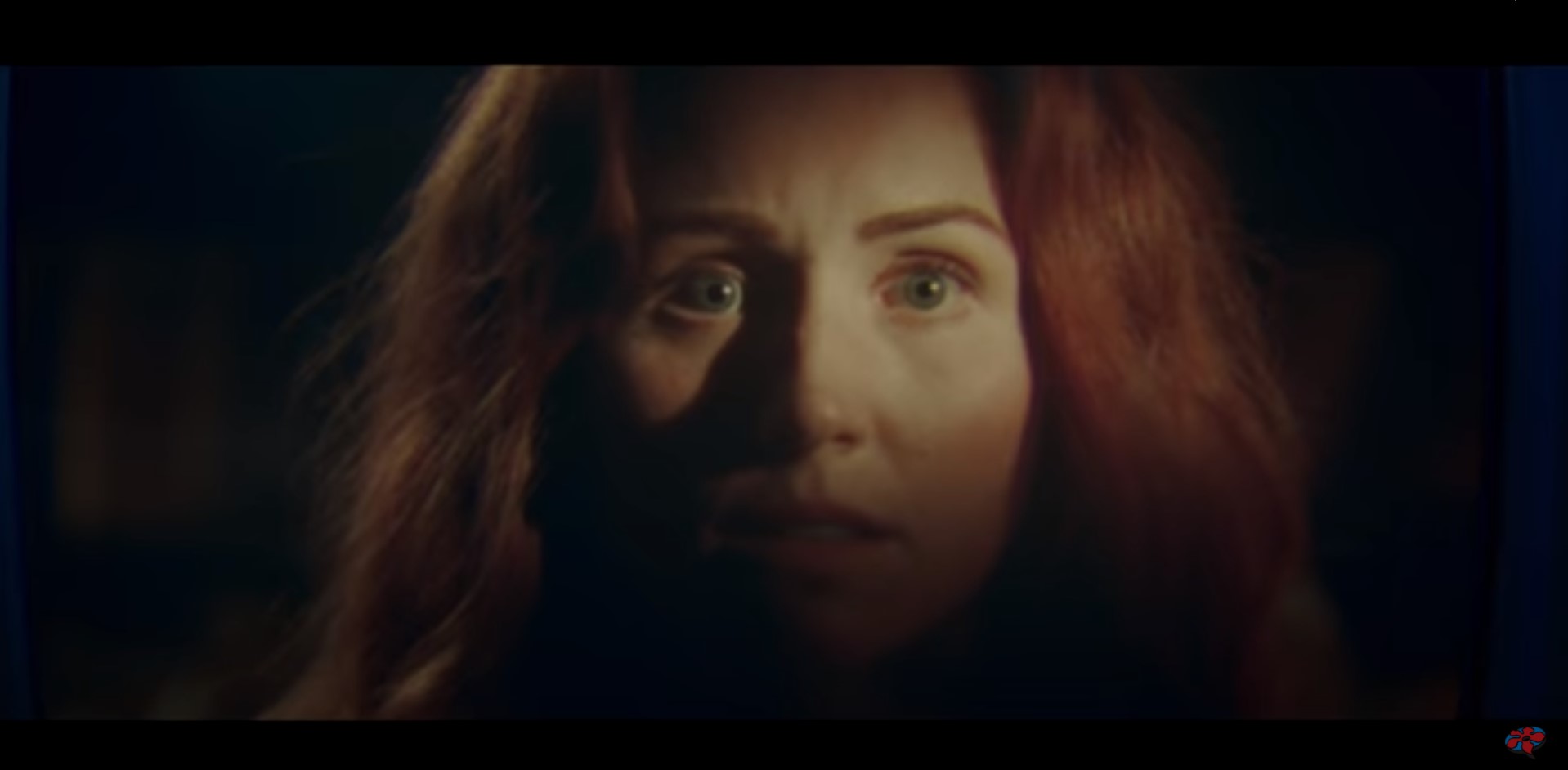
EVIL Has an Unbreakable Glass Ceiling. “The Five Rules of Success” reviewed (Ambassador Film Group / Digital Screener)

Upon his release from a long prison stint, a man incarcerated into the system since a young boy tries his hand succeeding in the outside world.  Alone with no family or friends for support and looking to keep his nose clean, he designs his own set of rules for success, including responsibly checking in periodically with his hardnose parole officer and saving up enough money and knowledge working at a restaurant to open his own.  When the path seems clear and everything seems to be falling into place for his chances as success, societal temptations gnaw at him as negative influencers tempt to steer him astray and his own goals try to illicitly fast track his efforts.  Will he fall into crooked society’s trap or will he persevere to reach his aspirations? 
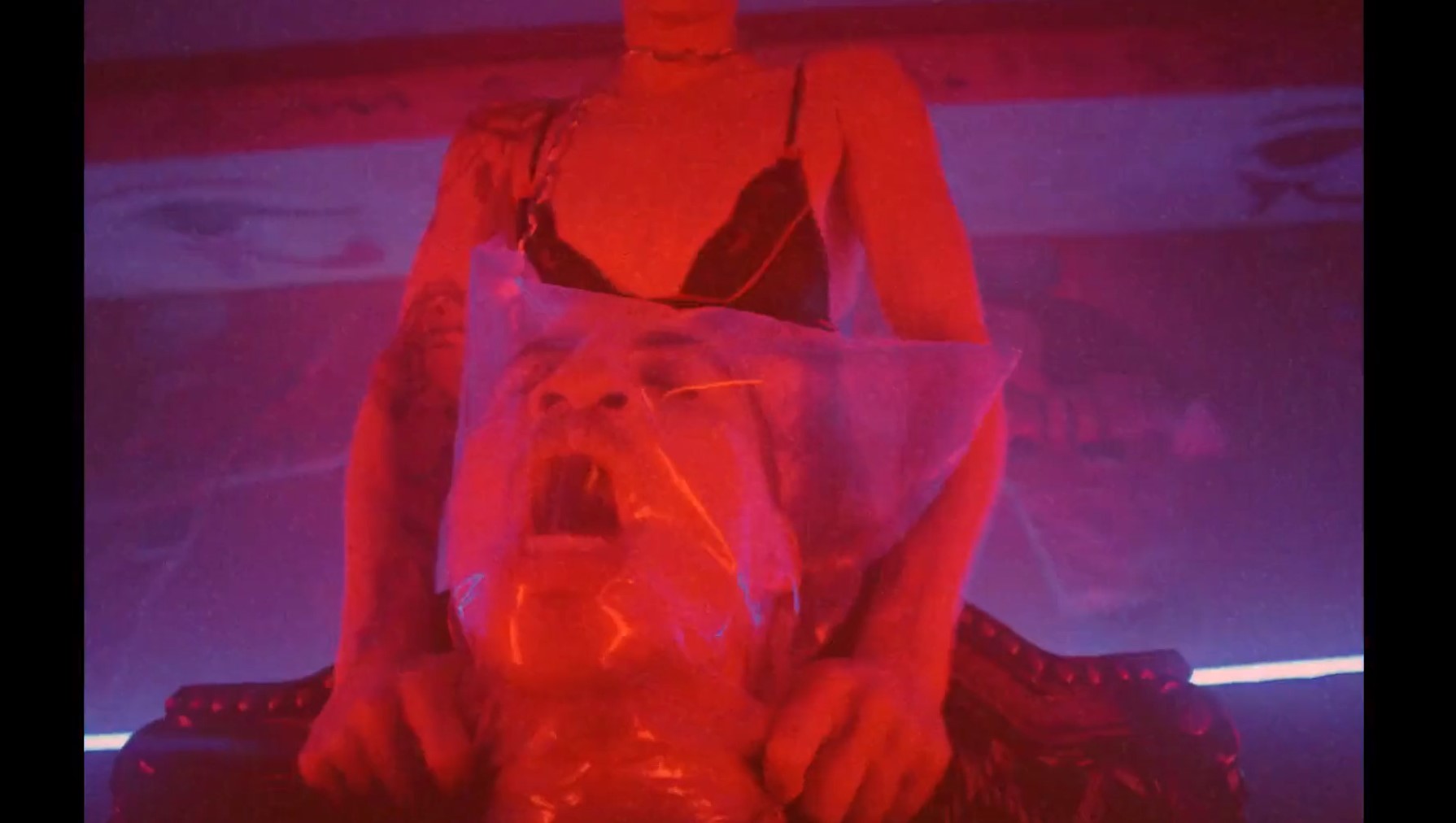
Hard knocks.  That’s the simple, raw core theme of Orson Oblowitz’s “The Five Rules of Success.”  The 2021 crime-thriller is the third directorial from the “Corbin Nash” co-producer, but the second penned script following his debut, a seedy L.A. underbelly thriller “The Queen of Hollywood Blvd” from 2017.  The story is the first for co-writer Christian de Gallego who steps out of his international sales executive role to put his ideas onto paper.  As compelling as any story could be mirroring the struggles of a downtrodden ex-con in a society that browbeats and takes advantage of those on good intentions to rebuild, “The Five Rules of Success” is also a visual quest of imagery and color, produced and distributed by the Ambassador Film Group with de Gallego producing and Apurva Patel as executive producer. 

Stepping into his lead man shoes debut is Santiago Segura (“47 Meters Down,” “Scream: The TV Series”) playing the mastermind behind the five rules of success as X, as in X could be anybody.  However, X couldn’t have been more invested into than what Segura put into the story’s character as a man left to his own devices, without support, without a comforting presence, and without much guidance.  Segura’s range is limited to a monotone stare and tough guy attitude that never wavers or breaks and you have to wonder what X is fighting for to make his ambitious dream a reality?  Where does his determination root?  The fact that there is an absence in a grounding, sobering symbol all the more makes X more susceptible to the deeper end of society’s morality pool.  Along his rise up from the ashes, X meets colorfully sordid individuals feeding off his vulnerability due to either being on probation or stereotyped as being inclined to be favorable toward criminal activity…you know, being released from prison and all.  He’s befriended by Danny (Jonathan Howard, “Godzilla:  King of the Monsters”), a drug using goon who works alongside X at his father’s restaurant.  “Crocodile 2:  Death Swamp’s” Jon Sklaroff plays the stark contrasted Greek immigrant father, restaurant owner, and disappointed father to Danny.  Sklaroff and Howard couldn’t be more adversarial as a hardworking immigrant father who struggled to get to where he is today and a silver spoon fed son throwing his life away with riffraff, drugs, and as the restaurant’s cook.  The relationship formed between X and Sklaroff’s character is the wishful dreaming that X couldn’t be the son he never had and all X has to do is be patient and listen to a little friendly advice.  A more brazen and mysterious obstacle in X’s path is his parole officer, Emma, whose uppity authority holds X’s freedom in the palm of her hand played by Isidora Goreshter.  The line is blurry whether Emma has either the hots for X or is secretly a sadist and Goreshter offers to uphold that inscrutable presence with unscrupulous tactics. 
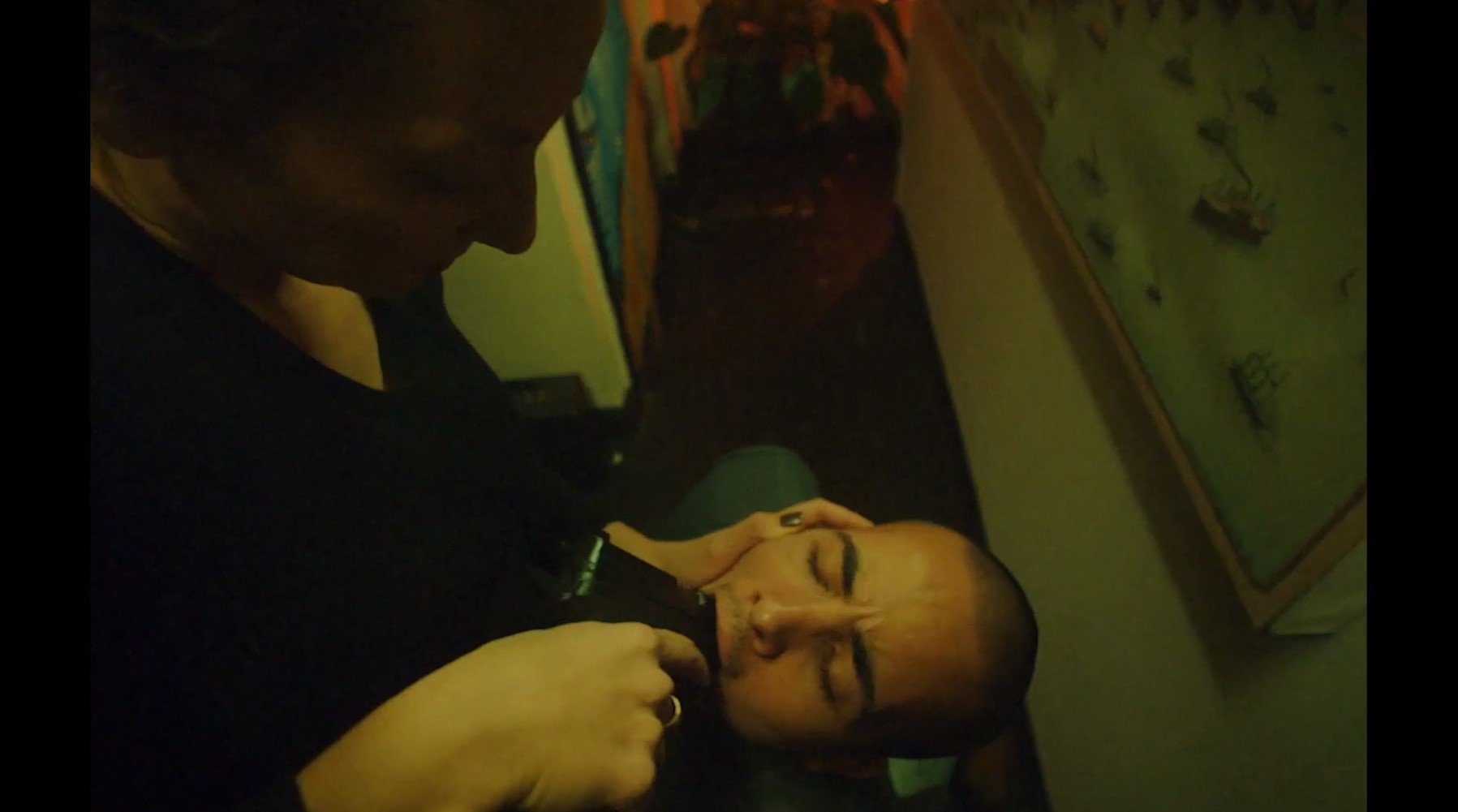
One way to crave out the meaning behind Oblowitz’s film is to not be standing high-and-mighty on greener pastures.  “The Five Rules of Success” sensationalizes real time problems with our prison system and the after effects of walking out a free man after years, if not decades, from a life that’s all you know to a life you know nothing about.  X’s past burdens him immensely as flashbacks, denoted in literal quick flashed cuts, of the downward spiral turning point in his childhood find their way into his determined route to success.  Ultimately, the past and present are one in the same where society sees not a boy, not a man, not a person, but a criminal and how we as a society be contemptuous of former convicts released back into our soicalled perfect public community.  There’s parallelism between each chaptered rule and the downward progression he sustains in his associations with the wrong people that start to twist his mindset, his rules, into the very unlawful reprehensible activities he tries very hard to avoid. Oblowitz does a nice job detailing X’s habits as a loner, working out his pent up frustrations by exercising, shadow boxing, and refining his rules, but the root of all evil is hard to ignore as cold hard cash, easy money for one of Danny’s illicit jobs, begins to lay out the possible steps to skip in order to fulfill his own ambition.  Despite the momentary monotone mishandlings from Segura, the story is well-written and mostly well played out with some scenes more intense than others with the subject material as you begin finding yourself rooting for the ex-con and booing the very society you yourself live in scot-free. 
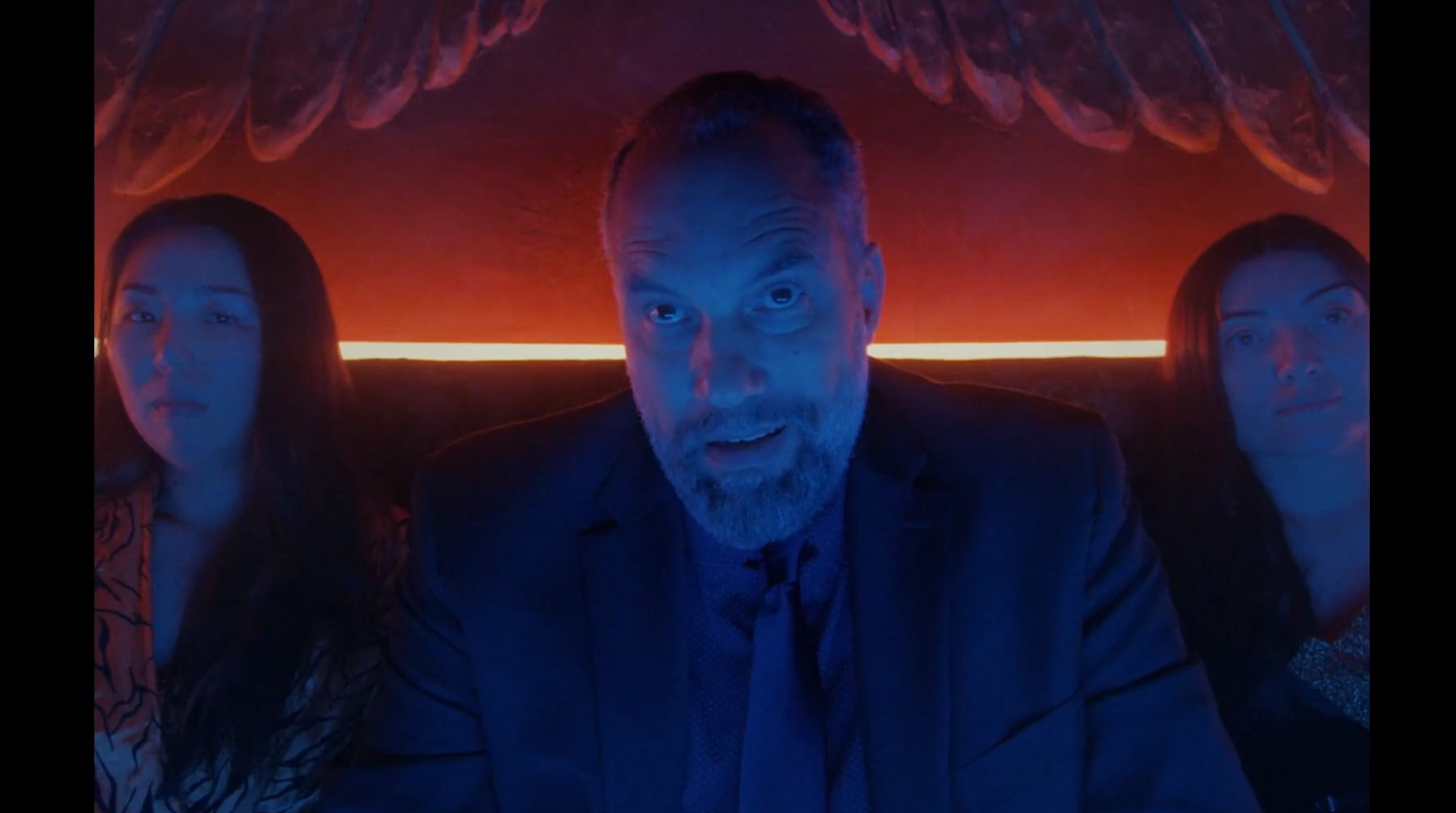
Clocking in with a runtime at 83 minutes, “The Five Rules of Success” symbolizes the ups and mostly downs in the here and now game of chutes and ladders.  Having been released last month, July 30, be sure to check out the unrated feature available for purchase on your preferred platform of either iTunes or Amazon released by the Ambassador Film Group.  Oblowitz doesn’t just write-and-direct the film, but he also serves as cinematographer dabbling in a Kafkaesque arranged world with hints of tint, hints of different lenses, hints at overexposures, hints at strobe, and more.  Nearly every scene is comprised of a different shooting technique or editing visual that may or may not possibly induce a seizure as forewarned during the preface.  Stylistically, I can only compare and describe “The Five Rules of Success” as this:  Stanley Kubrick’s “2001:  A Space Odyssey” meets Darren Aronofsky’s “Requiem for a Dream.”  As far as extras go, there’s a quaint, no major dialogue memorandum scene after the end credits that speaks to vicious circles and permanency.  For a L.A. shot film that has more technique than bite, “The Five Rule of Success” is a success of an auteur’s written storytelling as well as the visual understanding of just how to tell that story in a surrealistic context. 

Rent or Buy “The Five Rules of Success” on Prime Video!

Censorship is the Very Definition of EVIL! “Censor” reviewed! (Magnet Releasing / Digital Screener)


British film censor, Enid, views video nasty after video nasty day in and day out, certifying ratings based on the realism of the violence, and receiving public hellfire when a gruesome murder is vilifies her approval of a film.  After viewing one in particular that strikes a familiar nerve, one involving around the circumstances of her little sister’s disappearance from years ago, she digs deeper into the filmmaker’s background, piecing together a puzzle that her sister may still be alive.  With her parents given up hope declaring their youngest deceased and under mounds of criticism pressure from inside and outside of work, Enid’s lone rove through distasteful filmic horror and probing the crew involved sends the censor into a frantic frenzy between what’s real and what’s not. 

For the record, just so we’re clear between you and I, film censoring is a complete crock that limits artist expression and can negatively alter the tone of work far from the original message or effect.  I can see where censorship is necessary for the greater good when considering public television that aims to evade young eyes from extreme violence, gore, nudity, and harsh language while still appeasing adults with a semi-intelligible cut of the film, but to have the MPAA, or any censor board for that matter, do what they do in order to classify and certify a rating to meet a criteria is a slap in the face of personal responsibility.  Yes, some individuals need a rigorous structure to tell them what to do, but you know comical and asinine when there are three different cuts of a film in the U.S. market, not to forget to mention all the various versions around the globe to sate countries distinct regulations and requirements.  Luckily, Prano Bailey-Bond’s immersive reality checking horror, “Censor,” makes no assumptions on the matter and we can just enjoy the dark side of story based off the UK filmmaker’s 2015 short entitled “Nasty.”  The story, set in the 1980’s at the height of violent and gory VHS movies known as video nasties, is co-written by fellow “Nasty” writer Anthony Fletcher and is produced by the London based, female operated and story-driven Silver Salt Films as the company’s first feature credit and is financially supported by the Film4, Ffilm Cymru Wales, and BFI.

If not for Irish actress Niamh Algar in an virtuous cyclone encompassing lead of Enid, a stern censor agent, the dismal atmospherics whirling around Enid’s processing of possible new evidence in her sister’s vanishing wouldn’t be as timorously potent.  The “From the Dark” and “Raised by Wolves” actress embodies a strong stoic stance of not only a censor with a target on her back every time the public blames her for ill-fated news involving the extreme films she approves, but also as a woman in the workplace who is subjected to subtle objectifying by male coworkers, in which some are more privately outspoken than others, and male film producers with a diminutive eyesight of her professional demeanor by making unwanted advances in lieu offering their support to make their films depicting rape and murder of usually female victims more approachable and marketable to the censor board.  Algar perfectly poises Enid in her ticks, the abrasive fidgeting of her nails against each other or the slight rolling back of her shoulders that makes an awful, unnatural cracking sound, sharpen Enid’s complexion.  Even Enid’s hard gulping is felt in unison of the tension of a woman on a verge of sudden collapse.  Clearly the film’s one and only frontrunner as we dine off Enid’s sole perspective, Algar runs off with “Censor’s” gloomy tone by her performance of unwavering convictions blended with throbbing agitation in her character’s repressed explosion trajectory.  Supporting players do their part living in Enid’s unique vision with Sophia La Porta, Adrian Schiller, Clare Homan (“Afraid of the Dark”), Andrew Havill, Guillaume Delaunay (“Victor Frankenstein”), Richard Glover, Clare Perkins, Danny Lee Wyner, Vince Franklin, Nicholas Burns, and Michael Smiley (“The Nun”) as a topnotch sleazy extreme film producer rounding out the cast.

Performances all around are stellar and the idea is sound as I can see a video nasty censor of the 1980’s fall victim to the job because of an unclear and checkered past, but problems with pacing jet Enid from composed posture to immediate wreck in a blink of an eye without much of a fundamental development for unravelling being greatly depicted other than the jarring movie that sends her spiraling for answers.  This doesn’t hurt “Censor’s” main theme of the inconclusions of what really drives the murderous animalistic qualities in all of us regarding nature versus nurture.  The longstanding idea that video nasties promote influential violence and sordid behaviors has been the talk of controversy for decades and science, at least none of that I’ve read, hasn’t 100% proven that extreme films dictates the mind’s will other than those impressionable in the sponge-like children.  Bailey-Bond decides not take a stance in declaring a clear cut opinion, merging both assumptions together in a mesh of madness still leaving the theorists spinning their notions and evangelical nuts spewing their anti-liberal arts sermons.  What really sells “Censor” for me personally is the tell all climatic finale of Enid’s disturbing outcome in a warped contraview, flipping back and forth through the static of the back button during the times of higher numeral, unsubscribed pay-per-view channels where glimpses of picture pop into the frame for a split second.

“Censor” is nowhere near what’s consider a video nasty, but the Prano Bailey-Bond psychological thriller still has the grip of an inexorable depth for what’s to come, for violence, far from hitting the cutting room floor as the film heads to theaters June 11th and on demand one week later June 18th from Magnet Releasing. Shot in two aspect ratios, more so in a widescreen 2.39:1 aspect ratio than in the pillarbox 1:33:1 to reflect the video nasty format in the time period, Bailey-Bond and director of photography, Annika Summerson, continue to stay as true as possible to the Golden Age of 80’s horror by shooting in 35mm in a handful of various style to blend Enid’s reality with the fiction of lurid dreams and the daily grind of workplace hazards (which, to me, watching horror movies all day long sounds like a dream job! The censoring part, no so much). Runtime clocks in at 84 minutes with no wiggle room for bonus scenes during or after the credits. The Brits have always had a hell of a go with film censorship, weaponizing and vilifying for political gain, as films become the lamb for the slaughter for public outcry against social-economical woes, even arts bedeviled by the harsh censors of it’s own country, and “Censor” aims to be the carrier wave of that historical downspout of misguided judgement while also shredded the thin moral fabric of one woman’s reality into tiny bits of off the rocker guilt.

When EVIL Runs The Show, That’s When the Reality Sets In. “Funhouse” reviewed! (Magnet Releasing / Digital Screener)

Eight C-grade social media celebrities sign a contract for a new reality show, Furcas’s House of Fun.  The reality show streams worldwide on all electronic devices in an exhibition of different and standoffish personalities locked together in apartment-size living quarters.  Contestants will have to face challenges and weekly viewer voting to be the last one standing for a chance to win a 5 million dollars cash prize  Instead of sexy making out sessions, drunken brawls, and contestant melodrama to boost viewer ratings, Furcas’s House of Fun is in actuality a syndicated snuff reality show where a contestant is voted out is a contestant receiving a brutal death in front of the entire world.  Survivors watch behind paned glass as one-by-one their castmates are dispatched in the most gruesome way possible, directed by a screen animated panda bear helmed by a sadist eager for the show to go on.

Ready to have a little fun?  The “Funhouse” is open for what is a variety show of horrors in this 2019 shot, 2021 released reality show of encroaching aggravation and gore from writer-director Jason William Lee.  “The Evil In Us” filmmaker plays his hand at personifying internalized resentful rage for hack, do-nothing, inconsequential to society celebrities by feeding them gladly and enthusiastically to the bloodthirsty wolves.  “Funhouse” isn’t your typical social media or tech horror film as Lee dishes out a thought-provoking disgust covered in a powdery sugar and popcorn veneer that’s surely to please the broad range of horror fans.  The co-ventured Canadian-Swedish story of shallow fame nihilism is shot in the Providence of British Columbia and in Stockholm, home base of Ti Bonny Productions under executive producer Henrik Santesson, in collaboration with Lee and producer Michael Gyorl’s Sandcastle Pictures.

With the surname Skarsgård, acting is in certainly in the blood.  Valter Skarsgård, the youngest son of “Nymphomaniac” and “Deep Blue Sea’s” Stellan Skarsgård’s first marriage and the brother of terrifyingly frighteningly Pennywise actor, Bill Skarsgård (“It”), branches out following his ancestral destiny by headlining as the lovable and misjudged Swede, Kasper Nordin, who leeched fame by being the ex-husband to a renowned singer.  Nearly the spittin’ image of his older brother Bill, Valter brings his name and family looks to the table while showcasing his own talent amongst a motley crew of nationalities.  That’s one of “Funhouse’s” main messages about social media stardom as a plague that has spread to every corner of the world symbolically infecting each contestant from a different country:  Dayleigh Nelson (“Island of the Dolls”) of Britain, Khamisa Wilsher of America, Gigi Saul Guerrero (“Puppet Killer”) of Mexico, Amanda Howells of the Philippines, Mathias Retamal (“The Source of Shadows”) of Chile/Canada,  Karolina Benefield of Poland, and Christopher Gerard of Ireland.  The roles of wannabe celebrities is an ostentatious representation of click bait influencers who will sell essentially their soul and show their skin to be noticed and this turns the clear antagonist villain, a merciless gamester and contract abider with business dealings more vile than from the Devil himself, to be a subtle antihero of sorts as the cast rounds out with Jerome Velinsky’s wickedly sophisticated performance as Nero Alexander that is urbane nihilism at its best. 

Outrageous, fun, and gory – “Funhouse” has all the hallmarks of a 90’s horror on cruise control.  With a bedazzling rudimentary shell of a panda bear avatar animation and blend of practical and digital blood over the simplicity of a small location and indie production, Lee is able to fly through the narrative at whiplash speed and still drop animosity-awarding and empathetic traits to believe in the cast of characters.  In the middle of the chaos of axe splitting heads and being dunked into a barrel of highly corrosive acid, a topical theme of the detrimental social media and influencer stardom to society really positions “Funhouse” on the frontline for inflammatory and anti-social media messages, harping on the noncontributing and unbeneficial role of these money-generating, like-focusing, click baiters in culture and society other than selling to their audiences sex, gossip, and violence.  Speaking of violence, I was pleasantly surprised by the right amount of gore that didn’t shoot for extravagant levels despite some smoothing around the digitally added sinew and guts, keeping a modest amount of realism to the dystopian gameshow construct.  Initially, there are dubious first act moments that quickly shuttle hapless soon-to-be-casualties into the same location, much like in “Saw II” when characters all wake up in the room together and we have no idea who they are, where they come from, and what their backstory is, but as the film progresses we learn more about them and the roles they play in the maniacal puppeteer’s design.  The twist, almost meta-like, ending leaves “Funhouse” on a low note that doesn’t fulfill any void for its existence, but a good chunk of the story is really meaty with a revolving door of plights and a small, yet efficient, compassion outpouring spicket.

Not your traditional participatory surprise-laden and mirror maze attraction, “Funhouse” will still bring old-style thrills with some new blood spills in it’s grand opening release in theaters and on demand on May 28th courtesy of Magnet Releasing. Shawn Seifert (“Dead of Night”) lays out a smorgasbord of cinematography techniques that includes rich, un-matted color filters, isolating characters in darker, dim rooms in making them seem centerstage for their own grand demise, and cultivates stationary, handheld, tracking, and some drone shots for an extremely vibrant and glossy approach and feel for reality television version 2.0. Lee edits the digital reel himself and, honestly, the pacing wanders quickly to the overly rushed section like a quick-spit-it-out story wanting to be finished before it even begins and is compounded with another intrusive quality in the hyperactive back-and-forth of shots that aims to resemble the irksome flight in and out of reality shows that speed up and slow down like a nervous teenager behind the wheel of their parents and continuously presses down on the brake pedal. Stay tuned after credits for a gag bit scene that ties into the main story but promises nothing more. No more being voted off the island or nixed by expert judges, “Funhouse” cleans house with deadly eliminations and a message of the unyielding power granted to many so easily through a rapidly reshaping medium that has become too influential on a braindead scale.

One Man Tries to Reclaim his Life When EVIL Suddenly Invades! “The Unthinkable” reviewed (Magnet Releasing / Digital Screener)

Out in the country of Vånga, Sweden, Alex endures his ex-military Father’s demanding and verbally abusive posture.  His only relief is spending time with Anna who is in a similar circumstances with her mother.  The two spend many of their days together amusing themselves on the church piano until Anna is forced to move away to Stockholm, leaving Alex to face his father’s wrath alone.  Alex runs away for his childhood home and, years later, becomes a popular piano recording artist influenced by his time with Anna.  When he returns to Vånga during a time of countrywide unrest to purchase that same church piano of his fond memories, Sweden comes under attack by an unknown force as major roadways out of the country have been blown to smithereens, every power station is the target for destruction, and the rain is contaminated with an airborne chemical that makes people lose their memories and become disoriented.  Alex has to reconnect with his father in order to save Anna, the love of his youth, to survive the unthinkable. 

An invasion on the scale that you’ve never seen blitzes with explosive stunt work and stunning visual effects.  Victor Danell’s action-drama “The Unthinkable” comes out of nowhere with a hard stop pivot of a love story turned survive at any cost as the film’s country of origin becomes warzone raided without mercy.  Under the original title “Den blomstertid nu kommer” in the native tongue, Danell directs and writes “The Unthinkable” along with co-writer and star Christoffer Nordenrot, though credited as their collective production group, as the two team up again after nearly a decade after working on the comedy “Soundcheck,” directed by Danell.  What started as a crowdfunded Kickstarter campaigned ended up being a multi-million dollar production and with such growing fascination amongst eager fans, the 2018 found more financial backing from the former Swedish cinema chain company, SF Bio AB, now known as Filmstaden and is presented as the first feature film of a filmic collective known as Crazy Pictures in co-production with CO_Made and Film I Väst.

As mentioned, writer Christoffer Nordenrot finds himself at the center of the story as Alex, a passionate pianist fighting back against well-armed, well-supplied unknown militant forces all the while processing a dam breaking flood from the rebuilding of shattered emotions when returning to his quaint hometown after abruptly escaping his overbearing father (Jesper Barkselius).  Socially awkward with an obsessive proclivity, but wielding an intellectual thought pattern, Alex appears to be a person likely on the spectrum, but bottles much of his emotions internally, biting his lip at every moment his father disparages him or his absconding mother. When his only friend in the world, a girl named Anna (Lisa Henni, “Haunted Evil Dead”) whose roughly the same age, is being pulled away from Vånga to live in Stockholm with her mother, Alex undergoes a rapid descension of one heart ache to another that leads to him able to flourish and exceed on his own as a new wave pianist, engineering a combination of electronic beats of sound machines with the simplicity of soul from the piano to arouse his repressed emotions for an grandstand audience. Alex finds his way back Vånga for personal gain, a childhood piano him and Anna shared making music over, and to attend the sudden death of his mother from a previous, individual attack in Sweden, but what he stumbles into is avoiding his father at all costs, being swept into a returned Anna’s radial allure, and, oh yea, a massive proclamation of war by an aggressive, chemical warfare and shoot-on-sight enemy of the Swedish people. This is where I find Alex to have a chip-on-his-shoulder complex unhealthy for everyone around him as he doesn’t look past the past and punitively causes discord with his father, who is trying to save not only the last standing power station in all of Sweden himself, but essentially trying to save his entire country, and Anna when Alex finds out she has a husband and child after an afternoon of rollicking in the hay and sharing various moments around town. Performance wise, Nordenrot might not be the action star of tomorrow in his character’s one note of early on narcissism and bad judgement, but challenges himself in the role by losing and gaining weight to accomplish years of age appearances from teenage boy to mid-30’s man and is good enough to swashbuckle against relentless military helicopters and a slew of men capping of M60 machine guns in his direction. Pia Holverson, Krister Kern, Alexej Manvelov, Magnus Sundberg, and Ulrika Bäckström round out “The Unthinkable’s” cast.

With a runtime of 129 minutes, “The Unthinkable” has a lot of story to tell with an ample amount, practically divided in evenly, imparted into two stories – one forgotten romance and family squabbles rekindled and the other a bombardment of annexing Sweden from the country’s own residents by deadly force. The pivot also never feels gradual as act one is all about teenage Alex and Anna growing more than just accustomed together despite lingering family troubles. Once completing the transition from boyhood to successful music man, an irksome sensation still nags in the back of Alex’s mind as he can’t find happiness in all of the boo-koo-bucks his albums and concerts afford him. This leads “The Unthinkable” into a territory of complete selfishness by waterlogging a Red Dawn offshoot concoction, teetering on speculation of Russian invaders eroding the memories in some aspect of chemical weathering, with Alex being one hell of a selfish guy and he’s the supposed hero of the story, but for the sake of me can’t explain his inabilities look past his father’s conspiratorial obsessions and anger issues, his muse’s moving on her with her life with a family after he fled his hometown, and he definitive choice of unable to live with the fact that she’ll never be with him despite all the adversity raining down upon him at the same moment he internally crumbles at his pent up emotions. Cynicism drives the story to a tainted sham ending that’s supposed to be touching and full of heartfelt sacrifice on the part of the hero, yet how can a hero commit himself to an irreversible without an inkling of danger against those he’s doing this for? I, personally, feel cheated by “The Unthinkable’s” character arc, but one thing is for sure is the seamless practical and visual effects action of top shelf quality. Between the great stunt work of remote control tractor-trailers to the computer generated helicopter crashes, reality and fantasy blur to the point where your brain can’t tell the difference. “The Unthinkable” excels in heart-racing action and thrills with narrow escapes from disasters.

An assault on not only the soul of the country of Sweden, but also on it’s people’s memory banks as Crazy Pictures’ spins Russian meddling into an extreme aggression with an epic imperious campaign in “The Unthinkable” that attacks the visual cortex with jaw-dropping affray. Magnet Releasing, a subsidiary of Magnolia pictures, presents “The Unthinkable” in a widescreen, 2.39:1 aspect ratio, and has made boots on the ground showings in theaters and on-demand this month on May 7th. Hannas Krantz, another member of the Crazy Pictures collective group, delivers the war at home on Swedish soil with hard lighting, greyly somber moments of confusion and fleeing, and yellow gunfire illuminated nights after an airy love story, basking in warm, inviting yellows and pleasing in comfortable locales, crumbles to harden our narrative hero. Krantz leaves just enough negative space for the VFX team to implement their movie magic in the makings of a clandestine assault. There were no bonus scenes during or after the credits. Becoming lost in “The Unthinkable’s” high powered effects can become enthralling when climbing the latter of every scene being just as intense and bigger than the last; however, Alex’s arc of a lovesick boy never fully exits from the grown up version of himself, thwarting any kind redemption and respect because of very unlikable and intense egomania.

Rent “The Unthinkable on Prime Video!

Transcend This Life With an EVIL Elixir! “At Night Come Wolves” reviewed! (Gravitas Ventures / Digital Screener)


Leah has tirelessly tried everything to please her misogynic and negative husband Daniel, even going as far as dressing up in a skimpy and sexy Wonder Woman outfit and serving him his cake in more ways than one.  Yet, nothing seems to be chipper his spirit as he barrages her with meanspirited down talk that disparages her in every possible way.  Fed up with it all and hightailing their home before she does something rash, Leah drives aimlessly to get away from him and winds up, out of gas, at a diner where she meets Mary May, an acolyte to cultist Davey Stone who believes an elixir made from a forgotten, thought extinct, plant will transcend their existence beyond the cruel world of the now.  What the elixir actually does is something far more horrifying.

Verbal abusers, cult leaders, murders.  The crazy doesn’t stop there in Thomas J. Marine’s debut feature film, “At Night Comes Wolves,” landing it’s anti-sexism and anti-misogynistic messages upon the world on digital platforms this month.  Marine comprises his three short 2015 through 2017 films – “Paris, My Love,” “The Call to Future,” and “Object in Reality” – together with central narrative to bring new life into each one of his projects and also create something new from half the work being already filmed years earlier. Marine, or TJ as credited, writes a genre abstract story out of the pieces he tries to puzzle together, wildly cutting and pasting his shorts together as he continuously self-funds that extends into the filler narrative of his 2021 film under his own copyright, leaving “At Night Come Wolves” as a piece of true work from an auteur.

Beyond the first scene of a bound woman to a chair, bleeding from her hungry eyes and mouth, “At Night Comes Wolves” opens with Leah, “On-Site’s” Gabi Alves in her sophomore feature film, coming under hellfire from her loathing husband Daniel (Jacob Allen Weldy). Alves comes off with the submissive, will-do-anything to be a pleasing wife starkly contrasted against Weldy’s take-it-all and give nothing sexist persona; however, their relationship strays into Daniel’s bizarre sexual fetishes and watching his sexually objectified wife become the plaything for another man, a black man to be specific. The scene is brief, but powerful, perhaps the most powerful 10 seconds in the entire film that could have been, or rather should have been, the very principal theme of “At Night Comes Wolves'” subjugating prejudice roots. Instead, Leah throws in the towel and deadheads to nowheresville, serendipitously running into cult acolyte Mary May (Sarah Serio) and cult leader Davey Stone (Vladimir Noel). Stone’s fancies himself as an alchemy enthusiast, mixing his vintage bottled potions of unmarked substances that produce a variety of outcomes, usually ones Stone doesn’t expect and that thinly becomes the plot point genesis of Marine’s shorts. The entire dynamic becomes a glass ceiling as the story kind of just ceases to make logical sense when Leah deliveres Stone and Mary May to Daniel in a reconnect from the past of bad blood crossing paths again and along for the ride is Daniel acolyte Susanne (Colleen Elizabeth Miller “Leaf Blower Massacre 2”) whose down to drink Daniel’s demented womanizing Kool-Aid. Joe Bongiovanni, Myles Forster, Madeleine Heil and Byron Reo are sprinkled into servitude of “At Night Comes Wolves'” contorted three prong story.

Marine might repurposed his shorts into a Frankenstein feature to resuscitate new life into his lifeless projects, but the concept of regurgitating material itself isn’t totally unheard of while also being not widely popular amongst the mainstream crowd and even well-backed, risk-taking B movies due to the innate choppiness consequence.  Whether the restructure comes in the form of a web episodes strung together as in Nicholas Tana’s “Hell’s Kitty” or from lengthy shorts of one continuous story as with Joe Lujan’s “Rust” being a prime example of his short films, “Rust” and “Rust 2,” having been meld together years later, the narrative planes always seem and feel fragmented and staggered to the point where convincing audiences of a seamless story becomes a blurred line of why even try as filming styles, crews, actors, and even equipment change over time and “At Night Comes Wolves” suffers from that very incoherency with an intended non-linear storyline inelegantly sewn together by backtracking segues. Marine has two, if not three, very different ideas floating around his feature with one being very poignant, another identifying ideological radicalism with sexism undertones, and the other being just for the hell of a horrific good time with the undead. Of course, you don’t ever see the finale coming because, let’s face it, there’s never an established clean and clear objective in the narrative that floats in time and space. Hell, I don’t even know if it’s supposed to be partly a comedy or not with the incorporated park ranger scenes with Joe Bongiovanni and Vladimir Noel that are offbeat funny. This is the hand Marine dealt himself and it wasn’t a pretty one, yet somehow his ambition made a semi-intelligible presentation of a cult group toppling another more depreciating cult group before transcending into the seedlings of the apocalypse. And all I can do by the end of the movie is ask myself, what the hell did I just watch?

Don’t let this review scare the preeminent pants off of you from checking out and judging for yourself TJ Marine’s 2015, 2017, or, maybe, 2021 released films within a film as “At Night Comes Wolves” hit digital platforms this month of April, including iTunes, Google Play, Fandago as well as available on cable and satellite VOD services. Clocking in at 77 minutes, the unrated “At Night Comes Wolves” is out now released by worldwide film distributor Gravitas Ventures.  Aside from that singular moment of marital dysphoria that leads into an uncomfortably potent fetish of sexual desires and some witty repartee between a pair of colorful characters, TJ Marine’s reworked story might actually weaken the mystifying intrigue of his shorts as he plucks holes and fills gaps with new footage in a forced teetering of trying to make a comprehensible notch in the movie market.

Rent or Own “At Night Comes Wolves” at Amazon.com!