All You Will See is EVIL if Blinded by Grief. “They Live in the Grey” reviewed! (Acorn Media / DVD)

Not the Blue, Not the Red, but the Grey!  “They Live in the Grey” on DVD!

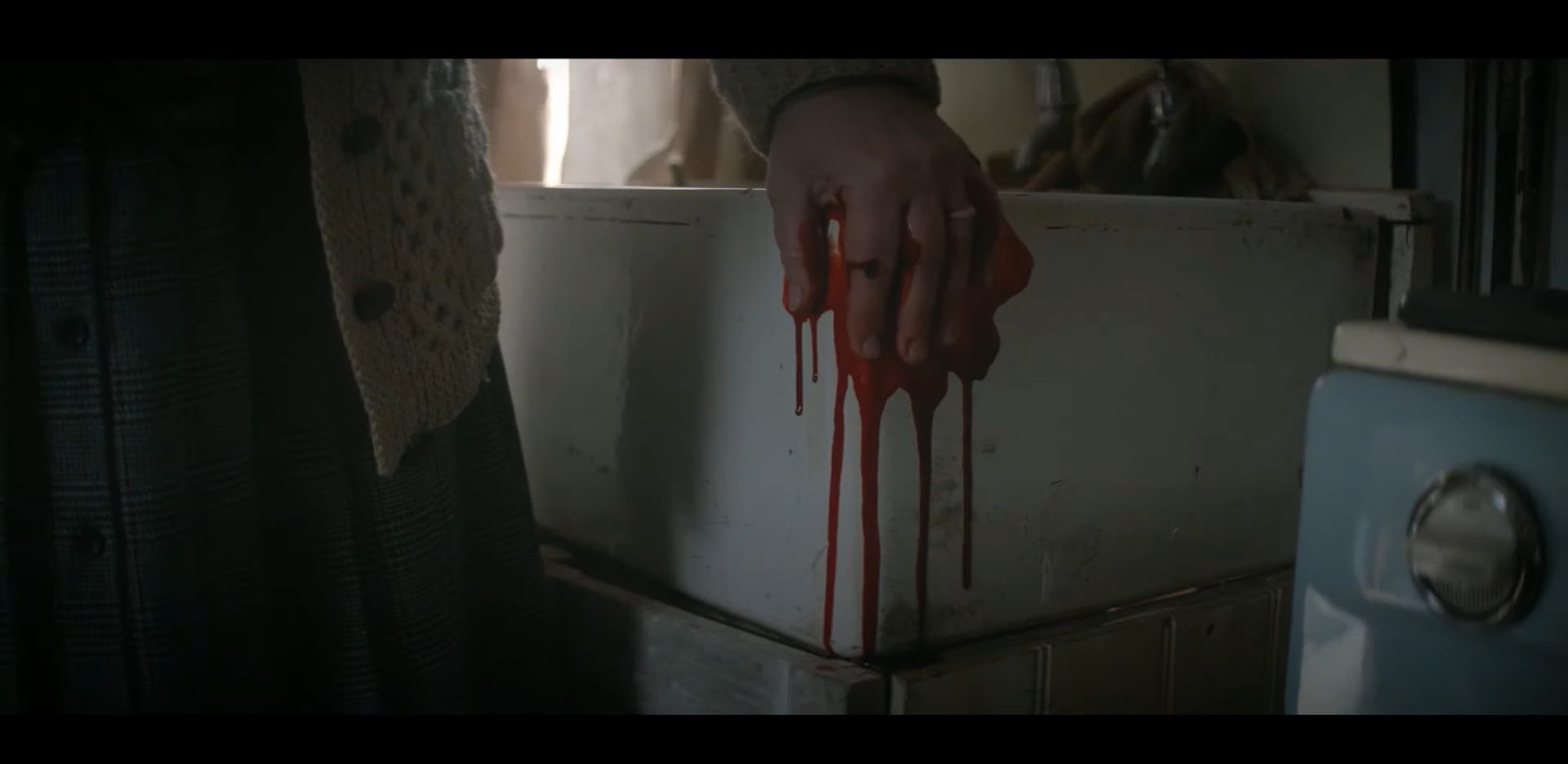
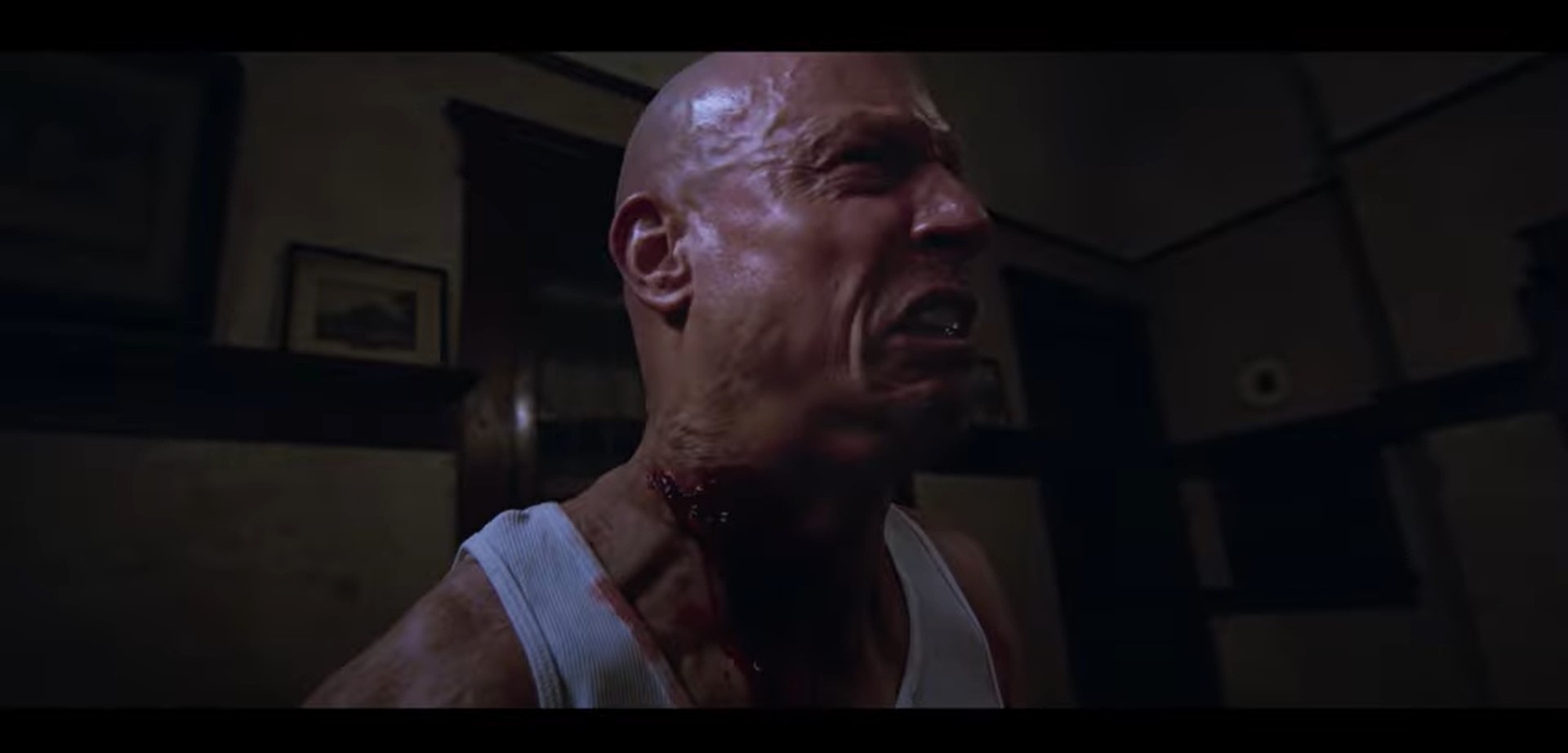
CPS investigator, Claire Yang, struggles to cope with the untimely loss of her young son.  The tragedy forces her to push away her husband and have suicidal thoughts.  What’s also driving Claire further from the edge of sanity is her ability to see glimpses unhinged, and sometimes physically harmful, spirits.  When a child-protective case comes across her desk to look into the possible abuse of a young girl, Claire learns quickly that it might not be girl’s parents abusing her.  Tormented by an angry supernatural entity, Claire walks careful and hesitant thin line of keeping the girl with her family and attempt to prove that the parents are not responsible for the bruises and cuts, but when upper management pressures her to close the case at the school’s behest and a variety of ghastly come and go across her path, the churning burn of hurt and guilt grows inside her as she confronts her personal demons while trying to do the right thing for the abused girl in the middle of it all. 
“The Sixth Sense” meets “The Conjuring” in The Vang Brothers’ 2022 supernatural thriller, “They Live in the Dark.”  As the sophomore written-and-directed project for the Fresno, California raised Abel and Burlee Vang, following up on their 2016 release of the moderately successful supernatural and social media mashup debut, “Bedeviled,” continuing to venture off their solo work and into a collaborating unit, “They Live in the Dark” tackles various topical concepts and troubles with overwhelming grief and how it manifests negatively on an individual and family level.  Previously once titled as “The Uncanny,” the story is set in nowheresville, U.S.A., the brothers really set the tone that this story, or more realistically its themes and messages, are broad and non-exclusive and we also see that in the cast for the film, a segment that we’ll dive into further in the next paragraph.  The Shudder exclusive film, “They Live in the Grey,” is a production from Standoff Pictures in association with Whiskey Stream Productions with the Vang Brothers producing alongside former filmmaker-turned-film academic-turned-filmmaker Stephen Stanley.
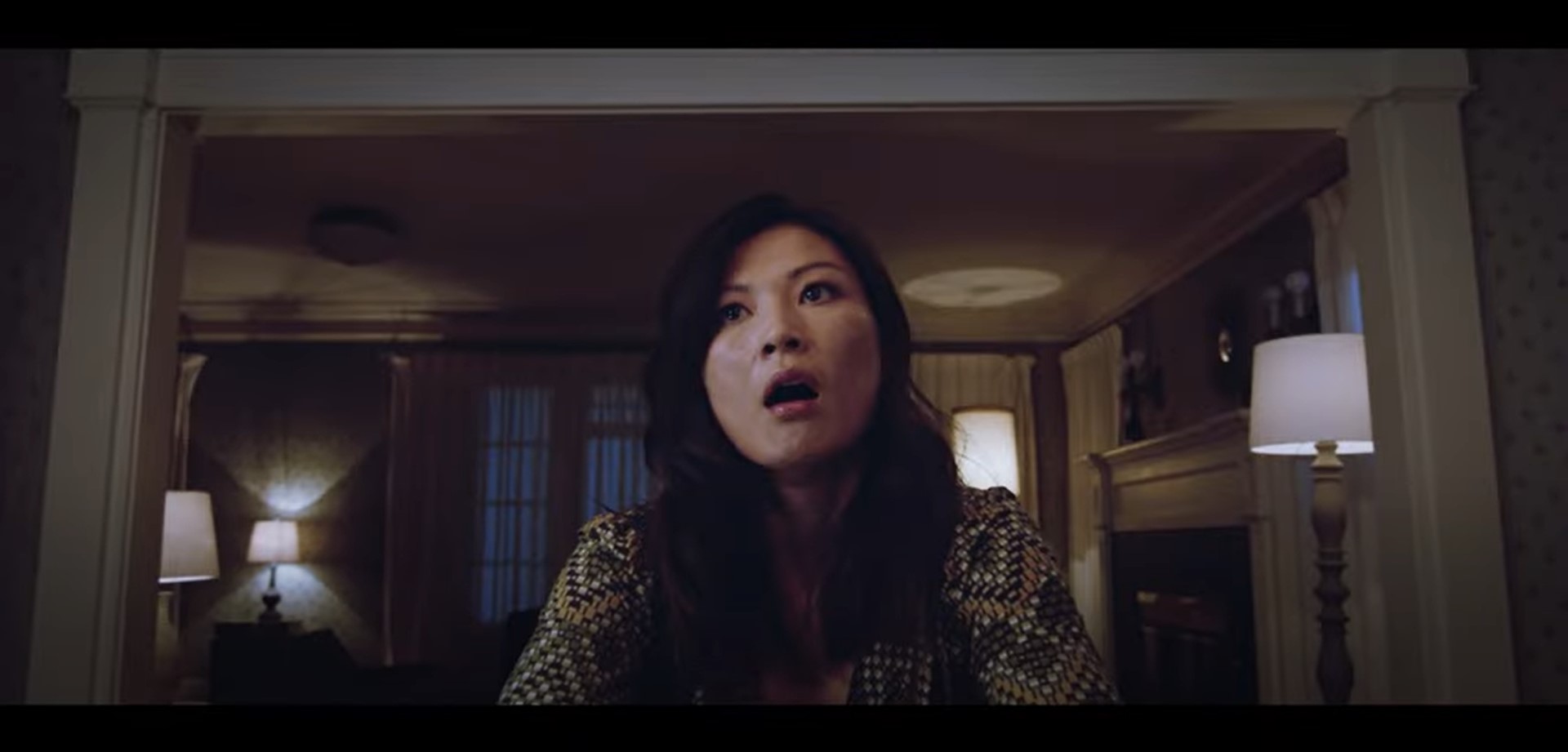
Coming from Hmong ancestry, The Vang Brothers found personal importance to cast mostly Asian-Americans for the film.  Taiwan born Michelle Krusiec (“The Invitation,” “The Bone Box”) plays the lead and is the very first character we meet in an awkward and frightful position as a woman attempting suicide by hanging herself near the home staircase.  Immediately, we don’t know what we’re exactly in for, but we know when we’re introduced to the threadbare Clair, she has a major depressive factor that beleaguers her existence to the point of removing it from the equation all together.  The Vang Brothers thoughtfully shroud details into exactly what’s devouring Claire from the inside out and keep close to the chest in securing that ace of revelation in the back pocket until the time is just right in the story to unveil the dealt bad hand.  As the details trickle and we learn more about Claire’s disintegrating family life, we also learn of her ability to see lost spirits and how she handles those more than often visceral visions is dose up on medication that ultimately factors into her current state of mind.  Though I wouldn’t say the performance pops offscreen, but Krusiec does cruise through the role with meticulous character conditioning and the actress can tremble and look scared with the best in the business, anchoring Claire as the rooted principal and establishing a tone that works with the casted cohort.  Ken Kirby, who plays Clair’s estranged beat cop officer husband Peter, goes outside the usual comedy element for the Vancouver-born actor-comedian, walking the emotional pathway of a husband on the ousts by no fault of his own.  The heartbreaking tension that’s both expressed outward and internalized between the teetering from loss parents, husband and wife, fills the scenes with raw and relatable emotion and barrier-laden endeavor to fix what is thought hopeless. As Claire becomes closer to the case of Sophie Lang (Madelyn Grace, “Don’t Breathe 2”), nothing is as it seems from a family already on shaky ground with not only the school system’s case of suspected abuse, but also inwardly as past troubles fester toward a frenzy. Ellen Wroe (“Final Destination 5”), J.R. Garcia, Willie S. Hosea, and Mercedes Manning fill out the cast.
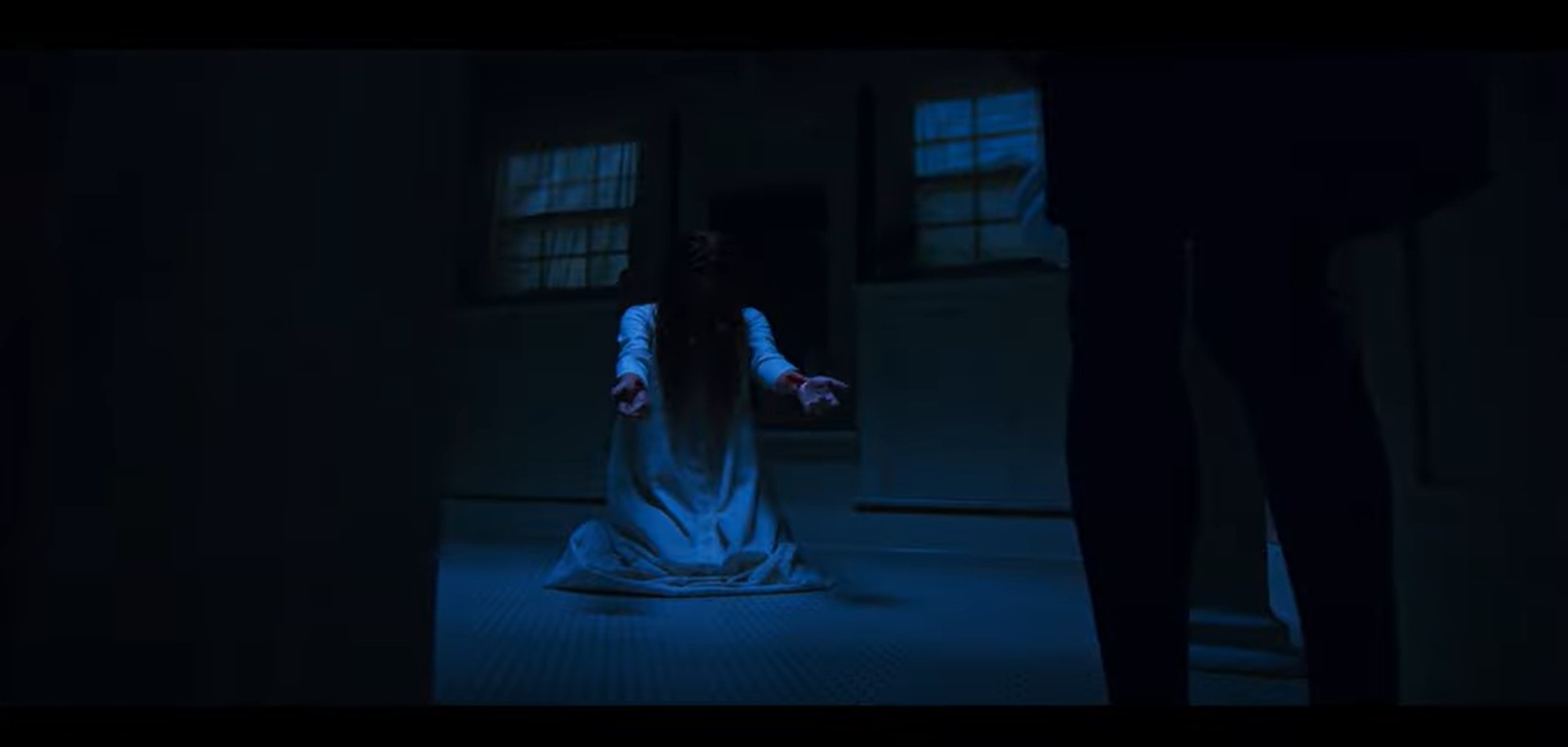
The Vang Brothers accomplish phenomenal representation in a female leading role with the talented Michelle Krusiec. Reaching back into my mind to access the cache of catalogued films I’ve watched over the decades, I find myself in extreme difficulty in recalling an American made story where an Asian woman female lead is not a martial arts expert. The Vang Brothers with “They Live in the Grey” expand the palette with a supernatural scenario that could curse not just the single white female rearing and protecting their child from a plethora of supernatural predators, but also afflict a person of color who has already suffered tremendously and who has to still have to find and work on themselves in the muck of overcoming a millstone. Instead of a double whammy, “They Live in the Grey” is a triple whammy of pitfalls that rival similar grief-stricken genre films like “The Babadook” and “The Orphanage.” “The Vang Brothers elicit a stillness in their shooting of an extremely melancholic yarn by not being too fancy with their camera footwork that doesn’t track or follow, no hand-held or drone, and is allowed to have a more natural tone with an unfiltered gravitate toward the austere and the tormented. Though nothing too striking to make a spectacle from Jimmy Jung Lu’s cinematography but each shot is carefully setup and the slow zoom in and out is effective enough in breath-holding moments. Early into the story, the first can be choppy and disorganized with the back and forth of present and past and though heavily focus or strict on the narrative’s virgin veneer, there’s distinguishable indication to the audience that we’re looking into the present viewfinder or the past’s. As a whole, the scenes blend together in a seamless patchwork that hinders more than helps.
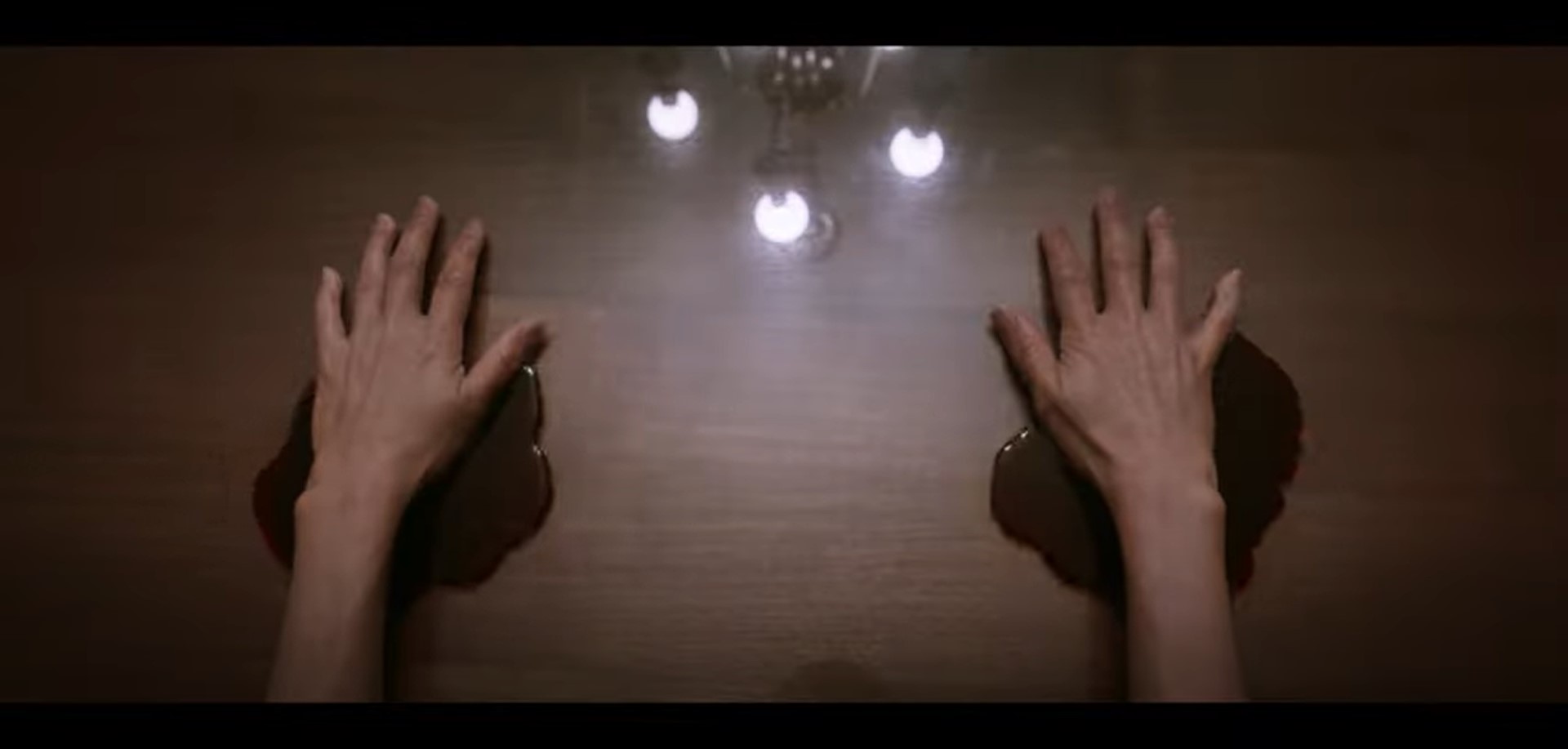
“They Live in the Grey” extends that lack of light and vitality for the living and the dead. Now, you yourself can experience the saturnine of atmosphere of the film that lives on DVD from Acorn Media International. The region 2, PAL encoded, 124-minute DVD comes from our overseas friends in the United Kingdom with an 18 certification for strong injury detail – aka – stabbing and blood. Presented in a 2.39:1 widescreen aspect ratio, the 2-hour runtime coupled with a compressed presentation appears to have shepherd in some compression issues, such as banding and fuzzy details. The picture is not the sharpest it should be with old wooden house’s textures could have added texture to the nerve-wracking tension builds. The English Dolby Digital 5.1 track represents a solid audio inlay with clear dialogue and a diverse depth and range. The musical soundtrack is subtle but works hand-in-hand with the story. Optional English subtitles are available. Bonus features include only a behind-the-scenes photo gallery. When it comes down to brass tacks, a strong story is a good story and “They Live in the Grey” may miss a few technical marks, but the horrid truth of grief is personal, potent, and packed full of demons.

Not the Blue, Not the Red, but the Grey!  “They Live in the Grey” on DVD!

The End of Days Runs on EVIL Fuel! “Wyrmwood: Apocalypse” reviewed! (101 Films / Blu-ray)

“Wyrmwood:  Apocalypse” – Z-Nation on Steroids!  Available at Amazon.

In a zombie apocalypse wasteland, the gaseous belching undead are used as the primary energy source, but the sight for a cure is still the goal for survival.  At least that is for boots-on-the-ground foot solder Rhys who lives in an isolated camp surrounded by the dead and ventures out to retrieve uninfected humans to bring them to the bunker-dwelling Surgeon General in hopes in discovering a cure.  After snagging a hybrid female named Grace who can control her turning by drinking single vial of blood, Rhys quickly learns that the Surgeon General and his armed entourage are experimenting to death the people he’s delivering to the bunker for their own selfish objectives.  Teamed up with Grace’s people – Grace’s sister Maxi, Barry, and Barry’s sister Brooke who is also a hybrid – Rhys is determined to no longer retrieve people but rather retrieve his soul from a group of well-armed maniacs while trying to not get eaten by the zombie hordes.

For someone like me, a film reviewer, whose fairly anal about watching a series, franchises, sequels, etc., in sequential order, I am stepping outside my comfort zone and out of my own convictions and into unknown territory by watching “Wyrmwood:  Apocalypse,” the direct sequel to Kiah and Tristan Roache-Turner’s 2014 Australian bloody zombie comedy-romp, “Wyrmwood” aka “Wyrmwood:  Road of the Dead”, before the first film.  While typically a no-no in my book, and very much likely in the rest of the filmic community, I like to live dangerously.  Any who, Kiah Roache-Turner sits once again in the director chair with the direct, follow-up sequel that picks up immediately where the other film left off or, I at least think so.  In reading the ending to the 2014 film, I see no mention of a couple of characters that are present at the beginning of “Apocalypse” and so I’ll be interested to watch “Road of the Dead” to see for myself how both films tie together.  The script is penned by Kiah and brother Tristan after fan support of the first film urged the filmmakers to do a sequel to their brainchild inspired by the blood-soaked and vaudeville slapstick horror of New Zealand and Australia – such as Peter Jackon’s “Dead Alive” aka “Braindead” and the Spierig brother’s “Undead.”   “Wyrmwood:  Apocalypse” is a Bronte Pictures production (“Out of the Shadows”) in association with Roache-Turner’s Guerilla Films and backed by the executive producer team of Todd Brown, Tim Nagle, Rhys William Nicolson, Sam Gain-Emery, Clement Dunn, and Maxime Cottray.

To make matters more confusing for someone like myself who hasn’t seen the first film, Tasia Zalar and Shantae Barnes-Cowan, nor their badass sisterhood characters Grace and Maxi, are listed in the cast of the first film nor are they in the short-lived teaser episodic series from 2017, causing a bit of disconnect for a nobody like myself who knows absolutely nothing of Wyrmwood universe when beginning the Roache-Turner series will the latest production. The “Uninhabited” Zalar and the “Frostbite” Barnes-Cowan quickly establish themselves as survivors devoted to each other by blood as their introduced rather quickly, harshly, and without background in the company of returning actors Jay Gallagher as Barry, described in the first film as a talented mechanic, and Bianca Bradley as the zombie hybrid Brooke who can control the regular horde of gas-chucking dead heads. Of course, being that a direct sequel, at least that’s how the Roache-Turner plays it, follows up 8-years later, some of the characters don’t quite look the same as when we first left them. For instance, Barry’s a little rounder and beefier and Brooke is, well, blonder. However, the bond between brother-sister is still strong and is even reinforced by Grace and Maxi’s relationship that blood trumps all. Another actor returns for the sequel but not toward the same character as Luke McKenzie adds to the theme of family by playing the avenge-longing brother of the first film’s antagonist known only as The Captain. Rhys (McKenzie) has more of a pure heart in contrast to his brother, or so we’re informed by returning characters, and becomes the unintended principal character amongst an ensemble cast by being the retriever, the deceived, and the reclaimer of his soul when he discovers the paramilitary survivors – The Doctor (Goran D. Kleut, “Alien: Convent”), The Colonel (Jake Ryan, “Out of the Shadows”), and the Surgeon General (Nicholas Boshier_) – are experimenting and killing captives for their own survival and grinding their corpses to make into anti-viral pills. There’s nothing bland about the Roache-Turner brothers’ character diversity and charisma as they each stick to a persona throughout the unfolding that quickly established who-is-who in the bad and good category.

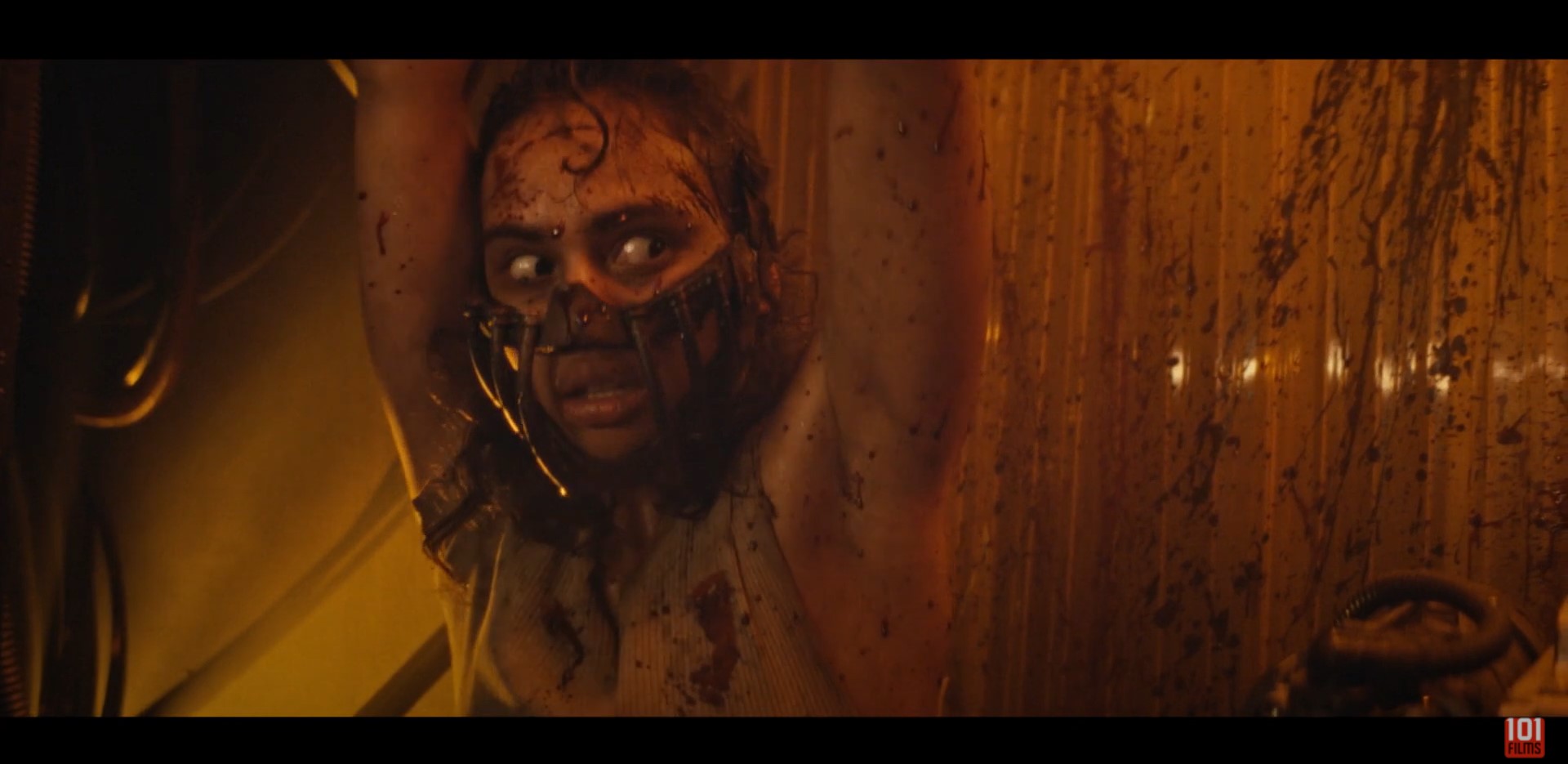
“Wyrmwood: Apocalypse” is dieselpunk coated dead and delirium. With a definite George Miller approach and a zany-zombie gift of gore and gags, I can see where fans of the zombie genre can feel freer and more relaxed outside the confines of the somber-and-serious toned oeuvre of zombie films of the last two decades that has literally been beaten like a dead horse with a stick at every angle. The gonzo-gearhead carpet definitely matches the drapes in an outlandish universe where zombies are the Duracell and Diehard batteries of the future and while the story engrains a kindred theme and blood splatter fun, one element still guts me more than the multiple eviscerated entrails in the movie. Being a zombie movie of the flesh-eating kind, one would hope scenes of flesh-eating would be apparently present. Unfortunately, “Apocalypse” has zilch on zombie feasts. Though close in one scene where a big toe might be become an appetizer, in the end, there isn’t one bite of rotting teeth be pressed and puncturing flesh or viscera. What “Apocalypse” offers quite the opposite in where the dead are the exploited, utilized as a fuel source by feeding them beef and harnessing their oral gasses to drive vehicles and run high-powered miniguns or be under-the-influence of control by telepathic hybrids to do their bidding, aka suicide bombers or take the hits so the living can stroll in without garner so much as a scratch in a skirmish.

The final conclusion about “Wyrmwood: Apocalypse” is this, watch “Road of the Dead” first. Then, enjoy the rip-roaring and violent horror-action zomedy now available on an UK Blu-ray from 101 Films. The hard region B locked, AVC encoded Blu-ray is presented in 1080p, high definition, with an aspect ratio of 2.35:1. “Apocalypse” has the look of the early comic-book era style of pre-“300” Zack Snyder that hovers around the practical properties of “Tank Girl” in what’s fashioned together by the director of photography, and co-producer, Tim Nagle to appeal to a tactile of cold and grimy steel, sweet, and blood. The film uses very little visual effects which is mostly on the blood splatter, and you can tell the splatter is a bit off in having a waxy look to it. The decoding runs efficiently well to provide a clean picture through an edit heavy story. The English language audio mixes come in two options: a Dolby stereo PCM and a DTS-HD 5.1 surround sound. While there’s nothing wrong with the stereo PCM track that offers a clean and lossless recording, the 5.1 audio mix is a robust beast that channels every engine roar and isolates a zombie belch to be more inclusive for a viewer. If you’re in the mood for a longer sitting and bonus content, perhaps this 101 Films release is not for you as the runtime hits just above an hour at approx. 70 minutes long and just contains the feature and a scene selection. However, there is reversible front cover art. Easily, continuing the journey by working backwards in the Wyrmwood universe is worth the time as “Wyrmwood: Apocalypse” catapults the zombie into a new and unexplored rancid category of reverse exploitation in parallel with carnage, mayhem, and all of the anarchical above.

“Wyrmwood:  Apocalypse” – Z-Nation on Steroids!  Available at Amazon.

Making a Horror Movie can be EVIL on the Health! “Stoker Hills” reviewed! (101 Films / Digital Screener)

Three film studies college students are eager to win their class’s short film contest with story idea Street Walkers, a genre blending horror movie that crosses “Pretty Woman” with “The Walking Dead.” On their first night of shooting, isolated on the empty streets of Stoker Hills, their actress and friend is suddenly abducted right before their camera lens and instantly give chase without a second to call the authorities, falling right into the maniac’s nightmarish world. Left behind for two detectives is the students’ tell-all camera, leaving behind the recording as the only clue into tracking down their undisclosed whereabouts and stopping the kidnapping-killer. As the detectives home in on the killer’s lair, only hours are left before a determined and desperate madman drains every single drop of their youthful blood for a deadly selfish cause.

Director Benjamin Louis and “Stoker Hills” want you to believe in their compelling and bloody slasher narrative of periled college students fighting for their lives against a formidable, resilient killer while two resolute detectives sniff out the mystery of their disappearance before it’s too late. However, in “Stoker Hills,” nothing is as it appears to be. As the first feature script penned and produced by Jonah Kuehner, the “State’s Evidence” director, Benjamin Louis, coproduces the sheeny cinematic slasher that hits upon almost every known trope in the book by incorporating a backwoods nook, a torturous rec room, and foggy night underneath a vividly complete full moon into a story that’s one part found footage and one part cop thriller. Benjamin and cinematographer John Orphan (“The Black String”) do a phenomenal job crafting away from a Los Angeles look and into an unrecognizable, any-town-America by shooting at the dead of night in L.A.’s low-lit surrounding areas of Griffith Park and the Angeles National Forrest without focusing in on or revealing well-known landmarks. “Wildling’s” Rab Butler and Timothy Christian coproduces the 2020 teen-mystery slasher.

“Stoker Hills” begins very much in the same way as my last review of Seth Landau’s “Bryan Loves You” with a deep-in-character production by the great Tony Todd (“Candyman”) as a film studies professor. Instead of warning audiences to look away if frightened or to be ushered out of the theater when shocked beyond just stomaching the content, Todd’s professor of cinema is passionate and enthusiastic about what great filmmaking and the auteurs who wield their work upon the world. However, much like “Bryan Loves You,” Tony Todd only dabbles into the narrative with a superficial house role that opens the doors for Ryan (David Gridley, “The Unhealer”), Jake (Vince Hill-Bedford, “Sorority Slaughterhouse”), and Erica (Steffani Brass, “Ted Bundy”), three slackjaw, maybe even indolent, students eager to take “The Walking Dead” and turn it into a “Pretty Woman” romance comedy known as “Street Walkers.” The concept is no Guillermo del Toro or Martin Scorsese, but nonetheless barely sates the professor’s threadbare faith in the three’s semester-ending grade. Along the way, we’re introduced laterally to character who will eventually be integrated into the story later and at a state of prominence to the mystery, such as with fellow star student Dani Brooks (television actress Tyler Clark) and her university benefacting donor Dr. Jonathan Brooks (John Beasley, “The Purge: Anarchy”). “Stoker Hills” also isn’t entirely linear as the footage soon appears to be corrupted only to be on pause by two officers investigating the case and analyzing the video. William Lee Scott (“Identity”) and Eric Etebari (“Scream at the Devil”) play the high-blood pressure, blue collar, family-man Detective Bill Stafford and a sophisticated bachelor and quasi-Rain man Detective Adams respectively. The Scott and Etebari cop drama show entertains as less CSI and more NYPD Blue or Law & Order with a conspicuous partner correlation only to be separated by adding snippets of out of context humanity, such as why Adam’s is a loner and Stafford hates changing baby diapers. Powerful stuff. Each character is connected to “Stoker Hills'” antagonist, Charles Muyer (Jason Sweat), who’s been abducting young, healthy people off the streets and into his vacant buildings of intravenous drips of blood into a milk crate-based cylinder beaker tube. Thomas R. Martin, Joy McElveen, Maya Nucci, Michael Faulkner, and “Eraser’s” Danny Nucci round out the cast.

Director Benjamin Louis cherry picks the best traits from a triad of genres to smush together into one trope-tastic “Stoker Hills”  A lumbering mute killer bred to annihilate in his nihilism from the slasher genre, two dedicated detectives determined to catch a killer and able to snoop out clues out of nothing that’s familiar toward the cop drama genre, and a pair of brosefs, who dude each other in every other line of dialogue no matter if it’s joshing in film studies class or being chased harrowingly through the woods and having their foot snagged in the teeth of a beartrap, pulling from the pot-smoking and arrogant hijinks of two immature college aged guys usually hovering around the teen comedy category.  All the actors really get into their parts to the point of a fault in creating a bogus, simulated environment as if a knockoff matrix, coded by naive aliens who know nothing of the human race other than watching “American Pie,” “Law & Order,” and every Renaissance era slasher film, is being pulled over the eyes. The whole ordeal that has a context surrounding Charles Muyer’s bad pig heart is also grossly under kneaded and bordering nonsensical until the ending. That game changing ending spooled by meta wiring puts in perspective every last minute of the well-paced 91-minute film, and when the narrative quickly closes upon itself and fades to black into the credits, every scene previously pondered and examined, crisscrossed into a mental algorithm that breaks down character arcs and progression devices, and spits out answers like an Amazon Alexa has suddenly last all its calculated determination in a snap of a flash. Kudos to “Stoker Hills'” screenwriter Jonah Kuehner for conceiving an overtreated trope decoy story and kudos to director Benjamin Louis in pulling the wool over our eyes without flinching or showing his cards too early.

Everybody run for “Stoker Hills” and become caught up in a diabolical twist that’ll deflate the suspense out of you but also leave you pleasantly surprised. 101 Films released this film last month, March 28th, on digital platforms. Since “Stoker Hills” is solely a digital release from UK distributor, there are no audio or video specs to note or review. Aforementioned, John Orphan helms the “Stoker Hills” noir and no-nonsense veneer which is and also the minor league Jigsaw traps are very “Saw”-like, even down to peppering certain scenes with over illuminating primary color gels if by spotlight. Roc Chen, a profound composer for China over the last decade, notes a less than impactful score in what could be considered more run of the mill material, but that also could play into the whole narrative twist. There were no bonus features available with the film nor were there any bonus scenes during or after the credits. At first glance, “Stoker Hills” treads over the same worn trodden path of slasher predecessors, but then the finale hits like a five-finger slap in the face from Will Smith and, suddenly, everybody could be, should be, and will be talking about “Stoker Hills'” gripping gambit.

When That Sexy Roommate Turns Out to be an EVIL Hexing Hag! “Don’t Let her In” reviewed! (Full Moon / Blu-ray)

“Don’t Let Her In” on Blu-ray from Full Moon Features and Distributed by MVD Visual

Young artist couple Amber and Ben live downtown in a spacious single floor loft.  To afford rent and earn a little extra cash on the side, they decide to sublet a portion to Serena, a beautiful, and recently single, new age jewelry bowl artist who crafts old age product.  Some would say Serena’s craft is witchcraft as the alluring artist is actually being inhabited by an ancient, malevolent demon.  As she settles into her new abode, Serena slowly works her way between Amber and Ben, seducing and bedding both for her reasons to prolong a legacy on Earth.  When Ben is suddenly whisked away for an unexpected rock tour, Amber finds herself cornered by the demon in human skin and, to her on the pill surprise, pregnant because of Serena’s daily bewitching manipulation and incessant satanic chanting.

As a part of the new Full Moon lineup of 2022, principal Full Moon filmmaker Ted Nicolaou, the mastermind behind “TerrorVision” and the longstanding director of the “Subspecies” franchise, returns with another vision of terror, a beautifully demonic roommate from Hell, in “Don’t Let her In.”  Shot entirely on location at the historic Nate Starkman and Sons Building in Los Angeles, home to an array of productions from inside Paddy’s Bar of “Always Sunny in Philadelphia” to appearing in a handful of iconic horror series, such as “Candyman:  Day of the Dead” and “Wishmaster 2:  Evil Never Dies,” the 1908 erected factory is said itself to be haunted, adding to the miscreant charm of a shapeshifting fiend plaguing the innocence of a young couple.  Charles Band, like all of his productions, serves as chief producer and executive producer with the cannabis friendly Nakai Nelson, this side of the century Full Moon Feature producer with credits such as the “Evil Bong,” “Weedjies,” and a pair of more recent “Puppet Master” films to her name. 

“Don’t Let Her In” has an intimate cast comprised of four actors who have to pull in different, varying levels of character dynamics and frames of mind depending on how Serena’s orchestrating of the strings upon her marionette subjects favor in or from her dastardly ambition.  At the center is first time Full Moon actress Lorin Doctor as the pleasantly chic but unpleasantly succubus-like Serena who wants more than just a place to sojourn from an ex-boyfriend.  Serena is the kind of role where you have to applaud Doctor for not only pulling off grimacing in the shadows and being able to keep up the rhythms and beats of complex chanting but also be comfortable in the facial prosthetic makeup and make like a troll for a creepy crouch walk in a backwards reel speedup effect.  Kelly Curran and Cole Pendery are also newcomers to Full Moon’s world of strange and unusual T&A horror as the loft-residing couple Amber and Ben.  Curran and Pendery make up for an okay, downtown twosome with hints toward a checkered past of philandering that’s irritated by Serena’s provocative presence, but that’s doesn’t quite blossom into more of an issue as Amber is quickly eager to just go with the flow without being too bothered by the prospect that Serena and Amber did the bedsheet whoopee next to Amber as she slept.  The four and last character Elias Lambe is by far the most lacking in development and substance as an important piece of Serena’s puzzle that quickly becomes shoved under the rug.  Austin James Parker plays the part that’s mostly standing outside the building on the street corner looking gothically mirthless rather than ominous and before realizing how Lambe fits into the narrative, the long haired, trench coat-cladded, vampire-esque backstory is quickly snatched away with not a morsel left of his bigger part as suggested.

“Don’t Let Her In” is a refreshing addition to the Full Moon feature line that maintains a lot of hallmarks of the company, such as heavy use of body prosthetics, an expensive veneer on an indie budget, and, of course, nudity.  Though many other audiences draw comparisons to “Rosemary’s Baby,” Nicolaou relates only a smidgen in the story alone without the Roman Polanski pin drop suspense of subjective narration.  Instead, Nicolaou embodies Full Moon’s quirky and special effects greased terror fried to a familiar taste all fans have known from the past 40 years and that’s not terribly a bad thing.  “Don’t Let Her In” feels like an original piece of storytelling, much like “Castle Freak” or  “The Dead Hate the Living,” that detaches itself from Charles Band’s obsession with miniature maniacs, but Full Moon has no shame in telling us we’re still watching one of their films, gratuitously plopping easter eggs of their films all throughout “Don’t Let Her In” (i.e. Poster artist Amber’s current project, a rendering of “Corona Zombies,” and “Castle Freak” playing on the television set as Amber and Serena spend an evening as a pair of winos).  Serena’s demoness rat-faced makeup does appear stiff and inane at times, but the way Nicolaou mostly presents Serena in true form is through a blend of quick-sufficient editing, a manipulation of lens and pace, and the to-and-fro from the human façade that ultimately makes rodent Serena become scary Serena when accompanied by Charles Band’s strike of forte notes when not being melodiously carnivalesque.

Lesson here, kids, is to always background check you potential roommates because they might end up being a demon. Happens all the time. Fortunately, Full Moon Features delivers the entertainingly sapid “Don’t Let Her In” onto Blu-ray home video, presented in region free and a widescreen 1.78:1 aspect ratio. Full high-definition and 1080p resolution, this release has a strong, robust presentation in favor of Nicolaou’s often in your face with evil style despite the single loft location. The fact that this Full Moon feature is toned down from the usual moody, tenebrous gothic style shows a bit of range can be good for the collection. There are two available audio options: a 5.1 surround sound and a dual channel 2.0 stereo. If you want more fluff to your sound design, the 5.1 offers extra street ambiance while characters converse, sawing through the dialogue with car horns, traffic, and other urban outdoor racket as if they’re living right in the middle of Times Square. Yet, all outdoor scenes show little car or foot traffic that makes this fluff foolish. The dialogue is otherwise clean and Charles Band’s soundtrack interposes pizzazz and dread in this brawny audio output. Bonus features include a “Don’t Let Her In” behind-the scenes with snippet interviews from director Ted Nicolaou, actresses Lorin Doctor and Kelly Curran, and producer Nakai Nelson and rounding out with an array of Full Moon trailers. “Don’t Let Her In” has vim and vigor for an indie guise horror that’s erotic as it is fun surrounding a small cast and single location; yet there is also an evoking pathos in its decimation of young, naive artists and couples with career ending consequences.

“Don’t Let Her In” on Blu-ray from Full Moon Features and Distributed by MVD Visual

Herding EVIL Emotions to Your Doom! “Shepherd” reviewed! (Darkland Distribution / Digital Screener)

“Shepherd” on Blu-ray from Darkland Distribution!

The death of his young, adulterous, and pregnant wife pushes Eric Black into wanting nothing else but space from the rest of the world.  He ships off with his dog Baxter to an isolated lighthouse island, answering a classified job ad to be a shepherd of a flock over 600 sheep.  His arrival to the island’s dilapidated living house is beyond below expectations but serves the purpose of avoiding everything that reminds him of his lost wife and previous life.  When loneliness creeps around the entire stretch of the fog-covered island and intense nightmares sweep over him nightly, being trapped at his new home away home stirs madness into his everyday cup of life that also could be possibly the malevolent dealings of a supernatural presence residing on the island with him. 

Mourning is already a powerful post-shock emotion that can swallow a person whole without warning.  Couple the intense bereavement with a bristly line of behind-the-scenes loathing creates a perfect maelstrom that bears a force more soul crushing and more untouchably violent on the mind.  This is the psychological assaulting premise for Russell Owen’s new film entitled “Shepherd.”  The Welsh-born writer-director conjoins daunting atmospherics with slow burn deterioration and a Hell of one’s own making that questions conscious and subconscious morals.  Owens stretch through grim realities continue well after his first two films, a 2013 post-apocalyptic thriller in “Welcome to the Majority” and a 2020 survival of zombified inmates with “Inmate Zero,” the latter initiating the island motif for Owen’s latest film.  “Shepherd” is 103 minutes of bone-chilling folk horror from Golden Crab Film Production (GC Films) and Kindred Film under fellow producers Aslam Parvez and Karim Prince Tshibangu reconnecting with Owen from “Inmate Zero.”

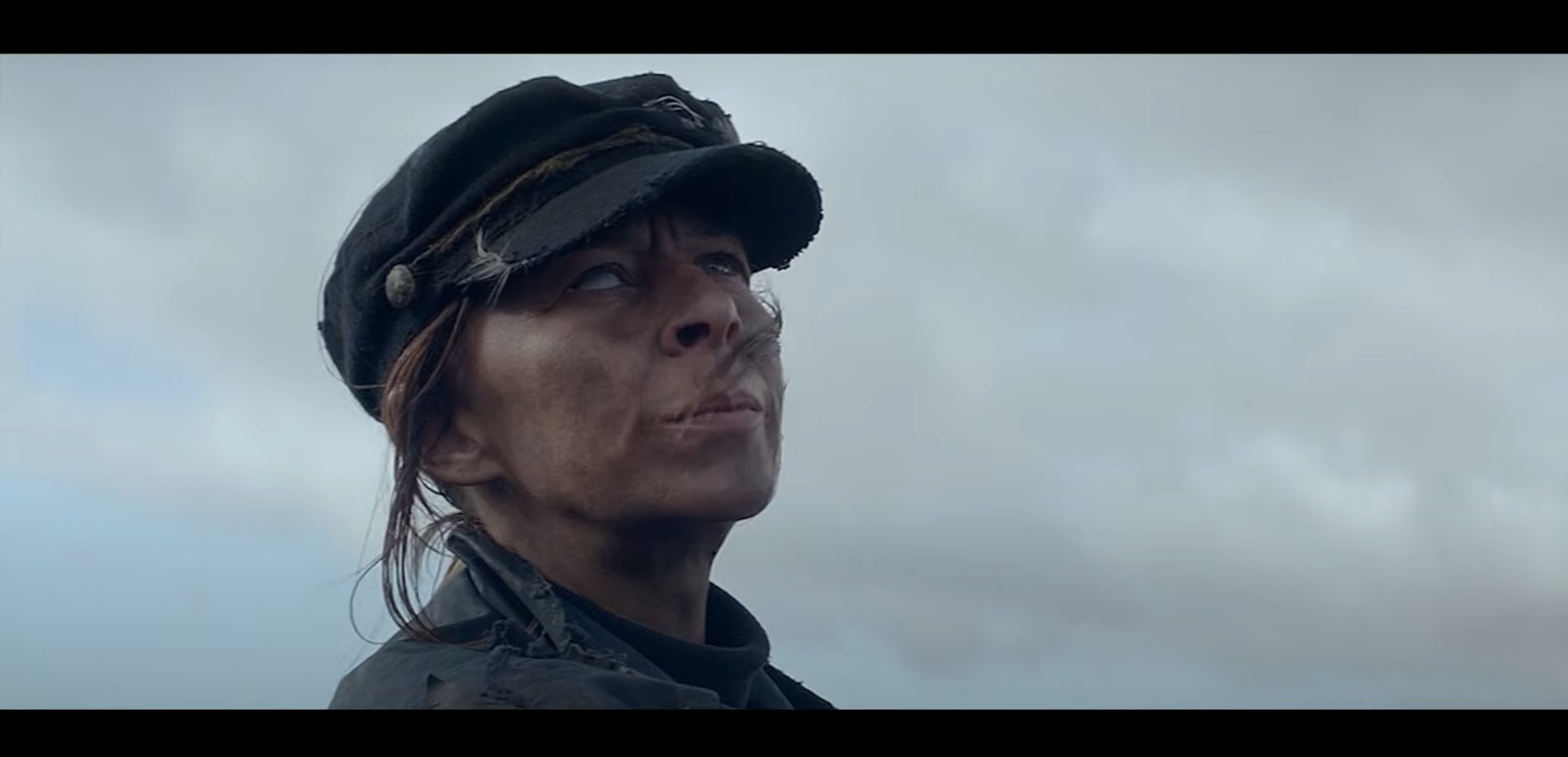
“A Discovery of Witches’” Tom Hughes embarks nearly solo on this frigid and fog-encrusted journey through self-segregating terror as Eric Black in order to break off Black from a world that won’t leave him be nor let him forget.   Hughes amasses a broody-flavored anguish, quietly stewing, fretting, and absorbing with great sedated composure the bombardment of strange occurrences during his stay on sheep island.  From his time with witches and vampires, the Cheshire-born, mid-30’s actor might be the lead of “Shepherd,” but it’s actually Kim Dickie (“Prometheus,” “The Green Knight”) who steals the show with her forebodingly salty fisher.  Haggard in appearance with a white, ghostly eye, Dickie’s frightsome performance and unsettling calm tone of voice could instill shivering fear into anyone who charter’s her boat heading toward a forsaken island.  The interactions between Hughes and Dickie are scarce with Dickie overshadowed by Hughes often wandering the island screen time like an avatar lost on in the fog of a Silent Hill horror game, waiting for something to pop out of the shadows and collecting clues to progress his story along.  Rounding out the cast is Greta Scacchi as Eric’s widow-bitter and devout mother and Gaia Weiss in a flashback and dream role of Eric’s deceased wife.

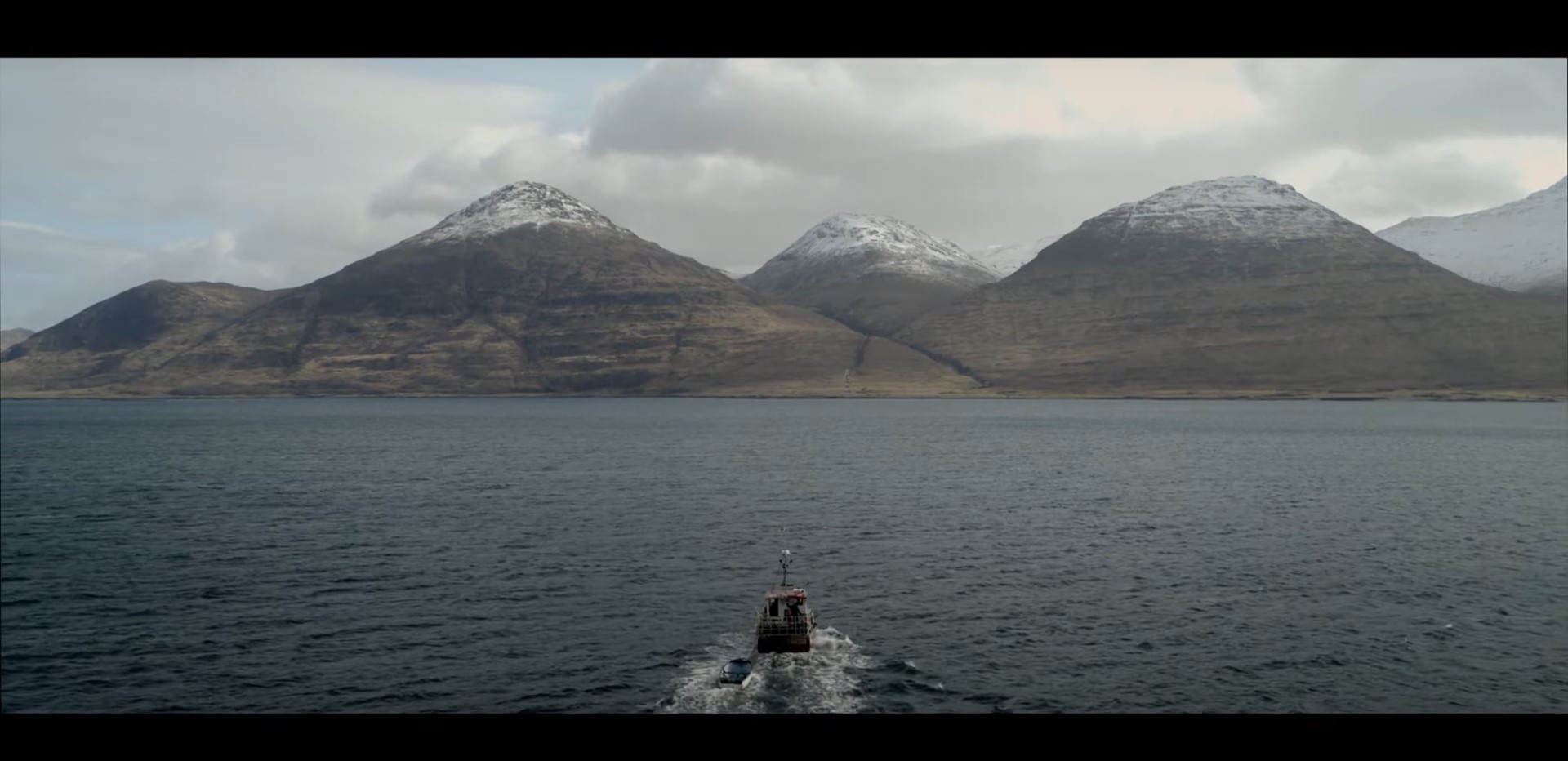
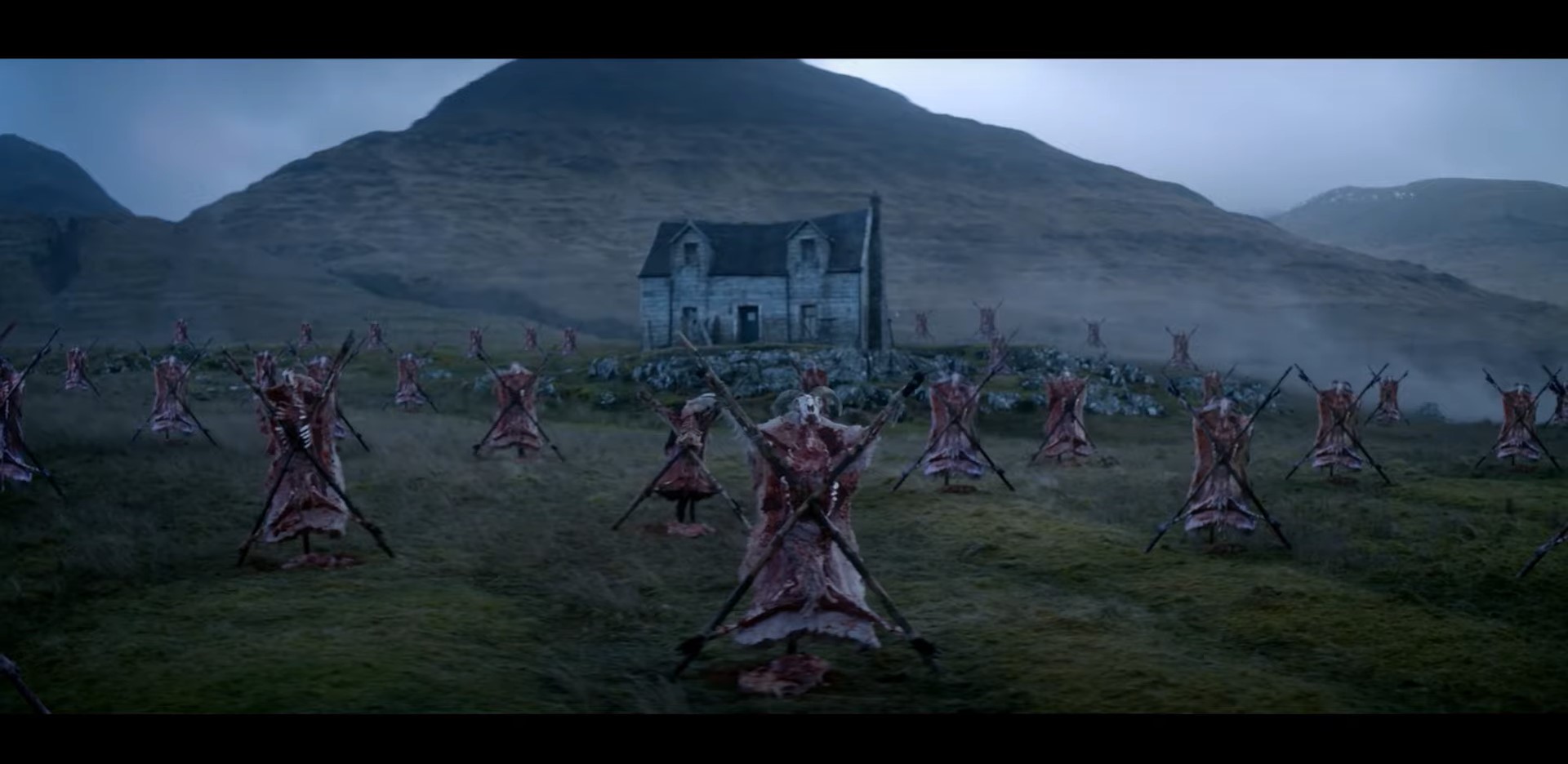
“Shepherd” immerses itself fully into the ideal concept of personal Hell with a wraparound mystery that batters and bruises the psyche of the protagonist, shielding away the hard-to-face truth, until a realization moment unfolds all the paranormal pastiche we’ve seen before in films such as Andrew Wiest’s “The Forlorned” and even Robert Egger’s “The Lighthouse,” both which involve lighthouses, lighthouse keepers, and a mixed-nuts’ tin of supernatural-madness. Trying to separate’s “Shepherd’s” niche from a very specific type of supernatural mystery subgenre surrounding a beacon of warning, or hope in some cases, is difficult to accomplish because each film, though stylistic diverse and eerily alluring in their own rite, regurgitate the same core context hinged on being unhinged. Now, what I’m not saying is that a remote, weather-beaten, and creepy lighthouse doesn’t make for a good setting – it sure as hell does – and cinematographer Richard Stoddard’s visual redecoration of the popular holiday tourist refuge, Isle of Mull, into a seemingly desolate, yet still a behemoth, island of nothing but monolithic rock faces and green grass as far as the eye can see. Stoddard’s use of in-flight drone cameras enables the visionary to capture breath-taking wide shots that dwarf Eric Black on his walkabouts in search for various odds and ends, providing an additional sense of overwhelming loneliness that pressurize the character to a breaking point. Space becomes an emblem of cursed irony for Eric between his need for separation from his disconnected place in the world to the vast space of Earth that inundates him into a bone-shivering panic. Space is also utilized by Russel Owen who’s able to manipulate through decent computer imagery the illusion of a large ship liner eerily resting a valley of fog or even taking a note out of Hitchcock’s shooting technique handbook of POV distortion, faltering Eric’s mind by disorienting him with swaying depths that play into the character’s fear of heights in another nod to the Hitchcockian coffer.

About every few years, a tense lighthouse lip-biter washes ashore. Released this past February of 2022, filmmaker Russel Owen’s psychological pilgrimage of coming to terms with consequential terror is his shot at the equivocal contretemps of one unlucky soul stuck on an eroded plinth of stone and shore. Darkland Distribution releases “Shepherd,” the second indie horror from Parkland Distribution’s dark subsidiary motion picture line, onto a UK Blu-ray with certified 15 rating and digital download, available off such platforms as Itunes, Amazon Prime, GooglePlay, Sky Store, Vubiquity (Virgin), BT, BFI Player, Rakuten TV and more. Since this review is based on a digital screener, I am unable to comment on the specifics of the Blu-ray A/V quality. The inhospitable-saturated soundtrack by Callum Donaldson is an unnerving mixture of low industrial rumblings and high anxiety string dissonance sure to keep the blood curdling with every resounding note and slice deep when the shocking time is right. I mentioned Stoddard’s eye for profound looming landscapes, capturing the natural beauty of the island, that are kept in continuity with the weathered fiber of the house and lighthouse interiors to match despite being shot inside a constructed studio set; however, a deep blue tint is added in post at random intervals of interior shots that pop out of place like a dislocated thumb, taking away from the realism and stepping more into the cerebral caged surrealism from which Owen ebbs and flows. “Shepherd” herds all the right tropes into a pen of madness. With a ferocity of natural imprisonment and the threat of evil dense within every molecule of the island, this awake nightmare fuels the ominous fire, but can’t quite reach its gut punch ending that curtails off toward ambivalence without cherishing a satisfying single resolution.

“Shepherd” on Blu-ray from Darkland Distribution!