An EVIL Alien Blob Storms Earth in Search for Space Feline! “The Cat” reviewed! (88 Films / Limited Edition Blu-ray)

If you missed the Blu-ray, “The Cat” Standard Edition is Available!

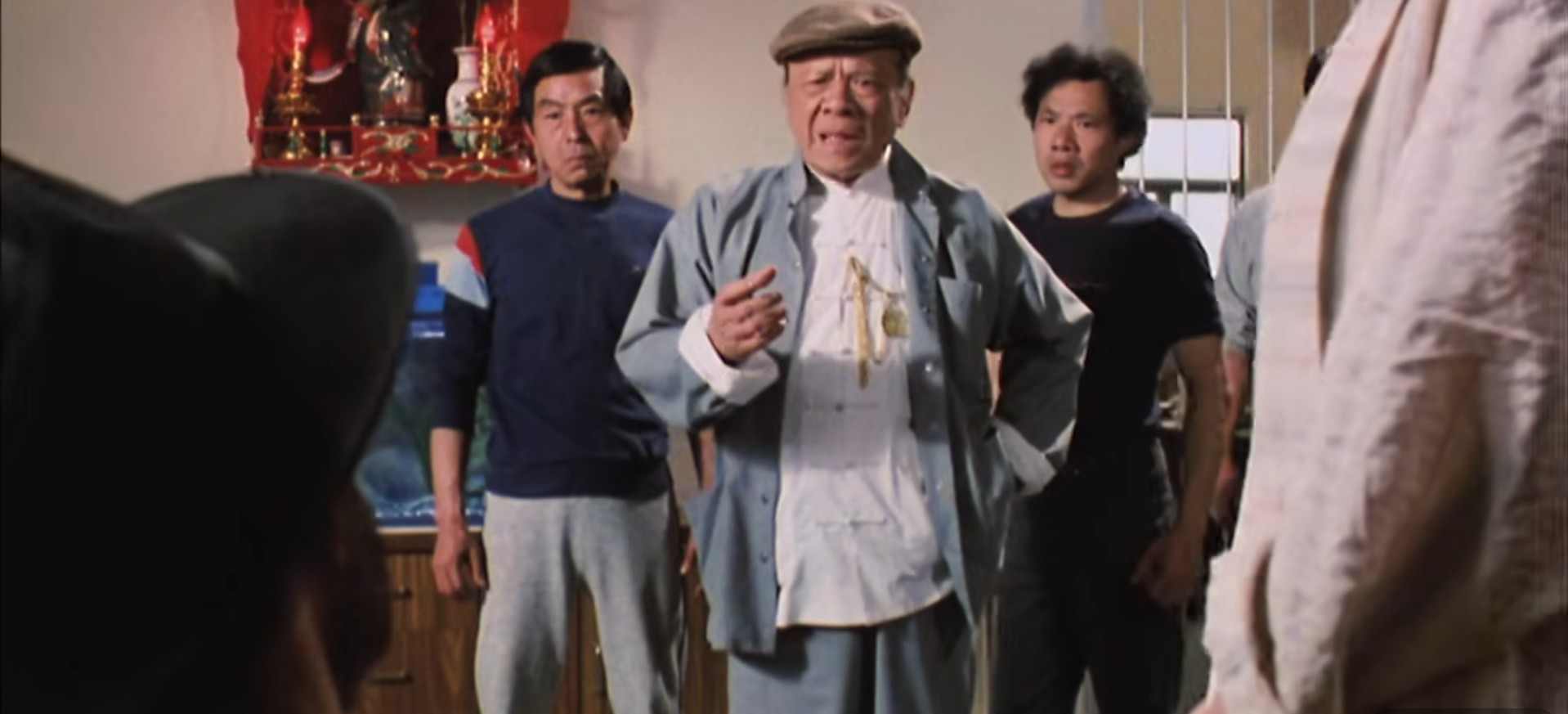
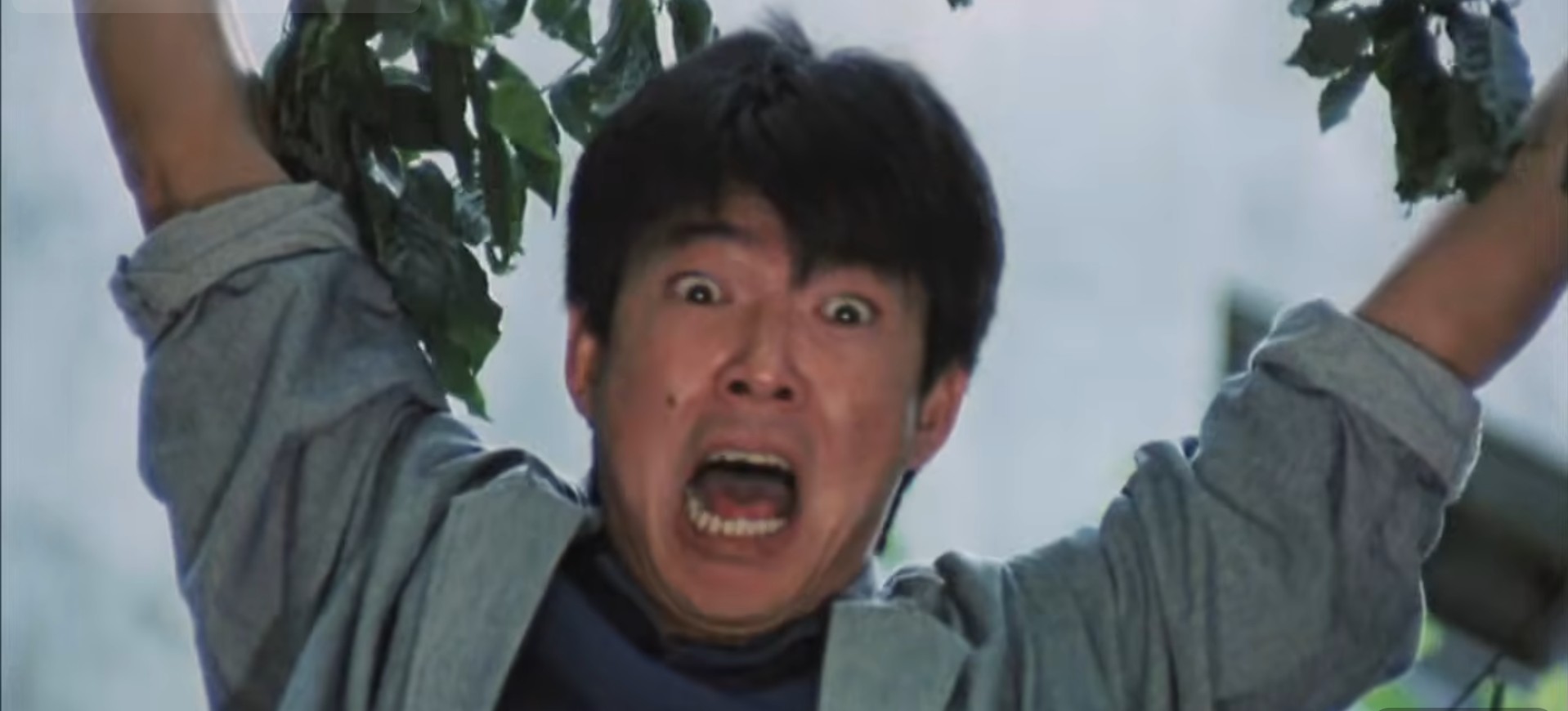
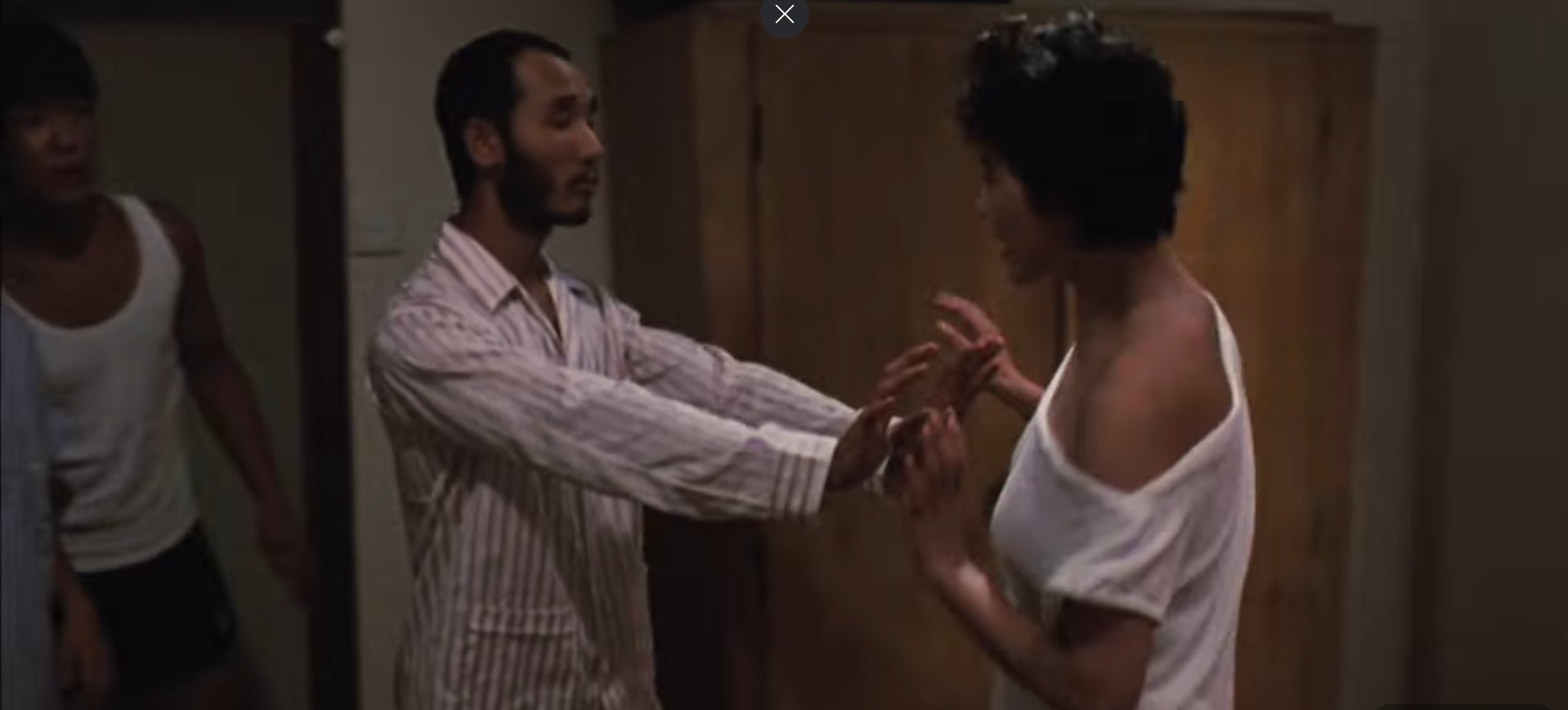
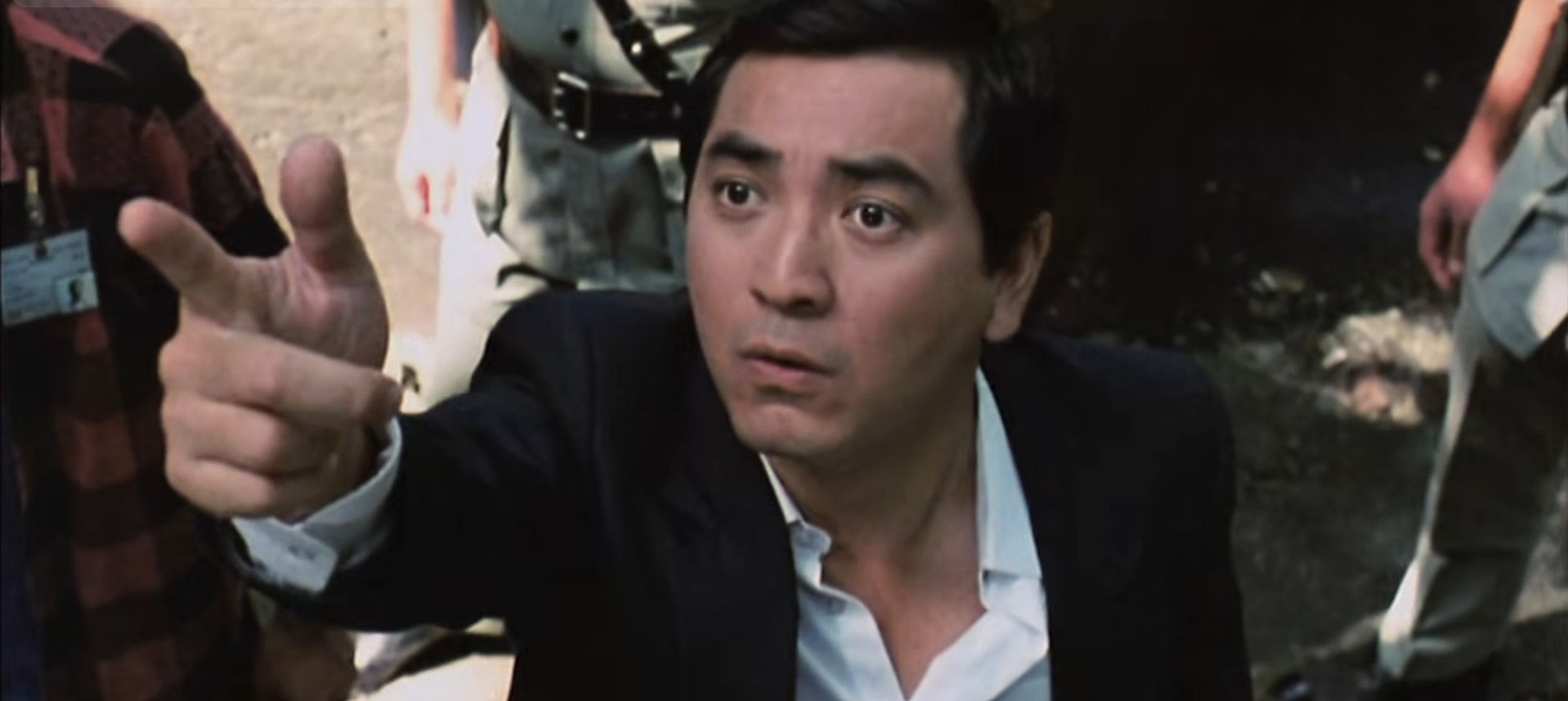
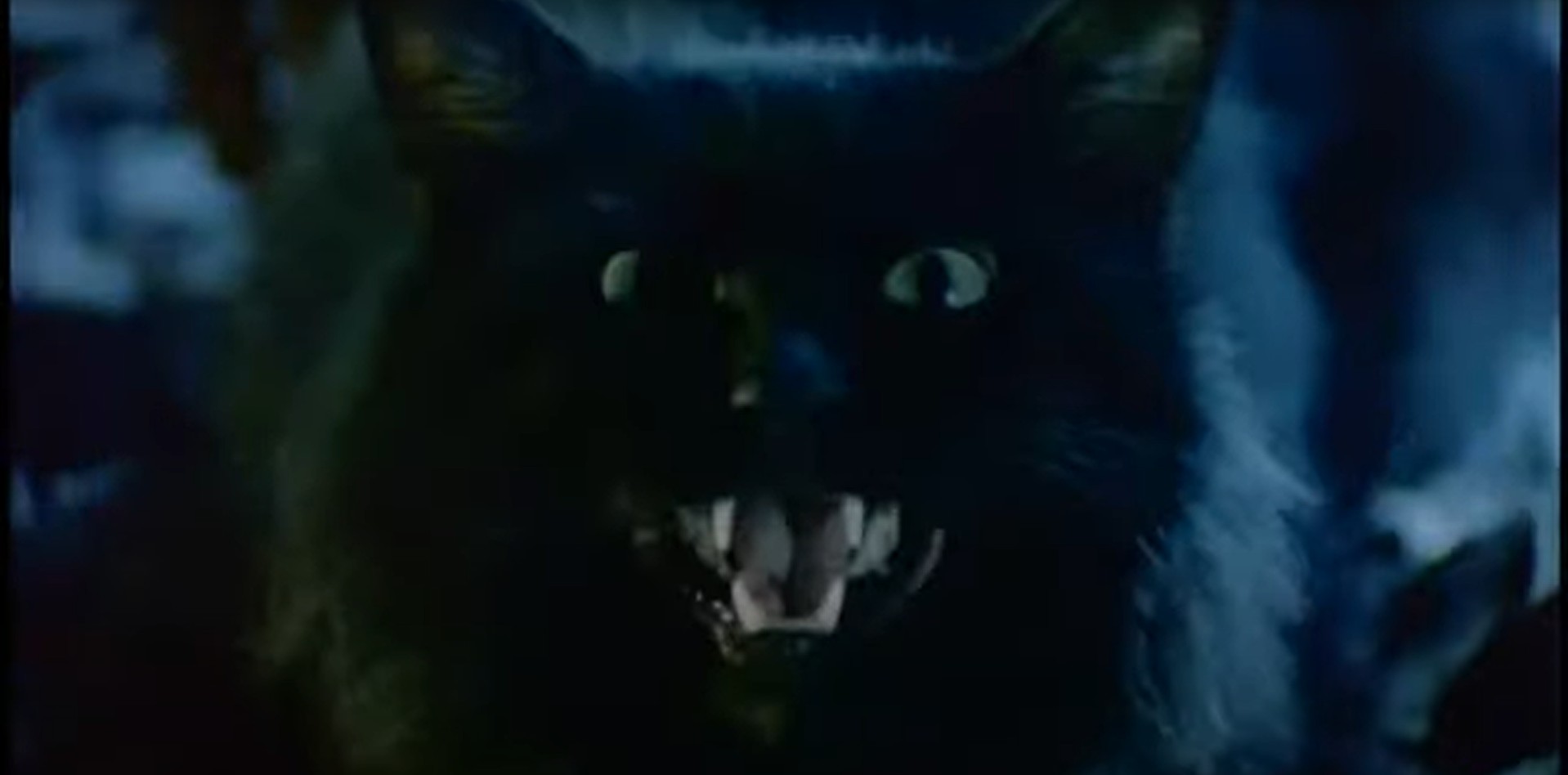
Storytelling author Wisely recounts one of his more fantastical pieces originating from more truth than fiction.  The writer reminisces investigating the mysterious occurrences surrounding a black cat and a young woman involved in a museum heist of an ancient, unknown artifact and, previously, in a strange encountering with Wisely’s friend Li Tung involving strange hammering noises and strewn about cat guts in an adjacent apartment.  Wisely soon discovers he’s bitten off more than he can chew becoming mixed up in extraterrestrial battle between the gentile but fierce fighting space cat and the young woman from another world versus a vicious and imposing orange alien blob that can inhabit dead humans and slip through tight confining spaces, leaving a burn trail of electrified bodies in its wake.  Wisely and his girlfriend, Pai so, decide to help the girl retrieve a second piece of the artifact that be used as a weapon against the relentless alien aggressor before the cat and girl can return to their home planet.

A strange science fiction thriller hailing from Hong Kong, “The Cat,” or “Lo mau,” is the 1991 filmic adaptation of author Ni Kuang’s “Old Cat” from a part of the Wisely adventure series of novels.  Written by frequent collaborating screenwriters Hing-Ka Chan and Gordon Chan (“Cat and Mouse,” “Behind the Yellow Line”) as well as numerous team-ups of Hing-Ka penning Gordon director helmed works (“Beast Cops,” “Thunderbolt”) and directed by “Riki-Oh:  The Story of Ricky” director Ngai Choi Lam, “The Cat’s” bizarrely unraveled as it is unrivaled but evokes a commingling of Hong Kong mysticism, science fiction, horror, and creature personification that’s hard to find not entertaining in its converging Daoism with creature feature movies!  Golden Harvest and Paragon Films, in association with Japan’s Nippon Television Network as a Hong Kong-Japanese alliance, are the companies behind the picture production with Chan Tung Chow (“Riki-Oh:  The Story of Ricky”) and Seiji Okuda (“Pulse”) as producers.

Hong Kong beauty Gloria Yip (“Riki-Oh:  The Story of Ricky,” “The Blue Jean Monster”) took Hong Kong cinema by storm in the early 90s before quietly taking a step back from acting to focus on building a family when newly married in 1995.  Since her divorce, Yip has been active in the last decade and half but to experience her best, early work, “The Cat” is a good start to behold her natural girl-next-door charisma and attractive attributes as an alien inside a human body.  Where she obtains this human form is unknown and her species social status, her name or how she became trapped on Earth is also vague, but Yip’s character can float waltz and is seemingly the caretaker of the Cat, who is a general of sorts in the alien race.  Her alien sidekick, Errol (Siu-Ming Lau, “Shaolin vs Evil Dead:  Ultimate Power,” “A Chinese Ghost Story”), too has an equivocal backstory as they search for weaponry relics and evade the caustic and electrically charged blob monster that threatens their world.  The story falls in more in tune with the three friends buried by the extraterrestrial struggle for survival and dominance with “A Chinse Ghost Story II and III’s” Waise Lee as principal lead character Wisely, a humble story writer living off the riches of girlfriend Pai So (Christine Ng, “Crime Story”), at least based on their dialogue of her owning a big house, playing tennis, and providing.  It’s an oddly laid out relationship that shows no quarrel or being tested when up against alien beings.  Li Tung (Lawrence Lau, “3-D Sex and Zen:  Extreme Ecstasy”) is Wisely’s first friend to encounter the girl and cat as noisy above neighbors but it’s their cop friend, Wang Chieh-Mei (Philip Kwok, “Hard Boiled”) who takes the unfortunate brunt being inhabited by the alien blob and becoming a Rambo-arsenal assassin.  The last piece to “The Cat’s” cast is actually the “Old Cat” author Ni Kuang having a cameo appearance as a warrior dog handler, Processor Yu.

Did I mention already that “The Cat” is beyond bizarre?  The campy story suffers from connective tissue deficiency syndrome, meaning there’s not enough exposition or explanation in the subdued, mild-manner interactions to really bring together and segue the really cool action and creature sequences that involve, but not limited to, pyrotechnics, forced perception effects, stop-motion, blood squibs, prosthetics and makeup, and high-flying wire acts involving not only people but cats and dogs!  The cat versus dog fight is a rough-and-tumble showstopper.  The special effects and choreographic teams of Hong Kong’s special makeup effects artist Chi-Wai Cheung (“Riki-Oh:  The Story of Ricky”) and stunt coordinator Philip Kwok taking their cogs and working into the grand effects design along with Japan’s f/x crew from visual effects artist Takashi Kawabata (“Dark Water”) and special effects Shinji Higuchi (“Gamera, the Guardian of the Universe”) is a masterful amalgamation of two cultures and two styles into one, blending high-flying acrobatics with the strange, bold stop-motion and visual effects that incorporate puppets and molds is optical buffet aimed stimulate and confound.  Nearly experimental in its narrative and effects while bordering being derivative, such as from the 1988 “The Blob” remake, “The Cat’ prowls, growls, and meows as a welcoming hot mess of feline phantasmagoria. 

On a new limited-edition Blu-ray set with exclusive, new artwork by graphic artist Sean Langmore, “The Cat” purrs with a fully-loaded, out of this world high definition release from UK label 88 Films and distributed by MVDVisual in the North American market.  A new 2K restoration of the original 35mm negative is encoded on a AVC encoded BD50 with a 1080p resolution in an aspect ratio of 1.85:1 widescreen.  Image presentation has the stellar glow of regular Hong Kong film stock, a stock that doesn’t dilute the defining particulars but only softens them slight.  The original negative has withstood the test of time and any improper handling providing the restoration effort with a focus-driven goal of grading and detail. The other side of that coin is that all the rubbery and irregular textures are now more in the spotlight instead of being lost in the lower resolution and more opaque video qualities.  Brilliant gel lighting and a comprehensive range of primary reds and blues coupled with an electric orange and blood red of the antagonistic monster seduces contrastingly inside a dark atmosphere with a story mostly told during the nighttime hours.  Remastered with a Cantonese DTS-HD mono track, the compositional track is about as good as it’s going to get but that’s not saying the audio is bad at all.  Clean and clear in ADR dialogue and distinct in the ambience and action, “The Cat’s” remastering is mighty without being punchy with broad-range, consistent audio that doesn’t have any holes poked into it and has an epic, original score by Phillip Chan (“Her Vengeance”).  Newly translated English subtitles are burned onto the only video file feature.  The encoded special features include an audio commentary by Asian film expert Frank Djeng of the NY Asian Film Festivial, a new interview with writer Gordon Chan in Cantonese with an English introduction, the Japanese cut of the film in standard definition, an image gallery, and theatrical trailer.  All of the encoded features will be available on the limited-edition and standard release sets.  Langmore’s artwork graces the LE O-ring slipcover and rigid slipbox with a crazy illustrative arrangement that details how bonkers “The Cat” gets.  Inside the slipbox, a full-bodied colored and detailed booklet with more original Langmore artwork, one sheets, stills, and other contents that include cast and crew acknowledgements, a Paul Bramhall retrospective essay on director Ngai Choi Lam That Cat is Dangerous, a second essay in regard to Nai-Choi’s niche cinematic credits by Matthew Edwards entitled Body Horror, and a special thanks roundup and more acknowledgements in the making of the Blu-ray release.  There’s also a collectible art card stuffed in between the clear Amaray case and the booklet.  The reversible cover art’s secondary slip-shell is of an original poster art, a good alternative to an already overused Langmore illustration that’s on the O-Ring and slipbox.  While not a numbered limited-edition release, news of the set already being or nearly sold out at most retailers is circulating, but there will be a standard edition slated for release late November ICYMI!  The not rated release has a 89-minute runtime and is encoded region A and B for playback.

Last Rites: Ngai Choi Lam’s science fiction, body horror, and creature feature inundated “The Cat” has all the weirdness and practical prosthetics, including deeply bizarre force perception visuals, that’s beyond our galaxy and capacity for understanding, landing with great precision onto a well-deserved, highly anticipated, and must own 88 Films’ limited-edition boxset!

If you missed the Blu-ray, “The Cat” Standard Edition is Available!

The Empire of EVIL Reduced to Prostitution, Corruption, and a Wasteland. “Gate of Flesh” reviewed! (88 Films / Blu-ray)

88 Films’ “Gate of Flesh” Now Available in the U.S.!

The American occupation of Japan post-World War II was the result of not only the Iwo Jima atomic bomb but also the relentless destruction of carpet-bombing Tokyo.  Left in near ruins and swarming with the presence of American soldiers, the Japanese people have disseminated into gangs and territories for financial gains and power.  For Kanto Komasa, she and her gang of highly motivated women prostitute themselves for sex-starved American soldiers to accure money for Paradise, the future name of their bomb-ruined, leftover-skeletal building structure revamped into an elegant dance hall where they run the show.  When a rival male gang threatens their business, another all-woman gang challenges them, an inducted outsider betrays them, and a bloodied stranger is found inside their bombed out homebase, all with the Americans military police continuously rounding up prostitutes nightly, Komasa and her gang must walk the paved road through Hell to scratch and claw toward Paradise, even if that means going against their set principles.

Since the end of the World War II Pacific campaign, Japanese novelist Taijirô Tamura’s “Gate of Flesh” has been filmically adapted a handful of times just after the war in 1947.  In 1948, directors Masahir Makino and Ozaki Masafusa first adapted the novel, followed by the Seijun Suzuki version in 1964 and Shōgorō Nishimura’s adaptation in 1977.  In this review, Hideo Gosha’s “Gate of Flesh,” also known as “Carmen 1945,” moves from samurai period actioners, such as “Sword of the Beast,” “Three Outlaw Samurai,” and “Samurai Wolf,” and into a yakuza era of storytelling that came on strong in the 1980s.  “Gate of Flesh” is no different with plenty of yakuza tropes without actually affirming the term in the dialogue.  Gosha’s tale provides more glamour, style, and substance, especially around themes of inner turmoil under outsider control and the divine praise for an enemy-built weapon of destruction, from a screenplay by prolific writer Kazuo Kasahara of “Hiroshima Death Machine” and “Yakuza Graveyard.”  The Toei Company production is produced by Shigeru Okada (“Inferno of Torture”).

“Gate of Flesh” has the interweaving stories of an ensemble with the various faceted chess piece pawns aimed to promote themselves, by cutthroat and sordid means, to a higher degree of social status and wealth improvement like queens and kings within a crummy economical and degraded societal Tokyo commune of prostitution, gambling, and survival.  There are also a few other pieces stealthier knighted behind enemy lines with more noble goals in mind.  While different storylines unfold and merge, Kanto Komasa becomes the generally sensed centerpiece, played by Rino Katase of previously directed Gosha films, “Yakuza Ladies” and “Tokyo Bordello.”  Her preparedness to take on the “Gate of Flesh” role as the female-led gang leader promising Paradise has been success before of her previous performances in Gosha’s films that contain similar traits but Katase delivers a powerhouse, immensely conflicted, act as Komasa’s hopes and dreams to dig herself out of poverty and into high-class are thwarted by deceptive ranks, a haunting past, and, of course, the more present occupation troubles of inner city gang-on-gang wardom, battling advances, negotiates, and the potential for mediation between fellow gang leaders Yoshio Hakamada (Jinpachi Nezu, “Ran”), who wants her building that’ll be lucrative in the future, and Rakucho no Osumi (Yūko Natori, “Stranger”).  Of course, there’s more to bereft Komasa’s mind with the sudden wounded appearance and peculiarity familiarity of stranger Shintaro Ibuki (Tsunehiko Watase, “The Rapacious Jailbreaker”) who has protective parallelism with the 2-ton bomb that also acts as a rival gang repellant and an explosive safety net for Komasa.  Secondary characters provide a layered depth to Hideo Gosha’s charismatic and gender-battling narrative with Miyuki Kanō, Yūko Natori, Senri Yamazaki, Shinsuke Ashida, Naomi Hase, Chie Matsuoka, and Yoshimi Ashikawa.

Surreal like a dystopian science-fiction and wasteland thriller, “Gate of Flesh” has that otherworldly, alternate reality appeal accentuated by Hideo Gosha’s colorfully grim realism that doesn’t convey truth or fact.  In fact, “Gate of Flesh” is very much rooted in reality, truth, and fact in regard to U.S. occupation of Japan after the country’s surrender between 1945 and 1952.  This drops a non-fictionalized period as “Gate of Flesh’s” backlot, corroded by the illicit prostitution that spread to satisfy and bank off allied forces.  Gosha’s film is a game of wits amongst crooks and connivers while the developing sympathy envelopes around the seemingly tough of nails Kanto Kamase with a violin-pining and sympathetic backstory colliding with the injured Colt Shin aka Shintaro Ibuki.  Ibuki himself has history, or perhaps even beef history, with the iron rule of Hakamada, but through thick and thin, Ibuki’s clearly maneuvering the chess board around protecting Kamase for clued in reasons only to be precisely unveiled near the end.  The American presence doesn’t even feel weighty, reduced to hooker johns, voiceless military police, and a one uncouthly boisterous and unpleasant Sergeant to become the poster boy from Japan’s perspective of the occupational paradigm. Other than that, the U.S. forces are background noise, a sidestepped component of a much bigger, domestic ordeal amongst the Japanese people but are still the cause of so much heartache, gangsterism, and civil war.  Sex is also a huge theme as strictly a monetary activity rather than a joyful expression of romance and liberating relief from oppression, which there is none from U.S. forces.  Kazuo Kasahara’s script skirts around the inkling of affection between two people as much of everything else is for ostentatious and desperation means in a time when there was not much else to hold onto in Tokyo after suffering defeat, aside from ruined property, cash for hope, and tattoos to honor the past. 

88 Films proudly presents “Gate of Flesh” from their UK catalogue to their quickly growing US list of titles.  The AVC encoded, 1080p high-definition, BD50 is the first home video release for the rest of the world outside of Japan with a limited-edition release, presented in the original aspect ratio of 1.85:1 widescreen.  Hideo Gosha’s style brilliance flourishes with this impeccably detailed and graded release that pedestals a rich and sustaining color palette.  The stabilization of color extends to the details as textures pop from the screen, especially in Kamase’s gang where each one has a distinct color flair and different pattern design to have them stand out amongst each other in a story that’s greatly character-individualized aware and often tangents into side characters to be worked into the parent plot.  No compression issues to note, day and night transitions have equal clarity and depth, and the Gosha and Yuko Morita’s aesthetic brings the stylistic aspects to the forefront without taking away from the schemes of skin tones and milieu details in the set design of a tumbledown Tokyo.  The Japanese LPCM 2.0 Mono mix diffuses perfectly into the single channel fold and aligns well with the picture, casting synchronous UK English optional subtitles that only had a single misspelling that I had caught.  “Gate of Flesh” has plenty of range and depth captured precisely on this 88 Films release that doesn’t show signs of audio layer wear or any compression issues.  The summiting explosion capitalizes the full potential of the mix with a story grand exit designed to be immersive as possible in its limited capacity through an assistant of visual means.  The special features include an audio commentary by film critics and analysts Amber T and Jasper Sharp, critic Earl Jackson provides an introduction on the many adaptations of Taijiro Tamura’s “Gate of Flesh” with timelines, history, and his own preference accompanied by stills, posters, and video clips, an exclusive interview with tattoo artist Seiji Mouri Flesh & Blood Tattoos who doesn’t view the Gosha’s work as a yakuza-spiced, and rounds out the content with a still gallery and a pair of trailers.  The limited-edition and numbered set, that includes an Obi strip over top a commissioned illustrative composition covert art by Ilan Sheady and housed in a clear Scanova case, contains a 23-page booklet with color photos and posters and essay notes by Robin Gatto and Irene González-López.  The cover art has a reversible side with the original Japanese poster.  Only playable in region A and B, the not rated 88 Films disc comes not rated and with a 119 runtime.

Last Rites: “Gate of Flesh” bears the weight of Taijiro Tamura’s prostitution-laden tale of survival, revenge, and hope with Hideo Gosha’s cinematic eye that captures the beauty and indomitability in the badlands of the occupied proud.

88 Films’ “Gate of Flesh” Now Available in the U.S.!

A Prince’s EVIL Plan to Gain the Throne Meets High-Flying, Kung Fu Rebel Resistance. “The Lady Assassin” reviewed! (88 Films / Blu-ray)

“The Lady Assassin” LE Blu-ray Now Available!

Emperor Ching’s health is rapidly declining and before his death, he challenges his 14 princes to find the best candidate to rule of his kingdom.  Ultimately, the 4th and 14th princes are vying for the throne but embark on different moral paths that set them starkly apart.  Fourth Prince Yung Cheng will lower himself to any ignoble scheme worth gaining him the throne while the 14th Prince, who might be weaker in strength, would be a better, more compassionate, ruler for the people.  When Yung Cheng plots an assassination against the 14th Prince, his plans are foiled by the prince’s skilled bodyguard Tsang Jing, the greedy Prince takes an alternate route to the throne by conning Han loyalists, who feel the Manchu clans have treated them unfairly by abusively restricting their power and fortune, into a plot to steal the Emperor’s royal decree of announcing the new Emperor and forging his name into the document.  By this very deception, Yung Cheng is announced Emperor and turns his back on the Han loyalists who joined forces with Tsang Jing and Han rebel Si Nang to end his dishonest rule over both the Hans and the Manchus.

The eclectic Shaw Brothers produced fantastical fights, high-flying stunts, and a story interweaved with deception, death, and melodramatics in the immersive period of dynastical China with the film “The Lady Assassin.”   Filmed in Hong Kong, the film is written-and-directed by acclaimed action filmmaker Chin-Ku Lu at the height of his career.  “The Black Dragon” and “Holy Virgin vs. The Evil Dead” director delivers a deluging epic of sensationalized kung fu interspersed with a usurping back-and-forth story of cutthroat politics and deceit and the minority that attempts to dethrone villainy with punitive justice, the only kind of justice ancient China knew to dish.  Mong Fong (“Killer Constable,” “The Mad Monk”) produced the feature with Run Run Shaw serving as executive producer.

One would think the title being “The Lady Assassin” would focus on a solo female kung-fu killer aimed to strike ruthlessly in a clandestine caper, but most of the story’s principal shoulders have an equal share burden amongst a deep protagonist cast of characters.  Leanne Liu plays the titular assassin Si Niang, a Han rebel whose father (Ku Feng, “Erotic Ghost Story,” “Vengeance of a Snowgirl”) is head dissident number one against the Manchu leaders, and the “Bastard Swordsman” and “Hong Kong Playboys” actress doesn’t become introduced into the story until about midway through as much of the Prince-on-Prince, good-vs-evil, tale is spearheaded by those vying throne-seekers with much emphasis on their guards, assassins, and the skilled in Kung Fu company they keep.  Tony Liu (“Fists of Fury”) and Mok Siu-Chung (“Nightmare Zone”) are respectively the evil scheming 4th Prince and the good-natured but weaker 14th Prince seeking the throne of their dying Emporor father (Ching Miao, “The Devil’s Mirror”) and the two give into their roles very efficiently, delineating a clear line where they stand in the grand scheme of the plot with the 4th Prince proactively trying to destroy any chance others may have at the throne with the 4th keeps in the shadows and avoids conflict; the latter heavily emphasized by a lot of do-nothing from the 4th Prince’s character.  A great deal of the first two acts relies heavily on Tsang Jing’s honorable service to the people who showed him kindness.  “Zu Warriors from the Magic Mountain” actor Norman Chui imposes impeccable fighting ability and timing but is strangely engrossed by his character’s life to serve those who he owes and we’re not talking a purse debt or for saving his life but rather a loyalty aspect for kindness, morality, and justice that contrasts against Min Geng Yiu, played by Jason Pai Piao, who initially is introduced as an upstanding citizen fighting against unethical behavior until his hypocrisy lands him greedily in the arms of a deceiving 4th Prince, twisting You to accomplish his bidding while he always subverts his lord with his own deceptive plans of power.  Backstabbings and desperate mesasures, along with stellar, high-flying, hand-to-hand and sword fighting, zip “The Lady Assassin” into another level of martial arts mania with a rounded out cast of Cheung King-Yu, Yeung Jing-Jing, Yuen Tak, Kwan Fung, Sun Chien, and Johnny Wang Lung-wei. 

Kung Fu films, especially in the 1970s through well into the 1990s, are a dime a dozen so what makes Chin-Ku Lu ‘s “The Lady Assassin” different from the rest?  One area to note is fight and stunt choreography that smooths the edges around the other contemporaries slower, less theatrical, routines with vigorous and diverse long sequences containing large quantities of combatants.  Usually, most fight sequences are limited to 1-on-1, 2-on-2, and maybe 3-on-3 or 3 or 4-on1 at most, but hordes of swords, staffs, and topographical anomalous landscapes, constructed on a stage of course, are seamlessly dynamic and meritoriously fast paced and thrilling, produced by the stunt work team of Yak Yuen, Kin-Kwan Poon, and Yung Chung.  The other area to note, and one that goes hand-in-hand with the stunt choreography in order for it to work, is Shao Kuang Liu’s editing, taking footage and just going to town with a series of cut and tapes and still coherently fashioning a continuous fight and flight, complete with pulley wires, despite its rapid strikes that might have some accelerated motion of the film.  What’s inherently captivating for “The Lady Assassin” can also be a tiring visual as the fights flare up brief plot points in between, the fights can feel a bit long in the tooth come the third act; however, the final showdown, a last ditch effort between the last of the Han rebels versus the 14th Print and his crazy-faced, hired gun Japanese martial artist levels up the violence that halves fighters horizontal and vertical.  The story’s an effort to keep up with as the continuous double crossing and changes of heart nearly blend together and too many assumed interpretations toward the fate of characters off screen can work the thinker double time, compounding the ambiguous clarifications profoundly. 

88 Films continues to restore-to-rejuvenize the Shaw Brothers extensive catalogue of Hong Kong produced eclectic films with the UK company’s latest high-definition scan of “The Lady Assassin” from the original negative and release the 45th title on a part of their 88 Asia line  Cleanly saturated and rich in beautiful coloring, the AVC encoded, 1080p, BD50, presented in the original widescreen aspect ratio 2.35:1, is a marvel to watch. The original print has been kept well-preserved with barely a flaw to note albeit a less than a handful rough tape cut or damage framed moments that are so insignificant that if you blink, you’ll miss them.  The vivid and vibrant mise-en-scene is a convergence of stark contrasts and itemized delineation that creates space and depth while also visually stunning, even with what I like to call peacock fighting, or showing off fighting.  Of course, there’s also tiger fighting, praying mantis fighting, etc.  The gain is naturally pleasing without being too thick or smoothed over.  Skin tones and gleams are natural and absolute with a sense of popping right off the screen.  The Cantonese 2.0 mono is post-production ADR but syncs well with not an egregious division between mouth movements and dialogue.  Dialogue is overall clean and clean with faint hissing here and there.  Chopsocky audio layers have clean hand and foot, leg and arm whacks and full-bodied swish and swing of sword and glaive swipes.  There’s not lucrative range with much else, specifically the ambient environment as all the audio design is done in post, with a few only a handful of moments, such as Tsang and Si Nang fishing or a few interiors fights implementing room objects require foley.  The soundscape is epically charged but not terribly memorable and there are quite a few fights that go without a score to provide the action effects more prominence.  The newly translated English subtitles are errorfree, do sync well, and keeps with the pace.  Special features include an interview with Kin-Kwan Poon conducted by Fred Ambroisine From Child Actor to Fight Coordinator as well as the film’s trailer and gallery stills. 88 Films’ houses the Blu-ray in a limited-edition glint of golden cardboard slipcover of new art featuring the titular assassin. The same image is primary Amaray cover art with the original poster art on the reverse side. In the insert, a thick, dual-sided folded poster of both cover illustrations rounds out the tangible elements. The Blu-ray is encoded with A and B region playback, is unrated, and has a runtime of 86 minutes.

Last Rites: A spectacle of soaring Kung Fu with a spruced-up restoration that makes “The Lady Assassin” that much deadlier in all its dynasty melodrama and game of thrones strife. One of the best Shaw Brothers offerings from the early 1980s!

“The Lady Assassin” LE Blu-ray Now Available!

Pinksploitation EVIL is Transgressional Passion! “Love and Crime” reviewed! (88 Films / Limited Edition Blu-ray)

Limited Edition and Numbered Blu-ray / DVD Set Available at Amazon!

The dead body of a young woman arrives at pathology for post-mortem autopsy.  A victim of a heinous crime, the bare corpse already informs the head pathologist of sexual activity before, or after, death because of the fresh semen that’s inside her.  As he toils over her to open the chest, separate the ribs, and get a good look inside to see how and why she perished, the pathologist remains in disbelief that the semen inside her, inside his lifeless wife before him on the cold medical table and under the bright lights, is not his own.  Digging deeper into how someone could kill his beloved wife, the researcher in him hits the books, selecting and scouring through records of similar cases of murderers and rapists from over the years.  Each one under different circumstances concludes in a sentence that reflects the person they have become.  Inside the mind of a killer is a long hard look at ourselves in how far we go for treasure, love, and to quench our insanity. 

“Love and Crime,” or officially known under the Japanese title as “Meiji Taishô Shôwa: Ryôki onna hanzai-shi” aka “Showa Era:  History of Bizarre Female Crimes,” is the Japanese anthology from 1969 that pictorializes true crime narratives of mostly women transgressors, as the title suggests.  Yet, the Teruo Ishii helmed anthology is not entirely female perpetrator centric as the anthology jumps ship briefly to explore crimes against female victims for a crossover, comparative distinction.  Ishii, who played his hand in producing late 1960s sexploitation and violence by directing films in Toei Company’s pinku series that showcased the two subcategories, such as “Orgies of Edo,” “Shogun’s Joy of Torture,” “Inferno of Torture, and among many other titles with similar salaciousness, was thrust into “Love and Crime’s” consolidating short film escapade with a wraparound monologuing narrative that was just as intriguing as the sordid stories themselves.  Shigenu Okada produces “Love and Crime” as well as many of the films aforementioned.

Yoshida Teruo kicks off the wraparound with a mater-of-fact narration running through the head of Murase, the anatomist examining his dead wife’s corpse (Ritsuko Nakamura), in what would be the grisliest part of the anthology, especially when that chest snaps during separation.  Having worked with Ishii previously with “Abashiri Bangaichi,” a crime thriller about a reminiscing criminal aimed to reform himself, Teruo only worked a short stint with the Toei Company but his time spent on such films like “Crime and Love” discerns a piece of the dramatic devotion that would be otherwise missing in these purely exploitative films.  As Marase puts nose to book, he unearths and internally narrates the start of his true crime story journey research, beginning with the cut-throating scheme of the Toyokaku Inn case.  Chiyo (Aoi Mitsuko, “Melancholy Flesh Business:  Sensuous Zone”) and Kosuke (Kenjire Ishiyama, “Kwaiden”) own and run the humble Toyokaku Inn but when Chiyo seeks to changes businesses and cut ties with her philandering husband Kusuke, a treacherous and murderous plot against her is formed between Kusuke, spearheaded by assistant manager Kinue Munekata (Rika Fujie, “Outlaw:  Heartless”), and executed by maintenance man Shibuya (Takashi Fujiki, “Shin Godzlilla”).  From there, the film transitions to other female intertwined crime tales of Sada Abe, a woman who would kill her lover because of love and insistence during alternative sex, the case of Kunihiko Kodaire, a serial rapist and murderer spilling tricks of his trade to authorities, and the last known female murderer executed by katana beheading, Takahashi Oden, for poisoning her husband.  Each performance plays into the intricate patterns described by their true life counterparts with either a chilling contentment in taking a life or hurdling the obstacles inward to do the unpleasantries of what is asked of them  Circumstantial opportunities and conniving plots bury bodies six-feet under in a multifacted range of expression, greed, lust, and all the other deadly sins that plague mortals right to the very end.  “Crime and Love” fill out the pinksploitation anthology with Yukie Kagawa (“Female Prisoner Scorpion:  Jailhouse 41”), Eiji Wakasug (“Inferno of Torture”), Tomoo Koike, Tatsumi Hijikata (“Orgies of Edo”), Yumi Teruko (“Horrors of Malformed Men”), and a special appearance by the actual, reclusive, convicted murderer Abe Sada herself, shot from a distance while being interviewed by Yoshida Teruo.

As anthologies go, especially one rare as true-life crime and love, or in this case sexploitation,” “Love and Crime” has an unsystematic design when it comes to the stories and how they relate to the wraparound narrative.  For starters, not all the bizarre crimes are female centric.  The story of Kodaire revolves about a male serial rapist and murderer divulging his collected anecdotes to investigating confessors and are depicted in monochromatic flashback, the same as his present yarn telling scenes.  Though the case involves multiple women victims, Kodaire greatly stands out amongst the compilation of crimes for the very fact he is a man in an anthology literally entitled History of “Bizarre Female Crimes.”  Was the case of Kordaire a gap filler? Perhaps the uniquity of Japanese serial killers is so low and rare in their culture and history that this particular short story had enough estrogenic blood spilled it avoided the short list cut.  Each story’s relationship toward the wraparound is also thin as neither story suggests a same or remotely similar pattern to death of Maruse’s wife in what is more of a random-generator selection of stories read and worked through for better understanding of the killer female psyche rather than what makes the male killer tick to hit-and-run his wife.

“Love and Crime” is 88 Films’ answer to opening the door of the wonderfully violent and sexually charged world of pinksploitation.  A limited edition and numbered dual-format, AVC encoded, 1080p, 50-gigabye Blu-ray and standard definition, MPEG encoded, dual-layered DVD, set presents the 1969 film in the original aspect ratio of 2.35:1.  With various stylistic color grading outfits, such as grayscale image for the Kadaire case story or the last case of Takahashi Oden that’s starkly cold rooted in blue and green.  There’s not a lot of mention of what kind of work went into restoration but the print has kept in excellent condition with age or damage wear kept to a minimum with nominal vertical scratching and dust speckling.  Colors appear to be handled with true reproduction of the dyed processing, rich and bold leaves no room of ambiguity of image or object representation.  Skin tones appear natural that do flirt a lighter shade of orange at times, textures are coarse and greatly apparent, even in the black-and-white story, and there’s tremendous environment or background distinction that creates an organic depth between character and their setting rather than them being crushed into an all-in-one image.  The encoded audio is the original Japanese language LPCM mono 2.0 that captures the soothing project whir during post ADR.  Dialogue retains prominence with a clean enough clarity albeit some negligible hissing sporadic throughout.  Ambience is not as enlivened within what’s mostly an isolated dialogue mix but is there to complement to composition when necessary, such as the blustery snowfall during the execution that sets a tumultuous tone of desperation and severity.  The improved English subtitles are timely synched and error-free.  Special features include an audio commentary by the 88 Film’s Japanarchy release fire starter and Midnight Eye’s co-editor Jasper Sharp and Fangoria staff writer Amber T., a brand-new film introduction and conversation by film critic and journalist Mark Schilling, a still gallery, and trailer. The Obi-striped 88 Films packaging has a very familiar feel to what Radiance Films, another boutique UK label, is doing with their Blu-ray releases nowadays and “Love and Crime” could be confused for a Radiance resemblance, but clear UK Amary has a gorgeous, commissioned, newly designed artwork from Ilan Sheady that brings all the sordid shades of this anthology to life. The cover art is also reviersible with the original Japanese one-sheet. Inside, the Blu-ray and DVD overlap in a dual-disc lock system on the right while the left stashes 15-page black-and-white-and-colored pictured adorned essay by Nathan Stuart prologued with cast, crew, and release acknowledgments and bounded by the same Sheady artwork without the Obi strip obstruction. 88 Films release comes both in region A and B playback, is not rated, and has a runtime of 92-minutes.

Last Rites: “Love and Crime” will be a love-it or hate-it anthology of early pink violence and sexual discordance because of its broad stroke theme but the 88 Films’ limited edition, Japanarchy debut is an exciting and eager look toward the future of the label’s dive into Japan’s exploitational cinema.

Limited Edition and Numbered Blu-ray / DVD Set Available at Amazon!

Disguise as the Dead to Defeat EVIL! “The Shadow Boxing” reviewed! (88 Films / Blu-ray)

Corpse Herding Isn’t Easy in “The Shadow Boxing.” Purchase Your Copy Here!

Corpse herder Fan Chun-Yuen has studied Master Chen for years, learning the ritual incantations and mastering the nuances of getting the dead home to their loved ones for proper burial.  What should have been a routine corpse herding goes astray when the last arrival of a corpse, a bald man, seemingly has issues following the simple incantations and master Chen’s leg is broken during a misunderstanding over gambling winnings at one of their resting pitstops.  Being left with no choice, Fan Chun-Yuen must herd the rest of the hopping corpses, publicly feared as hopping vampires, to their terminus with the aid of aspiring corpse herder and an undeterred woman Ah-Fei.  At the same time, criminal overlord Zhou, a casino owner, and a corrupt military leader are in search of a moral sub-lieutenant who can foil their plans and who has seemingly evaded all military checkpoints in route to Zhou, leaving the corpse herding understudies in the middle of a danger. 

The jiāngshī, or hopping vampire, is the Chinese version of the living dead, whether be a vampire, zombie, or a ghost in the country’s folklore.  In Chia-Liang Liu’s 1979 comedy-actioner “The Shadow Boxing,” the horror element of the jiāngshī is reduced to no more than a few false scares on the Chinese cultural collectiveness of superstitious fears.  Originally known as “Mao shan jiang shi quan” and also known as “The Spiritual Boxer II,” the film is considered a quasi-sequel to also Liu’s 1975 “The Spiritual Boxer” but only in association to the director and one of the principal actors and not a direct, character-connecting sequel by any other means.  The late “Human Lanterns” and “Demon of the Lute” writer Kuang Ni pens the script with Kung-fu comedy in mind amongst seedy corruption aimed to thwart tradition and principles, shot in Hong Kong by Celestial Entertainment on the Shaw Brothers studio lot, and produced by younger Shaw brother, Run Run or Shao Renleng. 

The actor who carries over from “The Spiritual Boxer” is “Dirty Ho” star Yue Wong in the role of corpse herding apprentice with a bad memory, Fan Chun-Yuen.  Wong’s character is a likeable learner who has the skills to be great at his vocation but lacks the confidence without being tethered to his master, played as drunkard and obsessive gambler by Chia-Liang’s brother, Chia-Young Liu, a longtime stunt man (“Once Upon A Time in China,” “The Savage Killers”) and actor (“The Return of the One Armed Swordsman,” “Five Fingers of Death”).  Fan Chun-Yuen tries to keep his sifu on a straighten arrow and focus on the task on hand and Wong and Chia-Liang invest that dynamic wholeheartedly while maintaining their sense of strength outside military force and criminal brutality to be masters under the flags of good and just.  Between them, a level of trust and reliance is displayed through their fighting casino goons and military soldiers where Wong needs his master to shout commands of the vampire style due to his bad memory.  There’s almost zero context on why that is but adds a melted layer of slip-in, slip-out comedy to make it unusually entertaining.  An understudy of the understudy and borderline love interest comes from Cecilia Wong (“The Hunter, the Butterfly and the Crocodile”) as Ah-Fei, a friend of Fan Chun Yuen who doesn’t want an arranged marriage but has an underscoring coyness with Fan Chun but their misadventures delivering the beloved bodies to grieving relatives proves to be difficult and much of their shenanigans to try and make their “mastery” believable in order to deliver the goods gets in the way of that amorous connection.  Also in the way are the corruptive forces hellbent to track down Chang Chieh (another Liu brother in Gordon Liu, “Kill Bill”) before he foils their transgressions, coinciding with performances from Lung Chan, Han Chiang, Wu-liang Chang, and Norman Chu.

“The Shadow Boxing” finely blends the chop-socky action with mystical folklore and comedy that’s not overly slapstick or buffoonery.  A serious layer runs through the middle of story and while the line chart fluctuates between peaks of let-loose Wing Chun and then violent sway the other direction with fleeting spikes of death and ghoulish shades, there’s never a tiresome tone of stagnating acts as Kuang Ni’s script develops and progresses upon the micro and macro dynamics of good versus evil characters, especially how Ni slyly introduces audiences to the last and bald corpse and it’s diverging acts of not exactly following incantational direction, in a mistakenly, humorous way.  The off feeling is there of baldie being of some importance but not until more third-party clues come to light halfway through the runtime and it’s by then the lightbulb begins to flutter and anticipatory wait for exposure begins.  If looking at “The Shadow Boxing” on a more comprehensive scale in the martial arts genre, the pace of fighting emulates too much on the lines of choreography counting.  Slow and herky-jerky, there’s not a smooth transition of moves in either of the individualized faceoffs or in the group skirmishes that doesn’t reflect well upon the stunt department as martial arts is the centerpiece of the action.  Every other aspect of creating tension and levity with the action works perfectly only to be lopsided by the sudden starts, stops, starts of checklist kick and punches. 

88 Films’ North American label lands the new high-definition release of “The Shadow Boxing” with an AVC encoded, 1080p, BD50.  The transfer is processed from the original negative and presented in the original Cinemascope aspect ratio of a 2.35:1.  The anamorphic lens used compresses the image, creating a spherical or rounded out sides on tighter shots, a known issue for the lenses of those times.  The 35mm negative has won the test of time with a near spotless print that 88 Films sharpens the color palette and defines the broader details with texture lacing, decoding the image at an average of 33Mbps.  There are times the details appear too texturally chiseled with the Shaw Brothers’ set backgrounds exposed as obviously painted backdrops, see the final showdown fight.  A single audio, uncompressed output of a LPCM Mandarin 2.0 mono is offered on the release.  The track comprises enough overlapping range of effects to sturdy the sound design almost as if it was an innate recording.  The instilled post effects have the traditional Chinese martial arts flare of whacks and thunks but added with greatly synchronous care whereas the dialogue, though clean and present at the front, has the expected timing issues with an intensity level that doesn’t quite match at times.  English subtitles are optionally available.  Surprisingly, this is one of the few 88 Films releases without special features other than the original trailer.  Instead, the label elevates the physical release with a limited-edition stunning monochromatic and illustrated cover art by Mark Bell with subtle tactile elements on the cardboard O-slipcover.  The same image is showcased as the primary clear Amaray cover art but with slightly more color added to it while the reverse sleeve features the original Hong Kong poster art.  The LE also comes with 4 collectable artcards, though they’re more still image cards than art.  The not rated, 101-minute runtime 88 Films release is encoded for only two of the three regions with an A and B playback.

Last Rites: Hong Kong cinema has been fast, loose, and either furiously funny or folklorically fist over hard-hitting fist and Chia-Liang Liu’s “The Shadow Boxing” takes into account both now on a format pedestal with a new Blu-ray release from 88 Films!

Corpse Herding Isn’t Easy in “The Shadow Boxing.” Purchase Your Copy Here!