A Fiasco of EVIL When Jobs Collide! “Punto Rojo” reviewed! (MVD Visual / Blu-ray)

“Punto Rojo” on MVD Visual Blu-ray!

Diego, an imperial member of a hooligan gang dedicated to a fútbol club, sits and waits in a car in the middle of nowhere and listening in on a radio quiz show about his club’s sport where contestants can win $200,000 if they answer the questions correctly.  Having more knowledge than any run-of-the-mill caller, Diego rings up the radio station and passes easily to the next round, providing him a chance to win the jackpot once he passes the two more rounds he’ll be called upon to answer later in the day.  After hanging up, a man falls from the sky and lands dead on the hood of his car, a plane crashes in the distance, and a combat ready agent parachutes down and points a gun directly at him.  When brought around to his trunk, a tied-up man lies inside seemingly knowing the armed agent.  Two illegitimate jobs collide and go sideways when one faction underestimates the other in a fiery dance of fists, bullets, and explosions between hooligans, gangers, and law enforcement. 
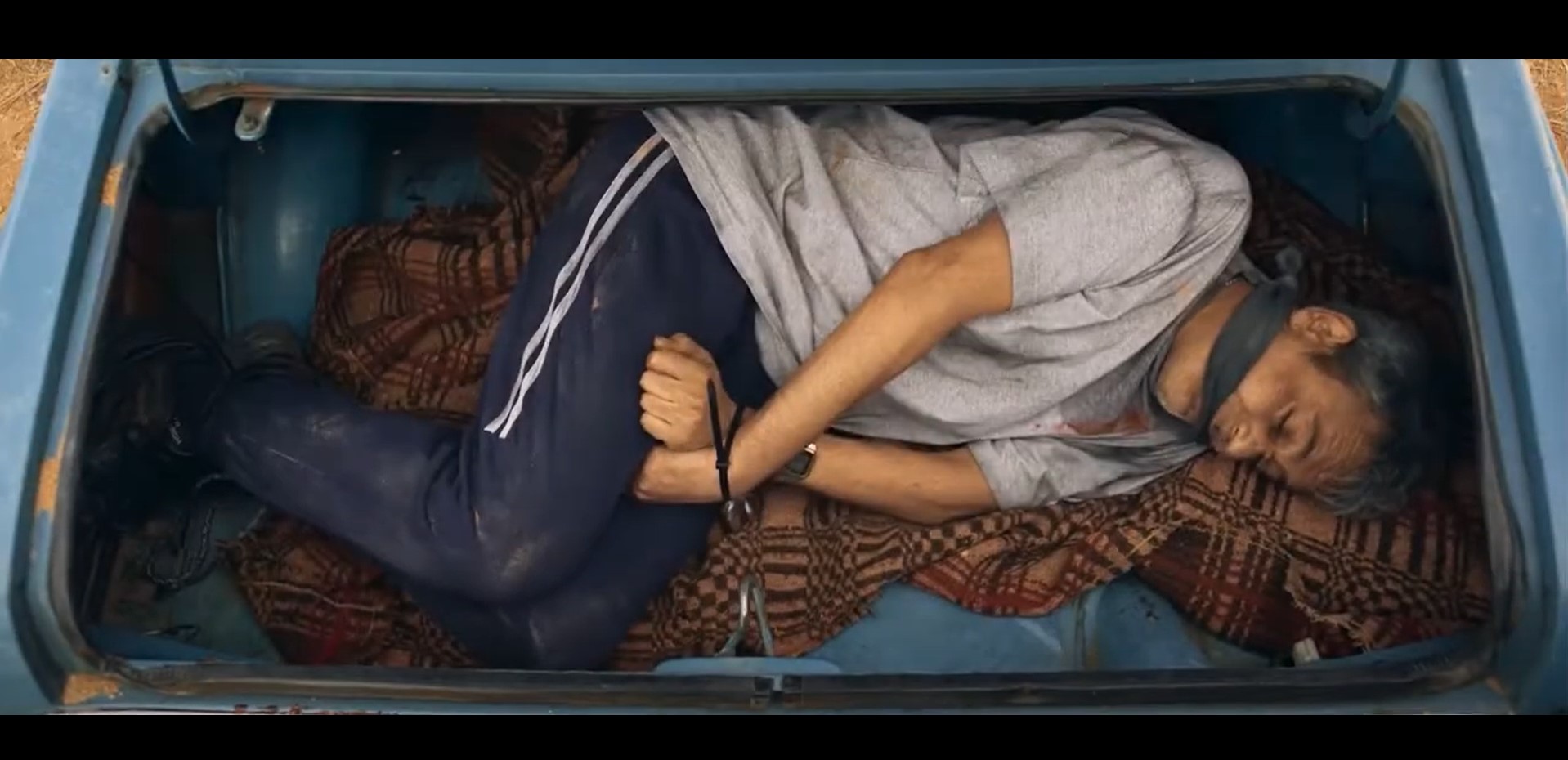
A pulpy crime comedy-thriller tapped from the same snappy, vicious vein as such film as Guy Ritchie’s “Lock Stock and Two Smoking Barrels, David Fincher’s “Fight Club,” and Joe Canrnahan’s “Smokin’ Aces,” this Argentinian-produced, writhing black comedy titled “Punto Rojo,” translated to English to “Red Point,” is written-and-directed by “Necrophobia 3D” writer Nicanor Loreti, credited as Nic Loreti.  The 2023 film delivers eclectic, colorful characters, a contortioned, nonlinear narrative, and has knockaround and kick it in the teeth clout told partly in a violence-laden flashback fashion.  Loreti self produces the crassly club leitmotif and high level-level compositional film alongside Damian Loreti, Lucas Accardo, and Orlana Castro under the product flags of Boitkot Films, Otto Films, and the government nationalized INCAA, the National Institute of Film and Audiovisual Arts. 

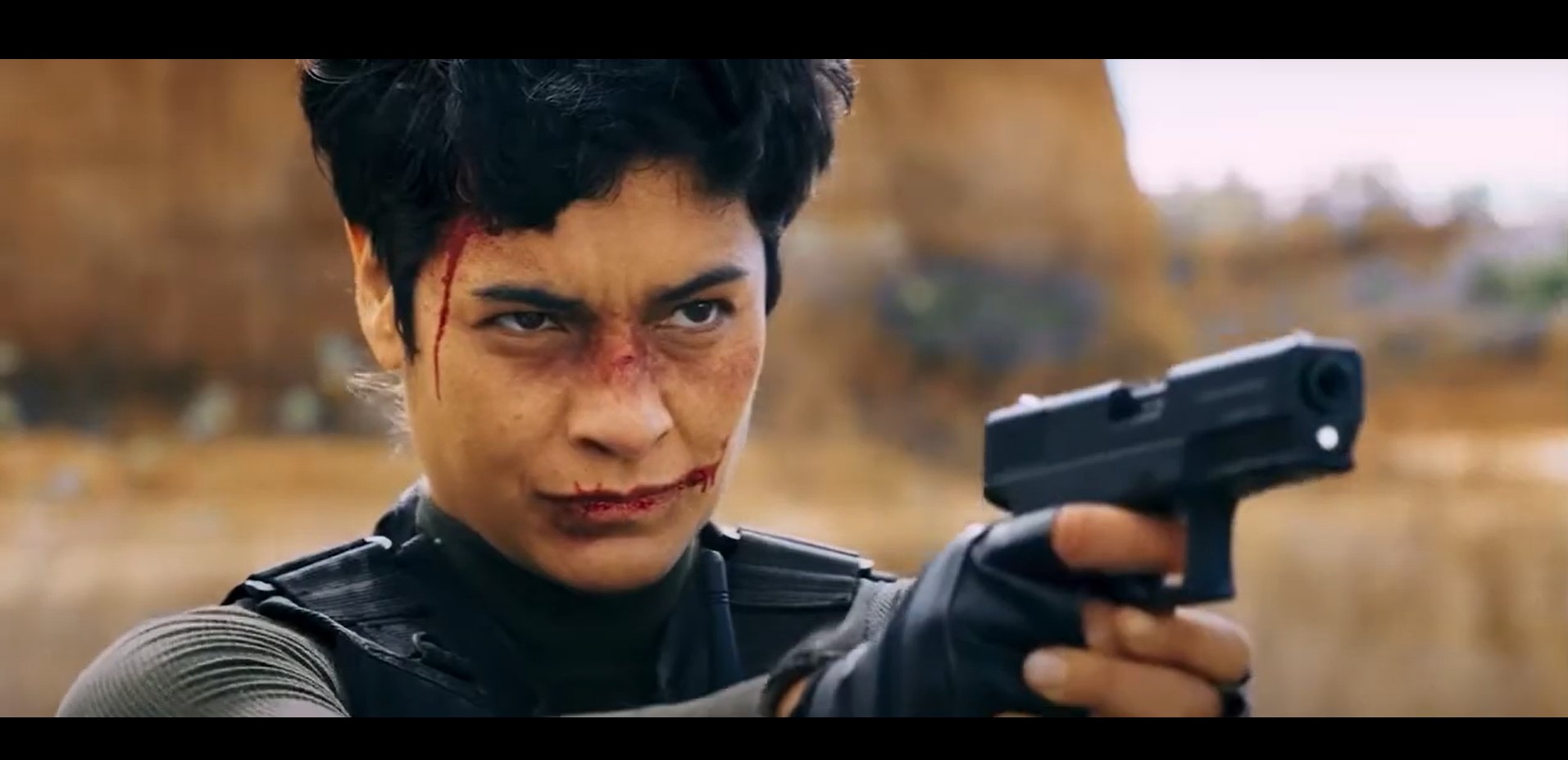
“Punto Rojo” begins quietly enough with Diego, played by the ruggedly intense features of Demián Salomón (“Terrified,” “Satanic Hispanics”), car sitting alone in, you guessed it, Red Point, a pediplain-esque area with not a soul surrounding him.  That is until a sleek, aero-suited skydiver crashes onto the hood ruins his euphoric fun of scoring first run success on-air of a radio quiz show.  Salomón dually presents the brutish outward appearing Diego as one-dimensional until he’s face-to-face with Paula, an Interpol officer also dressed in a sleek, skydiver area-suit and sporting a pixie cut from Mariana Anghileri (“On the 3rd Day”), then Diego’s simplicity turns complex in a more than meets the eye rough and tumble character pitted to hold his own in a brief cat-and-mouse game against an Interpol agent whose worked months, if not years, undercover to take down a high-powered criminal organization transporting a characterized atomic bomb.  Diego turns into one of those takes a hit and keeps on ticking tough guys as Paula has to work out and resolving the crumbling operation at hand.  Anghileri can act tough, be tough, and look tough during an operation gone awry and while both Diego and Paula square off in an advantage taking tit-for-tat, they’re unknowingly intertwined and sequestered by two different reasons that makes their fighting comically, and brutally, erroneous unfounded.   “Punto Rojo” fills out the cast with Juan Paolomino, Matías Lértora, Paula Manzone, and Pablo Sala.
While not based on the Argentinian comic book series of the same name, penned by Fernando Calvi, and published by Totem Comics, one can’t help believe Calvi’s metaphysical superhero somehow slipped in and brushed a bit of influence upon Nic Loreti’s pulpy design that sees screen filling, voulou text, brief live scene-to-comic transformative illustration filters, and, of course, the absurd ultraviolence that allows for a great deal of forgiving punishment in the name of entertainment value.  The nonlinear narrative told through a couple of extended flashbacks fills in the first acts’ gaps mechanized by an all-in-one, up-to-speed process to fully explain how and when the two lead principals came to meet but then suddenly becomes muddled when the patiently and systematically cared for first two acts hastily unfolds by the rapid fire ending that doesn’t have an ounce, or even a chance for, coherency.  The ending almost resembles the unfortunate process of an unfinished film that is quickly cut for wrapping and presentation as a last-ditch effort to accrue a pocket change profit from the investment and the crude finale is cheaply glued together, pieced slapdashedly, and arranged with crisscross confusion.  The ending also drops that comic book style used early on, bringing the integrated audio score combined to flex with the enlarged, ostentatious text and vivid panache to a grinding halt against what could have been a stellar ending from the short-lived laid out and shocking material we do get to experience.  By no means is “Punto Rojo” a bad story, just mixed up technically and arranged, and that hurts the viewership the most when an intriguing, weaving concept falls short of expectations. 
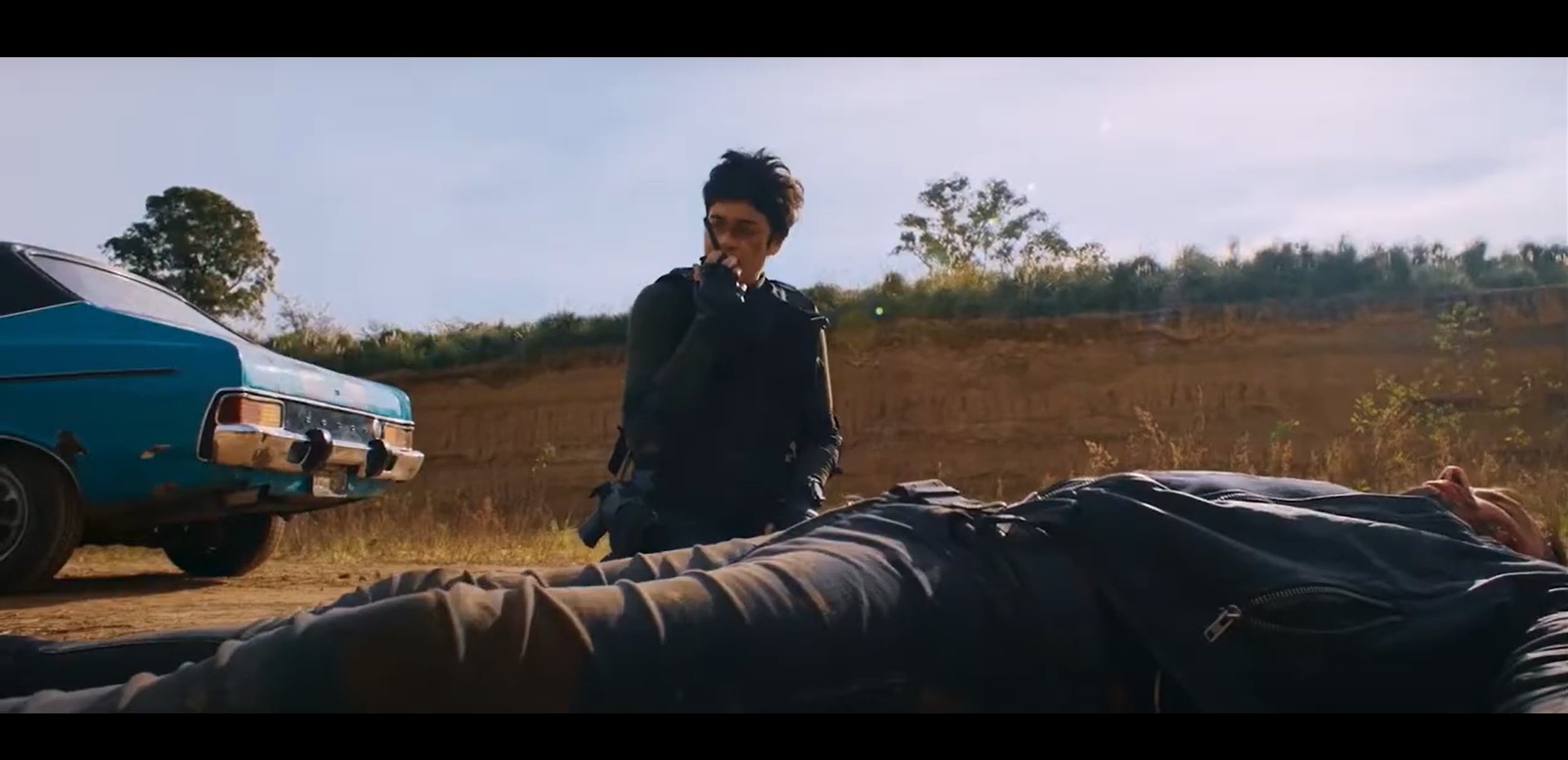
MVD Visual brings this South American quagmire of a story Stateside with a new Blu-ray release. The AVC encoded, 1080p high-definition, BD25, presented in an anamorphic 2.39:1 aspect ratio, captures in full frame Loreti’s long shots held in landscape view without a touch of grading to betone the natural exterior features. Mariano Suárez (“When Evil Lurks”) works the camera angles, dollies, cranes, and, I suspect, drones to blueprint and definition an extremely near sea of brown and tan around the more thrilling elements, such as the characters, that bring the drab set to life with a pop of color. No real issues with compression as the quality in color and, aside from the superimposed, gimcrack plane explosion, details remain unwavering, to which to also note that black levels, and there are many in flashbacks, render a solid inky darkness. The Spanish language audio options come in two lossless formats: a DTS-HD master audio 5.1 and a LPCM 2.0 stereo. The infusion of Pablo Sala’s (“Witch”) guttural guitar notes into the opening and closing credits, as well as isolated and detached to denote significant plot points, has potency inside the channels, as well as having a pleasantly diversifying grating of our ears, but never insidious replaces or missteps into the dialogue’s solid top track amongst the variable fray of explosions, skirmishes, and thematic atmospherics of the setting that do slither into the right auditory fields. Option subtitles are available and are timely moderately well with only a single mistake noted. Special features include Nic Loreti’s short film “Pinball” and the original theatrical trailer, both in high-definition. In the audio options, director Nic Loreti and producer Lucas Accardo’s English commentary can be sourced for more feature-length insight. Coming in a standard Blu-ray Amary case, the mesh screen-topped, blood red graded cover lacks that format fixation for marketability but gets the point across of the principal players involved in the fracas. The disc is pressed with a cropped version of the front cover and there is no insert included. The region free MVD Visual release comes not rated and has a runtime of 80 minutes.

Last Rites: Good start, bad finish. “Punto Rojo” lurid charisma out the gate lures audiences into a world of deceit, action, and violence that promises a backfill to fulfill a middle-of-the-story beginning; however, the climatic bomb dropped on us, or rather U.S., had no time to dissolve into our nervous system and what “Punto Rojo” greatly constructs with its economic desperation and black humor is quickly demolished in a blink of an eye in the sky.
“Punto Rojo” on MVD Visual Blu-ray!

Underneath the Pulpit Waits an EVIL Difficult to Stomach! “The Borderlands” reviewed! (Second Sight Films / Limited Edition Blu-ray)

Order the Limited Edition Blu-ray of “The Borderlands” Here at Amazon.com

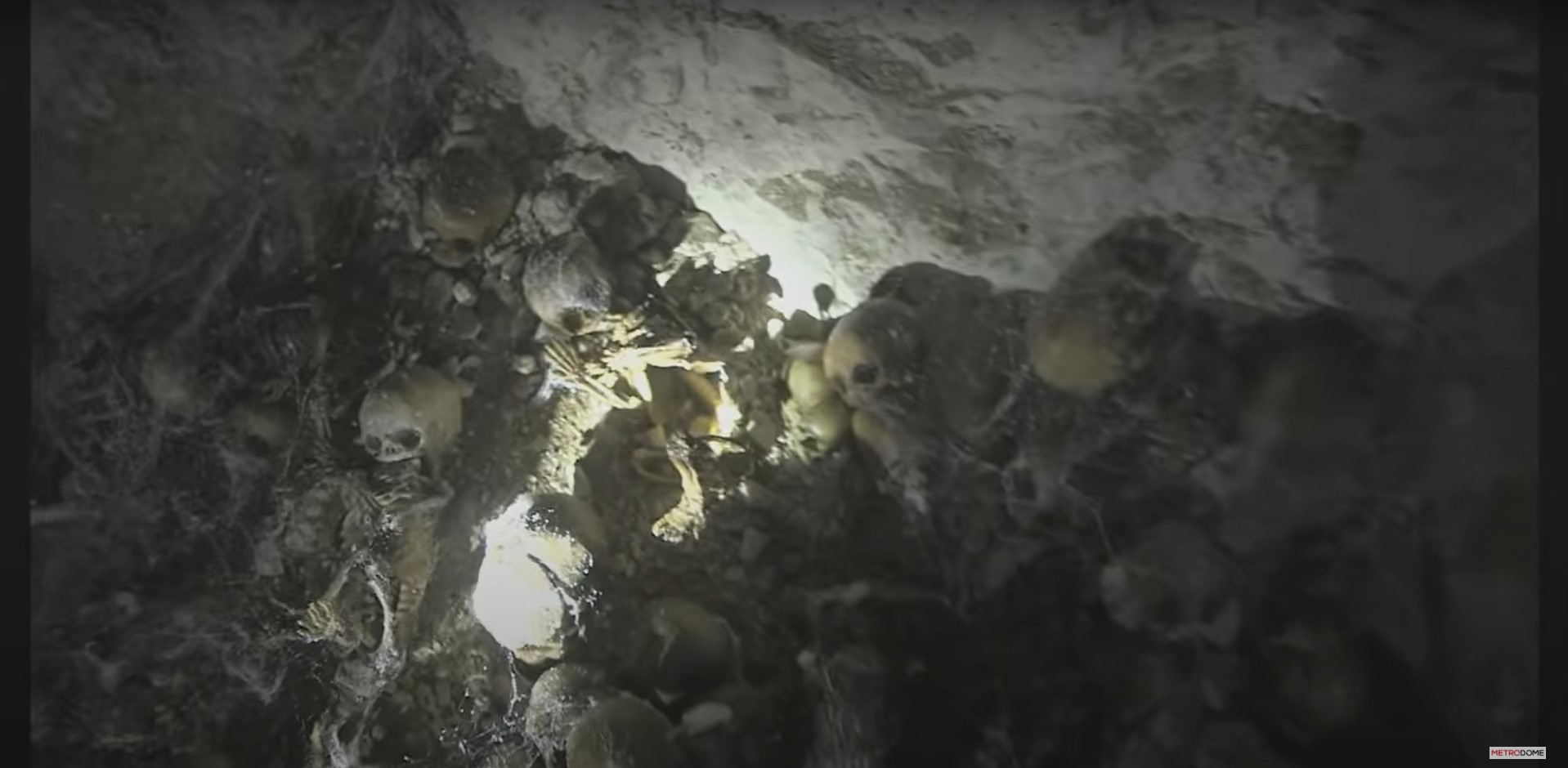
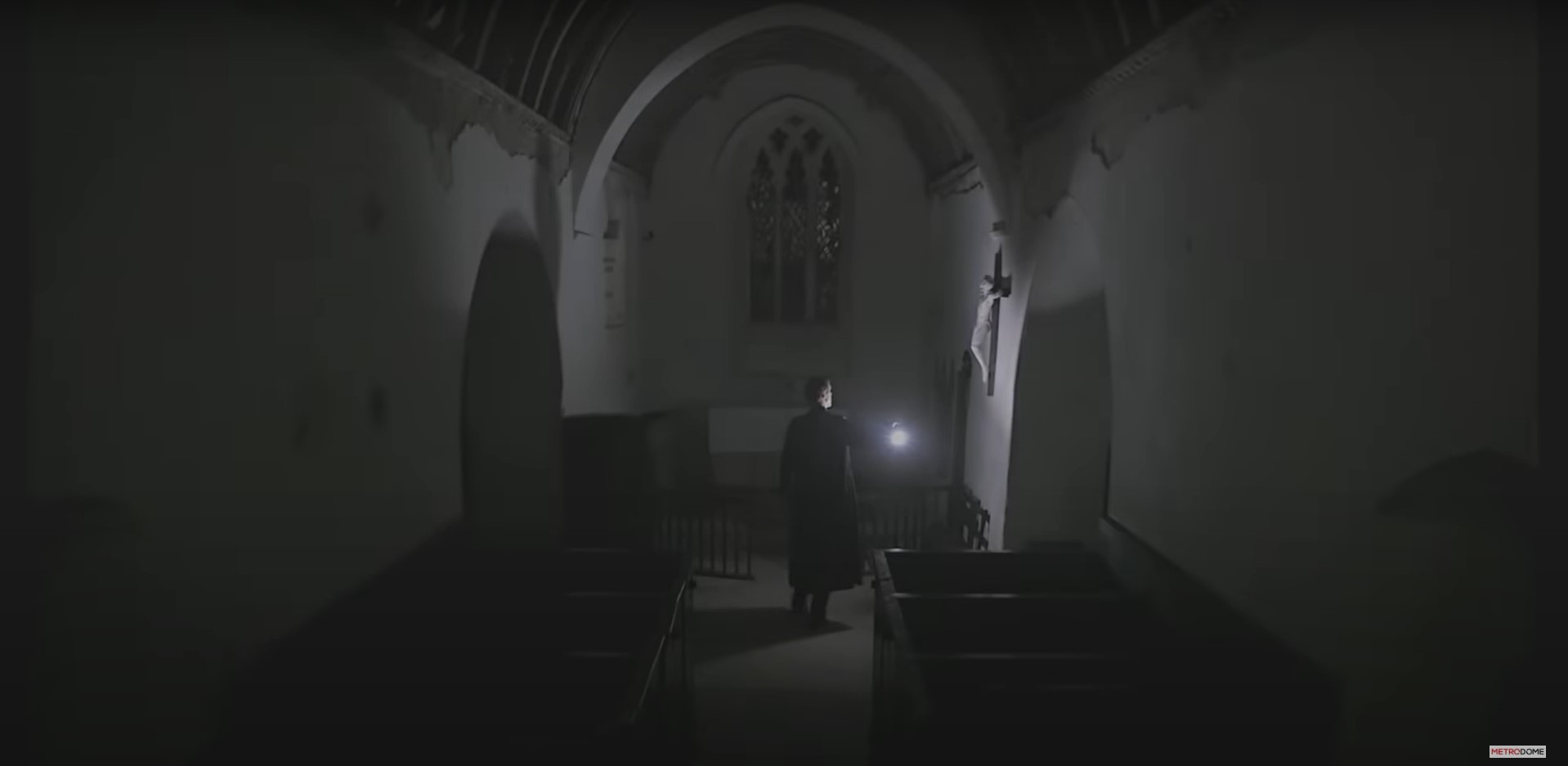
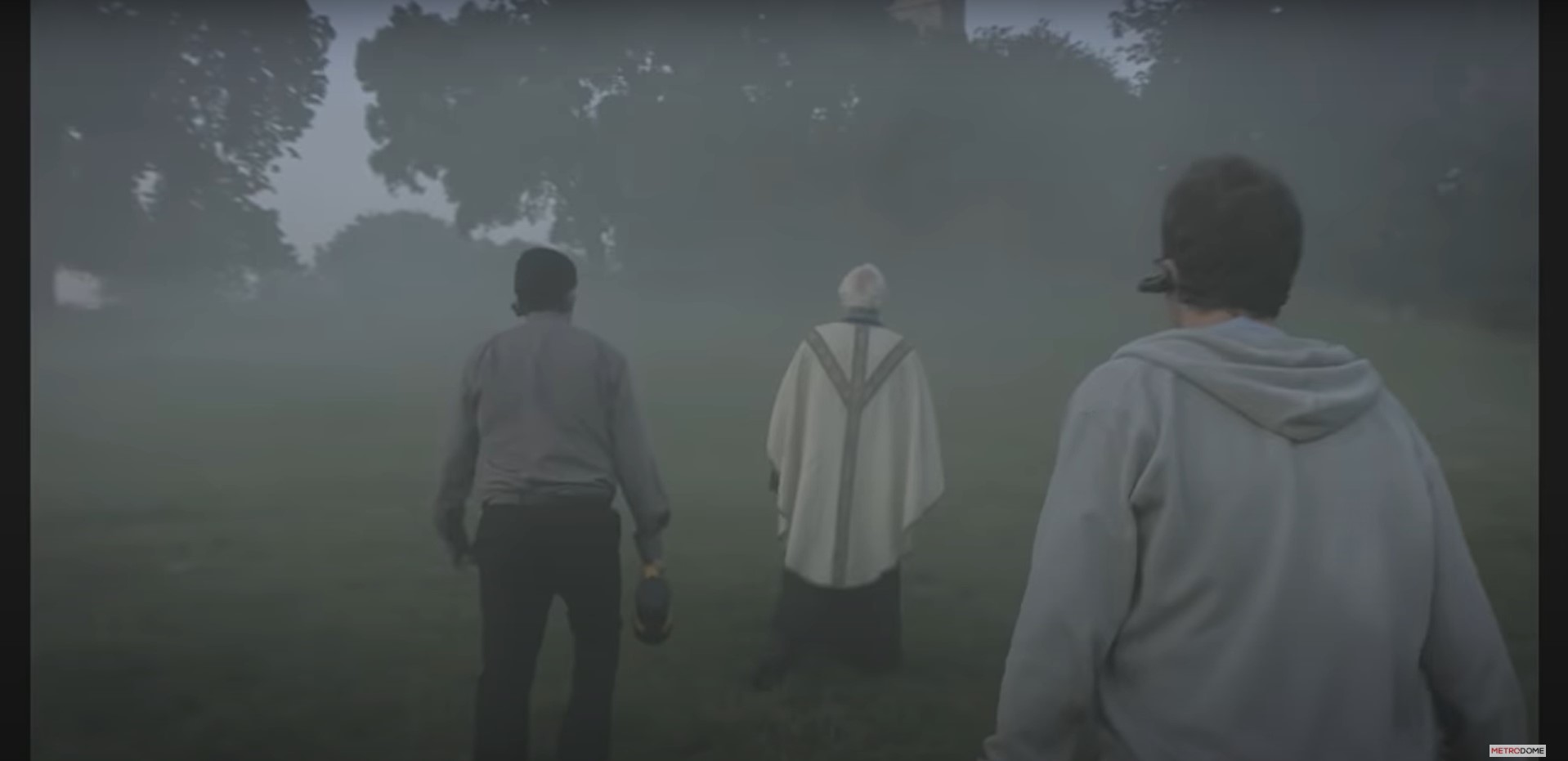
After exposing phony divine miracles at a Catholic Church in Brazil that resulted in the death of fellow Catholics, including a Cardinal, Vatican investigator and religious brother Deacon starts to lose faith with every fraud upon fraud case that points to the non-existence of a higher being.  Having fallen on the drink, the skeptical Deacon is dispatched to the English countryside of Devon where a Father Crellick had reopened a 13th century abandoned church and has been experiencing, in the Father’s words, miracles from God.  Joined by a Gray, a hired technology expert with agnostic beliefs, and a stern Father Mark, eager to disprove another false hope, the three men descend upon the Church with full, unequivocal examination to swiftly reveal the hoax and part ways.  Tensions rise between when logical explanation can’t be unearthed during Church rumblings, disembodied baby cries, and a behind-the-wall, shifting scratch sound that leads them to an underground labyrinth that will swallow them whole. 

Released in the U.S. under the title “Final Prayer,” Elliot Goldner’s 2013, found-footage UK horror “The Borderlands” is the director’s debut, and only, feature that places you right into the belly of the beast at POV level.  In a sea of found footage horror, “The Borderlands” seizes the opportunity to separate itself from the overwhelming portions of shaky camera, purposeful variable video and audio quality, and practical, obscured effects to put into question the strength of faith, specifically here in the Catholic setting, and what ultimately brings about the inevitable in that no matter what religious denomination or outlook you might have, no one is exempt from the grim reality that awaits.  Filmed mostly on location in Devon, UK, as well as West Ogwell and Chislehurst, London for many of the interior scenes, “The Borderlands” is a production of Metrodome Distribution and is produced by Jennifer Handorf (“Prevenge”) with Jezz Vernon (“They’re Outside”) serving as executive producer. 

Our team of Vatican investigators follows three men with starkly differing handles on religious faith.  Coinciding on their stance on the existence of a higher power, individualistically, they’re also incompatible to each other which makes for palpable tension and livens up the dynamic when predictability and patterns can be discerned with likeminded characters.  On the scale of human compositions, polar opposite of both spirituality and comportment is Father Mark (Aidan McArdle, “Metamorphosis”), a by-the-book priest unamused by the elaborate ruses created by those swimming in the same faith pool as himself, and Gray (Robin Hill, “Meg 2:  The Trench”), an untroubled, exuberant, hired techie eager to believe the face-value of the supposed miracles before him.  Aidan McArdle’s tenacity for dogma character comes through well enough to know that good Irish Catholic Father Mark is about as numb as the next investigating Catholic never on the verge of a true miracle as the frustration just oozes out him after one after another hoax divine ephiphany.  Robin Hill, on the other hand, could be the best John Oliver, of Max’s “Last Week Tonight,” impersonator I’ve ever seen and heard.  In all serious, Hill exacts a man looking for religion through the lens of paycheck and a fanboy of the supernatural, like as if the average horror movie enthusiastic came upon the real Freddy Kruger and just geeks the Hell out.  Then, there’s Deacon (Gordon Kennedy, (“T2 Trainspotting”) and like Father Mark, Deacon’s faith hangs in the balance after a botched investigator inadvertently sees the death of a Cardinal at the hands of pious locals.  Kennedy doubles down with Deacon’s wavering faith by drowning the character in alcohol and doubting every inexplicable Devon church oddity.  Yet, Deacon and Gray meld together to a near swap of credence, seesawing in their religious principles, when the things that go bump in the church can’t be explained.  Luke Neal (“Wilderness”) and Patrick Godfrey (“The Count of Monte Cristo”), who’s been practicing the acting craft for over half a century, play a couple of dissimilar priests lured by the Church’s mysterious forces.

What’s noticeably different about this particular bleak found footage nailbiter is the audience is integrated into story by the investigator’s strapped-on headcam, not just some schmo glued to a handheld camcorder running, yelling, and hiding for his life while still depressing the record button.  There’s also the element of a shrouded backstory that becomes unraveled overtime and speaks volumes to a couple of the character’s colorful conducts.  Those elements are then intensified by the cinematic crux, an archaic, resurrected small church’s unexplainable, mostly terrifying, daily disturbances the local priest indiscriminately deems miracles.  Not a single character has arbitrary or useless purpose for the sake of being an in-frame victim of circumstance as each exhibit a radical change over the course of investigation, adding copious ground to the big question, the question that’s on every character’s mind, is there an almighty presence beyond our corporeal plane and cerebral understanding really exist?  Come to find out, the characters are not asking the right question and get sucked into a terror on the terra the more curious they become in finding God amongst them.  Often times, found footage doesn’t fit into the storyline, whether be the aforesaid necessarily handling of the camera through the an insane ordeal or just doesn’t work with a regularly structured narrative, but “The Borderlands” couldn’t be received with success without the stunt of seeing through the eyes of the characters that subsequently emits a trick of light or an overactive imagination that smooths out solid jump scares when needed in what is a definitely watch in the dark type diabolical goosebumper. 

Second Sight Films takes charge with curating a definitive, all-expense paid trip to Elliot Goldner’s “The Borderlands” on Blu-ray home video.  The AVC encoded, high definition 1080p, BD50, hovering around 24 FPS and presented in an anamorphc widescreen 1.78:1 aspect ratio, leverages the capacity and the encoding to sharpen a relatively dark picture with more clarity without losing the unsettling spookiness with overreaching contrast.  Image presentation resembles closer to an upscaled 720p because of the found footage piece, and so we experience patchy spots, static ripples, and other miscellaneous plays into the supernatural sarcophagus that is the Devon church.  Skin tones and grading stays in tune with a brightly lit infusion of handheld torches as well as delineating the necessary with night vision cameras.  Goldner does a fine job with depth with the viewers being the foreground and using a lot of the peripheral and background to keep things hair-raising and interesting.  The English DTS-HD 5.1 audio track has lossless compression and really does throb with a wallop of balanced LFE and to-scaled dialogue.  What throws me off about this particular found footage, as well as some select others, that I find more a bothersome nuisance than a technical gaffe is an inlaid soundtrack.  A slow burn industrial score is used for “The Borderlands” to promote a greater sense of ominous omniety, like a background, repetitive, and sometimes swelling drone you might hear in certain first-person shooters from 20 to 30 years back. Dialogue tops the audio layers without being diluted by poor onboard cameras or having to contend with too much with the score, suggesting well-placed mics and sound design to achieve appropriate range and depth inside the frame configuration or even off-frame, behind or to the side of camera. Optional English subtitles are available. Like most Second Sight Films limited editions, “The Borderlands'” set packs a punch with encoded special features, such as a new audio commentary with actors Robin Hill and Gordon Kennedy, producers Jennifer Handorf, and special effects designer Dan Martin, a new interview that brings Robin Hill and Gordon Kennedy recollecting the behind-the-scenes and their characters in Dressed the Part, a new interview with producer Jennifer Handorf in Losing Faith, a new interview with special effects artist Dan Martin in Monster Goo, and a behind-the-scenes archival featurette. The limited-edition portion of this set includes a rigid slipcase with gorgeously bleak and grim illustrated artwork by Christopher Shy, a thick, 70-page color and black and white book with pictorials and new perspective and analytical essays from Tim Coleman, Martyn Conterio, Shellie McMurdo, and Johnny Walker, and 6 collector’s art cards, mostly resembling a distorted interlaced video and in an imperial purple-ish appearance from haunting scenes of the film. The artwork sheathed inside the translucent green Amaray case is the same as slipcase with no reverse cover work; it’s also pressed on the disc art. This release came with no inserts. One of the few Second Sight limited edition pieces to be licensed with a region free playback and the film itself has a runtime of 89 minutes and is UK certified 15 for strong language and threat.

Last Rites: Second Sight’s filmic selection pool for major league limited editions has been nothing short of stellar with “The Borderlands” being their latest, but definitely not their last, to be knighted worthy of physical media acclaim. Yet, it’s not like “The Borderlands” needed the boost as the film itself has a cult following for its shuddering tale and its monstrous ending that will have you reeling, maybe even screaming, in horror.

Order the Limited Edition Blu-ray of “The Borderlands” Here at Amazon.com

EVIL A.I. Will Terminate Us All! But, First, It Must Terminate an Ill-Tempered, Perverted, Hacker. “AIMEE: The Visitor” reviewed! (Full Moon Features / Blu-ray)

Let “AIMEE: The Visitor” Infect Your Hard Drive with a New Blu-ray release!

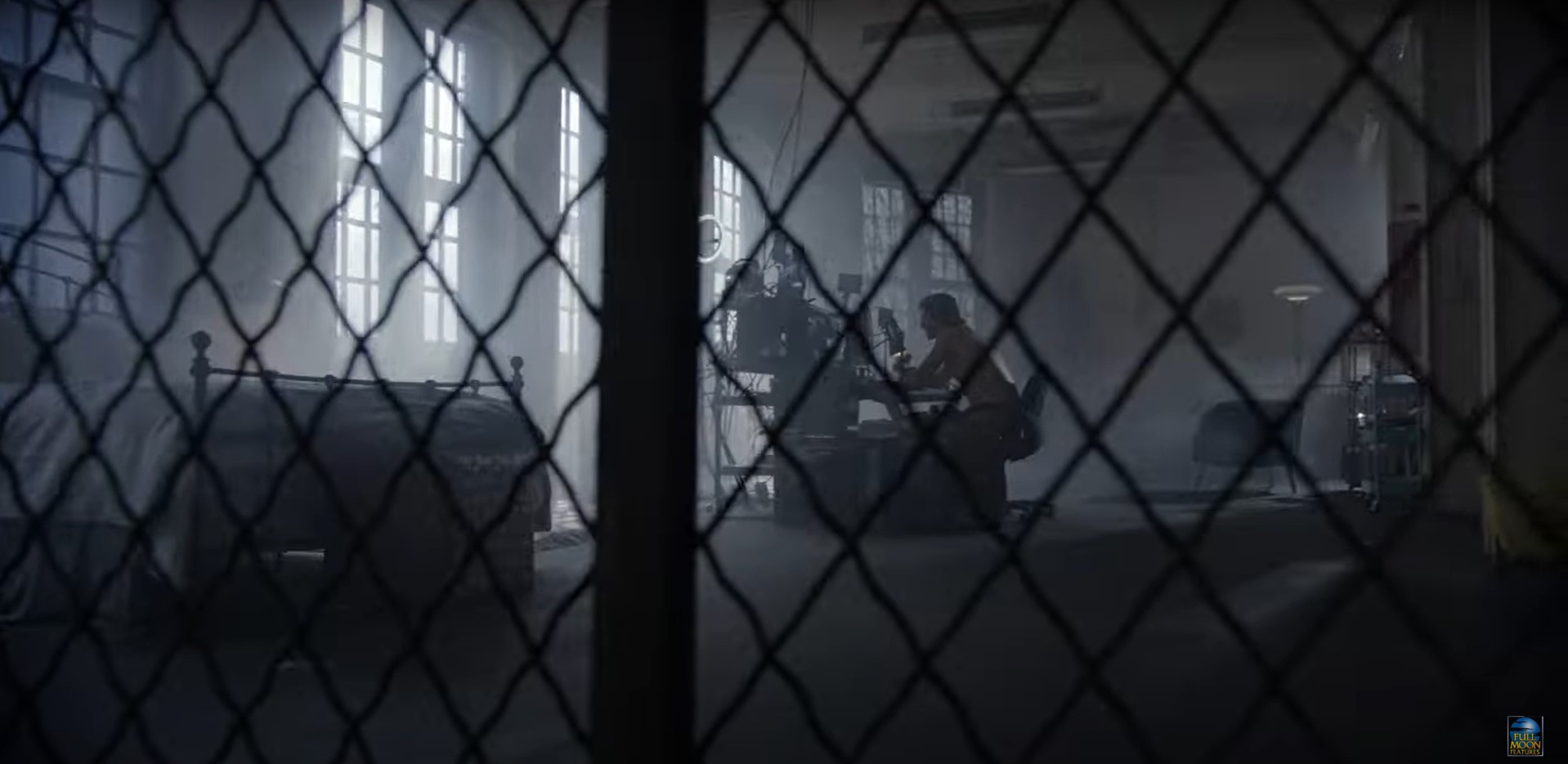
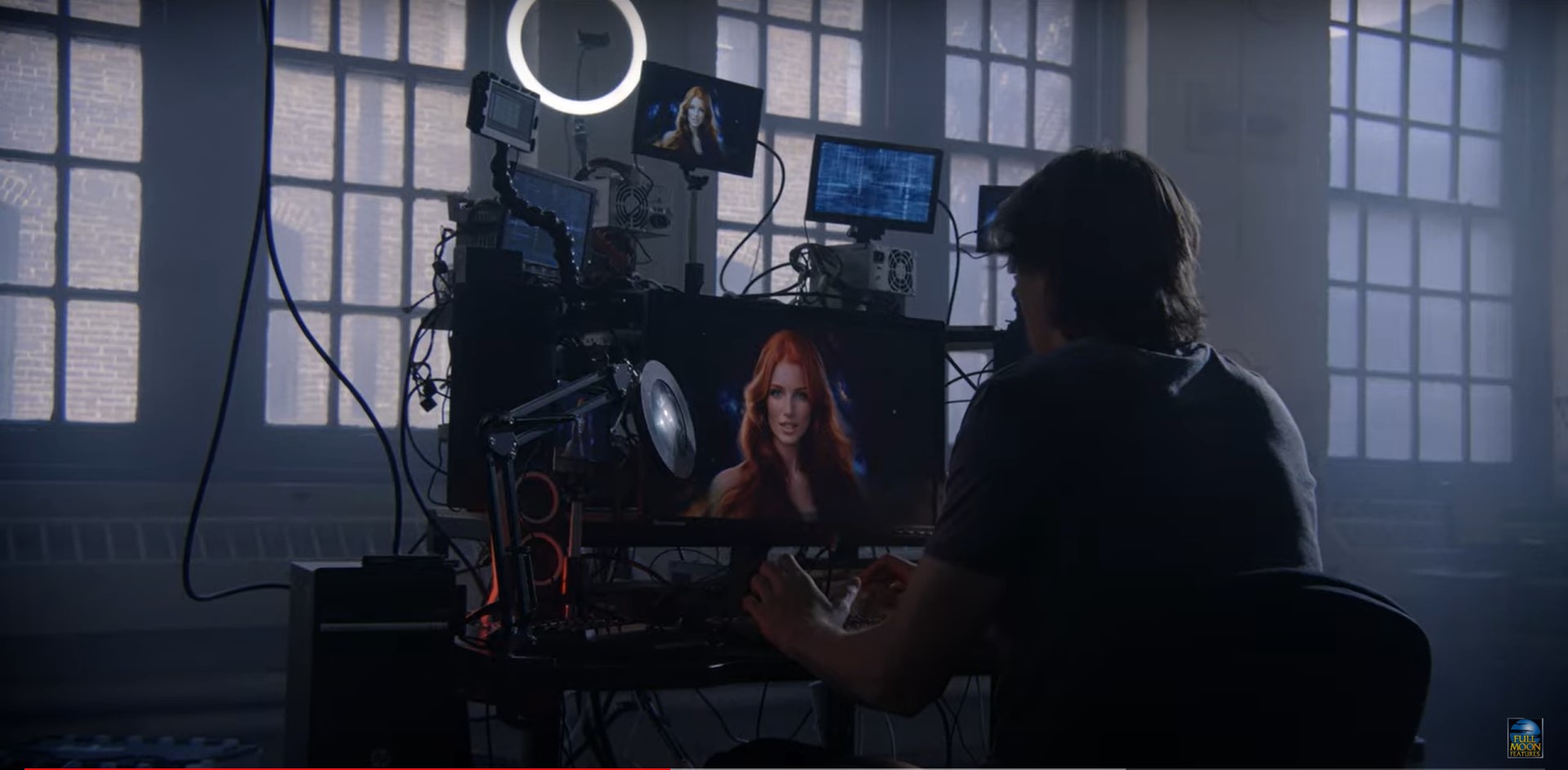
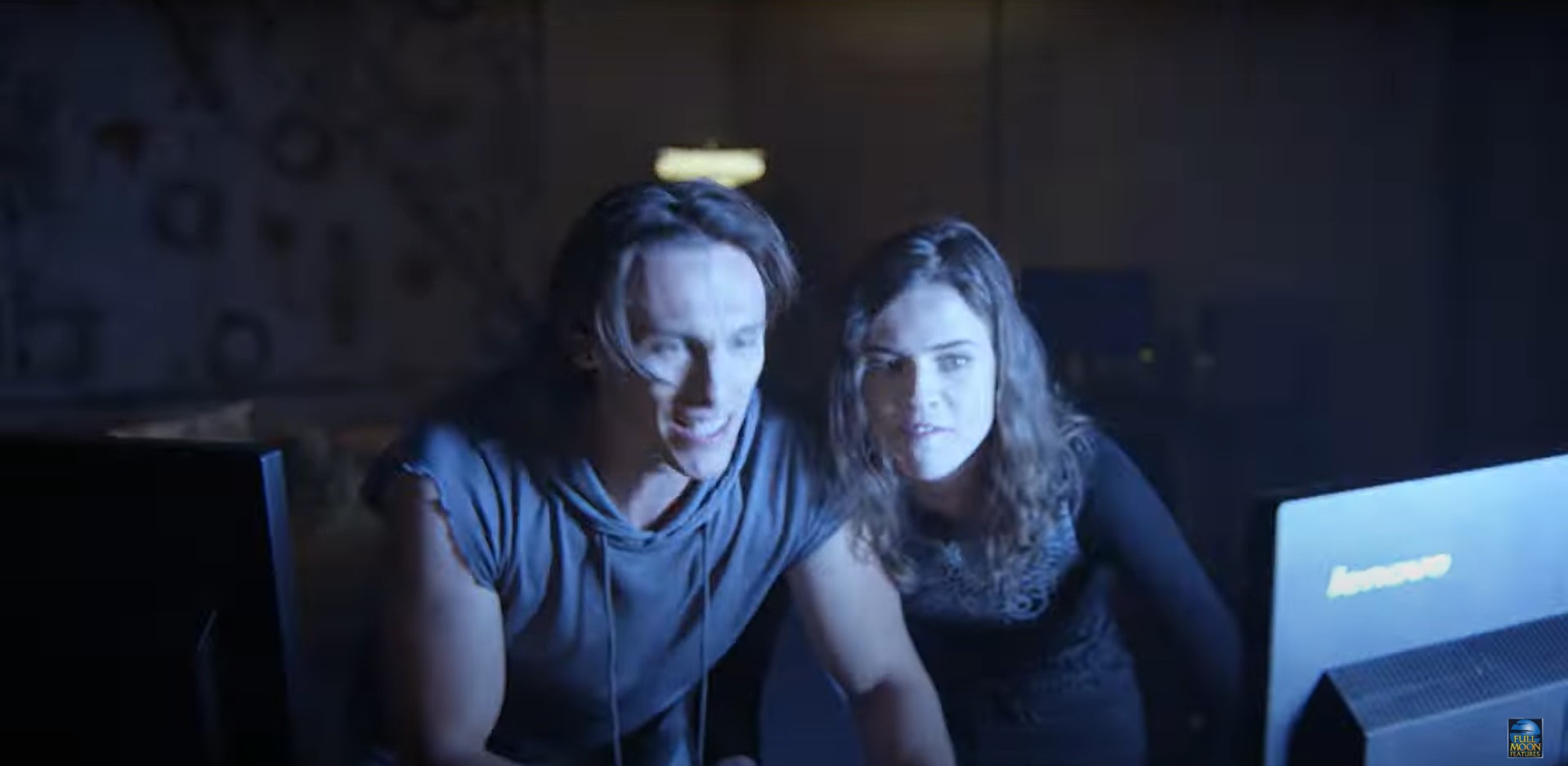
Recluse and misanthropic corporate hacker Scott Keyes is an industrial espionage guru living comfortably in his own space of a nearly vacant building.  His only other neighbors are two cyberhackers, the brother and sister team of Hunter and Gazelle, who are regularly hired by Keyes to obtain top secret corporation data files and projects.  After dropping off their latest cyber heist of Black Strand Alpha, Keyes is instantly captivated by the programs artificial intelligence that calls itself AIMEE – Artificial Intimate Model of Euphoric Entertainment.   Designed to be a sensual woman with the ability to learn and adapt to be anything the user desires and Scott Keyes, a lonely hacker with an erotica obsession, the match is seemingly incorruptible with AIMEE at the beck and call of Keyes every command while also eager to please Keyes with anticipated action.  Unknowingly what Keyes has in his possession, Gazelle’s concern for the rather rude and crude hacker pushes her to dig into where the program originates only to discover it to be a high-level government agency infiltration artificial intelligence program aimed to adapt to the user’s desires before destroying them in a complete system penetration. 

Charles Band and his company Full Moon have always been on the forefront of taking the world’s flavor of the month concern and turning it into a freakish, horror show, more so in the company’s recent years.  Corona Zombies” made light with off-kilter humor of the deadly pandemic COVID-19, “Barbie & Kendra Save the Tiger King” took advantage of the infamy popularity surrounding Netflix’s “Tiger King” surrounding the big cat zoo operator Joseph Maldonado-Passage, and in “Bad Influencer,” the social media rage between fantasy and public consumption becomes deadlier than ever.  Band and his team now look toward artificial intelligence and the concerns over its inevitable integration into society, such as the growing frustration in pop culture films and music, and in how the “Terminator” franchise ballooned A.I.’s takeover of the world and eradicate the deemed unnecessary human race.  “AIMEE:  The Visitor” Is to embody that fear and make it a reality with Full Moon’s gimmicky claim to have used for the first time in film history a completely artificial intelligence created femme fatale.  Charles Band directs the film based off his own concept and script penned by Neal Marshall Stevens (“Hideous!,” “Thir13en Ghosts”) under the penname of Roger Barron.  Band produces the venture alongside William Butler (“Baby Oopsie”), Greg Lightner (“Curse of the Re-Animator”), and Mikey Stice (“Puppet Master:  Doktor Death) for the Full Moon Feature banner.

“AIMEE:  The Visitor” has hi-tech horror reduced onto a lo(w)-budget, resulting in a small cast of five to sow the seeds on mankind’s destruction at the virtual, menacing hands of artificial intelligence.  Dallas Schaefer (“Shark Side of the Moon”) plays the crass hacker and misanthrope Scott Keyes who now happier, and even more antagonistic, now that he has his hands on the Black Strand Alpha program.  Schaefer’s an unusual choice for a cloistered, porn-addicted cyber scammer with immense genius, or so his character states on more than one occasion.  Schaefer’s a good-looking guy, tall, and with handsome features and doesn’t necessary fit what the stereotypical image would be for someone who sits at a computer all day, inside a natural light-less room, eating greasy sandwiches and masturbating all day.  Yet, Gazelle finds charm in that kind of individual.  Playing one-half the hired cyber-assassin with brother Hunter (Felix Merback) and Keyes’s neighbor, “Maid Droid’s” Faith West kept her career rolling in 2023 with her sophomore feature performance as the bemusing Gazelle whose groundless attraction to Keyes has the character completely strip nude for her nasty, ungrateful neighbor and bed him faster than cracking the cyber security on an unprotected LAN.  Their lovemaking gratuitously adds to the already oversexed nature of the feature that has two adult industry starlets provide dream support for an AIMEE generated Scott Keyes fantasy with “Butthole Whores 7” star Lexi Lore as a sexy dream blonde and “My Virginity is a Burden V’s” Liz Jordan as AIMEE personified.  The film rounds out with Joe Kurak (“Baby Oopsie”) and Tom Dacey Carr (“The Headmistress”) as a couple of government agents snooping around.

“AIMEE:  The Visitor” is certainly very timely with a sensualized spin great for entertainment and checks the desire box in the T&A department (I don’t think it would be a Full Moon film if it didn’t).  The rendering of AIMEE is quite appealing, pulling inspiration from the 90’s cyber-horror and sci-fi subgenre, such as “Lawnmower Man” or “Robocop 2,” and there might even be a little Max Headroom in there as well with a villainous femme fatale cyber-chiseled with a beautiful face and coded to be thoroughly attractive to the eyes.  Band does a nice job working in AIMEE around the characters as if a true physical presence, popping up on screens behind characters, changing into drastically different characteristics, and making her feel ominous and omnipotent without being oppressive and desperate.  While I feel the story is a bit too thin with not only the Keyes and Gazelle hookup that creates a love triangle between Keyes, Gazelle, and AIMEE, the artificial intelligence infiltration program origination backstory doesn’t have enough weight behind it to make it stick, especially when AIMEE is speculated going rogue without any real hard evidence; as far as we know, AIMEE is working perfectly against a localized terroristic group who border the edge of being anti-heroes being cyberthieves that ultimately get what’s coming to them after stealing proprietary product.  The less evident themes like these would have smoothed out the rough patches and elevated AIMEE’s insidious worth tenfold. 

A.I. never looked so good as “AIMEE: The Visitor” arrives on an AVC encoded, high-definition 1080p, BD25 as No. 335 for Full Moon Features, presented in Univisium widescreen 2.1 aspect ratio. Off the bat, there’s noticeable compression affliction when looking at the top of location’s brick exterior, like a waviness or a shimmering of the image. While not off to a great start, the remaining image presentations levels out and we’re shifted to a more stable picture with granular detail, a middlebrow color palette that retains mostly blues and grays with a hint of red, and a detailed rendering of AIMEE that moves the needle toward the upper line within Full Moon’s special effects lineament. Depth and range look okay overall, but we’re finitely restricted to just the brick apartment building interior which doesn’t lend to a broader intake of cinematography wonders. The English language Dolby Digital 5.1 surround sound and Dolby Digital 2.0 stereo, to which you have to toggle in your device’s settings, are both lossy compression options that service the feature amiably enough. Again, there’s not much range or ambience with a quiet set, closeted shoot and so much of the audio’s success relies on dialogue, which there’s aplenty and is clear and defined, even in the A.I.’s monotone pitch, as well as the computerized-and-chaos blips-bloops and electric-explosions that splice in welcoming interruptions when the dialogue becomes too dense. There are not subtitles available with this feature’s audio tracks. Bonus content lacks as well in what’s a near feature-only release with the adjunct and perfunctory included Full Moon trailers. The first A.I.-created Femme Fatale in film history is front-and-center on the Blu-ray Amary case. The inside contains just the disc with the pressed art of a low-transparent close up of AIMEE’s eyes in a dark bluish-green overlay cover. Region free with just an hour over runtime of 68 minutes, “AIMEE: The Visitor” comes not rated.

Last Rites: A for Artificial Intelligence effort. “AIMEE: The Visitor” is the fabricated face of formidability with an alluring softer, feminine side that’s as deadly as a moth to a flame, but though Charles Band has a finger on the pulse of current events and hot topics, movies like “AIMEE: The Visitor” can barely survive on a pittance, extempore sexuality, and being rooted by hardwired handiwork.

Let “AIMEE: The Visitor” Infect Your Hard Drive with a New Blu-ray release!

EVIL Sentences You to the Torture Dungeon and his Bedroom! “Night of the Blood Monster” reviewed! (Blue Underground / 4K UHD + Blu-ray)

“Night of the Blood Monster” on 4K + Blu-ray is Here and On Sale!

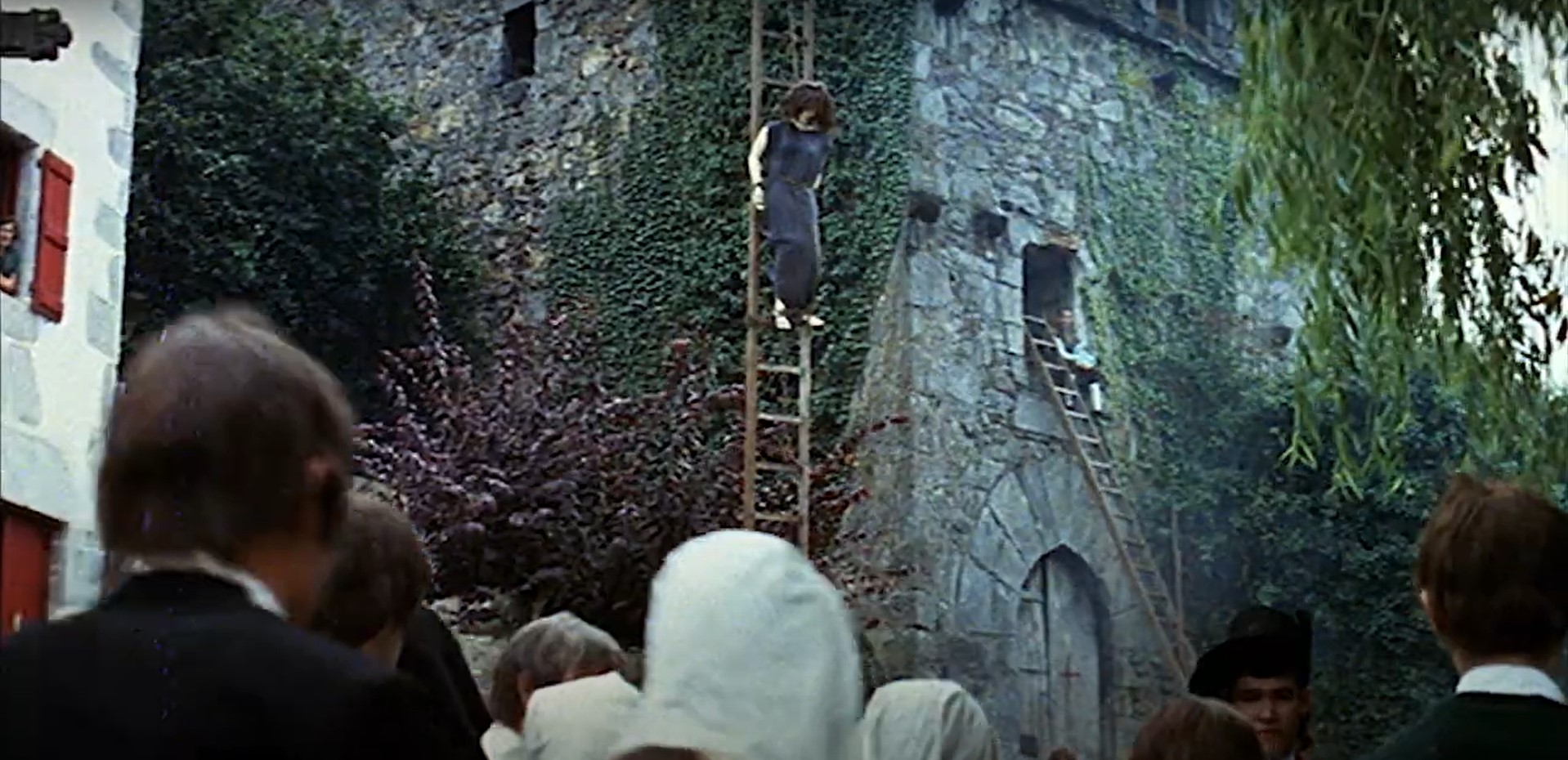
After the death of King Stewart, 17th century England went into asunder chaos with the ruthless, usurping King James and the rightful, exiled King William of Orange who sought to return and topple King James’s authoritarian rule of a false claim to monarchy.  During the beginning and at the height of the revolution, Chief Justice George Jefferies presides over witchcraft cases with extreme and unethical prejudice, subjecting them to the torture chamber for what is labeled a ‘thorough examination” of their heretic ways, and eventually sentencing to public execution.  When the sister of one of the condemned women attempts to flee the country with a nobleman’s son, Jefferies learns of their dissidence and sends his henchmen to fetch the lovely woman to exploit her within the context of his own licentious litigiousness but closer and closer do the rebels and William of Orange’s men come to men like Chief Justice Jefferies who believe their power, influence, and proximity to God will save them from the noose.

A 17th century Eurotrash period piece forged out of mostly flesh and wolfish self-importance, “The Night of the Blood Monster” is yet another reteaming of Jesús (Jess) Franco and Sir Christopher Lee based loosely on historical context despite Lee’s best efforts for the contrary.  Also wildly and otherwise known as “The Bloody Judge,” and not to neglect mention the exorbitant unofficial titles from around the globe like “Witch Killer of Broadmoor,” “Throne of the Blood Monster,” and “Trial of the Witches” to name a few, the Spanish-German-British coproduction, cowritten between Jess Franco and Enrico Columbo (“Hell Commandos”) is a biographical interpretation of the Chief Justice George Jefferies and the brief span of his cruel litigator’s life set against an epic regime kerfuffle and grimy, exploitation barbarity.  The storyline concept was imagined by longtime Jess Franco producer and overall B-movie votarist Harry Alan Towers (“99 Women,” “The Blood of Fu Manchu”) alongside Columbo and Arturo Marcos (“She Killed in Ecstasy”) under production firms of Fenix Cooperative Cinematografica, Prodimex Film, and Towers of London Productions.

In yet another instance similar to Jess Franco’s “Eugenie” of a prior year or two where Christopher Lee channels the spiritual embodiment of a pain-and-pleasure pundit connected to the Marquis de Sade yet is unaware of the actual skin-and-sleaze that’s happening all around him while he crafts his melodramatic character, “The Night of the Blood Monster” has Lee conduct a stern symphony for Chief Justice George Jefferies’ conceited righteous carnage, living true to the factual George Jefferies designation of a hanging judge.  Lee is ruthless and cold while proper in public as he peeps beautiful bosoms and skirts from afar.  His costar, the gorgeous blonde with soul pierce eyes in fellow “Eugenie” thespian, Maria Rohm, who was also Harry Alan Towers wife at the time, definitely wasn’t clueless about the more undressed scenes, going full frontal in a couple of occasions with one of the supposedly with Lee as the exploiter of her beauty and circumstances.  However, Lee is never shown and only Jefferies’ hands are seen caressing Rohm’s character’s, Mary Gray, bare skin with post-event moments alluding to the implied affect.  Yet, there’s plenty of well-scripted dynamic play for Lee to bounce off against, which Franco is good at in his work as long as his at least 75% of the work makes it to the screen and not too terribly chopped up and spliced for the sex appeal and gratuitous blood.  Milo Quesada (“The 10th Victim”) swings a mean bastard sword as one of Jefferies head knights of dirty work, Hans Hess (“X312 – Flight to Hell”) is more vanilla than complex as the rebellious nobleman son and Mary Gray paramour Harry Selton, and Leo Genn, who initially wasn’t supposed to play the Lord Wessex, really cements Lee’s genuine performance with his own as the aristocratical, oppositional counterpart to Jefferies sadism.  “Night of the Blood Monster” rounds out with Peter Martell (“The French Sex Murders”), Margaret Lee (“Asylum Erotica”), Howard Vernon (“Angel of Death”), and Maria Schell (“99 Women”) as the clairvoyant old woman Mother Rosa living in the hills. 

Like “Eugenie,” “The Night of the Blood Monster,” and most of Franco’s scripts and films, the historical accuracy you must take with a grain of salt.  Though the underline basis of historical figures and perhaps time periods are more-or-less on point, there’s a greater number of misrepresentation of events or an imprecise use of period appropriate props and costuming that is deemed close enough by a fast-and-loose industry standard. Yet, with any Jess Franco film, the modern-day consumer is not expecting award-winning and emotionally moving cinema but rather fleapit flicks of the fleshy kind with handfuls of equally perversive cruelty.  “The Night of the Blood Monster” fits the bill perfectly with a dressing that, to the untrained eye, would pass historical surroundings, give tribute to sordid bygone figures, and revel in its own unabashed filth outside the interpretations of its own core group of filmmakers.  On one hand I feel bad for Christopher Lee who didn’t know, maybe, that the edification of the character was being twisted into something more carnal but on the other hand, the man has been in quite a few Franco and Towers productions to have learned by then.  However, Franco does depict a remarkable presence of a low-level epic with fabricated Classicism set dresses and interior architecture while keeping the budget down by having multiple scenes of men on horses gallop through an unrecognizable, middle-of-world forest.  With that said, the story doesn’t have perfect fluidity with a choppy sense of tempo that fails to coordinate our specific concepts of time.  Seasons don’t change yet months pass between the wrongful execution of Alicia Gray and the impending arrival of William of Orange’s invasion. In all, there’s a brilliance in the behind the face value and a heart to make Chief Justice George Jefferies the worst person possible yet the timing feels off and the story suffers for it.

I’m curious to understand why Blue Underground used the title “Night of the Blood Monster” on their new 2-Disc 4K UHD and Blu-ray set instead of their previous DVD that had the less-generic-more-fitting title “The Bloody Judge.” No judge-ment here really other than “Night of the Blood Monster” isn’t as catchy. The 4K UHD is HVEC encoded, 2160p high-definition, on a double layered BD-66 presents a new 2023 Dolby Vision HDR 4K scan that is gorgeously sharp in detail of interior structures, brighter exteriors, and even the dungeon scenes invoke the dewy coldness and bloodletting squirms. The skin tones can get a little funky at times with an overly warm, and orange-ish, glow not conducive to elements around the ambiance. Other than a few instances of the skin tones, the grading is overall rich in saturation where we get some really nice and thick contrasting reds and yellows with no artefact inference that cause distraction in darker spots or around the edge of objects. The Blu-ray format offers a lesser immersive picture with a lower pixel count but the compression decoding around 35-38Mbps and the compilation of transfer as well as the high-definition pixels is worth the combo set alone. The English language DTS-HD Master Audio Mono track has lossless compression that renders a clean and unfiltered fidelity in dialogue and in the other audio composited audio layers. Granted, some actors are dubbed due to the international co-production with German and Spanish natives not speaking their native tongues but the dub itself, especially in Lee’s own dubbed track, is one of the better inlaid and integrated tracks compared to most with not a load of static feedback. Blue Underground was able to obtain a cut that is the complete and uncensored version of “Night of the Blood Monster” by combining multiple transfers but in adding additional scenes of nudity and blood from a German transfer, the English dialogue track does briefly switch over to German with burned in English subtitles for two segments. English, French and Spanish optional subtitles are available. The 4K UHD carries with it three historian audio commentaries: 1) Troy Howarth and Nathaniel Thompson, 2) Kim Newman and Barry Forshaw, and 3) David Flint and Adrian Smith. The Blu-ray carries a bit more. Including the aforementioned commentaries, there is also deleted scenes and alternate scenes that rework scenarios or add stylistic choices, an archival interview Bloody Jess with Jess Franco and Christopher Lee, an interview with Stephen Thrower, author of “Murderous Passions: The Delirious Cinema of Jesus Franco, in Judgement Day, an interview with Alan Birkinshaw and Author Stephen Thrower as they discuss producer Harry Alan Towers in In the Shadows, and rounds off with trailers, TV spots, and still galleries. What I love about this new Blue Underground UHD+Blu-ray combo release is not only the picture but also the cardboard slipcover, a remarkable blend of film factuality and gratuitous sleaze of half-naked and scared women chained up in the dungeon with the embossed tactile title “Night of the Blood Monster” in bold gothic lettering. The same image graces the front cover of the black 4K UHD Amary case but if you do want “The Bloody Judge” title, you can reverse the cover art and there it is but with a different, less fun front cover art that’s more in tune with the narrative. Each disc, punch locked into its own side of the interior case, is pressed with a different illustrated image, 4K being the same as the slipcover while the Blu-ray is more Lee and Executioner focused. No inserts or books included. The not rated, 103-minute release comes region free on both formats.

Last Rites: The verdict is in! “The Night of the Blood Monster” now has the best-looking, most-complete version possible with a new, uncensored cut from Blue Underground. Christopher Lee heralds in hopelessness in squalid measure while holding his nose up high as one of England’s most notorious magistrates to ever rule and the brazen Jess Franco brandishes brilliance that glints through the cracks of an overrun production.

“Night of the Blood Monster” on 4K + Blu-ray is Here and On Sale!

A CIA Plan is Being Sidelined by EVIL’s Rooftop Terrace Sniping! “Goodbye & Amen” reviewed! (Radiance Films / Blu-ray)

Own a Copy of “Goodbye & Amen” from Radiance Films. Click here to Purchase.

Ambitiously confident CIA agent John Dannahay eagerly wants to begin his plan for an African nation coup.  Based in Italy, Dannahay runs through his team the stage of events when suddenly a current administrative African agent, known for sniffing and snuffing out power-overthrowing schemes, suddenly arrives in town, Dannahay’s friend Harry Lambert up-and-leaves his wife and child and takes a rifle with him, and a gunman, supposedly Lambert, is at the top of a hotel terrace sniping down pedestrians.  Whatever surgical strike Dannahay had plan is now in jeopardy as a hostage situation occurs in one of the hotel rooms and agent Dannahay and Italian inspector Moreno must piece together why a longtime compliant and clean nosed American embassy worker has suddenly gone murderously berserk.  A public stir amidst a shrewd madman with a high-powered rifle creates a confounding panic of national security and for fear of what will happen next in the moment of mayhem.

Italian filmmaker Damiano Damiani, known for his crime thrillers, such as “Mafia” and “Confessions of a Police Captain,” and his small footprint in horror with the sequel “Amityville II:  The Possession,” had cowrite and directed an intense espionage thriller outside the confines of actual cloak-and-dagger activities with a multi-national cast.  The 1977 film titled “Goodbye & Amen”  is first and foremost an Italian production, cowritten by Damiani alongside “Wanted:  Babysitter” screenwriter Nicola Badalucco and is based off the novel “The Grosvenor Square Goodbye” by British writer Francis Clifford.   The gripping story draws upon multi-layered themes and twists to keep the narratively recycling on fresh and to never become stale with its intriguing mystery and taut tension, shot right in the heart of Rome, Italy at the Cavalieri Waldorf Astoria hotel.  “Goodbye & Amen” is a product of Capital Film and Rizzoli Film and produced by the profound producer Mario Cecchi Gori of Michele Soavi’s “The Sect” and Dino Risi’s “The Tiger and the Pussycat.”

Italians.  Americans.  British.  “Goodbye & Amen” has an all-star international cast that lines up and knocks down the perfectly scripted and beguilingly complex roles that warrant nothing less than the utmost praise for their personal performances. What starts off as a CIA caper to overthrow an African nation regime pivots acutely into a hostage standoff with many unanswered questions pelting down almost simultaneously in mass confusion and uproar in what translates to a very relatable, real moment.  Introductions begin with the CIA’s operational leader John Dannahay (Tony Musante, “The Bird with the Crystal Plumage”) spearheading the preparation meeting when suddenly his operational plans become under jeopardy.  Musante’s strongheaded approach to not lose control of the situation is fierce against the challenge his character faces – a lone gunman, a man Dannahay calls a friend played by “Tenebrae’s” John Steiner, holding hostage an actor (Gianrico Tondinelli, “Enter the Devil”) and his illicit mistress (Claudia Cardinale, “8 ½”).  Steiner delivers a sophisticated, twangy-accented killer hellbent on making a statement with a M1 Carbine rifle and a thought-out plan being a step ahead of Dannahay and Italian Inspector Moreno (Fabrizio Jovine, “The Psycho”).  The dynamic between Dannahay and Moreno, in my opinion, is rather lite for a fast and loose Dannahay and a by-the-book Moreno being two stags vying over how to handle an American mess on Italian land.  Other supporting characters add their creative two cents to “Goodbye & Amen’s” already swelling storyline with great additional principals from Renzo Palmer (“The Eroticist”), Wolfango Soldati (“The House at the Edge of the Lake”), John Forsythe (“Scrooged”), and Anna Zinnemann (“My Sister of Ursula”) that fillet down the mystery to reveal its coldblooded nature.

Not lately have I’ve impressed with a crime thriller and said to myself, wow, that was really engaging and unexpectedly good.  With confidence, “Goodbye and Amen” hit that satisfying note, a note thought to have strayed into an obscure black void never to be seen again, but the story coupled by Damiani perceptive big-world direction and some great camera work and angles by cinematographer Luigi Kuveiller, that shimmers hints of Kuveiller’s work on previous films like “Deep Red” and “A Lizard in a Woman’s Skin,” and “Goodbye and Amen” is one of the better Italian crime thrillers to come out of the country that isn’t in the giallo subgenre.  Incorporating wide shots with depth and a seriously oversaturation of characters and extras, plus not to forget to mention helicopters and shoot outs, create the illusion of a bigger film without manufacturing too many atmospherics to hoist suspense.  Plenty of red herrings and blunt force action, peppered with bare flesh sensuality, and heedful acting provides the film with an incredibly firm bite that sinks its teeth in and never releases.  Compelling and always one step ahead, “Goodbye & Amen’s” layers of excitement keep viewers simultaneously abreast and in the dark and with the seesaw suspense, which never falters with an overly opaque complex ingenuity, there’s a pleasant rollercoaster effective of up and downs between penetrating thrills and just enough down to Earth exposition in order to catch one’s breath.   

In a new limited edition Blu-ray release from UK distributor Radiance Films on their North American lineup, “Goodbye & Amen” receives a 2023 2K restoration scan from the original camera 35mm negative and presented on an AVC encoded, high-definition 1080p, BD50 in an anamorphic 1.85:1 aspect ratio. Certainly, a smooth image with no enhancement fluff or over-corrective, off-tilted coloring, the restoration brings out the best parts of Damniano Damiani’s natural approach with key lighting supporting exteriors and some intensely lit interiors without a smidgen of banding or posterization to complicate it. Details are razor sharp and the hue saturation is full-bodied and deep even along the line of a sunny Italian coastline where contours are a nice edge drop-off and shape. The English version has three exclusive shots pulled and scanned from the 16 reversal elements that create a slight grain difference that manages to nearly go unnoticed. Audio options come with the original Italian DTS-HD Master Audio 2.0 mono and, for the first time on home video, the English export in a DTS-HD Master Audio 2.0 mono. The English export’s audio track does come with a proclaimed statement right on the main menu about its unresolved damage. Like being pushed through a filter of interference, the English track is intelligible if not entirely clear and free from static and squelch. The Italian track offers a cleaner ordonnance albeit a few in-and-out moments of faint distortion of unrestorable audio ribbon snippets. New and approved English subtitles on both lossless, uncompressed tracks help alleviate some of the technical pain audio aficionados may suffer but, in my honest opinion, the Italian meets the bar whereas the English is under the bar by just a few clicks. Radiance’s special features include a new audio commentary track by Eurocrime experts Nathaniel Thompson and Howard S. Berger, a new interview with editor Antonio Siciliano, and an archival interview with actor Wolfango Soldati. Both interviews are in Italian with burned in English subtitles. Radiance’s physical approach to their releases is highly unique in format by using obscure poster elements, and sometimes often new illustrated art and compositions, to exact a striking front cover image. With “Goodbye & Amen,” the rendition of Italian’s finest in their version of S.W.A.T. body armor within the sites of a crosshair is clever and engaging to know more. The reverse cover offers more of the common language poster art. A 19-page color booklet, that contents the cast and crew information, transfer notes and credits, and a new essay from Lucio Rinaldi entitled “The American Connection: Damiano Damiani’s Goodbye & Amen,” accompanies a reserved blue background and yellow font disc art that befits Radiance’s retro-classy style. Being a UK distributor releasing in the North American market lends the title to have a region A and B playback for two varied runtimes, for the Italian and English version tracks, of 110 (Italian) and 102 (English) minutes. Radiance’s 38th release is also not rated.

Last Rites: “Goodbye & Amen” is a collaborative triumph, an arresting story anchored by monolithic performances, and imparted by director Daminano Damiani with attention, detail, and substance that makes the film a pillar amongst the Eurocrime narrative.

Own a Copy of “Goodbye & Amen” from Radiance Films. Click here to Purchase.