Don’t be Afraid of an Unstoppable EVIL Killer on Your Fishing Trip. Do be Afraid of the Very Pregnant Wife You Left to Go on that Fishing Trip! “Sweetie, You Won’t Believe It” reviewed! (101 Films / Blu-ray)

Now On Bluray from 101 Films – “Sweetie, You Won’t Believe It!”

Dastan is about to be a new father, but he is over his head with debt and can no longer withstand the verbal abuse of his headstrong, ready-to-pop wife, Zhanna.  When an opportunity opens up go fishing with his best friends Murat and Arman, he whisks away before she can sink her nagging teeth into him again and tries to enjoy the relaxation of catching fish by floating down the river.  That’s until he and his friends stumble upon an execution by a crime boss and his goons.  Frantically trying to escape, they run into a strange man with a burnt face living out in the wilderness.  The three friends and the gangsters are targeted by the maniacal, murderous stranger with an apparent unkillable survival instinct and supernatural abilities. 

Who would have thought one of the best action-comedy horrors would have come out of Kazakhstan and come to think of it, this 2021 Yernar Nurgaliyev film “Sweetie, You Won’t Believe It” is probably the only Kazakhstan film come across this desk.  Natively titled “Zhanym, ty ne poverish,” Nurgaliyev’s genre blending zany is bursting with dark comedy, gore, and a framework that tests the sturdiness of friendships as well as the clear-cut recognition for the things you have in life because the world isn’t always greener on the other side.  In fact, the world is actually dusty and partway arid in an isolated Kazakhstan landscape that resides with antisocial individuals – mob transgressions, deranged psychopaths, and even those who just want to get away from their wives.  The regular comedy helming Nurgaliyev cowrites the script with first time screenwriters Zhandos Aibassov and Daniyar Soltanbayev under Art Dealers productions in association with the international action company, Nomad Stunts, that delivers the film’s amazing fight choreography.

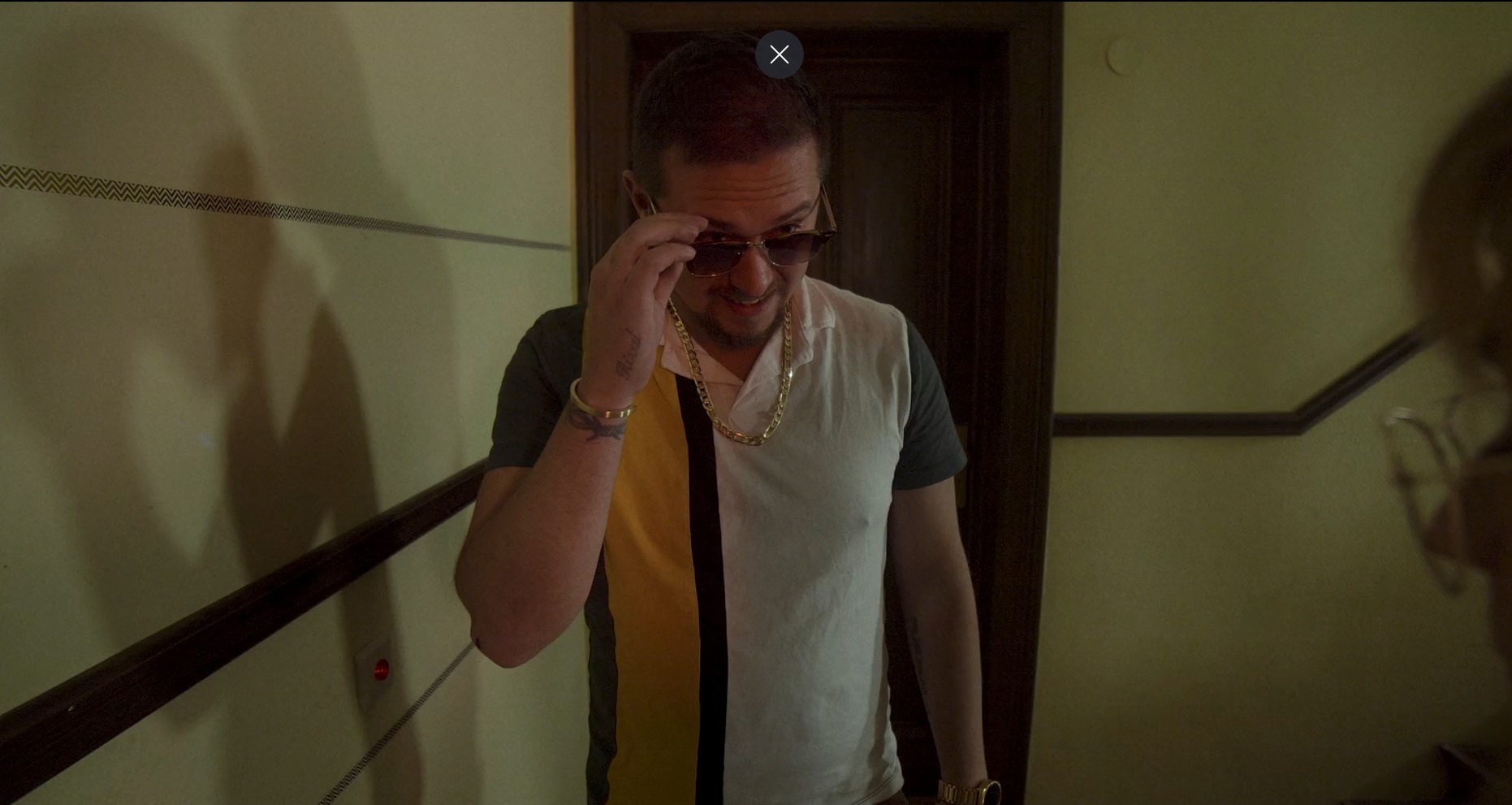
An ensemble cast of character actors construct a living, breathing dark comedy worth the time and effort. Plenty of unsuspecting twists and turns keep the preposterous party going beginning with an opening of a very black and white passive aggressive quarrel involving principal character Daston (Daniar Alshinov, “A Dark, Dark Man”) who, from this male reviewer’s perspective, takes a relentless verbal whip in emasculation. Alshinov expresses so clearly the biting-tongue frustration in a hilarious montage of on rage’s edge with wife Zhanna (Asel Kaliyeva) dishing out the third degree on all his husbandry failures. Avoiding his wife’s warpath behavior, aggravated by being on the verge of giving birth at any time, Daston’s quickly sneaks in his desires and hightails it on a last getaway before he becomes a father or dies of incessant verbal abuse, whichever comes first. Community school officer Murat (Yerlan Primbetov) and sex-toy dealer Arman (Azamat Marklenov) finally are able to steal away Daston in a little time for themselves. The acting trio leading up to the fishing spot are naturally conversive that gives into their characters longstanding friendship with quippy jabs at each other and overselling their less-than-satisfactory positions in life, but not until the friends stumble haplessly while floating down the river into being witnesses of a murder by low-end horse gangsters and run into a stoic one-eyed, burnt face bald man intent on spilling blood for vengeance because the gang killed his dog does Daston and his friends need to go to Hell and back to realize how special their friendship means to each other. “Sweetie, You Won’t Believe It” is a bro movie (and I mean the characters say bro a lot) with an orchestrated series of unfortunate, yet very funny, gruesome events to resolidify a tattered friendship and to reexamine life. The film costars Almat Sakatov, Rustem Zhanyamanov, Yerkebulan Daiyrov, Bekaris Akhetov, Kadirgali Kobentay, and Gauhar Sagingalieva.

Nurgaliyev develops a physical comedy based around a plan gone awry collision course between four groups destined to intertwine in battle royal.  “Sweetie, You Won’t Believe It” lands the slapstick one, two, three combination of action, comedy, and notes of horror well outside infantility and outdated material in a smartly laid path of events unfolding to a brawling showdown of those left standing.  I believe the imbalance between physicality and the humorless, if not slightly bothersome, subtitled dialogue stems from the lost in translation.  Subtitles can only convey a literal account of the Kazakhstani reflection and regionalism mayhem often blown to unrecognizable smithereens during a crude translation, but being a foreign film with grossly simplified subtitles shouldn’t be a cause for total write off as there’s much to enjoy from the funneling, concentrated, ever-twisting storyline to the outrageous action stuffed tightly in cramped houses to the perfectly spectacular blend of practical and CGI violence and gore fabricated nearly seamlessly by special effects duo Juliya Levitskaya and Elde Shibanov. Heads role, jaws detached, and plenty of eviscerating shotgun blasts crest above as the cherry on top of the Dastan and his friends’ misadventure through Kazakhstan countryside in a story that’s as ruthless as “Deliverance” and as magnetically dark and eccentric as “Kiss Kiss Bang Bang.”

101 Films brings what is called an “insane, violent, and hilarious” fun from Kazakhstan (and we couldn’t agree more) to a UK Blu-ray home video. The region B, high definition, 1080p Blu-ray features a widescreen 16:9 aspect ratio of the short 74-minute film, certified UK 15 for strong gory injury detail, violence, threat, and language. Image quality is quite good of rendering mostly the grassy desert-like Kazakhstan landscape and the framing prompts greatly what to expect through either Azamat Dulatov’s harness cam strapped to the actors for closeup reactions or perfectly timed pan when needed to express off-center comedy. What’s really sensational about the film is the localized soundtrack. Nurgaliyev doesn’t buy, beg, borrow, or steal popular westernized tracks to broaden his film’s release and, instead, the soundtrack has a plethoric range of native music from lounge pop to hip hop. The Kazakhstani PCM stereo has more than enough ample timbre and offers a suitable range and depth despite being a dual channel. There are no dub tracks (in case you were wondering) and the English subtitles are forced (for those of few who don’t like to read during the film). Though bonus features would have been nice to root into and explore more of the behind-the-scenes aspect of the country’s film industry, the only bonus material on this 101 Films’ release is the theatrical trailer. As far as fiasco films go, “Sweetie, You Won’t Believe It” ranks high this side of the 21st century as a humorous, violent, and perspective redirecting genre-bending film that needs be in everyone with a black sense of taste’s library.

Now On Bluray from 101 Films – “Sweetie, You Won’t Believe It!”

When That Sexy Roommate Turns Out to be an EVIL Hexing Hag! “Don’t Let her In” reviewed! (Full Moon / Blu-ray)

“Don’t Let Her In” on Blu-ray from Full Moon Features and Distributed by MVD Visual

Young artist couple Amber and Ben live downtown in a spacious single floor loft.  To afford rent and earn a little extra cash on the side, they decide to sublet a portion to Serena, a beautiful, and recently single, new age jewelry bowl artist who crafts old age product.  Some would say Serena’s craft is witchcraft as the alluring artist is actually being inhabited by an ancient, malevolent demon.  As she settles into her new abode, Serena slowly works her way between Amber and Ben, seducing and bedding both for her reasons to prolong a legacy on Earth.  When Ben is suddenly whisked away for an unexpected rock tour, Amber finds herself cornered by the demon in human skin and, to her on the pill surprise, pregnant because of Serena’s daily bewitching manipulation and incessant satanic chanting.

As a part of the new Full Moon lineup of 2022, principal Full Moon filmmaker Ted Nicolaou, the mastermind behind “TerrorVision” and the longstanding director of the “Subspecies” franchise, returns with another vision of terror, a beautifully demonic roommate from Hell, in “Don’t Let her In.”  Shot entirely on location at the historic Nate Starkman and Sons Building in Los Angeles, home to an array of productions from inside Paddy’s Bar of “Always Sunny in Philadelphia” to appearing in a handful of iconic horror series, such as “Candyman:  Day of the Dead” and “Wishmaster 2:  Evil Never Dies,” the 1908 erected factory is said itself to be haunted, adding to the miscreant charm of a shapeshifting fiend plaguing the innocence of a young couple.  Charles Band, like all of his productions, serves as chief producer and executive producer with the cannabis friendly Nakai Nelson, this side of the century Full Moon Feature producer with credits such as the “Evil Bong,” “Weedjies,” and a pair of more recent “Puppet Master” films to her name. 

“Don’t Let Her In” has an intimate cast comprised of four actors who have to pull in different, varying levels of character dynamics and frames of mind depending on how Serena’s orchestrating of the strings upon her marionette subjects favor in or from her dastardly ambition.  At the center is first time Full Moon actress Lorin Doctor as the pleasantly chic but unpleasantly succubus-like Serena who wants more than just a place to sojourn from an ex-boyfriend.  Serena is the kind of role where you have to applaud Doctor for not only pulling off grimacing in the shadows and being able to keep up the rhythms and beats of complex chanting but also be comfortable in the facial prosthetic makeup and make like a troll for a creepy crouch walk in a backwards reel speedup effect.  Kelly Curran and Cole Pendery are also newcomers to Full Moon’s world of strange and unusual T&A horror as the loft-residing couple Amber and Ben.  Curran and Pendery make up for an okay, downtown twosome with hints toward a checkered past of philandering that’s irritated by Serena’s provocative presence, but that’s doesn’t quite blossom into more of an issue as Amber is quickly eager to just go with the flow without being too bothered by the prospect that Serena and Amber did the bedsheet whoopee next to Amber as she slept.  The four and last character Elias Lambe is by far the most lacking in development and substance as an important piece of Serena’s puzzle that quickly becomes shoved under the rug.  Austin James Parker plays the part that’s mostly standing outside the building on the street corner looking gothically mirthless rather than ominous and before realizing how Lambe fits into the narrative, the long haired, trench coat-cladded, vampire-esque backstory is quickly snatched away with not a morsel left of his bigger part as suggested.

“Don’t Let Her In” is a refreshing addition to the Full Moon feature line that maintains a lot of hallmarks of the company, such as heavy use of body prosthetics, an expensive veneer on an indie budget, and, of course, nudity.  Though many other audiences draw comparisons to “Rosemary’s Baby,” Nicolaou relates only a smidgen in the story alone without the Roman Polanski pin drop suspense of subjective narration.  Instead, Nicolaou embodies Full Moon’s quirky and special effects greased terror fried to a familiar taste all fans have known from the past 40 years and that’s not terribly a bad thing.  “Don’t Let Her In” feels like an original piece of storytelling, much like “Castle Freak” or  “The Dead Hate the Living,” that detaches itself from Charles Band’s obsession with miniature maniacs, but Full Moon has no shame in telling us we’re still watching one of their films, gratuitously plopping easter eggs of their films all throughout “Don’t Let Her In” (i.e. Poster artist Amber’s current project, a rendering of “Corona Zombies,” and “Castle Freak” playing on the television set as Amber and Serena spend an evening as a pair of winos).  Serena’s demoness rat-faced makeup does appear stiff and inane at times, but the way Nicolaou mostly presents Serena in true form is through a blend of quick-sufficient editing, a manipulation of lens and pace, and the to-and-fro from the human façade that ultimately makes rodent Serena become scary Serena when accompanied by Charles Band’s strike of forte notes when not being melodiously carnivalesque.

Lesson here, kids, is to always background check you potential roommates because they might end up being a demon. Happens all the time. Fortunately, Full Moon Features delivers the entertainingly sapid “Don’t Let Her In” onto Blu-ray home video, presented in region free and a widescreen 1.78:1 aspect ratio. Full high-definition and 1080p resolution, this release has a strong, robust presentation in favor of Nicolaou’s often in your face with evil style despite the single loft location. The fact that this Full Moon feature is toned down from the usual moody, tenebrous gothic style shows a bit of range can be good for the collection. There are two available audio options: a 5.1 surround sound and a dual channel 2.0 stereo. If you want more fluff to your sound design, the 5.1 offers extra street ambiance while characters converse, sawing through the dialogue with car horns, traffic, and other urban outdoor racket as if they’re living right in the middle of Times Square. Yet, all outdoor scenes show little car or foot traffic that makes this fluff foolish. The dialogue is otherwise clean and Charles Band’s soundtrack interposes pizzazz and dread in this brawny audio output. Bonus features include a “Don’t Let Her In” behind-the scenes with snippet interviews from director Ted Nicolaou, actresses Lorin Doctor and Kelly Curran, and producer Nakai Nelson and rounding out with an array of Full Moon trailers. “Don’t Let Her In” has vim and vigor for an indie guise horror that’s erotic as it is fun surrounding a small cast and single location; yet there is also an evoking pathos in its decimation of young, naive artists and couples with career ending consequences.

“Don’t Let Her In” on Blu-ray from Full Moon Features and Distributed by MVD Visual

EVIL Spam E-Mail Wants to Play a Game! “Planet Zee” reviewed! (Darkside Releasing / Blu-ray)

Land onto “Planet Zee” now on Blu-ray! 

Struggling woman filmmaker Zee Bronson is trying to make what she loves a supportive career. Smoking pot, drinking beer, and living with her grandmother Sam mellows out Bronson’s anxiety of potentially landing a writer-director’s gig one day. When her sleazy producer, Serge, closes a deal with an investor interested in her script, Zee eyes widen with excitement, but her premature celebration quickly turns sour when Serge notes the financer wants someone else to direct her screenplay. A vexed Zee turns to a weird email spam virus that has seemingly appropriated her computer to propose a game of life with superpowers or death. Convincing Serge into joining her, the two unwittingly open a diabolical portal that traps them inside the apartment, subjecting them to battling a demon and persuading them to kill one another. As their relationship dissolves slowly throughout the night, lines a drawn between friend and foe in order to escape the grip of a computer-commanding Game of Power.

There is bottom-of-the-barrel independent schlock done with very half-hearted inspiration and then there’s bottom-of-the-barrel independent film done with A for effort around a difficult to sell single-locale story that includes witty dialogue and humble homemade effects. Some of these mighty, homegrown indies stem from one ultra-eccentric Berlin, Germany physics and prehistoric archeology studied-turned-artful filmmaker Zetkin Yikilmis in her second written and directed feature, “Planet Zee.” Her B-movie, or should I say Z-movie, is the epitome of independent filmmaking in knowing the production’s limits and how to make the most of a film with what little material is available to use, such as a deluging cash flow for big budget grandstanding that’ll get your name on marquees, posters, and regional commercials. Instead, “Planet Zee” is very much meta love and confidence concept toward Zetkin Yikilmis herself, as the title implies, being a woman in a typically projected masculine dominated industry. Yikilmis follows up her sophomore film from an array of micro shorts and her 2019 released debut feature, “Some Smoke and a Red Locker,” incorporating elements of the stoner horror-comedy into her 2021 film that’s self-produced by Yikilmis and her cinematographer husband, Dominic, as well as longtime collaborator S.B. Goldberg.

Zetkin Yikilmis, obviously, stars as Zee Bronson, a bohemian screenwriter attempting her hand at filmic success while having her grandmother live with her in a small apartment. Having surveyed Yikilmis’s micro shorts, her droll act as stoner-chic Zee Bronson imitates far from her other self-applied roles with a sluggish repartee and often tinkering with slapstick with fellow costar Alexander Tsypilev as squalid producer Serge. Yikilmis and Tsypilev’s reconnection after “Some Smoke and a Red Locker” gives way to a natural onscreen dynamic that has experience role reversal, gender role reversal, and to test their association connection. With a tight-fitting shirt that flirts with exposing his slightly protruding belly, Serge fits swimmingly into the cesspool of sexist producers with Tyspilev crafting Serge’s slimy mold with little pinches of details toward the producers first-rate me-first attitude. While Bronson and Serge are the two chief residents of “Planet Zee,” there is often a forgotten third wheel who bookends the narrative. Sam, Zee’s elderly only in looks grandmother played by Trish Osmond who had a small role in Zack Snyder’s “Army of Thieves.” The 1944 born English actress bloomed late in her career that begin in 2014, but that doesn’t stop Osmond from being a dominating player of goodwill toward bizarre films and roles, especially playing ones involving an usually vigorous old woman with underlying uncanniness probably important to the story. Minor characters fill in the rest with small brushes with minor scenes from Roland Bialke and Michael Tietz.

Through the veneer of bare budget and puerile comedy, “Planet Zee” puts together a couple of ugly statements well versed like a stain amongst the film industry but only brought up more recently during the #MeToo movement and seen as ingrained into industry as par for the course. Yikilmis mentions in the dialogue that as a woman filmmaker she fears oppressive struggles in forming a passionate career in creating art, her art being satirical comedy-horror motion-pictures, insinuating female-driven aspirations are often squashed by misogynistic viewpoints akin to the British journalist and author Christopher Hutchinson’s claim that women are not funny because they are pretty and do not need to appeal to men through humor. Yikilmin writes pitting herself, as Zee Bronson, against a sleazy and dismissive producer who exploits her with pretense friendship, mirroring the real-life exploitation of certain long-standing, fundamental moguls who instead of being held responsible for distasteful chauvinistic corruption, held women’s careers in the palms of their hands with a conniving, convincing promise of blacklisted ruinous slander or unfounded gossip if unethical compliance to their advances were denied. In lighter terms of the film’s satire, Yikilmis uses the situation as an allegorical parallel of who really has control over the story – the creator or the producer. As the creator, Zee Bronson yearns to maintain creative rights in telling her tale whereas the producer gives into the meddling whims of the highest bidder, reaching for the dollar signs that illuminate over their eyes. Serge’s me-first persona during the game offers no collaboration as he literally pushes down Zee for the faint prospect of survival and causes more harm than beneficial good. Look past the stock electricity effect visuals, polished lens flares, and the cheaply made demon getups and you’ll see inside “Planet Zee’s” fiery core, a passively seething call to overcome the darker side of a biased film industry.

Explore the terrain of Zetkin Yikilmis’s “Planet Zee” now on Blu-ray home video a part of the Darkside Releasing, as feature #24 on their Darkside Collection line, and distributed by MVD Visual. Shot and released in an aspect ratio of 1.78:1 widescreen, “Planet Zee” isn’t breathtaking with nearly the full 97-minute runtime inside Zee’s tight apartment living room, aka Yikilmis apartment where many of her shorts were filmed, and so the 1.78:1 aspect ratio is overkill or wasted on nothing spectacular aside from the trippy wallpaper or the bone-curtain that linger the background. In truth, “Planet Zee” could have been shot in a 4:3 for better framing inside a vertical inclined ratio. The full high definition, 1080p output does look good in the details. The trippy-cladded apartment and warm toned outfits pop with robust color. Though not labeled on the Blu-ray back cover, the release offers a DTS-HD 5.1 surround mix and despite being produced in Germany with Germany actors, the original language track is in English thick with a dialect accent but overall adequate and clean in delivering dialogue. Ambient effects often feel just as distant or separated from the visual trunk as their digitally rotoscoped onto the frame. Special features include a behind-the-scenes that actually isn’t anything relevant to behind-the-scenes material with a couple of rehearsed statements on set from Alexander Tsypilev pretending to be scared of Zetkin Yikilmis’s feigned dictator-like direction. Other bonus content includes a string through of Zetkin Yikilmis’s micro-shorts with Yikilmis serving as a host in between and a woman in horror trailer reel. “Planet Zee” is an unpretentious good time. Small, yes. Limited in budget, yes. Unknown cast, yes. Yet, where the film lacks with high dollar density it makes up for in free reign creativity and breezy humor that becomes a middle finger to inequality and duplicity.

Land onto “Planet Zee” now on Blu-ray! 

Herding EVIL Emotions to Your Doom! “Shepherd” reviewed! (Darkland Distribution / Digital Screener)

“Shepherd” on Blu-ray from Darkland Distribution!

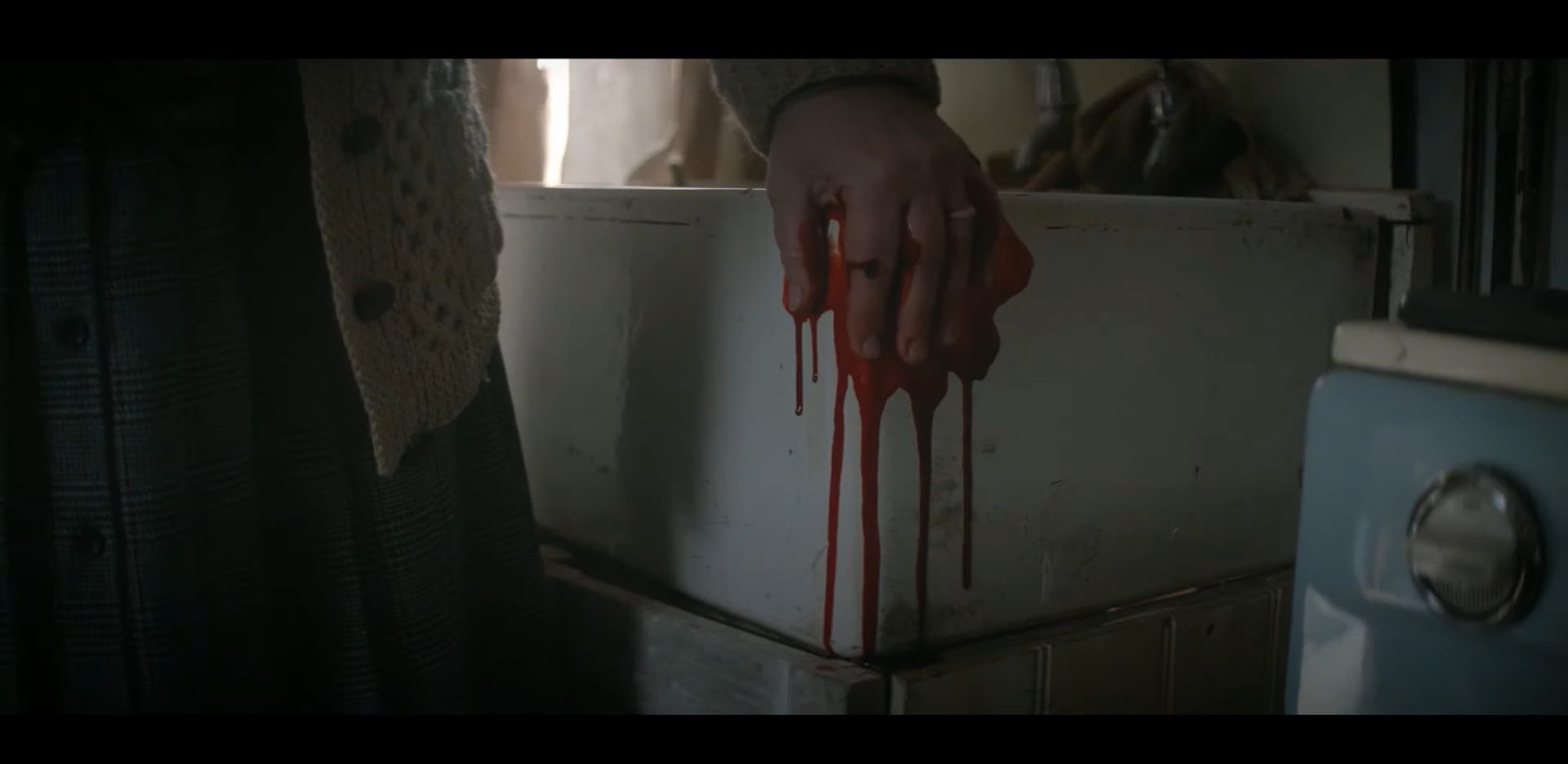
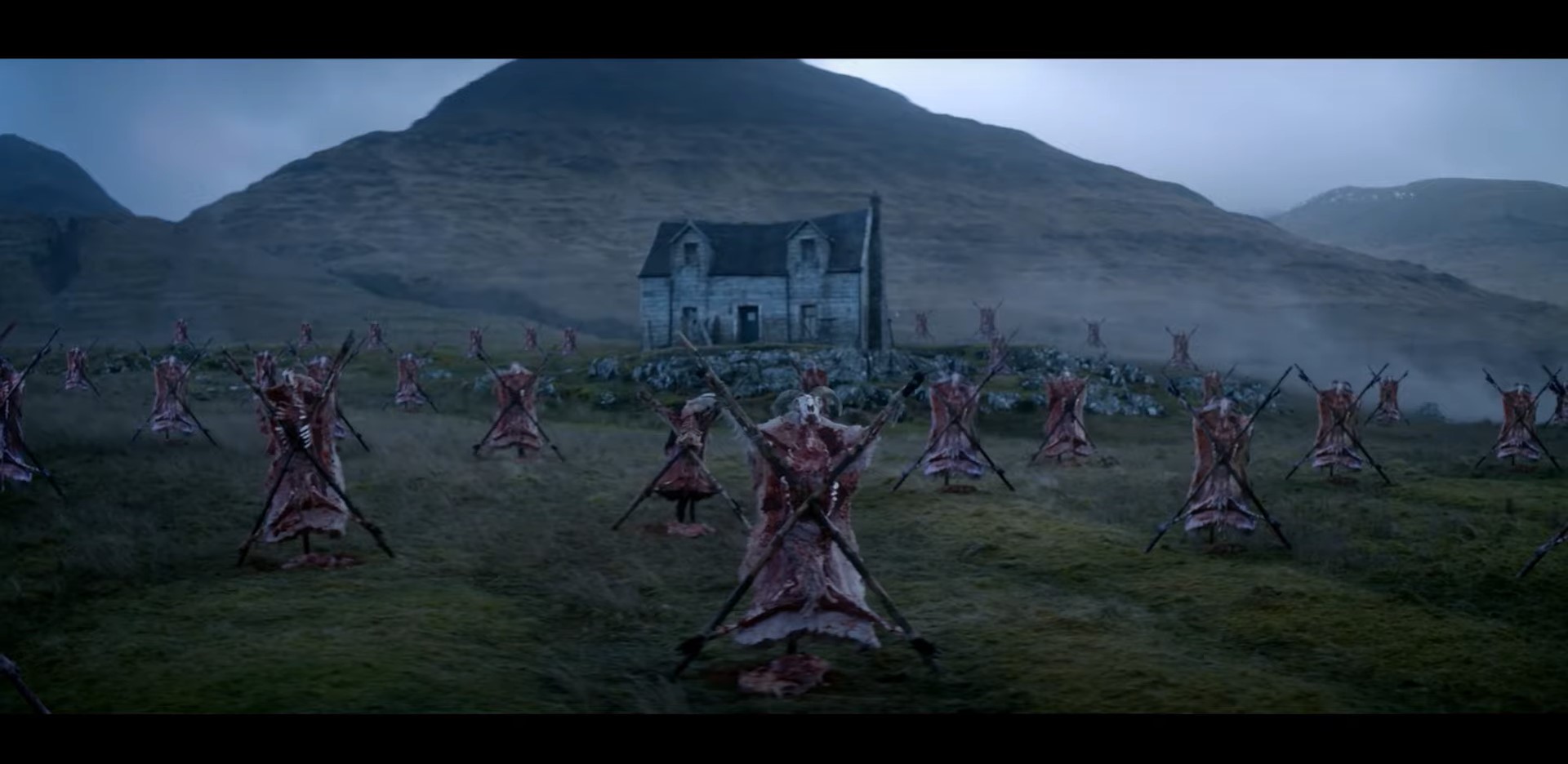
The death of his young, adulterous, and pregnant wife pushes Eric Black into wanting nothing else but space from the rest of the world.  He ships off with his dog Baxter to an isolated lighthouse island, answering a classified job ad to be a shepherd of a flock over 600 sheep.  His arrival to the island’s dilapidated living house is beyond below expectations but serves the purpose of avoiding everything that reminds him of his lost wife and previous life.  When loneliness creeps around the entire stretch of the fog-covered island and intense nightmares sweep over him nightly, being trapped at his new home away home stirs madness into his everyday cup of life that also could be possibly the malevolent dealings of a supernatural presence residing on the island with him. 

Mourning is already a powerful post-shock emotion that can swallow a person whole without warning.  Couple the intense bereavement with a bristly line of behind-the-scenes loathing creates a perfect maelstrom that bears a force more soul crushing and more untouchably violent on the mind.  This is the psychological assaulting premise for Russell Owen’s new film entitled “Shepherd.”  The Welsh-born writer-director conjoins daunting atmospherics with slow burn deterioration and a Hell of one’s own making that questions conscious and subconscious morals.  Owens stretch through grim realities continue well after his first two films, a 2013 post-apocalyptic thriller in “Welcome to the Majority” and a 2020 survival of zombified inmates with “Inmate Zero,” the latter initiating the island motif for Owen’s latest film.  “Shepherd” is 103 minutes of bone-chilling folk horror from Golden Crab Film Production (GC Films) and Kindred Film under fellow producers Aslam Parvez and Karim Prince Tshibangu reconnecting with Owen from “Inmate Zero.”

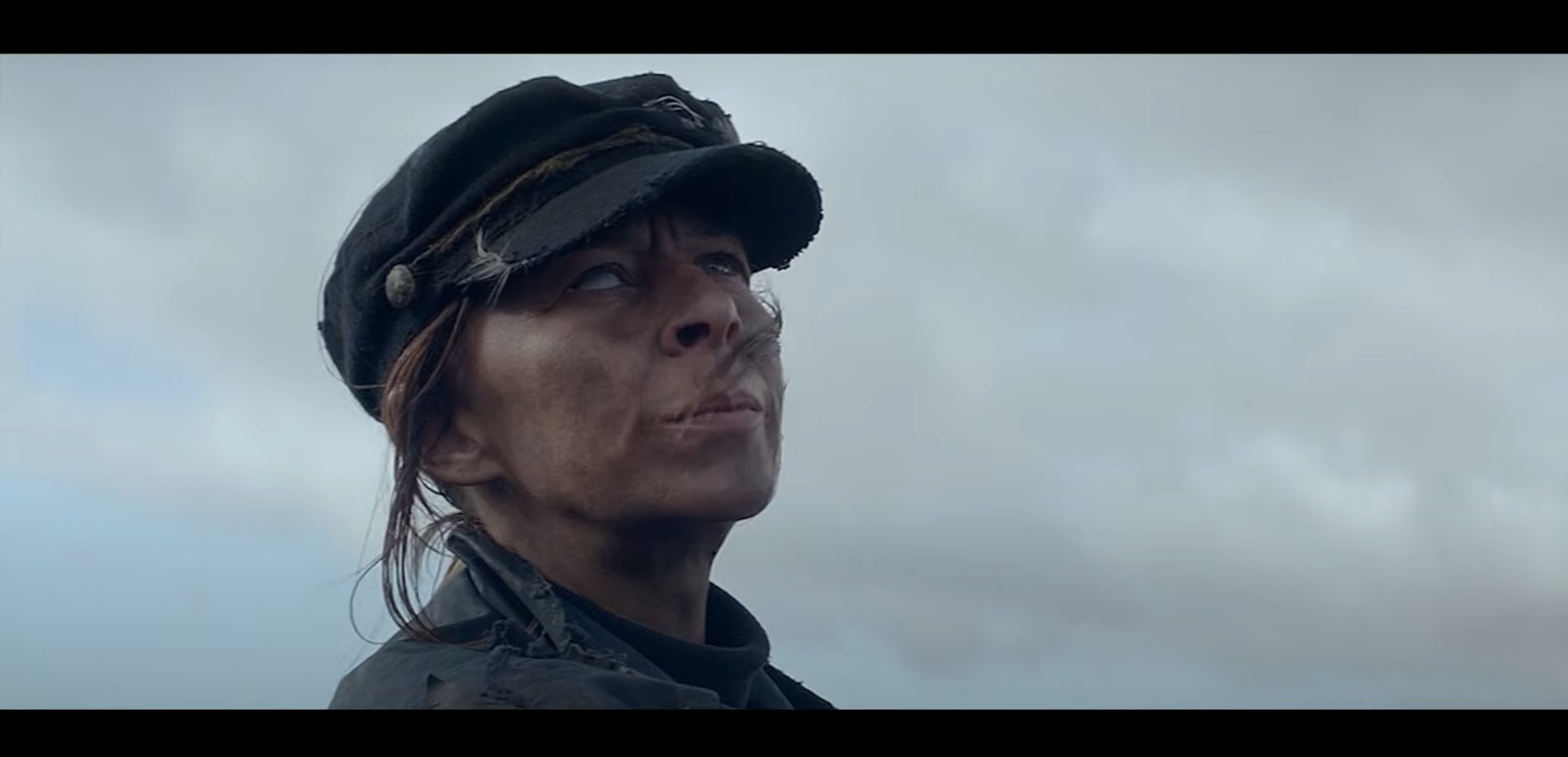
“A Discovery of Witches’” Tom Hughes embarks nearly solo on this frigid and fog-encrusted journey through self-segregating terror as Eric Black in order to break off Black from a world that won’t leave him be nor let him forget.   Hughes amasses a broody-flavored anguish, quietly stewing, fretting, and absorbing with great sedated composure the bombardment of strange occurrences during his stay on sheep island.  From his time with witches and vampires, the Cheshire-born, mid-30’s actor might be the lead of “Shepherd,” but it’s actually Kim Dickie (“Prometheus,” “The Green Knight”) who steals the show with her forebodingly salty fisher.  Haggard in appearance with a white, ghostly eye, Dickie’s frightsome performance and unsettling calm tone of voice could instill shivering fear into anyone who charter’s her boat heading toward a forsaken island.  The interactions between Hughes and Dickie are scarce with Dickie overshadowed by Hughes often wandering the island screen time like an avatar lost on in the fog of a Silent Hill horror game, waiting for something to pop out of the shadows and collecting clues to progress his story along.  Rounding out the cast is Greta Scacchi as Eric’s widow-bitter and devout mother and Gaia Weiss in a flashback and dream role of Eric’s deceased wife.

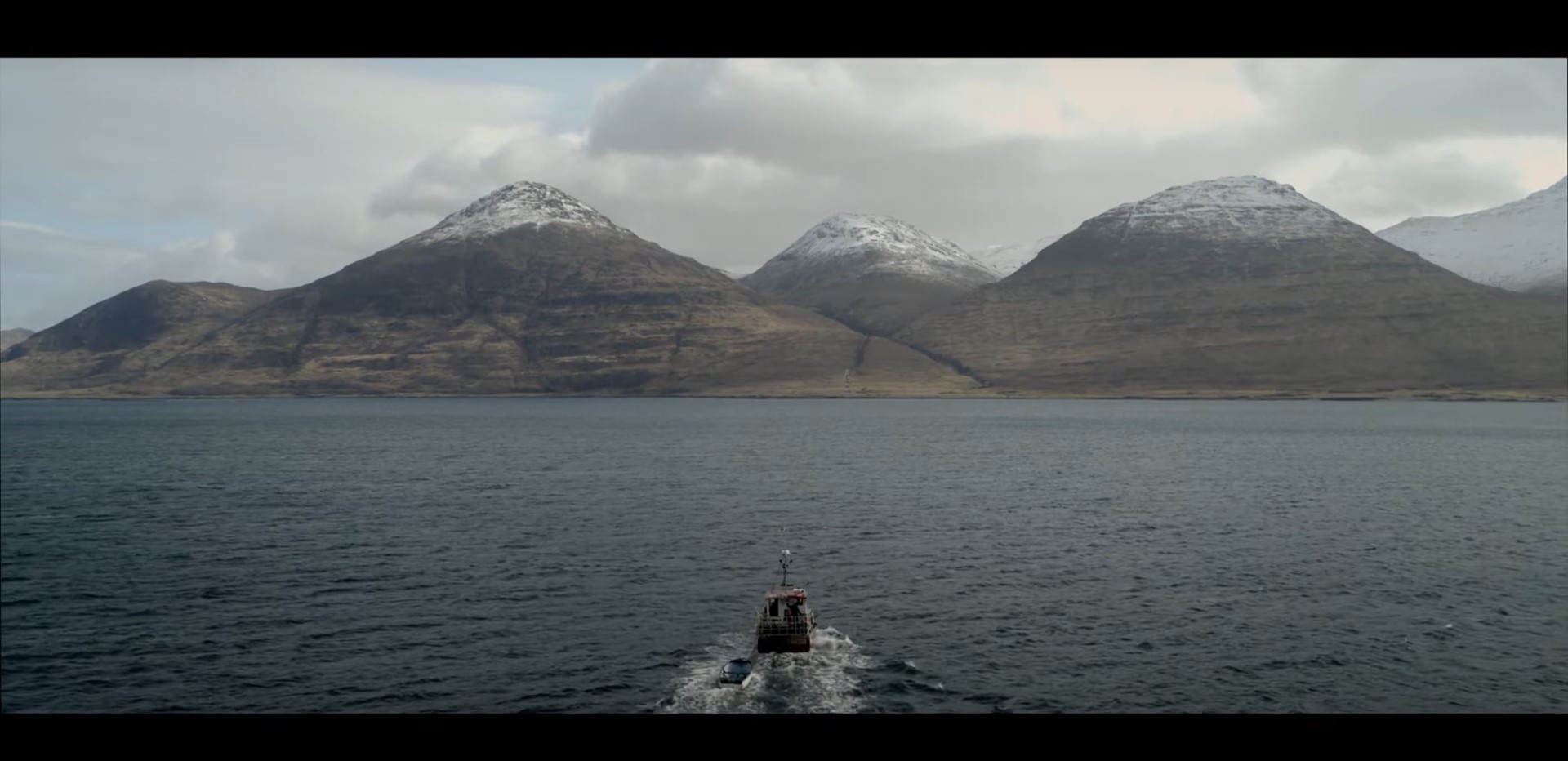
“Shepherd” immerses itself fully into the ideal concept of personal Hell with a wraparound mystery that batters and bruises the psyche of the protagonist, shielding away the hard-to-face truth, until a realization moment unfolds all the paranormal pastiche we’ve seen before in films such as Andrew Wiest’s “The Forlorned” and even Robert Egger’s “The Lighthouse,” both which involve lighthouses, lighthouse keepers, and a mixed-nuts’ tin of supernatural-madness. Trying to separate’s “Shepherd’s” niche from a very specific type of supernatural mystery subgenre surrounding a beacon of warning, or hope in some cases, is difficult to accomplish because each film, though stylistic diverse and eerily alluring in their own rite, regurgitate the same core context hinged on being unhinged. Now, what I’m not saying is that a remote, weather-beaten, and creepy lighthouse doesn’t make for a good setting – it sure as hell does – and cinematographer Richard Stoddard’s visual redecoration of the popular holiday tourist refuge, Isle of Mull, into a seemingly desolate, yet still a behemoth, island of nothing but monolithic rock faces and green grass as far as the eye can see. Stoddard’s use of in-flight drone cameras enables the visionary to capture breath-taking wide shots that dwarf Eric Black on his walkabouts in search for various odds and ends, providing an additional sense of overwhelming loneliness that pressurize the character to a breaking point. Space becomes an emblem of cursed irony for Eric between his need for separation from his disconnected place in the world to the vast space of Earth that inundates him into a bone-shivering panic. Space is also utilized by Russel Owen who’s able to manipulate through decent computer imagery the illusion of a large ship liner eerily resting a valley of fog or even taking a note out of Hitchcock’s shooting technique handbook of POV distortion, faltering Eric’s mind by disorienting him with swaying depths that play into the character’s fear of heights in another nod to the Hitchcockian coffer.

About every few years, a tense lighthouse lip-biter washes ashore. Released this past February of 2022, filmmaker Russel Owen’s psychological pilgrimage of coming to terms with consequential terror is his shot at the equivocal contretemps of one unlucky soul stuck on an eroded plinth of stone and shore. Darkland Distribution releases “Shepherd,” the second indie horror from Parkland Distribution’s dark subsidiary motion picture line, onto a UK Blu-ray with certified 15 rating and digital download, available off such platforms as Itunes, Amazon Prime, GooglePlay, Sky Store, Vubiquity (Virgin), BT, BFI Player, Rakuten TV and more. Since this review is based on a digital screener, I am unable to comment on the specifics of the Blu-ray A/V quality. The inhospitable-saturated soundtrack by Callum Donaldson is an unnerving mixture of low industrial rumblings and high anxiety string dissonance sure to keep the blood curdling with every resounding note and slice deep when the shocking time is right. I mentioned Stoddard’s eye for profound looming landscapes, capturing the natural beauty of the island, that are kept in continuity with the weathered fiber of the house and lighthouse interiors to match despite being shot inside a constructed studio set; however, a deep blue tint is added in post at random intervals of interior shots that pop out of place like a dislocated thumb, taking away from the realism and stepping more into the cerebral caged surrealism from which Owen ebbs and flows. “Shepherd” herds all the right tropes into a pen of madness. With a ferocity of natural imprisonment and the threat of evil dense within every molecule of the island, this awake nightmare fuels the ominous fire, but can’t quite reach its gut punch ending that curtails off toward ambivalence without cherishing a satisfying single resolution.

“Shepherd” on Blu-ray from Darkland Distribution!

Is Deceptional Fraud More EVIL Than Psychopathy? “Paranoiac” reviewed! (Scream Factory / Blu-ray)

Get “Paranoiac” on the Collector’s Edition Scream Factory Blu-ray!

The parents of siblings Tony, Simon, and Eleanor Ashby die in a tragic plane crash. Two years later, Tony commits suicide by plunging himself off a cliff into a watery grave with his body never having been recovered from the ebb and flow of crashing waves upon the oceanic rocks. Eleven years later, the long thought dead Tony suddenly and unexpectedly returns to what’s left of his family: an overprotectively cold and matriarchal substitute in Aunt Harriet, a narcissistic and alcoholic brother Simon, and a sister, Eleanor, on the precipice of losing her mind from grief over Tony’s death. Shocked by this return, the surviving Ashby siblings split their concerns regarding Tony’s authenticity. Eleanor believes her brother is alive and has come back to rebuild the happy relationship between them whereas Simon denounces Tony’s validity and works underhandedly to either expose Tony as a fraud or to get rid of the imposter by any means necessary, especially when the conditions of receiving the Ashby family fortune have nearly come to an end and a hefty inheritance awaits his opulent tastes. Tony’s arrival causes complications with the inheritance, opens up old wounds, evokes new romantic sensations, and regresses transgressional guilt toward a fiery conclusion to the Ashby family mystery.

A ravishingly dark, mystery thriller inspired by Scottish author Josephine Tey’s crime novel “Brat Farrar” from 1949, the 1963 “Paranoiac” works from off of Tey’s dysfunctional and deceptional family building blocks and extending it into a gothic framework of demented greed in a brand-new of-shooting avenue of psychological thrillers from Hammer Films, hoping to branch off the traditional horror trunk and piggyback success off of the American released, 1960 Alfred Hitchcock film, “Psycho.” “Paranoiac” is the junior film of Freddie Francis (“The Skull,” “Torture Garden”) and penned by the longtime Hammer writer, who basically wrote all of Hammer’s classics, Jimmy Sangster (“Horror of Dracula,” “The Revenge of Frankenstein”). Anthony Hinds and Basil Keys served as producers.

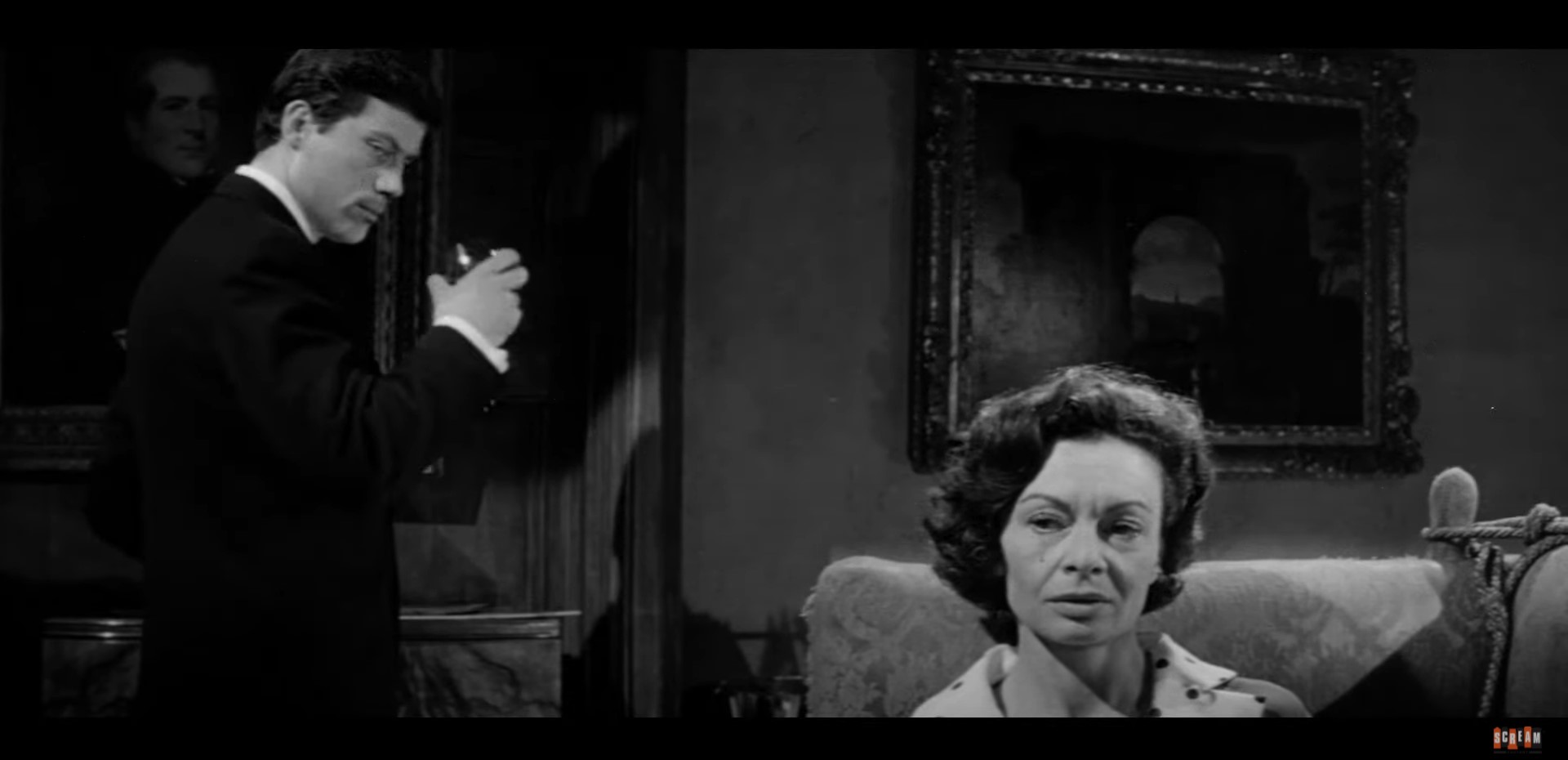
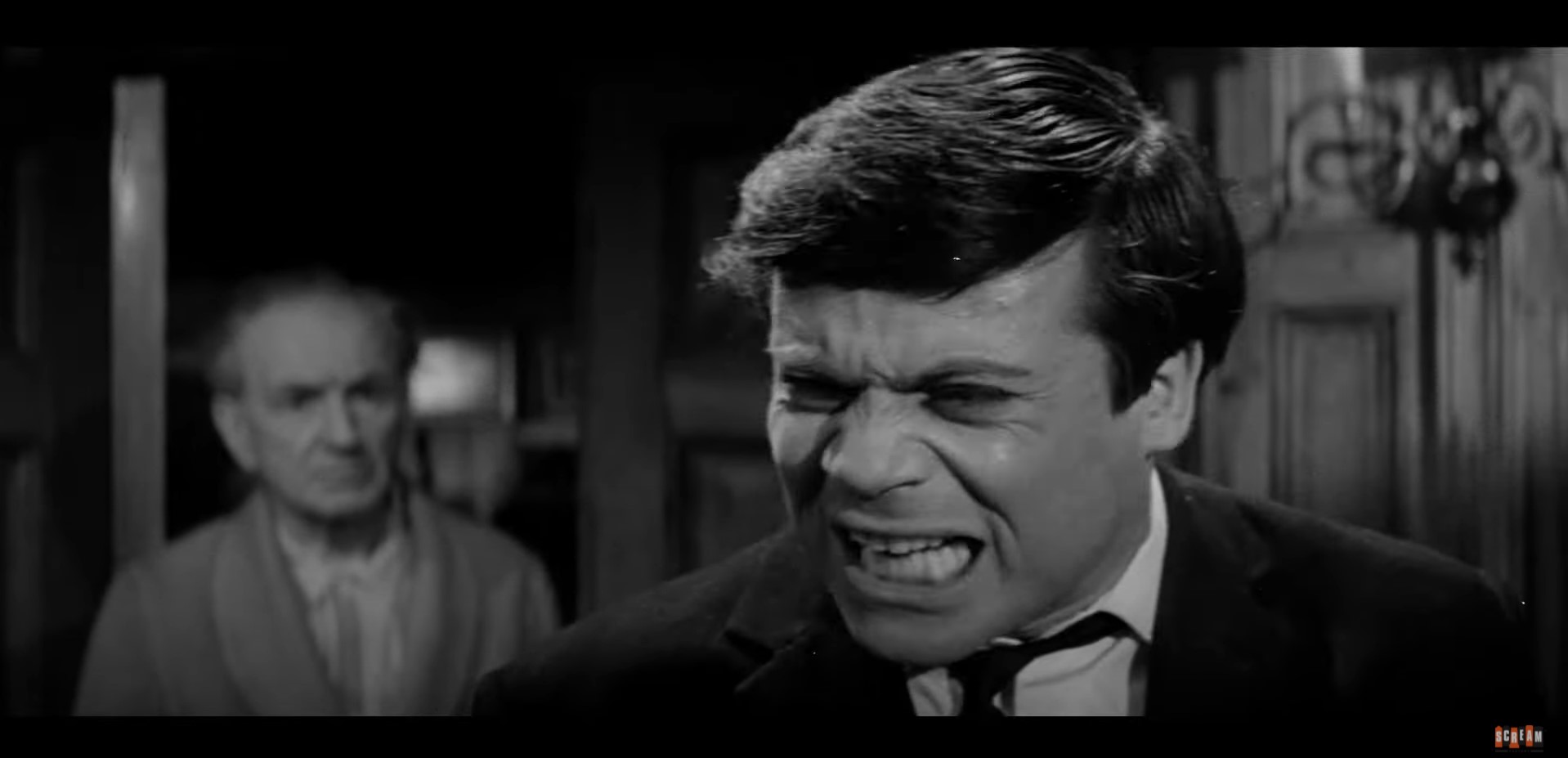
“Paranoiac’s” ensemble cast is quite brilliant in their respective roles.  Oliver Reed (“Curse of the Werewolf,” “Gladiator”) stands out immensely with a flamboyantly cruel and warped performance as the erratic Simon Ashby constantly under the influence of Brandy, Champagne, or whatever alcoholic beverage he can get his organ-playing hands on.  Reed puts out this hateful energy that can’t be ignored and outlines Simon with defined truth about where the character stands with his own flesh and blood – a callously cold and calculating black sheep.  Simon becomes fascinating in every scene, every scenario, and continues to unravel as a wild card that always leave us wondering what he’s going to do next.  Then there’s sweet and innocent but overly distraught Eleanor from Janette Scott in complete sibling behavioral polarity that sinks Eleanor further and further into madness designed by those close to her.  Scott, who also had a starring role in “The Old Dark House” that was released the same year, came aboard relatively new to Hammer but equates her status against Reed, who Hammer was grooming to be a prominent leading man for more of their productions, by selling Eleanor’s despair and the deep-seeded craving for her other, more sweeter, brother, Tony.  Encompassing the thought dead younger brother is Alexander Davion, another newbie to Hammers’ brand with, in my opinion, a neutral and bland face that doesn’t fit the Bray Studio’s swarthy and distinguished lot of male actors.  Davion’s also doesn’t do terribly much with Tony’s sudden resurrection as he folds himself back into Ashby manor.  While this could be Freddie Francis’s shrouding display of truth upon Tony’s legitimacy, there is literally no life or passion behind Alexander Davion’s eyes as he stares blankly at accusations and even Eleanor’s incestuous flirtations.  Yes, incest becomes a rummaged theme that walks a tightrope between more than just two family members.  “Alone in the Dark’s” Sheila Burrell is the stern protector in Aunt Harriet, “Blood Beast from Outer Space’s” Maurice Denham ruffles Simon’s feathers as the Ashby estate treasurer holding all of his inheritance, “The Maniac’s Liliane Brousse nurses a façade over the well-being of Eleanor and the love interests of Simon, and the cast wraps up with John Bonney as the treasurer’s fraudulent son.

Hammer had by 1963 already established itself as a horror powerhouse with the success of colorfully bold, violently stout, and sexually-saturated innuendo classic monster features, such as with “Horrors of Dracula,” “The Curse of Frankenstein,” and “The Mummy.”  Capitalizing on the coattails of Hitchcock’s “Psycho” and sitting on the adaptational rights for Josephine Tey’s “Brat Farrar,” Hammer decided to pivot into the crime and suspense thriller direction that alluded to the aftereffects of cerebral breaking blended into elements of collusion, creating an endless tense-filled turbine revolving around the whodunit particles and the who’s veneer is covertly smeared by corruption.  In a way other than the similar one word title and an unhinged theme, “Paranoiac” could be mistaken as a Hitchcockian-shot production with the larger than life and depth rich landscapes; the vast wide shots of Isle of Purbeck’s peaks and cliff steeps are engulfed oxymoronically as an idyllically menacing key peninsula landscape centric to Tony’s long thought demise as well as a place of hopelessness as the natural English Channel waves crash relentlessly onto the rocks below.  Francis and Sangster hinge the film success on the colossal subtext of brittle strength, guilt, and a vague but prominent suggestion of incest between sister and brother and brother and aunt that, in all honestly, was a personal surprise to myself that it passed the British Board of Film Certification (BBFC).  Yet, the insinuation did and paved a real pothole plague path for viewers in a good way that the story kept evolving, kept us on our toes, and when it spiraled, it spiraled quickly and sharp in a descent onto those very hopeless rocks below waiting for our emotions to be swept away lost in a mobile, violent current. 

Paranoia runs rampant like an epidemic in this Freddie Francis aptly entitled sullen celluloid “Paranoiac,” the next Hammer film receiving a collector’s edition Blu-ray treatment from Scream Factory, the horror sublabel from Shout Factory! The region A locked encoded Blu-ray features a new 2K scan from the interpositive. By 1963, Hammer was well versed in technicolor, especially for Stateside releases of UK films, but “Paranoic” opts for the black and white picture in another subtle nod to “Psycho.” Under veteran Hammer Film’s cinematographer Arthur Grant, that famous gothic-cladded manor house is aesthetically fetching with in every detail captured by Grant’s 35mm camera as well as the broad wide shots in the bird’s eye view of Isle of Purbeck. Scream Factory releases the film in 1080p, full high definition of the original aspect ratio 2.35:1 with sterling results in extracting details and balancing the contrast without brightening or darkening where not needed or intended. There were no real damage spots to point out nor were any crops or enhancements made to touch up possible problematic or stylistic areas. The release comes with a single audio option in a DTS-HD Master Audio monaural track with slight static in the background. Dialogue is clean and mostly clear with an occasion hiss during more boisterous moments, but the range and depth of a faultless ambience and Elisabeth Lutyens brassy and bass soundtrack comes through symmetrically balanced. English SHD Subtitles are also optional. The special features include a new audio commentary with Film Historian Bruce Hallenbeck, two new interviews with author and critic Kim Newman in Drink of Deception and with film historian Jonathan Rigby in A Toast to Terror – two familiar faces seen in recent Scream Factory’s restorations of Hammer productions, a making-of segment that dives archive interviews with Jimmy Sangster and others going over the genesis of the story and into Hammer’s aspirations at the time, and a theatrical trailer. “Paranoiac” is more than just its creepy, bulbous mask that graces the Mark Maddox gorgeously green illustrated slipcover and snapper case cover art. Rarely does a film evolve from one narrative into another without crisscrossing the stitchwork, becoming overly convoluted beyond repair, yet “Paranoiac” digs in and dilates the already volatile chemistry with integrated and powerful performances from Oliver Reed and Janette Scott that makes this film high on the Hammer watch list.

Get “Paranoiac” on the Collector’s Edition Scream Factory Blu-ray!