The Little EVIL in the Cupboard. “The Abomination” reviewed! (Visual Vengeance / Blu-ray)

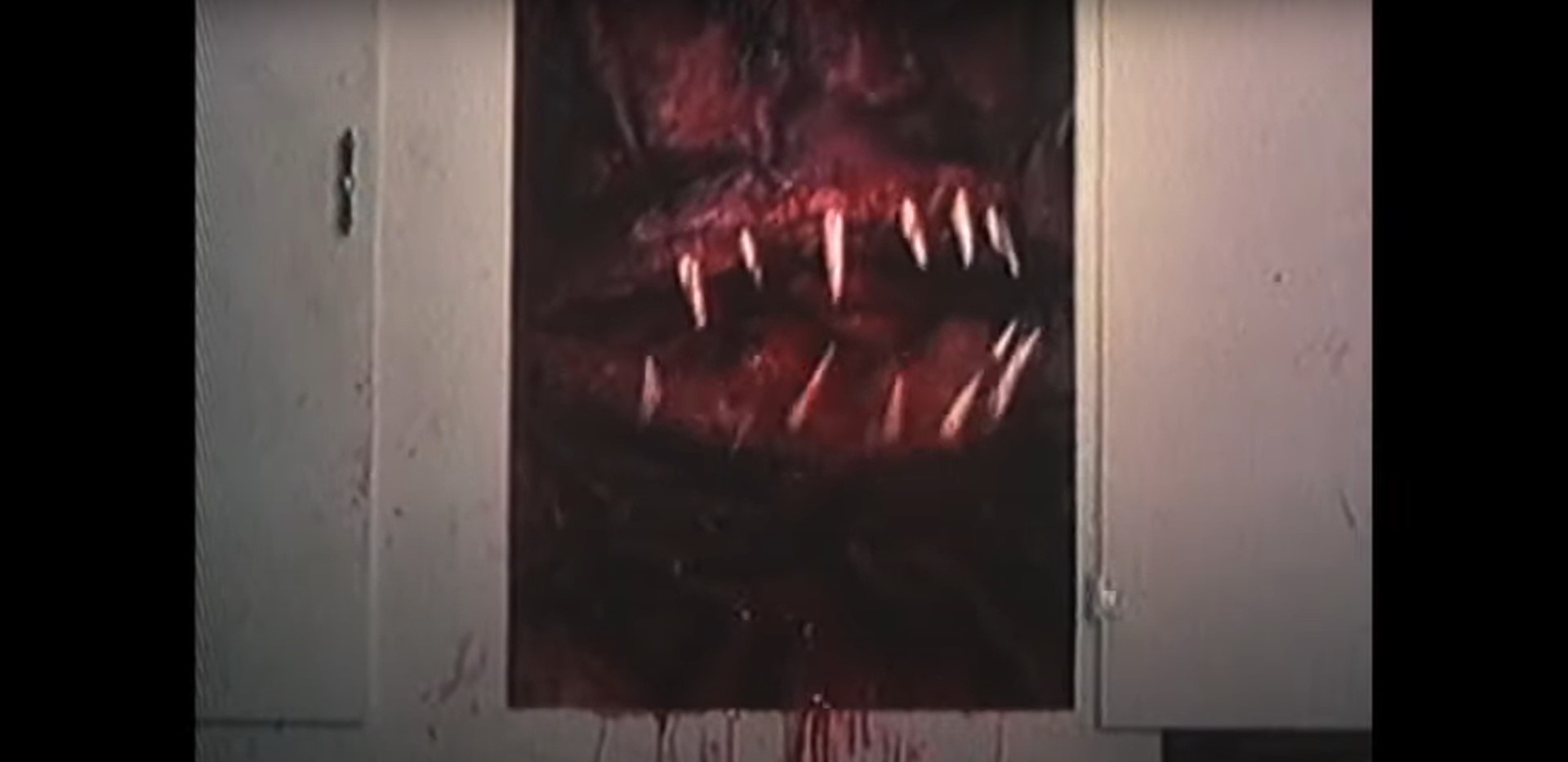
Cody’s devout mother has a large tumor growing in her lung.  Her piety believes will cure her from the ailment or so says the televised evangelical priest Brother Fogg who once listened to her plea.  When she coughs up the tumor onto the kitchen floor one night, the relieved woman becomes ecstatic having been miraculous cured by brother Fogg’s channeling of the holy spirit and her $20 donation to him but little does she know that the tumor is actually a blood lusting demon that slithers down Cody’s sleeping throat, turning the young man zombified and obedient to the demon’s ever starvation for human blood and flesh in order to grow.  Inhabiting Cody’s house like a shell and monstrous with tentacles and large teeth chomping from out of cupboards and the top loading washing machine, Cody heads out into the world to brutally murder his own boss, friends, and even family to serve and feed the abomination living in his home.

Tantamount to “A Little Shop of Horrors” and released the very same year as the Rick Moranis remake of the original Roger Corman killer-plant picture, writer-director Bret McCormick waters to grow his gelatinous creature-feature “The Abomination” onto the home video market.  Ultra-violent and gory against the more, what would be considered in comparison, family-friendly and Hollywood produced rowdy giant flytrap ravenous to devour victims, “The Abomination” is by no means a musical but delivers a tone of tentacle-laden terror around a subtle theme of mental health.  Shot in Poolville, Texas, from the then future filmmaker of “Repligator” and “Highway to Hell” under his pseudonym of Max Raven, the guts-galore indie was also produced by McCormick as well as with longtime partner Matt Devlen, director of “Ozone:  The Attack of the Redneck Mutants” and producer of “The Upstairs Neighbor” with “Woodchip Massacre” and “Cannibal Hookers’” Donna Michelle Productions picking up the film for at-home VHS distribution rights.

However unlikely it may seem with these types of splatter films and with a cast credited with different stage names and pseudonyms, “The Abomination” is undoubtedly a family affair.  Bret McCormick has employed a great deal of his once intact family into filmic roles as creature fodder, which some of us would like to dish up on a daily basis.  Well, McCormick did it from his brother Brad McCormick as Ike, mother Victoria Chaney (“Christmas Craft Fair Massacre”), former father-in-law Van Connery, and even his wife, now ex-wife, Blue Thompson (“Ozone:  The Attack of the Redneck Mutants,” “Highway to Hell”).  Relatives appear game to be in a next-to-nothing splatter horror that offers a soup kitchen of out of body organs being pitchforked fed into gaping jaws living a cupboard.  Performances render suitably as bored rural clodhoppers who fear God, work at junkyards, and give into evangelical sermon with Cody (Scott Davis) and his friends often the more sensible foursome of youth yearning for fun and beer as they race down dirt roads and yuk it up on the back of their 4×4 truck beds.  All of the dialogue is done in post with ADR and so we’re not offered the actors’ original gutturals, conversations, and screams with the silver lining in the audio track being a clean post-principals photography recording of the dialogue.  One shortcoming of the dialogue track lies with Cody’s mother Sarah, played by Jude Johnson (“Tabloid”), with earsplitting screams set on linger as she discovers the truth.  With a small, intimate cast with most being within McCormick’s inner circle, every character is essentially core to the story with the rest being rounded out with performances from Suzy Meyer, Gaye Bottoms, Matt Devlen, and Rex Morton as the equivocally moral televangelist Brother Fogg.

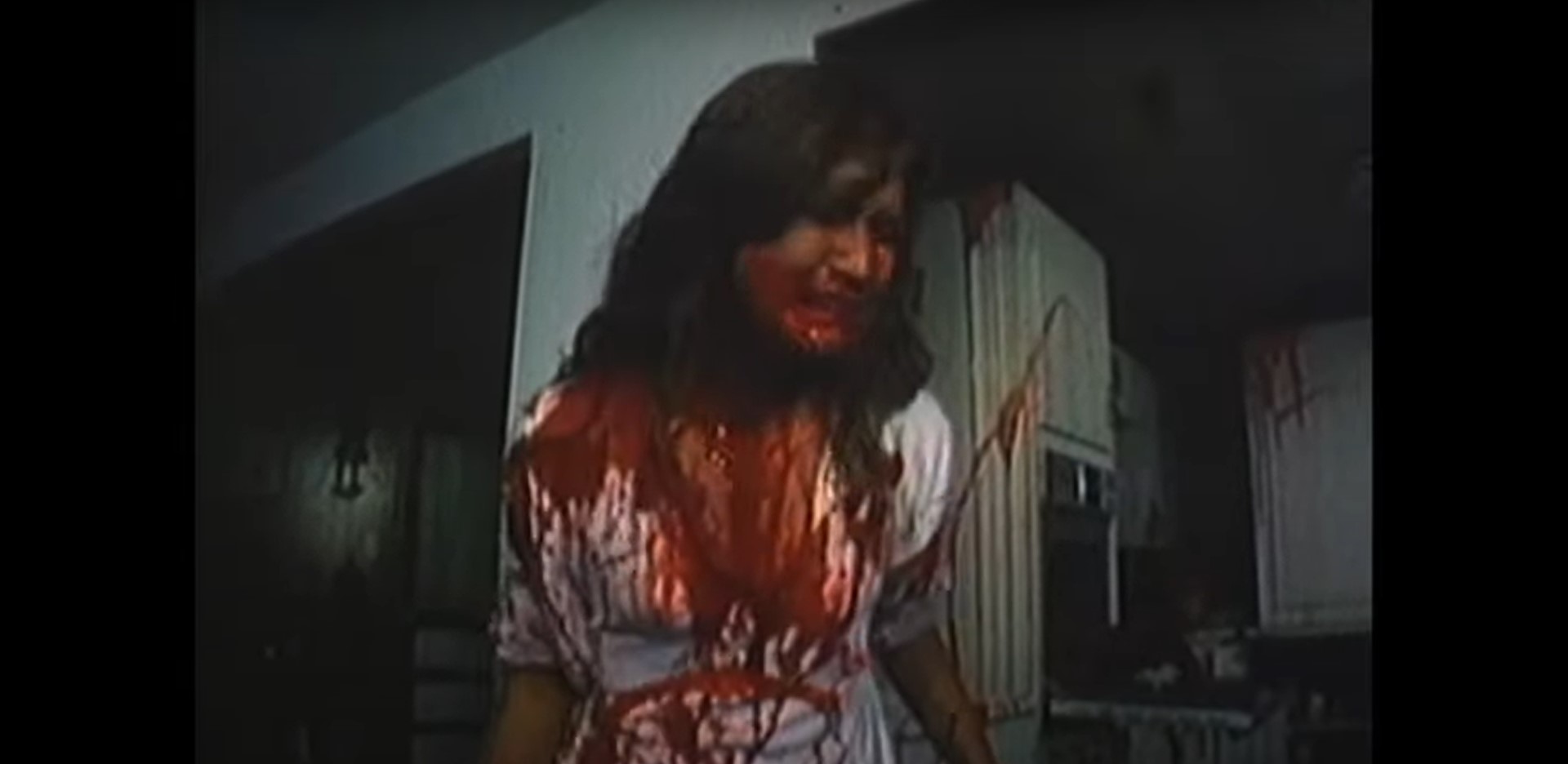
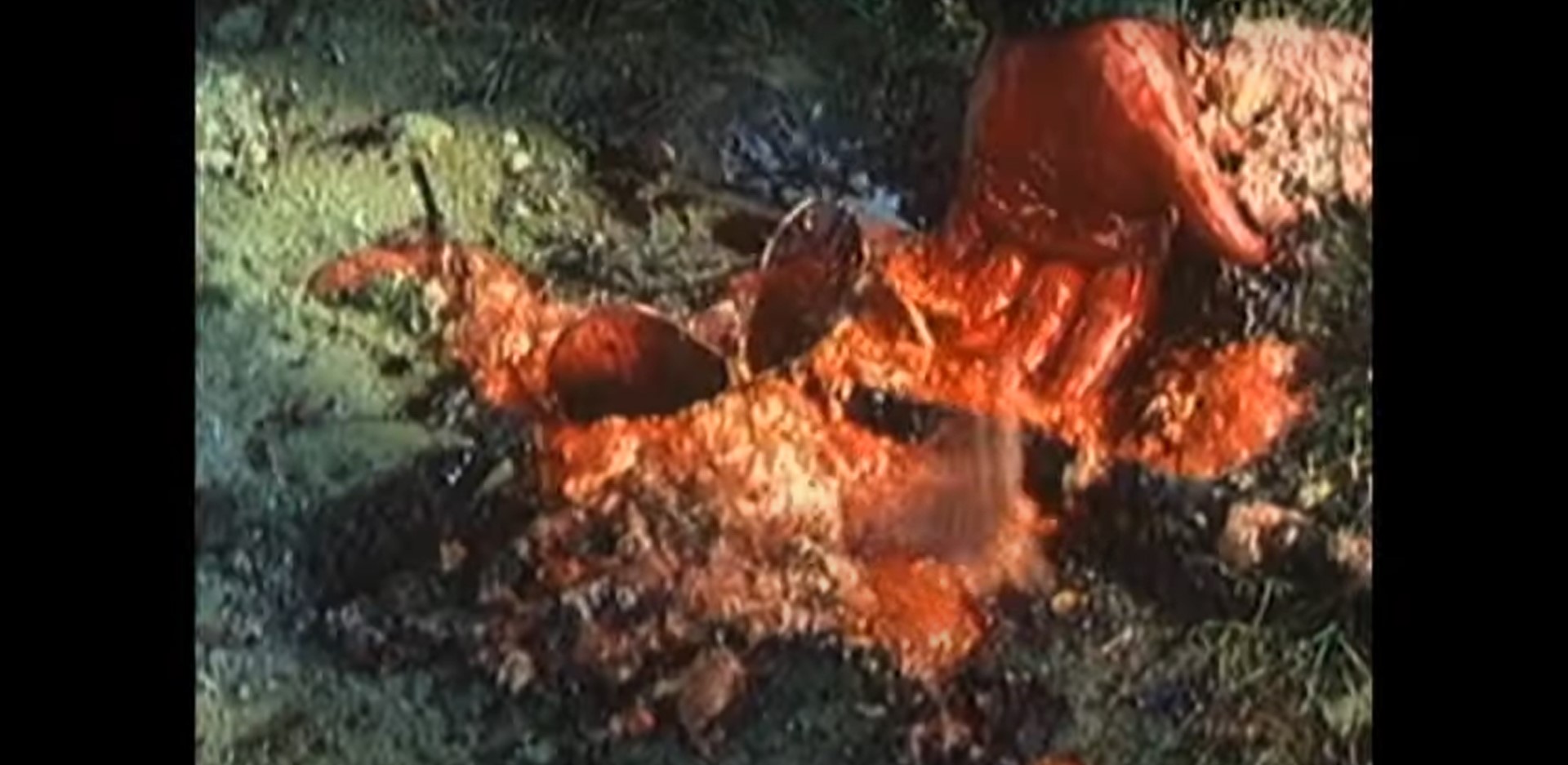
There’s something to be said for low-budget, do-it-yourself, indie horror films with exaggerated and practical special effects.  “The Abomination” is one of those said features that’s’ more splatter than substance but the splatter and the palpable puppetry are the driving force behind McCormick’s attempt to enter the gonzo-gory market of cost nothing commodities popular at the time.  “The Abomination” evokes the very truth of the titular creature without being ambiguously metaphorical, becoming a character, much like Audrey II in “The Little Shop of Horrors,” in itself even if it didn’t talk or sing with boisterously briar.  Before delving into the core narrative, skipping the opening dream sequence/montage may be in your favor as the series of random images of grotesque violence, splatter, and such sum up the film’s entirety in a disordered delusion of dreams. If you can fast forward the montage, the opening secondary setup of Cody and Dr. Russell’s voiceover conversation will suitably add the necessary layer to peel back not only to expose the carnages to come but also sneaks in a thought-provoking twist that will leave audiences reeling over the bookend voiceover conversation between a distraught Cody and the doctor in the final moments.  Not to be exceedingly overshadowed by the immense deluge of blood, the pint size pivot juts out like a nail in a floorboard, insignificant across the entire square footage but once you step on it, the punctured wound leaves an unforgettable impression that makes the entire floor feel the need to be tiptoed around because of the dreadful sensation of sharp, pointy objects covering the entire area.  Narratively, the linear structure works as a son and his mother struggling on the precipice of her cancerous death while believing the televangelist Brother Fogg’s wisdom and spiritual healing will come to her rescue before her demise, but the one element that doesn’t quite work, or is more so unclear, is Brother Fogg’s part in the much darker side of the abomination’s arrival.  In scene, Fogg’s has all the hallmarks of a fire and brimstone swindler but no other clues hint to his involvement in the scourge spawn other than a few dropped lines by other indirect characters that more disconnect the dots then link them.

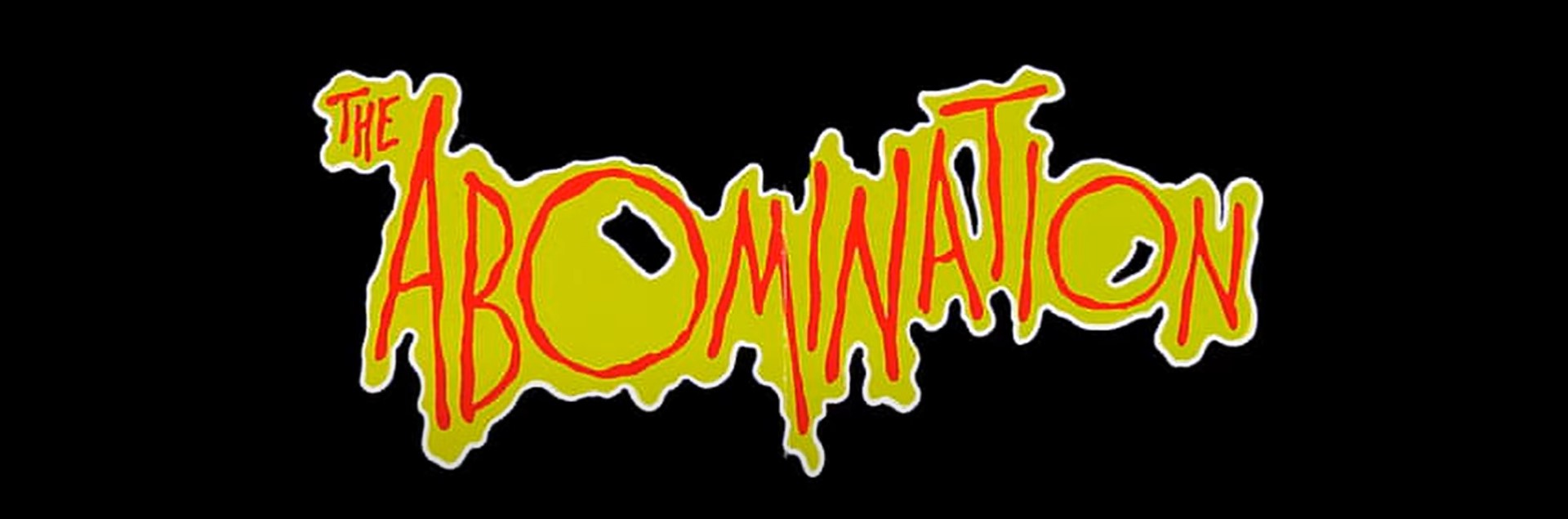
You have to continue to love Visual Vengeance for their pastime presentation of splatter and obscure VHS films.  “The Abomination” slithers out of incubation as one of their latest releases onto a full-bodied Blu-ray with new artwork, new bonus features, and a new high-definition transfer! The AVC encoded, 1080p, BD50 is presented in a 1.33:1 aspect ratio. McCormick filmed “The Abomination” on Super 8 but had converted the feature through a U-matic VHS playback, resulting in two very different technical looks with the grainy celluloid of a Super 8 integrated into the softer gauze and tape degradation of VHS. We usually see this in the reverse with modern releases being played back through VHS to obtain that SOV/retro look. Visual Vengeance continues to preface all their releases with a warning of quality with their obtaining the best possible standard definition tape masters that may still render poor video and audio quality. A/V does convey a softer simulacrum and a pallid color palette with the occasional tracking lines and even seldom frame damage, but the overall finished product is visually rock solid. The English Dolby Digital stereo mix has the same pallidity as the video but is balanced within the amplification ilk where fading or becoming distorted is virtually nonexistent. Automated dialogue replacement as well as overstepping foley is evident from the start that does provide an undertow of clear consistency without fluctuation. Soundtrack and sound design by Kim and Richard Davis and John Hudek really shines through with a pulsating ghoulish synth-piano key that hints at giallo undertones. Optional English subtitles are available. Visual Vengeance really did outdo themselves with sizeable supplementals beginning with a pair of commentary: Bret McCormick joins Visual Vengeance’s Rob Hauschild and Matt Desiderio while Tony Strauss of Weng’s Chop Magazine goes solo. There’s also a new feature-length interview with McCormick Monster Kid Movie Maverick that entails McCormick starting his life story from Super 8 home movies to the present, a new interview with Blue Thompson, a new interview with Victoria Chaney, and an interview with Michael Jack Shoel of the original Donna Michelle Productions’ VHS distributor. McCormick provides a new location tour between his involvement in “The Abomination” and “Ozone,” raw footage of the testing the tumor and the death of Cody’s boss, McCormick’s Super 8 movies from his youth, a multi-page text screen interview with “The Abomination,” a behind the scenes image gallery, and a trailer archive. Release number 10 on the spine, this Visual Vengeance piece of home video art comes with The Dude Designs’, aka Tom Hodge’s, illustrated rendition of “The Abomination” with phallic tentacles, blood-stained teeth, and a mustard yellow title. Sheathed inside is an even more beautiful front cover art adapted from the iconic scene that left a lasting impression with this reviewer. The uncredited cover, or uncredited because I could not locate the signature or the credit, possesses more depth in detail than the comic book-esque slipcover, a comparable contending front cover from the original VHS art on the reverse side. Visual Vengeance provides hefty insert material that not only includes their staple retro sticker sheet but also a 14-page, black and white official comic book illustrated by Marc Gras, a trifold essay entitled The Tumor that Came to Fort Worth: Apocalypse on a Budget by Tony Strauss, and a folded mini-poster of the front-facing cover art inside the clear Blu-ray case. The disc art has the same The Dude Design slipcover art cropped to fit the BR disc. Bret McCormick fed his ferociously tumorous feature with all that he had, spellbinding with shocking serration, and now three and half decades later, Visual Vengeance celebrates McCormick’s cancerous creature with one hell of a soul-swallowing souvenir!

There’s Nothing Abominable About “The Abomination” Release!  

Insecurity is a Path to the EVILside! “Killing Spree” review!


Airplane mechanic Tom Russo is a newly married man; it’s his second marriage, in fact. Tom’s first go around in marital union didn’t go over so well as found himself on the other end of being a victim of adultery. Paranoid and skeptical, Tom requires his young and hot new wife, Leeza, to become a house wife as he works long, exhausting hours to support his family in a one income household. As the work hours pile, money becomes tight, and tensions build in the back of Tom’s mind, paranoia steamrolls Tom’s reality when he starts suspecting a lonely Leeza of screwing every delivery, repair, and lawn car man that knocks at their door. Without confronting Leeza with his delusions, Tom’s extreme jealously pushes him to kill and bury the men that he envisions involved in the affairs, but his victims don’t stay dead, they don’t stay buried, and seek the eternal suffering for their killer.

A few, long years have gone by since our last encounter with the practical effects-heavy, indie horror director Tim Ritter. From his disturbing tale of destructive descent in “Truth and Dare?: A Critical Madness to his “Switchblade Insane” segment from the SOV masters of horror in the ghastly-variant anthology “Hi-8 (Horror Independent 8)” that also helms short films from Donald Farmer (“Cannibal Hookers”), Todd Sheets (“Dreaming Purple Neon”), and Brad Sykes (“Camp Blood”), the filmmaker has a legacy of blood-shedding entertainment. Today, exploration into Ritter’s “Killing Spree” unearths his passion for horror that develops out of influences from other horror icons before leaving his bloody footprint in the indie scene. “Killing Spree,” written and directed by Ritter, displays the filmmaker’s deep affection for Fangoria magazine having it displayed, repeatedly used as coffee table literature prop. There’s also admiration for “Night of the Living Dead” in the bonkers film about one man’s mind snapping like a twig under the formidable stress. The main character’s name is Tom Russo and Russo is the last name of NOTLD co-writer John Russo and let’s not also forget about the undead rising from Tom’s backyard is fairly synonymous with zombie classic.

While Tim Ritter flicks may not be graced with star-studded actors and actress, even from the B-movie lot, and more than likely don’t spawn hidden talent, there’s still something to be wholeheartedly said about the cast of his films that can only be described as an eclectic bunch of marvelous misfits that bring underground brilliance to the screen. Asbestos Felt is one of those said characters. No, I don’t mean the toxic asbestos felt roofers use as a underlaying backing when nailing in shingles. “Killing Spree” is one of three films Felt and Tim Ritter have worked on together and the scrawny-build with a strung out Grizzly Adam’s head on his shoulders has a wide-eyed spectacle about him when playing Tom Russo spiraling down the crazy train drain. Tom’s obsession with keeping Leeza from the perverted grips on those naughty repairmen would drive any wife away, but not Leeza, played by Courtney Lercara. The “Slaughterhouse” actress is an aesthetic flower growing in the middle of all the mayhem and she protrudes an innocence well received by her character. Other cast members include Bruce Paquette with the white boy dance moves, indie horror vet John D. Wynkoop (“Brainjacked”), Kieran Turner, Alan Brown, Rachel Rutz, Cloe Pavel, and Raymond Carbone as a dirty old pilot with a wise guy brogue.

Remember when I said these types of horror films don’t typically expose acting artistry? Well, behind the camera, one or two crew members start their illustrious careers in the indie trenches. Such can be said for special effects master Joel Harlow who makes his introductory launch with “Killing Spree” and then find work on a couple sequels for “Toxic Avenger,” “Basket Case 2,” and all the way up to the Neil Marshall “Hellboy” and “Godzilla: King of the Monsters.” Yeah, I think Harlow made out OK. Harlow’s effects on “Killing Spree” will “blow your mind,” as stated on the back of the Blu-ray cover. Well, when Leeza’s head turns into giant lips then goes oral on Raymond Carbone’s head until his crown ejaculates, then, yes, these effects will blow your mind…literally! The medley macabre showcase Harlow’s craft from A to Z that includes a torched corpse, a disembowelment, severed undead head, and a nosy neighbor without a nose or without half a face for that matter.

Sub Rosa Studios re-releases “Killing Spree” onto the dual format, DVD/Blu-ray combo set with MVDVisuals providing distribution of the limited 666 copies. Essentially, this is the same release that was made available a couple years back presented in a standard television format of 1.33:1. The Betacamp SP 16mm video has held back the test of time since 1987, but with any video film on a budget, the rather cheap recording method does come with inadequacies, even if being remastered. For the entire runtime and not just in the tinted moments of carnage, the skin tones are akin to Donald Trump’s uncanny neon orange flesh and perhaps could have gone under an extensive color correction. Aside a few very minor tracking issues and faded coloring, the video transfer passes substantially well despite the continuous flare of orange. The English stereo 2.0 mix isn’t hearty or robust. Whenever Tom goes into maniacal mode, his crazy quips are quite soft even when he elevates his voice, and that goes the same with depth and range which are non-existent over the course of a flat audio tracks. Though soft at times, dialogue strongly comes through in the forefront with some fuzzy nuances. Bonus features are killer on this release with the Blu-ray sporting the majority with a never before seen extended director’s cut, a new commentary track from director Tim Ritter, a 90 minute documentary entitled “Blinded by the Blood,” a radio show commentary by H.G. Lewis and Tim Ritter, music tracks, photo slide show, three alternative scenes, blooper reel, and a Joel D. Wynkoop segment. The DVD also includes the director’s cut version of the film, the new commentary by Tim Ritter, and commentary for the original cut by Tim Ritter. “Killing Spree” is as grisly as the SRS cinema Blu-ray/DVD cover implies and then some with all the characteristics of a deranged and unhinged man exerting himself beyond the limits of sanity and mortality to unambiguously protect what is his; a dramatize example rendered as a metaphor for those who will do anything to protect what’s theirs.

Limited Edition. Get it now!

Full Blown Evil is Only One Snort Away! “Dreaming Purple Neon” review


The last bloodline of a black magic rite has manufactured a highly addictive drug called Purple Neon into pill, powder, and injection form and has distributed it through the pipeline of local dealers amongst an unsuspecting community unaware of Purple Neon’s real and highly potent side effects. The drug transforms the dopers into mindless, blood thirsty slaves and connects the them telepathically to a diabolical underworld queen that’s sought to be risen through the blood and body of a youthful human sacrifice and the very spot, deep inside the hellish maze of a business building, is where a motley crew of drug dealers, estranged lovers, and dentistry employees and patrons are caught dead center in the middle of the hell seekers’ ritual. Armed with only melee weapons and their wits, an unspeakable journey trek to the belly of hell pits them against nightmare creatures and a dastardly queen hellbent on ruling the world.

Since the mid 1980s, Todd Sheets’ expansive B-horror library of schlocky old school horror elements have stayed true and brutal for the last four decades. One of his latest ventures, “Dreaming Purple Neon,” has been described by the writer-director as an ode to the the horror films that once were where the buckets of rampant gore covers like wall-to-wall carpets in every scene, where innovative practical effects made the sizably impossible possible, and where the story is chummed into an ocean of entertainment and fun. “Dreaming Purple Neon” favors a long lost market that rarely exists anymore. “Hi-8 (Horror Independent 8,” in which Sheets wrote and directed a segment, showcases directors who revert back to their analog foundation in horror filmmaking. Sheets is credited alongside “Truth or Dare? A Critical Madness'” Tim Ritter and Donald Farmer, director of “Cannibal Hookers.” Sheets continues his legacy, notching another hole in his belt with an ambitious story soused with formidable, if not a bit extravagant, special gore effects.

At the epicenter of all hell breaking loose is Jeremy Edwards as Dallas whose thrusted into the bane experience inadvertently as he’s trying to reconnect with girlfriend Denise (Eli DeGeer from Ron Bonk “Empire State of the Dead”). A better suited budding duo lies with Ray Ray and Tyrone King, respectively Antoine Steele and Ricky Farr, as a pair of hard nose drug dealers tracking down Catriona (Millie Milan) who stole a kilo of Purple Neon and Tyrone’s custom twin beretta handguns.  So far, an eclectic group of characters have formulated but doesn’t end there with two barely cladded actresses, donning sometimes just horned prosthetics on thier nipples, as demonesses. Jodie Nelles Smith bravely and enthusiastically bares it all with full frontal openness to give birth to her Godless vessel demon and her counterpart, the great queen Abaddon, posts up Dilynn Fawn Harvey’s well endowed assets into a sexy medieval getup suiting her ultimate unholy power. Jack McCord receives the last honorable mention in his role of building landlord and high priestess Cyrus Archer to facilitate the Purple Neon and to summon the demon Abaddon. McCord’s theatrics integrate well into Sheets’ splatter film by not only providing exposition for the entire scenario, but also being that faithful right hand henchman to a backdrop antagonist – think Demagogon to the monstrous upside down world creature in “Stranger Things. Grant Conrad, Nick Randol, Jolene Loftin, Ana Rojas-Plumberg, Daniel Bell, Glen Moore, and Stacy Weible costar.

Now, “Dreaming Purple Neon” won’t win any Oscars. Award potential isn’t in the films’s DNA.   Being in a niche horror genre narrows the frame of potential viewers, but Todd Sheets” didn’t write and director “Dreaming Purple Neon” to win hunks of glorified metal and plastic and even though the performances were outright corny, sappy, sometimes frivolous, and delivered cue-by-cue, there inarguably radiates a labor of dedication and passion for a nearly forgotten splatter genre of this magnitude. Realistically, the special effects are the unanimous winners with the overly large intestines, the spray of viscera, and the stretchy ripped flesh that are mutilated, mangled, and meshed together to engross, and to gross, viewers deep inside to become fired up and excited, or maybe just disgusted, about turning nothing into a sickening something that’s out of this world.   Today’s horror is all about the glossy, the shiny, and the clean without much of the muck usually associated with death, destruction, and mayhem. “Dreaming Purple Neon’s” gets the demonic facts right by not only getting down and dirty with the likes of demon horror which films like “Demons,” “Night of the Demons,” or “Demon Knight” are akin, but also solidifies Todd Sheets as a true filmmaker and friend to the gore film even in today’s modern day apologetic society.

“Extreme Entertainment’s” “Dreaming Purple Neon” lands DVD distribution with MVDVisual and Unearthed Films presented in a widescreen 1.85:1 aspect ratio. Clocking in a 1 hour and 39 minutes, the DVD image quality varies from scene-to-scene, but mostly a washed gray display doesn’t exuberant a color palette, but this overall look goes hand-and-hand with Todd Sheets’ analog style. The 2.0 stereo sound isn’t Earth shattering and to be honest, there wasn’t any expectation for it to be so, but the dual channel is uncharacteristically strong and balanced with clear dialogue to which can be all a testament to Sheets’ long list of experience. Bonus materials include a commentary track with Todd Sheets, a behind-the-scenes, and an Unearthed Films trailer reel. Savage. Unapologetic. Herculean. These terms can all describe the feelings felt when watching Todd Sheets’ “Dreaming Purple Neon” that tells a bizarro “Re-Animator” story chocked full of graphic gore and conveyed with a dry and morbid sense of unsullied humor thats contrasted against today’s spoiled and scorched popcorn and soda pop horror film.

Own a copy of Dreaming Purple Neon!

Undercover. Underwear. Whatever Defeats Evil Sex Trafficking in “Two Female Spies with Flowered Panties” review!

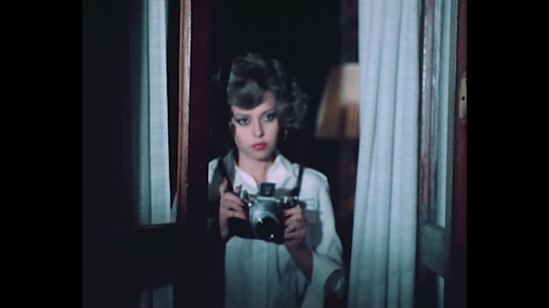
Cecile and Brigitte have served two of their twelve month sentence for inappropriate sexual acts involving prostitution and stripping. International authorities, including an American Senator, remove the two ladies of the night from their incarcerations and have them audition a private and provocative dance routine that will spring them from prison life and place them into a contract for hire that the pair of beauties find difficult to refuse. Cecile and Brigitte use their God-gifted talents to slip undercover as a pair of lesbian dancers in order to spy on Mr. Forbes, the Flamingo club owner on the Canary Islands who moonlights as a sadistic sex trafficker. Forbes kidnaps, rapes, and then, with the help of his wife Irina Forbes, hypnotizes well-known and famous women to be the ever faithful lovers of Mr. Forbes wealthily clients and to stop the egregious trafficker, any smoking gun evidence must be photographed for the international police to make a move on an arrest.

Jess Franco is the maestro of guilty pleasure shlock and the 1980 violently erotic, crime drama “Two Female Spies with Flowered Panties” is no different inventoried with ubersleaze spiced in folly comedy and tense sadism. The sort of mixed bag genre film only writer-director knew, and understood, how to achieve on a minuscule budget level in hastily conditions, but “Two Female Spies with Flowered Panties,” whether designed or by chance, stemmed from the combination of old and new footage, re-edited out of the original title, “Ópalo de fuego: Mercaderes del sexo,” and told a slightly different tale with slightly rearranged character backgrounds and graphic scenes, and featured two different locations that were later labeled Las Palmas of the Canary Islands to tie it all together. Severin has included both versions on a limited edition Blu-ray (“Two Female Spies with Flowered Panties”) and DVD (“Ópalo de fuego: Mercaderes del sexo”) release to experience both versions.

Franco’s long time common law, then legal in 2008, spouse Lina Romay, under pseudonym Candy Coster stars as Cecile in really a non-seductive, non-promiscuous, and only pinched with erotica role. Unlike Romay’s “Bare Breasted Countess” (aka “Female Vampire”) role, Cecile undercuts the erotic tone with more gratuitous comic and threatening nudity. Relishing into a staple of erotica are all of Romay’s supporting cohorts consisting of “Zombie Lake’s” Nadine Pascal, “Women Behind Bars'” Joëlle Le Quément, Susan Hemingway of “Love Letters from a Portuguese Nun.” Interesting enough, Hemingway isn’t credit in either version of the film. Pascal offers playful dilly-dally while practically be nude throughout whereas Quément slips into a deeper carnality with an unhinged relationship with her sex trafficking husband Mr. Forbes while Hemingway just provides a taken-advantaged vessel to plunder her dignity, soul, and body for easy money. Surrounding the gorgeous vixens are ruthless, dirtbag men played by Claude Boisson as the club owning sex trafficker and “Elsa Fräulein SS’s: Olivier Matthot as the sleazy American Senator Connelly. The role with the most opaqueness between the two versions of the film goes to Mel Rodrigo as Milton, the club’s gay artist organizer with an existential crisis and a quick to rebel attitude.

Though charming in its own delectable unchaste ways, Jess Franco deploys a haphazardly glued story inflamed with by chance moments shrouded with psychosexual tendencies. Sexually ostentatious and manic, “Two Female Spies with Flowered Panties” wildly pivots like an out of control sprinkler, spitting lustful filth, jovial comedy, and menacing suspense everywhere while still, by way of only Franco can accomplish, accurately hitting the intended mark of downright Eurotrash entertainment. A shocking, yet hardly noticeable, factor of the director’s is his film withholds any large amounts of blood or gore; in fact, gore is absent and the blood is sparse, especially during the girls-on-girl torture scenes involving bondage, a switchblade near the hind parts, and a cinder-weaponized cigarette, but the element that sparks gritty fortitude in those same said scenes, shot intently with fraught close-ups and well positioned shadows, could culminate a subversive tone that ultimate could convey a scene without words.

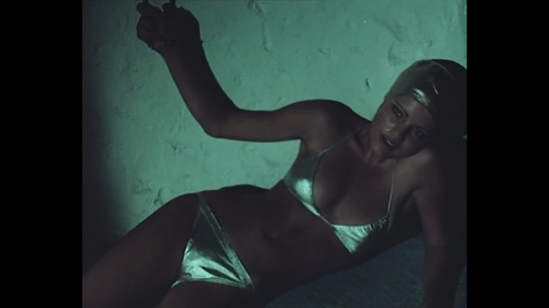
Severin’s limited edition 2-disc release of the Eurocine produced “Two Female Spies with Flowered Panties” has rightfully been graced with the Blu-ray treatment. The release also has the Spanish edit version of “Ópalo de fuego: Mercaderes del sexo.” The Blu-ray is a 1080p encoded AVC transfer presented in a near stand definition aspect ratio format from a restored into HD, uncut print. The overall color palette appears fairly washed with only some segments, especially peering out over the water or inside tight quarters, stand out with rich color. Darker scenes are heavily splayed with turquoise that, again, give the washed overlay, but the richness of the shadows with grindhouse print grain is stellar. Franco’s struggle with focusing, as part of technical self embattlement or as part of an against-the-grain auteur, are prominent throughout. The two LCPM 2.0 tracks are dubbed only in English or French and while not tracked in the native Spanish, either track will serve as a palpable substitute despite the English track being transcribed awfully cheesy and the French track with consistent hiss. Bonus material includes “Two Cats in the Canaries: An Interview with Jess Franco” is an undated interview with Franco recalling his love for the Canary Islands and being a genre maverick. There’s also a 1993 interview with long time Franco composer Daniel White conducted by “Cannibal Hookers'” Donald Farmer, a thorough analyst of Franco and “Two Female Spies with Flowered Panties” by Stephen Thrower, location outtakes, and a theatrical trailer. While “Two Female Spies with Flowered Panties” is not the best example of Jess Franco’s credits, the vicious erotic thriller is arguably ambitious and epitomizes the style of the legendary filmmaker with sultry, fringed performances and an unforgettable narrative lined up in a one-two punch package from Severin Films!