To Be an Intolerant Human Is to Be EVIL! “Lion-Girl” reviewed! (Cleopatra Entertainment / Blu-ray)

Here is “Lion-Girl.” Hear Her Roar on Blu-ray!

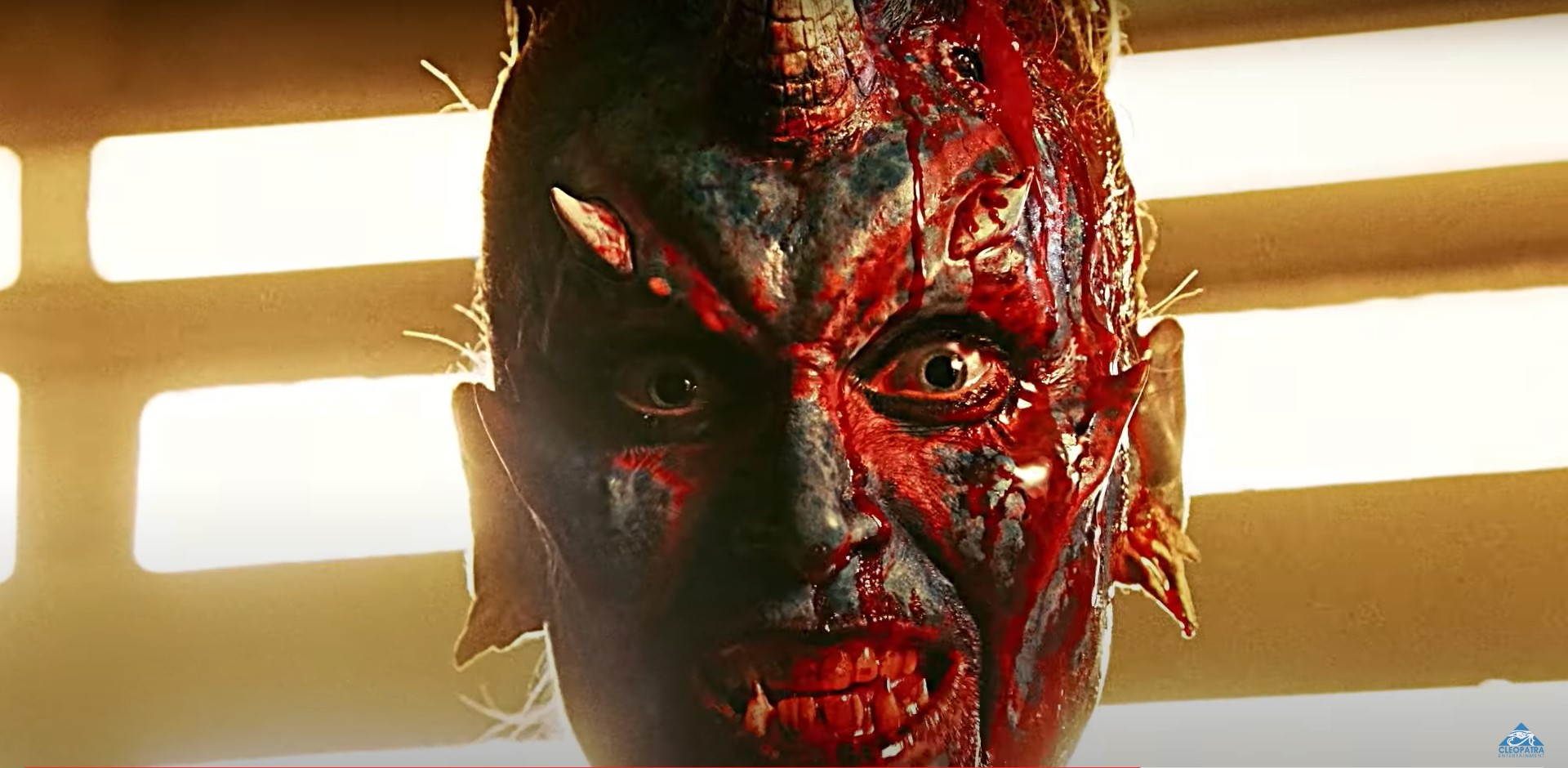
In the year 2045, a rain of meteorites harbingers the possible destruction of the human race as the space rocks contain harmful, radioactive rays that either kill a human within seconds or doesn’t kill them at all but transformers them into bloodletting, mutated beasts with superhuman abilities known as Anoroc.  While the rest of the world collapses, only Tokyo remains as the last human stronghold governed by a fascist dictator Nobuhide Fujinaga and his band of ruthless, police state Shogun led by despotic Kaisei Kishi.  Fujinaga and Kishi’s prejudices extend decades later when children in utero are exposed to Anoroc rays that keep their human appearances and behaviors only to have gained the psychokinetic energy powers.  These evolved man and Anoroc are labeled Man-Anoroc and are sought out for extermination but one defender of the weak and less fortunate, known as Lion-Girl, takes a stand against the forces of evil and bigotry, making Lion-Girl Earth’s last and only hope.
Inspired by the prolific manga works of Gô Nagai (“Cutie Honey,” “Devilman”) and Nagai providing the conceptual illustrations, the Japanese filmmaker behind the pulse-pounding pistol-whipper  “Gun Woman,” starring cult erotic-actress Asami, and the Italian yellow picture, or giallo, influenced “Maniac Driver” turns his eclectic, electric style to reproduce his love for manga and the classic Japanese superhero canon with a new heroine in “Lion Girl.”  Kurando Mitsutake endears to his audiences through passion for cutting-edge manga’s commanding nudity, a hero’s odyssey in a dystopian future, and a comic’s style depicting graphically good versus evil.   The COVID era stymied production costs due to supply issues, affecting various departments such as special effects and even the cast with relative unknown faces, but Mitsutake pushes forward with the Japanese Toei Video Company (“Battle Royale”) co-production with America’s Flag Productions and Nagai’s Dynamic Planning.  Masayuki Yamada, Gaku Kawasaki (“The Parasite Doctor Suzune”), and Mami Akari (“Maniac Driver”) produce the film.
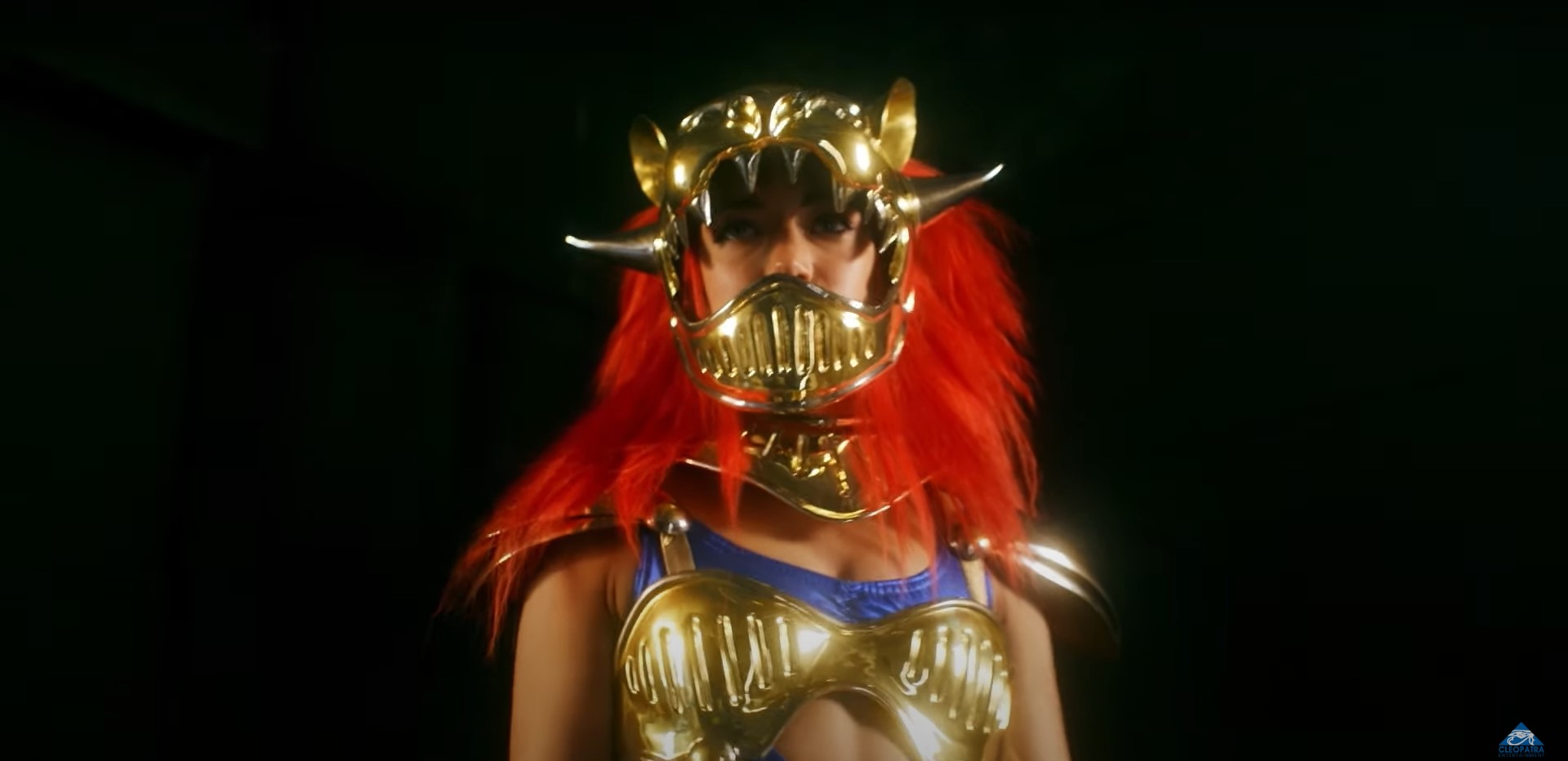
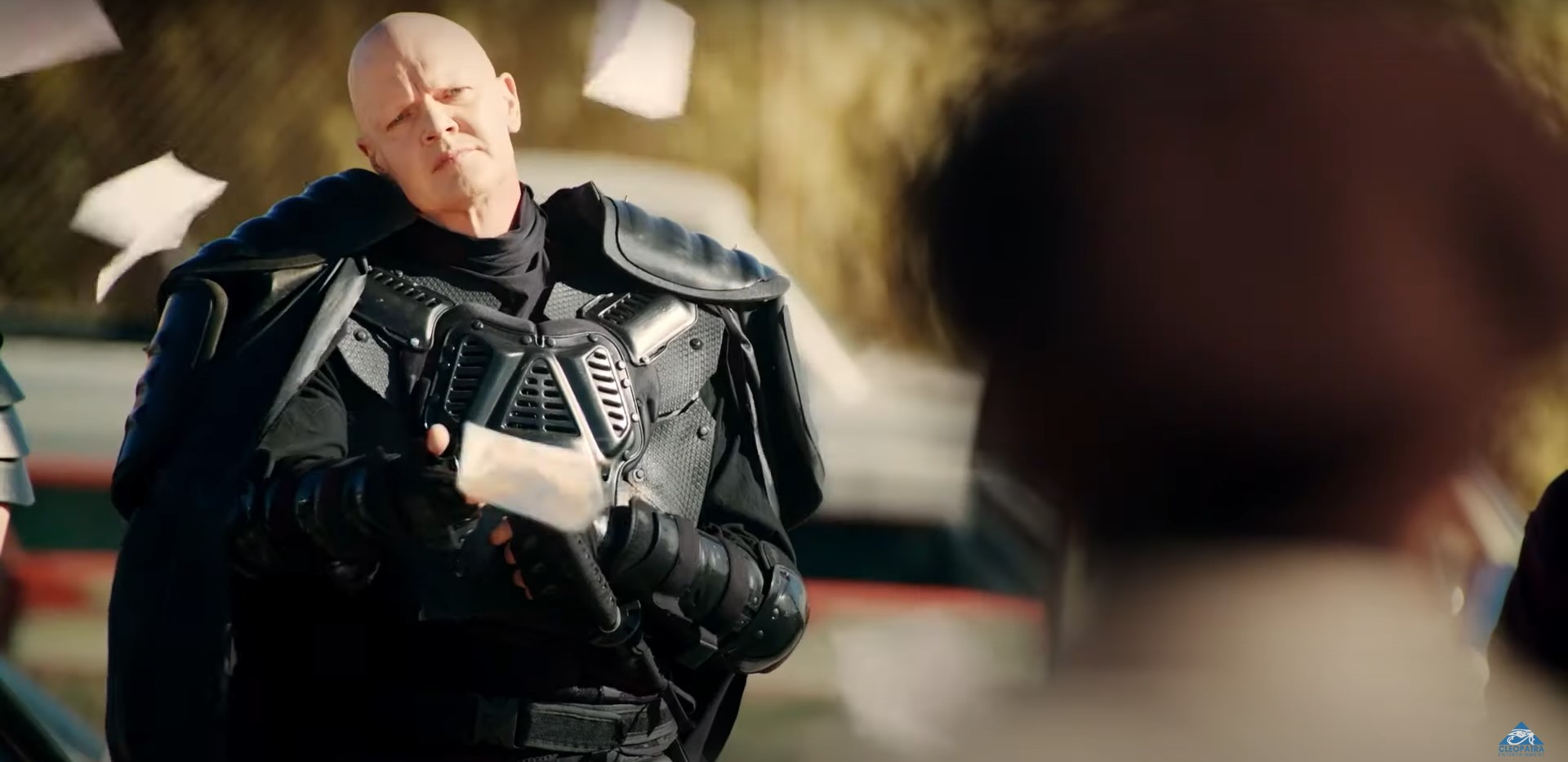
As stated, “Lion-Girl” is filled with unrecognizable faces save for one, an actor who is usually behind the masks, such as in “The Hills Have Eyes 2” ’07,” “Predators,” and even donning the iconic hockey mask for the 2009 reboot of “Friday the 13th” as Jason Voorhees.  Derek Mears headlines being the film’s core villain, shogun Kaisei Kishi, the remorseless, power-hungry right-hand man of the Fujinaga state, as Mears’ towering 6’5” stature and unique facial features pit him against a then 22-year-old newcomer Tori Griffith in a highly visibly protagonist role requiring fully onboard nudity and choreographed physical altercations.  Griffith pulls off both requirements going through the tokusatsu, hoodoo cliffside and other desert terrain, geometries of motion that fortunately conceal a more softened performance when compared to Mears’ who actually puts a fair amount of attitude into the shogun role.  As the Lion-Girl’s sworn protector, as well as one-eyed uncle, Damian Toofeek Raven (“Komodo vs. Cobra”) resembles the sempai fostering and mentoring a younger, stronger apprentice to one day save the world.  Raven, like most of the film’s cross-cultural influences, is able to ride the line as force into an honorable fatherhood with Ken Shishikura but the character poorly exorcises compassion of a father substitute until the very end when the right moment in the script calls for it.  One flaw in “Lion-Girl’s” casting stitch is the feature could have been meatier as keystone supporting characters come and go so quickly that it could rival the likes of “Mortal Kombat 2:  Annihilation.”  Thus, rapid firing subordinate roles just to progress the story creates more questions than answers and creates more plot holes than necessary.   Nobuhide Fujinaga (Tomoki Kimura, “A Beast in Love”) leads as the iron fist of bigotry in a tyrannically society but barely has presence other than on television announcements, a pair of Kishi entourage lackeys (David Sakurai, “Karate Kill,” and Jenny Brezinski, “From Jennifer”) get lifted up by the dialogue and some action but have the rug cut out from under them from really being developed and explored, and even principal character Marion Nagata (Joey Iwanaga, “Tokyo Vampire Hotel”), the gunslinging coyote, has zero foundational building blocks being a love interest for Lion-Girl yet crowns as such at the story’s climatic showdown.  “Lion-Girl” is saturated with supporting cast and stock characters with round out by Marianne Bourg, Matt Standley, Shelby Lee Parks, Hideotoshi Imura, Holgie Forrester, Katarina Severen, Stefanie Estes, and Wes Armstrong.
“Lion-Girl” roars as a wild, untamed animal, mangy in its worst moments but also majestic at the same time.  This paradoxical cultural expression befits the co-superpowers production, blending Japanese and American flavors and faults into one oversized bag of live-action manga.  With a derision mostly toward western affairs, such as the media circus surrounding the xenophobic administration’s handling of the corona virus, to which the filmic beasts known as Anaroc is corona spelled backwards, the haughty, bullying state doesn’t stray far from Kurando Mitsutake’s pen-to-paper handiwork as he also invokes Gô Nagai’s freedom sense of nudity and violence aimed to shake up with acculturation in high level eroticism that’s not seen as sleazy or objectifying but rather empowering and artistic.  What Mitsutake does really well and what’s also to the film’s misstep for today’s audiences is the complete blitzkrieg of background setup that’s bombastically overwhelming with incident backstory, dystopian factions, and the new terminologies in a single, longwinded breath, culminating to an early point in the film with a fight between Lion-Girl and an Anaroc beast where mutated breasts are essentially turned into a flamethrower and psychokinetic battles are commissioned in headspace.  That’s the kind of psychotronic tone that bears the cult seal of approval, or in this film, the lion’s share of cult approval. 

Cleopatra Entertainment, the filmic subsidiary company of Cleopatra Records, scores big with Kurando Mitsutake retro-fitted superhero “Lion-Girl” on Blu-ray.  The AVC encoded, high-definition 1080p, single-layered BD25 is literally stuffed to the brim, presented in a 1.78:1 widescreen aspect ratio.  Compression bitrate swings the pendulum, decoding between low 30s and high teens resulting in smoothed over details.  To the film’s advantage, the abated details play into the old-style Japanese action flicks of yore, creating a pseudo-illusion of a flatten color palette and lower resolution last seen on tube televisions.  Okay, might not be to that extent as therein lies decently popping color scheme and rough contouring and lighting in more scarce settings to make the scenes less complex and rely on more smoke and mirrors to stretch the interior-exterior location budget.  The lossy English language Dolby Digital 5.1 surround track is accompanied with also a Dolby Digital 2.0 stereo.  While nothing to negatively harp on in regard to “Lion-Girl’s” sound design and soundtrack as a whole, there’s plenty to like about the wide-ranged, heavy rock-riffing audio with unequivocal balance between the sounds and channeling albeit a lesser fidelity.  Peppered with Japanese words, the dialogue is forefront and clear that red-carpet the numerous monologues with all-day importance.  The release does not come with any subtitle option.  Bonus content includes a director’s commentary track, a conversation between Kurando Mitsutake and manage artist Gô Nagai as they discuss nudity, working in America, genesis for “Lion-Girl,” and their COVID era collaborations, the making-of “Lion-Girl,” “The Hollywood premier screen with cast and director Q&A, a picture slideshow, and the theatrical trailer.  Cleopatra’s release caters to a conventional standard retail market with a commonplace Amaray and disc release and nothing more.  The front cover design is not terribly appeasing with a crowded image composite bathed in an eye-deafening and searing red.  Disc represents the same front cover image and there is no insert inside the Amaray casing.  The region free release is unrated and has an impressively entertaining runtime of a 121-minutes.  Marketed to be a different kind of superhero movie, “Lion-Girl” is certainly more than that, portrayed by Kurando Mitsutake as a love song toward the pulp exposure of his childhood and the film really glows passionately like an Anaroc with supernatural powers ready to strike with nostalgia at the heart of Japanese pop culture.

Here is “Lion-Girl.” Hear Her Roar on Blu-ray!

EVIL’s Coaxial Cord Right into Your TV Set! “HeBGB TV” reviewed! (Scream Team Releasing / DVD)

Contact Your Local Cable Provide to Upgrade Your Box for “HeBGB TV” on DVD!

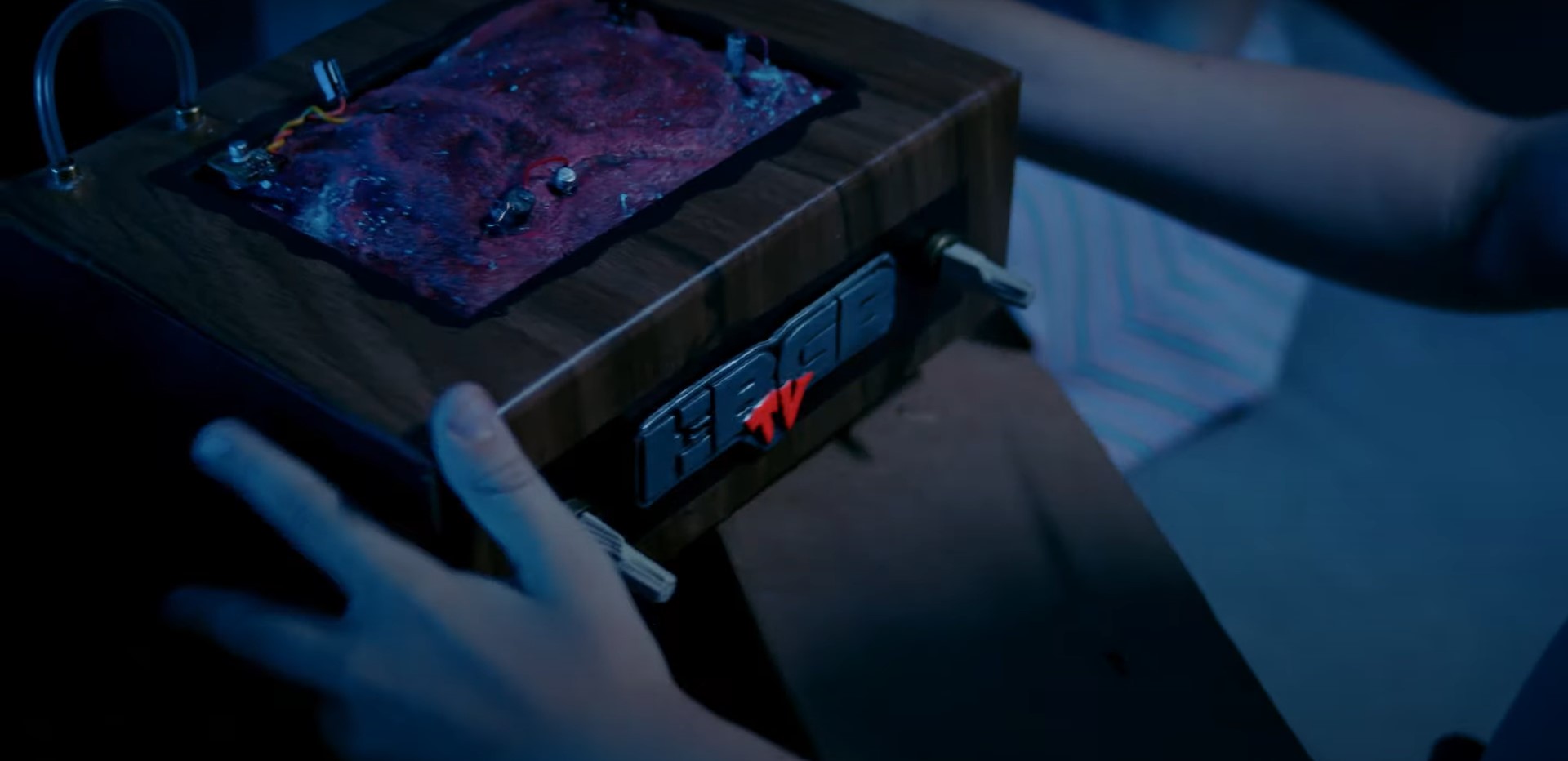
In a world of streaming devices, the cable box era has become nothing but a memory until mysterious HeBGB cable boxes sudden appear on retail shelves and on homeowner doorsteps.  The what looks to be a brain in a box with some wiring quickly self-installs right into the cable jack and manifests a gaudy-dressed tangible host, The Purple Guy, right into your living room.  Promising a guaranteed fun time, The Purple Guy is eager for souls, I mean viewers, to subscribed to the endless commercial content of HeBGB TV, promising nothing but the best entertainment from the other side of the dimension has to offer.  Sordid horror, 90s-inspired carving infomercials, grotesque commercials, monstrous sexy hotlines, demonic feature films, and more provide a source of endless brain-rotting consumerism over the TV broadcast waves.  Eye-glued patrons of senseless horrors become slave to the screens that send their very souls to a machination machine from another world.  Who can stop the evils of doom channel surfing? 

Those who are now in their late 30s, early 40s likely remember how awesome and nearly uninhibited cable television was back in the day.  Money and creative talent were invested in turning the most ordinary retail product into a mini-movie of ostentatiousness, imbued with vividly stark colors and an insanity of pure energy.  Television didn’t coddle, it shaped the very fabric of impressionable children of that era, resulting in imagine and inspiration.  That is what comes to mind when speaking of “HeBGB TV,” a comedy-horror anthology of sorts of shorts written-and-directed by Eric Griffin, Adam Lenhart, and Jake Mcclellan.  The trio’s initial concept, prior to the creation of “HeBGB TV,” was something along the lines of an interactive variety show with short films, standup comedy, and puppetry held in front of a live audience.  When COVID hit in 2020, their idea pivoted toward a movie, eventually a script evolved into a drivable wraparound narrative chalked-full of some of the prefabbed material as well as some other new zany, horror-inspired skits, shorts, and string-pulling puppetries.  Griffin, Lenhart, and Mcclellan produce the feature under their LLC of HeBGB TV productions and PatchTown Films, based right in my regional backyard of Lancaster, PA.

Credited in the film as Knucklehead, Jake Mcclellan may act to the very definition of pseudonym but, in the lack of better words, is the face of “HeBGB TV” by having scores of roles and personalities at his disposable to dress up and become a totally new and grotesquely phantasmagoric character.  Whether be The Purple Guy, PU News’ greasy anchorman, the Blue Monster, or just desperate dieter with a health-hazard late night snacking problem, Mcclellan goes all out with makeup, costuming, and prosthetics in what could be considered a one man drag show and its gorgeously panache and over-the-top but doesn’t stray terribly too far from the outrageous era the horror-comedy emulates.  “HeBGB TV” is full of caricatures of late-night television and oddities of live TV and marketing campaigns, even Eric Griffin and Adam Lenhart get involved in front of camera as a hobo watching a portable antenna TV and as Smokie, the exterminator of potheads with noxious weed, as seen on TV, or rather “HeBGB TV.”  Most of the enthusiasm, and eccentrics, are within film’s faux television programming but the cast of performances flesh out with Ian Sanchez, Curtis Proctor-Artz, Josh Dorsheimer, Zenobia Decoteau, Michael Garland, Mike Madrigall, Ellen Tiberio-Shultz, Kristie Ohlinger, Colleen Madrigall, and Willow and Van Reiner as the kids who The Purple Guy connivingly entertains and Andrew Bowser reprising his most beloved YouTube persona, Onyx the Fortuitous.

Cut from the same cloth as Weird Al’s “UHF, Peter Hyams’s “Stay Tuned,” and Jeff Lieberman’s “Remote Control,” the cable box antics of the 80s-90s TV is quickly fading the analog years into nothing more than static snow of broadcast noise.  However, “HeBGB TV” is the answer, the recollection, and the nostalgia-driven film that delivers better than trying to get a glimpse of the vague outlines of adult actresses in the static noise of premium adult channels.  Directors Griffin, Lenhart, and Mcclellan combine their creative geniuses, incorporate their sentimental love of 90’s media, and integrate their own other interests into a cinematic cannonball of colorful comedy-horror.  While the wraparound stories outside the HeBGB TV box proves able with the inexplicable mass rollout of the brain-in-a-box cable program provider and rotting, killing, and transfiguring viewers into mindless gawkers, overdosed smokers, and malevolent demons, the real star of the feature is flipping through the channels for the go-hard mock-commercials and other putrid programming laced with horror themes and capturing the spirit of television culture of 20-to-30 years ago.  While most of the visual effects reside around the wraparound story, contributing to the alloying of the story, Adam Lenhart’s practical effects more than make up for it a DIY initiative of can-do sculpting, molding, and crafting ingenuity below the embraced realm of unreality.

Don’t touch that dial as Scream Team Releasing delivers cable television like never before with “HeBGB TV” now on DVD! Though the Scream Team Releasing DVD back cover lists the format as a Blu-ray, the data file is actually a MPEG2 encoded, singer-layer DVD5 that has a widescreen 1.78:1 aspect ratio presentation. A combination blend of interlaced and digital video swirl “HeBGB TV” into a time warp of the past and present. The filmmakers captured not only the feel of rambunctious, eccentric, and vividly brilliant 90’s commercials but were also able to capture the look of it too with the interlacing horizontal lines indicative of video frame rates of the time. The wraparound narrative portions are digitally cleaner in juxtaposition, factionalizing present and TV programming with distinction until the culminating plan comes to conclusion. Some of the digital visual effects gags crumble under the practical elements of an analog airing, proving once again that the tangible and practical outstage the digital composition, but the crumbling doesn’t stem from compression issues. The English language Dolby Digital 2.0 mix is a symphony of frenzied chaos, pinpoint advert jingles, and deliciously distasteful horror gags facsimiled perfectly, as if it was plucked straight from the pre-millennium. Dialogue is quick but renders clean and clear in a blend of inset and ADR vocal recording, per the commentary. No issues with depth, range, or any kind of compression side effects. Well scored with a catchy main theme and topnotch sound designed to add to “HeBGB TV’s” romp commercial content. English subtitles are optionally available. Bonus features are aplenty with a retrospective interview with the three directors and short clips going in-depth with behind-the-scenes movie magic, a HeBGB TV video installation guide, a world-premiere pre-show, the first interactive show prior to COVID, and the theatrical trailer in the motion menu option shaped like a retro tube television with right side buttons. Inside the setup option along with the English Subtitle toggle, a directors’ commentary can be selected and played from there. The standard edition encased inside an Amaray comes with faded hues on an illustrated composition cover art of most of the “HeBGB TV’s” wacky pastiches and a disc pressed with the pulsing brain-loaded cable box. The release comes not rated, region free, and has a copasetic runtime of 78 minutes. ”HeBGB TV” is couch potato worthy that syndicates together hilarious travesties and transvestites for timeless television touting, stitched together from previously shot short films, puppetry depravities, and a new sci-fi fiction.

Contact Your Local Cable Provide to Upgrade Your Box for “HeBGB TV” on DVD!

A Thousand EVIL Little Legs Wriggle Inside You! “Creepy-Crawly” reviewed! (Well Go USA / Blu-ray)

Get Wigged Out by “Creepy Crawly” on Blu-ray!

During the COVID lockdown, a group of tourists are confined to a quarantine appointed hotel in a Thailand city. Fielded by skeleton hospitality, the hotel aims to make the tourists comfortable as possible with the limited number of staff and security on hand. Though frustrated and displaced, the quarantined few feel ultimately satisfied by their popup accommodates spearheaded by the Thai government. However, one amongst the staff and tourists is a shapeshifting monster of local legends, jumping from body to body in hopes to find a person with unique blood in order to survive for eternity. Forcibly detained by a sleazy and easily persuadable hotel manager, Leo, Fame, and their families hardly trust anyone, even themselves, as a hidden creature invades a new host to become closer to living forever. It’s true shape like a centipede, the creature summons its smaller, poisonous brethren to wreak havoc inside every crevasse of an inescapable shelter.

Tapping into the same slithery vein as “Night of the Creeps,” “Invasion of the Body Snatchers,” or even “Slither” itself, co-writers-and directors Chalit Krileadmongkon and Pakphum Wongjinda channel their inner spirit animal, the thousand-legged wriggler, back to their home country of Thailand for a new creature feature sure to have your skin recoil with formication.  Also co-written alongside, Charoen Kaithitisuwan, “Creepy Crawly,” or better known in Thailand as “The One Hundred,” is the second feature for Krileadmongkon behind another unearthing creature construction in “The Beast Below” that was released the same year as “Creepy Crawly.”  For Wongjinda, the 2022 released film marks the 9th feature in the filmmaker’s 20+ year-long career who began in 2001 with a script surrounding a feminist ghost killing men victims in “Body Jumper.  “Wongjinda has been once around the horror subgenre carousel to now collaborate with the fresh perspective and ideas from the up-and-coming Krielandmongkon to extend Thai’s catalogue of cinematic chills and thrills.  Neramitnung Film and Fatcat Studios serve as production studios with producers Natchanok Kamonrattananan, Punyanet Tanaprapass (“The Beast Below”), and Kamonwan Kanaraksunti. 

Perhaps better if told in the perspective of an ensemble cast, “Creepy Crawly” reduces is principal character pool to just two, a hot-headed Taekwondo champion named Leo and a social media influencer aptly named Famed.  The two cross paths while being COVID quarantined, sharing a smoke in the stairwell while sharing breaking the hotel rules of remaining locked in their rooms.  There’s not much in the way of connection between the two characters, played by one half of the Golf & Mike musical group Mike Angelo (“The Misfits”) and the mixed heritage of English, Chinese, and Thai actress Chanya McClory, as the progressive action teases something more than just stairwell strangers as Leo frequently comes to Fame’s aid whenever he his sixth sense senses danger.  Both principals carry collateral damage weight with family members also being in quarantine with them; Fame has her brother and social media partner Fiew (Benjamin Joseph Varney, “The Promise”) while Leo has a slightly more extensive circle and greater family drama with sister Lena (Kulteera Yordchang) and their mute, widowed father (Paramej Joiam, “407 Dark Flight 3D”) to which with the latter Leo has an aversion in connecting with periodical flashbacks of Leo and Lena’s dying mother and somehow, which is revealed later, their father is to blame.  This creates more of an arc for Leo with an imbalanced, shared protagonist lead with Fame who we don’t get to know as intimately other than she has an incurable blood disorder that could be fatal if not treated with meds.  “Creepy Crawly’s” cast is beautifully eclectic, and I don’t mean with appearances but rather their interesting, robust with personal motivations, and not terribly dull or overtly bland with performances from Wanpiya Omsinnopphakul, Chanidapa Pongsilpipat, Sita Chutipaworakarn, Chutaporn Chaikawin, and David Asavanond as the slimy hotel owner.

As I sit down to gather my thoughts about this review squirming with venomous centipedes, a house centipede, or what we like to call in our house a thousand-legger, steps hundreds of feet-over-feet on the wall in front of me. Talk about good timing, bad omens, or just a straight up coinkydink when a cousin of the deadly antagonist you just bore witness in a film crawls up the wall in front of you. Despite the inspiration that scuttles in front of me, “Creepy Crawly” has a more fantastically gigantesque infestation. The story has a COVID-19 backdrop and is supposedly based off the story of Battambang told by King Chulalongkorn, aka King Rama V. I, unfortunately, can’t elaborate much about the story as I couldn’t dig up anything that closely resembles the analogy between a centipede invasion and a French conflict. Or are the centipedes a metaphor for the European encroachment? Or are they a metaphor for the COVID pathogen that’s hidden amongst the atypical carriers? Either way, “Creepy Crawly” is visual effects driven with a crevasse-trenched and many-moving-leg scaled arthropod with a pincher-laden head but before the monstrosity makes face, the mega-centipede can hop from body to body, able to protrude tentacled pinchers like spears, impaling victims as well as transposing itself into another body before sucking and skinning the host dry of life and flesh – very reminiscent of an Edgar suit. The jutting spears from the host never harms the body, alloying to-and-fro the skin, and clothing, in a compatibility of supernaturality that fits the folklore mold explained during the opening credits. That’s where I imagine the lore ends and the exoskeleton evil begins as we’re sucked into Leo’s daddy issues, the hotel manager’s self-preservation, and Fame’s bad blood that’s good for the big bad bug. Though Leo’s emotional pull the right heart chords and the hotel manager selfishness and greed adds tension and conflict to an already imposing no way-out scenario, the blood disorder plot device is skimmed to be barely tolerable without diving into the science of why a 10-foot centipede can survive on a compromised blood.

As far as COVID-theme foreign productions, “Creepy Crawlers” checks out as a roach motel monster movie from Well Go USA Entertainment. The distribution company’s Blu-ray is an AVC encoded, 1080p high-definition, and presented in a 2.39:1 aspect ratio. Visual effects conducted by Thailand’s Matchmove team have remarkable detail in the composited scenes with the exception of one latter scene that compromises the blacks of reality to a darker shade of gray or blue when overlaying it with the digitally added creature. Details are generally delineated nicely, color grading pops natural tones, and the BD25 offers sufficient space to suppress compression artefacts. The Thai DTS-HD 5.1 Master Audio with optional English subtitles greatly exudes the centipede click-marching and pinch clips to effectuate an army of killer scurrying arthropods swarming onto, into confined quarters and those suspected of sickness, COVID-19 to be exact. Dialogue cleanly renders, especially between the majority of Thai and the medley of minority languages, such as Chinese and English. Bonus features are limited to just Well Go USA previews/trailers in what has become another barebones release for the company. The Blu-ray comes in a standard amary case with snapper with fantastically to truth image of the creature on the front cover while the inside has a paper advert for three Well Go USA films with the disc art displays warm shades red and yellow in what is a very culturally appropriated Thai coloring. “Creepy Crawly” scritch-scratches the lousy sensation of a buggy creature feature with loads of action that tries to add and induce more into the narrative beyond what’s innately there and that can be a great repellant to this wecl invasive species of Thai genre films.

Get Wigged Out by “Creepy Crawly” on Blu-ray!

Punk Rock EVIL For All the “Wrong Reasons” reviewed! (MVD Visual / Blu-ray)

“Wrong Reasons” is this Year’s Punk Rock Film!  

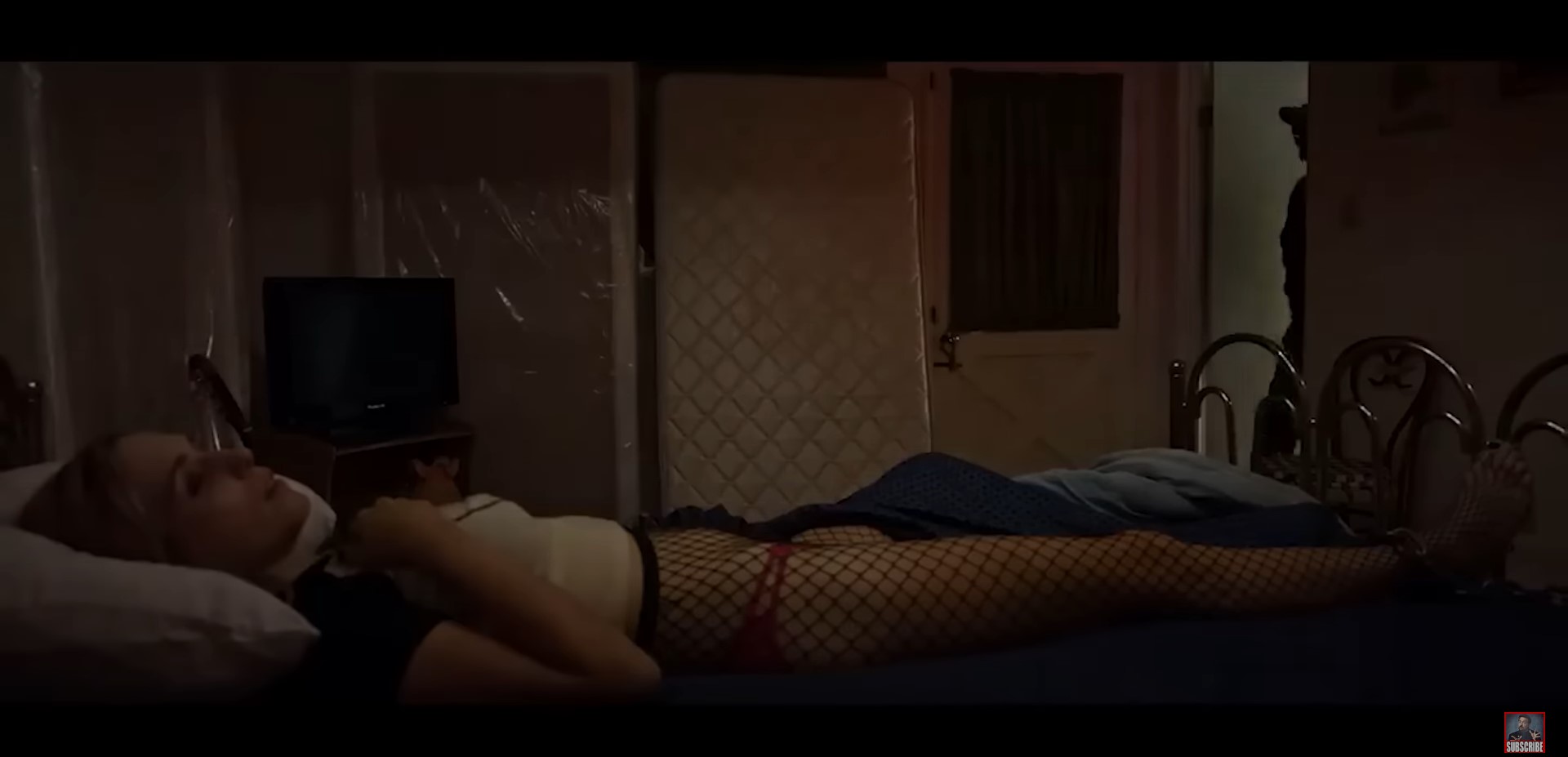
Australian punk rocker Kat Oden has fame in her home country and is steadily trending in the U.S. but when a masked man kidnaps while she lays unconsciously high in a drugged-out stupor, she wakes up being chained to a bed far away from where she was abducted.  Her mild-mannered kidnapper’s intentions revolve around getting Kat clean of narcotic impurities while the media circus explores wild theories, interviews her self-centered parents, reveals ugly secrets of her American rocker boyfriend, and follows the browbeaten investigation of an actor-turned-detective handling the Kat Oden case.  When the detective goes rogue, burned out by constant belittlement from his chief and being blamed for the inadequacies of his clownish subordinate officers, he makes a deal with an eager news reporter to give them the exclusive solving of the case for his own news show.  As he inches closer to finding Kat, the kidnapper and Kat dynamic undergoes significant strides to understand one another’s wayward reasons. 

The one major difference between major studio productions and the micro independent features shooting during peak COVID weeks, months, or years was the indies made use of the time whereas the bigger budgeted and the hundreds of cast and crew employed were virtually on furlough, hiatus, or just plain scrapped future movie ideas altogether.  Independent films had structural concept advantages, such as a smaller cast and crew to lessen the changes of infection, locations were typically limited so travel was not necessary, and indies sometimes would shoot guerilla style anyway to capture the scenes required for the story.  Writer-director Josh Roush, who lived and breathed producing Kevin Smith documentaries for the “Clerks” and “Dogma” director’s more contemporary credits, decided to pivot into the fictional route and just as soon as his dark comedy script for “Wrong Reasons” was about to start principal photography fruition, the world shut down in a pandemic lockdown.  However, a global emergency didn’t hinder Roush’s ambition and scaled down his crew and cast on set to get the job done. Executively produced by Landon Thorne, Kim Leadford, and Kevin Smith doing his version of Cameo appearances as well as David Shapiro contributing the other half of the funds, “Wrong Reasons” is a production of Rousch’s AntiCurrent Media, with Liv Roush and Matthew Rowbottom producing, and Shaprio’s Semkhor Studios.

In the role of Kat Oden, a real life Australian making her full-length feature film debut, is none other than director Josh Roush’s wife, Liv Roush.  Co-producing the numerous Kevin Smith making-of featurettes and other independent productions, including her husband’s music videos, Liv Roush has always been a face behind the camera and now she’s stepping Infront of the camera, mainstage as the center of a kidnapping ordeal being a promising up-and-coming punk rocker who has lost her way by sinking into drugs and an objectifying relationship with an egotistical American rocker.  While Roush can obviously handle her own being chained to bed in fishnet stockings and dip into a range of rage, fear, hurt, and acceptance, “Wrong Reasons” splits the story with another centric character in Detective Dobson.  Kevin Smith film regular Ralph Garman has a grip on the competent yet pent up case detective Charles Dobson but the detective goes through a series of case mishaps to scheming his own rogue operation that pulls away from the Kate Oden kidnaping ordeal perpetrated by James Winandi, an ambiguously misunderstood role by James Parks (“Red State,” “The Hateful Eight”), son of the legendary actor Michael Parks (“Nightmare Beach,” “From Dusk Till Dawn 3”).  The connection made between Winandi and Oden faces challenges in fully fleshing out what Winandi is trying to accomplish in by removing the lyrically strong and influential rocker toward a path of permanency for other listeners to experience the epiphany that befell Winandi.  It’s a motivation that couldn’t be grasped fully because we’re more invested in this parallel plot of Dobson’s working of an advantageous angle for himself that the message or the theme becomes lost in the superficiality for one’s own sake.  The cast rounds out with perfectly suitable supporting cast including Teresa Ruiz, Daniel Roebuck (“Final Destination,” “31”), David Koechner (“Cheap Thrills,” “Snakes on a Plane”), Matt Passmore (“Jigsaw,” “Come Back to Me”), John Enick (“Project Eve”), Harley Quinn Smith (“Once Upon A Time in Hollywood”), Kym Wilson (“Deadly Cheer”), true to form punk rocker Donita Sparks of L7, Darren Hayes of duo band Savage Garden, as well as a relatively quiet genre icon Vernon Wells (“Commando”) as Kat Oden’s dad and Kevin Smith as the a news cameraman in cargo shorts.

The divided narrative limps unbalanced between the two parallel storylines soon to collide in eventual finality.  We don’t really receive much wisdom, clarity, or even any kind of progressive dynamic between Oden and Winandi who quickly and quirkily come to a sensible understanding with Winandi’s masked kidnapping and Oden being chained to the bed. There’s also piped in televised news reporters covering the kidnapping case or verbally attacking the president or something enthusiastically bias and gospel from the news channels in what becomes a motif of media circus frenzy, corresponding also with the live news coverage that vultures around the Oden case. What Roush is attempting to convey through the unlikely kidnapper and kidnappee pairing doesn’t strum the right chords and flutters in place to where we’re not exactly sure how Kat Oden’s music affects her kidnapper given little-to-no backstory on him and not foreseeing a future outcome of his act in what is almost an akin to winging the situation.  Instead, we’re more engrossed into Detective Dobson’s downtrodden investigation.  A seemingly capable detective with good instincts, negotiating with suspects, and even has a new woman in his bed every night, the luck he has with his professional counterparts, subordinates, and report-to doesn’t necessarily reflect his personality.  When Dobson starts scheming to finally be the one top, the audiences’ attention shifts from the fluttering wrong reason to kidnap your idol to the wrong reason for turning into a self-serving public servant.

“Wrong Reasons” has all the right A/V and bonus content moves on MVDVisual’s Blu-ray release.  The AVC encoded, high-definition 1080p package is presented in a widescreen 2.85:1 aspect ratio.  Cinematography by Josh Roush and Matthew Rowbottom ensure the look Roush wants to obtain for his first feature length fiction, a clean less-is-more, truth-in-practicality visual that often echoes Kevin Smith’s earlier body of work on the indie scale.  The Blu-ray’s BD50 storage capacity handles compression well to thwart any artefact popups and the limited variety of color range, aka a more natural grading, doesn’t pressure the digitally shot film to crumble under the compression.  Details are sharp and textural in what is a solid visual presentation.  The English DTS-HD 5.1 surround sound is equally comparable with a dialogue first clarity.  There’s slight continuous feedback on the underlay, perhaps equipment interference picked up by the mic as it becomes a constant throughout.  Range is also limited to what is essentially a talk head picture with bits of action here and there with “Wrong Reasons” driven by the performances rather than by action.  “Wrong Reasons” is made for and presented by punk rockers with a film that’s very much dedicated to the music genre.  The soundtrack highlights a faction of the punk rock with bands such as Tim Armstrong, L7, The Wipers, Channel 3, The Unseen, Black Flag, and Bi-Product having tracks on the production.  Optional English subtitles are available.  Special features include an lengthy but informative Kevin Smith introduction in his very animated and enthusiastic Kevin Smith style, an audio commentary with director Josh Roush, producer Kevin Smith as well as another a second audio commentary with the director alongside co-producer Matthew Rowbottom, composer Cam Mosvaian, and wife/star Liv Roush, a Q&A session with the Roushes, Kevin Smith, Ralph Garman, and James Parks, deleted scenes and outtakes, Josh Roush’s short film “Idiot Cops,” and the original theatrical trailer.  The exclusive MVD release comes with a cardboard O-slip of a generically staged, or promo-esque, Liv Roush ankle-chained to a chair with a masked man standing next to her in non-menacing positions.  Inside is a reversible front cover of the same image, but I prefer the reverse side of the black and red illustrated silhouettes of the same character inside the clear Blu-ray snapper as it invokes more intrigue and suspense.  The disc art misleads with a horror composite of Kate Oden screaming, looking afraid, and the kidnappers mask hard lit to look more dramatic.  There are no insert materials.  The not rated film has a runtime of 97 minutes and has region free playback.  Josh Roush’s debut dark comedy has transference troubles, perhaps I’m not too punk enough to fully absorb how the music should move me, but we see acting veterans and greenhorns mix it up fitly for this COVID era picture.  

“Wrong Reasons” is this Year’s Punk Rock Film!  

Biding Time Can Be Dystopianlly EVIL and Claustrophobic. “Tin Can” reviewed! (Dread / Blu-ray)

“Tin Can” on Sale Now at Amazon.com!

A viral fungus pandemic has plagued the world.  Fret, a parasitologist, has worked toward a cure to stop the spread of a virus that grows Clavaria-like basidiocarps from inside out the body that’ll eventually enclose the victim to death in an organic cocoon.  Before Fret can develop and distribute the recently discovered global cure for the virus, she awakes in a confined metal container constructed to suspend life duration for those who contracted the illness.  Confused and disoriented, Fret learns she’s not alone as others awake around her and able to talk with through the containers, including your infected husband John.  Unaffected by the virus and believed to be encapsulated in error, Fret works desperately on an escape from her well-intended prison in order to save humanity before it’s too late.   

By now, most of us can relate to a pandemic-driven storyline because, well, you know, COVID.  The 2020 sci-fi body horror “Tin Can” is no exception despite having been filmed prior to all the pandemic induced deaths and lockdowns.  Perhaps premise creator and director Seth A. Smith had a little foresight into coming events that inspired the Canadian project co-written with Darcy Spidle.  “Tin Can” is the fourth pen-to-paper collaboration between Smith and Spidle who previously completed two feature films (“Lowlife,” 2010 / “The Crescent,” 2017) and one short (“The Brym,” 2016) along with “The Willows,” the duo’s fourth feature film and revolving once again around preternatural events, that is currently in pre-production. For “Tin Can,” Smith and Spidle entangle a science fictional, dystopian, Hell in a handbasket world with selfish motives that outweigh saving the world. Seth A. Smith’s Nova Scotia based production company, Cut/Off/Tail Pictures, develops the story produced by company producer Nancy Ulrich and financially backed by the executive producing team of Michael Baker, Marc Savoie, Tim Lidster, and Rob Cotterill (“Possessor”).

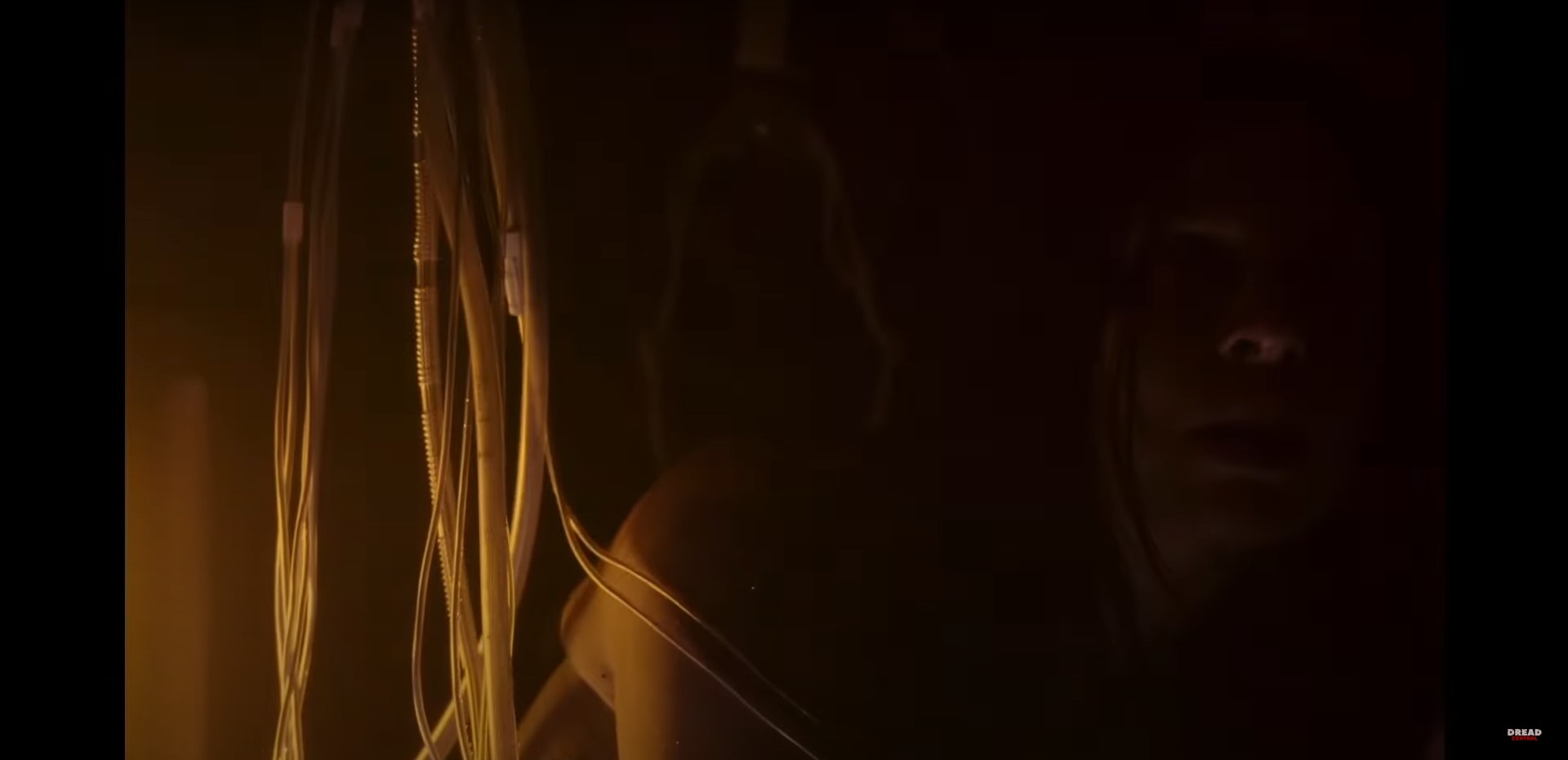
“Tin Can” might evoke a sense that one main character will be the focus point for the entire storyline, such as with “Buried” that stays put on the singular person trapped in this very tight, very claustrophobic-inducing soda can. Yet, that is not such the case with “Tin Can” that does circle around a centerpiece character in Fret (Anna Hopkins, “V/H/S/94”) but the cure-all scientist waking up in a life-extending canister while on the edge of saving mankind isn’t alone. Surrounding Fret are strangers, colleagues, and even her husband, some of whom, such as her husband, are suffering the protruding fungal fairy fingers of the virus. Anna Hopkins fields a hefty, difficult role after an initially a humble beginning as a scientist that more so-or-less feels the pangs of a low rent indie, but as Hopkins’ Fret transcends time by waking up weeks (or maybe months…years?) later, her environment becomes frantically imprisoning. The tight confines of the titular object with medical tubes dangling from the ceiling, a Tracheostomy tube down the throat, a malfunction video screen, and mysterious bars that light up one-by-one set a stronger stage for the actress to be put up against and Hopkins nails the mindset of a woman vehement and determined with escape to not only save her own life but the life of billions across the planet. In the cans beside Fret, providing Hopkins with more serve-and-volley fuel, is her husband John (Simon Mutabazi) inflicted by disease but becomes more than just a victim, Wayne (Michael Ironside, “Starship Troopers”) who I couldn’t really grasp as a component in the story as he’s like a project financier in the tin can project to save his own skin from being reskinned by fungus, Darcy (Amy Trefry) as a colleague-friend of John and Fret, Whistler (Tim Dunn, “The ABCs of Death”) who is the most interesting and weird doomsayer of the bunch, and a fist banging mute (Sara Campbell) also inflicted. For much the back-and-forth in the cannister talk, the dynamic is more of a talking head roundtable of initial discussions of popping open a small air vent so they sce outside their enclosed cell and eventually lead to more depth and deception that narrows the story with the what, when, why, and how.

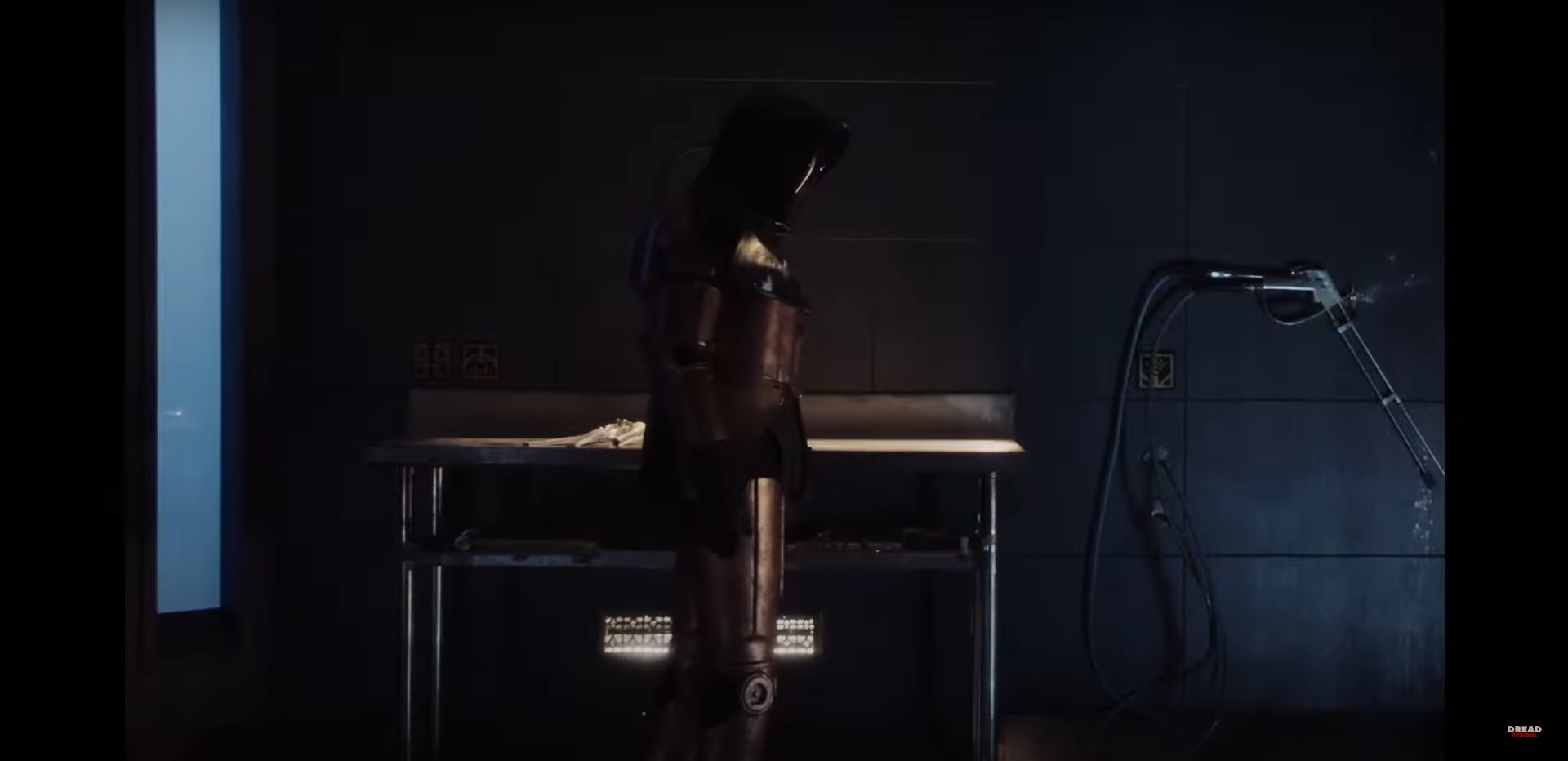
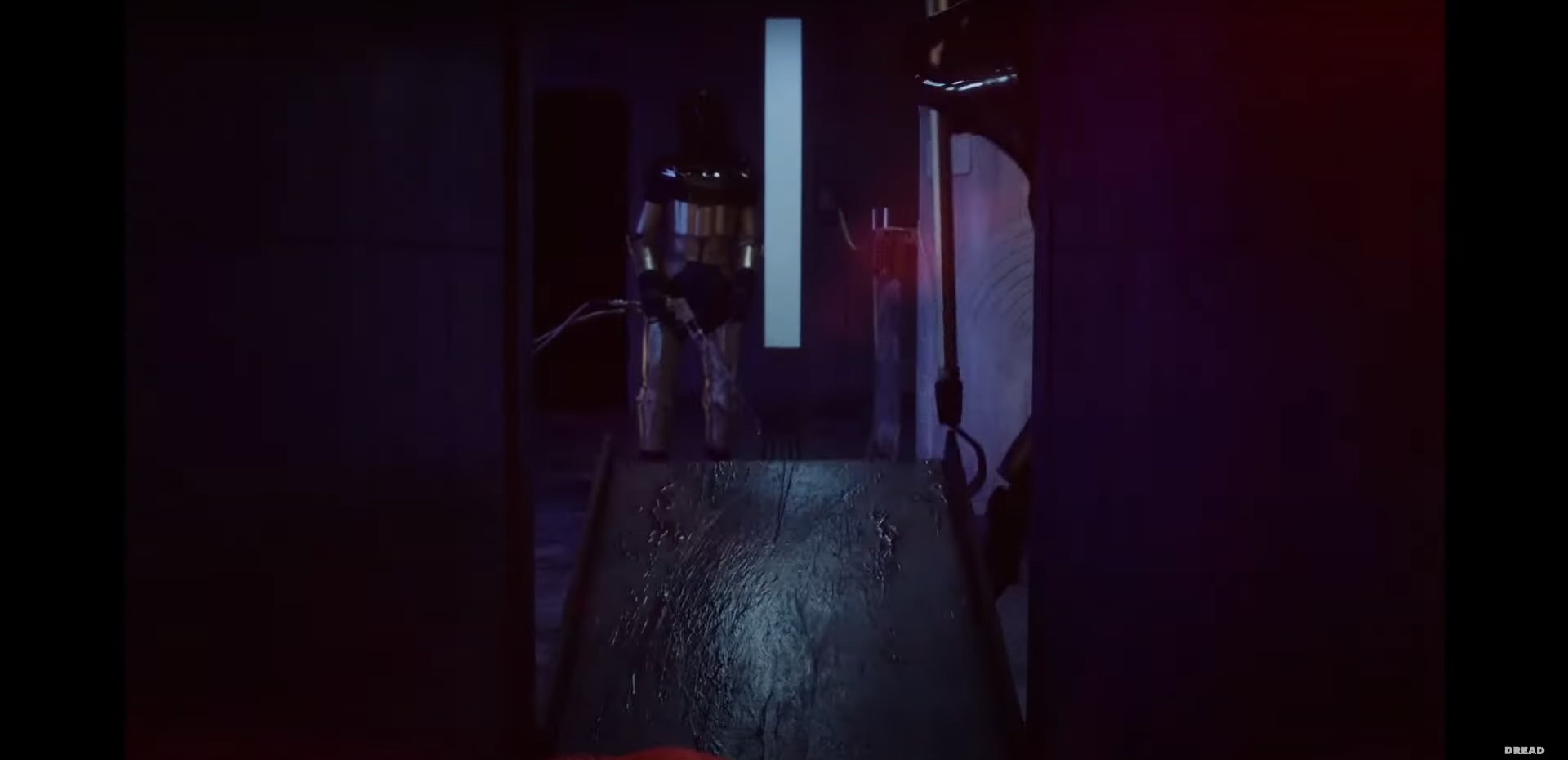
“Tin Can” aspires to be a chaptered three-act conundrum. I don’t mean that in a negative perspective. What Smith brings into existence is a polished independent film of Cronenberg-esque and has ensuing weirdness act-after-act only paralleled by the double-crossing exoneration or a retaliating impugn of keeping one alive after being severely scorned. The first act plays out like the world of today, a devastating pandemic that has ravaged the human population. The second act unsheathes the mystery of waking up inside the tin can device with people she knows and is eager to discharge herself from a capsule that’s supposed to sustain her life. Then, the third act rolls in, the third and final chapter, and time has officially been corrupted as we know it with a futuristic beings suited in various colored alloys. Alloys are definitely a theme beginning with title “Tin Can.” Fret discovers a cure for the diseases by commingling it with an alloy and each containment artificer is suited in a different metal and are credited as Copper, Gold, Silver, etc. What Smith could be suggesting is the element that could cure us could also incapacitate or, even worse, transfigure our existence with a lifesaving, yet life altering, solution to the extreme. Cinematographer Kevin Fraser industrializes the look of “Tin Can’s” existential view and is a glorious rusty bucket of a cheerless life. If Smith wanted to convey a life of nihility and automaton, Fraser nailed down the oxidation state. “Tin Can’s” a cold hard look at the cost of saving the world that, in the end, might not be worth saving.

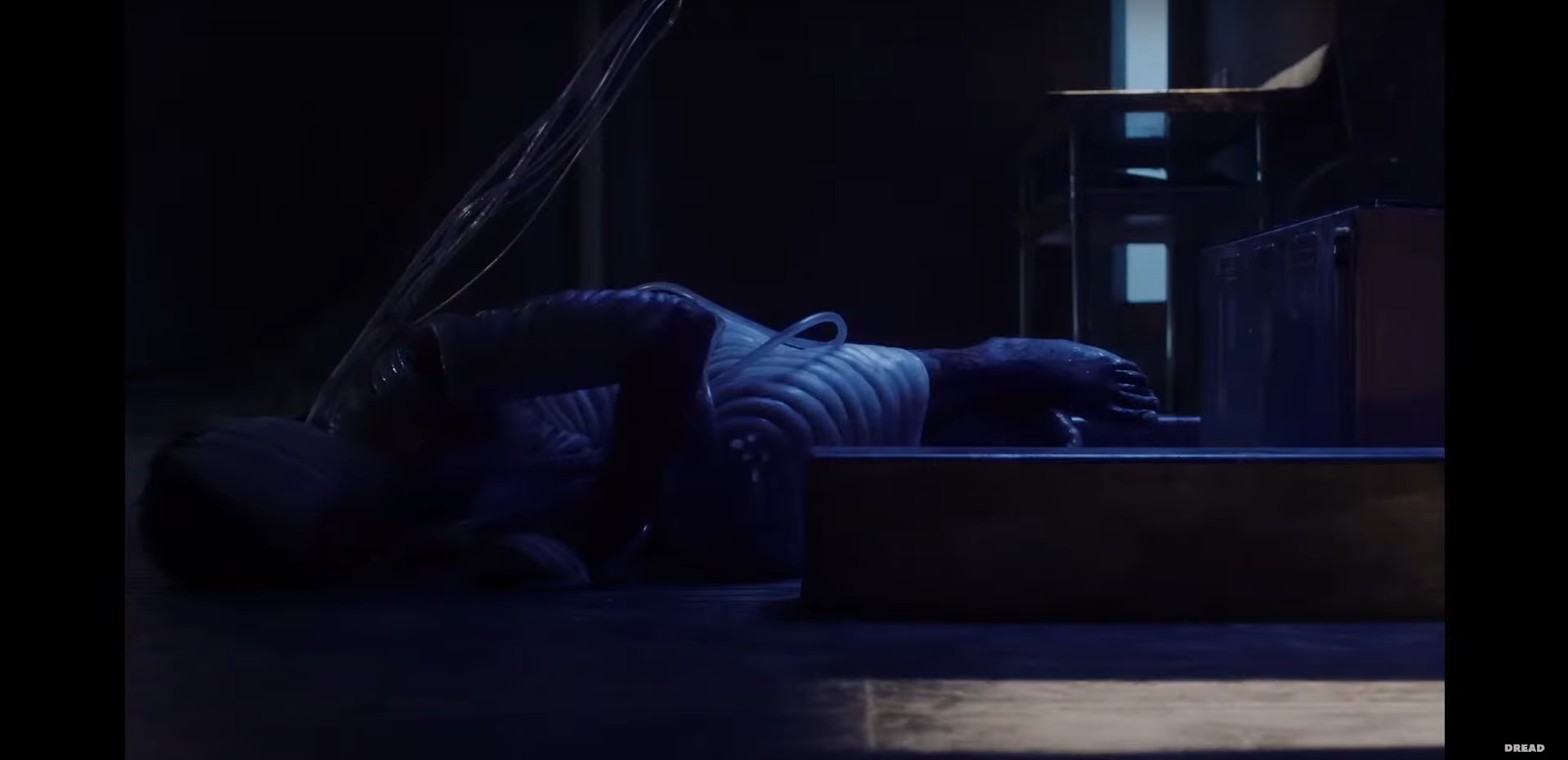
A part of the Dread Central at home release line, “Tin Can” arrives onto a high-definition Blu-ray distributed by Epic Pictures and MVD Visual. The region free Blu-ray is presented in a throwback 3:2 with letterboxing and has a color reduction implemented to give it that demoded depiction. Image looks amazing without an inkling of any kind of compression issues especially with many of the scenes shot in darker and bleaker circumstances. Fraser delivers some awe-inspiring, creative angles that produce a how-did-they-do-that response to get a 360-degree single take of Anna Hopkins in the cannister or the rotation of a limp body on a large wheel door. The Dolby Digital 5.1 English audio mix has solid sound design as more than half of the picture is off the principals talking through their metallic cylinder containers that created a muffled depth and low range flickering in the backorder, the mechanized hum mixed with scraping metal, does wonders to sell the dystopian effect that borders steampunk. No inherent or noticeable flaws in the final product. English subtitles are available. Special features include a commentary with Seith A. Smith, The Last Bell Doe Toll – the making of “Tin Can'” exhibits the construction and creation of the displaced subsequent future, how to achieve a few of those crazy Kevin Fraser shots, and provide cast and crew interview insights, and the bonus content rounds out with two music videos – The Last Bell Does Toll and ZAUM – The Enlightenment (Part I). “Tin Can” runs at 104 minutes and is not rated. “Tin Can” is ingenious on a level many will not fully understand and, frankly, I barely can tether my impression and have it make sense, but there’s a unique ore core to this science fictional, ill-fated fantasy that can be so odd at times you can’t help but not look away.

“Tin Can” on Sale Now at Amazon.com!