Joe Lewis Takes on the EVILs of the World Church! “Force: Five” reviewed! (MVD Rewind Collection / Blu-ray)

“Force: Five” On a New Blu-ray Collector’s Set!

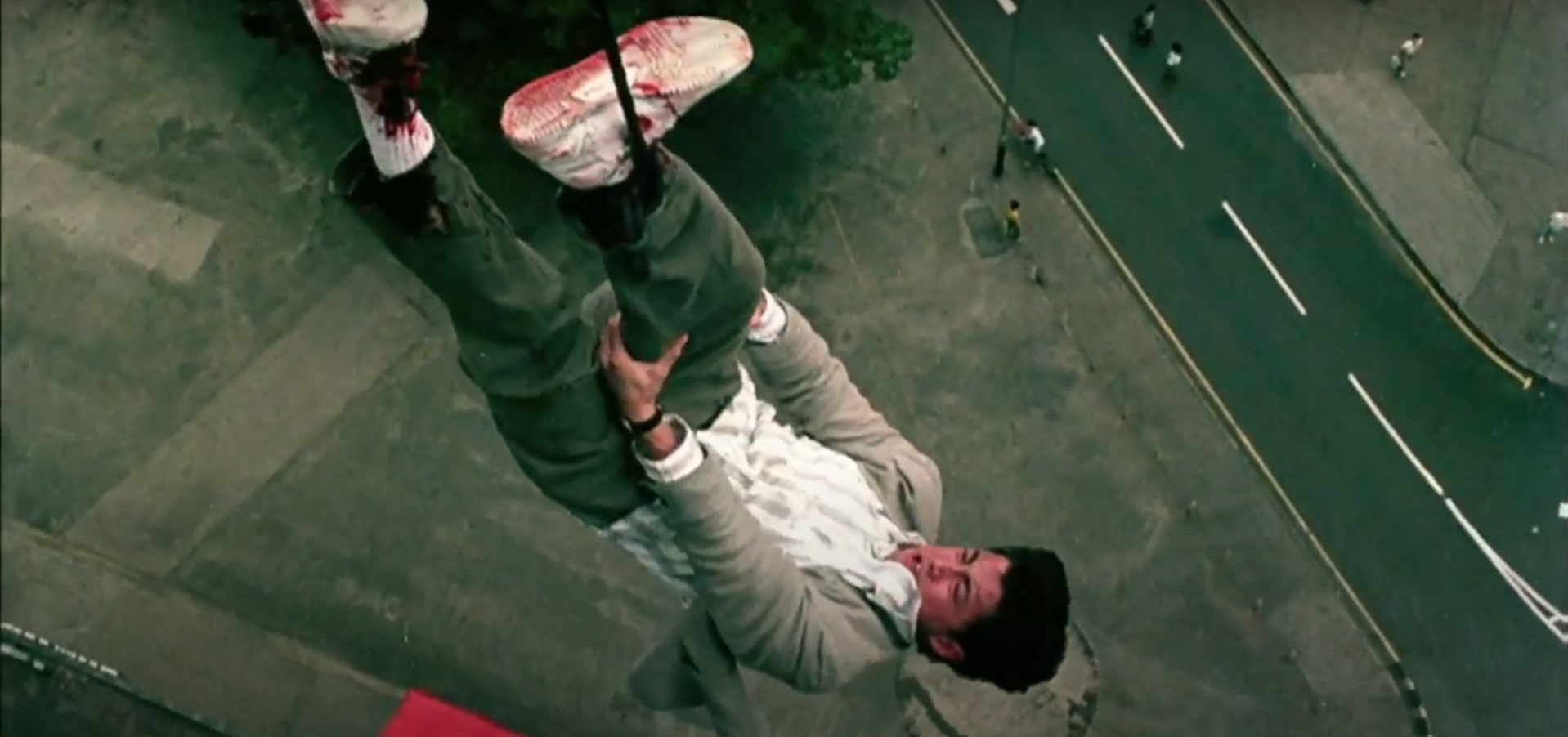
U.S. Government contractor Jim Martin is an expert martial artist, hired as a contracting agent in the field to handle special missions against country threats when they arise.  When Martin is subcontracted by a wealthy man who has ties to U.S. politicians, he’s assigned to rescue the plutocrat’s daughter from the clutches of the World Church, a fronted religious cult promising to its followers a palace of celestial tranquility from an oppressive world but their intentions are to trick the trust funded young adults into signing over their inheritance to support smuggling drugs and guns.  Martin builds a team of hand-to-hand fighting specialist to take down the World Church’s martial arts master Revered Rhee and his large right-hand man, Carl.  Infiltrating with a visiting U.S. Senator, masquerading as his aids, the team also tries to convince the U.S. Senator of the organization’s corruption while searching for their assigned rescue target. 
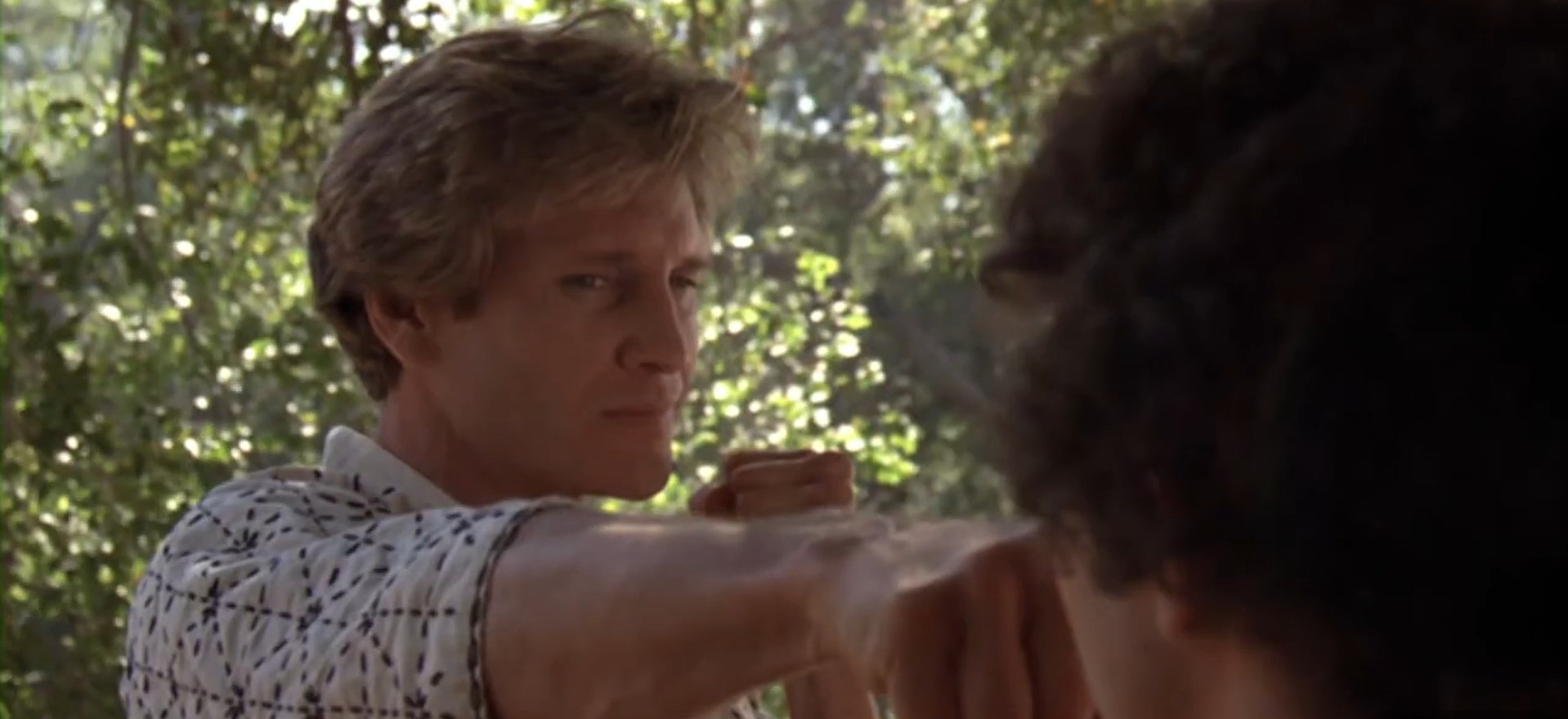
Joe Lewis, known as the Father of Modern Kickboxing and perhaps one of the leading martial artists out of the U.S. of his time, had his time on the action-packed silverscreen like most popular fighters of his ilk, such as Chuck Norris and Bruce Lee but certainly not as profound in appearance credits.  One of his first films is a martial arts and rescue actioner titled “Force:  Five” that was released just off the heels of the swanky 1970’s where the disco and soul-infused soundtrack and the chopsocky Kung-fu films reigned as one of the supreme sounds and subgenres on the globe’s East and West terrains.  Serial martial arts film director Robert Clouse, famously known for his co-direction on Bruce Lee’s “Game of Death” and notoriously known for his it’s so bad, it’s good “Gymkata,” writes-and-directs the film based on an alternate screenplay from debuting writers Emil Farkas (“Vendetta”) and George Goldsmith (“Children of the Corn”).   “Enter the Dragon” and “Black Belt Jones” producer Fred Weintraub hoped to capitalize on the melding of the aging martial arts and with the rising rescue/POW films that were on the rise and base the idea off of real events, such as People’s Temple and their cult leader Jim Jones that spanned two decades prior to the film’s written foundation and subsequent finished release.  The Italian language disc is pressed with the same sleeve art with the second disc pressed with alternate, dark-toned artwork, also original to the initial film release. 

Having already touched upon the star of the film, one of the best martial arts competitors in the world, having once beat Chuck Norris in an official event, Joe Lewis is surrounded by an entourage of real fighters who dabbled in acting.  Sonny Barnes plays the large muscle Lockjaw, the only black character in the story, and Barnes is trained and became a Sensei in Kenpo Karate, and he wasn’t the only minority listed in the eclectic group with Latino and Native American representation in Spanish-American Benny “The Jet” Urquidez, a skilled black belt Kickboxer with proficiency in a variety of fighting styles.  Lastly, Richard Norton, another major name in martial art features, hails from Australia and implanted his styles of Karate, Brazilian Jiu-Jitsu, and Kickboxing in his work on both sides of the moral fiber with his characters, having played good and bad guys in “The Octagon” opposite Chuck Norris and in “China O’Brien” with Hong Kong superstar Cynthia Rothrock.  Rounding out the “Force:  Five” team is the only female member in Pam Huntington (“They Call Me Bruce”) with no fighting background and another nonfighter in Ron Hayden as the unhinged chopper pilot.  Though Huntington and Hayden’s fight scenes are limited to just a few in contrast to the trained martial artists, even the nontrained eye can tell the actors haven’t spent years learning the craft.  Now, what really nags at the pedantic in those in the audience is the film is titled “Force: Five” but the team listed above consists of six members so there’s ambiguity in if that was an elementary math error on the story’s part or the “Force:  Five” is just the team minus Joe Lewis, that’s not entirely clear, but what is clear is the antagonists with Korean grand master Bong Soo Han (“Kill the Golden Goose”), master of Hapkido, as the duplicitous Reverend Rhee and the very large and blank faced Bob Schott (“Gymkata,” Russ Meyer’s “Up”) taking trust babies fortune to back their drug and gun smuggling operation through an alternative church façade and scheme.  Reverend Rhee is a character that embodies the very essence of a stereotypical chop-socky or evil organization boss with bad lip sync and a flair for the ostentatious death, “Force:  Five’s” being a killer bull goring those in its labyrinth path, a deadly trap that’s a man-eating shark tank-type, James Bond-like thing to have in his possession. 
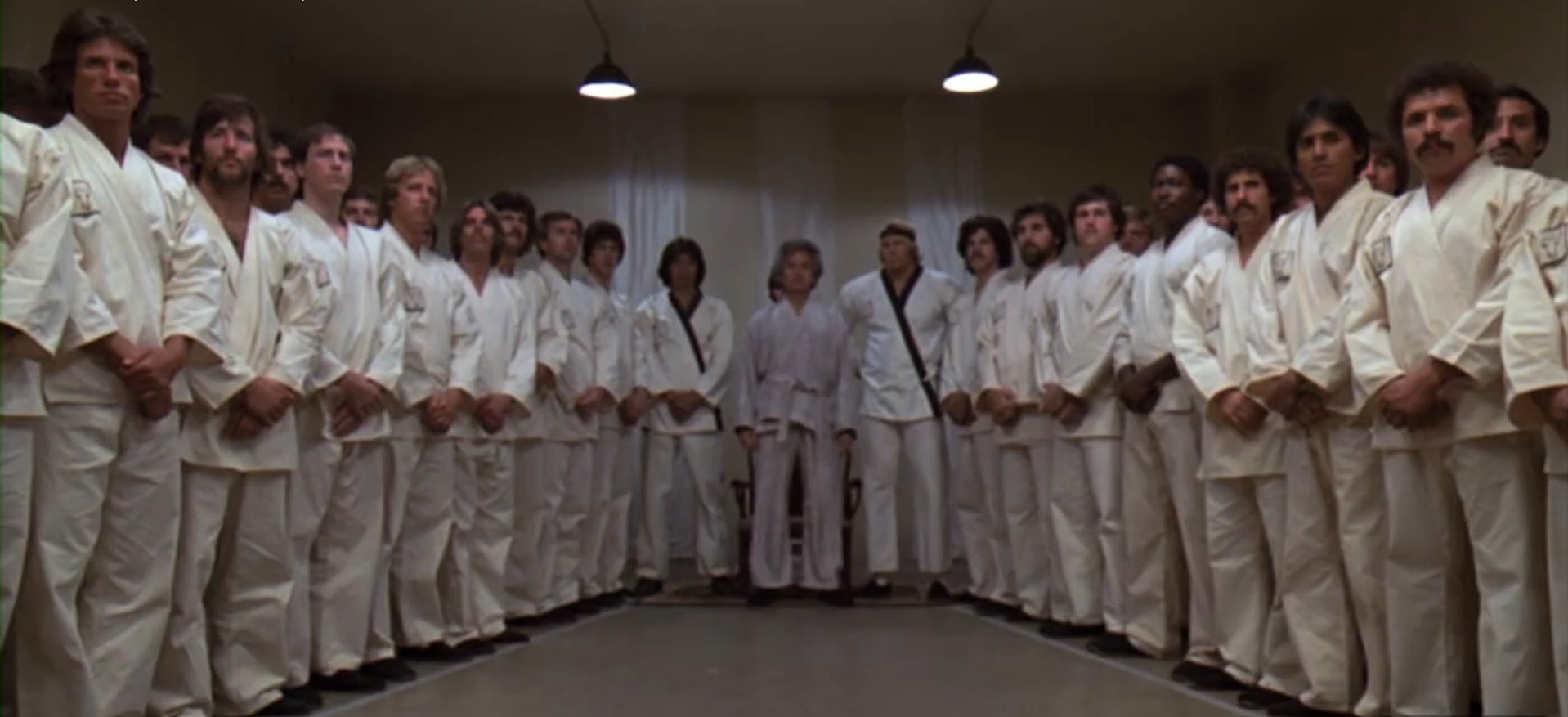
By today’s standard, “Force:  Five” is extremely formulaic but for 1981 and with the rise of the action rescuer, mostly inspired by the rescuing of POWs in either during or post-Vietnam War, the film’s a treasure trove of classic conventions of the subgenre that’s inundated with different kick and punch techniques and styles that strayed away from the Bruce Lee or Jackie Chan type of kung-fu that’s more an ostentatious showcase of ability rather than practicing in the practical realm but still pays homage to the craft masters.  Yet, these films resembled an espionage structure with an incognito infiltration, extraction, and scheming villainy pool rounded out exactly how we think movies play out in our head, with a swanky soundtrack that integrated the heart of Carl Douglas’s everybody was Kung-Fu Fighting into a clandestine operation conducted by U.S. operation contract agreement with confident, slightly cocky, Jim Martin.  However, “Force:  Five,” unlike other ensemble entrenched soldiers on a mission, came out too clean for comfort with an unscathed extraction and not one team member lost.  There isn’t even any nearly escape death by the edge of a fingernail.  Joe Lewis takes a couple of kicks to the face by Reverend Rhee and a handful of peripheral characters on the side good did take mortal damage at the hands of the bull and the wishbone split of one main contractor at the hands of Carl’s impatience, but none of the actual operators took one for the team and that usually puts a sour taste in the mouth by begging the question, was the mission really that impossible?  It appeared all too easy from the comforts of the couch to see an unarmed team of martial artists stroll into heavily armed compound (recall – they’re selling drugs and guns) and make it out alive without as much of a minuscule ballistic scratch. 
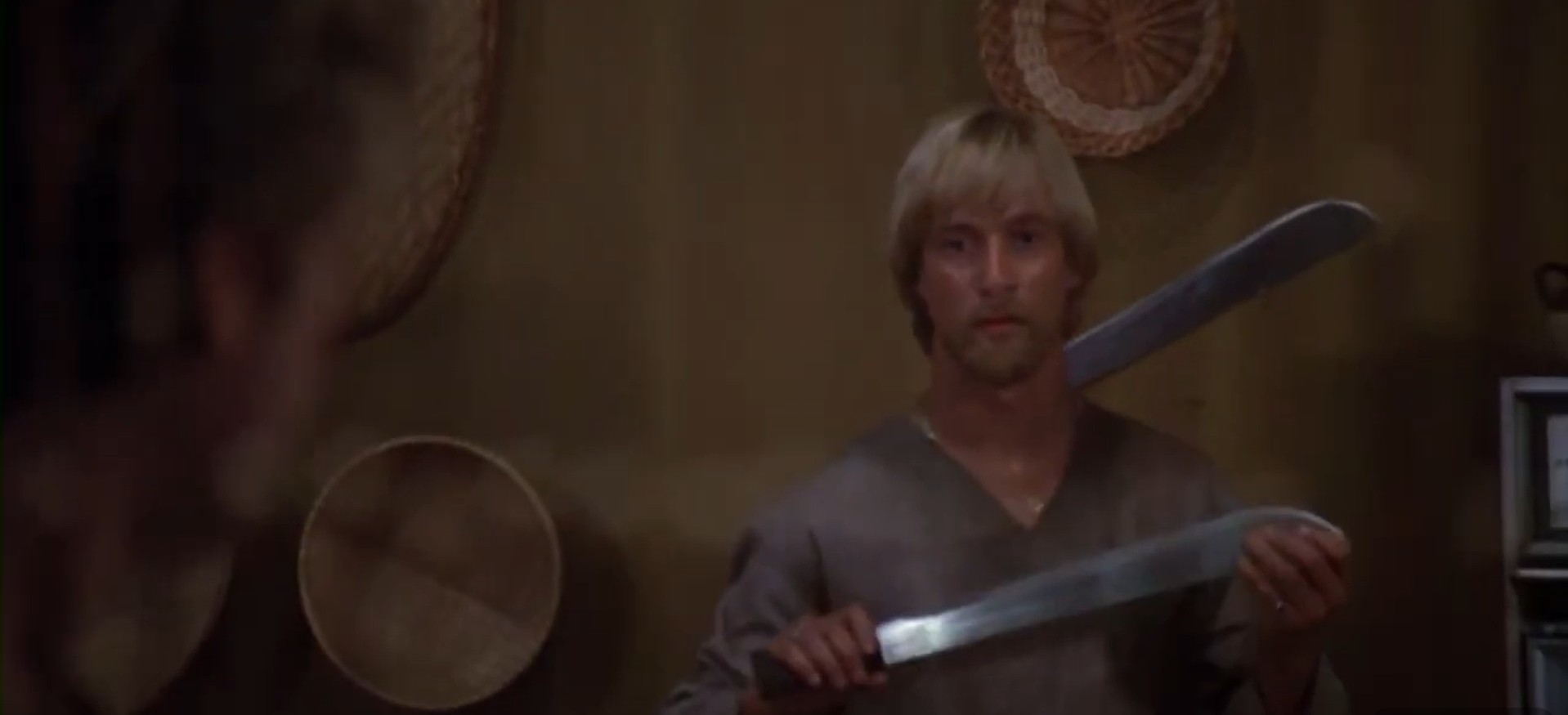
Coming in at number 70 on the catalogue of the Rewind Collections, MVD’s throwback sublabel, “Force:  Five” kicks itself back onto Blu-ray having been out of a print for nearly a decade on Hi-Def.  A slight better presentation with it’s return to the original widescreen aspect ratio of 1.851, the 2K scan evolves the detail levels to an only slightly higher degree when enlarging the pixels without sacrificing quality, producing a cleaner image perhaps from an advanced scanner.  There’s a balanced color diffusion with warmer palette that focuses mostly on greens and browns and there’s no sacrifice of grain but there’s still some dust/dirt speckling and the occasional vertical scratch but nothing too egregious to note viewing disruption.  The original 35mm print has been nicely preserved and now stored on an AVC encoded BD25.  The audio is generally the same as the previous Blu-ray release with an uncompressed English LPCM 2.0 mono that brings the double impact of all audio layers through the dual channel network, relishing in its small triumphs with small, enclosed explosions.  Dialogue has adequate carry over but there are hissing discharge and underlining crackle, but the overall general discourse is coherent in its post-production recording that leaves Master Bong Soo Han unfortunately reminding us of the higher pitched villainous voice of Betty from “Kung Pow:  Enter the Fist.”  Soundtrack doesn’t instill motivation or embark on danger with its standard stock coursing.  Foley hits and kicks are where “Force:  Five” makes its bread and butter with plenty of vehemently overlaid whomps and whacks.  Special features include a number of archival interviews, or more so toward fighting instructions, from a pair of actors, beginning with Joe Lewis in a sit down that really feels tense when he discusses his martial arts training and contests that lead into the movies and ending with Benny “The Jet” Urquidez offering fighting lesson tidbits in a pair of archived video instructions, such as wrapping your knuckles properly to avoid injury.  The original theatrical trailer rounds out the encoded extras.  The Rewind Collection’s physical treatment is unrivaled with a retro O-ring slipcover that doubles as a faux top secret objective folder on the backside and a VHS rental semblance on the front with previously viewed for sale stickers and mock wear of sun bleach and box creases.  The clear Amaray case inside houses a reversible slipcover with a cleaner, saturated image of the slipcover that has the same layout design on the reverse but with a variant character composition design encircled by a black border.  Inserted inside a mini-folded poster of the primary Blu-ray art.  The disc is also pressed with VHS nodule imagery that further it’s retro appeal into videotape.  The region A release has a runtime of 95 minutes and is rated R. 

Last Rites: “Force: Five” is about as skilled as any Chuck Norris or Jean Claude Van Damme film, and just as hokey as well, with an ensemble of experts of the kick and punch craft that go into a cocky show of bulldozing armed and dangerous smugglers with nothing more than their feet, fists, and wits.

“Force: Five” On a New Blu-ray Collector’s Set!

A Pact Plans EVIL Revenge on Crime Fighting Heroes! “Royal Warriors” reviewed! (88 Films / Blu-ray)

“Royal Warriors,” a Revenge Tale, Now on Blu-ray from 88 Films!

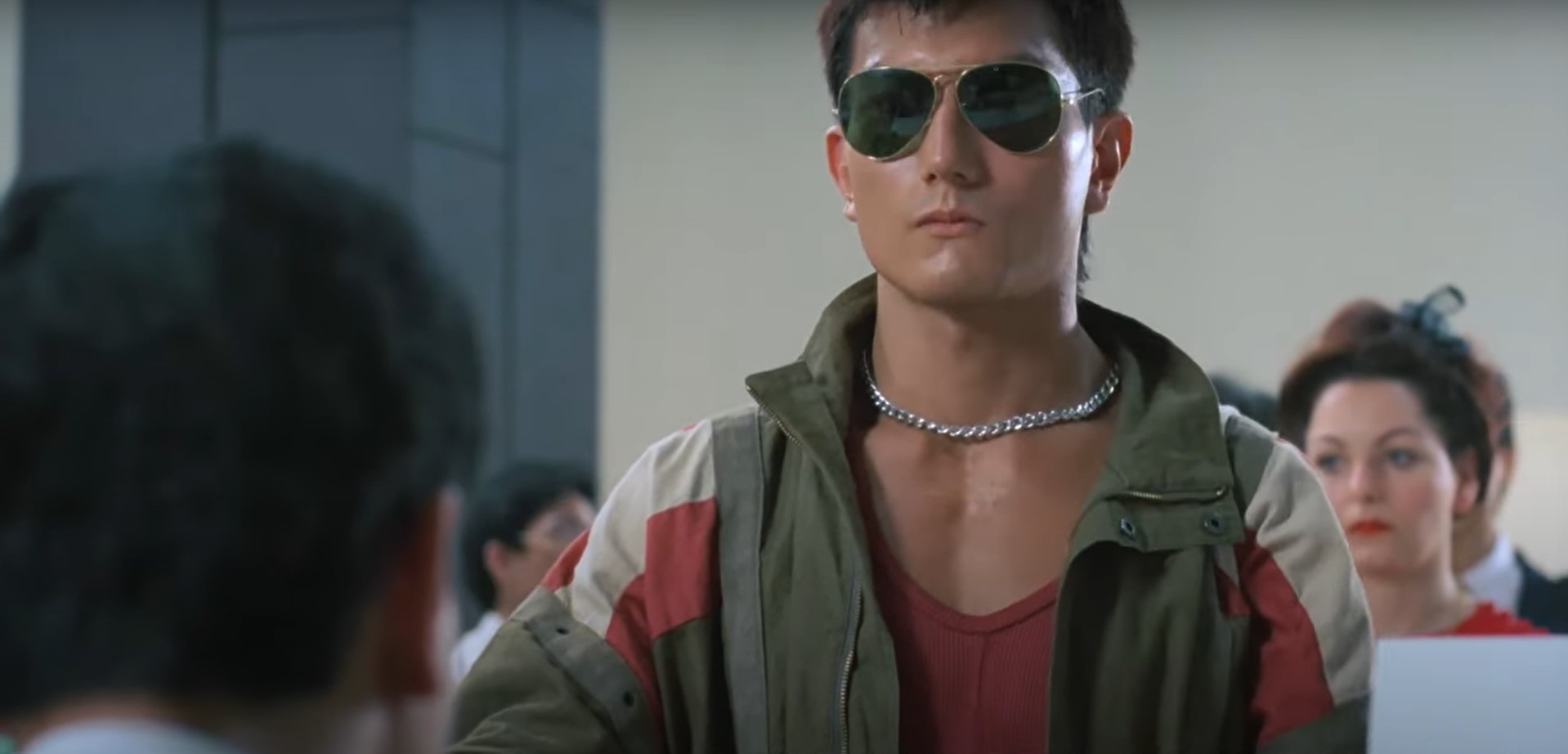
Hong Kong police inspector boards a Hong Kong bound plane on return from her vacationing in Japan.  She meets Michael Wong, the plane’s air marshal, as well as her across the aisle seat mate, Japanese native, Yamamoto, a retired cop returning to Hong Kong to retrieve his wife and daughter and retreat back to Japan to start their new life.  Also on the plane, an escorted criminal being extradited to Japan for prosecution.  When a criminal accomplice takes the plane at gunpoint, Michele, Michael, and Yamamoto spring into action and thwart an aero catastrophe with the two terrorists dead.  After celebrating their success of saving many lives, the heroic trio begin to depart their separate ways when suddenly Yamamoto’s car explodes with his wife and daughter inside.  The assassination attempt puts a target on the backs of all three of them as two war veterans swear vengeance for their slain combat brothers from the airplane hijacking.

“Royal Warriors,” also known in other parts of the world as “In the Line of Duty,” “Ultra Force,” and “Police Assassin,” is the 1986 Hong Kong police action-thriller from “Web of Deception” director and “Once Upon a Time in China” director of photography, David Chung.  Stephen Chow’s regular screenwriter Kan-Cheung Tsang, who penned Chow’s “Kung Fu Hustle” and “Shaolin Soccer,” as well as “Magic Cop” and “Intruder,” reteams with Chung on their sophomore collaboration following the comedic-crime film “It’s a Drink!  It’s a Bomb!” starring the Hong Kong humorist John Sham, and a denotes a shared three-way perspective of protagonist principals while simultaneously providing sympathetic seedlings for the principal antagonists who though are coming wrongdoings and murdering up a storm of people, a wartime conflict bond between them holds them a higher level of honor between close brothers in arms.  Dickson Poon and D&B Films produce the explosive and hard hitting with prejudice venture with John Sham (Remember him from earlier?) and Yiu-Ying Chan, serving as associate producer.

Michelle Yeoh plays Michelle Yip, the level-headed chopsocky cop returning from some rest and relaxation only to wind up on a dish best served cold “Royral Warriors” for Yeoh, who then under the less recognizable moniker Michelle Khan, is the risk-it-all action film for the actress still in the earlier days of her what would be a prolific international career.  Her breakout hit “Yes, Madam,” saw both Yeoh and also then newcomer Cynthia Rothrock punch and kick into silverscreen success as unlikely onscreen partners to take down a crime syndicate.  In the Yeoh’s next film, she rides solo but only in the actress category, being a third of the good guys, yet holding her own as a strong female, lead between another prolific Asian cinema actor Michael Wong (“Tiger Cage III,” “Dream Killer”) playing essentially himself as Michael Wong (not a typo), the plane air marshal turned love sick puppy for Hong Kong’s tough cop Michelle Yip, and yet another prolific Asian actor whose career in Japanese films started well before Yeoh and Wong and has been rising internationally amongst the ranks of American cinema in Hiroyuki Sanada (“Sunshine,” “Mortal Kombat”) playing retired officer Yamamoto, a revenge-seeking justifier on those responsible for killing his family.  The level of how these three come together in a post-incident instantaneous bond borders an idealistic way of an extreme shared experience.  Yeoh and Sanada offer a cool, collective approach with degrees of vindictive separation with a layer of compassion thinly in between with Wong providing calculated lighthearted measures of chasing Yip with infatuated eyes to break any kind of monotonous, stagnant composure between the other two, yet they’re seemingly different lives, connected ever so vaguely by being around law enforcement one way or another, doesn’t seem to thwart an instant relationship immediately after the plan incident.  What’s also odd, especially with Yamaoto, is there is more background to the villains of the story than there is with him, providing rewarding elements for reason why the two men are hunting down Yeoh, Wong, and Yamamoto and seeking deadly revenge.  Ying Bai, Wait Lam, Hing-Yin Kam, and Michael Chan Wait-Man are the pact-making, behind-enemy-lines soldiers of some unknown war from long ago who neither one of them will turn their back on a combat brother in need.  Through a series of none linear flashbacks, a union of honor between them is made and while respectable and moral during war, that pact turns rotten overtime outside the context of global conflict, suggesting ever-so-lightly toward a combat shock issue between the four men that builds a bit of sympathy for them even though blowing up a mother and child and shooting to shreds a whole lot of nightclub patrons in their misguided revenge runs ice through their veins.  Peter Yamamoto wears his sleeve on his shoulder and there is this uncertainty with his character, and his wife too, that something is amiss, creating a tension that goes unfounded and sticks out.  “Royal Warriors” rounds out the cast with Kenneth Tsang, Siu-Ming Lau, Jing Chen, Reiko Niwa and Eddie Maher.

As part of the In the Line of Duy series, a strict criterion needs to be met:  Police Action, check.  Martial Arts, check.  A Level of High Intensity, check.  And a Female Heroine, check.  “Royal Warriors” meets and exceeds the bar with another bar, a no holds bar, of spectacular stunt work done by the Hong Kong standard way of action now, think later which looks phenomenal on camera and the resulting footage.  Hoi Mang’s martial arts choreography showcases a fast-striking combinations that cut traditional sparring with melee improvisation dependent on the surroundings, moving the action left-to-right, top-to-bottom by never staying in the same place and expanding the field of play with collateral damage of bystanders and family.  A couple of components are missed between that focused innocence and whiplash of violence.  For example, the playfully amorous affections between two of the characters are not poignantly shattered like precious stained glass when one is suddenly offed.  There are other examples of once a downspin cataclysm occurs, the aftershock of loss and change does not rear its ugly head.  “Royal Warriors” just pushes forth, continuing pursuit, in a rage of retribution and righteousness. 

88 Films releases “Royal Warriors” onto an AVC encoded, 1080p high definition, BD50, presented in the film’s original widescreen aspect ratio of 1.85:1.  If you own the “In the Line of Duty” four film boxset, the version in the boxset contains the same transfer as this standalone, standard version that stuns with a new 2K restoration from the original 35mm print.  When I say this restoration stuns, I mean it.  A clean-cut natural gain, color balanced saturation, and with all the detail trimmings laud 88 Films’ work, as such as with the rest of their higher definition catalogue in the older Asian film market.  Range of atmospherics challenge with a different lighting scheme and mise-en-scene cinematography, such as the pink and purple warmth of a nightclub glow or the brilliantly lit restaurant ferry boat.  Skin and texture tones cater to a slight darker pastel but is consistent through-and-through without appearing to unnatural.  The restoration does have a positive to a fault, revealing stunt equipment during the fast-paced fighting, such as the exterior stone ground turning bouncy with creases when Yeoh vault kicks one of the Japanese yakuza members to the ground.  The release comes with four, count’em four, audio tracks:  a Cantonese DTS-HD 2.0 mono theatrical mix, a Cantonese DTS-HD 2.0 alternate mix, an English dub DTS-HD 2.0, and an English dub DTS-HD 5.1.  Of course, I go with the theatrical mix to comply with the original fidelity as much as possible with any films using ADR for an immersive experience within the original, intended language.  the 2.0 mix keeps a midlevel management of the voluminous aspects to bombastic range but never muddles or mutes the tracks.  Dialogue comes out clear with a microscopic static lingering way deep in the sublayer but, again, has negligible effect on the mix.  Special features content includes an audio commentary by Hong Kong film expert Frank Djeng, missing airplane inserts which are spliced out shots of an inflight plane exterior, and the Cantonese and English trailers.  The standard edition comes pretty standard but does feature the new character compilation artwork of Sean Longmore on the front cover with the reversible sleeve featuring the original Hong Kong poster.  The disc is individually pressed with Michelle Yeoh doing what she does best in most of her films, kick butt.  There are no inserts or other tangible bonus content.  88 Films’ North American release comes with a region A encoded playback, not rated, and has a runtime of 96 minutes.

Last Rites: 88 Films’ “Royal Warriors” Blu-ray release captures Hong Kong cinema impeccably with monumental stunts, hard-boiled police work, and permeates with color, detail, and a cleanly, discernible audio mix. In the Line of Duty, “Royal Warriors” is the first, and foremost, cop crusading caper that began it all.

“Royal Warriors,” a Revenge Tale, Now on Blu-ray from 88 Films!

Yeoh, Rothrock Beat the EVIL to a Pulp! “Yes, Madam!” reviewed! (88 Films / Blu-ray)

“Yes, Madam!” on Blu-ray from 88 Films!

Hong Kong’s Inspector Ng and Scotland Yard’s Inspector Carrie Morris reluctantly join forces to solve the murder of an undercover British national on the verge of exposing a fraudulent real estate contract helmed by crooked businessman Mr. Tin.  When a small piece of key case evidence, a microfilm, winds up in the bumbling hands of three low-level thieves after coincidently robbing the undercover British agent’s hotel room, they find themselves at a crossroads; do they give up the kill-for microfilm to the police in the name of self-preservation or ransom it against Mr. Tin’s syndicate for a big payday?  The elusive Mr. Tin becomes enemy number one in Ng and Morris’s crosshairs despite his circumventing the law.  Not deterred by the failed arrest, the tough as nails inspectors track down the microfilm thieves to make their case and take down by force one of Hong Kong’s most powerful criminal organizations.  

An accelerating knockaround action-comedy from Corey Yuen (“Ninja in the Dragon’s Den,” “The Transporter”), “Yes, Madam!” is a fight-heavy, female-driven super cop emprise with martial arts daggers drawn and slicked in a vigorously lubed burlesque dark comedy.  The 1985 Hong Kong production, penned by Barry Wong (“Hard Boiled”) and James Clouse, as his sole credit, teams an unlikely and highly skilled, international partnership between a twosome of type A personalities who not only initially combat each other and then the unscrupulous bad guys and their mischievous plans but also against the historically prejudiced gender role reversals outside the borders of the story.  Action-packed choreography mixed with slapstick comedy, “Yes, Madam!” is entertainingly fun to watch and hard-hitting, produced by stuntman Sammo Hung (“Long Arm of the Law”) and film’s costar John Sham (“Royal Warriors”) and along with Sammo Hung, executive producer Sir Dickson Poon develops “Yes, Madam!” under their cofounded martial arts and action feature producing D&B Films.

If you’re ever looking for a celebrity roots film, a launching pad feature of success, “Yes, Madam!” has that inner circle, star-studded power and deliverance that not only showcases the beginnings of two presently well-known action and martial art film women but also joins the East with the West in a singular chop-socky fracas.  Oscar winner Michelle Yeoh (“Crouching Tiger, Hidden Dragon,” “Everything Everywhere All at Once”), credited as Michelle Khan, and black belt martial arts competitor and World Champion Cynthia Rothrock (“China O’Brien,” “Tiger Claws”) explode to the thousandth degree on screen as apex inspectors forced to work together to take down crime boss Mr. Tin (James Tien, “Fist of Fury”).  They’re fast, they’re ferocious, they’re incredibly talented in what could be considered their debut principal performances, especially Rothrock in her first feature film in which she doesn’t speak an ounce of either of the native Hong Kong’s Cantonese or Mandarin dialects.  Yeoh and Rothrock are top dog heroines in a yard full of marginal, blundering thieves caught in the middle of a grander operation.  Under incognito with pain reliever aliases are actor-producer John Sham (“Winners & Sinners”) as Strepsil, Hoi Mang (“Zu:  Warriors from the Magic Mountain”) as Aspirin, and Hark Tsui (“Working Class”) as Panadol and though they act like, and sort of resemble, the Three Stooges, the three thieves and counterfeiters embody a mutual brotherhood with background history and a all-for-one, one-for-all attitude as their minor caper turns into a full collapse of their con game.  Characters and performances are all over the board between the various groupings in the melee but does weirdly gel together in an artificial way toward a poignant culmination collision of what’s just and unjust that destroys, and unites, friendships and bonds.  “Yes, Madam” rounds out the cast with Melvin Wong, Wai Shum, Eddie Maher, Michael Harry, and Dick Wei (“Five Deadly Venoms”) and Fat Chung (“To Hell with the Devil”) as Mr. Tin’s nonpareil sub-bosses. 

Barreling along from the very beginning of an armored car hijacking turned into a bloody shootout to the grand finale that pageants the marvelous, born-for-this skill of Michelle Yeoh and Cynthia Rothrock as they plow down foes with acrobatic fists and kicks galore, “Yes, Madam” doesn’t dwindle as a debut disappointment but rather is a tour de force of destruction, drollery, and delictum prevention.  Outlandish at times, of course, with a story slightly straying off course here and there but that feverishly, cyclonic filmmaking condenses to being nothing new or novel for the reputably fast-paced, churn-them-out style of Hong Kong cinema and palpable fighting is taken to a whole new level of ouch and woah.  Multiple takes from various angles equates to the stunts being depressed continuously onto the repeat button, solidifying prolific editor Peter Cheung (“Ready to Rumble,” “Mr. Vampire”) as one of the best in the business, globally, to manage the multiple strands of film and make a coherent and entertaining yarn out of the celluloid chaos.  The crux of the kerfuffle isn’t delineated well enough to justify and muster this kind of police force and exaggerated villainy but the theme majority inside the broadly cartoonish veneer is mostly about respecting the girl boss and grasping friendship that has been taken for granted, dipped in a furiously candy-coated rouse of visually exciting stimulation. 

88 Films adds “Yes, Madam!” into their U.S. distribution cache with a new, well-curated Blu-ray release.  The AVC encoded, 1080p high-definition, BD50 presented 2K scanned and restored feature has the original aspect ratio of 1.85:1 in the Hong Kong cut. Beautifully diffused and vibrant color, there’s no hue deficiency under this well-lit production, restored to nicely detail skin tones and textures in every aspect of the lighting. No issues with compression during the rapid-fired sequence cells, such as aliasing or ghosting, and black levels are solid albeit there’s not a ton, if any, negative space to experience as even the night shots are illuminated in a “moon” diffusion. Delineation reflects a deepened background contrasted against foreground objects, creating ideal space between objects in what is mostly a close quartered, hand-to-hand combat with only a handful of medium, medium-long shots to make the scenes more realistic than choreographed on a wider frame. Two audio options encoded are the original Cantonese DTS-HD 2.0 mono and an English DTS-HD 5.1, both use ADR dialogue which incurs only minor negative separation and synch between actor and script. Cantonese track fairs slightly better with the native tongue but much like the story’s brisk pace, vocals are also quick as a whip and often times outpace the lips. What’s interesting about “Yes, Madam!’ is the score which is credited to Romeo Díaz (“A Chinese Ghost Story”) but samples much of John Carpenter’s “Halloween” in tense moments. “Halloween” comes through so prominently that it shadows and hurts Díaz’s own work, if any of it exists. Ambience tracks work with the grain with some of the fighting emphasized for chop-socky effect. English subtitles synch fine and have scribed errorfree. Product special features an audio commentary by Frank Djeng on the Hong Kong cut, a new interview with star Cynthia Rothrock, Rothrock and Djeng also provide select scene commentary, a new interview with Mang Hoi who played Aspirin, archive interview with Michelle Yeoh, an archive Battling Babes featurette, and with the Hong Kong trailer rounding things out. New action-packed compositional artwork from graphic designer Sean Langmore graces the primary cover art with original artwork on the reverse side. The disc art is pressed to promenade the two female actresses and there is nothing across the way in the insert clips. The region A playback release has a runtime of 93 minutes and is listed as not rated.

Last Rites: There’s nothing more to say other than “Yes, Madam!” A top-notch, assertive action film starring two worldclass women in the fighting subgenre who stir in the cool and the kickass with silky, smooth ease.

“Yes, Madam!” on Blu-ray from 88 Films!